Author: Mei Ling Tan

  • ‘Rich Dad, Poor Dad’ author boasts about $1B debt

    ‘Rich Dad, Poor Dad’ author boasts about $1B debt

    Robert Kiyosaki, author of best-selling personal finance book “Rich Dad, Poor Dad,” revealed he was over US$1 billion in debt and advocated borrowing to invest in assets.

    Unlike most people who would be devastated to find out they are drown in debt, Kiyosaki was nonchalant when he boasted about his debt on an Instagram reel.

    He used the borrowed money to buy hard assets that are more resilient to market downturns and inflation, such as gold, he said in the reel.

    Kiyosaki explained that utilizing debt allowed him to not save cash, which would get devalued due to inflation, and if he went bankrupt, it would be the bank’s problem to solve, not his.

    In another reel, the author noted that living debtless is the worst personal finance advice one can give and that a banking crisis, high inflation and a stock market crash were approaching, making those who invest in hard assets richer.

    As of January 5, Kiyosaki’s net worth was estimated to be $100 million, according to Celebrity Net Worth.

  • DHL Express makes management changes in Asia Pacific

    DHL Express makes management changes in Asia Pacific

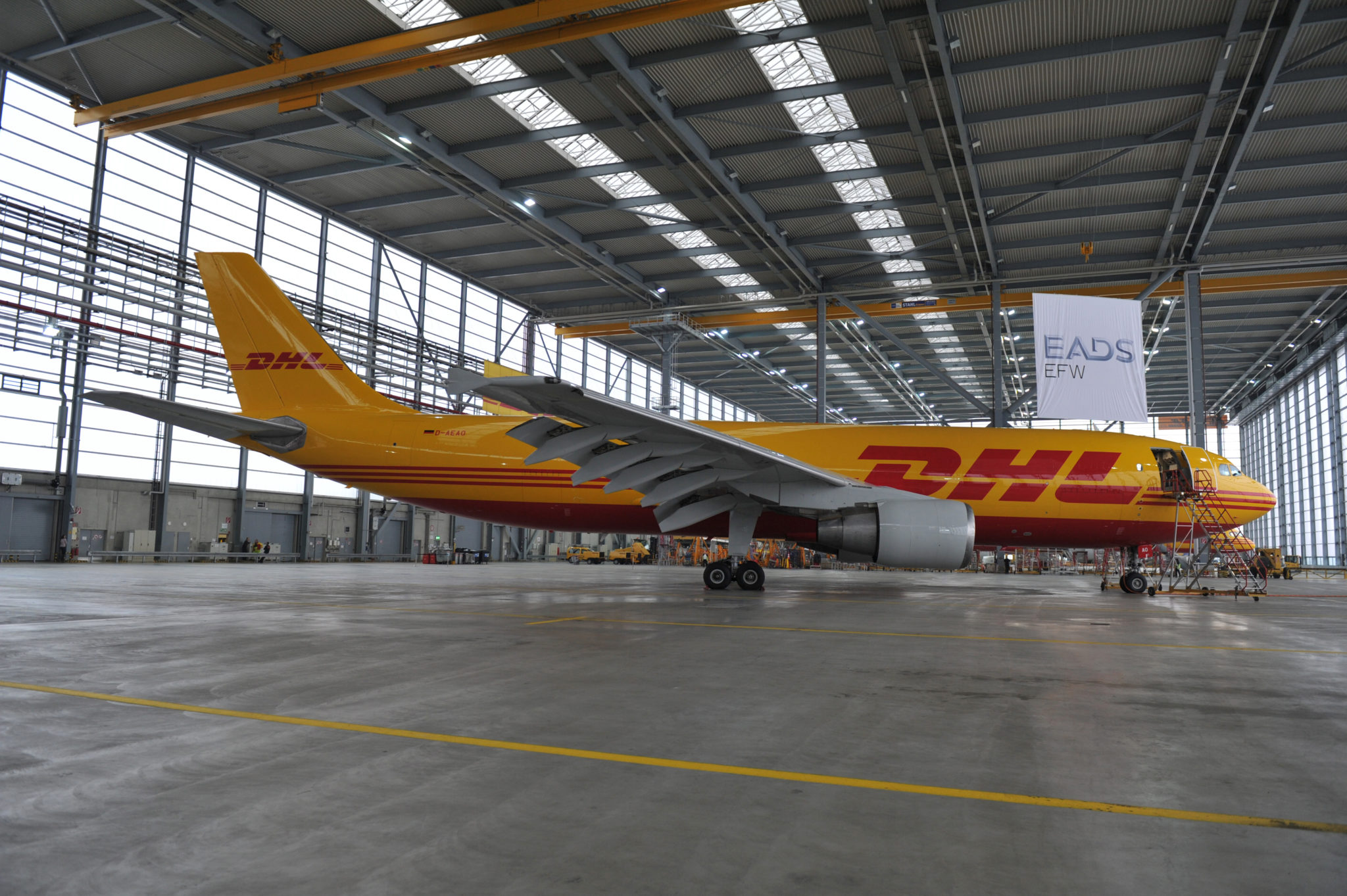
    DHL Express has announced several retirements and strategic appointments for Asia Pacific, including Hong Kong and Macau, South Korea and Taiwan.

    Yung C. Ooi, most recently country manager for Taiwan, has been elected as Asia Pacific’s senior vice president for commercial. He will take over the responsibilities of Yasmin Khan, who retires after 23 years at the DHL Group. Appointed in Yung’s place is Chee Choong, who was managing director for  Hong Kong & Macau.

    30-year veteran Andy Chiang, former head of global strategic finance for DHL Express, has moved to a new position as managing director for Hong Kong & Macau.

    In North Asia, Ji Hun (Michael) Han will be the new managing director for DHL Express Korea, succeeding Byung Koo Han, who has retired after 16 years at DHL Group.

    DHL Express is present in more than 40 countries and territories in Asia Pacific with a market share of 57 percent in time-definite international (TDI) revenue. In December 2023, the express operator signed a long-term contract with Japan Airlines to utilize the latter’s first freighter, a Boeing 767-300, to add more connectivity to and from Japan.

  • eBay fined $3M for harassment involving sending live cockroaches to Massachusetts couple

    eBay fined $3M for harassment involving sending live cockroaches to Massachusetts couple

    eBay has agreed to pay a $3 million penalty following a harassment campaign conducted by its employees involving the sending of live cockroaches to a Massachusetts couple.

    The U.S. Justice Department announced the fine last Thursday, attributing responsibility to eBay for the harassment campaign its employees executed against David and Ina Steiner, in 2019.

    This involved stalking the Steiners and sending them various disturbing items, including live cockroaches, a pig mask covered in fake blood, and a funeral wreath.

    It started with Ina Steiner publishing an article about eBay suing Amazon for poaching their sellers in 2019, which prompted Devin Wenig, then CEO of eBay, to express his desire to “take down” Ina Steiner in text messages to some company executives.

    Subsequently, Jim Baugh, who was eBay’s Senior Director of Safety and Security at the time, together with six other security employees, initiated a campaign of harassment against the couple.

    In addition to the $3 million fine, eBay must organize staff training and improve its corporate culture to prevent similar incidents.

  • Electrified vehicles rising to trendy choice in Vietnam

    Electrified vehicles rising to trendy choice in Vietnam

    Vietnamese users are becoming more familiar with hybrid and pure electric vehicles because numerous well-known brands have expanded to this category.

    Truong Huy, a technical expert for an electric vehicle software outsourcing company in Ho Chi Minh City, was one of the earliest to come to the Electrified Vehicle Exhibition at Yen So Park, Hanoi, last weekend to learn about the hybrid and pure electric car models.

    “As a person working in technology related to electric vehicles, this exhibition is a good opportunity for me to learn more about the companies,” Huy said while standing next to the chassis of a Hyundai electric car. “Mainly working in software, this is a rare time I have seen a complete hardware platform for an electric vehicle.”

    In the past three years, electric or hybrid cars have gradually become more familiar to Vietnamese customers. But Vietnam has never had an exhibition dedicated to this category, which means few opportunities for Huy and other customers to experience cars from different brands or learn about their software and hardware technologies.

    The Electrified Vehicle Exhibition organized on Jan. 13–14 can be considered the start of events dedicated to fuel-saving and environmentally friendly vehicle lines.

    In previous years, only a small number of electrochemical products were sold on the market, but now it is different.

    In 2020, except for Toyota with the small crossover Corolla Cross with a hybrid engine option, the market did not have a product with a similar or pure electric engine, specifically in the popular segment.

    By 2023, the number of electrochemical products and companies participating in the field has increased, creating a trend big enough to draw customers’ attention.

    The domestic EV segment was led by VinFast in 2023, with an ecosystem ranging from bicycles, motorbikes, cars, and buses. The company has been selling electric cars since 2021 with the VF e34 and has now added VF 5, VF 6, VF 7, VF 8, and VF 9 to the car category alone.

    In addition to VinFast, Hyundai is selling the Ioniq 5 series. Previously, the Korean company launched the Santa Fe hybrid for sale. Its distribution by Thanh Cong Group also hinted at the possibility of the company selling the G80 EV, a pure electric luxury sedan, in the near future.

    Hybrid cars are becoming more diverse with Kicks from Hyundai, CR-Vs from Honda, Sorentos from Kia, and H6s from Haval. Toyota specifically expanded this car segment in Vietnam with the addition of the Altis, Camry, Yaris Cross, Innova Cross, and Alphard.

    Besides Haval, the presence of other Chinese brands in Vietnam, such as Wuling and Haima, helps make the electrified vehicle segment more exciting. Pure electric car options from these brands include the market’s cheapest Wuling Mini EV, or the Haima 7X-E MPV.

    Most of these car models were present at the Electrified Vehicles Exhibition 2024.

    Xuan Huy drove more than 10 km from Ha Dong District to the exhibition to find a second car for his travel in the city. “I went to check all the booths because I do not favor any specific brands. There have been very few occasions when many companies display hybrid or pure electric car products like this.”

    Electrified vehicles are gradually becoming more popular. But many companies believe that customers still need orientation and education about the technology and how to use these products.

    Compared to the technology of internal combustion engine vehicles, which has been familiar to users for hundreds of years, electrified vehicles’s is new.

    “Many people are still concerned about whether electric vehicle technology is suitable for cars that they use every day,” said Son Lam, a representative of TMT Motors, the distributor of the Wuling brand in Vietnam. “Participating in this exhibition is also a way for the company to answer more customers’ concerns about electric vehicles, especially their technology.”

    A Hyundai Thanh Cong representative said that pure electric and hybrid technology is generally still new to the majority of Vietnamese customers. “Disseminating knowledge about electrified vehicles to customers is what the company is doing, this exhibition is one such occasion for us to do that.”

    Lees ook:
  • Enable this feature now so that Google Maps for Android will work when you’re in a tunnel

    Enable this feature now so that Google Maps for Android will work when you’re in a tunnel

    Driving inside a tunnel is often an issue for those using a GPS app to help them navigate because of the inability of the signals to penetrate the tunnel. You might think that this doesn’t really matter with a tunnel since there isn’t much to do inside one except follow the road. But there are other reasons as Google points out in a support page. For example, staying connected in a tunnel allows location services to work, increases driver safety, and gives the driver better visibility into what’s happening inside the tunnel in real time.

    Google-owned Waze connects with Bluetooth beacons inside tunnels in certain cities such as “New York City, Chicago, Paris, Rio, Brussels, Oslo, Sydney, Boston, Mexico City, and more.” Google says, “The Waze Beacons program provides seamless navigation to drivers underground where GPS signals don’t reach.” And now Google Maps will also support Bluetooth beacons according to SmartDroid.

    The feature is disabled by default, but we’re going to tell you how to enable it right now. First, to be clear, this feature is available on Android phones only and cannot be used with Google Maps for iOS. So from your Android phone open Google Maps. Tap the round profile icon on the right of the search bar on the top of the phone. That opens a menu and you should then tap on Settings > Navigation settings and scroll down to the Driving options heading and look for Bluetooth tunnel beacons and toggle it on.

    The listing says, “Scan for Bluetooth tunnel beacons to improve location accuracy in tunnels.” Once you enable the feature, you will have to allow Google Maps to “find, connect to, and determine the relative position of nearby devices.” This feature appears to have been available for some Android users since last October but has recently been found on more Android devices.

    Follow the directions in the previous paragraph to enable the feature and if you see the listing titled “Bluetooth tunnel beacons,” it means that you do have the feature available for Google Maps. It appears on my Pixel 6 Pro running Android 14 QPR2 Beta 3.

    If you do drive through tunnels often and use an Android phone, you might want to take a second to enable this feature.

  • Irish Single Malt becomes the world’s most expensive whisky

    Irish Single Malt becomes the world’s most expensive whisky

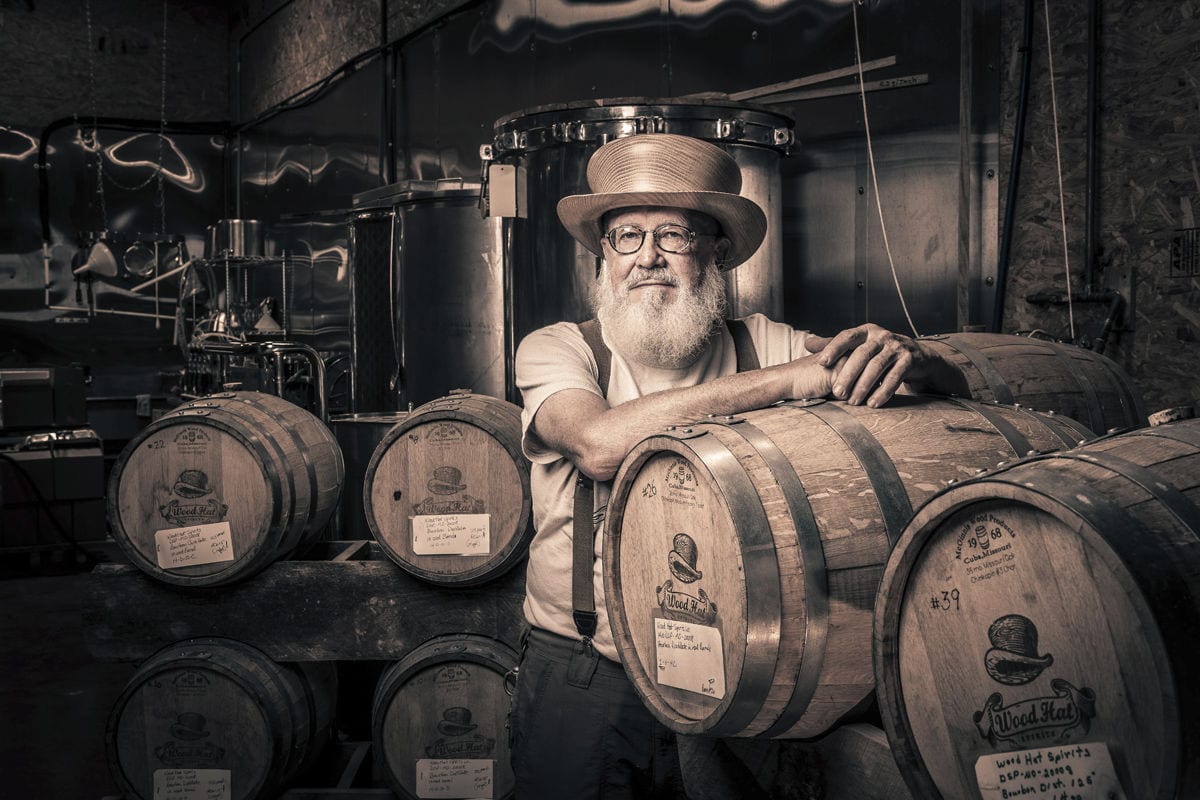
    The Craft Irish Whisky Co has sold a bottle of The Emerald Isle whisky to American collector Mike Daley for $2.8 million, marking a record for the world’s most expensive whisky.

    “The rebirth of Irish whiskey is relatively new, so I feel like I’m getting in on the ground floor. Luxury scotch, to me, is already a crowded type of market,” said Mike Daley, one of the US’ most prolific collectors of the spirit.

    “But we’re only just starting to see luxury Irish make a name for itself. I guarantee you that in the years to come, it will get to where scotch is today.”

    A bottle of The Macallan 1926 sold for $2.7 million at auction last November, momentarily becoming the world’s most expensive bottle, a title now held by The Emerald Isle, indicating a shift in the tastes of luxury collectors, many of whom believe the Scotch market has grown overcrowded.

    The Craft Irish Whisky Co, founded in 2018 by Irish entrepreneur Jay Bradley, was the most highly recognised new firm of the year in 2021, accumulating a total of 12 accolades across both Taste and Design for four of its ultra-rare whisky releases.

    Last year, the company won 44 medals in total, including Gold and Silver at the IWSC Taste medals, Gold, Silver and Bronze at the World Whisky Awards, and a Master Medal for The Donn at The Drinks Business Autumn Bling Tasting.

  • BridgerPay introduces the first agnostic omnichannel payment operations platform

    BridgerPay introduces the first agnostic omnichannel payment operations platform

    BridgerPay, a payment technology pioneer in the payments industry, is proud to announce its transformation into a powerful omnichannel payment operations platform, bringing unparalleled control and flexibility to businesses seeking to streamline their payment processes across all payment channels – e-commerce shops, physical stores and mobile applications.

    The transition to an omnichannel payment operations platform represents a significant positioning as a technology leader for BridgerPay, filling the untapped gap of omnichannel orchestration and payment operations that exists in the world, a pain shared by many enterprise merchants that run a multi-channel business.

    The concept of “omnichannel” used to revolve around a business’s capacity to process transactions across all channels using a single payment provider. Now, envision a world where you have the power to choose your preferred payment service provider for each channel. This is precisely what BridgerPay has crafted – an agnostic omnichannel solution that empowers merchants to optimise processing in any channel, from anywhere.

    Imagine that there are no boundaries restricting your business payments. Both your online and offline operations seamlessly process payments using the most suitable solution for each channel and geographic region. Picture a scenario where all your payments flow through your central management system, ensuring complete automation across all channels. This means you can initiate and process a transaction in a point of sale directly from your management system. Furthermore, you have the flexibility to obtain credit card tokens directly from the point of sale and use them later in your PMS or CRM, with the option to add fallback payment providers to optimise the approval ratio.

    Ran Cohen, CEO of BridgerPay, emphasises the transformative impact of BridgerPay’s platform: “We’re on an exciting journey that’s set to reshape the payment landscape for businesses. In today’s dynamic business environment, it’s essential to provide companies with the tools they need to simplify and improve their payment processes. This milestone development, the first of its kind, was born from a genuine need. Our enterprise clients, who already trust BridgerPay, approached us with a request to expand its functionality offline, for example, in physical stores or hotel front desks. Transforming these client requests into reality is at the core of our mission. As a result, we’ve created a revolutionary omnichannel payment operations platform that promises to fundamentally redefine how businesses navigate and manage their payments.”

    The impact on your business:

    Unparalleled control: Automation across all channels, with your payments flowing through a central management system streamlines your payment processing and enhances operational efficiency.

    Connectivity: Experience the effortless flow of transactions between any payment channel and your systems, ensuring error-free operations. This provides you with precise control to initiate point-of-sale transactions and retrieve tokens from credit cards, guaranteeing accuracy and efficiency in your processes.

    Payment optimisation: Each channel your business operates in will be optimised, tailored specifically to its geographical location. This approach enables you to achieve the highest approval ratios across all your channels, both in physical point of sale and e-commerce.

    Risk mitigation: The freedom to choose the most suitable payment provider for each channel allows you to diversify and spread the risk across various payment providers. This flexibility is crucial for risk management, as not every payment provider for point-of-sale (POS) transactions is ideal for e-commerce.

    Boosted revenue: Along with the tools the BridgerPay platform offers, the freedom to choose the most suitable payment service provider for each channel, whether it’s web, mobile, or point of sale, significantly boosts your revenue.

    PCI & security: By using BridgerPay as your omnichannel payment operations platform, you automatically eliminate your PCI scope. This not only enables the secure transmission of credit card information but also upholds a safe and reliable environment, further enhancing the security of your payment processes.

    The shift to an omnichannel payment operations platform positions BridgerPay as a forward-thinking industry leader dedicated to delivering innovative payment solutions to meet the diverse needs of businesses across all sectors, especially those that handle payments through multiple channels.

    About BridgerPay: BridgerPay is the world’s first omnichannel payment operations platform, built to automate all payment flows with a Lego-like interface, empowering any business to scale their payments, insights and revenue with a codeless, unified and agnostic software.

  • Rice exports reach record high

    Rice exports reach record high

    Vietnam’s rice exports soared to 8.13 million tons, valued at US$4.7 billion in 2023, setting a new national record, as per the General Department of Customs.

    This marked a 14.4% increase in volume and a 35.3% rise in value from the previous year, despite challenges from the El Nino weather pattern.

    The export surge is partly attributed to India’s export ban on non-basmati white rice, which has affected global rice trade.

    India, a major player in the global rice market, contributes 40% to the worldwide rice trade. Its largest buyers include Iran, Saudi Arabia, and China.

    In 2023, several countries increased their rice imports from Vietnam as the global supply dwindled. A rice export business director from Dong Thap Province said some countries that typically imported little rice from Vietnam began placing substantial orders.

    The ongoing Indian export ban has left many countries seeking reliable rice sources, creating an optimistic outlook for Vietnam’s rice exports in 2024.

    In 2023, the Philippines was the largest importer of Vietnamese rice, purchasing 3.1 million tons, followed by Indonesia, China, and Ghana. Vietnam now is the world’s fifth-largest rice producer and third-largest exporter.

  • WhatsApp starts rolling out polling feature to early adopters

    WhatsApp starts rolling out polling feature to early adopters

    WhatsApp’s poll sharing feature is one step closer to being released to the public. Still in beta, the ability to share polls in channels have been sighted less than a week ago in the beta version of WhatsApp for Android.

    Over the weekend, WaBetaInfo reports that WhatsApp beta for iOS 24.1.10.76 update, which is now available on the TestFlight app, offers early adopters the option to share polls in channels.

    Obviously, you must be the owner of the channel in order to be able to share polls. The new feature has multiple options, which can be disable in case the creator of the poll believes it only needs one answer.

    The votes remain anonymous, so while members of the channel will be able to see the number of votes, they won’t know who voted for a certain option. A limited number of channel owners can now see the poll option in the chat attachment menu within their channel.

    Although it’s expected for the feature to expand to more early adopters, it might take some time before WhatsApp decides to make it available to everyone. Still, it’s nice to know that Channels will be getting a very useful feature for those who want to grow their audience based on the feedback received.

  • FPT Retail debuts mobile virtual network in Vietnam

    FPT Retail debuts mobile virtual network in Vietnam

    Electronics retailer FPT Retail has unveiled its own mobile virtual network, marking it as the country’s fifth such network.

    Known for operating the FPT Shop chain and being a subsidiary of the tech giant FPT, FPT Retail does not have its own network infrastructure but leases network services from MobiFone and offers subscriptions to consumers at its own pricing.

    With an established ecosystem that includes over 800 FPT Shops across 63 Vietnamese cities and provinces, FPT Retail is poised to leverage its substantial retail presence. These shops annually sell around 1.5 million smartphones and various electronic gadgets.

    The new network will be infused with advanced features like cloud computing and artificial intelligence, targeting a demographic keen on cutting-edge technologies, specifically younger consumers. It also aims to cater to businesses and households.

    FPT Retail’s strategy involves incorporating various FPT services into the network, enhancing the overall user experience, said CEO Hoang Trung Kien.

    The introduction of this network adds to the existing roster of mobile virtual network operators in Vietnam, which currently includes iTel, Wintel, Local, and VNSKY.

    As of early 2023, these operators collectively serviced about 2.56 million subscribers, accounting for 2.1% of the total Vietnamese market.

    The majority of the market is still dominated by five telecom firms that own network infrastructure, namely VinaPhone, Viettel, MobiFone, Vietnammobile, and Gtel.

  • WhatsApp rolls out custom sticker maker on iOS

    WhatsApp rolls out custom sticker maker on iOS

    WhatsApp is bringing custom stickers to a whole new level with the latest update. The new changes will make it easier to customize your stickers before you post them in your conversations.

    Up until now, you could only create stickers by adding pictures from a gallery into the app, but the latest update adds an extra layer of customization. WhatsApp is now rolling out a new update on iOS, which lets users add text, another sticker, or even draw on top of a sticker.

    The procedure remains the same, but you can now add various media content on top of the image you chose from your gallery. In addition to being able to customize your stickers with text and drawings, you can also edit them by long-pressing on the image.

    The new feature is only available on devices that run at least iOS 17. If you’re an Android user, this is not yet available for you, but it’s unlikely that it will take WhatsApp too long to bring it to another platform.


  • Samsung family members sell $2B worth of shares to pay inheritance taxes

    Samsung family members sell $2B worth of shares to pay inheritance taxes

    Family members of Samsung Electronics chairman Jay Y. Lee have sold 2.8 trillion won (US$2.12 billion) worth of shares in the company and its affiliates to pay inheritance taxes.

    The sale of about 29.8 million shares, or a 0.5% stake in Samsung Electronics, was at a discount of 1.2% to 2.0% from Samsung shares’ Wednesday closing price of 73,600 won, citing unnamed investment banking sources.

    Shares in affiliates Samsung C&T, Samsung SDS and Samsung Life Insurance were also offered simultaneously in block deals worth around 644 billion won for the same purpose, the report said.

    The shares were sold by Hong Ra-hee, the widow of late Samsung Group chairman Lee Kun-hee, and her children, including Jay Y. Lee.

    Korea’s top inheritance tax rate of 50% is considerably greater than the OECD’s typical rate of 25% and is second only to Japan’s 55%. It is therefore not uncommon for members of Korea’s chaebol families to sell company shares or secure bank loans using those shares as collateral to cover their inheritance tax obligations.

  • Gasoline prices slightly rise

    Gasoline prices slightly rise

    Gasoline and diesel prices rose marginally on Thursday afternoon.

    The popular RON95 gasoline went up 0.09% from a week ago to VND21,930 ($0.90) per liter.

    E5 RON92 rose 0.19% to VND21,040.

    Fuel prices fluctuate globally in the last seven days due to supply shortage in Libya, rising tension in the Middle East, and a stronger-than-expected decline in crude oil supply in the U.S, according to the Ministry of Finance and the Ministry of Industry and Trade.

    RON92 fell 0.4% to $87.14 per barrel, while RON95 gained 0.1% to $91.34. Diesel rose 1.7% to $98.5.

  • Bitcoin Experiences Second Big Bang

    Bitcoin Experiences Second Big Bang

    The world’s oldest cryptocurrency is moving from the periphery of the financial system to the center of Wall Street after Bitcoin spot ETFs were approved for the U.S. mass market. The door to a new era of digital assets is now open.

    The granting of approval to 11 Bitcoin spot ETFs by the U.S. Securities and Exchange Commission (SEC) – just on (yesterday) Wednesday afternoon local time and therefore at the last minute – marks a historic breakthrough for the cryptocurrency sector. It was long overdue after years of waiting and has finally become reality.

    The SEC decision has far-reaching consequences for the future of Bitcoin and other digital currencies. It is not simply a matter of regulatory approval, it is a recognition that Bitcoin is now a mature asset class, as well as a sign of trust and legitimacy.

    Particularly revealing is the role of Wall Street heavyweights like Blackrock, Fidelity, Invesco and the Swiss crypto pioneer 21Shares. Their involvement has played a crucial role in restoring trust in cryptocurrencies after the scandalous horror year 2022 and cementing their legitimacy as an asset class.

    Their actions also show that cryptocurrencies today are more than just a niche or speculative instrument. They are a growing asset class to be taken seriously with the potential to complement and enrich the global financial system.

    Institutional investors who have been waiting for regulatory clarity and security now have a door to a world that has largely been outside their investment universe. This could trigger a new wave of investment and interest in cryptocurrencies that goes far beyond the current crop of investors.

    The approval is also a significant step towards the development of the infrastructure for the cryptocurrency. This will not only encourage further innovation and investment in this area, but also highlight the need for robust and transparent regulation.

    In a market often beset by speculation and uncertainty, this development provides a certain degree of stability and predictability.

    But its integration into the traditional financial system also brings with it new regulatory challenges and potential risks. The crypto industry must therefore continue working with the regulatory authorities to ensure a balance between innovation and consumer protection.

    Satoshi Nakamoto, Bitcoin’s mysterious creator, laid the foundations for a financial revolution in 2008 with his visionary concept of a cryptocurrency. With spot ETFs approved on Wall Street, Bitcoin is now experiencing its second big bang about 15 years later, although probably not quite as its founder imagined.

    All in all, the SEC’s decision is a new milestone for the crypto world and will usher in a new phase of professionalization and integration into the global financial system.

  • SEC Authorizes Spot Bitcoin ETFs

    SEC Authorizes Spot Bitcoin ETFs

    The Securities and Exchange Commission has delivered a landmark approval of spot Bitcoin exchange-traded funds. This is a highly anticipated event that is expected to further crypto’s entry into mainstream finance.

    The US Securities and Exchange Commission (SEC) has approved 11 applications for spot Bitcoin exchange-traded funds (ETF), including those from BlackRock, Ark Investments, Fidelity, Invesco and more.

    Since 2004, this agency has had experience overseeing spot non-security commodity exchange-traded products (ETPs), such as those holding certain precious metals. That experience will be valuable in our oversight of spot bitcoin ETP trading,» said SEC chairman Gary Gensler in a statement highlighting investor protection.

    Despite approving the inaugural entry of spot Bitcoin in the ETF industry, Gensler noted that this did not reflect positive sentiments about the digital asset class.

    Though we’re merit neutral, I’d note that the underlying assets in the metals ETPs have consumer and industrial uses, while, in contrast, bitcoin is primarily a speculative, volatile asset that’s also used for illicit activity including ransomware, money laundering, sanction evasion and terrorist financing,» Gensler added.

    While we approved the listing and trading of certain spot bitcoin ETP shares today, we did not approve or endorse bitcoin. Investors should remain cautious about the myriad risks associated with bitcoin and products whose value is tied to crypto,» he said.