Author: Mei Ling Tan

  • YouTube may have removed the iMessage mini-app for iOS devices

    YouTube may have removed the iMessage mini-app for iOS devices

    It appears that YouTube might have removed the iMessage mini-app that allows iPhone and iPad users to send videos directly from chat without leaving the Messages app.

    The latest YouTube app update released earlier this week mentions changes like improved performance and bug fixes, but it may have also removed the iMessage mini-app.

    The folks at 9to5mac confirm that the iMessage mini-app for iPhone and iPad is no longer available after the latest YouTube update, but at this time it’s impossible to tell whether or not this is something temporary.

    It’s been nearly seven years since the iMessage mini-app has been added to YouTube. Unfortunately, it never became popular among iOS users, even though the app allowed them not just to send YouTube videos directly from the chat without leaving the Message app, but they could also watch videos using the native YouTube app.

    Let us know in the comments if the feature disappears for you after updating the YouTube app to version 19.01.1. Although it might be hard to guess YouTube’s plans about the iMessage mini-app without an official statement.

  • AirAsia boss pushes Bangkok as global aviation hub

    AirAsia boss pushes Bangkok as global aviation hub

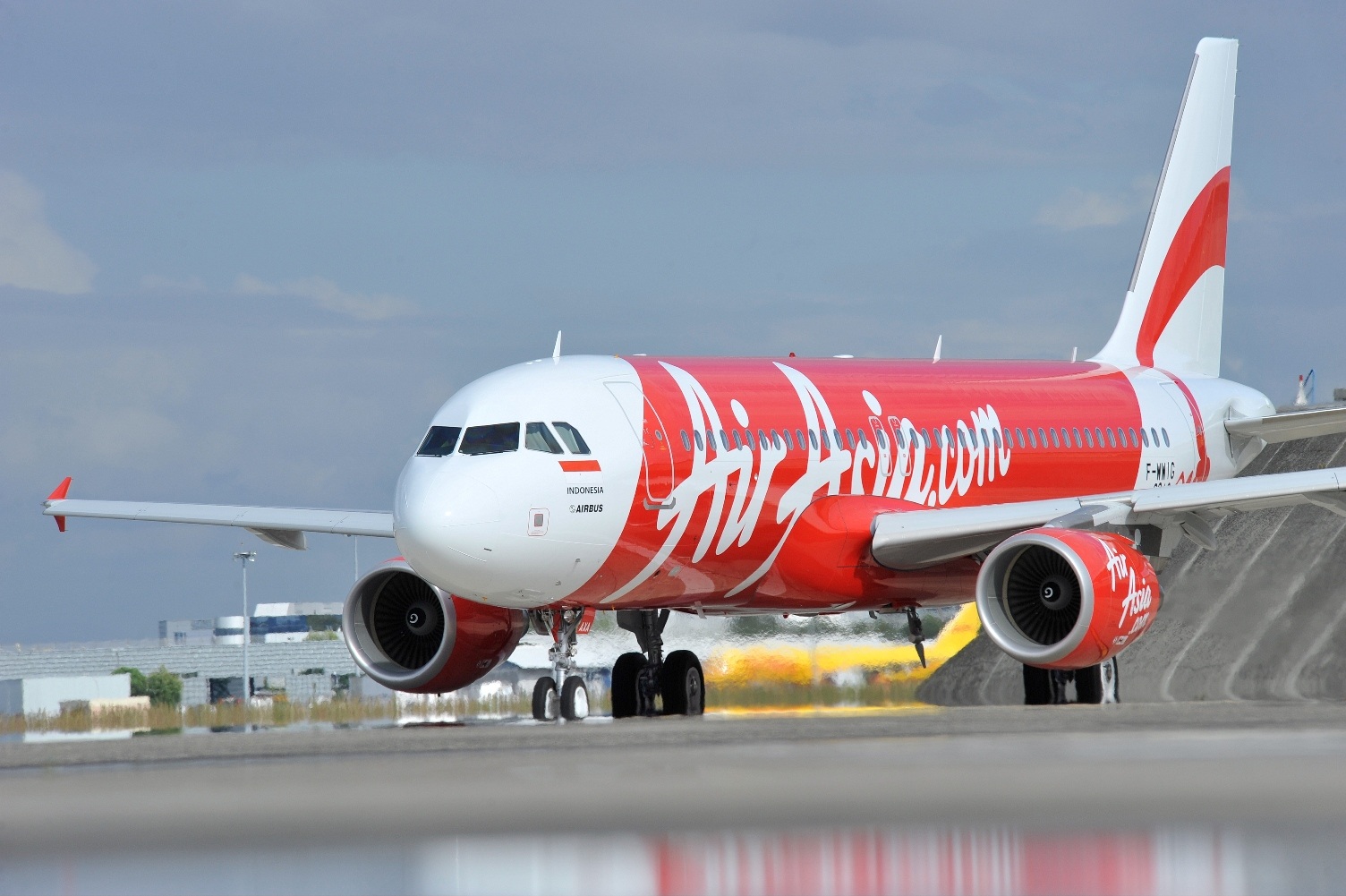
    Based in Malaysia, AirAsia is operating low-cost airlines in four Asean countries, namely Malaysia, Indonesia, the Philippines, and Thailand. The company is planning to launch the newest addition, AirAsia Cambodia, in March.

    “We want to make Bangkok the next Dubai in terms of being a global aviation hub, as the Asean region has high potential with a population numbering more than 700 million,” Fernandes said on Wednesday. “However, Thailand’s airports cannot grow overnight. Therefore, we want to see infrastructure for low-cost airlines included in the country’s future airport expansion projects.”

    He went on to thank the Thai government for waiving the visa requirement for travellers from selected countries in a bid to boost tourism, which also benefits the airline industry in the region.

    Fernandes revealed that after meeting with Srettha, who also doubles as Finance Minister, the AirAsia group would file an official proposal to the Thai government, requesting a 40% reduction on excise tax for jet fuel, which is currently collected at 4.726 baht per litre, and is the highest among the four countries where AirAsia operates.

    The Philippines collect excise tax for jet fuels of 2.48 baht per litre, while Malaysia and Indonesia do not collect this tax.

    “Reducing fuel tax will also help expand the domestic tourism market by distributing Thai and foreign visitors to other provinces besides Bangkok and Phuket,” he said.

    AirAsia will also ask the Thai government to maintain the current rate of the air navigation service fee collected by the Aeronautical Radio of Thailand, which will help airline operators manage operational costs.

    The airline would also urge the Civil Aviation Authority of Thailand to consider increasing traffic rights on Thailand-India routes.

    Tassapon Bijleveld, executive chairman of Thai AirAsia and Thai AirAsia X, said on Wednesday that AirAsia group is planning to procure 412 new airplanes, about 25% of which or 100-150 airplanes have been earmarked for the Thai operation.

    He said Thai AirAsia and Thai AirAsia X airlines aim to serve 20-21 million passengers in 2024, up from 18 million people recorded in 2023. However, this estimation is still lower than the tally in 2019, before the pandemic, at 22 million people.

    Tassapon added that Thai AirAsia and Thai AirAsia X would not merge into a single airline immediately after the AirAsia Group announced a business structure adjustment on Monday (January 15), which will see the merger of airline businesses under Capital A with its sister company AirAsia X Bhd (AAX).

    “The merger of two airlines in Thailand may have to wait 2-3 years, until after Thai AirAsia X leaves the business rehabilitation plan, which should happen around late 2025,” he said.

  • YouTube is really serious about podcasts, launches new tool for creators

    YouTube is really serious about podcasts, launches new tool for creators

    Podcasts have become the new golden goose for many streaming services. Spotify, Apple, Google, and many other companies are trying to implement podcasts into their services and attract as many, preferably popular, creators.

    YouTube is one of the services that has already been pushing podcasts to its consumers as much as possible. To make it easier for creators to reach bigger audiences, YouTube is now rolling out a new feature that will allow podcast creators to upload episodes directly from their RSS feeds.

    To start publishing podcasts from an RSS feed, you first need to connect your RSS feed to YouTube. The procedure is simple and requires a few steps described in a guide published by Google on YouTube’s support page:

    • In YouTube Studio, click Create / New podcast / Submit RSS feed.
    • Read and accept the RSS Ingestion Tool Terms of Service.
    • Read the instructions on screen and click Next.
    • Enter your RSS feed URL and click Next.
    • Click Send code to verify your account.
    • Enter the verification code sent to the email address on your RSS feed and click Verify. If you don’t know the email on your RSS feed, contact your hosting provider.
    • Choose which episodes you want to upload to your podcast on YouTube and click Next. You can choose to upload: All existing episodes; Episodes published since a specific date; Only future episodes.
    • Review visibility details and click Save.

    To publish a feed, simply head to Content / Podcasts in YouTube Studio, and under “Video count” you’ll find the Publish button next to your podcast feed. The button only appears when podcast episodes have finished uploading.

    The tool allows creators to re-upload an episode, edit podcast details, as well as disconnect an RSS feed from their YouTube podcast.

  • Google Wallet now stores airline boarding passes on your wrist

    Google Wallet now stores airline boarding passes on your wrist

    In a recent update, Google Wallet for Wear OS has expanded its capabilities to include support for airline boarding passes. This comes after the addition of loyalty card support back in December.

    Your Wear OS 3+ device will now display a new notification from the Google Wallet app on your smartwatch. This notification will inform you about your boarding pass for the flight to any airport with an option to tap on it to “View pass” and thus access the QR code for easy gate scanning.

    This much-needed addition greatly enhances the functionality of Google Wallet for Wear OS, allowing it to integrate with a broader range of phone features seamlessly. When Google introduced loyalty card support in December, it was initially limited to basic membership programs and other types of passes. Unfortunately, excluded from the list were COVID cards, health insurance cards, and private passes.

    Some users have reported seeing this feature already available on the Pixel Watch 2, while original Pixel Watch users are still waiting for the update, which appears to be server-side. However, as this was not a feature that was announced as a Pixel Watch 2 exclusive, there shouldn’t be any reason why the original Google Pixel Watch wouldn’t receive it.

    The support documentation for Google Wallet also includes information on how to find your passes on your smartwatch’s Wallet app, and even includes troubleshooting info should you not be able to find the option to add your boarding pass to your watch. The documentation states that passes are automatically added across all of your synced devices, but your watch must be running Wear OS 3.5 or newer and the Google Wallet app on the watch must be version 23.46.x or above. Additionally, it is stated that Fitbit devices aren’t supported.

  • Newest version of Fitbit on Android allows you to manually log your body temperature

    Newest version of Fitbit on Android allows you to manually log your body temperature

    Fitbit has recently rolled out an update for its Android app, bringing it to version 4.06. This latest update introduces a new feature that enables users to manually record their body temperature readings using their thermometer.

    Users will now be able to tap the floating action button and find a new option for “Temperature” alongside Activity, Sleep, Food, Water, and Weight. The “Body temperature” card under “Health” in the Today feed will take you to a stats page that follows the new design style.

    Additionally, Fitbit has introduced a new feature that allows users to manage their manually logged entries easily. Now, you can specify a precise time for these entries and even delete them if needed. Users will also have the option to completely disable the card by accessing the “Customize Today” toggles page.

    This feature is a recent addition to the revamped Fitbit app. However, it is possible that it might have already been accessible in the previous version of the app if you owned a Fitbit tracker or smartwatch capable of measuring nightly skin temperature variations.

    Google Pixel 8 Pro is equipped with a temperature sensor that will soon be equipped with this functionality to measure body temperature — as soon as the US Food and Drug Administration grants the regulatory approval. Once the feature is available, users will be able to take a reading from the app and effortlessly save it to the Fitbit app. This could be extremely helpful to recognize ahead of time the onset of a possible illness or to track female reproductive health.

    The app can be downloaded or updated on Android from the Google Play Store, while iOS is currently on version 4.08. This latest addition to the Fitbit app is a welcome feature that empowers users to closely track their health and make well-informed decisions regarding their health.

  • You may soon be able to send Selfie GIFs in Google Messages

    You may soon be able to send Selfie GIFs in Google Messages

    Google appears to be working on an exciting addition to its messaging app, Google Messages. A hidden feature that allows users to send short 4-second videos in the form of GIFs, which would add a fun and dynamic element to their conversations, has been discovered.

    TheSpAndroid recently stumbled upon an interesting feature called Selfie GIFs that can be activated within the Google Messages app by simply long-pressing the camera icon. The feature is reportedly currently in development, and Google has not officially announced it yet.

    Once enabled and after long-pressing the camera icon, a new UI pops up with a rounded camera frame in the center. At the bottom, there is a camera switch button that allows users to switch between the front and rear cameras easily. Once the 3-second timer is up, the recording will kick off automatically.

    After it’s finished, users will be able to view the recorded video in a GIF format through a preview UI. At that point, users are faced with two choices: Reset or Send. Resetting the recording process can be done by pressing the designated button, while sharing the video as a rounded GIF is as simple as hitting the Send option. This is similar to the functionality currently found in Chromebooks’ camera app.

    Google has been actively developing and introducing new features to enhance its widely-used messaging app, Google Messages. In December, the company introduced a range of exciting new features to enhance the texting experience. These additions include screen effects, custom backgrounds, and more.

    In addition, the company unveiled a fresh contacts page featuring the Material You carousel plus a range of exciting new features and enhancements for compatible Pixel devices included in the latest Pixel Feature Drop — such as Video Boost, which enhances video playback, and an improved Photo Unblur feature, among others.

    Now, it looks like Google is focused on enhancing the messaging experience with the introduction of Selfie GIFs. Although it’s not enabled by default yet, this feature is a fun little addition that will be sure to add a touch of fun to your conversations.

  • Meta implements new restrictions for teen accounts on Instagram and Facebook

    Meta implements new restrictions for teen accounts on Instagram and Facebook

    Meta announced it will start hiding harmful content for Instagram and Facebook teen accounts. The company confirmed that it will automatically place all teens accounts into “the most restrictive control settings” on both its social networks, Instagram and Facebook.

    Besides that, Meta will restrict additional terms in Search on Instagram. Harmful and other types of age-inappropriate content aren’t usually recommended to teens in places like Reels and Explore, but once these changes are implemented, Meta will no longer show it too teens in Feed and Stories, even if it’s shared by someone they follow.
    New teens who join Instagram and Facebook will now have their accounts placed into the most restrictive content control setting by default. In the future, this will expand to teens who are already using both Meta’s social apps.

    Another important change involves content about suicide, self-harm and eating disorders. While these topics are very serious and must be treated accordingly, Meta will start hiding related results when teens search for these specific terms.

    Instead, teens will be directed to expert resources for help. According to Meta, this specific update will roll out for everyone over the coming weeks.
    Last but not least, Meta will start sending new notifications encouraging teens to update their settings to a more private experience. If they choose to “Turn on recommended settings,” Meta will automatically change their settings to restrict who can repost their content, tag or mention them, as well as include their content in Reels Remixes. Also, only their followers will be able to message them.

  • Motorbike sales decline in 2023

    Motorbike sales decline in 2023

    Vietnam Association of Motorcycle Manufacturers members sold 2.5 million vehicles in the domestic market last year, down 16.2% from 2022.

    Its five members are Honda, Yamaha, Piaggio, Suzuki, and SYM. They sold 634,688 motorcycles in Q1 of last year, 588,926 in Q2, 610,635 in Q3, and 681,963 in Q4.

    The Vietnamese motorcycle market also has other brands such as VinFast, Kymco, BMW Motorrad, Ducati, Triumph, Kawasaki, Royal Enfield, Harley-Davidson, KTM and Yadea.

    Within Southeast Asia, Vietnam has the highest motorcycle ownership rate at 72.8%, while Singapore has the lowest rate, at 2.4%, according to Seasia Stats, an integral part of the Seasia.co platform that provides statistical data and infographics.

  • Wi-Fi 7 is introduced with five times faster transfer speeds and less interference

    Wi-Fi 7 is introduced with five times faster transfer speeds and less interference

    Earlier this week the Wi-Fi Alliance unveiled Wi-Fi 7 which brings faster transfer speeds and lower latency, a couple of things that will be tailor-made for a device like Apple’s Vision Pro. Let’s take a deeper look at the numbers. The current standard is Wi-Fi 6E which is essentially Wi-Fi 6 with additional support for the 6GHz band. But check out how much faster Wi-Fi 7 will be compared to Wi-Fi 6E.

    While Wi-Fi 6E has a maximum transfer speed of 9Gbps, Wi-Fi 7 supports a maximum transfer speed of up to 46Gbps. That makes Wi-Fi 7 five times faster than current Wi-Fi. In countries where Wi-Fi has access to the 6GHz band, Wi-Fi 7 will double the channel size meaning support for more traffic leading to less interference. 4K QAM means that transmissions carry 20% more bits than they can with the 1024 QAM currently being used with Wi-Fi 6E. In other words, more data can be transmitted at one time.

    Kevin Robinson, president and CEO of Wi-Fi Alliance, said, “The introduction of Wi-Fi CERTIFIED 7 marks the emergence of the latest generation of Wi-Fi and will be an accelerant to mass adoption of Wi-Fi 7. This certification underscores our relentless commitment to delivering cutting-edge technology that redefines the way users experience Wi-Fi, providing faster speeds, improved efficiency, and increased reliability which expand the horizons of what is possible through Wi-Fi.”

    It will take some time before you see smartphones support the new Wi-Fi standard. Haitung Securities analyst Jeff Pu told clients a few months ago that the iPhone 16 Pro and the iPhone 16 Pro Max will be the first Apple devices to work with Wi-Fi 7 in 2024. Those phones should be released this coming September. But as we pointed out earlier, Wi-Fi 7 is perfect for mixed reality devices like the Vision Pro which makes us wonder whether Apple will be able to have its $3,499 spatial computer ready to support Wi-Fi 7 in time for its February 2nd launch.

    Considering that there is speculation that the Samsung Galaxy S24 Ultra will support Wi-Fi 7, we could see Vision Pro do the same.

  • Lego reveals new Apac leadership

    Lego reveals new Apac leadership

    The Lego Group has appointed Claus Kristensen as its new senior VP for Asia Pacific (Apac) to oversee the region and newly reshuffled business units.

    Kristensen will succeed Eric Maugein, who stepped down after nearly 20 years at the company to begin a new chapter in his career.

    An 11-year veteran of Lego, Kristensen previously worked in the region as VP of Marketing and B2B e-commerce.  His earlier roles include VP and GM of Australia & New Zealand and head of executive strategy at the Lego Group’s headquarters.

    He brings commercial and marketing experience to the role, together with his strategic mindset and inclusive leadership style.

    “I am so proud to be part of this company and will be focused on working with the team to deliver a step-up in business performance as we empower more kids and adults around Asia Pacific to unlock the power of creative play,” Kristensen said of his appointment.

    In his new position, he will report to chief commercial officer Colette Burke and be part of the markets & channels leadership team.

    The Lego Group has also implemented a new organisational structure in line with its ambitions in Apac and to serve high-growth markets. The company introduced two new business units: India & Emerging Asia (IEA), and Singapore, Malaysia and Travel Retail (SMTR).

    “This change deepens our commitment to these markets and sets us up to accelerate growth by unlocking new possibilities with dedicated resources, synergies in tackling similar challenges, and continuous innovation to enhance our ongoing relationships with our partners,” Kristensen elaborated.

  • Thailand’s wine tax reform could be opportune for Aussie winemakers

    Thailand’s wine tax reform could be opportune for Aussie winemakers

    A new wine tax regime in Thailand – where wine drinkers have always been taxed higher than those who prefer beer or spirits – could open the way for higher exports from Australia winemakers.

    The move comes after the government introduced a series of relaxations on liquor sales. Last year, the Thai government lifted a 50-year-old ban on the sale of alcoholic beverages in the afternoon, from 2 pm to 5 pm, and extended the operating hours of entertainment venues such as nightclubs and bars to boost the tourism industry.

    According to government spokesperson Chai Wacharonke, the steep import tariffs on wines, which currently stand at 54 per cent and 60 per cent of declared value, will be abolished indefinitely.

    Moreover, the excise tax on wine will be reduced from 10 per cent to 5 per cent and on spirits from 10 per cent to zero to help small-scale producers.

    The tax cuts are expected to considerably lower the cost of imported wines in Thailand. The country has been known for imposing an average tax of around 250 per cent on wine, which includes import tariffs, excise tax, municipal tax, and 7 per cent VAT.

    However, the change in tariffs could impact the country’s revenue.

    In the previous year, the government generated as much as A$7.6 billion in tax coffers from alcohol, beer, and other beverages, including $2.8 billion from alcoholic drinks.

    The new tax measures will take effect shortly, added Wacharonke.

  • Pepper exports rise in volume, fall in value

    Pepper exports rise in volume, fall in value

    While Vietnam’s pepper export volumes soared by 16.6% to 267,000 tons in 2023, the value dropped by 6% to US$912 million, according to the Vietnam Customs.

    The average export price of Vietnamese pepper, which constitutes 60% of global supply, dropped by 19.4% from the previous year, to US$3,420 per ton.

    Black pepper made up 71.2% of Vietnam’s exports, and white pepper comprised the remainder.

    The U.S. remained the top purchaser of Vietnamese pepper, accounting for 23.5% of the total export value, followed by China 14.1%, India 5.4% and Germany 4.3%.

    The U.S. decreased its pepper imports from India in favor of Vietnamese pepper, which is recognized for its favorable pricing and improving quality.

    The Vietnam Pepper and Spice Association notes that Vietnamese pepper holds a competitive edge over other pepper-exporting nations such as Indonesia and India, bolstered by the European Union-Vietnam Free Trade Agreement, which has slashed the import tax on ground and crushed pepper to the EU to zero.

    It is forecast Vietnam’s pepper export slow down because domestic supply is no longer abundant. The pepper inventory in 2024 will be at its lowest in many years.

    This year’s pepper crop is projected to decrease by 10-15% to around 165,000 tons due to smaller cultivation areas and unfavorable weather conditions.

  • Central bank reveals investor interest in restructuring troubled lender SCB

    Central bank reveals investor interest in restructuring troubled lender SCB

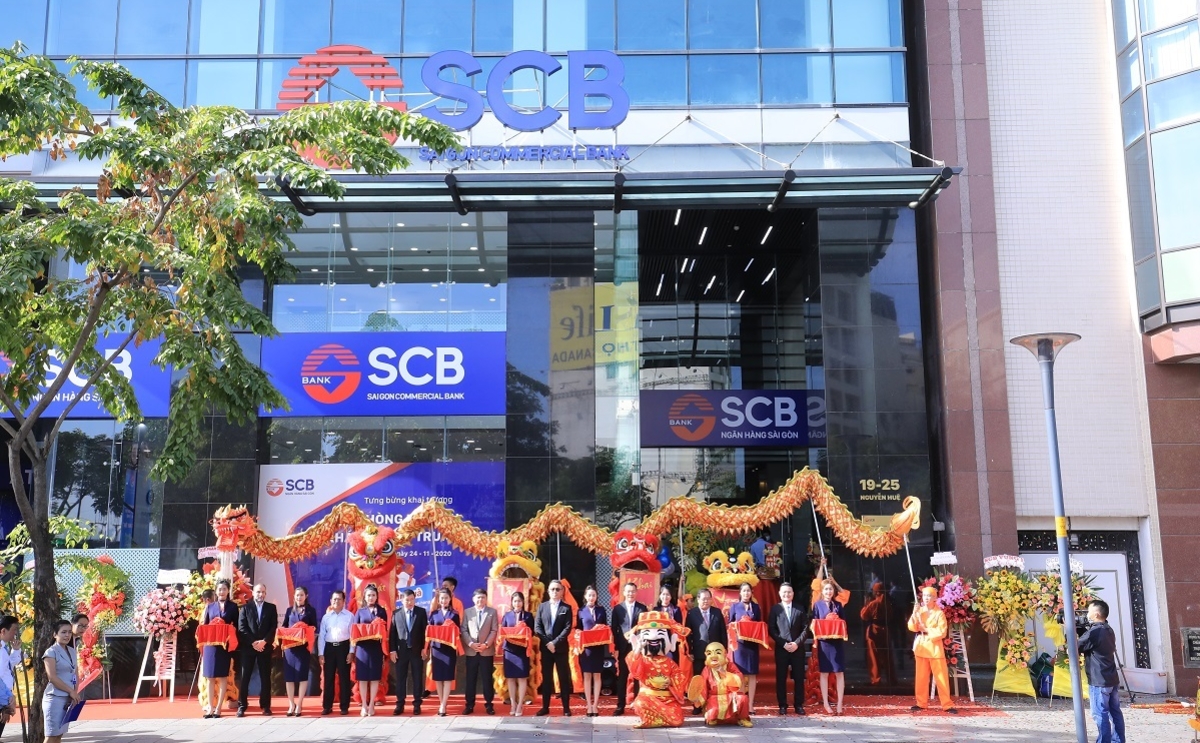
    The State Bank of Vietnam (SBV) is considering proposals from investors to restructure the Saigon Commercial Bank (SCB), a bank experiencing financial difficulties.

    After SCB faced a run in October 2022, the central bank put the private lender under special control to limit negative impacts on it and credit institutions in general.

    Historically, several banks under special control have successfully recovered and prospered.

    The SBV is also formulating plans to restructure other struggling banks, including CBBank, OceanBank, GP Bank, and DongABank.

    While plans to restructure these banks are being considered and prepared for approval, progress is lagging behind the anticipated schedule.

    The government has previously indicated the challenge of finding financially healthy commercial banks willing to merge with these ailing institutions.

    Additionally, banks require time to persuade shareholders, particularly major and foreign strategic shareholders, to agree to mandatory transfers.

    In mid-December, meeting with the leaders of Mizuho, one of the three largest banks in Japan, Prime Minister Pham Minh Chinh asked them to participate in restructuring Vietnam’s weak banks.

  • Carmaker Thaco eyes $4.1B circular bauxite complex project

    Carmaker Thaco eyes $4.1B circular bauxite complex project

    Carmaker THACO has proposed a circular economy complex for mining and processing bauxite worth VND103 trillion (US$4.1 billion) in Lam Dong Province.

    The project, called Lam Dong 2 Aluminum Complex, will be carried out in Bao Lam, Da Huoai and Da Teh districts and Bao Loc City.

    It will encompass the entire process of mining bauxite ores, processing them into aluminum, restoring the surrounding environment, planting crops and developing ecotourism in the area.

    Almost one-third of the project’s capital will come from THACO while the remainder will come from loans.

    The complex is divided into three stages, which will be carried out over 10 years, and is expected to produce four tons of aluminum per year once it is put into operation in 2034.

    During the project’s 50-year duration, it will mine bauxite ores to manufacture aluminum in the first 20 years then switch to external bauxite supply in the remaining 30 years, says THACO.

    The carmaker is asking to have a meeting with Lam Dong People’s Committee this month to present its research results and implementation plan for the project.

    It aims to complete the report on the project’s feasibility quickly and submit it to regulators within the first quarter of 2024.

    THACO is a multi-industry corporation that currently operates in automobiles, agriculture, mechanics, logistics, construction, and commerce.

    The firm’s profit after tax was just over VND1 billion for the first six months of 2023, which is barely 25% of the profit it earned in the same period in 2022 when the car industry was mired in difficulties.

    Lam Dong Province has one of the largest bauxite reserves in the Central Highlands region, and there are currently two bauxite plants in the province.

  • Metcash appoints Kylie Wallbridge as liquor division CEO

    Metcash appoints Kylie Wallbridge as liquor division CEO

    Wholesaler Metcash has appointed Kylie Wallbridge as the new CEO of its liquor division, effective in March.

    Metcash’s liquor segment includes the Cellarbrations, IGA Liquor, and The Bottle-O brands.

    Wallbridge will replace John Barakat, who has been the acting liquor CEO since the early retirement of Chris Baddock due to health reasons.

    Currently, Wallbridge serves as the MD of Diageo in the UK. She previously served as the MD of Diageo in Japan.

    “Kylie is a proven business leader with a track record for delivering results. Her alignment to our purpose of Championing Successful Independents and her passion for people is evident through her strong relationships with both retailers and suppliers,” said Metcash CEO Doug Jones.

    “I have no doubt Kylie will be a great asset to the Liquor pillar and Metcash more broadly. We warmly welcome her to Metcash. I would also like to sincerely thank John for acting in the role following the retirement of Chris last October.”