Author: Mei Ling Tan

  • Cake digital bank cooperates with VinFast to support e-bike buyers

    Cake digital bank cooperates with VinFast to support e-bike buyers

    Cake by VPBank and VinFast are working together to provide e-bike purchase loans at 0% interest, benefiting both customers and promoting environmental protection in line with green consumption trends.

    With this loan package, the customer experience will be simplified. They can sign up for loans without visiting a bank branch and receive approval results on the Cake app within a few minutes.

    The first priority group of customers to experience the development is Be Group’s tech drivers, who are familiar with consumer loan services on Cake.

    According to statistics from the Ministry of Industry and Trade, e-bike sales in Vietnam have increased by about 30–35% recently, making the country the largest market for e-bikes in ASEAN, and the runner-up in the world, just behind China.

    There is ample potential for electric vehicles, including e-bikes and electric cars, given that the world in general and Vietnam in particular are promoting green transformation trends in transportation and other fields.

    Ho Thanh Huong, CEO of VinFast Vietnam, said that the partnership agreement gives customers the opportunity to own and use smart, modern, and environmentally friendly e-bikes at optimal costs through simple and convenient procedures.

    This partnership offers customers access to a safe and civilized transportation alternative, contributing directly to the government’s net-zero carbon emission target by 2050.

    In the current context, the collaboration between the large-scale EV manufacturer and the digital bank Cake by VPBank is expected to bring benefits to the mass of customers on both sides.

    While Cake will expand its digital financial product line to include vehicle installment payment services, VinFast offers customers a “Buy Now, Pay Later” payment experience quickly, conveniently, and securely.

    Furthermore, this is also an opportunity to promote digital financial inclusion. Specifically, Cake by VPBank boasts a large and diverse digital ecosystem, while VinFast owns a nationwide distribution network with a diverse lineup of two-wheeler and four-wheeler models.

    According to Nguyen Huu Quang, CEO of Cake, in the coming time, Cake by VPBank will keep working with VinFast to research different financing packages tailored for customers looking to acquire electric vehicles across several channels.

    “We are in discussion to develop more diverse products to bring practical benefits to customers, thereby contributing to promoting comprehensive digital finance and green energy in Vietnam,” he said.

    The handshake between VinFast and Cake by VPBank digital bank will promote comprehensive digital services, popularize EVs, and foster environmental protection.

    Cake by VPBank is a testament to the trend of innovation in consumer finance products. Before venturing into the electric vehicle market, the digital banking app has already enabled its tech drivers to borrow cash online within a few minutes.

    Cake has rolled out niche lending products such as “Ung tien nhanh” with instant approval.
  • Coffee prices on the boil in Vietnam

    Coffee prices on the boil in Vietnam

    Robusta coffee prices have risen to a record VND68,000 ($2.79) per kilogram, up 76% since the beginning of this year.

    Prices have also been rising globally. On Monday rose by $10-39 per ton to $2,551-2,566 in London.

    The prices of Arabica, another coffee variety, rose in New York by 0.45-0.95 cents per pound to $158-162. A kilogram equals 2.2 pounds.

    Vu Duc Con, deputy director of the Dak Lak Department of Agriculture and Rural Development, said one of the reasons for the rising prices is that the harvest season has yet to arrive while stocks from the previous season have mostly been sold.

    He added that prices would be more reasonable in the next two months when the coffee crop ripens.

    Hung, owner of a coffee factory in the Central Highlands province of Dak Lak, said farmers sold out their coffee stocks around a month ago.

    He is not buying now since the high prices would hit his profit margin.

    The Vietnam Coffee Cocoa Association has forecast coffee yields to drop by 10-15% in the 2022-2023 season to 1.47 million tons due to high heat.

    In Dak Lak, authorities expect outputs to decline since farmers have been switching to growing other crops such as durian and avocado.

    In the first eight months Vietnam’s average coffee export price reached a new peak of $3,054 per ton, up nearly 30% year-on-year.

    The coffee was shipped to 38 markets, with the E.U. and U.S. being the largest buyers.

  • Miniso to open its first UK ‘Blind Box’ store

    Miniso to open its first UK ‘Blind Box’ store

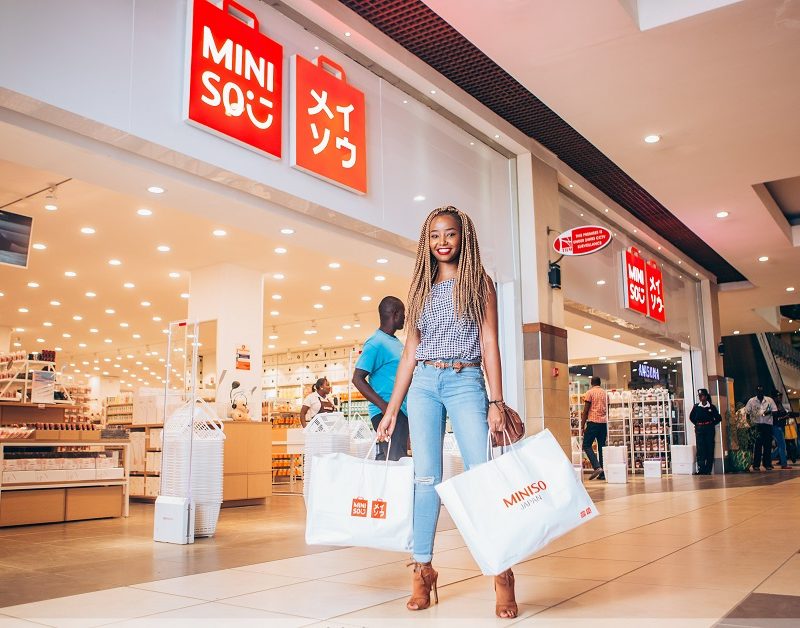
    Chinese lifestyle brand Miniso will open its first UK “Blind Box” store on Shaftesbury Avenue, London on September 29.

    The new store will offer customers more than 50 blind boxes, capitalizing on the blooming blind box craze. According to Miniso, the new store “represents an exciting new shopping experience”, bringing Miniso’s characteristic sense of choice to the heart of downtown London.

    The new 40sqm store will house Miniso’s co-branded blind box collections with some of the IP owners. Shoppers will find Sanrio, Disney Pixar, Tokidoki, We Bare Bears, Minions, and Winnie the Pooh blind boxes. Miniso’s original products, including plush toys and accessories, will also be available at the store.

    “Our first blind box store marks a major milestone for Miniso,” said Saad Usman, COO of Miniso UK.

    “The unknown element of blind boxes adds mystery and excitement to the shopping experience, and we’re delighted to bring this special store to London. Blind boxes are now a major part of our global strategy, and this new store marks the latest development as we move forward with our global expansion.”

    Launching Miniso’s first “Blind Box” store is the latest step in the brand’s ongoing global expansion plan as it strives to become a global lifestyle super-brand. The company has around 5800 outlets worldwide, with more than 20 of them located in the UK, including London, Manchester, Nottingham, Belfast, and others.

  • Singapore sneaker platform Novelship secures US$9.5 million in Series B

    Singapore sneaker platform Novelship secures US$9.5 million in Series B

    Singapore-based sneaker marketplace Novelship has bagged US$9.5 million in its Series B funding round led by East Ventures, iGlobe Partners, and GSR Ventures.

    The company said the new funds will be used to accelerate its expansion plans in Southeast Asia, including enhancing its logistics capabilities, refining authentication processes, expanding its slew of in-house collections, and optimizing its environmentally-conscious delivery process.

    “As collectors’ priorities shift towards accessibility, efficiency, and integrity, Novelship stands firm in our dedication to enhance these aspects on our platform,” said Richard Xia, co-founder and CEO of Novelship.

    The company was founded in 2018 as a platform for buyers and sellers to trade authentic sneakers, limited-edition apparel, and exclusive physical and digital collectibles.

    The funding round came after Novelship’s recent collaboration with Snoop Dogg. The marketplace also introduced new in-house products, including Novelty-branded T-shirts, socks, shoelaces, and Shoe Sole Protectors.

    “Our recent expansion of collections and the introduction of new in-house products reflect our commitment to providing broader accessibility for all collectors,” Xia said.

    Novelship reported a compound annual growth rate (CAGR) of 37 percent in revenue and 55 percent in transactions.

    “Novelship has been proven as a one-stop marketplace to fulfill the desires of collectors,” said Willson Cuaca, co-founder and MD at East Ventures. “We also take great pride in witnessing how Novelship incorporates sustainable practices into its operations.”

    Further reading, Asics says its new sneaker offers the lowest CO2 emissions of any brand.

  • Pernod Ricard taps banks to review of Australian, NZ wine business

    Pernod Ricard taps banks to review of Australian, NZ wine business

    Wine and spirits producer Pernod Ricard has hired Morgan Stanley and JPMorgan for a strategic review of its Australia and New Zealand business.

    Sales of the unit may be expected by late October, the Australian Financial Review reported. The company’s portfolio includes the Jacob’s Creek, St Hugo, and George Wyndham brands in Australia and the Brancott Estate and Stoneleigh brands in New Zealand.

    The AFR said the Jacob’s Creek brand could be expected to draw significant attention.

    In 2019, the Paris-listed company attempted to put a portfolio of its wine brands including Jacob’s Creek for sale, with the help of the two investment banks. The unit, which at that time was estimated to be valued at $1 billion, attracted interest from Accolade Wines, PAI Partners, Penfolds, Treasury Wine Estates, KKR, and TPG Capital.

    The AFR noted that Morgan Stanley and JPMorgan may remove Accolade Wines, owned by The Carlyle Group, from potential buyers this time as it faces a huge debt and has tapped Rothschild & Co for refinancing options.

    Pernod Ricard’s Australian and New Zealand business booked a 13 percent increase in net sales to €12.14 billion in the last financial year. Its assets include Chivas Regal, The Glenlivet and Jameson whiskeys, Absolut and Wyborowa vodkas, and Pernod and Ricard labels.

    Pernod Ricard’s strategic review comes as another wine company, Australian Vintage, launched a strategic review for its business due to economic pressures it faces.

    The report added that Accolade has sold its House of Arras sparkling wines brand and vineyards, and the Bay of Fires winery and cellar door in Tasmania to Handpicked Wines for an undisclosed amount.

  • New WhatsApp beta on TestFlight includes WhatsApp Beta for iPad

    New WhatsApp beta on TestFlight includes WhatsApp Beta for iPad

    Popular messaging app WhatsApp has never offered an app for the iPad. Instead, iPad users who want to use the platform are forced to use the web version of WhatsApp using a mobile browser. That’s because in the beginning, there wasn’t a separate iPadOS operating system for the tablets and WhatsApp didn’t work with the iPad.

    From time to time, there have been several false starts, including a couple of years ago when Facebook founder and CEO Mark Zuckerberg (Meta owns WhatsApp) and WhatsApp chief Will Cathcart discussed a possible iPad app for WhatsApp in a group chat.

    Per WABetaInfo, the latest version of the WhatsApp Beta (version 23.19.1.71), available only from Apple’s TestFlight, is compatible with the iPad. You will have to be a member of the WhatsApp for iOS official beta program on TestFlight to install WhatsApp on your iPad. Once you install it, you will need to scan a QR code using your iPhone. The app will then download all of your conversations, and you’ll be able to send and receive messages on your iPhone, iPad, and Mac.

    Once the app is installed on the iPad, users will be able to use WhatsApp on their Apple tablets regardless of whether their iPhone is nearby or not, even if the devices aren’t sharing the same Wi-Fi signal. The WhatsApp app for iPad is limited in that you cannot open a new WhatsApp account from it, similar to the version of WhatsApp made for the desktop. It offers more content on the screen thanks to the larger displays.

    It isn’t known when the public will get access to this app and as we said, the Beta is available only from Apple’s TestFlight, so there is limited availability. But that will change as soon as WhatsApp for iPad becomes available in the App Store.

    We should point out that WhatsApp’s sibling, Instagram, also does not offer an app for iPad. Both WhatsApp and Instagram were purchased by what was then known as Facebook in February 2014, and April 2012 respectively.

  • Starbucks opens 100th store in Vietnam

    Starbucks opens 100th store in Vietnam

    Starbucks Vietnam celebrated its 10-year journey in the country with the grand opening of the 100th store in Lotte Mall West Lake in Hanoi on Saturday.

    Located in a new entertainment and shopping complex in Hanoi, the 100th store is designed to pay homage to the beautiful natural environment through a selected blue accent colour and a warm material palette.

    In February 2013, Starbucks marked its footprint in Vietnam by opening its first store in Ho Chi Minh City. Since then, it has steadily expanded its presence and now operates in nine cities and provinces across the country.

    According to an August report by iPOS.vn on Vietnam’s F&B market in the first six months of 2023, the market displayed strong volatility, with most businesses either witnessing a decrease in revenue or maintaining similar figures compared to the same period the previous year. However, many businesses remain optimistic about a market turnaround.

    A survey of 200 restaurant and cafe owners indicated that 40.1% of F&B businesses anticipate positive signals in business activities in the second half of 2023. This shows, despite certain challenges, Vietnam is still regarded as a “fertile land” for international brands in the F&B sector.

  • Capital Elite attracts South Korean investors

    Capital Elite attracts South Korean investors

    Capital Elite is a popular investment destination for Korean investors due to its prime location in Hanoi’s new CBD and diverse entertainment and leisure areas.

    The Vietnamese real estate market is attracting South Korean investors due to rapid infrastructure development, reasonable property pricing, and potential value appreciation.

    The proportion of foreign individuals interested in Vietnam’s real estate is increasing, with a particular focus on Korean investors.

    According to The Chosun Ilbo, Vietnam is the second most popular destination for real estate investment among Korean investors.

    Experts point out that it primarily stems from the high-profit potential and high-quality products, coupled with the participation of reputable developers, which have contributed to driving the investment trend. The relaxation of Vietnam’s housing law is also making it easier for foreigners to purchase property.

    Furthermore, the attractive market prices are a crucial factor in drawing the attention of Korean real estate investors.

    According to Le Thi Hang, CEO of Indochine Real Estate, with the same amount of money, they can purchase three high-quality apartments in Vietnam instead of investing in one apartment in their home country. This allows them to diversify their investment portfolio.

    Moreover, rental yields in Vietnam are quite favorable. Continuous infrastructure growth also brings excellent price appreciation potential to the real estate market.

    Renowned for their culture and lifestyle that leans towards apartment living, up to 79% of Korean customers opt for premium high-rise condominiums in major urban centers.

    One of the luxury apartment projects in Hanoi, Capital Elite is capturing the attention of the Korean community.

    Not only does Capital Elite boast a prime location right on Pham Hung Street, one of the most rapidly developing thoroughfares, but it also sits at the heart of the new CBD, the new economic hub of Hanoi, which is home to major administrative centers, headquarters of large corporations, and a variety of entertainment and leisure areas.

    As a result, residents enjoy seamless connectivity to a plethora of educational, healthcare, entertainment, and government facilities in the area, all within just a few minutes’ commute, making it a perfectly integrated living space.

    The My Dinh area is also a hub for a substantial expatriate community in the capital city. Capital Elite serves as one of the ideal destinations to meet the rising demand of Korean nationals living and working in Vietnam, a number that increases each year.

    Especially in the My Dinh-Me Tri urban areas, there is a concentration of affluent Korean residents.

    With the growing demand for housing, workspace, and entertainment for this group, the potential for both rental income and property appreciation is on the rise.

    In addition to its favorable location, on-site amenities and living spaces are also factors that investors pay special attention to.

    With a collection of 36 exclusive amenities, including a shopping center, international restaurants, a luxurious sky bar, all-season swimming pools, a jacuzzi, and a premium gym and fitness center, Capital Elite aligns perfectly with the notion of enjoying the most extensive amenities when living in an apartment for Korean residents.

    Furthermore, the project’s abundant amenities, along with the fact that 100% of the apartments cover over 100 square meters and have 3 bedrooms, ensure that it meets the standards of even the most discerning Korean guests.

    For further information, contact the Development & Project Management Unit for Capital Elite on the first floor of the CT4 Vimeco Building, Nguyen Chanh Street, Cau Giay District, Hanoi.

  • UBS Helps European Banks Leave US Peers in the Dust

    UBS Helps European Banks Leave US Peers in the Dust

    European banks are more profitable than American ones for the first time in ten years. A study points to UBS being a key reason for that.

    The elite of Wall Street usually have their nose well ahead of the game in the perpetual battle between European and US finance industry giants. Or at least they did until the first half of this year. But now the winds have shifted, with a new EY analysis (German only) showing that profits for the main European banks have grown much faster than their American-based counterparts.

    Much of this was, of course, driven by UBS’s forced takeover of Credit Suisse, which returned the bank to the top of the heap on the continent. But beyond that, most of the banks on this side of the pond benefited handsomely from the European Central Bank’s move to sharply increase rates, which has helped fatten up interest rate margins.

    The cumulated net profit of the ten largest banks (going by balance sheet size) rose by 80 percent to 75 billion euros, according to EY. By contrast, US-based institutions saw profits rise by only 7 percent to about 82 billion euros. In Europe, UBS reported the most first-half profit at 27.4 billion euros ($29 billion in the second quarter alone, mainly related to negative goodwill from Credit Suisse) while in the US, JP Morgan led the pack with 24.8 billion euros in the first six months of the year (reported as $27.1 billion).

    There was also a significant change in general levels of profitability, with the rates of return on equity for European banks being at 15.5 percent at the end of June, corresponding to a 5.9 percentage point increase from the same period a year earlier. It was also by far the highest level of the last ten years. In fact, it was the first time in a decade that US banks posted lower RoE of 12.6 percent than their top ten European counterparts.

    Much of this was also due to UBS, which by itself would have recorded a more modest profit of 2 billion francs (same in euros) without the impact of having to rescue Switzerland’s second-largest bank.

    These positive trends are also having an impact on market capitalization levels. Since the beginning of the year, the value of European banks was up 14 percent at the end of August to sit at a heady 522.5 billion euros. In contrast, the cumulative market of the largest American banks fell by 6 percent to 1.15 trillion euros.

    On the SIX Swiss Exchange (SIX) the same was true. Since the start of July, UBS’s shares have only known one direction – up. Over the past three months, the shares have risen by almost 30 percent.

  • Citi Launches Institutional Token Services

    Citi Launches Institutional Token Services

    Citi aims to offer token services in the form of digital coins, to improve its cash management and trade finance operations.

    According to an emailed statement, Citi Treasury and Trade Solutions (TTS) has launched the creation and pilot of Citi Token Services. The US lender will offer tokenized deposits – effectively transferable digital coins that act as claims against the bank – to support institutional clients’ cash management and trade finance needs.

    The development of Citi Token Services is part of our journey to deliver real-time, always-on, next-generation transaction banking services to our institutional clients, said global head of services Shahmir Khaliq.

    Previously, Citi partnered with shipping giant Maersk and an unnamed canal authority to digitize a solution that serves the same purpose as bank guarantees and letters of credit in the trade finance ecosystem.

    We are pleased to have collaborated with Citi in the successful test pilots for the guarantee solution using digitized tokens and smart contracts. The innovative solution has promising applications for trade finance, said Marie-Laure Martin, regional treasury manager for the Americas at Maersk.

  • Apple’s hefty new 6TB and 12TB iCloud+ plans are now available for your hoarding pleasure

    Apple’s hefty new 6TB and 12TB iCloud+ plans are now available for your hoarding pleasure

    Although last Tuesday was very clearly Apple’s big day in the spotlight for the season, the Cupertino-based tech giant is treating its hardcore fans and devoted followers to a bunch of exciting announcements today as well.

    These include the highly anticipated public rollouts of the latest iOS, iPadOS, watchOS, and tvOS versions but also something else that was originally announced at last week’s iPhone 15 family launch event, going largely unnoticed due to the sheer number of objectively more glamorous products and features introduced for the fall.

    We’re talking about two new iCloud+ options, which are now available in the US at $29.99 and $59.99 a month. That may sound like a lot of money to spend on cloud storage for your iPhone, iPad, Mac, or even Windows computer (because it is a lot of money), but you do get a lot of storage (as well as other cool stuff) at these sky-high monthly rates.

    Specifically, you’re looking at a hefty 6TB allotment for the “cheaper” of the two newly released plans and an even larger 12TB bucket at the disposal of anyone willing to cough up 60 bucks every… single… month. Of course, the humbler 2TB, 200GB, and 50GB options are not going anywhere, and they’re unfortunately not getting any more affordable either, still fetching $9.99, $2.99, and $0.99 respectively a month stateside.

    All iCloud+ plans come with “premium” features like Private Relay for Safari users, Hide My Email, HomeKit Secure Video, and custom email domains, thus providing very stiff competition in terms of both versatility and affordability for rival platforms like Google One.

    In case you’re wondering, Google’s cloud storage service doesn’t have these same tiers, offering 5 and 10TB allotments in exchange for $25 and $50, respectively, and 20 and 30TB options at $100 and $150, respectively.

  • iOS 17 and iPadOS 17 are now available for download

    iOS 17 and iPadOS 17 are now available for download

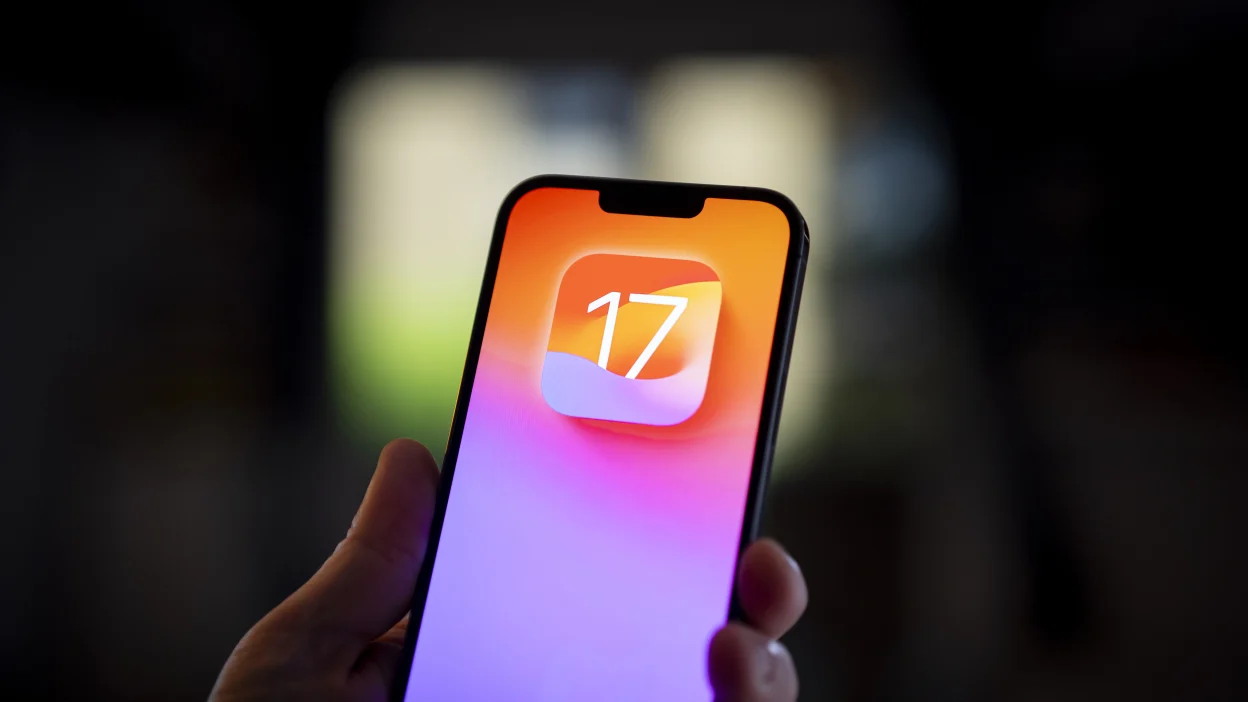
    Apple has delivered on its promise from the Wonderlust event, and iOS 17 and iPadOS 17 are ready for download. If you’re eager to upgrade to the latest iOS or iPadOS version, just follow these simple steps.

    Head over to Settings, tap on General, and select Software Update. From there, you can download the latest update. If you’re not in a rush to explore what iOS 17 and iPadOS 17 have to offer, you can simply let your iPhone or iPad handle the download in inactive hours, but make sure it’s while charging.

    If your battery is running low, it’s a good move to juice up your phone or tablet before diving into the update. Also, it’s a smart call to connect to Wi-Fi unless you want to be left wondering where all your mobile data went. After your iPhone or iPad gets that new OS update, it’s time to dive in and explore what’s new. But before you jump in, let’s take a quick peek at some of the coolest new features.

    iOS 17 brings in Contact Posters, which lets you decide how you want to show up on the other person’s screen when you call them. You can jazz it up by creating a full-screen calling card with a photo, emojis, and more.

    You can also explore Live Voicemail. When someone is leaving you a voicemail, their message gets transcribed to text on your lock screen in real time. After seeing what it’s all about, you get to decide if you want to answer the call.

    You can also leave a video message on FaceTime or quickly share contacts using NameDrop – bring your iPhone close to another iPhone. Plus, there’s an upgraded Private Browsing mode, better Autocorrect, and some fresh emojis thrown into the mix. For a full rundown of all the cool stuff iOS 17 has in store for your iPhone.

    Now, you can slap interactive widgets onto your iPad’s home screen, not just to peek at info but to play around with it too, right from those widgets. Plus, iPadOS 17 brings lock screen customization to your iPad, just like on the iPhone.

    The Health app is making its way to the iPad in iPadOS 17, making the most of that large screen and giving you a better look at all your health stats and data. If you’ve got an Apple Watch, sync it up with your iPad, and you’ll have all your health info right there on the bigger screen.

  • Mike Ashley in talks to sell Missguided to Shein

    Mike Ashley in talks to sell Missguided to Shein

    Chinese fashion giant Shein has reportedly been in talks with Mike Ashley’s Frasers Group to acquire the UK-based fashion platform Missguided.

    Sky News said the two companies have been negotiating for several weeks. The move came about a year after Missguided was brought out of administration by Frasers Group for £20 million. The deal, if it happens, will mark Shein’s first acquisition of a UK label.

    The source said the acquisition will likely include Missguided’s brand and its intellectual property, while Frasers Group will retain its head office.

    Missguided was founded in 2009 by Nitin Passi, the daughter of an Indian immigrant who set up the high street supplier By Design in the 1960s. The company grew its presence in the UK and overseas markets, including the Middle East and Asia. Investment company Alteri acquired a 50 percent stake in Missguided in 2021 before the fashion company went into administration last year as it failed to pay its debts.

    Shein has recently announced it will bring the company’s ESG roadmap pledge to $155 million, following the $70 million committed last April.

  • McDonald’s Korea launches voice-guided kiosks

    McDonald’s Korea launches voice-guided kiosks

    McDonald’s Korea has introduced voice-guided self-service kiosks at some of its Seoul locations, making it the first fast-food chain in South Korea to do so. They did this to make it easier for visually impaired customers to order.

    These special kiosks, equipped with voice guidance software and touch pads, were first installed at 15 McDonald’s stores near centres that assist visually impaired individuals and schools for the blind. People with vision problems can plug in their own earphones to hear instructions and menus, even in noisy environments.

    This move by McDonald’s in South Korea is the second of its kind, with the first being in the US. It’s also a groundbreaking step for fast-food restaurants in South Korea. McDonald’s Korea plans to extend this service to all of its stores in the country.

    A company representative emphasised their commitment to meeting the needs of visually impaired customers, noting that they had been working on this service for a long time.

  • Toowoomba-based Meat Cellar’s bacon hailed as the ‘world’s best’

    Toowoomba-based Meat Cellar’s bacon hailed as the ‘world’s best’

    An Australian butchery business has earned recognition on the global scene, earning the distinction of being the ‘world’s best bacon’.

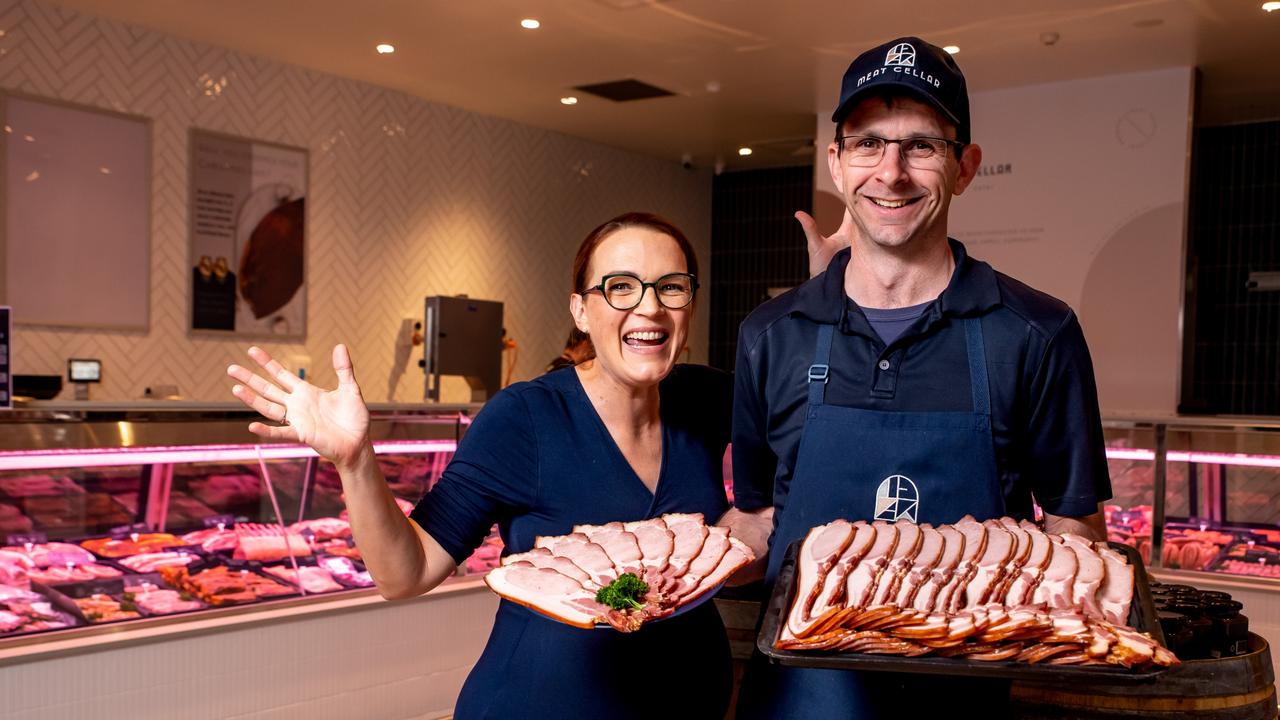
    Meat Cellar’s cured bacon has been named the ‘World’s Best’ at this year’s World Charcuterie Awards which was held in London in the past week. For this distinction, the butchery earned a gold medal title, beating competitors across the globe in the cured bacon category.

    Smoked and cured by butchers at the family-operated Meat Cellar in Toowoomba, Queensland, the bacon was praised by the awards’ judging panel for being “visually stunning with a satisfying meat-to-fat ratio, with a robust flavor enhanced by the smoke that lingers on in the mouth”. The product received the highest overall score from a panel of 40 international judges.

    Husband and wife owners Luke and Michelle Jensen said that their win is a testament to their commitment to high-quality products and traditional practices.

    “Our bacon is created with integrity. We use locally sourced pigs, honey and wood chips, and take our time to cure and smoke our bacon using traditional methods which achieve a superior result,” Luke Jensen said. “Shockingly, the majority of bacon in our Aussie supermarkets comes from overseas and relies on artificial flavoring and chemical smoking. Most people really don’t know what they’re missing until they taste the real thing.”

    In addition to the gold medal for cured bacon, the World Charcuterie Awards also awarded Meat Cellar a silver medal for their bone-in ham and a bronze medal for their boneless ham.

    Meat Cellar has been a part of the Toowoomba community for nearly 30 years, with the current owners purchasing the business in 2017.

    As Australia’s only representative in the World Charcuterie Awards, Meat Cellar’s achievements have been hailed as a proud moment not only for the business but also for the country and its meat industry.