Author: Mei Ling Tan

  • Amazon, Alibaba demand more Vietnam-made home décor

    Amazon, Alibaba demand more Vietnam-made home décor

    As purchasing power for home decorations and compact furniture on ecommerce platforms Amazon and Alibaba increases, opportunities are opening up for Vietnamese businesses to sell made-in Vietnam products.

    From grass brooms and water hyacinth baskets to compact chairs and shelves, “Made in Vietnam” home decoration products have been attracting customers on U.S. ecommerce platform Amazon.

    An $81 black painted bar stool from Linon Home Decor is labeled as an “Amazon’s Choice,” meaning it is selling well, of high quality, and can be delivered right away. Over 50 of the items were sold the past month.

    Selling garden furniture and wooden planks, BeeFurni’s revenue on this platform in the first 10 months of 2022 increased by 300% compared to 2021.

    The brand’s stools launched in 2018 are priced US$35-50, depending on the size, and have attracted hundreds of customer reviews with an average score of 4.4 out of 5.

    According to Amazon statistics, home decoration and furniture items have experienced outstanding growth in the 2020-2022 period. Even after returning to the office, people still spend a lot of time enjoying their life at home, and online shopping for such products has remained stimulated.

    Last year, “wall decoration, kitchen decoration, bathroom decoration” were the most searched keywords in this category.

    Over the past three years, home and kitchen decor have continuously been some of the best-selling item categories for Vietnamese sellers on Amazon.

    Gijae Seong, managing director of Amazon Global Selling Vietnam, said this is an industry that “has great potential and still has many untapped advantages” for Vietnamese businesses.

    With about 1,500 craft villages, abundant raw material supplies and supply chain advantages, Vietnamese furniture and decoration manufacturers possess immense potential on the international market, according to Amazon.

    Chinese online ecommerce platform Alibaba said home and gardening products is one of the three most popular Vietnamese product categories on their wholesale platform.

    In the last three months, potential buyers for Vietnamese products in this category have increased 64% year-on-year.

    The most sought-after items have been dining sets, kitchenware, home textiles and affordable, practical storage, according to Alibaba.

    Specializing in selling wrought iron products such as doors, fences and railings, Nguyen Phong Metal, a small and medium-sized enterprise, has opened a large export channel on this platform, according to Sales Director Pham Nguyen Le Uyen.

    Their first order on Alibaba three years ago was worth $45,000. Since then, the company’s export revenue on Alibaba has doubled domestic sales.

    Both platforms highly appreciate Vietnam because it is one of the countries that owns a large number of skilled craftsmen: about 7.4 million workers. The country’s traditional craft villages have rich experience and a long history, and they create unique products.

    To be successful on the global market, there must be a harmonious combination between what Vietnam has and what the international market expects, according to Amazon.

    For example, with products made from rattan, bamboo, and sedge, manufacturers must improve the material processing because these goods are easily affected by factors such as humidity and insects.

    In the first seven months of the year, Vietnam’s export turnover on wood and wood products was down 26.2% year-on-year at US$7.21 billion.

    The U.S., Japan, China, the EU and South Korea continued to be the main export markets for Vietnamese timber and forest products.

    Total export value to the five markets during the January-July period was estimated at $5.44 billion, accounting for 89% of the country’s total export value.


  • Report says to expect iOS 17 and iPadOS 17 to be released together unlike last year

    Report says to expect iOS 17 and iPadOS 17 to be released together unlike last year

    Writing about tech is like having a large family. There are so many dates to remember. But instead of remembering the birthdate of that weird Aunt with the three nostrils and the wedding anniversary of the Uncle who won’t say any word beginning with the letter “T,” you have to remember that Apple will introduce the new iPhone 15 line on September 12th and Google will unveil the Pixel 8 series on October 4th.

    Apple is doing its part to make life a little easier for us writers this year by setting up its release schedule to allow for the simultaneous release of iOS 17 and iPadOS 17. Last year, iOS 16 was dropped by Apple on September 12, five days after the introduction of the iPhone 14 line. The release of iPadOS 16 didn’t take place until October 24th. The delay was caused by changes Apple needed to make to its multitasking Stage Manager apps and Windows organizer.

    Gurman writes that he has been told that the recently released eighth beta of iOS will be considered by Apple to be the final beta test before the release of the final public version unless something unexpected shows up. So if you are interested in being the first in your family with an iPhone that runs iOS 17, or if you want to impress your friends by telling them about new features like StandBy Mode (which essentially turns the iPhone into a smart display when it is charged in landscape orientation) now might be the most low-risk time to install the iOS 17 beta.

    To join the beta, direct your browser to beta.apple.com or click on this link. Tap on the name of the software release you’re interested in installing (for example, iOS 17) and follow the directions.

    Other features coming to iOS 17 include the ability to create a personalized Contact Poster which is what another iPhone user sees when you call them. An exciting feature will allow you to send a call to voicemail and read the transcript of the message being left in real-time. If you want to take the call after all, you can cut in and start talking to the caller.

    And if you have helicopter parents, a new iOS 17 feature will alert your Mom, Dad, other family members, and friends when you arrive at your destination. Of course, all of them must have an iPhone that is running iOS 17.

    If you don’t want to risk loading a beta on your daily driver, you might as well wait it out; the release of iOS 17 and iPadOS 17 is just days away.

  • Kerry Logistics bounces back in Q2

    Kerry Logistics bounces back in Q2

    Kerry Logistics’ performance in the first half of this year may have already seen the company ‘bottom out’ after the sharp drop from the extreme highs during the pandemic, as the Hong Kong-based logistics player saw 30 percent quarter-on-quarter growth for Q2.

    The abnormal highs seen in 2021 and 2022 have made an impact on year-on-year comparisons with rates slowly going back to the levels seen pre-pandemic. In its interim results, the company recorded a net profit of HK$368 million for the first half, down 85 percent versus the same period last year, with revenue dropping 47 percent year-on-year to HK$25,315 million.

    Vic Cheung, Managing Director of Kerry Logistics Network, said: “In 2023 1H, global trade volume and growth remained subdued. Freight rates and volume stayed depressed while supply chain demand remained stagnant. During the three years ended 31 December 2022, KLN Group’s flexible and innovative supply chain solutions enabled it to benefit from the supply and demand mismatch during the pandemic and achieved exceptionally good results. However, the extraordinary circumstances in 2021 and 2022 proved an anomaly that distorted year-on-year comparisons for logistics companies including KLN Group. After the particularly difficult 2023 Q1, the Group’s overall performance has bottomed out. Although the Group’s core net profit reported a decrease of 85% in year-on-year terms, the performance in 2023 Q2 recorded more than 30% quarter-on-quarter growth. The Group’s resilience, agility and unique position in Asia are expected to carry it through the storm in 2023.”

    Across the business, Kerry Logistics’ integrated logistics remained stable in H1 with a segment profit of HK$718 million compared to the HK$717 million seen in the same period last year. Contributing to the positive performance were its business in China and Thailand-based Kerry Siam Seaport’s satisfactory results with Hong Kong not growing proportionally due to a sharp drop in demand for pandemic-related services.

    The freight forwarding business meanwhile recorded an 82 percent year-on-year contraction in segment profit in the first half at HK$621 million. The company attributed the decline to weak global demand, slower-than-expected recovery in Asian exports and plunged freight rates. Kerry Logistics said the trans-pacific trade lane accounted for more than 80 percent of the business, despite volumes sliding 22 percent year on year. The company said this decline is comparatively smaller and it expects the division to outperform the market when it turns around.

    Recording the only segment loss for the first half is the company’s e-commerce and express business. The company said it expects Kerry Express Thailand, the major contributor for the express division, to stabilise in the fourth quarter of next year. On 25 July 2023, the group announced the transfer of certain companies engaging in express delivery services in Asia Pacific and Europe to an indirect subsidiary of S.F. Holding as a move to reorient its focus towards integrated logistics and freight forwarding.

    Vic Cheung concluded that 2023 is shaping up to be a tough year for the global logistics industry: “the extreme circumstances under the pandemic are gradually fading in global logistics activities and there are signs of improvement in both freight rates and volumes in KLN Group’s key markets.

    “Using the pre-pandemic FY 2019 as the base, we are confident to deliver healthy and sustainable Compound Annual Growth Rate (CAGR) growth in segment profits in our IL and IFF divisions. We are also optimistic that the stable performance of the IL business is likely to keep up the momentum in 2023 2H.”

    Kerry Logistics announced interim dividend of 9 HK cents per share  payable on  22 September 2023.

  • The New UBS Embraces Shareholder Value

    The New UBS Embraces Shareholder Value

    The share price of Switzerland’s largest bank seems to know only one direction right now – and that is up. If nothing else, shareholders benefit from the Credit Suisse takeover while everyone else looks on.

    Sergio Ermotti doesn’t have any time for nostalgia. At least that is what he said extremely clearly at the news conference this past Thursday when announcing the full integration of Credit Suisse’s domestic business.

    UBS’s CEO has his eyes set on the road ahead, and he is focused on the next key milestones of integrating what was once Switzerland’s second-largest bank. The two legal entities are set to be merged in 2024, with the Credit Suisse brand disappearing completely a year later. By 2026, UBS expects to reap cost savings of $10 billion dollars annually on a 15 percent return on equity.

    The bank’s current focus is being applauded in one specific place. The equity market. On Thursday, UBS’s share price was up as much as 6 percent, and right now they are at 23.60 francs. Since the takeover was announced in March, the shares are up by a third, and at this level, they are trading at a price-to-book level of 0.99, or just below intrinsic value.

    That has prompted chart technicians to rather excitedly point out that the bank’s price has escaped what had been a price corridor below 20 francs, something that has not happened for years. Moreover, a majority of analysts are now recommending UBS shares as a buy.

    Kian Abouhossein is one of those analysts. The highly watched JP Morgan analyst has been a fan of the takeover from the start given that for him and others it means that UBS will be a future wealth management juggernaut. In a recent report, he indicated he expects significantly enhanced earnings strength, with the return on equity targets indicating that the future UBS sees a net profit of about $12 billion for 2026.

    It is an ambitious target from our point of view, the analyst maintains. But he is confident that UBS will be able to manage it, and he believes UBS’s share price could be at 27 francs by the end of 2024.

    All this underscores that UBS shares, which haven’t moved much for years, have again fallen in favor, at least with investors. Much of that is likely due to the fact that bank management under Ermotti has put a strong emphasis on that specific group of stakeholders.

    There is nothing all that surprising about that in an institution listed on an exchange with its shares widely held by a large variety of investors, both retail and institutional. Still, the tone has changed from the days after the takeover when Ermotti announced in June at an industry forum that the social impact of the takeover had to be factored in.

    At the time, he said that UBS wanted to satisfy Switzerland, clients, and employees.

    There was little talk of that last Thursday. Instead, much of what was on offer was cold and clinical business reasoning. UBS had closely evaluated the option of keeping Credit Suisse’s domestic business as an independent entity but concluded that it would be afflicted by marginal profitability and a lack of scale.

    The best solution is a full integration into UBS for stakeholders and the Swiss economy, Ermotti maintained.

    But it is more than reasonable to be skeptical about all that given the job cuts that are expected to come down the wire, not to mention the necessity of transferring the assets and portfolios of tens of thousands of Credit Suisse clients. At this point, redundant former Credit Suisse employees are expected to be left with the enhanced social plan while clients have to hope that the process will be implemented as smoothly as possible.

    There has been criticism about the bank’s current tack to focus its efforts on future profitability. «The only things that speak for an integration are efficiency gains and higher profit», Sandro Schmid maintained recently. Bank consultants and risk professionals believe a full and complete integration is risky and extremely expensive.

    But UBS and CEO Ermotti have chosen to focus on the needs of shareholders, something that comes much easier after the voluntary termination of the government’s federal loan guarantees. In an interview in the domestic media, Ermotti indicated that the bank and shareholders were still holding the risk when it came to the integration of both institutes. And there would only be a profit if this was completed well.

    By that token, at least when it comes to shareholder value, the priorities seem to be in the right place.

  • AirAsia Indonesia to more than double fleet in 3 years

    AirAsia Indonesia to more than double fleet in 3 years

    Capital A plans to more than double its fleet in Indonesia in the next three years to capture a growing tourism market after the Covid-19 pandemic, its chief executive Tony Fernandes said on Monday (Sep 4).

    AirAsia Indonesia, a unit of Capital A, currently has around 28 planes in its fleet. Fernandes told reporters on the sideline of an Asean business forum in Jakarta that he plans to grow the fleet to 75 by 2026, bringing in more wide-body aircraft.

    Fernandes said that the company’s main goal after the pandemic has been to grow its fleet as travel returns to normal levels quickly.

    “I’m very excited and we want to do as much direct connectivity, we want to open routes that we haven’t opened up before,” Fernandes said, citing Indonesia’s plans to develop destinations beyond the popular holiday island of Bali.

    Last year, Malaysia’s AirAsia Group changed its name to Capital A to reflect its growing portfolio of businesses beyond the core budget airline.

    Fernandes stepped down as AirAsia X CEO in October 2022, but has been the CEO of its parent company since 2018.

  • FedEx launches ‘Picture Proof of Delivery’ in Singapore

    FedEx launches ‘Picture Proof of Delivery’ in Singapore

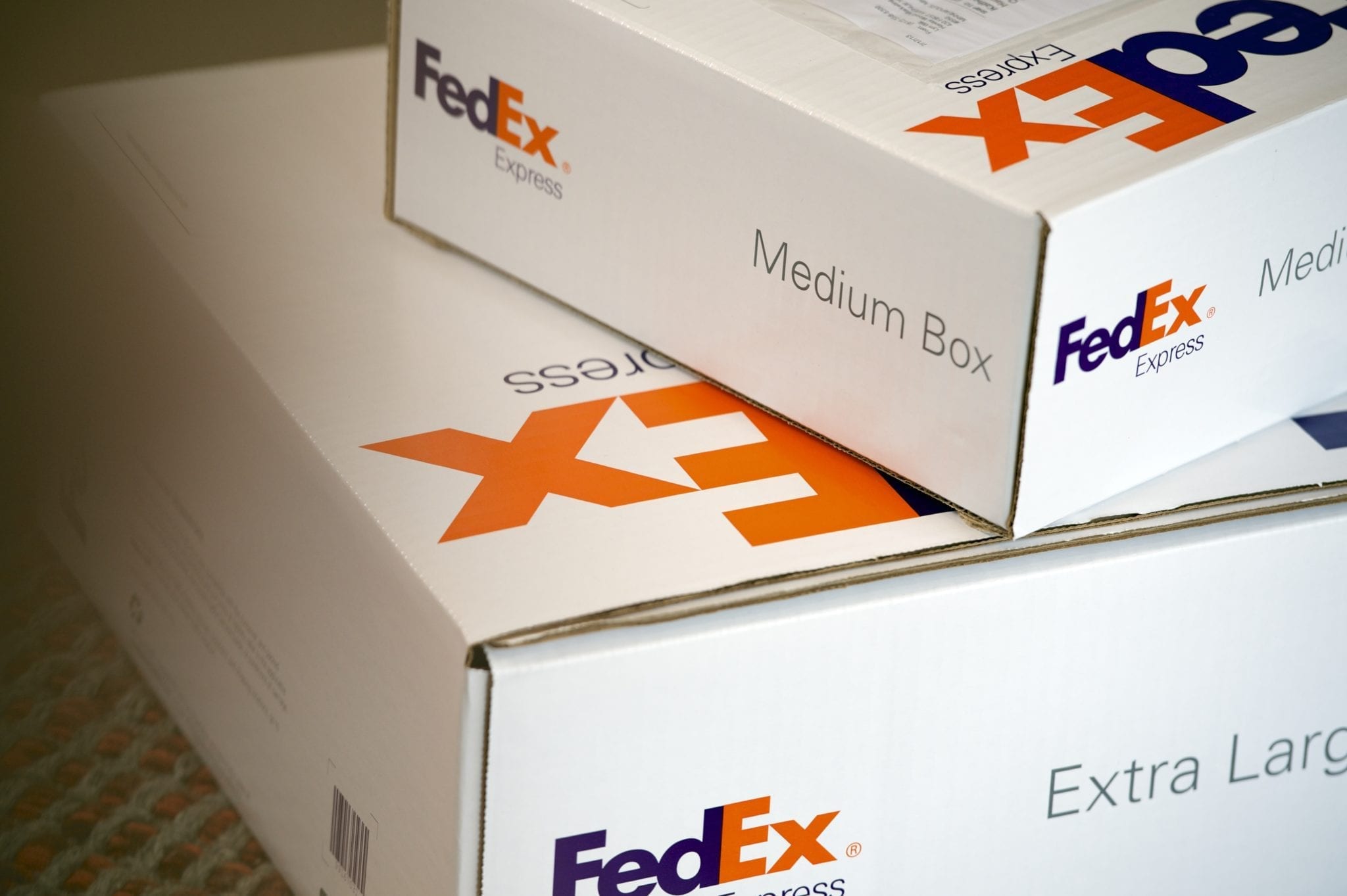
    FedEx is supporting e-commerce growth in Singapore and enhancing the customer experience of online shoppers in the city state with the launch of Picture Proof of Delivery (PPOD) for express residential deliveries.

    Customers in Singapore who choose the ‘no-signature-required’ delivery option can now receive a photo showing the exact location where their package was delivered, by tracking on the FedEx website and the FedEx Mobile app. The express operator said PPOD is a free delivery service option and will not require enrolment, an account, or login.

    The move comes amidst an increase in the number of deliveries spurred by growth e-commerce growth in Singapore, which is expected to jump 11 percent annually to reach US$16.4 billion in 2023. In November last year, it launched similar service option for Hong Kong and New Zealand.

    “We are witnessing an increasing trend of Singaporean consumers choosing to shop online. Picture Proof of Delivery (PPOD) is just one of the many steps we are taking to differentiate our service offerings and enhance the customer experience through our digital solutions,” said Eric Tan, Managing Director, FedEx Express Singapore.

    FedEx is committed to facilitating the growth of e-commerce and helping businesses succeed in cross-border trade in Singapore. In June 2023, FedEx announced the addition of 800 new collection points across the island. It also recently launched an e-commerce delivery solution with the integration of WhatsApp into FedEx Delivery Manager International.

  • Vietnam’s coconut export to reach $1B in 2025

    Vietnam’s coconut export to reach $1B in 2025

    Vietnam’s coconut export is expected to reach US$1 billion in 2025 after the U.S. and China agree to allow Vietnamese coconuts to enter the two markets, according to the Vietnam Coconut Association.

    As the U.S. is about to open the market for Vietnamese coconuts and China allows official coconut import, local businesses are trying to develop raw material areas, apply for growing areas codes, and register to build organic material zones to meet the needs of the world market.

    At the end of 2022, coconut export turnover was over $700 million. But based on the momentum of the U.S. and China agreeing to import Vietnamese coconuts, around the end of 2024 and early 2025, coconut export turnover will be up to $1 billion.

    In 2021, the fruit was listed as one of Vietnam’s key industrial crops.

    About 20 large enterprises in the country have exported coconuts to the world. Up to 35 countries and territories are Vietnam’s importers.

  • Apple creates a new website to promote its own apps

    Apple creates a new website to promote its own apps

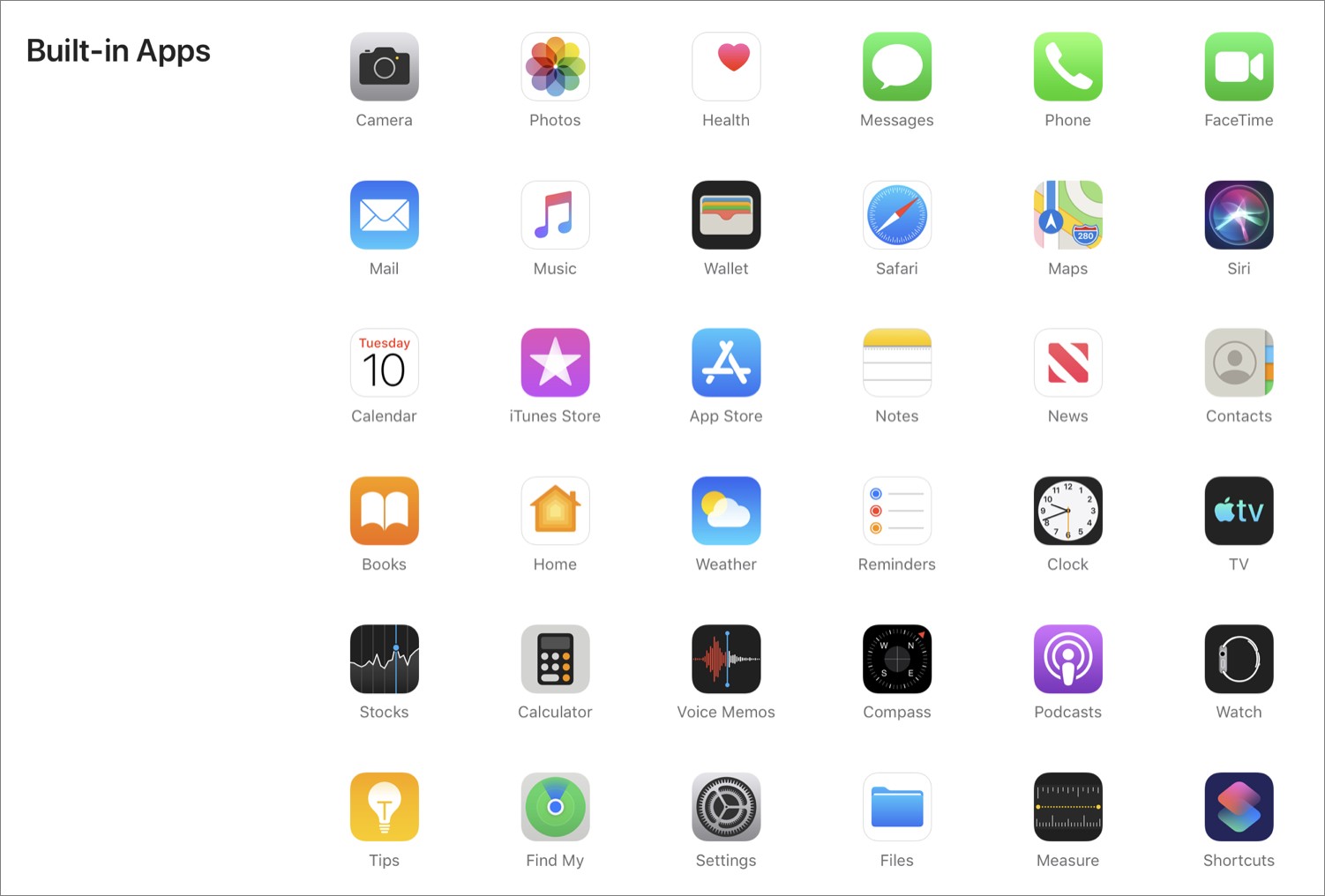
    In a bid to promote its own apps, Apple has created a website titled “Apps by Apple” that mentions homegrown apps that Apple developed for its products such as the iPhone, iPad, Apple Watch, Mac, and Apple TV. Apple has a good reason to promote its own apps with iPhone units in the 27 European Union (EU) countries being opened for sideloading thanks to the EU’s Digital Markets Act (DMA).
    Sideloading is the process of installing an app from a third-party app storefront. Apple has always claimed that its ban on sideloading was done for security reasons so that it could prevent users from installing malware-laden apps. But in some countries, the sideloading ban is seen as a way for Apple to force app developers to use its own App Store payment platform, giving Apple a 15% to 30% cut of in-app transactions and subscriptions generated in the App Store.
    By promoting its own in-house app selection, Apple hopes to keep these titles in the minds of Apple device users who might consider sideloading a similar third-party app from a third-party app storefront.
    Communication: “Apps to keep you connected.” Such apps include Phone, Messages, FaceTime, Mail, and Contacts.
    Creativity: “Tools for pros and passionate creatives.” These apps include Photos, Camera, GarageBand, iMovie, and Final Cut Pro for iPad.
    Productivity: “All you need to make your work of art.” Apps in this category include Notes, Reminders, Calendar, Freeform, and Pages.
    Exploration: “Discover the world and navigate it with ease.” Such apps feature Safari, Maps, Weather, Find My, and Wallet.
    Entertainment and Home: “Brilliant ways to watch, read, listen, and relax.” Apps in this category feature Apple TV, Apple Music, Apple Arcade, Apple Music Classical, and Podcasts.
    Health and Fitness: “Wellness for your mind and body.” Such apps include Apple Health, Fitness, Workout, Sleep, and Cycle Tracking.
    Features: Siri, iCloud, CarPlay, Continuity, and Family Sharing.
    Apple says that “Every app by Apple comes with powerful privacy features to help protect your data and give you control over your information.” The teach giant adds, “Accessibility features are built into every Apple product and app — to help all people learn, create, and do what they love.”
    As for the App Store, Apple states, “The App Store has millions of apps that bring you amazing experiences. And every one of them meets Apple’s standards for privacy, security, and content.” If you do not live in one of the 27 EU member countries (the U.K. is not a member), you still will not be allowed to sideload apps on your Apple devices at this time.
  • Intel gets confidence boost from anonymous customer pre-paying for 18A production

    Intel gets confidence boost from anonymous customer pre-paying for 18A production

    Last week, Intel CEO Pat Gelsinger reiterated his goal for Intel to take foundry leadership from TSMC by 2025. The executive said, “We’re 2.5 years into the transformation. Now, it’s gone the way I would have expected at the time in terms of rebuilding the company. You have to be much less skeptical about our ability to pull this off.” Intel not only had to watch as TSMC took its foundry leadership away, but it also saw TSMC’s largest customer, Apple, replace its Intel chips with M-series chips built by TSMC.
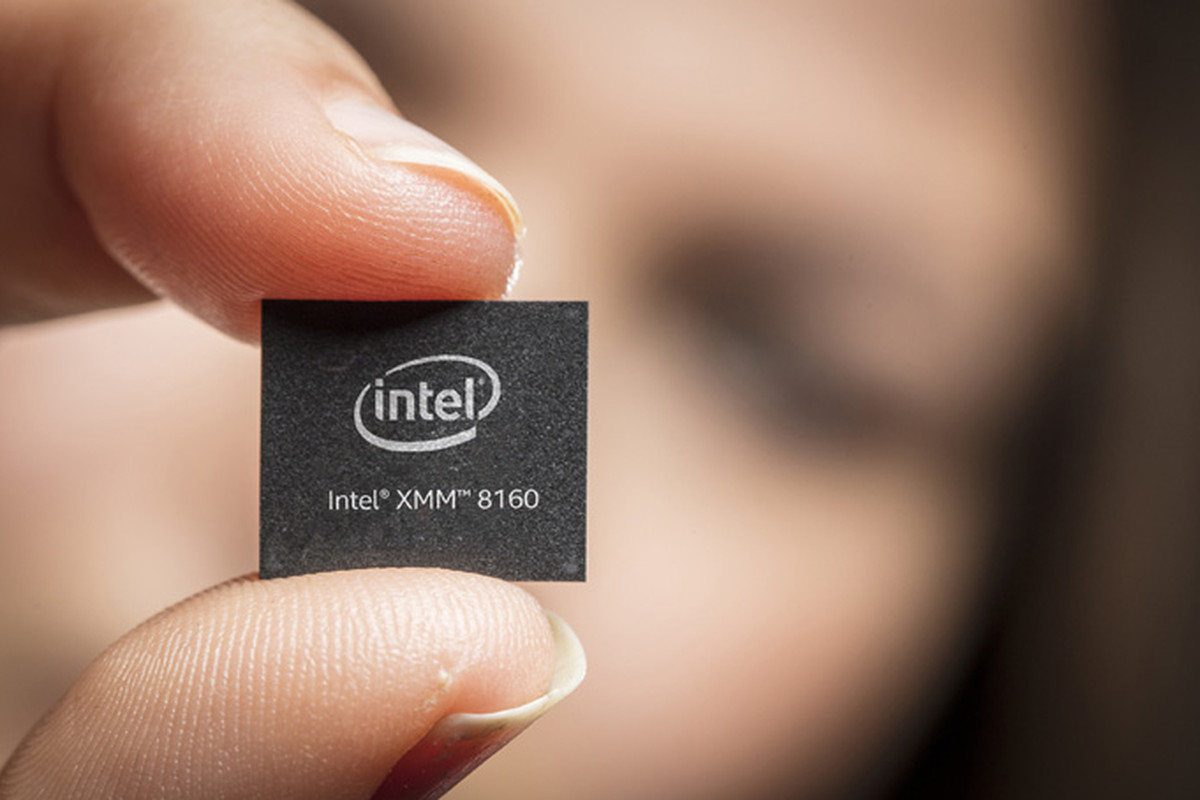
    During last week’s Deutsche Bank conference, Gelsinger stated that the 18A node will return process leadership to Intel. That node would be considered 1.8nm while TSMC and Samsung would be shipping at 2nm during the same time. The CEO also let it be known that Intel has received a large prepayment from a customer for Intel’s 18A capacity. This gives Intel the confidence to believe it is on the right track and will lead the company to speed up the build-out of 18A fabs.
    In the long term, Intel sees the contract foundry business as its biggest opportunity. One interesting comment made by Gelsinger is that Intel knows TSMC’s wafer costs, ASPs, and targets. With this knowledge, he says that Intel wants lower costs than TSMC to win business from the global foundry leader. He says that Intel is trying to get its internal cost structure in line with TSMC. To this end, Intel will study its metrics such as headcount per wafer start, and use more AI/Machine Learning to improve efficiency.
    Intel is still relying on TSMC to build parts of its next-generation ‘Meteor Lake’ chips. While Intel will use its Intel 4 node (7nm) to build the chip’s CPU tile, the GPU tile will use TSMC’s 5nm node. The chip’s SoC tile, an ultra-low-power tile that supports media, imaging, display, and the connection to memory, will be built on TSMC’s 6nm node as will the chip’s I/O Extender tile.
    As Tech journalist Leo Waldock notes in a post on X, “All that could be correct yet it still seems weird to me that Intel is buying tiles from TSMC for its own products while touting foundry services to 3rd parties. Eat your own dog food, no?”
    Will Intel make TSMC and Samsung Foundry squirm? Will Apple stay loyal to TSMC? Will geopolitical rumblings make TSMC customers worried enough to bring their business to another foundry? These are questions that we will have to wait to answer.
  • Record number of new firms seen in eight months

    Record number of new firms seen in eight months

    A record number of 103,658 new firms were established in the first eight months of this year, a rise of 2.3% year on year, the Ministry of Planning and Investment (MPI) reported.

    In August alone, the country saw more than 14,000 newly established businesses, up 17.9% year on year. However, the number of firms returning to the market in the month dropped 3.1% year on year and 10.9% month on month.

    In the January-August period, 149,400 enterprises newly joined and returned to the market, a slight drop of 0.03% year on year, but 1.2 times higher than the average figure recorded in the period from 2018-2022, the ministry said.

    The education sector saw the highest rise in the number of new firms at 35%, followed by the healthcare sector at 18.9%, and employment services, tourism, machinery and equipment rental and other supporting services 16.3%.

    However, the total registered capital of the newly established firms fell 14.7% year on year to VND969.61 trillion (over $40.2 billion).

    Meanwhile, in the reviewed period, 124,684 businesses withdrew from the market, up 19.5% year on year, including 71,833 businesses halting operations, 41,064 logging dissolving requests and 11,787 others dissolved.

    In order to support business development, Deputy Minister of MPI Tran Quoc Phuong said that along with applying flexible, active and effective monetary and fiscal policies and measures to remove difficulties for business and production activities, the ministry will propose adjustments and supplementations to some relevant mechanisms and policies.

  • Pawnshop chain F88 reports H1 loss following investigation

    Pawnshop chain F88 reports H1 loss following investigation

    F88 Business JSC recorded a loss of VND368 billion (US$15.3 million) in the first half after police launched investigations into wrongdoings at the company.

    Representatives of the pawnshop and loan firm cited the high cost of risk as the main reason for the loss.

    The cost of risk means the cost of incurring losses because of risk and managing risks. The total of this cost is the sum of every aspect of a company’s functions relating to risk.

    According to F88, a recent inspection into debt collection conducted at businesses in the financial sector, including the company itself, had affected customers’ tendencies towards debt payment. This forced businesses to tighten their risk appetite, which means the amount of risk an organization is willing to take in pursuit of objectives it deems valuable.

    At the same time, results of the investigations limited F88’s ability to open new offices.

    In the past time, police have probed a number of F88 branches across the country, including those in HCMC, Binh Duong and Can Tho, after detecting several violations. The violations included mismanagement of data and insufficient business activity reports.

    In HCMC alone, investigations have been launched into 10 individuals who are either managers or staff at the company.

    Founded in 2013, F88 has claimed to be the fastest-growing financial service provider in Vietnam. It has 830 branches throughout the country. After the latest investigation, the firm said it has developed processes, regulations, and sanctions in debt collection activities, ensuring it would comply with the law and not cover for individuals who break the rules.

    F88 reported continuous profits in the 2019-2021 period, with the average annual figure hovering in the tens or hundreds of billions of dong (VND10 billion equals US$415,000).

    Last year, after tax profits peaked at more than VND200 billion.

    During the period, many financial companies reported decreased profits or even heavy losses ranging from hundreds of billions to thousands of billions of dong as their customers face financial difficulties and could not pay their debts.

    The company plans to issue more private bonds in the last six months.

    In March, F88 received investment funds of $50 million from two investors – Vietnam-Oman Fund and Mekong Enterprise Fund IV.

  • Vietnam central bank governor earns ‘A+’ in Global Finance report

    Vietnam central bank governor earns ‘A+’ in Global Finance report

    Global Finance magazine has given Nguyen Thi Hong, Vietnam’s first female central bank governor, an A+ on its 2023 Central Banker Report Cards.

    Hong, 55, is one of only three central bank governors in the world that was rated A+ by the U.S.-based magazine.

    The other two were the Reserve Bank of India Governor Shaktikanta Das and Thomas J Jordan, Chairman of the Governing Board of the Swiss National Bank.

    Hong became Governor of the State Bank of Vietnam (SBV), appointed by the legislative National Assembly, in November 2020.

    She holds a master’s degree in Developmental Economics and started working at SBV in 1991, where she held several management positions.

    The Central Banker Report Cards, published annually by Global Finance since 1994, grade the central bank governors of 101 key countries, territories, and districts, including the European Union, the Eastern Caribbean Central Bank, the Bank of Central African States, and the Central Bank of West African States.

    Grades are based on a scale from A to F for success in inflation control, economic growth goals, currency stability and interest rate management, with an “A” representing an excellent performance down through an “F” for outright failure.

    The full Central Banker Report Cards 2023 report and grade list will appear in Global Finance’s October issue print editions, as well as online at GFMag.com.

    “Fighting inflation, which has been fueled by pent-up demand and disrupted supply chains, has everyone turning to their central bankers for help,” said Global Finance founder and editorial director Joseph Giarraputo.

    Governors that earned an A grade included Brazil’s Roberto Campos Neto, Israel’s Amir Yaron, Harvesh Kumar Seegolam of Mauritius, New Zealand’s Adrian Orr, Paraguay’s Jose Cantero Sienra, Julio Velarde of Peru, Chin-Long Yang of Taiwan, and Uruguay’s Diego Labat.

  • Hong Kong retail sales rose for the eighth month in a row in July

    Hong Kong retail sales rose for the eighth month in a row in July

    Hong Kong’s July retail sales rose 16.5 percent from a year earlier helped by an increase in visitor arrivals and positive consumption sentiment, government data showed on Thursday.

    Sales increased to HK$33 billion, marking an eighth consecutive month of growth. That compared with a revised 19.5 percent rise in June.

    In volume terms, retail sales increased 14 percent year-on-year in July, compared with a revised 17.4 percent of growth in June.

  • Wear OS 4 now rolling out to the Galaxy Watch 5 series while Pixel Watch users continue to wait

    Wear OS 4 now rolling out to the Galaxy Watch 5 series while Pixel Watch users continue to wait

    Google’s highly-anticipated Wear OS 4 update, unveiled in back in May, is now making its way to yet another one of Samsung’s smartwatches. While it was originally released with the launch of the Galaxy Watch 6, it is now also headed to the Galaxy Watch 5 and Watch 5 Pro.

    The update is rolling out in the U.S. and can be identified by the build number ending in BWH3. The Wear OS update for the Galaxy Watch 5 is based on Android 13, just like it was when it originally rolled out to the Galaxy Watch 6.

    Wear OS 4, or “One UI 5 Watch” as named by Samsung, brings a range of exciting features. Samsung’s enhancements include improved controls for connected Galaxy Buds, making it easier to manage audio devices. A handy widget also displays battery levels across all connected devices, simplifying device management. Several Samsung Health upgrades also support users in their pursuit of a healthier lifestyle.

    However, the standout feature of this update is the ability to pair your watch with a different phone without having to reset the smartwatch entirely. This flexibility is a game-changer for users who want to switch devices while keeping their settings and data intact.

    Meanwhile, users of Google’s first-generation smart watch, the Pixel Watch, are still waiting for Wear OS 4 to become available on their devices. There were reports last month that Google was readying a beta program for the Pixel Watch and Wear OS 4, according to some leaked info, however no further info has surfaced on this. At this rate, we expect Wear OS 4 for the Pixel Watch to be unveiled with the second-gen Pixel Watch 2 possibly in October.

    This means that by the time the Pixel Watch gets to enjoy the benefits of the update, Samsung Galaxy watches such as the Watch 6, Watch 5, Watch 5 Pro — and Watch 4 and 4 Classic, which are also on the list to get this update in the future — will have benefitted from the update for over four months. So much for Pixel devices getting software updates first.

  • YouTube Music rolls out redesigned Now Playing with comments section

    YouTube Music rolls out redesigned Now Playing with comments section

    Long gone are the days when we had to hunt for music through friends, exchange tapes, or enjoy our favorite songs solely at concerts or parties. Now, we can pick from numerous streaming services vying for our attention by bringing in fresh features. While YouTube Music isn’t exactly famous for having the most cutting-edge features compared to rival apps, it has been moving forward nicely by at last including long-promised live lyrics- and now releasing even more updates.

    YouTube Music is introducing the newest redesign of the Now Playing interface on both Android and iOS. This update includes a comments section and new buttons attached to the carousel. These buttons were previously hidden by default and needed users to tap on the artwork to access them.

    The new design makes YouTube Music look even more like the main YouTube app, with the comments section being a copy of what you see on the main YouTube app. The carousel now features buttons to Like, Dislike, view or add Comments, Save, Share, Download the track, or switch to its Radio. Before, only four of these choices appeared when you tapped the album art.

    For some time, YouTube Music might be the sole music streaming app with a live comments section until competitors catch up if they ever choose to. By enhancing the competitiveness of the YouTube Music app against its rivals, Google could be aiming to draw in more users.

    One of the advantages of YouTube Music is that if you already have a YouTube Premium subscription, you get access to Music Premium as well (which means no ads, offline and with your screen off streaming). Or in other words, you can save money by not subscribing to other music streaming services.