Author: Mei Ling Tan

  • Google Chrome may finally be getting a massive upgrade to reading mode

    Google Chrome may finally be getting a massive upgrade to reading mode

    Reading mode is awesome, but it has gotten stagnant. Most of the best phones available right now have Google Chrome pre-installed and while it is awesome that the browser comes with a reading mode for text-heavy pages, it feels… Stagnant.

    Not only that, but if you are on any of the Chrome beta channels, your experience becomes even weirder. Sometimes you can’t turn on reading mode and other times, it cuts off big chunks of the content that you’re there to read in the first place.

    So, it is obvious that it is time for an upgrade. And given that Google seems to be running an experiment over on the Canary version of Chrome for desktop, we may actually know what we’re in for. And that’s a reading mode that can also read aloud.

    So, Chrome Canary. What is it? Well, it’s a developer-first version of Chrome. It’s plenty experimental, it changes often and if you’d like to join in on the fun: you can run it on your phone and computer. Oh, and its users get to test out features ahead of time.

    Now, hold on to that last bit, because — as someone who uses Canary on the daily, just out of preference — not all changes stick. And it is a real bummer, because some of them are totally awesome, but oh well. You can’t win ‘em all!

    Anyway: reading mode. The latest update on the desktop version of Canary, as you can see above, comes with a new secret treat: a reading mode that can actually read text aloud to you.

    Right now, the voice that executes that role is being described as monotone and robotic, but this is Google we’re talking about. They have the power and prowess to improve that… As long as the feature sticks.

    What are the chances of this actually making its way to the mobile version of Canary and then Chrome stable? Well, pretty big, as long as testing goes well. But, before that happens, let me raise you this:

    Did you know that your Android phone can already do this? If not, know that as long as you’ve got Google Assistant installed and running, you can prompt it — while on the article page in question, such as this one — and ask it to read it aloud. It works quite well.

    So, while adding such a feature to phones may sound redundant, it may also serve as a shortcut to prompting Assistant to do that. Plus, it may solve another issue: granting phones that aren’t really compatible with Google Assistant such a feature. Will that be the case?

    We’ll see if the testing period goes well.

  • Spotify added new ones for Android

    Spotify added new ones for Android

    Alright, let’s hear it. “Widgets suck!”, “they are archaic!” and “nobody uses them!”. Did I get that right? Well, mister-sir, if that was the case, then would one of the biggest streaming platforms — Spotify, which we all got installed on some of the best phones available today — update its widget selection for Android?

    “Ah, but manufacturers and developers are so outdated with people’s needs” you say? Well, then let me raise you this: what is one of the most used features on Spotify? Discover weekly, which allows you to find new artists and jams to rock out to.

    Now, can you guess what these new widgets are adding? That’s right: recommendations based on your listening habits, which is pretty much like an instant-discovery queue. But before I defend the concept of widgets further, let’s explain these new ones from Spotify.

    It took two years for Spotify to update its selection, so I don’t know how archaic the concept is, but I can certainly back up the statement that it is stagnant at times. Anyway, the new widgets total out at two types with both seeming really intuitive.

    First off we’ve got the new generic widget, which shows you what you are listening to, the song’s cover artwork — and now that’s what you call a complete package! — and, of course, media controls such as play, pause, next, etc.

    But then we’ve got the new widget, which incorporates all of the above, but also expands on the concept. It can go from a 3×2 size up to a 5×2, which allows for up to five personalized suggestions to show up beneath what is currently playing.

    And, yes, those can be anything from songs and albums to podcasts and audiobooks (where applicable). This new widget was announced last month in July, but it rolled out with version 8.8.50, which means that you may have a Spotify update pending right now.

    But beyond that, my last argument regarding widgets is this: imagine that you have a household tablet that you use for smart home and media controls. Now, wouldn’t having all necessary controls in a sleek and clean manner directly on your home screen just make sense?

    Hence, widgets can really be cool. Are they cool enough to make the transition from this theoretical tablet to your phone? That, in my opinion, depends on style. But it’s absolutely better that we have them still be a thing in 2023.

  • Android’s emergency satellite service could work in over 150 countries

    Android’s emergency satellite service could work in over 150 countries

    By a show of hands, let’s see how many of you think that the iPhone was the first smartphone offering emergency services via satellite connectivity. Wow, it’s going to be interesting to tell all of you with your hands up that you’re wrong. Actually, Huawei’s Mate 50 series introduced its version of this feature one day before Apple did. And now there is talk that Huawei’s Mate 60 line, due out later this year, will offer voice and image transmissions by satellite.

    With iOS and Harmony ahead of the pack, Google is supposed to dip its toes in the satellite water with the release of Android 14. One rumor last month said that the release of Android 14 was going to bring satellite connectivity to Pixel and Galaxy handsets at first. The rumor said that the Android 14 update will add the necessary software while phone manufacturers will have to deal with the hardware requirements.

    The Team Pixel FanClub, while not affiliated with Google, said that Pixel and Galaxy models will be the first Android devices to sport the necessary hardware required for satellite connectivity to work. And on Sunday, Neïl Rahmouni, who was nominated as a Top Google Developer Online Contributor in June, posted on X that it “Looks like Google Messages may use Garmin Response for the Satellite Emergency SOS. If true it could mean that Emergency Satellite messages would be available in 150+ countries.”
    This would instantly top Apple’s Satellite connectivity service which is available in only a handful of countries at the moment. Not that it hasn’t proven its worth as Apple’s Emergency SOS via Satellite has already saved numerous lives.
    Despite having his name all over the X message proclaiming that Garmin’s service might be used by Google Messages for its satellite connectivity feature, Rahmouni believes that we shouldn’t assume that the Google-Garmin tie-up is happening until Google makes the official announcement. At this point, we don’t know when the feature is expected to launch and more importantly, which Android devices will support it.
  • Deliveroo Launches New Advertising Platform

    Deliveroo Launches New Advertising Platform

    Deliveroo today announced the launch of its new advertising platform, Deliveroo Media and Ecommerce, in Hong Kong. From now, brands will be able to advertise to Deliveroo customers with relevant offers across its app, on Deliveroo’s website and as part of social media, email and push notification campaigns.

    For the first time, advertising is planned for Deliveroo’s order tracker page, with new formats to launch over the coming months, alongside sponsored search listings.

    Currently Deliveroo partners are able to make use of Deliveroo’s advertising services, with sponsored positioning for restaurant or grocery partners for example. The new advertising platform means consumer FMCG brands will be able to advertise to millions of highly engaged Deliveroo customers.

    Deliveroo’s network of delivery-only ‘Editions’ kitchens and rapid grocery delivery ‘HOP’ stores are also part of Deliveroo’s new advertising proposition, enabling brands to get relevant content or samples into consumers’ hands as their meals and groceries are delivered to their door. 

    Nick Price, Interim General Manager of Deliveroo Hong Kong, said “Deliveroo has over seven million monthly active consumers globally, so we have an engaged and valuable audience for brands to connect with. Our new advertising platform will enable restaurant and grocery partners to tell their story emotionally and effectively whilst ensuring Deliveroo customers continue to receive a food-first experience. Done in the right way, both of our advertising activities can improve the customer experience by helping consumers to discover content they want in an engaging way, as well as helping merchants to drive incremental demand.”

    Advertising on Deliveroo will include partnerships with restaurant partners as well as FMCG companies. This will be done in a way that is mindful of the consumer experience, which is Deliveroo’s priority. Consumers will continue to receive a food-first experience in-app and Deliveroo intends to provide more space to enable restaurant and grocery partners to tell their story emotionally and effectively to Deliveroo consumers via the platform. The advertising solutions will sit within this context.

    With a food delivery marketplace in 10 markets, and with over 162,000 restaurants and 20,000 grocers on the platform, Deliveroo Media and Ecommerce is well positioned to connect brands with over seven million monthly active consumers.

    Deliveroo Media and Ecommerce was launched in the UK last Summer and has made an encouraging start, with advertising revenue reaching an annualised run-rate of £55 million or 0.8% of GTV in Q2 2023, reflecting that this is an effective way for merchants to drive incremental demand. Some of the popular brands that successfully utilised the advertising platform in the UK include Coca-Cola, Unilever, Reckitt and PepsiCo.

    Deliveroo is working with Criteo, the Commerce Media company, who will supply the advertising technology and media sales services.

  • Netflix continues to add subscribers in the U.S. after cracking down on password sharing

    Netflix continues to add subscribers in the U.S. after cracking down on password sharing

    Once Netflix started its plan to crack down on password-sharing in May, the video streamer started to add new subscribers. A report in BroadbandTV News cited stats from Antenna which revealed that after a 12.9% decline in the number of gross additions to its U.S. subscriber list in April, Netflix saw that figure rise 27.8% in May and an incredible 128.9% in June. July showed a 25.7% drop off in U.S. gross additions.
    Still, the company did manage to add 2.6 million U.S. subscribers in July after signing up 3.5 million in June. Since the beginning of the crackdown in May, Netflix has added 7.5 million U.S. subscribers which seems to indicate that the company has done a good job in convincing password borrowers that they still want to watch the platform’s content even if they have to pay for it with their own money.
    Netflix no longer offers the basic ad-free service in the U.S. which means that besides the ad-supported tier, U.S. Netflix subscribers can choose between Standard and Premium. Priced at $15.49 monthly, Standard includes unlimited ad-free movies, TV shows, and mobile games and can be used by two supported devices at a time. Content is streamed in Full HD and one person who doesn’t live with the subscriber can be added for $7.99 per month.
    The Premium service, which costs $19.99 per month, includes unlimited ad-free movies, TV shows, and mobile games and four supported devices can use the service at a time. Content is streamed in Ultra HD, Netflix spatial audio is included, and six supported devices can download content for offline viewing. Up to two extra members who don’t live with the subscriber can be added for $7.99 per month per subscriber.
    Discussing the elimination of its old Basic package, Netflix wrote, “We’ll be interested to see how this impacts the composition of Netflix subscriptions and sign-ups overall in the coming months.” For the quarter that ended June 30, Netflix doubled projections by adding 5.9 million subscribers worldwide bringing its total globally to 238.3 million.
    Meanwhile, some of the new content on Netflix includes PainKiller, a series about the Sackler family and how it pushed doctors to prescribe its Oxycontin painkiller. The second season of Heartstopper also recently dropped on the platform.
  • Prices of Vietnam’s exported rice highest in the world

    Prices of Vietnam’s exported rice highest in the world

    Prices of Vietnam’s exported rice are still the highest in the world, with that of 5% broken rice reaching 638 USD per tonne, and 25% broken rice $623 per tonne, according to the Vietnam Food Associaion.

    Meanwhile, Thailand’s 5% broken rice is sold at $628 per tonne, and that of Pakistan at 598 USD a tonne.

    In the Mekong Delta – the largest rice granary of Vietnam, the price of paddy rice remains at an unprecedented high level in many localities, helping farmers achieve good profits.

    In July, the United Nations Food and Agriculture Organisation (FAO)’s rice price index rose to its highest level in nearly 12 years. The move was due to a spike in prices in key rice exporting countries after India imposed export restrictions.

    Recently, the Vietnamese Ministry of Industry and Trade announced the list of 210 businesses that are eligible to export rice.

    According to the ministry, in the first seven months of this year, Vietnam exported 4.83 million tonnes of rice. The country plans to export about 2.67 million tonnes in the remaining five months of the year.

  • Parking an expensive headache for Hanoi apartment owners

    Parking an expensive headache for Hanoi apartment owners

    Hanoi apartment owners are spending up to hundreds of million dong (VND100 million = $4,200) on parking spots in their building due to insufficient space to accommodate increasing car ownership.

    For the first time in two years, Phuong Linh in Hanoi’s Ha Dong District was able to park her car in the basement of her own apartment building after paying VND20 million to a neighbor who just moved away.

    Due to the limited space in the basement, Linh has been parking her car in other parking lots around her neighborhood ever since she moved to the building.

    Only car owners who registered early can park their vehicles in the basement, and once they move, other residents like Linh rush to purchase the right to park in the spaces they leave vacant.

    This means that on top of the VND20 million, she still has to pay monthly parking fees.

    “I have to pay a lot, but I consider myself lucky. There are 30 other residents like me waiting for the next empty parking slot.”

    Stories like Linh’s have become increasingly popular in Hanoi, a city of 8.4 million where the number of both condominiums and cars has been surging in recent years.

    Manh Dung in Nam Tu Liem District last month bought an SUV, but he only found out after the purchase that there were no car parking spots left in his building.

    Nearly 100 residents have queued for the next empty slot, he said.

    Using connections, Dung managed to contact one of the building managers and secured a parking slot for VND40 million. The deal was unofficial.

    The manager said that if he moves away in the future, he can sell the slot for almost the same price, as there will always be demand for parking slots in the building.

    “I paid right away. A basement parking space is valuable, especially when it rains.”

    Many developers have set aside auto parking areas in the basement of their buildings, but the increasing number of cars in the city has made the limited number of parking slots a treasured real estate.

    By February this year Hanoi had over one million cars, up 36% from around the same period in 2019. This means that one in every eight Hanoi residents owns a car.

    Some developers, therefore, charge big bucks for parking slots.

    A developer of a 40-floor condominium in Ha Dong District earlier this year charged VND220 million for a 20-year parking space rental contract.

    It also offered to sell a parking slot permanently at VND400 million for a sedan, and nearly VND500 million for an SUV.

    Due to the high price tag, some residents at the building have no choice but to find outdoor neighborhood parking lots and pay around VND1.2 million a month per vehicle.

    In July, a developer of a 30-floor building in Thanh Xuan District charged VND60 million upfront for a five-year car parking slot. Residents protested the policy, saying that they did not want to pay such a hefty sum all at once.

    The developer also offered to lease a parking slot for VND200 million over 40 years. This means that a resident of a 70-square-meter apartment in the building would have to pay 10% of their apartment price for parking.

    Nguyen Viet Huy, a lecturer at Hanoi University of Construction, said that the competition for car parking space at condominiums has become more popular in Hanoi in recent years.

    There are legal requirements on how much parking space is needed at every condo project, but the figures are not backed by any scientific study, he added.

    Dao Ngoc Nghiem, deputy chairman of Hanoi Urban Development Planning Association, said that many developers who built their projects 10 years ago did not expect the number of immigrants in Hanoi would rise as fast at around 1.4% annually.

    “Parking space therefore have become one of the top criteria in apartment purchasing these days.”

    The lack of public parking spaces also contributes to the issue, as only 10% of parking demand in Hanoi has been met, he said, adding that more elevated and underground parking lots should be built.

  • Vegetable, fruit exports hit new high

    Vegetable, fruit exports hit new high

    Vegetable and fruit exports increased by nearly 56% year-on-year in the first eight months to a record US$3.5 billion worth, according to Vietnam Customs.

    Increase in Chinese demand from was a major reason for the jump.

    Several other countries in the region, hit by droughts and floods, also increased their imports, Dang Phuc Nguyen, general secretary of the Vietnam Fruits and Vegetable Association, said.

    Durian accounted for 30% of the export value.

    Durian prices are expected to rise in September as supply has declined in other Southeast Asian countries. Vinafruit expects exports of the fruit to be worth $1.5 billion this year.

    Coconut also has potential for higher exports to China and the U.S., with the latter recently allowing imports of husked nuts from Vietnam.

  • Cobram Estate’s sales surge after bumper olive crop

    Cobram Estate’s sales surge after bumper olive crop

    Listed Australian olive oil grower and processor Cobram Estate Olives, has recorded a 21 percent year-on-year boost in sales, to $169 million for the last financial year as its foray into the US pays off.

    The majority of the sales – $117 million – were from its Cobram Estate brand – the top-selling olive oil in Australian supermarkets – and its newer Red Island brand, which collectively rose by 17 percent.

    Sales of Cobram Estate in the US surged 69 percent and turnover in the market reached $43 million, up by 46 percent.

    In a results presentation, the company reported a higher-yielding crop last year to 12.5 million litres, offset by a lower margin as the price of producing packaged goods rose.

    However, looking forward, the company says the Australian olive oil crop is down this year, however, it still expects to have sufficient oil for its packaged goods targets.

    “The sales outlook remains positive, benefiting from a global shortage of olive oil and record high global prices of European olive oil flowing through to both Australia and the US,” the company said.

    Established in 1988, Cobram Estate Olives is Australia’s largest producer and marketer of premium quality extra virgin olive oil and owns more than 2.6 million olive trees across 7000ha of farmland in Victoria, and a further 334,000 trees on 558ha in California.

  • Apple Pay has many mountains to climb before it can become the world’s top payment option

    Apple Pay has many mountains to climb before it can become the world’s top payment option

    A few days ago we showed you some video ads that Apple has put together for a promo campaign it is running for Apple Pay, its mobile payment service. Apple does keep .15% of the value of a transaction that has been paid for with Apple Pay. That means if you use your iPhone or Apple Watch to pay for a $100 purchase, Apple collects the princely sum of 15 cents. But don’t worry about Apple; because Apple Pay is so often employed, one analyst says the company will take in $4 billion from the feature this year.

    And Apple feels that there is so much potential upside to Apple Pay that it is worth it to spend the money promoting the service. Hence, the new promotion campaign for the feature. According to data from the U.K.’s Merchant Machine, Apple Pay is only the fifth most-used payment method in North America based on the number of transactions. Visa is number one on the continent with a market share of 15.08% followed by MasterCard (10.98%), PayPal (10.70%), American Express (9.97%), and Apple Pay (9.22%).

    Globally, PayPal is number one with a market share of 20.53% with Visa and MasterCard second and third with market shares of 15.67% and 10.49% respectively. American Express is fourth (8.77% market share) with Apple Pay rounding out the top five (7.37%). Other tech-related firms that appear in the global rankings include Amazon Payments (6th place, 6.04% share), and Google Pay (8th place, 4.30% share).
    The best showing for Apple Pay is in Africa where Apple’s mobile payment service is third with a 9.49% market share. PayPal (25.06%) is on top on the continent with Visa next (17.14%). Interestingly, in Africa, both Apple Pay and Amazon Payments (9.23%) are ahead of Master Card’s 8.42% share. And in Asia, Apple Pay is fourth with 7.65% of transactions on that continent.
    So Apple is hoping to pump up usage of Apple Pay by using its new tagline, “Pay the Apple way.”It also is promoting the service on the social media platform that used to be called X and on other online sites as well. Mobile payment services are a convenience since you can whip out your phone or flick your wrist (assuming you’re wearing a smartwatch) to make a payment instead of struggling to take a credit card out of your wallet.
  • Hong Kong air cargo volumes continue rebound

    Hong Kong air cargo volumes continue rebound

    Cargo volumes at Hong Kong International Airport continued on its path to recovery in July as the airport recorded a year-on-year increase of 3.8 percent over the same month last year at 361,000 tonnes. 

    Month-on-month, this represents an uptick of 1.7 percent over June as flight movements reached 24,030, up 7.4 percent over the previous month. 

    Records say exports contributed the most to the year-on-year increase in cargo volumes in July, up 12.6 percent, with traffic to and from North America, the Middle East and Europe seeing significant growth during the month. 

    Considering the last 7 months, cargo volumes at Hong Kong airport slid 4.2 percent year on year to 2.4 million tonnes, as the airport handled 142,840 flight movements, almost double the flights (94 percent growth) seen over the same 7-month period last year. 

  • Google announces rich text formatting for Keep Notes on Android

    Google announces rich text formatting for Keep Notes on Android

    Last week code was found within Android which revealed a feature in progress for Google Keep. This alluded to the possibility of adding rich text formatting to notes within Google Keep, a highly requested feature for those that use the app regularly.
    However, as the discovery had not rolled out to any users yet, all we had to go on at the time were the screenshots and notes provided by by Mishaal Rahman on his X post. Thankfully, we didn’t have to wait long for official word, as Google has now announced via its Google Workspace Updates Blog.
    In the official announcement, Google revealed that Google Keep will be gaining new text formatting options to notes on Android devices. The company cites the amount of users requesting this feature as its motivation for following through.
    The new formatting options allow for users to customize notes by making text bold, italic, or underlined. You can also choose from heading styles like H1 and H2.
    The new formatting options will only be available for new notes, although support for existing notes is expected to be added in the coming weeks. The rollout begins today for all Google Workspace customers and users with personal Google Accounts, although it make take up to two weeks for the feature to reach all users.
    To use the new formatting options, tap on the text you want to format and then select the desired option from the toolbar. However, keep in mind that text formatting is only available on Android devices, so if you open a note with formatting on a desktop browser or an iOS device, any formatting you had previously applied won’t be visible there.
    Even though the addition of formatting options to Keep does not bring it up to the same level as more advanced note-taking apps such as Microsoft’s OneNote or Squid, especially when you can only see the formatting changes on Android, it is definitely a good start to a feature that has been so highly requested for such a long time.
  • Vöost launches skin hydration effervescent products

    Vöost launches skin hydration effervescent products

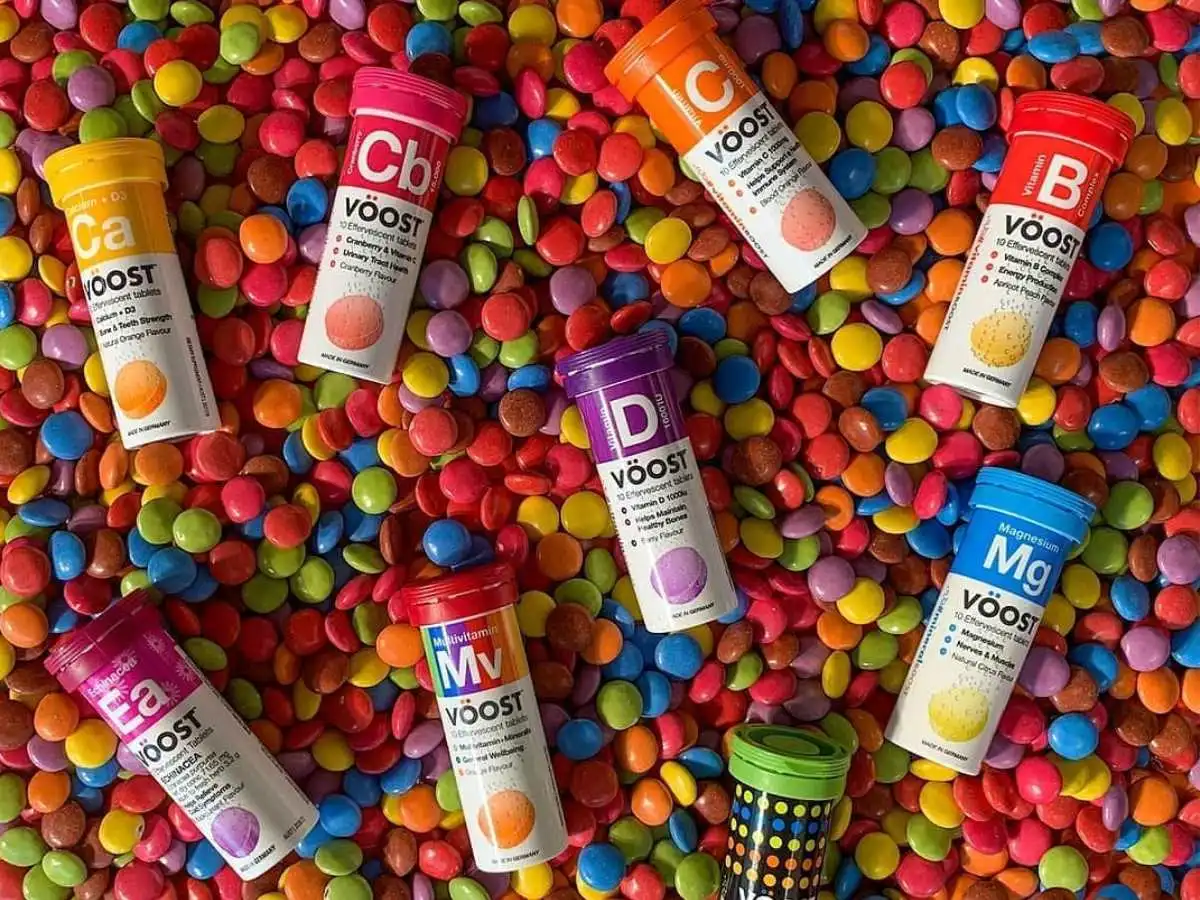
    Australian supplement brand Vöost has added two new beauty products to its extensive range of effervescent vitamins and minerals.

    The company says its new Vöost + Skin Hydration and Vöost + Hair, Skin & Nails are designed to support healthy skin, hair and nails from within. The new additions will join the Vöost Collagen effervescent range.

    The Vöost+ Skin Hydration in Rose Lemonade flavour features hyaluronic acid which supports skin hydration, skin elasticity and firmness and helps to relieve skin dryness.

    It contains vitamin C and vitamin E which act as supporting ingredients to reduce free radical damage to body cells.

    Meanwhile, the Vöost + Hair, Skin & Nails in Strawberry + Kiwi flavour contains biotin, selenium, vitamin E, vitamin C and zinc. It supports healthy hair and skin, nails as well as collagen formation.

    The products are available in Woolworths, Coles and Chemist Warehouse stores and online.

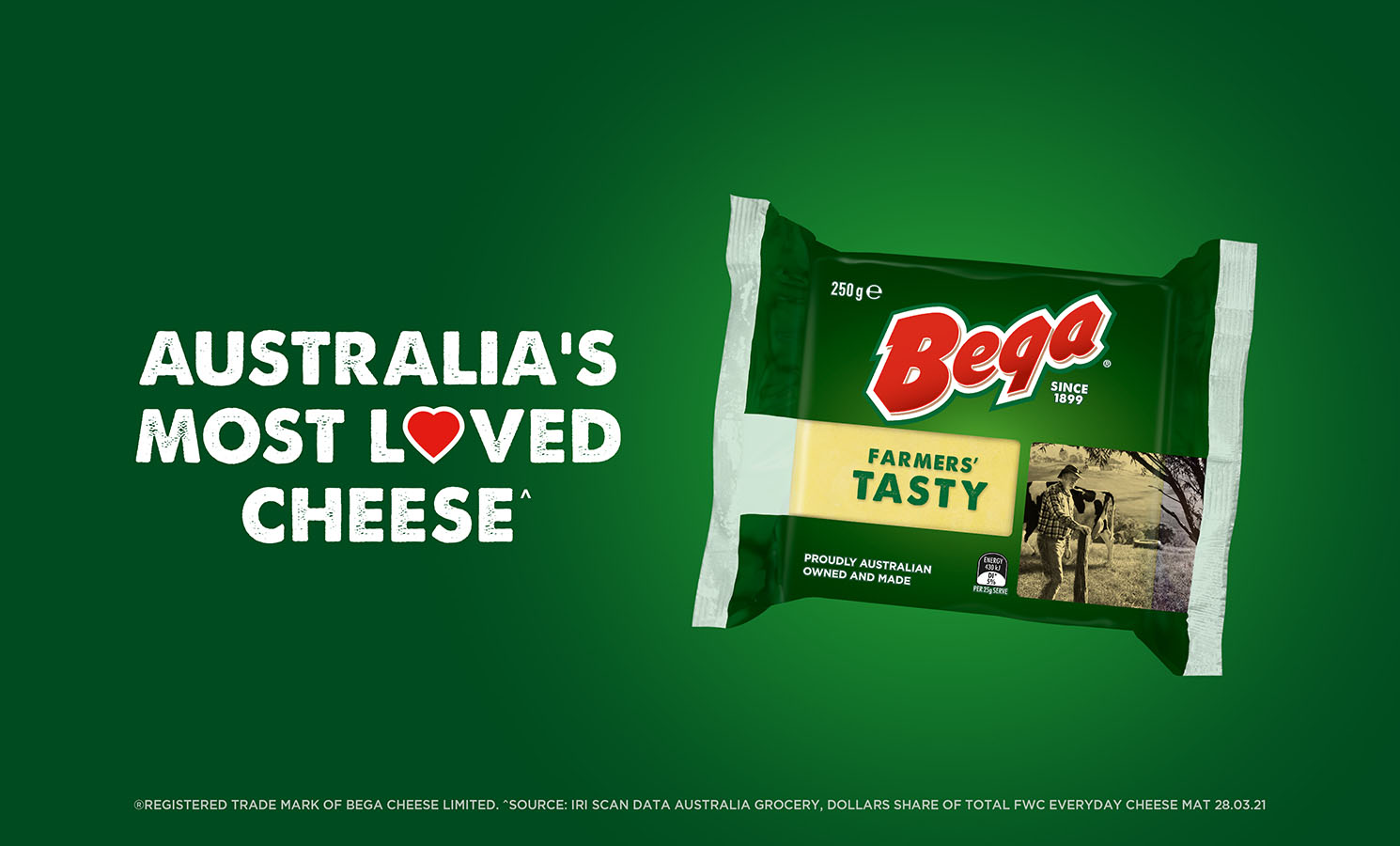
  • Bega Cheese reports strong market share growth for FY23

    Bega Cheese reports strong market share growth for FY23

    Bega Cheese says it has gained market share and margin momentum in the second half of the year following significant cost increases in the first quarter.

    For FY23, the dairy company achieved a revenue of $3.4 billion, marking a 12 per cent rise from the previous year. It closed the fiscal year with a net debt of $203.6 million and a reduced leverage ratio of 1.6 times.

    Statutory EBITDA (earnings before interest, tax, depreciation, and amortisation) was $144.1 million, with a post-tax loss of $229.9 million significantly impacted by non-cash asset impairment of $230 million.

    Meanwhile, normalised EBITDA was $160.2 million, with a profit after tax of $28.5 million.

    According to Bega, its strategic decisions in the past five years played a pivotal role this year as it navigated “difficult and rapidly changing” conditions.

    The implementation of price adjustments, cost reduction initiatives, and a stream of new products significantly improved the financial performance of the Branded segment, particularly in the latter part of the year.

    However, the continued decline of milk production and excess milk manufacturing capacity have created a highly competitive environment and a disconnect between returns from globally treated commodity markets and Australian farm gate milk prices.

    Bega said this scenario will continue for some time, resulting in a non-cash impairment and a strategic decision to right-size some of its commodity assets.

    Reflecting on the results, executive chairman Barry Irvin emphasised the company’s strategy to shift to a predominantly branded business model.

    “The non-cash impairment of our bulk commodity assets reflects industry circumstances and reinforces the importance of our strategy to transform to a predominantly branded business,” said Irvin.

    “The right-sizing of our commodity assets and their further integration with our branded business creates a great platform for the support and growth of our brands while maintaining the capability to respond to changing market circumstances.”

    Looking ahead, Bega has outlined a restructuring and simplification program to accelerate its transition to an integrated, predominantly branded business.

  • Italian products thriving in the Australian market

    Italian products thriving in the Australian market

    The Australian market has seen a great surge in Italian imports in recent years, indicating broad consumer taste for all things “Made in Italy”, with special emphasis on authentic Italian-made food products.

    Whilst there remains a shortage of official data on Italian product consumption in Australia, import records reveal a compelling story – a diverse range of products, from processed tomatoes to fine wines, pasta to chocolate, have garnered substantial attention from Australian consumers.

    According to data from the Australian Bureau of Statistics, F&B imports from Italy to Australia have reached a value of $1.13 billion in the year ending December 2022, a year-on-year increase of 15.6 percent.

    “Across the past 10 years, we have seen the value of all Australian F&B imports double,” says Simona Bernardini, director of the Italian Trade Agency’s Sydney office, “with Italy maintaining fifth position in the world rank as one of the major trade partners for Australia in front of other European countries.”

    Italy has emerged as Australia’s top trade partner for processed tomatoes, securing a substantial 71 percent market share valued at $123 million. It is also Australia’s primary supplier of pasta – the quintessential Italian food product for most Australian consumers – with a 19 percent share at $90 million. Italy is also at the front of the pack in multiple F&B categories, including wine ($131 million), chocolate and products containing cocoa ($89.5 million), cheese ($80.5 million), baked products ($50.6 million), sauces and mix condiments ($65 million) and olive oil ($32 million).

    “Major Italian players such as Lavazza, Barilla, Ferrero, and Campari have successfully navigated the Australian market by strategically focusing on marketing and communication”, observes Bernardini.

    Despite these achievements, she maintains that there is a vast untapped potential beyond pasta, citing the diversity of Italian culinary delights: “Italy has a huge variety and number of food products to offer, still unknown to Australian consumers,” she emphasizes. “The food processing industry plays a vital role in the economy of our country.

    “Over the years, manufacturing processes have become more advanced, and many companies continue to invest in cutting-edge technologies. We also offer an extensive range of organic and ‘free-from’ products designed for people with food intolerance and allergies.”

    Italy’s dedication to sustainability aligns well with Australian consumer preferences. However, Bernardini acknowledges the need for more transparent regulations in Australia, saying: “Clear regulations are needed, firstly in product labelling and to limit greenwashing practices.” Scrutiny from the Australian Competition and Consumer Commission – which has clamped down on claims of sustainability – underscores the importance of authentic communication in this area.

    Italy’s agricultural sector is considered amongst the greenest in Europe, with the least number of agri-food products containing irregular chemical residues. It is the second country in the EU for agricultural land dedicated to organic farming, and the second country in the world for the export of organic products. Italy features about 840 geographical indications certified as “protected designations of origins” (PDO) and “protected geographical indications” (PGI) also recognised by EU regulations, and which guarantee high-quality standards of a wide variety of food products, wines, and spirits.

    E-commerce remains a pivotal avenue for Italian businesses to broaden their reach in the Australian market. Whilst in other countries Italian food companies have been working actively on digital platforms and marketplaces, accessing the Australian online market involves long-term planning due to transport, food perishability, standards, quotas, and import duties’ impact on imported products.

    “We hope that in the future there will be further development in the Australian market,” says Bernardini, “with an expansion of marketplaces and digital platforms more focused on the F&B segment that could become the springboard for more gourmet food available through online channels.”

    As far as Bernardini sees, there lies significant potential ahead for the Italian/Australian trade relationship, especially in the F&B category. The Australian demographic features a good number of dual-income households, with poor time for cooking and a steady demand for ready-to-eat foods. At the same time, Australians are becoming more oriented to freshness, wholesomeness, and healthy lifestyles – to a large extent, they are willing to pay a “premium price” for food with those characteristics. For these reasons, many Australian importers visit Italy at least once a year to see what’s new, and to place orders if they find products that fit the demand.

    “As educated and affluent consumers, Australians are willing to try new products,” she says. “Furthermore, the country receives a growing number of immigrants from all over the world, bringing with them different food tastes and boosting the diversity of the culinary scene in Australia. In addition, Australians love to travel, and often they take time to visit Europe and Italy, bringing back memories of the food and flavours they enjoyed abroad.”