Author: Mei Ling Tan

  • Asahi reinvents Super Dry beer with a new taste and design

    Asahi reinvents Super Dry beer with a new taste and design

    Japanese beer and spirits company Asahi has unveiled a fresh look for Asahi Super Dry along with an enhanced taste inspired by the vibrancy of contemporary Japan.

    The reinvented Asahi Super Dry is curated to provide an improved drinking experience that will exceed expectations, according to the brand in a statement. It is also the first time that Asahi has reworked its recipe since Asahi Super Dry was introduced in 1987. The revamp aims to enhance the unique sake-inspired sensation that makes Super Dry a classic.

    Asahi Super Dry will now include a refined dry taste of the beer which elicits a clean aftertaste without any residual flavour and that goes well with various cuisines, boosting drinkers’ appreciation for the original food flavour.

    The changes made to the beer recipe also introduce a new hop treatment process that gives it a refreshing yet delicate hop aroma, and a new yeast control technology that provides a fermentation-driven aroma. With each sip of New Asahi Super Dry, the flavour of these two delightful aromas arrive at a quick peak of delicious sensation.

    Based on Super Dry’s iconic silver, delicate design adjustments have been made down to the finest details. Both cool and vibrant, the new design aims to highlight the unique character of modern Japan— where innovation and reinvention meet the beauty and precision of traditional craftsmanship, the company said. The design centers on two silvers: a shiny metallic silver and a deep oxidized matte silver.

    Along with this reinvention comes the commencement of partnerships with other brands. Asahi Super Dry has partnered with four city football group clubs: Manchester City, Melbourne City, Yokohama F. Marinos and Sichuan Jiuniu to be its new official beer partner. Additionally, Asahi Super Dry has been selected as one of the official sponsors for the Rugby World Cup 2023 to provide its beer to rugby fans worldwide.

    The new Asahi Super Dry will be made available in Singapore from July 7.

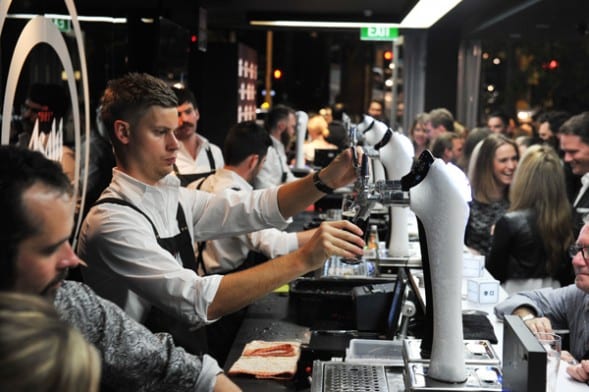
    At the ‘Art of Taste’ event, visitors are introduced to a sensorial field of barley and will utilise their sense of touch to engage with beer ingredients used in Asahi’s beer products. Additionally, the yeast room is constructed to simulate the fermentation process and provides visitors with the optimal photograph opportunity to capture their experiences and publicise it on their socials.

    Visitors are also able to experience a 30-minute step-by-step guided masterclass in a contemporary izakaya setting, where they will gain knowledge on how to differentiate between dry and non-dry versions of beer.

    Lastly, an abundance of food vendors from Hokkaido, Nagoya, Fukuoka and Osaka will be present at the taste zone, where partnerships with Kanpai Group, Courtyard Café and Otoko Japanese Restaurant will allow various types of Japanese foods to be available to reinforce that Asahi beer goes well with any food.

    “With an enriched, vibrant dry taste, the new Asahi Super Dry is ideal for different kinds of food pairings and elevates the senses for a better experience. It is the best match for every exciting “Super Dry Moment” of the modern lifestyle and drinking repertoire,” said Meryl Ho, marketing lead of Asahi Beer Asia, Singapore region.

    “Whether one is cheering on their favourite sports team, watching a movie, exploring new foods, bar hopping, or simply enjoying a day out, the new Asahi Super Dry is the perfect partner for these moments and occasions,” Ho added.

    The news comes shortly after it was announced that Carlsberg Brewery Malaysia and Asahi Group have mutually agreed to not renew the distribution of the Asahi brand in Malaysia.

    The exclusive distribution of the brand will expire on 31 December 2023, according to Carlsberg Malaysia in a statement. The brewery also noted that the renewal of the Asahi agreement is not expected to have any material financial impact to CBMB once the distribution ends.

    Stefano Clini, the managing director of CBMB shared that the parting is an amicable one, after having the sole rights to locally manufacture, sell and distribute the brand for more than a decade.

    “Having said that, the group will remain the exclusive distributor of Asahi for 2023 and we will continue to support the brand for the rest of this year,” Clini added. He went on to explain that following this development, Carlsberg will continue to drive its premiumisation strategy while simultaneously exploring opportunities to expand its premium portfolio to “deliver the best drinking experience to [its] Malaysian consumers”.


  • Mercedes-Benz Partners With Tesla To Integrate NACS Charging Ports Into Its Lineup

    Mercedes-Benz Partners With Tesla To Integrate NACS Charging Ports Into Its Lineup

    Mercedes-Benz is the latest manufacturer to partner with Tesla to integrate NACS (North American Charging Standard) charging ports across its lineup of electric vehicles. This will provide electric vehicles from the brand with access to Tesla’s supercharger network. The German company will manufacture its vehicles in North America with NACS ports starting from 2025 onwards. The automaker also said that it will offer an adapter that enables cars with CCS configuration to charge on the NACS network from 2024 onwards.

    NACS is a connector system developed by Tesla. The manufacturer recently opened its use for all brands following which the likes of Ford, GM, Volvo, and Rivian partnered with the Elon Musk-led company to incorporate it into their own electric vehicles. Tesla’s supercharger network also has the advantage of being the largest one in North America and having a proven track record of reliability from glitches. Mercedes-Benz is the first German OEM to partner with the American brand.

    Mercedes Benz also plans to establish its own charging network of almost 400 Charging Hubs, including more than 2,500 high-power chargers in North America by the end of the decade. The first Mercedes-Benz charging hubs in North America will be opened by the end of 2023 and be equipped with both CCS1 and NACS plugs.

    Globally, the manufacturer plans to establish more than 2,000 Charging Hubs in countries like North America, Europe, China and other core markets by the end of the decade. This will include 10,000 charging ports that can be expanded depending on market need. The brand also stated that when open, these ports will be accessible to all EVs regardless of which brand.

  • Vision Pro’ will not immediately impact Apple

    Vision Pro’ will not immediately impact Apple

    Last month Apple unveiled its Vision Pro spatial computer and before the video of the new device was streamed to the world, many started to compare the introduction of the mixed reality device to that day in January 2007 when Steve Jobs masterfully hosted the introduction of the iPhone. Like the iPhone, the Vision Pro isn’t creating a new product category but is taking the category to a previously unseen level.
    But when it comes to the impact that Vision Pro will have on the world and Apple, that’s where the comparisons end. At least for now. The latest edition of Power On from Bloomberg’s Mark Gurman takes a look at some of Apple’s hit products and how they affected Apple’s overall revenue. For example, the iPod was launched in 2001 and by 2004, it was accounting for 16% of the company’s top line. By the time the iPhone was announced in 2007, the iPod was bringing in $8 billion a year which worked out to 40% of Apple’s gross.
    As Gurman notes, the iPhone, despite being an AT&T exclusive, still sold 10 million units during its first full year and the device contributed a third of Apple’s revenue by 2009. The iPad immediately contributed 18% of Apple’s gross in 2011, the year following the tablet’s initial launch. And the Apple Watch, which started life available in only 9 countries, is now part of a business segment that includes the AirPods and other products and brings about $40 billion into Apple’s coffers annually.
    And as far as the impact on society, nothing can touch the immediate response to the iPhone. The smartphone quickly became the most indispensable tech tool in the world. But the Vision Pro is a much different animal. While the iPhone was first considered pricey when it was introduced, the Vision Pro starts at a whopping $3,499. And while the Vision Pro offers some cool features, most of the applications it delivers can be found on the iPhone.
    Sure, Vision Pro gives you options to manipulate the environment and/or the datat you’re viewing but you’re paying a heavy price, and not just financially. The battery lasts only a couple of hours and unless you want to carry extra battery packs with you, Apple’s spatial computer is not yet ready, not even close, to replacing the iPhone.
    That’s not to say that the Vision Pro won’t sell. The original plans called for more than a million units to be sold in the first year. But the Financial Times recently reported that Apple isn’t pleased with the low yields Sony has had producing the micro-OLED displays for the product. Other production issues will limit the number of Vision Pro units assembled in the first year to 400,000 which means that the product will be hard to find.
    While Apple is reportedly working on a lower-priced spatial computer that might not have all of the features that the Vision Pro offers, I have to agree with Bloomberg’s Gurman when he says that most consumers will stick with their iPhone until Apple can reduce the Vision Pro to the size of a pair of glasses. Almost everybody who watches the tech world either as a writer or consumer has assumed that the next big thing for Apple after the iPhone would be a pair of glasses that would offer the features and functionality of the iPhone, but worn on the user’s face.
    Again, a product like AR smart glasses has always been assumed to be the endgame for Apple and not much has changed even with the appearance of the Vision Pro. Check out the AR features of the headset and the way the app icons appear and are selected with a look. TF International analyst Ming-Chi Kuo says not to expect Apple to release AR glasses until 2026-2027 at the earliest. That timeline might be too ambitious but Apple has taken the first step with this new device. Just don’t expect the Vision Pro to have the same impact on Apple and society as the iPhone.
  • Samsung reportedly delays its extended reality device up to six months because of Apple

    Samsung reportedly delays its extended reality device up to six months because of Apple

    Samsung has delayed production of its mixed reality AR/VR headset until sometime in the middle of 2024. And you can put the blame for the delay squarely on Apple and its Vision Pro AR/VR headset, uh, excuse me, spatial computer. An internal Samsung memo cited by SBS Biz says, “…we decided to review all internal specifications and performance, such as the design and panel of the new XR (extended reality) product.”
    So why is Samsung taking its mixed-reality headset back to the drawing board? Apparently, Sammy was so impressed by Apple’s Vision Pro presentation at WWDC that it decided that some design changes and other revisions were in order. Among the changes that Samsung is expected to make include the addition of higher resolution displays and the use of faster chips to improve performance. Samsung plans on equipping the device with a Snapdragon chip and Google is developing the operating system which will most likely be based on Android.
    Samsung has reportedly informed its panel suppliers of the delay. Originally, test production of the headset was to start at the end of this year with mass production of Samsung’s XR device scheduled to start in early 2024. Now we are looking at a three to six-month delay that could result in mass production of the product starting around the middle of this year.
    The delay does prove that Samsung’s target here is Apple and its $3499 Vision Pro, not Meta and the upcoming Quest 3. Samsung’s decision to revise its XR device to make it even better might not only have to do with what Samsung saw in the Vision Pro preview but could also be a decision based on the trouble Apple is having producing the Vision Pro. Where Apple originally hoped to build one million units of the device this year, the actual number of units produced could be under 400,000 according to a recent Financial Times report.
    This shortfall might give Samsung an incentive to design a device that is more likely to compete against the Vision Pro and satisfy early adapters who won’t be able to find the Vision Pro after its release. Based on the report out of South Korea, it seems that even Samsung believes that the only way it can compete with Apple’s spatial computer is to improve its own product before it is released.
  • Google Calendar update brings new working locations improvements

    Google Calendar update brings new working locations improvements

    One of the most important Google apps for those using the search giant’s tool for work is by far Calendar. Many of its features help users keep track of their meetings scheduled, as well as the overall workflow. Ever since the COVID-19 pandemic, the need for tools that would provide users with the same level of productivity while working from different places has increased.

    Google Calendar has had a specific feature since 2021 that enables users to provide information about where they’re working from directly in the app. Although Google has further improved this feature in the last couple of years, there’s always room for improvement.

    The most recent Calendar update introduces a new feature for the working locations functionality, which allows users to set working locations in Calendar that indicate where they are working for specific portions of the day. Up until now, you could only highlight one or more days to indicate the period of time you’ll spend working from a specific location.

    The new option makes working locations even more accurate when reflecting the availability of a user based on the physical location they set, which can change throughout the day. Important for those that are part of a hybrid work environment where employees may work from home, and office, a specific building, or a combination of any of these, the new feature is meant to appeal to another type of audience, one that has become larger since pandemic.

    According to Google, the new Calendar feature is already available for those using the app, but only if you’re enrolled in the rapid release program. For the rest of us, the new feature should start rolling out on July 14.

    The working location feature will be enabled by default (unless disabled by an admin). To start using the new option and set a sub-day working location, simply select Working Location as an event type in Calendar, choose a location, and modify time, date, or recurrence by clicking on the time element.

    It’s important to add that this is available to Google Workspace Business Standard, Business Plus, Enterprise Standard, Enterprise Plus, Education Fundamentals, Education Standard, Education Plus, the Teaching and Learning Upgrade, and Nonprofits.

  • Lychees enter Thailand’s major shopping malls

    Lychees enter Thailand’s major shopping malls

    Vietnamese lychees were already present in Thailand a few years ago, but this is the first time that the fruits are on sale at a major supermarket chain in the country.

    “I am very happy to be one of the pioneering firms to bring fresh lychees to Thai consumers,” said Nguyen Xuan Viet, Chairman of Vifoco, exporter of lychees to Thailand. “My company hopes to export from 1,000 – 2,000 tonnes of fresh lychee to Thailand next year.”

    At the Siam Paragon shopping mall, the lychees from Vietnam have attracted attention from shoppers.

    Somkiat Wongsakulchai, chief executive of Ekthai, distributor of Vietnamese lychees in Thailand, said that his company will expand the distribution of Vietnamese lychees to more branches next year.

    Lychee is grown in many localities in Vietnam, mostly in the north, with Bac Giang province known as the country’s lychee growing hub.

    The province harvested 199,500 tonnes of lychee in 2022 and earned over 290 million USD from lychee sales and support services.

    Bac Giang lychee has affirmed its brand and value in many countries and territories around the world with 75,900 tonnes shipped abroad, making up 38% of the accumulative sales.

  • UOB celebrates 30th anniversary in Vietnam

    UOB celebrates 30th anniversary in Vietnam

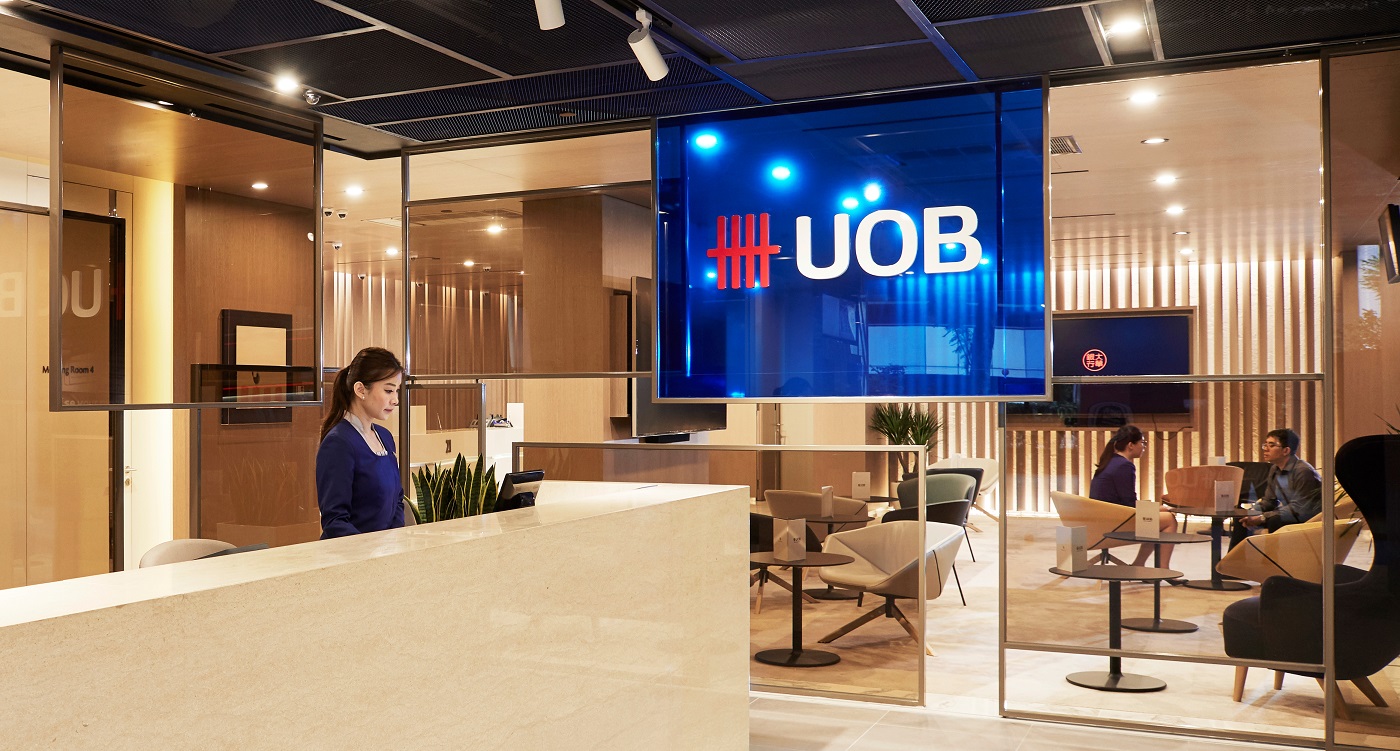
    UOB Vietnam, a subsidiary of UOB, is proud to mark three decades of unrelenting support for Vietnam and its people.

    The bank held a gala dinner on Wednesday for clients and partners to thank them for their support and trust.

    To commemorate the 30th anniversary, it also announced a partnership with Saigon Children’s Charity to power a project to set up computer rooms at five schools in the Mekong Delta over the next five years.

    This is expected to help more than 2,000 young students gain access to digital learning and improve their computer skills. The bank has also been supporting the Saigon Children’s Charity this past year to support children in need.

    This project is part of the UOB Heartbeat corporate social responsibility (CSR) program, which aims to create sustainable products for caring and inclusive societies.

    To mark this momentous occasion, UOB Vietnam is also launching promotional campaigns for its customers.

    From now until July 17 the first 300 UOB cardholders who meet certain requirements when spending on their cards will get the chance to win a pair of Apple AirPods 3rd generation (MagSafe) with a limited-edition Paul Smith AirPods Case worth more than VND11.3 million

    UOB is the only Singapore bank to have had a subsidiary in Vietnam since 1993. Thirty years ago, it established a representative office with only three employees. In 1995 UOB became the first Singapore bank to set up a branch in HCMC.

    Throughout its 30-year journey, UOB Vietnam has achieved significant milestones, reflecting its dedication to Vietnam’s growth and development.

    The bank successfully transformed from a branch to a 100 percent foreign-owned subsidiary bank while maintaining steady growth even through the Covid-19 pandemic.

    Since signing an MoU with Vietnam’s Foreign Investment Agency in 2015, UOB has helped over 250 companies invest more than S$5.8 billion in Vietnam, enabling the creation of more than 30,000 jobs.

    This year marked another milestone for UOB Vietnam as the bank welcomed 575 colleagues from Citibank as part of its acquisition of Citigroup’s consumer banking business in Indonesia, Malaysia, Thailand, and Vietnam.

    With an expanded network, more ecosystem partners, and an enhanced suite of products and capabilities, UOB Vietnam is in a good position to serve the needs of its enlarged customer base.

    The addition of new colleagues will help drive its ambition to be a truly regional bank that helps its customers achieve their financial aspirations.

    As UOB celebrates its 30th anniversary in Vietnam, it is reaffirming its long-term commitment to Vietnam and its people.

    Victor Ngo, CEO of UOB Vietnam, said Vietnam is an important pillar in UOB’s vision of becoming the number one bank in Southeast Asia.

    Therefore, it would continue to encourage international investment and local businesses to facilitate the expansion of trade and investment flows into Vietnam, he said.

    Besides, UOB would also strengthen its capabilities by investing in digitalization and collaborating with ecosystem partners, which would help meet the evolving needs of customers in Vietnam, he said.

    “Our vision is to be among the top foreign and consumer banks in Vietnam, as well as an inclusive and forward-thinking organization that cares about its people and puts customers first.”

    UOB Vietnam is dedicated to doing the right thing for its clients for 30 years and beyond. The bank is also committed to continuing support for the sustainable growth of enterprises in the digital economy through a wide range of activities.

    It offers innovative financial solutions to SMEs and large enterprises through digital platforms such as Infinity, UOB BizMerchant, the UOB SME app, and UOB BizSmart.

    UOB Vietnam also strives to enhance the customer experience by providing personalized products and services through multiple channels.

    For its exceptional performance, it has been conferred a number of prestigious awards in Vietnam and elsewhere in the region.

    UOB BizMerchant was named the Best Financial Inclusion Project by Asian Banking & Finance in 2019 and received the Best Financial Inclusion Project award from The Asian Banker in 2020 and the Best SME Bank in Asia Pacific Award for seven straight years from The Asian Banker.

    Recently UOB Vietnam was named the Most Innovative Bank for SMEs by The Global Business.

    These accolades point to UOB Vietnam’s dedication to delivering superior banking services, innovative solutions and outstanding customer experiences.

    Besides, as a responsible corporate citizen, UOB Vietnam actively engages in CSR initiatives to keep the good going. These include the UOB Global Heartbeat Run/Walk and the UOB Painting of the Year.

    Driven by a passion to encourage talented artists in their creative pursuits, a flagship regional art competition, UOB Painting of the Year, was launched in Vietnam this year.

    Through this competition, the bank aims to uncover and nurture the region’s next generation of great artists.

    In October UOB Vietnam will welcome the first eight winners in Vietnam who will go on to compete in the ASEAN competition.

  • Intel exec lauds Vietnam chip autonomy ambition

    Intel exec lauds Vietnam chip autonomy ambition

    Chip autonomy is an ideal aspiration but it is advisable to avoid setting too big goals in the immediate future, an Intel Products Vietnam executive has told the government.

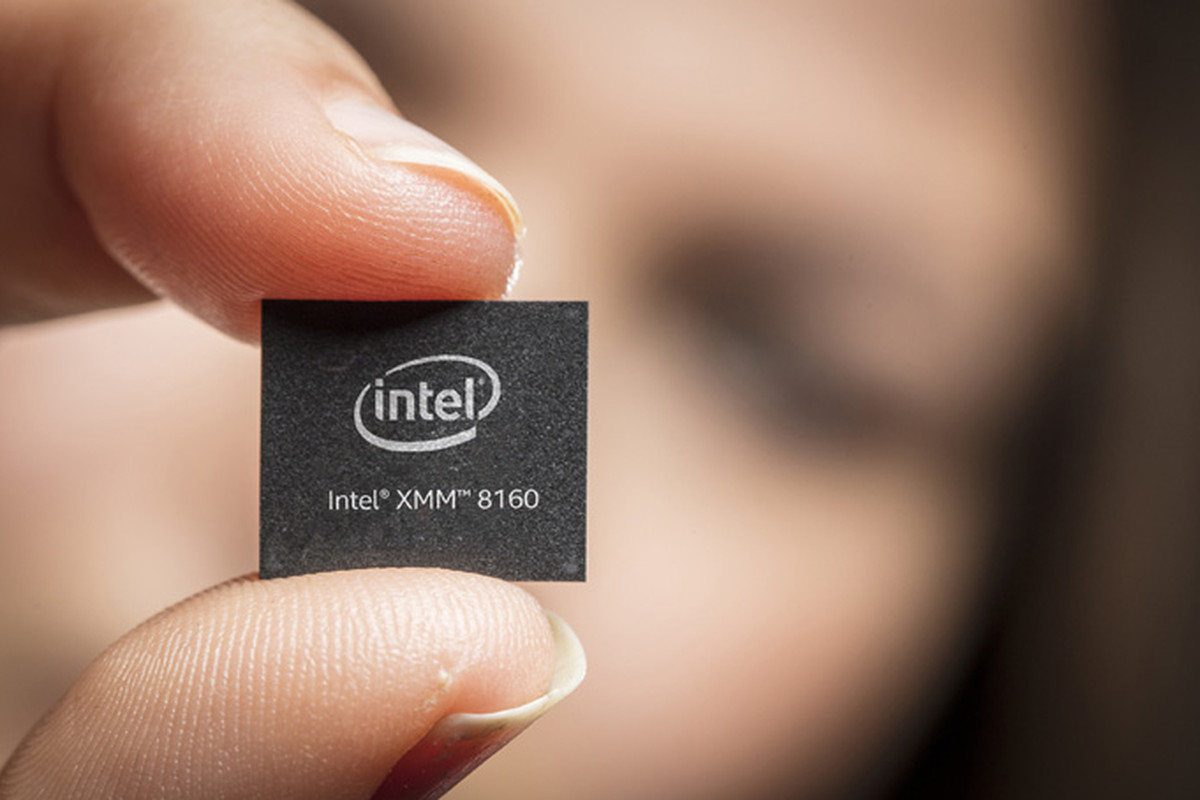
    In 2006, the U.S. chipmaker became the first foreign high-tech investor in Ho Chi Minh City.

    “The past 17 years have been a miraculous journey,” Kim Huat Ooi, vice president and general manager of Intel Products Vietnam, said.

    “Vietnam has transformed and become much more prosperous. Foreign investors coming here all want to have a foothold and a solid launch pad in Vietnam.”

    A number of other major chip manufacturers too have set up plants in Vietnam, forming an open semiconductor supply chain.

    Some local technology companies such as FPT and Viettel are also investing in the sector, and hope to export large volumes of “Made in Vietnam” chips.

    Advertisement

    In April Prime Minister Pham Minh Chinh assigned the Ministry of Planning and Investment with developing a program for electronic chip production.

    Vietnam’s advantage

    Kim, who has nearly 40 years of experience in the semiconductor field, said when Intel entered Vietnam it had to import most raw materials, but now over 200 local suppliers were working with the plant, helping create a closed process for chip autonomy.

    “It is completely right that the Vietnamese Government and companies think big and are ambitious to be self-sufficient in chip sources. Some companies have designed very good microcontrollers for specific applications. Vietnam will have a big opportunity to make more chips.”

    Before it set up the plant in Vietnam, Intel was invited by many other countries in the neighborhood. One of the important reasons for Intel choosing to build the plant in Ho Chi Minh City was the stability of the Vietnamese political system.

    During the Covid pandemic, many supply chains around the world were broken, but the Intel Vietnam factory was still operating smoothly.

    In 2021, its exports surged by 25% from the pre-pandemic period.

    Vietnam remained stable even in the most challenging periods.

    “It can be seen that in future local supply chains will gradually form and be able to operate independently. As the amount of high-tech investment increases, production costs will decrease, bringing more opportunities for domestic enterprises.

    “The Vietnamese government can use this to accelerate its ambition to produce chips.”

    It was right to dream big but it was also necessary to avoid being too ambitious to invest in non-optimal areas and waste money.

    Each country should focus on areas where it had an advantage instead of spreading itself too thin. Chip production was resource-intensive.

    Local companies also needed to design chips appropriate for their actual capabilities and needs, he said.

    Another challenge was human resources since the chip industry required great technical and technological capability to cope with new problems.

    “If we look at the current education system in Vietnam, we are seeing that resources are mainly focused on bachelor’s training. To enter the chip industry, more researchers in post-graduate programs are needed.

    “To design chips, engineers need a lot of R&D skills.”

    However, though investing in human resources required time and money, it was definitely profitable in the long run.

    For this, Vietnam needed the right talent, and for this tertiary education should have new curriculums.

    Intel and other large foreign enterprises in Vietnam also paid special attention to linking up with universities to improve curriculums and foster talent.

    “Seventeen years ago we entered Vietnam and started looking for the first basic workers. Now our plant has continuously sent Vietnamese engineers to the U.S. to work and develop specialized technologies. Initiatives by local talent have been patented in the U.S., making an important contribution to improving the plant’s performance.”

    Besides manpower, special attention should be paid to infrastructure and traffic, like dealing with the electricity shortages in some parts in June.

    The shortage had been solved, but in the long term investors would need specific plans to ensure reliable power availability.

    After the pandemic many neighboring countries had come up with incentives to get major international investors to come and set up supply chains.

    Vietnam too should have appropriate policies to retain existing investors and attract new ones.

    “The world is changing. Many countries are emerging, attracting large investors back. In Vietnam, we are doing well. Intel wants to continue to invest and contribute to Vietnamese society.”

  • Australia’s Coles Supermarkets enters Malaysia via Jaya Grocer

    Australia’s Coles Supermarkets enters Malaysia via Jaya Grocer

    Australia’s leading retailer Coles Supermarkets has entered the Malaysian market, bringing in 200 products through an exclusive collaboration with Malaysian supermarket Jaya Grocer.

    The deal allows Jaya Grocer to expand their Australian product offerings with over 1,000 products from Australian-based brands, including Coles, available at all 43 stores and for GrabMart delivery nationwide.

    The well-known Australian home-grown supermarket chain is renowned for its diverse range of quality fresh ingredients and imported goods.

    “Coles has been exporting high-quality Australian food for over 20 years to more than 30 countries.

    “We think Malaysia is a great country and with Jaya Grocer and GrabMart supporting our brand, we hope growth will continue into the future,” said Coles’ general manager for exports Will Mulholland at a ceremony here, today.

    He said Coles would broaden its offerings to include Australian dairy products and ice creams.

    At the moment, most of its products are predominantly placed in the grocery aisle.

    “We are here for the long term. Jaya Grocer’s great offerings and presentation fit very well with our stores in Australia,” said Mulholland.

    Shoppers enjoy up to a 15 per cent off some of Coles’s top-selling products such as Coles Rice Crackers Seaweed, Coles Chocolate Finger Biscuits, Coles Drinking Chocolate and Coles Hot Chocolate Sachets until July 9, 2023.

    There will be more value deals and discounts every month via Jaya Grocer’s membership programme powered by Grab. Access to the membership programme is directly via the Grab mobile app.

  • Volvo Cars Registers 33% Growth in Global Sales

    Volvo Cars Registers 33% Growth in Global Sales

    Volvo Cars has announced a significant surge in sales for the month of June. The company reported selling a total of 66,379 cars worldwide, marking a 33% increase compared to the same period last year. A major contributor to this is the demand for Volvo’s fully electric vehicles, which experienced a fourfold increase in sales compared to June 2022. It’s worth noting that last year’s figures were adversely affected by supply chain constraints, leading to lower production. In June, Recharge models saw a staggering growth of 129%, accounting for an impressive 37% of all Volvo cars sold globally. Among the Recharge models, fully electric cars comprised 14% of the total sales.

    During the first half of this year, Volvo Cars achieved sales of 341,691 cars, representing a notable 17% increase compared to the corresponding period in 2022. A significant contributing factor to this success is the company’s Recharge line-up, consisting of chargeable models with either fully electric or plug-in hybrid powertrains.

    In Europe, Volvo Cars experienced a substantial sales surge of 70% in June, with 27,196 cars sold compared to the previous year. Recharge models accounted for 58% of overall sales in the region. Looking at the cumulative sales for the first half of the year, Volvo Cars witnessed a 23% increase in Europe, reaching a total of 146,943 cars sold.

    Meanwhile, in the United States, Volvo Cars achieved a remarkable 53% increase in sales in June, with a total of 12,933 cars sold compared to the previous year. Recharge models were the driving force behind this growth, with a notable increase of 79%. Consequently, Recharge models accounted for 29% of total sales in the US. During the first half of 2023, Volvo Cars achieved sales of 59,750 units in the US, representing an 18% increase compared to the same period last year.

    However, Volvo Cars faced a slight dip in sales in China, with 15,405 cars sold in June, representing a 7% decrease compared to the same month last year. Despite this decline, Recharge models still held a respectable 8% share of the total sales in the Chinese market.  In terms of individual models, the Volvo XC60 emerged as the top-selling vehicle in June, with a total of 21,053 cars sold. This represents an increase from the previous year when 18,275 units were sold.

    The XC40 followed closely behind, with sales reaching 18,170 cars, the XC90 also maintained a steady performance, with 9,895 cars sold. Volvo Cars’ sales growth, is particularly driven by the soaring demand for its fully electric vehicles.

  • Vietnam Airlines shares restricted to afternoon trading only

    Vietnam Airlines shares restricted to afternoon trading only

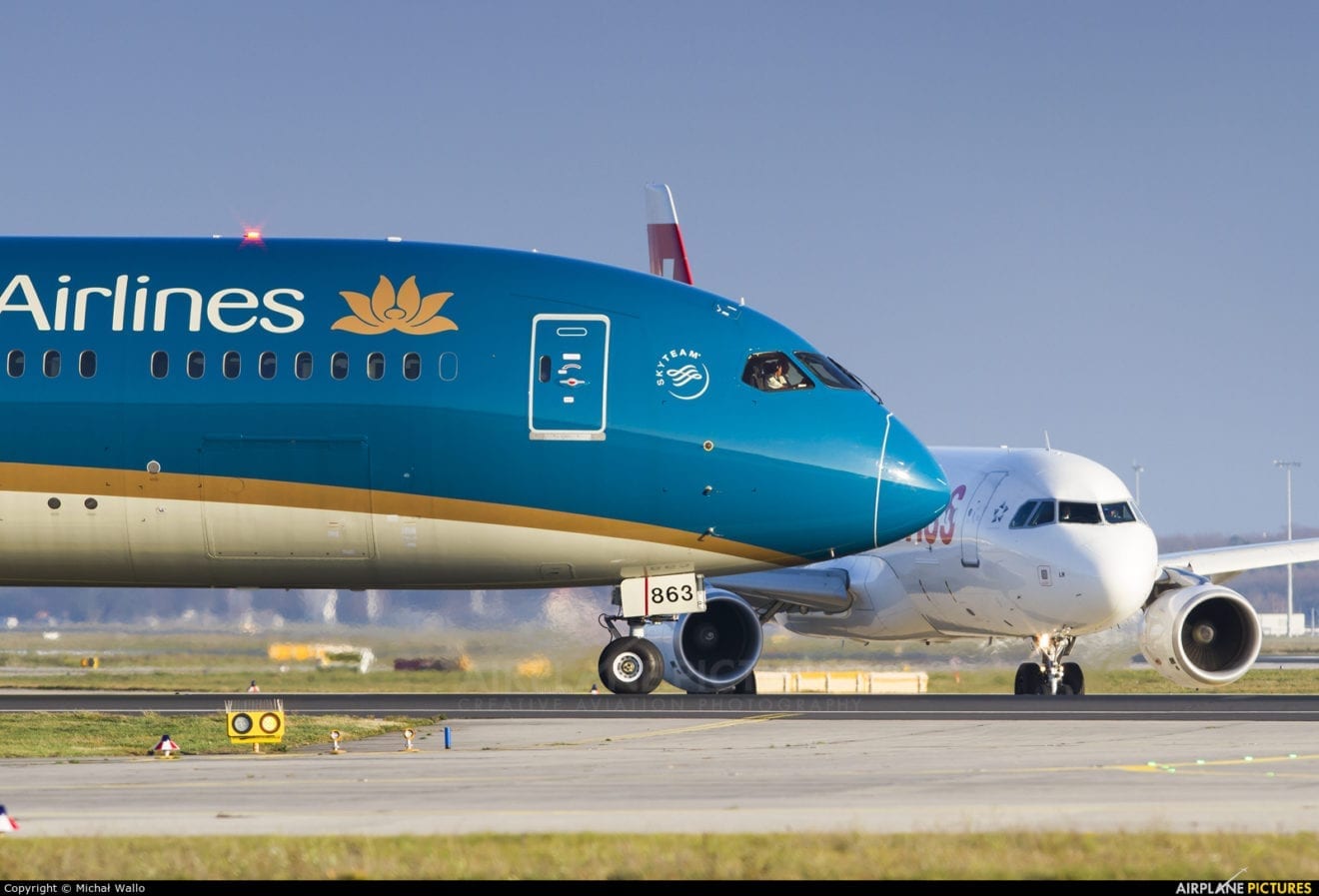
    Over 2.2 billion HVN shares of Vietnam Airlines will be restricted from trading in the afternoon only, starting from July 12, due to the company’s delay in submitting its financial reports.

    The Ho Chi Minh Stock Exchange made the restriction decision on Wednesday after the airline was more than 45 days late in filing its audited 2022 financial figures.

    Vietnam Airlines in early May requested more time to compile its report, saying that its auditor needed to review and evaluate more data.

    The airline’s unaudited financial report for last year showed an accumulated loss of VND32 trillion ($1.35 billion).

    Vietnam Airlines, however, seemed to be recovering in the first half this year, transporting 10.14 million passengers, up 23.6% year-on-year.

    Its revenue rose nearly 50% to over VND45.2 trillion, almost the same as in 2019 before the pandemic.

  • Techcombank strengthens cooperation with international partners

    Techcombank strengthens cooperation with international partners

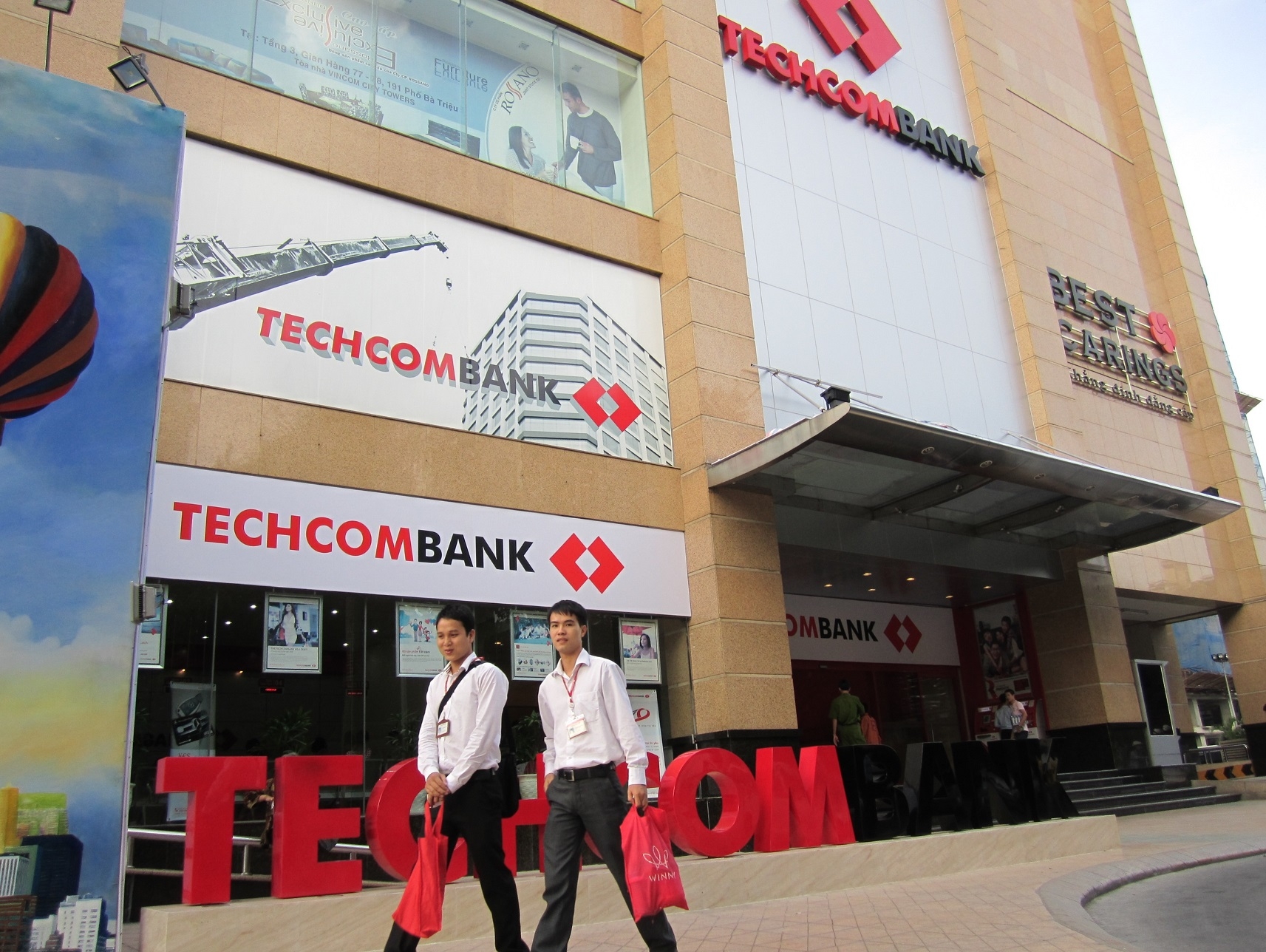
    Techcombank has been extending technological collaboration with worldwide partners and organizations in order to improve client personalization, digitization, and security.

    The bank aims to lead the digital transformation of Vietnam’s financial industry with a three-pillared strategy focusing on digital, data, and talent.

    Digital banking would make regular banking easier, more convenient, and simpler. Data is the basis for utilizing analytical skills to make quicker and better decisions. In the “talent” pillar, the bank taking the extra miles to go overseas to bring the best Vietnamese talents to Vietnam, at the same time training all the bank’s staff to use digital and data to provide better services to their customers.

    Techcombank has been focusing on innovation and technology since its establishment.

    This long-term target has led to several technological industry milestones in Vietnam’s banking industry, such as the first credit card launch, zero-fee bank transfers, the digital signature platform for corporate clients, and various world-class platforms being synced on the cloud.

    The three-pillar strategy had been discussed at a virtual press conference of the 7th Singapore Regional Business Forum held in Hanoi on July 7, for which Techcombank is one of two platinum sponsors.

    During this press conference, participants also discussed the crucial role of its partners, trustees, and friends across the region.

    Partners are keys to Techcombank’s success and have shaped its growth story over the last 30 years since its establishment. The bank was founded at a pivotal time for Vietnam, as the government encouraged the transition to a more market-oriented economy.

    Ever since, it has been part of the extraordinary growth of Vietnam’s banking industry over the past three decades, with over 11.2 million retail and corporate customers and more than 12,000 employees in over 46 Vietnamese cities and provinces.

    Partners that are key to its strategic success include McKinsey, Salesforce, Adobe, MISA, and Amazon Web Services.

    In 2009, Techcombank became the very first Vietnamese bank to partner with McKinsey. Following this, in recent years it has also announced partnerships with Amazon Web Services, Salesforce, Adobe, Personetics, and MISA…

    The Techcombank mobile app, developed with Backbase in late 2021, will be instrumental in offering a seamless, highly personalized user experience on a modern digital platform.

    The bank has also partnered with Amazon Web Services to enable a “cloud first” strategy, shifting over the coming years nearly all its applications and, consequently, transactions to the cloud. This will lay the foundation to create and scale new innovative business models, synchronize customer information for better insights, and drive employee productivity.

    In late 2022, Techcombank has partnered with Adobe to provide personalized customer experiences across offline and online platforms.

    The investment in Adobe Experience Cloud and the Adobe Real-Time Customer Data Platform will enable instant interactions and analysis of user behavior.

    In addition, the bank has worked with leading local companies like Masan to launch its WINLife ecosystem, with the aim of ultimately bringing financial services and deepening customer engagement in over 3,400 WIN stores nationwide.

    According to Jens Lottner, CEO of Techcombank, Vietnam’s privatization process has highlighted the importance of cooperation and outward thinking in today’s connected world, such as strategic partnerships between Vietnam and Singapore, for many years.

    “Vietnam and Singapore are attractive global economies with different profiles. Vietnam offers tremendous growth opportunities with its rapidly growing incomes and low financial penetration. Banks and businesses play a critical role in accelerating growth in Vietnam, while Singapore’s highly educated and skilled workforce attracts global businesses. Both countries will continue to leverage their respective strengths for growth,” Lottner said.

    The CEO hopes that both nations will play critical roles in addressing global challenges and capitalizing on opportunities.

  • Enhance Inventory Management With Satellite Pallet Racking Systems

    Enhance Inventory Management With Satellite Pallet Racking Systems

    Innovative solutions are in high demand as businesses seek to enhance efficiency and maximize storage space. Implementing efficient inventory management systems can significantly improve operational efficiency, streamline workflows, and increase profits. A revolutionary trend on the rise is using satellite pallet racking systems.   

    This article delves into the details of satellite pallet racking and explores how it can enhance inventory management. You’ll discover the benefits of these systems and the impact they can have on your business operations.   

    Understanding Satellite Pallet Racking Systems   

    In the world of warehouse management, pallet racking systems are essential. They’re the backbone of most storage environments, providing efficient use of space and easy access to products. Satellite pallet racking systems take this concept to the next level.   

    These systems use automated satellite vehicles that move along the racking system’s rails, storing and retrieving pallets as required. They function with precision, speed, and efficiency, making them a powerful asset for any warehouse.   

    Maximizing Space With Satellite Pallet Racking   

    One significant advantage of satellite pallet racking systems is their ability to maximize storage space. Traditional racking systems often leave unused space that could be utilized more effectively.   

    With satellite racking, you’ll experience space utilization like never before. The satellite vehicles operate within the racking, eliminating the need for wide aisles to accommodate forklifts. It leads to a higher storage density and better use of warehouse space.   

    In the next section, you’ll delve into these systems’ operational efficiency.   

    Boosting Operational Efficiency   

    Satellite pallet racking systems aren’t just about saving space; they also enhance operational efficiency. Human errors are significantly reduced as these automated vehicles handle most of the work. The consistency of automated operations allows for better planning and forecasting.   

    Not only do these systems save time on handling products, but they also reduce the physical demand on your staff. It can increase team member satisfaction and productivity, making your business operations more effective overall.   

    As you’ll see in the next section, satellite pallet racking systems also contribute to inventory management and control.   

    Revolutionizing Inventory Management And Control   

    Inventory management and control are crucial for all businesses, and satellite pallet racking systems provide a major leap forward. Automated operations and digital controls make inventory tracking significantly more precise.   

    Satellite vehicles are often equipped with sensors and tracking systems, offering real-time updates on your inventory. It ensures accurate inventory control, aids in preventing losses, and enhances overall business efficiency.   

    Furthermore, this level of precision and control allows for better planning and forecasting, minimizing issues with overstocking or understocking.   

    Improving Inventory Accuracy and Reducing Loss  

    The advantages of satellite pallet racking systems are manifold, and a significant aspect where they excel is in improving inventory accuracy and reducing loss, which is critical to maintaining a profitable business. Here’s how they do it: 

    • Inventory accuracy: Thanks to the automation and digitization of satellite pallet racking systems, tracking inventory becomes easier and more accurate. Each pallet’s location is tracked in real time, reducing the chances of misplacement and contributing to improved inventory accuracy.  
    • Reduced loss: The likelihood of misplaced or lost items decreases with precise tracking. It could translate into substantial savings over time, especially for businesses dealing with high-value items.  
    • Minimized damage: Using automated vehicles for storing and retrieving pallets reduces the chance of human errors that can lead to product damage. Satellite vehicles are designed to handle pallets with care, ensuring the integrity of your products.  

    The next section will focus on the environmental benefits that these systems offer.  

    Creating an Environmentally Friendly Warehouse   

    In today’s world, sustainability isn’t merely a trend; it’s a business necessity. More and more businesses are realizing the importance of implementing green practices. Not only can these efforts improve a company’s reputation, but they can also contribute to global sustainability. Satellite pallet racking systems can play a significant role in these efforts.   

    One of the ways these systems contribute to sustainability is through the efficient use of space. By maximizing space utilization, a warehouse can significantly reduce its energy consumption. It’s because less energy is required for lighting and climate control in a well-organized space.   

    Moreover, many components of satellite pallet racking systems are made from recyclable materials. It means that even when the system eventually needs to be replaced, it won’t contribute significantly to landfill waste. Instead, many of its parts can be recycled, thus further contributing to sustainability efforts.   

    Finally, automated operations and optimized logistics require fewer forklifts and other vehicles. It leads to a decrease in carbon emissions, helping to lower your business’s carbon footprint.   

    Conclusion   

    In conclusion, satellite pallet racking systems are an investment worth considering for businesses seeking to maximize storage space, boost operational efficiency, and enhance inventory control. These systems have a proven track record of driving business performance and could be the key to unlocking your warehouse’s potential.


  • Comparing Malaysia’s Gambling Scene to the Rest of Southeast Asia

    Comparing Malaysia’s Gambling Scene to the Rest of Southeast Asia

    Southeast Asia is home to many traditional, conservative countries, meaning their stances toward gambling are a bit sterner than those of most countries in the Western hemisphere. However, this region is far from homogenous. The situation differs from country to country, while online and offshore gambling are a story of their own.

    Still, where does Malaysia fit into all this? Perhaps even more importantly, how does it fare against some of its neighbors regarding the gambling scene?

    What form of gambling is legal in Malaysia?

    The only legal forms of gambling in Malaysia are betting on horse races (since 1961) and playing lotteries (since 1952). Sports betting, however, is illegal (both retail and online).

    Now, while online sites are illegal as long as they’re hosted in Malaysia, locals are not prohibited from offshore betting. For instance, a Malaysian can choose some of the apps in this list and legally play one of many typical casino games online or bet on their favorite sporting events.

    The same thing goes for the majority of countries in Southeast Asia, with a few exceptions. For instance, in Singapore, there’s a sort of state monopoly on online betting, while in the Philippines, everything is legal.

    Overall, online betting is hard to regulate, so local authorities usually ignore offshore betting, making it a very popular option.

    Casinos

    While betting is mostly illegal in Malaysia, casinos are regulated (under some rules that we’ll discuss later). So, it’s home to Genting Resort Malaysia. Sure, it’s just this one casino, but it’s a behemoth with over 3,000 slot machines and over 400 gaming tables.

    In fact, in the whole of South East Asia, there are only three countries that directly ban casinos:

    • Thailand
    • Indonesia
    • Brunei

    Given the royal family’s proclivity for gambling, some find the last part particularly interesting.

    In Laos, casinos are legal in special economic zones only. Still, locals are not accepted. The same thing goes for betting, in general.

    Also, remember that Southeast Asia is relatively close to Macau (the Vegas of the East). Needless to say, it’s hard for anyone to deal with such competition in gambling.

    Is Malaysia a popular destination for gamblers?

    Not exactly!

    As we’ve already explained, outside of one casino (albeit gigantic) and the national lottery, there’s not much legal gambling in Malaysia.

    Tourists who are interested in gambling destinations in Southeast Asia are more likely to visit:

    • Sihanoukville in Cambodia
    • Entertainment City in the Philippines

    While it’s hard to pinpoint the exact numbers (due to flawed methodology), it’s widely believed that these two countries have the region’s highest number of gamblers per capita. Now, there’s a reason why this is so hard to determine. Namely, in most countries in Southeast Asia, gambling is illegal for locals either way. So, it’s hard to find someone who openly admits (even anonymously) that they’ve partaken in this activity.

    For instance, in Cambodia, while casinos are regulated, all other forms of gambling are illegal. Moreover, betting in these casinos is only legal for visitors, while locals are not accepted.

    Most countries in Southeast Asia have similar rules where they regulate casinos but don’t allow locals. In Malaysia, for instance, while casinos are regulated, Muslims are prohibited from participating. In this scenario, the prohibition is based on one’s religion, not regionality.


  • The Most Popular Sports in Malaysia 2023

    The Most Popular Sports in Malaysia 2023

    Malaysia has a diverse sporting culture and decent success in international competition across many sports. Due to this and its great sports infrastructure, the interest in sports in Malaysia is at its all-time-high. Here are five sports that are the most popular in Malaysia.

    1.   Badminton

    Malaysia is probably the second-largest badminton hub in the world in terms of representation. Now, given the fact that the first place goes to China (18%) and Malaysia has 44 times fewer people than China, this goes to show you just how serious Malaysia is about badminton (14%).

    This country is the home of the Malaysian Open, one of the most significant tournaments in this sport.

    This is hardly surprising because just over 12% of the Malaysian population plays badminton, making it the most-participated-in sport in the country.

    2.   Soccer

    Soccer is the most popular sport in the world, and Malaysia is no exception to this rule. When the national football team is playing (Harimau Malaya), the whole country is out to cheer them, but many great local football teams are active there. Most notably, there are:

    • Johor Darul Ta’zim (JDT)
    • Selangor FA
    • Kuala Lumpur City

    There’s no denying that football is fun, whether you’re playing it, watching it, or even betting on it. While it’s illegal for sportsbooks to operate in Malaysia, it’s not illegal for foreigners to bet on Malaysian teams or for locals to bet via sites whose servers are not based in Malaysia, as more and more residents are doing. Fortunately, there’s a long list of betting sites on sportslensmalaysia.com for that very purpose, each offering competitive odds on Malaysian leagues, which just goes to show the popularity of Malaysian soccer leagues both in the country itself and around the world.

    3.   Hockey

    Hockey is a surprisingly popular sport in Malaysia, and the Malaysian men’s team even won a gold medal at the 1966 Asian Games. In 1975, they hosted the Men’s Hockey World Cup.

    The MHL (Malaysian Hockey League) is the premier domestic competition, and it attracts thousands and thousands of local viewers, with a sizable foreign interest, as well.

    Due to this rich history and tradition, it’s no wonder so many Malayans have shown interest in hockey since a young age.

    4.   Cycling

    Cycling is one of the fastest-growing trends in Malaysia. The sport is promoted everywhere, and more than a few government incentives exist to get this wheel rolling, so to speak.

    Another thing to remember is that participation always plays a huge role in the sport’s popularity. Following a bit of a pro cycling scene could help make the sport more interesting. The country has the perfect terrain for mountain biking, which is another pro in its favor.

    5.   Sepak Takraw

    This list wouldn’t be complete without Sepak Takraw, Malaysia’s autochthonous version of kick volleyball. Now, anyone who has already read that soccer and badminton are the two most popular sports in the country should not be surprised to find that a sport embodying the rules of the two is also incredibly popular.

    It’s played in teams of two to four players on a small court with a special traditional ball that’s 5.3 inches in diameter. While the standardized sport is new, everyone agrees that Sepak Takraw amalgamates several traditional, local sports.