Author: Mei Ling Tan

  • WhatsApp adds new Chat Transfer feature

    WhatsApp adds new Chat Transfer feature

    WhatsApp has been rolling out new features to its messaging app like there’s no tomorrow. Several updates were released last month alone (not counting the beta version), which is unusual even for one of Google’s most popular apps. Over the weekend, WhatsApp announced yet another new feature is making its way to Android and iOS users: Chat Transfer.

    Announced on Twitter, the new feature allows WhatsApp users to transfer their full chat history without having to leave the app. However, there’s a big catch, as the feature can only transfer data across the same operating system, so if you’re planning to switch from Android to iOS or vice versa, the new Chat Transfer feature will not work.

    If you’re an Android or iOS user who wants to switch to a different operating system, you can transfer your WhatsApp chats using apps like Move to iOS. The new feature announced over the weekend has the same functionality, but it makes it possible to transfer WhatsApp chats without having to leave the app, albeit only across the same operating systems.

    To take advantage of the new feature, you must set up a new account on your new phone and choose the Chat Transfer option to create a QR code. Then, simply scan the QR code provided with the old phone and wait for the phones to connect and the data to be transferred to the new smartphone.

    According to Google, the ability to transfer WhatsApp chats without having to leave the app is available starting today, although it may take a few weeks to show up for everyone, so be patient if you didn’t get it yet.

  • Spotify reportedly plans to add music videos to its app

    Spotify reportedly plans to add music videos to its app

    Spotify is working on a new feature that will allow users of its music streaming services to watch and listen to full-length music videos in its app. While the company hasn’t confirmed the information, it’s common for Spotify to thoroughly test new features before making them official.

    According to a new report by Bloomberg, Spotify is considering adding music videos to its app, but that doesn’t mean that the feature is already being tested. The move is meant to put Spotify in a better position against competitors like YouTube and TikTok.

    Currently, Spotify is looking for partners that will help it bring music videos to its streaming service, at least according to people familiar with the company’s plans. If the rumor ends up being accurate, it will confirm what seems to be a trend for Spotify: complete focus on video content.

    Spotify is trying to keep up with other players in the market by adding features that proved to be very popular among users of competing services. In that regard, Spotify launches “clips” at the beginning of the year, a new feature that would allow artists using its music streaming service to publish videos shorter than 30 seconds as a means to keep in touch with their fans.

    After heavily focusing on podcasts until a few months ago, it looks like Spotify has turned its attention to video content in an attempt to appeal to different audiences. Either it will succeed or not, it depends on its approach and how well its partners will react to Spotify’s business proposal.

    Although it might not be something that will bring to many customers to the platform, it could convince those that are already subscribed to not consider switching to other music streaming services due to lack of new features.

  • Vietnam leads rice exports to Philippines

    Vietnam leads rice exports to Philippines

    Vietnam continued to be the biggest rice provider to the Philippines in the first five months of this year with a turnover of $772.4 million, surging 31.1% year-on-year.

    During January-May, the Philippines imported 1.5 million tons of rice from Vietnam, accounting for nearly 90% of its total imported rice, according to the Asia-Africa Market Department under the Ministry of Industry and Trade, citing data from the Philippine Bureau of Statistics.

    This was also the record level of Vietnam’s rice exports to the Philippines so far.

    million dollarsRice export turnover to the PhilippinesJanuary-May period between 2019 and 2023turnover

    In the first five months, Vietnam exported 3.6 million tons of rice, with the Philippines accounting for 42.3% of the share.

    In the last six months of the year, rice exports to the Philippines are forecast to continue to increase due to the impact of climate change and the El Nino phenomenon that could severely affect domestic food production in the country of 113 million people.

    To take advantage of the opportunity to export rice to this market, businesses should closely follow market developments and policies on rice trade, the Asia-Africa Market Department said.

    Market research firm Fitch Solutions forecast that the global rice market will face the most severe shortage for 20 years in 2023. A shortfall of about 8.7 million tons is expected in the 2022-2023 crop year, the highest level since 2003-2004.

    Vietnamese agricultural experts said that rice prices will stay good in the short term due to global economic, and political uncertainties pushing up demand for food reserves.

    In addition to the Philippines, Indonesia and many countries in Asia are also increasing purchases of Vietnamese rice due to a decrease in supply.

  • Fresh lychee conquering US market

    Fresh lychee conquering US market

    The first batch of fresh lychee has arrived in the U.S., opening up big opportunities for the specialty and other Vietnamese fruits to conquer the demanding market.

    Thanks to coordination between importer LNS International Corporation and the distributor L&V Food Supply Company in Houston, Texas, fresh lychee grown in the northern province of Bac Giang – dubbed Vietnam’s kingdom of the fruit, has been available on the shelves of many supermarkets and the largest Asian market in Houston.

    Chinh Nguyen, CEO of L&V Food Supply, said her group and LNS International Corporation are working on a plan to import big shipments of Vietnamese food and fruits to the U.S. this year.

    “After three shipments of fresh lychees (approximately 9 tonnes) to the U.S. in June, we plan to import frozen lychee (about 2 containers per month, equivalent to about 30 tonnes),” she said.

    “If Vietnamese suppliers can ensure enough standard products, we will import an additional three shipments (80-90 tonnes) this year.”

    The success demonstrates the efforts by Vietnamese ministries and agencies, including the Ministry of Industry and Trade, in trade promotion to deliver Vietnamese agricultural products to demanding markets such as the U.S. and the European Union.

    According to the Ministry of Agriculture and Rural Development, among Vietnamese agro-forestry-fishery products, the U.S. has purchased cashew nuts, aquatic products, wood and fruits most.

    The U.S. Department of Agriculture forecast that the US will import up to $199 billion worth of agricultural products this year, $5 billion higher than last year’s figure, which offers an opportunity for Vietnamese agro-forestry-fishery exports.

    Last year, the U.S.’s fruit-vegetable import reached a record high of over $31 billion, including $19.3 billion= of fresh and frozen fruits, an increase of 10% compared to 2021. The majority of these imports came from Canada, Mexico, and some countries in Central and South America.

    Apart from Vietnam, the U.S. also imported lychee from China, India and Thailand. Vietnam’s Bac Giang lychee has been favoured by local consumers for its quality.

    Vietnamese Trade Counsellor in the U.S. Do Ngoc Hung pointed out that there is ample room for Vietnamese fruits in the U.S. market.

    However, Vietnamese agricultural products and lychee still encounter obstacles in accessing the market due to the far geographical distance, and high irradiation and transportation costs.

    The Vietnamese trade office in Houston suggested relevant associations and businesses of Vietnam and the US exchange information and work together to support export-import activities.

    In particular, businesses should make long-term commitments to ensuring good coordination among exporters, importers, and distributors for large shipments, exchange market information and share responsibility and risks with partners, thus creating a healthy competitive environment, Hung said.

    He also suggested intensifying product promotion to introduce Vietnamese fruits to other communities in the US apart from Asian consumers.

  • Three of the Biggest Asian Cryptocurrency Projects

    Three of the Biggest Asian Cryptocurrency Projects

    As we’re sure you’ve seen, cryptocurrencies and blockchain technology have become very popular over the past decade, gaining ground in all markets, including Asia. It is for this reason that numerous exciting cryptocurrency and blockchain projects are currently being developed in Asia, having the ability to have a significant impact on a variety of industries.

    Here, we’ll show you three of the most exciting cryptocurrency projects to have come out of Asia in recent years. If these have inspired you and you’re looking to get ahead of the curve when it comes to presales for the next best Asian cryptocurrencies, you can read more here.

    1. NEO

    In case you’re unaware, NEO is a blockchain platform developed in China and was launched in 2014, although it is sometimes known as Antshares, which is its old name. Referred to as the “Chinese Ethereum” by many because of how similar they are, NEO was the first large-scale blockchain project to be released in China. With a proof-of-stake consensus mechanism and the ability to support smart contracts, NEO clearly has a lot of potential and should be watched with interest.

    Despite China not having a free market, as we can see in the West, NEO is interesting to investors because it was a strong focus on enterprise adoption. The NEO technology is still being developed, but it already has numerous partnerships with major Chinese businesses. China appears keen to get ahead of the blockchain curve, with attitudes towards cryptocurrencies seeming to soften in Beijing.

    As of June 2023, NEO has a market capitalisation of over $615 billion and a price of around $8.70 per coin.

    2. VeChain

    Like NEO, VeChain is an Asian blockchain project. It was founded in Singapore way back in 2015 and has a strong focus on supply chain and product management, using RFID technology to make the supply chain process more transparent and accountable.

    Unlike many projects that are yet to demonstrate real-world value, no matter how interesting, VeChain has a number of real-world applications that have value. As it stands, VeChain is currently being used by a number of luxury brands to track the authenticity of their products.

    As of June 2023, VeChain has a market capitalisation of over $1.39 billion and a price of around $0.019 per coin.

    3. Conflux

    The newest inclusion on our list, Conflux is another Chinese blockchain project that was launched in 2018, focussing on decentralised applications with high-performance capabilities. Like NEO, Conflux uses a proof-of-stake consensus mechanism, while it also supports smart contracts.

    Having a focus on decentralised applications (dApps), it has a number of key features, including a low transaction cost and the ability to process numerous requests simultaneously. Despite being a high-performance project, it also uses sustainable technology and is energy efficient.

    As of June 2023, Conflux has a market capitalisation of over $612 million and a price of around $0.2 per coin.

    What Does the Future Hold?

    Countless cryptocurrency and blockchain projects are of great interest, with many being developed in Asia. The future for projects coming out of Asia looks bright, with China positioning itself to be a key player in the digital currency market. There’s no way we can predict how the market might move in the future, but by doing your research and watching the market, you’ll always stand a better chance of getting the results you want.


  • BetOnline’s Live Card Game Scandal

    BetOnline’s Live Card Game Scandal

    No business across any industry gets shielded from controversy or allegation. Whether true or false, these allegations can cause a thriving business to go under very quickly. However, for some businesses, controversy is an opportunity for them to learn and grow from their mistakes. One of those businesses swamped with controversy at one time was the online gambling site BetOnline. While it was a struggling time for them, they were able to come out on the other end of the controversy with the business intact and their reputation recovering.

    Below we will look at the scandal that hit BetOnline and how it overcame this challenge to remain one of the more desired online gambling sites.

    Backstory

    The controversy’s origins come from an online video in 2017 where a Youtube video recorded by blackjack player Micheal Morgenstern seems to show a dealer during a live casino show doing a “second-dealing.” It’s called a second dealing when the second card of a deck is dealt instead of the top card. Of course, a dealer would do something like this only if they knew what the second card was, which they should not.

    This results in the dealer winning the hand over the other player, cheating the player out of what would have been a win if everything went according to plan.

    This video immediately leads to outrage amongst the general public. The common assumption was that this was either a rogue dealer who didn’t want to lose or a dealer trained to do this trick in certain circumstances. BetOnline hired this dealer through a third party, so there is a chance they did not know the dealer’s tactics. But they hired the company simultaneously, and the criticism still came. In any sense, the backlash was immediate, and BetOnline was slow to respond. They cut ties with the third party they were working with who sent over the dealer but trust in playing on their site diminished, and no one wanted to be the next victim of cheating.

    An investigation occurred against the dealer in which they did not disclose much helpful information. The dealer was eventually fired and sent back to his home country, but no further action occurred.

    How did BetOnline recover from the scandal?

    Of course, the first necessary course of action was for BetOnline to sever ties with the third party they contracted the dealer from. That action was the first step in gaining the public’s trust back. The next step was properly screening all dealers who work for them regardless of where they are hiring. Then a lesson they learned was to be upfront and honest with the public from the jump. One criticism they suffered as they were too slow to respond to the controversy, which only shows they may have something to hide. Giving the public an immediate apology and plan for course correction is something they learned from this experience. Although they most likely would want to avoid this situation again.

    Current day BetOnline

    As mentioned in the intro, despite the controversy, BetOnline remains one of the top online betting sites for poker, casino, and sports. They retained this position by providing excellent user experience on their site and putting in proper roadblocks to ensure this controversy does not happen again.

    Some people believe time heals all one, so the fact that it happened six years ago and has not happened again is good for any company looking to resurrect its reputation. So a combination of an overall good user experience on their site, emphasis on customer service, no follow-up controversies, and severing ties with controversial companies has allowed BetOnline to continue operating and remain at the top of the league regarding online betting.

    Mistakes do happen and one of the most important things is to learn from them, so if you’re looking to see how the overall experience is now, the best thing to do is sign up and try it out for yourself. But be sure to claim the sign-up bonus being offered on this list of the top 10 online cash poker sites so you can get more value from your cash deposit.

    Conclusion

    You expect to be treated fairly and not cheat when you do anything. You expect a fair game even in a casino where everyone knows they need to make money. So to see a live event where a dealer hired by the company hosting the event egregiously side-swiped the players, it is easy to imagine a world where that business is no longer in service. Lucky for BetOnline, they were able to make the necessary changes to their company from a structural standpoint, and from an online experience standpoint, they were able to recover. Unfortunately, everyone’s eyes may still be on them, looking for another cheating scandal. Still, as long as they remain on the course they are currently traveling down; then they should be able to maintain their business and reputation in the long run.


  • Verizon’s all-digital Visible unit has a deal on the Pixel Fold that starts on July 18th

    Verizon’s all-digital Visible unit has a deal on the Pixel Fold that starts on July 18th

    July is almost here already which means that from now through next Wednesday, July 5th, Verizon’s all-digital wireless unit Visible is still offering $5 a month off of its Visible plan for new subscribers. For $25 per month per line (taxes and fees included), you get unlimited talk, text, and data. This plan does support 5G and LTE connectivity, but keep in mind that the 5G service for this plan is limited to Verizon’s slower low-band 5G.
    The Visible plan includes unlimited calls and texts from the U.S. to Puerto Rico, the U.S. Virgin Islands, Guam, and Saipan. In times of heavy traffic for the Nationwide 5G and LTE networks, your data speed may get throttled. This plan also offers unlimited mobile hotspot capabilities for one device at speeds up to 5Mbps. During times of heavy traffic, your hotspot speed might get throttled. When you’re in the States, you can make unlimited calls and send unlimited messages to Canada and Mexico. And spam is blocked before it even gets to your phone. Again, this plan is $25 per month unless you wait until July 6th or later to subscribe when the price reverts back to $30 per month.
    If you want faster 5G data speeds, the Visible+ plan is $45 per month (fees and taxes included) and it uses both Verizon’s Nationwide 5G and its C-band Ultra Wideband signals. The latter delivers a download data speed up to 10 times faster (from personal experience) than Nationwide 5G. And yes, Visible+ has 4G LTE connectivity. With this plan, you can use your phone as a mobile hotspot with unlimited data speed of up to 5Mbps.
    This plan also offers $10 off on Verizon home internet, spam protection, and unlimited calls and texts to Canada and Mexico when you’re in the States. It also provides talk, text, and unlimited data when traveling in Mexico and Canada, plus the U.S. Virgin Islands and Puerto Rico. International calling is included from the U.S. to 30+ countries. You can call up to 500 minutes per month at no additional cost. With the Visible+ plan, you also can partake in unlimited texting internationally from the U.S. to over 200 countries & territories worldwide.
    Now here’s the big news. Starting on July 18th you can buy the Pixel Fold from Visible and receive a $200 gift card back. Here’s how it works. Join Visible and sign up for the Visible+ plan and create your account. Within 30 days of purchasing the Pixel Fold from Visible, transfer your number from an eligible carrier. Set up your SIM and activate the phone. After completing 3 full months of service payments on the Visible+ plan, you will receive an email with a code to redeem your virtual gift card.
    The Pixel Fold will be available in Obsidian with 256GB of storage and will be priced at $1,799; it can be financed through Affirm for 36 months ($49.97 per month).
    You can also test out the Visible network free for 15 days without having to produce a credit card number. You just need to have an unlocked iPhone XS/XR or later. The thing about Visible is that while it doesn’t have any physical retail stores, it does have a chat team that you can get in contact with 24 hours a day, seven days a week. And since Visible uses Verizon’s networks, its signals cover 99% of the U.S. population.
    Some say that wireless firms like Visible are the wave of the future since subscribers can take care of everything from the comfort of home without having to drive to a crowded store and be forced to deal with company reps. Still, not everyone is tech savvy which means that old-school retail stores are still necessary for now. But if you do know what you’re doing, an all-digital wireless provider might save you some money in the long run.
  • HSBC Private Bank Hauls in Staff from Competitors

    HSBC Private Bank Hauls in Staff from Competitors

    HSBC’s Swiss private banking unit is hiring a whole range of new staff from major banks and Geneva-based competitors like Lombard Odier.

    HSBC Private Bank (Switzerland) has been busy recruiting and strengthening its offshore business from Switzerland in the first half of the year, according to a statement on Thursday.

    Juan Antonio Roche is appointed the new head of sales, and Esty Dwek joins as a new investment advisory officer. Roche previously worked at UBS and Santander, while Dwek held senior positions at Geneva-based Flow Bank and Natixis Investment Managers.

    Based in Switzerland, they are part of a newly formed team to drive growth in the Europe, Middle East, and Africa (Emea) region.

    HSBC Private Bank expanded its local offshore banking for clients in Asia with new additions including Neil De Sousa, who is promoted to head of the Emea desk for Asia after seven years at the bank. Klara Chan, who had previously worked at Credit Suisse and JP Morgan is appointed senior relationship manager for Asia.

    The HSBC subsidiary was able to recruit Martin Hediger as senior advisor for clients in Switzerland’s domestic market from UBS. The local desk for super-rich Saudis comes under the leadership of Mario Luis Penabad, formerly of Geneva-based private bank Lombard Odier and UBS. Mathieu Brizon joins from Lombard Odier as a senior client advisor.

    Marco Ardigo, formerly with Credit Suisse, takes on the newly created position of heading the business with Italian billionaires. Ten-year HSBC veteran Carl Forsgren becomes responsible for the UHNWI clientele in Northern Europe and international markets.

    The expansion is taking place under the aegis of Gabriel Castello, head of the Swiss private bank since last year, and Emea regional head in the bank’s Global Private Banking division. According to Castello, the recruiting drive underscores the bank’s growth intentions in Switzerland and Emea focusing on super-rich clients and entrepreneurial families.

    The Swiss private bank reported strong asset inflows in the first quarter of the year. In Europe HSBC said it had $153 billion in funds under management from private individuals at the end of last year, making Switzerland stand out as its most important booking center.

  • Chinese company launches cheapest EV in Vietnam

    Chinese company launches cheapest EV in Vietnam

    Chinese manufacturer Wuling has introduced the cheapest electric vehicle models in Vietnam.

    The newly-launched mini electric vehicle models were launched Thursday for prices starting at VND239 million ($10,139).

    The Wuling Hongguang Mini EV, which is assembled in Vietnam’s northern province of Hung Yen, is one of the smallest electric vehicles in the country.

    The four-seater, designed for urban transportation, can drive for 120-170 kilometers per charge, depending on the battery that users purchase. It takes 6.5-9 hours to fully charge a battery.

    The car has a maximum designed speed of 100 kilometers per hour.

    The inexpensive vehicle has one seven-inch screen for the driver to monitor the car.

    Dealers are set to receive the cars starting this September.

  • Taiwanese jeweller Aluxe opens first SEA store, in Singapore

    Taiwanese jeweller Aluxe opens first SEA store, in Singapore

    Getting married can be stressful – finding the perfect dress, consolidating the guest list, dealing with fussy relatives…and finding the right jewelry that fits your budget.

    On the jewelry front, there’s good news. Thanks to Taiwanese jewelry brand Aluxe’s very first Southeast Asian store in Singapore, couples looking for the ideal bling have more options now.

    Aluxe (derived from the phrase “A luxury moment”) is known for its unique jewelry designs and quality engagement and wedding rings. It is a leading wedding ring brand in Taiwan with annual sales of over 30,000 wedding jewelry pieces.

    It was founded as an online retailer in 2005, and from its success, opened its first physical store in 2008 in Taiwan. It has since expanded to other locations like Hong Kong, many districts and cities in Taiwan, and now, Singapore.

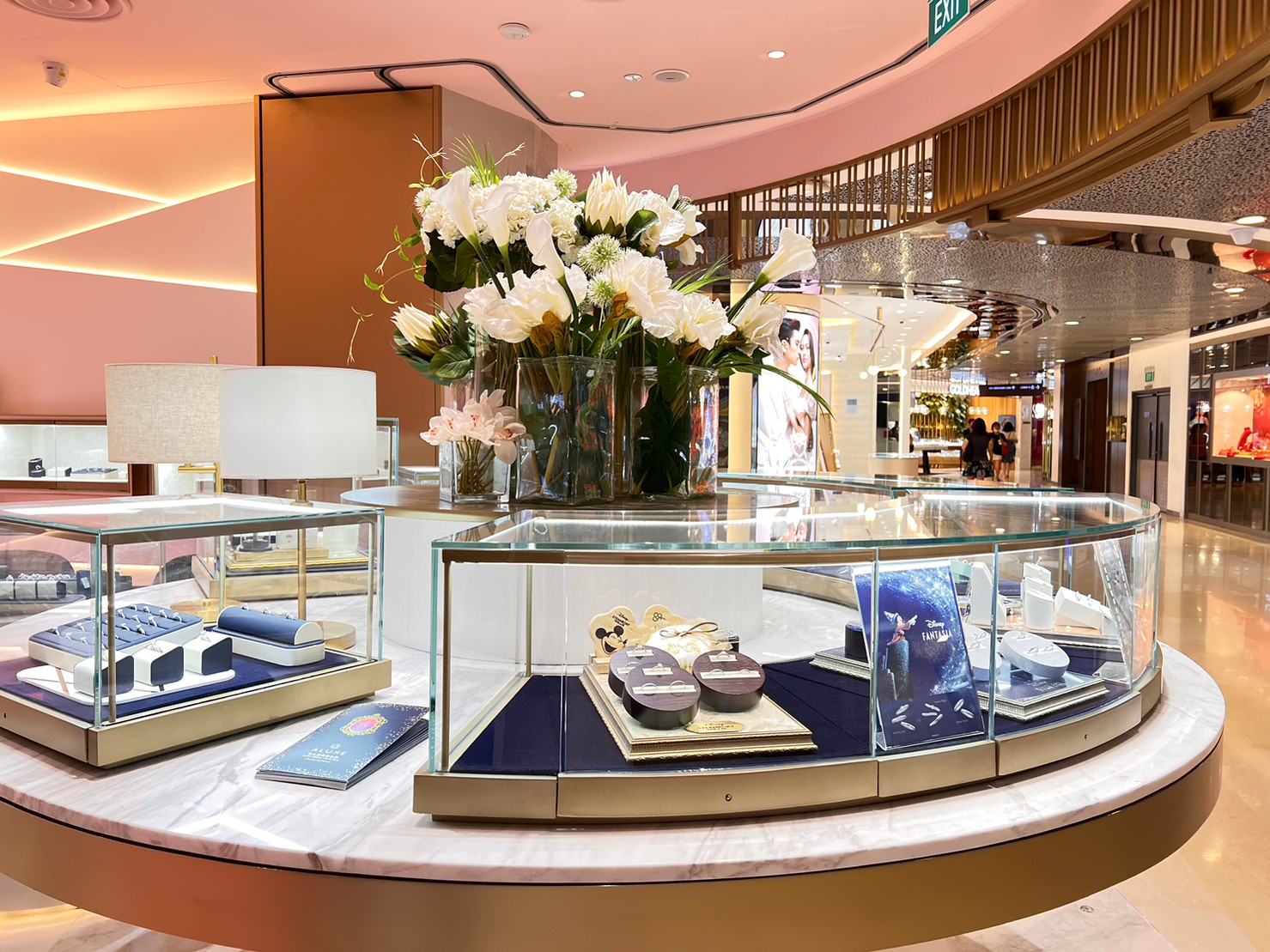
    Three collections take centre stage at the new store in Ion Orchard: Disney, The Moment and acredo collections. Those looking for a magical, fairytale style for their wedding and engagement rings can look at the Disney collection. Rings from this collection will be based on Disney movies such as Beauty and the Beast, Aladdin, and Cinderella.

    Couples who strive for elegance and timelessness in their wedding bands can check out the Moment Collection, which are all handcrafted in Japan. The new line features blue diamonds which symbolise infinite connection and trust.

    Couples who enjoy creating unique, one-of-a-kind designs can consider the acredo Collection, inspired by the expertise of German artisans. They can choose from a range of precious metals and diamonds, and opt to engrave names or even free-hand drawings onto their bands and bring their love story to life. Interested customers can book a one-on-one consultation via the official website.

  • Kim Kardashian prepares to open first Skims stores

    Kim Kardashian prepares to open first Skims stores

    Kim Kardashian’s underwear label Skims plans to open its first permanent stores next year as it plots retail expansion in the US and abroad.

    Skims is set to debut its first flagship store in Los Angeles in the first half of 2024, followed by a second opening in New York. The 5000-square-foot LA shop will be located in West Hollywood on Sunset Boulevard near streetwear stores such as Supreme and Kith.

    “Kim and I can envision a future where years from today there’s a Skims store anywhere in the world you’d find an Apple store or a Nike store,” said Jens Grede, co-founder and chief executive officer of Skims. “It marks the second chapter.”

    Skims began as a direct-to-consumer business in 2019, but it since has dabbled in physical retail through relationships with department stores such as Nordstrom and Saks Fifth Avenue. In recent months, Skims has opened temporary pop-ups in locations like London’s Selfridges department store and Rockefeller Centre in New York.

    Executives are looking to open at least four stores next year and speed up expansion once those are in place. They’re considering placing shops in domestic markets that attract regional tourism, including Dallas, Atlanta and Miami.

    The company is weighing international flagships as well, after tests in cities like Paris and Hong Kong. On its online shop, 20 per cent of Skims customers are from abroad.

    “Our strategy going forward is to open important stores in the world’s most important cities,” Mr Grede said.

    Skims expects to achieve net sales of about $US750 million ($1.13 billion) in 2023, up from nearly $US500 million last year. So far this year, the business has been trending at 75 per cent year-over-year growth, according to Mr Grede.

    Product expansion has boosted that growth, as Skims branched out from its original selection of shape wear bodysuits into categories like pyjamas and swimwear. Underwear now accounts for a sizeable chunk of its business, and it is now planning to launch a men’s line in October.

    Skims was most recently valued at $US3.2 billion in a 2022 financing round, with total funding now at nearly $US400 million. Investors include hedge fund Lone Pine Capital and venture firms Thrive Capital and Imaginary Ventures. Mr Grede declined to say if Skims is seeking additional capital at this time.

    Ms Kardashian and Mr Grede are interested in one day taking Skims public, but the CEO said there were no short- or medium-term plans for an initial public offering. The company hired a chief financial officer last year.

    “Skims deserves to be a public company – when the time is right,” Mr Grede said.

  • Minor International acquires Sizzler brand

    Minor International acquires Sizzler brand

    Minor International Plc (Mint), an operator in the hospitality, restaurant and lifestyle sector, on Tuesday announced it would acquire a 100% stake in Singco Trading Pte, the intellectual property holder of the restaurant brand Sizzler, except in the US, Guatemala and Puerto Rico.

    The acquisition is valued at 546 million baht (S$21 million).

    Dillip Rajakarier, group chief executive of Minor, said the strategic move marks a milestone in Minor’s ambitious growth plans worldwide and reinforces its position as an industry frontrunner.

    According to Mr Rajakarier, the company expects to close the deal by the third quarter of this year.

    With the acquisition planned through MFG International Holding (Singapore) Pte, a subsidiary of Minor, the parent will gain control over Sizzler’s portfolio of franchises, including 64 restaurants in Thailand and another 10 in Japan. After the acquisition, Singco Trading Pte will be a subsidiary of Minor.

    “The acquisition comes at an opportune time for Minor as we continue to build on our track record of success and strengthen our position in the global marketplace,” Mr Rajakarier said.

    Minor has been operating Sizzler outlets for decades, but the acquisition is part of Mint’s three-year strategy called “Back to Growth”, as the pandemic is over and the company is moving head-on towards continued expansion, said Mr Rajakarier.

    “This acquisition sends a clear signal to the global market that Minor Food, like our hotel business Minor Hotels, is back on a trajectory of remarkable growth and we’re constantly seizing opportunities on the international scale through expansion of our own well-recognised brands in various countries either through partnership or acquisition,” he said.

    “We have a proven track record of successfully expanding our own brands in various countries, including some of the most difficult countries to dominate like China and Singapore. By gaining the ability to shape Sizzler’s development, we can replicate our proven past achievements and unlock the full potential of the brand.”

    With Minor’s deep industry knowledge, operational expertise and international partnership, Mr Rajakarier said the company looks set to introduce Sizzler to new audiences in other fast-growing markets around the world, such as Asean and the Middle East.

    He said the acquisition is earnings accretive and is made possible by Minor’s robust financial standing and healthy balance sheet. With Sizzler’s annual royalty income of S$3.5-4 million and full profit contribution without royalty payments from its Thailand operations, the investment offers an attractive double-digit percentage return, demonstrating Minor’s commitment to delivering accretive value to its stakeholders, said Mr Rajakarier.

    “We hope to be able to leverage our presence in the regions we have already strongly made a mark in, especially in Southeast Asia, as there has been interest from potential partners and existing franchisees of ours in those countries,” he said.

    The firm can now explore new markets to capture new customers in other regions. Apart from owning and operating the restaurants, expansion can also occur through joint ventures or franchising, said Mr Rajakarier.

    Following the acquisition, there will not be any drastic changes in operations because Thailand has always led the brand in terms of innovation and marketing, he said. The team in Thailand fully understands Sizzler’s value proposition that has proven it can differentiate the brand from competitors, said Mr Rajakarier.

    “We are constantly revitalising our brand to stay most relevant and up to date to promptly respond to market change, and with this comes customisation in each market to meet the needs of different groups of customers,” he said.

  • Samsung Electronics to open flagship store in Gangnam to target Gen Z

    Samsung Electronics to open flagship store in Gangnam to target Gen Z

    Samsung Electronics said Wednesday it will open a six-story flagship store in Gangnam, southern Seoul, to offer customers, especially the Gen Z population, more personalized services and experiences.

    In a media event, one day prior to the public opening, the tech giant said it expected the Samsung Gangnam store to serve as a “playground” for young users where they can learn and experience the cutting-edge technologies and innovation Samsung has to offer.

    “The area near Gangnam Station has always been a place for young people to gather and spend time together,” Jung Ho-jin, vice president of Samsung’s mobile experience division, said when asked why the company chose the area to open its first such store.

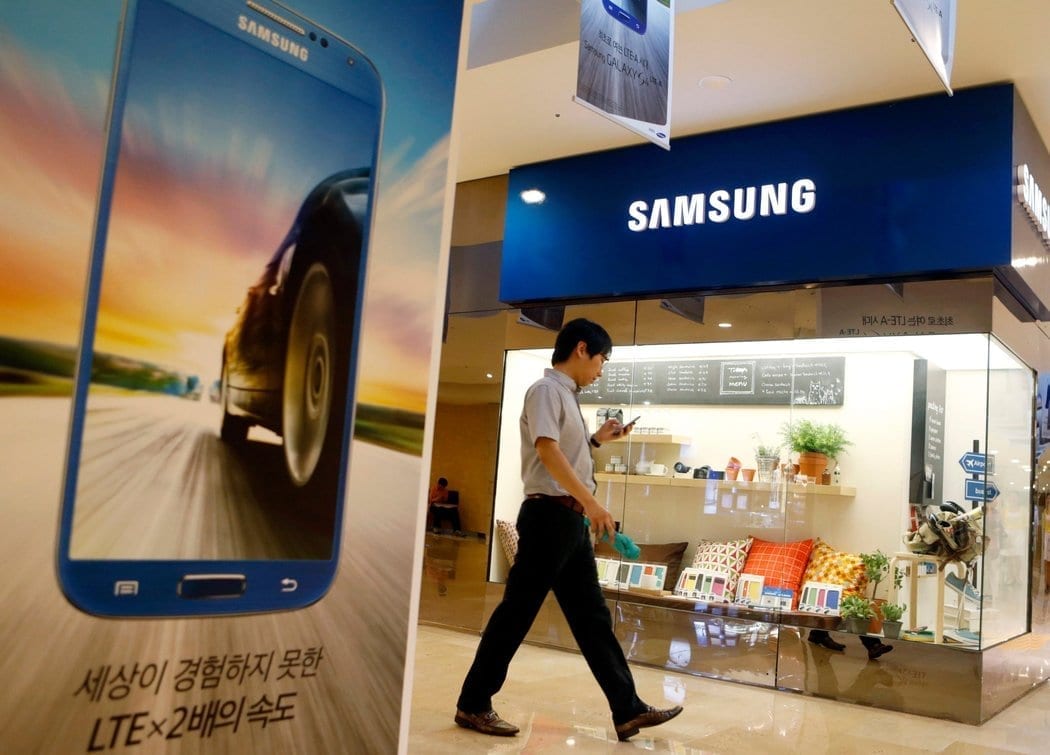
    The 2,000-square-foot venue, 10 minutes away on foot from its rival Apple’s Gangnam store, felt more like a brand experience center than a retail outlet. Located on Gangnam Boulevard, one of Seoul’s main shopping and business districts, it comes with an after-sales service center, a seminar and lecture space, a small Galaxy museum, a coffee shop and Instagrammable photo zones filled with artworks.

    “We would like to see people freely come visit here, even for just a quick bathroom run,” Jung added.

    The opening came amid continued headwinds from global economic uncertainties, slow consumer demand and muted brand loyalty for Samsung’s Galaxy smartphones among young people.

    A survey released early this year by the Seoul-based Vinu Labs showed Apple’s iPhones are more popular than Samsung’s Galaxy phones among South Koreans in their 20s, who chose “trendy” and “upscale” as the two words that describe Apple’s brand image. The words for Samsung were “friendly” and “practical.”

    The opening also took place about a month prior to Samsung’s scheduled first Galaxy Unpacked event in South Korea, where it is set to unveil its latest foldable phones, watches and other innovative products.

    “The store is designed to target not only young customers but also anyone with open and young minds,” Jung said.

    “I believe Samsung has its own know-how to deliver unique benefits and color to customers through a variety of products,” Jung said, while avoiding answering directly how the tech giant plans to address lower adoption rates than those of rival Apple among Gen Z.

    “At Samsung Gangnam, people can feel Samsung Galaxy products have never stopped evolving,” he said. “We will continue to run our business with such pride in mind going forward.”

  • Apple raises iCloud+ prices

    Apple raises iCloud+ prices

    Backing up your photos, videos, and important documents to the cloud is super handy. It keeps everything safe, even if your phone gets stolen or breaks. But, of course, this convenience comes at a price.For many Apple product users, iCloud+ is a familiar and widely used cloud storage service. Recently, Apple has raised the prices of its cloud storage in the UK and several other countries. The prices have increased by approximately 25%. iCloud+ offers additional features such as more storage space, a custom email domain, and HomeKit Secure Video, which are not available in the free version.

    When you create your Apple ID for the first time, Apple provides you with 5GB of free storage on iCloud. If you require more space, you can upgrade by choosing one of the iCloud+ subscription plans. Until recently, the prices in the UK were £0.79 per month for 50GB, £2.49 per month for 200GB, and £6.99 per month for 2TB.

    With the new pricing, these subscription plans have become slightly more expensive, now costing £0.99 per month, £2.99 per month, and £8.99 per month, respectively. The price increase affects not only iCloud+ users in the UK but also those in Poland, Romania, Turkey, Sweden, the Arab Emirates, and other countries. However, for now, the price for the service remains the same in the US.
    The higher prices without any additional storage upgrades may not be appealing to users, especially considering the availability of alternatives. There are numerous other cloud services to explore, such as Google Drive, which offers 15GB of free storage upon registering a Google account, as well as Dropbox and Microsoft’s OneDrive cloud storage.
    You can even make your own iCloud alternative using a network-attached storage (NAS) device – read our guide on how to make your cloud backup service for more details.
    Apple gave iCloud.com a fresh makeover last year, giving it a more modern and user-friendly look. However, redesigning the website might not be sufficient in a highly competitive market.
  • Thaco to sell 10% stake in automobile subsidiary

    Thaco to sell 10% stake in automobile subsidiary

    Truong Hai Group (Thaco Group) is looking for investors to sell a 10% stake in automobile manufacturing and distributing subsidiary Thaco Auto.

    Nguyen Hung Minh, vice chairman of Thaco Group, said Wednesday that the sale of 10 percent of shares in Thaco Auto is meant to raise funds for production and business, investment in expanding the retail system and development of new products.

    Ho Chi Minh City Securities Corporation (HSC), Thaco’s financial advisor, is working on this plan.

    DMeanwhile, Thaco’s ESOP shares issued in 2018 will be converted to make it a public joint stock company. This company plans to list on the market within the next next years.

    According to Nguyen Hung Minh, all production activities of Thaco Auto currently take place at our industrial park in Chu Lai.

    Recently a number of domestic and foreign investors have been working with Thaco and HSC on buying the Thaco Auto shares.

    Negotiations are still ongoing and no decision has been made, but Minh said Thaco expects to complete the deal this year.

    The company, owned by billionaire Tran Ba Duong, is a diversified corporation with interests in automobiles, agriculture, mechanical engineering and supporting industries, construction investment, logistics, trade, and services.

    Thaco Auto manufactures, assembles, and distributes KIA, Mazda, Peugeot, and BMW cars and has nearly 400 showrooms across Vietnam.

    Mazda cars being manufactured at Thaco Auto’s factory in the Chu Lai Industrial Park, Quang Nam Province. Photo courtesy of Thaco Auto

    Thaco Auto has a production complex with seven factories in the Chu Lai Industrial Park (Quang Nam).

    This year it targets sales of over 120,000 vehicles, including 96,000 passenger cars, 23,500 trucks and 1,500 buses and minibuses.

    It expects consolidated revenues of over VND90 trillion, equivalent to nearly $USD3.8 billion, including VND5.2 billion from services.

    In 2022 the company sold 111,440 vehicles to retain the largest market share in the country at 38 percent.