Author: Mei Ling Tan

  • Stock dives to 5-week low

    Stock dives to 5-week low

    Vietnam’s benchmark VN-Index dropped 0.63 percent to 1034.85 points Tuesday, lowest in five weeks.

    The index closed 6.51 points lower after losing 1.55 points on Monday.

    Trading on the Ho Chi Minh Stock Exchange (HoSE) increased by 3% to VND9.42 trillion ($401.14 milllion).

    The VN-30 basket, comprising the 30 largest capped stocks, saw 27 tickers lose.

    MSN of conglomerate Masan Group fell 2.7%, followed by HDB of HDBank and NVL of property developer Novaland Group, both with a 2.1% drop.

    STB of Ho Chi Minh City-based lender Sacombank lost 2%, and PDR of Phat Dat Real Estate Development closed 1.9% lower.

    Only two blue chips gained. HPG of steelmaker Hoa Phat Group rose 1.9% and VCB of state-owned lender Vietcombank went up 0.5%.

    Foreign investors were net sellers to the tune of VND139.72 billion, mainly selling VIC of private conglomerate Vingroup and STB of Ho Chi Minh City-based lender Sacombank.

    The HNX-Index at the Hanoi Stock Exchange, where mid and small caps list, was down 1.00% while the UPCoM-Index at the Unlisted Public Companies Market was up by 0.12%.

  • French jeweler Tiffany opens store in HCMC

    French jeweler Tiffany opens store in HCMC

    Luxury jewelry brand Tiffany & Co. has opened a store in Ho Chi Minh City, two years after opening its first in Vietnam in Hanoi.

    The store in District 1, which had a soft opening last week, is part of a strategy by the 186-year-old jeweler to increase its presence in Asia after being acquired by France’s LVMH in 2021.

    The store is run directly by the company as against the Hanoi one, which a distributor operates.

    According to residence and citizenship advisory firm Henley and Partners, HCMC had the ninth fastest growth rate globally in the number of millionaires last year.

    Vietnam’s biggest city saw their numbers rise by 84% to 7,700 individuals, it said in its 2023 World’s Wealthiest Cities Report.

    As of last year HCMC had 15 people with a net worth of $100 million and three billionaires.

    It is ranked the 67th wealthiest city in the world.

  • Five motorbikes sold in Vietnam every minute

    Five motorbikes sold in Vietnam every minute

    Over 634,000 motorbikes were sold in Vietnam in the first three months, translating to almost five units every minute.

    The figure dropped by nearly 16% year-on-year, according to the Vietnam Association of Motorcycle Manufacturers, which comprises Honda, Yamaha, Piaggio, Suzuki and SYM.

    The motorbike sales figure was 7.3 times that of cars, showing that two-wheelers remain Vietnam’s dominant means of transport.

    In ASEAN, Vietnam ranks second only to Indonesia in motorbike sales with Honda accounting for roughly 80% of the market share.

    Earlier this month Honda hiked the prices of most motorbikes following an increase in costs with the biggest increase being of VND2 million ($85).

  • Our guide to Investing in Singapore 

    Our guide to Investing in Singapore 

    Singapore is often thought of as one of the most important financial hubs in the world. It also has one of the most diverse and quickly growing investment communities. If you want to invest in Singapore, you will find that the country has a lot of options and tools that can help you reach the level of financial success you require. In this article, we will discuss the many facets of investing in Singapore and present you with some useful advice to get you started.

    TradingView: Getting started with the trading platform 

    Before you start investing in Singapore, you need to make sure you have the right tools to help you make smart decisions. TradingView is a well-known and popular online trading platform that gives customers access to a wide range of financial data and research tools. TradingView gives users the ability to monitor charts in real-time, keep tabs on market trends, and access a plethora of technical analysis tools, all of which may assist them in making more educated choices about their investments.

    Opening an account with TradingView is simple, and once you have done so, you can start using the platform’s numerous tools and features right away. You can customize your trading dashboard so that it shows the information that is most important to your investment plan, and you can use the platform’s easy-to-use interface to make trades and keep track of your portfolio.

    Investing in the Singapore stock market 

    Buying shares of stock in one of Singapore’s numerous publicly listed firms is one of the most common ways that people invest their money in the nation. Singapore has a strong stock market and is home to a wide range of companies that do business in many different fields and markets.

    To get your foot in the door of the Singapore stock market, you will need to open a brokerage account with a reputable broker. The brokerage firms DBS Vickers, Phillip Securities, and UOB Kay Hian are among the most successful in all of Singapore. When you have registered for an account with the Singapore Exchange (SGX), you are allowed to begin making transactions and searching through the numerous stocks that are listed on the SGX.

     When investing in Singapore stocks, it’s important to do enough research and pick companies that match your investment goals and level of risk tolerance. Using the tools that TradingView gives you, you can do fundamental research to figure out a company’s financial health and growth potential. You can also use these tools to do technical analysis to keep an eye on market trends and find possible buying opportunities.

    Investing in the real estate market in Singapore

    Several investors have found success buying and selling homes in Singapore, a city-state. As a result, the real estate market in Singapore is another investment option that is quite popular. The real estate market in Singapore is well-known for being stable and transparent, which makes it an appealing choice for investors from both inside and outside Singapore.

    You have the option of investing in real estate directly by purchasing properties or indirectly by purchasing shares in real estate investment trusts (REITs), which are organizations that own portfolios of properties. Since buying property in Singapore can be hard and take a lot of time, it is important to work with a trustworthy real estate agent and do a lot of research before making a decision.

    Since they enable you to engage in a varied portfolio of properties without the need for enormous sums of funds, investing in real estate investment trusts (REITs) might be a more approachable way of investing in Singapore’s property market than other investment options. Mapletree Commercial Trust, Ascendas Real Estate Investment Trust, and Keppel DC REIT are three of the most successful real estate investment trusts in Singapore.

    Investing in the Singapore bond market

    Bonds provide one of several investment opportunities that can be pursued in Singapore. The bond market in Singapore is active, and investors may choose from a variety of government and business bonds to put their money into. Bonds are a low-risk investment option, so risk-averse investors who are searching for predictable returns often use bonds as their vehicle of choice.

    If you want to invest in Singapore bonds, you can work with a broker or buy into bond funds that hold portfolios of bonds. The LionGlobal Short Duration Bond Fund and the First State Investments Global Bond Fund are two excellent examples of the many bond funds that investors in Singapore have access to.

    Speculating on the market with exchange-traded funds (ETFs)

    Exchange-traded funds, often known as ETFs, are a common form of investing in Singapore due to the fact that they provide shareholders with access to a diverse portfolio of assets at a low cost and with little transaction expenses. ETFs are able to be traded on stock exchanges just like stocks, and they cover a broad variety of asset classes in addition to equities. These asset classes include commodities, bonds, and stocks.

    If you want to invest in exchange-traded funds, you’ll need to open a brokerage account in Singapore with a reputable broker who gives you access to the Singapore Exchange.The Nikko AM-Straits Trading Asia ex-Japan REIT ETF and the iShares MSCI Singapore ETF are two of the most popular exchange-traded funds that investors may purchase in Singapore.

    Investing in several mutual funds in Singapore 

    Another popular method of putting your money to work in Singapore is purchasing shares in a mutual fund. These funds provide investors with the chance to put their money to work in a diverse portfolio of assets that is overseen by experienced fund managers. There is a large selection of asset types covered by mutual funds, including equities, fixed income, and real estate, among others.

    To invest in mutual funds in Singapore, you can work with a broker or invest directly with fund companies such as Fidelity International or Aberdeen Standard Investments. It’s important to do plenty of research, choose mutual funds that match your investment goals and the level of risk you’re willing to take, and keep a close eye on how the funds are performing over time.

    Investing in new businesses inside Singapore

    The startup environment in Singapore is thriving, and the country is home to a large number of cutting-edge enterprises and entrepreneurs that are looking for funding to expand their operations. Investing in new businesses comes with both high risk and high reward, but it also has the potential to give you a huge return on your money.

    Anyone who wants to invest in Singapore’s startup scene can work with venture capital firms or angel investors who specialize in early-stage investments. If you want to invest in a business, you need to do your research. Also, it’s important to look closely at how the companies in question might grow and how they might do in the market.

    Conclusion

    If you’re an investor trying to reach your financial objectives and diversify your portfolio, investing in Singapore may provide you with a broad variety of chances to do both of those things. No matter whether you want to invest in stocks, real estate, bonds, exchange-traded funds, mutual funds, or new businesses, you can find a lot of information and resources to help you make smart decisions. 

    You will be able to keep up with the latest market trends and make more educated choices about your investments if you deal with a reliable broker and make use of tools such as TradingView. Keep in mind that you should always undertake extensive due diligence and choose assets that match your financial objectives and the amount of risk you are willing to take.

    In the end, investing in Singapore requires patience, discipline, and a willingness to take calculated risks. But if you take the right steps and show that you are committed to long-term growth, you may be able to build a diversified investment portfolio that will help you reach your financial goals over time. 

     

  • BMW Introduces Digital Key Plus For Android Smartphones

    BMW Introduces Digital Key Plus For Android Smartphones

    BMW introduced the smartphone as a digital vehicle key in 2018 and since then the company has been pressing ahead with the development and popularisation of its BMW Digital Key feature. The feature was made available to iPhone users in January 2021, and BMW has now added the same feature to Samsung & Google Android phones as well. The BMW Digital Key Plus is a convenient and secure way to unlock and start your car without taking your smartphone out of your bag or pocket, similar to a physical key that supports keyless entry & start.

    The new, additional features enabled by the BMW Digital Key Plus are based on Ultra-Wideband technology. This short-range, high-bandwidth digital radio technology is characterised by an exceptionally precise localization with the greatest possible security. UWB’s precision also ensures that relay attacks, where the radio signal is jammed or intercepted, are not possible.

    With the Car Connectivity Consortium (CCC), BMW has been working closely with Google as well as Apple to develop the corresponding specification with partners and established it as a global standard for the automotive industry. This has also enabled secure, cross-platform sharing of Digital Key between iPhone and compatible Android devices via email, SMS or any other messaging service. Until now, the feature was restricted to only iPhone & Apple watch users, but it will now be added to Select Samsung & Google devices – running Android 13.1 or later – which include Samsung Galaxy S23+, S23 Ultra, S22+, S22 Ultra, S21+, S21 Ultra, Z Fold4, Z Fold3, Note20 Ultra, and Google Pixel 7 Pro & Pixel 6 Pro.

  • Clients Flooded UBS With New Money in Late March

    Clients Flooded UBS With New Money in Late March

    The merger of UBS and Credit Suisse is expected to result in a behemoth wealth and asset manager, drawing all eyes to the institutions’ first quarter results at the start of the week.

    During the first quarter we saw strong net new fee-generating asset and net new money inflows in global wealth management and asset management, UBS CEO Sergio Ermotti said in a statement accompanying first quarter results.

    The global wealth management (GWM) business attracted $28 billion of net new money during the first quarter, of which $7 billion «came in the last ten days of March, after the announcement of our acquisition of Credit Suisse,» UBS said. Those results should ease some of the concerns that assets being taken out of Credit Suisse are headed to other firms.

    Moreover, UBS brought in $20 billion in new fee-generating assets in its GWM unit and $14 billion in asset management (AM).

    In the Americas region, vital to the Group’s growth plans, the GWM business brought in $8 billion of new money and $4 billion of new fee-generating assets. In Switzerland, new money inflows were $10 billion, while $8 billion in new fee-generating assets were reported along with $2 billion in new loans in GWM and P&C, according to the report.

    EMEA reported new money inflows of $4 billion and generated $3 billion in new assets. Net interest income increased almost 60 percent on the back of higher euro rates. Asia was also a bright star for UBS, bringing in $6 billion of net new money and $5 billion in new fee-generating assets, which marks a 17 percent growth rate over the past twelve months.

    Overall invested assets for GWM were $3 trillion at the end of the first quarter, down from $3.1 trillion in the first quarter of last year.

    UBS said it is focused on completing its acquisition of Credit Suisse in the second quarter of this year, which «will advance our strategy, particularly in global wealth management and Switzerland.» UBS reported that net profit attributable to shareholders was $1.029 billion in the first quarter, about half of the $2.136 billion in the same quarter a year ago. Its Group CET1 ratio was 13.9 in the first quarter, down from 14.2 in the fourth quarter of last year.

    It was a different story on Monday at Credit Suisse, where clients moved 47.1 billion francs of their wealth elsewhere.

  • Hanoi speculative villa prices down 40%

    Hanoi speculative villa prices down 40%

    Amid rising interest rates, Hanoi’s cash-strapped villa investors are slashing prices by up to 40% to lure customers.

    Loi spent VND32.5 billion (nearly $1.4 million) on a 180-square meter villa near Ring Road No. 3.5 in mid-2022.

    He paid for the house with a bank loan and VND11 billion of his own money hoping his investment’s price would double in two years.

    Two months later, the real estate market went silent. He put the villa for sale at a discount of 15%, but found no buyers. Early this year, he finally sold the villa for only VND23 billion.

    But despite all this, Loi is still considered a lucky investor, according to Tien, a local real estate broker in the urban area surrounding the villa project Loi bought into.

    “Many other investors of villas at the same project haven’t found any buyers at all even after lowering their prices 15-30%.”

    According to Tien, since late last year, many investors in the project, most of whom took out bank mortgages to pay for the villas, have slashed their prices 20-30% to cut losses.

    One investor has recently sold a 150-square meter villa for only VND17 billion, incurring a loss of VND8 billion.

    Brokers at the Hinode Royal Park urban area are trying to sell villas at prices of VND6-7.5 billion, down 40% against last year.

    Tu, also a broker, said she sold two villas at the Nam An Khanh urban area in Hoai Duc District for VND23.5 billion each early last year, but the price of the same properties has dropped over 30% to VND16 billion now.

    Villa offering prices at many other large-scale projects, including the Ha Do Charm Villas and An Lac Green Symphony, have decreased 25-30% over the past year.

    Most of the villas are being bought and sold by speculators, and many of them have been abandoned.

    According to real estate consultancy Savills Vietnam, the average villa price on the secondary (resale) market was VND22 billion in the first quarter of this year, 17% lower than the properties’ primary market (original) prices.

    As a result, some investors have leaned deeper into the secondary market and many have become speculators.
    Experts have also asserted that this is one major reason that the primary market has been so stagnant, with the absorption rate falling to the lowest level in the past seven years.

    Do Thu Hang, senior director of advisory services at Savills Vietnam, has predicted that liquidity in the villa market is likely to improve, but only for villas bought as homes, not investments.

    After construction of Ring Road No. 3.5 and Ring Road No. 4 is completes, over 80 property projects along the major new arteries will attract more buyers, she said.

  • Milk tea on flights fetches Noibai Catering Services rising revenues

    Milk tea on flights fetches Noibai Catering Services rising revenues

    Airline catering company Noibai Catering Services earned revenues of nearly VND22 billion ($936,947) from selling milk tea last year, over 63% of it from sales aboard flights.

    According to its annual report, the company put milk tea on flight menus in July 2022.

    NCS’s milk tea is available on Vietnam Airlines flights at VND50,000 a cup and also on other flights through other airline catering companies such as VACS and MASCO.

    The company’s losing streak due to Covid-19 snapped in 2022, when it made profits before tax of VND5 billion on revenues of VND410 billion, three times the 2021 figure and 60% of the pre-pandemic revenues.

    It had suffered losses of VND38 billion and VND77 billion in the previous two years.

    In 2023 it has continued to recover strongly, with first-quarter revenues rising 2.5 times year-on-year to VND150 billion in.

    Its profit was VND10.5 billion.

    NCS said the aviation market has recovered completely, causing its own revenues and profits to soar.

  • Taiwan’s Apple supplier Quanta plans Vietnam factory

    Taiwan’s Apple supplier Quanta plans Vietnam factory

    Apple supplier Quanta Computer plans to set up a factory in northern Vietnam, the Vietnamese government said.

    The company, a MacBook contract manufacturer, on Friday signed an agreement with the authorities of Nam Dinh Province, 90 km (56 miles) south of Hanoi, to construct the facility at an industrial park there, the government said in a statement late on Friday.

    The facility, which would be Quanta’s 9th factory globally, would initially cover an area of 22.5 hectares, the statement said, without giving its capacity nor a time frame for the construction.

    Local media said on Saturday Quanta would invest $120 million in the factory.

  • New Google Authenticator update enables one-time codes to be stored in your Google Account

    New Google Authenticator update enables one-time codes to be stored in your Google Account

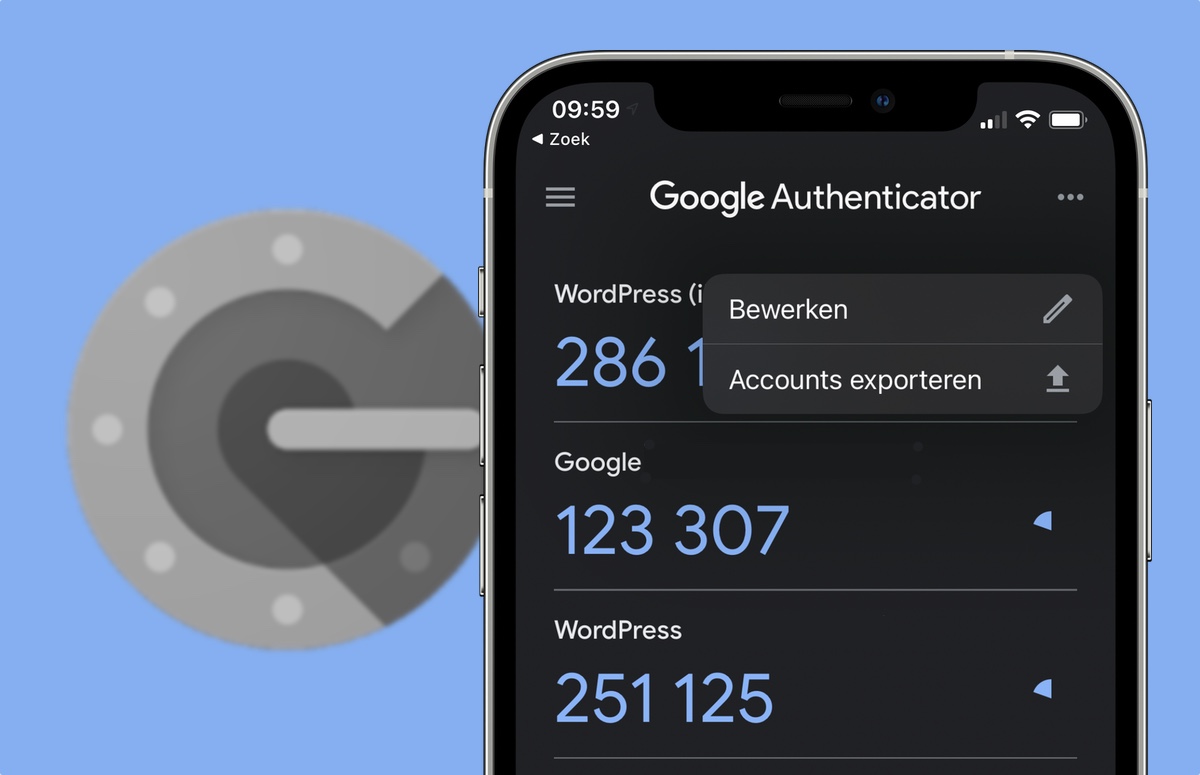
    Google Authenticator, the widely used two-factor authentication app, now allows users to sync their one-time codes in the cloud. This update aims to make it easier for users to switch between devices without losing their authentication data.
    The update was announced today via the Google Security Blog and it affects both the iOS and Android app. Previously, users had to manually transfer their codes from one device to another or disable and re-enable two-factor authentication when switching devices. This process could be cumbersome, especially for users who frequently switch between devices, replace their phones, or had their device stolen.
    The new cloud sync feature will automatically store users’ authentication data in the cloud, allowing them to access it from any device with the Google Authenticator app installed. To enable Google Account synchronization in Google Authenticator, users will need to open the app, tap the menu icon, select “Settings” and tap “Backup to Google Account,” then follow the on-screen instructions to sign in to their Google Account and enable backup.

    Once backup is enabled, one-time codes will be stored securely in the users’ Google Account, so if their device is lost or stolen, they can be restored simply by signing in on a new device and requesting to “Restore codes.”

    Google explains that with this update the company is making one-time codes more resilient by securely keeping them in users’ Google Accounts, improving user lockout protection and allowing services to rely on users maintaining access, which boosts convenience and security.

    Google has long promoted a number of methods for safe authentication across the web in addition to one-time codes from Authenticator, such as Google Password Manager and “Sign in with Google” options across the web. Additionally, Google has been collaborating with the FIDO Alliance to facilitate the move to using passkeys, instead of passwords, which will provide users with even more practical and secure authentication options.

  • Techcombank chairman says property loans given only for legally sound projects

    Techcombank chairman says property loans given only for legally sound projects

    Techcombank’s real estate loan portfolio might be big but most are personal loans or to develop projects that do not face legal issues, its chairman, Ho Hung Anh, said.

    At the lender’s annual general meeting on April 22 he said since the property developments have full legal status, even “in the current difficult period for the property market, these projects are being implemented.”

    Masterise, one of Techcombank’s clients, is proceeding with its projects normally and its construction is on schedule, he noted.

    As of the end of last year loans to the property and construction sectors represented 29% of Techcombank’s loans outstanding.

    The bank also has exposure to these sectors in the form of corporate bonds, which make up 6% of its total assets.

    “The bond market will recover,” Anh said, assuring that when this happens, Techcombank’s growth would resume very quickly.

    Last month ratings agency Moody’s Investors Service downgraded the long-term deposit and issuer ratings of Techcombank because of its high exposure to the struggling property sector.

    Techcombank targets pre-tax profits of VND22 trillion (US$932.2 million) this year, down 14% from 2022, and a bad debt ratio of below 1.5%.

    Its outstanding loans are expected to surge 15% to more than VND510 trillion by the end of the year.

    The bank does not plan to pay dividends this year.

  • MB launches banking app in Laos

    MB launches banking app in Laos

    Military Commercial Joint Stock Bank Laos branch (MB Laos) released a new banking application for individual customers in Vientiane, Laos, on Monday.

    Several Laotian government officials and representatives of the State Bank of Laos and MB attended the app launch ceremony.

    MB Laos app will increase customers’ convenience and optimize their banking experience on digital channels with advanced technology.

    The app helps customers manage their finances by providing online savings services, loans application, as well as local and foreign currency account management. Other features include bill payment, scanning Laos QR codes for payment, phone recharging, and money transfers from payment accounts to Umoney E-Wallet.

    It also provides users with a safe, secure and fast online money transfer and saving services.

    “With the new digital banking product, MB Laos is expected to bring the best experience to existing customers, while also attracting new ones,” an MB Laos representative said.

    The MB Laos app is available to download on the App Store and Google Play.

    Customers will have the opportunity to receive 20,000 Lak when opening a new account in the app.

    Find more information on this website.

    Email: ebanking.lao@mbbank.com.vn.

    Hotline: 021 752 777

    Address: MB Building, No 10 Kaysone Phomvihane Avenue, Phonexay Village, Saysettha District, Vientiane Capital, Laos PDR, Vientiane, Laos.

  • Origin Tea launches sparkling iced teas into Woolworths

    Origin Tea launches sparkling iced teas into Woolworths

    Two Brisbane brothers have landed a deal with Woolworths and Coles with the hope they will transform an every day item from boring to “cool”.

    Chris and Lawrence Seaton started their business Origin Tea nine years ago as their father owned a tea plantation in Sri Lanka.

    The Australian operation of Origin Tea, which was started in their garage, now brings in $3 million in annual revenue but it wasn’t always smooth sailing for the siblings.

    “When we first launched in Australia, we wanted to take on the big brands like Liptons and all these named brands, and we actually learned the hard way that all these companies have large marketing budgets and are spending millions a year on marketing,” Chris told news.com.au.

    “And tea is one of those products that people are really brand loyal, so the first two years we made a pretty big mistake and had to change our entire business strategy.”

    This included bringing in a whole container of tea with hundreds of tea bags in boxes that they couldn’t sell. Instead they had to liquidate it through clearance warehouses, costing them a whopping $200,000.

    “At one point I was trying to sell packets of tea at the markets for $1.50 or $2 with a hundred in the box and at the end of day I was collecting $100 of cash at the markets, and I was like I don’t think this is really worth it,” added Chris.

    Then as the popularity of single-origin coffee started to take off, the duo realized it was an opportunity to take tea to that level by offering transparency on what people were drinking.

    They also started to partner with coffee roasters, building brand recognition in Australia’s cafes.

    It also helped them to become what they say was the fastest-growing consumer tea business in Australia, off the back of some partnerships with the likes of Coca Cola and Campos, while also riding the kombucha boom of 2016-17.

    Chris and Lawrence Seaton – who have built the fastest-growing consumer tea business in Australia, mainly off the back of some partnerships with the likes of Coca Cola and Campos and the kombucha boom of 2016-17. Picture: Supplied

    The tea was the basis for the original Remedy kombucha brew which grew to a million-dollar contract within a year and then doubled as the company went from needing 20 kgs to 150,000 kgs almost overnight.

    Chris said many people aren’t aware that there is a huge difference between how tea is made.

    It starts early too with Sri Lankan tea hand-picked based on whether the leaf is ready, rather than tea from Vietnam, India or even Australia being mechanically harvested where the heads of tea bushes are just cut off, Chris explained.

    People often blend the tea from different countries to lower the overall price, but Chris said that also impacts the taste.

    “Sri Lanka is renowned in the world as having the best quality tea from a taste perspective, however it comes at a premium,” he said.

    “When we talk taste in tea it’s like good liquor, like a good whiskey or wine.”

    The business now goes through up to 200,000 kgs of tea a year, which could jump further with the major supermarket deal, which will sell the product at up to 700 stores nationally.

    The deal has also helped Origin Tea to bounce back after 70 per cent of its business was wiped out overnight when the pandemic hit, Chris said.

    Woolworths and Coles will stock its Sticky Chai range, tea mixed with spices infused in a coconut sweetener, and retail for $9 for 120g, alongside a turmeric elixir series.

    Both hope the new products will shake up the stale category.

    “I think traditional tea is on the decline, so black and green teas, and where we play in and where we like to see us, is as the innovators in the tea space. Our main mission with Origin Tea is to make tea cool again,” Chris said.

    “Tea is seen as a stagnant stale category, and the Sticky Chai product is something innovative, infusing tea with other ingredients or to come up with an awesome iced tea that is ready to drink and concentrates like syrups so you can garnish it with alcohol or make your own cocktails or mocktails.

    “That’s where we see tea playing in the future as being creative with tea.”

  • Telegram update adds shareable chat folder, custom wallpaper, and more

    Telegram update adds shareable chat folder, custom wallpaper, and more

    Messaging app Telegram has just announced numerous improvements coming to its users in the following days. Shareable chat folders, custom wallpapers, better bots, fast scrolling for attachments, and many other new features and improvements are part of the latest Telegram update.

    Starting with the latest version of Telegram, users can share entire chat folders with just one link. It makes it infinitely easier to invite friends to groups, collections of news channels, and more. Not to mention that each chat folder supports multiple invite links allowing access to different chats.

    Now you can create custom wallpapers from your favorite photos and color combinations. These can be used in specific chats. Simply use the “Set Wallpaper” setting from the three dots menu on Android or open a profile and tap “Change Wallpaper” from the three dots menu on iOS.

    The latest Telegram update brings better bots, the developer announced today. They can now host web apps, which can be launched in any chat. Additionally, Telegram revealed that web apps can now support collaboration and multiplayer features for members when launched in a group.

    As mentioned earlier, the update makes scrolling for attachments faster, just like Shared Media. Finally, the update brings numerous improvements to various interfaces. For example, the Send When Online interface now requires fewer taps. Also, Telegram users can now create groups without adding members immediately, which is handy if they want to set up permissions and pin one or more messages first.

    More importantly, in groups of under 100 members that have topics enabled, you’ll now be able to see what time other group members read your messages. A much-needed quality-of-life improvement.

    If you’re using one of the newest iPhones, you’ll be happy to know that profile pictures in Telegram have a new animation when scrolling on profiles and info pages.

  • The tabs used to filter conversations in Google Messages have vanished

    The tabs used to filter conversations in Google Messages have vanished

    Underneath the search bar at the top of the Google Messages UI on Android used to be organizational category tabs that would allow users to run through chats and messages from “All,” “Personal,” and “Business.” This was a quick way to view only those messages that you wanted to see at a given time. Selecting “All” would show, well, all of the conversations you had in your messages conversation list while Personal and Business are pretty self-explanatory.

    This feature first surfaced in 2021 in India and Google said that it was to “roll out first to English users around the globe.” Now, the organizational category tabs are gone for many Messages users. They have vanished from the Google Messages UI as though they were deleted by the Magic Eraser. One interesting note though; 9to5Google said that all of the Pixel models it saw missing the feature were running Beta versions of Android and we don’t know if they meant the Android 14 Beta or the QPR3 Beta.

    Personally, my Pixel 6 Pro also does not show the category tabs anymore and my phone is running Android 13 QPR3 Beta 3. Is this the end of the organizational category tabs or is this a bug? Google is usually pretty good at telling users when it is removing a specific feature and why it is being removed. Still, it is possible that the tabs were not being employed that often by users and Google just felt it was better off to remove them.

    We should make it clear that not all Android users who favor using the Google Messages app are missing the organizational category tabs and Android users employing their carrier’s third-party messaging apps (like Verizon Messages, T-Mobile Messages, or AT&T Messages) wouldn’t be impacted at all. But most Android users know that RCS (Rich Communication Service), available with the Google Messages app, helps to deliver a better Android messaging experience.
    If you don’t have the Google Messages app (ahem, more precisely Messages by Google app) on your Android phone, feel free to tap on this link and install it from the Play Store.