Author: Mei Ling Tan

  • Amazon launches program to identify and track counterfeiters

    Amazon launches program to identify and track counterfeiters

    The company announced that Amazon launched its Anti-Counterfeiting Exchange (ACX), an initiative to help retail stores label and track marketplace counterfeits as part of the e-commerce giant’s efforts to crack down on organized crime on its platform on Thursday.

    Online marketplaces in the United States, including Amazon face hurdles in keeping counterfeiters off their platforms and fake merchandise from entering their warehouses. The new program mimics data exchange programs by the credit card industry to find scammers and identify their tactics.

    Stores and Amazon marketplace sellers can anonymously contribute information and records flagging counterfeiters to a third-party database or use the database to avoid doing business with the bad actors.

    “We think it is critical to share information about confirmed counterfeiters to help the entire industry stop these criminals earlier,” Dharmesh Mehta, Amazon’s vice president of selling partner services, said in a statement.

    The Seattle-based retail giant piloted the anti-counterfeiting initiative in 2021 with an undisclosed number of apparel, home goods and cosmetics stores, where counterfeiting is most common.

    As part of other anti-counterfeiting efforts, Amazon is also working with the U.S. Customs and Border Protection on a data pilot that helps the company identify and target low-value e-commerce shipments that may be counterfeit goods or break other regulations.

  • Ikea unveils US$2.2 billion expansion plan

    Ikea unveils US$2.2 billion expansion plan

    Ikea is planning to invest more than US$2.2 billion in an omnichannel expansion strategy in the US over the next three years.

    According to Ikea, this is the company’s largest investment in the US in four decades, and it will focus on creating new stores and expanding fulfilment networks to serve more Americans.

    Ikea will build new shops and extend its fulfilment network to give better delivery alternatives and provide a product range that matches the demands of everyday living in diverse regions across the country as part of the investment.

    “The US is one of our most important markets, and we see endless opportunities to grow there and get closer to the many Americans with affordable products and services,” said Tolga Oncu, head of Ikea Retail at Ingka Group.

    “More than ever before, we want to increase the density of our presence in the US, ramp up our fulfilment capacities and make our offer even more relevant to local customers’ needs and dreams.”

    Ikea expects to open eight additional shops, nine Plan & Order points, and create more than 2000 jobs during this first phase of expansion. In addition, Ikea will build 900 new Pick-up locations where customers can pick up purchases made online.

    Last year, Ikea US has added 15 customer Pick-up locations and two Plan & Order stations to make Ikea more accessible to customers. This summer, the company also announced new locations in San Francisco, CA and Arlington, VA.

    “We are committed to continuing to grow in this market with our thousands of co-workers and millions of customers who look to Ikea for home furnishing inspiration and solutions at an affordable price,” added Javier Quinones, CEO & chief sustainability officer at Ikea US.

    Ikea says this latest investment will forward that work by continuing to modernise existing locations to serve a dual purpose: offering inspiration and home furnishing knowledge while also expanding handling capacity for parcel deliveries directly from the store.

    Neil Saunders, MD at consultancy GlobalData, said an investment of Ikea’s scale “should make other retailers sit up and take notice”.

    “As the largest furniture retailer in the world, Ikea has economies of scale and volumes that allow it to offer value that few others can match. The expansion is a potential threat to Wayfair, At Home and other many mass-market players. While it will take time for Ikea to execute its plans, it is clear that a previously sleepy giant has woken up and is intent on making its mark.”

    Saunders said that while the US is one of Ikea’s biggest international markets, the company’s reach there has always been relatively poor compared to its core European markets.

    “Part of this is the result of Ikea’s traditional model of huge stores designed to pull in customers from an extremely large catchment. These work well in population-dense countries like the UK, but are less effective in the US where, outside of cities, people are more scattered and drive times can be extensive.”

  • Vincom Retail profits nearly triple in Q1

    Vincom Retail profits nearly triple in Q1

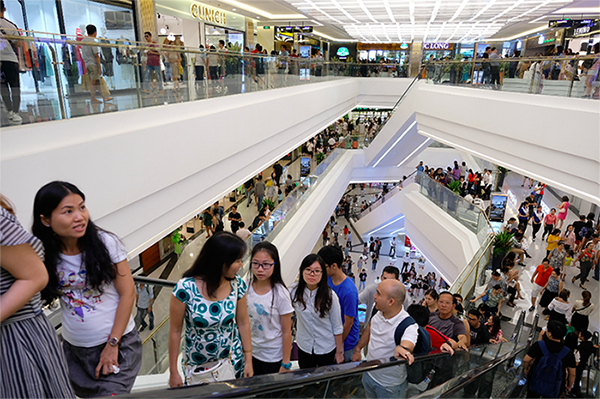
    Mall operator Vincom Retail has reported after-tax profits of VND1.02 trillion (US$43.4 million) for the first quarter, a 2.7-fold rise year-on-year, amid a recovery in consumption.

    It was 23% up quarter-on-quarter, the company’s consolidated financial statements showed.

    Vincom Retail reported revenues of VND1.94 trillion in the first quarter, an increase of 42%, with its mall business accounting for VND1.9 trillion.

    The company targets profits of VND4.68 trillion on revenues of VND10.35 trillion for this year, up 69% and 41% from 2022.

    Vincom Retail, a subsidiary of conglomerate Vingroup, plans to open a mall each in Ho Chi Minh City and the northern province of Ha Giang, increasing its total number to 85 in 45 cities and provinces.

  • Mercedes soars above competitors in Vietnam

    Mercedes soars above competitors in Vietnam

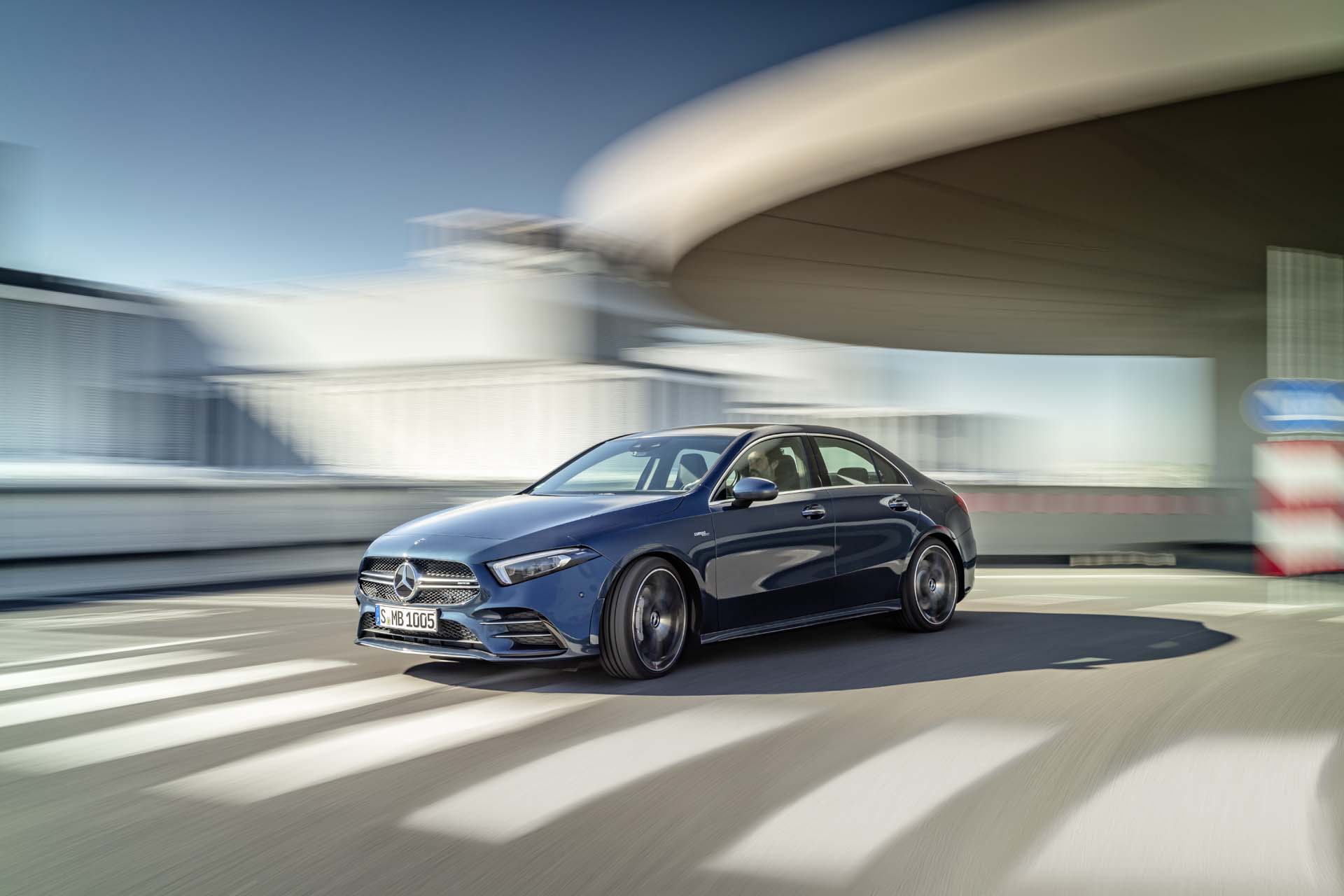
    Mercedes has dominated Vietnam’s luxury car market for the last four years as Lexus, Volvo and other trailing brands tussle behind.

    Auto registration data showed that between 2019 and 2022, Mercedes secured and average of around 60% of Vietnam’s total luxury car market share.

    The German brand sold 7,925 cars in the Southeast Asian nation last year, up 35% from 2021.

    The figure was five times that of the second-place brand, Lexus.

    In the last four years Mercedes sold on average nearly 6,400 cars in the Vietnam, higher than the combined figure of its six next major competitors.

    Before 2022, Mercedes was the only auto brand with an assembling factory in Vietnam. This gave it a price advantage over its competitors, who bear the burden of heavy import taxes.

    Mercedes also has a diverse array of models available in Vietnam, up to 20 at any given time, giving customers a wider variety of purchase options than their competitors.

    Mercedes GLC SUV has been the brand’s best-selling model in Vietnam over the last four years, accounting for around half of its total sales.

    Lexus trails far behind Mercedes as Vietnam’s number-two most popular foreign car, but number-three competitor Volvo from Sweden is hot the Japanese manufacturer’s tails.

    Lexus sold 1,568 units last year, only marginally higher than Volvo with 1,508 units.

    No brand saw Vietnamese sales grow as fast as Volvo in the 2019-2022 period.The Scandinavian brand has seen sales surge 200% in the last four years, pushing Germanic BWM into fourth place in 2022.

    In recent years Volvo has begun to sell more cars made in Malaysia than in Sweden, making its prices more affordable in Vietnam, even though the brand was the last luxury automaker to enter Vietnam in 2016.

    Porsche was Vietnam’s fifth most popular luxury car brand last year with 759 units, nearly double the number it achieved in 2021.

    A Porsche manager said that many of its customers are young and successful businesspeople who want to “reward” themselves with a Porsche car even though they possess only a limited knowledge of luxury automobiles.

    Audi was in sixth place in Vietnam last year with 394 cars sold. Its dealership network in Vietnam remains modest compared to its competitors.

  • YouTube TV announces improvements in picture quality and major fixes for Apple TV

    YouTube TV announces improvements in picture quality and major fixes for Apple TV

    YouTube TV has announced via a post on their official Reddit account that it has made some updates to improve picture quality on its apps. The updates have been implemented in response to complaints from users about the streaming quality of YouTube TV and some major bugs specifically on the Apple TV platform

    On the Apple TV, a major update (version 1.13+) is coming which will address difficulties with the app opening up to a dark screen, will allow HDR implementation, and fix some bugs with 4k playback. Not addressed with this app version, but available in the app store very soon, will be a solution to the issue in which the application would crash on the first-generation 4K Apple TV when it is left on.
    Lastly, the team offered an immediately solution for users experiencing a momentary black screen when switching between content, explaining that this is happening because of the SDR/HDR transitioning that is taking place. The fix involves either setting SDR as content as your default format or disabling range matching altogether, both of which you can change from the Settings > Video and Audio menu.
    Aside from the major fixes for Apple TV, the team also announced some new features that will impact all platforms where YouTube TV runs, including mobile.
    YouTube TV successfully implemented “Multiview” to all its subscribers in response to the fervent demand during March Madness. Now, the company is working on further enhancements to the feature in order to ensure a seamless experience once the NFL season rolls around. No specific updates were shared in the blog post about what type of enhancements we will see, but as the Football season draws near, we can expect to receive more details soon.
    Since we are on the subject of Football and the NFL, YouTube TV added that its users can now access NFL Sunday Ticket by navigating to the “Memberships” page in their settings. Alternatively, they can head to the “Movies & TV” section on YouTube to sign up for the service or explore the various plans that are currently available. For a limited time, interested parties can sign up for a full season package at a discounted price until June 6th.
    YouTube TV is also addressing the issue of picture quality on their streams by conducting a series of tests on transcoding modifications in the next few weeks. The tests will involve a boost in bitrate for live 1080p content on all devices that are compatible with the VP9 codec and that benefit from fast internet connectivity. Assuming a successful outcome of these tests, the intention is to make this a permanent fixture by the upcoming summer season.
  • WhatsApp is rolling out the ability to save disappearing messages with the sender’s permission

    WhatsApp is rolling out the ability to save disappearing messages with the sender’s permission

    WhatsApp has announced via a blog post a new feature that allows users to save disappearing messages before they vanish. The feature will give users a chance to keep important messages that they may want to refer back to later.

    Disappearing messages is a feature that WhatsApp introduced back in 2020, which allows users to set their messages to automatically delete after a specified amount of time, ranging from 24 hours to 7 days. While this feature was meant to help users keep their chats private and reduce clutter, it was difficult for users to hold onto messages that they wanted to keep.

    With the new feature, called “Keep In Chat,” users can now select messages in a chat and save them by tapping on the bookmark icon. Once a message has been saved, it will no longer disappear after seven days. Users can also un-save messages by tapping on the bookmark icon again.

    Sender notification and consent will be required before proceeding, and without their permission, the message will automatically delete itself after the allotted time has passed. Both the sender and the receiver will be able to see the bookmark icon next to any messages that can be stored in the WhatsApp conversation and the saved messages will be conveniently stored in a designated “Kept Messages” folder.

    In this approach, WhatsApp’s implementation of its Keep In Chat function does not undermine the security and privacy afforded by disappearing messages and the decision to store a message ultimately rests with the sender. The new feature is currently rolling out to both individual and group chats. However, users can only save messages that have not already disappeared. Once a message has disappeared, it cannot be saved.

    This update comes after WhatsApp’s recent controversy over its privacy policy changes, which led many users to switch to other messaging apps such as Signal and Telegram. The addition of the save disappearing messages feature may help to win back some users who were concerned about the privacy and security of their conversations on the platform.

  • Seafood exports plummet

    Seafood exports plummet

    Seafood exports to most major markets have fallen by 17-50% this year.

    According to the Vietnam General Department of Customs, shipments to the U.S. fell by more than 50% year-on-year to US$284 million.

    Exports to Australia were down 30% to $65 million.

    Despite China’s reopening, exports to this market were worth only $279 million, 23% less than last year.

    Japan, South Korea, and Thailand imported 7-17% less than last year.

    Overall exports were down 28% year-on-year in the first quarter to US$1.8 billion.

    Key items such as pangasius, shrimp and tuna saw 30-37% declines, while exports of crab and other products were down 2-42%.

    The figures are alarming for the fisheries industry.

    According to the Vietnam Association of Seafood Exporters and Producers (VASEP), the industry is facing great challenges as global inflation has hit demand.

    Fisheries output has fallen since fishermen and aquaculture businesses lack capital.

    Production, raw material and labor are rising, making it harder for Vietnam’s products to take on competition from Ecuador, India, Thailand, and Indonesia in major markets.

    Businesses are also in a bind because the European Commission has not lifted the yellow card it had issued to Vietnam for illegal, unreported and unregulated fishing.

    VASEP expects seafood exports to only recover in the third quarter and only if there are support policies to reduce taxes, roll over loans and subsidize loan interest.

    The government deferred payment of taxes (VAT, corporate income tax, personal income tax) and land rentals for a fifth time last week to help ease the burden on businesses.

    It also reduced VAT to 8% though it must first be approved by the National Assembly.

  • Airport operator targets record revenue

    Airport operator targets record revenue

    The Airports Corporation of Vietnam (ACV) has set a revenue target of VND19.36 trillion ($823.92 million) this year, exceeding pre-pandemic levels and the highest since its establishment.

    ACV, which operates 22 airports in Vietnam, expects the aviation industry to see a strong recovery in both domestic and international flights.

    The company plans to serve 118 million passengers this year, up 20% on 2022.

    The number of takeoffs and landings are expected to hit 777,000, up 17%.

    These figures are set to bring the company a revenue of VND19.36 trillion, an increase of nearly 40%.

    This is VND1 trillion higher than in 2019, before the pandemic affected the industry.

    ACV, however, set a modest profit target of VND8.49 trillion, down 3% from 2022 and 16.5% from 2019.

    This is due to high input costs and overloaded airports, which are set to put pressure on operations.

  • Amazon launches program to identify and track counterfeiters

    Amazon launches program to identify and track counterfeiters

    The company announced that Amazon launched its Anti-Counterfeiting Exchange (ACX), an initiative to help retail stores label and track marketplace counterfeits as part of the e-commerce giant’s efforts to crack down on organized crime on its platform on Thursday.

    Online marketplaces in the United States including Amazon face hurdles in keeping counterfeiters off their platforms and fake merchandise from entering their warehouses. The new program mimics data exchange programs by the credit card industry to find scammers and identify their tactics.

    Stores and Amazon marketplace sellers can anonymously contribute information and records flagging counterfeiters to a third-party database or use the database to avoid doing business with the bad actors.

    “We think it is critical to share information about confirmed counterfeiters to help the entire industry stop these criminals earlier,” Dharmesh Mehta, Amazon’s vice president of selling partner services, said in a statement.

    The Seattle-based retail giant piloted the anti-counterfeiting initiative in 2021 with an undisclosed number of apparel, home goods and cosmetics stores, where counterfeiting is most common.

    As part of other anti-counterfeiting efforts, Amazon is also working with the U.S. Customs and Border Protection on a data pilot that helps the company identify and target low-value e-commerce shipments that may be counterfeit goods or break other regulations.

  • Gasoline prices down

    Gasoline prices down

    The price of Vietnam’s best-selling gasoline RON 95-III fell VND610 to VND23,630 ($1) per liter on Friday, while E5 RON 92 prices dropped VND490 to VND22,680.

    Meanwhile, the price of diesel fell by VND750 to VND19,390.

    Kerosene prices dropped VND250 to VND19,480, while mazut oil prices rose VND650 to VND15,840.

    The Ministry of Industry and Trade and the Ministry of Finance, which oversee the adjusting fuel retail prices, said that global crude oil prices have fallen for the past 10 days on fears of looming Federal Reserve interest rate hikes and OPEC+ oil output cut.

  • Toyota dominates compact CUV segment in Q1

    Toyota dominates compact CUV segment in Q1

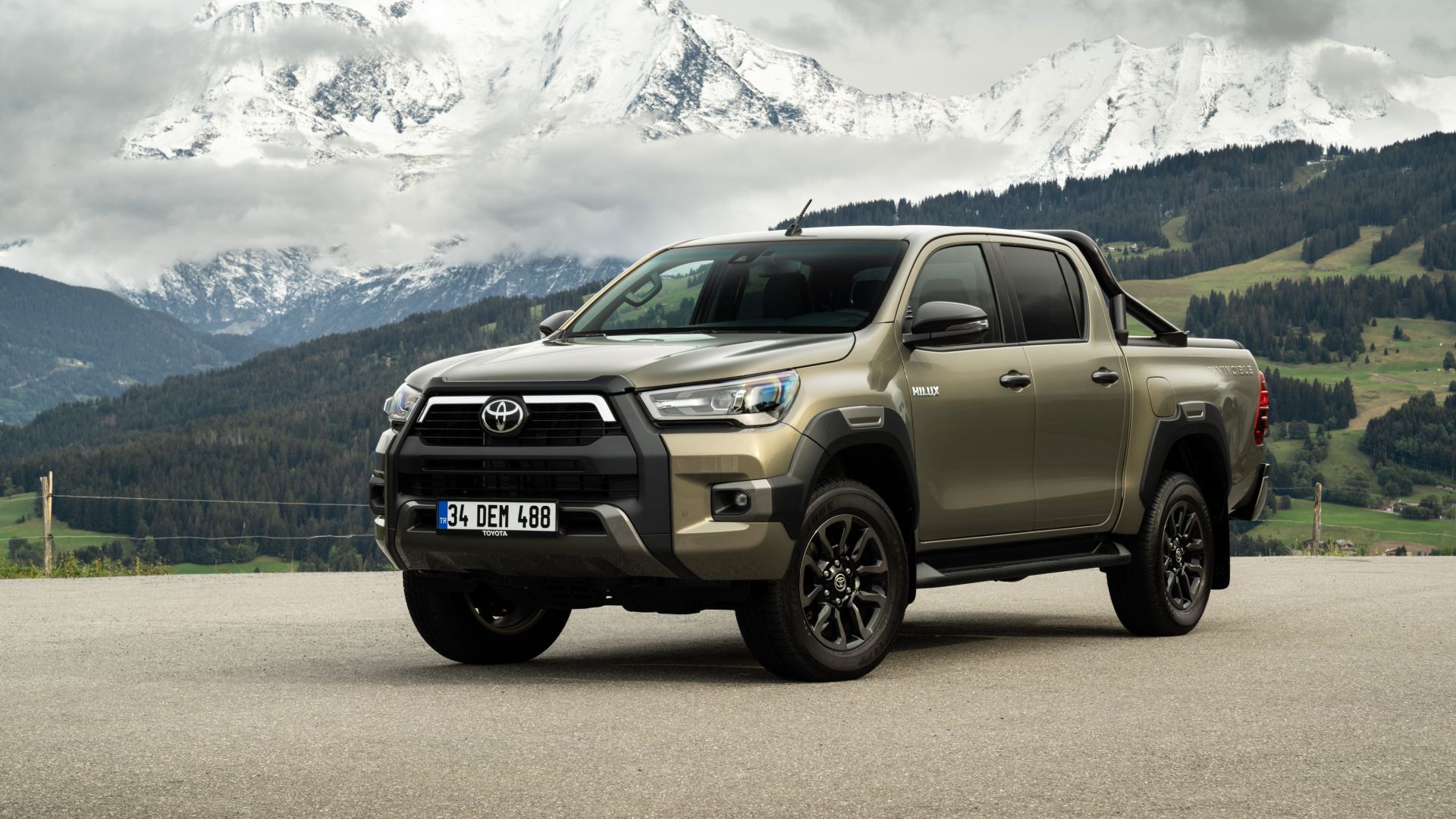
    Toyota’s Raize and Corolla Cross now account for 40% of the compact CUV segment, with the rest divided between Kia, Mazda, Honda, and Hyundai.

    In the last two years the competition in the urban compact CUV segment has been hot, persuading car companies to bring in new products.

    The race in this segment is mainly between Toyota, Hyundai and Kia.

    The compact CUVs have significantly contributed to Toyota’s top position in terms of revenues.

    So far this year Toyota has sold a combined 5,100 Corolla Cross and Raize cars. Both models are imported. The former in particular is a global product with all kinds of bells and whistles and new technologies.

    Like the Mitsubishi Xpander in 2019, the Corolla Cross has become a phenomenon in the Vietnamese car market, zooming to the top of its segment within just half a year after entering the market in May 2020, and remaining there.

    Kia has two models in this segment, Sonet and Seltos. The Sonet has sold 2,006 units this year, representing 22% year-on-year growth, while the Seltos sold 1,481, down 63%. Together they hold a 27% market share.

    The Seltos’ decline was mainly because of the Creta, of which Hyundai sold 2,647 in Q1.

    Kia and Hyundai are sister companies, with the latter owning a one-third stake in Kia.

    Mazda CX-3, Honda HR-V, Nissan Kicks, Volkswagen T-Cross, MG ZS, and Peugeot 2008 account for the rest of the segment. While the first two sold fewer than 1,000 cars in Q1, the rest did not publish sales figures.

  • EU Gets First Crypto Rulebook

    EU Gets First Crypto Rulebook

    Switzerland was early to adopt a regulatory framework for digital assets. Now Europe has approved an EU-wide crypto rulebook.

    The European Parliament is adopting the Markets in Cryptoassets (MiCA) regulation, scheduled to come into force from mid 2024 onwards, it said in a statement Thursday.

    The regulation aims to increase customer protection for crypto-assets that are not regulated by existing financial services legislation. It will affect crypto asset issuers, crypto asset service providers including exchanges, custody providers, investment advisors, and stablecoin issuers.

    While MiCA introduces harmonized regulation within the EU, «the Swiss Distributed Ledgter Technology Act goes further and provides additional legal clarity regarding the civil and insolvency law treatment of digital assets which are not present in the MiCA regulation,» Jan Brzezek, CEO and founder of Crypto Finance, an entity belonging to Deutsche Boerse Group, said.

    MiCA’s cap limiting stablecoin transactions to €200 million transactions per day, could impact institutional adoption, Brzezek added.

    EU regulation might draw companies away from the US, where companies, including Coinbase, have criticized the lack of clarity given by the Securities and Exchange Commission.

    By contrast, in Switzerland blockchain companies have benefited from the country’s early regulation of the industry as it helped professionalize the market.

    MiCA is an important step toward «legitimizing the asset class and opening the door for more institutional adoption and innovation,» Zug-based 21Shares wrote in an emailed newsletter ahead of Thursday’s parliament vote.

  • Global minimum tax will hurt Vietnam investment

    Global minimum tax will hurt Vietnam investment

    The proposed global minimum tax would weaken the international business environment in Vietnam by eliminating preferential tax policies for foreign direct investment (FDI), said Samsung Vietnam CEO Choi Joo Ho.

    The global minimum corporate tax rate of 15% on profits would remove exemptions and reductions that much of Vietnam’s FDI relies on, Ho told a conference Tuesday.

    The new tax is slated for 2024 but has not yet been approved in Vietnam. It is still under consideration in the country.

    However, the regime was approved by 136 countries in 2021.

    It is considered the deepest overhaul of cross-border tax rules in decades. The overhaul aims to ensure that tech giants such as Apple and Google will not have an unfair advantage by booking their profits in low-tax countries such as Ireland.

    The tax would apply to multinationals with total revenues of at least EUR750 million ($819 million) in two of the preceding four years.

    This means that such a company investing in a foreign country would have to be taxed by that country by at least 15%.

    The U.K., Japan, Korea, and the E.U. will impose the tax next year.

    Vietnam is considering the policy and Deputy Prime Minister Le Minh Khai has asked the Ministry of Finance to evaluate the situation and decide if Vietnam should collect the tax.

    Samsung CEO Choi said the new tax would force foreign companies currently enjoying tax incentives in Vietnam to pay the global minimum tax rate of 15% in the country where the parent company exists.

    Thus such profits obtained in Vietnam would be collected by the tax authorities of another country (not Vietnam) through the exercise of the right to tax the profits, he said.

    This additional payment of tax would create a financial burden for businesses, affecting financial planning and business strategies, and directly reducing the competitiveness of products made in Vietnam, he said.

    “The Vietnamese government needs to make assertive decisions in the process of responding to the global minimum tax,” he said.

    Attending the conference, Minister of Finance Ho Duc Phoc acknowledged that tax incentives would no longer have much effect on FDI revenue in Vietnam if the global minimum tax were applied.

    According to data from his ministry more than 70 businesses in Vietnam are likely to be negatively affected by the tax if it is applied in 2024.

    Dang Ngoc Minh, Deputy Director of the General Department of Taxation, said that in Vietnam, about 335 projects with registered capital of over US$100 million in manufacturing and processing industries are enjoying corporate income tax incentives with rates of lower than 15%.

    On the list are Samsung, Intel, LG, Bosch, Sharp, Panasonic, Foxconn, and Pegatron, with registered capital accounting for nearly 30% of total FDI in Vietnam, or about US$131.3 billion.

    All the above major companies are likely to be negatively affected by the global minimum tax, said Minh.

    What to do?

    Samsung CEO Ho said that in order to maintain FDI Vietnam needs to develop monetary support mechanisms to supplement incentives for businesses that will lose preferential policies if the new tax rate is applied.

    Tang Pham, Deputy General Director of Tax Consulting at EY Vietnam, said many countries such as India and Thailand have directly supported businesses with cash.

    “The trend of shifting incentives is being considered by many countries,” she said.

    She said that cash support or direct offset against tax obligations that meet Organization for Economic Co-operation and Development (OECD) standards could encourage businesses to increase investment. Such measures could help to maintain investment efficiency when imposing a new tax.

  • Customer locks horns with Porsche over damage

    Customer locks horns with Porsche over damage

    The owner of a Macan SUV claims that Porsche employees broke his VND600 million ($25,500) gearbox during maintenance, but the automaker denies the accusation.

    In early December, Ho Chi Minh City resident Pham Anh Tan in Ho Chi Minh City brought his 2016 Macan to Porsche Sai Gon for a front bumper replacement after the car collided with a motorbike.

    He retrieved the car nine days later and drove it back to his home, 15 kilometers away, without any problem.

    Tan left the car unused for about a week. When he started using it, the screen showed several issues, including lack of oil, “engine fail,” and “gearbox fail.”

    He could start the car but could not shift gears to start driving. Porsche technicians advised him to put a liter of oil into the engine, but still the car could not drive.

    As it was Christmas and Porsche maintenance service was on holiday, Tan brought his car to a third-party garage, where the technicians said the gearbox oil was leaking and advised him to bring it to Porsche.

    By the end of December, Tan brought the car to Porsche, and he was told that the leakage in the oil had damaged the valve body, and the whole gearbox needed to be replaced at the cost of VND600 million.

    Tan said that the car never had this issue before the front bumper was fixed and therefore he suspected that the problem arose from the reparation process at Porsche.

    He demanded to see the CCTV footage of the Porsche workshop, but was only shown some parts of the process as Porsche said that some footage could not be revealed as it contained business secrets.

    In the footage, Tan saw that his car was connected to a tool to assess issues and some Porsche employees drove the car around for testing. “My car only needed a bumper replacement, why were those processes necessary?” Tan said.

    He also said that when he received the car back Porsche employees did not provide any documents to confirm the vehicle was free of issues.

    A representative of the German automaker, however, said that Porsche maintenance policy requires every vehicle to go through the same process to ensure all functions of the car operate normally.

    When Tan took the car back to Porsche a second time, technicians found that the incorrect type of oil was put in the gearbox and glue was used in the reparation even though it is not needed according to Porsche standards.

    The damage to the gearbox, therefore, does not fall under the responsibility of Porsche, the representative said.
    Porsche, however, admitted to being wrong in the process of receiving and handing over the car to Tan without any paperwork.

    The automaker therefore proposed a 40% discount on the gearbox replacement, which means Tan would need to pay VND360 million for the new part.

    But Tan refused the offer and demanded that his car be returned in the Porsche workshop after three months. At the end of last month Tan came to Porsche to get the car and was asked to sign a statement saying the vehicle had no issues before employees released the car.

    Tan refused to sign.

    The statement said Porsche employees dismantled the valve body to check for issues without first seeking his approval.

    The service consultant working with Tan quit two days after Tan visited Porsche demanding his vehicle back. The employee informed him Tan the resignation via text message.

    Porsche said that the employee had been transferred to a new position but would continue to help Tan concerning everything relating to the broken Macan.

    The two parties have yet to come to an agreement.


  • New Google Meet feature prevents distractions and can reduce data usage

    New Google Meet feature prevents distractions and can reduce data usage

    Recently Google wrapped up its plan to merge the consumer-oriented Google Duo app with the enterprise-focused Google Meet app to create a single app for all of your video needs called (drum roll, please) Google Meet. Just the other day we told you that Google is requesting that users delete the Meet (original) app from their Android and iOS devices. Google has now announced that it allows Meet users in a video conference to turn off the video feed from other participants during a meeting.
    Now why would someone want to do that? Well, perhaps you want to focus on certain participants in the video conference that you’re a part of. Maybe you want to listen to the guy (or gal) who is presenting the meeting, or another participant is distracting you from giving your full attention to what is being said and shown. Or maybe you are on a monthly data plan and you want to reduce the amount of data being consumed by a Google Meet video conference.
    You can shut down the video feeds from certain participants and the best thing is that they will never know (unless you tell them). This feature will be available on the desktop and mobile devices.
    If you’re joining a Google Meet meeting via a mobile device, by selecting “Audio only” all video feeds will be turned off except for those presenting content. On the desktop, you can select whose video feeds you want to turn off by following the following directions: In a Google Meet conference (again, on the desktop), open the People panel. Tap the three-dot menu next to a particular participant, and select “Don’t watch.” To turn the video back on, from the three-dot menu and select “Start Watching.”
    The new feature started rolling out yesterday and it is expected to take 15 days to complete.