Author: Mei Ling Tan

  • Coles’ profit up, but inflation expected to dull second-half

    Coles’ profit up, but inflation expected to dull second-half

    In its first half, Coles has overcome supply-chain challenges and inflationary pressures to record a 17.1 percent lift in tax-paid profit.

    For the 27 weeks to January 1, sales from continuing and discontinued operations reached $21.4 billion – up 4 percent – while tax-paid profit rose to $643 million.

    Supermarket sales reached $18.85 billion, up 4.6 percent, which the company says was supported by the retailer’s ‘Locked’ and ‘Dropped & Locked’ value campaigns.

    With consumer shopping behavior beginning to normalize post-Covid during the half, online sales dipped 6.6 percent to $1.4 billion. Severe flooding and cool weather conditions resulted in availability challenges during the half across fresh and frozen produce categories.

    Supermarket inflation peaked at 7.7 percent in the second quarter, increasing from 7.1 percent in the first quarter.

    Coles’ liquor division sales fell 2.4 percent to $1.95 billion as the business cycled 15 weeks of Covid-related on-premise closures and restrictions in the previous corresponding period across NSW, Victoria, and the ACT. Store closures from flooding in the eastern seaboard, a wet and cool spring, and the summer’s start affected sales in the first half. Online liquor sales grew 13.7 percent.

    Liquorland continues to be the strongest-performing banner while express delivery was expanded to 560 stores.

    The fuel and convenience business – which has been sold to Viva Energy – earned $607 million, up 5 per cent, driven by growth in the food-to-go category, particularly of coffee and fast food.

    “We are well positioned to navigate the current macro environment and as we look to the future, we expect improving availability, population growth and moderation in out-of-home dining, which has been elevated post-Covid to positively impact the business and provide further opportunities for growth,” Coles said in a statement.

    The business expects inflation to moderate in the second half and farm-related availability to improve.

    Meanwhile, Leah Weckert has been named Coles’ new MD and CEO as outgoing CEO Steven Cain, announced his retirement. He will step down in May.

    Weckert has been a senior member of the executive leadership team since the demerger of Coles from Wesfarmers in 2018. She has also held several leading positions within the group including chief executive of commercial and express, CFO, people and culture director and state GM of Victorian supermarkets.

    Cain said: “I would like to thank the Coles board, team and our many partners for their support, insights and resilience – particularly during Covid, bushfires and floods. I would like to congratulate Leah on becoming my successor and I wish Coles continued success, and know that the best is yet to come.”

  • Vietnam rice exports to Taiwan continue to rise

    Vietnam rice exports to Taiwan continue to rise

    Vietnam’s rice exports to Taiwan rose by 18.5% last year as quality improved and prices were competitive.

    It shipped 20,281 tons worth over US$10 million, accounting for more than 16% of Taiwan’s imports, the third highest market share.

    In recent years Vietnam’s exports of high-grade rice to the market have been steadily increasing as its prices are lower than Thailand’s, Taiwan’s second-largest source of imports at 23,042 tons.

    But Thailand’s exports declined by 20% last year. Vietnam’s sticky rice exports to Taiwan exceeded those of the U.S. and Thailand.

    Overall, Vietnam exported more than seven million tons of rice worth $3.5 billion to the global market last year.

    It was sold in European supermarkets for the first time.

  • Seafood exporter Minh Phu reports surge in profits

    Seafood exporter Minh Phu reports surge in profits

    Minh Phu Seafood Corp., a leading shrimp exporter, reported consolidated after-tax profits of nearly VND840 billion (US$35.6 million) last year, up 27% from 2021 and its highest since 2015.

    Its revenues rose by 20% to VND16.43 trillion.

    According to the Vietnam Association of Seafood Exporters and Producers, shrimp exports were worth a record $4.3 billion last year after rising by 11% on high demand and high prices in the first half.

    In the second half high inflation in major economies affected demand, and exports declined.

    In 2022 shrimp exports to China grew by 61%.

    Vietnam’s shrimp exports to it are expected to continue to surge this year after China’s reopening.

  • Thai retail giant to invest $1.45B in Vietnam

    Thai retail giant to invest $1.45B in Vietnam

    Thailand’s Central Retail Corporation has announced it will double the number of its Vietnam stores with its largest ever local investment of 50 billion baht (US$1.45 billion).

    The chain’s number of stores will jump to over 600 in 57 of 63 cities and provinces with the new investment over the next five years.

    Central Retail CEO Yol Phokasub said the Vietnamese market has immense potential for continued economic growth.

    He predicted the country would post GDP growth of 6.7% this year and 7.2% next year, compared with Thailand’s average of 3.5% a year. “This will make Vietnam the fastest-growing market in Southeast Asia,” he said.

    Central Retail Vietnam has reported that in this year alone it will invest 6 billion of the baht in developing its businesses nationwide with a focus on food to reinforce its leading position in the nation’s hypermarket segment.

    The Thai company also plans to renovate 10-12 Nguyen Kim chain electronics supermarkets while opening 3-5 new supermarkets and Go! Hypermarkets.

    Central Retail Vietnam currently operates more than 340 stores. Its revenue surged from 300 million baht ($8.7 million) in 2014 to 38.6 billion baht ($1.12 billion) in 2021.

    A Central Retail manager said that in 2022 despite the impact of the economic recession, rising goods prices, and a consumer cut in spending, its sales grew in double digits thanks to its “always low price” policy.

    Japan’s Aeon plans to operate 100 supermarkets across Vietnam by 2025. South Korean retail giant Lotte has also said it will open more supermarkets in Vietnam.

    After gradually withdrawing from China, Lotte now regards Vietnam as its third most important market after South Korea and Japan.

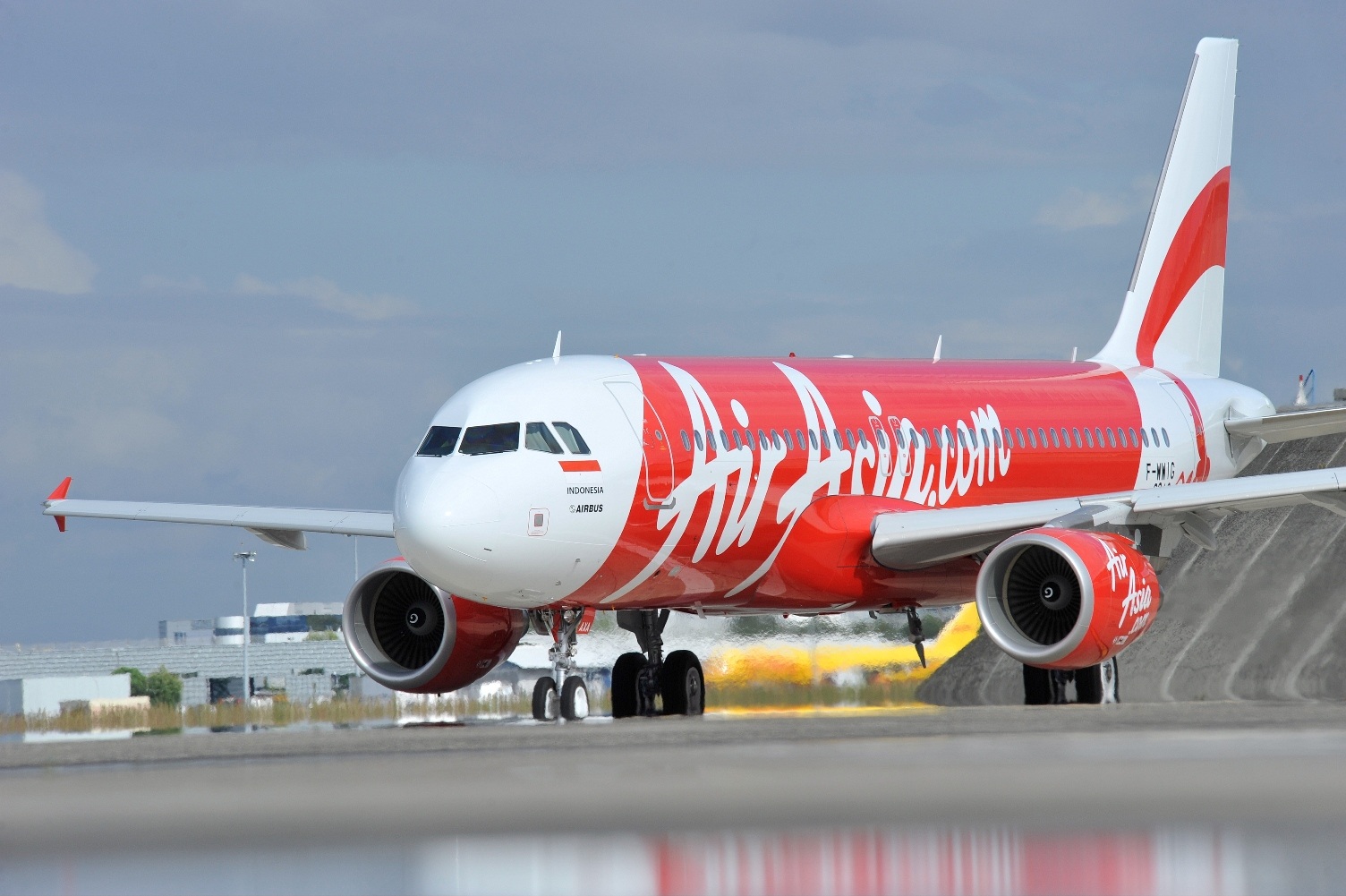
  • AirAsia records over 1 million seats sold during its FREE* Seats campaign

    AirAsia records over 1 million seats sold during its FREE* Seats campaign

    AirAsia’s first FREE* Seats Campaign for the year launched last Friday, aimed at further revilatlising the travel and tourism industry in Asean, has proven to be one of its BIGGEST hits yet, with a whopping 1.2 million seats sold across both short haul and long haul flights in less than a week.

    There are still almost 4 million seats available for those eager to venture out, exclusively on the airasia Super App and website, until this Sunday for travel between 1 March 2023 and 10 December 2023. Guests can simply click on the ‘Flights’ icon on the airasia Super App or website.

    The FREE* Seats Campaign, launched by Dato’ Sri Tiong King Sing, Minister of Tourism, Arts & Culture Malaysia (MOTAC), follows AirAsia’s pledge to fully support the Ministry in its mission to strengthen Malaysia as a multi-faceted and multi-destination attraction, and boost tourism in the region.

    This marks another record-breaking sale for AirAsia, whose ‘FREE* Seats Campaign’ is much awaited by the masses in and around Asean. The airline is set to fly 69 million guests annually which will provide a much welcomed boost to the travel sector in Malaysia and Asean.

    Tony Fernandes, Chief Executive Officer of Capital A said, “To see AirAsia breaking records and continuing to outdo itself year after year is motivating for me as we strived so hard to come out of the pandemic stronger than ever ‒ and here we are today with another amazing milestone to celebrate. It’s tremendously uplifting to see such strong demand across Asean destinations and this sale is a true testament that AirAsia is indeed the ‘People’s Airline’. As the saying goes ‒ size matters! When we say bigger and better, we mean more than just the numbers— from our incredibly low fares, better on-time performance and to our group-wide commitment to providing an enhanced travel experience for millions of our guests, who choose to fly with us each and every time. We aim to be more than just a ‘low cost airline’, but one that delivers top notch customer experience and constantly innovates to listen and meet our guests’ needs. You can always count on us to be bigger and better.”

    Adventure seekers have been snapping up FREE* seats by the minute to their favourite short haul destinations, with the likes of Langkawi and Penang in Malaysia, Phuket and Krabi in Thailand as well as Bali in Indonesia being amongst the most popular choices.

    Seats to other AirAsia and AirAsia X destinations which are also on sale now for a steal have also been in strong demand. Starting from RM99*, guests have snapped up thousands of international flights to Chennai, Kolkata, Hong Kong and the Maldives ‒ and to mid-long haul destinations such as Taipei, Seoul, Perth, Melbourne at as low as RM329*.

    To further strengthen its commitment to offer better flying experience for its guests, AirAsia also launched an industry-first Flight Delay Insurance* powered by Tune Protect. It offers a one-off payment of RM200 if the flight is delayed for a minimum of two hours from the originally scheduled departure time or any new departure time. It is now available for FREE to all guests who book their flights from 10 to 19 February 2023 for the travel period between 1 March 2023 and 10 December 2023. The insurance will be available for purchase starting 20 February 2023 from RM10 (one way) or RM14 (return) on the airasia Super App and the website. AirAsia has also partnered with BigPay exclusively to provide automatic claims credited to the BigPay user’s account within three (3) working days for guests who received the complimentary Flight Delay Insurance*.

  • Zuckerberg copies Musk announcing Meta Verified for Facebook and Instagram

    Zuckerberg copies Musk announcing Meta Verified for Facebook and Instagram

    It looks like Twitter isn’t the only company willing to put a little blue checkmark next to your name in return for a stream of monthly payments. As you probably know, Twitter is asking $8 per month or an annual payment of $84 to join Twitter Blue, which, among other features, will allow you to have your identity verified with a blue checkmark next to your name. Today, Meta co-founder, chairman, and CEO Mark Zuckerberg announced that Meta will test a new service called Meta Verified.

    Meta calls Meta Verified a subscription bundle for Instagram and Facebook and includes a verified badge that shows that you are who you say you are and have verified your identity using a form of government ID. The bundle also helps protect subscribers from having their identities impersonated by using “proactive account monitoring.” Meta Verified members will also have access to a real person to handle common issues that an Instagram or Facebook user might have.

    Other features of the program will give Meta Verified users increased visibility and reach. This means that subscribers will have their posts prominently appear in certain areas of the Instagram and Facebook platforms such as “search, comments, and “recommendations.” Lastly, the subscription bundle offers users exclusive features that will allow them to express themselves “in unique ways.”

    The Meta Verified subscription bundle will be available starting later this week in Australia and New Zealand as a direct purchase on Instagram and Facebook. Make the purchase on the web, which will cost the equivalent of $11.99 per month. If you subscribe via the Facebook or Instagram app on iOS or Android, the price is the equivalent of $14.99 per month. Hmm. Why should an in-app purchase from the App Store or Google Play Store be 25% more expensive (wink, wink)?

    To be eligible to sign up for the program, accounts have to show that they were active in the past with a prior posting history, and the account owner must be at least 18 years of age. Those applying for a Meta Verified subscription must submit a government ID to Meta showing their name and photograph (like a Driver’s License, for example) which must match the name and photo used on their Facebook or Instagram account.

    Meta says, “We’re also committed to continuous monitoring and review of reported violations, as well as taking swift action against those who try to evade our systems.” There will be no changes to accounts on Facebook and Instagram that are already verified based on previous requirements.

    The company states, “Long term, we want to build a subscription offering that’s valuable to everyone, including creators, businesses, and our community at large. As part of this vision, we are evolving the meaning of the verified badge so we can expand access to verification and more people can trust the accounts they interact with are authentic.”

    After being tested in Australia and New Zealand, Meta says that it hopes to bring Meta Verified to the rest of the world soon.

    Back when the company was known as Facebook, it made what is arguably the best acquisition of all time in the tech industry by paying $1 billion for Instagram back in 2012. Some believe that Instagram is now worth in excess of $100 billion. Instagram has matured from a camera filter app to a broader, more well-rounded social media site.

    In 2014, Facebook announced its purchase of messaging app WhatsApp for an initial price of $16 billion. By the time the deal closed a few months after it was first revealed, the final price tag of the transaction had ballooned to a range of $19 billion-$21 billion due to Facebook’s increasing stock valuation.

  • Google warns iOS, Android users about an upcoming change to location data

    Google warns iOS, Android users about an upcoming change to location data

    Google is warning both iOS and Android users about estimated photo locations. This feature, which is used with photos stored in the Google Photos app, looks at the background of photographs and videos you’ve taken with your phone’s camera and using landmarks visible in the image, tries to figure out where the picture or video was taken. While Google no longer uses your Location History to figure out where you snapped a photo or recorded a video, it works around this by using other methods.

    Google’s alert pops up in the Photos app and says, “Photos locations come from multiple sources, including locations estimated by Google Photos. We stopped using Location History to estimate photo locations, but we’ll continue estimating using other sources when ‘Estimate missing locations’ is on.” The alert also asks whether you want to keep any existing estimated locations or have them removed.

    As Google notes, “Choosing ‘Keep’ means you can use existing estimated locations to organize and find photos.” If you choose to delete them, you will get a message that says, “Deleting estimated photo locations based on Location History may result in permanent loss of those estimated locations. Your photos will be kept.”

    You might have estimated photo locations toggled on by default. To check, open the Google Photos app and tap on the profile picture in the upper right corner of the screen. Tap on Photos settings > Location > Location sources. There is a toggle for  “Estimate missing locations.” If it bothers you that Google is using landmarks in your pictures to take an educated guess about where you were, make sure that this setting is toggled off.

    You can also edit or remove an estimated location from a picture stored in the Google Photos app by opening the app, and tapping on the picture or video. Tap the three-dot overflow menu and “Edit” (with the pencil icon). Add or select a location from your recent locations or tap Remove location to have any location associated with a picture or video deleted. Pictures that have a location added by your phone’s camera cannot be edited.

    Google Photos users on iOS or Android will have the option of keeping or removing estimated locations before May 1st. If you don’t make a decision before then, Google will automatically remove the existing estimated locations from your Photos app on or after that date.

  • Update to iOS version of WhatsApp adds multitasking feature already available on Android

    Update to iOS version of WhatsApp adds multitasking feature already available on Android

    Back in December of last year, we told you that WhatsApp was conducting a beta test involving a Picture-in-Picture (PiP) feature for video chats on iOS. Now, according to 9to5Google, we can tell you that version 23.3.77 of the iOS variant of the WhatsApp app is available, allowing users in the middle of conducting a video call to access another app without having to pause or disconnect the video call that is in progress.

    The PiP works like this. When you are engaging in a video call and want to multitask by opening another app, exiting WhatsApp will minimize the video chat and allow it to float above other apps. You can move it around the screen with your finger while the video chat continues and the other app you want to open is underneath it. The feature might not work right away and WhatsApp says it will disseminate it over the coming weeks.

    The update to version 23.3.77 also includes new features, including adding captions when sending documents to contacts in personal or group chats. You will also be able to use longer group subject names and descriptions when describing a WhatsApp group. Following the update, these names and descriptions can be as long as 2,048 characters which is a huge increase from the prior 512 characters allowed.

    Stable-mates Facebook and Instagram allow users to create personalized avatars and now WhatsApp users can do so as well. To create your own avatar, open the WhatsApp app and go to Settings > Avatar > Create Your Avatar. Follow the directions and tap on Done. That’s just the first step. To make your new Avatar the profile picture on WhatsApp, open the app and tap on your profile picture. Then tap on Edit > Edit.

    Again, this update is for iOS only since Android users already have Picture-in-Picture capabilities for video chat on WhatsApp. If you want version 23.3.77 of WhatsApp for iOS right away, you can install the version of WhatsApp from the App Store since it already includes the aforementioned features including PiP for video chat.

  • Apple has sharply reduced the size of the order it has with TSMC

    Apple has sharply reduced the size of the order it has with TSMC

    Taiwan Semiconductor Manufacturing Co. Ltd., better known as TSMC, is the world’s largest foundry. Only TSMC and Samsung currently mass-produce chips using their respective 3nm process nodes (which use different types of transistors, as we will explain later). Apple is TSMC’s largest customer and is believed to account for a quarter of the company’s revenue (that’s 25% for you numerical types).

    With the overall weakness of the global economy and the hangover from last year’s chip shortage, some major brands have been canceling orders placed earlier with TSMC. And believe it or not, that goes for Apple as well. You know that we often cite Twitter tipsters and check out social media posts from Weibo writers for the sake of alliteration. Weibo is a Chinese social media site and one subscriber, whose user name translates to something like @CellPhoneChipExpert posted some big Apple news.

    The tipster, who allegedly gets news directly from the semiconductor industry, says that Apple has reduced its orders with TSMC by as many as 120,000 wafers. The canceled orders were for chips that would be made using TSMC’s N7, N5, N4, and even some N3 nodes. Rumors call for the A17 Bionic, which is expected to be found under the hoods of the iPhone 15 Pro and iPhone 15 Ultra, to be produced using TSMC’s N3 (3nm) process node. Apple’s M2 Ultra and M3 chips might also use the same node.

    Digitimes reports that TSMC has been able to beat out Samsung Foundry when it comes to signing up customers. Samsung’s 3nm node uses Gate-All-Around (GAA) transistors that allow the gate to come into contact with the channel on all sides resulting in less current leakage and higher drive current compared to the FinFET transistors used by TSMC for its 3nm node. GAA features vertically placed horizontal nanosheets while FinFET uses horizontally placed vertical “fins.” TSMC is expected to go to GAA for its 2nm production in 2025-2026.

    Despite sticking with FinFET for 3nm production, TSMC still has a pretty full-order book with big names like Qualcomm, MediaTek, and Nvidia reserving production capacity for 2023 and 2024. Samsung, though, has been handicapped in its efforts to secure more business due to low yields. That means that a higher percentage of the chips it cuts from wafers fail to pass quality control.

    The report says that in order to give Apple most of the 3nm production capacity later this year, Intel agreed to change its roadmap and delay receipt of its 3nm orders. TSMC’s enhanced 3nm process node (N3E) could be launched this year even though there might not be a big rush for orders considering the cost.

    Digitimes points out that wafer prices have skyrocketed with 90nm wafers selling for about $2,000 in 2004. By 2016, 10nm wafers cost $6,000 and that price hit $16,000 for 5nm which debuted on consumer electronics in 2020. Wafer prices for 3nm chips are priced in the $20,000 area.

    Intel has said that it will take process leadership from TSMC and Samsung by 2025 thanks to two developments. It will use RibbonFET transistors which is another term for the Gate-All-Around (GAA) transistors already employed by Samsung. And it will use a feature known as PowerVia or backside power delivery. This allows transistors to obtain power from one side of a chip while using the other side to connect to data communication links.

    Today’s chip designs have transistors trying to handle both functions from the same side which makes the process more complicated and limits the use of miniaturization. Intel will also be the first to use high numeric aperture Extreme Ultraviolet Lithography (EUV). This machine will etch higher-resolution circuitry patterns on wafers which could reduce the time it takes to add additional features to a pattern.

  • How Retailers Are Benefiting From Major Sports Events Like The Olympics And World Cup?

    How Retailers Are Benefiting From Major Sports Events Like The Olympics And World Cup?

    The sports industry is a billion-dollar industry and offers an excellent opportunity for retailers. For example, sports events like the Olympics and World Cup offer multiple opportunities for retailers. The demand for sporting events is increasing daily, and more brands are becoming more practically involved to appear more appealing to sports fans.

    Sports betting operators are not your typical retailers. However, they are among the business operators that benefit from major sports tournaments. For instance, during the Asian Games, a platform like Tiền thưởng William Hill registers more activity. To ensure their platforms reach their full potential, the operators usually offer their users bonuses and promotions to give them a more enhanced sports wagering experience.

    This article examines how retailers benefit from major sports events like the Olympics and the World Cup. Let’s dig in.

    Increased Sales

    Major sporting events usually cause people to stay at home more which could cause a downfall for retailers. However, most promote online shopping platforms to deliver sales during these times. They usually use perks such as free deliveries to attract as many customers as possible.

    Therefore, most marketers build this into their campaigns and drive customers online rather than to physical stores.

    The retailers also use promotions and offers for their in-store customers during sports events. For instance, retailers having sportswear such as team jerseys can have special offers for specific jerseys before a significant match. If you take the recent World Cup in Qatar as an example, retailers sold many jerseys belonging to major stars like Ronaldo, Messi, and Mbappe.

    Merchandizing also helps to boost retailers’ sales. During such massive tournaments, the retailers can partner with their suppliers to create event-specific t-shirts, scarves, and mugs, among other products. Such products are usually in high demand during tournaments. Therefore, retailers stock them in high volumes to boost their sales.

    Increased Brand Awareness

    Many retailers also take advantage of major sports events to create brand awareness. During such tournaments, emotions are high, and loyalty to country is at its peak. Retailers take advantage of such times to rally their fellow compatriots behind their brands. Some of the customers and connections they make during such tournaments last past the tournament helping brands to grow.

    Bottom Line

    Retailers who approach major tournaments like the World Cup and the Olympics strategically reap massive benefits. Their sales increase past the tournament, boosting their client base and brand awareness.   


  • Chinese tea chain Mixue opens its first Australia outlet

    Chinese tea chain Mixue opens its first Australia outlet

    Chinese tea chain Mixue has launched in Australia, opening its first store in Sydney’s World Square shopping centre.

    Two more locations are imminent in Brisbane and Melbourne.

    The Sydney store features floor-to-ceiling windows spanning an entire wall and red steel frames.

    A marketing campaign by Mixue offering “1000 Sydney students to have a drink for free” was launched for the brand’s Sydney launch. Mixue said that although the pricing will be different to that in its home market, the quality will not change.

    Founded by Zhang Hongchao in 1997, Mixue Ice Cream and Tea opened its first overseas store in Vietnam in 2018 and currently has 600 stores in 11 Asian countries and 21,000 stores in China.

    With several milk tea companies expanding into the market during the past two years, Australia is a promising destination for the sector.

    Global milk tea giant Gong Cha last year said it planned to add 17 new stores to its existing 118 locations in Australia and both Gotcha and Chatime recently said they planned to prioritise the market.

  • Japanese restaurant chain Zensho to buy Lotteria Japan

    Japanese restaurant chain Zensho to buy Lotteria Japan

    Sukiya beef bowl chain’s operator, Zensho Holdings, is to acquire burger franchise Lotteria Japan from Lotte Holdings for an undisclosed sum.

    The deal is expected to be completed on April 1.

    Entering Japan in 1972 with the first store opened in Tokyo’s Nihonbashi, Lotteria had 358 stores across the country as of January 1.

    Zensho Holdings said it has decided to acquire the shares based on the judgment that the synergistic effect of its mass merchandising system and wide range of food business will contribute to the future expansion and development of Lotteria’s business.

    The deal is part of an operational restructuring by South Korea’s Lotte Holdings.

    “We believe this is the best option for Lotteria to pursue new growth,” Lotte Holdings said in an announcement.

    The company said the Lotteria brand will continue for a certain period after the transfer of the shares but the new owners may rename it in the future.

    As of March 31 2022, Zensho Holdings managed and developed 10,078 restaurants, with sales of about US$4.9 million. Its portfolio of brands includes Sukiya, Big Boy, Nakau, Victoria Station and Jolly Pasta. The company previously operated US burger chain Wendy’s restaurants’ in Japan.

  • Your iPhone might soon be able to read iMessages in your friend’s voice

    Your iPhone might soon be able to read iMessages in your friend’s voice

    Apple has applied for a new patent allowing iMessages to be read in the sender’s voice. And no, this is not Siri reading the message or a straight-up voice note. This is your phone reading the written words as it thinks they would sound and be said by the person writing them.

    For those of you who have used a VoIP service, this might remind you a bit of the Voicemail transcription some of those apps have, albeit working somewhat backward, as it is words being turned into audio and not the other way around.

    As we already established, this would be nothing new practicality-wise, since Siri can already read out loud messages to you whenever you find it convenient. If this feature does end up reaching real implementation in Apple’s devices, it would serve more as a fun extension that would bring personality to iMessages, which might sound superficial, but these little details tend to be quite liked by most users.

    Whenever one side sends a message via the iMessage app to another person who owns an iPhone, the phone asks if they would like to attach a voice file. What is this voice file you ask? Well, the good news is that you don’t actually have to manually train some voice model because you have already been doing that by talking to Siri.

    Siri would have already created and stored the file on your phone by using all that it has heard you speak. Once you send that voice file, on the opposite side the recipient would get to choose whether they want to receive just your message or the file with it. If they decide to accept both, then in the future your messages will be read with a simulation of your voice,

    Keep in mind that this is a just a patent, so there is no certainty about the feature reaching actual implementation in the future. That said, it is easy to imagine, as it just seems like something Apple wouldn’t skip on.

  • Neobank N26 Blows off a Major Acquisition

    Neobank N26 Blows off a Major Acquisition

    N26 also active in Switzerland, was looking for an acquisition that would allow its customers to trade stocks and index funds. That has reportedly fallen through.

    Decision makers at smartphone bank N26 are looking for ways to cover the traditional stock and ETF business. The goal, announced by co-founder and co-CEO Valentin Stalf in October was to gain a strong foothold in the space within two years.

    Now it seems the attempt to develop this service through acquisition has failed, with N26 ending negotiations with Dutch securities trader Bux before a deal could be struck, citing anonymous sources.

    Reasons cited for the pullout included disagreement over management structure, the price, and the deal’s complexity. During the talks, a valuation of 100 million euros for Bux was reportedly on the table.

    Bux, which cooperates with Dutch bank ABN Amro on trading systems, says it serves over 1 million customers and operates in a total of eight markets, including the Netherlands, France, and Germany.Bux declined to comment to the newspaper, saying only that it looks for interesting companies that fit its strategic goals, but generally does not comment on rumors or speculation, according to the N26 announcement.

    N26 entered into a cooperation with Viennese crypto startup Bitpanda last fall to allow customers to trade cryptocurrencies.

  • Vietnamese airlines race to find new investors

    Vietnamese airlines race to find new investors

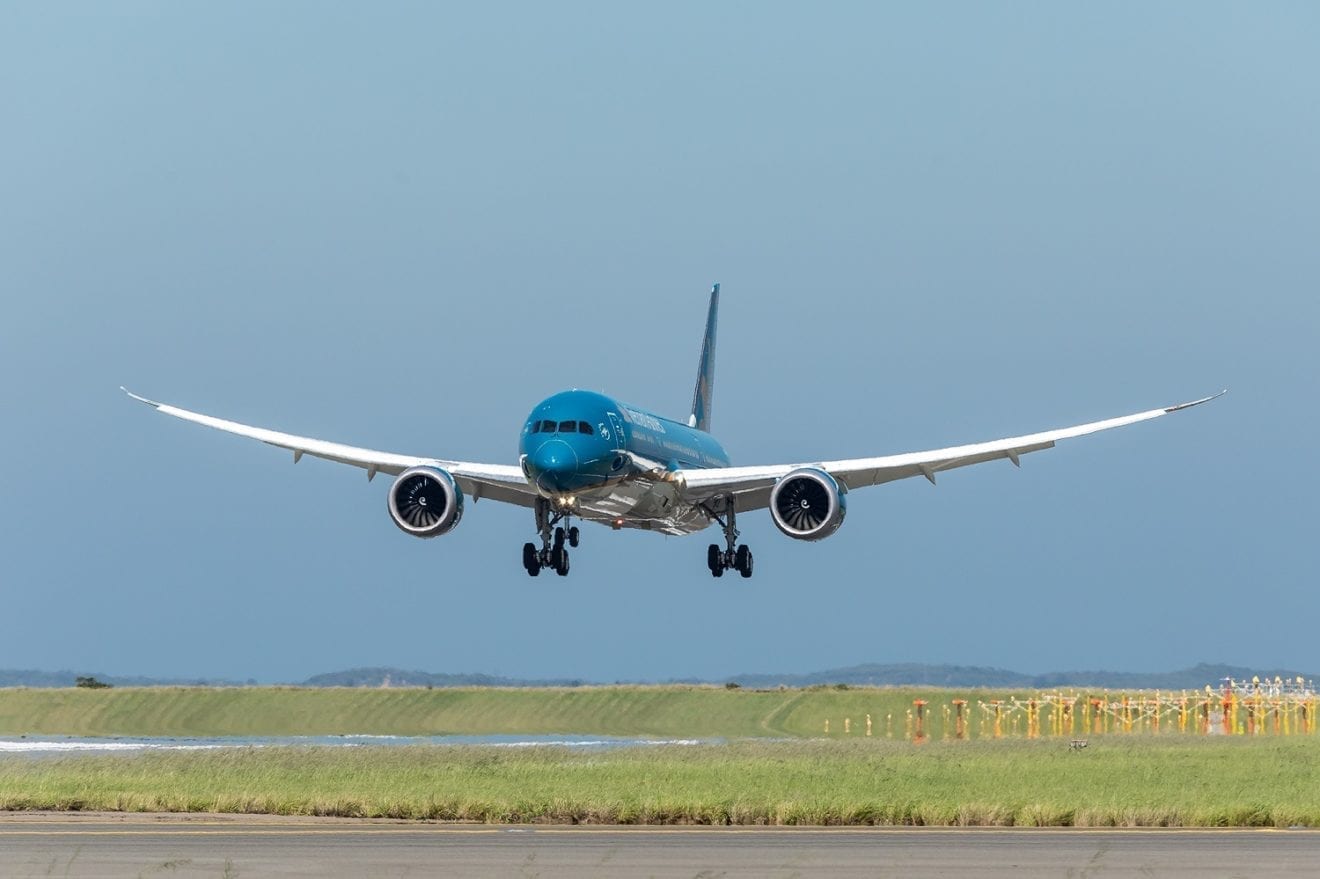
    Pacific Airlines, Bamboo Airways, and Vietravel Airlines are seeking new investors to help them overcome financial difficulties and speed up their post-pandemic recovery.

    Vietnam Airlines, which owns approximately 98% of Pacific Airlines’ shares, has been searching for new investors for its subsidiary carrier since last year.

    The national flag carrier is also looking to sell its stake in jet fuel distributor Skypec to help alleviate some of its difficulties and gradually reduce its losses.

    By the end of last year, Vietnam Airlines was recording an accumulated loss of nearly VND34.2 trillion ($1.45 billion), and its shares are at risk of being delisted as the carrier is set to record three annual losses in a row.

    Bamboo Airways is also seeking new investors to help its ambitious development plans.

    Although the airline was expected to be invested in by a large southern property company, the deal has yet to be finalized and the airline is still looking for new investors.

    Rookie Vietravel Airlines is also seeking investors and has requested the government to increase its charter capital sixfold to more than VND7.6 trillion, mainly to expand its fleet.

    By 2030 the airline seeks to have VND8.25 trillion in charter capital, in which shareholders contribute VND2 trillion, with the remainder coming from undistributed profits and other investors.

    Nguyen Quoc Ky, chairman of Vietravel Airlines, said “the airline is lucky as it has attracted interest from some investors.” He added that the airlines prioritizes domestic investors who can journey with the airline for a long time.

    Each airline has its own strengths to entice investors.

    Pacific Airlines and Vietnam Airlines possess prime flight slots at major airports like Noi Bai and Tan Son Nhat.

    Bamboo Airways is the fastest growing airline with a fleet of 30 jets just four years after it was launched. It also has a network covering both domestic and international markets.

    Vietravel Airlines is part of tourism firm Vietravel’s ecosystem and therefore has a large customer base and a connection with tourism markets.

    Nguyen Hai Quang, a lecturer at the University of Economics and Law under Vietnam National University, Ho Chi Minh City, acknowledged that the pandemic has severely impacted the airline industry and that finding new investors is essential.

    “The aviation business requires large capital and aircraft-related expenses,” he said, adding that this is a good time for investors to join the industry.

    The International Air Transport Association (IATA) has forecast that the global aviation industry will become profitable again this year with a profit to sales ratio of 0.4%.

    But Quang also said that challenges lie ahead for Vietnamese airlines, and one of these is the recovery of the international markets.

    “Only when international markets resume pre-pandemic levels can Vietnamese carriers report profits again,” he said.

    Other factors such as fuel price, currency exchange rates, global economic growth and inflation will also play important roles in the performance of airlines, Quang said.

    When new investors are found, airlines will have many opportunities for growth, he added.