Author: Mei Ling Tan

  • Japan’s sushi-train restaurant chains eye overseas expansion

    Japan’s sushi-train restaurant chains eye overseas expansion

    The companies said Friday that sushi restaurant chains Akindo Sushiro Co. and Genki Sushi Co. are in merger talks to speed up the expansion of their overseas business.

    Akindo Sushiro operates Japan’s largest conveyor belt sushi chain with around 470 restaurants, most of them domestic. Genki Sushi, the No. 5 chain, runs more than half of its 300 or so restaurants abroad, including in the United States and China.

    By teaming up, they hope to cut down on costs and pool their resources to open more restaurants across the growing Asian market, especially as Japan’s graying population puts a damper on domestic sales.

    In preparation for the merger, Shinmei Co., the parent company of Genki Sushi and Japan’s largest rice wholesaler, plans to acquire a 32.72 percent stake in Sushiro Global Holdings Ltd., parent of Akindo Sushiro.

    While the merger details are still being worked out, combining the two businesses would give the new company a significant lead in revenue over its closest rival, Kura Corp.

  • Tesla To Freeze Hiring, Lay Off Employees Next Quarter

    Tesla To Freeze Hiring, Lay Off Employees Next Quarter

    Another wave of layoffs are coming at electric-car maker Tesla Inc in the next quarter, news website Electrek reported on Wednesday, citing a source familiar with the matter.

    Tesla is also going to freeze hiring, according to the report. The company did not immediately respond to a Reuters request for comment.

    Shares of Tesla rose 1% to $139.25 in trading before the bell.

    The reported move comes at a time when Tesla investors have raised concerns over Chief Executive Elon Musk’s distraction with managing Twitter, the social media platform he bought for $44 billion in October.

    Moreover, Tesla analysts have also cut their price targets on the stock worried that weakness in demand from China will weigh on the EV maker’s deliveries next year.

    Musk in June said Tesla would reduce its salaried workforce by roughly 10% over the next three months.

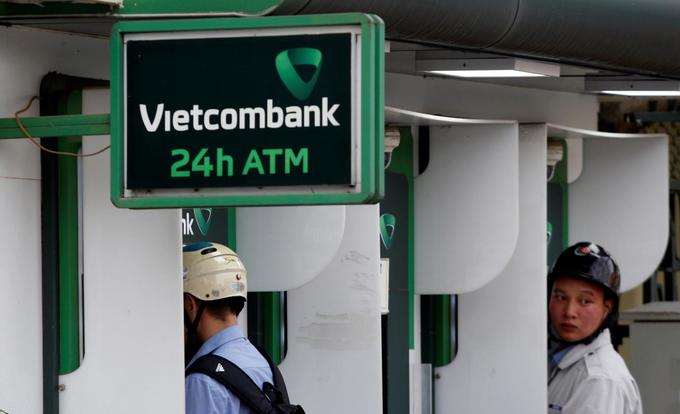
  • Vietcombank names new general director

    Vietcombank names new general director

    Vietcombank, Vietnam’s largest state-owned lender, named its current deputy general director Nguyen Thanh Tung as its new general director on Monday.

    Tung, 49, was the same day elected a member of Vietcombank’s board of management for the 2018-2023 term.

    He holds bachelor’s degrees in economics of international trade and English education, as well as a master’s degree in economics of Paris Dauphine University.

    His career at Vietcombank began 26 years ago in 1997. He became the office head of Vietcombank in 2008, then the deputy director of the bank’s operation center in 2013.

    He became the deputy general director of the sales division in April 2019, before becoming deputy general director of the board of management in August 2021.

  • Saigon Beer brewer sees revenue surge by a third

    Saigon Beer brewer sees revenue surge by a third

    Saigon Beer brewer Sabeco saw revenue jump 33% from 2021 to VND35.24 trillion ($1.5 billion) last year as consumption bounced back after two years of Covid-19.

    The brewer’s post-tax profit surged nearly 40% to VND5.5 trillion, the highest level since it was sold to ThaiBev in 2017.

    “The company has improved its production efficiency and implemented cost-saving measures to minimize the impact of higher input costs,” Sabeco said in a statement. “Many promotion and marketing campaigns also helped boost sales.”

    Before the pandemic, the company spent VND3 trillion on promotion and marketing last year, double that of 2019.

    Sabeco’s revenue last year was 8% shy of the 2019 level. However, its revenue quadrupled that of its major competitior in Vietnam, Habeco, which recorded a revenue of VND8.5 trillion.

    Thapana Sirivadhanabhakdi, CEO of ThaiBev, said last year that Sabeco was its “crown jewel” and rejected rumors that the Thai company would sell the brewer.

    Valued at $26 billion, Vietnam is the biggest beer market in Southeast Asia, and No. 3 in Asia behind China and Japan, according to 2021 figures.

  • Spotify has officially crossed 200 million premium subscribers

    Spotify has officially crossed 200 million premium subscribers

    The recently concluded holiday shopping season may not have been as auspicious for the global smartphone market as we’ve expected over the years, but for some reason, the music streaming industry doesn’t appear to be suffering any consequences of a tough economic climate around the world.

    Not yet, at least, and not as far as said industry’s heavyweight champion is concerned, with some of Spotify’s key success indicators surging higher than initially anticipated during the final quarter of 2022 compared to the same period of 2021 and last year’s third calendar quarter.
    There are now 205 million people worldwide paying for Spotify’s “Premium” service tier, up no less than 10 million from Q3 2022 and a cool 25 million versus Q4 2021. How does the new milestone compare to the competition? Unfortunately, there’s no way to know… for sure.
    That’s because Apple effectively stopped making those kinds of figures public back in 2019, when around 60 million people were subscribed to the company’s paid Music platform. Of course, many unofficial guesses and estimates followed, with one from 2021 boosting that number to 78 million and one from last year circling 88 million.
    What’s crystal clear is that Apple Music still has a long way to go before hoping to catch up to Spotify’s usage digits, which also include 295 million ad-supported monthly active users (up from 273 million in Q3 2022) and a grand total of 489 (!!!) million Q4 2022 MAUs, representing a massive increase from 456 million the previous quarter and 406 million in Q4 2021.
    It’s equally true that Apple is very clearly prioritizing the profitability of its “Services” division as a whole over the subscriber growth of each individual platform, while Spotify continues to bleed money as it brings in more and more listeners.
    We’re talking a €231 million ($250 million) operating loss for the Sweden-based company behind the world’s most popular audio streaming product between October and December 2022 alone, and although things like “higher personnel costs” and “higher advertising costs” are blamed for this latest financial deficit, the truth is Spotify last posted a quarterly profit all the way back in 2019.
    Looking ahead to the near future, Spotify doesn’t expect its financials to bounce back all of a sudden despite predicting another boost to 207 million premium subscribers and, yes, half a billion total monthly active users. Now that’s a number for the ages!
  • Apple Music Rewind 2023 is available for those subs who can’t help but track everything

    Apple Music Rewind 2023 is available for those subs who can’t help but track everything

    Apple Rewind. Like Spotify Wrapped, right? No, not really. Spotify keeps things under wraps and surprises you with stats at the end of the year, while Apple Rewind is a feature that lets you check what you are listening to most at all times.

    Redundant, since you’d be doing it in real time, but hey — remember that you can do it for the entire year! As in, if you feel like checking your playlist history from months ago, through this feature you can do that, so it’s not that surface level.

    And if that got you interested in checking it out, you can do that right now. Apple Rewind for 2023 is live now, and it allows you to check what you expect: top songs, albums, artists and so forth. But it also starts automatically drafting you a playlist with your most played songs of the year, which is always neat.

    If you want to check out your own playlist, you can open your Apple Music app under the Listen Now tab. At the very bottom, you should be able to see all of the yearly playlist that the service has drafted for you, ever since you were a subscriber and as far back as 2015, when Apple Music initially launched.

    At the end of the year, however, Apple will give you a quick hit of dopamine and release a more in-depth overview of your musical journey. If you’d like to follow how the entire process is going, you can check back with the website every Monday, as usually the data is refreshed every Sunday.

    You’ve had to have reached a certain threshold of listening activity in order for the feature to kick in for your account. In other words: If you aren’t seeing anything by next Monday, you might want to add “Listen to more music” to your list of goals to achieve in 2023.

  • Central Banks Buy the Most Gold in Over 50 Years

    Central Banks Buy the Most Gold in Over 50 Years

    Gold kicked off the new year better than it has in a long time. The precious metal is benefitting from extraordinary trends.

    Demand for gold was stronger last year than it has been in more than a decade, the World Gold Council (WGC) said in its report on demand trends in the fourth quarter and the full year of 2022.

    On Tuesday, the WGC also celebrated the 30th anniversary of its study on gold demand trends, which examines the cornerstones of physical gold market demand.

    Overall, global gold demand, excluding OTC, rose 18 percent to 4,741 metric tons in 2022, almost the same amount as 2011, and the strong full-year result was supported by record demand of 1,337 tonnes in the fourth quarter.

    The exceptionally high demand was due to «massive» buying by central banks and supported by strong retail investor buying and slower outflows from exchange-traded funds, according to WGC.

    The second consecutive quarter of heavy central bank demand drove annual purchases in the sector to a 55-year high of 1,136 metric tons. In the year-end quarter, central banks bought 417 tons of gold, on top of the nearly 400 tons they acquired in the third quarter. As in the third quarter, most gold purchases were unreported.

    Private investors also contributed to the demand boom, with global demand for bars and coins rising to a nine-year high of 1,217 tonnes, up 2 percent from a year earlier.

    The second half of the year was particularly strong, with demand hovering around 340 tons for two consecutive quarters for the first time since 2013. The need for asset protection in a global inflationary environment remained a key motivator for purchasing gold, the report said.

    At the same time, gold exchange-traded fund (ETF) holdings declined less than they did a year, falling 110 tons compared to a drop of 189 tons. Total investment demand, not taking into account OTC activity, rose 10 percent last year to 1,107 tons.

    For the current year, the WGC sees improved ETF demand, especially since interest rate hikes are likely to be less of a problem. However, central bank purchases are unlikely to return to 2022 levels, the industry association added. Continued dollar weakness, rising recession risks, and increased geopolitical risks would support gold.

  • UBS To Increase Dividend and Buy Back Shares

    UBS To Increase Dividend and Buy Back Shares

    Switzerland’s largest bank managed to improve on its results from last year. The bank will increase its dividend this year and buy back more shares.

    For the year, UBS managed to improve its net profit attributable to shareholders to $7.630 billion from $7.457 billion in 2021, as operating expenses decreased from a year ago, according to figures released Tuesday.

    Operating expenses fell to $24.930 billion from $26.058 billion in 2021, resulting in an increased operating profit of $9.604 billion.

    The fourth quarter results came in better than expected, with net profit attributable to shareholders of $1.653 billion rising from $1.348 billion in the fourth quarter of 2021.

    Total revenues in the fourth quarter were $8.089 billion while operating expenses fell to $6.085 billion, down 13 percent from a year ago. UBS said that the fourth quarter of last year included $740 million in litigation provisions for a cross-border legal case with France.

    Excluding the provisions, operating expenses would have decreased by three percent and pre-tax profit would have declined 22 percent, according to UBS.

    The Global Wealth Management (GWM) unit booked a pre-tax profit of $1.058 billion in the fourth quarter, which was marginally better than expected. Compared to the year-ago result of $563 million, it marked an 88 percent increase. For 2022, the net profit for the unit fell to $4.601 billion, a decline of five percent.

    GWM attracted $23.3 billion in new fee-generating assets for the quarter, bringing the total new money for the year to $60.1 billion, according to UBS.

    CEO Ralph Hamers said, «we could achieve this in a year marked by difficult macroeconomic conditions, persistent inflation, rapid monetary tightening, the war between Russia and Ukraine, the impact of the Corona pandemic in China, and other geopolitical tensions.»

    The Asset Management division reported a pre-tax profit of $124 million for the fourth quarter a decline of 63 percent.

    Hamers also said that UBS is starting 2023 from a position of strength despite uncertain macroeconomic conditions.

    After buying back $5.6 billion of shares last year, Hamers said UBS plans to buy back more than $5 billion this year as well. Furthermore, the bank will continue to pursue a progressive dividend payment policy. For 2023, UBS intends to propose a dividend of $0.55 – 10 percent higher than a year ago.

    UBS will continue to pursue growth opportunities in the United States, Hamers said. In the Americas region, the GWM unit attracted $17 billion in fee-generating money and closed the quarter with strong advisor recruiting efforts.

    UBS said that it continues to see «positive momentum» in private markets in the region, attracting $10 billion of new commitments. Its separately managed accounts (SMA) product contributed $21 billion of new money in the Americas.


  • Miniso Group reveals management changes

    Miniso Group reveals management changes

    Lifestyle retailer Miniso Group has unvieled a shift in the management board, with executive VP Steven Saiyin Zhang departing.

    According to Miniso, Zhang has resigned as CFO, executive VP, and executive director, effective immediately, for personal reasons and to spend more time with his family. Zhang will continue to work as a senior consultant for the firm.

    Following his resignation, the board will comprise five members: three independent non-executive directors and two executive directors.

    Miniso said it has also appointed Eason Jingjing Zhang, currently the company’s VP of capital markets, as its new CFO.

    “Steven has designed a detailed succession plan to transition his responsibilities to Eason, who has played a key role in driving Miniso’s success in various capital market transactions and several internal finance management projects, demonstrating a clear understanding of our business and establishing confidence in Miniso among the investor community,” said Guofu Ye, founder, chairman of the board and CEO of Miniso.

    Eason Zhang, who joined Miniso in January 2021 as director of capital markets, has been VP of capital markets since September, overseeing all capital markets matters for the company, including investor relations, strategic investment and acquisitions, corporate strategy, and treasury.

    Prior to that, he began his career in auditing at PricewaterhouseCoopers, after which he worked in different capacities mostly in capital markets in the US, Hong Kong, and China.

    Last year, Miniso strengthen its expansion strategy in Canada when reopened its Vaughan Mills store in the Greater Toronto Area and introduced its new “$2 Plus” concept to the market.

  • Tesla Deliveries Miss Estimates Due To Logistical Issues, Slowing Demand

    Tesla Deliveries Miss Estimates Due To Logistical Issues, Slowing Demand

    Tesla said quarterly deliveries fell short of market estimates on Monday, held back by ongoing logistical issues and growing demand concerns that rounded off a tumultuous 2022 for the Elon Musk-led firm.

    The company is still the world’s most valuable automaker even after losing 65% of its market value in 2022. Shares fell 8.5% to $112 on Tuesday.

    Tesla delivered 405,278 vehicles in the fourth quarter ended Dec. 31, short of analysts’ estimates of 431,117, according to Refinitiv. For all of 2022, the electric-vehicle maker’s deliveries rose by 40%, missing Musk’s 50% annual target.

    “We believe Tesla is facing a significant demand problem … many investors underestimate the magnitude of the demand challenges Tesla is facing,” Bernstein analyst Toni Sacconaghi said.

    The shortfall also highlighted the logistics hurdles facing a company known for its end-of-quarter delivery rush, with the gap between production and deliveries widening to 34,000 vehicles as more cars got stuck in transit.

    Tesla also plans to run a reduced production schedule in January at its Shanghai plant, extending the lowered output it began in December into 2023, Reuters has reported.

    Tesla has tried up prop up demand with a rare set of discounts on its top-selling vehicles as competition deepens from legacy automakers such as Ford Motor Co and General Motors Co and startups such as Rivian Automotive Inc and Lucid Group Inc.

    “Tesla’s previous gains have been based on delivering super-charged growth. Without that it looks (like) a different proposition,” said Russ Mould, investment director at AJ Bell.

    Sacconaghi said demand challenges will persist in 2023 as most Tesla models do not qualify for a tax rebate and the company would need to either reduce its growth targets or cut prices.

    The company, which has some of the highest margins in the industry, will report quarterly results on Jan. 25.

    The fourth-quarter deliveries consisted of 388,131 Model 3 compact sedans and Model Y sports utility vehicles (SUVs), compared with 17,147 Model X and Model S luxury cars.

    Production came in at 439,701 vehicles.

    Tesla said in a separate statement on Monday it plans to host its Investor Day on March 1 and will likely discuss long-term plans for expansion and capital allocation at the event that will be held at its Texas Gigafactory.

    The automaker also hinted at a “generation 3” platform that could be shown to investors at the event. Musk said in October that Tesla was working on a “next-generation vehicle” which will be cheaper and smaller than the Model 3 and Model Y cars.

  • Apple’s India supplier Jabil making AirPods parts for export

    Apple’s India supplier Jabil making AirPods parts for export

    Apple-supplier Jabil Inc’s India unit has begun making components for AirPods in the country and is shipping plastic bodies or enclosures for AirPods to China and Vietnam, Bloomberg News reported on Sunday, citing people familiar with the matter.

    Apple Inc and Jabil did not immediately respond to a request for comment.

    The move marks another step in Apple’s plans to shift its manufacturing away from China amid rising trade and geopolitical tensions between Beijing and Washington.

    The iPhone maker wants India to account for up to 25% of its production, from about 5%-7% now.

    Apple has bet big on India since it began iPhone assembly in the country in 2017, in line with the Indian government’s push for local manufacturing.

  • Vietnam posts trade surplus of $3.6B in January

    Vietnam posts trade surplus of $3.6B in January

    Despite decreases in both imports and exports, the country still enjoyed a trade surplus of $3.6 billion in the first month of 2023, according to the General Statistics Office (GSO).

    The office reported that in the month, total import-export turnover reached $46.56 billion, with exports dropping 21.3% to $25.08 billion, and imports falling 28.9% to $21.48 billion.

    While the domestic sector saw a trade deficit of $1.04 billion, the foreign-invested sector (including crude oil) posted a surplus of $4.64 billion.

    Experts attributed the result to the long New Year and Lunar New Year (Tet) holidays, which were all in January, reducing the number of working days. Last year, the Tet holiday fell in February.

    The GSO reported that the manufacturing-processing sector earned the highest export revenue with 22.32 billion USD, accounting for 89% of the country’s total.

    Meanwhile, there were three goods groups with imports of over $1 billion.

    In January, the U.S. remained the biggest importer of Vietnamese goods with a revenue of about $7.6 billion, while China was the biggest exporter to Vietnam with $8.1 billion.

    The GSO held that many countries are facing the threat of inflation and economic recession, leading to reduction in global consumption, thus affecting Vietnam’s import-export activities.

    Export activities showed signs of slowing down from the fourth quarter of 2022 with fewer orders, it said, adding that 2023 is likely to be a tough year for Vietnam’s import-export.

    In 2023, the MoIT sets a target of a 6% rise in goods export revenue, with trade surplus maintained.

  • UBS To Increase Dividend and Repurchase More Shares

    UBS To Increase Dividend and Repurchase More Shares

    Switzerland’s largest bank posted a better-than-expected profit in the fourth quarter. The bank will also increase its dividend this year and buy back more shares.

    UBS posted a net profit attributable to shareholders in the fourth quarter of $1.653 billion, and $7.630 billion for the year as a whole, according to figures released Tuesday. The fourth quarter result is better than expected, and the annual result improves on the bank’s $7.457 billion net profit in 2021.

    Total revenues in the fourth quarter were $8.089 billion while operating expenses fell to $6.085 billion, down 13 percent from a year ago. UBS said that the fourth quarter of last year included $740 million in litigation provisions for a cross-border legal case with France.

    Excluding the provisions, operating expenses would have decreased by three percent and pre-tax profit would have declined 22 percent, according to UBS.

    The Global Wealth Management (GWM) unit booked a pre-tax profit of $1.058 billion in the fourth quarter, which was marginally better than expected. Compared to the year-ago result of $563 million, it marked an 88 percent increase. For 2022, the net profit for the unit fell to $4.601 billion, a decline of five percent.

    GWM attracted $23.3 billion in new fee-generating assets for the quarter, bringing the total new money for the year to $60.1 billion, according to UBS.

    CEO Ralph Hamers said, «we could achieve this in a year marked by difficult macroeconomic conditions, persistent inflation, rapid monetary tightening, the war between Russia and Ukraine, the impact of the Corona pandemic in China, and other geopolitical tensions.»

    The Asset Management division reported a pre-tax profit of $124 million for the fourth quarter a decline of 63 percent.

    Hamers also said that UBS is starting 2023 from a position of strength despite uncertain macroeconomic conditions.

    After buying back $5.6 billion of shares last year, Hamers said UBS plans to buy back more than $5 billion this year as well. Furthermore, the bank will continue to pursue a progressive dividend payment policy. For 2023, UBS intends to propose a dividend of $0.55.

    UBS will continue to pursue growth opportunities in the United States, Hamers said. In the Americas region, the GWM unit attracted $17 billion in fee-generating money and closed the quarter with strong advisor recruiting efforts.

    UBS said that it continues to see «positive momentum» in private markets in the region, attracting $10 billion of new commitments. Its separately managed accounts (SMA) product contributed $21 billion of new money in the Americas.
  • Thai AirAsia readies personnel as China travel resumes

    Thai AirAsia readies personnel as China travel resumes

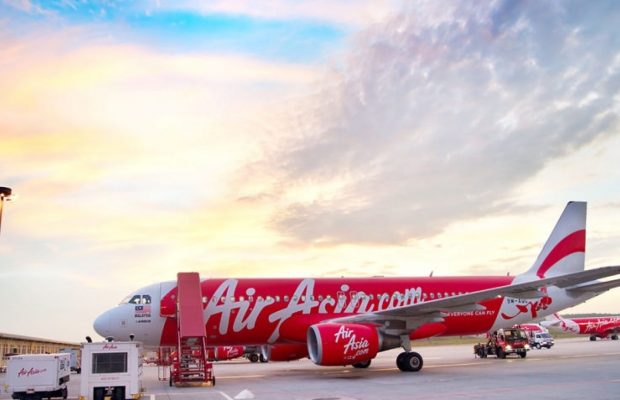
    Budget carrier Thai AirAsia is preparing its pilots and cabin crew for the return of Chinese tourists, previously its largest customer group, as the airline resumes routes across China.

    The airline plans to restart flights to eight Chinese cities, including Chongqing, Guangzhou, Hangzhou, and Wuhan, for which cabin crew are undergoing refresher training courses.

    “In the flight, we should have at least one cabin crew who can speak Mandarin to communicate with passengers,” said cabin crew member, Sakuna Puangpipat.

    She and other staff this week re-trained in smoke and fire drills, evacuation, water landing survival, and protocols for sick passengers and unexpected incidents.

    Captain Damrong Phapipatkul, head of flight operations, said of Thai AirAsia’s 53 jets, 43 are currently flying while the remaining ten will return to service to accommodate Chinese passengers, the number of whom he expects will return to pre-pandemic levels by year-end.

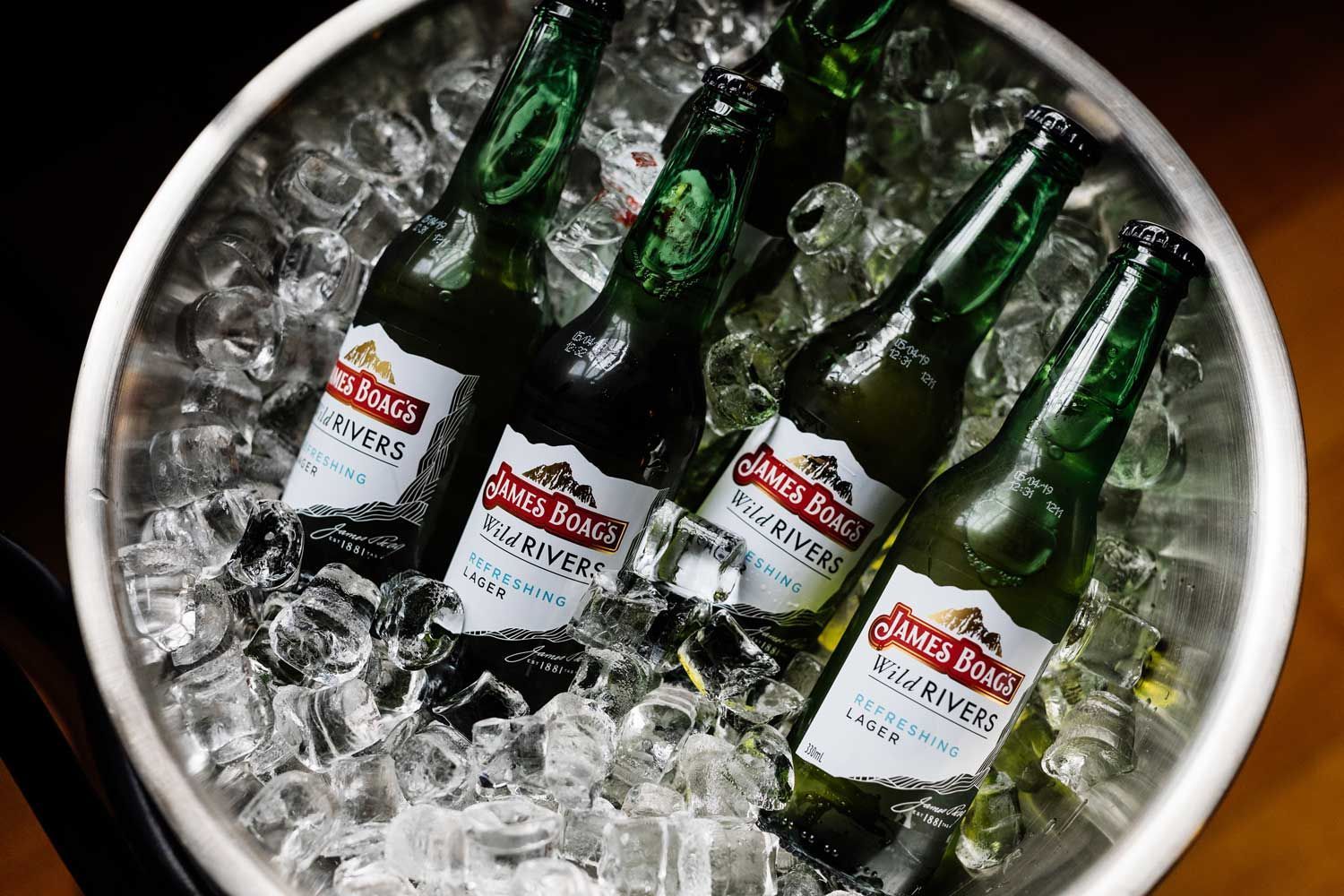
  • Boag’s Brewery tours to continue in Launceston thanks to state government funding

    Boag’s Brewery tours to continue in Launceston thanks to state government funding

    Tours of one of Australia’s oldest breweries — which were set to end in a few days — have been saved at the 11th hour after James Boag’s Brewery received funding from the Tasmanian government to keep them running.

    The Tasmanian government will provide $1 million to keep the Launceston brewery’s visitor centre open.

    As part of the deal, any Tasmanian with a current driver’s licence can get free tours for the next 12 months.

    Lion Australia, which owns Boag’s, announced last week that it would close the visitor centre, citing declining beer consumption, rising costs and the impact of COVID-19 as the reasons why.

    Boag’s Brewery director Nathan Calman said the government funding announcement was a win-win for the Launceston community.

    “The proposal to close the visitor centre and tours was not put forward lightly, but as a response to the significant cost pressures we are facing across our business,” Mr Calman said.

    “The response — an outpouring of immense passion for the continuation of our brewery tours and visitor centre experience — reminded us of just how integral Boag’s is to Launceston.

    Mr Calman said there had been no expectation that the government would provide support to keep the tours operating.

    “This package will help us continue to provide a great tour experience at the Boag’s visitor centre, while we work with the government and other stakeholders to address some of the long-term cost pressures our manufacturing business continues to face,” he said.

    The continued operation of the centre will also save 12 jobs.

    Premier Jeremy Rockliff, who called on Lion to reconsider its initial decision, said the funding would be used to “expand and enhance the tourist attraction”.

    “It’s not only a local cultural icon but a vital part of the local northern economy attracting thousands of visitors a year,” Mr Rockliff said.

    “The unique experience it offers has been a significant drawcard for Launceston for decades, with the benefits flowing to other businesses in the region and across the state.”

    The funding will also be used for a marketing strategy, to promote the tour to interstate travellers.

    Launceston Mayor Danny Gibson said that he was delighted the decision to close the visitor centre had been reversed.

    “We’re thrilled that such a vital component of our visitor economy has been reinstated, not only to the same level but [also with] commitment to expand it.

    “We know that the visitor centre and the tours are consistently ranked highly by visitors to Launceston.”