Author: Mei Ling Tan

  • Goldman Sachs Unloads 30 Bankers in Asia

    Goldman Sachs Unloads 30 Bankers in Asia

    As many as 30 bankers have left Goldman Sachs in Asia, as part of a global exercise to trim workers.

    Up to 30 investment bankers have left Goldman Sachs in Asia, sources said, across teams in equity capital markets, healthcare as well as technology, media and telecommunications (TMT), especially those involved in Greater China deals.

    Every year globally we conduct a strategic assessment of our resources and calibrate headcount to the current operating environment, said a spokesperson for the bank. We continue to remain flexible while executing against our strategic growth priorities.

    According to a source familiar with the matter, the job cuts are part of a yearly practice that has been paused for two years during the pandemic.

    Separately, a Reuters report last week said that Goldman’s annual exercise typically results in a 1-5 percent reduction of staff each year with 2022 expected to result in the lower end of that range. Globally, the bank’s headcount reached 47,000, as of end-June, up 15 percent year-on-year.

  • Goldman Sachs Expands Services to Swiss Clients

    Goldman Sachs Expands Services to Swiss Clients

    Goldman Sachs is expanding its investment banking services in Switzerland and Europe as it chases stable revenues on the continent.

    Goldman Sachs is offering transaction banking services to corporate clients in the EU, adding services outside of its investment bank’s core areas of trading and advisory, it said in a statement Tuesday.

    Rolled out from Goldman Sachs’ hubs in Frankfurt am Main and Amsterdam, the offering will address the day-to-day payments and cash management needs of businesses and be available to corporates in Europe and Switzerland, a spokesman from the bank confirmed.

    Transaction banking was named as one of Goldman Sachs’ key focus areas in the bank’s 2020 investor day presentation and was introduced in the US in the same year.  The additional service could help fill holes from deal-making losses within the investment bank this year, resulting from lower stock prices, rapidly accelerating inflation and interest rates as well as an energy crisis.

  • UBS is Hiring a Team to Filter Chinese Research

    UBS is Hiring a Team to Filter Chinese Research

    UBS has reportedly hired a team of «content reviewers» in order for its Chinese research publications to be free of any sensitivities.

    UBS is hiring a team of content reviewers for its Chinese research publications, according to a report citing a job ad from the bank’s wealth unit posted in July.

    You will ensure that all our Chinese language publications are   free of any sensitivities, the ad said, underlining that the «language, tone and content will need to be appropriate and adhere to regulatory and internal guidelines.

    The team will sit alongside the research editing team. Thus far, one reviewer has been hired in Hong Kong and the bank is seeking to recruit more people in Singapore, according to a source in the report.

    The recruitment of the team follows three years after UBS’s wealth arm suspended its global chief economist Paul Donovan over comments made in a research report about pigs during a swine fever outbreak which was perceived as distatestful and racist.

    UBS would suffer blowback with Hong Kong-based Chinese brokerage Haitong International Securities cancelling all work with the bank and self-regulatory body Securities Association of China telling members not to quote Donovan’s research or invite him to events.

    Donovan would eventually be reinstated four months later after issuing an apology for having unwittingly used hugely culturally insensitive language.

  • SingPost names new CEO for international

    SingPost names new CEO for international

    Singapore Post Limited (SingPost) has elected Mr Li Yu as CEO for its international business with effect from 12 September 2022.

    Mr Yu possesses over 17 years of experience spanning across Engineering, Operations, Project Management, Customer/Sales support, Strategy, and Technology implementation. He joins SingPost’s management team from United Parcel Service (UPS), where he was most recently responsible for its APAC Global Logistics and Distribution.

    Yu also has experience in transformational P&L and commercial leadership under his belt. He had led an eCommerce portfolio as part of the broader logistics line of business, and grew businesses including those in the eCommerce, healthcare, manufacturing, and retail sectors in previous posts.

    Mr Yu will be establishing long and short-term business strategies for the International businesses, strengthening its corporate and board governance focusing on operational excellence, transformational growth, social responsibility, and sustainability.

    He holds a Bachelor of Applied Science, Industrial Engineering from University of Toronto in Canada. He has lived and worked in North America, Shanghai, and Singapore.

  • Guide to Myanmar Online Casinos

    Guide to Myanmar Online Casinos

    Over recent years, Burmese casino players have had several options to help them enjoy the thrill of online gaming. With the number of online casinos available in Myanmar, it may not be easy to pick the right choice. Let’s take a look at the dynamics of online gaming in Myanmar.

    How to Open an Online Casino Account in Myanmar

    Although signing up for an online casino account in Myanmar is one of the most straightforward things to do, it doesn’t mean you should register on the first one on your browser. When you search for online casinos Myanmar, most sites will be dying for your attention. This allows you to find incredible offerings and promotions.

    Before you create an account, ensure you have met these requirements:

    • Have a valid email address
    • Be at least 18 years of age
    • Read, understand, and agree to the terms and conditions of the online casino site.

    Once you have all these, you are ready to create an online casino account in Myanmar. You will then need to deposit money into the account and begin having fun in no time.

    Benefits of Online Gambling in Myanmar

    There are a lot of benefits you can expect to accrue from playing casino games online. They include:

    Online Gambling is Safe

    Online casinos in Myanmar are safe, so players don’t have to worry about losing critical information shared on these websites. Most websites are protected from hackers.

    Multiple Games Available

    There might be days when you feel like you only want to play slots and not other card games. Whatever online casino game you fancy playing, you will have a chance to play it anytime. Therefore don’t hesitate to explore your options.

    Some of the incredible games to consider include:

    • Baccarat
    • Roulette
    • Slot games
    • Sports betting
    • Keno

    No Need to Leave the Comfort of Your Home or Office

    In the past, Burmese players had to travel long distances to play at land-based casinos. However, modern technology has made anything possible. Besides preserving your data, online gambling allows you to enjoy your favorite games anytime. You no longer have to leave your home to enjoy the thrill of casino games.

    Accessibility

    With only a laptop, smartphone, or tablet and an internet connection, you can play live games and slots whenever you want! The best thing is that these casinos are available 24/7 and have staff ready to offer a helping hand whenever you encounter challenges.

    Entertainment

    Online casino games in Myanmar provide seamless digital entertainment to several players around the country. Unlike land-based gambling, online casinos have a set of popular games. Besides, most online casinos partner with the best software developers to ensure players have an outstanding gaming experience.

    Conclusion

    Thanks to modern technology, you can enjoy your favorite game and earn real money anywhere and anytime. There are limitless opportunities for you to enjoy your online casino games in Myanmar. You only have to browse the web, find the most suitable online casino and begin playing!

  • JD Airlines secures air carrier certificate

    JD Airlines secures air carrier certificate

    Jiangsu Jingdong Cargo Airlines, or JD Airlines, an affiliate of JD Logistics, received the air carrier certificate from the Civil Aviation Administration of China (CAAC) on August 31.

    The carrier will have its principal base at Nantong Xingdong International Airport as it plans to develop its domestic network in China around the key cities of Nantong, Beijing, Shenzhen, and Wuxi.

    The airline said it will extend its reach to Chengdu and Chongqing and will gradually cover major cities in Southeast Asia, Japan, and Korea and later in Europe, Middle East and North America by the end of 2025.

    JD Airlines plans to open up its capacity to the market with a single trip able to transport as much as 23 tonnes. The carrier aims to cater to high-value goods, high-end manufacturing, medical, and fresh produce.

  • Hong Kong-based LF Logistics now part of Maersk

    Hong Kong-based LF Logistics now part of Maersk

    Maersk completed its US$3.6b acquisition of LF Logistics in late August, taking control of the Hong Kong-based contract logistics company, which will now be rebranded to Maersk.

    Maersk will add 223 warehouses to the existing portfolio, bringing the total number of facilities to 549 globally, spread across a total of 9.5 million square meters.

    LF Logistics, part of supply chain manager Li & Fung, employs 10,000 people, operates an extensive pan-Asia network and specializes in B2B and B2C distribution solutions within retail, wholesale, and e-commerce. It offers premium omnichannel fulfillment services, e-commerce, and inland transport in the Asia-Pacific region.

    As part of the transaction to acquire LF Logistics, Maersk has entered a strategic partnership with Li & Fung to develop a comprehensive range of end-to-end global supply chain services with Li & Fung focusing on the upstream supply chain and Maersk focusing on the downstream supply chain.

    “Historically, our focus has been on origin logistics or exports out of Asia, but now the region has transitioned into a large consumer market in its own right,” said Ditlev Blicher, Regional Managing Director of Asia Pacific at A.P. Moller – Maersk.

    Blicher noted that the combined team will provide strong omnichannel fulfillment capabilities that will enable exports into Asia and connect with the Asian consumer directly.” The parent company of Li & Fung will retain and continue to build its carved-out global freight management or GFM business.

  • AirAsia, Malaysia Airlines and Batik Air in consumer crosshairs for complaints

    AirAsia, Malaysia Airlines and Batik Air in consumer crosshairs for complaints

    AirAsia received the highest number of complaints in the first half of the year (42.1%), followed by Malaysia Airlines (40.7%) and Batik Air (7.9%). For every million passengers carried, Malaysia Airlines recorded the highest number of registered complaints with 199 complaints, MAVCOM said, followed by Batik Air with 167 complaints and AirAsia with 95 complaints.

    Flight rescheduling, flight cancellations, and online booking collectively contributed to 46.1% (577) of total complaints filed. Other complaints included refunds (7.9%), frequent flyer programs (7.6%), and mishandled baggage (7.3%).

    According to MAVCOM, complaints concerning flight rescheduling jumped tremendously from just eight in the first half of last year to 233 complaints during the same period this year. AirAsia contributed 65% of complaints on flight rescheduling, followed by Malaysia Airlines (30%) and Batik Air (4%).

    At the same time, complaints related to flight cancellation also increased from 14 to 211 complaints compared to the same period last year. Malaysia Airlines contributed 54% of the complaints, followed by AirAsia (36%) and Batik Air (7%). Complaints related to online booking have multiplied more than 13 times from 10 during the first half of 2021 to 133 complaints this year. AirAsia accounted for 47% of the complaints, followed by Malaysia Airlines (32%) and Batik Air (12%).

    Throughout the first half of this year, 1,251 complaints were registered with MAVCOM in total, with 99.1% (1,240) complaints received on airlines while 0.9% (11) complaints were related to airports. According to MAVCOM, this illustrates an increase of almost eight times more than the 157 complaints lodged within the corresponding period last year.

    Additionally, MAVCOM also received 1,317 non-actionable complaints, comprising 1,160 complaints with incomplete documentation, 59 complaints where the airline or airport concerned had fulfilled the obligations under the Malaysian Aviation Consumer Protection Code (MACPC), 35 complaints that were withdrawn by consumers, 31 complaints that were beyond the scope of the MACPC, 29 complaints that pertained to bookings made through travel agents as well as three complaints that were lodged more than a year from the incident date.

    Saripuddin Hj. Kasim, MAVCOM’s executive chairman, said Malaysia’s aviation service providers should prepare by taking heed of the complaints breakdown observed in the consumer report as guidance to improve further service levels and address the root cause of prevailing issues. “As a proactive measure by MAVCOM, we have also been actively engaging aviation service providers to ensure that these issues are being addressed,” he added.

  • Furla appoints Giorgio Presca as its new CEO

    Furla appoints Giorgio Presca as its new CEO

    Italian luxury brand Furla has announced the appointment of Giorgio Presca as the group’s new chief executive officer, effective immediately.

    Presca will succeed COO Devis Bassetto, who temporarily held the position of CEO since April, following the exit of Mauro Sabatini.

    Presca joins the Bologna-based company with 30 years of fashion industry experience.

    He most recently served as CEO of Clarks, prior to which he held the same position at Golden Goose, Geox and Citizens of Humanity.

    Additionally, he has also worked in executive positions for a number of fashion brands such as Diesel and Levis.

    “I am delighted that Giorgio Presca joins Furla as CEO, he is a skilled leader with a strong ability in reinforcing global fashion brands and driving profitable and safe growth,” said Giovanna Furlanetto, president of Fondazione Furla, in a release.

    Furlanetto continued: “Mr Presca shares our values and our determination to establish Furla as a real democratic brand, the only Italian brand in its category. This appointment also stands to highlight my whole family’s willingness to continue with the full control of our business and lead it into the future.”

  • DITO and ZTE Launch Super Core Data Center in Philippines

    DITO and ZTE Launch Super Core Data Center in Philippines

    DITO Telecommunity, one of the major telecommunications corporations in the Philippines, has launched the DITO Super Core Data Center in Batangas, Philippines, powered by ZTE.

    The data center complies with the Tier III design standard and will become the first center in the Philippines to pass such standard certification. The DITO Super Core Data Center is designed to further improve local digital infrastructure and enhance data services.

    The design of the data center focuses on the security of network transmission through resiliency against natural disasters such as typhoons and earthquakes. The facilities also pay more attention to the growing concern of the telecommunications industry on energy efficiency and environmental protection in such design and operations.

    As the major partner of DITO Telecommunity in this project, ZTE has shared its rich end-to-end expertise, from analyzing local process specifications in the early stages of the project, consultation on construction solutions, to the design of solutions, and project delivery, ensuring the smooth and timely turnover of the data center.

    ZTE’s iDCIM intelligent management system has been adopted in the building’s equipment management to improve the operation efficiency of the data center and achieve green energy savings. The system manages operation parameters of the data center in real-time to provide data support for efficient energy saving and O&M.

    Compared to the traditional data center featuring multiple interfaces, complex procedures and a long construction period, the DITO Super Core Data Center employs ZTE’s micro-module solution, which is modular and standardized. Multiple modules can be installed in parallel, enabling the delivery time to be shortened by 60%.

    “We can regard the DITO Super Core Data Center as the heart of the body. Only a safe and healthy beating heart can support the business. The data center adopts the advanced and innovative technology in the industry. Through its multiple-level protections, the data center is truly reliable ,” said Wan Min, president of ZTE Philippines. “It will also become the first Uptime Tier-III data center in the Philippines. By adhering to energy conservation and emission reduction, it has achieved a lower PUE with an intelligent energy management system, which is efficient and environmentally friendly.”

    The launch of the DITO Super Core Data Center further solidifies the commitment of DITO Telecommunity to providing world-class telecommunication services for Filipinos, thus boosting the digital transformation of the Philippines.

  • PLDT to Start Construction Of Two Major ICT Projects by Year End

    PLDT to Start Construction Of Two Major ICT Projects by Year End

    PLDT Group announced that it will inaugurate the construction of its fourth cable landing station and the initial construction phase of the Asia Direct Cable (ADC) system by the end of the year.

    The two additional major ICT infrastructure projects follow the group’s build-out of the Philippines’ largest hyperscaler data center and the activation of Jupiter, the fastest international cable direct to the US and Japan.

    “After the successful launch and activation of Jupiter, PLDT hopes to lead the country to become the best Transpacific cable hub in Asia, as we work on delivering additional subsea cables and new cable landing stations in 2024,” said former PLDT VP and Technology Advisor for Enterprise Victor Aliwalas.

    The cable landing station in Baler, Aurora, to be completed by 2024, will supplement PLDT’s international gateway on the northern and eastern borders. The ADC cable, meanwhile, is expected to be completed by the end of 2023 and is strengthening the country’s data links in Asia.

    “Apart from the DC and the International connectivity, PLDT is also leading the charge on 5G rollouts and domestic fiber rollouts on top of all the other platforms to significantly increase the country’s take up of digitalization. We are not focusing on just one or two pillars, we are building out the entire ecosystem to work as a whole. We need a full working and energized system to support this hyperscale initiative and PLDT is determined to put together everything to be the strongest hyperscale player in the country, to establish and promote the Philippines as a hyperscale destination,” Aliwalas added.

    PLDT has been working closely with government agencies, including the Department of Trade of Industry and the Department of Information and Communications Technology (DICT), in positioning the Philippines as the next hyperscaler hub in the Asia Pacific, as the country transforms into a globally competitive and digitally empowered nation.

    “We believe that the hyperscalers industry will be the next growth engine of the Philippines. We are keen on helping hyperscalers cloud services and start-up ecosystem in the Philippines,” Aliwalas further noted     .

    DICT Secretary Ivan John Uy also recognized the crucial role of ICT in the social-economic development of the country, saying, “the value of information and communications technology or ICT is encompassing. It is necessary in every aspect of life, business, education, and in advancing our general scientific understanding.”

    “We still have a lot of improvement on key strategic areas such as digital infrastructure buildup to achieve the President’s goal of a digitally transformed Philippine government. Hence, it’s important for us to address the gaps that hinder our drive towards inclusive growth and innovation, especially the long-standing gap in the development of digital connectivity nationwide. And indeed, we want to work hand in hand with our partners to achieve this goal,” he added.

    Last year, PLDT joined the multi-agency government initiative to support the priming of the country’s digital readiness to attract global hyperscalers expanding in Asia, including it as the sixth key sector and highlighting the strong government and private sector partnership to cement the foundation of the Philippine digital economy.

  • Beer Cartel wins international innovation award

    Beer Cartel wins international innovation award

    It takes something special to surprise the judging panel at the Miraclon-sponsored Global Flexo Innovation Awards (GFIA), but that’s exactly what the joint entry from Fathom Optics and Grace Label achieved. So much so, that they even won a Gold Award (with Highest Honors) for conversion to flexo, commitment to sustainable print and creative use of graphic design.

    In what the judges described as “a really impressive innovation,” the label for Des Moines, IA, craft beer producer, Confluence Brewery, used Fathom’s brand-new embellishment technology to render attention-grabbing full-motion 3D effects on labeling for the brewery’s ‘Wizard’ Gose-style sour ale. The effects appear to be on three different levels: text and graphics on the label surface, a ‘Northern Lights’-type effect seemingly moving within the can itself, and finally, at the top of the wizard’s staff, a rotating orb that appears to emerge from the surface of the label.

    And what made the job remarkable was the fact that all this was done without the need for lenticular lenses or a holographic foil, using Flexcel NX Plates on Grace Label’s standard flexo press using standard inks. Traditionally, the use of holographic foils or lenticular lenses for short label print runs has been cost-prohibitive, while holographic foils also raise sustainability concerns since they are typically 95% waste. FLEXCEL NX Technology makes special effects labels a viable option for brands pushing the boundaries of regular packaging designs for shorter runs, with big cost and sustainability benefits that they can take advantage of.

    Fathom Optics and Grace Label teamed up for the ‘Wizard’ label, which came about because of a friendship between the family of Tom Baran, CEO and Co-Founder of Fathom, and John Martin, owner/founder of Confluence, to whom Grace Label is an established label supplier. Founded in the mid-1970s by the father of current company president, Steve Grace, Grace Label is one of oldest and largest regional converters in the Midwest US, operating as a full-service supplier that handles every step of the design-to-delivery process. Besides the craft beer and spirits industries, Grace also serves customers in meat and agricultural foods. The company has both digital and flexo presses, with flexo printing representing 90% of their work.

    Flexcel NX Technology ‘like getting a brand-new press’
    Crucial to the success of the ‘Wizard’ project was the Kodak Flexcel NX System, which Grace Label installed in 2011. “With the ability to hold a dot and sharpen an image, it was like getting a brand-new press on some levels,” recalls Steve Grace. “The plates last longer, we set up faster, dial in color faster, and reduce our wastage. It’s been a home run.”

    Steve’s enthusiasm for FLEXCEL NX Technology was shared by Fathom Optics founders Tom Baran and Matt Hirsch: “When we realized Grace was a Flexcel NX Plate user we were delighted,” says Baran. “We’d already experienced good things with the technology, getting incredibly regular and consistent results. Compared to other systems we’ve worked with where variables come into play, it’s one cohesive system, so you know what you’ll get.”

    A fourth party to the project is creative design agency 818 Iowa, which created the original design and worked with Confluence to enhance the labels most characteristic features — the wizard, staff, and orb. Fathom then worked with Grace to bring everything to life.

    The effects are achieved by printing very fine microstructures on two interference screens. The first screen is printed on the white BOPP pressure-sensitive material, and the second screen is printed along with the other decorative inks on top of the clear lamination.

    Because the microstructures are done at a minimum of 480 LPI or higher, the 1:1 pixel-for-pixel accuracy of the Flexcel NX Plates was essential to hold lines that are 10 microns wide and spaced approximately 42 microns apart. Says Tom: “These demanding effects can be incorporated into the same plate with the traditional 2D graphics, which may be at 133-175 LPI, without difficulty. It sounds highly challenging, but so far, every UV flexo printer we’ve worked with has achieved some level of effects.”

    In the craft beer business, competition for shelf space and consumers’ attention is fierce, so imaginative, impactful labelling is hugely important for a small, independent brewery such as Confluence. In the case of the award-winning label, the ‘Wizard’ branding of the Gose-style sour ale opened all sorts of creative possibilities, with the favored option a multi-dimensional, moving 3D image that would capture shoppers’ attention as they walk by, and further engage them as they pick up the can and rotate to explore the image further.

    Traditionally, such an effect is achieved using either holographic foils or lenticular lenses, but the short label print runs made both too expensive. In addition, there are sustainability concerns with holographic foils since they are typically 95% waste, while the lenticular approach presented the further complication of the lens orientation being incompatible with the direction in which the labels are applied to the can.

    Confluence didn’t know it at the time, but the answer lay 1,300 miles to the east in Somerville, a suburb of Boston, where the Fathom Optics founders, Tom and Matt, was marketing their groundbreaking new approach to embellishment, Fathom Effects. The technology came out of the partners’ PhD work at the Massachusetts Institute of Technology.

    “The idea behind Fathom Effects is software-based, not materials science-based,” explains Tom. “The foundation of it is to take large-scale computational algorithms and use them to change the way materials interact with light. We compute complex interference patterns that can be printed on the front and back surfaces of film. They’re not interference patterns, like in holograms, but signal interference, as in moiré.”

    If the technology behind Fathom is relatively complex, for end users adding special effects it is remarkably straightforward. Designers simply drop files into Fathom Designer, a free online tool, where they assign motion and depth effects which can be previewed and shared with other stakeholders.

    After two years making the technology robust enough for long flexo runs, Tom and Matt settled on primary labels, shrink sleeves and product authentication as their primary markets. Says Matt: “We realized there are brands wanting totally custom packaging appeal but for whom the traditional holographic and lenticular solutions are too expensive. We differ in that we deliver 1-bit TIFF files to production sites — unlike holographic foil, where if you want a customized design, you have to order a truckload of film. On shrink sleeves, for example, with Fathom Effects there’s no additional cost — you’re just printing both sides of the film.”

    He adds, however, that Fathom Effects is also gaining traction with larger brands, simply because it’s a software-based technology. “Large multinational consumer product groups often don’t want to get into new things because the qualification process for a new material can take months, even years. But because our technology uses the same substrates, inks and flexo presses, no qualification process is required, and they can get to market faster. And, as we’re not adding a dissimilar material, like a lenticular lens or a hologram, there’s a sustainability advantage because recycling or reuse is easier. All these factors add a whole new level of acceptance.”


  • Thales Singapore names new country head

    Thales Singapore names new country head

    Tech company Thales has appointed Emily Tan as country director for Thales Singapore and as CEO for Thales Solutions Asia Pte Ltd, effective 1 September 2022.

    The Singaporean native, who spent 14 years with Shell assuming leadership roles, will oversee the 2,000-strong Thales team across three sites in the city-state, including the Group’s Digital Identity & Security manufacturing centre located at Ayer Rajah Crescent and the Group’s largest avionics production and MRO facility at Changi North Rise.

    Emily started her career with the Singapore Economic Development Board (EDB), bringing a keen understanding of the public sector. She spent three years as director in London, and later as head of international policy and lead negotiator for international trade agreements.

    She will succeed Kevin Chow who will continue his career in a senior leadership role at Thales’ Airspace Mobility Solutions business in France.

  • Cinnabon to launch into Sydney

    Cinnabon to launch into Sydney

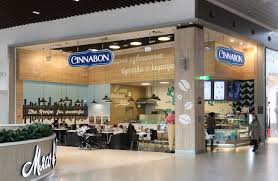
    US cinnamon scroll chain, Cinnabon, is reportedly set to open its first store in Darling Square, later in the year.

    The Seattle-based bakery chain opened its first Australian outpost back in 2020, making its debut in Brisbane thanks to a licensing deal with Queensland import business Bansal Foods.

    Cinnabon is famed for its fresh cinnamon scrolls, which are cooked in-store every half-hour for customers. It is this reputation, combined with a lack of immediate competition in Australia, that attracted Bansal to the chain.

    “You have world-famous doughnuts, you have world-famous burgers but there’s no world-famous scroll brand in Australia,” Bansal Group co-owner Gaurav Bansal said. “Their frosting and cinnamon make them different from any other brand that people can’t imitate.”

    Cinnabon Australia has already built up a strong foundation, opening five locations across Queensland, and one in Victoria, within the last two years.

    While the upcoming Darling Square location may be the first Sydney store on the cards, it certainly won’t be the last. Further expansion across NSW has been promised, with a plan to roll out 15 stores over the next five years.

  • Mercedes-Benz India To Consider Accelerating Localisation And Launch Plans Of EVs

    Mercedes-Benz India To Consider Accelerating Localisation And Launch Plans Of EVs

    On August 25, Mercedes-Benz India recorded 2,46,000 views on its Twitter handle for the Mercedes-AMG EQS 4 MATIC+ launch live stream. And ever since it stepped in the Indian luxury EV space with the EQC electric SUV, the brand has observed a steady rise in interest around its electric models through its customer-engaging activities. Now that is confidence-inspiring for the German brand to expedite its plans for launching new electric vehicles in India and considering their local production. It is planning to introduce them as completely knocked down (CKD) products in a bid to keep their ex-showroom prices in check.

    The response that the EQS got shows that the public in ready to be interested in the vehicle and it shows that there is potential in the market. Not every one of the 2,46,000 viewers on Twitter that we had during our live launch will purchase the car, but it shows that the time is right. It’s ready to move into the electric vehicle space, and it gives us a lot of confidence going forward, also with the locally produced car which we’re launching now. The story of EVs is a story of accelerations and deceleration not only in India, but it has also happened globally. We think that things will happen in a couple of years, but they will happen faster than the original plans were. In that sense, I am very confident based on the pipeline Mercedes has built globally. And we’ll also relook on what to do in India based on based on the feedback we’re getting. The EQC gave us good feedback and the EQS is a very strong local product, the EQB which will come later in the year will also see a very different segment. From what we see, what will happen in the next six months will certainly influence our outlook in terms of localization and in terms of products.”

    The next Mercedes-Benz launch in the Indian EV space will be the locally manufactured EQS electric sedan which will roll out of the Chakan plant on September 30. By the end of this year, the German carmaker will also introduce the EQB electric SUV in our market, which is likely to take the CKD route as well. So by 2023 Mercedes will already have four electric offerings in our market across multiple segments. We also know that models like the Vision EQXX and G-Wagon based EQG electric concepts are under development at the Stuttgart headquarters. So if the company continues to observe a growing interest in its electric offerings, it is likely that it will consider introducing these models sooner and as locally manufactured products.

    Well, the overall luxury car market is still roughly around 1.8 per cent in India with EVs having an even miniscule share. But according to a Mordor Intelligence study, the Indian luxury car market is expected to reach a value of over $ 1.54 billion from $ 1.06 billion by 2027 with a CAGR of more than 6.4 per cent during the forecast period 2022-2027. The study further states that with majority luxury car brands aggressively balancing their line-up with EV models, the electric segment is likely to dominate the luxury car space which is reassuring.