Author: Mei Ling Tan

  • What Banks Can Learn From Google’s Toothbrush Test

    What Banks Can Learn From Google’s Toothbrush Test

    Sometimes seemingly mundane insights can help in the digital age, especially since most Swiss banks are «knotty colossi,» as Google Maps co-creator Samuel Widmann finds.

    Can banks learn something from the US tech giant Google? A seminar at the School of Banking (FSB) in Zurich explored this question last week with  Samuel Widmann, co-inventor of Google Maps.

    Zurich-born Widmann, and Swiss Federal Institute of Technology (ETH) graduate, brought his own company Endoxon into Google in 2006, subsequently working for the company for over ten years. During this tenure, he further developed Google Maps, thereby making a significant contribution to Zurich becoming an important location for the US company.

    So much so that those working at the firm in Zurich are dubbed Zooglers. He has since left Google and is active as an angel investor, advisor to startups, and an active board member.

    Missing Guiding Light

    Widmann says he has at least eight banking apps on his phone, none of which he finds convincing. He attributes this to the fact that many banks are «knotty colossi», lacking a North Star, in reference to the brightest star in the «Little Dipper» constellation. In the past, navigators on the high seas in the northern hemisphere oriented themselves by the North Star, Widmann explained.

    This is something that is often lacking among banks’ boards, he said: Many board members don’t know where to go, they don’t have the right mindset. Yet today, banks today are actually IT companies,» the former Google executive said.

    A Costly Bet

    There is a great desire among financial institutions to set new digital standards, especially to reach the younger «Next Gen» or Generation Z clientele. However, current offerers frequently don’t go beyond simple payment services or account inquiries.

    The cancellation of the planned takeover of US digital wealth manager Wealthfront by UBS shows how complex it is to set up and expand a comprehensive digital offering.

    Shifting Winds

    While younger clientele in particular are appearing as blips on the banks’ radar, they don’t yet have the necessary means to be sufficiently attractive as digital customers. Accordingly, any commitment by an established bank to the digital world today is a costly bet on whether enough customers can be acquired over time.

    In times of zero interest rates, such ambitions could be easily financed. But with central banks now having exited loose monetary policy stances, the winds have changed and such investments may no longer be profitable, UBS’ Wealthfront example illustrates. However, the FSB seminar also showed that the demand for digital tools or even for a super app from the banks is not necessarily given.

    Many customers do not want to completely commit themselves to a single bank. Moreover, data protection and privacy pose a high hurdle, especially in Switzerland or Germany, to offering apps that are as comprehensive as they can be, and many Swiss are still unwilling to entrust their data to a financial institution abroad. When a new generation of customers emerges who are more willing to share their data, this may come to pass. But we are still a long way from that.

    Larry Page’s Toothbrush Test

    Swiss banks can certainly learn from what Google co-founder Larry Page once called the «toothbrush test.» A product should be such that it is used as many times a day as possible, as Widmann explained.

    That requires boards of directors with the necessary know-how, and prepared to resolutely promote digital developments, but keeping in mind that the local market is limited in its dimensions. All the more, this requires a vision, just as Google had one to differentiate itself, Widmann says. Indeed, the search-engine race is illustrative.

    First Mover Outpaced

    A look back at the efforts as early as 1995 to establish search engine dominance, two companies, Altavista and Yahoo, entered the market and laid down their markers. Nevertheless, after 1999 Google succeeded in becoming today’s undisputed number one and outshone its two rivals. Altavista no longer exists, and Yahoo is now a niche player.

    In this respect, there are cards still left to be dealt out in terms of banking. With a clear view of the North Star, Larry Page’s toothbrush test, and the willingness of boards of directors to launch digital innovations in a more targeted and user-friendly manner, lessons are to be learned from Google.

    And when it is all over, someone will be smiling brightly at the end of the digital app toothbrush test.

  • Aeon to bring Japan’s Komeda’s Coffee to Hong Kong

    Aeon to bring Japan’s Komeda’s Coffee to Hong Kong

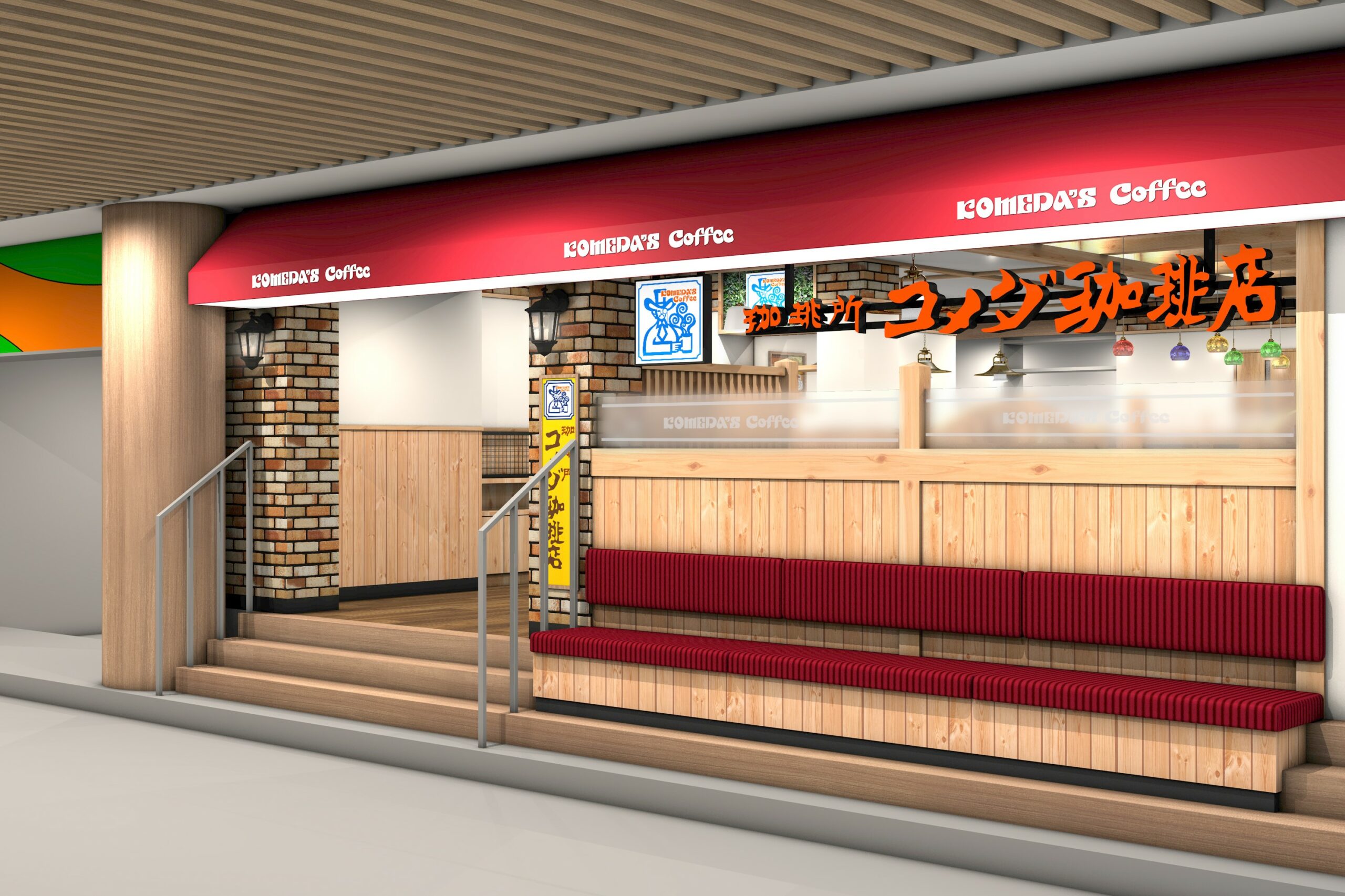
    Aeon Hong Kong is set to open the territory’s first Komeda’s Coffee store next month after securing the regional franchise rights to the Japanese cafe chain earlier this year.

    Aeon Hong Kong said the Komeda’s Coffee store will be situated inside Aeon Style Huangpu and adopt Japanese traditional architecture. Komeda’s Coffee was founded in 1968 in Nagoya, considered the home of Japan’s cafe culture. As of last May, the chain has 33 international stores across Taiwan and Shanghai.

    “This new strategic cooperation is the first time that Aeon Hong Kong has joined hands with a well-known Japanese coffee chain, which may accelerate Aeon Hong Kong in the format of restaurant chain stores,” said Isao Sugawara, MD of Aeon Hong Kong.

    Established in 1985, Aeon Hong Kong operates 10 general shopping department stores, two independent supermarkets, 43 independent Living Plaza by Aeon, 25 Daiso Japan, one Bento Express by Aeon and four independent stores in densely populated areas of Hong Kong.

    The group said will continue to further expand the network of small specialty stores and deepen the strategic cooperation with Daiso.

    The first half of the year saw a 4.2 per cent growth in the group’s Hong Kong business revenue, reaching US$300 million, despite the Covid-19 disruption. The loss from this business shrank to $9.7 million from more than $13.5 million the year before.

  • Ami Paris opens its largest flagship

    Ami Paris opens its largest flagship

    Ami Paris, the Parisian fashion label, is expanding its Asian footprint with the opening of its first brick-and-mortar store in Seould, South Korea, which it describes as its largest boutique globally.

    The store, located in the city’s Garosu-gil area, contains a retail space of 300sqm over four storeys, stocking menswear, womenswear and accessories.

    It features a spiral staircase and mirror-decorated objects, as well as lighting throughout the space. Black, beige, and white are the three main colours running throughout the store.

    “It’s a major step for us, given the importance of Korea in our business. But, it’s beyond numbers, because of Korea’s soft power,” CEO Nicolas Santi-Weil told Vogue Business.

    “We have been looking at the market since the beginning – they are trendsetters.”

    Vogue Business reports Ami Paris debuted in South Korea in 2013 with Samsung as its local partner. Since then, it has expanded its presence to include shops-in-shops in upscale malls, wholesale accounts in multi-brand stores, an e-commerce website, and now the new flagship.

    The brand has stores in Japan and China in Asia, as well as operations in the US and the UK.

    Ami Paris was founded by Alexandre Mattiussi in 2011 to provide stylish and comprehensive wardrobes for men and women, blurring the lines between casual and chic.

    Ami’s new Spring-Summer 2023 collection will be showcased during Seoul Fashion Week on October 11. This marks the first time the brand to come back to hosting international fashion shows after the long Covid-19 pandemic.

  • Singapore retail sales continue to recover

    Singapore retail sales continue to recover

    Singapore retail sales continued their rebound in July, rising 18.1 per cent year on year, excluding motor vehicles.

    That followed a 19.9 per cent increase in June, both months reflecting the low base of a year earlier when Covid restrictions on border crossings and retail trading impacted shopping.

    The fastest-growing category was apparel and footwear which surged 68.3 per cent, largely due to handbags and footwear. Sales of food and alcohol, trade through department stores, and sales of watches and jewellery increased by between 41.7 and 53.1 per cent.

    Retail sales (excluding motor vehicles) in July were estimated at S$3.4 billion, of which online sales comprised 14.3 per cent, a similar level to June. Online sales of computer and telecommunications equipment accounted for 49 per cent of the category’s turnover, while 28.9 per cent of furniture and household equipment spending was online, and 14.8 per cent of supermarket sales.

    Meanwhile, sales of food and beverage services grew by 41.9 per cent in July, following June’s 59.1 per cent increase. The significant growth was due to the low base in July last year when restrictions on dining-in at restaurants and cafes were in place.

    Food and beverage service sales reached $939 million in July, of which online ordering accounted for 26.2 per cent.

  • ZTE Launches Industry’s Smallest 5GC Product

    ZTE Launches Industry’s Smallest 5GC Product

    ZTE Corporation has unveiled the industry’s smallest 5GC product, dubbed the Mini5GC.

    ZTE’s new Mini5GC features miniaturization, lightweight, simple networking, and ultra-high integration. The company states that it can well facilitate safe production, flexible adjustment of work sites, and efficient and accurate emergency rescue in mining areas.

    This is part of its continued innovations in 5G core network products to boost the in-depth development of 5G private networks.

    For Mini5GC, the number of general network functions is customized from more than 10 to just four, and the network communication and resource occupation are optimized. Thus, a lightweight 5GC can be deployed on one 1U server.

    Moreover, the size of the server is reduced to A3 paper, and its weight is reduced to less than 5kg. With high integration, the 5GC product has 5Gbps forwarding capability and excellent performance for the same size in the industry.

    With simple deployment, the Mini5GC can adapt to any rack, and its power consumption is about 100 watts. Also, through pre-installation of software and hardware upon delivery, on-site one-click modification, and plug-and-play the required services can be quickly launched in several hours.

    To date, ZTE’s Mini5GC has carried out pilot verification in five typical fields, including mining, transportation, manufacturing and government affairs. ZTE and SHAANXI ZHIN TECHNOLOGY CO., LTD. have jointly built a mine-use 5GC based on the Mini5GC to provide in-place data distribution for underground mining, so as to improve mining service efficiency and provide a high-availability network to ensure safe production in the mining area.

    Moving forward, ZTE says it will work with more industry partners to integrate product innovation and business model innovation to help operators explore intelligent digital development and boost the prosperity of the 5G industries.

  • Indonesia Hikes Fuel Prices To Rein In Ballooning Subsidies

    Indonesia Hikes Fuel Prices To Rein In Ballooning Subsidies

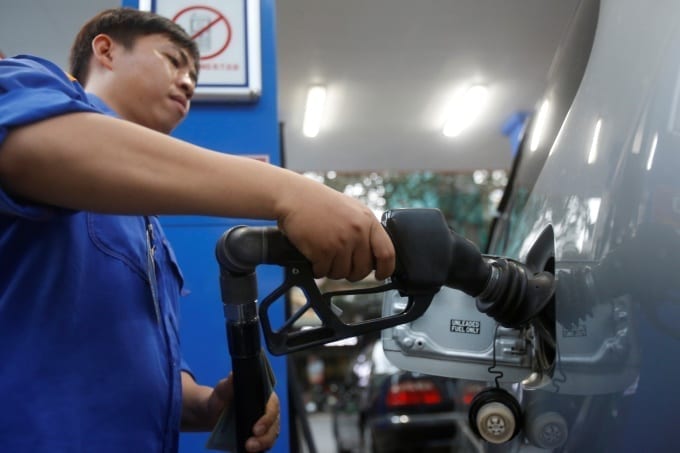
    Indonesia raised subsidised fuel prices by about 30% on Saturday, as the government moves to rein in ballooning subsidies despite a risk of mass protests.

    The price of subsidized gasoline was raised to 10,000 rupiah ($67 U.S. cents) a litre from 7,650 rupiah, while that of subsidised diesel rose to 6,800 rupiah a litre from 5,150 rupiah, energy minister Arifin Tasrif said.

    “I actually wanted domestic fuel prices to remain affordable by providing subsidies, but the budget for subsidies has tripled and will continue to increase,” President Joko Widodo told a news conference.

    “Now the government has to decide in a difficult situation. This is the government’s last option,” said Jokowi, as the president is known.

    Southeast Asia’s largest economy had already jacked up its 2022 energy subsidies to 502 trillion rupiah ($34 billion), triple the original budget, pushed by rising global prices of oil and a depreciating rupiah currency.

    If prices were not raised, the budget would have ballooned to 698 trillion rupiah, said Finance Minister Sri Mulyani Indrawati.

    She estimated total energy subsidies would range between 591 trillion and 649 trillion rupiah for this year following the price hike, assuming the average crude price stays between $85 and $100 a barrel the rest of the year.

    High energy subsidies had restrained Indonesia’s inflation, at 4.69% in August, allowing the central bank to delay raising interest rates until last month, well behind regional and global peers.

    Hariyadi Sukamdani, head of the Indonesian Employers Association, said price pressure from the fuel price hike would not be too much, predicting inflation will top 6% at the end of the year.

    “If prices of goods are too expensive, people won’t buy. We can’t raise prices too much,” he said.

    Businesses are using unsubsidised fuels, but the price hike will affect logistics costs, Hariyadi said.

    Still, accelerating inflation could put pressure on Bank Indonesia (BI) to tighten monetary policy more quickly. The bank holds a two-day policy meeting ending on Sept. 22.

    Bank Mandiri economist Faisal Rachman estimated inflation could accelerate to between 6% and 7% and BI could raise the policy rate to 4.25% this year from 3.75% now.

    Faisal forecasts 5% economic growth this year despite the fuel price increase, supported by commodity exports and post-pandemic mobility, adding that the government’s cash distribution could help cushion some of the impact on consumption. The economy grew 5.44% in the April-June quarter.

    The government has allocated an additional 24.17 trillion rupiah for cash handouts to help the poor cope with the policy’s impact, Jokowi said.

    Fuel prices are politically sensitive in Indonesia, and the changes will have major implications for households and small businesses, as subsidised fuel accounts for more than 80% of state-owned oil giant Pertamina’s sales.

    The last fuel price hike was in 2014, months after Jokowi took office, aiming to free up fiscal space. That sparked protests across the archipelago.

    The opposition Labour Party has arranged a protest involving thousands of workers for Tuesday, chairman Said Iqbal, who also heads a trade union, told Reuters. He called on parliament to pressure the government to cancel the price hike.

    “This will hurt purchasing power,” he said. “Wages have not increased for three years and inflation is bound to rise sharply.”

    Small protests against any price hike, mostly led by students, had erupted in the recent days in several cities.

    After the price hike announcement, Pertamina said it was committed to ensuring adequate fuel supplies nationally. Cars were seen queuing in some stations in the capital Jakarta after the announcement.

    Pertamina, Asia’s biggest gasoline importer, had deferred some of its gasoline deliveries for September ahead of the price hike, due to an expected drop in fuel demand, traders said.

    Decades ago Indonesia was a major oil exporter, becoming a member of the Organization of Petroleum Exporting Countries in the 1960s, but its oil output declined and it turned to net oil importer in the 2000s. Indonesia is still an exporter of gas.

  • Malaysian retail sales set new record

    Malaysian retail sales set new record

    Malaysia’s retail sales saw recorded growth in the second quarter of this year, surging 62.5 percent year on year, according to Retail Group Malaysia (RGM).

    The strong growth was estimated to result from the Hari Raya festival and the ease of Covid-19 operating restrictions. Given the swift growing pace, Malaysia Retailers Association and Malaysia Retail Chain Association project sales in the third quarter will have an average growth rate of 61.7 per cent.

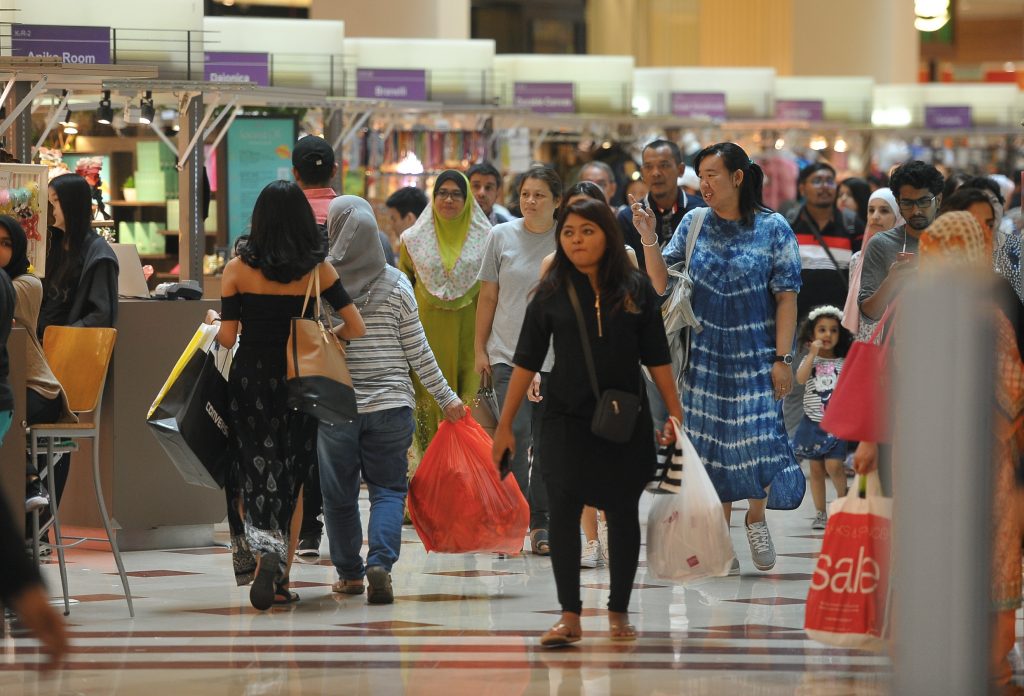
    “Hari Raya Aidilfitri was celebrated nationwide on May 3 and 4. This period had accelerated the pace of recovery of Malaysia’s retail industry,” RGM said in a statement. “Shopping centres and main commercial centers throughout Malaysia started to attract large shopping crowd three weeks before Hari Raya. The peak was one week before Hari Raya.”

    Fashion and accessories accounted for the highest growth, increasing 152 percent year on year during the quarter. Retail sales of the department stores and supermarkets jumped 59.7 percent.

    Other sub-sectors, including furniture, electronics, and healthcare, also enjoyed double-digit growth.

    RMB also added that Malaysian consumers’ purchasing power has been affected due to inflation. The manpower shortage has also influenced retailers’ sales and operation hours.

  • Underwear label Triumph refreshes brand vision to ‘remain relevant’

    Underwear label Triumph refreshes brand vision to ‘remain relevant’

    German, family-owned lingerie brand Triumph has diversified its product offer and refreshed its brand vision. Alana Jones, head of marketing at Triumph Australia, described the transformation as “only natural” for a historical brand to remain relevant.

    “Women’s lives, attitudes, wants and needs are forever developing, and as such, brands need to move and adapt alongside them,” she said.

    The brand says it aims to “contemporise” the fits of its products to suit the “ever-evolving underwear landscape better”.

    Triumph surveyed 20,000 females worldwide to understand a “monumental shift” taking place in their lives. The brand says women no longer wish to engage with brands promoting toxic or unrealistic body stereotypes.

    The survey concluded that consumers are “seeking out” brands that understand them as individuals taking all their complexities and nuances into consideration.

    “From the products they purchase, the images they see, through to their purchase experience, both online and in-store, we want to create a consistently memorable consumer journey by being distinctive, inspirational and relevant,” said Jones.

    Coinciding with this renewal, the brand’s new Spring/Summer 22 season includes new products and sizings celebrating women’s individuality. The season is led by a variety of Shape Smart Syles which includes an adaptable underwear concept called Triumph Flex Smart – which follows the unique movements of a woman’s body and supports them.

    Likewise, Triumph’s Fit Smart collection also features material that physically adapts to the body and adjusts to meet individual needs. A new wire-free Shape Smart bra has been designed to enhance and accentuate women’s natural curves, available in 35 size variations.

  • Hermes reseller Ginza Xiaoma makes its Singapore debut

    Hermes reseller Ginza Xiaoma makes its Singapore debut

    Ginza Xiaoma, the Japanese authorised partner of French luxury brand Hermes, has opened its first boutique in Singapore, its third globally. Located on Orchard Road, the 240sqm store follows a flagship in the Ginza Tokyo, and a Hong Kong boutique.

    Founded in 2015, Ginza Xiaoma has almost 10 years of experience buying, consigning, selling, and trading-in Hermes handbags and accessories.

    According to the company, customers can purchase Hermes handbags at the Singapore store, which offers the region’s largest selection of rare Hermes handbags, including a Sterling Silver Kelly 15, Diamond Himalaya Kelly 28, and Birkin Faubourg.

    Ginza Xiaoma Singapore also hosts the region’s private buyer-only online Hermes auctions and allows individuals to consign their bags. The company says it will introduce NFT auctions and blockchain proof of authenticity in future.

    “We’d already established some strong relationships with local collectors and knew there was an appetite for Hermes resellers,” said a Ginza Xiaoma executive.

    “Singapore is rich with stylish, affluent luxury lovers, but there are a limited number of high-end resellers catering to them.”

    As reported by Statista, Singapore’s luxury fashion industry will generate $770 million in revenue this year. The market is anticipated to increase by 4.79 per cent annually (CAGR from 2022-2027).

  • Swiss watch brand Norqain opens first store in Asia

    Swiss watch brand Norqain opens first store in Asia

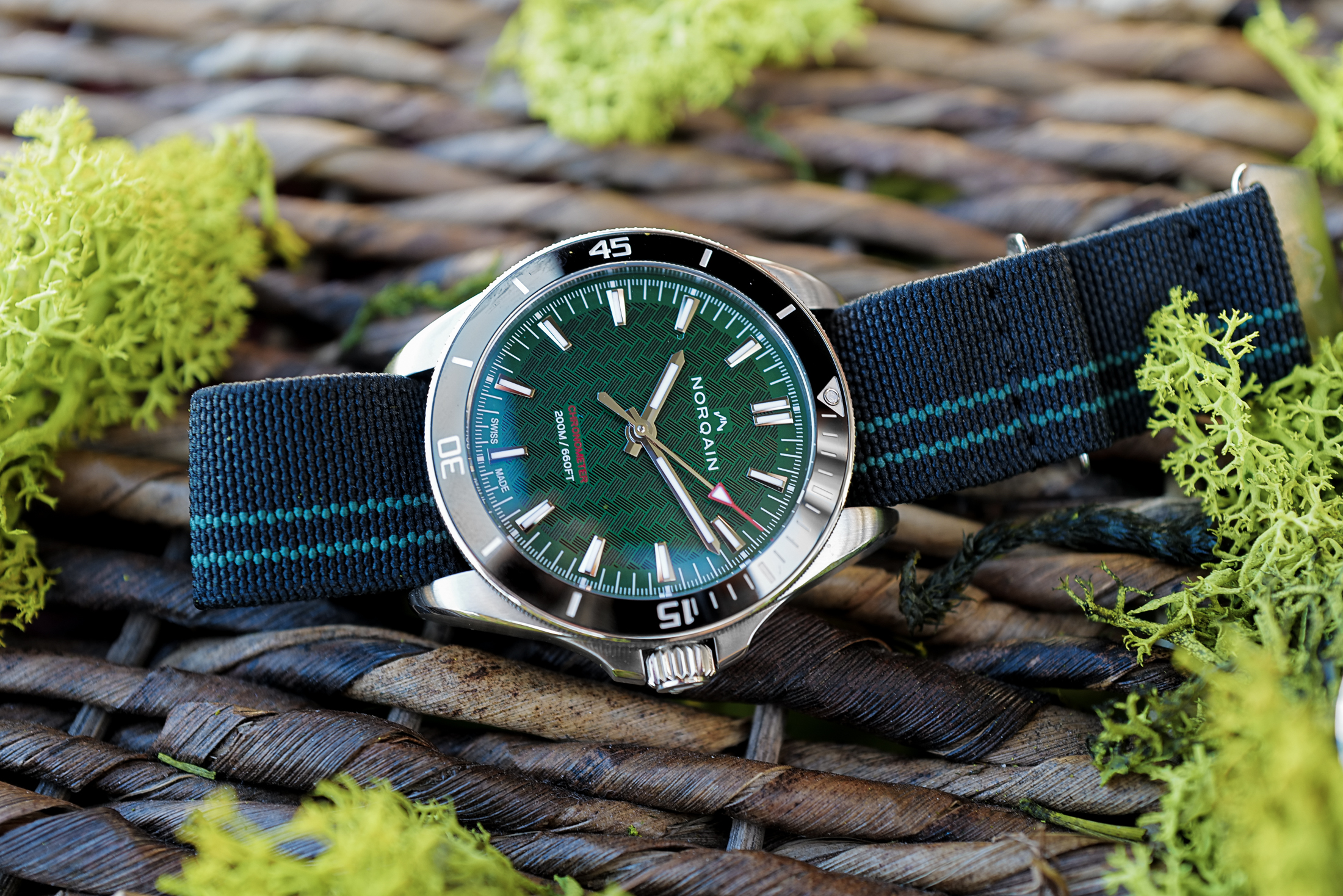
    Swiss-made watch brand Norqain has made its debut in Singapore, as part of an expansion into the Asia market.  The watch retailer has collaborated with Southeast Asia distributor Melchers, a Singapore branch of Melchers Group, for the launch. This is also the brand’s second global flagship store after the first opened in Zermatt, Switzerland, last year.  Norqain says the new store, located on Orchard Road, aims to replicate the feeling of the Swiss Alps, features an original ski-lift ch

    Norqain says the new store, located on Orchard Road, aims to replicate the feeling of the Swiss Alps, features an original ski-lift chair from Zermatt.

    The store’s interior was inspired by the Swiss Alps, with black, blue, and white as the primary colours running throughout the space. There is also a wooden bar inside the store.

    Norqain says on its Instagram that it wants to convey to customers “a real feel for the Norqain world and the Norqainer spirit”.

    The family-owned Swiss watch company is based in Nidau (Bienne), the heart of the Swiss watch industry. Founded in 2018, it makes mechanical automatic watches designed in-house.

    Jean-Claude Biver, a well-known Luxembourgish-Swiss watchmaker who used to serve as president of the LVMH Watch Division, announced in June that he would join Norqain’s board as an advisor.

  • Starbucks appoints Laxman Narasimhan as its next CEO

    Starbucks appoints Laxman Narasimhan as its next CEO

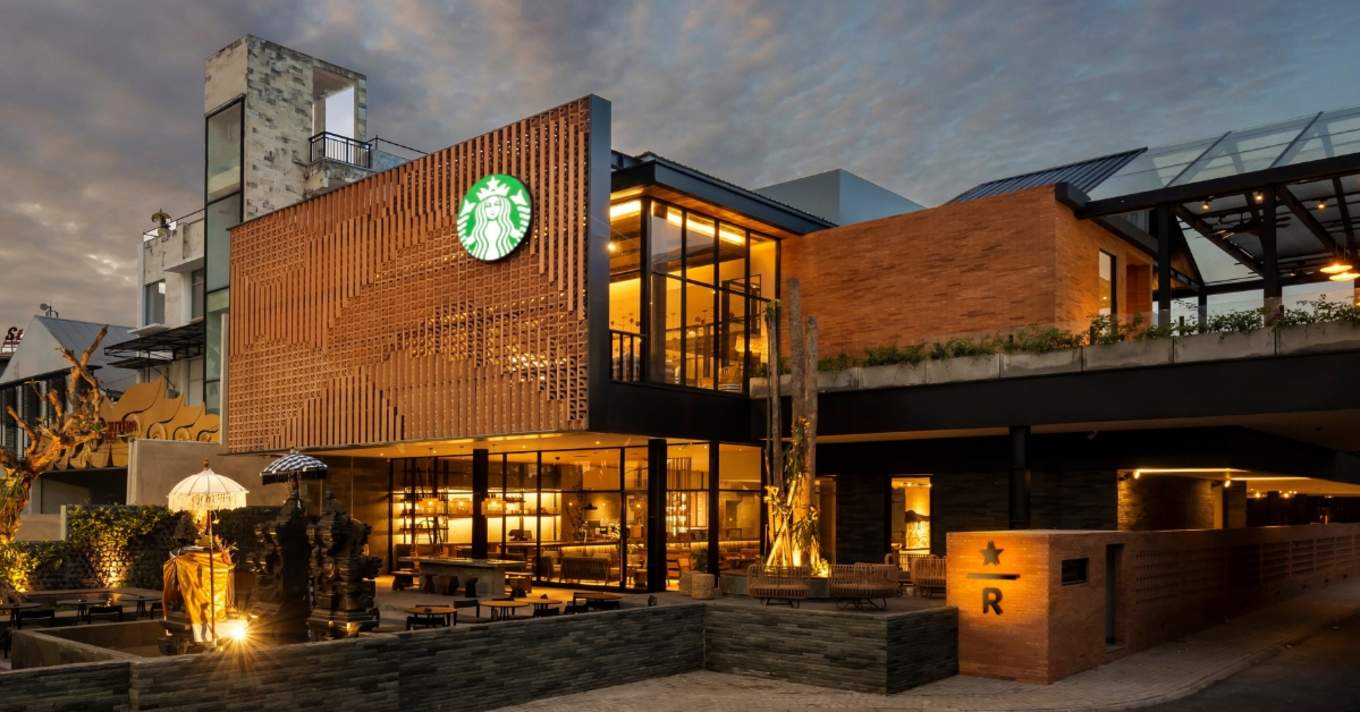
    Starbucks today announced that Laxman Narasimhan will become the company’s next chief executive officer and a member of the Starbucks Board of Directors. Narasimhan will join Starbucks as incoming ceo on October 1, 2022 after relocating from London to the Seattle area and will work closely with Howard Schultz, interim ceo, before assuming the ceo role and joining the Board on April 1, 2023.

    Narasimhan brings nearly 30 years of experience leading and advising global consumer-facing brands. Known for his considerable operational expertise, he has a proven track record in developing purpose-led brands. Building on companies’ histories, he has succeeded in rallying talent to deliver on future ambitions by driving consumer-centric and digital innovations. Most recently, he served as chief executive officer of Reckitt, a FTSE-12 listed multinational consumer health, hygiene and nutrition company, where he led the company through a major strategic transformation and a return to sustainable growth.

    “Laxman is an inspiring leader. His deep, hands-on experience driving strategic transformations at global consumer-facing businesses makes him the ideal choice to accelerate Starbucks growth and capture the opportunities ahead of us. His understanding of our culture and values, coupled with his expertise as a brand builder, innovation champion, and operational leader will be true differentiators as we position Starbucks for the next 50 years, generating value for all our stakeholders. On behalf of the entire Board, I am thrilled to welcome Laxman as Starbucks next ceo,” said Mellody Hobson, Independent Starbucks Board of Directors chair.

    During the transition period, Narasimhan will be fully immersed in the company, spending time with Schultz and the management team, partners and customers and gaining in-depth exposure to the brand, company culture, and Reinvention plan. This will initially include Starbucks store immersions, visiting manufacturing plants and coffee farms, connecting with partners around the globe as well as Starbucks long term business partners.

    Schultz will remain in the role of interim ceo during this transition period, following which he will continue as a member of the Starbucks Board of Directors. He will remain closely involved with the company’s Reinvention and act as an ongoing advisor to Narasimhan.

    “When I learned about Laxman’s desire to relocate, it became apparent that he is the right leader to take Starbucks into its next chapter. He is uniquely positioned to shape this work and lead the company forward with his partner-centered approach and demonstrated track record of building capabilities and driving growth in both mature and emerging markets. As I have had the opportunity to get to know him, it has become clear that he shares our passion of investing in humanity and in our commitment to our partners, customers, and communities. The perspectives he brings will be a strong asset as we build on our heritage in this new era of greater well-being. I greatly look forward to our partnership over the coming months and years,” said Schultz.

    “Starbucks commitment to uplift humanity through connection and compassion has long distinguished the company, building an unrivaled, globally admired brand that has transformed the way we connect over coffee. I am humbled to be joining this iconic company at such a pivotal time, as the Reinvention and investments in the partner and customer experiences position us to meet the changing demands we face today and set us up for an even stronger future,” said Narasimhan. “I look forward to working closely with Howard, the Board, and the entire leadership team – and to listening and learning from Starbucks partners – as we collectively build on this work to lead the company into its next chapter of growth and impact.”

    Previously, Narasimhan held various leadership roles at PepsiCo, including as global chief commercial officer, where he was responsible for the company’s long-term strategy and digital capabilities. He also served as ceo of the company’s Latin America, Europe and Sub-Saharan Africa operations, and previously as the ceo of PepsiCo Latin America, and the cfo of PepsiCo Americas Foods. Prior to PepsiCo, Narasimhan was a senior partner at McKinsey & Company, where he focused on its consumer, retail and technology practices in the U.S., Asia and India and led the firm’s thinking on the future of retail.

    Narasimhan is also a trustee of the Brookings Institution, a member of the Council on Foreign Relations, served as a member of the UK Prime Minister’s Build Back Better Council, and is a member of Verizon’s Board of Directors. He holds a degree in Mechanical Engineering from the College of Engineering, University of Pune, India. He has an MA in German and International Studies from The Lauder Institute at The University of Pennsylvania and an MBA in Finance from The Wharton School of The University of Pennsylvania.

  • Branded sales boost revenue for AVL

    Branded sales boost revenue for AVL

    Australian Vintage Limited (AVL) has reported a total revenue increase of eight per cent to the end of April 2016 on the back of strong branded sales.

    The increase in revenue is a reflection on higher branded sales in the UK, Europe, Australasia, and North America, however it was partially offset by lower bulk wine sales.

    Neil McGuigan (pictured), chief executive officer of AVL, said: “Australasia/North America sales are up eight per cent on last year with bottled sales up 19 per cent and cask sales down 20 per cent. Cask sales are down due to significant pricing pressure.

    “Sales of our bottled product into UK/Europe are up 19 per cent on last year due mainly to the increased sales footprint in the UK market. Bulk sales into this market are down by 77 per cent compared to last year as we continue to focus on changing from a bulk wine producer to a branded business.

    “Sales of our three key brands, McGuigan, Tempus Two and Nepenthe continue to grow with sales to the end of April up 20 per cent on last year.

    “AVL’s commitment to quality has recently resulted in three of the McGuigan Black Label red wines being recognised in the top five selling red wines in Australia. This commitment to quality was again reinforced at the International Wine Challenge held in London where the McGuigan brand was awarded four Trophies, five Gold, nine Silver and 12 Bronze medals including the Trophy for the Best Australian White Wine of Show for the 2010 Shortlist Eden Valley Riesling. AVL will continue to push the boundaries with quality wine production and vineyard innovation to continue to enhance Australia’s reputation globally,” said McGuigan.

    Meanwhile, the company terminated its Del Rios vineyard lease and paid the $4.9 million termination fee earlier this year. This termination together with the recent expiry of other onerous third party grower contracts will provide significant savings in future grape costs.

    “The company continues to focus on increasing branded sales and at the same time improving the efficiency of the business and improving the quality of our outstanding wines. We remain confident that our core strategies are correct,” said McGuigan.

    “Subject to no material changes to the current exchange rates we remain confident that our 2016 net profit before one off items will be up 10 to 15 per cent on last year’s $7.1 million net profit after tax and before one off items.”

  • Twitter says it is now testing the feature that is most demanded by users

    Twitter says it is now testing the feature that is most demanded by users

    Did you ever post a tweet and realize that you’ve made a huge mistake? Without an edit button, there is nothing that Twitter users can do except delete the post and write it again. However, most Twitter members aren’t interested in having to re-type a tweet. But Twitter posted a blog today in which it says that it is internally testing a new feature called Edit Tweet which will be limited at first to Twitter Blue subscribers.

    It is no surprise that an edit function has been the number one wish from Twitter users since most other social media apps offer some editing capabilities; what good is a social media app if you accidentally push out a missive that has the point you’re trying to make covered up by typing miscues? According to Twitter, “Edit Tweet is a feature that lets people make changes to their Tweet after it’s been published. Think of it as a short period of time to do things like fix typos, add missed tags, and more.”For the initial test, Twitter will allow tweets to be edited multiple times during a 30-minute time period following the publication of a tweet. Subscribers will be able to determine which messages have been edited because these tweets will carry an icon, a timestamp, and a label to alert users that a particular post has been modified. Users will be able to view the original tweet and other edits made to it by tapping on the label which pulls up that tweet’s Edit History.

    Later this month (it now is September folks!) subscribers to Twitter Blue will get the first shot at using Edit Tweet. Early access to new features is one of the things that Twitter Blue subscribers pay $4.99 a month for. Making the testing even more selective, the feature will not only be exclusive to Twitter Blue users, it will be tested in one country only at first and as Twitter sees how people are using Edit Tweet, it will expand the testing to other countries.


    “We’ll also be paying close attention to how the feature impacts the way people read, write, and engage with Tweets,” Twitter states in the blog post. The company adds that it wants tweeting to “feel more approachable and less stressful. You should be able to participate in the conversation in a way that makes sense to you, and we’ll keep working on ways that make it feel effortless to do just that.”

    Meanwhile, all eyes will be on the Delaware Court of Chancery for five days starting on October 17th. Twitter is suing the richest man in the world, multi-billionaire Elon Musk, for rescinding his $44 billion, $54.20 a share takeover bid for Twitter. Musk, who is countersuing, alleges that Twitter misrepresented to him the number of fake accounts on Twitter that are controlled by “Bots.”

    With Twitter shares currently trading at $38.71, investors have already priced into the stock the extremely low likelihood that Musk will consummate the transaction. Both Musk and Twitter are arguing over the scope of Musk’s demands in the Discovery phase of the pre-trial which is when both sides turn over material, including documents, pertinent to the trial.

    Twitter claims that Musk is asking for huge amounts of information that are not relevant to the main issue of the litigation. That issue is whether Musk violated the contract he signed with Twitter to purchase the firm. Most contracts of this type include a break-up fee that is paid by the party pulling out of the deal. Musk’s deal with Twitter calls for him to pay the company $1 billion if he doesn’t follow through with the acquisition. Musk has already said that he will refuse to pay it.

  • UBS Call Center Rings New Management

    UBS Call Center Rings New Management

    Digitalization in banking is placing new demands on telephone advice. UBS is restructuring its Swiss call centers under new management.

    UBS Switzerland is realigning its Swiss contact center (CCS), according to an internal letter to employees, as the bank responds to the strong increase of remote services in the banking business.

    According to the memo, UBS’s internal bank call centers in Zurich, Basel, French-speaking Switzerland, and Ticino will adopt agile working methods geared even more closely to customer needs. As the memo suggests, the focus is expanding beyond traditional retail customers to include corporate customers. The credit card business operates its own contact points.

    Work is only just beginning, according to sources close to Switzerland’s largest bank. While it appears no job cuts are planned, there will be a change at the top of the CCS unit, which employs more than 400 people throughout Switzerland.

    Alfons Livers, the current head of the unit, will hand over responsibility for the CCS unit to Kaja Bertoli on October 1. She will drive a new direction. Livers will help Bertoli with the transition phase and will take on a new role within UBS starting in 2023.

    In her new role, Bertoli, reports to Simone Westerfeld, head of UBS Private Clients, as well as to operational Switzerland head (COO) Sabine Magri. She will also be in close communication with Alain Conte, co-head of the Swiss corporate banking business, with reporting lines also reflecting the broader focus of UBS’s call centers.

    In addition, Stephan Schwyter becomes the new operational head of CCS, reporting to Bertoli.

    The latter most recently worked as head of strategy & business development (S&BD) at UBS Switzerland, having joined the bank in 2012. Her previous post is still open. Like Bertoli, Schwyter has worked in S&BD in an eleven-year career at the bank.

  • US Crypto Firm Buys into Swiss Criptonite

    US Crypto Firm Buys into Swiss Criptonite

    Interest in digital assets in Europe is so strong that a US crypto investment management company is building on its existing partnership with a Swiss crypto firm to meet the demand.

    SEC-regulated Wave Financial is buying a minority stake in Criptonite, as it aims to increase its offering for digital assets in Europe, it said in a statement Thursday.

    The move is a first step toward fully acquiring the Geneva-based digital asset manager.

    We have seen unprecedented demand from institutional and other accredited investors for professionally managed digital asset funds in Europe, Matteo Dante Perruccio, president of International at Wave Financial said.

    For Criptonite it opens a new era, in which we will have the opportunity to propose a unique investment offering, Florian Rais, founder, and CEO of Criptonite Asset Management said.

    Since partnering in 2021, the two companies have launched several Actively Managed Certificates (AMCs) in Europe.