Author: Mei Ling Tan

  • Google Opens Third Data Center in Singapore

    Google Opens Third Data Center in Singapore

    Google has opened its third data center in Singapore, marking 15 years since Google’s first office was established in Southeast Asia in the small city-state in 2007.

    Including this data center, Google has committed a total of $850 million in investment in Singapore to build the country into its regional hub for its network of data centers, cloud regions and subsea cables.

    The event was attended by Lawrence Wong, Singapore’s deputy prime minister and minister for finance, as well as other government and industry leaders, to celebrate Google Singapore’s 15th anniversary and Google’s Singapore cloud region’s fifth anniversary.

    The company noted that continued efforts will be reinforced to advance Singapore’s position as a leader in AI innovation. For instance, Google Cloud will partner with the Smart Nation and Digital Government Group to create novel AI solutions that will improve how Singaporeans work and live.

    As the Asia Pacific headquarters, Google Singapore has a team of 3,000 to support 2.5 billion people online across the region.

  • Axiata Teams Up With Versa Networks To Deliver SASE Technology To Enterprises

    Axiata Teams Up With Versa Networks To Deliver SASE Technology To Enterprises

    Axiata Group Berhad announced it was teaming up with Versa Networks to provide Secure Access Service Edge (SASE) technology for rapidly digitalizing Asian enterprises.

    Under this agreement, Axiata Enterprise – the Group’s B2B unit – will collaborate with Axiata’s operating companies, Celcom in Malaysia and XL Axiata in Indonesia, to launch a wide variety of Versa SASE solutions covering Networking, Security and Cloud Access integration for enterprise customers in these markets.

    This latest partnership complements the expansion of Axiata’s existing enterprise offerings in areas of Managed Connectivity, Smart Services, Cloud and Cyber Security.

    In a statement, Axiata Enterprise’s CEO, Gopi Kurup, said, “Enterprises embarking on their digital transformation want to become more flexible, efficient and location-independent, as they embrace to new ways of working. With increasing connectivity, integration and security are critical to ensure uninterrupted business access. The Versa SASE innovation integrates security, networking, SD-WAN      and analytics to deliver scalable, secure and reliable enterprise-wide networking and security. This is done via adoption of a cloud-type gateway which can efficiently distribute and seamlessly offload between the private office network and the Internet to access other cloud services.”

    Versa SASE delivers tightly integrated services via the cloud, on-premises or a blended combination of both. This solution will be complementary to Managed Connectivity solutions offered by Celcom in Malaysia and XL Axiata in Indonesia.

    “This partnership with Versa Networks further cements Axiata Enterprise’s proposition to empower organisations across the region seeking to raise their digitalisation game. Our combined strengths in technology, capabilities and reach across emerging Asia markets positions us as the right transformation partner to Enterprises that are looking to adopt cloud-based applications and data to accelerate in the post-pandemic recovery phase,” Gopi said.

    Versa Networks’ vice president meanwhile also lauds this partnership.

    “Axiata, one of the leading telecommunications groups in Asia, continuously provides world-class communication services based on the most advanced technology available,” noted Tony Fallows, vice president, Versa Networks. “Versa is excited to be working with Axiata to expand Versa SASE further into the ASEAN and South Asia markets. Axiata, Celcom and XL Axiata will soon be able to deliver Versa’s industry-leading fully integrated and feature-complete SASE to support digitalisation in the regional markets.”

  • L’Oreal Korea names Samuel de Retail as its new CEO

    L’Oreal Korea names Samuel de Retail as its new CEO

    L’Oreal Korea announced Monday that it appointed Samuel du Retail as the new chief of its Korea operation.

    The new CEO has worked at the France-headquartered global cosmetics company since 1996. Over the past 26 years at the firm, du Retail has assumed various key roles, including finance, management and e-commerce.

    He served as CFO at L’Oreal China from 2006 to late 2011, which was followed by another CFO position representing the Western Europe operation of the company from 2012 to 2013. He went on to serve as global CFO of the consumer products division in France from 2013 to 2016, continuing working as general manager for the consumer products division in China from 2017 to 2020.

    Before his latest promotion, his previous role at the firm had been as a group e-commerce general manager in France from October 2020 to earlier this year. He’s been attributed with the successful growth of L’Oreal and Maybelline in the Chinese market. He also led significant growth in the profitability of the company’s e-commerce efforts.

    “I am very pleased to work as the chief of L’Oreal Korea, as Korea is leading the global beauty market with its K-beauty trends,” du Retail said, adding that he will focus on cooperative leadership to continue the innovative path of L’Oreal in the country.

  • 7-Eleven doubles coffee prices as it caves in to inflation

    7-Eleven doubles coffee prices as it caves in to inflation

    7-Eleven’s $1 coffees and Slurpees are set to become the latest victims of Australia’s cost of living crisis, as the service station chain buckles under the pressure of inflation.

    In another blow for Aussies, coffee prices will be bumped up at 7-Eleven stores across the country to address the retail company’s rising operational costs.

    A regular cup of coffee at the service station will double in price as of Tuesday, October 4, becoming $2, while large coffees increase to $3 and super cups to $3.50.

    Those wanting to save some extra coin, however, can bring their own reusable cup in-store to save 50c on their morning cuppa.

    The service station’s $1 coffee isn’t the only caffeine hit you’ll be forking out more for, with the price of iced coffees and ice cream coffee melts set to rise to $3 along with the store’s hot chocolates.

    The price hike is the first in over a decade, with the retail store’s regular-sized coffee remaining at $1 since 2009.

    As for Slurpees, a small will become $1.00, a large will move to $1.50, a super to $2.50 and a mega will become $4.50.

    7-Eleven CEO and managing director, Angus McKay, said it was no longer possible for the retail company to absorb costs.

    “Although this is the first price change in more than a decade, a single $2 gold coin for a regular coffee remains among the best value offers in the industry,” Mr McKay told NCA NewsWire on Monday.

    “We will continue to provide our customers with great value and great quality, while ensuring our prices are sustainable for our store owners, our suppliers and our communities,” he said.

    Along with encouraging customers to use a reusable cups, Mr McKay said people could expect further announcements in the next few weeks which will target the company’s sustainability goals.

    “Our new offer is fair value for our community, store owners and suppliers, and we’ll keep working to make it better,” he said.

    Victoria, NSW, ACT, QLD and Western Australia are home to 720 7-Elevens, with more than 450 small family-owned businesses in the service station franchise network.

    The popular drinks add to a growing list of items becoming increasingly unaffordable, with petrol, energy and food costs putting thousands of Aussies under pressure.

    The annual inflation rate jumped to 6.1 per cent in the year to June, the highest level in more than two decades.

    Treasurer Jim Chalmers has warned Australians that the “confronting” figure will get worse before it gets better.

    “It’s going to be a difficult time ahead; we expect it to get higher,” he said in July.

    “It will get tougher before it starts to ease.”

  • China’s JD beats quarterly revenue estimates

    China’s JD beats quarterly revenue estimates

    JD.com, beat Wall Street estimates for quarterly revenue on Tuesday (Aug 23) as lockdowns in China to control the spread of the coronavirus boosted online shopping and the company’s “618” shopping event.

    US-listed shares of the Beijing-based company rose nearly 7 per cent in premarket trading.

    The company reported second-quarter revenue of 267.6 billion yuan (US$39.07 billion), topping analysts’ average estimate of 262.31 billion yuan, according to IBES data from Refinitiv.

    Sales in its product segment, which includes online retail sales, rose 2.9 per cent in the quarter, while those from services such as logistics and marketing jumped 21.9 per cent.

    JD.com said net income attributable to ordinary shareholders rose to 4.38 billion yuan, or 1.37 yuan per American Depository Share (ADS) for the three months ended June 30, from 794 million yuan, or 0.25 yuan per ADS, a year earlier.

    Peer Alibaba, beat expectations earlier this month even as it reported flat quarterly revenue growth for the first time in its history.

  • Steel prices 20% lower than in May after falling again

    Steel prices 20% lower than in May after falling again

    Steel prices have dropped for a 14th time in a row since mid-May with the total decline adding up to nearly 20%.

    Many producers like Hoa Phat Group, Viet Nhat, Viet Y, and Kyoei cut prices by VND300,000-500,000 ($12.81-21.36) a ton this week.

    Prices have fallen by around VND3.5 million a ton in the last three months to VND14.4-15.7 million though they remain higher than last year’s VND12.5 million.

    The relentless fall comes amid weaker demand and falling production costs.

    Steel output last month was 2.25 million tons while demand was for 1.99 million tons, both down 13% year-on-year.

    Demand had fallen by 7.3% in the first six months of the year as the property market slowed on credit tightening by banks and falling demand in China.

    Demand is unlikely to return in Q3 since it is the construction low season, and with inventories being high as well, prices would not go back up, BIDV Securities (BSC) said.

    Mirae Asset Securities made a similar forecast citing high inflation. Steel output this year would fall by 10% to around 27 million tons, it added.

    But BSC said steelmakers’ profit margins would increase thanks to falling input prices.

    Data from the Vietnam Steel Association showed prices of iron ore 62% FE, a key raw material for making steel, have fallen by almost half since early May.

    Coking coal, steel scrap and hot-rolled coil have become 35-60% cheaper.

  • Vinacafe sales up 19% in H1

    Vinacafe sales up 19% in H1

    Leading instant coffee producer Vinacafe Bien Hoa reported a 19% jump in sales year-on-year in the first half ending June to VND950 billion (US$40.6 million).

    Its post-tax profits were VND190 billion, up 21%.

    Vinacafe instant coffee and Wake-up 247 coffee-flavored energy drinks remained its top products with combined sales of VND800 billion. The rest came from instant cereal.

    For the full year, it targets revenues of VND2.5-2.9 trillion and profits of VND500-600 billion.

    The management said the company would promote coffee-based beverages and roll out new products to meet “the unmet needs of Vietnamese customers.”

    Last year, sales and profits were VND2.2 trillion and VND430 billion.

    Masan Beverage, a subsidiary of conglomerate Masan Group, owns 98.79 percent of Vinacafe.

  • Ex-Apple engineer pleads guilty to stealing documentation about the Apple Car

    Ex-Apple engineer pleads guilty to stealing documentation about the Apple Car

    A former Apple employee by the name of Xiaolang Zhang, who was arrested by federal agents in July 2018 just as he was about to board a flight from San Jose to China, pleaded guilty yesterday in federal court in San Jose. Zhang was charged with stealing computer files that contained secrets about Apple’s hush-hush car division. Zhang faces a sentence of up to 10 years in prison and a $250,000 fine.
    The sentencing is scheduled to take place on November 14th. Apple claimed that Zhang downloaded an internal 25-page document that contained engineering schematics of a circuit board for a self-driving vehicle. He is alleged to have taken reference manuals and PDFs that featured descriptions of Apple’s automotive prototypes and prototype requirements. He had worked for Apple from 2015 to the time of his arrest and his last position with the company was as a hardware engineer on the team developing Apple’s self-driving car.
    Even after four years have gone by since Zhang was busted at San Jose airport, Apple has remained tight-lipped about the division developing its autonomous electric car. In the charging documents created by the FBI back in 2018, it says that 5,000 Apple employees knew about the project at the time, and that 2,700 had access to project materials and databases.
    Internal software used by Apple helps the company keep track of the employees who know about a certain project and they are forced to take in-person secrecy training according to the complaint filed with the court.

    Zhang originally took paternity leave and traveled to China, but Apple started to smell a rat when he returned from the country and quit. He said that he needed to return to China to take care of his mother. Zhang did tell Apple that he was going to work for Chinese electric vehicle company Xmotors and a suspicious Apple immediately blocked his access to Apple’s network.

    But Apple made this move after Zhang had accessed company databases to download documents and information. He was also caught red-handed (no pun intended) by Apple’s closed-circuit television system removing circuit boards and a Linux server from the lab.
    Zhang isn’t the only former Apple employee who tried to peddle secrets from Apple’s car division. Jizhong Chen is accused of stealing trade secrets from Apple’s car division in early 2019. A U.S. citizen, Chen was also planning on traveling to China. While he is represented by the same attorney defending Zhang, unlike the latter, Chen has yet to plead guilty and a trial date has not been scheduled.
    While things seem a bit slow at Apple’s car division, you know, with the new iPhone 14 series just a couple of weeks away from being announced, last month there was some news. With rumors circulating that Apple had decided to give up on the project, the company reportedly hired 20-year industry veteran Luigi Taraborrelli to lead the team designing the vehicle.
    At Lamborghini, Taraborrelli was in charge of chassis and vehicle dynamics working on such models as the Urus, Huracan, Aventador, and the off-road Huracan Sterrato. He also did some work on the Asterion concept car. Earlier this year, there was speculation that Apple is developing an operating system designed just for the Apple Car that would control important functions such as navigation and lane control, Apple Music integration, and air conditioning.
  • Airtel Pays 5G Spectrum Dues Upfront to Prep for 5G Roll Out

    Airtel Pays 5G Spectrum Dues Upfront to Prep for 5G Roll Out

    Airtel has paid Rs 8,312.4 crores to the Department of Telecom (Government of India) toward dues for spectrum acquired in the recently concluded 5G auctions.

    Airtel has paid four years of 2022 spectrum dues upfront. Airtel believes that this upfront payment, coupled with the moratorium on spectrum dues and AGR-related payments for four years, will free up future cash flows and allow Airtel to dedicate resources to concentrate on the 5G rollout single-mindedly.

    Over the last year, Airtel has also cleared Rs 24,333.7 crores of its deferred spectrum liabilities much ahead of scheduled maturities.

    Speaking about the pre-payment of dues Gopal Vittal, managing director and CEO of Bharti Airtel, said, “This upfront payment of 4 years allows us to drive 5G rollout in a concerted manner given our operating free cash flow. Airtel also has access to Rs 15,740.5 Cr in capital from the rights issue which is yet to be called. With the ideal spectrum bank, best technology and adequate free cash flow, we are excited to bring to the country a world-class 5G experience.”

    This month, Airtel announced that it has signed 5G network agreements with Ericsson, Nokia and Samsung to commence 5G deployment. The choice of multiple partners was said to enable Airtel to roll out 5G services spanning ultra-high-speeds, low latency and large data handling capabilities, which will enable a superior user experience and allow the pursuit of new, innovative use cases with enterprise and industry customers.

  • Console Connect Partners With Master Concept to Deliver Cloud Networking Solutions to Businesses Across APAC

    Console Connect Partners With Master Concept to Deliver Cloud Networking Solutions to Businesses Across APAC

    Console Connect by PCCW Global has today entered into a distribution agreement with Master Concept, an award-winning cloud technology advisor, to deliver agile cloud networking solutions to businesses across the Asia Pacific region.

    Master Concept provides cloud strategy, implementation and integration support, as well as training and platform enhancements to thousands of businesses across Asia Pacific. By integrating the Console Connect Software Defined Interconnection® platform within its cloud solutions portfolio, Master Concept can deliver further value to major cloud platforms and SaaS providers worldwide with higher levels of network security and performance for its enterprise customers.

    Through a single management portal, Master Concept can provision a range of cloud connectivity services for its customers, including direct Layer 2 connections to hyper-scale cloud providers, such as AWS, Google Cloud and Microsoft Azure, and Layer 3 mesh connectivity between and among different cloud providers and cloud regions.

    The platform, which can be integrated via API, is underpinned by PCCW Global’s high-performance network, offering comprehensive end-to-end SLAs that make it suitable for accessing mission-critical and latency-sensitive applications and workloads.

    Mr Michael Glynn, Senior Vice President, Digital Automated Innovation, PCCW Global, said, “Secure and flexible connectivity is fundamental to any cloud transformation project. We are excited to be working alongside Master Concept to enhance their cloud solutions portfolio and make it easier for enterprises to connect to the cloud across Asia Pacific and worldwide.”

    Mr Dennis Wong, Director and Co-founder, Master Concept, said, “Through Console Connect, we have been able to quickly bring new cloud connectivity solutions to market and help our enterprise customers get closer to the cloud. We look forward to growing our collaboration further through the new PartnerConnect program.”

    Mr Derek Chan, Director and Co-founder, Master Concept, said, “We are delighted to be one of the launch partners for Console Connect’s new global PartnerConnect program which enables Master Concept to deliver secure and agile cloud capabilities to our enterprise customers.”

    Console Connect’s PartnerConnect program is designed to drive revenue growth and customer success through the Console Connect Network-as-a-Service (NaaS) platform. The program helps managed services providers, systems integrators, value added resellers, and application providers extend their service portfolio, and securely connect their customers, clouds, and applications worldwide.

  • AirAsia India becomes the first airline in India to use the revolutionary AI-powered CAE Rise Training System

    AirAsia India becomes the first airline in India to use the revolutionary AI-powered CAE Rise Training System

    AirAsia India and CAE have announced their collaboration to integrate the CAE Rise Training System into the airline’s simulator training program. AirAsia India is the first airline in India to adopt a data-driven training program using CAE Rise™.

    CAE Rise leverages analytics to deliver a higher quality of training, providing real-time data during training sessions while giving instructors insights that enable them to assess a pilot’s technical competencies and performance objectively. As long-time collaborators, AirAsia and CAE have worked together since 2014 on pilot training at CAE network training centers.

    “This collaboration uniquely incorporates CAE’s distinct features, which enable a more robust data-driven training program for our pilots,” said Capt. Manish Uppal, Head of Operations, AirAsia India. “At AirAsia India, we continue to be at the forefront of integrating technology and ensuring that safety is paramount in every aspect of our training and operations.”

    “With Indian regulator DGCA aiming to make Evidence-Based Training (EBT) implementation mandatory, CAE Rise will be a key tool in collecting data to support a smooth EBT implementation and practice,” said Capt. Arun Nair, Chief Pilot Training & Standard, AirAsia India.

    “We are thrilled that AirAsia India will leverage the benefits of CAE Rise™ for their pilot training,” said Nick Leontidis, CAE’s Group President, Civil Aviation. “With CAE Rise™, AirAsia India is investing in the development of their pilots and the safety of their passengers.”

    Launched in 2018, the CAE Rise training system is a technological innovation that enables the translation of simulator training data into valuable insights for instructors and training managers. This new training system compares independent sources to provide increased confidence in grading data quality. In addition to monitoring SOP compliance, CAE Rise augments each instructor’s capability to identify pilot proficiency gaps and evolve training programs to the most advanced aviation safety standards including AQP, ATQP, and EBT methodologies.

  • Stop Making “Personalized” Content that Still Feels Generic

    Stop Making “Personalized” Content that Still Feels Generic

    Personalization – you’re doing it wrong.

    There are only a handful of trends or innovations in the world of loyalty marketing that can cause as much global stir as personalization does. And even though most companies have a pretty common understanding of what it is – an act of tailoring an experience or communication to your clients’ needs and preferences, that is – many of them still have troubles with implementing it correctly. The big question is: why?

    Presumably, the biggest reason for that is – personalization is hard; especially, when you have thousands of clients in your database. For real, how are you supposed to address each and every one of them while also paying attention to what they buy, watch, read (or whom they follow on Instagram)? Exactly.

    And so, hundreds of companies decide to lower the bar and opt for sending their clients “personalized” messages, which usually include a Hi-[name]-type greeting, and some bits of information regarding their activity (“Is it summer already? You’ve bought 10 bottles of anti-sweat lotion this month!”) – the rest remains the same for all.

    But is that personalization, really? To say it’s selective would be an overstatement. Anyone can notice that those are but cosmetics changes made to help create an impression that a given message is personalized. Some people fall for that, sure, but most clients – the ones that have seen hundreds of newsletters and special-offer signs in their lives – can tell it’s not real personalization (and so would you if you were in their shoes). That’s because the e-mails and notifications they receive don’t correspond with their needs and personal interests.

    Does that mean that personalization, as it is discussed and promoted by today’s marketers, is impossible to pull off? Nothing could be further from the truth. Think about it – do you actually believe that, with all the technology available to us, we cannot provide each customer with content they can relate to?

    We can, but it requires the right IT tools and… data. This is where modern loyalty management platforms enter the conversation.

    How well do you know your customers?

    Let’s start with the obvious – if you have a loyalty program, you are sitting on a gold mine right now. Why? Because you’re literally drowning in data concerning your customers. Not only can it tell you what, when, and how they usually buy, but it can also reveal what their hobbies, passions, interests, needs, and preferences are; how they perceive the world around them.

    Of course, with the amount of data we’re dealing with here, it is impossible for a human mind to process all of that information and produce findings that could help you improve your communication with your customers. For that, you must use an artificial one.

    In other words, what you need in this scenario is a modern AI-powered loyalty management system that can analyze insane amounts of customer data, identifying trends, interests, needs, and dreams within your clients’ shopping and loyalty program behavior in the process. Not only will a loyalty marketing platform (like the one that Comarch provides, for example) allow you to learn what your customers’ preferences are, but it will also help you craft the right message and send it over the right communication channel at the right time and place.

    How? Well, have you heard about customer segmentation? If you have, then you must know that AI-driven loyalty marketing platforms are now being designed to help you divide clients from your database into groups based not only on demographics but also on their hobbies and preferences. What it means is that the system can suggest creating specific messages for dedicated groups of individuals who feel the same way about particular products and how they want to be approached by a given brand. Because of its power, the system can identify thousands of such customer groups (or clusters, as we tend to call them) and help you automate your communication processes to make sure no client is left unsatisfied. Now, that’s an innovation.

    The important thing is that with AI, you can stop trying to create meaningful content and actually start creating it. Establishing strong customer relationships no longer feels like a job based on a gut feeling. Instead, you know exactly what you’re supposed to do – be genuine.


  • South Korean grocery-delivery startup Kurly wins IPO nod

    South Korean grocery-delivery startup Kurly wins IPO nod

    Kurly Corp., the operator of South Korean e-grocery platform Market Kurly, received preliminary approval for its push for an initial public offering (IPO) Monday.

    The approval by the Korea Exchange (KRX) came about five months after Kurly filed for a preliminary review of its IPO plan in late March.

    Kurly earlier sought to complete its stock listing in the first half, but the review process has been delayed apparently due to worries over its “unstable” ownership structure in which its founder has a small stake, along with continuing losses from its business.

    Kurly reportedly included in its IPO plan with the KRX the promises from its financial investors to maintain their holdings in the company for a certain period.

    Launched in December 2014, Kurly has appealed to customers by providing early morning deliveries of fresh foods through its e-grocery platform, Market Kurly.

    Last year, Kurly posted sales of 1.56 trillion won (US$1.16 billion) and an operating loss of 213.9 billion won. But it reported a net loss of around 1.28 trillion won.

    Concerns are high over its IPO process, as the stock market conditions remain unfavorable. Some experts say Kurly could have trouble in the process of setting the IPO price it sees as satisfactory.

  • Esprit set to achieve five-year profit milestone

    Esprit set to achieve five-year profit milestone

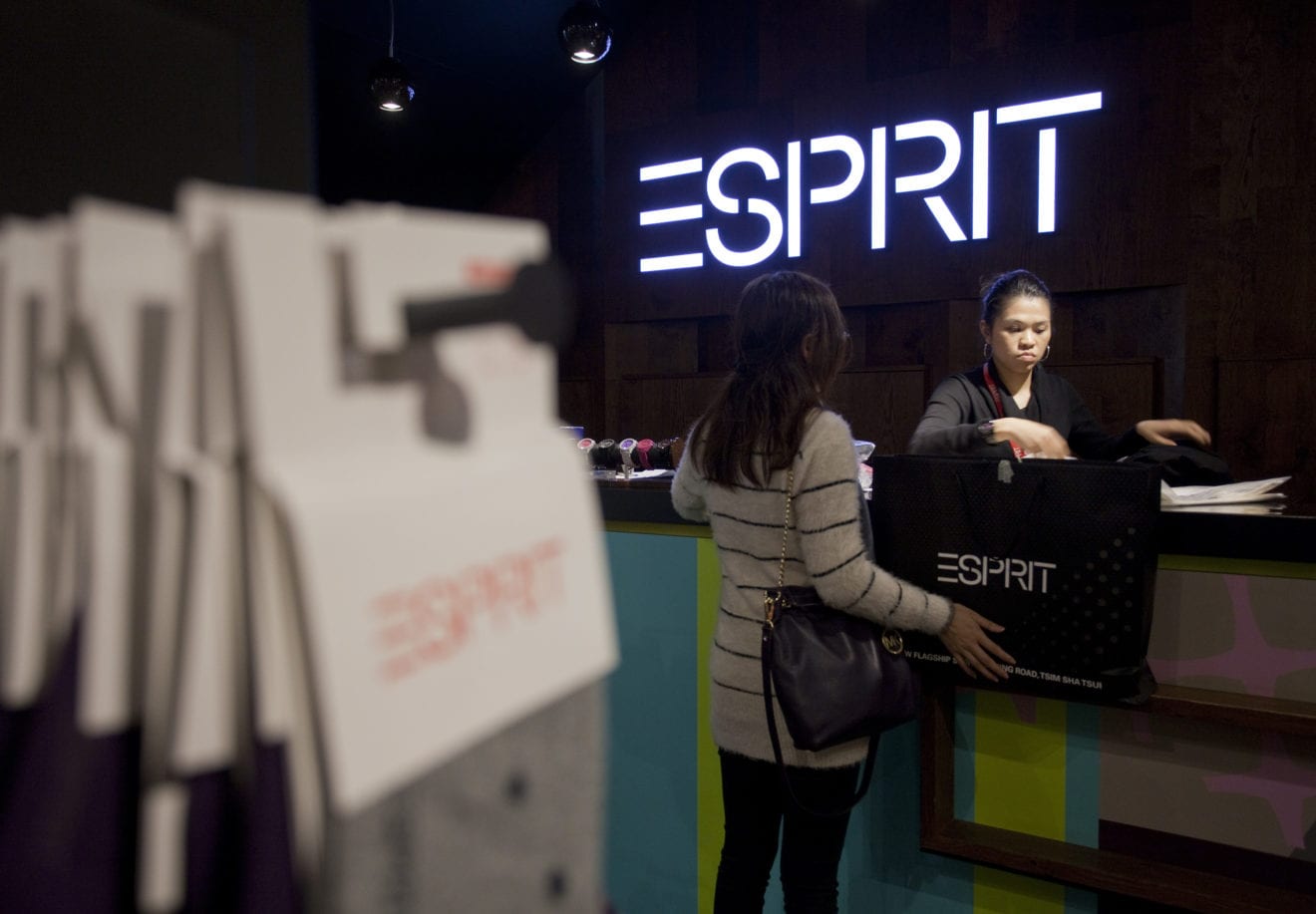
    The Hong Kong-listed fashion retailer says it estimates its profit attributable to shareholders for the year to Dec. 31 to reach approximately $47 million. This would mark the company’s first full-year net profit since 2017.

    Esprit has changed its financial year, so comparisons are not directly comparable. But for the six months to Dec. 31, 2020, the company posted a loss of $53 million, and for the 12 months to Jun. 30, 2020, it lost $503.2 million.

    In a stock-exchange filing, Chairman Christin Chiu attributed the profit turnaround to increased sales – especially online – together with a higher gross profit margin, and improved cost controls and inventory management.

  • Masan increases Phuc Long stake to 85%

    Masan increases Phuc Long stake to 85%

    Conglomerate Masan Group has bought another 34% in beverage chain Phuc Long Heritage to increase its ownership to 85%.

    It paid VND3.62 trillion ($154.60 million) for the deal on August 1, according to its half-year report.

    It has invested a total of VND6.45 trillion in Phuc Long.

    In the first half of this year Phuc Long reported revenues of VND820 billion, a 38.5% rise year-on-year.

    It has 98 flagship stores nationwide, according to its website.