Author: Mei Ling Tan

  • UBS Faces Fine Over Messaging App Misuse

    UBS Faces Fine Over Messaging App Misuse

    A settlement is near in the US involving banks’ illegal use of personal messenger apps. Those banks involved, including UBS, are facing fines of up to $200 million each, according to media reports.

    Banks, which for months have been subject to investigations by the Securities and Exchange Commission (SEC) and the Commodity Futures Trading Commission (CFTC) into unauthorized communication via messaging apps, are close to reaching an agreement.

    The banks under investigation would concede in a settlement their employees violated regulatory requirements by using personal messaging apps such as WhatsApp or Signal. The fines are expected to be up to a total of $200 million per bank, according to the report, with the cumulative amount likely to exceed $1 billion. The settlement is expected to be announced by the end of September.

    The affected banks include UBS, Bank of America, Barclays, Citigroup, Deutsche Bank, Goldman Sachs, and Morgan Stanley, according to the statement. Jefferies and Nomura are also said to be close to reaching an agreement with regulators, but due to their smaller size, they would pay lower fines.

    The SEC and CFTC planned to announce the settlements by the end of the fiscal year on September 30, so that the results could be included in the government’s annual enforcement statistics. Neither the agencies nor the banks would comment to the newspaper.

    The expected settlements would be modeled on the agreement reached with the brokerage unit of JP Morgan Chase last December where JP Morgan Securities paid $200 million. That included a $125 million payment to the SEC and $75 million to the CFTC, and admission over a failure of due diligence over record keeping.

    Authorities have been investigating how traders and brokers used encrypted apps to discuss investment terms, client meetings, and other business. Brokerage firms are required to retain and monitor their employees’ written communications to provide evidence to regulators examining compliance with investor protection laws.

    With the onset of the pandemic and the introduction of the home office, the use of these non-compliant channels increased. In addition to compliance violations, authorities are also concerned about security vulnerabilities that can arise from mixing work and personal apps as well as devices, which could allow hackers to gain access to sensitive systems, according to the paper.

    Still, given the multiple points of vulnerability, it is likely to remain difficult for banks to completely police the use of such apps. Given that a messaging service goes through a user’s entire phonebook and uploads all contacts – potentially including client contact information – to a server located abroad, installing the chat app can represent a violation of the banking act and banking secrecy laws.

    The sheer act of installing Whatsapp for example on an unprotected phone can pose more than just a data breach, Urs Kuederli, PwC Switzerland’s cybersecurity and privacy lead.


  • Vodafone and Kacific Partner for Satellite Mobile Backhaul in Papua New Guinea

    Vodafone and Kacific Partner for Satellite Mobile Backhaul in Papua New Guinea

    Kacific Broadband Satellites Group (Kacific) has partnered with Vodafone PNG to deploy the satellite operator’s mobile backhaul services, helping to greatly expand Vodafone PNG’s voice and 3G/4G data network into rural areas of Papua New Guinea.

    Vodafone PNG, based in Papua New Guinea and part of the Amalgamated Telecom Holdings (ATH) Group of companies from Fiji, successfully launched in April 2022, disrupting the nation’s telecommunications market. It is now in the process of rapidly expanding its network and customer base.

    Vodafone PNG has committed to wholesale bandwidth delivered by Kacific’s high-speed Ka-band satellite, Kacific1. The cost-effective mobile backhaul bandwidth will primarily be used for voice and data and will serve both residential and enterprise end-users.

    “Kacific and Vodafone PNG see huge potential for growth in Papua New Guinea, as well as a genuine thirst from the country’s citizens for affordable and reliable mobile and data services. Together, we aim to disrupt the market in a way that brings more choice and better connectivity to everyday people,” says Brandon Seir, chief commercial officer, Kacific.

    “There is real potential for satellite-based communication services to help Papua New Guinea increase access to communications services from 10 percent (in 2009) to 100 percent of the population – a goal of the nation’s strategic development plan, Vision 2050,” he adds.

    “In every market, we aim to be the best. With Kacific, Vodafone can provide the best coverage and increase local people’s access to reliable, high-speed voice and data services,” says Nirmal Singh, managing director, Vodafone PNG. “Kacific satellite services vastly reduce the cost and complexity of remote terminal installation, allowing Vodafone to rapidly deploy our network across the nation, including to the underserved rural areas. Together we are providing greater access on a large scale, helping increase Papua New Guinea’s basic infrastructure in order to grow and prosper.”

    Papua New Guinea is a nation of 9 million inhabitants using over 3.3 million mobile connections, amounting to a mobile penetration of 36%2. 3G coverage currently reaches around 73% of the population.

    It is the world’s third largest island country by size, with an area of over 460,000 km, with the vast majority of its population residing in rural areas. It also has one of the lowest population densities in the world, with citizens scattered between islands, coastal areas and mountainous highland terrains. These characteristics add significant costs and impediments to deploying mobile and data services via terrestrial networks. However, satellite services are well-placed to meet the challenges of the varied geography and dispersed population.

    The Kacific1 satellite provides widespread coverage in Papua New Guinea, including the main islands of New Guinea, New Britain, New Ireland and Bougainville as well as the surrounding smaller islands and waters.

    Vodafone PNG is the latest customer in the wider Pacific to benefit from Kacific’s affordable, high-speed mobile backhaul services.

  • Grocery chain Bach Hoa Xanh to profit in Q4

    Grocery chain Bach Hoa Xanh to profit in Q4

    Bach Hoa Xanh is set to become profitable in the last quarter this year after closing 400 ineffective outlets in the first seven months, Mobile World Chairman Nguyen Duc Tai has said.

    The bulk closure is part of the company’s plan to renovate the grocery chain and remove seven low-performing product categories, he told shareholders at a recent meeting, adding that the plan is nearly complete.

    “It is true that we closed hundreds of outlets. But what happened? Total revenue continued to rise.”

    There were 1,735 Bach Hoa Xanh outlets by the end of last month, with a monthly average revenue of VND1.3 billion recorded by each.

    The chain’s revenue has been rising monthly since March and hit VND2.35 trillion in July, accounting for 18.6 percent of Mobile World’s total.

    In the 2017-2020 period, Bach Hoa Xanh pursued to offer customers a better shopping experience than traditional markets, and there were times when it opened a new outlet every day with hundreds of employees recruited each month.

    But now Mobile World wants to transform the chain’s model from “modern market” to “mini supermarkets” as it seeks to make customers feel like they are shopping at big stores.

  • SK Telecom to Help Upgrade Palau’s Communication Infrastructure

    SK Telecom to Help Upgrade Palau’s Communication Infrastructure

    SK Telecom (SKT) announced that its Vice Chairman Park Jung-ho and CEO Ryu Young-sang met with Surangel Whipps. Jr., the president of the Republic of Palau, to discuss cooperation to upgrade Palau’s communication infrastructure.

    SK Telecom also asked the Palauan government to support Busan’s bid to host the “World Expo 2030”.

    At the meeting, Vice Chairman Park Jung-ho said, “The World Expo 2030 Busan highlights the seriousness of the global climate change and the need for each country to take an active response. It will also serve as a great opportunity for Palau to experience Korea’s innovative technologies and methodologies to respond to climate change.”

    SKT CEO Ryu Young-sang also suggested cooperation with the Palauan government to upgrade Palau’s current 4G LTE infrastructure to 5G. “Based on SKT’s technologies and experience accumulated through the world’s first commercialization of 5G, we can work together to build 5G infrastructure in Palau,” said      Ryu Young-sang.

    According to SK’s press release, President Whipps showed great interest in SKT’s formidable 5G infrastructure built across Korea as well as other advanced technologies including AI, metaverse, IoT and cloud services. There was also discussion about renewable energy, another industry that SKT has much experience in.

    Meanwhile, in June this year, SKT has become the first Korean mobile operator to provide LTE roaming service to customers traveling to Palau, a popular tourist destination for Koreans.

  • AirAsia X swings to operating loss in fourth quarter

    AirAsia X swings to operating loss in fourth quarter

    AirAsia X posted an operating loss in its financial fourth quarter, as it warns of headwinds such as high fuel prices amid a return in travel demand.

    For the three months to 30 June, the long-haul, low-cost operator was MYR691 million ($154 million) in the red, reversing the operating profit it posted in the previous quarter, where its earnings were boosted by a write-back related to restructuring.

    Revenue for the quarter was MYR107 million, the bulk of which – at MYR96.8 million – came from cargo services.

    Owing to a change in its financial year, the carrier did not provide figures for the previous corresponding period in 2021.

    However, in its results statement or the three months to 30 June 2021, AirAsia X was deeper in the red, posting an operating loss of MYR24.5 billion. Revenue for that quarter stood at MYR72 million.

    The Malaysia-based airline’s cash burn continues during the quarter, where it ended the period with MYR22 million. This is significantly lower than the MYR68 million it began the quarter with.

    As for affiliates, Thai AirAsia X – itself in business restructuring – was MYR41.5 million in the red, while Indonesia AirAsia X, which has suspended operations, posted a MYR1.5 million loss.

    AirAsia X is in the process of restarting passenger operations after being grounded during the pandemic. The carrier previously told FlightGlobal it intends to restart one-stop London operations by around Christmas, after a hiatus of over a decade. Other cities include Istanbul, Dubai and Jeddah.

    “The planned routes have been taken into account on routes with high cargo loads and demand, which will contribute positively towards the financial performance of the company,” says AirAsia X.

    It warns of challenges in the current operating environment, including high fuel prices, the weakening of the Malaysian Ringgit against the US Dollar, as well as the slower-than-expected reopening of key North Asian markets like China and Japan.

  • Choice Hotels Asia-Pac partners with Soap Aid for eco-friendly rollout

    Choice Hotels Asia-Pac partners with Soap Aid for eco-friendly rollout

    Choice Hotels Asia-Pac has partnered with Soap Aid to rollout large format bathroom amenities across its Australian and New Zealand hotels.

    The large format products will reduce singe use plastic use by as much as 83 percent per room, per year, or 7.8kg of plastic per room per year and reduce the cost of these amenities to hotels by almost 10%.

    Choice Hotels Asia-Pac Director of Performance and Revenue Management, Anthony Stanley, said there was great enthusiasm from hotels within the group and their guests to remove single use amenities from rooms and replace them with high-quality products with a lesser environmental impact.

    “We also see a growing demand for sustainable options among franchisees and their guests, who are eager to do their part in reducing plastic waste and choose more environmentally friendly accommodation options,” he said.

    “We are excited to partner with Soap Aid and contribute to the great work they do around the world, and here in Australia,” he added.

    Soap Aid is an Australian based charity committed to saving children’s lives through improved hygiene while positively impacting the environment. It collects and reprocesses soap bars from hotels, giving a reliable and safe source of critically needed soap to communities around the world.

    Hunter Amenities Managing Director APAC and Soap Aid Founder Michael Matulick said he was proud to be able to offer sustainable solutions for Choice Hotels franchisees that had a positive global impact.

    “Not only is this range reducing plastic waste in hotels, but it contributes to the work of Soap Aid to provide improved hygiene solutions around the world,” he said

    “Poor hygiene results in 1.4 million children under the age of five dying each year due to preventable childhood infectious diseases including diarrhea and pneumonia. We know that 40% of these deaths could be avoided by improved hygiene and particularly, hand washing with soap,” he added.

    The Soap Aid range for Choice Hotels includes bath and body collection are made with skin loving and vegan friendly formulations packaged in contemporary and on trend designs. The eye-catching bottles are made from 100% recycled plastic, and all bottles and caps are fully recyclable as well.

    Mr Stanley said many Choice Hotels properties were already recycling their soap bars through Soap Aid, contributing to 200+ tonnes of soap saved from landfill and recycled.

    The Choice Hotels product range will include 500ml bottles of Soap Aid Shampoo, Conditioner and Body Wash installed in shower stalls, with 16g paper box soap bar for vanity and an option small lotion at vanity.

  • Chinese retailer Miniso to ditch Japanese styling after backlash

    Chinese retailer Miniso to ditch Japanese styling after backlash

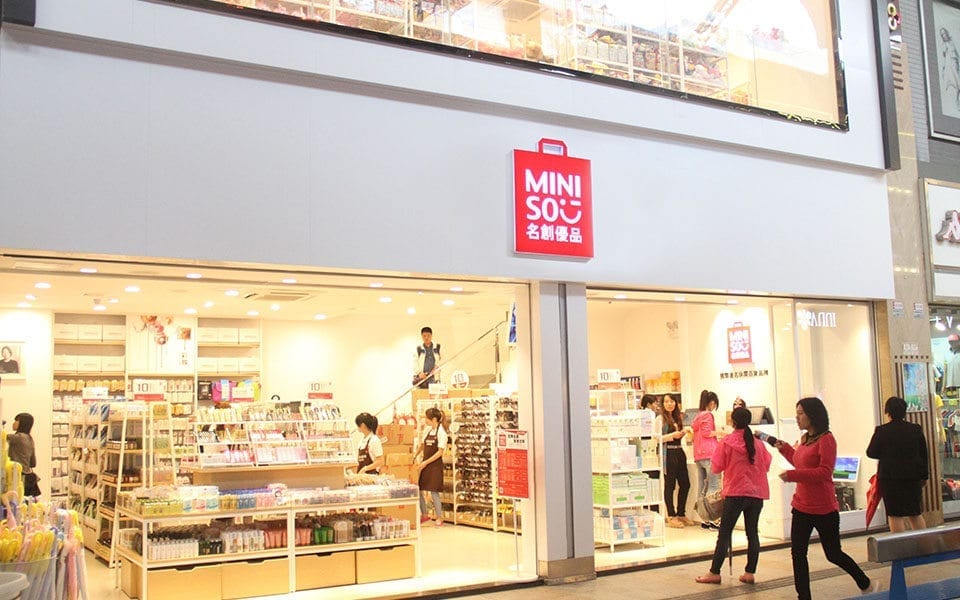
    Chinese budget retailer Miniso Group Holding Ltd. apologized for styling itself as a Japanese designer brand and said it would change its logo, amid a wave of local nationalism fueled by geopolitical tension over Taiwan.

    The Guangzhou-based company has long promoted itself as Japanese-influenced, with a Japanese chief designer and Japanese characters on its shopping bags and marketing language. This, it said in a statement on Miniso’s official Weibo account Thursday, was “wrong.”

    “We used wrong brand positioning and marketing campaigns during the early days,” the statement said. “We feel regret and guilt.”

    The seller of cheap household goods has been “removing” Japanese elements since 2019, including re-designing its logo and shopping bags to change Japanese characters to Mandarin ones in its more than 3,000 local outlets, said the statement. It will also more closely police overseas units.

    The pivot comes after Miniso became a target of nationalistic social media users due to an Instagram post by its Spanish unit in July that described a cheongsam-clad toy as a Japanese geisha. It apologized then as well, but pressure has grown as the China-Japan relationship deteriorated after U.S. House Speaker Nancy Pelosi’s controversial visit to Taiwan earlier this month.

    China called off a face-to-face meeting between Foreign Minister Wang Yi and his Japanese counterpart over a Group of Seven statement expressing concern about Beijing’s “threatening actions” around Taiwan during and after Pelosi’s visit.

    The Miniso pivot is another example of how consumer nationalism in China has become a minefield for brands to navigate, with companies ranging from Mercedez-Benz Group AG to Hennes & Mauritz AB. being boycotted for perceived slights in recent years. It also reflects how “foreign” elements have now become a liability in China, a sea change from several years ago when Miniso capitalized on the popularity of actual Japanese chains like Muji to lure local shoppers.

    Anti-Japanese sentiment is growing across the country. Local media reported that a young woman was detained and interrogated by police last week after wearing a kimono for a photo shoot in the eastern city of Suzhou.

    Officials in Tokyo have become increasingly outspoken about the importance of Taiwan’s national security to Japan’s own stability, a development that has sparked anger in China, which considers Taiwan part of its territory.

  • Egg producers claim 14 years is not long enough to phase out battery cages

    Egg producers claim 14 years is not long enough to phase out battery cages

    Australia will phase out battery eggs by 2036, after a lengthy battle between the egg industry and animal welfare groups that the latter says will finally bring the country into line with Europe and New Zealand.

    The reform was quietly announced on Thursday with the publication of the Australian Animal Welfare Standards and Guidelines for Poultry, a framework that has been in negotiations between governments and industry for seven years.

    The new guidelines state that egg producers will phase out the use of conventional layer hen cages over the next 10 to 15 years, and by 2036 at the latest, depending on the age of their current infrastructure.

    From that point, all caged laying hens must have 750cm sq of usable space for each bird, if kept in a cage with two or more others. If the hen is caged alone, the cage must allow for 1m sq of usable space.

    While animal welfare groups say the 14-year timeline is too long, industry group Egg Farmers of Australia released a statement that said it was “dissatisfied” the guidelines “fail to allow the option for conventional cage egg production to continue for a further 24 years”.

    CEO Melinda Hashimoto said the guidelines were a “slap in the face” to egg farmers and “totally ignored evidence on why conventional cage eggs should continue to 2046”. Farmers rely on 30-year loans to pay for cages and other infrastructure, she said, and a 2036 deadline “could derive many family egg farmers to the wall”.

    The new guidelines also require that ducks be provided with access to water to bathe in, and that chickens that are used in the meat industry be provided with “environmental enrichment” such as perches, hay or straw to scratch in, objects to peck and “dust-bathing materials”.

    There is currently no regulatory requirement that ducks be provided with water other than drinking water.

    RSPCA Australia’s chief executive, Richard Mussell, said it was a significant win for animal welfare.

    “But most importantly, it will eventually be a win for the millions of layer hens confined to battery cages,” he said.

    According to the Australian Bureau of Statistics, 5.36 million layer hens, or 32% of the national flock, was caged in 2020-2021. In egg production alone, 50% of birds are caged.

    Mussell said that he hoped state and territory governments would act to enforce the new guidelines long before 2036. The Australian Capital Territory banned the use of battery hen cages and sow stalls in 2014 but no other Australian jurisdiction has begun the legislative process to ban cage eggs.

    New Zealand ended the use of battery cages this year after announcing a 10-year phase-out process in 2012. Most of Europe, including the UK, banned the use of battery cages in 2012; Mexico, Israel, and Canada have also banned battery cages.

    Mussell said the slow pace of the reform – which included a public consultation process that received more than 160,000 submissions – was frustrating.

    “These poultry standards and guidelines were under review for nearly seven years,” he said. “The phase out is the right result, and it should have been put in place six years ago. Millions more layer hens have had to endure barren battery cages as a result of these delays.”

    The Humane Society of Australia, Animals Australia, and the Australian Alliance for Animals all welcomed the announcements that battery cages would be banned, but criticised the 14-year phase-out period.

  • San Pellegrino unveils new flavour in Essenza range

    San Pellegrino unveils new flavour in Essenza range

    S.Pellegrino Essenza has added a new Black Orange & Black Raspberry flavour to its range, joining the existing line-up of Lemon & Lemon Zest and Tangerine & Wild Strawberry.

    S.Pellegrino’s Essenza is a tasteful range of Italian sparkling mineral water with a subtle hint of fruit flavour, gentle bubbles, and no added sweeteners with zero calories.

    Essenza Blood Orange & Black Raspberry has a delicate scent and taste, beginning on a sweet note and ending with the taste of freshly squeezed orange. It pairs with rich, complex foods from red meat dishes to creamy, light pasta.

    S.Pellegrino Essenza’s range is a great on-the-go product with the can format; plus, it’s recyclable. It also works as a non-alcoholic mocktail spritzer option.

    It is available now in Woolworths and independent supermarkets at $15 per eight-pack.

  • Blackmores registers strong growth, momentum expected to continue

    Blackmores registers strong growth, momentum expected to continue

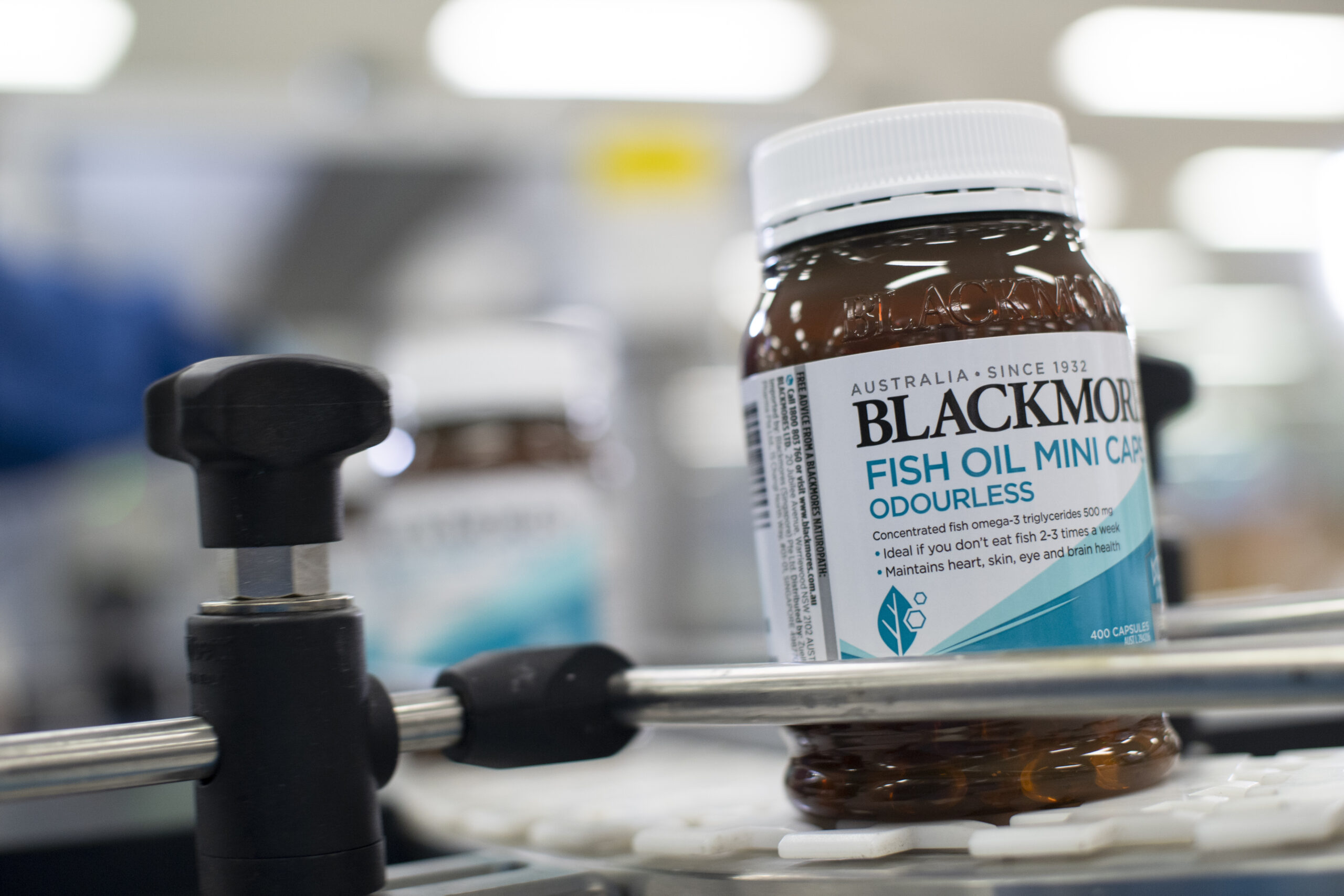
    Vitamin producer Blackmores has seen group revenue rise 12.8 percent in Fy22 to reach $649.5 million with growth across the company’s three major brands.

    This delivered a rise in underlying operating EBIT profit of 19 percent to $56.6 million, with margins expanding 1.1 points to 53.4 percent.

    CEO Alastair Symington said the company had delivered a strong result in a year impacted by the Covid-19 pandemic, increased input costs and significant supply chin disruptions.

    Symington said: “The resilience of our business model, together with the strength of our brands and distribution channels have enabled the group to respond to these challenges to deliver top line growth along with further margin expansion.

    “We recorded growth across all three brands – Blackmores, BioCeuticals and PAW – and all markets for the first time in the last four years.”

    Symington said the company’s focus on product innovation and investment in its brands, as well as selling and marketing spending up 4.6 percent, had delivered revenue growth of 12.8 percent.

    “This has enabled Blackmores to deliver a 22.6 percent increase in underlying net profit together with a 33.8 percent lift in full year dividend to shareholders to 95 cents per share fully franked.

    “Importantly this strong set of financial results has also been delivered alongside the implementation of improvements in our workplace health and safety and further commitments delivered as part of our ongoing sustainability agenda.”

    During the year Australian sales were up 2.7 percent, international sales up 31.7 percent and China sales up 10.6 percent along with an 11.2 percent rise in EBIT to $16 million.

    Blackmores ended the year with newt cash of $82.2 million.

  • iPhone 14 to come earlier than previous models in Vietnam

    iPhone 14 to come earlier than previous models in Vietnam

    Vietnamese might get the new iPhone 14 two weeks earlier than previous models since Apple has lifted Vietnam up a scale in its priority markets.

    “The iPhone 14 will be officially sold in Vietnam three weeks after they are launched in major markets such as the U.S., Singapore, Hong Kong, and Japan,” a media representative of a retail chain told VnExpress.

    Apple has moved Vietnam from the fourth priority level to third, and could make it second or even first within two or three years, he added.

    Last year the iPhone 13 was sold in Vietnam four weeks after major markets.

    The iPhone 14 is set to be delivered starting September 16 in major markets.

    Apple CEO Tim Cook said recently that Vietnam is one of four emerging markets that contributed to the company’s success in the second quarter of 2022.

    The company recently appointed Nguyen Thai Hai Van, former managing director of Grab Vietnam, as its first Vietnam country director.

    Apple is said to have established a marketing team in Vietnam in June.

  • Baidu Bags China’s First Fully Driverless Robotaxi Licenses

    Baidu Bags China’s First Fully Driverless Robotaxi Licenses

    China search engine giant Baidu Inc said on Monday it has obtained permits to operate fully driverless robotaxi services on open roads from two Chinese cities, the first of their kind in the country.

    The permits, awarded by the southwestern municipality of Chongqing and the central city of Wuhan, allow commercial robotaxis to offer rides to the public without human safety drivers in the car. They come into effect on Monday.

    Baidu said they marked a “turning point” in China’s policy-making towards autonomous driving.

    “These permits have deep significance for the industry,” Wei Dong, chief safety operation officer of Baidu’s Intelligent Driving Group, told Reuters in an interview. “If we think of the exploration of space, this moment is equal to landing on the moon.”

    At first, Baidu will deploy a batch of five fee-charging robotaxis in each city, where they will be allowed to operate in designated areas from 9 a.m. to 5 p.m. in Wuhan and 9:30 a.m. to 4:30 p.m. in Chongqing, the company said in a statement.

    The service areas span 30 square km (11.58 square miles) in Chongqing’s Yongchuan District and 13 sq km in the Wuhan Economic & Technological Development Zone.

    In April, Baidu’s Apollo and Toyota Motor Corp-backed Pony.ai said that they received permits in Beijing to deploy robotaxis without safety drivers in the driver’s seat on open roads within a 60 sq km area. But the Beijing permits  still require them to have a safety driver in the passenger seat. These services have started.

    Baidu is also in talks with local governments in Beijing, Shanghai and Shenzhen, to secure licenses within a year to test fully-driverless and unpaid robotaxis in those cities, according to Wei.

    China’s efforts to fast-track autonomous vehicle trials and permits come as U.S. regulators are also pushing ahead with milestone-setting autonomous driving policies.

    In January, self-driving company Cruise received a permit from the California Public Utilities Commission that allows it to offer paid and fully driverless rides from 10 p.m. to 6 a.m. in select streets in San Francisco.

    Apollo Go, Baidu’s robotaxi service, has operated over 1 million rides across 10 Chinese cities since its launch in 2020.

    Baidu has not reported any problems with the service and has not given a breakdown for how much it has invested in the project.

  • Auto association wants tax cuts for hybrid vehicles

    Auto association wants tax cuts for hybrid vehicles

    The Vietnam Automobile Manufacturers Association has sought cuts in excise tax and registration fees for hybrid electric vehicles.

    This would stimulate demand and encourage businesses to invest in power generation and charging systems, it said.

    Incentives for electric and hybrid vehicles should gradually decrease, and there would be no need for them by 2050 once these vehicles establish themselves in the market, it said.

    VAMA also called on the Government to soon finalize the development strategy and incentives for the auto industry to help achieve Vietnam’s goal of carbon neutrality by 2050.

    Earlier this year the National Assembly cut excise tax for electric vehicles to 3% from 15% for five years and to 11% from 2027.

    But hybrid cars are not eligible for the incentives, meaning buyers have to pay excise tax of 15% and registration fee of 10-12%.

  • Tether Switches Auditor

    Tether Switches Auditor

    The issuer of the world’s largest stablecoin has hired a new auditing company and will publish reserve updates on a monthly basis.

    Tether Holdings is partnering BDO Italia to conduct regular reviews and attestations of its foreign exchange reserves and will publish an attestation of its reserves for the second quarter in the coming days, it said in a statement late Thursday.

    BDO Italia is replacing previous auditor Cayman-based MHA Cayman.

    The reports that list the assets that make up stablecoins’ reserves are closely followed by crypto investors. However, they are not certified audits, as they do not require verification of the underlying data confirming whether an issuer’s information about its reserves is materially accurate.

    Tether, the issuer of the world’s largest stablecoin by market capitalization, USDT, has long been embroiled in controversy over the status of its reserves, which are used to back the supply of USDT.

    In February 2021, Tether was banned from operating in New York state. As part of an $18.5 million settlement with the New York State Attorney General’s Office, Tether is required to disclose its reserves each quarter. Last October, the company was fined $41 million by the Commodity Futures Trading Commission (CFTC) for making untrue and misleading statements about the reserves that support the stablecoin.

    Tether has previously faced questions about its holding of commercial papers in its reserves in particular.

    According to the company, this portion has been significantly reduced from $30 billion in previous years to $3.7 billion in July with plans to remove this asset class altogether. Until now, Tether has submitted its attestation reports quarterly and with a large delay.

    Stablecoin competitors such as Circle and Paxos submit monthly reports on their reserves. Both have limited themselves to holding only government bonds or bank deposits.

    In the wake of the collapse of the Terra Luna ecosystem, USDT’s market capitalization has fallen from $83 billion to about $67 billion this year. Circle’s USDC stablecoin, which is also pegged to the U.S. dollar, gained some of those outflows.

  • Stock market settlement to be speeded up by 4 hours

    Stock market settlement to be speeded up by 4 hours

    The stock settlement cycle is set to be shortened by four hours, enabling investors to receive their share or money on the second morning after a transaction.

    Thus, from August 29, they will get them at 11-11:30 a.m on the second day (T+2) instead of the current 3:30-4 p.m.

    Now they have to wait until the next morning to sell securities they buy since trading ends at 2:45 p.m.

    Depository participants must transfer money and stocks to customers before 1:00 p.m and report to the Vietnam Securities Depository before 4:30 p.m.