Author: Mei Ling Tan

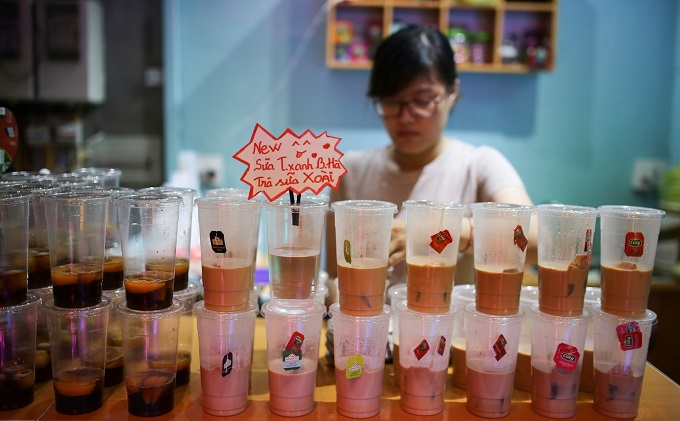
  • Vietnam third largest market for bubble tea in Southeast Asia

    Vietnam third largest market for bubble tea in Southeast Asia

    Turnover of the Vietnamese bubble tea market hit $362 million in 2021, ranking third among six major Southeast Asian markets, according to a recent study.

    The region’s largest market was Indonesia with an estimated $1.6 billion annual turnover. Thailand came in second with $749 million, according to a study by Singapore-headquartered venture outfit Momentum Works and digital payments solution firm Qlub.

    Turnover in the Southeast Asian market last year accumulated to $3.66 billion, it added.

    As of April 2022, Vietnam had 439 bubble tea shops, with over half located in Ho Chi Minh City, a survey by German data portal Statista and Vietnamese market researcher Q&Me showed.

    Bobapop, a local brand, was the leader in terms of locations with 89 stores.

    It was followed by three foreign players, Tiger Sugar (48 stores), The Alley (47) and Gong Cha (42).


  • Telstra Boasts Fastest Speed in Australia

    Telstra Boasts Fastest Speed in Australia

    Telstra is Australia’s fastest mobile network for the first half of 2022, based on results from the Ookla Speedtest Awards from January to June 2022.

    Telstra has a median download speed of 81.57 Mbps and median upload of 11.38 Mbps, representing an improved speed from the second half of 2021.

    Telstra also has the fastest mobile network speeds in the cities of Sydney, Greater Melbourne and Greater Brisbane – where nearly half of Australia’s overall population resides.

    “Keeping our customers connected is at the centre of everything we do, and one part of that is giving customers access to the largest and most reliable mobile network in Australia. That includes expanding our 5G coverage to allow for faster speeds as well as improving the capacity of our 4G network, and it’s also about the new technologies we’re developing like mmWave 5G,” Telstra commented.

    Telstra currently covers 80% of Australia’s population with 5G, with plans to roll out 5G to 95% of the population by 2025.

  • Crab exports skyrocket

    Crab exports skyrocket

    Vietnam crab exports rose 41% to $111 million between Jan. 1 and July 15 this year, according to data from the Vietnam Association of Seafood Exporters and Producers (VASEP).

    The U.S, China, Japan and France were the four major markets accounting for 92% of the value.

    China was the fastest growing market as exports surged 74% year-on-year to $37 million, followed by France (up 60%) and Japan (51%).

    Exports to the U.S. grew 27%, though the country was Vietnam’s top market with a value of $38 million.

    Crab prices have surged amid domestic shortage and rising demand from major markets in the U.S., China and Japan.

    Hoang, a crab seller, said prices at-the-farm have risen 20% since last month to VND400,000-600,000 ($17-26) a kilogram but there was hardly enough for him to sell.

    VnExpress survey showed crab prices in HCMC have risen to the highest in the year-to-date at VND900,000 a kilogram.

    VASEP expects crab exports to thrive in the second half this year thanks to rising demand driven by holidays like Christmas and Lunar New Year.

  • UBS Hires Greater China Head of Philanthropy

    UBS Hires Greater China Head of Philanthropy

    UBS has hired a 25-year veteran as its head of philanthropy services for Hong Kong and the broader Greater China region.

    Ming Geng joins UBS Global Wealth Management as its head of philanthropy services for Hong Kong and Greater China, according to an internal memo. Based in Hong Kong, Geng reports to head of social impact & philanthropy services Tom Hall with local supervision by head of A&S client services Christina Tung.

    Geng has over 25 years of experience in global health, global development affairs and philanthropy. Prior to joining UBS, she was the head of corporate affairs at Viatris Pharmaceutical, Greater China.

    Previously she served as the deputy director at Bill & Melinda Gates Foundation’s China office between 2008 and 2019 following 10 years of leadership and management experience at various other global organizations including The Global Alliance for Improved Nutrition, The Yew Chung Education Foundation, and UNICEF.

    A spokesperson for the bank confirmed the hire.

  • CTM to Launch 5G Services Upon Awarding of Macau Government License

    CTM to Launch 5G Services Upon Awarding of Macau Government License

    Macau’s telecoms regulator has accepted the bids for the city’s first 5G licenses, including that of major telecoms firms CTM and China Telecom (Macao) Limited.

    According to the Macau Post and Telecommunications Bureau, the operators to be awarded the licenses are expected to launch 5G services by the first quarter of 2023.

    In a press release, Vice President, Commercial of CTM, Ebel Cham, announced that the company has already realized indoor and outdoor 5G signal full coverage which supports both NSA and SA modes.

    She added that CTM looks forward to launching 5G services within short order after being awarded the 5G license by the Macau SAR Government.

    Cham said that CTM is open to discussing different forms of cooperation with other operators under full      compliance with the local laws and regulations.

    Cham added that CTM has reached dual agreements with 58 countries and regions for 5G roaming services, including mainland China and Hong Kong, the launch of which will provide residents and tourists a seamless 5G experience.

    If the 5G license is to be awarded this year, CTM said it will strive for rolling out 5G service with competitive pricing by year’s end.

  • % Arabica makes its Taiwan debut

    % Arabica makes its Taiwan debut

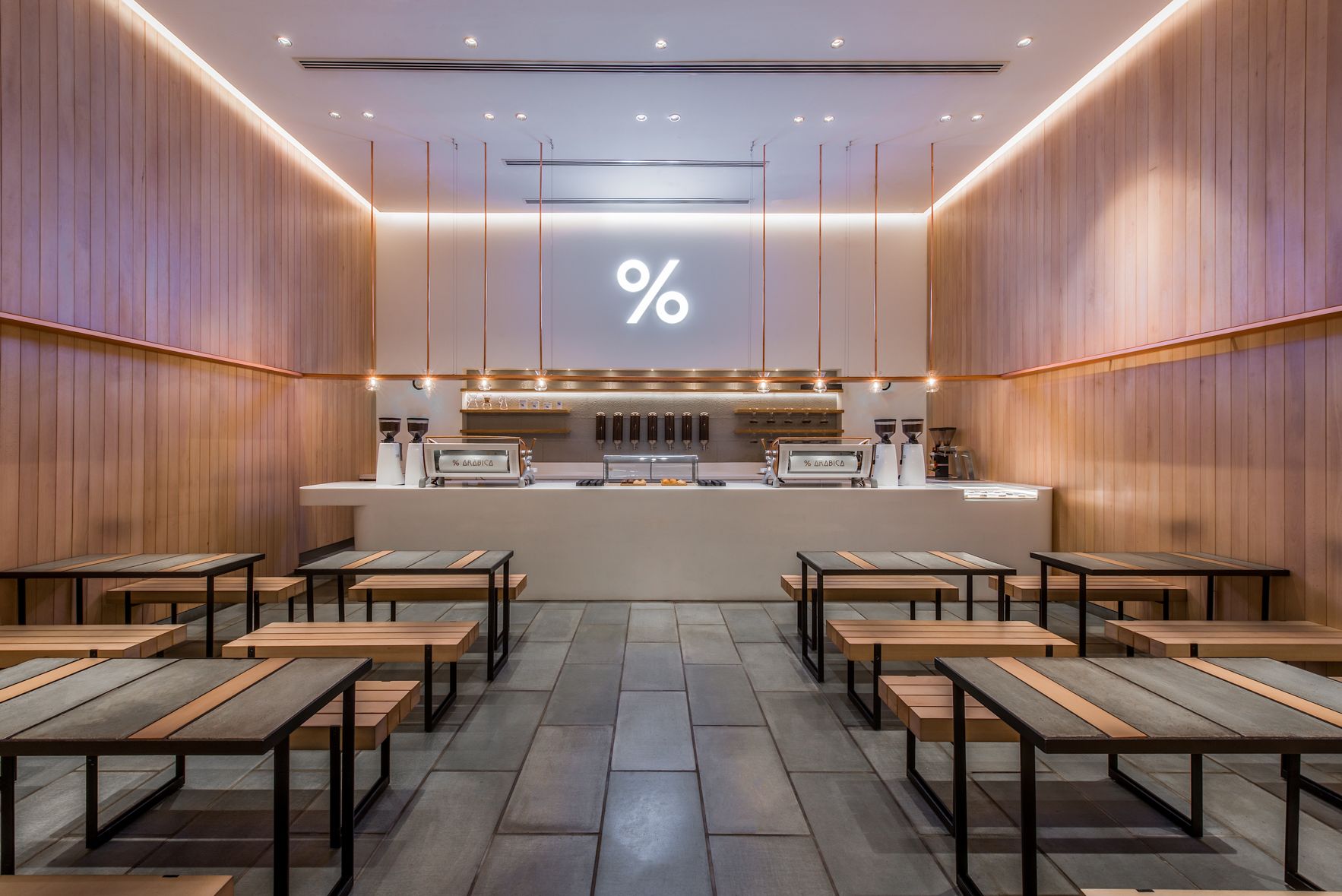
    Japanese boutique coffee group % Arabica has made its debut in Taiwan with a store in Taipei. The Elephant Mountain store is the second % Arabica outlet to open this month following the launch of store in the lobby of the new United Overseas Bank head office in Bangkok, the group’s fourth in the Thai capital.
    The boutique café group now operates 120 stores across 18 countries, including 61 in its largest market, China, and four in its native Japan.
    According to % Arabica’s website, the group will soon open stores in Vietnam, South Korea, Canada, Mexico, Spain and the Philippines.
    In July 2022 Lucky Ace International Ltd., which operates the group in China, was reported as seeking to raise $300m to support its expansion plans in the country.
    World Coffee Portal estimates the Taiwanese branded coffee shop market exceeds 2,500 outlets and forecasts it will reach 3,200 outlets by 2025. Louisa Coffee is the coffee-focused segment leader with approximately 520 outlets.
  • Samsung is reportedly giving Apple the chance to close the gap in phone shipments this year

    Samsung is reportedly giving Apple the chance to close the gap in phone shipments this year

    Earlier this month we passed along a report from Reuters stating that smartphone production at Samsung’s Vietnam factories, which are responsible for half of the company’s annual phone production, had been curtailed sharply. Samsung continues to lead the world in smartphone shipments, it has dropped its target for 2022 and now plans to deliver 260 million units down 13.3% from its earlier estimate of 300 million units.

    The report added that Samsung originally planned to build 334 million smartphones this year and ship 300 million of them. Out of the 334 million units scheduled for production, 284 million handsets were set to roll off of Samsung’s own assembly lines with 50 million being produced by its China-based contract manufacturers. But after taking the headwinds into account such as supply chain issues (like the chip shortage and a shortage in experienced workers), inflation, and the drop-off in demand for smartphones, Samsung reportedly has cut production plans.

    TheElec says that between October and November, Samsung plans on building only 34 million smartphone units in its own factories. It says that this would be a huge decline compared to the same time period in previous years.

    Last year, the South Korean manufacturer shipped approximately 270 million units, so if Sammy does deliver 260 million handsets, it would be a 3.7% decline on an annual basis. It also could give Apple a chance to close the gap with Samsung. Last year, Apple delivered 235 million iPhone units and this year the iPhone 13 line has been selling well with the iPhone 14 series to be unveiled possibly inside three weeks.
    During the second quarter of 2022, Canalys reported a 9% year-over-year decline in smartphone shipments. Samsung still had the highest market share in the industry at 21% thanks to its mid-range Galaxy A product line. More affordably priced than its premium handsets, the Galaxy A models have big screens, viable cameras, and huge batteries. Apple was next with a 17% slice of the global smartphone pie followed by Xiaomi (14%), Oppo (10%), and Vivo (9%).
    If Samsung does see its smartphone shipments decline to 260 million units, it would be its lowest annual total since the pandemic reduced 2020 deliveries to 253 million. The year before, it had shipped 296.5 million smartphones.
  • Spotify debuts a three-month free trial period

    Spotify debuts a three-month free trial period

    Do you recall the days when you had to manually download each song / album you like before transferring it to a media player? Neither do we. Spotify has revolutionized the way we listen to music by making it more convenient (and much cheaper) than ever before.

    It is easy to get hooked on Spotify and it seems the streaming giant knows this fact very well. This is why now  the platform is extending its free trial period to 3 months. For reference, previously the free trial period was just 1 month long. Spotify shared this information in an official blog post.

    So how exactly will this 3-month trial period work? Put simply, first-time users, after creating an account, will not be billed during the first three months of their new subscription. The first payment will take place at the end of the third month.

    Additionally, if for whatever reason they are not thrilled with the streaming service within the trial period, users will be able to cancel their subscription without incurring any fees in the process. In essence, if a user opts out before the three-month mark has passed, the time spent streaming will be virtually free.

    The longer trial period also extends (pun intended) to past users who no longer use Spotify. For a measly $9.99, ex-subscribers will be able to get three full months of streaming (i.e.  less than $4 a month). There is one catch, however. This offer only applies to users who made the decision to cancel their subscription before July 15th 2022.

    The new extended trial period will be available across 135 markets and the offer will come into effect after September 11th. If this does not convince you to give Spotify a chance, nothing will.

  • Apple suppliers to make Apple Watch and MacBook in Vietnam

    Apple suppliers to make Apple Watch and MacBook in Vietnam

    Apple’s suppliers are in talks to produce Apple Watch and MacBook in Vietnam for the first time, Nikkei Asia reported on Tuesday, citing people familiar with the matter.

    Apple’s Chinese suppliers Luxshare Precision Industry and iPhone assembler Foxconn have started test production of Apple Watch and MacBook in Northern Vietnam, the report added.

    Apple has been shifting some areas of iPhone production from China to other markets, including India, where it started manufacturing iPhone 13 this year, and is also planning to assemble iPad tablets.

    India, the world’s second-biggest smartphone market, along with countries such as Mexico and Vietnam are becoming increasingly important to contract manufacturers supplying American brands, as they try to diversify production away from China.

    Apple, Foxconn and Luxshare Precision did not immediately respond to a Reuters request for comment.

    Last week, Taiwanese contract manufacturer Foxconn gave a cautious outlook for the current quarter after posting results that exceeded expectations, citing slowing smartphone demand after a pandemic-fuelled boom.

    Like other global manufacturers, Foxconn – formally called Hon Hai Precision Industry Co Ltd – has dealt with a severe shortage of chips that hurt production, as bottlenecks from the pandemic lingered and the Ukraine war further strained logistical channels.

  • Workers laid off as global demand falls

    Workers laid off as global demand falls

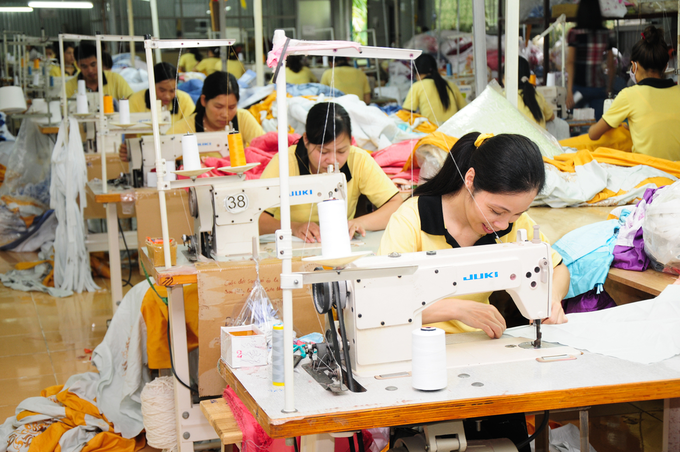
    Textile and electronics companies are cutting overtime and working hours to their workers’ dismay as global consumer demand fall.

    Tran Thu Huong and her husband were working at a garment factory in HCMC’s Go Vap District when last month, their income fell by 20% to VND15 million ($640.75) as new orders shrunk.

    Huong said their income was barely enough any more as they paid VND2.2 million for house rent, VND2.7 million for tuition for their five-year-old child and loan interest, and had to tighten their belt by “not buying miscellaneous things” such as fruits.

    Her husband, Hung, 33, recently quit his job after working at the factory for five years.

    “I can’t work in the garment industry anymore,” he said.

    He used to be paid VND13-14 million a month when he started working, but the amount had halved by the time he quit.

  • Viettel to produce chips amidst global shortage

    Viettel to produce chips amidst global shortage

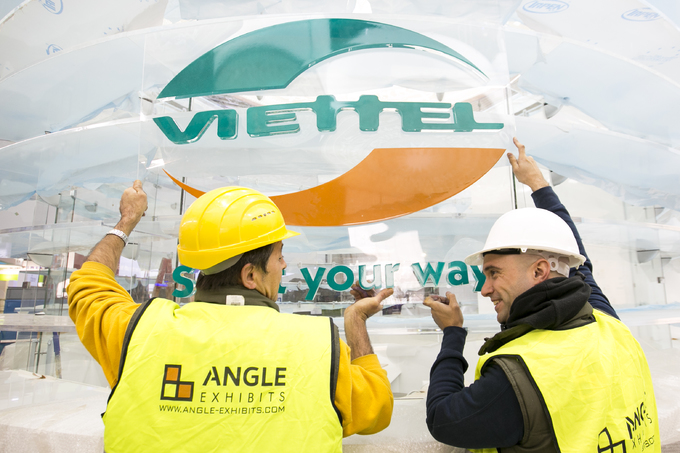
    Telecommunication giant Viettel has proposed that it produces chips to meet domestic demand and for export in addition to offering e-payment services.

    Leaders of the military-owned Viettel Group made the proposal at a Tuesday meeting with Prime Minister Pham Minh Chinh.

    The proposal was made in the context of the recent global chip shortage, which has seriously affected many manufacturing sectors and business areas, prompting several countries to promote chip production as a national security measure.

    In this context, the group also asked to be assigned the tasks of ensuring national defense and security, promoting its strengths and demonstrating the pioneering role of state-owned companies in the fields of high-tech defense, construction and cyber security and safety.

    Viettel said it wanted to deploy a national digital conversion platform, and work as an intermediary for financial switching services and electronic clearing services to facilitate transfer of funds from one bank account to another.

    The group also wanted permission to research green energy technology and modernize important infrastructure in the field of transportation, logistics, urban areas, and science and technology.

    It also asked for more leeway in deciding investment capital and salaries, as well as organizing its internal units.

    At the same time, it suggested that the government adds a new legal corridor for state-owned firms, such as a mechanism to make evaluations based on the principle of overall investment efficiency instead of relying on individual investment items and projects, and a mechanism to establish a Venture Capital Fund for investment in innovative start-ups.

    PM Chinh said Viettel should research and produce chips to effectively and efficiently serve the country’s digital transformation process, including building a digital government, digital economy and digital society. He said Viettel must be a corporation that plays a leading role in this process.

    He also agreed that the group works as an intermediary for financial switching and electronic clearing services, and assigned related ministers to study the plan and report on it to the government.

    Viettel has been maintaining an average pre-tax profit of over VND40 trillion ($1.7 billion) each year for several years.

    The group is doing business in ten markets with a total population size of 260 million in three continents, and has so far reported profits in seven markets, at $250-350 million per year.

  • FedEx to expand operations at Guangzhou hub

    FedEx to expand operations at Guangzhou hub

    FedEx Express announced last week it has signed an agreement with Guangdong Airport Authority Logistics Company to expand and upgrade the FedEx Guangzhou Gateway by establishing a new operations center at Guangzhou Baiyun International Airport.

    The new ‘FedEx South China Operations Centre’ will cover an area of over 41,000 square metrers, more than double the size of its existing gateway, and is scheduled for operations in 2027.

    The facility will connect outbound shipments from southern China with the FedEx international network through the Asia Pacific hub, where it will also receive and process inbound shipments.

    The operations center will include offices, state-of-the art sorting systems, operations areas and a warehouse with a capacity to sort up to 25,000 packages and documents per hour, three times the sorting efficiency of the current facility.

    FedEx’s Asia Pacific Hub at Guangzhou Baiyun International Airport connects Asian customers to the US and North American network through Anchorage and Memphis (USA), and the European network through Paris (France) and Cologne (Germany).

    The FedEx Asia Pacific Hub currently operates more than 210 flights per week, with the Guangzhou gateway handling approximately 40 percent of the hub’s import and export cargo volume.

  • Bamboo Airways names new senior advisor amid restructuring

    Bamboo Airways names new senior advisor amid restructuring

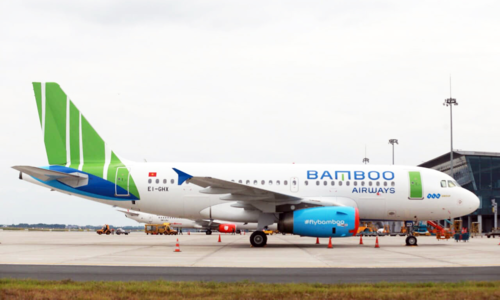
    Sacombank Chairman Duong Cong Minh was appointed senior advisor to the board of directors at Bamboo Airways to support the airline’s restructuring.

    Minh, 62, is also the founder and chairman of property developer Him Lam. His appointment came three days after the airline named a new chairman.

    Minh will be key to the restructuring of Bamboo Airways’ management and expansion, Chairman Nguyen Ngoc Trong said.

    Sacombank was one of the top lenders to Bamboo Airways and its parent company, FLC Group. Hundreds of millions of airline shares were used as collateral for loans at the bank under the reign of ex-chairman Trinh Van Quyet, who was arrested for allegedly manipulating the stock market.

    As of June 30, the group and its subsidiaries had finished paying off their VND1.8 trillion ($76.9 million) debt to Sacombank, according to FLC’s financial statements.

    Bamboo Airways currently operates nearly 170 flights a day on 40 domestic and 12 international routes.

    The carrier plans to continue launching new international services to tourism markets in Asia, Europe and Australia.

    It also plans to increase its fleet to 35 by the end of this year and triple its fleet size to 100 aircraft by 2028.

  • Grab says it canceled heatwave surcharge

    Grab says it canceled heatwave surcharge

    Grab canceled its new heatwave surcharge on motorbike rides on July 7 just one day after imposing it, Vietnam Competition and Consumer Authority announced Monday.

    It had announced a surcharge of VND3,000-5,000 ($0.13-0.21) meant for drivers.

    The consumer watchdog told the Singaporean ride-hailing company that all fees and surcharges Grab payable by customers must be clearly explained before implementation.

    It called on other ride-hailing companies to be transparent about them.

    Grab was the first to slap such a surcharge after many localities recorded unusually high temperatures but had said merely it would apply it during “extremely hot weather” without describing what it meant by the term.

    Grab Vietnam had an accumulated loss of VND4.36 trillion as of last year.

  • Buy now, pay later becoming popular in Vietnam

    Buy now, pay later becoming popular in Vietnam

    Many buy now, pay later services have launched or expanded operations to meet the burgeoning demand.

    “Cash is necessary for daily expenses, so I choose to pay later whenever possible,” Minh Tien, 33, of HCMC said.

    He bought braces and a motorbike using pay later services.

    The braces cost him VND35 million ($1,495.92) but he needed to pay only VND5 million upfront, and can pay the rest over three years. The bike cost him VND25 million, and he paid VND10 and the rest will be paid over six months.

    Thu of HCMC bought a VND10-million TV two months ago for her daughter. “My salary goes really quickly since prices are rising, so I decided on a six-month installment scheme.”

    Buy now, pay later provides customers and sellers “a convenient and budget-friendly payment option,” Nguyen Hoang Long, director of online commerce platform Sendo, said.

    Demand for it is skyrocketing as it serves those who cannot access traditional loans, Moin Uddin, CEO of fintech platform SmartPay, said.

    Vietnam presents a positive outlook for buy now, pay later services thanks to the popularity of cashless payment and low credit card ownership here, Krishnadas, senior vice president of business development at digital credit platform Kredivo, said.

    Kredivo expects the market to reach $4.6 billion in value.

    “Buy now, pay later will be a popular payment method in Vietnam over the next three years.”