Author: Mei Ling Tan

  • China Mobile and ZTE Complete Commercial Trial of Co-Routing Detection

    China Mobile and ZTE Complete Commercial Trial of Co-Routing Detection

    ZTE, together with the Yunnan Branch of China Mobile, has completed the commercial trial of co-routing detection in China Mobile’s existing optical network in Yunnan province, China.

    The trial involves two scenarios: co-cable routing detection and co-ditch routing detection. The trial result shows that there will be an early warning of active/standby paths in the same optical fiber or route so that it can be bypassed in time based on fiber sensing. In addition, the originally dumb fiber resource will be visualized. Thus, the operator’s service reliability and network O&M efficiency can be greatly improved.

    As digital transformation is developing rapidly in all industries, the optical network is facing a systems intelligence need. And intelligent O&M emerges as one of the main focuses when addressing the problem of low service survivability caused by co-routing.

    To resolve this, China Mobile has cooperated with ZTE to verify the feasibility of co-cable and co-ditch routing detection of service paths on the existing network, including active/standby service routing detection and inbound/outbound service route detection at specific sites.

    According to the verification, ZTE’s optical network co-routing detection function can specifically detect co-cable routing of 14 optical cables and 54 fiber cores by dynamic parameter optimization, AI algorithm and experience threshold adjustment. Also, ZTE takes contrast analysis and on-site specialist inspection to exactly detect co-ditch routing of 12 optical cables and about 20 ditches in 4 core equipment rooms. The verification proves that ZTE can provide the operator with flexible optical network co-routing detection methods, along with real-time, accurate and reliable intelligent O&M measures, which well guarantees service survivability and alleviates the difficulty in dumb fiber resource management.

    “The function can effectively solve actual problems in production and operation. Before this, active/standby routes are planned on the resource management map and routing is determined manually, which leads to high error rate. Additionally, the accuracy of resource management information is hardly under control, thereby increasing routing risks,” said a spokesperson at the Network Management Center of China Mobile Yunnan.

    “In the original routing detection, people pulled or pushed the cable underground manually, which resulted in low efficiency and service interruption. However, the co-routing detection now leverages dumb fiber resources without service switching. The innovative function remarkably reduces manpower and ensures service survivability while allowing resource management information modifications and route re-planning to avoid service interruption losses,” he added.

    The trial will further promote the growth of the operator’s autonomous optical network and lay a strong foundation for its intelligent network in the “east-data-west-computing” project.

  • UBS Outlines Mass Millionaire Ambitions in Greater China

    UBS Outlines Mass Millionaire Ambitions in Greater China

    UBS global wealth management has established a dedicated team to mass millionaires in the region and unveiled its ambition to double the number of clients in the segment for the Greater China market.

    UBS global wealth management has established a team dedicated to the coverage of private clients – mass millionaires with a net worth of $1 million to $5 million – the bank said during a media briefing yesterday when it announced the launch of the new business model for Greater China. Within this segment, it is mainly targeting four main groups of individuals: entrepreneurs, young families, financial and non-financial professionals.

    The Swiss private bank aims to double the number of clients in the segment over the next three years. Currently, the private client segment accounts for a mid-single-digit percentage of the total number of Greater China clients.

    The private client team has about 60 staff, including client advisors and specialists, alongside a wealth concierge team.

    In covering the mass millionaire market in Greater China, UBS’ digital capabilities will feature strongly, particularly with the usage of its content platform Circle One, which includes actionable investment ideas, and its digital banking app.

    UBS will rely on three levels of engagement with private clients including bank-led investing via discretionary portfolio management, an advisory model and self-directed investing – an option that is particularly suitable for financial professionals who are well acquainted with financial products and services.

    The private client market is a well-established segment in the industry with Hong Kong being one of the fastest creators of mass wealth, including one millionaire out of every 13 people living in the city, according to a study by Citibank. In fact, consumer banking units in Hong Kong have longstanding businesses covering the segment under the same nomenclature including Citigold Private Client and DBS Treasures Private Client.

    But UBS is confident that its wealth management roots will serve it well with competitive advantages such as a dedicated multi-asset chief investment office or access to a product shelf designed for the ultra-rich with solutions like customized discretionary mandates or exclusive hedge funds.

    «We are not a retail bank,» said Jamee Wong, UBS’ private client head for Greater China, commenting on competing against established rivals in the market. «We are a premier private bank and a wealth manager. This is in our DNA. We do wealth management every single day.»

  • Cebu Pacific boosts international flights

    Cebu Pacific boosts international flights

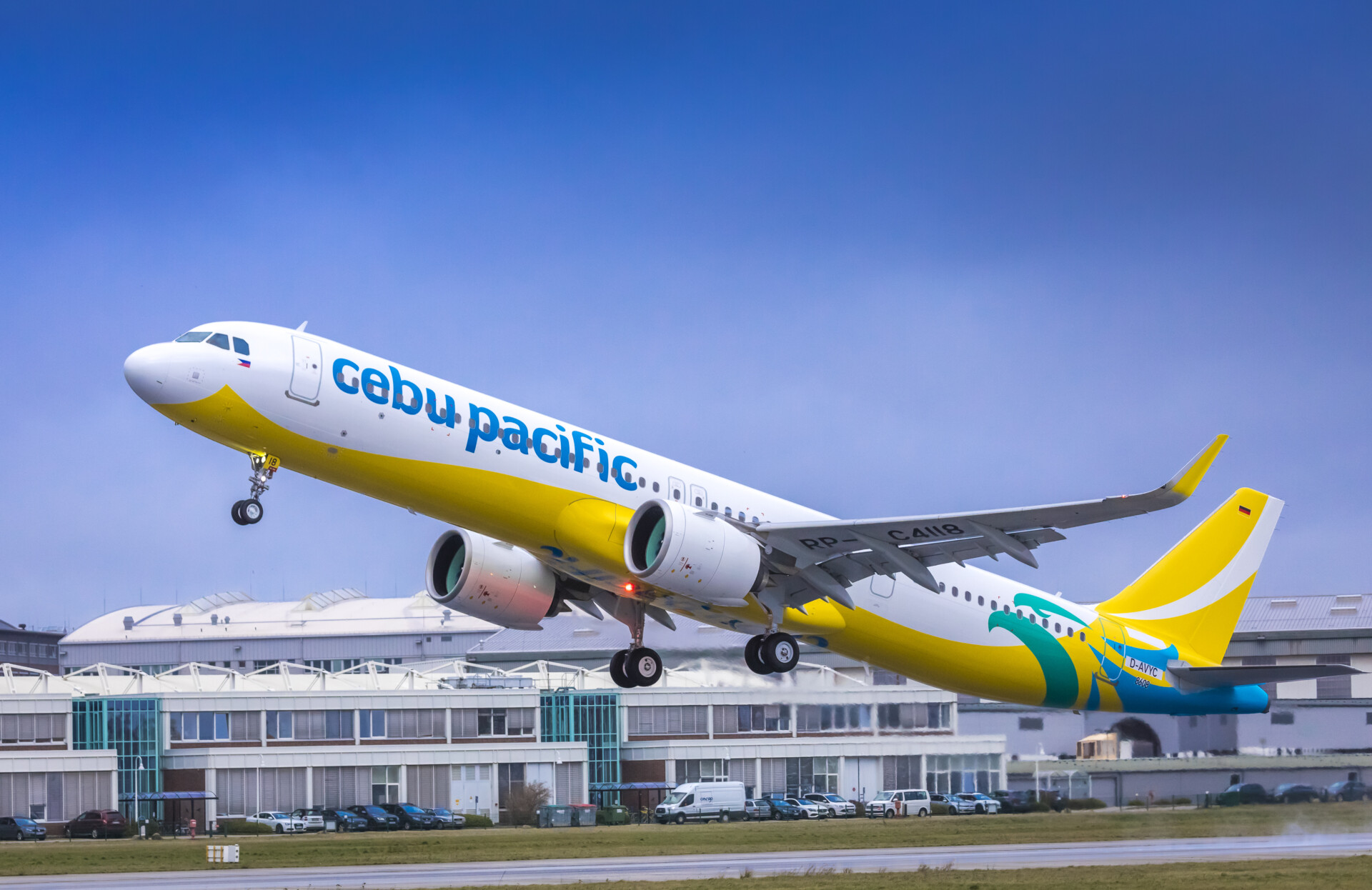
    Cebu Pacific, the country’s leading airline, continues to boost its international network as it adds flights to some of its top ASEAN destinations, namely Bangkok and Bali.

    Beginning Aug. 29, 2022, CEB will fly daily from Manila to Bangkok, coming from its current five-times-a-week frequency. By September, flights from Manila to Bali will also increase from thrice to five times weekly.

    The airline also intends to restart its Manila-Brunei flights by Sept. 1, starting with a twice-weekly frequency.

    “We are happy to keep growing our international network as we see an increasing demand for travel abroad, and as more destinations ease restrictions. It is exciting and encouraging to see more Filipinos travelling confidently in and out the Philippines, that is why we make sure we consistently provide convenient and affordable flight options to enable everyJuan to travel more for less,” said Xander Lao, CEB chief commercial officer.

    Fully vaccinated Filipinos flying to these three destinations are only required to present their proof of complete vaccination as Thailand and Indonesia have already eased its restrictions to easily allow tourists to enter.

    Apart from this, the airline also intends to increase its flights from Cebu to Seoul from twice weekly to a daily service by Sept. 9. On Sept. 23, flights to Nagoya from Manila will be daily from its current five times weekly.

    By Oct. 1, CEB’s Bali flights will increase to a daily service, while its flights to Hanoi and Taipei from Manila will both have one additional flight per week – from thrice to four-times-a-week for Hanoi, and twice to thrice weekly for Taipei.

    Coming home, boosted Filipinos no longer need to take a COVID test pre-departure. For more information, passengers may refer to CEB travel reminders page for the latest updates and complete travel guidelines to their destination.

    CEB continues to offer its guaranteed low fares to stimulate travel across its widest domestic network in the Philippines. It continues to implement a multi-layered approach to safety, while it operates with a 100 percent fully vaccinated crew, 95 percent of whom have been boosted.

  • India Offers Free 5G Test Bed to Startups and MSMEs

    India Offers Free 5G Test Bed to Startups and MSMEs

    With an objective to boost the 5G ecosystem within India and to achieve the objectives of Aatmanirbhar Bharat and Make in India initiatives, the Government of India has decided to offer the use of Indigenous 5G Test Bed free of cost to the Indian government-recognized start-ups and MSMEs for the next six months up to January 2023.

    It will be available at a very nominal rate to all other stakeholders. The Department of Telecommunications, Government of India has strongly urged all 5G stakeholders – i.e. industry, academia, service providers, R&D institutions, government bodies and equipment manufacturers – to utilize the 5G testbed facilities and expertise to test and facilitate the speedy development and deployment of their products in the network.

    In keeping sight of India’s specific requirements and to take lead in 5G deployment, the Department of Telecommunications (DoT) approved a financial grant for the multi-institute collaborative project to set up an “Indigenous 5G Test Bed” in India in March 2018 with a total cost of Rs 224 crore.  The eight collaborating institutes in the project are IIT (Indian Institute of Technology) Madras, IIT Delhi, IIT Hyderabad, IIT Bombay, IIT Kanpur, IISc Bangalore, Society for Applied Microwave Electronics Engineering & Research (SAMEER) and Centre of Excellence in Wireless Technology (CEWiT).

    The Indigenous 5G Test Bed was dedicated to the nation by the Hon. Prime Minster Shri. Narendra Modi on 17 May 2022.

    The end-to-end test bed is compliant with the global 3GPP standard and the ORAN standard.  Indigenous 5G Test Bed provides an open 5G test bed that enables R&D teams of Indian academia and industry to validate their products, prototypes and algorithms, and demonstrate various services. Further, it provides complete access for research teams to work on novel concepts/ideas holding potential for standardization in India and on a global scale. It provides the facilities of 5G networks for experimenting and demonstrating applications/use cases of importance to Indian society like rural broadband, smart city applications and intelligent transport system (ITS) and will provide help to Indian operators to better understand the working of 5G technologies and plan their future networks.

    The development of this Indigenous Test Bed is a key milestone for India’s becoming self-reliant in the 5G technology domain and pushing towards 5G Aatmanirbhar Bharat. This test bed is providing the indigenous capability for testing and validation of 5G products being developed and manufactured by Indian start-ups, MSME, R&D, academia and industry users. This has resulted in huge cost efficiency and reduced design time, due to which, Indian 5G products are likely to become more market competitive globally.

    The development of this test bed has also resulted in the development of many 5G technologies/IPs that are available for technology transfer to Industry players which will facilitate for Industry players the smooth and speedy deployment of 5G in India.

  • Apple supplier eyes $300-mln plant in northern Vietnam

    Apple supplier eyes $300-mln plant in northern Vietnam

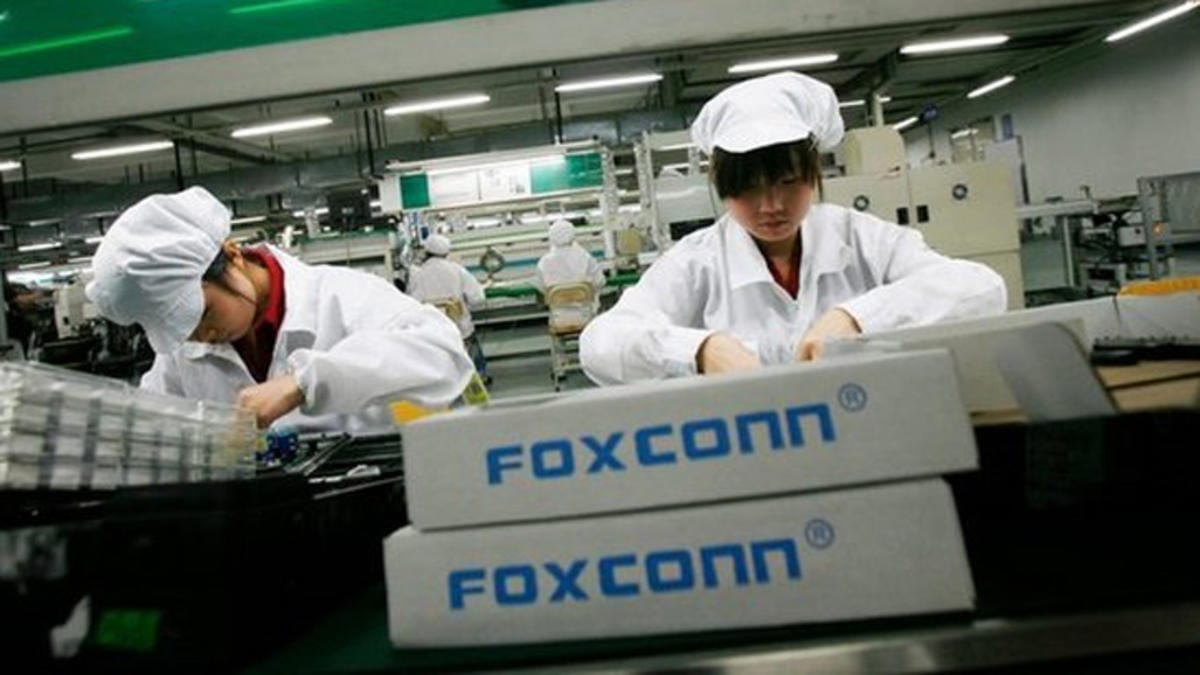
    Apple supplier Foxconn has leased 50.5 hectares of land in the northern province of Bac Giang and plans to set up a $300-million factory there.

    The plant will employ 30,000 people, according to a statement of industrial property developer Kinh Bac City, which manages Quang Chau Industrial Park where Foxconn eyes to make its investment.

    Foxconn and another Apple supplier, Luxshare Precision Industry, have started test production of the Apple Watch and MacBook in northern Vietnam and plan to produce them for the first time in the country.

  • DTS launches platform for Vietnamese technology startups

    DTS launches platform for Vietnamese technology startups

    DTS Digital Transformation Alliance has supported dozens of startups in technology, and is accompanying thousands of businesses through their digital transformation and journey into the Metaverse.

    In the global context of Industry 4.0, digital transformation is the biggest opportunity and challenge for businesses. To carry out digital transformation and develop successful technology schemes, Vietnamese startups and businesses are facing many barriers in terms of mechanisms, policies, financial conditions, and human resources. In this context, DTS is implementing many activities to support SMEs, creating huge thrust to accelerate digital transformation and blockchain technology in Vietnam.

    A launchpad for blockchain technology startups

    DTS has created a series of communication channels to provide accurate and educational information on blockchain technology. Since the establishment of the Blockchain Alliance for Sustainability (BAS) in 2021, up to now, DTS has been the main organizer and partner of the Blockchain Talk show, the Blockchain news column on VnExpress.

    DTS supports nearly 20 startup projects in the blockchain field and connects to nearly 50 investment funds and KOLs (who have many voices, knowledge, and experience in the blockchain field). Currently, DTS can support technology startups in many forms, from providing legal and financial advice, and project development orientation to supporting communication and developing projects to the public, including the international community,

    “There are many startup projects in the blockchain field today, but to succeed in the international market, the project needs to combine many factors: ideas, capital, technology, people, marketing, and communication strategies. With DTS’s current network of domestic and foreign experts and partners, we can complement what you lack in your projects,” said Truong Gia Bao, chairman of DTS.

    DTS – The new ecosystem for projects

    Currently, DTS is working with strategic partners like Vietnam Financial Consultants Association, Ho Chi Minh City Industrial Park Business Association, Trade and Investment Promotion Center of Ho Chi Minh City, and Business Development and Support Center. DTS directly accompanies many businesses in the process of digital transformation and application of new technology solutions.

    DTS solves the problem of leverage and connecting the strengths of partners and member companies to exploit each other’s opportunities and strengths. In line with the business philosophy, DTS aims to work with members and the business community to build a digital transformation ecosystem to serve each unit’s business activities, that is also the business philosophy of DTS.

    In addition, DTS is working with partners and global experts to develop an ecosystem equipping projects and startups with knowledge and experience in organizing and managing projects based on Blockchain technology applications. Entering the digital era – Metaverse requires not only creativity, but also a modern technology application management system, a marketing team that understands the global community and language, along with a technical team with both passion and technical expertise.

    “DTS wishes to become a companion of technology startups and Vietnamese businesses, a bridge between domestic units and investment funds. We provide financial consulting services and optimal operational solutions according to the business model of each unit. DTS is committed to accompanying, advising, and supporting young people to step into the Metaverse by world standards to confidently succeed,” the DTS chairman stated.

  • Globe Gains Approval to Sell 7,000 Towers

    Globe Gains Approval to Sell 7,000 Towers

    Globe announced that it received board approval to sell over 7,000 towers in what is to be the largest ever tower sale and leaseback deal in the Philippines.

    In a company disclosure, Globe said the tower assets offered for sale are comprised of 79% ground-based towers and 21% rooftop towers. The sale has been grouped into three distinct portfolios assigned to three different tower companies representing local and international groups.

    Globe said it expects to raise a significant amount of capital over the next few quarters by executing these transactions. Of the total proceeds, approximately 75% will be used to fund capital expenditures      to support ongoing network expansion and sustain industry-leading network consistency and reliability scores. The balance of 25% will be earmarked to cover 2023 debt servicing requirements.

    Globe said that this will significantly improve the overall health of its balance sheet and provide sufficient flexibility to properly compete in a dynamic market as well as further expand its digital ecosystem.

    As the biggest milestone of this initiative, Globe signed two sale and leaseback agreements for two portfolios consisting of 5,709 telecom towers and related passive telecom infrastructure for over 71 billion pesos.

    The first portfolio being sold consists of 2,180 telecom towers in Luzon, which will be acquired by MIESCOR Infrastructure Development Corp. (MIDC) for a total consideration of 26 billion pesos and be leased back to Globe for an initial period of 15 years. The first close for this portfolio is targeted      within the 3rd quarter of the year, with subsequent closings happening as and when closing conditions are met.  MIDC is a joint venture between investment firm Stonepeak and the country’s largest electric distribution utility company, Meralco.

    The second portfolio consisting of 3,529 towers will be sold to Frontier Tower Associates Philippines Inc. for 45 billion pesos and also leased back over an initial period of 15 years. The first closing target for this portfolio is set for the late third quarter, with subsequent closings happening as and when closing conditions are met.

    Globe is also in advanced discussions with one other tower company for the potential sale and leaseback of an additional ~1,350 telecom towers and related passive telecom infrastructure. This last portfolio is comprised of towers located in the Visayas and Mindanao islands. Globe expects to sign the sale and leaseback agreement with this tower company within the third quarter, with the first closing happening within the 4th quarter of the year.

    “These expanded long-term relationships with the tower companies show Globe’s commitment to help improve the Philippines’ internet condition, as well as our desire to have as many Filipinos enjoy the benefits of having access to reliable internet. We also believe that through these monetization efforts, Globe will be able to further improve overall operational efficiency, allowing us to serve our customers better, and supporting our goal of enabling the digital lives of Filipinos,” said Ernest Cu, Globe President and CEO.

    “We are very pleased with this landmark deal with Globe that marks a critical milestone in MIDC’s strategy to enter digital infrastructure space, which plays a pivotal role in driving economic growth and social well-being through digital inclusion. This also gives momentum to pursue more opportunities that will help us achieve our aspiration to become a trusted telco tower operator in the Philippines and eventually, a market leader in the digital infrastructure business,” MIDC Chairman, Ray Espinosa stated.

  • Thailand, Malaysia Among the New Google Cloud Regions in APAC

    Thailand, Malaysia Among the New Google Cloud Regions in APAC

    Google has announced that it is planning to expand its cloud services in more countries in the Asia Pacific, including Malaysia and Thailand.

    The company said in a statement that the move is to meet the growing demand for cloud services in the region.Google is bringing three new Google Cloud regions to Malaysia, Thailand and New Zealand — on top of six other regions that were previously announced: Berlin, Dammam, Doha, Mexico, Tel Aviv and Turin.

    It said that these new cloud regions represent their ongoing commitment to supporting digital transformation across Asia Pacific. It added that it will continue to invest in expanding connectivity throughout the region by working with partners in the telecommunications industry to establish subsea cables — including Apricot, Echo, JGA South, INDIGO and Topaz — and points of presence in major cities.

    When launched, these new regions will add to the internet giant’s 34 cloud regions currently in operation across the globe, 11 of them located in Asia Pacific. They deliver what Google says to be high-performance services running on the cleanest cloud in the industry.

    It added that enterprises across industries, startups and public sector organizations across Asia Pacific will benefit from key controls that enable them to maintain low latency and the highest security, data residency and compliance standards, including specific data storage requirements.

    “The new Google Cloud regions will help to address organizations’ increasing needs in the area of digital sovereignty and enable more opportunities for digital transformation and innovation in Asia Pacific. With this announcement, Google Cloud is providing customers with more choices in accessing capabilities from local cloud regions while aiding their journeys to hybrid and multi-cloud environments,” said Daphne Chung, Research Director, Cloud Services and Software Research, IDC Asia/Pacific.

  • Meal delivery startup ChefPrep buys Co-Lab Pantry

    Meal delivery startup ChefPrep buys Co-Lab Pantry

    Australian gourmet ready-meal delivery startup ChefPrep has acquired artisan food vendor Co-Lab Pantry, with the retooled venture promising to become the “Amazon for food” with next-day delivery across the country.

    Dubbed CoLab, the fresh face of Australia’s culinary delivery sector boasts ready-to-cook meals from more than 150 restaurants nationwide, spanning the fried chicken dishes of Sydney institution Butter, the comforting Italian fare of Salt Meats Cheese, to a slew of avant-garde Drumpling dumplings.

    In addition, the service offers top-shelf pantry goods from the nation’s top producers: Mount Zero olives, cold brew concentrate from Industry Beans, and even French eatery Entrecôte’s fabled herb butter sauce.

    Under the new CoLab banner, at-home diners can now enjoy Melbourne-made goods in Sydney with next-day delivery, and visa versa. The venture promises to offer same-day interstate delivery in the weeks to come.

    ChefPrep’s acquisition of Co-Lab Pantry was made possible by a successful $3 million seed funding round in April this year, led by led by Artesian Ventures and American VC firm Global Founders Capital.

    ChefPrep co-founders Elle Curran and Josh Abulafia now serve as co-CEOs of CoLab, with Avin Chadee and Natasha Buttigieg of Co-Lab Pantry’s leadership team staying on with the new combined venture.

    Speaking to SmartCompany, Abulafia says the Co-Lab Pantry acquisition was unexpected but a natural fit, given each startup’s shared ethos.

    Melbourne-based Co-Lab Pantry was already exploring its own capital raising options and the potential of a buy-out from another company, but invited the ChefPrep team to hold a conversation last last year.

    “I mean, I just thought it was such a good opportunity to bring one of those true partnerships together, but the sum of the parts would be greater than the whole,” Abulafia said. “So we were like, ‘Yep, that makes total sense.’”

    At the same time, the fact each startup offered somewhat different products proved beneficial to ChefPrep.

    “I think having both of those two elements and kind of coming from a different approach from the outset actually made it work,” Curran added.

    The fact both startups were so young meant there was no need to consolidate marketing or management teams, smoothing out the acquisition process.

    While both startups were borne of pandemic restrictions which kept diners from restaurants, the new CoLab brand will offer its wares in a minimally restrictive environment.

    As in-restaurant dining embraces its own new normal, CoLab will continue to find support among diners who aren’t looking to directly replicate the restaurant experience, Curran says.

    “I think that’s why the heat-and-eat meals that our partners do have done exceptionally well outside of lockdown,” she said.

    “Because it’s kind of cobbling both those key elements: you’re getting beautiful restaurant-produced products, but you could store them and keep them in your fridge or pantry, and actually enjoy them at your convenience, rather than having a meal kit that’s prepared by a restaurant that you have to make up on that one particular day, or in the next 24 hours, but you’re then trying to replicate a dining experience.”

    Now, the “core thesis” of the business is to become the “Amazon for food”, Abulafia says, claiming the brand offers a way for restaurant partners to become not just hospitality businesses, but food manufacturers.

    With that goal in mind, CoLab is now fielding discussions about potential expansion into the UK and the US, as it prepares to offer its domestic delivery services beyond Victoria and New South Wales.

  • Russian duo hail Stars Coffee as successor brand to Starbucks

    Russian duo hail Stars Coffee as successor brand to Starbucks

    A restaurateur and rapper duo unveiled Stars Coffee on Thursday, reopening the chain of coffee shops in Russia formerly owned by Starbucks Corp, the latest major company rebranding after a months-long Western corporate exodus from the country. At a packed launch in central Moscow, rapper Timati presented the new brand, whose logo features an image of a woman with a star above her head, alongside co-owner and restaurateur Anton Pinskiy, before shops start opening on Friday. Banned from using the

    Banned from using the Starbucks logo, Timati said they had sought to find some continuity, namely the circular shape and “female gender”, which he said contrasted nicely with the brown, cigar-like “masculine colour” in the new logo.

    “People’s perceptions may be different,” said Pinskiy. “But if you compare, then apart from the circle, you won’t find anything in common.”

    Starbucks declined to comment on the similarity of the logo and name, but referred to an earlier statement in which it said the company had made the decision to exit and no longer had a brand presence in the Russian market.

    Since Starbucks had its own resource and production base, Timati said the duo had to find new suppliers, but they had encountered no problems.

    Stars Coffee imports beans from Latin America and Africa, Pinskiy said, with suppliers of other items based in Russia.

    “We just found other suppliers, found the right roasters, and because the baristas mixed it all correctly, we have a product that we think will be competitive,” he said.

    Seattle-based Starbucks, which helped popularise takeaway coffee in a traditionally tea-loving society, said it would exit Russia after nearly 15 years in late May.

    Starbucks had 130 stores in Russia, operated by its licensee Alshaya Group, with nearly 2,000 employees in the country. Pinskiy said shops would gradually reopen throughout August and September.

    Wider Trend

    Global franchise operator Alshaya, established in Kuwait, had lost interest in doing business after Starbucks pulled its brand from Russia, Timati said. Alshaya did not immediately respond to a request for comment.

    “We won the tender – there were a lot of participants – acquired it and made our own brand,” he said.

    The deal mirrors a wider trend among Western brands, which has been changing the country’s retail and corporate landscapes as the conflict in Ukraine enters its sixth month.

    Renault sold its majority stake in carmaker Avtovaz to a Russian player for just one rouble, while McDonald’s Corp, whose restaurants have now become Vkusno & tochka, did not disclose a figure.

    Both of those deals included buyback options, but Pinskiy said that didn’t apply to Starbucks due to the franchise model it operated under in Russia.

    He declined to disclose figures concerning the deal with Alshaya. “We have invested as much as we paid them,” Pinskiy said. “This is (an) expensive pleasure.”

    The pair said they were interested in more acquisitions, but gave no further details.

    While the partnership may appear unlikely, Timati, one of Russia’s most famous rappers, co-founded the Black Star Burger chain in Russia, which sells a “Timati Burger”.

    He is also known for his support of the Kremlin and in 2015 released a track containing the lyrics “President Putin is my best friend”.

    Pinskiy, who earlier this month told Russian reporter and political activist Ksenia Sobchak that he had never tried coffee in his life, has a string of restaurants in his portfolio, including a joint project with Timati, REDBOX, which serves Pan-Asian cuisine.

  • HBO Max is set to become cheaper

    HBO Max is set to become cheaper

    The battle of the subscription services is on. This time around, it is time for HBO Max to shine with an exclusive offer of its own. HBO Max, the television giant’s take on a video streaming service, is set to become even more accessible. The company announced that it would be offering a 30% discount on its yearly subscription price to new and returning users.

    This translates to $104.99 for the ad-free plan, or just $69.99 for the ad-supported one. For reference, this means that HBO Max would cost either $8.75 a month (for the more expensive plan), or $5.85 (for the cheaper option).

    HBO Max’s main appeal lies in its plethora of original titles that tend to enjoy immense critical and commercial success. Through the platform, users can watch (in)famous series like Game of Thrones, Succession, The Undoing, alongside all-time classics like Sex and the City and The Sopranos.

    Admittedly, the roster of HBO Max is set to become somewhat more limited in the aftermath of the messy merger with Warner Bros. Discovery. As a result of the business decision, a number of HBO Max series have already been canceled and some are rumored to be on the chopping block.

    It should be noted that HBO Max will continue to coexist with Discovery Plus for the time being. However, there are plans for the two platforms to eventually become one. But even on its own, HBO Max is worth checking out especially given the current prices.

    The service is now cheaper than all of Netflix’s current subscription options. On the other hand, the ad-supported HBO Max plan now comes in at the same price as the Hulu equivalent. And we still haven’t mentioned the best part – the discount comes just in time for the premiere of House of the Dragon.

  • Smart Partners With Omnispace to Explore Space-Based 5G Technologies

    Smart Partners With Omnispace to Explore Space-Based 5G Technologies

    PLDT’s wireless subsidiary Smart Communications is collaborating with US-based Omnispace to explore and demonstrate the capabilities of space-based 5G communications using low earth orbit (LEO) satellites.

    In a statement, the Head of PLDT’s Technology Strategy and Transformation Office, Arvin Siena said, “This collaboration with Omnispace will allow our companies to work together to define use cases for the Philippine market.”

    He added that possible use cases include enabling 5G connectivity in remote areas, incorporating IoT and sensors for use in monitoring weather disturbances and natural calamities, and augmenting network coverage for disaster relief, maritime and telematics for vessels and equipment.

    “This is also part of PLDT’s broader initiatives to future-proof our services, including Smart 5G. This includes exploring opportunities to team up with companies like Omnispace, to test the interoperability of our network with their 3GPP-compliant 5G non-terrestrial network (NTN), which will support the 5G ecosystem of the future,” Siena added.

    Having launched Omnispace Spark-1 and Spark-2 in April and May, respectively, the company recently completed the deployment phase of Omnispace Spark™. This program is the initial phase in the company’s development and delivery of the world’s first global 5G-capable satellite network.

    The Omnispace 5G NTN global network will interconnect with terrestrial or land-based mobile networks to serve mobile subscribers utilizing the company’s 2 GHz mobile satellite spectrum allocation and operating in 3GPP band n256.

    As the world’s first 3GPP-compliant 5G NTN system, the Omnispace network is expected to deliver the power of 5G directly to billions of devices everywhere, extending the reach of mobile connectivity to enable people and assets to communicate in real-time through a single, seamless global service.

    “We are excited to announce this collaborative agreement with Smart Communications, which shares our vision of delivering reliable mobile connectivity to consumer, government and enterprise users, everywhere,” said Brian Pemberton, Omnispace. “Together with Smart, we seek to bridge the digital divide, while also providing the communications infrastructure to power the development of the Filipino economy of the future.”

    PLDT and Smart’s pioneering foray into satellite-powered communication is part of their broader initiative to deliver world-class customer services across the country, complementing the nationwide rollout of their fiber infrastructure, and wireless networks based on 4G and 5G technologies.

  • Golden Circle launches a new low-sugar range

    Golden Circle launches a new low-sugar range

    Golden Circle has released a delicious new range of fruit drinks with 50% less sugar, on average, compared to the Golden Circle Fruit Juice range and no artificial sweeteners, making them an alternative for those Aussies who want to enjoy drinking Golden Circle fruit juice but want to reduce their sugar intake.

    “We understand that Aussie families are looking for an alternative in their drinks. With 50% Less Sugar fruit drink we are bringing sunshine and joy back so that families can enjoy the taste of sunshine in a glass, with half the sugar,” said Sachin Rajpal, Head of Marketing – Beverages at Kraft Heinz.

    The new 50% Less Sugar range from Golden Circle includes the great taste of Golden Circle that consumers know and love, just with 50% less sugar. Available in three flavours including Orange, Apple and Pear, Pine & Pash. The convenient 2-litre packs can be stored at home for the times you’d like to share a glass of sunshine with family and friends.

  • Treasury Wine Estates boosts profit despite being shut out of China

    Treasury Wine Estates boosts profit despite being shut out of China

    Treasury Wine Estates Ltd posted a 5.3% rise in annual profit on Thursday, as strong U.S. sales and price hikes more than offset a hit from hefty Chinese tariffs on Australian wine.

    The world’s biggest standalone winemaker has been re-directing supply of its prized Penfolds label wines to the United States, Europe and domestically since China imposed an anti-dumping duty on some Australian wines in late 2020.

    The company, which also owns Wolf Blass and Wynns brands among others, said net sales revenue at its Americas unit grew 2.5%, benefiting from efforts to expand its presence in the market, including collaboration with rapper Snoop Dogg.

    Demand for Penfolds label wines, the company’s most premium offering, stayed strong despite soaring inflation in the United States and Europe. While total net sales revenue for the segment fell 9.1%, sales in markets outside China more than doubled.

    The winemaker said it was raising prices across divisions to offset the impact of higher input costs and that it expected to improve its margins further in 2023.

    Treasury Wine’s global supply chain optimisation programme, which was rolled out in 2021, helped the firm save A$90 million ($62.47 million), more than an earlier estimate of A$75 million, and offset the impact from higher input costs.

    “We expect TWE will deliver strong earnings growth in FY23, reflecting a COVID recovery in its higher margin channels,” analysts at Morgans said.

    Treasury posted a profit attributable of A$263.2 million for the year ended June 30, higher than A$250.0 million reported a year ago but below an estimate of A$282 million from Morgan Stanley. Overall sales revenue fell 3.6%.

    Shares of Treasury Wine fell about 1.5% in early trading, while the broader marker was down 0.5%.

    The company said its long-term financial objective was still to deliver sustainable top-line growth, high single-digit average earnings growth, and a group operating earnings margin of more than 25%.

  • Timex goes after Apple Watch with hypocritical billboard

    Timex goes after Apple Watch with hypocritical billboard

    Surely no one in the wristwatch industry expected the Apple Watch to have an amazing success that it has experienced so far. First released in April 2015, Apple’s original plan was to promote the timepiece as fashionable jewelry. But it quickly became apparent to Apple that the wearable was selling as part of the Apple eco-system and as a tech device in its own right. Apple pulled the device out of high-end jewelry stores and focused on carrier and department store sales.
    Eventually, the wearable became known for its health-related features that no doubt helped to drive sales. Now, the Apple Watch is the most popular watch on the planet. That’s right, the Apple Watch outsells every other watch on Earth and that includes your famous luxury brands like Rolex, other more downscale brands like Seiko, affordable brands like Casio, and of course, mid-to-low-end brands like Timex.
    Timex has been around since 1854 and has thus seen plenty of trends in the wristwatch market over the last 168 years. But we’d venture to guess that nothing has impacted the company more than the smartwatch, especially the Apple Watch. Timex decided to take on Apple and its timepiece on a billboard in New York City (yes, the “Big Apple”) that promotes its new $140 analog watch which was developed in partnership with a Brooklyn clothing company called Adsum.
    Even though this watch is sold out, Timex continues to have its billboard passing along the message that it wants Apple Watch users to read. “Know the time without seeing you have 1,249 unanswered emails,” the copy says on the sign. That refers to the Apple Watch’s ability to pass along notifications about your emails.
    Yeah, there is some hypocrisy involved with the billboard. Timex does have its own line of smartwatches and guess what? They pass along notifications. In fact, the Timex website notes that its smartwatch “Plays nice with your phone” and adds that “Over a hundred years of watchmaking has taught us that your watch becomes part of your soul. With notifications and fitness sensors, that bond is even stronger.”
    And the iConnect by Timex smartwatch, which is out of stock on the Timex website but is available from online retailers, will show email notifications. In fact, one retailer states, “Stay connected wherever you are. You can receive texts, Facebook, WhatsApp and email notifications on the touchscreen display of your iConnect by Timex smartwatch.”