Author: Mei Ling Tan

  • Loans to small businesses a booming business

    Loans to small businesses a booming business

    The business of providing loans to small and medium firms is booming in Vietnam with the rise of several platforms offering more accessible credit than traditional banks.

    Bonbon shop, a platform that helps 35,000 grocery stores connect with over 24 major manufacturers, recently launched a credit option of up to VND200 million ($8,563) for stores to buy supplies.

    The operator of the platform, DMSpro, has partnered with e-wallet SmartPay and lender VPBank to make the loans accessible.

    EVNFinance, a credit provider unit of the national utility Vietnam Electricity, recently launched loan packages of up to VND500 million for 36 months.

    It said borrowers could receive the money within eight hours of making their requests.

    Several foreign credit platforms have been making their way into Vietnam since earlier this year.

    Singapore-based fintech firm Validus entered Vietnam in January and appointed Dinh Van Binh, former vice chairman of Sacombank Investment, as its CEO.

    Vishal Shah, chairman of Validus’ emerging markets, said Vietnam was one of its main markets and the company will continue to invest to expand its presence.

    Also in January, Funding Societies, which claims to be the largest digital financing platform for small and medium companies (SMEs) in Southeast Asia, said that it had disbursed $20 million in loans in Vietnam and targets to increase this to $90 million this year and $1.3 billion in 2025.

    The company estimates that Vietnam has a credit “gap” of around $58 billion in funding SMEs, referring to the amount of money that small and medium businesses have not been able to borrow because of administrative and other blocks.

    Nearly 46.8 percent of companies in Vietnam reported difficulties in accessing traditional bank loans last year, compared to 40.7 in 2020, according to a report by the Vietnam Chamber of Commerce and Industry (VCCI).

    Small companies often have to borrow money from friends or family or even assets to submit as collateral to raise capital, it added.

    Because of these challenges, the SMEs credit market is set to be the next race of many finance organizations, said Hoang The Hung, deputy director of EVNFinance.

    VPBank leaders said they have seen its funding for SMEs rising in the last six months as businesses restarted their operations and needed funds. They expect even stronger growth in the near future.


  • Vietnam benefits from manufacturing exodus from China

    Vietnam benefits from manufacturing exodus from China

    Apple, Samsung and Xiaomi have moved their assembly lines out of China to Vietnam, as they seek to reduce dependence on the country.

    The country offers manufacturers access to the 10-member Association of Southeast Asian Nations (ASEAN) free trade bloc and preferential trade pacts with countries throughout Asia and the EU as well as the U.S., according to Nikkei Asia.

    Apple Inc. has 11 factories run by its Taiwanese partners in Vietnam.

    Four of them, Foxconn, Luxshare, Pegatron, and Wistron, are expanding.

    Apple would consider using more Vietnamese suppliers, CEO Tim Cook said during a meeting with visiting PM Pham Minh Chinh on May 17. A few weeks later Apple moved its iPad production out of China and to Vietnam, marking the first time the iconic tablet was assembled in Vietnam.

    Its AirPods Pro 2 wireless earbuds may also be produced in Vietnam by mid-2022, analyst Ming-Chi Kuo told Apple Insider.

    Apple is not the only smart device manufacturer expanding operations in Vietnam following China’s Covid-19 lockdowns.

    South Korea’s Samsung has just completed construction of a US$220-million research and development center in Hanoi, its largest in Southeast Asia.

    Its flagship phones Galaxy Z Fold and Z Flip are produced in the country.

    Last year Samsung reported $74.2 billion sales for its Vietnam branch, up 14 percent from 2020. They included exports of $65.5 billion, up 16 percent.

    China’s Xiaomi also moved part of its production to Vietnam, with the first batch of its ‘made-in-Vietnam’ devices debuting Tuesday.

    They are made by DBG Technology, a subsidiary of Hong Kong’s DBG Electronics Investment Limited, at a newly built $80-million factory in the northern Thai Nguyen Province.

    Delivery and logistics costs, driven up by the pandemic, were hindering Xiaomi’s Southeast Asia production, a spokesperson said.

    Comparatively cheap labor is one of Vietnam’s most prominent advantages, pointing out that Chinese workers earn CNY7,000 ($1,044) a month, twice as much as Vietnamese.

    But Vietnam’s land cost advantage is diminishing, while factories are relying on parts and raw materials from China.

    Industrial land rent in HCMC surged to a record high of $198 per square meter followed by Hanoi at $140 and Da Nang City at $80, according to a report by real estate consultancy Cushman Wakefield.

    Average land rentals in southern industrial parks in the first quarter was $120 per square meter, a 9 percent increase from a year earlier, commercial real estate services company Jones Lang Lasalle reported in May.

    Earlier this year Vietnam’s production was by supply chain delays due to China’s pandemic lockdowns.

    Yang Zhongwei, production manager at a Chinese router parts maker’s subsidiary in Vietnam, told Nikkei that clients had threatened to cancel orders as shipments from China were delayed.

    Vietnam’s weak industrial base and higher costs are other hurdles, and so while his company is considering switching to local suppliers it has yet to manage to do so, he said.

    Carbon taps for printers cost 21 yuan per roll in Vietnam, three times the price on Alibaba’s Taobao in China, he pointed out.

  • Coffee chains brace for impact as inflation creeps in

    Coffee chains brace for impact as inflation creeps in

    Highlands Coffee, one of the largest coffee chains in Vietnam, earlier this month hiked its prices by 10-15 percent. It said that the increase served to maintain product quality amid market fluctuations.

    Hoang Viet, CEO of Laha Cafe, said that coffee chains are seeing costs of coffee surging by 25 percent and rents by 10-20 percent.

    “Some ingredients are seeing costs rising 20-30 percent. Without a price increase, coffee shops cannot survive.”

    Beverage chains are starting to feel the burden of inflation on their business as surging commodity prices eat into their profit and threaten to bring losses.

    Gasoline prices in Vietnam rose by nearly 52 percent between the first half of this and last year.

    The Young Cafe has recorded an input increase of between 10-30 percent, mostly because of rising transportation costs.

    “Coffee chains often maintain their prices for one or two months before hiking them up,” said founder Nguyen Vo Trung Quan.

    But major chains like Starbucks, Phuc Long, The Coffee House and Chuk Coffee & Tea have not announced plans to raise prices, with the latter even affirming that there will not be a price hike in at least the next several months.

    Vietnam’s food, beverage and accommodation industry is just now recovering from Covid-19 impacts.

    It recorded the first growth in the second quarter this year (25.92 percent) after three consecutive quarters of decline.

    The rising demand for beverages amid high heat could be partly responsible for the growth.

    Delivery app GoFood saw orders in the second quarter surging 42 percent year-on-year, while ShopeeFood said it had received a rise in orders in May and June but did not reveal specific figures.

    This surge in demand makes F&B companies reluctant in hiking up prices as this could hamper growth.

    A media representative of The Coffee House said that it has recently launched new products that broke pre-pandemic revenue records.

    “Our number of outlets have returned to the pre-pandemic level of 154 and it is set to grow fast.”

    Some other chains, like The Running Bean, have removed some items from their menu as prices of ingredients have surged.

    But eventually, a price hike is unavoidable in the industry.

    Viet said that Laha Cafe is working on new products with higher profit margins and is looking for new locations further away from central business districts to reduce costs.

    “But we are also considering raising prices of some products, otherwise we cannot keep the business running.”

    Quan has moved a location of The Young Cafe from the central District 1 to District 10 to cut costs, and if input costs rise by 50 percent, he will hike menu prices.

    “If inflation persists, sooner or later all shops will hike prices.”

    Lender HSBC forecasts that Vietnam’s inflation could hit 3.5 percent this year, but in the last quarter alone it could be 5.6 percent.

  • Swiss NGO Denounces UBS

    Swiss NGO Denounces UBS

    The Swiss bank has been accused of money laundering among other wrongdoings in a complaint by the Swiss NGO Public Eye.

    The Swiss NGO Public Eye has filed a criminal complaint against UBS with the Office of the Attorney General of Switzerland, as the newswire AWP reported Friday.

    The plaintiff is accusing the bank of money laundering and not doing enough to prevent it, the report said.

    The allegations are based on Public Eye’s Congo Hold-Up investigation carried out last year, which highlighted the relationship of the former president of the Democratic Republic of Congo, Joseph Kabila to a Belgian businessman. The businessman allegedly received transfers of «dubious» origin on his UBS bank account.

    Based on the NGO’s Congo report, the French Financial Prosecutor’s Office has opened a preliminary investigation, which is looking into alleged acts of aggravated laundering of misappropriation of public funds, while the Belgian justice has searched the Belgian businessman’s home on suspicion of corruption of foreign public officials, the NGO writes on its webpage.

    In 2019, Public Eye filed a criminal complaint against Credit Suisse in connection with the Mozambique affair.

  • Australia’s Venroy opens its first store in Europe

    Australia’s Venroy opens its first store in Europe

    In 2011, Venroy launched from Bondi Beach in Sydney with an offering of European-length swim shorts. It quickly garnered a cult following and has grown in the last decade to boast a seasonal offering of resort and leisurewear with stores also found in Melbourne and Brisbane. The printed staples, luxury knitwear and buttery linen is uniform in the eastern suburbs of Sydney so it comes as no surprise that the natural next step for the brand was Europe.

    Situated on the Mediterranean island of Capri, within Italy’s iconic Bay of Naples, Venroy has opened a seasonal concept store and its first international outpost. The beige concrete walls of the label’s local stores in Australia have been reimagined by the in-house architect, Sarah l’Anson. The store embodies the spirit of the Venroy hotel concept, playfully realised from room to room through curated furniture and objets d’art – selected for both aesthetic and function – to dynamically display product.

    Interiors are underpinned by natural materials and an understated colour palette: warm honey hues, soft whites and bold orange accents, tempered by cool, polished steel. Coir, raw canvas and timber create a sense of ease and comfort; layered for a raw, al fresco feel, these tactile and enduring textures will age well and develop character throughout the store’s lifespan.

    Coloured-glass lighting and stainless steel metalwork contrast the natural materials and elevate the space, bringing to mind the italo-disco clubs found across Italy and wider Europe during the ’70s. Meanwhile, ornate terracotta pots are featured en masse – a playful reference to the artisanal heritage of the beloved island.

    “Nostalgia is a key component of our spaces. When you walk into our stores, we want you to feel transported, we want to evoke a fond memory of somewhere you visited once and will never forget. For just a moment, we want to take you back there,” says brand founder Sean Venturi

    The space comprises of three connecting rooms. The first is an intimate, curtained dressing room featuring a mid-century modern Italian triptych dressing mirror and a linen-upholstered mannequin, lit by a vintage Harvey Guzzini Meblo chandelier lamp. Room two services retail, displaying current collections within a mid-century wardrobe, alongside a vintage hotel desk and Goffredo Reggiani table lamp. Lastly, Room three features the iconic Capri Collection, displayed in a beautiful 19th-century Austrian Biedermeier walnut display cabinet.

    In keeping with the resort theme, the building also features a secluded, sun-drenched terrace where visitors are invited to relax on lounges and enjoy an aperitif. Cin cin!

  • China regulator fines Alibaba, Tencent for disclosure violations

    China regulator fines Alibaba, Tencent for disclosure violations

    China has imposed fines on technology giants Alibaba and Tencent, as well as a range of other firms for failing to comply with anti-monopoly rules on the disclosure of transactions, the country’s market regulator, said on Sunday.

    The State Administration for Market Regulation (SAMR) released a list of 28 deals that violated the rules. Five involved units of Alibaba, including a 2021 purchase of equity in its subsidiary, the Youku Tudou streaming platform.

    Tencent was involved in 12 of the transactions on SAMR’s list.

    The firms could not immediately be reached for comment. China’s tech sector has been one of the main targets of a crackdown on monopolistic practices that started in late 2020.

    Under the anti-monopoly law, the maximum potential fine in each case stands at 500,000 yuan ($74,688).

  • AirAsia eyes Sabah for route expansion

    AirAsia eyes Sabah for route expansion

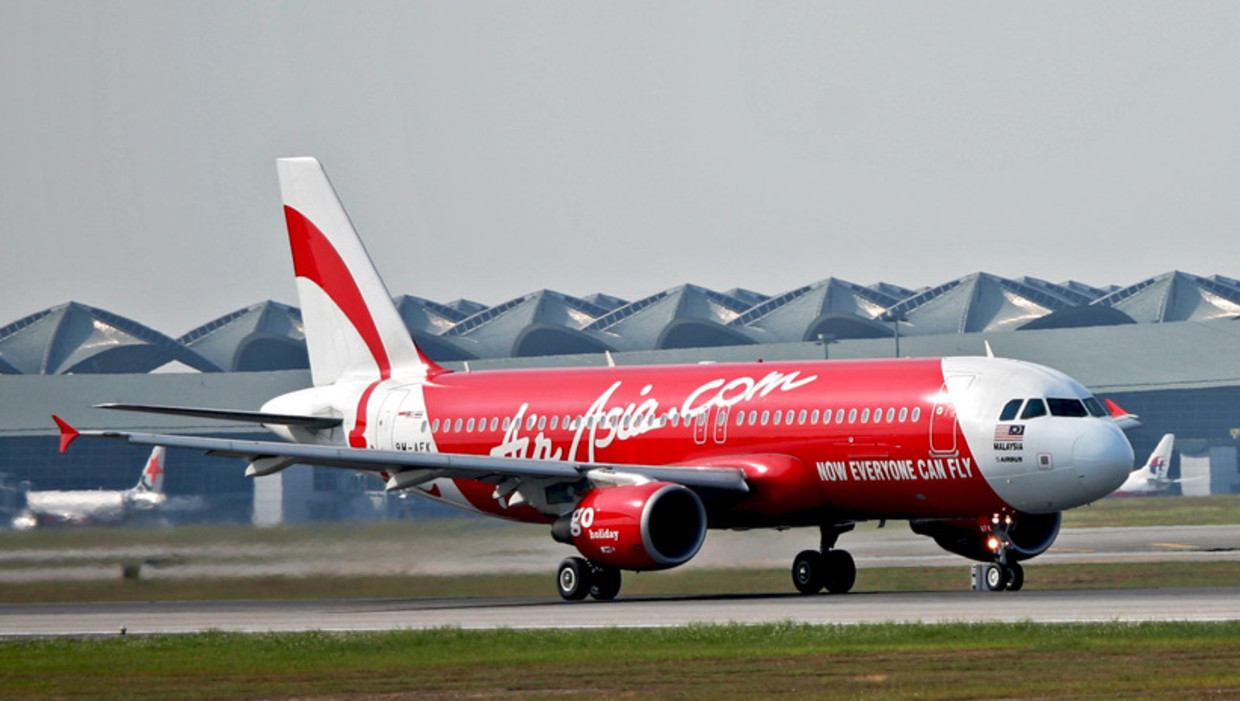
    Philippines AirAsia will introduce more direct flights to Sabah and is considering establishing a hub in Sandakan as part of its expansion ambitions.

    The airline is currently studying the potential for direct routes to Kota Kinabalu from Puerto Princesa and Davao in the Philippines. A possible connection between Zamboanga and Sandakan is also on the list of possible direct routes, according to an assessment in a media statement released by the Sabah Tourism Board.

    State Tourism, Culture, and Environment Minister Datuk Jafry Ariffin said Sabah welcomed the plan, which would help both countries in terms of economic spillover.

    “One of the Sabah Maju Jaya plans is to ensure Sandakan Airport is upgraded to the international airport. We should explore additional direct routes into the state.

    “Tawau, being a gateway to Semporna, might potentially serve as an operational hub too. So, whether it’s Sandakan or Tawau, we’ll let them study the viability,” he said.

    Jafry was speaking at a recent press conference on the joint collaboration between the Philippines AirAsia and Sabah Tourism Board (STB)

    Also present were Assistant Tourism, Culture, and Environment Minister cum STB chairman Datuk Joniston Bangkuai; Permanent Secretary of the Ministry of State Tourism, Culture and Environment Datuk Sr Yusrie Abdullah; STB deputy chairman Datuk Dr Jelani Hamdan; STB chief executive officer Noredah Othman; Philippines AirAsia chief executive officer Ricky Isla; and Philippines AirAsia SuperApp managing director Ray Berja.

    The press conference was in conjunction with the familiarisation trip to Sabah for the Philippines media.

    Speaking on the strategic partnership between STB and Air Asia, Jafry said the board is now finalising a collaborative technical campaign to encourage Filipinos to visit Kota Kinabalu.

    Ricky stated that Philippines Air Asia now flies twice weekly from Manila to Sabah, with plans to expand frequency.

    “We want to sustain the travel momentum, and for Sabah, we are not just looking at beaches but eco-tourism and agro-tourism, which are educational.

    “We are looking into the prospect of opening a new destination in Sandakan, which has one of the highest Filipino populations in Sabah, as part of our expansion plan,” he said

    Meanwhile, STB chief executive officer Noredah Othman said Manila has the potential to serve as another hub to attract international visitors and also to attract expatriates living in the Philippines.

    Although having certain similarities, she said Sabah and the Philippines each have unique contrasts that both sides should explore.

    Pre-pandemic, Noredah said the state of Sabah received 4.2 million visitors in 2019, with a promising rise in arrivals since the reopening of borders after two-year hiatus. Chinese visitors contributed the most arrivals in 2019, followed by South Koreans and Europeans.

  • Australians set online shopping record

    Australians set online shopping record

    A record 9.3 million Australian households made online purchases in the year to March according to data released by Australia Post.

    The postal service said online spending increased by 12 per cent year on year and in the six months from July to December 2021, an average of 5.6 million households purchased online each month.

    The dominant categories were pet foods (38 percent), tools and garden supplies (29 percent) discount items (32 percent) athleisure (17 per cent) and baby products (18 percent).

    One in three purchases were directed to NSW, which recorded the highest participation among states, growing by 27 per cent year-on-year.

    Australia Post’s head of e-commerce analytics, Rose Yip, said the growth in online shopping has accelerated “beyond expectations”.

    “We’ve seen more than 900 million parcels delivered in the past three years alone, which says so much about how quickly e-commerce has grown in a short amount of time.

    “It’s now the norm for so many Australians, with more than 5 million households regularly shopping online every month, which is why we’ve not only increased our network capacity but we’re investing in more new facilities, technology and our fleet to set up a strong and sustainable network for the future.”

  • China tightens rules on $1.3 trln credit card business

    China tightens rules on $1.3 trln credit card business

    China unveiled tighter rules late on Thursday to better regulate its $1.3 trillion credit card industry, urging lenders to adopt a “prudent” growth strategy, and monitor risks more closely.

    Banks are also barred from using the number of cards issued or market share as main performance metrics, and are required to cap the number of dormant cards at 20% of total, according to rules jointly published by China’s central bank, and the country’s banking regulator.

    “China’s credit card business has been growing rapidly, playing a key role in facilitating payment and consumption,” the China Banking and Insurance Regulatory Commission (CBIRC) said in a statement on its website accompanying the release of the new rules.

    “Recently, however, some banks … are lax in risk management, and have behaved in ways that hurt customers’ interest,” the regulator said.

    Chinese banks have issued a total of 800 million credit cards as of the end of 2021, with outstanding loans totalling 8.62 trillion yuan ($1.29 trillion), according to the People’s Bank of China. Roughly 86 billion yuan of credit card loans, or 1% of total outstanding, are overdue for six months or longer.

    The new rules require banks to tighten scrutiny over credit card loans, and strengthen risk management control.

    Banks must also set up a sound system to monitor, identify, alert and prevent abuse in the credit card business, according to the rules.

  • Reliance Retail inks franchise deal with Gap

    Reliance Retail inks franchise deal with Gap

    Reliance Retail Ltd on Wednesday announced its long-term partnership with Gap and plans to bring the iconic American fashion brand to India.

    “Through a long-term franchise agreement, Reliance Retail has become the official retailer for Gap across all channels in India,” said a joint statement.

    Reliance Retail will introduce Gap’s offerings to Indian consumers through a mix of exclusive brand stores, multi-brand store expressions and digital commerce platforms.

    “The partnership is aimed at leveraging Gap’s position as a leading casual lifestyle brand and Reliance Retail’s established competencies in operating robust omni-channel retail networks and scaling local manufacturing and driving sourcing efficiencies,” it said.

    Founded in San Francisco in 1969, Gap is considered as an authority on modern American style. It continues to build on its heritage grounded in denim and connect with customers online and in company-operated and franchise retail locations globally.

    Reliance Retail CEO, Fashion & Lifestyle, Akhilesh Prasad said: “We believe that Reliance and Gap complement each other in their vision to bring industry-leading fashion products and retail experiences to their consumers.”

    Managing Director of International, Global Licensing and Wholesale at Gap Inc Adrienne Gernand said: “Partnering with regional experts, like Reliance Retail in India, allows us to deliver our relevant, purpose-driven brand to customers around the globe, while continuing to diversify our business portfolio through our partner-based model.”

    Reliance Retail is a subsidiary of Reliance Retail Ventures Ltd (RRVL), the holding company of all the retail companies under the Reliance Industries Ltd group.

    RRVL reported a consolidated turnover of Rs 1,99,704 crore ($26.3 billion) for the year ended on March 31, 2022.

    Gap Inc products are available for purchase worldwide through company-operated stores, franchise stores and e-commerce sites. Its net sales for the fiscal year 2021 was at $16.7 billion.

  • AS Watson injects US$115 million into its O+O experience

    AS Watson injects US$115 million into its O+O experience

    “We are mindful that digital transformation is not just about how much investment we put in technology or how many more digital devices we put in the stores,” said Manila Ngai, group COO of AS Watson Group and CEO of AS Watson Asia and Europe.

    “It is also about a genuine revolution in the organisation culture – the way we think, the way we work, and the way we communicate and serve our customers.”

    The investment comes after the brand expanded its ‘TechLab’ experience centre in Shenzhen, alongside its existing centre in the Netherlands. The centre features shopping technology such as unmanned stores, smart shelves, interactive games and facial recognition.

    “Retail is evolving very quickly. What took a decade to develop in the past would now happen in two years,” Ngai added.

    “Therefore, we need to build agility in the organisation, and to empower our people with data insights in real-time, cloud-based dashboards is key to fast and smart decision making. O+O continues to be AS Watson’s core strategy and technology is the critical engine for future growth.”

    The Hong Kong-based retailer is serving more than 5.5 billion customers via its O+O platforms.

  • VN-Index bounces back after tumble

    VN-Index bounces back after tumble

    Vietnam’s benchmark VN-Index rose 1.47 percent to 1,166.48 points Thursday but with plunging trade.

    The index closed nearly 17 points higher after losing almost 32 points on Wednesday.

    Trading on the Ho Chi Minh Stock Exchange (HoSE) fell by 27.9 percent to VND9.06 trillion ($388 million).

    The VN-30 basket, comprising the 30 largest capped stocks, saw 24 tickers gain.

    BVH of insurance company Bao Viet Holdings and VRE of retail real estate arm Vincom Retail led with a 3.8 percent gain.

    VCB of state-owned lender Vietcombank rose 3.7 percent.

    Other gainers included PNJ of Phu Nhuan Jewelry and VIC of biggest private conglomerate Vingroup, up 3.6 percent and 3.4 percent respectively.

    Four blue chips fell, with GAS of state-owned Petrovietnam Gas losing 1.8 percent, and FPT of IT giant FPT Corporation falling 0.5 percent. Foreign investors were net buyers to the tune of VND487.46 billion ($20.86 million).

    The HNX-Index at the Hanoi Stock Exchange, where mid and small caps list, was down 0.02 percent while the UPCoM-Index at the Unlisted Public Companies Market was up by 0.19 percent.

  • Vietnam approves 2nd environmental tax cut on fuel

    Vietnam approves 2nd environmental tax cut on fuel

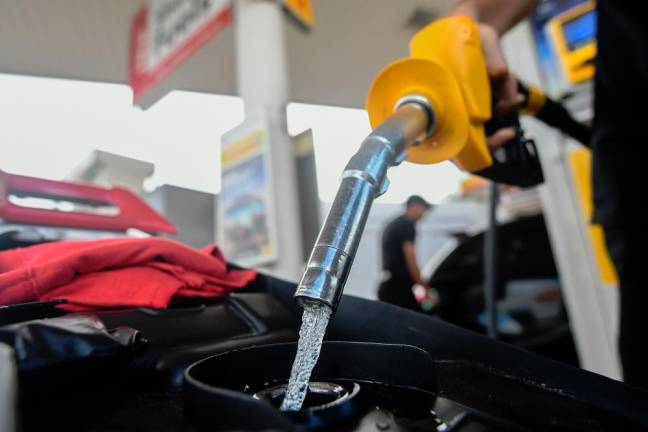
    Vietnamese lawmakers have approved the second environmental tax cut on gasoline starting next week to contain surging fuel prices, two months after the first reduction came into effect.

    In an extraordinary meeting Wednesday morning, the Standing Committee of the National Assembly greenlighted an additional 25 percent cut on environmental tax to bring it down to VND1,000 ($0.04) per liter from July 11 until the end of the year.

    The tax was originally VND4,000 per liter and was cut to VND2,000 in April this year.

    Starting next week the environmental tax on diesel will also be cut from VND1,000 per liter to VND500.

    The government initially proposed lawmakers to approve the cut starting Aug. 1, but Vuong Dinh Hue, chairman of the National Assembly, said Wednesday it should come into effect starting next week.

    He added that the government should consider bringing down value-added tax and special consumption tax on fuel to reduce the impact of rising fuel prices on inflation.

    The government estimates that the latest environmental tax break would bring the consumer price index this year down by around 0.15 percentage points.

    RON95 gasoline price has risen 41 percent to VND32,760 this year.

  • AirAsia X Eyes A Return To New Zealand

    AirAsia X Eyes A Return To New Zealand

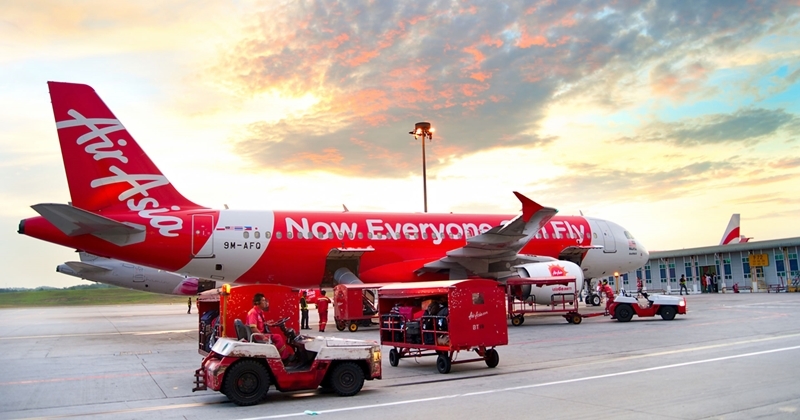
    AirAsia X, the medium to long-haul affiliate airline of AirAsia Aviation Group, is launching flights to Auckland, New Zealand, via Australia. The announcement is the latest from the Kuala Lumpur International (KUL) based airline, which will offer seats to several new destinations as it returns from a significant restructuring.

    The Malaysian airline resumed operations earlier this year and currently serves Seoul and New Delhi from its base in Kuala Lumpur.

    AirAsia X CEO Benyamin Ismail has confirmed that the carrier aims to restart flights to Australian destinations Melbourne and Perth, as well as a route to Auckland, New Zealand, via Australia.

    Adding a round-trip leg to New Zealand from Australia is quite a common practice. The flights are able to use fifth-freedom rights to carry on to New Zealand as opposed to parking the plane at an Australian airport for the day. Qatar Airways, for instance, flies to Auckland via Adelaide on one of the OneWorld carrier’s Boeing 777-300ERs. AirAsia X did not mention which airport would see the stopover service carry on to New Zealand.

    The airline previously operated flights to Auckland via Gold Coast Airport in Queensland but cut the Auckland leg of this service in February 2019. AirAsia X also launched direct flights to Christchurch in 2011 as the island was recovering from severe earthquake damage and donated a six-figure sum to help with restoration. The 11-hour flight lasted less than a year before being cut in early 2012.

    AirAsia X briefly restarted Sydney flights on Valentine’s Day of this year. The service only continued until April, however. Flights are now scheduled to resume in September of this year. The carrier previously flew from Kuala Lumpur to Sydney, carrying one million of some 2.4 passengers flying between the two countries in 2019.

    The airline has also now scheduled flights to resume to Tokyo Haneda on the 14th of July. The service will join the resumption of Osaka, also in Japan, in October. The Osaka flights will then continue to Honolulu before returning. Flights to Sapporo, the capital of the mountainous northern Japanese island of Hokkaido, will resume in December.

    The airline still has several next generation Airbus jets on order as it seeks to rebuild its network. Photo: AirAsia x

    AirAsia X also announced it intends to resume its London service, which will operate from Kuala Lumpur to London Gatwick via Dubai. The carrier initially launched the route to London Stansted Airport in 2009 using Airbus A340s before pulling it in January 2012. The service will include a layover in Dubai and launch in conjunction with a service to Istanbul.

    The airline’s fleet currently consists of twelve Airbus A330-300 aircraft, which seat 365 in economy class and 12 passengers in business class. AirAsia X currently has orders for twenty of the Airbus A321 family, alongside fifteen A330-900s for its upcoming long-haul service.

    Simple Flying previously reported that AirAsia X had canceled part of its sizeable outstanding order with Airbus. AirAsia X, the largest customer for the A330-900, has confirmed the cancellation of 63 A330neo orders, equaling a fifth of outstanding orders for the type. The airline also canceled ten A321neo aircraft orders, according to the latest available data from Airbus.

  • HSBC hikes Vietnam growth forecast

    HSBC hikes Vietnam growth forecast

    Lender HSBC has raised its growth forecast for Vietnam from 6.6 percent to 6.9 percent thanks to the country’s broad-based recovery from two years of Covid-19 impacts.

    Fading Omicron risks and easing of restrictions have set the basis for Vietnam’s return to normalcy, with GDP growth in the second quarter hitting 7.7 percent year-on-year, a regional outperformer, the bank reported Wednesday.

    Services, which once bore the brunt of an economic hit, have seen a meaningful recovery, while tourism-related and consumer-facing services have largely benefitted from sustained re-openings.

    Retail sales overshot 17 percent year-on-year in the second quarter, signalling a return of rebounding household consumption.

    Vietnam welcomed 0.5 million visitors in the second quarter, almost five times more than those in the first quarter, taking total tourists to 0.6 million in the first six months.

    Manufacturing continues to roar, with industrial production growth accelerated to over 25 percent year-on-year in the second quarter.

    This helped export growth hit over 20 percent year-on-year in the second quarter, a third of which came from firm computer and smartphone shipments.

    However, the impact of high energy prices is becoming increasingly clear, HSBC said.

    Elevated commodity prices have turned the trade balance into a deficit in the second quarter, likely exacerbating the deteriorating current account.

    Despite a firm rebound in household consumption, high oil prices would likely take a bite out of residents’ wallets, dampening the pace of its continued recovery.

    “Given elevated global oil prices, we expect upward pressures to inflation to persist,” the report said, adding that inflation could hit 3.5 percent this year and exceed 4 percent from the last quarter this year to the second quarter next year.

    With surging energy prices considered, the bank trimmed its Vietnam growth forecast for 2023 from 6.7 percent to 6.3 percent.

    Vietnams’ GDP expanded by 2.6 percent last year. The government targets 6-6.5 percent this year.