Author: Mei Ling Tan

  • FedEx and eBay Team Up to Boost APAC Businesses Through New E-commerce Offerings

    FedEx and eBay Team Up to Boost APAC Businesses Through New E-commerce Offerings

    FedEx Express, a subsidiary of FedEx and one of the world’s largest express transportation companies, announced a new alliance with eBay, a leading e-commerce marketplace platform for fast-growing and established brands worldwide. eBay sellers in the Asia Pacific region can now sign up for a FedEx account and gain access to the full spectrum of FedEx e-commerce delivery service options at competitive rates.

    Marketplace sales account for 67% of e-commerce globally, with the Asia Pacific e-commerce market expected to grow by about 14% annually, reaching US $352.68 trillion by 2030. This collaboration will help propel e-merchants – especially small business owners – amidst booming e-commerce in the region, driven by consumers’ changing behaviors toward shopping online accelerated by the pandemic.

    Through this collaboration, eBay sellers will be able to provide their customers with a more premium delivery experience powered by FedEx shipping solutions. Key benefits under the current strategic program include:

    • Competitive rates: eBay sellers will receive competitive discount rates on FedEx Express services.
    • Enhanced shipping capabilities: FedEx offers eBay sellers a wide range of services that are critical for cross-border e-commerce, including FedEx Electronic Trade Documents; FedEx Home Delivery, which now delivers seven days a week; a portfolio of flexible, simple returns options; and the FedEx Hold-at-Location which gives consumers a choice to have their packages delivered conveniently and safely to various grocery stores, pharmacies and FedEx Office locations.
    • Direct contact with FedEx: eBay sellers will get their own FedEx account to use any shipping solution from the vast portfolio that FedEx provides. Additionally, eBay sellers can contact FedEx directly for pickups and billing questions, as well as to order shipping forms or other delivery supplies, reroute packages and manage their My FedEx Rewards account.

    “E-commerce has become the new growth engine behind the APAC economy. Logistics services providers like FedEx, therefore, play a critical role in helping e-commerce businesses deliver seamless customer experiences from online to the physical world,” said Kawal Preet, president of Asia Pacific, Middle East and Africa (AMEA) at FedEx Express. “We’re thrilled about this collaboration with eBay that enables easier access to more markets through our international logistics services. By providing international shipping solutions at highly competitive rates, we are helping eBay sellers make the most out of our premium services and products as they continue expanding overseas.”

    “eBay has been driving retail export in the region and enabling our sellers to grow their business via our global marketplace,” said Jenny Hui, General Manager of Cross Border Trade, Hong Kong, Taiwan and Global Emerging Markets at eBay. “Shipping is a critical component of the cross border e-commerce ecosystem. Teaming up with FedEx, one of the world’s most well-respected e-commerce transportation and logistics carriers, gives our sellers access to a unique set of capabilities and rates, which ultimately enables them to provide their global customers with retail-standard buyer experience.”

    The collaboration reflects the latest effort in strengthening the FedEx leadership in the e-commerce ecosystem through strategic collaborations with leading marketplaces and technology providers. To date, FedEx has integrated with more than 17 marketplace providers, including BigCommerce, an open SaaS e-commerce platform, allowing hundreds of thousands of e-tailers across Asia Pacific direct access to FedEx services, using their FedEx account number, to manage shipments and grow their cross-border e-commerce business.

  • Cebu Pacific Resumes Sydney Flights With Its Airbus A330neo

    Cebu Pacific Resumes Sydney Flights With Its Airbus A330neo

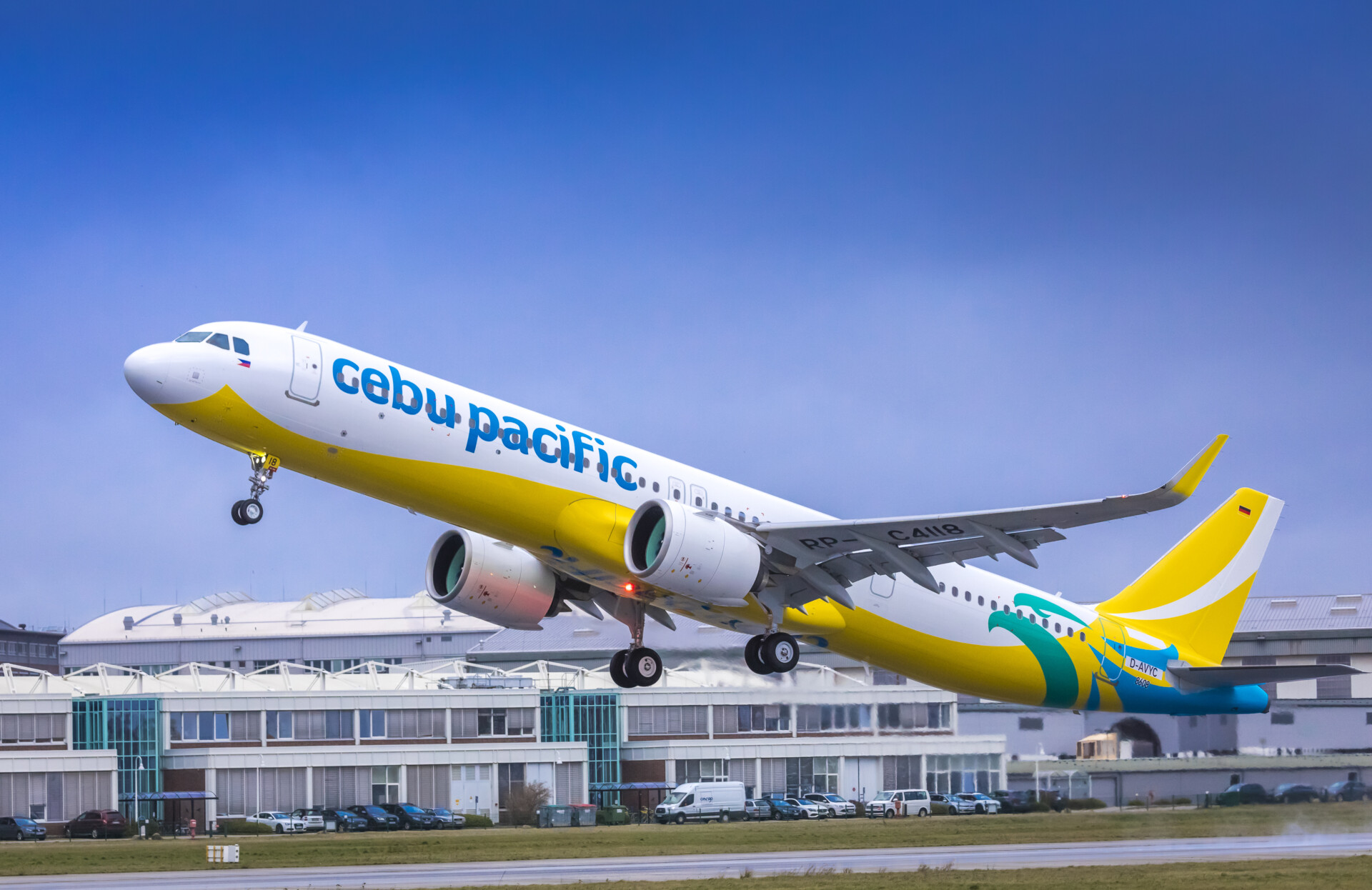
    Another international airline has returned to Sydney, with Cebu Pacific resuming its popular flights between Sydney and Manila on July 1. Cebu Pacific had carved out a niche in Australia by offering a low-cost alternative to Qantas and Philippine Airlines before the pandemic but paused its flights in March 2020. Now the airline is back with thrice-weekly return flights.

    The return of Cebu Pacific is another step forward for Sydney Airport, which lost a lot of carriers at the pandemic’s start. Most, but not all, have returned or planned to return and the airport is keen to get as many former airlines back as possible. In 2019, the most recent year of uninterrupted flying for airlines, 776 660 people flew on the Australia – Philippines country pair, with airlines offering 3,429 nonstop flights. Cebu Pacific competed with Qantas and Philippine Airlines on the country pair, with the low-cost carrier snagging 35% of the market in terms of passenger numbers.

    Landing in Sydney on a wild and wet Saturday morning, Cebu Pacific was the last of the three carriers to resume flights between Australia and the Philippines.

    “With this route resumption, we are pleased to fly once again to and from this destination after more than two years,” said Cebu Pacific Chief Commercial Officer Xander Lao. “We know that many are excited to visit Sydney’s attractions. This route also allows Filipinos to reunite with friends and family.”

    It takes around eight and a half hours to cover the 3,879 miles (6,243 kilometers) between the two cities. The flights down to Sydney are overnight services, while flights up to Manila are civilized daytime journeys. At 23:20 every Monday, Wednesday, and Friday, a Cebu Pacific Airbus A330-900 will operate flight 5J39 to Sydney (SYD), arriving at 09:50 the following day. Heading up to Manila (MNL), 5J40 will depart Sydney at 11:20 every Tuesday, Thursday, and Saturday and touch down in Manila at 17:50 on the same day.

    While Cebu Pacific generally undercuts its competitors on this route, you’ll be on the receiving end of an authentic medium-haul low-cost flying experience. Cebu Pacific fits 436 passengers on its A330-900s in a standard 3-3-3 layout across the entire plane. This is an impressive number of passengers, but there won’t be much room to move during your eight-plus hours in the air. Baggage, seat selection, and meals are all add-ons.

    Cebu Pacific’s return to Australia coincides with that country dropping the last of its COVID-related travel restrictions. The longstanding policy of checking vaccination certificates and current status before boarding an Australia-bound flight ends this week. Australia is also axing its previously compulsory but deeply flawed digital passenger declaration app in favor of returning to the low-tech but infinitely preferable hard copy arrival declaration. It marks a return to pre-pandemic arrival processes in Australia.

    Meanwhile, the Philippines is open to all fully vaccinated international tourists as they can present proof of complete COVID-19 vaccination and at least one booster shot. However, there do remain some domestic travel restrictions and guidelines imposed by the national and local governments to help control the spread of COVID-19 within the Philippines.

  • Apple receives patent for technology that helps iPhone users type in the rain

    Apple receives patent for technology that helps iPhone users type in the rain

    Apple has just been awarded a new patent from the U.S. Patent and Trademark Office called “Modifying functionality of an electronic device during a moisture exposure event” that could make it easier to use an iPhone in the rain. Sure, your phone is probably built to withstand some moisture, but that doesn’t make it easy to type on a wet display or with wet fingers.

    Apple plans to have the iPhone screen adjust to the moisture whether it is light rain, a steady drenching, or if the handset is being used underwater. False taps on the screen generated by the liquid will be detected by the technology listed in the patent and eliminated. On-screen controls could change accordingly with buttons growing larger while also moving farther apart from other buttons to improve the accuracy of pressing the right button when the screen is wet.

    At the same time, the capacitive iPhone display would automatically change to a pressure-sensitive screen similar to Apple’s no longer used Force Touch and 3D Touch technologies. To prevent rain drops or liquid from accidentally setting off touch inputs, Apple would require these finger presses to have more force than a dynamic threshold that would change depending on the kind of moisture event (light rain, heavy rain, for example) that is making the touch screen hard to accurately type on.

    An image in the patent documentation shows an iPhone camera app offering settings for “dry,” “wet,” and “underwater” modes. Depending on the mode, changes are made to the camera UI. For example, in wet mode, some features are removed from the UI while in underwater mode, some controls are replaced with extra-large buttons. They are easier to activate underwater but have restricted functionality.
    The phone’s display will show the current depth of the device in order for the user to keep it within the limits of the handset’s water resistance. Apple will have to take care with the size expansion and the location changes of camera UI buttons to make sure that users do not get confused.
    Apple receives so many patents over the course of a year and not every one results in new technology that is implemented right away. It is not clear whether Apple will be interested in implementing this patent right away.
  • WhatsApp may soon let you hide your activity status

    WhatsApp may soon let you hide your activity status

    Sometimes, you might not want your friends on social media to know when you’re online. You probably don’t want to be disturbed, or you are a very privacy-oriented person and just don’t want others to know when you are on your socials. This is why apps like Messenger and Instagram have an option to hide your activity status, and soon, WhatsApp will have a similar feature as well.

    As spotted by WABetaInfo, WhatsApp is working on a way to let you hide your online status. From the screenshot below, we can see that the new option will probably be situated in the Last Seen section in the Privacy settings menu of the app.

    Most likely, you will be able to choose between hiding your activity status from everyone or concealing it only from those selected in the “Who can see my last seen” section.

    Although the screenshot was taken from the iOS version of the WhatsApp beta, the new “Who can see when I’m online” feature will most likely come to the Android and Desktop WhatsApp versions as well. However, keep in mind that this option is still under development, and some things might be changed when it is publicly released.

    Nevertheless, for quite some time now, many WhatsApp users have wanted an option to choose who can see their activity status. So, it’s great that the people behind WhatsApp have listened and decided to finally introduce such an option to the platform.

  • Lobster exports skyrocket in first half

    Lobster exports skyrocket in first half

    Lobster exports rose 30 times year-on-year in the first six months of the year to US$130 million, according to the Vietnam Association of Seafood Exporters and Producers.

    Besides, surging global demand has caused the prices of some lobster species to double.

    Tropical rock lobster has risen to VND1.7 million ($73) a kilogram and scalloped spiny lobster to VND1.4 million.

    Exports of shrimp products also rose in the first half, with shipments of processed whiteleg shrimp going up by 17 percent and those of black tiger shrimp by 20 percent.

    They fetched $2.3 billion, up 33 percent from last year. Shrimps account for 40 percent of Vietnam’s seafood exports.

    Shrimp exports to China, where production is affected by Covid restrictions, doubled to $275 million in the first five months.

    VASEP said Vietnam’s shrimp exporters face challenges like supply shortage and inflation but are coping by expanding farming areas and focusing on more demanding markets.

  • ZTE and Pakistan’s Zong Launch Dual-Band FDD Massive MIMO

    ZTE and Pakistan’s Zong Launch Dual-Band FDD Massive MIMO

    ZTE, together with Zong, Pakistan’s digital services front-runner, has commercially launched the dual-band FDD Massive MIMO in Zong’s existing 4G network, well satisfying the expansion requirements necessary for increasing 4G users and traffic.

    With ZTE’s FDD Massive MIMO solution, the deployment area’s 4G data traffic capacity has jumped by 21% while the average user throughput has increased by 40%, resulting in a 60% reduction in high-loaded cell counts.

    Zong has been leading the data market in Pakistan with its rapid growth in 4G users and data traffic. Total 4G data traffic in the year 2021 increased nine times over that of 2018, while the proportion of high-load cells increased from 3% to 17%. Therefore, Zong’s network effective solutions to meet its expanding network requirements.

    Zong is also a pioneer of exploring new technological solutions. It is known that FDD Massive MIMO is one of the key 5G technologies. It has now been successfully applied in the 4G network, bringing about great advantage. In September 2021, Zong together with ZTE successfully commercialized the first FDD Massive MIMO site in Peshawar. The FDD Massive MIMO has been operating well on 4G for both 1.8GHz and 2.1GHz dual bands, with the highest output power of 320W in the industry. In addition,, it has enabled the industry’s unique Smart Spatial Cell Groups (SSCG) technology, which realizes intelligent cell coverage adjustment based on user distribution, and improves cell capacity and spectrum efficiency.

    “Digital everything” is becoming a new priority of the telecommunications industry. FDD Massive MIMO is a much-needed technology to support global telecommunications operators in a highly-competitive market.

    By the end of May 2022, more than 170 sites were on air. Such large-scale commercialization of FDD Massive MIMO is becoming a new way of improving capacity and spectrum efficiency in 4G networks. Moving forward, Zong and ZTE will be committed to expanding the large-scale commercialization of the FDD Massive MIMO to further improve the capacity and spectrum efficiency of 4G networks.

  • Vietnamese currency hits 2-year low against dollar

    Vietnamese currency hits 2-year low against dollar

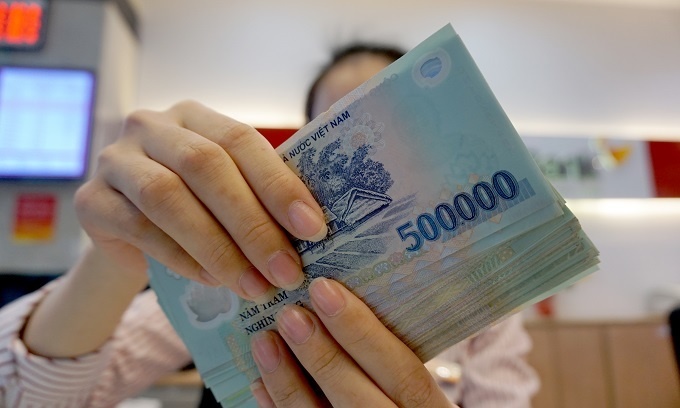
    Vietnamese banks on Monday traded the dong against the U.S. dollar at the lowest rate in two years as the greenback strengthens globally amid economic uncertainty. The Vietnamese dong declined by 0.3 percent from last weekend to VND23,510 per U.S. dollar at state-owned Vietcombank.

    It fell by 0.34 percent at BIDV and 0.26 percent at Vietinbank, also state-owned lenders. Among private lenders, the currency is 0.21 percent weaker at Sacombank, and 0.17 percent weaker at Eximbank. The changes came after the State Bank of Vietnam on Monday let the Vietnamese dong slide by 0.04 percent against the greenback to VND23,121, the lowest this year.

    It has been pumping more U.S. dollar into the market to reduce pressure on the exchange rate.

    RongViet Securities estimates that the central bank has sold over $10 billion to the market this year, or around 10 percent of Vietnam’s foreign exchange reserves, to stabilize the market.

    The U.S. Dollar Index has been hovering around a 20-year high mark since last month amid global economic uncertainty caused by the Russia-Ukraine crisis and supply chain disruptions due to China’s “zero-Covid” policy.

    Concerns of global inflation has urged investors to buy more U.S. dollars as a safe-haven currency.

  • Bamboo Airways to triple fleet size in 6 years

    Bamboo Airways to triple fleet size in 6 years

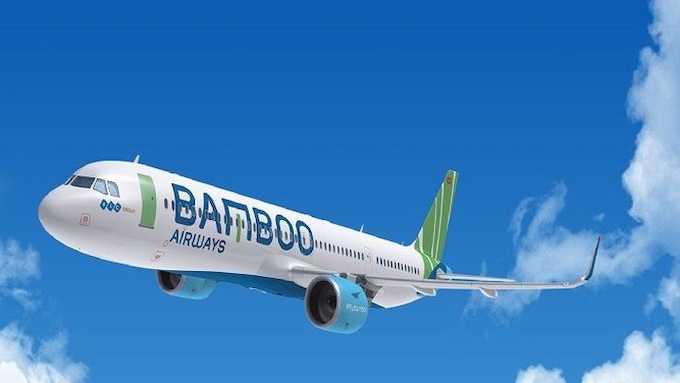
    Bamboo Airways plans to triple its fleet size to 100 by 2028, with new aircraft being delivered this quarter, despite major changes in its leadership.

    The airline is set to receive its 22nd narrowbody Airbus A321 jet and fourth widebody Boeing B7s87 this quarter, CEO and chairman Dang Tat Thang told shareholders at the recent extraordinary shareholders’ meeting of its parent company FLC.

    The airline currently has 29 jets, comprising 21 narrowbody aircraft, three Boeing B787s and five Embraer 190 regional aircraft, according to aviation data website Planespotters.

    Its competitors Vietnam Airlines operates 99 aircraft, and Vietjet 77. Thang became the new chairman of Bamboo Airways and FLC in March to replace Trinh Van Quyet who was arrested for alleged stock manipulation.

    The airline saw revenues rising 150 percent between the first and second quarter this year as travel resumed, Thang said. Bamboo Airways now operates nearly 200 flights a day on 60 domestic routes and 12 international routes, he added.

    It has recently increased pilot wages by 20 percent, he said.

    While FLC is set to experience a complete restructure this year, it will continue to expand Bamboo Airways’ operation both domestically and internationally, with the aim of making it a five-star airline of global standard, Thang said.

    “To achieve this goal, Bamboo Airways needs many new investors to increase its capital.”

  • AirAsia introduces trial flights to China

    AirAsia introduces trial flights to China

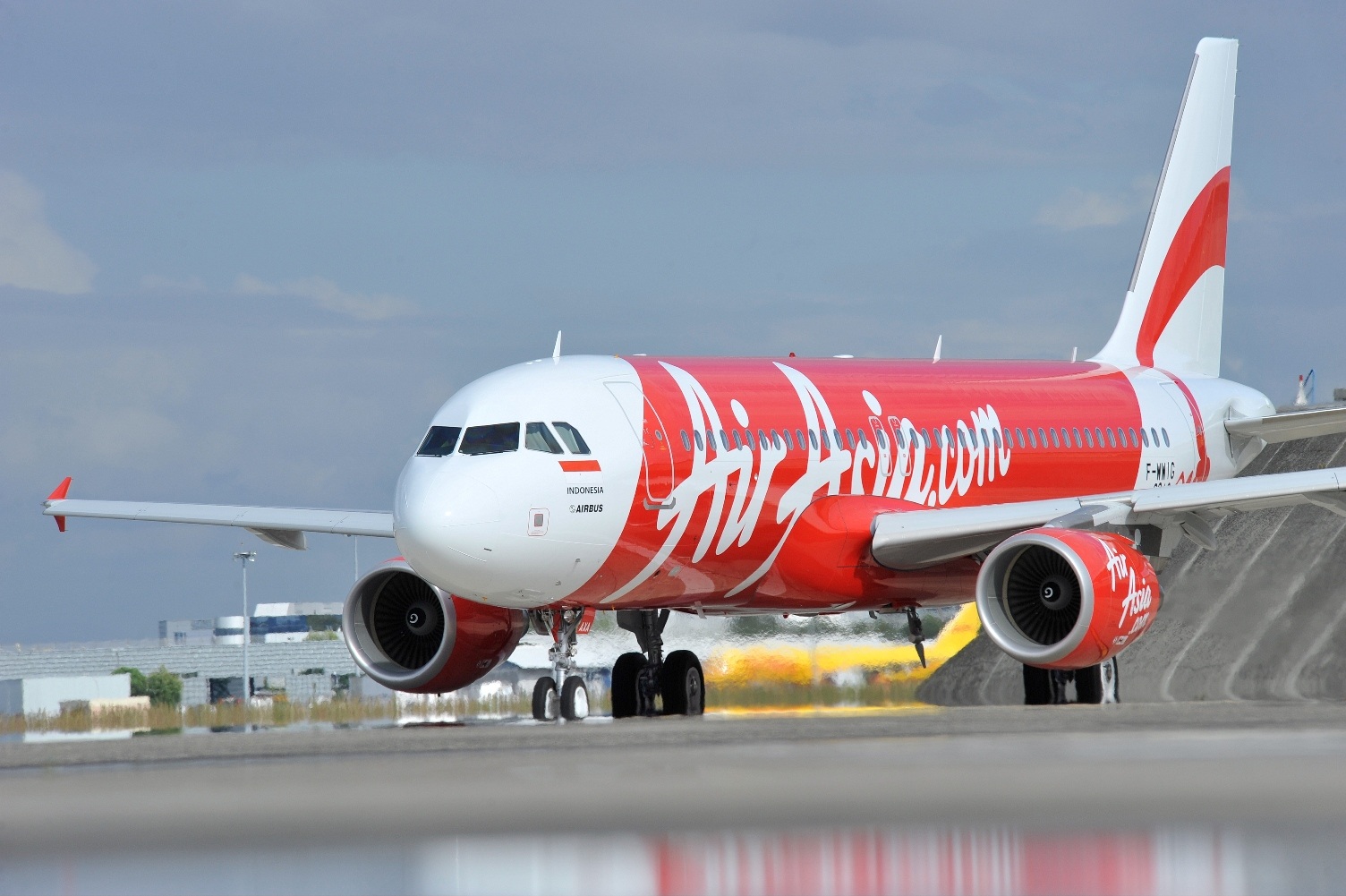
    AirAsia Thailand (flight code FD) will launch direct flights to China and Hong Kong from its Bangkok Don Mueang airport hub starting 7 August. Initially, the low-cost airline will fly a weekly service but hopes to increase flights to twice a week in September and three times weekly in October.

    Promotional fares start at around THB2,990 one-way for members for travel up to 8 December 2022 booked through the AirAsia Super App. A pilot roundtrip flight between Bangkok Don Mueang and Guangzhou is scheduled for 13 July, with tickets to Thailand available on the AirAsia Super App. The flight is being carried out to demonstrate the carrier’s readiness to serve routes to and from China as soon as China announces the country’s official reopening for outbound leisure travel.

    AirAsia Thailand chief executive officer Santisuk Klongchaiya stated: “These two initial routes provide us with an opportunity to welcome visitors to Thailand. With restrictions further relaxed in Thailand, we have been marketing heavily in China and Hong Kong to tap these tourism markets.”

    Travelers to Hong Kong are required to undergo screening procedures. Arriving travellers must be fully vaccinated. They must produce a Covid-19 test result and are required to undergo quarantine. The Don Mueang-Guangzhou flight will be subject to a policy by the China government, which has allotted a limited entry quota to Thai airlines.

    So far, China has offered no indications as to when it will reopen outbound tourism. However, industry pundits claim the reopening could be as early as the Chinese New Year holiday season in late January or February 2023. Travel to and from China is strictly controlled and mainly limited to essential business travel.

  • Yeah1 to buy TV firm amid restructuring

    Yeah1 to buy TV firm amid restructuring

    Online entertainment company Yeah1 plans to buy a 51 percent stake in TV and radio company STV amid a major restructuring endeavor.

    The deal is set to be completed this quarter. STV, established in 2008, owns lifestyle TV channel StyleTV, stock and finance channel InfoTV and radio channel Joy FM.

    The deal was announced after Yeah1 founder and chairman Nguyen Anh Nhuong Tong sold his entire 12.89 percent stake on June 1 after 15 years of leading the company from an online news website to the first media company to be listed on the Ho Chi Minh Stock Exchange.

    Several other major shareholders have also been pulling out since February, including DFJ VinaCapital Venture Investment.

    Yeah1 has postponed its annual general meeting twice this year saying more time was needed to prepare important documents.

    It reported post-tax profits of nearly VND28 billion last year after two years of losses.

    Its contract with YouTube was terminated in March 2020 due to a violation of policies, and what began as an operational error has “turned into a real crisis for the company,” Tong once said.

    Yeah1 targets revenues of VND588 billion this year, down 45 percent from 2021 and the lowest since 2017.

    It plans to issue 78.6 million new shares to increase its capital.

  • Uber Ex-Security Chief Accused Of Hacking Coverup Must Face Fraud Charges

    Uber Ex-Security Chief Accused Of Hacking Coverup Must Face Fraud Charges

    A federal judge on Tuesday said a former Uber Technologies Inc security chief must face wire fraud charges over his alleged role in trying to cover up a 2016 hacking that exposed personal information of 57 million passengers and drivers.

    The U.S. Department of Justice had in December added the three charges against Joseph Sullivan to an earlier indictment, saying he arranged to pay money to two hackers in exchange for their silence, while trying to conceal the hacking from passengers, drivers and the U.S. Federal Trade Commission.

    U.S. District Judge William Orrick in San Francisco rejected Sullivan’s claim that prosecutors did not adequately allege he concealed the hacking to ensure that Uber drivers would not flee and would continue paying service fees.

    Orrick also rejected Sullivan’s claim that the people allegedly deceived were Uber’s then-chief executive, Travis Kalanick, and its general counsel, not drivers.

    “Those purported misrepresentations, though not made directly to Uber drivers, were part of a larger scheme to defraud them” according to the indictment, Orrick wrote.

    Lawyers for Sullivan did not immediately respond to requests for comment. Sullivan also faces two obstruction charges.

    The defendant was originally indicted in September 2020, and is believed to be the first corporate information security officer criminally charged with concealing a hacking.

    Prosecutors said Sullivan arranged to pay the hackers $100,000 in bitcoin, and have them sign nondisclosure agreements that falsely stated they had not stolen data.

    Uber had a bounty program designed to reward security researchers who report flaws, not to cover up data thefts.

    Dara Khosrowshahi, Uber’s current chief executive, fired Sullivan after learning the extent of the breach.

    In September 2018, the San Francisco-based company paid $148 million to settle claims by all 50 U.S. states and Washington, D.C. that it was too slow to reveal the hacking.

  • Apple Eyes Fuel Purchases From Dashboard As It Revs Up Car Software

    Apple Eyes Fuel Purchases From Dashboard As It Revs Up Car Software

    Apple Inc wants you to start buying gas directly from your car dashboard as early as this fall, when the newest version of its CarPlay software rolls out, accelerating the company’s push to turn your vehicle into a store for goods and services.

    A new feature quietly unveiled at Apple’s developer conference this month will allow CarPlay users to tap an app to navigate to a pump and buy gas straight from a screen in the car, skipping the usual process of inserting or tapping a credit card. Details of Apple’s demo for developers have not previously been reported.

    But Dallas-based HF Sinclair, which markets its gasoline at 1,600 stations in the United States, told Reuters that it plans to use the new CarPlay technology and will announce details in coming months.

    “We are excited by the idea that consumers could navigate to a Sinclair station and purchase fuel from their vehicle navigation screen,” said Jack Barger, the company’s senior vice president of marketing.

    Fuel apps are just the latest in a sustained push by Apple to make it possible to tap to buy from the navigation screen. It has already opened up CarPlay to apps for parking, electric vehicle charging and ordering food, and it also is adding driving task apps such as logging mileage on business trips.

    Fuel is a major expense for car owners. The U.S. Energy Information Administration estimated in April that the average U.S. household will spend about $2,945 on gasoline in 2022, or about $455 more than last year.

    Apple currently does not charge automakers, developers or users for CarPlay; the business interest is putting Apple at the forefront as cars transform into rolling computers, said Horace Dediu, an analyst with Asymco and founder of Micromobility Industries. The new feature will hit hundreds of car models already compatible with CarPlay when Apple releases software updates this fall.

    “Forget about Apple Car – Apple CarPlay is a bigger deal,” Dediu said. “It’s very likely to scale to millions and millions of cars, if not hundreds of millions.”

    To use the new CarPlay feature this fall, iPhone users will need to download a fuel company’s app to their phone and enter payment credentials to set up the app. After the app is set up, users will be able to tap on their navigation screen to activate a pump and pay.

    “It’s a massive marketplace, and consumers really want to take friction out of payments,” said Donald Frieden, chief executive officer of Houston-based P97 Networks, which makes the digital plumbing that many fuel companies will use to connect their apps to cars.

    Frieden said he has fielded calls from oil companies that are interested to make their apps work with CarPlay. BP, Shell and Chevron Corp did not respond to requests for comment about whether they plan to make their iPhone apps work with CarPlay.

    Apple’s latest move is likely to increase tensions with automakers that have their own ambitions for commerce in the car.

    For example, vehicle makers have tried – and failed – to popularize gasoline purchasing from the car before. General Motors Co rolled out a system for doing so in 2017, but shuttered it earlier this year “due to a supplier exiting the business,” GM told Reuters in a statement.

    Beyond apps for fuel and other purchases, Apple is also seeking to expand CarPlay further into the car’s driving systems by accessing speed and fuel gauge data.

    But automakers are not likely to hand over that data to Apple without making demands of their own in talks that analysts  believe are likely already under way.

    Speaking at the Reuters Automotive Europe conference in Munich on Wednesday, Mercedes Benz CEO Ola Kaellenius said the company’s goal “is to have a complete, holistic, Mercedes experience.”

    Kallenius said Mercedes would not seek to reinvent every category of app, but that “when interacting with companies that are in this digital domain … anything and everything that crosses into product liability relevance, we would be very cautious.”

  • Apple Maps could get a feature that Google Maps doesn’t have

    Apple Maps could get a feature that Google Maps doesn’t have

    Apple Maps has come a long way since it was first released in 2012 as a replacement for Google Maps. The latter was still made available for iPhone users in the App Store (along with YouTube which also was dropped as a native app with iOS 6). At first, Apple Maps was an unmitigated disaster. Some city streets and even countries were labeled with the wrong name and some weren’t named at all. Faulty directions sent users into dangerous areas like the Australian Outback filled with poisonous snakes, very little water, triple-digit temperatures, and scarce mobile phone reception.

    As a result of the Apple Maps fiasco, iOS chief Scott Forstall departed Apple after failing to sign an official apology related to the feature. As a result, the company’s chief designer, Jony Ive, ended up with the task of redesigning iOS 7 the next year. Forstall’s days at Apple might have been numbered anyway once Steve Jobs passed in 2011. Forstall and Ive reportedly would not work together and had differing opinions about the continued use of skeuomorphic designs for iOS.

    Skeuomorphic designs are those familiar designs that were used on the first generation of Apple’s native apps so that users knew instantly what a particular app was all about. For example, the use of an old black and white television console for the YouTube app would be an example as would a legal pad for the Notes app. Forstall (and Steve Jobs) both were into Skeuomorphic design while Ive preferred more of a modern approach.

    Apple decided to scrap the third-party mapping platforms it was using for Apple Maps and decided to build its own literally from the ground up. In 2018 it started sending out specially equipped vans with special sensors and cameras that sent data to an iPad located inside the van. The result has been a much improved Apple Maps that has reduced the gap with Google Maps.
    A tweet disseminated by iOS developer Steve Moser reveals that he has found some code in the Apple Maps app that suggests that Apple might offer Apple Maps navigation for E-Bikes along with optimized routes and estimated times of arrival (ETA) for those who drive them.
    It isn’t clear what the difference will be in the directions for non-electric and electric bikes although one possibility is that the latter will include steeper paths that are more likely not to be an obstacle for a motorized vehicle. If it turns out that Apple Maps will include navigation for E-Bikes, that would give it an advantage over Google Maps which doesn’t optimize routes for E-Bikes compared to ordinary bikes that need to be pedaled. But Google Maps does show users where they can rent an E-Bike, the expected time of their E-Bike journey, and the ETA.
  • Vietnam textbook publisher reports record net profit

    Vietnam textbook publisher reports record net profit

    State-owned Vietnam Education Publishing House experienced its most profitable year in 2021, earning VND287 billion ($12.3 million) in after-tax profit. The profit was 2.5 times higher than the target set by the Ministry of Education and Training and the highest earnings in the publisher’s history.

    In previous years, the publisher’s after-tax profit hovered between VND120-150 billion a year. A recently released business report says the publisher printed more than 164 million textbooks last year, exceeding the annual target by about 40 percent. Its earned total revenues of VND1.8 trillion, over 97 percent of which came from book publishing.

    The company had a return on equity (ROE) of 39.9 percent and a return on total assets (ROA) of 17.9 percent. The publisher’s seven subsidiaries also reported profits totaling VND46 billion. Another factor in the improved performance was the increase in textbook prices.

    In the 2020-2021 school year, the prices of textbooks were two to four times higher under the new general education program.

    The publishing house explained that prices went up because the cost of all four components – the number of books in one set for each grades, the cost of organizing the manuscript, the cost of materials and the cost of marketing – increased significantly.

    Textbooks are not currently on the list of items priced by the State, but by enterprises that have to declare their prices to the Ministry of Finance. Publishers are solely responsible by law for the correctness and suitability of their pricing structures.

    The education ministry had asked the publisher to review the entire process of compilation, printing and distribution to reduce the prices of textbooks. Following this, a 3-9 percent reduction was made over the original declaration.

  • Telenor Group aims to build new tech firm for stronger growth

    Telenor Group aims to build new tech firm for stronger growth

    Telenor Group’s CEO, Sigve Brekke, stressed that they are aiming to deliver a new technology firm in Thailand’s telecom sector by collaborating with other international companies.

    This comes after Telenor and Axiata were granted regulatory approval in Malaysia to proceed to the Celcom-Digi merger.

    In his statement, Brekke said, “What Telenor is trying to build in Thailand is not a telco company. We are trying to build a new technology company that will enable Thailand to take advantage of the perfect storm of technologies and deliver new products and services for Thailand. We can only do so if we have scale to partner these global companies. A small local telco will not be of interest to these global companies who are going after scale.”

    Jørgen Rostrup, EVP and Head of Telenor Asia meanwhile said, “We believe the amalgamation of dtac and True will create a strong company who can invest and contribute to future digital and technology development in Thailand. This is an opportunity for Thailand to be propelled into growth 2.0 and put the country in the forefront. Thailand needs two strong market players, not one strong and two weak.”

    The company also stressed that Thailand now enjoys 86% mobile access, or about 98.5 million mobile connections from 20 years ago.

    Brekke added that for the next two decades, Telenor’s development in the local market is seen to be different, wherein the industry will be facing what he calls a “perfect storm of new technologies”. These include the integration of artificial intelligence, Internet of Things and 5G.

    He also predicts a data explosion and AI will be necessary to justify of the huge amounts of data generated, as well as the need for 5G speed for a much wider connection.