Author: Mei Ling Tan

  • Chinese social media Weibo closes 7% lower in Hong Kong debut

    Chinese social media Weibo closes 7% lower in Hong Kong debut

    Weibo officially launched its secondary listing on the Main Board of the HKEx on Wednesday. The public offering price of the stock was HK$272.80. On the first day, Weibo closed 7% lower at HK$253.20.

    One of the leading social media platforms in China, Weibo secondary listing raised about HK$385 million. Its main listing is in the US.

    As a pioneer and leading social media in China, Weibo has been leading the industry’s development and innovation for years, with a rapidly growing user base. In September 2021, Weibo had 573 million MAUs and 248 million average DAUs.

    In addition to a large and diverse user base, there are also significant connections and interactions among users on Weibo. In June 2021, its users generated 15.7 billion monthly social interactions on the platform, including the activities of like, comment, repost, and follow. As of June 30, 2021, Weibo had 318 billion “follow” relationships existing on its platform. During the track record period, Weibo’s ratio of average DAUs to MAUs remains as high as 43% to 45%, demonstrating users’ high engagement and stickiness to the platform.

    Weibo offers the most comprehensive coverage of content categories. Its users can create, discover, consume and share various formats of content, including text, photo, video, live streaming, audio, and topic. In June 2021, Weibo had 46 content verticals, such as celebrities and entertainment, humor, media, variety shows, and TV programs, fashion, cosmetics, finance, and games. Among these content verticals, 28 of them each has over 10 billion monthly views.

    In addition, Weibo attracts a large number of content creators who remain highly engaged and active on the platform. In June 2021, Weibo had 41.9 million monthly active content creators, and top content creators reached 2.3 million.
  • Alibaba fires employee who accused former co-worker of sexual assault

    Alibaba fires employee who accused former co-worker of sexual assault

    Chinese e-commerce giant Alibaba has fired a woman who accused a former co-worker of sexual assault in July this year. A dismissal letter, became effective on Nov. 25, the day it was given to the employee. She is identified in court papers only by her surname, Zhou. After the company failed to take action after she reported the assault, according to her, Zhou went public in August.

    She began passing out fliers to co-workers, unfurling banners in the company cafeteria, and posting messages on Alibaba’s internal website. The subsequent letter claimed she had spread false information “which aroused strong concern from society and damaged the company.”

    The move to fire Zhou is a reversal of Alibaba’s initial support for her. After her allegations surfaced, the company fired the co-worker accused of assault, identified as Zhou’s former supervisor Wang Chengwen. Two senior managers also resigned for failing to act after Zhou made her report. But prosecutors dropped her case in September after investigators found that Wang’s actions constituted “forcible indecency” but did not rise to the level of rape. Police gave him 15 days of administrative detention.

  • Bentley’s New Engineering Test Centre In Crewe Begins Operations

    Bentley’s New Engineering Test Centre In Crewe Begins Operations

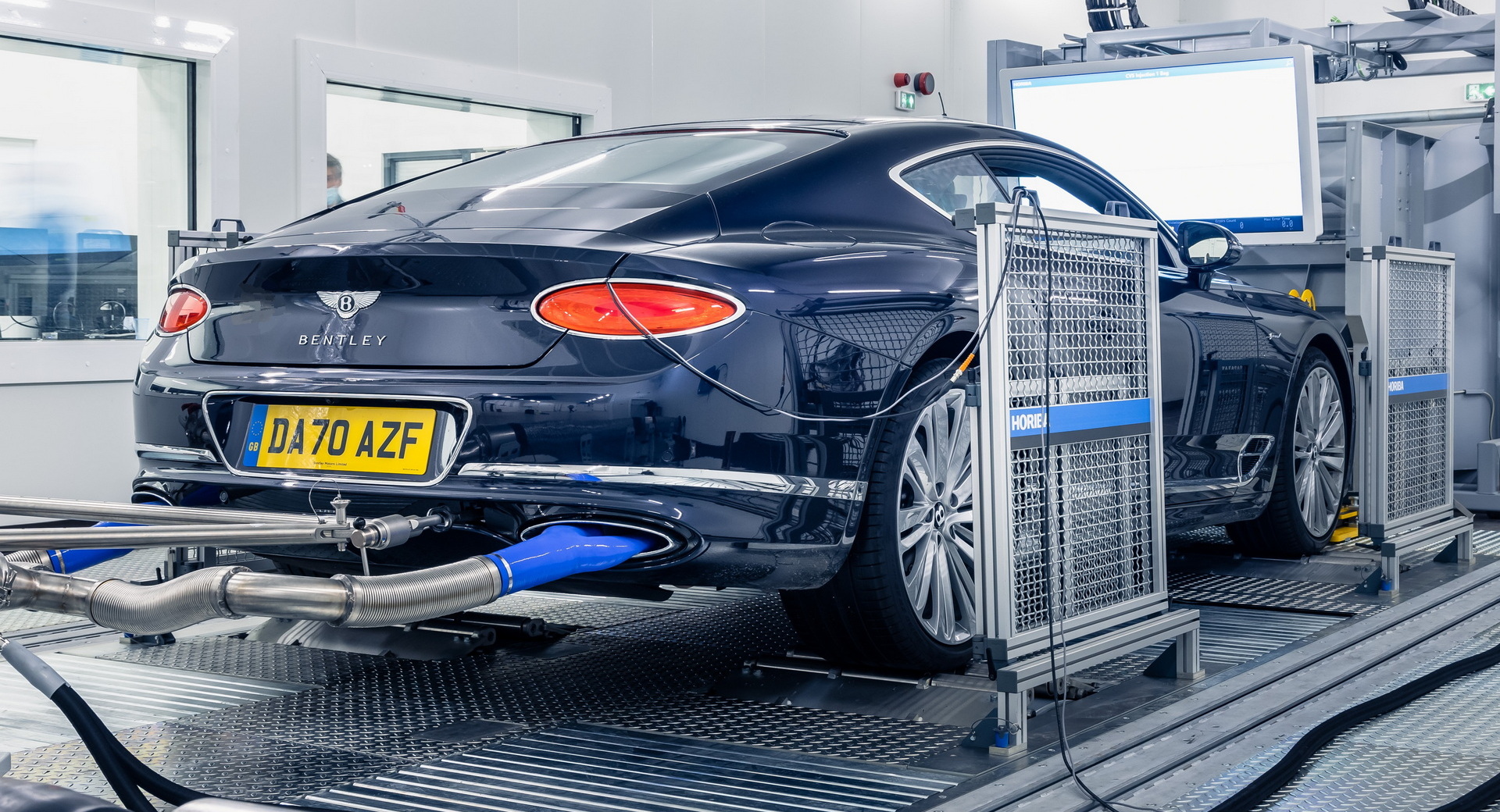
    Bentley Motors announced that its new, state-of-the-art Engineering Test Centre has commenced operations after receiving official approval from Britain’s Vehicle Certification Agency. Based at Bentley’s headquarters in Crewe, England, this latest investment follows the recent recertification by the Carbon Trust marking three years as a carbon-neutral site.

    The independent authority certification represents another major step forward in the company’s drive towards electrification, a key pillar in Bentley’s Beyond100 strategy to become the world’s most sustainable, luxury automotive manufacturer. Crucially, the 12.5 million pounds center will allow Bentley to carry out the latest WLTP fuel consumption and efficiency test procedures more swiftly in-house.

    The two-story, 4,600 square meters facility was completed on schedule and will begin testing immediately, building up operations to meet all global emission standards by the middle of 2022. The new structure includes 773 square meters of office space, as well as 1,550 square meters created for the installation of a climate-controlled chassis dynamometer.

    This highly-advanced rolling road allows engineers to simulate different gradients of hill, measuring exhaust emissions from combustion engine cars, or electrical energy consumption from hybrid and future electric models. The ‘real world’ simulations can also be completed across a range of temperatures, from -20 degrees Celsius to +50 degrees Celsius

    Bentley’s Technical Conformity department, responsible for the compliance of all Bentley products, will be based at the new center. There will also be a dedicated laboratory to run Real Driving Emissions (RDE) using the latest, state-of-the-art portable emissions measurement systems. In total, the new facility will house 100 Bentley colleagues.

    Dr. Matthias Rabe, Member of the Board for Engineering, said, “The center will also allow Bentley to meet increased demand from customers for our luxury, hand-built vehicles, including the performance-orientated Flying Spur, the Continental GT, and new Bentayga.”

  • Volvo Cars And Northvolt To Open Joint R&D Centre For Battery Development In Gothenberg

    Volvo Cars And Northvolt To Open Joint R&D Centre For Battery Development In Gothenberg

    Volvo Cars and Northvolt will open a joint research and development (R&D) center in Gothenburg as part of a SEK 30 billion investment in battery development and manufacturing. The R&D center, which will become operational in 2022, will create a few hundred jobs in Gothenburg. Following the partnership announced by both companies earlier this year, Volvo Cars and Northvolt have now signed a binding agreement this week to create a joint venture for the development and sustainable production of batteries for the next generation of pure electric Volvo cars.

    The establishment of the new R&D center in Gothenburg will be followed by the construction of a new manufacturing plant in Europe. It will produce next-generation state-of-the-art battery cells, specifically developed for use in next-generation pure electric Volvo and Polestar cars. The exact location of the plant is expected to be confirmed in early 2022.

    The R&D center will be in close proximity to Volvo Cars’ own R&D operations and to Northvolt’s existing innovation campus, Northvolt Labs, in Sweden, ensuring synergies and efficiencies as it develops battery technologies.

    The partnership will focus on developing tailor-made batteries that give Volvo drivers what they want, such as range and quick charging times. Volvo Cars is working with Northvolt to create a true end-to-end system for batteries, whereby it develops and builds the batteries itself.

    As for their joint battery plant, Volvo Cars and Northvolt are in the final phase of a selection process to find a suitable location in Europe. The plant will have a potential annual capacity of up to 50-gigawatt hours (GWh), which would supply batteries for approximately half a million cars per year. It will start construction in 2023, with large-scale production in 2026, and is expected to employ up to 3,000 people.

    Alongside battery supply agreements, the partnership with Northvolt secures the European battery cell needs that are part of Volvo Cars’ ambitious electrification plans. It aims to sell 50 per cent pure electric cars by the middle of this decade, and by 2030 it aims to sell only fully electric cars.

    The partnership with Northvolt is key to Volvo Cars’ ambition to become a leader in the premium electric car segment and sell only pure electric vehicles by 2030. It also represents an important step in strengthening Volvo Cars’ own development capabilities.

  • Malaysia to finalize single 5G network decision

    Malaysia to finalize single 5G network decision

    Malaysia will finalize plans to pursue a single wholesale 5G network by January. This week, Malaysia’s communications minister Annuar Musa revealed that the cabinet is considering allowing several 5G providers after telcos voiced concerns that this would stifle competition.

    In February, the government announced plans to switch to a single wholesale network after initial plans to apportion spectrum to telcos. Under the existing plan, Digital Nasional Berhad (DNB), a state-owned company is mandated to deploy a national network to speed up 5G deployment and reduce deployment costs. However, this could risk hampering Malaysia’s digital competitiveness.

    In September, Julain Gorman, head of Asia Pacific, GSMA said, “Malaysia has a thriving mobile economy and a growing digital sector, but the Single Wholesale Network model proposal risks that. 5G technology is ready to be deployed rapidly, and Malaysian operators have already made significant infrastructure investments.”

    The GSMA expressed that “a nationalized monopoly will replace the competitive wholesale market” and render the industry “entirely reliant on wholesale access from DNB for 5G services”.

    In the meantime, DNB will be offering wholesale 5G services to telcos for free. This would commence next week and end 31 March 2021.

  • 4,000 container trucks stranded at China border by stringent inspections

    4,000 container trucks stranded at China border by stringent inspections

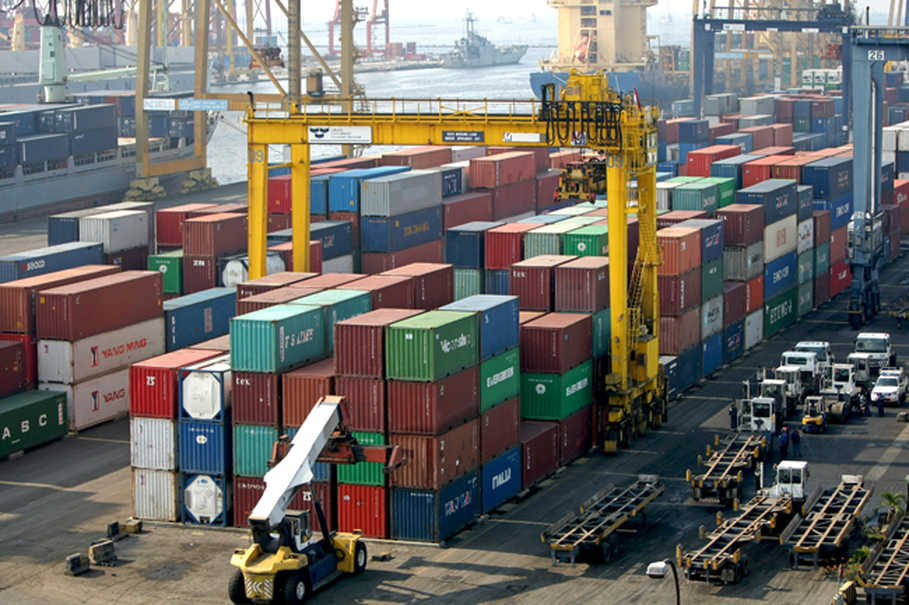
    Vietnam’s agriculture exports are taking a hit as China maintains a very strict inspections regime at northern border gates as a Covid-19 prevention measure.

    As of Friday, as many as 4,000 container trucks were stranded at the border gates in Lang Son Province, said Le Thanh Hoa, deputy head of the Department of Processing and Trade for Agro-Forestry-Fisheries products under the agriculture ministry.

    At the three border gates of Huu Nghi, Tan Thanh and Chi Ma, the current customs clearance speed has fallen by more than half to about 220 container trucks per day, Hoa said at a conference on agriculture trade held Saturday in Hanoi.

    For each truck carrying dragon fruit, jackfruit, and other fruits stuck at the Tan Thanh gate, it was taking 10-14 days on average to get customs clearance.

    At the Mong Cai border gate in Quang Ninh Province, just one truck gets cleared every week, Hoa said.

    The management board of the Mong Cai gate said Saturday morning that as many 800 trucks of frozen seafood and 300 trucks of fruits were stranded there.

    Hoa recommended that businesses carefully check agricultural products exported via border gates because China has been strengthening its Covid-19 disease control regime, resulting in careful, stringent inspections of products entering its territory.

    To cope with this situation, exporters have to carefully prepare the packaging of their goods so that they can get through the customs easily and at fast pace, he said.

    On the other hand, to avoid congestion and save costs, businesses need to arrange a reasonable clearance time and not send many trucks to the border gates at the same time, he added.

    After the fourth Covid-19 wave hit Vietnam in late April, China has been increasing inspections and disinfection of goods and means of transport and drivers from the country.

    They are also tightening the management and traceability of goods, which has contributed to lengthening the customs clearance procedure.

    In September, China had temporarily ceased the import of dragon fruit from Vietnam after detecting the novel coronavirus on its packaging. It had also reported a similar detection on Vietnamese mangosteen in early August.

    Hu Suo Jin, Economic and Commercial Counselor of the Chinese Embassy in Vietnam, said the pandemic in Vietnam was developing quite complicatedly and exporters need to disinfect the means of transport and drivers also need to increase adoption of preventive measures to avoid leaving the virus on goods.

    In addition, if possible, Vietnamese goods should be labeled with a negative test certificate on their packaging, he said.

    China is one of Vietnam’s top trading partners. The import-export turnover of agro-forestry-fishery products between the two countries had grown strongly from $8 billion in 2015 to $11 billion last year.

    China was Vietnam’s second-largest export market for agricultural, forestry and fishery products behind the U.S., posting an export turnover of $8.4 billion in the first 11 months of the year, accounting for 19.2 percent of Vietnam’s total agricultural exports.

  • November auto sales rise to year high as government halves registration fee

    November auto sales rise to year high as government halves registration fee

    November saw the highest monthly auto sales this year of 38,656 units as a discount in registration fees sent buyers scrambling to dealers’.

    The figure represented a 30 percent rise from October and a 6 percent increase year-on-year, according to the Vietnam Automobile Manufacturers Association.

    The government cut registration fees for locally produced cars by 50 percent for six months starting December 1.

    November was the third month in a row in which auto sales rose after five months of declines between April and August as the fourth wave of Covid-19 hit sales.

    In the first 11 months of this year, 257,390 units were sold, a 3 percent rise.

    Thaco, an assembler of Mazda and Peugeot led with 88,967 units, up 5 percent, followed by Toyota with 55,109 units, down 7 percent, and Mitsubishi, Ford, and Honda made up the top five.

    Last year sales fell by 8 percent to 296,634 units as the Covid-19 pandemic hit the economy, people’s incomes, and discretionary spending.

  • AirAsia ramps up flight frequencies

    AirAsia ramps up flight frequencies

    AirAsia Philippines continues to increase flight frequencies to domestic destinations to support the surge of air travel demand during the Christmas season.

    The low-cost carrier said it has restored 30 percent of its pre-pandemic capacity, doubling and tripling its frequencies for most of its domestic destinations.

    The airline has also resumed its flights to Hongkong and Singapore to service overseas Filipino workers and business travelers.

    “We are banking on revenge travel for a very strong 2022 recovery,” AirAsia Philippines spokesperson Steve Dailisan said.

    Dailisan said people now have the confidence to plan for their future trips as reflected in the forward bookings from 31 to 120 days.

    “This booking behavior can be significantly attributed to the continuing downtrend of daily COVID-19 infections and the ongoing progress of the government’s nationwide vaccination program,” he said.

    “While travel restrictions have been significantly eased and simplified, we call on our guests to never allow themselves to be complacent. Strict adherence to health and safety protocols must be observed on the ground and in flight,” Dailisan said.

    AirAsia said travelers can currently avail of the airline’s P20 base fare if they book up to Dec. 20 from Manila to Cebu, Puerto Princesa, Iloilo, Cagayan de Oro, Davao, Kalibo, General Santos, Zamboanga and Bacolod. Travel period is up to Sep. 30 next year.

    “AirAsia has been synonymous with great value through the democratization of air travel with low fares and great service. We are sharing this milestone with our guests who have been very loyal to AirAsia and are now part of the growing Super App ecosystem,” Dailisan said.

    AirAsia Philippines said 100 percent of its flying crew and 99.34 percent of the whole workforce have been fully vaccinated against COVID.

  • Binance Makes Singapore Retreat

    Binance Makes Singapore Retreat

    Binance has withdrawn an application for a Singapore crypto permit via a local unit, marking an end to its pursuit to be a licensed bourse in the city-state.

    Binance Singapore has withdrawn the application and will shut down its operations in the city-state by February 13, according to a statement from the cryptocurrency giant.

    Our decision to close Binance.sg was not taken lightly. Our immediate priority is to help our users in Singapore transition their holdings to other wallets or other third-party services, said Binance Singapore chief executive Richard Teng.

    I am grateful to the MAS for its ongoing assistance to Binance Asia Services and we look forward to future opportunities to work together.

    Binance is in the midst of selecting a global headquarter and with the latest move, it is likely to drop Singapore out of the running leaving Europe and the Middle East as potential contenders.

    Nonetheless, Binance is expected to remain active in the Singapore market with its latest acquisition of an 18 percent stake in private securities bourse HGX.

  • Abu Dhabi State Fund Bullish on Crypto Infrastructure

    Abu Dhabi State Fund Bullish on Crypto Infrastructure

    Abu Dhabi state fund Mubadala said that it was not a crypto skeptic with optimism on investments in related infrastructure.

    Abu Dhabi’s Mubadala has invested in crypto-related infrastructure, according to its chief executive Khaldoon al-Mubarak in a recent interview.

    From our perspective, I think we look at the ecosystem around crypto, Mubarak said, citing examples such as blockchain technology or energy usage.

    And I think we are investing in that ecosystem.

    Mubadala’s Mubarak noted the phenomenal surge in the crypto market’s value as a reason for continued bullishness in digital currency’s future.

    I think, you know, this is a business that had, what $200 billion worth of crypto value two years ago, and it’s two and a half-trillion dollars today and growing, he said. So I think while many people are skeptics, I don’t fall in that category.

  • UBS Extends Partnership With Private Equity Fintech

    UBS Extends Partnership With Private Equity Fintech

    Switzerland’s largest lender is expanding its partnership with the iCapital Network platform to serve wealthy clients in Switzerland and Asia.

    UBS global wealth management is strengthening its ties to iCapital Network to gain access to the technology company’s data and analytics platform for private markets, according to a statement Thursday.

    Details of the deal were not announced.

    The platform, which automates the lifecycle of private market investments, enables UBS wealth managers to access data related to private equity, private debt, and real assets.

    The two parties, engaged in a strategic partnership since 2017,  expect the appetite for the asset class among high net worth individuals to grow, the statement says.

  • Swissquote To Launch Crypto Exchange

    Swissquote To Launch Crypto Exchange

    Switzerland’s largest online bank is riding the crypto wave. Swissquote’s ambitions include setting up its own trading platform for digital currencies, sales manager Jan De Schepper said.

    Swissquote plans to open its own crypto exchange before the end of the first half of 2022. We want to enable more trading in various cryptocurrencies on the platform, Jan De Schepper said.

    Other ambitions in the crypto space include becoming the leading Swiss provider of digital assets. To achieve this the broker aims to add more cryptocurrencies to its offering, in addition to stablecoins and staking services, which are currently in high demand.

    Swissquote’s crypto exchange starts its operations as planned, there will be a sudden surge in trading platforms for digital assets in Switzerland.

    In recent weeks, Swiss Stock Exchange SIX launched a fully licensed digital exchange, SDX. Just days later, Berner Kantonalbank launched SMEIX, a platform that lists tokenized small caps.

    In September 2020, crypto bank Sygnum got the green light from regulators to launch its new trading system, which also acts as an exchange for crypto assets.

    Last June, Deutsche Boerse bought Swiss fintech Crypto Finance; the acquisition gives Germany’s exchange a direct entry point for digital asset investments, including post-trade services.

    Swissquote has already bulked up its workforce in response to the surging demand for digital tokens and coins last spring and will continue hiring to fuel further expansion. Our compliance and customer service teams were almost overrun by the crypto rush, recalls De Schepper.

    The hiring spree has paid off in reducing waiting times for clients calling in. Now, we regularly manage to open a trading account on the same day, De Schepper says. In exceptional cases when special clarification is needed, account opening can take up to a week, he says.

    Net income from crypto investments increased by over 1000 percent to 63.2 million Swiss francs in the first half of 2021. At the end of 2021, Swissquote expects to double its pre-tax profit.  However, expenses will also rise: Swissquote is investing heavily in infrastructure.

    The online brokers have a clear head start over other institutions as many Swiss institutions remained cautious about cryptocurrencies for a long time, mainly for compliance reasons.

    However, with recent record prices, the mood has changed as Swissquote CEO Marc Buerki recently said in an interview: Traditional banks have at times gone into panic mode, trying to catch up with developments in the space.

    Setting up a brand new crypto offering from scratch is costly and requires a lot of time and expertise, De Schepper points out while spotting a sales opportunity: In the current market phase, banks would be better off partnering with an established bank like Swissquote, he says.

  • Chubb Appoints Singapore Country President

    Chubb Appoints Singapore Country President

    The property and casualty insurer has appointed a seasoned industry executive to lead its Singapore business.

    Chubb has appointed Kevin Bogardus as country president in Singapore, replacing Scott Simpson, who will become president for Chubb’s operations in Hong Kong and Macau, according to an announcement on Thursday.

    Bogardus, who brings more than 25 years of experience in the insurance industry, joined Chubb in 2009 as the chief advisor to Huatai Insurance, where Chubb is the largest shareholder. He helped grow Chubb’s footprint in China and expanded its business into new product lines becoming the market leader in Life Sciences, Financial Lines and Chinese multinational programs.

    In his new role, Bogardus will have overall responsibility for the growth and financial results of the operations across all lines of business and manage all affinity partnerships and drive efforts to deepen and grow them. Currently, the country president for Chubb in China but will relocate to Singapore for the role, which reports to Edward Ler, Chubb’s executive vice president and head of Southeast Asia.

  • Don Don Donki opens largest Southeast Asian store yet

    Don Don Donki opens largest Southeast Asian store yet

    JONETZ By Don Don Donki just opened its second outlet in Malaysia today, 10 December, and it’s the biggest one yet — in fact, it’s the biggest store in ASEAN

    Spread across two levels in Tropicana Gardens Mall, the outlet features new sections, such as CosmeDONKI, a yatai food court, and a fully certified halal area.

    CosmeDONKI is a Japanese cosmetic shop that sells Japan’s bestsellers of high-quality health and beauty products, while yatai is a food kiosk section, where shoppers can enjoy Japanese street food.

  • U.S. Safety Agency Discussing Tesla Camera Replacements

    U.S. Safety Agency Discussing Tesla Camera Replacements

    The U.S. National Highway Traffic Safety Administration (NHTSA) said Thursday it is discussing with Tesla its decision to replace cameras in some U.S. vehicles. CNBC reported on Monday Tesla was replacing front fender cameras in several hundred Model S, X, and 3 vehicles due to faulty circuit boards inside but had not issued a recall. NHTSA said it is “monitoring all data sources” including consumer complaints, and also urged “the public to let NHTSA know if they think their vehicle may have a safety defect that isn’t part of a current recall.”

    U.S. law “prohibits manufacturers from selling vehicles with design defects posing unreasonable risks to safety,” the agency said, adding it has “robust enforcement tools to protect the public, to investigate potential safety issues, and act when we find evidence of non-compliance or an unreasonable risk to safety.”

    Consumer groups said the regulator needs to look into whether Tesla should have recalled the defective parts.

    A malfunction of front fender cameras would likely create a safety risk, says David Friedman, a former acting administration at NHTSA and now Vice President at Consumer Reports.

    “Reports of a service campaign repair to malfunctioning front-end cameras that are critical to Tesla’s driver assistance suite is important enough to the safety of the vehicle to merit exploration by NHTSA,” said Jason K. Levine, executive director at Center for Auto Safety.

    “The reality is that the auto industry has a long history of choosing to conduct service campaigns instead of recalls, but it is too early to say whether that’s the case here.”

    A malfunction of front fender cameras, safety systems used for blind-spot monitoring, would likely create a safety risk, said David Friedman, a former acting administration at NHTSA and now Vice President at Consumer Reports.

    “If people are losing reliable access to blind spot images, or the effectiveness of autopilot or automatic emergency braking is being hampered, the malfunction would seem to pose an unreasonable risk,” he said.

    Tesla was not immediately available for comment.