Author: Mei Ling Tan

  • Coopers revamps its imagery on International Beer Day

    Coopers revamps its imagery on International Beer Day

    Coopers has unveiled a new look for its range of beers, in the first major update to its core packaging in 20 years, with the iconic Coopers roundel refreshed with a modern design.

    The new packaging also showcases the brand’s heritage and brewing process, which also including Coopers’ new branding of ‘Forever Original’ which was unveiled last year.

    Coopers has also insisted that while there is a new look for the packaging the beers remain unchanged.

    Coopers national marketing manager, Kate Dowd, said: “The new design has been carefully developed with the objective of retaining our brand loyalists while also recruiting new drinkers to the Coopers brand,” Ms Dowd said.

    “The refresh brings overall consistency to the Coopers ale range and has been designed to stand out on shelves, making it easier for our fans to spot their favourite brew.

    “Coopers is excited to share our new look and we know that drinkers will continue to enjoy the great Coopers taste they know and love.”

    In addition to design changes, the 750ml Coopers longneck range will also be packaged in an improved bottle developed to minimise weight.

    There will be no changes to the Coopers lager products, including Dry and Premium Light.

    Products featuring the new packaging and updated tap badges will begin rolling out into liquor outlets and licenced premises across the country from September.

  • Musk still willing to buy Twitter under this one condition

    Musk still willing to buy Twitter under this one condition

    The richest man globally, worth nearly $280 billion, is Tesla CEO Elon Musk. The executive announced in the middle of April that he would buy social media app (and website) Twitter for $44 billion. But by early last month, Musk had withdrawn the offer leading Twitter to sue Musk and the latter to file a countersuit.. What made Musk change his mind was Twitter’s failure to prove to the multi-billionaire that spam and fake accounts make up less than 5% of the total number of Twitter accounts.
    Musk believes that at least 10% of Twitter’s daily active users (DAU) that see ads are not authentic. Furthermore, Musk alleges in his countersuit that of the 229 million daily active users on Twitter, 65 million, or 28%, do not see any ads. To get a more accurate indication of the number of bogus accounts on Twitter, Musk used Botometer, a tool created by Indiana University that measures inauthentic accounts. With this tool, Elon’s team found more fake accounts than the number that Twitter disclosed, according to court filings.
    With a trial set to begin in October, Musk’s lawyers wrote in a document submitted to the court, “Twitter was miscounting the number of false and spam accounts on its platform, as part of its scheme to mislead investors about the company’s prospects. Twitter’s disclosures have slowly unraveled, with Twitter frantically closing the gates on information in a desperate bid to prevent the Musk parties from uncovering its fraud.”
    But having said all that, Reuters today cited a tweet disseminated early today by the Tesla CEO that says if Twitter could reveal how it samples 100 members and confirms that they are real Twitter users, his $44 billion bid to buy Twitter will be back on. But Musk added in his tweet, “However, if it turns out that their SEC filings are materially false, then it should not.”
    In his court filing, Musk claims that Twitter double counts linked accounts. The multi-billionaire claims that Twitter had inflated monetized daily active users in its SEC filings by as many as 1.9 million people each quarter.
    In response to another Twitter user who asked whether the U.S. Securities and Exchange Commission (SEC) was investigating the “dubious claims” made by Twitter, Musk tweeted back, “Good question, why aren’t they?” The legal battle between both sides is taking on a harsh tone. This past Thursday Twitter rejected Musk’s claim that he had been tricked into bidding for Twitter.
    Tinged with sarcasm, Twitter’s response was filed with the court and it said, “According to Musk, he — the billionaire founder of multiple companies, advised by Wall Street bankers and lawyers — was hoodwinked by Twitter into signing a $44 billion merger agreement.” Twitter added, “That story is as implausible and contrary to fact as it sounds.”
    Bret Taylor, Twitter’s Chairman of the Board, said of Musk, “His claims are factually inaccurate, legally insufficient and commercially irrelevant.” And as far as the Botometer tool is concerned, Twitter called it unreliable and pointed out that it once called Mr. Musk’s own Twitter account “highly likely to be a bot.” In its lawsuit, Twitter said, “Musk refuses to honor his obligations to Twitter and its stockholders because the deal he signed no longer serves his personal interests.”
    A “specific performance” clause that is part of the contract allows Twitter to sue to get the deal to close as long as Musk’s financing remains in place. But if the funding for the deal falls through, Musk can pay $1 billion to end his obligations to buy Twitter.
    While Musk is a multi-billionaire, much of his wealth is tied up in Tesla shares. Musk planned to borrow against the value of some of his Tesla shares to raise as much as $12.5 billion. A dangerous financial maneuver, had Tesla shares declined sharply, Musk could have been forced to pay additional funds with a margin call, or have the Tesla shares pledged as collateral for the loan sold out from under him.
    Eventually, the executive decided against borrowing against his Tesla holdings before scraping the deal altogether. Still, the tweet that Musk posted today reveals that there is still a path to a completed acquisition.

  • HBO Max, Discovery+ to be merged into a single streaming platform

    HBO Max, Discovery+ to be merged into a single streaming platform

    It looks like Warner Bros. Discovery is determined to put the nail in the coffin for HBO Max. The giant announced plans to merge both services in the summer of 2023, but that comes with some massive budget cuts and layoffs.

    The recent news that Batgirl has been scrapped after the movie was (almost) finished, pretty much sums up the changes Warner Bros. Discovery has in store for HBO Max. As many of you probably know already, HBO Max is heavily focused on movies and TV series, while Discovery is now mostly known for its reality shows from HGTV, Food Network and Discovery Channel.

    Earlier this week, Warner Bros. Discovery announced that HBO Max and Discovery+ will be launched in the United States as a single service next year. According to JB Perrette, CEO and president of global streaming and games for Warner Bros. Discovery, the new streaming platform will combine the best elements of both services.

    According to the company’s Q2 2022 earnings report, Discovery+ will be the core of the new platform, while HBO Max’s portfolio will be limited to Originals. Although the current catalog will be carried over, no new movies or TV shows will be made outside of the Originals offering. HBO Max had major performance issues during big releases, which convinced Warner Bros. Discovery to cut deep into the streaming service’s budget.

    Warner Bros. Discovery reported a huge $3.4 billion net loss in Q2 2022, so the company is now trying to push Discovery+, its more successful service, to more customers, while cutting back on HBO Max productions or distribution deals. The new HBO Max + Discovery Plus changes will only affect customers in the United States.

    In related news, AT&T announced it has reached a new agreement with Warner Bros. Discovery for the distribution of HBO Max, after the carrier removed the offering from its wireless plans back in June.
  • Blackrock Enters the Crypto World

    Blackrock Enters the Crypto World

    The world’s largest asset manager wants to make cryptocurrencies more accessible to its institutional clients. A welcome step for partner Coinbase, which is facing regulatory problems.

    You could hardly find two more divergent viewpoints on cryptocurrencies. Tee Fong Seng, head of private banking at Geneva-based bank Pictet in Asia, caused a stir at the Wealth Management Summit in Singapore with his statement Crypto will be an asset class that we cannot ignore but today, I don’t think there is a place for private bankers and private bank portfolios. Contrast that with the world’s largest asset manager, Blackrock, partnering with the US crypto exchange Coinbase.

    Through this cooperation, Blackrock CEO Larry Fink aims to make cryptocurrencies directly accessible to institutional investors, starting with Bitcoin. Under the agreement, users of Blackrock’s Aladdin institutional investment platform can sign up for Coinbase Prime to access crypto trading, custody, prime brokerage, and reporting. To participate in crypto trading, institutions must be clients of both Blackrock and Coinbase.

    The integration comes about four months after Fink’s announcement that Blackrock would explore ways to offer digital assets to its clients.

    Coinbase Prime institutional trading solution boasts around 13,000 institutional clients and is specifically tailored towards institutions such as hedge funds, financial institutions, asset- and financial managers. For Coinbase’s crypto ecosystem, the collaboration with Blackrock represents a huge vote of confidence given Blackrock’s $8.5 trillion in assets under management at the end of the second quarter.

    The partnership shows that institutional investors are becoming increasingly confident in the crypto market. This year, several major financial players either have entered the market or expanded their existing initiatives and offerings in digital assets. Blackrock, JP Morgan, Goldman Sachs, Deutsche Bank and Morgan Stanley are but a fraction of a growing list of traditional financial institutions using digital assets.

    This year’s crash in cryptocurrencies seems to be helping institutional adoption, with investors who felt they missed the boat now seeing current prices as a good entry point. Joseph Chalom, Blackrock’s Global Head of Strategic Ecosystem Partnerships, said the firm’s institutional clients «are increasingly interested in engaging in the digital asset markets and are focused on how to efficiently manage the operational lifecycle of these assets.»

    For Coinbase, this partnership couldn’t have come at a better time. Its US-listed shares, considered an indicator of overall crypto market sentiment, currently trading about 65 percent lower than at the end of last year, 2021 closed about 10 percent higher on Thursday following the Blackrock announcement.

    Coinbase, however, is facing regulatory issues. A former Coinbase product manager and two alleged accomplices are currently facing charges in a US federal court in Manhattan. Ishan Wahi is accused by U.S. law enforcement and the Securities and Exchange Commission (SEC) of insider trading while working at Coinbase.

    According to media reports, the SEC is investigating the company for selling digital assets that should have been registered as securities, prompting long-time Coinbase supporter and investor Cathie Wood to unload Coinbase shares in a big way.

  • M1 Jointly Implements Southeast Asia’s First Maritime 5G AR/VR Smart Glasses

    M1 Jointly Implements Southeast Asia’s First Maritime 5G AR/VR Smart Glasses

    Keppel Offshore & Marine Ltd (Keppel O&M), in partnership with M1, has implemented a 5G augmented and virtual reality (AR/VR) smart glasses solution at its yard in Singapore, the first in Southeast Asia’s maritime industry. The pilot project is part of Keppel O&M’s strategy to leverage digitalization and virtual technology to enhance the efficiency of remote operations for its tech-enabled workforce. The project received a grant from IMDA’s 5G Innovation Program for the development of virtual platform solutions.

    Smart Glasses can have multiple applications. It can be deployed in different phases of a project’s construction as well as to optimize the use of resources in shipyard settings. Versatile virtual platform solutions such as smart glasses can help to improve the overall efficiency of production processes in the maritime industry.

    Equipped with a camera lens, microphone, micro speaker and cellular or WIFI reception, smart glasses are powered by leading-edge software that can perform real time analyses and provide data to the wearer. The device also enables the wearer to communicate seamlessly with a receiver or control room. Smart glasses are also equipped with a micro projector, which can project a digital overlay of text and images within the wearer’s field of vision.

    Chris Ong, CEO of Keppel O&M, said, “As a provider of leading-edge solutions for the maritime industry, Keppel O&M is pleased to partner M1 in leveraging digital technologies to enhance yard operations and safety. During the Covid-19 pandemic when safe management measures limited physical inspections and site surveys, we were the first to officially conduct remote inspections for a newbuild vessel with a classification society using smart glasses.

    “Today, we are further expanding its use to not only improve the efficiency of delivering projects and enhancing yard operations but also widening our capabilities to provide digital solutions for our customers’ assets. This is part of Keppel O&M’s Yard of the Future initiative, which harnesses digitalisation to transform our products, services, and operations.”

    Keppel O&M worked with M1 to test-bed applications for smart glasses, harnessing M1’s 5G high-speed and low latency connectivity to enable quicker and more effective responses.

    Manjot Singh Mann, CEO of M1, said, “We are pleased to collaborate with Keppel O&M to pilot 5G-enabled wearables such as smart glasses, which can help solve critical challenges in Singapore’s maritime industry.

    “Through M1’s robust 5G network, smart glasses can provide high-bandwidth immersive AR/VR environment that enables highly detailed representations and real time information to be relayed to users and control centres. The successful introduction of the smart glasses solution at Keppel O&M is a useful test case that can be scaled and replicated to boost operational efficiency and safety across businesses and industries.”

  • Converge ICT Now Offers Data Center Service Connectivity Solution

    Converge ICT Now Offers Data Center Service Connectivity Solution

    Philippines’ fiber broadband provider Converge ICT Solutions, Inc. announced it is now offering its Data Center Express (DC Express) to address high-capacity requirements of its customers from the residential and business sectors.

    DC Express delivers clear channel, dedicated connectivity between data centers, such as those used in BPOs, banks and multinational companies, through Converge’s Data Center Interconnect Network. This product leverages the latest DWDM (Dense wavelength division multiplexing) technology for high-capacity requirements to reach data transfers of up to 100 Gbps to data centers in the Philippines and, in the future, key international data centers as well.

    DC Express is complemented by the Optical Transport Network, for customers who want to use their own network terminals for their high-capacity requirements.

    Aside from supporting Ethernet connectivity, this service also supports different protocols to interconnect customer equipment housed in the data centers. For the subscriber’s Storage Area Networking requirements, Fiber Channel is the best solution as DC Express supports FC800 (20G) and FC3200 (40G) for business-critical applications.

    DC Express aims to cater to the connectivity needs of enterprises whose equipment is based in data centers. The service can be provisioned quickly, has enterprise-grade SLAs, and has a 24-hour support and restoration team.

    Converge Chief Operations Officer, Jesus Romero, said in a statement, “DC Express is yet another expansion of our services, leveraging on our inter-data center connections, to ensure faster, better, and more secure data transfer for our enterprise subscribers.”

  • ZTE Passes Industry-First GSMA NESAS 2.1 Audit for 5G NR and 5GC Solutions

    ZTE Passes Industry-First GSMA NESAS 2.1 Audit for 5G NR and 5GC Solutions

    ZTE has passed the industry-first GSMA NESAS (Network Equipment Security Assurance Scheme) 2.1 audit for network equipment vendor development and product lifecycle processes with its 5G New Radio (NR) and 5G Core Network (5GC) products.

    The audit is implemented by ATSEC, a Swedish independent information security company designated by GSMA, based on the latest GSMA NESAS 2.1 released on January 28, 2022.

    The increasing dependence of society and business on networks brings more complexity to network convergence, and the supply chain security of network equipment vendors has become paramount. The security requirements for “sourcing of third-party components”, which have been added in the latest version of NESAS, stand out in the supply chain. As an industry security assurance framework, GSMA NESAS is constantly iterating on the basis of application experiences, new security needs and feedback from all stakeholders.

    “After ZTE’s RAN and core network products passed the NESAS1.0 audit in 2020, ZTE has been committed to meeting industry security requirements and optimizing our High Performance Product Development (HPPD) R&D process, and then became the industry-first vendor to pass the GSMA NESAS 2.1 audit this year,” said Yang Tiejian, Security Director of ZTE Wireless Operation Division. “To ensure our customers’ cybersecurity and achieve the common goals of all stakeholders, ZTE keeps up with the latest industry requirements and constantly enhances its product security capabilities.”

    Adhering to the principle of transparency and openness, ZTE will implement and evaluate security measures, obtain security certifications as required by customers and regulators, and manage risks throughout the product lifecycle. In the era of global digital transformation, ZTE, with great commitment to becoming a driver of the digital economy, has been providing customers with secure and trustworthy networks and services.

  • HCMC lottery firm reports record H1 profits

    HCMC lottery firm reports record H1 profits

    The HCMC Lottery Company Ltd. earned profits of VND736 billion (over $31.46 million) in the first half of the year, an increase of 27% year-on-year.

    The company recorded H1 revenues of VND5.46 trillion, completing nearly 54% of the year’s target, the company said in its financial statement.

    The main source of income was the sale of traditional lottery tickets and scratch-off tickets; and the rest from office leasing and printing.

    The company leaders said that from the beginning of the year until mid-July, the company had paid out more than VND2.8 trillion to lottery winners

    After deducting all expenses, the company made a profit of VND736 billion. This was a record high in the company’s history.

    The company’s revenue and profits have been increasing steadily over the last 10 years.

    Current sales are twice as high as they were in the first half of the year 10 years ago, and profits have increased three-fold.

    The company’s management said demand for lottery tickets in the southern region has grown continuously, and the Ministry of Finance has increased the ticket volume by 10% to cover a larger area and expand its agent network.

    The scratch-off lottery, which has been in operation since the end of 2018, has also been successful, covering nine provinces and accounting for 4-5% of annual revenue.

    The company’s total assets exceed VND2.6 trillion, while its liabilities exceed VND900 billion. Cash and bank deposits account for a sizable portion of the asset structure.

    This year, the company expects revenues of VND10.15 trillion and pre-tax profits of VND1.17 trillion. Its payment to the state budget is estimated at around VND3.04 trillion.

  • Samsung to start producing semiconductor components in Vietnam

    Samsung to start producing semiconductor components in Vietnam

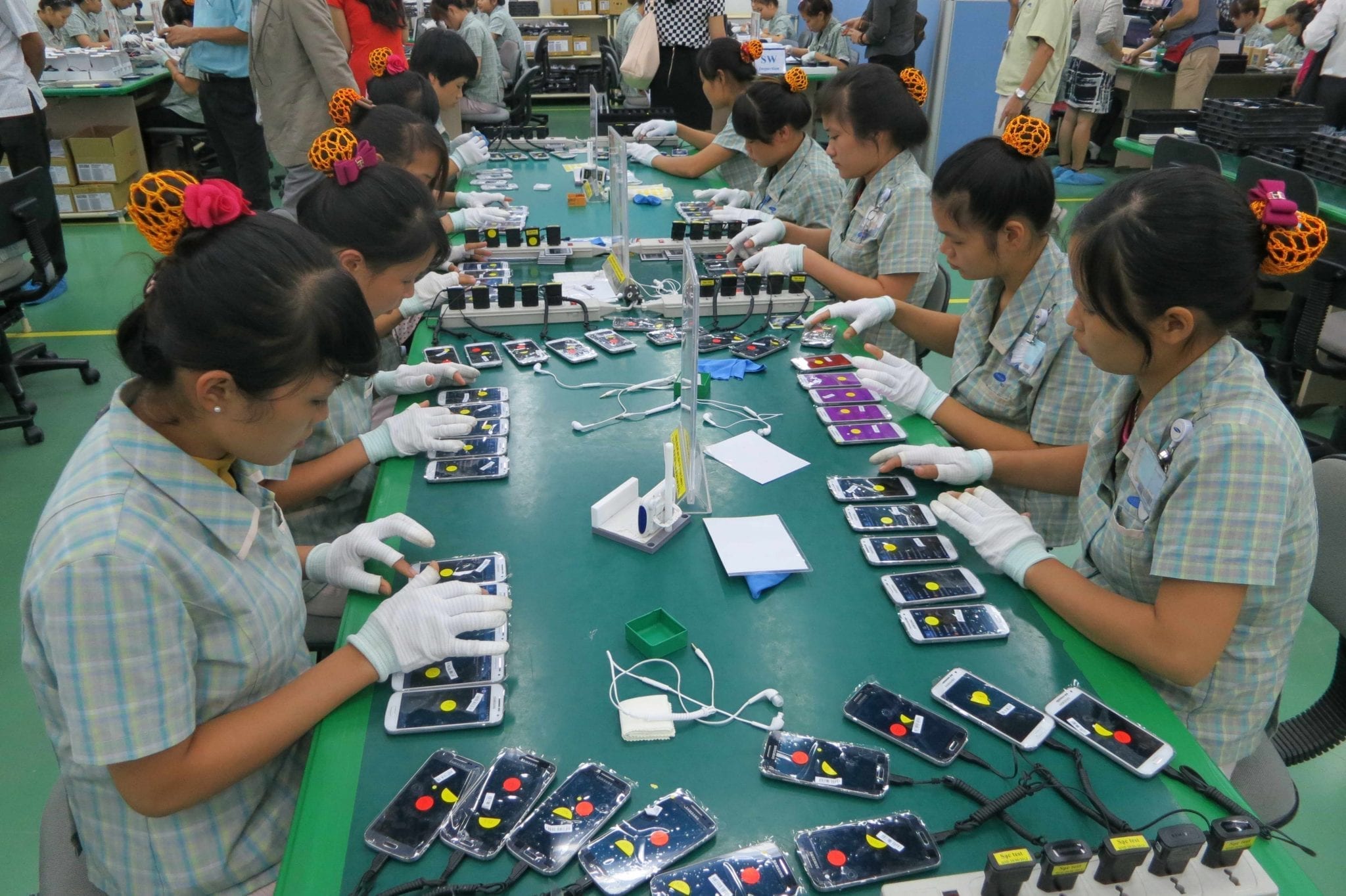
    Samsung is testing its ball grid array products and will mass produce them at the tech giant’s factory in northern Thai Nguyen Province in July 2023.

    Roh Tae-Moon, head of Samsung’s key smartphone division, said this at a Friday meeting with Prime Minister Pham Minh Chinh.

    On its homepage, Samsung has said that it is preparing trial production for semiconductor chip grid products and planning to open a research and development (R&D) center in Hanoi later this year or early next year.

    The company said the R&D center was about 85% complete.

    “Semiconductors would mark a third business for Samsung in Vietnam, where the company makes home appliances and half of its smartphones.

    In the first half of 2022, Samsung Vietnam’s export revenue was $34.3 billion, up 18% from the same period last year.

    In February, Samsung announced an additional $920 million investment into its factory in Vietnam.

    Before Samsung, Vietnam had Intel Products Vietnam (IPV), the largest assembly and testing plant in Intel’s network. During the global chip crisis, IPV not only maintained stable operations, but also made a number of innovative contributions to help it fill the shortage in semiconductors. One of the key initiatives was to improve the substrate treatment process at the plant.

    “Vietnam has the ability to establish the necessary infrastructure and policies needed to support cutting-edge manufacturing operations in the chip sector,” Steve Long, general manager of Intel’s Asia-Pacific and Japan region, had said during an interview with VnExpress in May.

    He said the stable socio-political environment, increasingly liberalized trade and investment policies, and a young and talented workforce were the reasons for foreign investors, especially large tech corporations, finding Vietnam an attractive destination.

    Vietnam is home to 60 percent of Samsung’s total smartphone production.

    Samsung, Vietnam’s biggest foreign direct investor, first invested $1.3 billion in its electro-mechanics unit in 2013. The unit produces main boards and other electronics components.

    As of last year, the world’s largest memory chip maker had invested $18 billion in Vietnam.

  • How to get likes on Instagram – paid and free methods

    How to get likes on Instagram – paid and free methods

    It’s no secret that success on Instagram brings many benefits to both bloggers and companies. With the help of this platform, you can increase sales, tell a wide audience about your brand and become popular. Likes are one of the indicators of account success. The more of them, the better the profile statistics and the future of its author.

    Today we will talk about how you can increase this indicator in your posts and give examples of effective paid and free methods.

    Services to increase the audience

    It should be noted right away that it is important to find a website that has been operating for a long time and has a large client base and positive reviews. When accessing services such as Viplikes, for example, you can not worry about the safety of using this method and calmly buy Instagram likes. These websites have proven themselves to be honest and legit with time and customer reviews, so you’re safe from doing business with them.

    Beware of young services with a dubious reputation. There may be scammers who will take your money and will not bring any result.

    Freelance exchange

    If you have already turned to special websites to buy real Instagram likes and now you want to try some other ways, then you can go to freelance exchanges for help. There you can get from ten to hundreds of new viewers, but no more. This works if you have just started an account and you need a minimum initial audience.

    Unusual unique content

    Unlike the previous two, this is a free option to increase the audience, but it is more complex. Many novice creators only copy other people’s work and do nothing unique, but this is a road to nowhere.

    To impress a large number of viewers, you need to shoot unusual photos that will surprise the audience and evoke different emotions in them.

    In order to make your profile as attractive as possible, you should use professional photo editors or start working with a photographer who will create and edit pictures for your account. We understand that most likely you would like to save on content creation, especially at the very beginning. However, this approach will not lead you to a quick and good result.

    Commenting on posts of other profiles

    It is quite possible to fulfill a dream and gain an audience from other authors for free if you are active in the comments. You can support your colleagues or ask them questions and join discussions on some topics.

    The main thing is to always be polite and not start conflicts, because making enemies is not the best way to gain popularity. Remember that readers of all brands and influencers will support them in conflict with you and you risk getting a whole community of enemies.

    Be yourself

    Do not try to create an image that does not reflect your real thoughts and views. Sooner or later people will feel lies and hypocrisy, and no one approves of these qualities. Be honest with your audience and tell them how you really feel.

    The same goes for brands. Each company has its own decision-making policy and its own views. Follow them so that people clearly understand the interests of the brand and know who they are buying the product from.


  • Samsung workers in Vietnam bear brunt of slowdown in global demand for electronics

    Samsung workers in Vietnam bear brunt of slowdown in global demand for electronics

    Samsung Electronics Co Ltd has scaled back production at its massive smartphone plant in Vietnam, employees say, as retailers and warehouses grapple with rising inventory amid a global fall in consumer spending.

    America’s largest warehouse market is full and major U.S. retailers such as Best Buy and Target Corp warn of slowing sales as shoppers tighten their belts after early Covid-era spending binges.

    The effect is acutely felt in Vietnam’s northern province of Thai Nguyen, one of Samsung’s two mobile manufacturing bases in the country where the world’s largest smartphone vendor churns out half of its phone output, according to the Vietnam government.

    Samsung, which shipped around 270 million smartphones in 2021, says the campus has the capacity to make around 100 million devices a year, according to its website.

    “We are going to work just three days per week, some lines are adjusting to a four-day workweek instead of six before, and of course no overtime is needed,” Pham Thi Thuong, a 28-year-old worker at the plant said.

    “Business activities were even more robust during this time last year when the Covid-19 outbreak was at its peak. It’s so tepid now.”

    Reuters could not immediately establish whether Samsung is shifting production to other manufacturing bases to make up for reduced output from the Vietnamese factory. The company also makes phones in South Korea and India.

    Samsung told Reuters it has not discussed reducing its annual production target in Vietnam.

    The South Korean tech giant is relatively optimistic about smartphone demand in the second half, saying on its earnings call last week that supply disruptions had mostly been resolved and that demand would either stay flat or even see single-digit growth.

    It is aiming for foldable phone sales to surpass that of its past flagship smartphone, the Galaxy Note, in the second half. It is expected to unveil its latest foldables on Aug. 10.

    But a dozen workers interviewed by Reuters outside the factory almost all said business is not good.

    Thuong and her friends who have been working for Samsung for around five years said they had never seen deeper production cuts.

    “Of course there is a low season every year, often around June-July, but low means no OT (overtime), not workday cuts like this,” Thuong said.

    She said managers had told workers inventories were high and there were not many new orders.

    Research firm Gartner expects global smartphone shipments to decline by 6% this year due to consumer spending cuts and a sharp sales drop in China.

    Samsung town

    Samsung is Vietnam’s biggest foreign investor and exporter, with six factories across the country, from northern industrial hubs Thai Nguyen and Bac Ninh where most phones and parts are manufactured, to Ho Chi Minh City’s plant making fridges and washing machines.

    The South Korean company has poured $18 billion into Vietnam, powering the country’s economic growth. Samsung alone contributes one fifth of Vietnam’s total exports.

    Its arrival nearly a decade ago in Thai Nguyen, about 65 km (40 miles) from the capital Hanoi, transformed the area from a sleepy farming district into a sprawling industrial hub that now also manufactures phones for Chinese brands including Xiaomi Corp.

    Generous benefits including subsidised or free meals and accommodation have lured tens of thousands of young workers to the region, but reduced workhours have now left many feeling the pinch.

    “My salary was cut by half last month because I just worked four days and spent the remaining week doing nothing,” said worker Nguyen Thi Tuoi.

    Job cuts are on some workers’ minds but so far none have been announced.

    “I don’t think there will be job cuts, just some working hour cuts to suit the current global situation,” said one worker, declining to be named because she did not want to risk her team leader role.

    “I do hope that the current cut will not last long and we will soon be back to normal pace.”

  • 2G and 3G Migrations Completed or in the Pipeline

    2G and 3G Migrations Completed or in the Pipeline

    The Global mobile Suppliers Association (GSA) has released the findings of its new report ”2G-3G Switch-off July-2022”. Drawing on information collected by the GSA about the switch-off of 2G and 3G around the world, this report noted that 135 operators have either completed, are planning or are in progress with 2G and 3G technology transitions in 68 countries and territories.

    75 operators in 42 countries and territories have either completed or are planning 2G switch-offs with 23 operators in 14 countries and territories having completed 2G switch-offs.

    For 3G, the report reveals that 75 operators in 40 countries and territories have either completed, are planning or are in progress with network switch-offs, including 26 operators in 15 countries and territories that have completed the move.

    The report observes disparities between regions including the pace of 2G and 3G network switch-offs. Europe has or will be undertaking the largest number of technology migrations,   of the total. Asia will be responsible for 31 (23%), followed by North America, and the Middle East and Africa with 8 (6%) each, and Oceania with 7 (5%). Latin America and the Caribbean have just 2 (1%) 2G and 3G switch-offs.

    “When they were first introduced to the market, 2G and 3G were highly important innovations, but as greater technological advances have emerged, their importance has waned, and usage of both technologies is now diminishing worldwide,” stated Joe Barrett, President of the GSA. “As such, more and more operators and governments are coming to the decision that the older 2G and 3G technologies as well as the spectrum allocated to them should be migrated to faster and more efficient 4G and 5G networks. At the GSA, we are forecasting an increase in the number of operators moving off 2G and 3G networks as the transition to 4G and 5G will fully unfold.”

  • IFC Provides $70 Million for Shared Mobile Infrastructure Project in Philippines

    IFC Provides $70 Million for Shared Mobile Infrastructure Project in Philippines

    The International Finance Corporation (IFC) announced that it is providing $70 million to fund a shared mobile infrastructure project in the Philippines.

    In a press release, the organization said it is collaborating with Renewable Energy Infrastructure (CREI) Phils Inc. to help address the digital gap in the country through tower-sharing.

    The $70 million financing package consists of a $25.5 million loan from IFC and the provision of a facility worth $44.5 million.

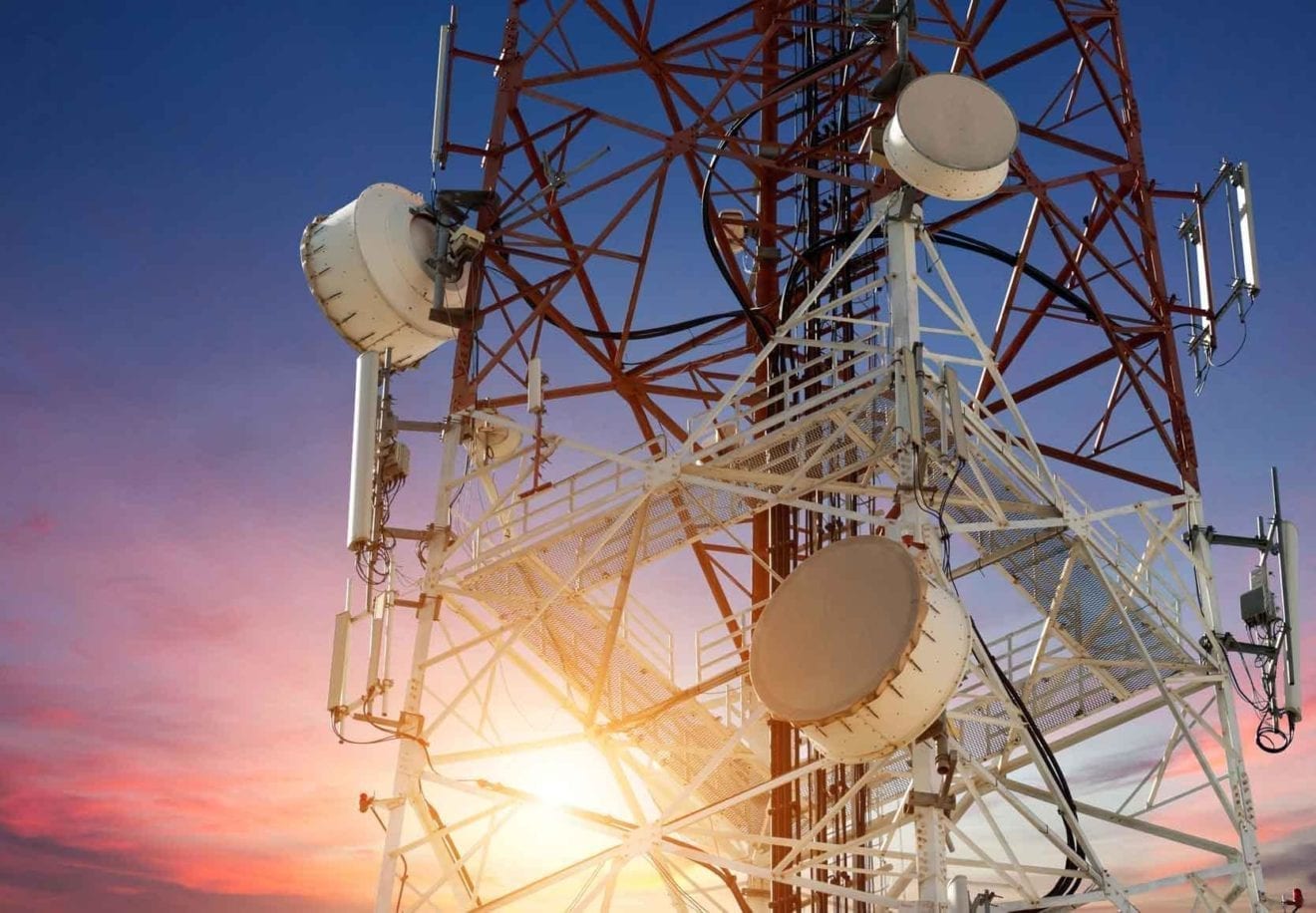
    IFC’s investment will allow CREI Phils, a newly formed tower company in the Philippines, to fund the construction of over 600 w towers by next year. For the first time in the country’s history, these towers will be shared on an open-access basis. Aside from creating a competitive market for tower colocations, the loan will help increase mobile network capacity, allowing operators to expand high-speed mobile networks (4G and 5G) across the country, offering better services at more affordable rates.

    According to the 2020 Global Digital Overview, the number of internet users in the Philippines has more than tripled from 23 million (2010) to 73 million (2020). Yet, the quality of mobile connectivity is inadequate given its pervasive network congestion. The country ranks 95th out of 142 countries for mobile internet download speed. Further, the number of mobile subscribers per tower – a measure of network congestion – is more than double the regional average. According to market estimates, to fill the gap, the Philippines would need a significant number of new towers built in the next seven to eight years to support the government’s network capacity requirements.

    “We are thrilled to be working alongside IFC in supporting the government of the Philippines’ development of its mobile infrastructure sector,” stated Kadri Hakim, CEO of CREI. “Despite the challenging market conditions triggered by the pandemic, IFC’s long-term funding will allow us to meet our ambitions of expanding our digital infrastructure portfolio in the Philippines. Our management team’s extensive knowhow gained through 15 years of telecoms operations across South-East Asia and Africa combined with IFC’s deep knowledge of the country’s telecoms regulatory regime and its experience as an investor in tower companies, will enable us to effectively develop and grow our operations in the country.”

    The company’s entry into the Philippines telecoms market brings robust expertise in the design, construction and operation of towers, as well as the provision of efficient energy solutions that help displace and reduce the use of diesel fuel on towers connected to the grid. In line with the nation’s climate goals, this project will lead to significant greenhouse-gas (GHG) savings. IFC will also assist the company align its environmental and social practices with IFC’s performance standards.

    “Digital connectivity is more important than ever for businesses and people to thrive,” said Jean-Marc Arbogast, IFC Country Manager for the Philippines. “By supporting the entry of a new company, IFC’s investment will contribute to a strong independent tower market in the Philippines, increasing competition, creating jobs, spurring economic growth and help cut emissions.”

  • YouTube might soon let you zoom in on videos

    YouTube might soon let you zoom in on videos

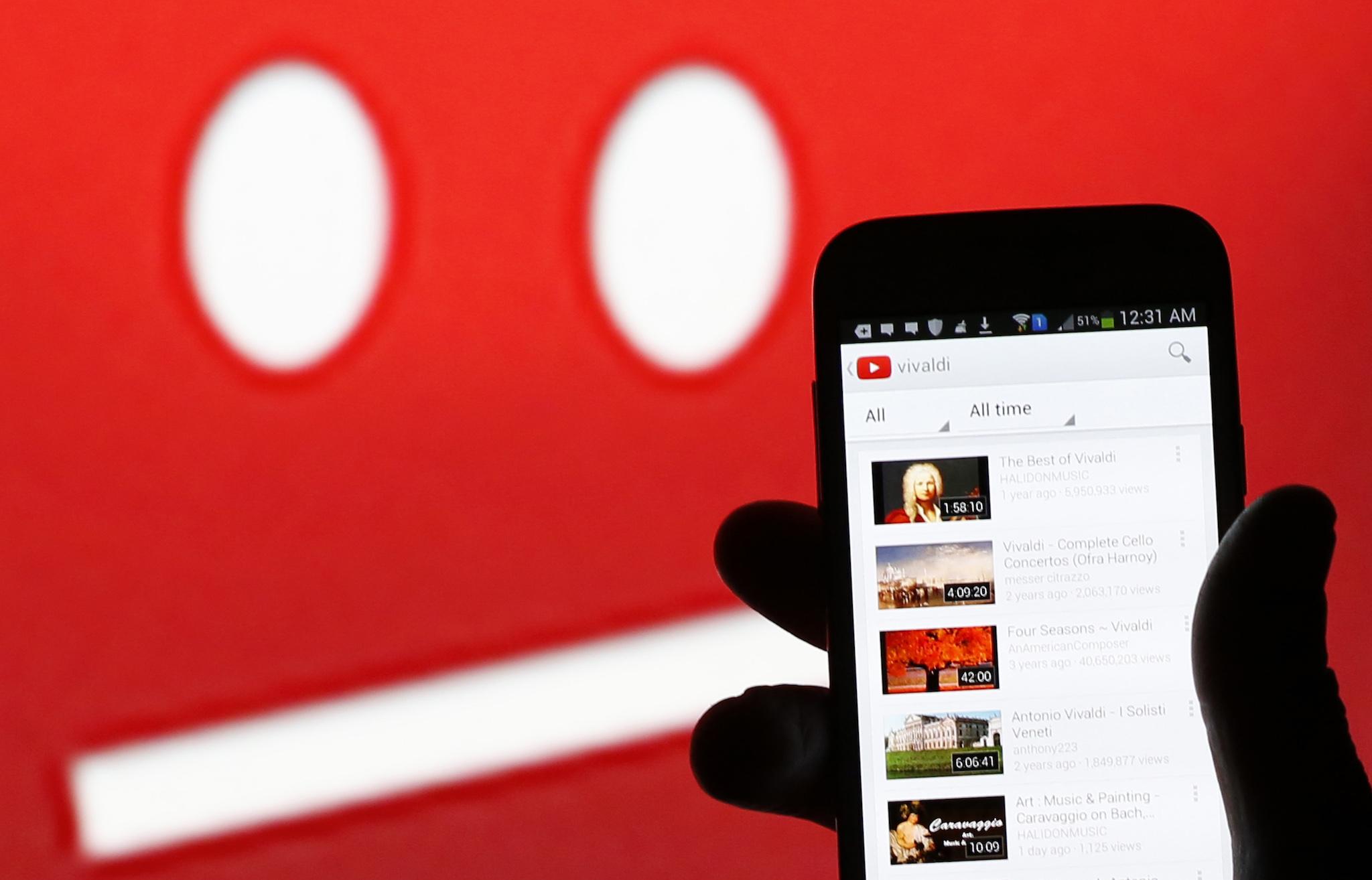
    A new useful feature might soon come to YouTube. Apparently, the video platform is working on a new option called “Pinch to zoom,” which will let you zoom in on the videos you watch by pinching the video player with two fingers.

    At the moment, Pinch to zoom is only an experimental feature, but YouTube Premium subscribers can freely enroll in the testing through YouTube’s experimental features site and try it themselves. However, they can only do so until September 1st. After that, the Pinch to zoom test won’t be available.

    Most likely, after September 1st, based on Premium subscribers’ feedback, YouTube will decide if it will officially release Pinch to zoom on its platform or just scrap the project entirely.

    If you regularly watch YouTube videos, you know there could be many instances where you would like to zoom in on a portion of the video. For example, tutorial clips often arrange information in small tables, and a zoom-in option would really help you read the displayed data more easily. Or maybe there is a small detail in the latest video of your favorite YouTuber that you would like to zoom in on in order to pay more attention to. Whatever the reason, a zoom-in option on YouTube will most likely be a very useful feature. We really hope YouTube decides to release it to all its users after the testing is finished.

  • KFC and Hype team up in branded fashion drop

    KFC and Hype team up in branded fashion drop

    KFC may be known for its fried chicken, but it’s about to make a move into the fashion world, teaming up with HYPE to launch a 47-piece clothing line.

    The fast food chain has collaborated with lifestyle brand HYPE to create a collection of clothes and accessories including hoodies, puffer jackets and bucket (no pun intended) hats.

    The line-up of co-branded clothing and accessories features designs inspired by both brands, mixing KFC’s tongue-in-cheek interactive messaging with HYPE bold heritage statements.

    The exclusive range has your everyday staples covered and features bralettes, joggers, tees, caps and backpacks, which the brands claim will ensure you look “festival-ready and feeling finger lickin’ good”.

    Inspired by KFC’s history, including its menus and slogans, the collection includes HYPE’s original dad cap shape with ‘Bargain Bucket’ emblazoned across the front.