Author: Mei Ling Tan

  • Virtual retail real estate plot sells for a record US$2.4 million

    Virtual retail real estate plot sells for a record US$2.4 million

    A 566sqm piece of prime retail real estate sold online for US$2.4 million this week – but there’s a catch: it doesn’t exist.

    The land is ‘located’ on Fashion Street, a luxury retail precinct in Decentraland, a metaverse where people can buy land, visit buildings, and walk around and meet people as avatars. The buyer: crypto investor Tokens.com which says it plans to use the space to host digital fashion events and sell virtual clothing for avatars.

    The transaction was settled in a cryptocurrency called Mana and the agreed price of 618,000 Mana equates to US$2.4 million in real money.

    Decentraland said the site was the most expensive purchase of a plot of virtual real estate on its platform to date. It comprises 116 smaller parcels, each measuring 4.9sqm taking the plot said to 566sqm of virtual space.

    Decentraland is a specific type of metaverse that uses blockchain. Land and other items in Decentraland are sold in the form of non-fungible tokens (NFTs), a kind of crypto asset.

    Crypto enthusiasts buy land there as a speculative investment, using Mana.

    Andrew Kiguel, CEO of Tokens.com, said the assets would complement the ‘real estate’ already held by Metaverse Group.

    In June, a plot of virtual land in Decentraland sold for 1,295,000 Mana, worth $913,228 at the time. The buyers built a virtual shopping center to sell digital clothing, but Reuters reports it has visited this site multiple times since and has yet to see any shoppers.

    Environments such as Decentraland have grown in popularity this year, as the pandemic caused people to spend more time online. Interest in the concept surged last month when Facebook changed its name to Meta to reflect its focus on developing virtual reality products for the metaverse.

  • WatchBox secures $165 million to fund expansion

    WatchBox secures $165 million to fund expansion

    Luxury watches online platform, WatchBox, has raised US$165 million of equity capital led by The Radcliff Companies and The Spruce House Partnership.

    The lead investors were also joined by CMIA Capital Partners together with other existing investors. The funds raised will be invested in scaling its digital platform and expanding into new markets, according to the company.

    “Our investors and partners hail from a wide range of industries, from consumer to technology, finance, and professional sports, yet we are all bound by our love of watches,” said Justin Reis, co-founder, and global CEO at WatchBox. “With that foundation, we are now able to use technology to create the best customer experience in the industry.”

    Founded in 2017 by Justin Reis, Tay Liam Wee, and Danny Govberg, WatchBox has global locations in the US, Hong Kong, Singapore, Switzerland, and Dubai, with additional locations on the way. WatchBox is endorsed by professional athletes and watch enthusiasts including Giannis Antetokounmpo, Chris Paul, Devin Booker, and Karl Anthony Towns.

    “We are reshaping the way high-value luxury is transacted online,” added Reis. “We built our proprietary concierge platform to enable efficiency and scale as we build personal connections with collectors around the world.”

  • Canada Goose names new Asia-Pacific president

    Canada Goose names new Asia-Pacific president

    Canada Goose has appointed Paul Cadman as its new president for the Asia-Pacific region.

    In his new role, Cadman will oversee the business’ activities including commercial, financial, and marketing across Apac markets, including Greater China, Japan, South Korea, Australia, and New Zealand.

    “Paul is a trusted brand advisor, having consulted for us for years,” said Dani Reiss, president, and CEO of Canada Goose. “His extensive knowledge in the luxury sector and his deep experience in developing brands across the region has provided our team with a valuable perspective.”

    Cadman has more than 30 years of strategic luxury goods experience and held leadership positions with global brands, including Salvatore Ferragamo, Asprey & Garrard, Bvlgari, and Estee Lauder.

    “Paul’s experience, entrepreneurial nature, and regionally-specific industry knowledge make him the best fit for the role as we strengthen our brand presence and further execute against our long-term growth strategy,” said Reiss.

    Cadman also founded PMC Global Hong Kong, a strategic management and business consultancy focused on the luxury goods industry.

    The appointment is in line with Canada Goose’s strategy to deepen its influence in the Apac region, including its recent store openings in Harbin, Nanjing, Ningbo, Beijing, Taipei, and Macau.

  • Ikea to open its first shopping mall in India

    Ikea to open its first shopping mall in India

    Ingka Centres, part of Ingka Group, is set to open a mixed-use development in Gurugram, Southwest of New Delhi, marking Ikea’s first shopping mall in the country.

    Construction is set to start early next year, with an investment of US$448 million. The project, with a gross building area of around 130,000sqm, is expected to generate more than 2500 jobs for the community.

    Dubbed ‘Livat’, a Swedish word that means ‘a lively happening’, the mixed-use development will house a mix of hospitality, food, and beverage, ‘edutainment’ learning spaces, alongside a wide retail offer anchored by an Ikea store.

    “We know that when it comes to retail and leisure, change is the only constant,” said Cindy Andersen, MD of Ingka Centres. “This is why our first Livat meeting place in India will be adaptable, with multiple offerings to match consumer lifestyles long into the future.”

    “India is an exciting opportunity for us and our partners to bring new experiences to customers and to develop meeting places that bring value to communities and the planet.

    “We want to create destinations that make it easier for people to live even happier, healthier, and more sustainable lifestyles – this will be our goal at Gurugram.”

    The mall’s concept will be focused on health, sport, nature, and sustainability. It is expected to welcome more than 20 million visitors annually. The company said Livat Gurugram will reflect best practices in energy and water efficiency while delivering a seamless omnichannel experience for customers.

    “Delhi NCR will be one of our biggest and most important markets in India,” said Peter Betzel, CEO, and CSO, Ikea India.

  • Dyson ditches Malaysian supplier over labour practices

    Dyson ditches Malaysian supplier over labour practices

    Dyson has terminated its relationship with supplier ATA IMS Bhd following an audit of the Malaysian company’s labor practices and allegations by a whistleblower, the British firm famed for its high-tech vacuum cleaners told Reuters.

    Dyson said it had commissioned an audit of working conditions at ATA earlier this year, the results of which were received on Oct 4.

    In addition, it was informed in September of a whistle-blower making allegations about unacceptable actions by ATA staff and immediately commissioned an international law firm to undertake a further investigation, Dyson said.

    “Despite intense engagement over the past six weeks, we have not seen sufficient progress and have already removed some production lines,” Dyson said in a statement to Reuters. “We have now terminated our relationship with six months’ of contractual notice.”

    ATA, which makes parts for Dyson’s vacuum cleaners and air purifiers, did not immediately respond to a request for comment.

    According to ATA, Dyson accounts for almost 80 percent of its revenue.

    ATA had in May denied allegations of forced labor at its factories after a prominent rights activist said US authorities were going to scrutinize the company’s work practices.

  • Mandolé Orchard expands range with almond products

    Mandolé Orchard expands range with almond products

    Mandolé Orchard has expanded its range with the launch of Chocolate Almond Milk, Coconut Almond Milk, and Smooth Almond Butter.

    According to the brand, the three new products not only celebrate its “signature goodness and commitment to wholesome products but deliver something for everyone – even the fussiest of tastebuds”.

    Low in sugar and “completely clean” with “high” almond density, this product is promoted as the “perfect” afternoon refreshment, the “ultimate” smoothie companion, a “delicious” cocktail enhancer, or something for even the fussiest of young eaters.

    The new Coconut Almond Milk is said to be low in sugar, high in protein, and vitamin E.

    “There are fewer pairings made for each other more than coconut and almond,” says the brand. “The new product is like a vacation in a bottle.”

    The almond butter is made fresh on the family farm from a “delicious blend” of lightly roasted premium Mandolé Orchard almonds.

    The product is available in salted and unsalted.

  • Hero Electric Reports 100 Percent Jump In Retail Sales

    Hero Electric Reports 100 Percent Jump In Retail Sales

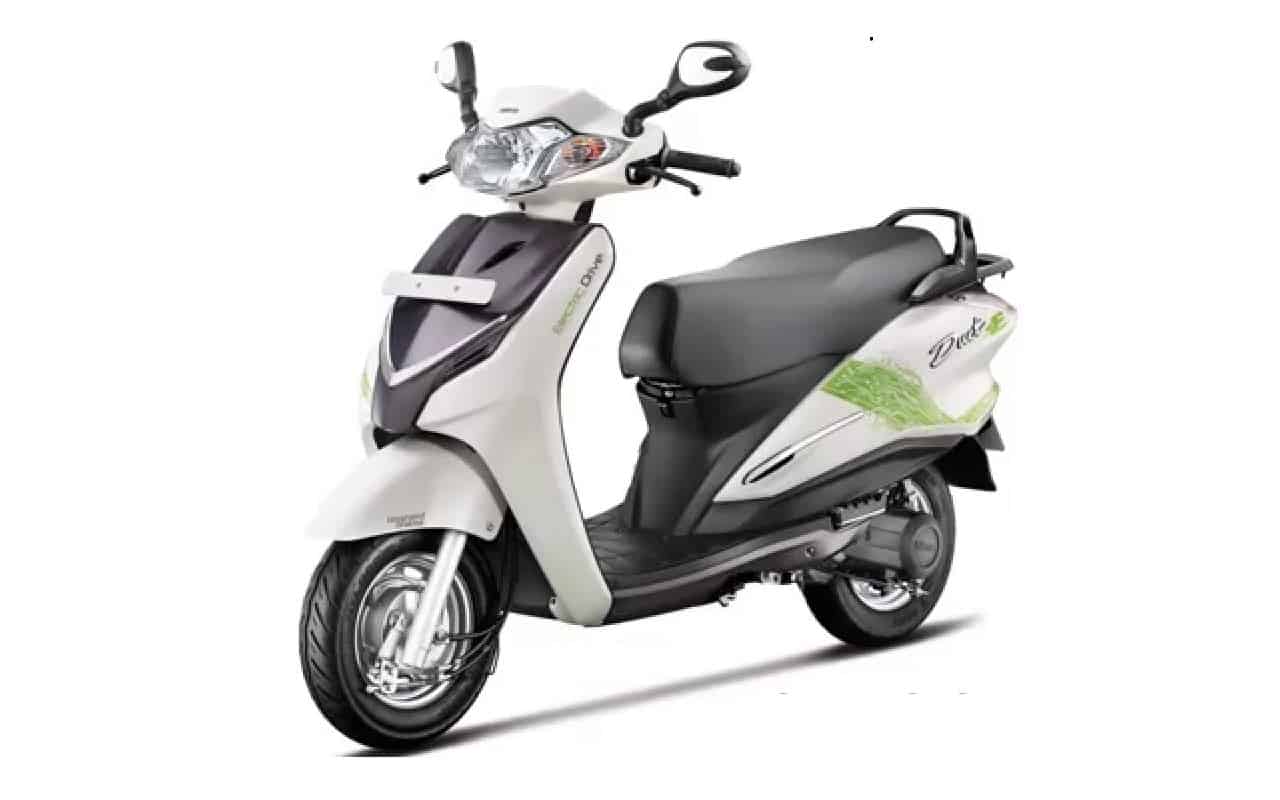
    Hero Electric, India’s leading electric two-wheeler manufacturer, has clocked 24,000 retail sales during the festive period this year. According to the company, compared to last year, when Hero Electric’s festive sales stood at 11,339 units during the period from October 1, 2021 to November 15, 2021, the growth in retail sales has been more than double. The company says the recent amendment in FAME II policy and rising fuel prices has propelled the demand for electric vehicles resulting in heightened demand. With strong government support to the sector, EVs are redefining the mobility space in India and are now receiving preference for commuting with better infrastructure and awareness.

    Sohinder Gill, CEO – Hero Electric, says that a significant number of customers are showing a preference for electric two-wheelers over petrol-powered two-wheelers.

    Sohinder Gill, CEO, Hero Electric, said, “We saw two clear indicators in our showrooms this festive season. A significant percentage of customers chose Hero E bikes over the Petrol bikes and many factored environment and sustainability as influencing factors in their purchase. This is a good indicator for Hero and the E2W industry to step into exponential growth and bring around an EV revolution that will help reduce air pollution and make our cities a better place.”

    Hero Electric’s ’30 days, 30 bikes’ festive offer aided the upward sales momentum during this period, the company announced in a statement. Under the offer, every day one lucky customer purchasing a Hero Electric two-wheeler got a chance to ride home their vehicle free, further fostering the spirit of a pollution-free festive season. Pursuing a strong sales target and market share by the end of FY2022, Hero Electric is targeting 1 million customers in the near future.

    Hero Electric is one of India’s oldest, and the largest electric two-wheeler company, with a manufacturing facility in Ludhiana. Hero Electric currently has 700 and rapidly expanding sales and service outlets spread across the country, and offers a wide range of electric two-wheelers for different customers at different price points. With over 4,00,000 electric two-wheelers in India, over the past 14 years, Hero Electric has played a crucial role in developing and promoting the electric vehicle market in the country.

  • Update to Shazam makes the app more useful

    Update to Shazam makes the app more useful

    It is hard to believe that nearly four years have passed since Apple paid a reported $400 million for the music recognition app Shazam. Whether this was a move made by Apple to compete with Pixel’s Now Playing feature is unknown. At the time that the deal was announced, Apple said that it ” has exciting plans for Shazam which was one of the first apps in the App Store.

    Apple did add Shazam to the iOS Control Center in iOS 14.2, which is not really exciting. In iOS 14, Apple added a feature allowing Shazam to recognize music playing inside an app. Again, excitement is in the eye of the beholder and we’re not sure that this would qualify as such. We noticed that Shazam had received an update that will, according to the release notes, allow the app to listen “longer” and “harder.”

    Apple says that by working harder, Shazam will find more songs. The company stated, “Shazam now finds more songs by trying harder, for longer. Tap to Shazam to give it a go.” While Shazam is supposed to be able to match just a few seconds of a song with that tune’s title, sometimes the app can be stumped at first and that is why hearing just some additional seconds of a tune could make the difference between being unable to learn the name of that song you just heard or Shazam finding out the name of that song you can’t get out of your head, and the artist.

    You might have been unaware that Apple offers a widget for Shazam. Depending on which size widget you choose, you could see up to four songs recently discovered by Shazam. To add the widget, long-press on an empty space on your iPhone screen. That puts the phone into “jiggle mode.”

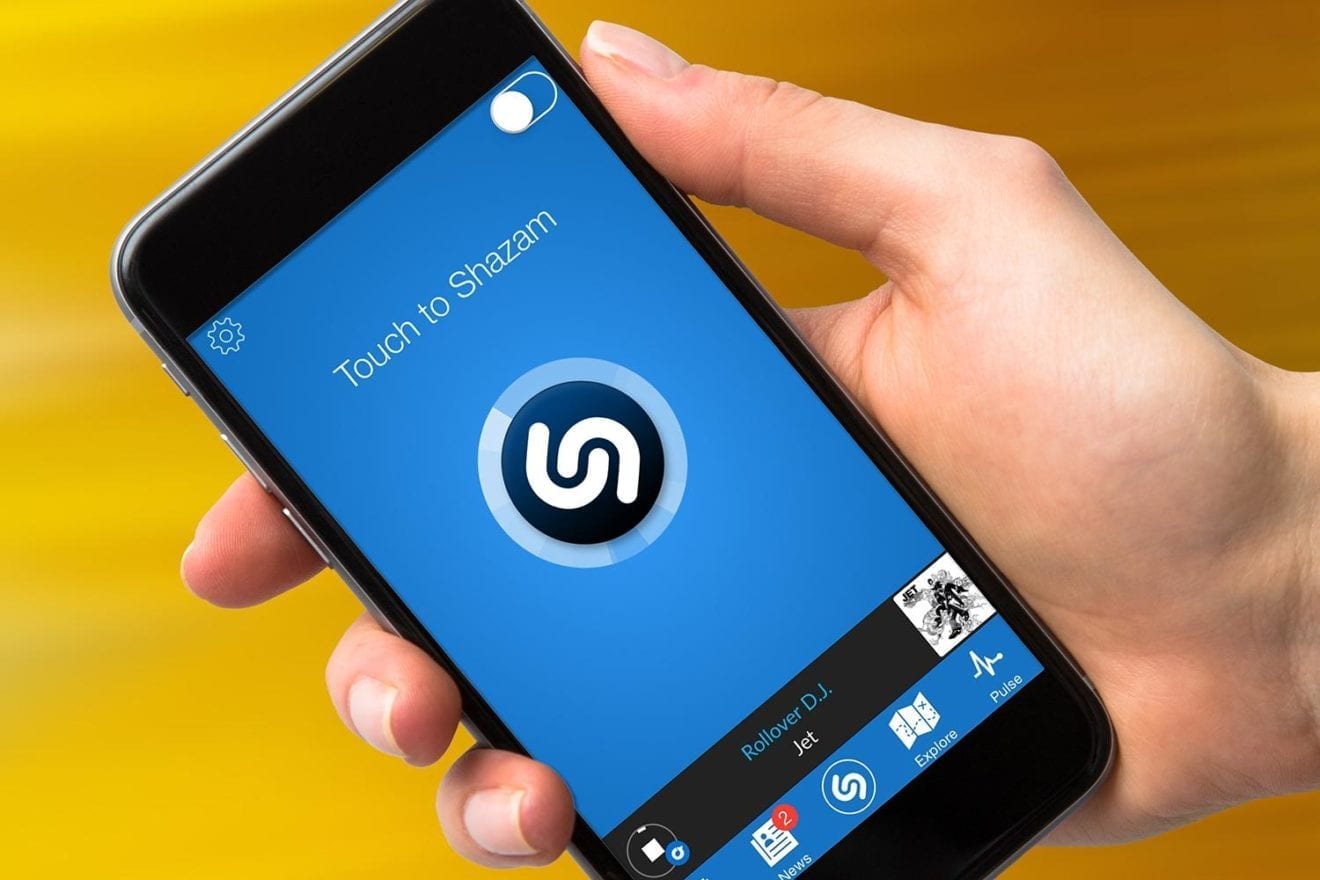
    While in “jiggle mode,” tap the “+” button in the top-left corner and search for the Shazam widget which showed up first when we looked for the widget (see accompanying photo). Select which size widget you want and tap on “Add Widget.”

    Apple is currently running a promotion now through January 31st. Simply visit this website and use the camera on your iPhone to scan the QR code and redeem the offer. The five free months are available to new Apple Music subscribers only.

    The Shazam app is also available for the Apple Watch.

  • The 5G-enabled Honor 60 series to be unveiled on December 1

    The 5G-enabled Honor 60 series to be unveiled on December 1

    It’s been less than a month since Honor launched its mid-range 50 series, and the Chinese company has even more smartphones in the pipeline. And it’s not hard to guess the name of Honor’s upcoming devices since the Chinese company has already teased the official announcement.

    The upcoming Honor 60 series is expected to feature at least three different models: Honor 60, Honor 60 Pro, and Honor SE. Unlike the Honor 50 that packs a Snapdragon 778G 5G chipset, the upcoming phones are expected to be more powerful.

    It’s not yet been confirmed, but the Honor Pro 60 is rumored to pack a high-end Snapdragon 870 chipset. Also, the phone will be powered by a 4,500 mAh battery with 100W fast charging support. The regular Honor 60 model on the other hand will only support 66W fast charging.

    However, considering the Honor 60 series is supposed to be aimed at the mid-range tier, these rumors may be false, and the upcoming phones might end up with the same chipset inside as the Honor 50 series, or perhaps trade it for a MediaTek processor like the Dimensity 900.

    Thankfully, we won’t have to wait long for these important details. Honor confirmed the 60 series will be unveiled in China on December 1, which is less than a week from now.

  • Creating value with private 5G networks to transform industries

    Creating value with private 5G networks to transform industries

    Private 5G networks are on the rise as transformative applications support digitalization and IoT. Telecom Review Asia Pacific speaks to Wang Quan, vice president of ZTE Corporation, to find out how private 5G networks provide operators with new opportunities as 5G brings strong impetus for transformation across industries.

    How do private 5G networks add value to operators and transform industries?

    The concept of private networks is not exclusive to 5G. In the 2G, 3G, and 4G eras, industries with special requirements on network security and stability, such as railways, airports, power and oil already rely on customized private networks to power secure and robust connectivity. However, traditional private networks have their limitations – they are unable to support massive connectivity and can only be used to complement mainstream public networks. Increasingly, traditional private networks can no longer support the demands of real-time and remote operations in the intelligent era where man-machine interconnectedness grows.

    With the maturity of 5G technology and the dawn of Industrial 4.0, more enterprises are now embracing digital and intelligent transformation. To address future demands, enterprises that depend on traditional private networks are now exploring new network technologies.

    The need for deterministic networks in vertical industries with high demands on latency, reliability, and security makes private 5G networks the best choice going forward. For example, in extreme work environments such as mines, UHD videos, high bandwidth, and ultra-low latency are requirements to remotely control excavators and other industrial devices in real-time. In smart factories, a large number of sensors are connected to networks to carry out real-time automation and monitoring to execute safe processes.

    Across many industries, intelligent networks demand deterministic networks with low latency and low jitter. In these scenarios, private 5G networks are capable of providing customized SLA guarantees for a wide range of customized industrial applications, therein presenting enormous opportunities for operators to realize private 5G as a service to tap on new economic growth points.

    Can you tell us about the benefits of ZTE’s private 5G networks?

    As a key provider of integrated communications and information solutions, ZTE has always been at the forefront of private 5G networks innovations and applications.

    ZTE provides an all scenario private 5G network covering RAN, core network, transmission, industrial gateway and other end-to-end products. For example, ZTE’s dedicated industrial core network, industry 5GC (i5GC), integrates and optimizes more than 10 key network functions of the 5G core network, requiring just one server to complete the deployment of an entire network. This brings ease to deployment, especially in underserved areas with limited resources.

    In addition, ZTE’s iCube all-in-one cloud network solution supports customer-centric 5G industry private networks and edge cloud services. The solution offers agility and scalability as voice, BBU, OLT, MEC and industry applications can be loaded on-demand to provide customers with highly-customized integrated private industry cloud network services.

    ZTE’s private 5G network solution encompasses private network consultation, planning, design, customization, integration, installation, and deployment. This new “Private 5G as a Service” business model supports operators in rapidly customizing private 5G networks for industries.

    ZTE has also built Openlab, a center for innovation, to flexibly construct customized end-to-end private 5G networks and provide an incubation environment for 5G application innovation. Together with operators and industry partners, ZTE can incubate innovative solutions. To date, ZTE has joined hands with more than 500 partners to explore innovative 5G application scenarios across verticals including smart manufacturing, power grid, port, mining, healthcare, education, and agriculture. ZTE will continue to work with global operators and industry partners to fast-track industrial developments.

    Can you share with us ZTE’s latest innovations in cloud infrastructure? 

    Cloud platforms manage and shield underlying hardware through the hypervisor virtualization layer to provide services such as VMs, containers, and bare metals to achieve resource sharing. However, having the hypervisor virtualization layer deployed on the server results in server performance loss and serious security risks.

    ZTE’s new-generation cloud infrastructure addresses these concerns by uploading the management control module and hypervisor virtualization layer of the cloud platform from the server to the NEO cloud card. Only the lightweight hypervisor resides on the server, hence reducing the CPU load of the server to achieve zero performance loss. At the same time, the NEO card is pre-integrated with the hypervisor virtualization layer, such that users can conveniently deploy the layer to ensure ease of use.

    Suited for use with general servers, the ZTE NEO card enables server cloudification to be easily achieved by merely inserting the card into the server to power the widespread use of the private and public clouds.

    Network functions virtualization (NFV) has evolved from dedicated hardware to general hardware. The most important feature of NFV is that it provides unified operating resources for upper layer virtualized network functions. However, general hardware such as x86 does not meet large bandwidth and low latency requirements – found lacking in terms of data forwarding efficiency and data-parallel processing.

    As such, hardware acceleration is critical to improving network performance in the 5G network. Through hardware acceleration, the system can accelerate the decoupling between hardware and servers to achieve resource pooling and improve network resource utilization.

    There are two decoupling approaches for hardware acceleration – software and hardware decoupling for standardized hardware acceleration cards, as well as software and hardware decoupling for dedicated NE functions. To achieve unified management of NFV heterogeneous acceleration hardware, the ETSI has formulated the software framework standard of unified management for NFV acceleration hardware, while OpenStack provides a general hardware acceleration management framework.


  • Private hospitals suffer pandemic inflicted losses

    Private hospitals suffer pandemic inflicted losses

    Private hospitals in HCMC and Hanoi are reporting losses after months of limited operations necessitated by the Covid-19 pandemic.

    After four years of making a profit, the Tam Duc Heart Hospital in HCMC’s District 7 posted a loss of VND13 billion ($571,440) in the third quarter this year.

    Its revenue plunged 63 percent to nearly VND54 billion.

    The hospital has cut down salaries but high overhead costs and additional Covid-19 measures remained major financial burdens.

    Its nine-month profit has fallen 86 percent year-on-year, the hospital said.

    In Binh Tan District, Trieu An Hospital posted its second quarterly loss in a row at VND22 billion, against VND14 billion in the second quarter.

    The hospital saw third-quarter revenues plunge 70 percent year-on-year.

    In Hanoi, the Transportation Hospital in Dong Da District saw a loss of VND11 billion in the third quarter, with revenue dropping 36 percent year-on-year to over VND24 billion.

    Its accumulated loss stands at nearly VND188 billion, the hospital said.

    Nationally, the number of health checks fell 10 percent year-on-year last year to VND167 million, according to the health ministry.

  • Japanese business giants eye expansion in Vietnam

    Japanese business giants eye expansion in Vietnam

    Japanese companies, including retailer Aeon and energy firm Enos, have told Prime Minister Pham Minh Chinh that they want to expand their investments in Vietnam.

    The country’s business environment is improving and Japanese companies have confidence in their Vietnamese operations, the heads of major companies told Chinh in Tokyo Tuesday. The Prime Minister is on a four-day official visit to Japan.

    Aeon, with six malls in the Southeast nation, has invested $1.18 billion in the country so far, and its chairman, Motoya Okada, said it wants to double the number of malls.

    It also wants to list on the Vietnamese stock market and begin exports of fisheries and garment products to Japan, he added.

    Chinh said the company’s plan is opportune since Vietnam now offers great advantages due to its 17 free trade agreements.

    Aeon could expand its business and source products from several localities like Thanh Hoa, Nghe An, Quang Ninh, Hai Phong, An Giang, and Kien Giang, he said.

    Eneos, one of the biggest energy firms in Japan and with annual revenues of $70 billion in Vietnam, wants to expand its investment.

    Chairman Tsutomu Sugimori expressed interest in Vietnam’s energy development plan and helping reduce its carbon emissions.

    Chinh welcomed this, saying his country is drafting its Power Development Plan VIII with a focus on diversifying power sources and developing clean and renewable energy.

    Fast Retailing, which owns fashion brand Uniqlo, wants to invest further in Vietnam. Chinh said the company should to help local employees reach global standards.

    Japan’s leading pharmaceutical firm Shionogi wants to establish its first Covid-19 research and manufacturing facility in Southeast Asia in Vietnam. Conglomerate Hitachi wants to contribute to Vietnam’s railway development.

    Masayoshi Fujimoto, chairman of conglomerate Sojitz Corporation, said his company is also interested in reducing carbon emissions in Vietnam.

    It has 17 ventures in Vietnam in equipment manufacturing, energy, chemicals, electricity, and others.

    Chinh said Sojitz should grow timber in his country and export it to major markets.

    Another conglomerate, Marubeni Corporation, is interested in power projects in Vietnam and wants to develop infrastructure for the Quang Yen economic zone in the northern province of Quang Ninh.

    Chinh said it should focus on Vietnam’s transition to energy sources that are modern and environment-friendly.

    He told the executives they could contact his ministers to resolve any challenges they might face while seeking to invest. “If that does not work, send me a letter directly”.

    Japan was the third biggest foreign direct investor in Vietnam in the first 10 months, behind Singapore and South Korea, with a registered capital of nearly $3.4 billion, accounting for 14.3 percent of total, according to the Ministry of Planning and Investment.

    In the first 10 months, bilateral trade rose 6.4 percent year-on-year to $34.4 billion, according to Vietnam Customs.

  • DBS Hit by Worst Outage in a Decade

    DBS Hit by Worst Outage in a Decade

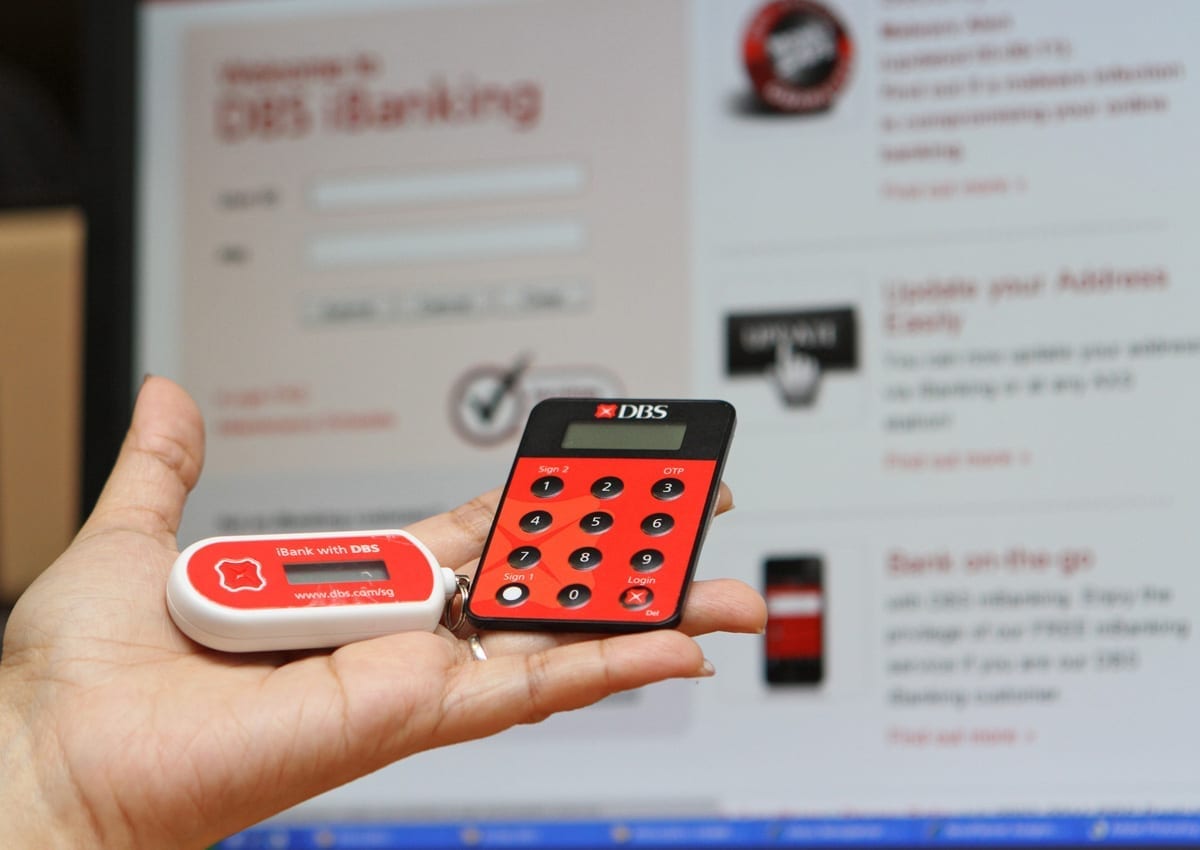
    DBS faced two consecutive days of disruptions to its online banking services, marking the worst outage for the Singapore lender since its ATM glitch in 2010.

    DBS issued a social media post to address the recurring disruptions to its online banking services, including its payments app.

    Services were restored early this morning,» the bank said yesterday in a Facebook post. Unfortunately, yesterday’s digital banking issue has recurred and this has affected our services.

    The post attracted more than 2,500 comments, many of which expressed frustration about blocked access to banking accounts.

    Outages at DBS and its low-cost consumer banking unit POSB first occurred on Tuesday after reports first surfaced in the morning, according to Downdetector – a website that uses crowd-sourcing to track online outages. And just hours after resolving the issue yesterday morning, the outages continued at the bank.

    The inability to access an essential service over such an extended period of time is unacceptable and we deeply regret the inconvenience caused, DBS said in a separate social media post.

    This marks the worst outage experienced by the Singapore lender since 2010 when customers were unable to withdraw cash from ATMs for hours due to a major glitch which subsequently led to supervisory action by the city-state’s financial regulator.

  • Watchdog Greenlights NAB’s Citi Acquisition in Australia

    Watchdog Greenlights NAB’s Citi Acquisition in Australia

    The acquisition «would not substantially lessen competition,» the Australian Competition and Consumer Commission (ACCC) said on Thursday.

    The competition watchdog in Australia will not oppose the proposed acquisition of Citigroup Australia’s consumer business by National Australia Bank.

    Its review focused on competition in the supply of credit cards, as Citi is a substantial provider of credit cards and credit card services. ACCC also focused on was the provision of «white label» credit card services, as following the acquisition, NAB will be the dominant white label credit card supplier to a number of commercial partners, and will compete with those partners in the consumer-facing credit card market.

    Evidence showed that the proposed acquisition was unlikely to raise competition concerns in any other areas of overlap, given Citi’s minimal market share in these markets, ACCC said in a statement.

    NAB, Australia’s second-biggest bank, said in August it would buy Citigroup Australia in a deal valued at around A$1.2 billion ($880 million).

    The U.S. bank is preparing to exit the region in the face of strong challenges to the old credit card business model from buy-now, pay-later companies.

  • DBS May Face Regulatory Action Over Outage

    DBS May Face Regulatory Action Over Outage

    The Monetary Authority of Singapore said it will consider appropriate supervisory actions on DBS, which suffered recurring disruptions to its online banking services, including its payments app.

    This is a serious disruption and MAS expects DBS to conduct a thorough investigation to identify the root causes and implement the necessary remedial measures, Marcus Lim, MAS’ assistant managing director (banking and insurance), said in a statement.

    The regulator said the bank informed it about a problem with its access control servers that resulted in customers experiencing difficulties logging on to its digital banking services.

    Lim said MAS expects all financial institutions to have systems and processes to ensure the consistent availability of financial services to their customers.

    This week, DBS faced two consecutive days of disruptions to its online banking services, marking the worst outage for the Singapore lender since its ATM glitch in 2010.

    DBS Singapore country head Shee Tse Koon apologized for the outage in a video posted on the bank’s website and various social media pages on Wednesday afternoon.

    The bank also extended services at its branches for two hours and encouraged customers to use its phone banking services. In the meantime, I want to assure you that your deposits and monies are safe, Shee said.