Author: Mei Ling Tan

  • Coles partners with brewery to make beer from excess watermelons and bread

    Coles partners with brewery to make beer from excess watermelons and bread

    One of the world’s oldest beer styles is roaring back to life thanks to a truckload of watermelons, 500 loaves of unsold bread, and a creative partnership between Coles Liquor and Melbourne-based craft beer producer Local Brewing Co.

    Local Brewing Co’s limited edition Surplus Sour Watermelon Beer, launched exclusively this week at Liquorland and First Choice Liquor Market, is the first of a series of fruit sour beers made with unsold or excess fruit from Coles’ supermarket suppliers and slated to hit the shelves in the next 12 months.

    Brewed exclusively for Coles Liquor, Surplus Sour Watermelon Beer is made with three tonnes of excess melons donated by long-time Coles produce supplier Rombola Family Farms. In place of brewer’s malt, Local Brewing rescued 300 kilograms of unsold Coles bread to add to the ferment.

    The result is a light, gently fruity, and refreshing beer with a delicate tang that typifies sour beers, one of the fastest-growing craft beer styles in Australia and part of a renaissance of this easy-drinking alternative to traditional ‘bitter’ pale ales.

    Sour beers are synonymous with Belgium, where traditional sour styles such as Lambic have been brewed since early in the 18th century. However, their history can be traced back as far as 4000BC, when brewing involved little more than mixing grain and water together and allowing naturally-occurring microbes to do the rest.

    In addition to yeast, which converts carbohydrates from the grain into alcohol, the microbial population also included lactobacillus, which instead uses carbohydrates to create lactic acid – the same compound that gives sourdough bread its distinct flavor.

    While modern brewing techniques usually avoid so-called ‘wild’ bacteria by using carefully-cultivated strains of yeast to reduce the influence of sour or acidic flavors, the craft beer revolution has reignited interest in traditional styles.

    Local Brewing Co has been creating sour beers on a boutique scale for the last three years however its collaboration with Coles has significantly upscaled production. Importantly for the brewery’s founders, it has also super-charged the positive social impact of a business that was conceived as a social enterprise to help feed those in need.

    Ordinarily, Local Brewing Co contributes the equivalent of one meal from the sale of every four-pack of its beer to food rescue organization SecondBite, which works with charities across the country to help Australians in need.

    However, through this partnership with Coles, co-founder Nick Campbell said Local Brewing would contribute the equivalent of one meal for the sale of every can of its Watermelon Sour beer – four times the usual donation.

    “Our collaboration with Coles Liquor has been incredible – it’s allowed us to brew a genuinely sustainable beer and increase our social impact,” Mr Campbell said.

    “We know from the release of previous sour beers that customers embrace this genuinely unique product and it’s a great way to use food that might otherwise be wasted.

    “Every time we’ve released one of these sours in the past it has been a sell-out in just a few days, so we know customers love the story of transforming rescued food into an entirely new product.”

    Coles Liquor Merchandise General Manager Brad Gorman said the partnership would produce at least three other exclusive fruit sour beers in the next 12 months to meet the growing demand for this style of beer as well as consumer appetite for genuinely sustainable products.

    “We’re already planning new exclusive sours through partnerships with seasonal fruit suppliers in the supermarket business, which will underpin the creation of an exclusive, sustainable sour beer brand that will be unique to Coles Liquor,” Mr Gorman said.

    “Sour beers are a very strong and rapidly growing segment in craft beer and we know our customers love locally made products; it’s a key element of delivering on our ambition to be the local drinks specialist.”

    Fernando Rombola has been supplying watermelons to Coles for the past seven years, during which time he’s seen a significant increase in consumer interest in sustainable agriculture and reducing food waste.

    His company Rombola Family Farms generously donated three tonnes of excess watermelons to the Local Brewing Co, embracing the opportunity to explore an alternative, sustainable route for the fruit, which is otherwise used as compost on the farm.

    “This is super important for us – sustainability is not just about the environment, it’s financial sustainability, it’s sustainability for our people and sustainability for the land, if we are not looking after our land, how are we going to be able to reap the rewards from it?

    “For the first time in my life I had to do an ESG (Environmental, Social, and Governance) statement for the bank on one of our last loans, so there is a lot of interest in sustainability and it’s the right thing to do.

    “If this product is successful, we’d definitely like to see this as a different stream; the more sustainable we are, the more we can grow more with less hectares, which is what we are always trying to do.”

    Local Brewing Co has a long history with SecondBite, partnering with the food rescue group when it was first established to embed philanthropy into the foundations of its craft brewing business.

    “We are so excited that our long running partnership with Local Brewing Co is benefitting from a collaboration with Coles, who we’ve worked with for more than a decade now to end waste and end hunger in Australia,” said SecondBite Chief Executive Officer Steve Clifford.

    “The fact Local Brewing Co is able to increase its support for SecondBite through the launch of this unique sour beer is very exciting for us.

    “We couldn’t be prouder that two of our partners have collaborated to create a product that closes the loop on food waste and provides an opportunity for customers to give back with every purchase.”

  • Apollo Tyres Collaborates With AWS To Make Its Factories Smarter

    Apollo Tyres Collaborates With AWS To Make Its Factories Smarter

    Amazon Web Services (AWS) announced that Apollo Tyres is going all-in on AWS to digitally transform. By moving all of its IT infrastructures to AWS, Apollo Tyres can use AWS’s broad portfolio of services to innovate new customer experiences while driving productivity, compliance, and process efficiency gains globally, across seven factories. Apollo Tyres will draw on the breadth and depth of AWS capabilities, including Internet of Things (IoT), data and analytics, and machine learning, to transform into an agile, data-driven enterprise. Using data from the factory floor and real-time information from production machines, like tyre rubber mixer machines, Apollo Tyres can expand operational intelligence capabilities and more accurately manage machine utilization, ensuring high-quality levels and machine efficiency. With AWS, Apollo Tyres is connecting all of its factories to the cloud this year in India and Europe. By 2022, Apollo Tyres plans to migrate all mission-critical enterprise applications, including its SAP applications, to AWS to enhance customer experience, improve process efficiency, and enable process automation.

    Apollo Tyres produces more than 2,425 tons (2,200 metric tons) of tires daily in its seven factories worldwide. Each factory previously ran their on-premises infrastructure in silos, which provided limited visibility into global manufacturing efficiencies. Apollo Tyres needed to upgrade its infrastructure to develop new ways of engaging with fleet operators, tyre dealers, and consumers while delivering tires and services efficiently at competitive prices. The company’s first step was to create a data lake on AWS, which centrally stores Apollo Tyres’ structured and unstructured data at scale. This data lake provides the foundation for an integrated data platform, which enables Apollo Tyres’ engineers around the world to collaborate in developing cloud-native applications and improve enterprise-wide decision making. The integrated data platform enables Apollo Tyres to innovate new products and services, including energy-efficient tyres and remote warranty fulfillment.

    Using AWS IoT SiteWise, a managed service that makes it easy to collect, store, organize and monitor data from industrial equipment at scale, and AWS IoT Greengrass, an open-source edge runtime and cloud service for building, deploying, and managing device software, Apollo Tyres developed an IoT-in-a-box solution. The solution connects production machines on the factory floor to AWS in as few as five days. Once connected, the solution captures data from multiple machines-including mixers, tyre building equipment, and curing presses-and feeds it to the data lake. Apollo Tyres uses Amazon Redshift, a cloud data warehouse, to create a global dashboard for visualizing production information from the data lake, providing business teams and plant managers with real-time visibility into the manufacturing process. This visibility improves production efficiency and productivity, for example by reducing the idle time of curing presses that shape the tyre in a mould by 50%.

  • Samsung may build $17 billion chip plant in Texas

    Samsung may build $17 billion chip plant in Texas

    Samsung has been searching for a prime location to set up a new multi-billion-dollar chip production plant for a while now, and it’s most certainly happening in the United States. The company already has one semiconductor chip foundry in th U.S., based in Austin, Texas.

    The Korean tech giant has already been reported to be considering Florida, Arizona, Austin, and even New York at different times for the new project, but Samsung didn’t end up sticking to any of those locations for the 17-billion plant.

    Now, we seem to have evidence that Samsung’s most recent target location falls in Taylor, Texas. While nothing has been set in stone, the city has already been offering the company powerful incentives in terms of tax breaks. And we’re talking huge tax breaks—namely 92.5% for the first decade, which will slowly decrease over time after that.

    When interviewed a Samsung spokeswoman said that “A final decision has not yet been made regarding the location.” Samsung had chosen Williamson County in Austin, Texas, for its first chip plant for the stable water and electricity sources available there, as well as similar financial incentives on offer.

    And having already considered Austin once more previously for its second plant, it seems reasonable to say that Samsung definitely seems rather inclined to begin construction in Texas. The Texan Governor, Greg Abbott, is already expected to make a big “economic announcement” at an event today (November 23), at 5PM local time—reinforcing people’s suspicions that it will be about Samsung’s new chip plant.

    The company has already confirmed to state officials that the new project will create about 1,800 jobs in the area, and plans to begin eking out chips in 2024 at the latest, once the location is chosen. We’ll update the article if tonight’s announcement in Texas does bring news of an official location for Samsung’s second U.S.-based chip foundry.

  • Balenciaga brings haute couture to Shanghai museum environment

    Balenciaga brings haute couture to Shanghai museum environment

    Balenciaga has taken its exclusive 50th Couture Collection to Shanghai, China, the first time it has introduced haute couture outside Paris.

    Presented at the Tank Shanghai museum, the collection features 30 looks created by Demna Gvasalia, creative director at Balenciaga. The museum was refurbished for the five-day event, housing a couture salon, a showroom, a grand hall, and a banquet room.

    “As China isn’t able to travel to Europe, either, I felt it was our duty to bring the Balenciaga 50th Couture Collection there,” said Gvasalia. “I’m proud to share with China this very important moment celebrating the culture, craftsmanship, and heritage of Balenciaga in an exhibition featuring my first couture collection.”

    The exterior was decorated with cream-colored curtains to hide the spaces’ new interiors.

    “Once inside, guests experience an environment that draws on the aesthetic tropes of Balenciaga’s recently restored historic couture salon and atelier, 10 Avenue George V,” the company said in a statement.

    The launch of haute couture in China celebrates the 50th anniversary of the last collection by Cristobal Balenciaga, demonstrating the brand’s ambition to take a bigger bite out of the growing Chinese luxury market.

  • Pomelo’s growth shows hope for retailers

    Pomelo’s growth shows hope for retailers

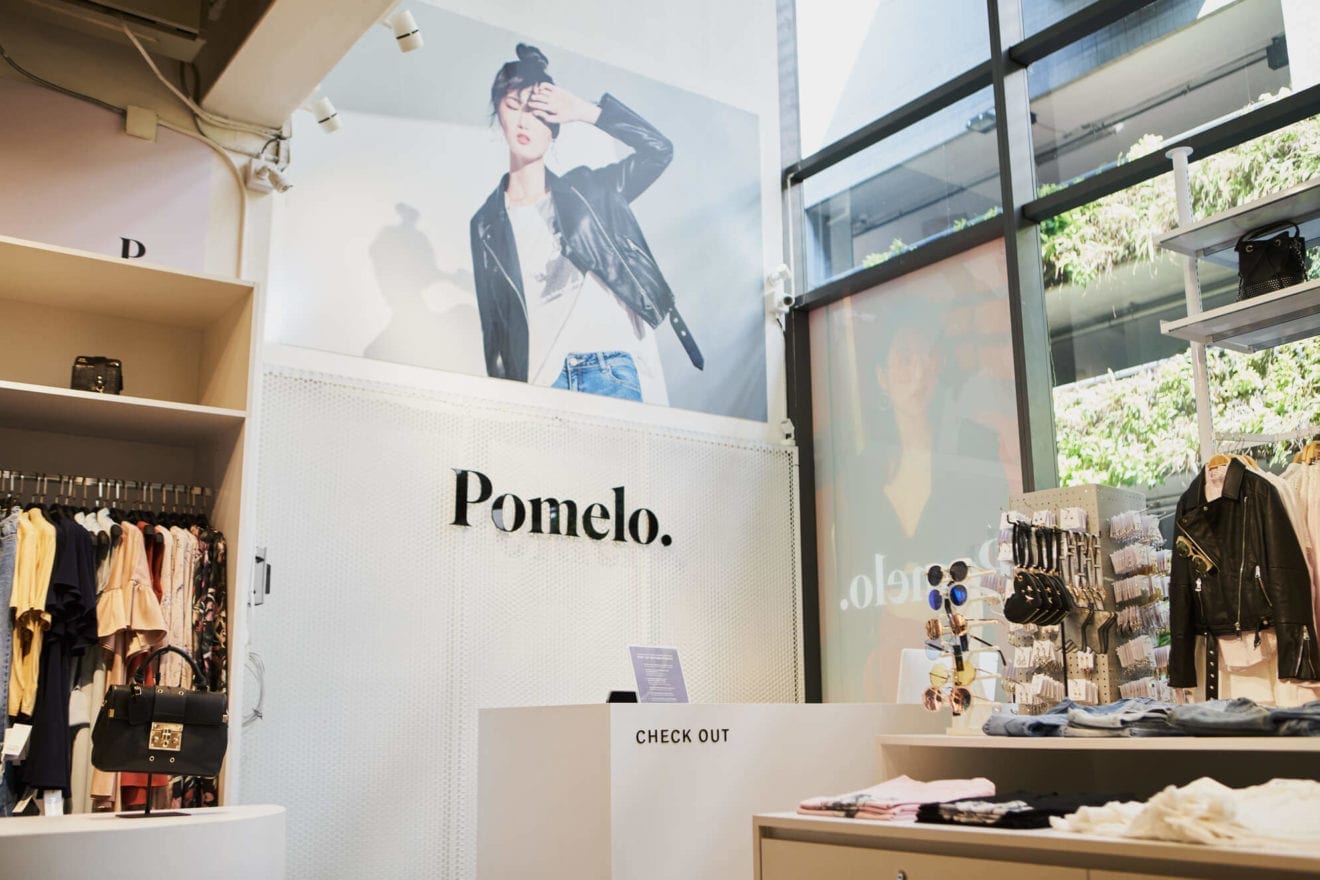
    Pomelo’s triple-digit revenue growth after re-opening across the region has shown hope for retailers in Southeast Asia as retail bounds back post-Covid lockdowns.

    In Thailand, the omnichannel retailer saw a spike in the platform’s revenue growth of 127 percent between August and October as the country eased restrictions with malls and restaurants reopening in September. Across the broader Southeast Asia region, Pomelo saw an increase in retail foot traffic of 84 percent.

    “We are currently seeing a dramatic increase in spending across all of the Pomelo channels since the reopening,” said David Jou, co-founder, and CEO at Pomelo Fashion. “Both online & offline are benefiting from the pent-up demand and this is a global trend happening everywhere across the world.

    “With the borders slowly beginning to open up and travel resuming, we expect to see another uptick in terms of demand for the fashion industry.”

    Prior to the reopening in the region, the retailer launched seven stores, including new locations in Kuala Lumpur, Rayong, and Chiang Mai. Pomelo currently operates 26 brick-and-mortar stores and has more than 600 other brands on its e-commerce platform.

    The omnichannel retailer recorded around 40 percent in revenue growth last year, while the fashion industry in Southeast Asia was down 25.5 percent due to the pandemic, according to Euromonitor. About 90 percent of Pomelo’ revenue was generated from e-commerce channels.

  • Visa’s Amazon spat shows power is shifting to retailers in fee battle

    Visa’s Amazon spat shows power is shifting to retailers in fee battle

    Amazon’s latest spat with Visa shows big retailers, armed with a growing array of payment options, are gaining the upper hand in their power struggle with card providers, but it’s not a crisis for the payment company.

    Amazon said last week that it would stop accepting Visa credit cards issued in the United Kingdom from Jan 19, 2022, saying that despite technology advancements the fees on such transactions remained high or in some cases were rising.

    While Amazon may yet back down on the UK front, where the company accounts for less than 1 percent of Visa’s credit card volume, according to an estimate by Piper Sandler analysts, the dispute is a bad sign for the card industry. Some analysts said it could presage a fight in the much bigger US market.

    “Amazon is treating this dispute with Visa as an experiment,” said Piper Sandler analyst Christopher Donat. “Our biggest concern is that Amazon seeks concessions from Visa in other geographies.”

    Visa Chief Financial Officer Vasant Prabhu told Reuters in an interview on Friday that he expected a resolution. “We’ve resolved these things in the past and I believe we’ll resolve them in the future,” he said. Amazon declined to comment.

    Credit cards dominated a third of North American e-commerce spending in 2020, according to payments giant WorldPay, but mobile payment options like Venmo and ‘buy now, pay later’ (BNPL) financing plans are chipping away at their market share.

    While alternative payments have been growing for years, the pandemic accelerated a downward trend in credit card applications boosting the popularity of BNPL financing, especially among younger consumers.

    Credit cards’ share of North American e-commerce spending declined 7 percent last year, according to WorldPay, while BNPL’s share increased 78 percent, making it the fastest-growing form of payment.

    In August, Amazon partnered with BNPL provider Affirm to offer an installment financing option on US Amazon purchases.

    “Credit cards are still dominant players for non-cash transactions, but they need to be aware of the growing competition,” Chris Dinga, a payments analyst at GlobalData, wrote on Friday.

    “BNPL is gradually being adopted by retailers as they see higher conversion and growth opportunity by providing it to their customers,” Dinga wrote, adding high credit card fees could accelerate BNPL adoption by retailers.

    Some analysts said past disputes suggested Visa may have to blink before Amazon, such as when U.S. restaurant owners stopped taking Amex cards in the 1990s, leading Amex to reduce its fees.

    “Visa may need to follow American Express’s example,” Evercore analysts said in a research note.

    Still, Visa has survived such fights and few other merchants have Amazon’s heft, said Prabhu.

    “Even a very large retailer like Amazon represents a relatively small portion of our payment volume,” he said.

    And Visa is not wedded to credit cards as the primary transaction source, he added.

    “If a merchant wants to offer credit in a different way, we’re agnostic. We will do both. The buy now, pay later business has been a positive for us.”

    Visa has been partnering with BNPL providers, including Sweden’s Klarna.

    Retailers also benefit from credit card issuers offering their customers cash rebates and rewards programs to encourage them to spend more than they otherwise would.

    Prabhu said he expected credit card spending to pick up now that borders are opening and affluent customers are spending more on travel, entertainment and eating out.

    And Amazon also needs a partner for its own co-branded credit card. The company is considering replacing Visa on US co-branded credit cards with either Mastercard or American Express, suggesting its UK fee dispute could be a negotiating tactic, said analysts.

    “It’s not necessarily a good idea for merchants to restrict consumer choice,” said Prabhu. “Amazon will have to think about that, too.”

  • McDonald’s Malaysia plans to open 200 more outlets

    McDonald’s Malaysia plans to open 200 more outlets

    McDonald’s Malaysia is set to roll out 200 stores across the country, increasing its nationwide network to 500 by the end of 2026.

    MD and local operating partner, Azmir Jaafar, told local reporters that the fast-food chain is hiring 10,000 workers as part of its expansion plan. New locations will be opened away from the 310 existing ones.

    McDonald Malaysia has also committed to serving halal food across all its restaurants. The chain established an internal halal committee in 2013 to monitor full compliance with the standards and guidelines imposed by the Department of Islamic Development Malaysia (JAKIM).

    “This committee works closely with relevant officials at JAKIM to obtain advice and guidelines for the preparation of halal, quality and clean food,” Jaafar said. “The committee is also responsible for employee training to provide a clear understanding of the concept of halal.”

    Since its launch in Malaysia in 1983, McDonald has employed 15,000 employees and served more than 13.5 million customers monthly.

  • Australian Regulator Warns of Lacking Crypto Protection

    Australian Regulator Warns of Lacking Crypto Protection

    The Australian Securities and Investments Commission cautioned investors about cryptocurrency risks, noting that they are «on their own» for the time being as efforts are underway to develop regulations.

    Consumers should approach investing in crypto with great caution, said ASIC chair Joe Longo at the recent Australian Financial Review Conference.

    At present many crypto-assets are probably not ‘financial products for the most part, for now at least, investors are on their own.

    Not unlike markets elsewhere, demand for crypto-assets and related services is on the rise in the country with big four lender Commonwealth Bank of Australia recently becoming the first in the sector to roll out a retail offering that will cover 10 cryptocurrencies by 2022.

    Crypto is on our doorstep, here and now, and being driven by extraordinary consumer and investor demand. The implications for consumers are potentially huge, Longo added.

    ASIC does not strive to eliminate risk. But, nor should we ignore it.

  • Citi Hires for New Digital Assets Unit

    Citi Hires for New Digital Assets Unit

    Talent hired to work on Citi’s crypto division will be based in Singapore, in addition to London, New York, and Tel Aviv.

    Citi has appointed Puneet Singhvi to the bank’s ICG Business Development team on 1 December as the ICG head of digital assets, reporting to Emily Turner, head of business development, with a matrix reporting line to Stuart Riley, global head of ICG, according to an internal memo seen.

    Singhvi joins the team from global markets, where he was most recently the head of the blockchain and digital assets. He has also led teams across sales, business development, and product in global markets and securities services and treasury and trade solutions (TTS).

    Shobhit Maini and Vasant Viswanathan will be co-heads of Blockchain and Digital Assets for Global Markets, reporting to Biswarup Chatterjee with a matrix report to Singhvi. The TTS Head of Digital Assets and the Securities Services Digital Asset lead will also matrix report to Singhvi, the memo said.

    The bank will also add approximately 100 roles across its Institutional Clients Group (ICG) and associated functions to bolster its expertise in blockchain, including digital assets and digital currencies.

    Citi said the locations in which it is hiring for the digital assets team is strategic for its ICG business and technology, and represent talent hubs for blockchain and digital asset expertise.

    We are focused on assessing the needs of our clients in the digital asset space; prior to offering any products and services, we are studying these markets, as well as the evolving regulatory landscape and associated risks in order to meet our own regulatory frameworks and supervisory expectations.

  • Personal deposits down across banking sector

    Personal deposits down across banking sector

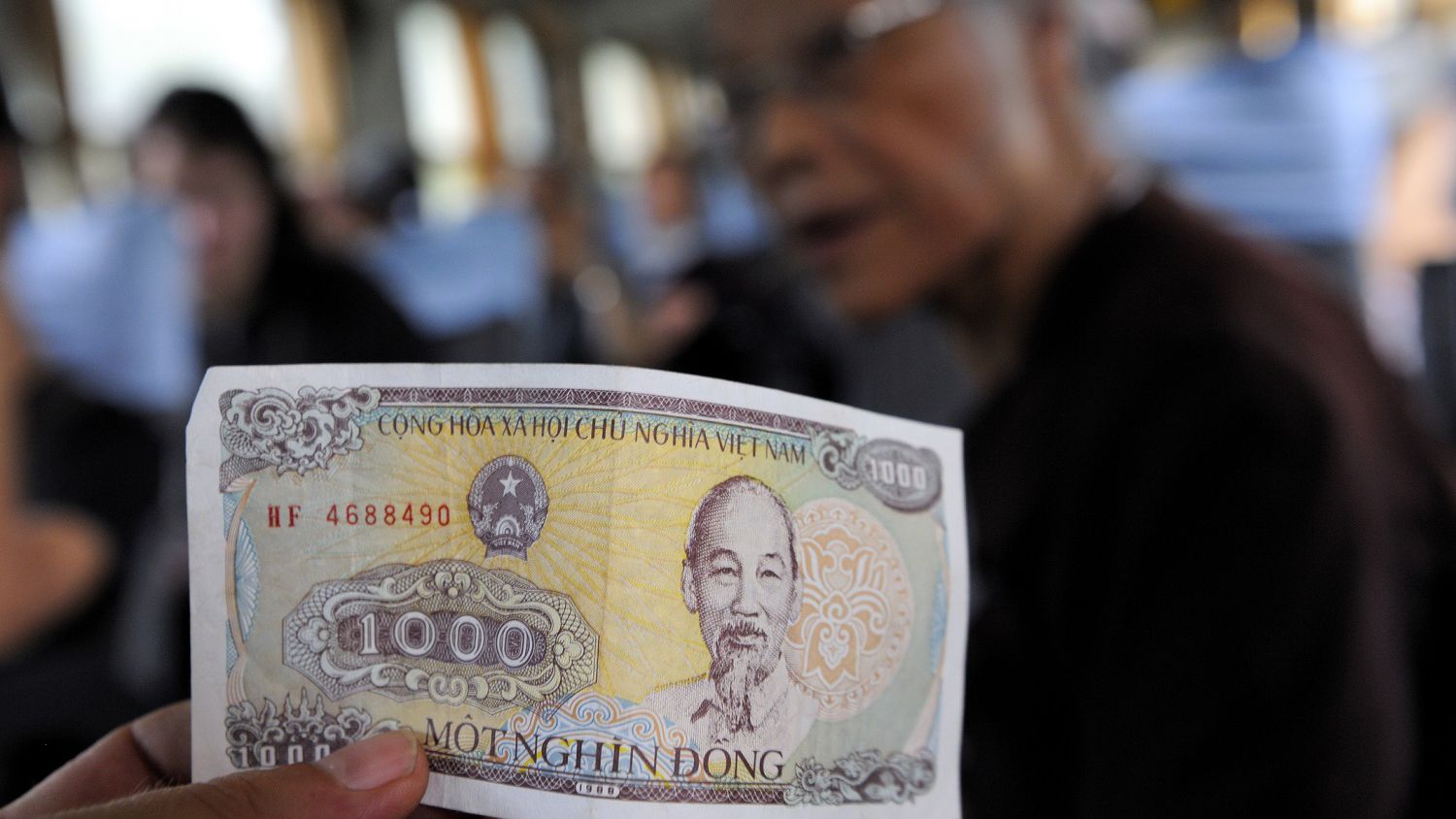
    Personal bank deposits were nearly VND5,292 trillion (some $230 billion) by late September, down roughly VND1.5 trillion against late August, according to the central bank.

    Since July, monthly bank deposits fell against previous months, the State Bank of Vietnam stated, noting deposits in August decreased by some VND1 trillion against July.

    From early January to late September, personal deposits hit VND150 trillion, a year-on-year decline of some 50 percent.

    Lower savings interest rates and more attractive stock market and cryptocurrency channels were blamed for falling deposits.

    Total trading value on Vietnam’s HSX, HNX and UPCoM stock markets reached a record high of VND56.337 trillion on Nov. 19, up from the previous record of VND52.145 trillion on Nov. 3.

    According to a survey conducted among over 70,000 people by VnExpress on July 22, real estate was the most popular investment channel (32 percent), ranking above gold and savings (7-10 percent).

  • Audi recalls 104 cars in Vietnam over lock nut issue

    Audi recalls 104 cars in Vietnam over lock nut issue

    German auto brand Audi is recalling 104 cars in Vietnam due to a lock nut issue on the rear suspension that could cause a loss of control and crash.

    Certain lock nuts on the trailing arm of the rear axle can break due to corrosion, which can change the wheel alignment on the rear axle, according to a notice the company submitted to Vietnam Register.

    If the rear axle suddenly moves in the wrong direction, the driver could lose control and crash, it added.

    There has been no known accidents reported.

    The company will contact each owner about a free replacement of the lock nut, which would take around 1.5 hours.

    The recall lasts from Nov. 15 to Nov. 14, 2024.

  • StanChart Hires Amazon Technologist

    StanChart Hires Amazon Technologist

    He relocates to Singapore from Sydney, where he spent four years as a senior manager, solution architecture, at Amazon Web Services (AWS).

    Standard Chartered has appointed technologist Brendan Royal as its global chief architect, according to a report on «eFinancialCareers.»

    Royal has over 20 years of experience in financial services across retail, wealth and corporate banking, specializing in large transformation programs with a deep focus on tech and building enduring teams, his LinkedIn profile says. Before joining Amazon in 2019, he was head of banking architecture at Nordea, divisional director for BFS Architecture at Macquarie, and worked for CBA between 1999 and 2013, latterly as head of retail and business banking architecture.

    The move follows the bank’s five-year strategic global agreement with AWS to drive its digital transformation and deliver new personalized banking services in the bank’s 60 markets worldwide, signed in November 2020.

    As banks partner up with cloud platforms like AWS, they are increasingly also hiring from these same providers, the report said, noting that StanChart hired Google’s Singapore-based cloud engineering lead, Carl Bachman Kharazmi, as managing director and global head of cloud engineering and platforms earlier this year.

  • China’s Anti-Monopoly Crackdown Hits Banking Sector

    China’s Anti-Monopoly Crackdown Hits Banking Sector

    Chinese regulators extend their antitrust crackdown to the banking sector with a fine against shareholders of a virtual lender.

    The shareholders of Chinese virtual lender AliBank – China Citic Bank (70 percent) and a Baidu unit called Fujian Baidu Bo Rui Netcom (30 percent) – have been fined 500,000 yuan ($78,280) over a violation of the country’s anti-monopoly law, according to a statement from the State Administration for Market Regulation (SAMR).

    SAMR issued a fine over the failure to report the AiBank joint venture ahead of its formation in 2015.

    The penalty was part of a broader batch of more than 40 cases with fines issued to other tech firms outside of the banking sector such as JD.com, Tencent, Baidu, ByteDance, and Alibaba.

    AiBank is an artificial intelligence-focused lender that leverages related capabilities from search engine giant Baidu.

    It is one of five licensed digital banks in China and the only one with a state-backed shareholder in Citic.

    According to research by McKinsey released in January, Chinese digital banks own roughly 5 percent of the country’s 5 trillion yuan unsecured consumer loan market and over 7 percent of the SME loan market.

  • Telenor and CP Group to explore Thailand telecom merger

    Telenor and CP Group to explore Thailand telecom merger

    C.P. Group and Telenor Group are exploring the creation of a new telecom-tech company comprising of True and dtac. The new company will be a merger of equals, and bring the best of the two local companies, with the support of its key sponsoring shareholders.

    The new company will be a leading telecommunications service provider with capabilities to accelerate Thailand’s progressive digital technology agenda in terms of network performance, innovation, investment strength and employer brand.

    Mr. Suphachai Chearavanont, chief executive officer of C.P. Group and chairman of the board of True Corporation said, “The telecom and technology sectors are key to enabling Thailand to move up the development curve and to create broad-based prosperity.  As a telecom-tech company, we can help unleash the enormous potential of Thai businesses and digital entrepreneurs as well as attract more of the best and the brightest from around the world to do business in our country.”

    “Today is a step forward in that direction. We hope to empower a whole new generation to fulfill their potential to become digital entrepreneurs leveraging an advanced telecom infrastructure. The emergence in Thailand of IoT, AI, Cloud, and new generations of mobile network technologies will have a huge effect on the way we do everything,” he said.

    Mr. Sigve Brekke, president and chief executive officer of Telenor Group, said, “We have experienced an accelerated digitalization of Asian societies, and as we move forward, both consumers and businesses expect more advanced services and high-quality connectivity. We believe that the new company can take advantage of this digital shift to support Thailand’s digital leadership role, by taking global technology advancements into attractive services and high-quality products.”

    Mr. Jørgen A. Rostrup, executive vice president of Telenor Group and head of Telenor Asia said, “The proposed transaction will advance our strategy to strengthen our presence in Asia, create value, and support long-term market development in the region.  We have a long-standing commitment to both Thailand and the Asian region, and this collaboration will strengthen it further. Our access to new technologies as well as the best human capital will be a vital contribution to the new company.”

    Mr. Rostrup added that the new company has the intention to raise venture capital funding together with partners of USD 100-200 million to invest in promising digital startups focusing on new products and services for the benefit of all Thai consumers.

    If the transaction proceeds, it will consist of a voluntary tender offer (VTO) subject to satisfaction of conditions for all outstanding shares of dtac and True, followed by the amalgamation of dtac and True creating a new company. The VTO price for dtac will be THB 47.76, which represents a 25 percent premium to the one-month VWAP for dtac shares, and the VTO price for True will be THB 5.09, which represents a 25 percent premium to the one-month VWAP for True shares. The agreed exchange ratio is 10.221 True shares per dtac share. The outcome of the VTO will determine the final equalized ownership percentage between C.P. Group and Telenor Group.

    All shareholders of dtac and True will have the choice of participating in the tender offer or continue as shareholders in the combined company, which will be listed on the stock exchange of Thailand. The combined company faces a challenging operational environment over the next years and C.P. Group and Telenor Group recognize that not all shareholders may want to participate in this journey, which is why a cash alternative at an attractive premium is offered. The involved parties aim to reach the necessary agreements by Q1 2022.

    The current operations of True and dtac will continue to run their businesses independently until the transaction is completed. The transaction will be subject to approvals by relevant boards and shareholders and customary regulatory approvals, and the parties acknowledge that there is no certainty as to the completion of the transaction.

  • China October smartphone shipment grows 30.6% from a year ago

    China October smartphone shipment grows 30.6% from a year ago

    According to the China Academy of Information and Communications (CAICT), China’s shipment of smartphones grew 30.6% year-on-year to 32.7 million handsets in October. This is a significant increase from a year ago, in October 2020, when shipments reached 25 million.

    An increase in shipment, compared to the decline experienced in the first half of the year, is largely driven by the release of the latest Apple iPhone 13 in China in September.

    When iPhone preorders were first released in September, demand was so high that Chinese retail websites reportedly went down. During the initial phase, as many as 5 million preorders were placed, signaling Apple’s continued popularity in the country.