Author: Mei Ling Tan

  • Vietnamese proptech startup raises $1.3 mln

    Vietnamese proptech startup raises $1.3 mln

    Citics, a Vietnamese property technology (proptech) startup, said it mobilized $1.3 million in its latest round of funding, to expand its existing business and invest in new technologies.

    In a recent Series A bridge round, Citics secured $1.3 million from Ho Chi Minh City-based Vietnam Investments Group, Singapore-based Vulpes Investment Management and Hanoi-based BHS Group. Before this round, it mobilized a total $1.7 million from local and foreign investors.

    Citics founder and CEO Tran Minh Long said the proptech startup would in December launch a new version of Citics Valuation to better valuate property and real estate projects.

    Citics has so far this year signed eight cooperative deals with banks, lifting the total number of banking customers to 17. Bankers can check the details and preliminary value of property on Citics’ platform.

  • Sun Life names new president of Sun Life Asia

    Sun Life names new president of Sun Life Asia

    Ingrid Johnson has been named the new president of Sun Life Asia, responsible for one of Sun Life’s strategic pillars encompassing life, health and wealth management businesses in eight Asian markets, including Vietnam.

    Johnson became the new President of Sun Life Asia on Oct. 26. She succeeds Léo Grépin, who left Sun Life on Oct. 15 to pursue other opportunities.

    “Johnson will continue to foster growth and build scale in our Asia businesses where we are focused on providing protection, health and wealth management solutions to clients in the fast-growing middle class and high net worth markets,” Kevin Strain, President and Chief Executive Officer of Sun Life, said.

    Johnson has more than 25 years of international commercial experience in the insurance and financial services industries. Most recently, she was the Group Finance Director of dual London- and South Africa-listed Old Mutual Plc and a member of its various subsidiary boards.

    Prior to this, Johnson spent 21 years with South African-listed Nedbank Group, a 53 percent subsidiary of Old Mutual Plc, where she held several progressively senior roles encompassing both the technical aspects of governance, finance, treasury, risk and capital management with large-scale international, corporate, business and retail clients.

    As an executive, she led 20,000 colleagues in delivering best-in-class client, culture and risk metrics, in addition to achieving sustainable financial performance and advancing leadership diversity.

    While at Nedbank Group, Johnson led business transformation of Business Banking Cluster (servicing commercial clients) with results of such note as to merit a 2009 Harvard Business School case study that is still taught in business and leadership courses today.

    Originally from Johannesburg, South Africa, Johnson is a chartered accountant, holds Bachelor of Commerce and Bachelor of Accounting degrees from the University of the Witwatersrand in South Africa and completed the Advanced Management Program at the Harvard Business School.

    Sun Life is a leading international financial services organization providing insurance, wealth and asset management solutions to individual and corporate clients.

    Sun Life has operations in a number of markets worldwide, including Canada, the United States, the United Kingdom, Ireland, Hong Kong, the Philippines, Japan, Indonesia, India, China, Australia, Singapore, Vietnam, Malaysia and Bermuda. As of June 30, 2021, Sun Life had total assets under management of $1.36 trillion. For more information please visit www.sunlife.com.

    Sun Life Vietnam (Sun Life) is a life insurance company with 100 percent capital from Sun Life Financial, a leading international financial service organization with 156 years of experience from Canada. Sun Life is an established industry pioneer and market leader in pensions for both individual and corporate clients in Vietnam.

  • Rolls-Royce Announces Black Badge Ghost

    Rolls-Royce Announces Black Badge Ghost

    The Black Badge has been a highly successful alter ego of Rolls-Royce and it now represents more than 27 percent of commissions worldwide. Rolls-Royce debuted Black Badge with Wraith and Ghost in 2016, followed by Dawn in 2017 then Cullinan in 2019. And now another joins this elite club – the Black Badge Ghost. Conceived in response to a group of clients who requested a Rolls-Royce that was agile, discreet, highly connected and free of any superfluous design, the new Ghost is not just the most technologically advanced Rolls-Royce yet, but also the most aesthetically pure.

    In the twelve months since this motor car has been available, it has become one of the fastest-selling products in the marque’s history, having sold more than 3500 examples worldwide. With the Black Badge Ghost, Rolls-Royce is giving its customers a choice to select any of the marque’s 44,000 colours or create their own entirely unique Bespoke hue.

    To match this dramatic coachwork, the marque’s Bespoke Collective of designers, engineers and craftspeople collaborated to create an entirely customizable process that allows Rolls-Royce hallmarks such as the high-polished Spirit of Ecstasy and Pantheon Grille to be subverted. Instead of simply painting these components, a specific chrome electrolyte is introduced to the traditional chrome plating process that is co-deposited on the stainless-steel substrate, darkening the finish. Its final thickness is just one micrometer – around one-hundredth of the width of a human hair. Each of these components is precision-polished by hand to achieve a mirror-black chrome finish before it is fitted to the motor car.

    The exterior treatment resolves with a Bespoke 21-inch composite wheelset. Designed in the Black Badge house style and reserved for Black Badge Ghost, the barrel of each wheel is made up of 22 layers of carbon fibre laid on three axes, then folded back on themselves at the outer edges of the rim, forming a total of 44 layers of carbon fiber for greater strength. A 3D-forged aluminum hub is bonded to the rim using aerospace-grade titanium fasteners and finished with the marque’s hallmark Floating Hubcap, ensuring the Double R monogram remains upright at all times. To celebrate the material substance and remarkable surface effect, a lightly tinted lacquer is applied to protect the finish but still allow clients to observe the technical complexity of the wheel’s unique carbon fibre construction.

    Advanced luxury materials have been meticulously created and crafted for a unique ambiance in the interior suite. While recalling the dramatic mechanical intent of Black Badge Ghost, the materials are true to Ghost’s Post Opulent design philosophy – one defined by authenticity and material substance rather than overt statement. In this spirit, a complex but subtle weave that incorporates a deep diamond pattern rendered in carbon and metallic fibres has been created by the marque’s craftspeople.

    Multiple wood layers are pressed onto the interior component substrates, using black Bolivar veneer for the uppermost base layer. This forms a dark foundation for the Technical Fibre layers that follow. Leaves woven from resin-coated carbon and contrasting metal-coated thread laid in a diamond pattern are applied by hand to the components in perfect alignment, creating a three-dimensional effect. To secure this extraordinary veneer, each component is cured for one hour under pressure at 100 degrees Celsius.

    The Black Badge Ghosts comes with a twin-turbocharged 6.75-litre V12 engine pushing out 592 bhp and total torque is now up by 50 Nm to 900 Nm. The powertrain has also received Bespoke transmission and throttle treatments to further enhance the engine’s increased power reserves. The ZF eight-speed gear box and both front- and rear-steered axles work collaboratively to adjust the levels of feedback to the driver, depending on throttle and steering inputs.

    As with all products in the marque’s Black Badge portfolio, the ‘Low’ button situated on the gear selection stalk unlocks Black Badge Ghost’s full suite of technologies. This is asserted by the amplification of the motor car’s engine through an entirely new exhaust system, subtly announcing its potency. All 900Nm of torque is available from just 1700rpm and, once underway in Low Mode, gearshift speeds are increased by 50% when the throttle is depressed to 90%, delivering Black Badge Ghost’s abundant power reserves with dramatic immediacy.

  • Google Fi is fi-nally getting end-to-end encryption for phone calls

    Google Fi is fi-nally getting end-to-end encryption for phone calls

    If you’re concerned about the privacy of your voice communications, Google has a new way to guarantee that no one can snoop in on your calls anymore.
    Of course, there’s only so much the search giant can control, so the newly announced end-to-end encryption feature will merely work on the company’s own Fi MVNO (mobile virtual network operator) starting sometime “in the coming weeks.”

    Both the caller and the callee will need to be Google Fi subscribers and use Android phones for everything to work as advertised, at least to begin with. There’s not a lot to the technology that Big G plans to deploy before long, and all you have to know is that everything discussed during fully encrypted one-to-one voice calls will stay between you and the person you’re talking to.

    To avoid potential confusion or misunderstandings, a bunch of new “audio and visual cues” will make it crystal clear both before engaging in and during end-to-end encrypted calls that you’re wholly and entirely protected from spying ears.

    Namely, look for a lock symbol and straightforward “Encrypted by Google Fi” text on your phone’s screen or be aware of a “unique ringing tone” to make sure the functionality is indeed up and running. Obviously, the feature itself is hardly groundbreaking, as Google points out by highlighting that end-to-end encryption has become an “industry standard” in recent years for messaging apps.

    Slowly but surely, things are moving in the right direction from a privacy and security perspective as far as voice services are concerned as well, thanks to the likes of Facebook and now Google. The search giant’s Duo app actually launched with built-in end-to-end encryption for audio and video calls all the way back in 2016, so if anything, we’re surprised it took so long to implement this for Fi users.

  • Twitter users get the ability to record and share Spaces on iPhone

    Twitter users get the ability to record and share Spaces on iPhone

    If you’ve been using Spaces on Twitter, you’ll be happy to know that the feature has just been improved with the addition of the ability to record and share them. For the time being, the new and improved Spaces are available for some Twitter users on iPhone, but the new enhancements will slowly expand to all other users in the coming weeks.

    Starting today, some Twitter hosts will be able to record Spaces and share them across the social network, further extending the value of their work beyond live sessions. On top of that, followers will now be able to replay any of these recorded Spaces how many times they wish, as well as share them via their timelines.

    Using the new record Spaces features is quite easy, as you’ll only need to enable the “Record Space” setting before launching your content on the internet. Everyone participating will see a red REC button that will appear in the Space window, so they’ll know it’s being recorded.

    Space recordings will be kept for 30 days after the initial broadcast, so hosts and their followers will be able to share them on Twitter. Although hosts can delete their recorded Spaces at any time they wish, Twitter will still keep a copy for 30-120 days.

  • Facebook has a new corporate name and vision

    Facebook has a new corporate name and vision

    As expected, Facebook today announced a new corporate name. Earlier today during the Facebook Connect event, the company said that it will now be known as Meta. Keep in mind that the website and the app will not have a new name and will still be known as Facebook.

    CEO Mark Zuckerberg said that the Facebook name isn’t a valid reflection of what the company does now and said that Facebook is only one of its products. “We are a company that builds technology to connect. Together, we can finally put people at the center of our technology. And together, we can unlock a massively bigger creator economy.”

    The executive added that “But over time, I hope we are seen as a metaverse company.” A metaverse is “a virtual-reality space in which users can interact with a computer-generated environment and other users.”

    In a blog post disseminated today, Zuckerberg wrote, “The next platform will be even more immersive — an embodied internet where you’re in the experience, not just looking at it. We call this the metaverse, and it will touch every product we build.”

    Zuckerberg added, “The defining quality of the metaverse will be a feeling of presence — like you are right there with another person or in another place. Feeling truly present with another person is the ultimate dream of social technology. That is why we are focused on building this. In the metaverse, you’ll be able to do almost anything you can imagine — get together with friends and family, work, learn, play, shop, create — as well as completely new experiences that don’t really fit how we think about computers or phones today.”

    In the blog, the beleaguered executive writes about a future where you can teleport as a hologram and arrive at your office without a commute. Or attend a concert, or even visit your parents without losing the time it takes to travel and deal with traffic. Many of the things that are part of the physical world right now could end up being holograms in the future such as “your TV, your perfect work setup with multiple monitors, your board games and more — instead of physical things assembled in factories, they’ll be holograms designed by creators around the world.”

    According to the Facebook co-founder, “You’ll move across these experiences on different devices — augmented reality glasses to stay present in the physical world, virtual reality to be fully immersed, and phones and computers to jump in from existing platforms. This isn’t about spending more time on screens; it’s about making the time we already spend better.” He repeated a comment made in his original founder’s letter: “We don’t build services to make money; we make money to build better services.”

    That last comment may not be sincere. Recently, Facebook whistleblower Frances Haugen said that the company would rather make money than change its algorithm and make the world a safer place. Haugen stated, “Facebook makes more money when you consume more content. People enjoy engaging with things that elicit an emotional reaction. And the more anger that they get exposed to, the more they interact and the more they consume.”

    Zuckerberg appears to realize the need for change, and not just changing the company’s name. He says that privacy and safety need to be built into the metaverse from the beginning. And from now on, the company will be metaverse first instead of Facebook first. Eventually, you won’t need to have a Facebook account to use the company’s other services. He says, “As our new brand starts showing up in our products, I hope people around the world come to know the Meta brand and the future we stand for.”

    By the way, for you Facebook stock traders, the company’s stock symbol will change from FB to MVRS.

  • Citi Names Regaional Co-Heads of BCMA

    Citi Names Regaional Co-Heads of BCMA

    They will replace David Biller, who will be relocating to Europe at the end of the year to take on a broader role as co-head of industrials for EMEA, Asia and Japan.

    Citi has appointed Matthew Nimtz and Jonathan Quek as co-heads of Asean banking, capital markets and advisory (BCMA), effective immediately, according to an internal memo seen.

    Nimtz and Quek are long-time Citi veterans and have worked together in Singapore for the past 10 years, Citi said. Nimtz leads the ASEAN M&A franchise, while Quek is co-head of real estate investment banking, Asia, as well as head of investment banking, Singapore.

    The pair will report to Jan Metzger for BCMA and Amol Gupte for ASEAN.  They will also maintain their existing roles in M&A (reporting to Colin Banfield) and real estate (reporting to Tom Flexner), respectively. Asean corporate banking country heads will report into Nimtz and Quek, in addition to their current reporting lines into Kaleem Rizvi for corporate banking and the respective CCOs, According to an internal memo seen.

    Matt and Jon’s leadership will be instrumental in continuing the strong momentum in the increasingly important Asean market,» Citi said.

    We are running at record levels for capital raising and advisory for clients across Asean. This is a mix of balance sheet strengthening and financing to support growth. There is massive transformation happening across all industries in Asean and with a global network, this has helped sharpen our dialogue with clients as they increasingly want a global perspective,» said the memo.

  • HCMC restaurants reopen with caution

    HCMC restaurants reopen with caution

    HCMC restaurants and coffee shops are resuming on-site dining with caution due to concerns of staff contracting Covid-19 and post-social-distancing tightened spending. Starting Thursday, over 20 outlets of bubble tea chain Gong Cha started resuming on-site services after five months of suspension.

    As the city allows food and beverage facilities to serve 50 percent of their capacity and close before 9 p.m., the Cong Coffee chain is also testing the waters with five outlets reopening.

    aCoffee-Bike also reopened five stores on the same day. On Friday, Japanese-style hotpot chain Kichi Kichi will resume dining for customers who have made reservations.

    Some companies, however, choose to delay their reopening to be better prepared.

    Dau Homemade, which sells traditional Vietnamese food, needs another two or three days to get ready.

    Lagom Cafe won’t open for another two weeks, as its CEO Do Thi Ly Na said the store needs more time to observe market reactions and to complete a new look.

    The cautious decisions of food and beverage facilities in Ho Chi Minh City came as shop owners are concerned their staff might be infected with Covid-19 as the city still recorded over 1,000 new cases in the last seven days.

    It would be dangerous to immediately bring back business to pre-pandemic status as the coronavirus is still spreading, said Hoang Tien, founder of Coffee Bike.

    Dau Homemade, which is offering take-aways and deliveries, is still testing its employees once every three days even though the city does not require it.

    A spokesperson for the company said another concern is tightened spending as consumers have grown used to five months of staying mostly home.

    Sales are not likely to cover costs as the company will have to spend big on marketing to urge customers to return.

    Deliveries will continue to be the life source of the company, the spokesperson said.

    Tran Ngoc An, a spokesperson for Gong Cha, expressed optimism as the city has decided to live with Covid-19 and authorities vocalized not imposing another citywide social distancing campaign.

    This will give food and beverage businesses confidence to offer services amid the remaining months of the year.

    “We really want to see the city become vibrant again in the upcoming holidays.”

  • Razer opens retail store and cafe inside its new Southeast Asia HQ

    Razer opens retail store and cafe inside its new Southeast Asia HQ

    Global lifestyle brand for gamers, Razer, has launched its Southeast Asia headquarters in Singapore: home to the country’s first Razer retail store and café.  The building façade features the brand’s signature black and striking neon green, while the store offers the brand’s full range of products, allowing gaming fans to sample and experience Razer’s latest innovations and creations.

    Meanwhile, the new technology-focused F&B concept serves beverages made by a state-of-the-art robotic barista arm. At the RazerCafe, guests can order a beverage at the store or pre-order a cup of coffee via the RazerCafe App and collect it in-store.

    “Our gamer-centric ecosystem has redefined the gaming experience for more than a decade with the introduction of innovative solutions and whole new product categories, and we’re not planning on slowing down,” said Min-Liang Tan, co-founder and CEO of Razer.

    “The new regional hub represents everything that Razer stands for, from innovation, to design, to sustainability, and will not only be home to Razer’s growing staff, but to up-and-coming entrepreneurs, and even gamers looking for a place to train and learn as well.”

    As part of the expansion, the company has increased its staff number in Singapore from 600 to 1000.

  • Love Bonito seals $50 million funding round expands into multiple countries

    Love Bonito seals $50 million funding round expands into multiple countries

    Love, Bonito today announced the close of its Series C funding round, raising a total of US$50Million. The round was led by Primavera Capital Group, a global investment firm whose previous investments include Alibaba, ByteDance, Yum China and Mead Johnson China. Adastria and Ondine Capital participated in the round too. Love, Bonito’s current investors include Openspace Ventures and Kakaku.com.

    Proceeds from the fundraising will enable the brand to bolster efforts in existing omnichannel markets and supercharge international expansion in markets that collectively are experiencing triple digits year-on-year (YoY) growth. These key markets include Hong Kong, Japan, Philippines and the US. Furthermore, the company is exploring categories outside of fashion as part of its plan to create a female ecosystem.

    Since its launch in 2010, Love, Bonito has achieved impressive growth, expanding into 10 key markets which include those in Southeast Asia, namely Singapore, Malaysia, Indonesia, Philippines, Cambodia, and East Asia markets, namely Taiwan, Hong Kong, Japan as well as Australia and the US.

    To date, Love, Bonito has achieved overall growth of over 120 percent YoY in international markets, and overall growth of 208 percent for its online sales. The company believes the Asian diaspora communities have extremely high potential, especially in the US, where online revenue growth exceeded 1,200 percent YoY as of September 2021.

    With the latest funding, the brand will double down efforts within markets such as Singapore, Indonesia, and Malaysia that have an omnichannel presence, while other markets such as Hong Kong, Japan, the Philippines, and the US will see an expansion in omni-channels, new business verticals, strengthening of local community engagement and key collaborations, as well as the continuous optimization of user experiences.

    “I am more excited than ever for what is to come in the next decade,” said Rachel Lim, Co-Founder of Love, Bonito. “The growth we see today would not have happened without #TeamLB and our #LBCommunity who consistently strive to support women in the different seasons of their lives. Being in the business of women has been our mission since day one, and we are finally venturing outside of fashion to bolster our offerings.”

    In line with the brand’s mission to empower the everyday Asian woman, plans are in place to increase offerings within the fashion line to include active apparel and accessories. The brand is also looking to venture into a content platform (LiBrary) as well as an exploration into new categories (LaB) which will include wellness.

    The category and product expansion strategy is informed and driven by data and community feedback garnered from several platforms, including the brand’s soon-to-be-launched artificial intelligence that delivers personalization at scale for women globally, through data and machine-learning models. Other existing platforms that contribute to the insights and knowledge gathering include:

    “We have built a strong foundation in understanding the everyday Asian woman in order to be pre-emptive in catering to her needs,” said Dione Song, CEO of Love, Bonito. “We are primed to become a true life partner for our community of women, in and beyond fashion. We have yet to see a womenswear brand from the region stand proud on the world stage amongst industry heavyweights and we want to be the first brand to achieve that, by being purpose-driven, community-focused and innovative.

    “We want to extend our heartfelt thanks to our existing and new investors who bring deep consumer investment experience and recognize the potential of the Asian consumer, both within and outside of the region,” added Dione.

    Lead investor Primavera provided a statement: “Love, Bonito has proven itself to be a one-of-a-kind, purpose-driven brand for women across all life-stages. Consumers are drawn by what the brand stands for and its mission to empower women around the world. Primavera is deeply impressed by how much the team has achieved over the last decade and looks forward to tapping into our understanding and experience in the global consumer sector to help elevate Love, Bonito to the next level. We are thrilled to join Dione and the rest of the team on this path-breaking journey.”

    Love, Bonito’s first external institutional investor, Openspace said: “From day one, we believed in what the brand could achieve as a business-led by women, for women. We are thrilled to now work alongside esteemed investors like Primavera to help write the brand’s next chapter.”

    Series B lead investor Kakaku.com added: “We are delighted to be on the global stage with Love, Bonito, and will continue to support the brand’s data and tech strategies, especially on their entry into the Japanese market.”

    In the next phase of its growth, Love, Bonito aims to shake up the fashion industry by creating a more meaningful impact on its community across all life stages. The brand is setting its sights on creating a thoughtful and well-rounded female ecosystem, supporting different facets of women’s needs within Asian countries and reaching further into the Asian diaspora communities across the globe.


  • Esprit chief exits after less than a year

    Esprit chief exits after less than a year

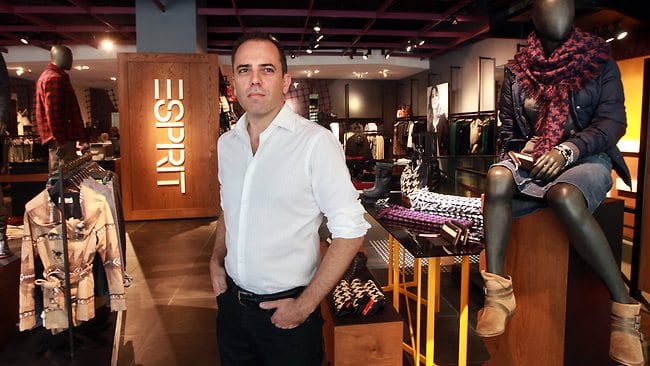
    Esprit CEO, president, and executive director Mark Daley has exited the company after less than a year at its helm due to personal family matters.

    “Mr Daley has confirmed that he has no disagreement with the board and there are no matters in relation to his resignation that need to be brought to the attention of the shareholders of the company,” the retailer announced on Thursday.

    Daley, who was previously CEO of Billy Reid and group president of Ralph Lauren’s Asia-Pacific region, was appointed to the top job at Esprit at the beginning of 2021 as part of a major restructuring at the business which had suffered from years of revenue decline.

    Daley joined as part of a shake-up that saw the departure of then-CEO Anders Kristiansen, who had been at the helm since 2018, as well as then-chief financial officer Johannes Schmidt-Schultes.

    “The board would like to take this opportunity to express its sincere gratitude to Mr Daley for his contribution to the company during his tenure of office,” Esprit said.

    William Eui Won Pak, who joined the company in September as executive director and chief operating officer, will take on the CEO position on an interim basis.

    He is a New York attorney with over a decade of experience in leading companies in the financial services and fund management industry, and also has expertise in technology, alternative energy, mining, and real estate.

    Pak is also the spouse of Esprit’s executive director and chair, Christin Su Yi Chiu.

  • Profitability, customer experience & environmentalism: Streamline ecommerce returns

    Profitability, customer experience & environmentalism: Streamline ecommerce returns

    While ecommerce has been a lifeline for many retailers over the last 18 months, the inadvertent explosion of returns has manifested itself as a major pain-point too. These days many retailers are struggling to address how to get the vast volumes of goods bought online returned either to stores, pickup-points or distribution hubs accurately, and back into your inventory and ready to be sold again?

    Minimising the financial costs and logistical challenges of the ongoing ecommerce wave is certainly a primary factor for brands all over the globe, but there are other motivations to consider too, including potential benefits to the overall customer experience.

    THE FINANCIAL IMPLICATIONS OF RETURNS

    In the USA alone, consumers returned over $101 billion worth of merchandise bought during the 2020 holiday season according to recent data from the National Retail Federation.

    While in another recent study from Retail Economics, it was revealed that UK consumers returned over 17% of the online clothing & footwear purchases on ecommerce sales across the whole of 2020, compared to a returns rate of less than 12% for store purchases. As a whole, this meant that retailers dealt with £4.3bn of returns across physical stores & online purchases in 2020.

    The report also discovered that the Gen Z age group (18-24) was the most prolific age group of returners, particularly for online purchases. As a comparison, like-for-like online orders for Gen Z returns doubled the entire value of apparel purchases compared for the over 65s age bracket.

    The true cost of trading online is being weighed heavily by higher return rates compared to store sales. This also comes on top of a competitive digital landscape and a backdrop of a rising cost per acquisition for online customers too.

    In the USA, processing online returns can cost anywhere between $10 & $20, & that’s not taking into consideration freight charges. For items under a certain price point or large items that may incur hefty shipping charges (that merchants can’t pass off to consumers), the cost-saving benefits of simply allowing consumers to keep certain items is a possibility as demonstrated over the US holiday period with Walmart & Amazon.

    The variability of online costs is putting pressure on traditional retailers to pivot their propositions and streamline legacy fixed costs. In doing so, retailers are increasingly opening their minds to digital investment, technologic advancements (such as microservice architecture and automation) to ease costs and increase overall supply chain agility.

    CUSTOMER EXPERIENCE & THE RETURNS PROCESS               

    Let’s consider customer experience for a moment now. Over the course of the last year, most of us will have experienced the excitement and let down of opening a new item of clothing delivered to the front door, only to find that it doesn’t fit or look quite as you had expected when you ordered it online, followed by the lethargy of realisation that you’ll need to return it.

    According to a December 2020 survey conducted by CivicScience, one in four consumers said that having to drop off packages at a mail facility or collection point (especially during the pandemic), is a major pain point when trying to return online purchases.

    As is often the case, the returns process can regularly make or break the overall brand experience and savvy retailers are increasingly viewing the return process as an opportunity to further engage with customers, providing as it does, an additional touchpoint to enhance the overall customer experience.

    BALANCING RETURNS WITH ENVIRONMENTAL IMPACTS

    Returns come with environmental baggage too, in the form of boxes, plastic bags, bubble wrap, and other packaging, not to mention the added carbon footprint associated with additional courier and freight journeys.

    If a returns process can be streamlined and economised, brands can make significant, positive and meaningful environmental gains. And, at a time when there is an increasing shift in the consumer psyche towards environmentally aware and responsible brands, this is not something that can simply be ignored when it comes to returns.

    Retailers today need to have greater visibility and more intelligence around inventory (regardless of where it is currently residing in your network), smarter front-end omnichannel systems capable of efficiently dealing with customer enquiries and greater insight into data around transportation processes. These are key areas for brands going forward looking to solve challenges presented by the growing returns trend.

    For more information on how your retail outlet can better manage returns processes, please visit: https://www.manh.com/en-sg

    By Richard Wright, Managing Director, SEA, at Manhattan Associates


  • Instagram replaces swipe up gesture for sharing links with stickers

    Instagram replaces swipe up gesture for sharing links with stickers

    Instagram started to test a new way to share links for its users several months ago, but not many people have had access to the feature until recently. Starting this week, the so-called “link stickers” will be rolled out to all Instagram users on both Android and iOS platforms.

    The link stickers are meant to replace the “swipe up” gesture for sharing links, which will be retired. Here is what you’ll have to do, to add a link to an Instagram story:

    • Capture or upload content to your story
    • Select the sticker tool from the top navigation bar
    • Tap the “Link” sticker to add your desired link and tap “Done”
    • Place the sticker on your story — like our other stickers — and tap on the sticker to see color variations

    Instagram also hinted at future tweaks that the sticker might get, such as various customization options to make it clear what someone will see when they tap a link. If you don’t see the ability to add links in Stories yet, make sure to update your Instagram app to the latest version. Also, keep in mind that link stickers cannot be used on the main Instagram feed, they’re limited to Stories.

  • UBS Chases New Group with Old Idea

    UBS Chases New Group with Old Idea

    UBS is reviving an old idea as it targets a new client segment in the U.S. The move brings back memories of a robo advisor, which the bank ditched a few years ago.

    UBS is targeting the U.S.’ mass affluent individuals with a digital product, which offers wealth management advice from humans remotely, according to a presentation by CEO Ralph Hamers during Tuesday’s third-quarter results. The hybrid offering will be rolled out to clients with a range of $100,000 to $1 million in liquid financial assets.

    Until now UBS was focused on capturing the U.S.’s super-rich. With its new push, the Swiss bank will be going after clients which are sought after by the likes of Goldman Sachs, J.P. Morgan and Bank of America.

    These U.S. wire houses were quick to understand that retail banking and mass affluent business was the most vulnerable to the onset of financial start-ups and other digitized competitors. UBS made a foray into the affluent market with robo advisor Smartwealth, which it pulled the plug on three years ago, just 18 months after launching the pilot in the U.K.

    Now the bank is reviving and elaborating the idea behind Smartwealth under its new CEO Hamers, who was hired by UBS with a digitization mandate. «We are a trusted brand in the U.S. We see the opportunity to deliver our expertise and our content to a much broader set of clients,» Hamers said.

    UBS already counts two million U.S. clients in the affluent category from its employee stock and retirement plan platform. Since buying U.S. broker Paine Webber in 2000, it has continuously attempted to target higher segments of wealth than the traditional brokerage client. The U.S. unit now manages the wealth manager’s biggest chunk of assets.

  • Apple Music app debuts on PlayStation 5

    Apple Music app debuts on PlayStation 5

    We reported last week that Apple and Sony might be close to launching the Apple Music app on the PlayStation 5. At the time of the report, the app appeared to be listed, but no one could download it.

    Earlier today, Sony confirmed that PlayStation 5 users all over the world can download the Apple Music app. The console offers seamless integration with the Apple Music streaming service with background music and music video playback, which means subscribers can listen before, during, or after their gameplay session.

    Apple Music subscribers who own a PlayStation 5 can start the app before opening a game, or during gameplay by pressing the PS button on the DualSense wireless controller to access the Control Center and select the Music Function card. You’ll be presented with recommendations that match the game you’re currently playing, or you can choose from a playlist in your library or other Apple Music-curated playlists for gaming.

    Of course, subscribers can also find and watch music videos from a wide selection of artists in the Apple Music app. Simply start by playing the video in full screen and if you decide to continue/start playing a game, the audio from the music video will continue to play. To download the Apple Music app, make sure to visit the Media space folder on the PlayStation 5. Don’t forget to link your Apple Music account after installing the app.