Author: Mei Ling Tan

  • WineDepot expands to Melbourne, buys distributor Parton

    WineDepot expands to Melbourne, buys distributor Parton

    WineDepot Market has launched its direct-to-trade platform in Melbourne – and sealed a deal to acquire Parton Wine Distribution.

    After serving venues and retail outlets across Sydney since May, the subsidiary of ASX-listed Digital Wine Ventures has already brought on board more than 400 brands. WineDepot CEO Dean Taylor said local customers are responding positively to the proposition.

    “The evolution of the wine distribution model in Australia is long overdue. Technology has brought vast changes in the way we produce wine and sell to consumers, but in the middle, supply chains and wholesaling are still plagued by inefficiency,” he said.

    WineDepot describes itself as an integrated trading, logistics and payment solution designed to streamline wine and beverage distribution. The direct-to-wholesale marketplace allows suppliers to list their products for sale on consumer marketplaces such as Amazon, Ebay and Vivino and provides a smart logistics solution allowing suppliers to fulfill orders from various depots, to allow same- and next-day delivery to most capital cities. In addition, an online ERP system allows suppliers to manage orders, inventories and technology integrations and offers a payment management solution through which suppliers can offer customers credit terms yet get paid three days after sale.

    “The chance to move more of their wine purchasing to a single platform, with a single invoice and single credit account, has been highly attractive to venues and retailers,” said Taylor.

    “Customers are trialing the platform and finding a large range of products they already purchase, all in one place, along with a selection of new and interesting wines from some of Australia’s top producers.

    “We identified the need for a comprehensive direct-to-trade platform in the local wine market years ago, and launching in our second major city shows we’re closing in on that goal.

    WineDepot acquires Parton Wine Distribution, 

    Meanwhile, WineDepot yesterday announced it would buy specialist wine and beverage logistics provider Parton Wine Distribution.

    Taylor said Parton’s long track record in the industry, 23,000 sqm of warehousing, and 100-strong team would provide a significant boost to WineDepot’s operational capability.

    While WineDepot’s outsourcing of third-party logistics was working well, as the business continued to scale it would become necessary to further develop its own capacity to maintain service levels – especially during times of peak demand, said Taylor.

    “Having our own dedicated fleet of delivery vans and drivers will ensure we provide an exceptional experience for suppliers using WineDepot Logistics and trade buyers using WineDepot Market.

    “In addition, direct management of our own warehouses allows us to offer on-demand picking, late cut-off times and temperature-controlled, cold chain and bonded storage to our customers right up and down the supply chain.”

    Richard Raddon, who founded Parton, will join WineDepot’s senior executive team as GM of the logistics division and his son David will become national operations manager.

    Parton’s 150-strong existing customer base will be transitioned across to the WineDepot platform.

  • India’s Reliance Retail to buy Just Dial for $469 million

    India’s Reliance Retail to buy Just Dial for $469 million

    Reliance Retail is to buy nearly 41 percent of search and database firm Just Dial for US$468.84 million.

    Billionaire Mukesh Ambani-owned Reliance Retail will also make an open offer to public shareholders of Just Dial to acquire an additional 26 percent, according to regulatory requirements.

    Reliance has been on an acquisition spree to ramp up its online retail offerings and, over the past three years, has bought British toy retailer Hamleys, music streaming service Saavn, online furniture retailer Urban Ladder and e-pharmacy Netmeds.

    The deal with Just Dial, subject to shareholder and other approvals, will help Reliance get access to the company’s massive merchant database that spans across the country.

    The deal will boost “the digital ecosystem for millions of our partner merchants, micro, small and medium enterprises,” Isha Ambani, a director at Reliance Retail, said in the statement.

    Just Dial has a database of about 30.4 million listings as of March 31 and gets consumer traffic of about 129.1 million unique users each quarter.

    The capital infusion from the deal will help Just Dial expand discovery on its platform and boost transactions for millions of its products and services.

    Just Dial’s MD VSS Mani will continue to lead the company, the statement said.

  • UBS Reports Strong Second Quarter Performance

    UBS Reports Strong Second Quarter Performance

    Swiss bank UBS reports second-quarter 2021 net profit attributable to shareholders of $2 billion, up 66 percent from a year earlier.

    Operating Income was up 21 percent while expenses rose 10 percent, helping the cost/income ratio to fall 4.1 percentage points year-on-year. The bank saw continued momentum in investment flows and volume growth in conjunction with favorable market conditions and investor sentiment, according to a media release on Tuesday.

    Invested assets in Global Wealth Management (GWM) and Asset Management rose 4.4 percent from the first quarter to $4.4 trillion, with GWM recorded $25 billion in net new fee-generating assets. The group reported $0.55 diluted earnings per share and a 14.5 percent CET1 ratio.

    UBS chief executive Ralph Hamers provided commented: «Momentum is on our side and our strategic choices and initiatives are paying off. And we are eager to make the most of our future.

  • Comviva’s customer value management platform drives breakthrough growth for Indosat Ooredoo

    Comviva’s customer value management platform drives breakthrough growth for Indosat Ooredoo

    Fueled by an intensely competitive operating environment in Indonesia’s mobile sector, Indosat Ooredoo partnered with Comviva in delivering a front-to-end real-time marketing management platform, as well as subscribers’ loyalty and rewards program to yield increased customer retention and revenue within months from implementation.

    In a country where 98% of mobile phone users fall back on prepaid subscriptions, telecommunications operators in Indonesia’s competitive mobile market face the gargantuan challenge of retaining customers. In a heterogeneous market already characterized by low loyalty and high churn rates, matters are made worst when high costs deter telecommunications operators from reaching out to and acquiring new subscribers in under-served populations in far-flung areas.Indosat Ooredoo taps on Comviva’s expertise in innovation-driven growth marketing

    It is costlier to replace churned customers than retaining them. Amid intense competition and dismal financials, Indosat Ooredoo recognized that the path to profitable growth is an improved customer value management (CVM) platform that manages customer lifecycle holistically to uncover customer insights and drive meaningful engagements.

    Having collaborated on other deployments with much success, Indosat appointed Comviva, a global leader in mobile solutions for telecommunication operators, as a strategic partner to spearhead its Big Data CVM 2.0 program in April 2019.

    Aimed at improving customer lifetime value to achieve incremental revenue, Comviva developed a three year digital roadmap with front-to-end digital strategies. The suite of solutions spans different stages from implementing, operating, optimizing and providing timely, in-depth post-implementation analysis to transforming customer experiences critical to the success of the program.

    Overcoming key challenges with technology

    Before partnering with Comviva, Indosat Ooredoo was missing out on opportunities to influence customers’ micro-moments at critical junctures in the customer journey. To maximize the value of individual customers and micro-moments of interactions, Comviva’s first step was adding real-time capabilities to the operator’s CVM platform.

    A machine learning (ML), real-time interaction management platform, Comviva’s MobiLytixTM Real Time Marketing capitalizes on actionable analytics to steer CVM excellence. It integrates data across multiple sources to build intelligence and act on real-time events to orchestrate engagements with customers.

    Adding complexity to critical decision-making was the lack of federated data across Indosat Ooredoo’s various departments. To get to the root of this problem, Comviva developed a big data Hadoop-based centralized management system that effectively captures over 800 attributes about Indosat Ooredoo’s prepaid and post-paid subscribers to create a single view of its subscribers. This system brings focus to descriptive, predictive and prescriptive attributes of subscribers to serve as a unified customer data system accessible to the operator’s campaign management, business and applications teams.

    Comviva also identified the absence of a pervasive artificial intelligence (AI) technology to measure campaign effectiveness as another shortfall. To this end, Comviva developed models founded on AI and ML to accurately predict customers’ behaviors.

    Finally, Indosat introduced imPoin, a loyalty and rewards program to extend instant gratification to loyal customers and reward loyal customers preferentially. Powered by Comiva’s MobiLytixTM Loyalty and Rewards Platform, this program allows Indosat Ooredoo to predict customer engagement activities and positively influence customer behavior through reward-based engagements. To yield the best outcomes, a framework was developed to measure, monitor, and optimize the program.

    Comprising a 4-tier membership model – namely Red, Silver, Gold and Platinum, with Platinum being the highest tier – better benefits are rolled out for higher tiers. Members are motivated to earn benefits for all their engagements, which can be accumulated and redeemed via the myIM3 mobile app. Members can look forward to receiving a mix of lifestyle and experiential rewards such as fuel, shopping, dining as well as gaming vouchers.  

  • Nearly 8,000 Vietnamese farmers take to online sales

    Nearly 8,000 Vietnamese farmers take to online sales

    Nearly 8,000 Vietnamese farmers started trading on e-commerce platforms in the first six months, up 191 percent year-on-year, as authorities pushed the development of the digital economy.

    The total value of agriculture produce on e-commerce platforms in the period tripled to VND944 billion ($41 million), according to a Ministry of Information and Communications report.

    It stated this was the result of the ministry and municipal authorities pushing postal companies to partner with e-commerce platforms to help distribute produce.

    This year, Vietnam’s lychees became the first agricultural produce to be exported to Europe via a domestic e-commerce platform.

    Minister of Information and Communications Nguyen Manh Hung said e-commerce and logistics is the future of the postal sector, thanks to technology paving the way.

    Vietnam’s digital economy is forecast to grow by 29 percent annually from 2020 to $52 billion by 2025, according to a study by Google, Temasek Holdings and Bain & Co.

  • Vietnam pledges not to devalue currency in agreement with US Treasury

    Vietnam pledges not to devalue currency in agreement with US Treasury

    Vietnam has pledged not to deliberately weaken its dong currency, reaching an agreement with the U.S. Treasury to make its monetary and exchange rate policies more transparent.

    The agreement, announced in a joint statement by Treasury Secretary Janet Yellen and State Bank of Vietnam Governor Nguyen Thi Hong after a virtual meeting on Monday, follows months of U.S. pressure on Vietnam over its currency practices and ballooning U.S. trade surplus.

    The Trump administration in its final weeks had declared Vietnam a currency manipulator and had threatened to impose punitive tariffs on imports from Vietnam.

    Vietnam, which benefited from the shift of U.S. supply chains away from China amid a tariff war, saw its goods trade surplus with the United State jump 25 percent in 2020 to $69.7 billion despite the Covid-19 pandemic. Vietnam is a growing source of U.S. imports of furniture, electronics, computers and apparel.

    In the joint statement, Vietnam confirmed its commitment under International Monetary Fund rules “to avoid manipulating its exchange rate in order to prevent effective balance of payments adjustment or to gain an unfair competitive advantage and will refrain from any competitive devaluation of the Vietnamese dong.”

    The Vietnamese central bank said the focus of its monetary policy framework is “to promote macroeconomic stability and to control inflation.”

    But the central bank agreed to “improve exchange rate flexibility over time,” allowing the dong to move in line with the development of the country’s markets and economic fundamentals, and to further modernize and make more transparent its monetary policy and exchange rate framework.

    The Treasury said it would inform other U.S. government agencies about the agreement to address U.S. concerns.

    “I believe the State Bank of Vietnam’s attention to these issues over time not only will address Treasury’s concerns, but also will support the further development of Vietnam’s financial markets and enhance its macroeconomic and financial resilience,” Yellen said in the statement.

    The Treasury under Yellen in April removed a “currency manipulator” label from Vietnam that had been imposed by the Trump administration last December. But the Treasury said that Vietnam, along with Taiwan and Switzerland, had tripped its thresholds for the designation under a 2015 law.

    The department at the time said it would commence “enhanced engagement” with Hanoi to correct the situation, which led Vietnam’s foreign currency intervention and global current account surplus to exceed 2 percent of its GDP.

  • Taxi firm Vinasun continues to remain in the red

    Taxi firm Vinasun continues to remain in the red

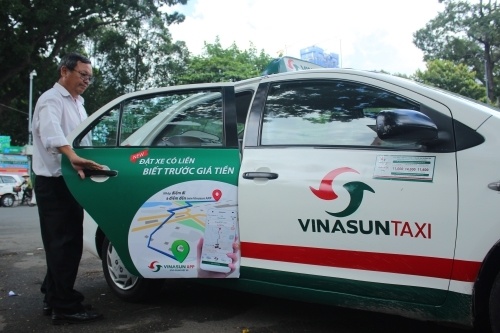
    Taxi operator Vinasun reported a loss of VND66 billion ($2.87 million) for the second quarter, its sixth consecutive quarterly loss as Covid-19 continued to wreck its business.

    Revenues were VND150 billion, the lowest since the company listed on the stock market in 2008.

    Before the fourth wave of Covid began at the end of April Vinasun had said its financial structure was “stable and healthy” and it hoped to increase market share in the recovering market by investing in 500 new cars to take its fleet size to 3,368 by the end of the year.

    It targeted revenues of VND1.05 trillion this year, up 4 percent from 2020, and expected to reduce its losses to VND79 billion from VND210 billion last year.

  • Cargo could be as powerful as our passenger services says Airasia chief

    Cargo could be as powerful as our passenger services says Airasia chief

    Air cargo has been a “diamond in the rough” for AirAsia during the Covid-19 pandemic and is likely to retain a high importance to the business in the longer term, according to group chief executive Tony Fernandes.

    “What was a ‘nice to have’ has become something that could be as powerful as our passenger services,” Fernandes said during a CAPA Live event on 14 July. “Covid has driven e-commerce to another level, and hence air cargo has become much more valuable.”

    Amid that change, AirAsia is expecting to receive its first dedicated freighter in the third quarter of this year and is currently removing the seats from two of its Airbus A320s before deploying them as temporary freight-only aircraft.

    Air cargo is “no more a stepchild” in AirAsia’s business, Fernandes says. “I never thought we’d have freighters, I never thought we’d be taking seats off the planes to do cargo.

    The move towards cargo has been made easier by AirAsia already having air freight expansion plans in place as the pandemic hit, he explains.

    “Prior to Covid, I began to see the eCommerce revolution and I started building a separate company called Teleport,” Fernandes says of AirAsia’s logistics arm.

    His aim is to do to cargo operations “what we did to passengers… and eliminate the middlemen”. As part of that process, AirAsia began to deal more with freight forwarders, then direct customers. At the same time, Fernandes says AirAsia “consolidated all our space across all the airlines”.

    “We built a blockchain to deal with that, so there was one airline, as opposed to five different airlines,” he says in reference to the freight capacity across AirAsia Group’s carriers.

    “Five our six other airlines have joined us now in selling space together,” he adds.

    Amid that growth, Fernandes is also cautious about the longevity of current market dynamics.

    “There is a false market out there, so we shouldn’t all get carried away, because [the return of] belly space is going to change the economics again,” he states.

    Regardless, air freight is now front and centre of the carrier’s planning.

    ”When a budget plan is put in front of me, it’s now ‘where are the cargo routes, where are the cargo-only routes?’,” Fernandes says. “Models have to be redone, [but] it’s easier at AirAsia because we are a very nimble even though we are big. I’ve always been a change agent so the staff are used to that.”

    And his ambitions stretch to the “whole logistics chain”, he says: “I also want to be in the warehouse game. We are going to cover everything.”

    AirAsia Group has focused on diversifying away from its core passenger-airline business during the pandemic, and in September last year launched AirAsia Digital, of which Teleport is one of three key focus areas.

    The others are an ecommerce-focused ”AirAsia Super App” and a Fintech company that provides payment, remittance and lending solutions.

  • Leaked promo confirms when Samsung will unveil two new foldables and a pair of new watches

    Leaked promo confirms when Samsung will unveil two new foldables and a pair of new watches

    A week ago, we passed along images of the devices we expect Samsung to introduce at its next Unpacked event, the second for 2021. Those products include the Samsung Galaxy Z Fold 3, the Galaxy Z Flip 3, the Samsung Galaxy Watch 4, and the Galaxy Watch 4 Classic. The huge leak had been posted on Twitter by tipster Evan Blass.

    On Saturday, Blass posted a promo from Samsung Russia that confirms that the next Unpacked will take place on Wednesday August 11th. The promo says that the event will start at 17:00 Moscow time (or 5 pm ). That equates to 10 am Wednesday Eastern Daylight Time.Leaked promo confirms when Samsung will unveil two new foldables and a pair of new watches

  • Google Maps is giving out potentially fatal directions to mountain climbers

    Google Maps is giving out potentially fatal directions to mountain climbers

    When Apple launched its own mapping and navigation app in iOS 6, the goal was to replace Google Maps on the iPhone. But Apple Maps was such a fiasco that just weeks after the launch, CEO Tim Cook apologized for Apple Maps’ shortcomings and suggested that iOS users turn to alternatives like Google Maps, Waze, and other navigation apps until the issues were fixed.

    One particular mistake put Apple Maps users in real peril and led Inspector Simon Clemmence of the Victoria Police in Australia to call the app life-threatening. It turned out that the directions that the app provided to at least six people driving their vehicles to Mildura took them through the Outback with temperatures as high as 115 degrees. The area is lousy with poisonous snakes and cell reception is spotty.

    The problem was that Apple Maps had Mildura 43 miles away from its actual location. Australian cops put out a warning telling iPhone users that drivers who used the app to get to Mildura ended up driving for over 24 hours without food, water, or cell service. One person had to walk over 24 hours before finding cellular connectivity for his handset. Apple Maps has been greatly improved since and now it is Google Maps’ turn to disseminate potentially deadly directions.

    At the end of last week, the John Muir Trust and Mountaineering Scotland, the organizations that watch over mountain climbing, hill walking, snow sports, and similar activities in Scotland, released a warning. The organization expressed concern that climbers and hikers were using navigation apps to get directions to Scotland’s highest mountain named Ben Nevis.

    It seems that Google Maps is giving directions to hikers that could be lethal. At least that is the opinion of Heather Morning, Mountaineering Scotland’s mountain safety adviser. Morning says that “For those new to hill walking, it would seem perfectly logical to check out Google Maps for information on how to get to your chosen mountain…even the most experienced mountaineer would have difficulty following this route (from Google Maps).”

    Morning adds that “the line goes through very steep, rocky, and pathless terrain where even in good visibility it would be challenging to find a safe line. Add in low cloud and rain and the suggested Google line is potentially fatal.” Both organizations wish to speak to Google about removing any life-threatening routes. However, Google has reportedly yet to respond to appeals from John Muir.

    A Google spokesperson did comment about the possibly life-threatening directions and said, “We built Google Maps with safety and reliability in mind, and are working quickly to investigate the routing issue on Ben Nevis and surrounding areas.”

    Google said that it examining the issue and said, “To help both novice and experienced hikers more easily find trails that suit their level of expertise, we’re now updating our driving routes to take people directly to the visitor center, where they’ll be able to speak with staff about the best trail to take.” But the directions to Ben Nevis are not the only directions from Google Maps that could end up killing someone who follows the app’s directions.

    Mountaineering Scotland’s Morning states “Modern navigation technology brings some amazing advantages for hill walkers, but this example is clearly not one of them. Walkers and climbers with even a little experience will know to read information from a map, whether digital or paper, and if they are looking for downloadable routes know to use reputable sources and check several sources to ensure the information they are accessing is the right route for their level of experience and ability.”

    She goes on to say that “…especially on Ben Nevis, many people are not aware of where to get reliable information and may quite naturally assume that Google Maps, which got them from their home to the foot of the mountain, can carry on and do the job right to the top. This is not the case.”

    A couple of paragraphs ago we hinted that there is another possible fatal set of directions offered by Google Maps. According to Mountaineering Scotland,  a route shared by Google Maps to Scotland’s An Teallach mountain “would take people over a cliff.”

  • Apple removes app at Amazon’s request

    Apple removes app at Amazon’s request

    Last month, the Fakespot Secure Shopping app was launched in the App Store. With the app, users get to experience shopping on Amazon “as it should be, with genuine products and reviews, reliable sellers, great prices and fewer returns,” the app developer said. Earlier today, Apple removed the app from the App Store at the request of Amazon. The latter said that it was concerned that a new update to its iOS app allowed Fakespot to “wrap” the Amazon app without permission which could lead to the collection of data belonging to Amazon customers.

    Such data includes email, addresses, credit card info, and the browser histories of Amazon users. However, the online retailer admits that it doesn’t know for sure whether Fakespot is using this information.

    Apple never gave fakespot a reason why it removed his company’s app from the App Store. However, a few hours ago Apple disseminated a terse statement in which it said that it regretted the lack of an amicable solution to the issue and that it removed Fakespot from its iOS app storefront. Khalifah, obviously not happy with Apple’s decision, said, “Apple hasn’t even given us the ability to solve this. We just dedicated months of resources and time and money into this app.”

    Amazon says that Fakespot violates Apple guideline 5.2.2 which states that “If your app uses, accesses, monetizes access to, or displays content from a third-party service, ensure that you are specifically permitted to do so under the service’s terms of use. Authorization must be provided upon request.” Considering that Fakespot is an overlay that “wraps” around Amazon and that “hell no” is not permission, it would seem that the online retailer has a good case.

    In a statement, Amazon said, “The app in question provides customers with misleading information about our sellers and their products, harms our sellers’ businesses, and creates potential security risks. We appreciate Apple’s review of this app against its App Store guidelines.” The Fakespot is still available for Android devices from the Google Play Store.

  • Instagram tests banner reminding subscribers to use Facebook

    Instagram tests banner reminding subscribers to use Facebook

    In April 2012, Facebook purchased Instagram for $1 billion in cash and stock. At the time, many analysts felt that Facebook had overspent since Instagram was a photo-sharing app known mostly for its filters. But the last laugh belongs to Facebook as Instagram has matured to become one of the most visited social media destinations online with an estimated valuation of $102 billion.

    Instagram is testing a new banner at the top of users’ feeds that suggests that they check out features that are “only available” on Facebook. In a statement, an Instagram spokesperson said, “We’re testing a way to let people who have connected their Instagram accounts to Facebook know about features only available there, such as how to find a job, date online, buy and sell goods, or catch up on the latest news.”

    “A very small group” of Instagram users who have agreed to link their accounts will see the banner according to Facebook. Those Instagram users tired of being reminded over and over again that Facebook exists can dismiss the banner. And despite the limited nature of this test, it is another attempt by Facebook to bring the two apps closer together.

    It appears that the goal here is for Instagram, with over 500 million average daily users, to promote Facebook and bring users back to the mothership. Facebook had 1.88 billion daily average users during the first quarter of this year. An unnamed book published last year said that Facebook co-founder and CEO Mark Zuckerberg is jealous of Instagram’s success leading the executive to fret that Instagram could eventually cannibalize Facebook.

  • Kiwi coffee brand Allpress launches capsules in Australia

    Kiwi coffee brand Allpress launches capsules in Australia

    Kiwi coffee brand Allpress has created its first capsule espresso, designed, it says, to deliver an accessible solution for those seeking to enjoy the brand’s coffee at home. 

    According to the company, the capsule took years of innovation to create and uses the same specialty grade coffee used by its cafes worldwide.

    The capsules were crafted by reformulating its Allpress Espresso Blend to highlight the “caramel sweetness”, increase depth, and ground it “super-finely” for slower extraction. The grounds were then roasted at high temperatures to maximize the coffee’s solubility, recreating the same flavor of its cafe’s coffee, the brand added.

    Allpress head roaster Zach Dowse says most coffee pods aren’t able to meet customers’ expectations when it comes to flavor, so the brand worked to create one product that could.  

    “This meant going back to the basics and thinking about how the Allpress Espresso Blend could be adjusted to work best as a pod,” said Dowse. 

    “We had to think about the roast profile, the mix of origins in the capsule and finally, finding the correct grind size that allowed the right amount of water contact and gave us the most balance to our cup.” 

    Founded in 1989, Allpress says creating the capsule coffee is one of the brand’s biggest ventures yet. 

    Allpress Espresso Specialty Coffee Capsule is available from its online store, in Allpress Roastery Cafes, from cafe partners, and specialty grocery stores nationwide for RRP $12 for a 10-piece pack and $70 for a 60-piece pack.

  • Big Gap Opens Up Between UBS, Credit Suisse

    Big Gap Opens Up Between UBS, Credit Suisse

    A big gap has opened up not only between UBS and Credit Suisse’s share prices but also between expectations for their second-quarter earnings.

    Ahead of the publication of their second-quarter results there really is no comparison. Looking at the share prices of the two big Swiss banks, UBS, whose results are due out on Tuesday, has risen just under 10 percent since the beginning of the year; and the bank is by no means one of the star performers on the Swiss stock exchange.

    However, you would have to look long and hard to find a worse performer than Credit Suisse, whose results are set to be published on July 29. Its shares have dropped 27 percent over the same period.

    Credit Suisse was in a world of pain in the second quarter. There is a great deal of uncertainty about its medium-term future after it lost billions in the collapse of Archegos Capital and no end in sight to the flood of employees heading for the exit at its investment bank. The lack of clarity about its prospects of recouping all the money from the Greensill funds is a source of disaffection to both staff and those asset management and private banking clients affected.

    Its battered reputation makes if difficult for Credit Suisse to acquire new clients and funds. The investigations into the Greensill and Archegos debacles by and the instruction from Swiss financial watchdog Finma only to do low-risk business are complicating its operations.

    Compared with UBS and the competition across the Atlantic, Credit Suisse is wrestling with both new and legacy problems at the worst possible moment.

    Credit Suisse is in danger of sliding into a completely different league to UBS. This is despite 800 million Swiss francs ($873 million) of UBS’ money going down the drain when Archegos collapsed.

    As far as banks with which Credit Suisse likes to compare itself such as Goldman Sachs or J.P. Morgan go, this has already happened.

    Last week, Goldman Sachs reported a second-quarter profit of $5.5 billion, J.P. Morgan made almost $12 billion. This was down to a U.S. economy going full steam ahead, strong results from their investment banks as well as mergers and acquisitions activity.

    The second-quarter forecasts for Credit Suisse are a tiny fraction of that.

    The consensus estimate is for a pre-tax profit of just over 840 million francs and a net profit of just over 330 million francs. The one-off effect of a further loss of 600 million francs due to Archegos is expected to weigh on the second-quarter numbers.

    Credit Suisse was still a money-making machine in the first quarter – apart from the debacles which cost billions – especially the investment bank, but the forecasts for the second quarter are very different indeed. Analysts are predicting revenues of around 1.75 billion francs offset by expenses of around 1.7 billion francs. The investment bank is expected to post a loss in the second quarter.

    Expectations for the wealth management business and client acquisition are also very subdued. A cash outflow is expected in Asset Management and an increase of around 3 billion francs across all units.

    The expectations for UBS are nothing to write home about but much better. The consensus forecast is for a second-quarter profit of just over $1.3 billion, significantly less than in the first quarter but still higher year on year.

    In its core business of Global Wealth Management, significantly less volatile markets hit client activity. Revenues will be significantly lower than in the first quarter. The focus will therefore be on implementing the cost-cutting program. The aim is to save $1 billion by 2023. However, there are likely to have been restructuring costs of around $300 million in the second quarter.

    The big gap between UBS and Credit Suisse not only lies in their share prices and results but also in the base from which they are starting, which has changed yet again since the spring.

    While UBS is pursuing a strategy for the future under its new CEO Ralph Hamers and has the means and capacity to invest in a technological transformation, Credit Suisse is dealing with its past. It has to resolve legacy issues that affect its corporate culture and, more specifically, the shortcomings in risk management.

    New Chairman António Horta-Osório has made it clear that this will take time and that no decisions on changes to the bank’s strategy are expected before the end of the year. In other words, UBS is building its future, something Credit Suisse can only dream of.

  • India’s software market revenue projected to reach US$7.6 billion by year end

    India’s software market revenue projected to reach US$7.6 billion by year end

    According to the International Data Corporation (IDC) Worldwide Semiannual Software Tracker 2H20 (July–December), the India software market is estimated to reach US$7.6 billion by the end of 2021. The India software market was pegged at US$7.0 billion in 2020, registering a growth of 13.4% year-over-year (YoY) compared with that in 2019. India accounted for 17.5% share of the overall Asia/Pacific (excluding Japan and China) (APEJC) region software market in 2020. Microsoft, Oracle, and SAP maintained their leadership positions in the India market during the same year. 

    Shweta Baidya, Senior Research Manager for Software and IT Services at IDC India says, “Although the pandemic had a minor impact on the overall growth of the India software market, it acted as a catalyst for strong growth across some of the software segments as enterprises reevaluated their IT strategies and took concrete steps to move toward digital business models. Digitally matured enterprises were able to smoothly navigate through the crisis and maintain business continuity and operational resilience. However, enterprises with traditional business models charted out new strategies to leverage cloud and digital to stay relevant and consistent. Investment in collaborative platforms, network transformation, and security re-architecture witnessed a spike during the last few quarters.”

    IDC classifies the software market into three primary categories: applications, application development and deployment (AD&D), and systems infrastructure (SI) software. Applications contributed 60.4% to the overall market revenue, followed by AD&D and SI software with shares of 21.6% and 18.0%, respectively, in 2020.

    As per IDC’s current estimates, engineering applications, collaborative applications, customer relationship management (CRM) applications, enterprise resource management (ERM) applications, and content workflow and management applications are the leading software segments in terms of revenue. The collaborative applications market witnessed the highest growth of 36.7% in 2020, followed by artificial intelligence (AI) platforms and system and service management software at 30.9% and 24.8%, respectively.

    India Market Forecast

    IDC estimates India’s overall software market to grow at a compound annual growth rate (CAGR) of 11.6% from 2020 to 2025. India enterprises will continue to invest in technologies that will help them spur innovation to improve operational efficiency and employee productivity, and in turn, maintain business momentum. IDC expects acceleration in demand for technologies, such as robotic process automation (RPA) software, conferencing and collaborative applications, AI platforms, digital commerce applications, and IT service management (ITSM) software, among others. Additionally, cloud is also becoming one of the critical elements of enterprises’ digital strategy. IDC expects the contribution of platform-as-a-service (PaaS) and software-as-a-service (SaaS) markets to the overall software market to increase from 36.8% in 2020 to 57.1% in 2025.

    “In spite of the adverse impact of the pandemic, India continued to be one of the most resilient markets across the APEJC region. India software market registered a growth of 13.4%, which was the highest in the region. Enterprise sentiments improved during the second half of the year and investments were ramped up quickly on digital work models to enable smooth transition to a remote work environment. IT budgets were re-apportioned and allocated in accordance with the increased spending on emerging technologies. Software vendors have been aggressively acquiring customers by supporting them in the digital journey with flexible and scalable options,” adds Baidya.