Author: Mei Ling Tan

  • 7-Eleven Hong Kong opens its 1000th store

    7-Eleven Hong Kong opens its 1000th store

    7-Eleven has officially opened its 1000th store in Hong Kong – a milestone moment for both the brand and its customers. 7-Eleven launched its very first store in Happy Valley back in 1981 and, 40 years later, has opened its 1000th store on Des Voeux Road in Central. An integral part of the community and a true neighborhood store, 7-Eleven is committed to bringing convenience closer to its customers wherever they are, whenever they need.

    Evolving alongside the people of Hong Kong, the brand has constantly innovated to live up to changing consumer expectations. To mark this landmark achievement, a series of promotions and offers are being rolled out to thank customers for their loyal support.

    A Journey of 1000 Stores: the story of 7-Eleven in Hong Kong

    The Journey of 1000 Stores, a retrospective showcase outlining the story of 7-Eleven in Hong Kong, was held today in Central on 8 July. The exhibition charted 7-Eleven’s journey from its very first store right up to the opening of its 1000th store highlighting the brand’s milestones over the years, which many Hongkongers may still fondly remember from childhood.

    These include the immensely popular Hello Kitty badge collectible program, from 2004 and the launch of HOTSHOT, its ready-to-eat range of authentic Hong Kong-style treats beloved by students of all ages!

    Serving the community for 40 years

    7-Eleven has always been committed to giving back. Since 2013, it has worked with Caritas to offer training and job opportunities to over 40 people with special needs. In 2017, it teamed up with Pei Ho Counterparts to donate and distribute food to the homeless, the elderly, and low-income families. It also hands out small gifts every Christmas to children in need to spread festive cheer.

    In 2020, 7-Eleven launched the Charity Meal Voucher Programme: 553,787 vouchers were collected within eight days and then distributed in local neighborhoods hardest hit by the pandemic in collaboration with Food Angel, St. James’ Settlement, Foodlink, Hong Kong Christian Service, and Pei Ho Counterparts.

    Fun and exciting offers to say a big thank you to all its customers!

    7-Eleven’s continuing success is down to its team members, business partners, and, most importantly, its customers. To thank customers for their ongoing support, several tempting promotions and offers are taking place throughout July. For example, 7-Eleven launched an Instant Win Game, a first-of-its-kind Augmented Reality lucky draw with over $10 million worth of prizes to be won including 2,000 free cups of 7CAFÉ, 1,000 $100 cash vouchers, and a whole host of product discounts. To mark 7-Eleven Day on 11 July, 7-Eleven will be running unmissable offers such as $7 cups of 7CAFÉ, $7 and $11 discounts on a wide range of products and more. There will also be “1000-themed” promotions exclusively for you Rewards members such as product redemptions for 1,000 yuu points and 1,000 yuu point giveaways. 7-Eleven deeply appreciates the continuous support of its customers and looks forward to sharing this milestone moment with everyone!

    #7ElevenHK #7ElevenConvenienceStore #7Eleven1000thstore
  • Masterfoods revamps home herbs and spice range

    Masterfoods revamps home herbs and spice range

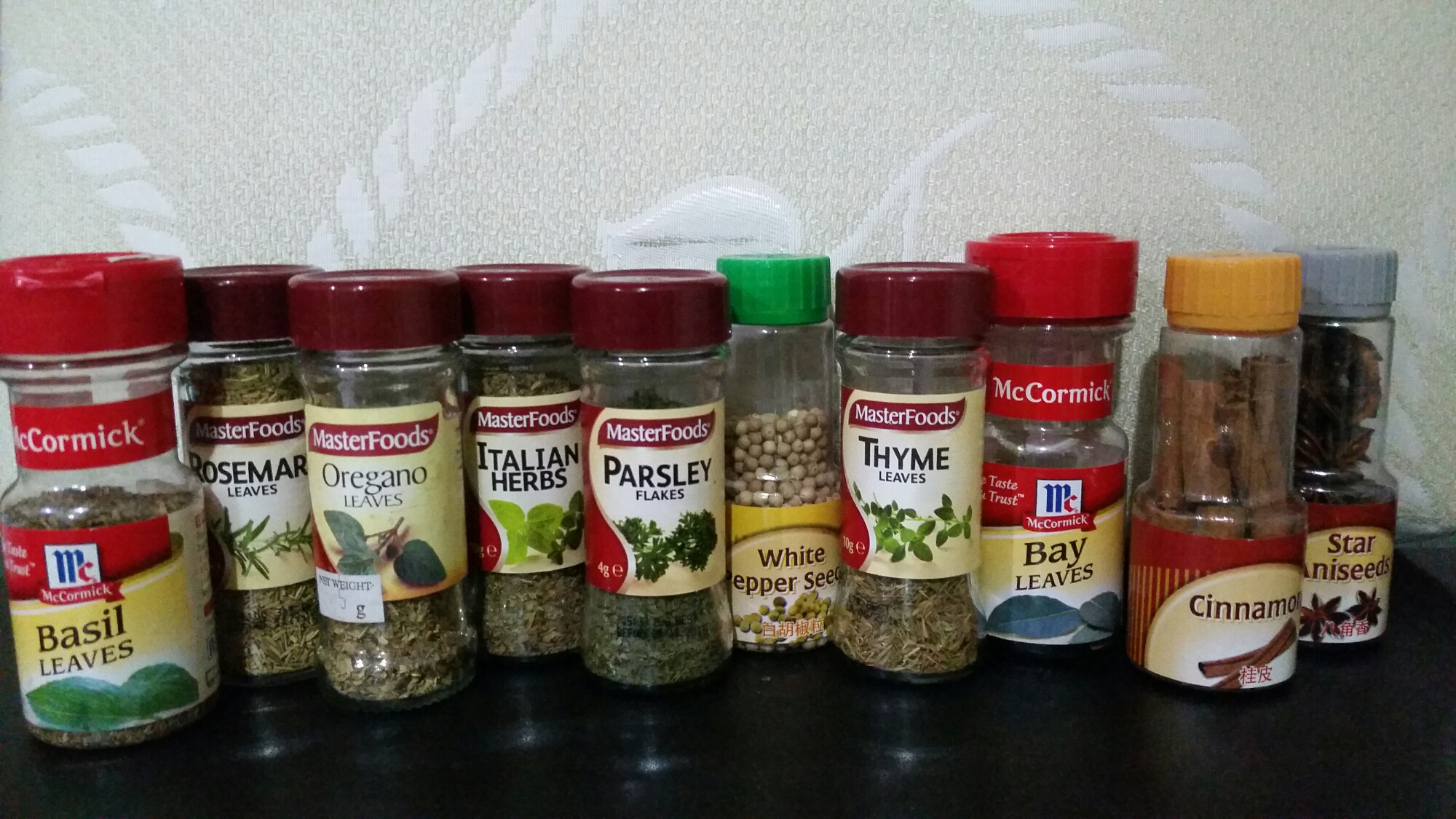
    Masterfoods has rolled out new packaging for its range of herbs and spices, aiming to make the shakers more user-friendly and with more differentiation between items. The herbs and spices will now come in color-coded lids, with improved labeling, and “easier-to-use” shakers.

    Old screw-top caps will be replaced with flip-top lids so that people with impaired hand movements can use them with ease. The new lids will also make it easier for cooks to add the seasoning blends directly from the jar, said Masterfoods.

    The change comes after research by Mars Food Australia, the manufacturer of Masterfoods, found people disliked “having to pick up every jar and read every label” to find the spice or herb they needed.

    The new color-coded lids and easy-to-find labels would ensure herbs and spices do not get “lost in the shadows of the pantry”, another issue highlighted in the study.

    Along with the product’s name on the lid, the following colors will be used for easier recall – green lids for herbs, orange for spices, and burgundy for seasoning blends.

    “The new-look packaging will have the same quality herbs and spices MasterFoods is known for but will help shoppers easily find the product they’re looking for”, said Jane Horder, consumer insight and foresight leader at Mars Food.

    The launch is supported by a new ad campaign created by Clemenger BBDO Sydney, which will appear across media platforms.

  • Dodge To Launch Its First All-Electric Muscle Car In 2024

    Dodge To Launch Its First All-Electric Muscle Car In 2024

    Dodge, the American carmaker has announced that it will launch the world’s first full battery electric muscle car in 2024. Part of its parent company Stellantis’ larger plan to achieve electrification across its group brands, the new electric vehicle will mark the entry of the iconic muscle carmaker, which is known for its high-horsepower V8 engines, into the EV space. The announcement came as part of the Stellantis EV Day 2021, and the company has also teased the concept version of the all-electric Dodge which we expect will be revealed soon.

    Now, based on the elements revealed in the teaser released by Dodge, we can assume that the company is likely to go for a retro design for the EV, featuring a muscular exterior. However, what’s even more interesting is the Fratzog logo which has been highlighted in the teaser video. The triangular logo was used by Dodge in the 1960s and ’70s, on the car’s grille, and Dodge says that using it is “a nod to the future, which will bring about another great automotive era – the era of the electrified muscle car.”

    Right now, it’s unclear whether the new EV will be the electric version of the two-door Dodge Challenger or the four-door Charger or a new vehicle altogether. However, we expect the new electric muscle car to be built on Stellantis’ ‘STLA Large’ platform, and it could also come with electric all-wheel-drive capability. Technical details and other specifications are expected to be announced later, however, the company claims that the new EV will be capable of doing a 0-100 kmph sprint in about 2 seconds. As for the electric range, the new Dodge EV is expected to offer a range of about 800 km on a single charge.

    Stellantis plans to invest more than 30 billion euro through 2025 in electrification and software development, including equity investments made in joint ventures to fund their activities. Its electric portfolio will also include a range of plug-in hybrid SUVs from Jeep which will arrive by 2022, and an all-electric truck from Ram by 2024.

  • 16 banks to lower loan interests amid Covid-19

    16 banks to lower loan interests amid Covid-19

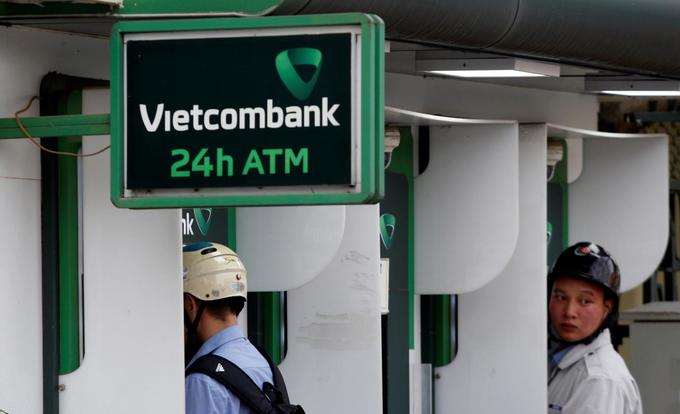
    Sixteen commercial banks have agreed to reduce interests on existing loans of Covid-hit businesses from now until the end of the year.

    The banks include Vietcombank, Vietinbank, BIDV, Agribank, Techcombank, MB, VPBank, TPBank and Sacombank.

    Lowering interests is difficult, but this is the time when banks need to share the burden with businesses, said Nguyen Quoc Hung, general secretary of Vietnam Banks Association, at a meeting Monday.

    Agribank is committed to lowering its interests by one percentage point on average, while MB will do so for at least one percentage point.

    Sacombank will seek shareholder permission as lowering the interest by one percentage point is equivalent to 40 percent of its profit target for the year. Some other banks will do the same.

    But not all businesses will be eligible for the reduction. Bank leaders said they would focus on companies truly hurt by the pandemic

    “Real estate companies with large profits, export firms or individuals borrowing money to buy cars should not be eligible for the reduction,” said Deputy Director of Techcombank Pham Quang Thang.

    He added companies that are essential to the economy with a large workforce should be eligible.

  • Singapore to invest $70 million in research, innovation and enterprise

    Singapore to invest $70 million in research, innovation and enterprise

    Speaking at the opening address of the ATxSummit, Singapore Deputy Prime Minister and Coordinating Minister for Economic Policies, Mr Heng Swee Keat announced that Singapore will be stepping up investments to unlock the full potential of the digital revolution through collective action.

    Investment in research and innovation is key to building solutions for the future and staying at the forefront of the digital economy. Singapore will invest close to S$70 million (US$50 million) under the Research, Innovation and Enterprise (RIE) plan, to launch our first national Future Communications Research & Development Programme (FCP).

    The FCP supports cutting-edge communications and connectivity research, and will in turn grow local capability to translate that into innovative products, services, and companies. This will be accomplished through the setup of new communications testbeds in 5G and beyond-5G, and support technology development, translation and training, while building up the talent pool in the areas of communications and connectivity technologies. As a start, the FCP has established a Memorandum of Understanding (MOU) with the 6G Flagship of Finland.

    As the Global-Asia node for technology and innovation, such digital cooperation with like-minded partners reaffirms Singapore’s role in bolstering growth opportunities in the global digital economy. Singapore Minister for Communications and Information Mrs Josephine Teo also signed a Memorandum of Cooperation (MOC) with Japan and an MOU with Thailand, at the sidelines of the ATxSummit.

    The MOC seeks to strengthen ICT collaboration between Singapore and Japan, enabling closer policy alignment and regulation on businesses. The MOC will facilitate a pilot project on electronic transferable records and the exchange of information on best practices and policies relating to the Digital Economy, Artificial Intelligence, and cybersecurity. It also includes closer collaborations through joint training and programs on AI implementation, AI governance and ethics, as well as cybersecurity capacity building.

    The longstanding Thailand-Singapore relationship will deepen with the signing of this MOU, which has been expanded to include new areas of cooperation in the Digital Economy such as digital connectivity, smart cities and AI governance. Both sides are also exploring interoperability between digital systems and frameworks that enable e-documentation.

    The pandemic has accelerated the overall shift to digital. Building a common “digital infrastructure” to underpin and ease data sharing will enable multiple stakeholders to come together and drive economic transformation. A new common data infrastructure and framework, the Singapore Trade Data Exchange, or SGTraDex was therefore launched to enable this trusted sharing of trade data. Designed as a neutral and open digital infrastructure through a public-private partnership, it was conceptualized by the Alliance for Action (AfA) on Supply Chain Digitalisation. SGTraDex will support ecosystem-wide digital transformation, connecting supply chain ecosystems both locally and globally.

    Three initial use cases were developed to push the boundaries of a trusted data exchange. The use cases demonstrated how SGTraDex can enable participants to strengthen the financing integrity of trade flows, enhance operational efficiency by optimizing logistics functions across partners, and provide visibility on supply chain transactions. The use cases have the potential to unlock more than S$200 million (US$150 million) of value annually when fully developed.

    SGTraDex will continue to build on this initial momentum, develop more use cases, and drive adoption locally and globally. SGTraDex also has the flexibility to be the data infrastructure for many other sectors ranging from construction to aviation, unlocking even more potential value. This is part of a suite of digital infrastructure and utilities being developed, including the SGFinDex for the financial sector, that provides a strong foundation for Singapore’s Digital Economy.

  • New Daikin AC For EVs Can Extend Range By 50%

    New Daikin AC For EVs Can Extend Range By 50%

    Daikin which is the Japanese air conditioning major has revealed that it has developed an air conditioner that can help EVs extend their range by up to 50 per cent which is a huge gain. The report comes from Nikkei Asia, the Japanese financial daily. The report states that Daikin is preparing to commercialize the technology by 2025.

    Daikin claims that it has a refrigerant that has a boiling point of 40-degrees Celsius which is 10-15 degrees lower than most conventional products. This means it draws lesser power for compression which helps in turn dramatically improve the range of EVs. Daikin has made a bold claim saying that a car that will give 200 kilometers of range in Japan could do 300 kilometers if it was outfitted with this AC.

    The product is currently being verified for its performance and safety in operating conditions by the US industry group SAE international. Daikin, of course, isn’t just the biggest air conditioner maker from Japan but by sales, it’s the world number 1. Currently, it doesn’t operate in the automotive market, so this will mark its entry into the segment.

    Currently, many automakers like Tesla make the HVAC system on their own. In fact, many times Elon Musk has mused that if Tesla were to commercialize its HVAC for home use, it would be class-leading because of the break through’s it has made to make sure the system doesn’t compromise either on air quality, cooling and range at the same time.

  • What Happened To Ethereum Price In 2021?

    What Happened To Ethereum Price In 2021?

    Ethereum price isn’t even trading at half the all-time highs it once was, and it has investors, traders, and analysts alike talking about a bear market in crypto. However, with such a severe selloff, it could be enough to stave off a longer bear phase, and a rebound from current levels could send Ethereum to new highs from here.

    Only time will tell how it all turns out, but for now, we’re looking back at what happened to Ethereum price in 2021, and also looking ahead at what Ethereum trading strategies to rely on in case the market does turn fully bearish instead.

    The First Half Of 2021 Reviewed

    Ethereum started off the year in 2021 at under $1,000 and at the peak traded for more than $4,000 per ETH. Things turned that bullish, that fast for the top altcoin by market cap. Bitcoin was also bullish and dragging up the entire crypto market, but what really sent Ethereum into overdrive was the sudden explosion in NFTs, DeFi, and other technologies tied to smart contracts

    Ethereum was introduced to do a lot more than Bitcoin can do, and that shows today with how much is built on the foundational blockchain layer. That scale in the amount of tokens and projects running on Ethereum also slowed down the network and sent gas fees soaring, but it also made ETH the hottest currency around that everyone needed to spend to transact in crypto.

    If a user wanted to mint an NFT, they had to spend ETH in gas fees. Most DeFi applications also heavily require ETH, and most popular stablecoins also run on Ethereum. There was a rush to create cross-chain solutions, but there is no beating Ethereum’s reach.

    Hype around ETH 2.0 and staking also drove up prices. ETH residing on exchanges reached a critical low. At the high, Ethereum traded around $4,400. But in a flash the crypto market crashed, and Ethereum collapsed by 50%.

    At the current low, the second ranked cryptocurrency dropped to as low as $1700 or around the 61.8% Fibonacci retracement level – an ideal zone to watch for a possible reversal.

    What the Second Half Has In Store For Ethereum

    The more than 60% crash very closely resembles the drawdown and final shakeout before the last time Ethereum ran to a new all-time high back in late 2017 into 2018. Ethereum more than tripled in value from the previous peak. A similar run higher post sell off would put each Ethereum at over $10,000 per token.

    At some point, however, no matter how bullish crypto is long term, because the assets are speculative, price discovery is volatile and another bear market will ultimately result. If and when that happens, the worst thing anyone can do is HODL.

    Investing is a mistake, and even buying the dip or going long can lead to a string of losses. When the bear market troughs come back, the right strategy is short trading Ethereum through CFDs. CFDs mean you don’t have to hold the underlying asset and can still short it, making profits from a crash instead of losing capital. CFDs are offered at margin trading platforms such as PrimeXBT, for example, which lets users long and short crypto, forex, commodities, and stock indices all under one roof.

    Knowing exactly when things turn bearish is much more difficult to tell. Watching for a high timeframe bearish crossover of the MACD is one way to tell as technicals recently revealed. On higher time frames, such as the two week or monthly, losing the middle-Bollinger Band – a simple moving average – can also be a signal to go short and a bear market is here.

    Ethereum still hasn’t lost the key level, and a future upgrade that improves scarcity could turn things back bullish sooner than later. Ethereum still hasn’t revisited the former all-time highs against Bitcoin on the ETH/BTC trading pair, which could suggest future outperformance over Bitcoin.

    Ethereum has actually outperformed Bitcoin in terms of raw ROI since its inception, however, because Bitcoin has been around a lot longer it has more ROI overall to show for it. If Ethereum can keep pace, it could someday even surpass Bitcoin’s market cap. The rest of 2021 and what happens from current levels will determine if that bullish outcome is possible, or if a bear market for altcoins is ahead.

  • Google replaces Backup and Sync with new Google Drive desktop app

    Google replaces Backup and Sync with new Google Drive desktop app

    Google has just released a brand-new version of its Google Drive desktop app, bringing Google Backup and Google Sync together with Google Photos and other features, along with additional improvements. It will be replacing previous home and business versions alike, aiming to make many of the regularly used Google Workspace features easily accessible in a single space.

    We know some of the main highlights of what the new Google Drive app will feature:

    • Uploading and syncing photos to Google cloud storage—including automatic compression and resizing, for those choosing “Storage saver” rather than original image quality
    • Syncing external storage devices (thumb drives, USB hard drives, and SSDs) to Google Drive
    • (Optional) two-way file and folder synchronization—automatically download files to local folders and vice versa
    • Locally mounted Drive folders in either Stream or Mirror mode—automatically downloading files on-demand or automatically prefetching all files from the cloud
    • In-app support for shared Google drives (new feature, was not present in Backup and Sync)
    • Integration with Microsoft Outlook and Google Meet scheduling

    The download size is rather hefty for the new Google Drive app, coming in at 238 MB and a reportedly fairly long installation time.

    For people who are eager to replace their old Sync and Backup app with this upgrade, they will soon start seeing the in-app prompt to download the new, unified version very soon, when they open either of the old apps.

    Users of the two apps will be supported by a guided transition to the new Google Drive starting July 19, and in-app push notifications reminding you to upgrade will start appearing as of August 18.

    Google recommends that users complete the transition by the end of September in 2021. That’s because on October 1, both the Google Sync and Backup apps will stop working and lose all support from the company. Both business and personal Google Workspace users benefit equally from the simplified workflow made possible in the new, unifying Google Drive app, so it may be better to go ahead and switch sooner than later.

  • General Motors To Invest $71 Million For New Design And Tech Campus In California

    General Motors To Invest $71 Million For New Design And Tech Campus In California

    General Motors said on Tuesday it would invest $71 million to establish a new campus in Pasadena, California to expand its capacity in advanced technologies such as flying cars and lunar rover vehicles.

    The campus will be used for GM’s advanced design center operations which focus on developing concepts and future mobility projects that fall outside the scope of existing production vehicle programs.

    General Motors said the campus will include an innovation lab and immersive technology capabilities, including augmented and virtual reality.

    The campus will be used for GM’s advanced design center operations which focus on developing concept and future mobility projects.

    The new site is closer to technology centers on the West Coast and creates a recruiting opportunity with its proximity to leading universities and design schools, the automaker said.

    GM presented in January a futuristic flying Cadillac – a self-driving vehicle that takes off and lands vertically and carries the passenger above the streets and through the air.

    The automaker’s other recent innovative developments include its commercial van business, BrightDrop, and the lunar rover concept developed with Lockheed Martin.

  • Auto sales surge 40 pct

    Auto sales surge 40 pct

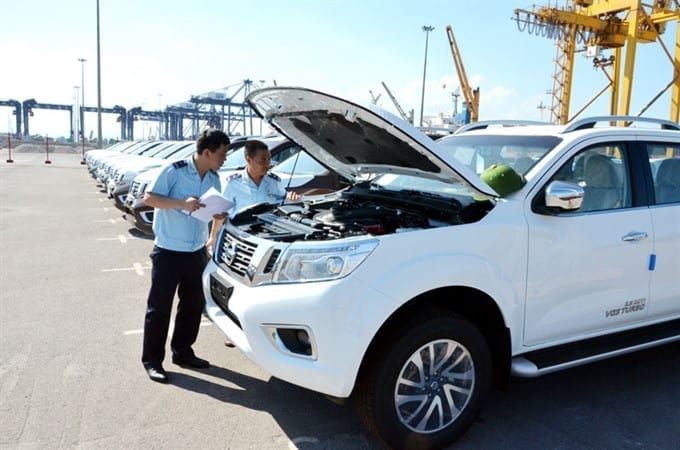
    Auto sales in the first six months rose 40 percent year-on-year to 150,481 units, according to Vietnam Automobile Manufacturers Association (VAMA).

    Passenger vehicles saw sales rise 37 percent in the period, while commercial vehicles grew 48 percent and special-purpose vehicles, 68 percent.

    Local brand Truong Hai Auto Corporation retained the top spot with 51,685 units, up 51 percent.

    Toyota saw sales growing 16 percent to 29,239 units, while the figures for Mitsubishi were 45 percent and 14,915 units.

    Honda and Ford made up the rest of the top five.

    The best-selling car model in the first six months was the hatchback VinFast Fadil, followed by two sedans, Hyundai Accent and Toyota Vios.

    Last year sales had fallen by 8 percent to 296,634 units as the Covid-19 pandemic badly affected the economy, hitting people’s incomes and discretionary spending.

  • Fintech Finder to Pursue Regional Growth Opportunities

    Fintech Finder to Pursue Regional Growth Opportunities

    The company, which purchased Singapore-based financial comparison platform GoBear earlier this year, has appointed a chief growth officer, who will play a critical role in its global expansion.

    Australia-headquartered Finder has appointed strategic business executive Jinnee Lim to the role of chief growth officer – Southeast Asia, effective immediately, the fintech announced on Tuesday.

    Lim brings over 15 years of experience in corporate strategy, business development, and strategic transformation. She was previously chief strategy officer at GoBear, and was involved in the sale of its marketplace assets to Finder. She has also held several regional positions at UBS, most recently as Asia Pacific head of client programs and segments, and at Boston Consulting Group.

    In her new role, Lim will work closely with Finder’s global executive team to identify and pursue new growth opportunities in the region. Her immediate focus will be ramping up Finder’s key capabilities in content creation, marketing, and partnerships, the announcement said.

    Finder finalized its purchase of the GoBear brand across seven markets: Singapore, Hong Kong SAR, Vietnam, Thailand, Philippines, Malaysia, and Indonesia, in April this year. The deal comprised trademark and digital assets including domains, website content, and social channels but did not include operations and staff.

    Finder currently has offices in Australia, the United States, United Kingdom, Canada, Poland, and the Philippines, and plans to open an office in Singapore in the near future.

  • North Asia Specialist Joins Indosuez Singapore

    North Asia Specialist Joins Indosuez Singapore

    He brings extensive knowledge of the regional wealth management industry, as well as the North Asia market, from his experience as a team leader for other global wealth managers.

    Indosuez, the global wealth management brand of Crédit Agricole Group, has appointed Alfred Low as the firm’s Head of North Asia Market and Strategic Partnerships in Singapore, effective September 2021, according to an announcement on Tuesday.

    Low joins the firm following senior management and advisory roles covering North Asia clients at HSBC Private Bank, Credit Suisse Private Bank, UBS Wealth Management, and Citigroup Private Bank. He previously held various functions with the Ministry of Trade and Industry in Singapore.

    Omar Shokur, Indosuez CEO, Asia, and Singapore branch manager, said the firm is committed to North Asia an is deepening its talent pool to better serve clients.

    North Asia, in particular, is one of the world’s fastest wealth creation region and is an important growth market for Indosuez, Shokur said.

    As of end-2020, the firm had €128 billion in assets under management.

  • AirAsia to raise up to $244mn in rights issue

    AirAsia to raise up to $244mn in rights issue

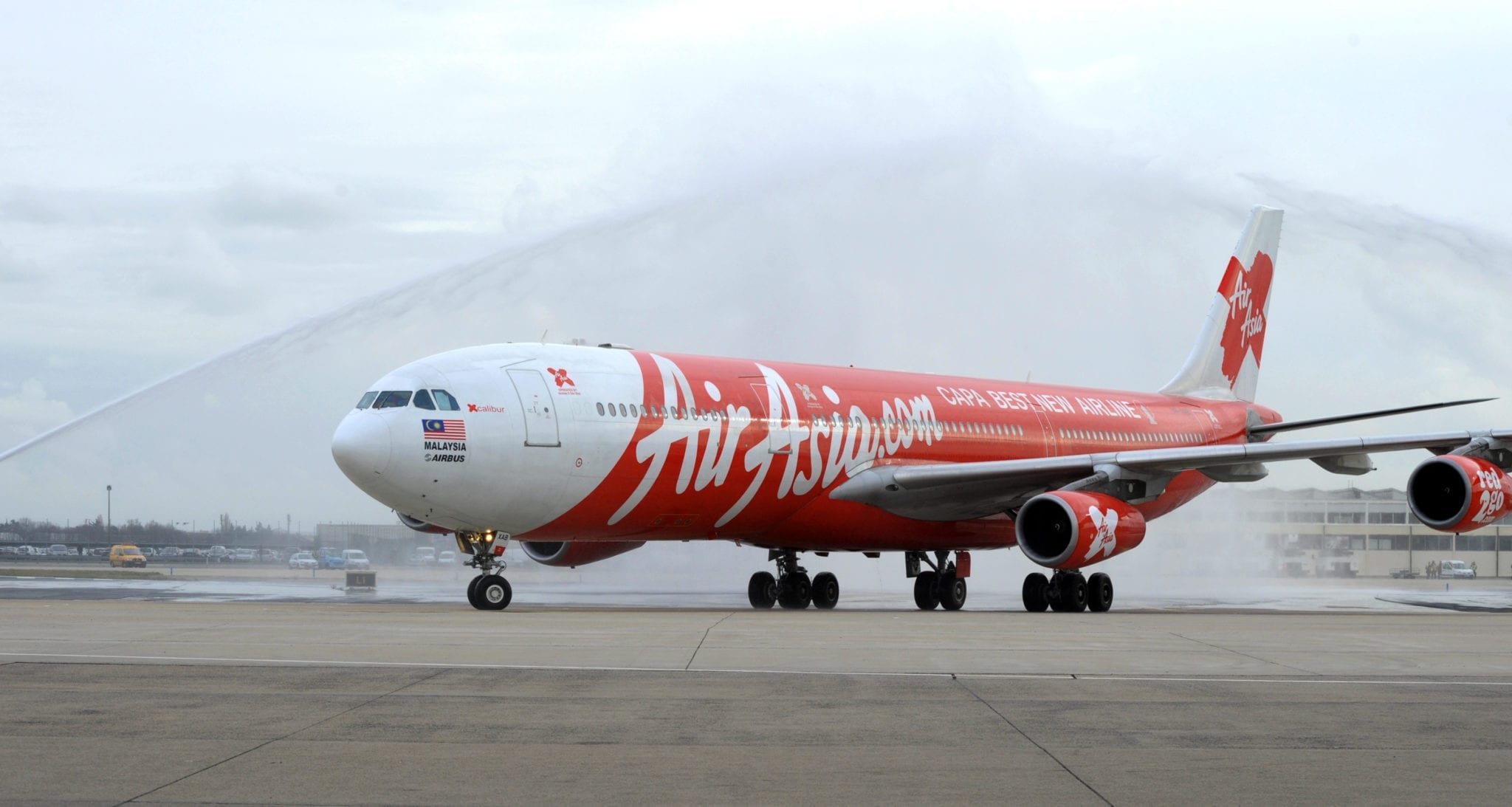
    AirAsia Group has revealed plans to raise up to MYR1.024 billion ringgit (USD244 million) through a renounceable rights issue, with the funds to be diverted to the group’s working capital and operational costs, as well as to further boost efforts to diversify through its AirAsia Digital businesses.

    The cash call to its shareholders includes seven-year redeemable convertible unsecured Islamic debt securities (RCUIDS), based on two RCUIDS with one warrant for every six AirAsia shares held, the group outlined in a Bursa Malaysia filing. Each RCUIDS security is also convertible to one new AirAsia share on a one-to-one basis.

    The proposed rights issue is expected to be completed in the fourth quarter of 2021, it added, and the AirAsia (AK, Kuala Lumpur Int’l) parent “is also well progressed in discussions to secure a number of other fundraising initiatives.”

    AirAsia Group CEO Tony Fernandes pledged that “the exercise will provide a platform to seek a fresh funding injection from shareholders to maintain liquidity during the downtime in flying and fuel growth of the key non-airline digital businesses.”

    AirAsia seeks “unconditional and irrevocable written undertakings” for a full subscription from group co-founders Fernandes and Kamarudin Meranun and their investment vehicles Tune Live and Tune Air. Tune Air holds a 13.25% stake in the company, Tune Live 13.06%, while Fernandes and Meranun themselves have direct stakes of 0.04% and 0.05%, respectively.

    Collectively, the two, who therefore control a 26.4% equity interest in AirAsia Group, are expected to inject MYR257.27 million (USD61.38 million) in fresh capital into the company. The other substantial shareholder, Stanley Choi Chiu Fai, a Hong Kong-based entrepreneur and professional poker player, holds 8.53% as of June 30. He subscribed to a private placement earlier this year.

  • You will soon be able to use your phone as a walkie-talkie with Microsoft Teams

    You will soon be able to use your phone as a walkie-talkie with Microsoft Teams

    A new roadmap update by Microsoft shows us a Microsoft Teams feature you will be able to use starting September and it is: walkie-talkie with your phone, over a wireless or cellular connection. The new feature will make communicating with your co-workers quicker.

    Figuratively speaking, with the new feature, your phone or a tablet will be able to be used as a walkie-talkie (of course, via the MS Teams app). The new feature will be available in September worldwide. The walkie-talkie option seems quite convenient for first-line workers, and it will help reduce the number of devices they need to carry while at the same time providing the necessary security.

    Emma Williams, CVP of modern workplace verticals at Microsoft, stated that the new natively built into Teams functionality will help lower costs for IT from companies and organizations. She also added that the feature is more secured when compared to analog devices with unsecured networks, and you will not need to worry about eavesdropping or crosstalk.

    The feature will work over Wi-Fi or cellular data and can be used across different geographic locations.

    Earlier, Samsung has showcased how you can use the new MS Teams feature with the rugged Galaxy XCover Pro; without even unlocking the phone, given the fact that you can access it via the programmable button on the phone.

    To further augment Team’s walkie-talkie feature, you can use it with a wireless headset. For example, the Jabra BlueParrot and Klein Valor Speaker are validated to work with the new functionality.

    The feature will roll out in September, and in order to use it, you will first need to open the app on your smartphone and look for the Walkie Talkie icon in the navigation bar. It’s either going to be there or in the ‘More’ options.

  • WhatsApp is working on a simpler way to request a banned account review

    WhatsApp is working on a simpler way to request a banned account review

    WhatsApp has been suffering from some intensive spam, and for that reason, it has been taking banning accounts seriously. With this, though, some users might have actually gotten their account banned without spreading spam. Now, a new feature, currently under development, will make un-banning your account easier.

    The feature is currently seen as a hidden one in the beta version of WhatsApp and is yet to become publicly available. It will allow a user with a banned account to request a review of the situation from WhatsApp’s team.

    Once you have submitted a request, you will receive an in-app notification once it has been reviewed and whether your account has been restored. Reviews typically would take up to 24 hours, while, in the meantime, chats will not be deleted.
    As you may probably know, to battle spam and illegal activities, WhatsApp has automated systems for banning suspicious accounts. However, these systems aren’t always accurate and your account might get banned without any wrong activity whatsoever. Although this is a very rare occasion, it still can happen. If that’s the case, the reviewing of the ban will restore your account.

    Of course, if WhatsApp finds the ban was accurate, it will not remove it and you will need to register another phone number if you want to use the chat service. The feature has been spotted in the beta for iOS, but it will most likely be developed for Android as well.

    At the moment, it is unclear when this feature will make its way to the general public.