Author: Mei Ling Tan

  • Vietnamese studio bags $1 mln funding for new blockchain game

    Vietnamese studio bags $1 mln funding for new blockchain game

    Vietnamese game studio Topebox and its blockchain partner KardiaChain have raised $1 million for an upcoming blockchain game called My DeFi Pet.

    The investors include Shanghai-based venture capital firms Axia8 Ventures, OKEx Blockdream Ventures, and the venture capital fund of cryptocurrency exchange OKEx in Hong Kong. Vietnam-based venture capitalist Megala Ventures and Chinese game developer Animoca Brands have also pitched in.

    Based in HCMC, Topebox is the developer of hit games like Pocket Army, Sky Dancer: Free Falling, and King Rivals. It had bagged $1 million in the seed funding round from Singapore’s mobile game publisher Habby in April last year.

    My DeFi Pet is its first blockchain gaming project, which is set to launch globally in mid-May. The game will include decentralized finance (DeFi) and non-fungible token (NFT) features. NFT is a unit of data stored on blockchain that certifies a digital asset to be unique and therefore not interchangeable.

    Accordingly, players can earn tokens while playing the game, get rewards by participating in the game’s events and make profit from selling in-game characters.

    The Topebox developer team includes experienced game producers from Vietnam’s gaming giant VNG and leading global mobile video games developer Gameloft.

    It aims to have it business appraised and valued at $150 million in the next 3-5 years.

    Before My DeFi Pet, Vietnam had developed another blockchain game called Axie Infinity, released in 2018. It was developed by Vietnamese game developer Sky Marvis and was the first blockchain game developed in Southeast Asia.

  • McDonald’s implements global inclusive workplace initiative

    McDonald’s implements global inclusive workplace initiative

    McDonald’s has unveiled an initiative to foster safe and inclusive workplace it calls Global Brand Standards.

    The policy will focus on four main areas: harassment, discrimination, and retaliation prevention; workplace violence prevention; restaurant employee feedback; and health and safety. The company says the standards have been set to further ensure physical and psychological safety for its employees and customers.

    “There are no shortcuts to ensuring that people feel safe, respected, and included at a McDonald’s restaurant,” said Chris Kempczinski, president and CEO of McDonald’s. “Our new Global Brand Standards reinforce our commitment to living our values such that at every interaction, everyone is welcome, comfortable and safe.”

    These standards will be implemented across 39,000 McDonald’s restaurants in more than 100 countries. From January, restaurants will be assessed and held accountable in accordance with the applicable McDonald’s market’s business evaluation processes. Training and reporting mechanisms will be established.

    McDonald’s said it will work closely with independent and third-party experts to support the implementation of the standards for franchisees.

    “McDonald’s has a responsibility and an opportunity to use our tremendous scale to drive change globally,” said Reto Egger, speaker group chair of the European Franchisee Leadership Group (EFLG) and franchise owner.

    “These refreshed standards and heightened measures of accountability are central to our culture, our business goals and the need in our society to foster more respect, safety, and inclusion.”

  • Honey exports set for anti-dumping probe in US

    Honey exports set for anti-dumping probe in US

    The U.S. Department of Commerce has received demands for anti-dumping investigations into honey imported from Argentina, Brazil, India, Ukraine, and Vietnam.

    According to the Trade Remedies Authority of Vietnam, for the first time ever the country’s honey products face the risk of being investigated for trade remedies in the U.S.

    The complainants are the American Honey Producers Association and the Sioux Honey Association, who have listed 12 Vietnamese firms in the petition and calculated the dumping margin at 207.08 percent.

    They want the anti-dumping investigations to be done for the period from October 1 last year to March 31 this year, and want damage investigation done from the beginning of 2018.

    Data from U.S. customs shows Vietnam exported 50,700 tons of honey products in 2020, or 25.8 percent of that country’s total honey imports.

    The DOC will decide whether to launch an investigation within 20 days.

    The U.S. International Trade Commission is reviewing the two associations’ lawsuits to assess the damage done to the U.S. honey production industry.

  • China cryptocurrency craze drives hard drive shortage in Vietnam

    China cryptocurrency craze drives hard drive shortage in Vietnam

    Large capacity hard drives are virtually out of stock in Vietnam because of a cryptocurrency mining craze in China.

    Customers and market observers say local people have been buying large-capacity hard drives in bulk and reselling them to the Chinese amidst a new mining craze for the Chia cryptocurrency in China.

    People who need to buy large space hard drives have commented on online groups for computer component buyers that they could not find any 6TB or larger-spaced hard drives, so they were having to buy smaller ones to merge into a large one.

    Hoang Lam, Subject Matter Expert of data storage company Seagate Vietnam said that Seagate’s 4TB hard drives have been out of stock since last month because “many of our customers bought the hard drives in bulk, from hundreds to thousands in one order, instead of a few units in one order as usual.”

    A computer component distributor in HCMC said that their hard drive sales surged by 50 percent last month despite prices rising 10-20 percent, and now the store is out of stock.

    Thanh Phong, a cryptocurrency miner and cryptocurrency mining gear seller, said the chokehold on large capacity hard drives supply in Vietnam was caused by the cryptocurrency mining boom for Chia in China.

    Chia is built around a cryptographic technique called Proof of Space and Time, which allows the cryptocurrency to be mined with unused storage space on hard drives rather unlike others like Bitcoin or Ethereum that use graphics cards. The more unused storage on the hard drive, the more Chia can be mined.

    Phong said that the Chia craze is yet to spread to Vietnam. Therefore, Vietnamese were buying hard drives in bulk to sell them to China.

    The Chinese miners have been stockpiling hard drives, preparing for Chia’s launch in May. As a result, hard drives with large capacities, from 4TB to 18 TB, have already been sold out on many Chinese e-commerce platforms.

    According to manmanbuy.com, a Chinese website that tracks and compares historical prices of products on China’s popular e-commerce platforms, the price of hard drives has surged 300 percent since the end of last year.

    Chia is the brainchild of Bram Cohen, the creator of BitTorrent, a peer-to-peer protocol that allows users to distribute data and electronic files over the Internet in a decentralized manner. Cohen created Chia in 2017 with the aim of making a cryptocurrency that consumes less energy and generates less carbon when mining, compared to Bitcoin or Ethereum.

  • Vietravel posts $3 mln loss in Q1

    Vietravel posts $3 mln loss in Q1

    Tourism company Vietravel has already posted a loss of VND72.8 billion ($3.15 million) this year, or 81 percent of the loss it suffered in the whole of last year.

    Revenues fell nearly 65 percent to VND277 billion as the Covid-19 outbreaks in the first quarter hit travel.

    Its accumulated losses as of the end of March were over VND102 billion, or higher than its equity.

    The company targets an increase of 411 percent in revenue to VND6.24 trillion this year and a pre-tax profit of VND10 billion.

    In the first quarter it spent nearly VND59 billion on its new carrier, Vietravel Airlines, which began operations at the end of last year.

  • India’s mobile data service revenue to record 14.7% CAGR over next five years

    India’s mobile data service revenue to record 14.7% CAGR over next five years

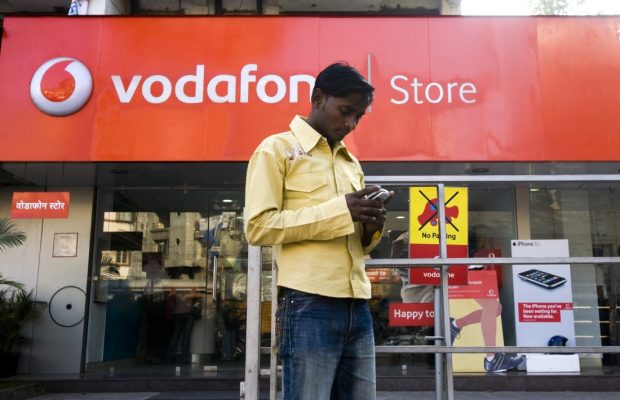
    Mobile data service revenue in India is expected to rise from US$6.3bn in 2020 to US$12.5bn in 2025 at a compound annual growth rate (CAGR) of 14.7% driven by the continued rise in smartphone subscriptions and the subsequent surge in mobile data consumption, according to GlobalData, a leading data and analytics company.

    GlobalData’s India Mobile Broadband Forecast reveals that mobile Internet subscription penetration will increase from an estimated 47.3% in 2020 to 81.4% by the end of 2025 owing to heavy investment in telecom network development across remote areas in the country.

    The average monthly data usage is forecast to increase from 9.2 GB in 2020 to about 14.7 GB in 2025 accelerated by the increase in the consumption of bandwidth-heavy services like mobile video and social media on the mobile networks.

    Kantipudi Pradeepthi, Research Analyst of Telecoms Market Data & Intelligence at GlobalData, comments: “4G will remain the leading technology in terms of subscriptions in India through the forecast period while 2G will see its subscription share fall from 36.5% in 2020 to 3.5% by year-end 2025. Moreover, Airtel & Vodafone Idea plan to shut down 3G services and use the infrastructure to improve 4G connectivity.

    “Reliance Jio led the mobile services market in India in terms of mobile subscriptions in 2020, followed by Airtel and Vodafone Idea. Reliance Jio will retain its leading position through 2025, driven by its continuous expansion of 4G network and promotional discount offers.”

  • European companies in Vietnam say confidence en route to pre-pandemic levels

    European companies in Vietnam say confidence en route to pre-pandemic levels

    The Business Climate Index of European companies in Vietnam has climbed back to near pre-pandemic levels amid the economic recovery.

    It rose 10.3 percentage points in the first quarter from the previous quarter to 73.9 percent, according to a survey released by the European Chamber of Commerce in Vietnam (EuroCham).

    This is the fourth straight quarterly increase since the index plunged to a historic low of 26.7 points in the first quarter of last year due to Covid-19.

    “The Business Climate Index confirms once again that Vietnam is open for business,” EuroCham Chairman Alain Cany said.

    While countries continue to struggle with the impact of Covid, Vietnam has ensured that companies could continue to operate as close to normal as possible, and this is driving the confidence of European business chiefs, he added.

    Sixty-seven percent of respondents said their business outlook for the second quarter is either “excellent” or “good”, up 12 percentage points from this quarter.

    Forty-one percent expected their payroll to expand in the second quarter.

    “The fact that more business leaders are anticipating a rise in their headcount and investment plans are a vote of confidence in Vietnam’s long-term prospects,” Thue Quist Thomasen, CEO of YouGov Vietnam, which conducted the survey, said.

    Over 60 percent of EuroCham members have benefited from the EU-Vietnam Free Trade Agreement since it came into effect in August last year.

  • Doors open wider for Vietnam exports to the US

    Doors open wider for Vietnam exports to the US

    A large demand for agricultural produce and electronics products as well as rising e-commerce potential give Vietnamese exporters greater opportunities in the U.S. market, experts say.

    The U.S. is a market with much potential for Vietnamese companies, especially as Vietnam has been able to keep the Covid-19 pandemic under control, said Nguyen Huu Tien, director of the HCMC Investment and Trade Promotion Centre.

    The U.S. was Vietnam’s largest export market in the first four months with the value of shipments surging 50 percent year-on-year to $30.3 billion.

    Top export categories included machinery and equipment, textile and garment, and computers and electronics.

    Last year, Vietnamese exports to the U.S. ranked third in Asia after China and Japan.

    Ken D. Duong, director of international law firm TDL, said that traditional categories such as agriculture produce and fisheries were posting strong figures despite the pandemic.

    U.S. companies have stopped purchasing some hardwood products from China and are looking for alternative markets, he said, adding that last year, many Vietnamese companies were able to take advantage of this and got large orders.

    Many Vietnamese-Americans are looking for suppliers in Vietnam to export products to the U.S., he added.

    There are a lot of opportunities for electronics export because a number of American and Taiwanese firms have established factories in Vietnam to research and develop internet of things products.

    “There are signals that indicate that Vietnam could become a hub for researching and manufacturing advanced tech products,” Duong said.

    Amazon Global Selling Wednesday announced a new campaign in partnership with the Vietnam e-Commerce and Digital Economy Agency (iDEA) that would help Vietnamese sellers sell more products on Amazon.

    But other experts said there were challenges that Vietnamese exporters face, such as trademarks. They cited the latest example of a Vietnamese rice brand, ST25, which won an international contest as the world’s best variety, being trademarked by a U.S. company.

    Duong said that usually it costs $1,000-1,800 to register a trademark in the U.S. Around 50 percent of mid-sized Vietnamese companies in the U.S. register their brand and the ratio is just 10 percent for small firms.

    Vietnamese suppliers need to understand U.S. regulations on intellectual property to step up in the global supply chain, he added.

    Dang Hoang Hai, head of the iDEA, said that as many Vietnamese sellers are reluctant to export their products to the U.S. via e-commerce, his organization will provide more training to help hundreds of small and medium companies sell their products on Amazon.

    Although there has been speculation about the U.S. rejoining the Comprehensive and Progressive Agreement for Trans-Pacific Partnership (CPTPP), U.S. officials have said that this would not happen in the short term.

    Mary Tarnowka, executive director of American Chamber of Commerce in Vietnam, cited a report by a Fulbright University professor to show that U.S. President Joe Biden will not consider signing another free trade agreement until the middle of his term.

  • Huge Rise In Coronavirus Cases Hit India’s April Fuel Demand

    Huge Rise In Coronavirus Cases Hit India’s April Fuel Demand

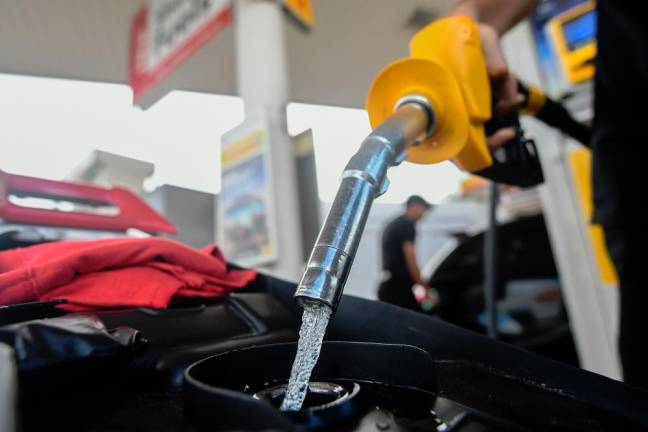
    Indian state refiners’ local fuel sales in April declined due to state-level restrictions aimed at stemming a rampant second wave of coronavirus infections, preliminary data shows. The deadly second wave topped 400,000 new daily cases for the first time on Saturday.

    Authorities reported 401,993 new cases in the previous 24 hours, the highest daily count globally, after 10 consecutive days over 300,000. Deaths from COVID-19 jumped by 3,523, taking the total toll in India to 211,853.

    “Overall fuel demand is down by about 7% from pre-covid level of April 2019,” said A.K. Singh, head of marketing at refiner Bharat Petroleum Corp.

    “We were near pre-covid level in March but new restrictions and covid wave-2 has temporarily reduced demand equivalent to about 10% of March demand for both personal mobility and industrial goods movement,” Singh told Reuters.

    He said the local fuel consumption will ‘start to look up’ in June, by when second wave of coronavirus is expected to weaken.

    Analysts are expecting India’s demand for transportation fuels to witness a sharper slump in May due to more impending restrictions.

    Declining fuel sales will reduce crude intake by refiners. The country’s top refiner Indian Oil Corp is operating refineries at an average 95% capacity.

    State companies – IOC, Hindustan Petroleum Corp and BPCL – own about 90% of India’s retail fuel outlets.

    State retailers’ fuel sales in April declined from their sales in March and April 2019 levels, while posting a sharp rise from the year ago month when there was a nation-wide lockdown.

  • Online concierge pharmacy platform POC raises $4.5 mln to improve services in Vietnam

    Online concierge pharmacy platform POC raises $4.5 mln to improve services in Vietnam

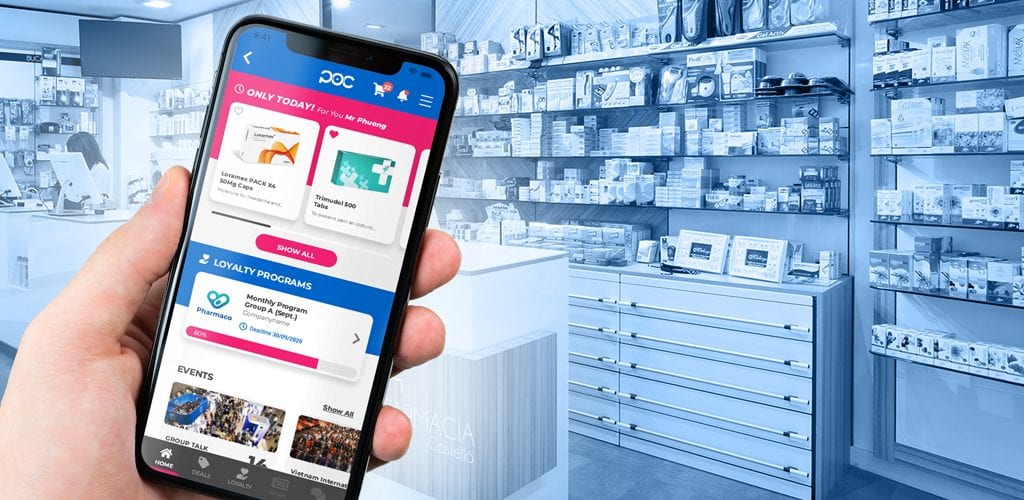
    Pharmacy Online Concierge Pharma has secured $4.5 million in an equity financing round to digitize pharmacies in Vietnam.

    Based in Vietnam and Hong Kong, the platform helps stakeholders such as pharmacies, drug manufacturers, distributors, wholesalers, and consumers to digitally manage their interactions.

    It raised the money from Picus Capital of Germany, Goat Capital and FJ Labs that of the U.S., Febe Ventures 500 Startups Vietnam of Singapore, and several unnamed angel investors. It is one of the biggest rounds at this stage in Vietnam.

    POC Pharma said it would use the money to improve its services in Vietnam, focusing on selling pharmaceutical products online first and then aiming to launch in more countries.

    Its services include trade programs and trade offers management, content and information sharing, data integration and visualization, customized customer engagement, multichannel commercialization, and order management. Established in 2020 by Thomas Miklavec and Charles Defrance, POC helps pharmacists manage all their processes, increasing revenues and profits while improving their quality of service.

    The startup said it has five global pharmaceutical company customers, including Bayer and Pfizer, and more than 20,000 pharmacies in 22 different markets use its platform.

  • HSBC AM Names Asia Head of Credit Research

    HSBC AM Names Asia Head of Credit Research

    HSBC’s asset management arm appoints a new head of credit research in Asia amid an ongoing expansion across its product range and distribution capabilities in the region.

    HSBC Asset Management appoints Seok Poh Yeoh as head of credit research for Asia, according to a statement, effective immediately.

    In her Hong Kong-based role, Yeoh reports locally to head of Asian fixed income Elizabeth Allen as well as Paris-based global head of credit research Tina Radovic.

    Yeoh has 16 years of industry experience and was most recently a financial and corporate credit research analyst at Credit Suisse. She rejoins HSBC Asset Management after first joining in 2012 as a financial analyst.

    The latest hire follows announced ambitions by HSBC Asset Management to enhance its platform in mainland China, India, and Southeast Asia, most notably for the high net worth product range across alternatives, sustainability, and thematic equities.

    According to the bank, HSBC Asset Management has Asian fixed income assets under management totaling nearly $73 billion as of March 31 this year.

  • Citi Registers Stellar Growth in Asia

    Citi Registers Stellar Growth in Asia

    Citigroup CEO Jane Fraser’s first-quarter debut featured strong earnings worldwide and in Asia where the American lender is eyeing growth opportunities, particularly from private wealth in the region.

    Citi’s consumer banking unit in Asia saw $5.2 billion in net new money in the first quarter of 2021 – a 13 percent year-on-year increase – according to a memo seen.

    Investment sales, investment revenue and invested assets all saw decent growth at 48 percent, 22 percent and 29 percent, respectively.

    Citi’s private banking arm delivered its best quarter ever with a 2 percent increase, driven in part by growth in managed investments.

    Citi also posted strong growth from its investment banking business in Asia which saw an 84 percent increase in revenues from continued momentum in equity capital markets.

    Looking ahead, we have excellent momentum, a crisp strategy and tremendous opportunity across our region, said Citi’s APAC chief executive Peter Babej in the memo. The coming months and years will be defining for Citi.

    Overall, the bank posted $4.1 billion of revenue and $1.3 billion of net income in the region which contributed to 21 percent of global revenues, according to its latest published results.

  • Asahi takes on $1bn coffee market with AllPress acquisition

    Asahi takes on $1bn coffee market with AllPress acquisition

    Asahi Beverages is cementing itself as a local leader in the beverages market with the announcement of its foray into the $1 billion fresh coffee market.

    The business has snapped up Allpress Espresso, a global coffee brand that has operations in Australia, New Zealand, the UK, Japan, and Singapore.

    Established by Michael Allpress in Auckland over 30 years ago, the brand first came to Australia in 2000 and is now recognized around the globe, selling more than 1500 tonnes of coffee beans worldwide each year.

    Asahi Beverages Group CEO Robert Iervasi (pictured above) is confident that the acquisition puts Asahi Beverages in a powerful position in the local market at a time when Coca-Cola Amatil is moving under European ownership.

    “We’re the multi beverage supplier of choice in Australia … and we believe we can bring a better product and better service to consumers,” Iervasi told Inside FMCG.

    AllPress will continue to run as a standalone business with Asahi supporting the brand’s growth through its extensive customer relationships and expertise in the consumer goods space.

    Currently, the bulk of AllPress’ business is the supply of roasted coffee beans to boutique cafes and restaurants, but Asahi has big plans to grow the brand’s presence, including thorough expansion into licensed venues and grocery stores.

    AllPress has already produced a canned cold coffee range and sells ready-to-pour coffee shots in bottle and bag form. While its portfolio features around 10 proprietary blends, its flagship Allpress Espresso Blend and A.R.T Espresso Roast comprise over 80 percent of sales.

    The business also has a strong direct-to-consumer offer online and through more than a dozen Allpress cafes, including in Melbourne and Sydney.

    Allpress CEO Vaughan Magnusson told Inside FMCG that the two companies share the same values and expectations on quality and that Asahi is the perfect partner to support the growth of the business.

    “They are the right organization to take Allpress to the next level,” he said.

    Under Asahi ownership, AllPress will also continue to expand the DTC business.

    Iervasi told Inside FMCG that Asahi has confidence in the brand because of its ability to deliver a premium coffee experience and superior customer service.

    “AllPress has a commitment to flavor, quality customer service, and a strong track record of growth,” he said.

    While no financial details of the deal were disclosed, Iervasi confirmed that the 240+ full-time staff at AllPress will remain, with management untouched and Michael AllPress remaining as an ambassador, and the day-to-day operations will not be affected.

    “No one’s losing their jobs,” Iervasi said.

    After welcoming CUB to the fold last year, Iervasi said Asahi is committed to supporting and creating jobs in Australia and New Zealand and expanding beverage offerings.

  • Australia wine exports to China almost wiped out

    Australia wine exports to China almost wiped out

    Australian winemakers shipped just A$12 million ($9 million) of wines to China in the four months from December to March, from A$325 million a year earlier, industry figures showed, confirming that hefty new tariffs have all but wiped out their biggest export market.

    The figures from industry body Wine Australia on Thursday show the swift impact of measures taken by China’s commerce ministry and the country’s anti-dumping probe into imports of Australian wines last year.

    The figures also put a dollar value on a broader geopolitical dispute between Australia and its biggest trade partner which has spread to the sugar, lobster, barley, and coal and copper ore industries.

    From December to March, the period after China said it was investigating the Australians on suspicion of exporting wine at a loss to gain market share, or “dumping”, Australian wine shipments collapsed to almost nothing and stayed there at the start of 2021, the figures showed.

    That marked the end of a years-long run of double-digit growth in Australia-China wine exports, by dollar value, which lasted into October before crashing the following month, according to the figures.

    For the year to March, sales to mainland China, which takes nearly a third of Australian wine exports, fell 24 percent to A$869 million. The next biggest export market was the United Kingdom, up by a third to $461 million as winemakers redirected exports there.

    “They were out to play political games, they wanted Australia to get on its knees, unfortunately, we said no,” said Bruce Tyrrell, managing director of Tyrrell’s Wines, in the Hunter Valley north of Sydney, which previously sent up to a quarter of overseas sales to China.

    “We’ve got countries like U.S., UK, Canada, the traditional markets. We’ve now got to increase our distribution in the counties we deal with,” he told Reuters by phone.

    The value of wine exports to the United States rose 4 percent to A$432 million in the year to March, the Wine Australia figures showed.

  • Coca-Cola the latest global brand to ‘Adopt a Park’ in Brazil rainforest

    Coca-Cola the latest global brand to ‘Adopt a Park’ in Brazil rainforest

    Coca-Cola Co on Wednesday agreed to sponsor a protected reserve in the Amazon rainforest, joining beer maker Heineken and a growing list of global corporations signing up to the Brazilian government’s “Adopt a Park” program.

    Environmentalists say that the program, launched by the right-wing government of President Jair Bolsonaro this year, amounts to “greenwashing,” or a cosmetic move aimed to improve the government’s image, at a time when deforestation is soaring.

    Acting via its Brazilian subsidiary, Coca-Cola is the eighth company to join the program by adopting the Javari-Buriti Area of Relevant Ecological Interest for 658,850 reais ($122,109) for a period of one year.

    The park occupies 132 square kilometers in the remote western portion of Brazil’s Amazonas state and includes one of the densest formations of Buriti palm forest in the world.

    Heineken earlier this month pledged 466,900 reais to sponsor a 93 square kilometer Amazon reserve that is home to a traditional community of escaped slaves in Maranhao state.

    More than 11,000 square kilometers were deforested in Brazil’s Amazon in the 12-months through July 2020, an area 14 times the size of New York City, according to the latest annual data available from government space research agency Inpe.

    Environmentalists blame the surgeon Bolsonaro, who has weakened environmental enforcement agencies and called for more development in protected areas. Adopt a Park is only an attempt to improve the government’s image, they say.

    “The government should reverse the environmental dismantling … instead of this program which opens up a huge space for greenwashing and doesn’t solve the problem,” said Cristiane Mazzetti, a conservationist with advocacy group Greenpeace Brasil, in a statement.

    The Environment Ministry and parks service ICMBio did not respond to requests for comment on that criticism. The ministry said the funds would pay for infrastructure improvements and environmental conservation, without giving further details.

    Coca-Cola Brasil said adopting the park is part of its long track record of conservation in the Amazon, without responding to questions about greenwashing.

    Heineken did not immediately respond to the request for comment.