Author: Mei Ling Tan

  • Unilever plans $3.6 billion buyback as China and home cooks boost growt

    Unilever plans $3.6 billion buyback as China and home cooks boost growt

    Unilever announced a 3 billion euro ($3.6 billion) share buyback and said it was confident of hitting sales targets this year after demanding from home cooks and China helped it to beat first-quarter sales expectations.

    Shares in the maker of Dove soap and Ben and Jerry’s ice cream climbed as much as 4 percent on Thursday after it joined rivals such as Nestle and Procter & Gamble in reporting strong sales of food and cleaning products respectively in the pandemic.

    Underlying sales jumped 5.7 percent in the three months to the end of March, topping analysts average forecast of 3.9 percent, according to a company-supplied consensus.

    “These are encouraging numbers,” said Steve Clayton, portfolio manager of Hargreaves Lansdown’s Select UK Shares funds. “Unilever gains much of its strength through the group’s diversity.”

    The company said it was confident of delivering full-year underlying sales growth within its mid-term target range of 3-5per cent, with the first half around the top of the range.

    It also forecasts a slight increase in underlying operating margin this year, despite double-digit inflation on some raw materials, such as soybean oil and tea.

    Like several rivals, Unilever said it would need to raise prices to mitigate the impact.

    “Unilever price movement is typically in the 1-3 percent range historically, and that is where we expect to be this year,” Chief Executive Alan Jope told journalists after the company raised prices by 1 percent in the first quarter.

    Unilever, which makes about 60 percent of revenues in emerging markets, said underlying sales growth there reached 9.4 percent in the quarter, led by double-digit increases in China and India following strict lockdowns the previous year.

    Pitkethly said easier comparables than last year, a return of sales to cafes and restaurants in places like China, and the US retailer restocking of high-end beauty products underpinned its confidence for the rest of the year.

    Underlying sales in the group’s food and refreshments business, whose brands include Hellmann’s mayonnaise and Knorr soups, jumped 9.8 percent in the quarter, helped by strong demand for home consumption in North America and Europe.

    The company noted the devastating surge in Covid-19 infections sweeping India, another key market, but said it was not seeing any material impact on its business from that so far.

    “We’re looking forward to continued growth in Q2,” Jope said, pointing to the group’s success in digitized ordering, increasing manufacturing capacity, and bringing more inventory close to retail.

    Unilever also said it was making good progress in separating its slower-growth Elida beauty and tea businesses, which could lead to sales or spin-offs.

    Elida beauty will consist of brands predominantly sold in Europe and North America, including Q-Tips, Caress, Tigi, Timotei, Impulse and MonSavon, which together generated revenues of around 600 million euros in 2020, the company said.

    The moves are part of Jope’s plan to jump-start growth, which has lagged peers in recent years, partly because of an outsized focus on emerging markets that have performed unevenly.

    In February, Jope said Unilever would focus more on high-growth categories such as plant-based foods, beauty products and nutritional supplements, and aim to appeal more to younger consumers.

    He said the priority was to grow existing businesses, rather than make acquisitions, but added on Thursday that the share buyback should not be seen as a lack of appetite for deals.
  • Gucci opens Namiki flagship design

    Gucci opens Namiki flagship design

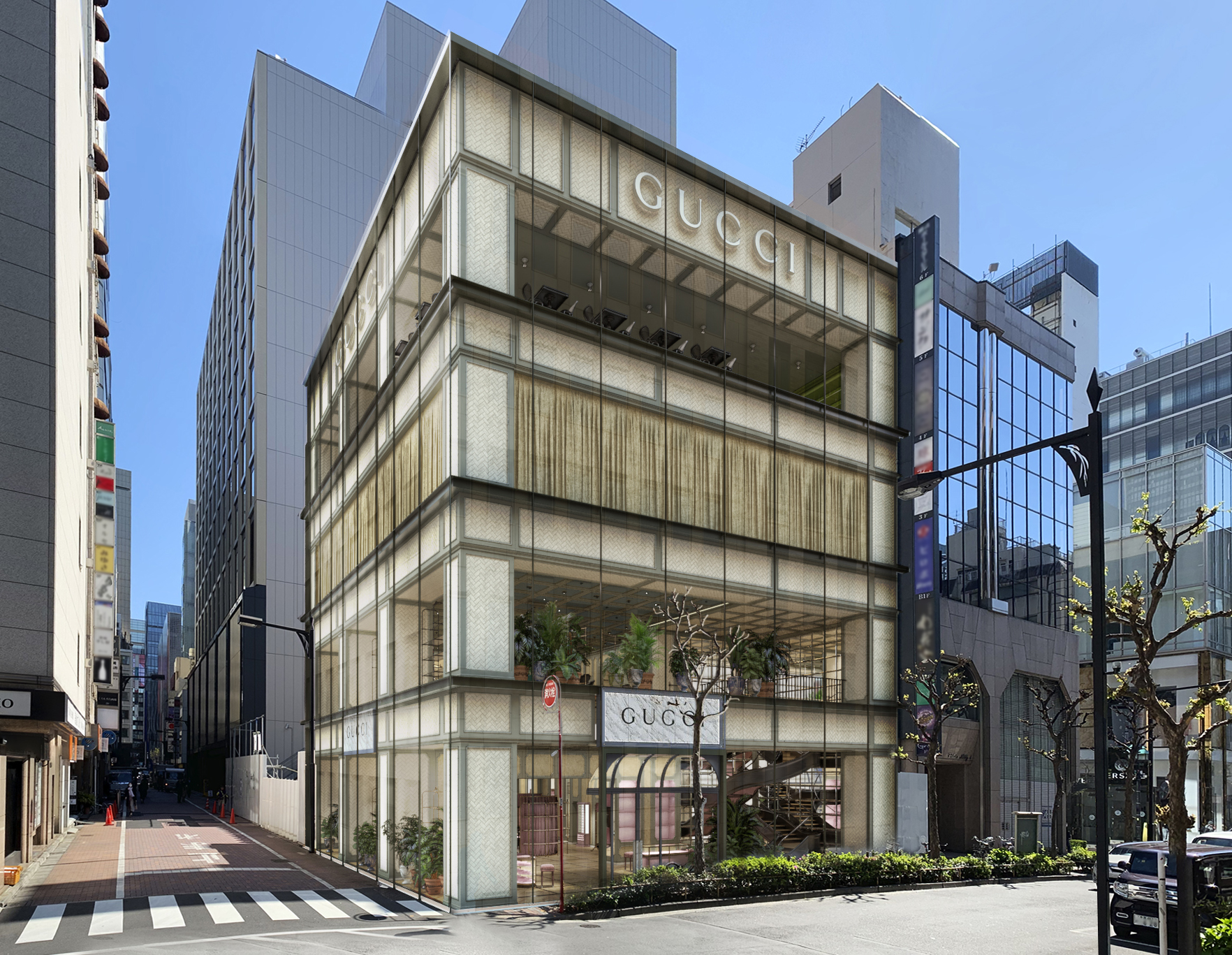
    The first store selling Gucci products in Japan, operated by Sun Motoyama, opened in Ginza in 1964 and the brand’s first boutique was unveiled in Tokyo in 1972. It was Gucci’s first store to open in Asia. Japan remains a stronghold, according to Gucci president and chief executive officer Marco Bizzarri. “We have never stopped believing in the Japanese market and continue to invest in it,” he observed. The most recent signal of this commitment is the opening of the Gucci Namiki unit in Ginza, the brand’s second flagship in Tokyo’s upscale district.

    The store also points to the “fundamental importance” of brick-and-mortar, said Bizzarri, despite the growing relevance of online transactions, which clearly accelerated during the pandemic and the lockdowns. “The narrative to connect with the customers, the moment in which you meet the brand, the one-to-one relations will continue to be very important, increasingly combined with the brand’s different distribution channels, and it’s all happening very quickly. The goal is to offer the best possible experience.”

    The concept conceived by creative director Alessandro Michele for the Namiki store is new and will not be replicated elsewhere, explained Bizzarri. The opening of the store, which covers three floors in a building on Namiki-dori Street — the same where Gucci started its business in Japan in 1964 — will unfold in three parts.

    The first two floors will be unveiled on April 29. Over a total space of more than 7,776 square feet, they will carry a full range of men’s and women’s ready-to-wear, handbags, luggage, accessories, shoes, jewelry, silks, belts, watches, eyewear, fragrances, and the Gucci Décor collection. The brand will also offer exclusive pieces, such as handbags in precious leathers and distinctive jewelry.

    Walls on the first and second levels use materials inspired by Japanese traditional bamboo work and are exclusively developed for #GucciNamiki.

    The third floor, scheduled to open in the fall, will house the Gucci Apartment, which, by appointment, will allow privacy and be dedicated to made-to-order, personalization and other special services. It will also showcase the Gucci Décor collection.

    Photos from François Pinault’s private collection will be on display. “This is the first Apartment in a Gucci store,” observed Bizzarri.

    Additionally, later in the year, a Gucci Osteria da Massimo Bottura will open on the fourth level of the building, curated by the three-Michelin-star chef Massimo Bottura, a childhood friend of Bizzarri’s.

    One way to differentiate the stores is through food, said Bizzarri, paying close attention to the territory and giving a local flavor to each. The restaurant will be the third in the world following the first at the Gucci Garden in Florence in 2018, followed by one in Los Angeles on the rooftop of the Beverly Hills flagship.

    Further linking with the country, artwork by Japanese artist and longtime friend of the house Yuko Higuchi will embellish the Osteria’s façade on Namiki-dori Street. Celebrating the opening, illustrations by Higuchi will also adorn limited-edition items, available in the store. Gucci has been collaborating with the Tokyo-based artist on several projects, including a special spring 2018 and fall 2020 kids capsule collection. One of her works also decorates one of the Galleria walls of the Gucci Garden in Florence.

    The store may attract some additional interest in light of the Tokyo Summer Olympics, expected to kick off on July 23, but Bizzarri said this was purely a coincidence and never meant to coincide with the event. “Gucci has been working on the store for a long time, and it was conceived for local customers,” he said.

    Japan accounts for 7 percent of Gucci’s revenues, which in 2020 amounted to 7.44 billion euros. There are a total of 67 Gucci stores in Japan.

    Kering chief financial officer Jean-Marc Duplaix, presenting the group’s annual results last month, said “Japan improved in the fourth quarter on a somewhat easier comp base, containing its decline to 10 percent, supported by nice growth with local customers,” in the wake of the pandemic and the lack of tourist flows.

    Courting local clientele and Asia are clearly a focus in 2021, as Bizzarri revealed Gucci will also open “a very important store in Seoul” by the end of the year. A fourth Osteria — and “last,” said Bizzarri — will also find a home in that venue. In that case, Gucci will work with a Korean artist for the facade.

    Gucci has recently launched several dedicated initiatives in Japan. Last June, debuting its first circular collection Gucci Off the Grid, an entire range of products were created in a special blue color exclusively for the Japanese market in a selection of genderless bags, wallets, sneakers, rtw and hats. Japanese musician Miyavi, another friend of the house, was featured in the ad campaign.

    In July 2020, for the opening of the Gucci Miyashita Park store, graphic designer Tadanori Yokoo and illustrator Shohei Otomo were invited to develop new artworks dedicated to the brand, inspired by Gucci key visual codes, displayed at the store and at the Shibuya station.

    Last October, Gucci released the second issue of the Chime Zine, including a special section focused on Japan, with essays, interviews and artwork related to feminism, gender and self-expression in Japanese society. Contributors include Yuki Chizui, a sushi chef and owner of a sushi restaurant with an all-female staff; Yume Morimoto, a queer feminist writer and founder of a bilingual zine, and members of WAIFU, a resistance nightlife party founded on the principles of intersectional feminism and inclusion. The cover of the Japan spotlight featured women of Bluestocking, Japan’s first feminist literary journal credited with helping to launch the feminist movement in Japan.

    Bizzarri said the Gucci 9 live video call experience, offered by the Gucci Live service that debuted last May in the Europe, Middle East and Africa region, which helped discover the collection remotely, is being expanded to Japan.

    Gucci, which marks its centenary this year, has been receiving additional attention from the Ridley Scott “House of Gucci” film that is currently being filmed in Italy. The film offers a dramatized version of the real-life events in the late 1980s and early ’90s that led to the murder of Maurizio Gucci — the grandson of Guccio Gucci, the founder of the Italian fashion house. In the film, Lady Gaga plays the role of Patrizia Reggiani, who commissioned the murder of her ex-husband Maurizio Gucci, played by Adam Driver.

    Asked to comment on the film, Bizzarri underscored that the Gucci family is no longer involved in the brand today, and that the movie will not extend to the post-Investcorp developments and thus not be related to the current owner, Kering, owned by the Pinault family. He added that the company is allowing “total creative freedom” to the production.

  • Puma’s China sales slowly up

    Puma’s China sales slowly up

    After a pandemic-served beatdown last year, Puma has clawed its way to recovery. On February 24, the German sportswear giant reported that sales jumped 9 percent to 1.52 billion euros in the last three months of 2020 — a promising upswing from the 55-percent plummet in its second quarter. Overall, sales were down 1.4 percent to 5.23 billion euros for the financial year.

    This rebound was led by strong performance in the Asia Pacific, which surged 11.8 percent in the fourth quarter to 480.5 million euros, driven by mainland China. But the country alone was not enough to stop the region’s full-year sales from falling 3.2 percent compared to 2019 levels, down to 1.48 billion euros.

    Given the importance of these global markets, Puma doubled down on establishing local relevance, particularly through sports, influencers, and communication platforms. This was not only reflected in the brand’s return to basketball and collaboration with grammy-winning artist J. Cole, but also its increasing partnerships with popular Chinese talents, including actors Yang Yang, Li Xian, and Liu Haoran as well as supermodel Liu Wen.

    The brand further grew its China footprint by leveraging the country’s biggest shopping holiday, Singles’ Day, logging 2.8 million orders and 80 million euros in revenue over the week. And already, Puma is making good on its goal to design more products specific to the market, partnering with Hong Kong-based artist Michael Lau, “The Godfather of Toy Figures,” to ring in the new year.

    That said, all Puma products did well in the fourth quarter, with apparel growing 15.7 percent, accessories up 7.3 percent, and footwear increasing 3.8 percent.

    “We clearly see a running boom in the whole world,” CEO Bjorn Gulden told journalists, adding that orders for 2021 are up almost 30 percent compared to last year, especially for running products.

    This tracks with Puma’s Q3 results, which showed strong demand for performance-related products, especially for individual sports like running or hiking. With the healthy living trend expected to persist after the pandemic, the sporting goods sector is positioned to weather the crisis better than most.

    But Puma isn’t out of the storm just yet. With almost half of its retail stores in Europe still closed and other markets operating under significant restrictions, the apparel maker is bracing for impact in the first half of 2021. However, the brand is also confident that its quick Q4 recovery and strong order book — along with global efforts to combat the virus — will lead to a moderate sales bump later this year.

    “I am convinced that 2021 will be a better year for us than 2020,” Gulden said. Knock on wood.

  • Samsung overtakes Apple in smartphone shipments as Xiaomi closes in

    Samsung overtakes Apple in smartphone shipments as Xiaomi closes in

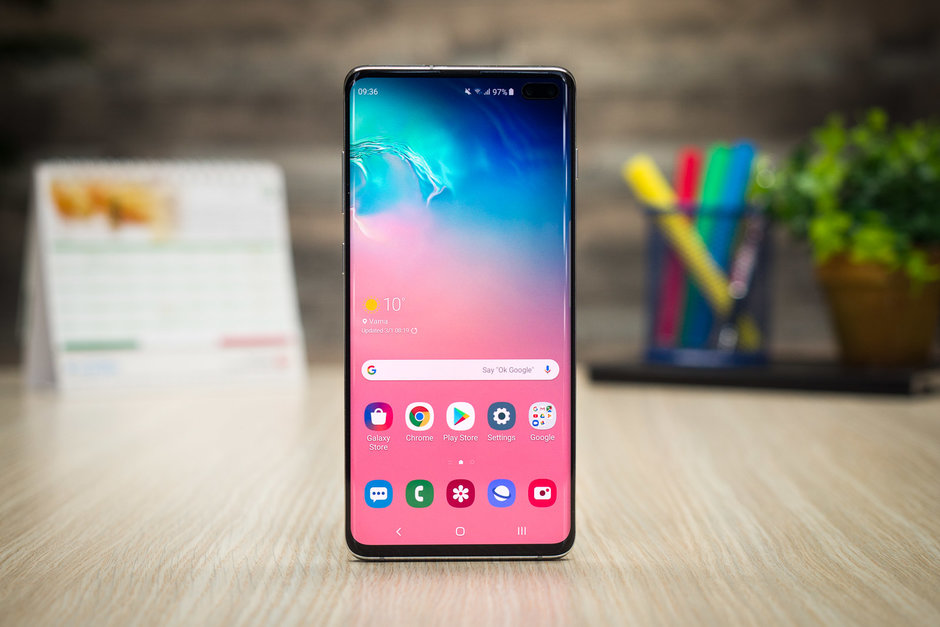
    Samsung Electronic reclaimed its crown as the world’s biggest smartphone maker from Apple in the first quarter, cornering a fifth of overall global shipments.

    China’s Xiaomi rounded out the top three positions with its best quarterly performance ever as shipments surged 62% to 49 million phones and its market share rose to 14%, market research firm Canalys said.

    Overall, global shipments surged 27% to 347 million units in the first quarter as the Chinese economy opened up after the pandemic and a swift vaccine rollout in the United States raised hopes of an economic recovery.

    South Korea’s Samsung shipped 76.5 million smartphones in the quarter to grab a 22% share of the market, Canalys said. The company on Thursday reported a 66% surge in quarterly profit in its mobiles business, thanks to robust sales of its flagship Galaxy S21 smartphone series.

    Canalys said Apple shipped 52.4 million iPhones in the January-March period, falling to the second spot with a 15% share of the market.

    Apple still grabbed record market share in the United States, China, India and Japan, Counterpoint analyst Varun Mishra said, adding that the iPhone Pro Max was a top seller in the United States.

    Smartphone sales have surged over the past year as people stayed and worked from home. But the shopping frenzy has fuelled a global shortage in semiconductor chips that has roiled industries including autos and large appliances.

    “Supply of critical components, such as chipsets, has quickly become a major concern, and will hinder smartphone shipments in the coming quarters,” Canalys analyst Ben Stanton said.

    Apple said on Wednesday that the chip shortage could cost the company $3 billion to $4 billion in revenue in the April-June quarter, affecting primarily iPads and Macbooks.

    March-quarter smartphone shipments for China’s Oppo and Vivo brands also surged, Canalys said. But Huawei, the former No. 1 that remains shackled by U.S. sanctions, took only seventh place after selling its Honor brand last year.

  • Pandora launches new home screen widget for iPhones and iPads

    Pandora launches new home screen widget for iPhones and iPads

    Pandora is making some interesting changes to its iOS app. If you’re using the streaming service’s app on an iPhone or iPad, you should soon notice a new home screen widget that features many customization options.

    With the latest version of the iOS app, you’ll now be able to choose from 3 sizes of the new Pandora widget, which will allow you to view and play up to 7 of your most recently played songs, albums, stations, playlists, and podcasts directly from the home screen.

    To start customizing your Pandora experience make sure to update the iOS app via the App Store. Then, long-press the home screen and hold until you get the “+” icon displayed. Simply search for Pandora and select one of the three sizes available. When you’re done, tap “Add Widget” and your home widget should be accessible on the fly.

    The new home screen widget for iPhones and iPads requires iOS 14 or newer, but that shouldn’t be a concern for most users.

  • Volkswagen’s CEO To Step Aside At Skoda

    Volkswagen’s CEO To Step Aside At Skoda

    Volkswagen boss Herbert Diess is stepping down as head of the supervisory boards at subsidiaries Seat and Skoda to focus on building up a stronger software-development team, a person familiar with the matter said on Thursday.

    Volkswagen declined to comment.

    Handelsblatt had reported the news earlier.

    At Seat, Diess would be succeeded by current technology head Thomas Schmall and at Skoda by Murat Aksel, head of procurement on the Volkswagen board, the source added.

    Volkswagen has been heavily focused on regaining lost ground in the fast-growing field of software-heavy electric cars, where United States and Chinese manufacturers are seen as having a lead.

  • Triumph Motorcycles India Increases Prices Of Select Models

    Triumph Motorcycles India Increases Prices Of Select Models

    Triumph Motorcycles India has increased the prices of the Street Triple R and the Rocket 3 range in India by up to ₹ 1.05 lakh. The Street Triple R is now priced at ₹ 9.15 lakh, the Rocket 3 R is now priced at ₹ 19.35 lakh and the Rocket 3 GT is priced at ₹ 19.95 lakh. All prices are ex-showroom. In the last few months, Triumph has had multiple launches in India such as the Trident 660, Triumph Tiger 850 Sport, the updated Bonneville range and the updated Street Twin. Additionally, the company’s upcoming launches are the 2021 Street Scrambler and the Scrambler 1200 range

    The Triumph Street Triple R gets a price hike of ₹ 31,000 while the Rocket 3 R gets a significant price hike of ₹ 85,000. The Rocket 3 GT gets the biggest price hike of ₹ 1.05 lakh, on its previous ex-showroom, price. The Triumph Tiger 900 range is likely to get a price increment as well. The Street Triple R gets the same 765 cc in-line 3-cylinder engine as the Street Triple RS, but the power and torque outputs are slightly different. The R makes 116 bhp at 12,000 rpm and 77 Nm of peak torque at 9,400 rpm while the RS makes 121 bhp and 79 Nm of peak torque. The steering geometry is slightly different of the Street Triple R, which gets a different rake and trail.

    The Rocket 3 and the Rocket 3 R get the 2,500 cc in-line triple-cylinder, liquid-cooled engine, which is actually the biggest two-wheeler production engine in the world. It makes a massive 165 bhp at 6,000 rpm and 221 Nm of peak torque at 4,000 rpm. The torque output is also the highest of any production motorcycle in the world.

  • Ford To Decide On India Investment Plan In Second Half Of 2021

    Ford To Decide On India Investment Plan In Second Half Of 2021

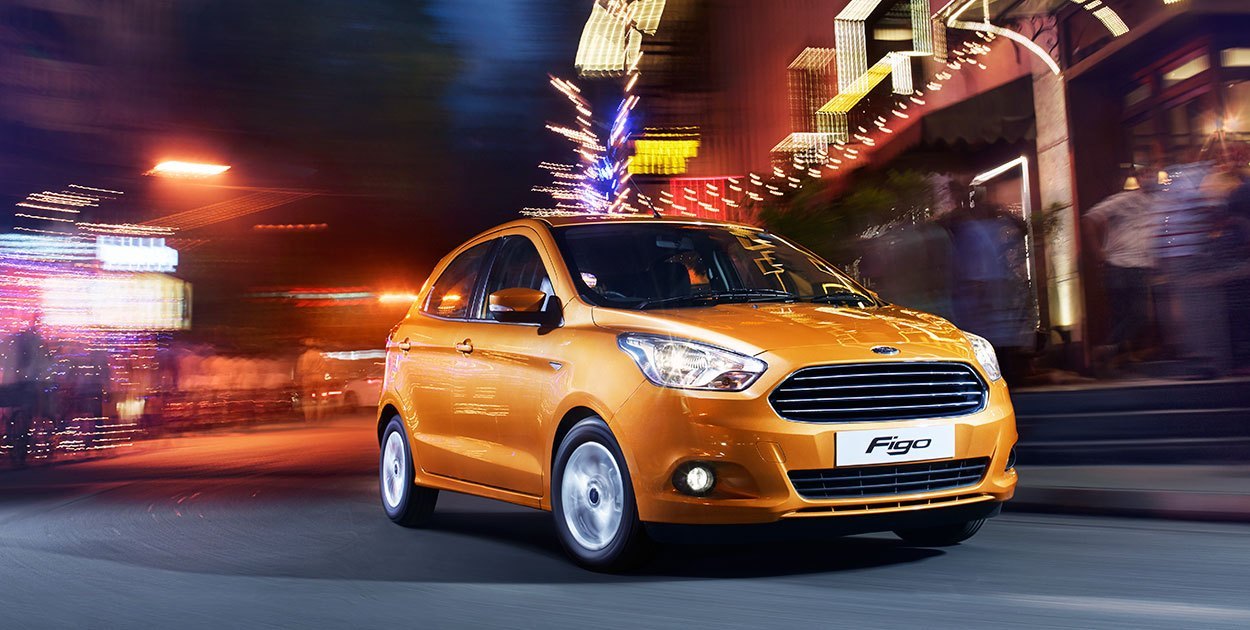
    Ford Motor Co expects to firm up capital allocation plans for India in the second half of 2021, a senior executive said in an email to staff, as the automaker overhauls its strategy in a loss-making market. Dearborn, Michigan-based Ford has tasked senior executive Steven Armstrong with evaluating investment plans for India in his new role as transformation officer, South America, and India, the automaker said in a separate statement this week.

    “We have a lot of work to do as we continue to assess our capital allocations in the market,” Dianne Craig, president of Ford’s International Markets Group (IMG), said in an email to staff on Wednesday, referring to India.

    “While we expect to have an answer in the second half of this year, the appointment of Steven…will help focus our efforts and speed up the process,” she said.

    IMG includes India, where the company employs more than 16,000, and 100 other markets.

    Ford India head Anurag Mehrotra will report to Armstrong, who previously headed the Changan Ford joint venture in China and will take on his new role from May 1, the company said.

    Confirming that the company expects to reach a capital allocation decision in the second half of the year, a Ford India spokesman said that the country is an important market and a source of global powertrains for its Ranger SUV.

    Ford has said previously it will allocate capital consistent with its plan to generate consistently strong cash flows and achieve an 8% company adjusted EBIT (earnings before interest and tax) margin.

    The automaker beat Wall Street’s first-quarter profit estimate late on Wednesday, telling investors all its markets under IMG were profitable except for India.

    CEO Jim Farley, who is overseeing an $11 billion global restructuring of Ford, wants to boost profits in India but the country is a lower priority than some other markets, sources said previously.

    Ford is not the first western automaker to struggle to win over India’s frugal buyers and turn a profit in a market dominated by Suzuki Motor Corp’s and Hyundai Motor’s extensive line-up of mainly low-cost cars.

    General Motors exited the domestic market in 2017 after 20 years, while Harley-Davidson Inc packed up last year after a decade of unsuccessful efforts to gain a foothold.

    Ford entered India 25 years ago but has a less than 2% share of the passenger vehicles market in the world’s second most populous nation, where car penetration is lower than in the U.S. and China.

    A tie-up with domestic automaker Mahindra & Mahindra, now called off, would have ended most of Ford’s independent operations in India but allowed it to launch new vehicles faster, at a reduced cost, and with lower investment.

    The two companies planned to develop at least three new SUVs and share powertrains.

    Ford will now need to pick vehicles from its global portfolio to sell in India, or develop new ones, a source said.

    The joint venture would have also helped Ford tackle low plant utilization in the country, which remains one of its biggest problems, the person added.

    Two years ago Ford used only around 60% of its total annual production capacity of 440,000 units across two Indian plants, with the pandemic reducing it to as little as 20% last fiscal year.

  • Elon Musk Says Next Self Driving Beta Update Will Blow Minds

    Elon Musk Says Next Self Driving Beta Update Will Blow Minds

    Elon Musk is well known for his hyperbole, especially when it comes down to Tesla and its AutoPilot technology. For the last couple of months, Tesla has been beta testing a fully self-driving feature that is available to just a few 1,000 customers as a part of its early access program. Now, the world’s second-richest man says, an incoming update to the full self-driving beta will “blow your mind”. Musk in his typical style dropped nuggets of information while replying to tweets. He said the update will come in two weeks and he said the safety would also be higher with pure vision.

    “Gating factor in achieving & proving higher safety with pure vision than with vision+radar. We are almost there. FSD Beta V9.0 will blow your mind,” Musk tweeted to a Twitter handle called @teslaownersSV.

    To another user, he even said that the feature was also coming to the Canadian market in a couple of months. He cited the delay due to the differences in driving conditions between the US and Canada.

    The incoming update called version 9 will remove reliance on radars and instead will be fully dependent on cameras that are installed in the cars. Musk for the longest time has been against radars and LiDARs stating that they are too expensive and not required.

    Tesla has been often criticised for its AutoPilot technology as experts believe that it is not fully self-driving tech. For this Tesla has also developed its chipset based on the ARM architecture and trained algorithms on the DOJO supercomputer. Musk is optimistic that he has the holy grail of self-driving, but he often overestimates things especially when commenting on Twitter.

    Recently, Tesla has also been in the news for all the wrong reasons as a Model S crashed with two fatalities while it was on AutoPilot.

  • New guidelines from Google aim to fix listings of Android apps in the Play Store

    New guidelines from Google aim to fix listings of Android apps in the Play Store

    In a post published today on the Android Developers Blog, new guidance has been created to help developers give the Play Store the information it needs to make sure that their apps get attention from Android users. Images, video, descriptions and even the app name itself play an important role in determining whether an app stands out from among the millions of apps and games available in over 190 countries.

    Google says, “Google Play is increasingly showing more of your assets front and center, surfacing graphic assets and descriptions right on Apps and Games home. To make sure that the store listing assets are giving users ensure that your store listing assets can help users anticipate your in-app or in-game experience and drive meaningful downloads, we are pre-announcing a policy change for app metadata and introducing new guidelines on Store listing preview assets.”

    The changes being made to app metadata will limit the title of an app listed in the Play Store to 30 characters. Google also does not want graphic images and texts to promote an app’s ranking in the Play Store. For example, an icon that says “#1 stock market app” is a no-no. Text and graphic elements can not be used to promote a deal, and capitalized letters are out unless it is part of how a company stylizes its name.

    There are also new preview asset guidelines for feature graphics, screenshots, videos, and short descriptions. Google says it wants to know whether the preview assets accurately represent the app or game and whether they deliver enough information to help users reach a decision about installing the app. The preview assets cannot use buzzwords like “free” or “best,” and must focus on “providing meaningful information” about the things that make your app or game unique.

    The guidelines will be valid starting in the second half of the year. Google says that “Assets that don’t meet our guidelines may be ineligible for promotion and recommendation on major Google Play surfaces like Apps and Games home.”

  • Telegram to launch long-awaited group video call feature in May

    Telegram to launch long-awaited group video call feature in May

    Telegram will be finally adding a group video call feature to its portfolio next month. Yesterday, the company CEO Pavel Durov posted a short video showing the upcoming feature in action.

    ”Speaking of video calls, we will be adding a video dimension to our voice chats in May, making Telegram a powerful platform for group video calls,” wrote Durov.

    Telegram is a bit late to the group video chat party, as competitors such as Zoom, WhatsApp, Messenger Rooms, Hangouts – already reap the benefits of the global pandemic and lockdown situation worldwide.

    The company announced plans for a group video feature a whole year ago and despite the delay, the feature could boost Telegram’s popularity and help compete with the aforementioned platforms.

    Group video calls on Telegram will support Screen sharing, encryption, noise-cancellation, as well as desktop and tablet, and smartphone devices. We’ll have to wait and see whether Telegram will join the best video conferencing apps out there with its new feature.

  • Bamboo Airways hikes capital yet again

    Bamboo Airways hikes capital yet again

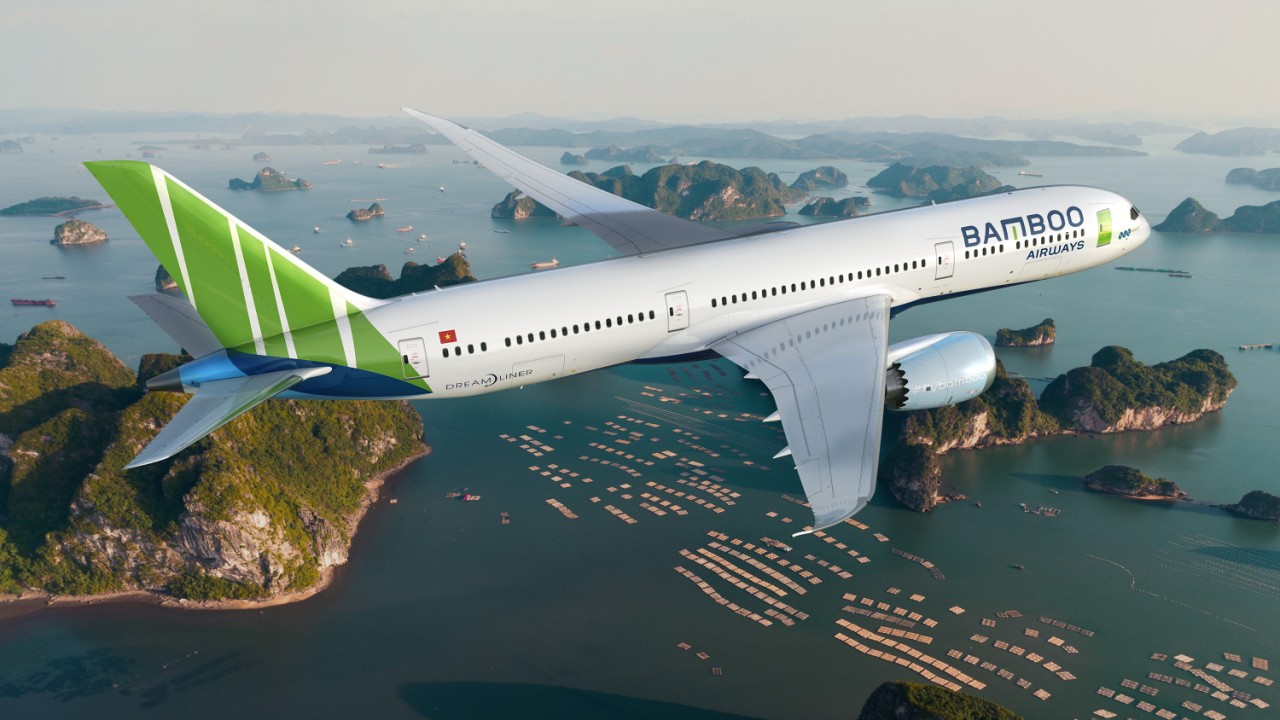
    Private carrier Bamboo Airways has increased its charter capital by 28 percent to VND16 trillion ($695 million), the highest in the industry.

    Since it was set up in May 2017 with a capital of VND700 billion, this is the airline’s seventh hike.

    Its chairman, Trinh Van Quyet, said this month the airline is considering an initial public offering of shares in the U.S. this year to raise $200 million.

    It is expected in the third quarter, with the company likely to offer a 5-7 percent stake.

    It also plans to expand its fleet from 30 aircraft to 40.

    Last year, Bamboo Airways carried over seven million passengers to account for a 20 percent market share, and hopes to increase it to 30 percent this year.

  • Habeco chairman blames low profit target on Covid-19

    Habeco chairman blames low profit target on Covid-19

    The chief of the company that produces Hanoi Beer, Habeco, expects sales to be hit badly by Covid-19 this year and profits to plummet to a decade low.

    The brewery targets post-tax profits of VND255 billion ($11 million), down 64 percent from last year.

    Its chairman Tran Dinh Thanh said a fresh outbreak of Covid-19 in January means tourism companies, hotels and restaurants continue to languish, directly causing a decrease in the sales of alcoholic beverages.

    The company’s revenues in the first quarter of this year were down 39.6 percent from the previous quarter to VND1.1 trillion ($48.5 million).

    Rising competition with many brewers introducing new products in the mid-priced market segment in which Habeco mainly operates is also a reason for falling sales, he said.

    “If the pandemic is contained this year, the company will definitely surpass the profit target.”

    It is striving to maintain its position as one of the biggest brewers in the northern and central regions, and working to expand its business in the south, he added.

    Last year, beer consumption fell 22.6 percent because of Covid-19 impacts as well as the impact of a law increasing fines for driving under the influence.

  • China Widens Regulatory Net for Fintech Crackdown

    China Widens Regulatory Net for Fintech Crackdown

    More than a dozen major technology firms in China are set to face similar restrictions imposed on Jack Ma’s Ant Group as Beijing widens its fintech crackdown.

    13 tech titans – including Tencent, ByteDance, JD.com, Meituan and Didi Chuxing – were summoned to a meeting over a series of new requirements for their financial units, according to a joint statement by Chinese regulators.

    State representatives at the meeting included the central bank, the banking and insurance regulator, the securities regulator and the foreign exchange watchdog. The 13 tech firms will face similar requirements previously imposed on Jack Ma’s Ant Group including the restructuring of financial units into holding companies for regulatory supervision.

    Restrictions will be tightened in numerous areas such as payment links to financial products, collection of customer data, credit scoring services and overseas listings.

    The latest regulatory push against the broader fintech sector follows the headline crackdown against Ant Group with the latest move being a probe against its IPO backers and considerations for the divestment of Ma’s stake.

  • Asian Gaming Giant Adds Bitcoin to Balance Sheet

    Asian Gaming Giant Adds Bitcoin to Balance Sheet

    Nexon has joined other publicly listed companies such as Microstrategy and Tesla in holding the cryptocurrency as a hedge against inflation.

    The South Korean-Japanese video game publisher purchased some 1,707 bitcoin for about $100 million, equivalent to less than 2 percent of the company’s total cash and cash equivalents on hand, it said in an announcement this week.

    Nexon owns major gaming franchises including Maple Story, Kart Rider and Dungeon & Fighter. It is listed in Tokyo and is part of the Nikkei 225.

    Our purchase of bitcoin reflects a disciplined strategy for protecting shareholder value and for maintaining the purchasing power of our cash assets, Owen Mahoney, president and CEO of Nexon, explained in the statement, saying the company needs to think seriously about the future purchasing power of our cash in a world of potential currency debasement.

    In the current economic environment, we believe bitcoin offers long-term stability and liquidity while maintaining the value of our cash for future investments, he added.