Author: Mei Ling Tan

  • Startups see investment rise by 34 pct

    Startups see investment rise by 34 pct

    Investment in startups jumped by 34 percent year-on-year in the first quarter to $100 million, with foreign investors being dominant. But the number of deals continued to fall, almost halving from 2019 to 16, according to a report by South Korean venture fund Nextrans. Foreign investors outperformed their local counterparts with nine deals, it said.

    Seed funding and series A investment, the first two stages, remained dominant, accounting for 70 percent of the deals. Fintech once again led with four of the 16 deals, followed by logistics, hospitality and real estate.

    Vietnam is expected to grow at the fastest rate in Southeast Asia in terms of digital financial services revenues in the next five years, reaching $3.8 billion by 2025, the report said. Other sectors such as e-commerce and medtech are also expected to boom in the coming years, it added.

    The most notable deals in the first quarter included an investment of $2.6-million from a group of investors led by Singapore venture capital firm Jungle Ventures in electric motorbike brand Dat Bike, and a $1 million by investment fund AppWorks in healthcare service booking platform Docosan.

    A venture capital fund alliance comprising 17 investment companies are committed to investing $800 million in Vietnamese startups in 2021-25.

    The government has also been making efforts to support startups, with former Prime Minister Nguyen Xuan Phuc approving the National Digital Transformation Program in June last year.

    Startup events have been organized to help new companies promote their ideas and connect with potential investors, attracting thousands of participants.

  • OCB shares ‘undervalued,’ says bank chairman

    OCB shares ‘undervalued,’ says bank chairman

    Shares of OCB are undervalued by 25 percent, its chairman Trinh Van Tuan said at the private lender’s annual general meeting Wednesday.

    He said his assertion was backed by many stock brokerages that have suggested a price of VND30,000 ($1.31) for the OCB ticker, currently trading on the Ho Chi Minh Stock Exchange (HoSE) at VND24,000.

    A private bank usually has a price to earnings (P/E) ratio of 11, while that of OCB is less than 7, he said. The P/E ratio reflects how much investors are willing to pay today for future growth expectations.

    OCB listed on the HoSE on January 28 when the market plunged, pulling it down by 20 percent in the first session. The ticker has since recovered by 27 percent.

    The bank plans to pay dividends by shares with each shareholder allowed to buy 20-25 more shares for every 100 shares owned.

    It also wants to issue 70 million shares via private placements and five million shares to its employees. Several foreign investors have expressed interest in the bank since last year, Tuan said.

    The bank’s charter capital is set to rise by 32 percent this year to VND14.45 trillion ($627 million).

    Last year, the bank’s pre-tax profit surged 37 percent year on year to VND4.42 trillion. It targets a 25 percent credit growth this year, pending approval from the central bank.

  • VietinBank Securities expects surge in profits

    VietinBank Securities expects surge in profits

    VietinBank Securities targets pre-tax profits of VND180 billion ($7.8 million) this year, up 20 percent from 2020, as the stock market continues to rise.

    The company secured a $30-million loan from a consortium of four Taiwanese banks in March and another $60 million from Korea’s Woori Bank and Taiwan’s Fubon Bank and Cathay United Bank a month later.

    It is its highest profit target since 2017, with CEO Tran Phuc Vinh explaining that the low deposit interest rates which are diverting funds into the stock market, and the increasing number of new investors are the factors for the optimism.

    The loans provide it with funds for margin financing and investing in corporate bonds and certificates of deposit, Vinh said.

    It reported a 20 percent rise in revenues to VND610 billion last year and an 8 percent increase in pre-tax profits to VND151 billion.

    Vietnam’s benchmark VN-Index has risen 10.5 percent from the end of last year to 1,219.75 points Tuesday. Brokerage FPT Securities forecast that VN-Index could hit 1,351-1,400 points this year.

    The stock market saw nearly 258,000 new trading accounts opened in the first quarter, accounting for 65 percent of the figure recorded in 2020 as a whole, according to the Vietnam Securities Depository (VSD).

    This took the total number of accounts to nearly 3.02 million as of last month, equivalent to 2.8 percent of Vietnam’s population.

  • Airport ground services firm targets $4.1 mln profit

    Airport ground services firm targets $4.1 mln profit

    Its revenue target is VND795 billion, a 7 percent rise. The targets were announced at the company’s annual general meeting on Tuesday.

    It is set to benefit from the start of the new Vietravel Airlines by leading tour company Vietravel last January and the gradual resumption of international flights from July.

    “Many countries including Vietnam are considering issuing vaccine passports to resume international flights, which will enable the aviation industry to recover,” the company’s chairman Dang Tuan Tu, said.

    Last year the company reported revenues of VND746 billion, a 53 percent decline, and profits of VND88 billion, down 74.5 percent as international flights were grounded and tourism came to a standstill.

    The average number of flights it served per day last year was 70 percent down from the normal 350.

  • Consumer Confidence in Gold Returns

    Consumer Confidence in Gold Returns

    While gold investment demand fell in the first quarter, this was mitigated by the strength of retail purchases of bars and coins, as well as gold jewelry.

    Gold-backed exchange-traded funds saw 177.9 tons of outflows in the first quarter of 2021 – a 23-percent drop year-on-year – amid rising Treasury yields, according to the World Gold Council’s Gold Demand Trends Q1 2021 report, published on Thursday.

    At the same time, these outflows were mitigated by a 339.5-ton increase in retail gold purchases (36 percent y-o-y), influenced by price-driven «bargain-hunting» and widespread concern over growing inflationary pressures, the report said. Overall overall global gold demand from January to March was on par with the preceding quarter at 815.7 tons.

    We are beginning to see the green shoots of recovery, so there’s a natural pullback,» the World Gold Council’s Andrew Naylor said about the slowing pace of institutional investment in gold. However, he noted the ETF market is still buoyant, and that Asian ETFs have actually seen net inflows because of the stronger retail market participation in the region.

    The Singapore-based head of central banks and public policy noted that there is still a strategic case for investing in gold. «There is still a lot of uncertainty, and there is a likelihood of an inflationary environment with the extension of government balance sheets,» Naylor said.

    As for retail consumers, a more positive economic environment, coupled with a lower gold price, is prompting renewed interest, Naylor said. Bar and coin demand had its best quarter since 2016, growing 36 percent year on year, while jewelry demand enjoyed a post-Covid rebound of 52 percent.

    Naylor said that despite the growing interest in cryptocurrencies and digital assets among investors, he does not see them as competing as they play different roles in portfolios.

    Cryptocurrencies do have a role in the asset allocation mix at the moment, but they’re not gold. They’re a risky asset, and you would probably want to balance that with a risk mitigator such as gold, Naylor said.

    Naylor reiterated the case for investing in gold, whether in a high or low-interest rate environment: its role as a risk diversifier, unique demand profile, and how it helps risk-adjusted returns of a portfolio.

  • Standard Chartered to Offload Office Space in Singapore

    Standard Chartered to Offload Office Space in Singapore

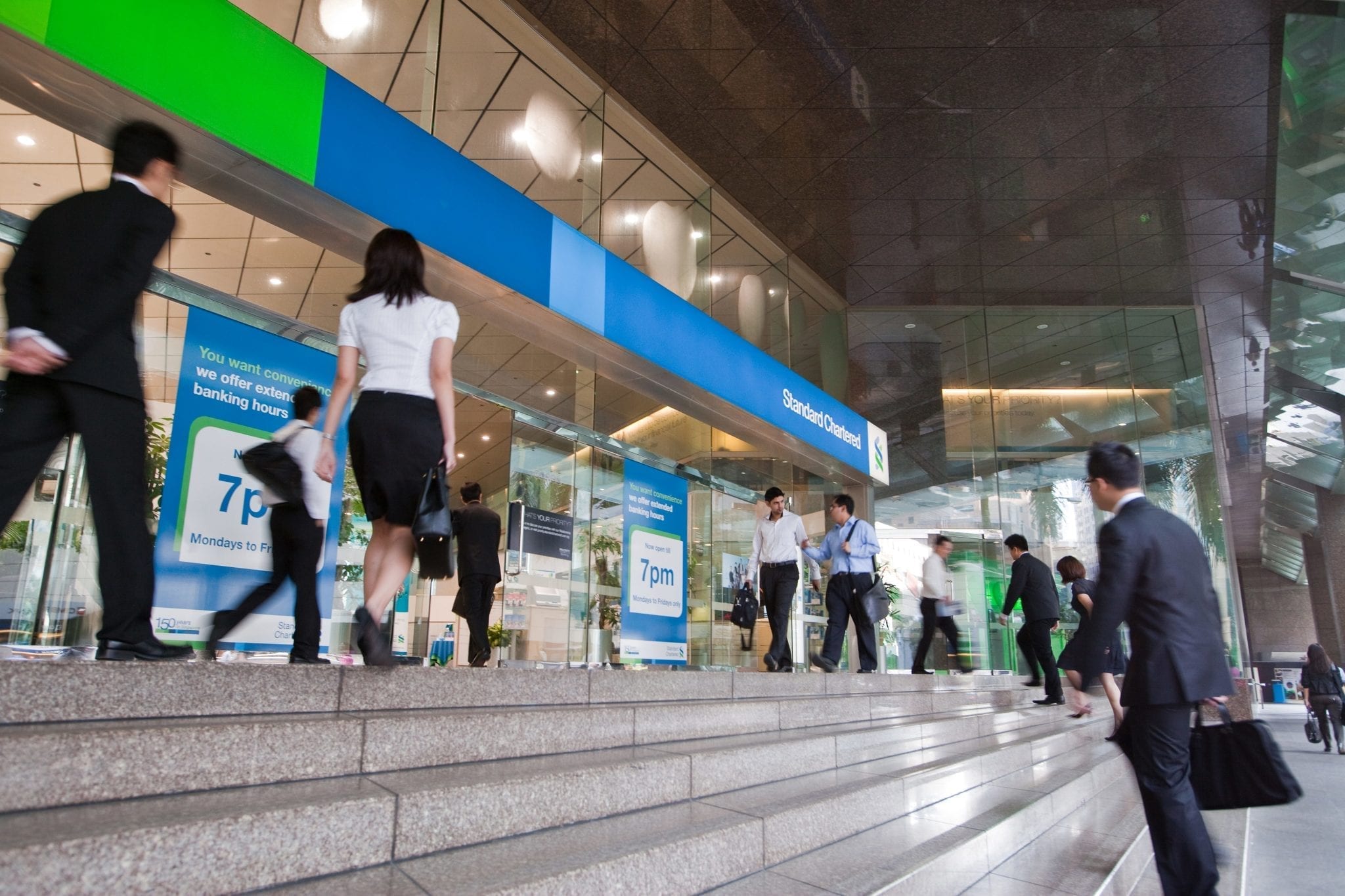
    Standard Chartered bank is reportedly considering slashing office space in the Singapore business district, where it occupies 21 floors at Marina Bay Financial Centre Tower 1.

    While plans are under discussion and subject to change, sources told «Bloomberg» that the bank is weighing several options, including cutting 80,000 square feet, or four floors of offices.

    Another option is to shed half of the 420,000 square feet it currently occupies or retaining just four floors – the minimum required for the bank to keep its logo on the building’s facade, the report said.

    The downsizing follows similar moves in Hong Kong, where it is giving up the lease on eight floors of its Standard Chartered Bank Building in the central business district, and renting out three floors it owns from its offices in the industrial district of Kwun Tong.

    The move also falls in line with the bank’s plans to permanently offer flexible work options to around 90 percent of its 85,000 employees around the world by 2023. Some 80 percent of its employees in Singapore currently work from home, the bank said.

    Standard Chartered is planning to optimize the use of its office space by and cater to the wellness of its staff by providing amenities such as gyms, according to the report. A large number of staff also work out of a facility at Changi Business Park, where it opened a learning hub in December 2020 to boost its workforce.

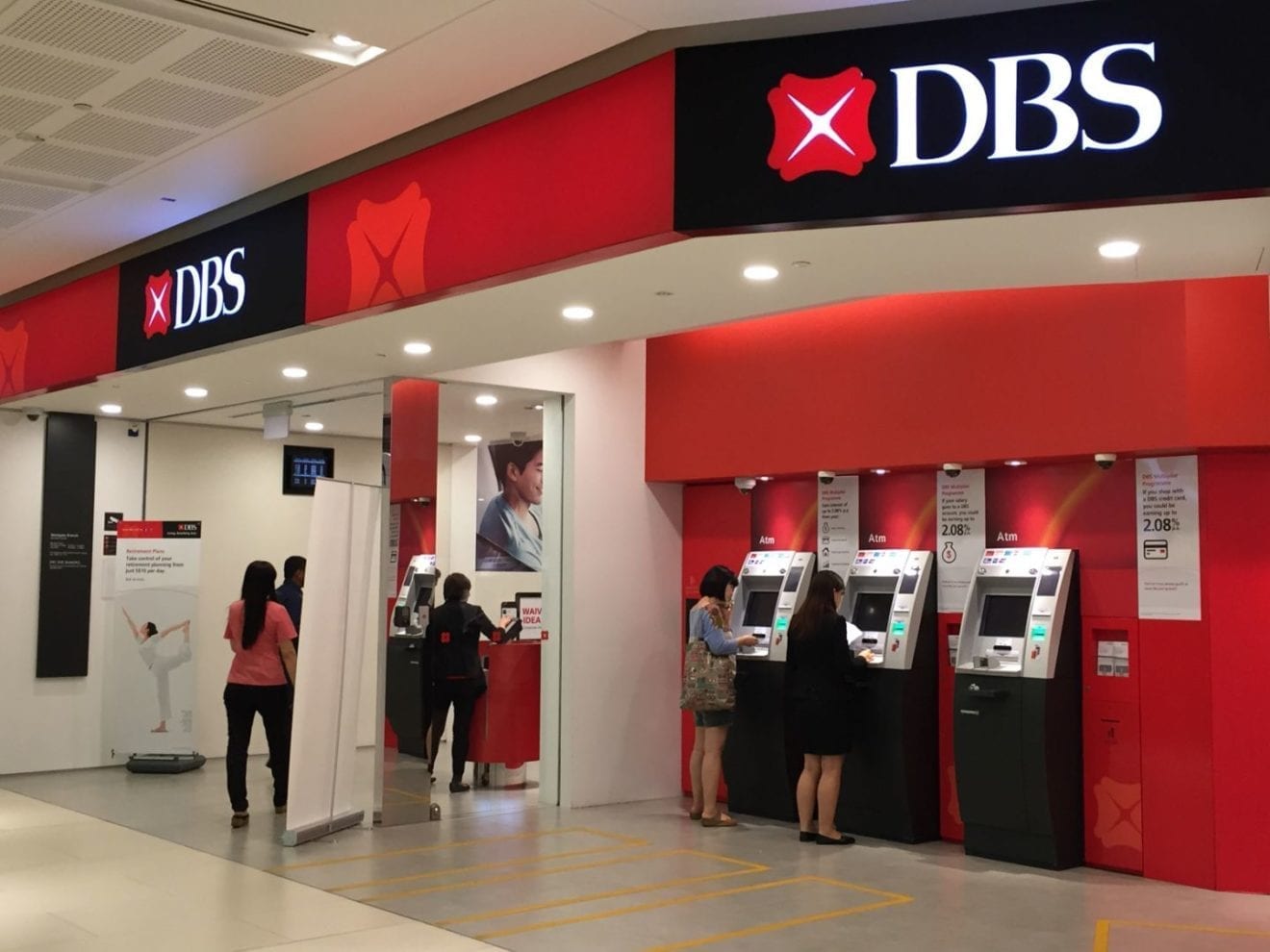
    Other banks that have permanently shed space in Singapore include DBS, which will give up 75,000 square feet of space – about two and a half floors out of the more than a dozen floors it occupies at Tower 3 of the Marina Bay Financial Centre; Citi, which is offloading three floors; and Mizuho, which is cutting less than one floor of office space.

  • Deutsche Bank Sidesteps Archegos Hit

    Deutsche Bank Sidesteps Archegos Hit

    The German bank pulled off what Swiss rivals failed to: avoid major losses from the collapse of the family office-hedge fund.

    Frankfurt-based Deutsche Bank swung to a net profit of 908 million euros ($1.1 billion) in the first quarter, from a loss of 43 million euros year-ago, it said in a statement on Wednesday. The result was powered by its investment bank, which is still feeding its business with revenue.

    In doing so, the German bank largely avoided what is now more than $10 billion in losses from Archegos, which hit Credit Suisse the worst but didn’t leave UBS unscathed either. CEO Christian Sewing is now in his fourth year of reviving Deutsche Bank, following years of outsize risk-taking.

    The bank had quickly offloaded roughly $4 billion in collateral against Archegos’ business before others. On Tuesday, Deutsche reported investment banking revenue surged by nearly one-third in the last three months, illustrating that Deutsche is still heavily reliant on Wall Street.

    By contrast, revenue in its wealth management arm overseen by Claudio de Sanctis edged two percent lower. The unit won 7 billion euros of fresh money into investments products and lent 2 billion euros more to clients in the quarter.

    Deutsche’s international private bank hiked overall assets to 267 billion euros, from 252 billion euros at year-end. The bank’s quarter overall represents its healthiest in seven years.

    It comes against the backdrop of Credit Suisse sliding deeper into crisis: the Swiss bank took the biggest Archegos hit on Wall Street – 4.4 billion Swiss francs ($4.7 billion) – or nearly half the total which has surfaced publicly so far. UBS took a $774 million one, it reported on Tuesday, as well as another $87 million in the coming quarter.

  • DBS, Temasek and J.P. Morgan to Disrupt Payments Landscape

    DBS, Temasek and J.P. Morgan to Disrupt Payments Landscape

    The trio is developing an open industry platform that aims to reimagine and accelerate value movements for payments, trade, and foreign exchange settlement.

    Partior aims to disrupt the cross-border payments landscape by using blockchain and smart contracts to make digital clearing and settlement more efficient and address common pain points such as multiple validations on payment details by banks, according to a joint announcement on Wednesday.

    The open platform will enable banks around the world to provide real-time cross-border multi-currency payments, trade finance, foreign exchange, and delivery versus payment (DVP) securities settlements, with programmability, immutability, traceability built into its suite of services, the announcement said.

    Partior also plans to develop wholesale payments rails based on digitized commercial bank money to enable instantaneous settlement of payments for various types of financial transactions, which will help banks overcome challenges presented by the current standard sequential method of processing global payments.

    Partior is a pioneering step towards providing foundational global infrastructure for transacting with digital currencies in a trusted environment, spurring a wide range of use-cases in the blockchain ecosystem,» Sopnendu Mohanty, MAS chief fintech officer, said in the announcement.

    The platform will be designed to complement ongoing central bank digital currencies initiatives and use cases. It will focus initially on facilitating flows primarily between Singapore-based banks in both U.S. dollars and Singapore dollars, with the aim to expand service offerings to other markets and currencies later on.

    The three partners previously worked on blockchain payments as part of Project Ubin, a collaborative project between the Monetary Authority of Singapore (MAS) and the industry to explore the use of blockchain and distributed ledger technology (DLT) for clearing and settlement of payments and securities.

  • What Can Retailers Learn from the Online Casino Industry?

    What Can Retailers Learn from the Online Casino Industry?

    Since the start of the 2010s, in-person retail has been steadily eclipsed by online shopping. The comparison graph paints a damning picture for in-person retailers and shows just how quickly the internet overlapped them. Moving online isn’t specific to the retail industry, however. Other industries, such as the casino one, have also managed to thrive online. What can the online casino industry show retail about its inevitable move online?

    Niche Nature of the Internet

    One of the main benefits of shopping online was that more niche retailers could thrive. Those offering something that appeals to large groups who are spread out across the country found their target audience. If they existed in one city, they may not gain the footfall necessary to remain viable. Spreading out online opens the potential customer base and allows niche retailers to survive.

    The online casino industry itself reflects the niche nature of internet retailers. Most sites offer a selection of slot games. Some of these are appealing and popular, such as those based on franchises. Others are more esoteric, so would appeal to a smaller group of people. But as the games are inexpensive to create and can be marketed to a wide range of people, it is worthwhile to offer something niche. Niche customers are often willing to spend more and be more loyal than those who can find what they want anywhere they go.

    Source: Pexels

    Convenience of the Internet

    The internet also makes shopping far more convenient. No matter how retailers square it, it’s easier to order something online while sitting on the bus or waiting for dinner to cook than it is to visit a multitude of stores.

    The online casino industry has similarly embraced convenience for its customers. Being able to engage on mobile devices as one would on a desktop device means that there are a wider range of customers to use the online casino sites. In an age where everyone is time-poor, anything that purports to save users’ time is considered a plus.

    The Bargains of the Internet

    The internet has a wider range of retailers and therefore they are more competitive with one another. The customer ends up benefitting as their custom is fought over. This usually looks like a slew of bargains, special offers, and retailers attempting to price each other out. The reason the internet allows this better than physical retailers is simply because it’s easier to compare prices when you can just flick to another tab. Plodding to another store to see if you could save marginal amounts just isn’t done.

    The online casino industry uses a similar tactic to appeal to increasingly savvy customers. As we can see with the welcome bonus offered by Royal Panda, for instance, customers are enticed to use the site. With a bonus of no deposit cash and free spins on certain slot games, those who are wanting to play anyway would be swayed by the generosity. The site will then develop goodwill with the customer which can be leveraged into a strong relationship.

    The Future of Retail

    Retail doesn’t have to just throw its hands in the air and give in to the overwhelming surge of the internet. Some things cannot be purchased online, and people do still enjoy physical experiences. In the UK, discount retailer Primark doesn’t offer online sales, so its stores are always busy. It has no closer rivals so can do so. Wedding clothes and things that provide a tactile experience, such as shoes, are also better bought in person. So, retail should consider excelling where the internet can’t, so all aspects of the industry are fulfilled.

    The internet makes shopping easier and online casino continues to thrive. The latter can give the former influence in how it has transformed a physical industry into one that does best online. Retailers should look to a hybrid approach of the two to succeed in the future

  • Japan’s retail sales rise at fastest pace in five months

    Japan’s retail sales rise at fastest pace in five months

    Japanese retail sales rose 5.2 percent year-on-year in March, representing the fastest pace of growth in five months as consumer demand returned after suffering a huge hit due to the coronavirus pandemic last year, according to a report.

    The world’s third-largest economy’s retail sales gains beat the median market forecast of 4.7 percent growth with the fastest rise since a 6.4 percent jump in October and the first positive growth seen in four months. Compared with the previous month, retail sales rose 1.2 percent on a seasonally adjusted basis.

    Fashion items were one of the categories driving growth in March and department stores saw particularly strong gains, posting a 19.3 percent jump in sales.

    This said, Japan’s slow vaccine rollout and a resurgence of Covid-19 cases, leading to new state of emergency declarations last week, are expected to weigh on consumption in the near term.

  • Gucci, Facebook file joint lawsuit against alleged counterfeiter

    Gucci, Facebook file joint lawsuit against alleged counterfeiter

    Gucci and Facebook have filed a joint lawsuit in California against an individual who allegedly used the U.S. group’s social media platforms to sell fake Gucci products, the two companies said on Tuesday.

    The initiative, a first of its kind for both Gucci and Facebook, is the latest example of an Internet giant joining forces with a luxury label to fight the proliferation of counterfeit goods being sold via social media.

    Amazon has filed similar lawsuits over the past year with Valentino and Ferragamo.

    In a statement, Gucci – the profit engine of French group Kering – and Facebook alleged the unidentified defendant used multiple Facebook and Instagram accounts to promote her international online counterfeit business.

    Online sales of luxury handbags, shoes, and garments have boomed over the past year as the coronavirus pandemic forced retailers to temporarily close their stores.

    Groups like Facebook are keen to make a bigger push into the luxury market and “social commerce”, but to do so they need to show that their platforms are not a conduit for counterfeiting and are safe for brands, some of which are reluctant to sell their products through third-party players.

    “More than one million pieces of content were removed from Facebook and Instagram in the first half of 2020, based on thousands of reports of counterfeit content from brand owners, including Gucci,” the statement said.

    It added that in 2020 alone the actions of Gucci’s in-house intellectual property team had resulted in four million online counterfeit product listings being taken down, the seizure of 4.1 million counterfeit products, and 45,000 websites, including social media accounts, being disabled.

  • Yum China sales, profit soar on fewer store closures

    Yum China sales, profit soar on fewer store closures

    Without the negative impact of the COVID-19 pandemic to hold it back at this year’s beginning, Yum China Holdings reported improved results for the first quarter of 2021. The Shanghai-based fast-casual company — a spinoff from Yum! Brands that hold franchises for Pizza Hut, Taco Bell, and KFC, along with a number of regional brands — beat analyst expectations at both the top and bottom lines.

    According to reports aggregating the consensus estimates of multiple Wall Street analysts, Yum China registered a 6.2% positive surprise, $150 million above the predicted $2.41 billion in sales. The actual revenue of $2.56 billion surged 46.3% year over year, without the pandemic causing dining shut down as was the case in early 2020. Adjusted earnings per share, or EPS, came in at $0.54, surpassing the forecast of $0.44 EPS for a 22.7% positive surprise.

    With growth “driven by lower commodity prices and productivity gains” along with far fewer restaurant closures and generally improved conditions, Yum China said in its press release that same-store sales rose 10% overall year over year. Pizza Hut saw the biggest same-store sales increase (38%), while a 5% rise occurred at KFC.

    CEO Joey Wat says Yum China is taking measures designed to “accelerate our growth in the years ahead,” which include strengthening its supply chain, integrating more automation and digital into its processes, and acquiring a 5% stake in its most important chicken supplier. Digital orders at Pizza Hut and KFC accounted for 84% of sales during Q1, while delivery orders added up to 29% of the total. The switch to digital and the growing use of ordering kiosks mirrors Yum! Brands’ recent opening of its first American digital-only Taco Bell in Times Square.

    Investing legends and Motley Fool Co-founders David and Tom Gardner just revealed what they believe are the 10 best stocks for investors to buy right now… and Yum China Holdings, Inc. wasn’t one of them.

    The online investing service they’ve run for nearly two decades, Motley Fool Stock Advisor, has beaten the stock market by over 4X.* And right now, they think there are 10 stocks that are better buys.

  • Luxury Brand Genesis Gears Up To Make Its Foray Into The European Market

    Luxury Brand Genesis Gears Up To Make Its Foray Into The European Market

    Last year in September, Hyundai Group’s premium car brand- Genesis hired Dominique Boesch as its first Managing Director for the European market and now the company is all set to make its foray into the market. Genesis took to Twitter through its European handle to share the news and the tweet read, “The Genesis journey continues. All roads lead to Europe. Get ready to join us on this thrilling new adventure.”

    Dominique Boesch had joined Genesis from Audi AG where he held the role of Sales Director in France before serving as Managing Director in Korea, Japan, and China, respectively, over his twenty-year tenure. After more than 10 years in Asia, Boesch returned to headquarters as head of European sales, and, most recently, he was leading the brand’s future Global Retail Strategy.

    In Europe, Genesis will go against the likes of Mercedes-Benz, BMW, Audi, and Jaguar Land Rover among others. Genesis hasn’t revealed any plans about its product line-up or models it will launch initially to start its operations with. It also showcased the electrified G80 at Auto Shanghai 2021 and it will be the brand’s first EV. It will go on sale alongside the conventional G80, GV70 crossover, and the GV80 SUV in the global markets, and the same is expected even in Europe.

  • Volkswagen Begins Construction Of New Electric Plant In China

    Volkswagen Begins Construction Of New Electric Plant In China

    Volkswagen Group China has begun construction of an all-new MEB plant at Volkswagen Anhui recently. As the third of the Group’s pure-electric vehicle manufacturing facilities in China, following completion of the Anting (SAIC VW) and Foshan (FAW-VW) plants, the Volkswagen Anhui plant will be powered by green energy from day one. Due for completion mid-2022, the plant is set for the start of production in the second half of 2023.

    By 2025, Volkswagen Group China plans to deliver up to 1.5 million new energy vehicles (NEVs) per year. Dr. Stephan Wollenstein, CEO of Volkswagen Group China, said, “As China is the world’s largest single market for NEV vehicles, we need to strengthen our local competence, and Volkswagen Anhui is a significant part of it. With the plant to be powered by green energy from day one, we are demonstrating our commitment to reducing carbon emissions beyond our fleet.”

    The new body shop will cover roughly 141,000 square meters and makes up part of the total project area, together covering around 500,000m2. The new plant will incorporate a number of energy-saving strategies as part of comprehensive efforts to reduce overall carbon emissions, including the adoption of low energy consumption production equipment. A supplier park for batteries and components is also planned for construction in the area.

    Volkswagen Anhui will have a staff of around 500 on board by 2025, with a focus on R&D and engineering innovations. Combining R&D, quality assurance, pre-sales manufacturing, and testing under one roof, Volkswagen Anhui will provide the Group with a faster time-to-market for new e-mobility products.

  • Ford Plans To Set Up A New Battery plant Near Detroit In 2022

    Ford Plans To Set Up A New Battery plant Near Detroit In 2022

    Ford is planning to open a battery development center near Detroit by the end of 2022 according to a report published by IANS. The American carmaker says that it wants to control the key technology for electric vehicles and the 2,00,000 sq.ft. will be equipped to design, test, and even for small manufacturing of battery cells and packs. The lab will also be used to develop electronic controls and other items and Ford is planning to move its operations in-house.

    Going ahead, the company wants to manufacture its battery packs on a large scale in a bid to make sure that enough batteries are manufactured to accelerate the transition from conventional combustion engines to electric vehicles. “We now see that the market is going to develop very quickly, and we will have sufficient scale to justify having greater levels of integration. We will no longer take an approach of hedging our bets and planning around the uncertainty of how fast that will play out,” Hua Thai-Tang, Chief Product and Operations Officer- Ford told IANS.

    The move comes at a time when the global auto industry is racing to control supplies including precious metals needed to make batteries and individual cells that form big battery packs to run as many as 300 new electric models coming out in the next two years. Ford’s new CEO – Jim Farley plans to take a turn from Ford’s previous path of buying technology and batteries from supply companies. That said, the company is still open to join hands with suppliers, universities and start-ups for the technology.

    Ford has already discussed the transition to battery power with the Biden administration. The company is already in a trade secret fight with its battery suppliers like SK Innovation, and LG Energy Solution. The U.S. International Trade Commission decided in February that SK stole 22 trade secrets from LG Energy and so it should be barred from importing, making or selling batteries in the United States for 10 years. So the decision gave SK four years to make batteries for Ford. SK is in contract with Ford to make batteries for an electric version of Ford’s F-150 pickup, the nation’s top-selling vehicle. The dispute was settled earlier this month when SK Innovation agreed to pay $1.8 billion along with an undisclosed royalty.