Author: Mei Ling Tan

  • TikTok, seeking advertisers, reveals info about its subscribers and how they use the app

    TikTok, seeking advertisers, reveals info about its subscribers and how they use the app

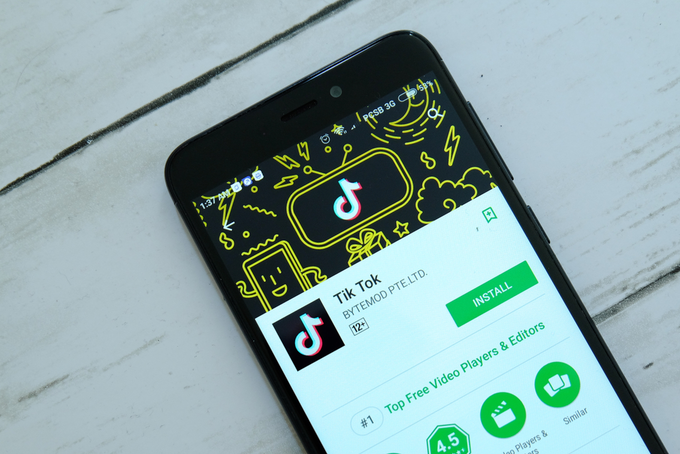
    TikTok has been seeking more advertisers for the global and U.S. versions of the short-form video app. As a result, the company has been meeting with potential advertising partners while carrying a B2B pitch book for its TikTok for Business unit. As you might imagine, the pitch deck reveals information about TikTok designed to show off the large number of TikTok users that could be mined by advertisers.

    The pitch deck has leaked online revealing plenty of information about TikTok’s audience. As of October, TikTok’s own numbers show that it’s monthly active users (MAUs) worldwide amount to 732 million. In the U.S., the MAU figure is over 100 million.

    When you consider that those figures are six months old, the numbers are much higher-perhaps tens of millions higher globally. Thanks to a lawsuit filed against the government last year, we know that from the end of July 2020 to October 2020, the app gained approximately 14.3 million monthly active worldwide users each month. If this growth continues over the next 13 months, by May 2022 the app will have over one billion monthly active users globally.

    Some of the data that TikTok is pitching to advertisers should be able to convince them to put some money in TikTok’s till. 47% of users said that they have purchased something that they saw on TikTok in the past while 67% said that TikTok gave them the inspiration to go shopping even if they weren’t planning to do so.

    The pitch deck also revealed the app’s attractive demographics with 42% of active users between 18 and 24 years old. 17% are between 13 and 17 with 22% aged between 25 and 34, 12% between 34 and 44 and only 7% over the age of 45. TikTok users continually return to the app as the average user opens TikTok 19 times a day although it isn’t clear whether this number reflects the actions of global or U.S. users.

    And as of this past January, the average TikTok user views the app 89 minutes a day. 80% of users call TikTok “the most entertaining platform.” The pitch deck is supposed to make TikTok sound like the perfect place for advertisers to spend their money and based on the numbers, many of them will do so on the app.

  • Former Apple executive “rips” the App Store

    Former Apple executive “rips” the App Store

    Over the last few days, we’ve passed along some interesting horror stories about the Apple App Store and certain iOS apps. These were discovered by FlickType creator Kosta Keleftheriou who is having problems of his own with Apple. In fact, the company that Kleleftheriou runs with his business partner is suing Apple after the latter promoted FlickType copycat apps and scams.

    Just this past week, Kosta tweeted about a children’s app that doubled in certain countries as an online casino where gamblers had real money at risk. He also posted about XGate VPN, an app that did nothing it promised while ripping off iOS users at a rate of $5 million a year. How do these apps jive with Apple’s proclamation that “the App Store has proved to be a safe and trusted place to discover and download apps.”

    On Friday, Apple’s former Senior Director of Worldwide Product Marketing, Michael Gartenberg, tweeted some comments about the App Store. Gartenberg, who worked as a tech analyst for Gartner at one time, said yesterday about the App Store that “The ecosystem that is often praised is breaking at the seams IMHO.” He also stated that he hopes that “Apple gets its act together soon.”

    Both the App Store and the Google Play Store appear to have issues keeping malware out of their respective app storefronts and protecting their users from paying ridiculously high prices for apps that offer features available for free on other apps. Apple and Google should be doing their best to make sure that their valued customers aren’t getting ripped off by bad actors.

    The App Store in particular has been called a monopoly with users blaming Apple’s walled garden for keeping app prices higher than they should be. That’s because Apple’s 30% cut of in-app payments has lead some developers to hike their prices. And while Google also takes a 30% cut from in-app payments, Android allows users to sideload apps from a third-party app store while Apple doesn’t.

    Apple’s App Store is also the center of another legal issue involving Epic Games, the developer behind the popular Fortnite game. Players purchasing special in-app currency for the game were prompted by Epic to pay less for the currency over its own payment platform. This happened to violate Apple’s own rules that prevent apps listed on the App Store from offering its own in-app payment system.

    As a result of Epic’s actions, Apple removed the game from the App Store leading Epic to take legal action against Apple. Speaking of apps, what are the weirdest ones that you can install on your phone?

  • New GTX Brand Joins The Volkswagen ID. Family

    New GTX Brand Joins The Volkswagen ID. Family

    We knew it would happen sooner or later but Volkswagen is all set to bring in a sporty top-of-the-range model to its electric vehicle range – the new ID.4 GTX. The car will be unveiled on April 28 and the company has already teased the logo. Similar to GTI and GTE, it stands for its own product brand.

    We’ll know more about the car itself, but we know a few details for now. Volkswagen says that the GTX models will impress when it comes to performance and design. An additional electric motor on the front axle brings the all-wheel-drive into the ID. Family. The additional motor switches on intelligently within a few milliseconds when very high performance or strong traction are required. In the new “Traction” driving mode, it is even permanently activated.

    Klaus Zellmer, Board Member for Marketing and Sales at the Volkswagen brand said, “Now the X is building the bridge to the mobility of the future. Sustainability and sportiness are not mutually exclusive but complement each other intelligently. ”

    The new product brand for the ID. Family gives the ACCELERATE corporate strategy a further boost. Volkswagen wants to become the most desired brand for sustainable mobility. The goal is to increase the share of pure electric cars in Europe to 70 percent of sales by 2030. Volkswagen wants to become climate neutral by 2050; around 16 billion euros will be invested in e-mobility, hybridization and digitization by 2025.

  • Hyundai To Suspend Production At South Korea Plant Due To Chip Shortage

    Hyundai To Suspend Production At South Korea Plant Due To Chip Shortage

    It was earlier this week when Hyundai Motor suspended production at its Asan plant because of a chip shortage. The South Korean carmaker has announced that it will again halt production at its Sonata-producing plant for two days next week due to an electric parts shortage. According to a report from IANS, the automaker will stop operation at its Asan plant on Monday and Tuesday. This Hyundai plant is located around 100 km south of Seoul that produces the Grandeur and Sonata sedans.

    Hyundai has seven plants in South Korea, of which five are located in Ulsan whereas the other two facilities are located in Asan and Jeonju. Moreover, the company has ten overseas plants wherein four facilities are in China and one each in India, Brazil, Czech Republic, Turkey, Russia, and the US. The combined capacity of these plants is around 5.5 million units.

    The carmaker expects the four-day suspension will result in over 4,000 vehicles in production losses. Moreover, the company had also suspended operations at its Ulsan plant, situated 414 km southeast of Seoul, from April 7 to April 14 due to a parts shortage. Moreover, Hyundai produces Ioniq 5 and Kona EV cars at its Ulsan plant.

    The suspension comes because of a shortage of semiconductor parts used in Kona’s front vehicle camera system, along with an issue in Hyundai Mobis Company’s production line, which rolls out the traction motor for the Ioniq 5. The carmaker expects production losses of 6,000 units of the Kona and 6,500 units of the Ioniq 5.

  • Nissan To Focus On Fuel-Sipping Technology And Electrification In China

    Nissan To Focus On Fuel-Sipping Technology And Electrification In China

    Japan’s financially challenged Nissan Motor Co is expected to show off a new “must-succeed” car and explain its green-car strategy for China at the Shanghai auto show which starts on Monday, two company officials told Reuters. The car Nissan plans to show off at the motor show is the significantly redesigned X-Trail sport-utility vehicle (SUV). A similar SUV called the Rogue hit the U.S. market last year. The new X-Trail will be available in China later this year.

    The new car is powered by a fuel-sipping three-cylinder, petrol-powered turbo engine, which one of the sources said might face an uphill battle in gaining acceptance in China where similar technologies have proven unpopular.

    The car is a “must succeed, a must-win car for us,” one of the two sources said. Both sources spoke on the condition of anonymity because they are not authorized to speak with reporters.

    In addition to the X-Trail’s China debut, Nissan’s chief operating officer Ashwani Gupta is expected to tell reporters in Shanghai virtually from Japan on Monday that Nissan’s green car strategy is two-pronged: the company will focus on fuel efficiency-enhancing petrol-electric hybrid technology, as well as battery-electric cars to make its lineup of vehicles in China greener.

    Nissan will focus on fuel efficiency-enhancing petrol-electric hybrid technology, as well as battery-electric cars to make its lineup of vehicles in China greener.

    In January, Nissan said all its new vehicles in key markets, including China, would be electrified by the early 2030s, as part of its efforts to achieve carbon neutrality by 2050.

    The strategy comes as regulatory pressure in China grows on carmakers to slash emissions.

    China is a key pillar of Nissan’s turnaround strategy, which involves focusing on producing profitable cars for China, Japan and the United States, rather than chasing all-out global growth pursued by ousted boss Carlos Ghosn.

    The company is scrambling to slash its production capacity and model line-up by a fifth and to cut fixed costs by 300 billion yen ($2.8 billion). Nissan aims to achieve a 5% operating profit margin and a sustainable global market share of 6% by the end of fiscal year 2023.

    It wasn’t immediately clear how much detail Nissan plans to share on its China strategy on Monday.

    The two sources said Nissan nonetheless plans to start taking “pre-orders” in China for its upcoming electric Ariya SUV before the end of this year.

    Nissan also plans to launch a hybrid “e-Power” version of the Sylphy compact car this year and an e-Power X-Trail as early as next year.

    A company spokeswoman said Nissan plans to showcase in Shanghai the redesign X-Trail crossover, as well as the introduction of Nissan’s e-power petrol-electric hybrid technology to China. She declined to comment otherwise.

  • Bentley’s 2021 Pikes Peak Race Car Unveiled

    Bentley’s 2021 Pikes Peak Race Car Unveiled

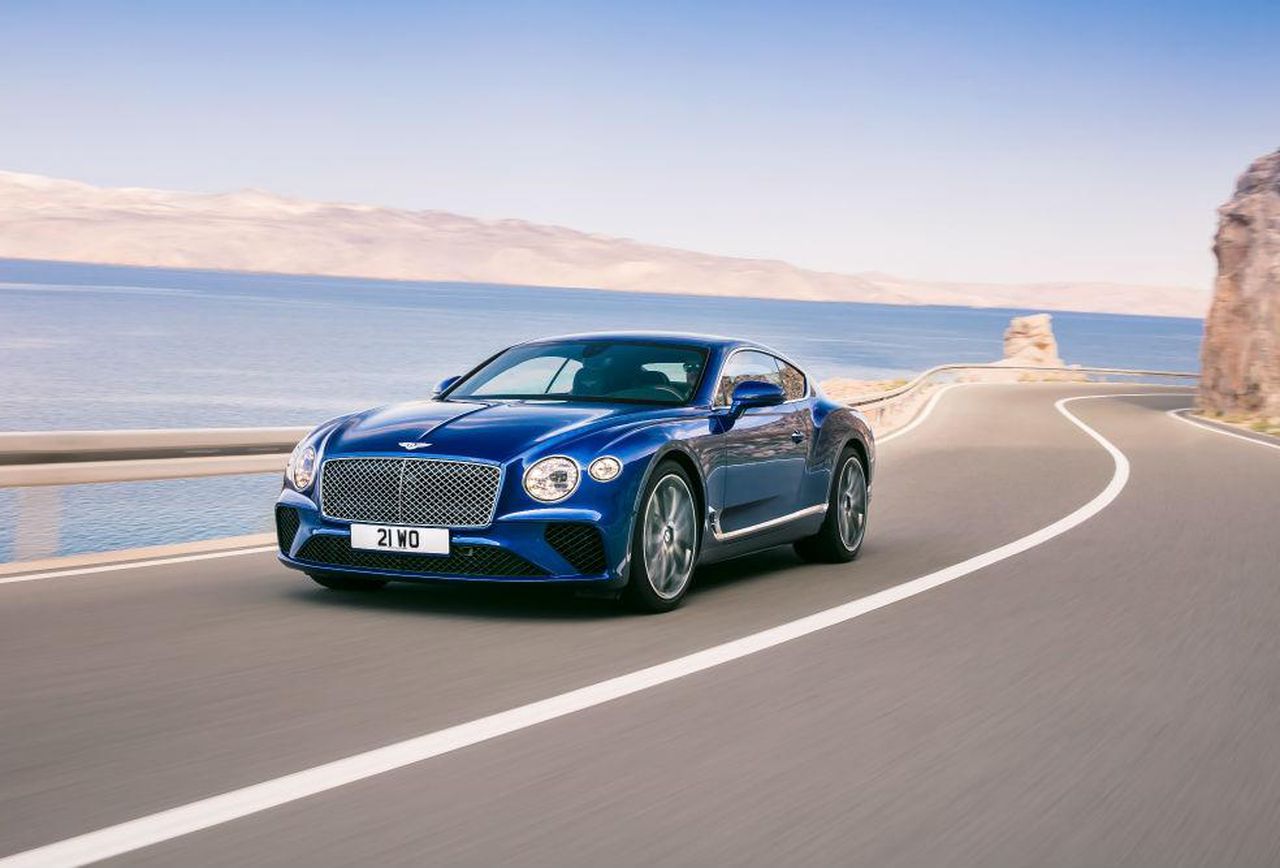
    Bentley has revealed its 2021 Pikes Peak Racecar. The Continental GT3 Pikes Peak, designed and built to compete for the Time Attack 1 record at this year’s Pikes Peak International Hill Climb, will be the first competition, Bentley, to run on renewable fuel, ahead of a goal to offer sustainable fuels to Bentley’s customers around the world.

    The modified Continental GT3 racer, based on Bentley’s race- and championship-winning car, will power its way through the 20 km course running on biofuel-based gasoline. Various blends of fuels are currently being tested and evaluated, with possible Greenhouse Gas (GHG) reductions of up to 85 percent over standard fossil fuel. This first step marks the start of a longer program that will investigate both biofuels and e-fuels for their potential to power the Bentleys of past and present in a sustainable way.

    Bentley’s ambitious and transformational Beyond100 program will see the brand become the world’s leading sustainable luxury mobility company, with the entire Bentley model range offered with Hybrid variants by 2023 ahead of Bentley being BEV-only by 2030. The adoption of renewable fuel for this project signals the start of a long-term ambition for Bentley, initiating a research and development program that aims to offer renewable fuels to Bentley customers in parallel to Bentley’s electrification program. This two-strand strategy is set to maximize the pace of Bentley’s progress towards outright carbon neutrality, as part of its Beyond100 journey.

    To break the record, the car will have to complete the nearly 5,000 ft climb, which includes 156 corners, at an average speed of more than 126 kmph to cross the finish line in less than nine minutes and 36 seconds. To help achieve this ambitious target, Bentley has once again turned to three-time Pikes Peak champion and former “King of the Mountain’ Rhys Millen (NZ) – who holds individual class records. It was with Millen that Bentley captured its two existing Pikes Peak records – the Production SUV record attained in 2018 with a Bentayga W12, and the outright Production Car record scored in 2019 with a Continental GT.

    With the start line at 9,300 ft, the course climbs to 14,100 ft – where the air is 1/3 less dense than at sea level. This environment means that the Continental GT3 Pikes Peak features modifications both to its aerodynamics package and its engine, turning it into the most extreme iteration of a Continental GT – ever.

    The biggest rear wing ever fitted to a Bentley dominates the rear of the car, sitting above a highly efficient rear diffuser that surrounds the transaxle gearbox. This rear aerodynamic package is balanced by a two-plane splitter at the front, flanked by separate dive planes.

    The biggest rear wing ever fitted to a Bentley dominates the rear of the car, sitting above a highly efficient rear diffuser that surrounds the transaxle gearbox.

    The engine is Bentley’s proven racing power unit, developed from the 4.0-litre turbo V8 fitted to the Continental GT V8. For the Continental GT3 Pikes Peak, engine modifications together with the use of carefully selected biofuel will ensure the engine develops significant horsepower despite the rarefied conditions it will operate in. Short side-exit exhausts will ensure the car sounds as dramatic as it looks.

    Further modifications include cooling air scoops in place of the rear windows, and the obligatory stopwatch mounted to the roll cage next to the steering wheel, to allow Rhys Millen to keep track of his sector times up the mountain.

  • Cisco unveils digitalization program for South Korea’s digital transformation

    Cisco unveils digitalization program for South Korea’s digital transformation

    South Korea, Asia’s fourth-largest economy, and Cisco, a worldwide leader in technology, announced the launch of a collaborative framework under Cisco’s Country Digital Acceleration (CDA) program to accelerate digitization across the country and power an inclusive recovery from the COVID-19 pandemic.

    The framework was introduced at a virtual event attended by Fran Katsoudas, Executive Vice President and Chief People, Policy & Purpose Officer at Cisco, Guy Diedrich, Vice President and Global Innovation Officer at Cisco, and Bum-Coo Cho, President at Cisco Korea, with opening remarks from South Korea’s Prime Minister, Sye-Kyun Chung, Chairman of the National Assembly’s Science, ICT, Broadcasting, and Communications Committee, Won-Wook Lee, and the People Power Party’s floor spokesperson Hyung-Du Choi. The event was also joined by ecosystem partners Naver Cloud, Samsung Electronics, and Kwangwoon University, who outlined the scope of their collaboration on major CDA projects in South Korea.

    The CDA program in Korea is strategically aligned with the government’s Digital New Deal strategy which is designed to propel recovery measures from the pandemic and help prepare for future growth through advanced digital capacity. The program also follows the government’s I-Korea 4.0, a policy brand that aims to prepare the Fourth Industrial Revolution with intelligent technologies.

    “Cisco has helped the digital transformation in education by offering free video conferencing solutions to education institutions during these difficult times. I would like to express my sincere appreciation to Cisco for its support and commitment to making the future bright through social investment in various areas such as IT talent cultivation. I expect IT companies like Cisco to closely work with public institutions and universities, creating synergy in fostering people-centered digital infrastructure. The government will spare no effort to provide support for it,” said Prime Minister Chung.

    “Our CDA programs help power an inclusive future for all through innovative technology initiatives like our 5G and cloud infrastructure solutions. We are very pleased to introduce the program in South Korea and support the government and businesses in achieving their economic and digitization goals as we recover from the global pandemic together,” said Fran Katsoudas, EVP and Chief People, Policy & Purpose Officer at Cisco.

    The CDA program in South Korea will drive various initiatives, with specific focus on the following areas:

    • 5G B2B:Cisco will drive 5G B2B technology innovation by working closely with Kwangwoon University. Cisco will help develop and test new 5G network solutions to bring more value to enterprises and enhanced network experiences to customers.
    • Cloud:Cisco will integrate its cloud solutions with the largest Korean cloud vendor ‘Naver Cloud’ to run on the cloud market. Cisco will provide convenient and reliable services to customers and will be able to promote cloud market activation. Cisco will strengthen the hybrid-cloud enablement in Korea.
    • Smart factory: Cisco will contribute to South Korea’s social-economic development with its industry-leading security and cloud technologies. Cisco will collaborate with POSCO ICT, a global IT & OT solutions provider, to develop advanced security solutions for smart factories by integrating Cisco Stealthwatch with POSCO ICT’s Poshield solution.
    • Education: Cisco will support digital transformation in education by offering free solutions and equipment to educational institutions across the country. Cisco will continue its commitment to digitization in education by expanding its support for building connected smart campuses and offering more Cisco Networking Academy programs. As part of these efforts, Cisco will integrate its collaboration solutions with Learning Management Systems (LMSs) of universities and support students and IT workforce with next generation IT skills and knowledge.

    “The launch of CDA in Korea will be a significant step towards turning the country’s digital agenda into a reality. Cisco Korea will do its best to accelerate the digital and economic growth of the country by leading development of technologies and infrastructure, adoption and use of technologies both in the public and privates, and cultivating the next generation IT talents,” said Bum-Coo Cho, President at Cisco Korea.

    Cisco’s CDA program aims to stimulate global digitization. Currently, Cisco is working with national, state, and local governments in 40 countries around the world to accelerate their national digitization agendas, co-develop cutting-edge solutions, and deliver beneficial services to their citizens more effectively. Cisco CDA programs have supported the creation of net-new jobs, GDP growth, and helped nurture innovation ecosystems.

  • Accenture to digitally transform Bharat Petroleum sales and distribution network

    Accenture to digitally transform Bharat Petroleum sales and distribution network

    Bharat Petroleum Corporation Ltd. (BPCL) and Accenture are collaborating to transform India’s second-largest oil and gas company by digitally reimagining its extensive sales and distribution network. Accenture will use its capabilities in data, artificial intelligence (AI), and cloud technologies to build, design and implement a digital platform, called IRIS.

    This platform will integrate real-time data from across BPCL’s countrywide network, including more than 18,000 fuel retail outlets, 25,000 tank trucks, 75 oil installations and depots, 52 liquefied petroleum gas (LPG) bottling plants, and 250 additional industrial and commercial locations, to provide a consolidated view of its extensive operations.

    Driven by analytics based on AI and machine learning technologies, the IRIS platform will subsequently trigger automated alerts and actions, including rapid response to equipment failures or hazardous situations. It will also empower the BPCL workforce of more than 100,000 across the country to make faster and more accurate decisions, including preventative maintenance. This can help increase sales at fuel retail outlets by minimizing infrastructure downtime and ensuring consistent fuel quality, as well as improve the experience for customers.

    By embedding intelligence in BPCL’s sales and distribution network, Accenture is helping BPCL optimize its operational performance and efficiency, enhance security and safety and deliver a superior experience for its retail and commercial customers across the country.

    Arun Kumar Singh, director (marketing and refineries), BPCL, said, “Digital transformation opens up new opportunities for the oil and gas industry. As an organization passionate about embracing change and leading the charge, we look forward to leveraging technology to unlock tremendous value, sustainable growth, and improved efficiency.”

    “With the deployment of this highly automated command and control platform called IRIS, we will not only bolster our digital capabilities significantly but also improve customer experience and transform operations at scale. It will further ensure consistent and uniform delivery of BPCL’s brand promises of innovation, care and reliability to our customers,” said Rahul Tandon, head, digital transformation, BPCL.

    The new platform will be capable of accepting more than three million inputs per second from automated sensors, cameras, and Internet of Things (IoT) devices deployed at all key locations, tracking performance based on key parameters such as fuel stock, safety, compliance, equipment health and boosting asset uptime. BPCL’s field workforce and partner network will have a seamless experience thanks to supporting from a portal, mobile app and call centers in Noida and Chennai.
    The digital sales and distribution platform will use BPCL’s cloud infrastructure, making it more agile and scalable.

    “The future will belong to companies that purposefully combine advanced digital technologies with human skills and creativity,” said Piyush N. Singh, India market unit lead at Accenture. “We believe our industry expertise and extensive digital capabilities can help BPCL drive the next wave of growth and gain a distinct advantage in the market. The powerful combination of human and applied intelligence will facilitate transformative change to ensure BPCL’s operations are safer, more secure and more efficient.”

  • DBS Targets Zero Thermal Coal Exposure

    DBS Targets Zero Thermal Coal Exposure

    As part of its efforts to support the transition to a low-carbon future, the bank has set a target of 2039 to cut its thermal coal exposure to zero.

    DBS, Southeast Asia’s largest bank, has announced plans to reach its goal of zero thermal coal exposure by 2039, and will focus instead on the development of renewables, according to a statement on Friday.

    The bank will stop onboarding new customers that derive more than 25 percent of their revenue from thermal coal with immediate effect, and stop financing customers that derive more than half their revenue from thermal coal from January 2026. These thresholds will also be lowered over time, DBS said.

    DBS will use its sustainable and transition finance framework to help sectors reliant on thermal coal to transition.

    Every year counts in the journey towards a low-carbon future and we recognize the increasing need for transition financing to help industries gradually navigate away from brown to green, Tan Su Shan, DBS group head of institutional banking, said.

    Tan said the bank hopes to help energy players in the region scale the reach and supply of renewable energy in the near future.

    In 2020, DBS grew its exposure to renewable energy projects to S$4.2 billion ($3.15 billion), up from S$2.85 billion the year before.

  • HSBC Singapore Offers Flexibility as Employees Return

    HSBC Singapore Offers Flexibility as Employees Return

    The bank has outlined a vision for its approach to flexible and hybrid-location working and will give its employees the opportunity and choice to return to the office.

    HSBC Singapore’s Future of Work plans will be underpinned by ensuring customer focus; flexibility for how, when, and where employees work; and ensuring that its offices are designed and used to build collaboration and networks, according to a statement on Friday.

    Forward-looking companies are change-makers. This includes creating working environments that enable employees to set up arrangements that deliver high customer impact whilst suiting their personal lives, Brandon Coate, head of human resources, said.

    The bank, which has about 3,300 employees in Singapore, has made a number of policy, location, technology, and cultural changes in the past year, including becoming the anchor tenant of Marina Bay Financial Centre Tower 2, which it moved to last year after its lease at 21 Collyer Quay ended.

    It will upgrade its offices at MBFC and at its split-site at Mapletree Business City, in preparation for a more permanent shift to hybrid and flexible working, the bank noted. This includes state-of-art design, technology, and sustainability, and moving from traditional fixed-desk seating to an activity-based workplace, where employees have a variety of individual and shared spaces available to work or collaborate with others.

    As more employees prepare to return to the workplace, following an extended period of working from home, HSBC said it will maintain operational and business continuity risk.

    For example, it is allowing a maximum of 65 percent of its total staff in the office, and not allowing cross-site deployment.

  • Citi Boosts Hong Kong Wealth Headcount

    Citi Boosts Hong Kong Wealth Headcount

    Citi unveiled its hiring plans for its wealth management business in Hong Kong – one of the few remaining markets the bank will place its renewed focus on after announcing a series of planned exits.

    Citi will look to hire up to 500 people in its Hong Kong wealth unit, according to a statement.

    The hires will include 300 relationship managers in the next five years as part of plans to triple the number of clients and double assets under management (AUM) by 2025 in Hong Kong.

    With various Greater Bay Area initiatives, such as Wealth Management Connect on the horizon, the opportunities are strong for further client-led growth in Hong Kong wealth management,» said Hong Kong chief executive and consumer business manager Lawrence Lam.

    Hong Kong is one of the four wealth hubs where Citi will operate its consumer banking business after it announced planned exits to 13 markets in Asia and EMEA.

    The remaining hubs are London, UAE and Singapore where it also aims to triple its clients and double AUM by 2025.

    The latest Hong Kong hiring ambitions for the Hong Kong wealth unit follow previously announced plans to hire up to 1,700 people across businesses in the city.

  • Wirecard Dismantles Asia Empire

    Wirecard Dismantles Asia Empire

    Following a spectacular collapse, Wirecard is disposing of its assets in the region, leaving only its business in India. The insolvent German firm has agreed to sell its legal entities in the Philippines, Malaysia, Hong Kong, and Thailand as well as the company’s regional data warehouse in Singapore to Nomu Pay.

    The deal includes Wirecard’s clients, licenses and more than 120 staff. The acquisition will help the payments firm, backed by Amsterdam-based venture capital company Finch Capital build an e-commerce and payments company in Asia, the report said.

    The report did not specify the size of the deal but noted it was below the €200 million Wirecard paid Citi in 2017 to acquire its merchant clients in 11 Asia-Pacific countries.

    Wirecard sold its unit in Indonesia to a local technology holding company in a deal that included 360 staff and operations in Malaysia too. The company has already divested operations in the Americas, U.K., and continental Europe.

    Wirecard was at the center of one of the region’s biggest corporate accounting scandals in recent years, having admitted that €1.9 billion ($2.25 billion) is missing from its financial accounts. The collapsed German fintech’s sacked operating chief went to the extreme – and adventurous – lengths to bamboozle auditors, according to a German report.

    In October 2020, the Monetary Authority of Singapore (MAS) ordered Wirecard Singapore to cease payment services in the country and to return all customers’ funds.

  • Ex-UBS Chief Sergio Ermotti Shifts from Banker to Statesman

    Ex-UBS Chief Sergio Ermotti Shifts from Banker to Statesman

    Less than six months after leaving UBS, ex-CEO Sergio Ermotti is now chairman of the world’s largest reinsurer. He signaled he will use the job as a platform to lobby for Switzerland as a business center.

    The former CEO of UBS, Sergio Ermotti, had promised a blackout after leaving the Swiss wealth manager at the end of October. He resurfaced publicly on Friday, when 96.4 percent of Swiss Re investors backed him as the reinsurer’s next chairman, after a year of understudying with long-standing overseer Walter Kielholz.

    In my new role, I look forward to advocating for Switzerland as an attractive location for the insurance industry,» the 60-year-old Ticino native told shareholders in an annual meeting held online. Insurance represents as much of Swiss gross domestic product as Switzerland’s heavyweight banking sector, and also a more consistent one.

    Nearly every eleventh Swiss franc in Switzerland is generated by the wider financial industry, according to data compiled by research institute BAK Economics. Insurance alone generates 30.5 billion Swiss francs ($33 billion) annually, according to BAK.

    Switzerland is the world’s third-largest location for reinsurance, Ermotti said – and he plans to use his new job to help make sure it stays that way. «That is why Swiss Re is actively engaged in ensuring that the Swiss financial center remains attractive and internationally competitive» in terms of framework conditions, the banker-turned-overseer said.

    He’s earning far less than at UBS, where he regularly topped league tables as Europe’s highest-paid banker and left on a 13.3 million franc payday high. He earned just 151,000 francs for 2020 after his election last April; by comparison, Kielholz took home 3.8 million francs.

    Ermotti remains a big UBS investor, with more than 4 million shares to his name (it translates to less than 0.3 percent of voting rights over the Swiss giant) – likely not including a big personal bet. His extracurricular activities include chairing the family’s Lugano-based Fondazione Ermotti and serving on the Swiss-American chamber of commerce’s board.

    While at UBS, he was widely viewed as sincere in his concern for Switzerland and its financial center when commenting on Swiss political matters of economic and business relevance, like immigration. Ermotti, who began his career in finance as an apprentice at Cornèr Bank in Lugano in 1975, is also on the board of the Global Apprenticeship Network – and a SPAC backer.

    The banking veteran spent the bulk of his career abroad including in London as an investment banker at Merrill Lynch. The Swiss Re move represents the culmination of what Ermotti reportedly couldn’t clinch at UBS: the chairman’s seat. At the Swiss bank, long-standing chairman Axel Weber looks set to extend his tenure, instead of exiting next April.

  • HSBC Shifts Top Execs to Hong Kong

    HSBC Shifts Top Execs to Hong Kong

    HSBC will relocate some of its top executives from London to Hong Kong as the British lender places increasingly greater emphasis on the region.

    Global banking and markets co-head Greg Guyett, wealth and personal banking chief executive Nuno Matos, and global commercial banking chief executive Barry O’Byrne will relocate to Hong Kong in the second half of the year, according to an internal memo.

    They will also be joined later in the year by the bank’s head of asset management Nicolas Moreau.

    Though some other roles will also be shifted to join the top executives, there is no planned large-scale movement of jobs from London to Hong Kong.

    The relocated executives lead divisions that makeup nearly all of HSBC’s global revenue, signaling a stronger focus on Asia, which accounted for 59 percent of operating income in 2020.

    An important part of our global strategy is to base more of our leadership population in Asia, said HSBC CEO Noel Quinn in the note.

    The bank is undergoing restructuring to further focus its resources on growth opportunities in the region. Part of its plans includes redeployment of over $100 billion of capital to Asia, where it is particularly focused on investing in Hong Kong, China and Singapore.

  • Reliance to boost Hamleys India network to 500 stores

    Reliance to boost Hamleys India network to 500 stores

    A struggling 261-year-old U.K. toy-store chain is seeking a new lease of life in the hands of billionaire Mukesh Ambani, who’s looking to India where about a fifth of the world’s babies are born to fuel its revival.

    Hamleys, a British retail icon that hasn’t made a profit for a number of years, plans to quadruple its outlets in the former British colony to more than 500 in three years despite the pandemic, according to Darshan Mehta, chief executive officer of Ambani’s Reliance Brands Ltd. Besides the main growth market, the company is also adding stores from Europe to South Africa and China, he said in an interview.

    Ambani, 63, bought Hamleys in 2019 to strengthen his retail footprint as part of the ongoing transformation of his oil-and-chemicals conglomerate Reliance Industries Ltd. into a consumer and technology behemoth. The deep pockets of Asia’s richest man and India’s demographics could help breathe new life into Hamleys, whose share of global toy sales was estimated at 0.6% last year by Euromonitor International, and see it avert the pitfalls faced by rivals such as Toys “R” Us Inc.

    With a backer whose net worth is $72 billion, Hamleys is seeking to tap into what it sees as an inadequately serviced section of India’s almost 1.4 billion people, of which about 27% are children under 14. The country accounts for just 1% of the $90 billion global toy industry, meaning the potential for growth is high, Mehta said.

    “There is a lot of headroom and India is no way near saturation,” Mehta said. “We are now mulling how we can roll out stores in newer geographies and new formats.”

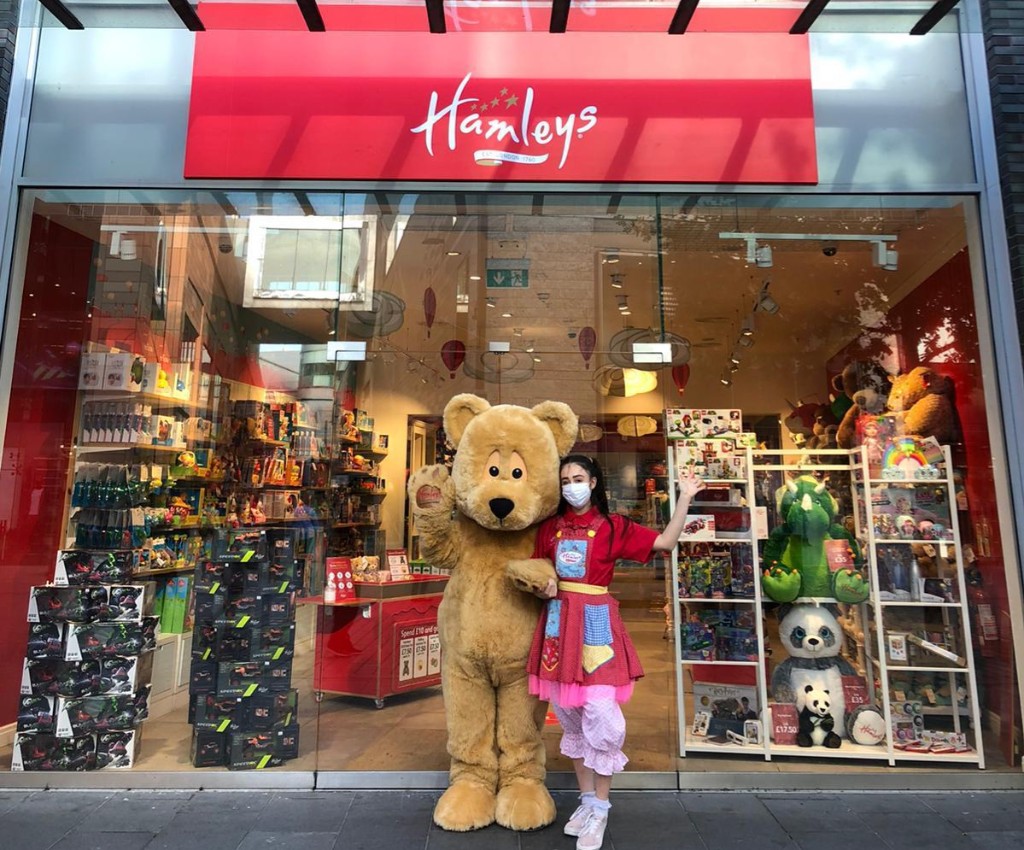
    Hamleys stores are famed for the carnival-like experience, allowing children to race toy cars, enjoy model train sets and play various games. In a country like India, with its densely packed cities and limited entertainment options, such an environment could be a hook to get customers to visit again. Product prices appealing to buyers of modest means as well as the super-rich make Hamleys an “elastic brand,” said Mehta.

    In Asia, Hamleys is seen as “high class and it’s on par with Harrods in some ways,” said Marc Alonso, a London-based senior research analyst at Euromonitor. “So it’s attracting that customer base, which is why in some places like India and China, it has been seeing some good sales growth in the past few years.”

    While the pandemic has been hitting parts of India’s economy, Mehta sees the toy industry as ”recession-proof’’ because many families choose the happiness of kids over anything else.

    But other chains have struggled before the virus. Toys “R” Us was the biggest victim of the U.S. retail apocalypse when it filed for bankruptcy in 2017, crushed by debt and felled by competition from online sellers such as Amazon.com Inc. Though the American chain is on a recovery path now under a new owner, a protracted pandemic points to an uncertain future for retailers.

    Nailing online sales is key to avoiding the fate of other high-end toy chains, according to Reliance. As part of Ambani’s e-commerce and technology pivot, his group is building Jiomart, a shopping portal, to take on giants such as Amazon.com and Walmart Inc.’s Flipkart in the local market. Reliance Industries has roped in Facebook Inc. and Google as investors to fuel those ambitions.

    With Covid-19 accelerating the group’s digital strategy, Mehta expects 30% of Hamleys’ sales coming from orders online in five years, versus 20% now. Direct selling over the phone or via WhatsApp would account for 20% in the same period, he said.

    Euromonitor’s Alonso said that target may be too ambitious because some customers could go to another portal that offers cheaper prices. “You can get the same product much cheaper by going straight to Lego, for example, on their e-commerce site,” said Alonso.

    Founded by William Hamley in 1760, Hamleys has seen its share of troubles. Ownership of the London-based chain has changed at least three times in the past decade alone — from an Icelandic bank to a French group and then to a Chinese fashion retailer. Two years ago, Ambani snapped it up for about $89 million in cash. Hamleys’ most recent books for 2019 show a loss of almost 9 million pounds ($12.4 million) on revenue of about 48 million pounds.

    Environmental services clean outside of the Regent Street store ahead of a reopening last year, on June 11. The flagship store has been closed for much of the past year. Photographer: Chris J. Ratcliffe/Bloomberg

    The onset of the pandemic just months after Reliance took control compounded Hamleys’ financial distress in the U.K., where it runs 21 outlets. Like most shops in the deserted streets of London, its grand seven-story Regent Street flagship store that opened in 1881 remained closed for much of the past year until earlier this week, while it cut a quarter of its staff to weather the crisis.

    Mehta believes the U.K. operations will “come out very strongly” with non-essential stores reopening this week following the easing of curbs. Another coronavirus wave could temporarily disrupt the business globally — like delayed plans for the U.S., a market it wants to crack.

    Prior to the acquisition of the chain, Reliance had the master franchise for Hamleys in India. The retail unit of Reliance is also the local partner for over 45 international brands including Burberry, Hugo Boss, Jimmy Choo and Tiffany & Co., according to the company’s website.

    The pandemic has limited Hamleys’ India target to just about 50 new stores this year before the roll out picks up pace. The toy retailer is looking at outlets in the U.S. this year or next, depending on travel restrictions, as well as in tourist hot spots in European countries, including France and Italy, the Reliance executive said.

    Hamleys Toy Store Chain Expanding Across Asia under Ownership of Asia’s Richest Man

    Ambani bought Hamleys in 2019 to strengthen his presence in retail. Photographer: Prashanth Vishwanathan/Bloomberg

    Still, India is likely to be a key market, said Arvind Singhal, chairman of Indian retail consultancy Technopak Advisors. With about 26 million children born in the country each year, Hamleys is unlikely to be short of customers there even if only the top 5% of the population can afford to shop at its store, he said.

    “Toys is one category where emotions sometimes overtake your financial abilities,” said Singhal. “Hamleys is probably one of the best investments from Mr. Ambani’s point of view in retail — the visibility the Hamleys brand has in India is unparalleled.”