Author: Mei Ling Tan

  • London based Techsembly closes US$1.37 million investment round

    London based Techsembly closes US$1.37 million investment round

    London-based multi-store, mutli-vendor e-commerce solution for global scaling platform Techsembly has raised £1 million from SuperSeed Ventures and a number of undisclosed private investors.

    The funding is expected to be used to assemble a cross-marketing team that will initially target European and Asian markets.

    “The opportunity to scale is huge. Amy and the Techsembly team have already built a best-in-class solution, and have demonstrated that they can deliver real value to their users. This is just the beginning,” comments SuperSeed Managing Partner Mads Jensen.

    Breaking into local markets is never an easy task. The sheet cost and logistics can be overwhelming. Meeting this demand, Techsembly is an e-commerce SaaS solution built specifically for businesses that want to cross-borders, particularly when they want to appeal to and remain relevant in local markets.

    Understanding that localization goes far beyond simply changing the currency sign, Techsembly eases the pain by providing a platform for scaling, all under one umbrella. Options include multiple languages, multiple currencies, unique fulfillment and logistics mechanisms, and multiple payment gateways and payout methods.

    “Our ambition is to empower brands to build a truly impactful localization strategy from the start, not as an afterthought,” says Techsembly co-founder and CEO Amy Read. “We want to encourage greater appreciation and knowledge of the cultural differences and similarities across the world, so brands can better connect with local audiences and compete with local incumbents.”

    Techsembly says that clients who’ve migrated to the platform report a 70% increase in foreign sales when localising their outlets. To date, Techsemble counts Curate Beauty, Scots of the World, The Peninsula Hotels and Anglo-American fashion platform Not Just a Label, who alone have over 40k independent fashion designers under them as clients.

  • Piaget to expand store network across China

    Piaget to expand store network across China

    Piaget, the luxury watch brand from Switzerland, will be opening more stores in 2021, especially in the Middle East and China, Chief Executive Chabi Nouri has told Reuters.

    “We’ll open more stores this year. We’ll reopen a flagship store in Beverly Hills and also have projects in the Middle East and China,” Nouri noted in an interview at the Watches and Wonders online event held last week.

    Piaget, with its array of well-known sleek and slim timepieces, has opened 130 brand-specific outlets and has a network of 300 retail partners.

    Piaget said in a January statement that high demand from China had driven sales to increase by five percent in the last quarter of 2020.

    Nouri noted that Piaget, which also creates watches encrusted with gems, diamonds, and jewelry, had bolstered its e-commerce presence while remaining focused on its own outlets, retail partnerships, and online selling to assist the distribution process.

    Nouri stated that in the wake of the coronavirus disease pandemic, Piaget was left with no choice but to reassess its strategies on connecting with its customer base and partners, though not impelling it to make adjustments to its product line.

    At the Watches and Wonders event, Piaget displayed timepieces, including the Limelight Gala Precious Rainbow gold model that is bedecked with colorful rainbow-hued sapphires and is priced at $106,922.99.

  • First Digital Trust Partners Crypto Storage Firm Amid Asia Demand

    First Digital Trust Partners Crypto Storage Firm Amid Asia Demand

    The multi-asset custodian will work with Fireblocks, a blockchain-based platform for securely moving, storing, and issuing digital assets in the finance industry, to cater to the increasing demand from fintech companies seeking custodial solutions in Asia.

    Hong Kong-based First Digital Trust (FDT) will integrate Fireblocks’ digital asset infrastructure on its platform to improve institutional-grade digital asset custody and protection in Asia as investor interest and demand grows, according to a joint statement on Wednesday.

    Fireblocks will automate the depositing of assets into FDT’s custodial structure, which will allow it to provide more interoperable custody solutions by enabling fintech clients to instantly send money to various digital asset providers without needing to see a wallet address.

    FDT will also be able to provide investors access to DeFi, lending and staking, as well as more than 200 trading venues and 300 tokens, enabling them to expand their revenue streams from day one, the announcement said.

    The collaboration with Fireblocks will enable us to build a strong bridge between the East and the West for fintech visionaries in Europe and the US who are looking to tap into the Asian market, Vincent Chok, CEO of First Digital Trust, said.

    Digital asset trading activity in Asia is equivalent to the U.S. and Europe combined, and accounts for more than 90 percent of ethereum and bitcoin derivatives volumes.

    Since launching in June 2019, Fireblocks has opened offices in Hong Kong and Singapore, and has raised $46 million in funding to support its growth ambitions.

  • Citi Names Wealth Co-Heads for Asia Pacific

    Citi Names Wealth Co-Heads for Asia Pacific

    Citi made a raft of new appointments to its wealth management unit including the promotion of its Asia head of private banking.

    Citi named Steven Lo co-head of the wealth unit in the region alongside APAC head of retail banking Fabio Fontainha, according to an internal memo.

    Lo was named Asia head of the private bank in 2017, succeeding ex-head Bassam Salem.

    The bank also appointed Ida Liu – most recently head of the private bank in North America – as the global head of private banking, overseeing the bank’s private capital group, global trust, and private bank global marketing operations.

    Other notable appointments for the wealth business include chief operating officer Eduardo A. Martinez Campos and chief of staff Running Du.

    Chief investment officer and global head of investments David Bailin will form a group that combines investment teams from the private bank and consumer bank globally.

    Head of investment finance for the private bank Giuliano Malacarne will expand his remit and coordinate the delivery of banking and lending products to wealthy clients.

    The appointments coincide with the bank’s reorganization of its wealth business to encompass the full spectrum from emerging affluent to high net worth clients.

    Our clients are looking for more — whether it’s access to investment opportunities and advice, tools and analytics, a focus on environmental, social and governance concerns or more engaging digital experiences, said Jim O’Donnell, Citi’s head of global wealth in the memo.

  • StanChart Wealth Planning App Debuts in Singapore

    StanChart Wealth Planning App Debuts in Singapore

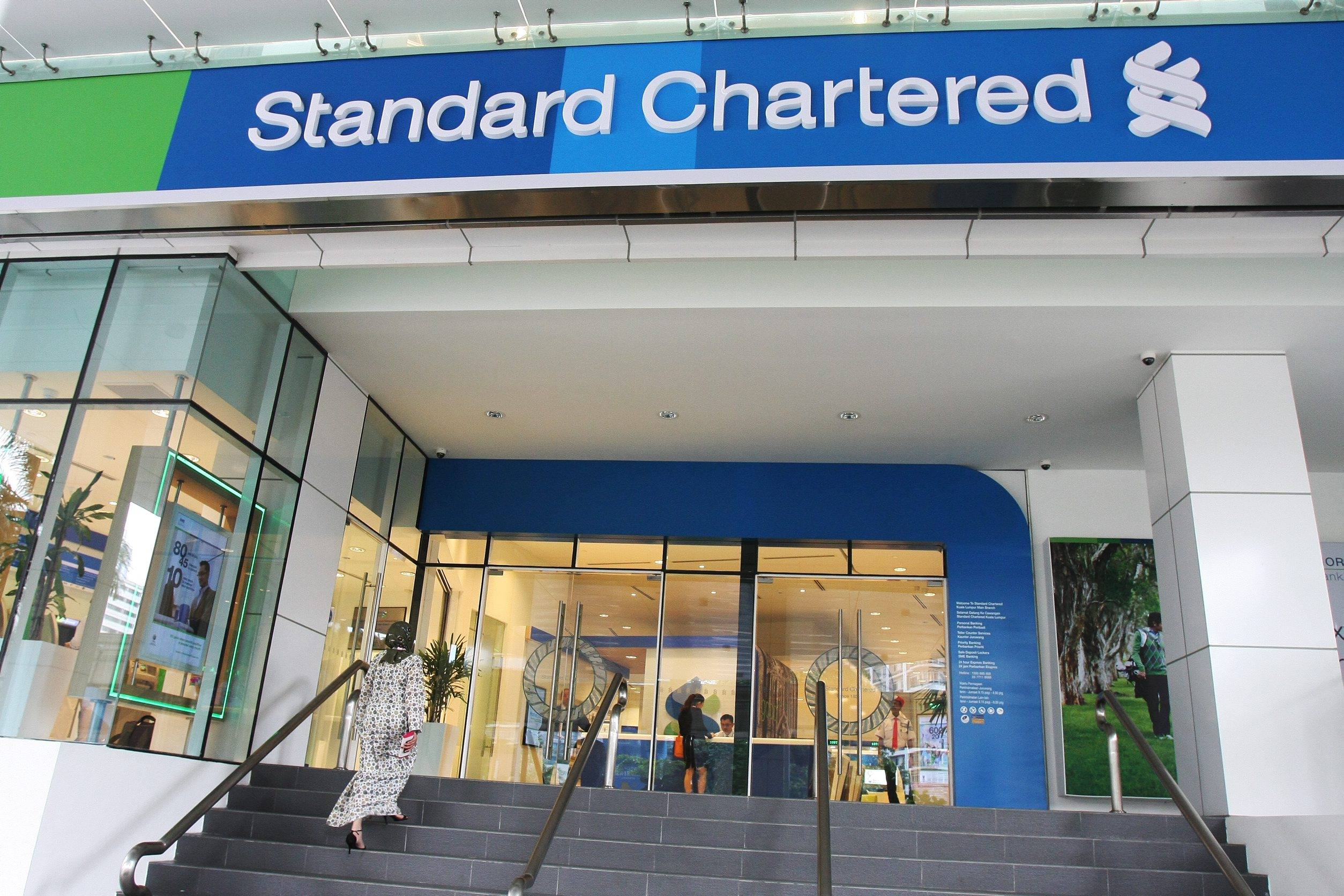
    The bank joins other players in providing digital wealth advisory with its new SC Goals Planner app, now available on SC Online Banking and SC Mobile.

    Standard Chartered has launched a free, do-it-yourself online financial planning solution developed in collaboration with Singapore-based fintech BetterTradeOff, which advanced leverages data analytics for clients to make data-led decisions when it comes to wealth planning, the bank announced in Wednesday.

    The SC Goals Planner app allows customers will be able to independently plan and track their financial goals through real-life simulations and insights specific to their life stages and financial status. Users will also be able to educate themselves on the planning process and financial fundamentals, the announcement said.

    Banks have been quick to capitalize on the heightened interest in wealth planning – Julius Baer also launched its digital advisory platform in Asia this week, while DBS rolled out personal digital advisory to its financial planner last week.

    Standard Chartered said there has been more interest in better financial planning as a result of the pandemic. Through the platform, Standard Chartered hopes to close the financial literacy gap and empower clients to play a more active role in their financial planning.

    This is one of the many steps we are taking to strengthen the client-bank wealth and financial planning dialogue, Eugene Puar, head of wealth management, Singapore, ASEAN and South Asia said.

    Singapore-based BetterTradeOff (BTO) was founded in 2015 and offers a software-as-a-service (SaaS) life planning tool to clients through a white-label enterprise solution. It currently operates in Hong Kong, Singapore, Philippines, UAE, and Switzerland.

  • Bamboo Airways plans US IPO in Q3

    Bamboo Airways plans US IPO in Q3

    Private carrier Bamboo Airways is considering an initial public offering of shares in the U.S. this year to raise $200 million.

    The IPO is expected to take place in the third quarter, with the company likely to offer a 5-7 percent stake to secure a market capitalization of up to $4 billion, quoted its chairman, Trinh Van Quyet, as saying on Wednesday.

    It is preparing for the issuance together with an international auditing firm and plans to list on the New York Stock Exchange.

    Last month, Quyet had announced the airlines’ plans to list 105 million shares on either the Ho Chi Minh Stock Exchange or Hanoi Stock Exchange at an initial price of VND60,000 ($2.61), but on Wednesday he said that has now become “a backup plan.”

    “The US IPO will be part of our efforts to expand our services globally.”

    It expected to operate charter flights to the U.S. from July this year and thrice-weekly commercial flights from HCMC to San Francisco from September.

    The airline has received a permit from the U.S. Department of Transportation to carry passengers and cargo to that country.

    This year it also plans to expand its fleet from 30 aircraft to 40, and launch flights to other new destinations like Australia, Germany, Japan, and the U.K. if the Covid-19 pandemic is under control.

    It currently flies on 60 domestic routes.

    Last year, it carried over seven million passengers to account for a 20 percent market share, and hopes to increase it to 30 percent this year.

  • Vietnam eyes $4 bln in shrimp exports

    Vietnam eyes $4 bln in shrimp exports

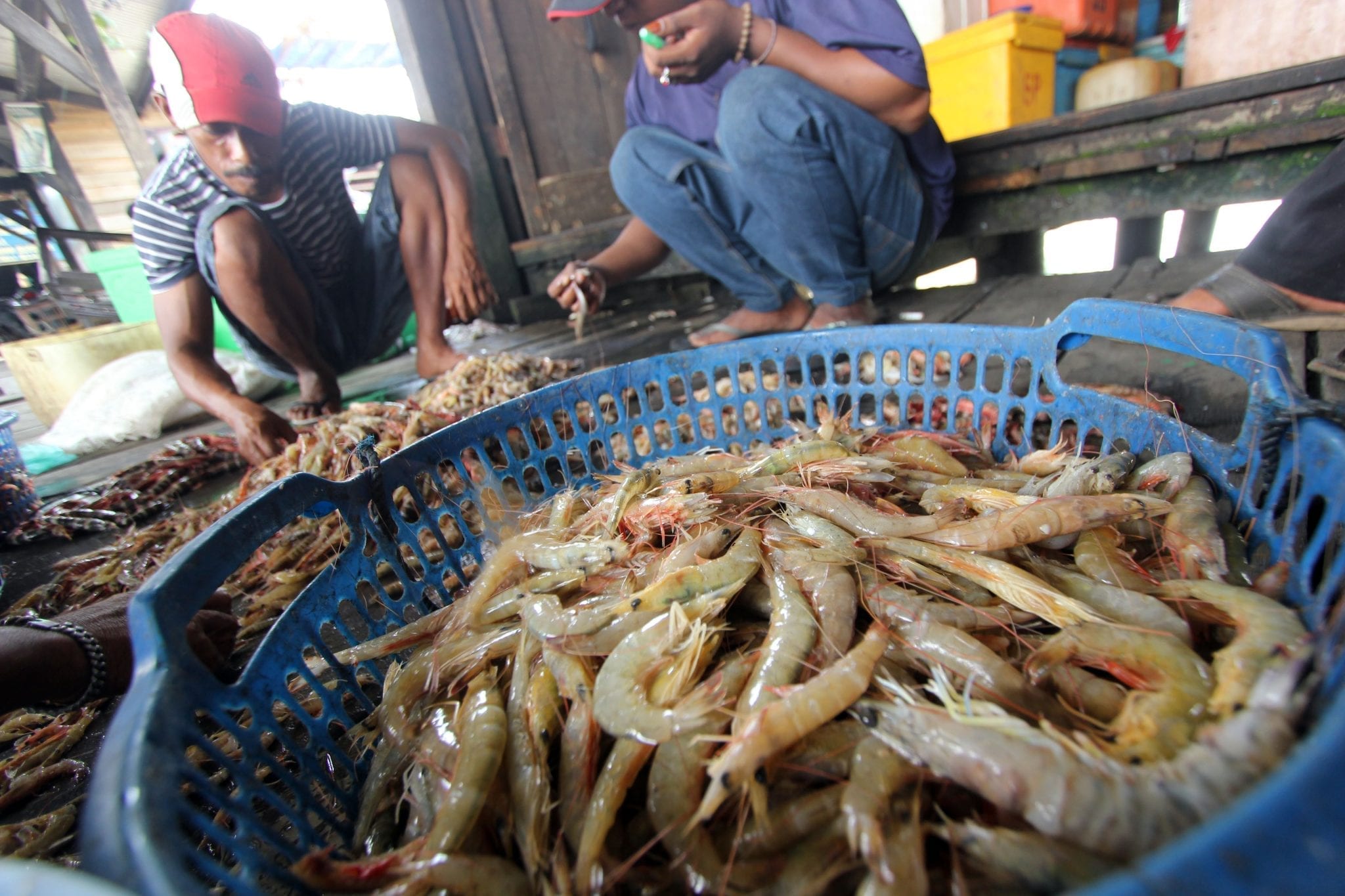
    Vietnam targets a 5 percent increase in shrimp exports this year to $4 billion.

    It also targets output of 930,000 tons and having 740,000 hectares of shrimp farms, said Tran Dinh Luan, director of the Directorate of Fisheries, said at the VietShrimp Aquaculture International Fair in Can Tho City on Wednesday.

    He expected Vietnam to become the world’s biggest producer of farmed shrimp by 2045 with an output of four million tons and a 25 percent global market share.

    Now there are 200,000 hectares of high-tech shrimp farms, 95 percent of them in the Mekong provinces of Bac Lieu and Soc Trang, mostly belonging to foreign companies.

    Shrimp exports face difficulties since costs have risen by 20 percent due to a 200-500 percent jump in transport costs, Luan said, pointing out that shipping a container of shrimp to Europe has increased from $1,500 to $6,500, and even $7,500.

    Last year, shrimp exports were up 11.7 percent to $3.8 billion, and output had been 900,000 tons.

  • Vietnam Railways pleads for government funding as staff remain unpaid

    Vietnam Railways pleads for government funding as staff remain unpaid

    Vietnam Railways owes its 11,300 workers four months’ salaries due to a funding delay by the government, and fears this could cause many to quit.

    It reminded the government that it was supposed to receive VND2.8 trillion ($121.3 million) at the beginning of this year, but has not, forcing it to pay minimum compensation to staff.

    Vu Anh Minh, its chairman, said the delay could cause barrier operators at grade crossings and patrol staff to quit since they have the lowest incomes.

    “The issue has pushed the company to the end of its road. We might not survive until the end of this month.”

    This is not the first time VNR has been forced to beseech the government for funding. Last year too it owed its staff salary for months but managed to survive that crisis.

    The problem can be tracked to a dispute between two government agencies. Last year VNR became one of 19 state-owned companies whose oversight passed to the Commission for the Management of State Capital at Enterprises (CMSC), an entity that manages the government’s $43 billion investment in various companies.

    The CMSC refused to provide funds, saying maintenance workers should be paid by the Ministry of Transport since it controls the maintenance and infrastructure budget.

    But the ministry cannot provide funds to any entity it does not manage.

    A temporary solution was agreed upon last year and the transport ministry provided the needed sum of VND2.5 trillion.

    But there has been no decision yet on whether the same thing will happen this year, leaving VNR and its staff in the lurch.

    VNR wants the government to provide the money through the CMSC.

  • Facebook just made the world a better place: 100% renewable energy

    Facebook just made the world a better place: 100% renewable energy

    It’s a big day in the book of the Earth! Facebook has officially reached the goal of one-hundred-percent renewable energy for its global operations. The social media giant might have come under fire for security issues and political scandals, but we’ll give it to them on this one.

    According to the company’s own news channel, the journey was gradual. It started back in 2011 with a ‘wind project’ in Iowa, and about ten years later, it has come full circle. At least as far as Facebook’s own operations are concerned, they are now operating with net-zero emissions!

    We recognize the urgency of climate change. We know the next ten years will be the defining time for a reduction in greenhouse gas emissions and that we have a role to play in this effort—both as a platform that connects people to information and as a global company that supports climate action.

    Mark Zuckerberg and the company have already set another goal for a more sustainable future. The social media platform aims to bring emissions down to zero, but this time across its entire value chain, including suppliers, business travel, and employee commuting. This goal has been given a due date of 2030. The part about zero-emission employee commuting, for one, sounds particularly interesting. We’re wondering how exactly they plan to do that; are they going to give away Teslas? Bicycles? Or maybe accommodate employees so they never have to leave the office? Theirs is indeed a very ambitious goal, but also very ambiguous—we call it “ambiguities.” Try saying it out loud!

    The transition will be handled by their Responsible Supply Chain Program, which works to discover innovative ways for making operations greener. Whatever they have in mind, we are curious to see how it turns out. If you are too, Facebook’s team has released a video dedicated to the long journey from 2011 to today. Take a look for yourself:

    As reported by Facebook’s Director of Renewable Energy, Urvi Parekh, the company’s goal for 100% renewable energy was set back in 2018.

    We couldn’t help but notice that this timeframe coincides with Apple’s move towards greener operation. Back in April 2018, the company from Cupertino announced that their global facilities were finally powered with one-hundred-percent clean energy.

    Whether Facebook took inspiration from Apple or not, we applaud their commitment. Google and Amazon have also taken steps in that direction, and we’d be happy to see more tech corporations follow suit.

  • Honda Motorcycle Scooter India Sets Up New Overseas Business Vertical

    Honda Motorcycle Scooter India Sets Up New Overseas Business Vertical

    Honda Motorcycle and Scooter India (HMSI) has announced setting up a new overseas business vertical with the aim to promote India as a global export hub for Honda. HMSI says that the new vertical will spearhead the company’s ambition to export two-wheelers to other global markets. The new overseas business vertical aims to unlock new synergy by integrating Honda 2Wheeler India’s export-import sales function with quality, purchase, development, homologations, manufacturing and logistics. It will be located at HMSI’s Manesar facility.

    Elaborating on Honda’s vision for the new overseas business expansion, Mr. Atsushi Ogata – Managing Director, President & CEO, Honda Motorcycle & Scooter India Pvt. Ltd. said, “With an eye on the future, Honda 2Wheelers India aims to further consolidate its No. 1 position in Honda’s global motorcycle business while unlocking the next chapter of ‘Make in India, for India & the World’ in the BS-VI era. With this major organizational restructuring, the company is strengthening its business constitution and improving competitiveness to meet the high expectations from Global Honda”.

    HMSI started exporting its two-wheelers with the launch of Honda Activa in 2001. It was in 2015 that Honda reached the 10 lakh milestone for two-wheeler exports. Currently, HMSI exports to 35 markets across Europe, Central & Latin America, Middle-East, Japan and the SAARC nations. Honda also says that the recent mid-size motorcycle launches in India, like the CB500X, CB650R and the CBR650R have solid potential to further help the company to establish India as hub for global markets.

  • Angry Indian traders counter Amazon summit with own event

    Angry Indian traders counter Amazon summit with own event

    Thousands of Indian small businesses will organize an event this week in protest at the business practices of foreign e-tailers like Amazon.com taking a dig at the U.S. group’s summit with their own event.

    Starting Thursday, Amazon is organizing a virtual summit in India named “Smbhav,” which phonetically means “possible” in Hindi, to showcase opportunities offered by the U.S. firm to get small businesses to expand and sell online.

    Trader groups representing 600,000 sellers said in a statement they will at the same time launch a summit titled “Asmbhav,” or “impossible,” including an award ceremony to pin the blame on those who they think have hurt their businesses.

    Amazon did not immediately respond to a request for comment. Indian traders, who are a crucial part of Prime Minister Narendra Modi’s support base, have long alleged that Amazon and Walmart Inc’s Flipkart benefit a few big sellers and that the companies engage in predatory pricing that harms their businesses. The companies say they comply with all laws.

    A Reuters special report published in February revealed Amazon has for years given preferential treatment to a small group of sellers on its Indian platform and used them to circumvent the country’s strict foreign investment regulations.

    Amazon has said it “does not give preferential treatment to any seller on its marketplace.”

    The Smbhav event will include more than 70 speakers and aims to allow small businesses to learn how to grow their businesses in India – a key growth market for Amazon.

    The event “puts forth how Amazon and our partner’s leverage digitization, technology & our ecosystem to drive infinite possibilities for a Digital India,” its website said.

    In a statement, trader groups including the All India Mobile Retailers Association said the Amazon event was positioning it as a friend and guide to small sellers, but argued small traders had been harmed by discriminatory practices of foreign e-commerce firms.

    The latest dispute comes as India also considers revising foreign investment rules for e-commerce which could force companies like Amazon to rework the relationships it has with big sellers.

  • Buy2Sell Vietnam adds new stores in HCMC

    Buy2Sell Vietnam adds new stores in HCMC

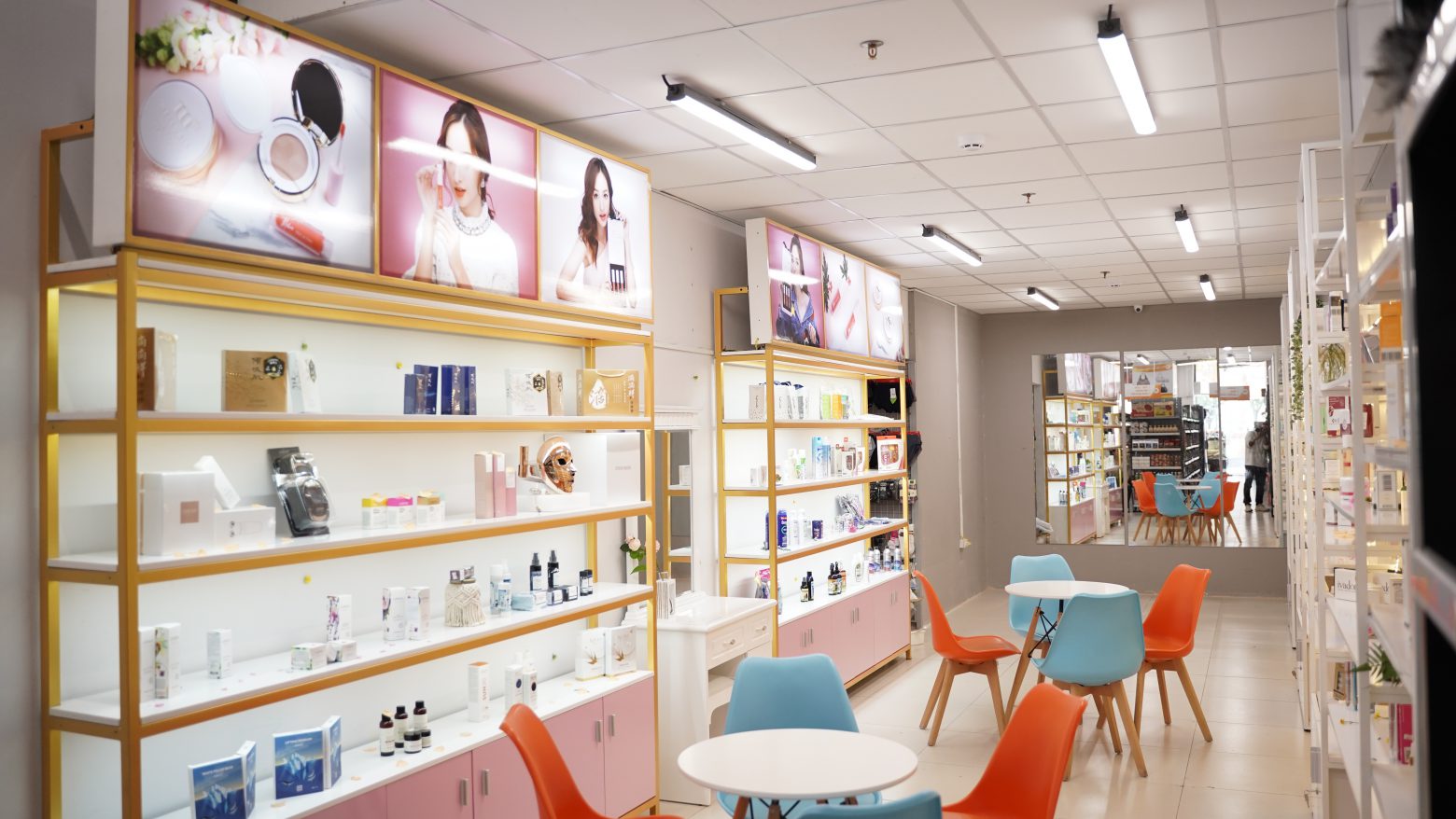
    The B2B e-commerce platform’s newly opened stores are located in two of the most crowded shopping locations in Ho Chi Minh City, Lotte Mart and SC VivoCity Shopping Mall.

    Buy2Sell has launched a cosmetics store at Lotte Mart Vietnam, offering attractive choices and new selections of high-end cosmetic brands from Europe, South Korea, and the U.S.

    “Buy2Sell will continue to act as a strategic partner of Lotte Vietnam, distributing goods and developing a brand identity for foreign companies through Lotte Mart’s distribution system for a long time, broader coverage,” a Buy2Sell representative said.

    Lotte Mart is a retail brand of South Korea’s Lotte Group, a major supermarket chain in Asia. It now runs 46 stores in Indonesia, 14 in Vietnam and 123 in South Korea.

    On March 24, Buy2Sell continued to open a new store in SC Vivo City, specializing in a wide range of unique international appliances, accessories, gifts, food, and beverage, electronics and pet products.

    SC Vivo City is an all-in-one destination with five floors, offering the latest fashion products, hypermarkets, movie theaters, restaurants, entertainment, education and lifestyle brands. The shopping mall covers a total of 62,000 square meters.

    Since 2015, Buy2Sell Vietnam has distributed a diverse range of branded goods to the medium and high-end Vietnamese market.

    The company has signed distribution agreements with thousands of international suppliers and distributed over 200,000 items, including cosmetics, food and beverage, fashion, household appliances, pharmaceuticals and electronics items, imported from over 60 countries around the world.

  • Singaporean retailer opens three AI-powered unmanned grocery stores

    Singaporean retailer opens three AI-powered unmanned grocery stores

    Cheers, a sub-brand of Singapore’s largest Convenience store chain FairPrice recently launched an AI-powered cashierless store with Cloudpick. This is not the first unmanned convenience store opened by Cheers. The company piloted its first “unattended” store in Nanyang Technological University (NTU) in 2017, followed by two more at the National University of Singapore.

    Unlike the first three stores, the new unmanned and cashless store is equipped with Cloudpick,the world’s leading AI digital retail technology solution provider, replacing self-checkout counters and creating a completely frictionless shopping experience powered by its patented AI system and computer vision technology.

    Cashierless checkouts have been evolving for years. With the ongoing global pandemic, retailers are seeking new ways to enhance the shopping experience, including reducing in-store human-to-human contact by eliminating the checkout lines.

    Cloudpick has empowered many retail chains in more than 11 countries around the world, and has landed more than 130 AI-powered cashierless stores. Other players providing computer vision checkout solutions such as Aifi, Zippin and Standard Cognition, which announced recently that it has raised $150 million in Series C funding led by Japan Softbank.

    The grab-and-go Cheers store sells a variety of drinks, prepackaged food and snacks. When entering the Cheers store for the first time, the customers can download the Cheers SG app and add their payment method. They can use facial recognition or scan the QR code from App to enter the store. The customers then can just walk in, grab any items they want and simply walk out. The AI system track which products customers pick up and return; virtual baskets are updated accordingly by the algorithms, and customers’ digital accounts are automatically charged after exiting the stores. Consumers can quickly purchase their favored products even during peak hours.

    In addition to ‘fast billing speed’, the store can also enrich the customer’s shopping experience through smart bar screens in the store, this is also the first of its kind in the world. The smart bar screens can be used to effectively communicating with customers, such as displaying product information, suggestions, invoking coupons, and even playing competing advert campaigns if brands are willing to do so. The AI system is accurately identifies the audience standing in front of the screen, and play only the advert that is relevant and most efficient in creating conversion and facilitate customers’ decision-making process.

    On the other hand, Cheers cashier-less convenience store has gotten rid of its high dependence on human resources. The automated cashier-free solution allows store operator to save on labor costs and allow 24/7 store operations, it removes the repetitive and tedious checkout work and provides more in-person services for customers. Meanwhile, the Cloudpick AI system completely digitizing ‘people, product and place’, it makes the operations and management process easier and more effective.

    For instance, no more store inspection is needed for store operators, they will be notified in real-time when a product needs restocking. The real-time inventory check function allows the clerk to replenish products without spending countless times counting each of the items and verify the inventory. In terms of product selection, the business intelligent reports enable operating personnel to accurately grasp the most popular brands and product categories to make the best product selection decision, thus increasing sales based on improving customer satisfaction.

    Mr.Seah Kian Peng, CEO of FairPrice Group mentioned, once the AI system adopted by Cheers autonomous convenience store is proven successful, the system may be rolled out to more sub-branches in the future.

    With Cloudpick’s advanced technology and experience, the company will help FairPrice stores to break through manpower constraints, and through digital transformation, comprehensively enhance the customer shopping experience.

  • Auto sales make recovery in Q1

    Auto sales make recovery in Q1

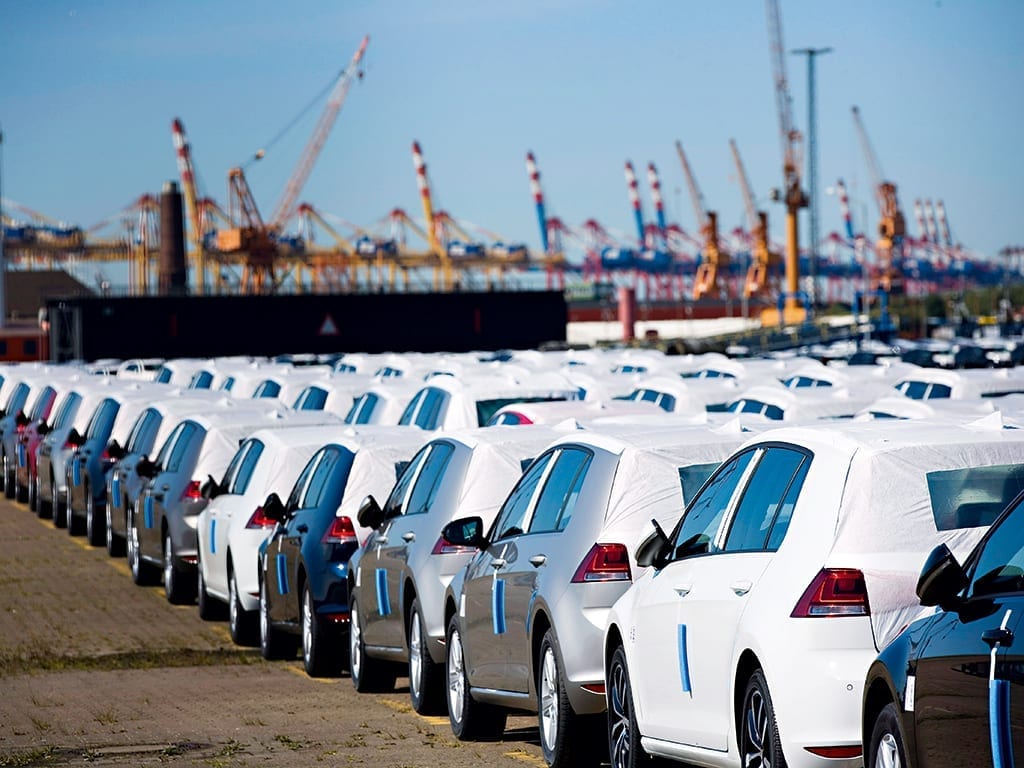
    Auto sales rose by 36 percent year-on-year in the first quarter to 70,952 units, with all categories of vehicles achieving double-digit growth.

    Passenger vehicles and commercial vehicles were up 34 percent and 43 percent, according to the Vietnam Automobile Manufacturers Association (VAMA).

    Truong Hai Auto Corporation, or Thaco, which assembles several brands of cars and trucks, led the market with a 37 percent share, followed by Toyota (20.2 percent) and Mitsubishi (10.7 percent).

    Hyundai Accent was the best-selling car in the first quarter with 4,804 units, followed by Mitsubishi Xpander (4,602) and VinFast Fadil (4,148).

    Last year sales had fallen by 8 percent to 296,634 units as the Covid-19 pandemic badly affected the economy, hitting people’s incomes and discretionary spending.

  • HSBC Swims Against Crypto Tide

    HSBC Swims Against Crypto Tide

    The bank banned customers of its online trading platform InvestDirect from adding MicroStrategy stock to their portfolios, calling them a «virtual currency product.

    HSBC has no appetite for direct exposure to virtual currencies [VCs] and limited appetite to facilitate products or securities that derive their value from VCs,» a HSBC spokesperson said in a statement.

    Last week, a message from the bank to InvestDirect customers dated March 29 surfaced on social media, saying that it will only allow the holding, sale and outgoing transfer of MicroStrategy shares, and will ban new purchases or incoming transfers.

    MicroStrategy, a business intelligence and cloud-based software company founded in 1989 by bitcoin evangelist Michael Saylor, currently holds about $5.5 billion in bitcoin, or about 80 percent of its $6.8 billion market capitalization.

    The company adopted a policy last year to primarily hold bitcoin instead of cash, and has been purchasing the cryptocurrency with its extra cash and paying its directors in BTC.

    HSBC said the ban on MicroStrategy follows its policy on cryptocurrencies, which has been in place since 2018. Its move comes against the growing number of financial firms and companies that are embracing cryptocurrencies.

    Other companies that also have large holdings of bitcoin on their balance sheets include carmaker Tesla and payments processor Square, though it is not clear if a similar ban would apply to their shares.

    Goldman Sachs has said it would offer investments in bitcoin and other digital assets to its wealth clients, while Morgan Stanley will roll out a bitcoin offering to wealth management clients.

    Outside of the U.S., notable global banks that have also launched crypto offerings include Standard Chartered and DBS.

    MicroStrategy shares soared on Tuesday, up about 18 percent to $848.5, as the price of bitcoin reached a new high of $63,000, 7 percent higher than the day before.

    The surge in investor interest comes ahead of a hotly anticipated direct listing of CoinBase, the U.S.’ largest cryptocurrency exchange, on Nasdaq on Wednesday.