Author: Mei Ling Tan

  • Daiso opens first store in Canada comeback

    Daiso opens first store in Canada comeback

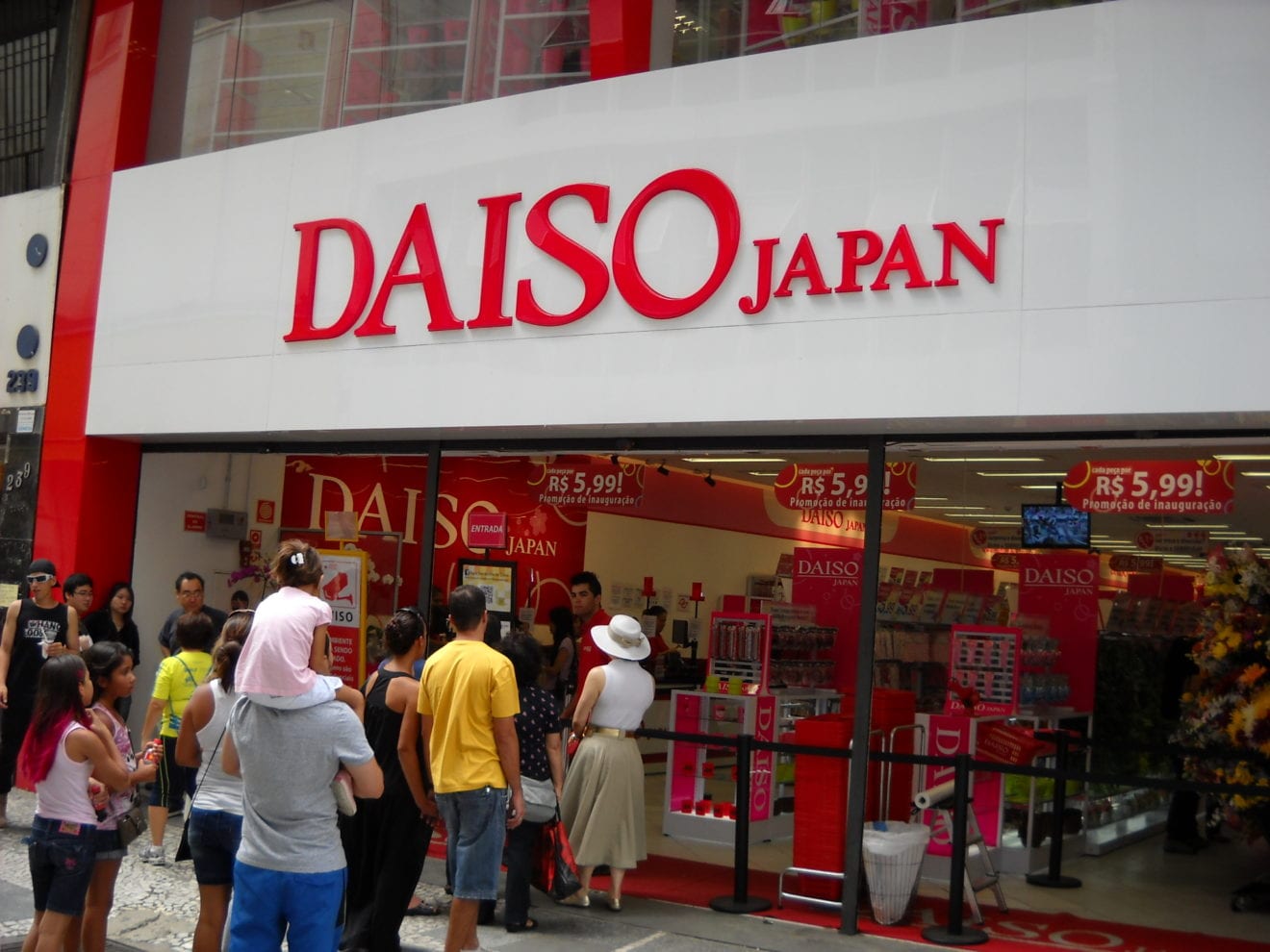
    Japanese retailer Daiso has launched its first directly operated Canada store in downtown Vancouver.

    Taking over a former bookstore space, the debut Daiso Canada spans 4700sqft and features a selection of 12,000 products, ranging from seasonal items, stationery and cosmetics to homewares – mostly imported from Japan.

    JLL Canada will be responsible for Daiso’s further expansion in the country, identifying sites for further stores.

    This is the second time the Japanese retailer has entered Canada. It first launched in 2003 through a franchise agreement with Fairchild Group, however, in 2019, the store was taken over by Japanese variety store Oomomo.

    Daiso now operates more than 3000 stores in its home country and 5000 internationally.

    The company’s business model is the so-called ‘100-yen shop’ concept where all products are priced similarly.

  • Digital Reality opens third and largest data centre in Singapore

    Digital Reality opens third and largest data centre in Singapore

    Digital Reality, a leading global provider of carrier- and cloud-neutral data centre, colocation and interconnection solutions, announced the official opening of its third data centre in Singapore. The multi-story, 50-megawatt facility, known as Digital Loyang II or SIN12, is Digital Realty’s largest data centre in the country and will bring the company’s total committed investment to date in Singapore to over US$1 billion. This significant expansion will enable local and multinational enterprises to deploy critical infrastructure and scale their digital business at the heart of a connected data community on PlatformDIGITAL.

    SIN12 is substantially pre-leased to a thriving community of leading global cloud service providers, local as well as global financial services providers and leading Southeast Asian enterprises. In addition, the new facility will introduce next-generation colocation services for regional customers in Singapore and will further expand PlatformDIGITAL, the company’s global data centre platform. It will offer customers in APAC new avenues to connect, extend their reach and uncover new business opportunities. SIN12 will offer enterprises the full spectrum of colocation services and will enable them to scale their critical infrastructure on-demand within a connected data community with optimal proximity to carriers, networks and cloud service providers. Productized solutions for network, control and data hub footprints offered on PlatformDIGITAL will help accelerate customers’ ability to rapidly scale their digital business.

    SIN12 builds upon Digital Realty’s track record of delivering sustainable data centre developments across the globe and has already achieved a Platinum certification under Singapore’s BCA Green Mark building assessment system. The Green Mark certification scheme is designed to evaluate a building’s overall environmental impact and performance and provides a comprehensive framework for assessing new and existing buildings to promote sustainable design and best practices in construction and operations.

    “Singapore is a well-established financial and business hub, and consistently ranks among the top data centre markets globally,” said Digital Realty Chief Executive Officer A. William Stein. “The opening of our third data centre is a major milestone on our PlatformDIGITAL roadmap and underscores our long-term commitment to support the country’s digital economy. The transition to the digital economy has impacted the way companies across all industries create and deliver value. There’s a growing need for a combination of open interconnection and next-generation colocation that will reduce the complexity of digital transformation. Expanding our footprint in Singapore will enable us to better help our customers enhance their digital transformation efforts and scale their digital business models regionally as well as globally.”

    Singapore is ranked fifth among the top 10 data centre markets globally, according to Cushman & Wakefield. These findings coincide with Digital Realty’s Data Gravity Index™, a recently published study that measured, quantified, and determined the implications of the explosion of enterprise data. Data gravity is expected to more than double annually from 2020-2024, with Asia Pacific expected to generate the fastest growth across all regions. Singapore is expected to be the second-fastest-growing market across the 53 global metros analyzed, driven by growth in the intensity of data within the banking, financial services and high-tech manufacturing industries.

    “Digital Realty’s continued investment in Singapore builds upon the strong existing business and investment ties between the United States and Singapore. Both countries rank highly in terms of digital competitiveness and are committed to building a robust digital economy at a global level,” said Christian Koschil, Digital Attaché, Embassy of the United States of America. “We believe Digital Realty’s expansion in Singapore will further strengthen the Republic’s standing as a global connectivity gateway. We also applaud Digital Realty’s commitment to sustainability in their operations, as tackling climate change requires a collective response from all stakeholders – in government and the private sector.”

    Sustainability was a guiding principle for the design and construction of SIN12. It will be among the most sustainable data centres in the region, with a power usage effectiveness (PUE) of 1.25. The facility will feature efficient cooling system design and controls to help minimize evaporation losses and improve water-use efficiency. It will be equipped with turbine generators rather than diesel engines and a combination of uninterruptible power supply (UPS) and lithium-ion batteries will facilitate sustainable management. The building management system (BMS) will monitor thousands of data points to ensure the data centre is running efficiently and providing optimal energy performance for customers.

    “Balancing digital growth with sustainability remains a key priority for the industry,” said Mark Smith, Managing Director, Asia Pacific for Digital Realty. “We’re proud that our new facility will help customers meet their digital and sustainability goals, with energy-efficient design and operational features. We’re encouraged by the recently unveiled Singapore Green Plan 2030 and the new edition of the Green Building Masterplan. Sustainable growth will be critical for the country to remain competitive as a leading global data centre hub.”

  • New Zealand to Introduce Climate Change Law

    New Zealand to Introduce Climate Change Law

    Banks, insurers and asset managers in New Zealand must make climate change-related disclosures for their businesses as New Zealand becomes a first-mover in green finance laws.

    All banks with total assets of more than NZ$1 billion ($703 million), insurers with more than NZ$1 billion in assets under management alongside equity and debt issuers listed on the country’s stock exchange will have to make disclosures, according to the proposed law which will see its first reading this week.

    Once the law is passed, the first disclosure reports will be released in 2023.

    The move towards more climate change-related disclosures will make New Zealand the world’s first to introduce such a law.

    Approximately 200 domestic firms and several foreign firms meet the NZ$1 billion thresholds to fall under the legislation.

    We simply cannot get to net-zero carbon emissions by 2050 unless the financial sector knows what impact their investments are having on the climate, said minister for climate change James Shaw said in a statement. This law will bring climate risks and resilience into the heart of financial and business decision-making.

  • StanChart Names Global Head of Private Banking

    StanChart Names Global Head of Private Banking

    Standard Chartered has hired a former UBS executive to oversee its private and affluent banking business worldwide.

    Raymond Ang has been named global head of private and priority banking at the Asia-focused British lender, according to a statement, pending regulatory approval.

    In the Singapore-based role, Ang reports to consumer, private, and business banking chief executive Judy Hsu.

    Ang has 25 years of experience across consumer and private banking and lived in Hong Kong, Taiwan, Thailand, and Singapore. Ang was most recently with UBS where he spent nine years, last as its sector head for Indonesia, Greater China, and offshore Japan. Previously, he also worked for Carlyle, DBS, and Citi.

  • Hanoi Beer producer profits to slump to 10-year low

    Hanoi Beer producer profits to slump to 10-year low

    The producer of Hanoi Beer expects sales to be badly hit by the Covid-19 pandemic this year and profits to fall to a 10-year low as a result.

    The Hanoi Beer Alcohol and Beverage Jsc forecast post-tax profits of VND255 billion ($11 million), down 59 percent from 2020.

    Habeco said in a report that tourism companies, hotels, and restaurants continue to suffer due to Covid-19, and this would directly cause a decrease in consumption of alcoholic beverages.

    Another difficulty it cited was the rising competition with many brewers introducing new products in the popular market segment in which Habeco mainly operates.

    But it said it would strive to maintain its position as one of the biggest brewers in the northern and central regions.

  • Thailand’s top coffee chain to expand in Vietnam

    Thailand’s top coffee chain to expand in Vietnam

    Thailand’s leading coffee chain Café Amazon plans to expand in Vietnam after five months of establishment in the country.

    A spokesperson said recently the chain sees long-term potential in Vietnam and will expand in Ho Chi Minh City and neighboring provinces this year, but did not reveal specific figures.

    The chain opened its first outlet in southern Ben Tre Province last October, and later two in Tien Giang Province and Tra Vinh Province in December, all in Go! Supermarkets operated by Thai giant Central Retail.

    It also opened in December an outlet in HCMC.

    Thailand’s Central Group owns 40 percent of Café Amazon Vietnam, while the remainder belongs to another Thai fuel distributor PTT Oil and Retail Business.

    Café Amazon has over 3,000 stores in 10 countries.

    In Vietnam, it will have to compete with long-established domestic players like Highlands, Phuc Long, The Coffee House and Trung Nguyen.

    The market in the past has seen the withdrawal of foreign brands like NYDC – New York Dessert Café and Gloria Jean’s Coffees.

  • DuckDuckGo reveals how you can block Google’s new method of tracking Chrome users

    DuckDuckGo reveals how you can block Google’s new method of tracking Chrome users

    Privacy-first search engine DuckDuckGo on Friday posted a blog that discussed Google’s new data-tracking system called Federated Learning of Cohorts (FLoC). Using an algorithm and browsing histories, Google groups together those with similar interests and demographics. FLoC replaces the use of cookies to track users and feed them ads and other targeted content.

    When Google added FLoC to Chrome, it did so without giving users a choice as the tracking system is enabled by default. As DuckDuckGo noted in its blog post, “The criteria for being opted into FLoC are somewhat hidden and conflicting.” As scary as that sounds for those who value their privacy, there are things that you can do to block FLoC from trying to fit you into a category.

    Google claims that FLoC is good for privacy. And while FLoC, in theory, replaces third-party cookies, the latter won’t be removed until 2023 at the earliest. Thus, Google is getting to track users via two different methods for the time being.

    With FLoC, the websites you visit will be able to target ads since they will know things about you from the moment you enter the site. While Google says that you are placed in a group of others with the same interests in demographics, you are more protected as an individual. However, the data that is available to websites, combined with your IP address (which these sites receive automatically), means that you remain tracked as an individual.

    It seems fairly straightforward, but if you don’t want to be tracked by Google Chrome, use a different browser on your iOS and Android devices and on the desktop. If you own an iPhone and don’t like Safari, this writer has started using the recently updated version of Opera Browser which is available for iOS and Android). Besides Opera, on Android the Samsung Internet Browser would be a great choice to replace Chrome.

    If you must continue to use Chrome, DuckDuckGo says that you might be able to avoid FLoC by changing the settings on the Chrome browser. Some suggestions include logging out of your Google account, avoid syncing your history data with Chrome, disabling “Web & App Activity” or “Include Chrome history and activity from sites, apps, and devices that use Google services” in Google Activity Controls. In Google Ad Services you should shut down “Ad Personalization” or “Also use your activity & information from Google services to personalize ads on websites and apps that partner with Google to show ads.”

    Since Google has been profiling users for years, even if FLoC reduces you to a series of numbers based on your interests and demographics, it will only be a matter of time until the code is broken and your identity becomes known. Google says that FLoC is 95% as effective as third-party cookies and DuckDuckGo says that this means that Google will continue “to target people based on age, gender, ethnicity, income, and many other factors. This targeting, regardless of how it’s done, enables manipulation, discrimination, and filter bubbles that many people would like to avoid.”

    DuckDuckGo has also enhanced its tracking blockers on its extension. This protection from FLoC appears on version 2021.4.8 and newer of the DuckDuckGo extension and is also in the process of being approved for the Chrome Web Store. Keep in mind though that by default it will set your default search engine and homepage to DuckDuckGo Search.

    Several organizations dealing with privacy pleaded with Google not to use FLoC, but to no avail. While Google makes it sound as though it is trying to improve privacy online, replacing third-party cookies with a tracking system that is enabled by default certainly sounds just as bad.

  • 1.3 million Clubhouse users have their personal data leaked

    1.3 million Clubhouse users have their personal data leaked

    For those who have been fast asleep for the last few months, one of the fastest-growing apps has been Clubhouse. It is an audio-only chatroom and at the moment it requires an invitation to join. It also is only available for iOS and a version for Android is reportedly months away.

    Cybercrooks have used Clubhouse for some of their nefarious schemes including one we told you about yesterday. Fake ads on Facebook attempted to get victims to join the non-existent Clubhouse for PC. Signing up for this fake software resulted in malware being sent to users’ devices although the ads have been discontinued.

    The latest issue to pop up around Clubhouse is a major leak that exposed 1.3 million scraped user records. The incident occurred a few days after more than one billion user records from Facebook and LinkedIn were offered for sale online. The difference is that the Clubhouse records were leaked for free on a widely read hacker site.

    The data that was leaked included a subscriber’s User ID, Name, Photo URL, Username, Twitter handle, Instagram handle, Number of followers, Number of people followed by the user, Account creation date and the user profile name used by the person who invited this subscriber. In other words, it is a treasure trove of information for hackers.

    Clubhouse has responded by saying that it has not experienced a data breach and that some of the information supposedly leaked has been available for free via the company’s API. That alone brings up some questions about the user privacy policy put into place by Clubhouse. Why should there be a need for all of this data to be available (financial information like credit card numbers were not included)?

  • Kumho Tire eyes expansion of Vietnam plant

    Kumho Tire eyes expansion of Vietnam plant

    South Korea’s Kumho Tire plans to invest $305 million to expand its plant in Vietnam.

    The expansion, when completed in the first quarter of 2023, is expected to nearly double the plant’s capacity to 9.3 million tires a year.

    “After considering our plans to increase exports to North America and potential U.S. anti-dumping duties, we came to the conclusion that increasing the capacity of the Vietnamese plant would be the best solution,” a Kumho executive said.

    The $200-million plant in the My Phuoc 3 Industrial Park in the southern province of Binh Duong was built in 2008 to manufacture passenger car and light truck radial tires and is the company’s only plant in Southeast Asia.

    In January, China’s Jinyu Tire invested $320 million to expand its factory in the southern province of Tay Ninh.

  • Microsoft could announce purchase of key Siri supplier as soon as tomorrow

    Microsoft could announce purchase of key Siri supplier as soon as tomorrow

    Microsoft is in “advanced” talks to purchase speech technology and AI company Nuance for a price reported as “about $16 billion.” The deal could be announced as soon as Monday although Bloomberg News says that the discussions are continuing and a deal could still fall apart. Nuance’s voice technology helped Apple launch its Siri voice assistant on the iPhone 4s in 2011 and later that year Nuance acquired QWERTY swiping app Swype.

    The price as currently rumored works out to about $56 for each Nuance share. The company’s stock closed Friday at $45.64 in after-hours trading and at $56 the deal would represent a premium of 22.7%. If done at $16 billion, a purchase of Nuance would be Microsoft’s second-largest deal of all time after the software giant’s $27 billion acquisition of networking app LinkedIn in 2016.

    Nuance software including the Dragon line of speech recognition software is used in a variety of industries from automotive to health care and is used to transcribe voice mails, Doctor’s visits, and customer service calls. For the fourth quarter, the company earned $7 million on revenue of $346 million. For the fiscal year ended last September, Nuance had a net income of $91 million on revenue of $1.48 billion after losing $2.17 billion over the previous fiscal year.

    Anurag Rana, a Bloomberg Intelligence senior analyst, said, “This can really help Microsoft accelerate the digitization of the health-care industry, which has lagged other sectors such as retail and banking. The biggest near-term benefit that I can see is in the area of telehealth, where Nuance transcription product is currently being used with Microsoft Teams.”

    s far as Siri’s connection with Nuance is concerned, the latter provided Apple’s digital assistant with its speech recognition engine. Microsoft recently dropped the iOS and Android apps for Cortana, its digital assistant, and Siri rival. Not enough iOS and Android users were using the Cortana app for Microsoft to keep it active.

    Nuance helped provide Siri with the technology needed for the assistant to hear tasks requested by users and understand what was being asked. It is unclear what the current relationship is between Apple and Nuance.

  • Huawei launches SME Support Program to support economic recovery in APAC

    Huawei launches SME Support Program to support economic recovery in APAC

    Global leading ICT provider Huawei launched its SME Support Program with trusted ecosystem partners in Asia Pacific, aiming to deliver further technical support for economic recovery amid the fight against the pandemic in the region.

    Small and medium enterprises (SMEs) are the engines of growth and innovation in the APEC region. They account for over 97 percent of all businesses and employ over half of the workforce across APEC economies. They contribute significantly to economic growth, with their share of GDP ranging from 40 percent to 60 percent in most APEC economies, according to the Asia-Pacific Economic Cooperation.

    The pandemic has forced businesses to accelerate their digital transformation and move to the cloud one to three years ahead of schedule. HUAWEI CLOUD is currently working with over 19,000 partners and 1.6 million developers and is committed to strengthening the digital economy to support a sustainable economic recovery.

    For the SME Support Program, which will be available until December 31, 2021, each eligible SME applicant could receive coupons worth up to $3,000 USD and free professional consulting service including cutting-edge cloud solutions for a variety of industry scenarios including Financial Service, Education, E-commerce, Gaming, IoT, Application Development, and Enterprise Applications.

    SMEs that have an account on the HUAWEI CLOUD official website but have never used any paid service could apply on the SME Support Program page and receive consultation from cloud experts. Applications will be reviewed based on the company’s cloud needs and the readiness of workloads for cloud deployment.

    “We are still very small, but we have the ambition to grow into a big business. Therefore, choosing a reliable partner is our priority, this translates into reliable technology and reliable service and support. HUAWEI did a great job. I believe we get the same prompt responses any big client of yours,” Yongyan Liu, Co-Founder and VP of Strategy and Development at SYMBIONAT HEALTH, expressed confidence in the cooperation with HUAWEI CLOUD.

    Currently, HUAWEI CLOUD offers over 220 services in categories such as compute, storage, network, security, big data, AI, and IoT, plus over 210 solutions for full coverage of industries. Enterprises can rely on Huawei’s robust ecosystem to accelerate innovation by joining efforts with other eco-partners.

  • Alibaba fined US$2.75bn for anti-monopoly violations by Chinese regulators

    Alibaba fined US$2.75bn for anti-monopoly violations by Chinese regulators

    Chinese regulators have fined Alibaba 18 billion yuan ($2.75 billion) – around 4 percent of its revenues in 2019 – for violating anti-monopoly rules and abusing its dominant market position.

    The State Administration for Market Regulation (SAMR) said that after an investigation launched in December, it had determined that Alibaba Group had been “abusing market dominance” since 2015 by preventing its merchants from using other online e-commerce platforms.

    It said the practice violates China’s anti-monopoly law by hindering the free circulation of goods and infringing on the business interests of merchants.

    The SAMR ordered Alibaba to make “thorough rectifications” to strengthen internal compliance and protect consumer rights.

    The company said in a statement posted on its official Weibo account that it “accepted” the decision and would resolutely implement SAMR’s rulings. It said it would also work to improve corporate compliance.

    The practice of preventing merchants from listing on rival platforms is a long-standing one. The market regulator spelled out in rules issued on February that it was illegal.

    Alibaba has also been under heavy scrutiny since its founder Jack Ma criticized China’s regulatory system in October.

    Ant Group, Alibaba’s fintech arm, also saw its $37 billion listing plans dramatically suspended by authorities in November.

  • Singapore’s Naiise all but collapses under debts

    Singapore’s Naiise all but collapses under debts

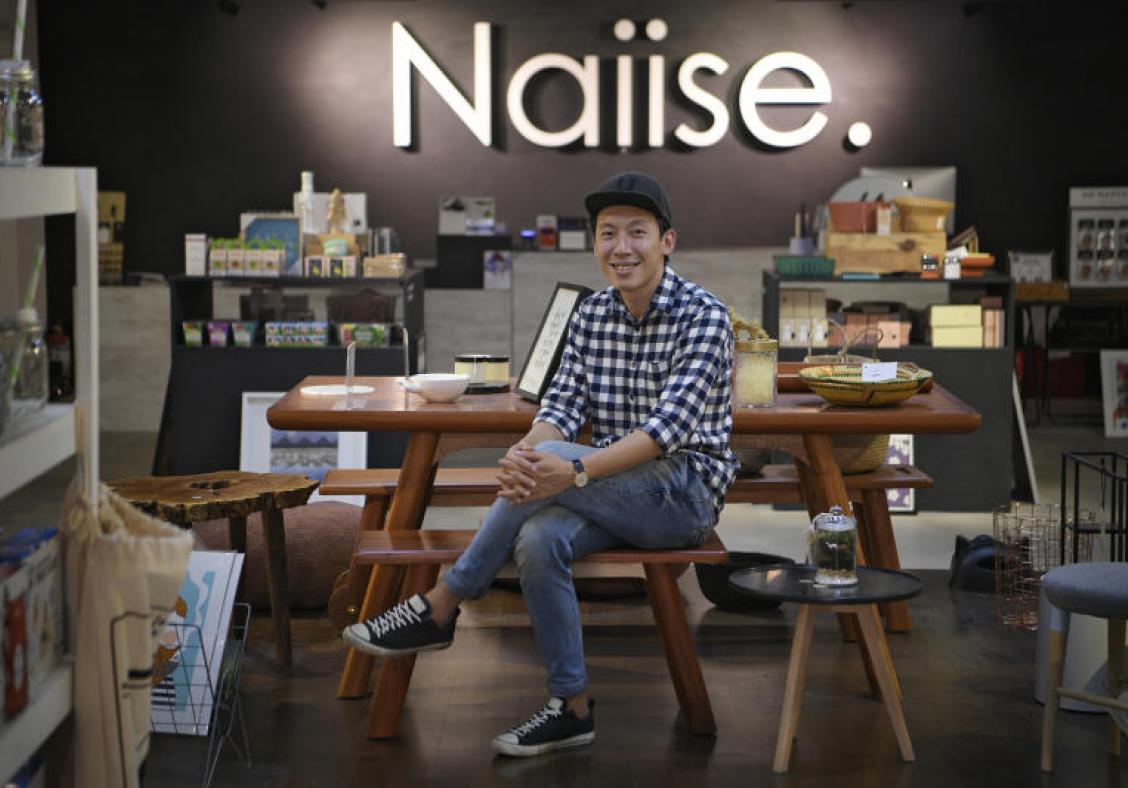
    Singapore gift and homewares chain Naiise has closed its last store – the Iconic at Jewel Changi Airport – suggesting the end of the eight-year-old brand.

    Multiple sources say Naiise has collapsed due to its inability to paying debts to suppliers, and weak sales in the wake of the Covid-19 pandemic. Opened in May 2019, Naiise Iconic at Jewel Changi was considered one of the company’s biggest investments, unknowingly made at the wrong time – just before Covid hit.

    Last year, the retailer fielded multiple complaints from vendors accusing of defaulting payments. At the same time, Naiise’s co-founder Amanda Eng reportedly quit her role in the company.

    According to Today, Naiise owes up to US$7500 to vendors, many of whom have ended their relationship with Naiise and given up claims on the grounds the legal process is too costly and time-consuming.

    “My game-publishing studio has been a vendor of Naiise since 2015 and we have been owed money since 2018,” said Lye Wen Song Xeo, co-founder of Capital Gains Studio wrote on Facebook. “Promises made to repay have all been broken again and again and we had no choice but to pull our games out early last year.”

    “Covid-19 has been very hard on many of our distributors and I appreciate those distributors that came clean with us and honestly shared with us their problems and what their plans [were] if they are unable to pay us. However, shirking responsibilities and not coming clean with your vendors is honestly… not Naiise,” said Xeo.

    Despite its physical stores closing, Naiise continues to trade online and at a Kuala Lumpur outlet. Founded in 2013, Naiise had six stores in Singapore and Malaysia.

  • UOB Names Sustainability Chief

    UOB Names Sustainability Chief

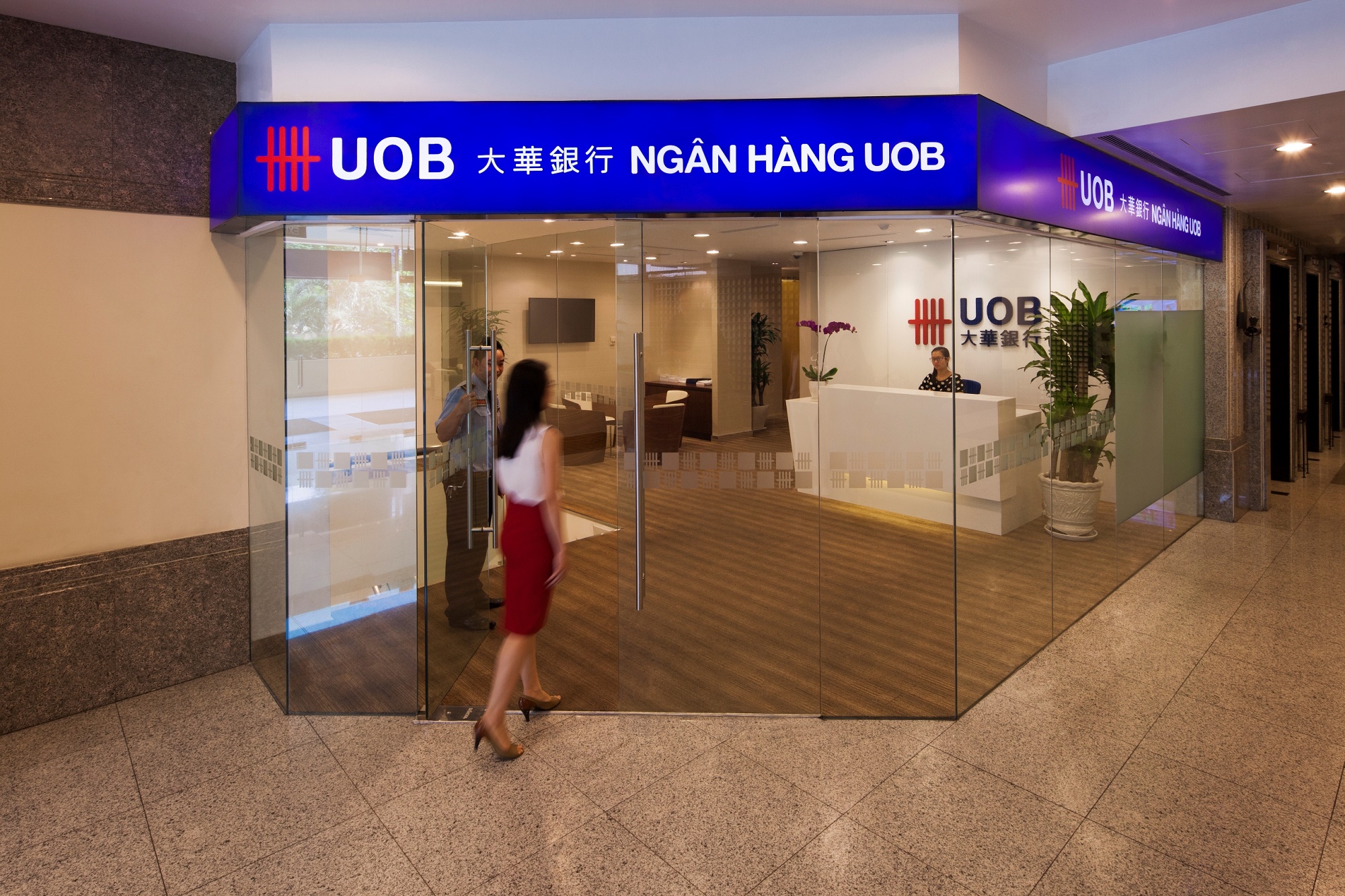
    UOB appoints a chief sustainability officer in yet another industrywide move towards expanding the green finance market.

    Eric Lim has been named as the Singapore bank’s CSO, according to a statement, as an extension to his existing role as head of group finance.

    Lim also joins UOB’s management committee and reports directly to deputy chairman and CEO Wee Eee Cheong.

    Lim’s new responsibilities include ensuring «synergies» between the bank’s sustainability strategy and financial performance management.

    He is also the chairperson of UOB’s group environmental, social and governance (ESG) committee which is tasked with

  • Mercedes-Benz Global Sales Up By 22.3% In Q1 2021

    Mercedes-Benz Global Sales Up By 22.3% In Q1 2021

    Mercedes-Benz cars sold 590,999 passenger cars globally in the first quarter of 2021 driven by China and US retail sales as well as strong demand for plug-in hybrids and all-electric vehicles. This marks a jump of 22.3 percent in sales globally compared to the same period last year. In Europe, one in four cars sold by Mercedes-Benz and smart was an xEV.

    Globally, plug-in hybrids and all-electric cars made up about 10 percent of overall sales, with approximately 59,000 units and thereof more than 16,000 all-electric vehicles sold. The EQA too has been well received after it was launched in January this year. The company already has 20,000 orders for the EQA. Given the strong start, the company is looking to bring in 3 new models the EQS, EQB, and the EQE this year.

    The current worldwide shortage of supply in certain semiconductor components affected deliveries in the first quarter and will continue to affect sales in Q2. The company monitors the situation closely and is in constant contact with the suppliers.

    Sales of Mercedes-Benz in the Asia-Pacific region rose 46.6 percent due to the continuing strong sales development in China: where a new record was achieved with 222,520 cars delivered in Q1. In January, sales in China almost reached the milestone of 100,000 vehicles within a single month. In the Europe region, brand deliveries were despite ongoing lockdown measures in many markets at the beginning of the year slightly above Q1 2020. In Germany, Mercedes-Benz sold a total of 54,446 cars down by 15.4 percent while sales in the North America region totaled 88,318 units showing strong growth of 12.5 percent.

    In India, the company recorded a growth of 34 percent over Q1 202