Author: Mei Ling Tan

  • China Mobile Cloud Signs Zhipu to Link GLM Models and Build Coding Tools

    China Mobile Cloud and Zhipu signed a cooperation pact on November 6 to connect the GLM model family to the operator’s MoMA service platform.

    The agreement establishes a joint development center focused on token generation efficiency, targeting domestic hardware adaptations alongside financial services and government contracts.

    Technical teams from both companies plan to tune Zhipu’s models specifically for Chinese-made computing processors. The partnership outlines shared research into inference performance, yet neither company published baseline efficiency figures or an operational schedule for customer deployments. Access arrangements, service-level commitments and supported versions within the GLM lineup were also omitted from the joint filing.

    Hardware Adaptation and Coding Tools

    Beyond platform hosting, the two companies plan to develop joint AI coding applications for commercial software engineers. The announcement outlined an integrated product program without releasing software names, development roadmaps or public testing dates.

    For enterprise buyers, the lack of a timetable leaves procurement teams waiting on functional specifications. Developers evaluating enterprise assistants must weigh unreleased software against tested tools already running on commercial clouds across mainland China.

    Rival Hyperscalers Build Token Tariffs

    Commercial cloud operators in China are locking enterprise accounts into aggressive subscription packages rather than unpriced development agreements. Alibaba Cloud already offers its AI Token Plan starting at $6 a month on its Model Studio service, bundling its proprietary Qwen lineup alongside DeepSeek and GLM models. Alibaba also sells dedicated enterprise engineering assistants, such as Qoder, directly to corporate IT departments.

    State-backed telecom operators often hold strong connections to public sector budgets, but commercial developers demand transparent pricing and tested inference pipelines. China Mobile Cloud must show that domestic silicon can match commercial cloud economics on cost per million tokens. Without published benchmarks, enterprise procurement officers will treat the venture as an exploratory project rather than an immediate supplier switch.

    From Transport Compute to Platform Hosting

    China Mobile has been steering its infrastructure divisions toward specialized vertical computing workloads. The carrier previously launched an automotive AI foundation featuring 112 exaflops of computing power and six specialized agents for vehicle manufacturers. Adding Zhipu’s models to MoMA extends that infrastructure strategy into general business software, banking risk engines and municipal administration.

    Commercial validation now hinges on the release of concrete access tiers, supported GLM versions and billing schedules on China Mobile Cloud’s MoMA catalog.


  • Pakistan Fuel Marketers Add 96 Retail Stations Across Country

    Pakistan Fuel Marketers Add 96 Retail Stations Across Country

    Oil marketing companies across Pakistan expanded their fuel retail forecourts during 1QFY27, commissioning dozens of new petrol pumps despite national targets aimed at electric vehicle adoption. Market leader Pakistan State Oil completed 37 new retail sites during the three-month period, lifting its nationwide network to 3,727 stations, the largest footprint in the country.

    Wafi Energy Pakistan Ltd added 54 new Shell retail sites and nine electric vehicle charging locations during the first nine months ending Sept 30. The sustained commercial buildout indicates that forecourt operators continue betting on rising petrol demand over official electrification goals.

    Under the Auto Policy 2026-31, the government aims to make 30 per cent of all new vehicles electric by 2030. Yet distributors on the ground are responding to daily road traffic anchored by petrol-powered two-wheelers and 660-1,000cc cars, which remain the primary mobility choice for consumers navigating weak public transit networks.

    Network Expansion Along Freight Corridors

    Attock Petroleum commissioned five new retail outlets during the quarter while decommissioning six underperforming locations under a network optimisation programme. Its operational network counted 816 stations on September 30, including 46 company-owned, company-operated sites.

    Private distributors are chasing traffic along newly built highways, bypasses and motorways linking northern transit points. Forty-eight licensed distributors maintain active operations across the country out of 50 permits issued by regulators. Forecourt operators focus investments on high-throughput intercity arteries where commercial vehicle flow guarantees daily volume.

    Commuters rely on personal two-wheelers because metropolitan transit systems remain patchy and overburdened. When petrol prices fluctuate following international supply shocks, consumers turn to smaller displacement engines rather than abandoning combustion models entirely. That consumer preference shields forecourt retailers from sudden drops in fuel transactions.

    Slow Build for Charging Hubs

    Electrification investments remain modest additions to existing forecourt footprints. Pakistan State Oil installed chargers in Faisalabad and Multan during the quarter, bringing its charging network to 16 locations nationwide.

    Attock Petroleum activated highway charging points at the Dandiwal Service Areas on the M-4 Motorway through a venture with Hubco Green. The distributor also installed a heavy-duty charger at a company-owned site in Islamabad with Huawei Technologies Pakistan and AE Power Energy, with plans to equip 13 more stations.

    Forecourt operators argue that gas stations represent poor locations for battery recharging. Globally, drivers of electric bikes and passenger cars recharge at homes, apartments and commercial shopping centres rather than sitting at roadside forecourts. State pressure to add chargers at petrol stations therefore runs against natural consumer refuelling habits.

    Motorcycle Volumes Sustain Forecourt Footfall

    Vehicle fleet economics heavily favour gasoline distributors. The country holds 30 million motorcycles, five million cars and 10 million rickshaws on its roads, with no statutory retirement policy requiring old combustion engines to be scrapped after decades of use.

    Between 50 and 60 per cent of two-wheelers rely on petrol. Local assembly plants turned out 442,179 motorcycles during July and August, up from 321,788 units in the prior-year period. Assembly reached 2.416 million two-wheelers in fiscal 2026, compared to 1.692 million in fiscal 2025.

    Electric alternatives gained ground from a low base, with electric two-wheeler sales rising to 240,000 units in fiscal 2026 from 60,000 units in fiscal 2025. Passenger car sales for the first quarter of fiscal 2027 reached 41,872 units, climbing from 29,318 units a year earlier, even as purchases of larger sport utility vehicles, pickups and vans dropped to 8,608 units from 12,949.

    Attock Petroleum plans to install charging hardware across 13 additional retail locations as oil marketing companies monitor whether state regulators will force further capital spending into commercial charging hubs.

  • Indonesia’s Annual Inflation Eased to 3.23% in October

    Indonesia’s Annual Inflation Eased to 3.23% in October

    Indonesia’s annual inflation eased slightly to 3.23% in October 2026 from 3.28% in September, Central Statistics Indonesia (BPS) reported on Monday. The result keeps price growth within the government’s target band of 2.5% ± 1%, with food, transportation and personal care costs driving the index.

    Addressing reporters at a hybrid press conference at agency headquarters, BPS Deputy for Distribution and Services Statistics Ateng Hartono noted that the national consumer price index climbed to 112.56 in October 2026 from 109.04 a year earlier. Across the provinces, annual inflation ranged from a low of 2.52% in Jakarta to a peak of 8.07% in North Sulawesi.

    By expenditure group, food, beverages and tobacco added 1.4 percentage points to headline inflation as prices climbed 4.82% year-on-year. Ateng identified bird’s eye chilli, fresh fish, rice, cooking oil, broiler chicken, machine-made kretek cigarettes and beef as the primary upward drivers within the basket.

    Food and Household Staples Drive Index Gains

    Expenditure on food, beverages and tobacco delivered the biggest push to the national headline rate, climbing 4.82 per cent year-on-year and contributing 1.40 percentage points to the total figure. Within this basket, agency officials identified bird’s eye chilli, fresh fish, milled rice, cooking oil, broiler chicken, machine-made kretek cigarettes and beef as the primary upward drivers.

    The volatile food basket advanced 5.81 per cent on an annual basis, contributing 0.96 percentage points to the headline reading. That rate outstripped both core and administered components, underlining persistent retail price friction in basic wet-market and supermarket perishables.

    Core inflation registered at 2.56 per cent, accounting for 1.64 percentage points of the national total. Beyond food staples such as cooking oil and rice served with side dishes, core baskets reflected price increases across gold jewellery, mobile phones, laptops and engine lubricants.

    Logistics and Personal Care Add Broad Pressure

    Transportation recorded the second-largest category contribution, rising 4.87 per cent annually and adding 0.59 percentage points to the aggregate print. Higher domestic outlays for gasoline, air passenger fares, engine lubricants, motorcycles, private vehicles and workshop maintenance services drove the sector upward.

    Administered prices regulated by public authorities advanced 3.24 per cent year-on-year, contributing 0.63 percentage points. Gasoline tariffs, commercial aviation tickets, kretek cigarettes and domestic household fuels drove the bulk of that index basket.

    Personal care and miscellaneous services advanced 4.52 per cent, contributing 0.32 percentage points to the annual print. Central Statistics Indonesia Deputy for Distribution and Services Statistics Ateng Hartono noted that higher retail prices for gold jewellery underpinned gains across the personal goods category.

    “The annual inflation rate in October 2026 stood at 3.23%, with the consumer price index rising from 109.04 in October 2025 to 112.56 in October 2026,”

    Regional Divergence Across the Archipelago

    Price trends fractured across island markets. North Sulawesi posted the steepest annual inflation rate in the country at 8.07 per cent, driven by elevated regional distribution costs and local food price increases. Jakarta recorded the lowest annual figure among all provinces at 2.52 per cent, benefiting from tighter supply-chain integration and dense modern grocery retail infrastructure.

    For consumer goods manufacturers and retail chains, persistent inflation across staple groceries and vehicle running costs constrains discretionary purchasing power outside top-tier urban centres. While top-line inflation sits within official macroeconomic thresholds, the sticky 5.81 per cent climb in volatile food forces middle-income households to divert cash from apparel, electronics and dining toward fundamental pantry items.

    The factory side of the domestic economy showed counterbalancing strength. Indonesia’s Manufacturing Purchasing Managers’ Index rose to 54.0 in October from 52.4 in September, indicating expanding factory output and rising order volumes across consumer goods producers.

    Preceding Trajectory and Factory Output

    The October print marks a fractional deceleration after two straight months of accelerating cost pressure. Annual inflation had risen to 3.19 per cent in August before quickening to 3.28 per cent in September on food and fuel adjustments.

    Broader external trade data also reflected shifting domestic demand. Indonesia logged a merchandise trade surplus of $3.36 billion in September, based on exports of $27.59 billion and imports of $24.23 billion.

    Consumer product groups and retail operators now track the upcoming November harvest yields and regional logistics fuel costs to determine whether volatile food inflation eases back toward the central bank’s midpoint target.

  • Malaysia Health Ministry Probes Gardenia Bakeries over Illness Reports

    Malaysia Health Ministry Probes Gardenia Bakeries over Illness Reports

    Malaysia’s Ministry of Health launched an investigation into Gardenia Bakeries (KL) Sdn Bhd this week following consumer complaints linking two core packaged products to food poisoning. Regulators are running laboratory tests on collected samples and preparing follow-up inspections at the company’s production plant to verify compliance with the Food Act 1983.

    The inquiry focuses on Gardenia Original Classic White Bread and Twiggies Choc-A-Lot snack rolls, two staple packaged bakery lines distributed nationwide. Health officials sought a formal explanation from the commercial baker after digital media reports and social postings documented consumers suffering vomiting and diarrhoea.

    In response, Gardenia submitted an internal review indicating zero process deviations or standard operating breaches across its facilities.

    Factory Controls Under Scrutiny

    Gardenia’s internal review concluded that production lines maintained full compliance with food safety controls. The company reported finding no recipe modifications, process deviations or procedural breaches at its plants.

    Ministry investigators noted that product traceability remains constrained because batch numbers and expiry dates submitted by complainants were incomplete. Health officials nevertheless gathered remaining products along with original packaging directly from consumers to conduct microbiological and chemical assays.

    Supply Chain and Retail Exposure

    Packaged bakery goods rely on rapid inventory turns and short shelf-life distribution networks across convenience stores, hypermarkets and petrol stations. Any confirmed contamination or mandatory recall disrupts retailer shelf allocations and exposes FMCG distributors to immediate inventory write-offs.

    Gardenia operates as the dominant industrial baker in the Malaysian retail landscape, commanding substantial market share. For commercial retailers, bread represents high-frequency basket traffic, meaning supplier compliance checks and fast inventory tracking are critical to ringfencing store liability.

    Enforcement Under the Food Act

    Health officials clarified that the manufacturer’s internal review does not constitute a definitive finding. The ministry reiterated that regulatory enforcement steps will follow if laboratory outcomes identify contamination or legal non-compliance.

    Regulators instructed affected consumers to report incidents through the SiSPAA public complaints management system and seek clinical treatment at local health centres. The outcome of the ministry’s laboratory analysis will determine whether health authorities order a formal product recall or issue factory-level sanctions under the Food Act 1983.

  • Philippines Pours 887 Million Pesos into Creative Production

    Philippines Pours 887 Million Pesos into Creative Production

    The Philippine Department of Science and Technology poured 886.5 million pesos into 76 commercial creative projects by 2026 to counter heavy import reliance across domestic consumer categories.

    Philippine imports of creative goods reached 711 billion pesos, outstripping exports of 320 billion pesos by more than double and leaving a trade deficit of 391 billion pesos.

    Administered through the Philippine Council for Industry, Energy, and Emerging Technology Research and Development, the capital deployment splits across six distinct manufacturing and tech segments. Agency head Renato U. Solidum Jr. Detailed the disbursements during the opening of the Creative Summit 2026, targeting commercial viability for regional goods.

    Where the Capital Goes

    Traditional manufacturing received the largest single allocation, absorbing 481.8 million pesos across 23 projects. The funding directly supports handloom weaving, furniture production, footwear manufacturing, bamboo musical instruments and jewelry fabrication.

    Digital entertainment took the second-largest share, with 176.5 million pesos assigned to 20 ventures spanning video games, digital animation, film production, augmented reality and virtual reality. Early-stage enterprises captured 108.9 million pesos across 15 initiatives covering technology business incubators, commercial startups and social enterprises.

    Heritage conservation secured 49.1 million pesos across eight structural restoration projects, while 46.5 million pesos went to three interactive exhibition galleries and travelling science shows. The remaining 23.7 million pesos financed seven specialized testing facilities, establishing technical laboratories for footwear development, acoustics research and natural language processing under the Research on Regional Innovations program.

    The Trade Deficit Barrier

    For retailers and consumer brands sourcing inside Southeast Asia, the state intervention highlights an acute competitive imbalance. Philippine store shelves rely heavily on foreign merchandise for high-margin decorative home goods, apparel and interactive media, even as domestic output expands.

    Bridging that gap requires turning craft operations into predictable suppliers capable of meeting institutional volume. Without standardized quality control and sustained raw-material access, independent weavers and shoemakers struggle to supply organized department store chains or regional export buyers.

    Solidum pointed out that the central technical bottleneck lies between laboratory prototypes and finished retail inventory. Creators also face intellectual property exposure alongside mounting competition from generative artificial intelligence tools that undercut commercial design fees.

    “There is a large opportunity for Filipino creative goods to be better, more competitive, and more widely sold, at home and abroad,” Mr. Solidum said.

    Tracking Sector Momentum

    Official data indicates the broader domestic sector retains commercial momentum despite its trade deficit. Philippine Statistics Authority figures show the creative economy generated 2.12 trillion pesos in value during 2025, climbing 6.9 per cent from 1.98 trillion pesos in 2024.

    Capturing a larger share of that value requires state agencies to coordinate directly with commercial distributors. The Department of Science and Technology plans to adjust its research and development roadmaps around market uptake while integrating local creators with private retail partners.

    Success for the 886.5-million-peso portfolio depends on whether the 76 supported projects translate into factory orders and lower the 711-billion-peso import bill before the agency issues its next budget review.

  • EU Trade Talks Put Thai Seed Rules and Farm Costs in Focus

    EU Trade Talks Put Thai Seed Rules and Farm Costs in Focus

    Negotiations for a free trade agreement between Thailand and the European Union have brought intellectual property standards for agriculture to the fore, with Brussels proposing alignment under the 1991 International Convention for the Protection of New Varieties of Plants (UPOV 1991).

    Adopting the framework could lift domestic crop production costs by up to 1,000 baht per rai and push consumer prices for rice-based products up by 4%, according to projections cited by Aat Pisanwanich, a lecturer at Rangsit University’s Institute of Economics.

    As of November 2026, Thailand regulates plant varieties under its Plant Varieties Protection Act of 1999 and has taken no formal stance on accession, even as regional trade partners prepare bilateral pacts scheduled for implementation through 2027.

    The Cost Burden on Farm Inputs and Shelf Goods

    Seed procurement represents between 10 per cent and 15 per cent of total crop production costs in Thailand, based on operational metrics from the Thai Seed Trade Association. Shifting to international breeder mandates would alter those balance sheets quickly. Production costs for staple paddy rice would increase by 125 to 500 baht per rai, while feed corn costs would rise by 200 to 800 baht per rai. Industrial sugar cane crops face added outlays between 250 and 1,000 baht per rai, and tapioca expenses would jump by 125 to 500 baht per rai.

    For food manufacturers, feed millers, and grocery distributors, these upstream increases squeeze operating margins along the retail supply chain. The projected 4 per cent consumer price increase on packaged rice and processed grain products comes as food retailers across Southeast Asia work to contain shelf inflation. While commercial seed companies argue that stronger intellectual property laws spur private research and development, commercial buyers face immediate procurement pressure.

    Regional Precedents Across Southeast Asia

    Vietnam provides an operating precedent for what happens when a regional farm exporter signs the agreement. Hanoi acceded to UPOV in 2006 before implementing its bilateral trade pact with the European Union in August 2020. Commercial breeders increased their registered local varieties by 50 per cent following accession. Seed prices for those protected crop lines rose six to eight times above standard open varieties, concentrating input supply among licensed private distributors.

    India took a divergent path by rejecting UPOV membership entirely, relying instead on its domestic protection framework under the World Trade Organization TRIPS agreement to protect farmers alongside commercial breeders. That stance did not block market access: New Delhi concluded its free trade agreement negotiations with the European Union, with formal signing scheduled for 16 December 2026. Meanwhile, Indonesia adopted the 1991 standards with bespoke domestic exemptions as it prepares for its EU trade pact to take effect in January 2027.

    Legislative Conflicts and Breeder Rights

    Commercial seed houses maintain that greater intellectual property protection will not distort open-market retail pricing if variety choice expands. The Thai Seed Trade Association wants the government to amend the 1999 domestic act by clarifying the legal definitions of general domestic plant varieties, preventing companies from claiming existing public germplasm while establishing protection for newly engineered strains. The group also advocates retaining legal allowances for smallholders to save seed supplies across seasons.

    Thidakoon Saenudom, director of the Plant Standard and Certification Division at the Agriculture Department, argued for explicit state backing for public cultivation pipelines. “The government must allocate sufficient funding for plant breeding R&D to ensure that publicly developed varieties remain available as an alternative for farmers.”

    Trade negotiators in Bangkok continue to review the agricultural chapter of the European trade text without taking a formal accession stance. Commercial operators and packaged food brands are tracking the ministerial review of draft exemption clauses, which will establish whether staple cereal grains receive statutory carve-outs before final bilateral ratification schedules are set.

  • Zepto Delivers 14,000 Gold and Silver Coins an Hour in Festive Shift

    Zepto Delivers 14,000 Gold and Silver Coins an Hour in Festive Shift

    Indian quick-commerce platform Zepto delivered more than 14,000 gold and silver coins per hour at peak demand during Dhanteras, signalling a rapid move away from traditional physical markets.

    Co-founder and chief executive Aadit Palicha revealed that purchases reached nearly 298 precious metal coins in a single minute, demonstrating how instant logistics networks are capturing high-ticket holiday retail alongside everyday staples.

    Competitor Swiggy Instamart witnessed a parallel surge in consumer spending throughout the festive week, logging a 23-fold increase in gold coin orders and a sevenfold increase in silver purchases ahead of Dhanteras.

    Surging Volumes Across Traditional festive Goods

    The rush extended far beyond precious metals into household items tied to Hindu festive rituals. Broom sales climbed 38.6 times compared to an ordinary day, while steel utensil orders rose 20 times and decorative light volumes multiplied by 18.2 times.

    Shoppers also turned to instant delivery for ritual accessories and apparel. Zepto moved roughly 6,000 units of rangoli colours and cotton wicks per hour during peak windows, while men’s kurta orders increased 5.4 times.

    Rival Platforms See High-Ticket Dhanteras Orders

    Rival operator Swiggy Instamart recorded a parallel spike in consumer spending during the festive week. Orders for gold coins surged 23 times in the seven days leading up to Dhanteras, while silver coin transactions expanded sevenfold.

    Basket values reflected immense consumer trust in delivery riders carrying high-ticket goods across Indian metros. One customer spent Rs 1.73 lakh on gold coins in a single checkout, while a shopper in Noida completed nine separate orders totalling nearly Rs 5 lakh.

    Instant Delivery Rewires Indian Festive Commerce

    For neighborhood jewellers and bazaar merchants, the Dhanteras numbers point to an immediate structural challenge. Indian families traditionally visited neighborhood jewellery stores to examine hallmarked coins and purchase brass or steel kitchenware in person, treating the outing as an essential holiday ritual.

    Dark store networks have broken that habit by delivering physical commodities to doorsteps in ten minutes flat. Quick commerce operators now hold high-value inventory in temperature-controlled suburban micro-warehouses, bypassing traditional showroom overheads while offering rapid doorstep fulfilment.

    Dark Store Economics Expand Beyond Groceries

    Grocery orders historically gave quick commerce operators low gross margins, forcing platforms to search for higher-margin merchandise to offset courier fuel and warehouse labour. Precious metals, fashion apparel, and kitchen appliances generate higher basket values that improve order economics instantly.

    The logistical risk shifts squarely to shrink control and rider security. Couriers transporting lakhs worth of bullion through crowded holiday traffic create distinct operational liabilities that ordinary milk and snack deliveries never presented.

    The Trajectory of Ultrafast Retail Diversification

    The pivot into seasonal bullion follows months of aggressive category expansion by quick commerce operators like Zepto and Swiggy Instamart. Platforms initially tested electronics, beauty, and small home appliances before attempting high-security precious metals.

    As platforms compile final order volumes from the broader Diwali shopping window, the key metric remains return rates and inventory turnover across non-grocery categories as dark store operators prepare their merchandise mix for the upcoming wedding season.

  • L’Occitane Sells Elemis to PAI Partners as Sales Top USD 300 Million

    L’Occitane Sells Elemis to PAI Partners as Sales Top USD 300 Million

    L’Occitane Group agreed to sell British skincare brand Elemis to French private equity firm PAI Partners after net sales at the label topped USD 300 million. The companies announced the agreement on November 4 without disclosing financial terms.

    Regulatory approvals will determine the closing timeline, scheduled for the first quarter of 2027. The divestment unwinds the largest acquisition in L’Occitane’s history, completed in 2019 under billionaire owner Reinold Geiger for USD 900 million.

    Seven Years of Expansion

    Elemis almost doubled its net sales during its seven years inside the French personal care group. Online platforms generate nearly half of its sales, while the United States accounts for roughly half of its total business.

    Geiger bought out minority shareholders and delisted L’Occitane from the Hong Kong Stock Exchange in 2024, ending a 14-year run on the Asian bourse that began in 2010. The group generated EUR 2.8 billion in global net sales for the fiscal year ended March 31, 2025, up 12 per cent year-on-year at constant exchange rates.

    “This transaction reflects a disciplined portfolio decision, focused on creating long-term value for the Group,” he said.

    Refocusing Capital After Hong Kong Delisting

    L’Occitane spent years pitching its dual French heritage and Asian retail footprint to investors in Hong Kong. Offloading Elemis frees up balance sheet capacity for the group’s faster-growing fragrance and body care divisions, led by Sol de Janeiro alongside Erborian, Melvita and flagship L’Occitane en Provence.

    Rival multi-brand conglomerates across Asia have similarly pulled back from bloated brand rosters. Operators in department stores and travel retail hubs must now prepare for PAI to pivot Elemis distribution toward standalone retail and digital channels in Western markets, reallocating counter space that previously leaned on L’Occitane’s corporate muscle.

    Private Equity Direction

    PAI partners Gaëlle d’Engremont and Colm O’Sullivan said their operational priorities centre on expanding digital commerce and pushing further into the United States while retaining the brand’s British positioning. Elemis was established in 1989 and built its early trade through spas and salon networks.

    Scrutiny now turns to the regulatory clearance process leading into the targeted first-quarter 2027 closing date. Retail investors will watch whether L’Occitane uses the proceeds to retire debt from its 2024 take-private buyout or reinvest in its remaining Asian skincare assets.

  • David Konckier Buys 687-Store Perfumery Chain Marionnaud

    David Konckier Buys 687-Store Perfumery Chain Marionnaud

    David Konckier, the main shareholder of Bogart Group, has finalized the acquisition of selective perfumery retailer Marionnaud Group through his personal company BEHN following an initial agreement announced on July 6.

    The deal transfers control of the chain from Hong Kong-based conglomerate CK Hutchison, parent of the AS Watson retail group, after more than 20 years of ownership.

    Marionnaud generates approximately EUR 650 million in annual revenue, employs nearly 4,200 people, and operates 687 stores across eight countries.

    Shedding non-core European perfumery assets

    For AS Watson and CK Hutchison, parting with Marionnaud trims an overseas selective perfumery commitment that has faced stiff competitive pressure and rising operating overheads across Western Europe. AS Watson originally bought the chain to gain quick scale in Continental Europe. Yet selective perfumery demands high staffing ratios, expensive prime real estate leases, and continuous capital outlays, conflicting with the leaner, high-turnover health and beauty drugstore model that drives the group’s core revenue.

    European retail has delivered sluggish discretionary spending over consecutive quarters. AS Watson has increasingly concentrated its capital expenditure and store expansion programs on high-yield Asian retail circuits, where pharmacy and personal care sales generate faster inventory churn than prestige European fragrances.

    Expanding retail network for Bogart brands

    Bogart Beauty Retail operates around 450 perfumeries and drugstores across Europe and the Middle East, including the April Beauty and DI fascias in France, Belgium, Luxembourg, and Israel, HC Parfumerie and Gottman in Germany, and Fann in Slovakia. Adding Marionnaud’s 687 doors effectively gives Konckier influence over more than 1,100 specialty beauty doors in European high streets and shopping centres.

    The immediate operational challenge sits in network rationalization and inventory integration. Bogart’s own retail division saw its revenue fall 7.1 per cent to EUR 93.1 million in the first half of 2026, pressured by slow discretionary consumer demand and active store closures in France, Belgium, and Germany. Marionnaud must absorb Konckier’s proprietary fragrance and cosmetics lines without cannibalizing existing third-party luxury supplier arrangements that anchor its prestige counter business.

    Restructuring precedes deal completion

    The takeover follows an initial purchase agreement announced on July 6 between Konckier’s holding entity and CK Hutchison. The sale process unfolded while Bogart was reporting first-half 2026 revenue of EUR 114.7 million, down 7.4 per cent at current exchange rates and 5.3 per cent lower on a like-for-like basis.

    Bogart’s separate perfumes and cosmetics manufacturing unit produced modest like-for-like sales growth of 0.4 per cent to EUR 21.6 million over the same six-month window. Management relies on fresh wholesale placements and shelf-space additions to turn that metric higher.

    Attention now turns to how rapidly Konckier integrates Bogart’s manufactured fragrance brands into Marionnaud’s 687 stores, and whether CK Hutchison deploys the divestment proceeds into expanding AS Watson’s Asian drugstore network.

  • Aldi to Reach 150 China Stores by End of 2026

    Aldi to Reach 150 China Stores by End of 2026

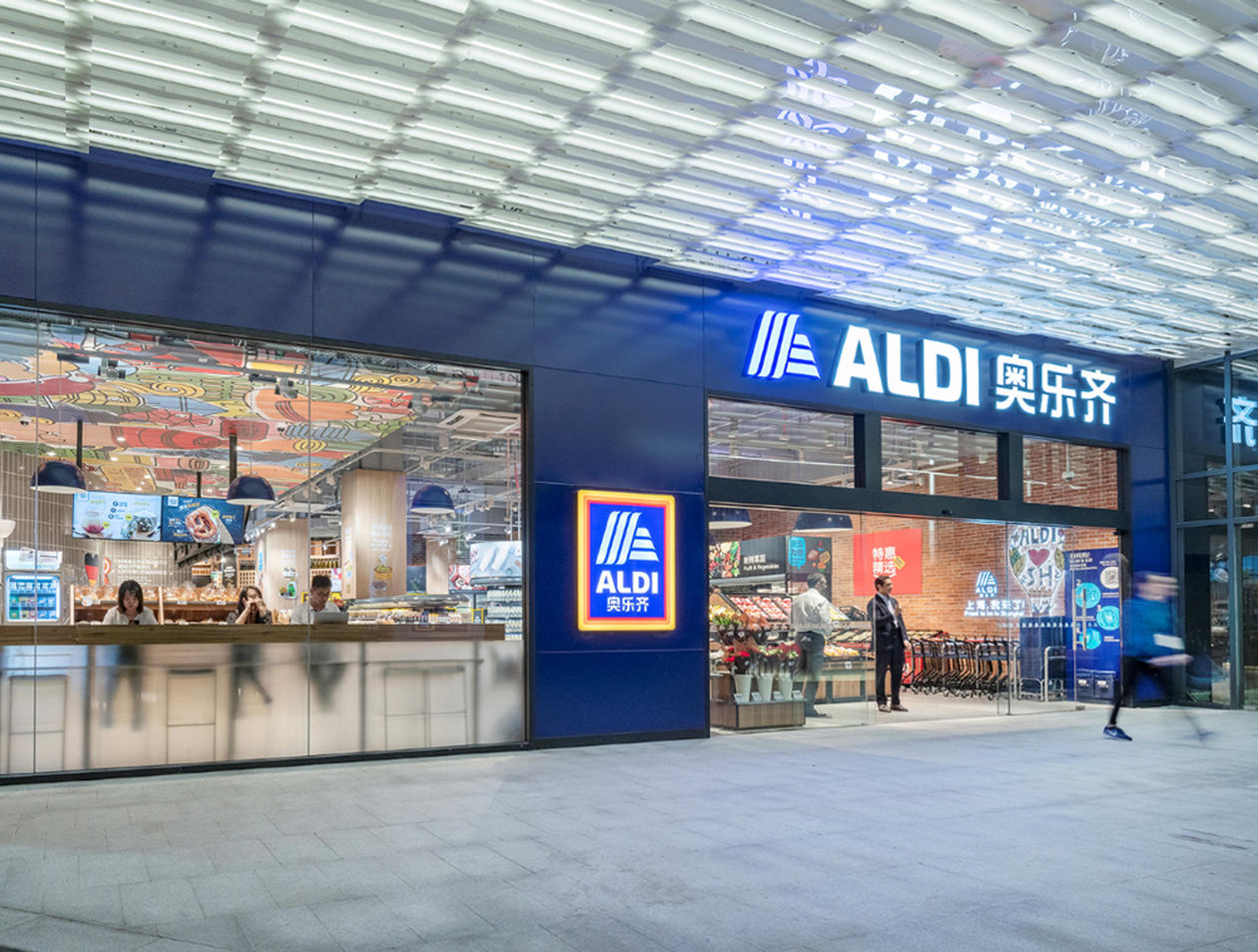
    Aldi is doubling its store expansion pace in China to reach 150 outlets nationwide by the close of 2026. The German hard-discount chain expects to launch around 60 locations this year, roughly twice its annual total from earlier years, China chief executive Jacqueline Chen said in an interview published this week.

    Expanding from Shanghai into Jiangsu

    The company operates more than 70 stores in Shanghai and over 50 across the southern region of Jiangsu province. Most locations run on a compact footprint of roughly 1,000 square meters, carrying about 2,000 stock-keeping units. Over 90 percent of those goods are private labels, allowing the retailer to bypass third-party distributors and strip out wholesale markups.

    To support that density, Aldi recently brought online its third major warehouse in East China, located in Nanjing. Supply chain capacity must be built before entering a new market, Chen said, pointing out that the distribution hub will let the company launch regional branches faster while balancing logistics costs, speed and inventory resilience.

    The Psychology of the Ten Yuan Anchor

    Price architecture drives the operational model. Between a quarter and a third of all products on Aldi shelves in China sell for less than CNY10 (USD1.49). Merchandise buyers identify the band between CNY9.90 and CNY12.90 as the critical psychological threshold to secure impulse basket additions, with shopper conversion dropping steeply once single-item pricing crosses CNY13.

    Domestic rivals including Kinglomo, Mart Fresh and Sanjiang Shopping Club are competing aggressively around the same ten-yuan price point. Across Chinese retail, discount formats and membership warehouse clubs remain the sole grocery models gaining share in an otherwise strained consumer environment. Warehouse clubs serve mid-to-high-income households buying in bulk, leaving discount supermarkets to mop up high-frequency foot traffic with low-cost daily necessities.

    Supplier Margins and Format Risk

    Aldi is betting that intense urban density inside the Yangtze River Delta can insulate it from the deflationary price battles hurting conventional hypermarkets. Big-box grocery chains across eastern China have struggled with large physical footprints and costly vendor fees, creating opportunities for smaller neighborhood stores. By leaning on local manufacturing for proprietary labels, the chain protects gross margins that traditional grocers lose to national brand allowances.

    The risk sits in category depth and supplier stickiness. Regional domestic operators have copied the limited-assortment private-label model with faster localized sourcing cycles, while suppliers face shrinking margins under Aldi’s cost-plus purchasing contracts. If identical ten-yuan staple goods saturate local wet markets and convenience chains, retaining customer traffic will require constant product rotation rather than price cuts alone.

    Building Out East China Footprint

    Aldi entered the Chinese mainland market in 2019, initially using cross-border e-commerce before setting up physical neighborhood locations across Shanghai. Over the subsequent five years, it calibrated its assortment from imported European specialty foods toward domestic hard discount, steadily pushing out of Shanghai’s central wards into secondary cities across Jiangsu.

    The immediate benchmark is the completion of the 2026 expansion schedule, which requires delivering the remaining pipeline of the planned 60 openings to hit the 150-store fleet total before the close of December.

  • Biman Signs Deals to Buy 35 Aircraft from Boeing and Airbus

    Biman Signs Deals to Buy 35 Aircraft from Boeing and Airbus

    Biman Bangladesh Airlines has signed agreements to buy 35 aircraft, splitting orders between 25 Boeing and 10 Airbus jets to expand beyond its existing fleet of 19 planes.

    The procurement accelerated even as former Civil Aviation and Tourism Minister Afroza Khanam urged an integrated revenue assessment on April 22, just eight days before Biman agreed to purchase 14 Boeing jets.

    Biman added 11 more Boeing aircraft on September 23 and signed for 10 Airbus planes on October 7, while facing unpaid claims exceeding Tk 7,000 crore from CAAB and Padma Oil.

    Outstanding Dues and Sovereign Risk

    The rapid acquisition pipeline contrasts sharply with Biman’s accumulated domestic balance-sheet arrears. The Civil Aviation Authority of Bangladesh (CAAB) holds Tk 5,842.91 crore in outstanding dues and surcharges against the airline as of August, while state-owned Padma Oil reported an additional Tk 1,232.71 crore in unpaid jet fuel bills.

    State authorities intend for Biman to finance the purchases through operating cash flow with the government acting as guarantor. Default on those obligations would shift payment liabilities directly to public finances, an exposure compounded by the absence of published route-by-route viability audits.

    “The real burden will be in the end borne by the taxpayers of the country,” said Dr Iftekharuzzaman, executive director of Transparency International Bangladesh, citing the absence of financial disclosures and procurement clarity.

    Fleet Strategy and Consultant Reviews

    Fleet planning took place after commercial commitments were already executed. Biman issued a tender on October 25 seeking external consultants to evaluate fleet integration, route profitability, aircraft retirements, and funding structures, setting a submission deadline of November 6.

    The procedural sequence reversed standard airline procurement. Former Civil Aviation and Tourism Minister Afroza Khanam had directed the airline on April 22 to compile an integrated operating plan based on route revenues before acquiring aircraft, eight days before Biman signed its first binding contract for 14 Boeing planes. On November 1, Bangladesh’s parliamentary standing committee requested full documentation on the procurement process and historical commercial assessments.

    Biman stated that commercial evaluations followed internal rules and governance approvals. The carrier maintained that bringing in third-party advisers would support long-term operational planning rather than compensate for internal technical gaps, though it declined to confirm whether a comprehensive network plan covering all 35 jets existed prior to signing.

    Airport Monopoly Terms at Dhaka

    Airport operating restrictions negotiated in parallel with the fleet expansion will alter the aviation market across the capital. A draft operating agreement with a Japanese consortium managing Dhaka’s Hazrat Shahjalal International Airport includes a 15-year restriction on competing commercial airport operations within a 100-kilometre radius.

    Civil Aviation Minister M Rashiduzzaman Millat confirmed that the government accepted the 100-kilometre zoning condition, maintaining that an additional commercial facility near the capital is unnecessary. The restriction locks regional traffic into a single hub even as CAAB projects passenger traffic at Hazrat Shahjalal International Airport will reach 33 million travelers annually by 2045, exceeding its planned terminal handling capacity of 24 million passengers.

    The consultant evaluating Biman’s fleet integration, route economics, and financing structures is scheduled to submit its final assessment on February 15, 2027.

  • Sony Launches US$60 MDR-3R Wired Headphones Inspired by 1979 Walkman

    Sony Launches US$60 MDR-3R Wired Headphones Inspired by 1979 Walkman

    Sony Group launched the US$60 MDR-3R wired headphones, reviving the design shipped alongside the original Walkman in 1979.

    Joining a broader revival in retro tech, the set updates the vintage format with a USB-C connector, a built-in microphone for voice calls and an in-line remote control.

    Retail distribution runs through Sony, Amazon, Best Buy and other retailers. A co-branded special edition priced at US$80 tied to Netflix series Stranger Things features custom packaging, show branding engraved on the hardware, and red and black earpads, sold directly through Netflix, Amazon and Sony. The standard US$60 release ships with interchangeable blue and orange earpads.

    Re-engineering the 1979 Walkman Acoustic Profile

    Sony kept the 23-millimetre driver units from its vintage predecessor to recreate the sonic signature of the original late-seventies set. The company said in a statement that it made subtle refinements to modernise frequency response for digital streaming formats while retaining a lightweight frame for long sessions.

    The headset excludes active noise cancellation, relying entirely on open-back, on-ear foam pads. Skipping rechargeable battery cells allows Sony to sell the product at a fraction of its wireless noise-cancelling overhead line.

    Budget Audio and the Wired Resurgence

    Consumer electronics distributors face shifting inventory demands as budget wired gear gains traction against wireless Bluetooth earbuds. Apple anchored the category with its US$19 wired EarPods, while Bose recently rolled out US$99 noise-cancelling wired earbuds that have run out of stock repeatedly across retail channels.

    Shoppers choose physical cable hookups to eliminate battery degradation, skip charging cycles, and secure zero-latency audio for video recording and voice calls. Sony is capturing this margin by repurposing intellectual property that is nearly five decades old, reducing research overhead while locking in immediate consumer familiarity.

    Category Competition and Margin Pressure

    The push represents a calculated retreat from the feature bloat that pushed premium consumer headphones into four-figure retail brackets. Bose proved that buyers will pay US$99 for wired audio when premium components are included, but Sony is taking an even leaner route by stripping out active electronics entirely to hit US$60.

    The risk sits in retail durability. Cheap wired sets face fierce price erosion from unbranded peripheral makers that dominate online marketplaces. Sony relies entirely on industrial design nostalgia and acoustic tuning credibility to defend a fourfold price premium over generic alternatives.

    Distribution Pipeline and Product Timelines

    The MDR-3R rollout builds on recurring retro hardware cycles across Japanese technology firms, following decades of portable audio experimentation after the original 1979 Walkman transformed personal listening. Retail inventory allocations across global online storefronts and physical electronics chains are active now, with sales figures across both the standard unit and the Netflix tie-in expected to show up in consumer hardware volume reports over the coming quarter.

  • Singapore Airlines to Invest S$2 Billion in Long-Haul Cabin Upgrades

    Singapore Airlines to Invest S$2 Billion in Long-Haul Cabin Upgrades

    Singapore Airlines will spend more than S$2 billion (US$1.6 billion) to upgrade long-haul cabins across 72 widebody aircraft, introducing sliding doors to business class and larger double-bed suites to first class.

    The carrier unveiled the multi-class overhaul on Friday, covering its incoming Boeing 777-9 fleet alongside retrofits for existing Airbus A350-900 jets. Chief Executive Officer Goh Choon Phong presented the plan ahead of the new cabins’ targeted debut in the second half of 2027.

    Under the investment programme, centre seats in first class will convert into what the airline calls the largest double bed in commercial aviation. Business class will feature fully flat beds and sliding privacy doors for the first time in the company’s history, alongside refreshed premium economy and economy sections.

    Funding and Fleet Allocation

    Chief commercial officer Lee Lik Hsin confirmed the carrier is funding the capital expenditure entirely from internal reserves, supported by a cash balance of S$9.1 billion recorded at the end of June. The package includes a S$1.1 billion retrofit plan for the A350 fleet that management first cleared in 2024, absorbing that budget into the wider long-haul fleet overhaul.

    Management has declined to place a ceiling on future cabin capital expenditure. Lee stated that unit costs for premium seating hardware outstrip economy outlays by wide margins, keeping the carrier’s capital allocation tilted toward the front of the aircraft where passenger yields remain highest.

    The Premium Yield Battle

    Rivals across the Asia-Pacific transit corridor and the Middle East continue to direct billions into corporate and leisure travel cabins. Rising jet fuel expenses have squeezed operating margins and lifted base ticket prices, dampening demand among economy class ticket holders while high-end bookings have sustained their revenue contribution.

    David Flynn, editor-in-chief of Executive Traveller, observed that the curved first-class architecture positions Singapore Airlines near the top tier globally, while the business-class cabin serves to close a competitive gap with Gulf carriers. Flynn noted that while Qatar Airways continues to lead the category with its Qsuite format, the new hardware gives Singapore Airlines an operational edge over regional peers such as Cathay Pacific and Emirates in functional seat layout.

    Certification Hurdles Across Boeing and Airbus

    Delivery timelines remain exposed to manufacturing bottlenecks and technical approvals. The bespoke interior fixtures were drafted primarily for the Boeing 777-9, an airframe originally slated for delivery in 2020 that has faced engine trouble, regulatory oversight delays and production halts that pushed launch deliveries out to 2027.

    Those delivery slips forced management to widen the retrofit schedule across its existing Airbus A350 fleet. Regulatory certification has emerged as the main operational constraint: while the seating units hold technical clearance for the delayed 777-9, regulators have not yet certified the hardware for the A350 airframe, adding an estimated six-month delay to the installation cycle.

    The Long-Haul Flagship Transition

    The capital expenditure marks a transitional phase for the airline’s long-haul network as it prepares for the eventual retirement of its double-decker Airbus A380 fleet. Those superjumbos introduced the carrier’s original double-bed concept, but higher fuel burn and ageing airframes make modern twin-engine jets such as the 777-9 and A350-900 the core of its operating economics.

    The next concrete operational test arrives in 2027, when German flag carrier Lufthansa is scheduled to take delivery of the first commercial 777-9, providing the regulatory benchmark Singapore Airlines needs before receiving its own airframes and flying the new seats.

  • Grab Cuts Maximum Take on Vietnam Rides to 32% from 40%

    Singapore-based ride-hailing operator Grab will reduce its maximum take from rides in Vietnam to 32 per cent from roughly 40 per cent, according to the country’s antimonopoly regulator.

    The ceiling reduction follows an official review prompted by driver complaints, which culminated in a two-day boycott in Ho Chi Minh City during September.

    Regulatory Pressure Drives Platform Changes

    Vietnam’s antimonopoly authority intervened after drivers lodged formal complaints regarding platform deductions from passenger fares. Across the broader region, fee adjustments and driver support measures are set to cost the Singapore-headquartered mobility group $115 million.

    The policy overhaul follows a similar intervention in Indonesia, where regulators capped ride-hailing commissions to shield gig workers from escalating platform fees. Southeast Asian antitrust authorities are increasingly targeting take rates that platforms expanded during their push toward profitability.

    The Cost of Driver Retention

    Aggressive fee reductions compress margins across Grab’s core mobility arm, altering unit economics in one of its key growth markets. For fleet operators and individual drivers, an eight percentage point cut in maximum platform deductions provides immediate relief against rising vehicle operating costs.

    Competitors across Southeast Asia face identical pressures. Platforms that extracted higher commissions to satisfy public market investors must now calculate whether absorbing the $115 million cost hit will insulate them from deeper statutory fee limits in neighbouring jurisdictions.

    Labor Friction Preceded Intervention

    Driver dissatisfaction boiled over into operational disruption in Ho Chi Minh City during September, when drivers staged a two-day boycott protesting excessive fees. That strike accelerated regulatory scrutiny, pushing authorities to review how the company structures driver compensation.

    Southeast Asian transport authorities are tracking whether the 32 per cent ceiling stabilizes driver supply before deciding on formal nationwide statutory caps.

  • Bata India Names Jasleen Kaur as Head of Marketing

    Bata India Names Jasleen Kaur as Head of Marketing

    Bata India Limited promoted Jasleen Kaur G to Head of Marketing, placing her in charge of consumer positioning across its national store network.

    The promotion hands Kaur direct control of flagship identity and sub-brand positioning across labels including Hush Puppies, Scholl, Bubble Gummers, Nine West, Power, Floatz and North Star. She took over the footwear retailer’s category marketing and public relations in October 2024 before stepping into the top marketing position.

    Portfolio Oversight Across Sub-Brands

    Managing the marketing operations requires balancing Bata’s legacy mass-market reputation against higher-margin labels. Kaur steps into the executive marketing post after directing marketing and public relations across the Indian subcontinent for Benetton Group, where she spent more than seven years covering India, Nepal, Sri Lanka and Myanmar.

    Her retail background also includes a role as Assistant Vice President for Marketing at Reliance Brands Limited. In that post, she managed public relations and marketing programs for international lifestyle franchises including Hugo Boss, Mothercare and Hamleys.

    The Premium Footwear Challenge

    Footwear retailers in India face intense pressure from regional casualwear disruptors and aggressive athletic footwear operators alongside global sportswear names. Bata has relied on expanding premium licensing partnerships like Nine West and modernizing lines like Hush Puppies to lift margins above budget leather baselines.

    Entrusting multiple consumer segments to an executive with experience at Reliance Brands points to a clear mandate: defend market share at entry price points while accelerating the transition toward mall-based premium shoppers. The risk sits in retail execution across tier-2 and tier-3 franchisees, where legacy customer perception frequently resists premium pricing pushes.

    Career Trajectory and Academic Credentials

    Kaur started her career in journalism before shifting into corporate brand management and digital marketing at Canon India and India Infrastructure Publishing. In early 2023, she founded Indiawood Global, an entrepreneurial venture she ran prior to joining Bata’s category marketing team.

    Her academic background includes an undergraduate degree in English Literature from Delhi College of Arts and Commerce between 2006 and 2009, followed by a master’s degree from Jamia Millia Islamia. She completed brand management and digital marketing management training at the Indian Institute of Technology, Delhi, executive education in sustainable development at Columbia University, and an MBA in marketing and strategy from the Management Development Institute.

    Investors and retail operators will monitor how Kaur reshapes promotional spending and product visibility for the Power and Hush Puppies franchises during the upcoming spring-summer selling season.