Author: Mei Ling Tan

  • Here is where cities worldwide are hiding 5G towers

    Here is where cities worldwide are hiding 5G towers

    If you’re driving through some cities in Arizona, you might have noticed some large cactuses (or cacti) approximately 2-feet tall, along the sides of the road. But these are not real plants. They were constructed in order to cover up 4G LTE antennas; inside the fake cactuses you’ll find radio equipment. The idea is to make the gear blend in by disguising them with regionally-based plants and structures. Many think that cell towers look ugly and ruin the look of the environment (frankly, yours truly likes the look of cell towers but that puts me in the minority).

    4G towers are disguised as palm trees down south, evergreens in the Northeast, and cactuses in the West. Some 4G sites are disguised as church bell towers, historic landmarks, and water towers. CNN says that with the use of 5G towers, cities have to find another method of subterfuge. That’s because high-band mmWave 5G signals, as you’ve often seen us write, are easily blocked by structures. Wooden objects, certain materials, and yes-even leaves (T-Mobile wasn’t kidding) can block the progress of high-band mmWave 5G signals. And since high-band 5G signals can only travel short distances (something else we’ve mentioned often), 5G towers must be placed a couple hundred feet apart and even closer. And the antennas have to be exposed for 5G signals to be accessed by the public. With this in mind, some of the illusions used, like the cactuses, won’t be as effective. So for 5G sites, some cities are hiding the gear in street lights. Keith Niederer, telecom policy coordinator for Scottsdale says, “Design will be just as important moving forward with the 5G installations, but we will have a greater focus on street lights than the cacti. In Scottsdale, aesthetics are pretty important. Every street has a different theme and streetlights vary. We want them to blend in as much as possible and not stand out.” With 5G, the technology needs to be out in the open as opposed to 4G LTE.

    A company named Valmont Industries is one of the leading firms in the business of hiding 4G and 5G equipment. It recently finished delivering street lights to San Antonia, Texas that contain 5G gear. The outfit’s general manager of communication concealment, Mark Schmidt, said, “There’s no form factor we won’t consider using. Our goal is to bridge the gap between the aesthetics in a community, what a jurisdiction would like to see and what the wireless carrier requires as a form factor. … But the most natural fit here will be traffic lights and street lights.” With street lights sporting access to a power supply, and with a decent elevation, they can be used to house multiple technologies. Besides trying to hide the looks of a 5G tower, there is a security factor as well. You might recall that last April, thugs believing a conspiracy theory that 5G towers were the cause of coronavirus tried to knock down these towers in the U.K. and China.

    Tom Kuklo, a global product manager for Radio Frequency Systems (RFS), a firm that makes components for smart street lights, says that these lights are already rolling out in some areas. He states, “We’re already seeing this in China and some other locations where smart poles are very predominant. They’re becoming part of the landscaping; you walk right past them and don’t even know that’s what’s giving you a 5G signal unless you’re looking for it.”

    5G is expected to bring $17 trillion to economic growth by 2035 based on data from ABI Research. Eventually, data speeds will be 10 to 100 times 4G data speeds bringing a number of new technologies like self-driving cars to the public. Remote operations performed with the surgeon hundreds of miles away from the patient will be performed. Right now though, we are very early in the 5G era and many more towers need to be constructed throughout the world.

  • Future Nokia smartphones could adopt a new naming scheme

    Future Nokia smartphones could adopt a new naming scheme

    A numerical branding scheme has been used for Nokia smartphones ever since the brand re-entered the market in 2017. This worked well in the early years but has become quite confusing in recent times, and soon it could be replaced.

    According to a trusted source starting this year HMD Global will shift Nokia smartphones over to a revised branding scheme that involves both letters and numbers.

    The end result should be similar to what Samsung and Motorola do with their devices. In fact, a leaked retail listing from Russia indicates that the first new model could be the Nokia G10, not to be confused with Motorola’s Moto G10.

    With subsequent model generations, HMD Global has two clear options. The most obvious one involves increasing the number, starting with Nokia G11 in 2022 and continuing that pattern for the rest of the decade.

    However, the source of this info seems to suggest that HMD might instead follow the branding pattern used by Nokia between 2009 and 2011. That could lead to models like the Nokia G10-01 in 2022 and Nokia G10-02 in 2023.

    Whether Nokia’s new branding scheme is going to be clearer than the current one will remain to be seen, but it certainly won’t be hard to achieve.

    At the moment, the latest model is known as the Nokia 5.4 But at the same time, the company is selling the Nokia 8.3 5G and Nokia 7.2, in addition to carrier variants like the Nokia C2 Tava and Nokia 2 V Tella, making it quite hard to determine when each model was launched.

  • Deliveroo announces strong 2020 results as part of an Expected Intention to Float on the London Stock Exchange

    Deliveroo announces strong 2020 results as part of an Expected Intention to Float on the London Stock Exchange

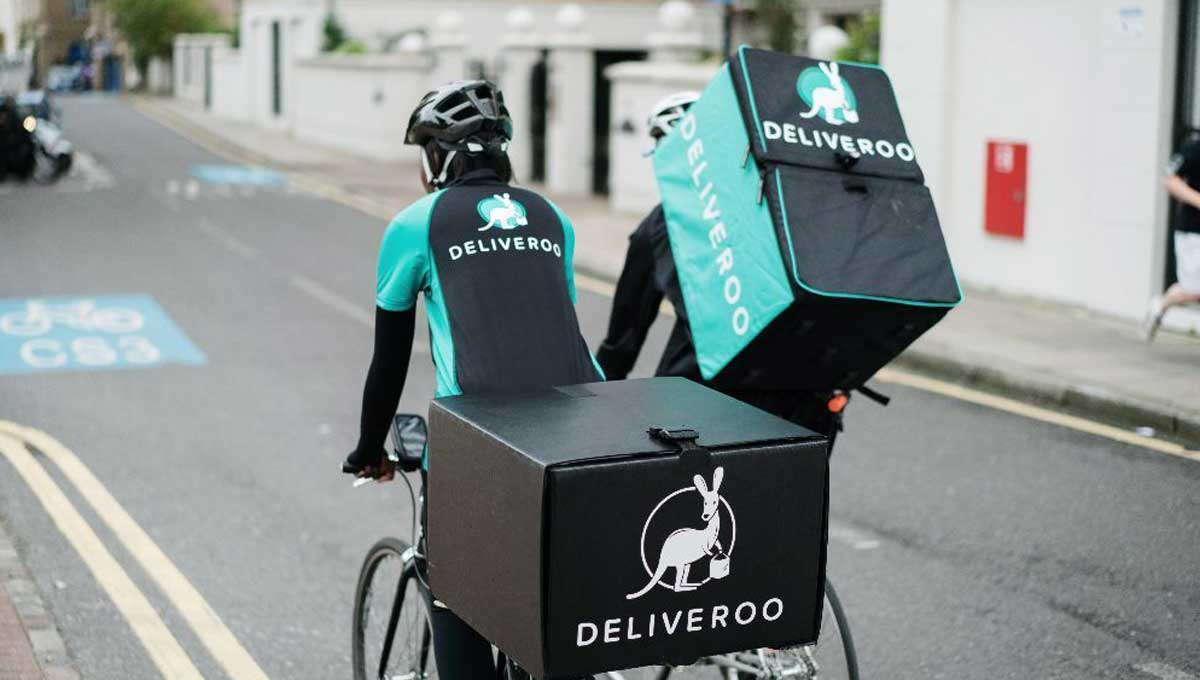
    Deliveroo has revealed a strong financial and operating performance for 2020 ahead of its intended listing on the London Stock Exchange, which was formally announced this morning.

    Over the course of the year, the company grew gross transaction value – the total amount of transactions it processes on its platform – by 64%, from £2.5bn in 2019 to £4.1bn. Fourth quarter 2020 run-rate GTV amounts to over £5 billion. Strong GTV growth was driven by an increase in monthly active customers as well as greater engagement from its existing consumer base.

    While 2020 has seen strong engagement from Deliveroo’s user base of more than 6 million monthly consumers, the company’s consumer cohorts have increased their spend on the platform year-on-year, acting as a growing, recurring revenue stream.

    Deliveroo has seen strong market share gains in 2020 that have driven it to leading positions across many of its markets. When markets have opened for dine-in following lockdowns Deliveroo has continued to see very strong consumer engagement and order frequency.

    Despite this significant growth, online food delivery is still at an early stage, presenting enormous growth potential. The restaurant and grocery sectors represent an addressable market of £1.2 trillion in Deliveroo’s 12 markets, of which just 3% of sales are estimated to be online – equivalent to less than 1 out of the 21 weekly meal occasions being online.

    Proven profitability at scale and best-in-class and improving unit economics 

    Deliveroo demonstrated that it could operate profitability at scale in 2020, having been profitable on an Adjusted EBITDA basis over two quarters. Furthermore, underlying gross profit was up 89.5% to £358m from £189m the previous year.

    Deliveroo’s profitability is a validation of the fact that it is the leading operator of the logistics food delivery model. Through a combination of its leading technology, operations and quality of customer cohorts, Deliveroo has achieved best in class unit economics. Gross profit margin as a percentage of GTV has grown from 5.8% in 2018 to 8.8% in 2020, with all markets experiencing an improvement over this period. In several key markets that are more mature, Deliveroo has achieved a gross profit margin of 12% or more.

    These best in class unit economics come after accounting for the major investments Deliveroo has made in its Editions, Signature, Plus and on-demand grocery businesses, delivering an outstanding customer experience in every neighbourhood it operates.

    As a result of this strong performance, Deliveroo narrowed underlying losses for the year to £223.7m, compared to £317m in 2019. The company remains focused on investing in driving growth in a nascent online food market.

    Leading from the front on innovation 

    Deliveroo plans to invest in its long-term proposition by developing its core marketplace, enhancing its superior consumer experience, providing restaurant and grocery partners with unique tools to help them grow their businesses, and providing riders with the flexible work they value alongside security.

    Deliveroo will also invest to further develop its innovative growth businesses: Editions delivery-only kitchens; Signature, enabling restaurants to offer delivery via their own online channels; Plus subscription service, removing delivery fees for a flat monthly charge; and on-demand grocery.

    Strong operational execution 

    Deliveroo pioneered the logistics delivery model in the UK, which is now the winning model in food delivery globally. The company works with over 115,000 best loved restaurants, takeaways and grocery stores globally and provides work to over 100,000 riders across 800 locations across12 markets.

    Deliveroo’s leading technology, driven by machine learning, ensures that all three sides of its marketplace continue to interact seamlessly, strengthening the interests of each constituent part, with restaurants maximising online sales, riders maximising earning potential, and consumers receiving a wider selection of desired food on time.

    Supporting all three sides of our marketplace with an unprecedented £50m Community Offer for consumers

    Alongside its EITF announcement, Deliveroo has ensured that all sides of its marketplace will benefit from any future floatation. The company announced that it will make an unprecedented 50 million in shares available to its UK customers in an expected forthcoming IPO and once listed will create a new £16 million Thank You Fund for riders, providing cash payments to the riders who have completed the most orders. Deliveroo has also announced a £50 million Communities Fund to support the local communities in which it operates. In 2018 Deliveroo announced that all permanent employees would be option-holders in the company, and so the company’s workforce will also benefit from any future floatation. These moves reflect Deliveroo’s desire to give back to those that have contributed to the company’s growth to date and to ensure they can share in its future.

    In an introductory letter to the company’s Expected Intention to Float, Deliveroo founder and CEO, Will Shu, writes:

    Today, Deliveroo is so much bigger than I ever would have thought possible. We are building delivery-only kitchens, delivering groceries, building tools for restaurants to take them into the digital age – things I never contemplated when we launched. Yet we truly believe we are still getting started. Our ambitions have increased as we start to truly understand and execute on the opportunity in front of us in online food. 

    A lot has changed since we launched eight years ago, but two very important things haven’t. First, we are customer-obsessed. And second, we are all about food. And if there are two principles that govern us here, it’s these. Serving our restaurants, our grocery partners, our riders and of course our end consumers is what we’re all about. All working together in the service of great food. That will never change.”

  • UNIQLO to Launch Paul & Joe Collaboration Collection on March 29

    UNIQLO to Launch Paul & Joe Collaboration Collection on March 29

    “This collaboration with UNIQLO came about because their commitment to offering everyday clothing matches my desire to create apparel that finds favour with everyone. I also sympathised with the company’s approach to manufacturing, which pursues quality” commented Paul & Joe founder, Sophie Mechaly. “For this collection, I want people to coordinate items as they like, whether that’s by mixing plain and patterned pieces or matching patterns. I want to share the joys of spring.”

    The lineup features items in soft pastels with such motifs as chrysanthemums, characteristic of the Paul & Joe brand, and Lily of the Valley, a flower believed to bring happiness. It also presents bold designs of the brand’s iconic cats. Supplementing the UTs are such wardrobe essentials as dresses, blouses, scarves, and pochettes. There are also items for kids and babies for matching with mothers’ outfits.

  • LINE BK Tops 2 Million Users in First Four Months

    LINE BK Tops 2 Million Users in First Four Months

    LINE Corporation today announced that LINE BK, Thailand’s first social banking service, surpassed 2 million users as of February 23, just four months after starting operations.

    Since launching in October 2020, LINE BK has exceeded expectations in terms of transaction volume, loan applications, and the number of new users. As many as 50,000 new savings accounts are opened on a single day, and the total amount of financial transactions on the platform over the first four months has surpassed 21 billion baht (about US$700 million).

    As of late February, LINE BK had issued personal loans with an outstanding balance of over 5 billion baht (about US$165 million), and during peak periods, LINE BK saw more than 40,000 loan applications on a single day — and 30% of those approved had never received a loan before. Those numbers clearly demonstrate how Thailand has a strong need for an all-in-one, fully digital financial services app.

    LINE BK offers a wide range of integrated financial solutions—including special rate accounts with interest rates of up to 1.5% annually and debit cards—all within the LINE app so users do not have to switch between apps or memorize bank account numbers. Through LINE BK Credit Line, our personal loan service, customers can easily apply for personal loans anywhere, at any time, and get approved instantly, at which point the funds become immediately available.

    “We are very pleased to see how quickly LINE BK has been accepted by the Thai people,” said Young Eun Kim, Chief Operating Officer of LINE Financial Asia and Chairman of the Board of Directors of KASIKORN LINE. “We opened LINE BK on the principle of ‘Banking in Your Hand’, offering people greater convenience and accessibility for their main banking services. Moreover, additional benefits like cashback deals and low interest rates on loans have also helped users embrace LINE BK.”

    Moving forward, LINE BK will offer more financial solutions, expanding its portfolio to cover insurance and financial investment products.

    LINE BK is a collaboration between KASIKORNBANK (or KBank), through its subsidiary KASIKORN Vision Company Limited (or KVision), and LINE Corporation, through its subsidiary LINE Financial Asia, with the objective of creating synergy between KBank’s digital banking leadership in Thailand and LINE’s 47 million digital users. As the first comprehensive “social banking” platform in Thailand, LINE BK aims to be accessible for everyone and ensure a better financial experience for people’s daily lives.

    LINE is currently developing plans to expand banking services into other countries, including Japan, Taiwan, and Indonesia.

  • Dell Technologies to launch US$50m Global Innovation Hub in Singapore

    Dell Technologies to launch US$50m Global Innovation Hub in Singapore

    The GIH is launched under the Dell Technologies Digital Future – Made in Singapore initiative that aims to fast track the adoption of digital solutions and drive digital innovations developed in Singapore for partners and customers globally to be future-ready. A first-of-its-kind innovation centre situated outside of the company’s global headquarters in the United States, the GIH will focus on advancing multiple growth areas for digital transformation including augmented/mixed reality, data analytics, cloud-native, cybersecurity and edge computing. It is also home to a specialised team responsible for enhancing user experiences through innovation.

    In addition, the GIH houses existing R&D facilities in Singapore such as the Singapore Design Centre – responsible for global product design and development of key product categories such as monitors and client peripherals. It also includes a hardware prototyping lab dedicated to product design and innovation, and an Artificial Intelligence (AI) Experience Zone – a catalyst for AI understanding and adoption.

    The establishment of this hub has created more than 160 job opportunities in emerging technologies in Singapore. Diverse R&D innovators comprising designers, developers and strategists will be recruited and the hiring process will be completed by this year. All new hires for the GIH are based in Singapore and will drive R&D programmes for customers and partners worldwide.

    Amit Midha, President, Asia Pacific & Japan and Global Digital Cities, Dell Technologies, said: “Singapore is globally recognised as an internationally vibrant business, technology and thriving R&D hub. Our Digital Future – Made in Singapore initiative further supports Singapore’s unique standing by driving digital innovations developed in Singapore to the world. We’re very excited to unveil our global innovation hub as part of this initiative that will allow us to ideate, experiment and co-create meaningful digital solutions for our global customer and partner ecosystem. The Dell Technologies Global Innovation Hub in Singapore supported by talented local professionals will allow us to further contribute to the country’s growth and develop innovative products and solutions in emerging technologies to serve the wider regional and global markets.”

    Last year, the Singapore government announced an investment of S$25 billion into its next five-year plan for research, innovation and enterprise (RIE 2025) to meet a broader spectrum of national needs and build a knowledge-based and innovation-driven economy and society.

    “Dell Technologies’ Global Innovation Hub speaks to the company’s confidence in Singapore as an attractive R&D location, with access to talent and a vibrant ecosystem of partners here and in the region. Dell Technologies will create meaningful jobs for Singaporeans across design, strategy, research and product development. These in turn support our efforts in building a Smart Nation and a strong digital economy,” said Mr Ang Chin Tah, Vice President and Head, DISG.

    Over the past two decades, Dell Technologies has been proactively enabling businesses and communities in Singapore. Having started as a PC-maker, Dell Technologies has since evolved to become one of the largest global technology companies with deep expertise across edge computing, 5G, cloud, security and artificial intelligence and machine learning. Today, the company drives digital transformation initiatives for companies of all sizes via its comprehensive product portfolio.

    The launch of the GIH and a move to leverage local talent continue the momentum by Dell Technologies to upskill and train more than 3,000 fresh graduates, mid-career professionals and students in Singapore to be future-ready, as well as a collaboration with Singapore Management University for its students to benefit from a curriculum on cloud-native and emerging technologies.

    Added Midha: “The world needs technology now more than ever. In encouraging the adoption of digital solutions and new technologies, strengthening our product and process innovation system, and engaging the talent pipeline, we believe that we are paving the path for a more resilient, progressive, inclusive and sustainable economy.”

  • Nokia partners University of Technology Sydney for 5G innovation facility

    Nokia partners University of Technology Sydney for 5G innovation facility

    The 5G Innovation Lab will enable Nokia, UTS and their partners to push the boundaries of 5G technology by testing exciting new 5G use cases with real world applications, including Industry 4.0, IoT and smart cities. While providing a live 5G test bed for commercial partners, the 5G Innovation Lab will also serve as an environment for new research opportunities within the ICT sector.

    This multi-year, multi-million-dollar investment by Nokia reflects the company’s commitment to Australian innovation and the essential role telecommunication plays in both securing critical infrastructure and fostering economic growth.

    Researchers and commercial partners will undertake projects to explore the capabilities of 5G and 6G technologies for Industry 4.0 applications such as industrial automation, agriculture and human-robot interactions, as well as ‘Internet of Things’ capabilities for Internet of Energy applications in smart grid, energy storage and management and wireless power transfer.

    The facility will include a 5G lab and a 5G use case demonstration area, with campus-wide 5G coverage planned to allow for the development & testing of potential 5G use cases in both the lab and the field. The new lab will also connect directly into the university’s anechoic radio frequency test chamber – the largest of its kind in the southern hemisphere – allowing researchers to test the potential of Nokia’s Massive MIMO and other innovative antenna technologies.

    Nokia and UTS are very excited to be partnering together to lead the way for 5G innovation in Australia.

    Ray Kirby, Associate Professor, Director of UTS Tech Lab said: “UTS Tech Lab is a unique facility that supports collaboration with industry on research and development projects, such as this partnership with Nokia, which will drive innovation and growth in 5G and 6G network infrastructure. Our cutting-edge equipment and world-class research talent combined with Nokia’s commitment to innovation and technology leadership, is a strong partnership to facilitate the development of new applications to unlock the huge potential of 5G and 6G.”

    Robert Joyce, Chief Technology Officer at Nokia Oceania, said: “We are pleased to collaborate with UTS on this exciting 5G adventure. This partnership builds upon the existing innovative facilities at the university’s Tech Lab and will enable researchers to develop, test and demonstrate innovative uses of 5G here in Australia. We are already exploring some exciting 5G use cases unique to Australia and look forward to demonstrating these soon.”

  • Switzerland and China to Deepen Finance Ties

    Switzerland and China to Deepen Finance Ties

    Despite the increasing discord between China and the U.S., Switzerland wants to further deepen its cooperation in financial matters with the Far East nation.

    Swiss Finance Minister Ueli Maurer exchanged views with Chinese Vice Premier Liu He at a virtual ministerial meeting (yesterday) Wednesday, according to a statement from the Federal Department of Finance (FDF). The two politicians each had a high-ranking delegation at their side.

    Maurer and Liu He thus developed perspectives on deepening bilateral relations in the areas of stock market trading, sustainable financial services, asset management, and digital central bank money. The central banks of both countries are known to be working on projects for digital central bank money, although the respective approach differs greatly in terms of the user base.

    China is working on a digital version of the yuan for everyone (the «retail» version of a digital currency), while the Swiss National Bank (SNB) is evaluating a so-called «wholesale» version, for the time being, a cryptocurrency reserved for the financial market.

    The latest meeting followed similar contacts in 2017 and 2019. The governments of Switzerland and China also want to intensify financial market relations in parallel with the existing free trade agreement. In this context, the Swiss financial center envisages using the opening steps in the Chinese financial market for concrete joint projects.

  • Vodafone Idea acquires spectrums in five telecom circles to enhance 4G capacity

    Vodafone Idea acquires spectrums in five telecom circles to enhance 4G capacity

    Being India’s third-largest telecom operator in the 4G spectrum auctions, Vodafone Idea entered with the largest quantum of spectrum with a very small fraction. “This was administratively allocated and used for GSM services, coming up for renewal,” the company said.

    With the telecom industry gearing up for the 5G revolution, VI hopes that a large quantum of spectrum would be made available for all operators in the future at fair prices. The operator had reportedly submitted an earnest money deposit of Rs 475 crore. Yet, the company did not disclose the exact quantity of spectrum bought.

    In line with the government’s effort to innovate the country’s telecom sector, Vodafone Idea claimed that the Indian telecom segment is well-positioned to drive the Digital India agenda, as long as sufficient spectrum availability and an adequate number of market players are involved.

    Broadly speaking, India has 22 telecom circles. All major telecom operators — Reliance Jio Infocomm Ltd, Bharti Airtel Ltd, and Vodafone Idea — participated in the auction. According to the department of telecommunication (DoT), they put on the block 2,308.8MHz of spectrum at a base price of ₹3.92 trillion in the auction. Moreover, spectrum in the 700MHz, 800MHz, 900MHz, 1,800MHz, 2,100MHz, 2,300MHz, and 2,500MHz bands were put up for sale.

  • Aerie powers American Eagle to best first-quarter sales in three years

    Aerie powers American Eagle to best first-quarter sales in three years

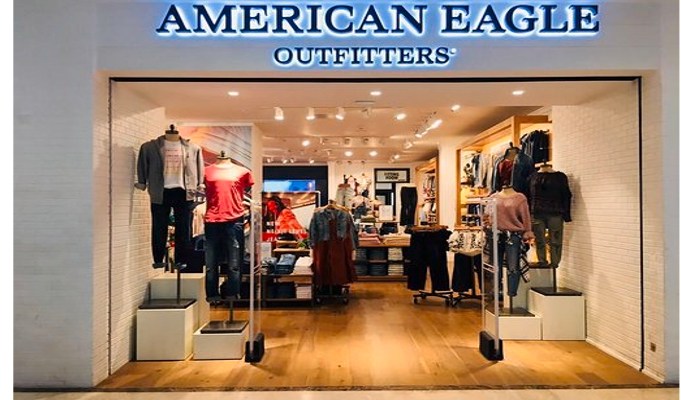
    American Eagle Outfitters, Inc. (AEO) reported GAAP operating income of 4 million dollars for the fourth quarter compared to 0.5 million dollars for the same quarter last year. The company’s adjusted operating income was 106 million dollars compared to 77 million dollars in last year’s fourth quarter. Fourth-quarter GAAP EPS was 2 cents compared to 3 cents last year and adjusted EPS reached 39 cents this year compared to 37 cents last year.

    Commenting on the results, Jay Schottenstein, AEO’s Executive Chairman of the board and Chief Executive Officer commented, “After an unprecedented year, we ended 2020 on a positive note, with fourth-quarter adjusted operating income up 38 percent, driven by strong margins across brands.”

    Total net revenue decreased 22 million dollars or 2 percent to 1.29 billion dollars, while comparable sales declined 1 percent. Aerie revenue increased 25 percent to 337 million dollars and comparable sales increased 29 percent, while American Eagle revenue decreased 9 percent to 943 million dollars and comparable sales declined 8 percent. AEO’s digital revenue increased 35 percent and store revenue declined 20 percent. Aerie digital revenue rose 75 percent and AE increased 20 percent.

    The company added that gross profit of 440 million rose 8 percent and gross margin of 34 percent expanded from 31 percent last year.

    AEO’s board of directors has approved reinstating its quarterly cash dividend at 0.1375 cents per share.

  • Maruti Suzuki Records 19.3% Production Growth In February 2021

    Maruti Suzuki Records 19.3% Production Growth In February 2021

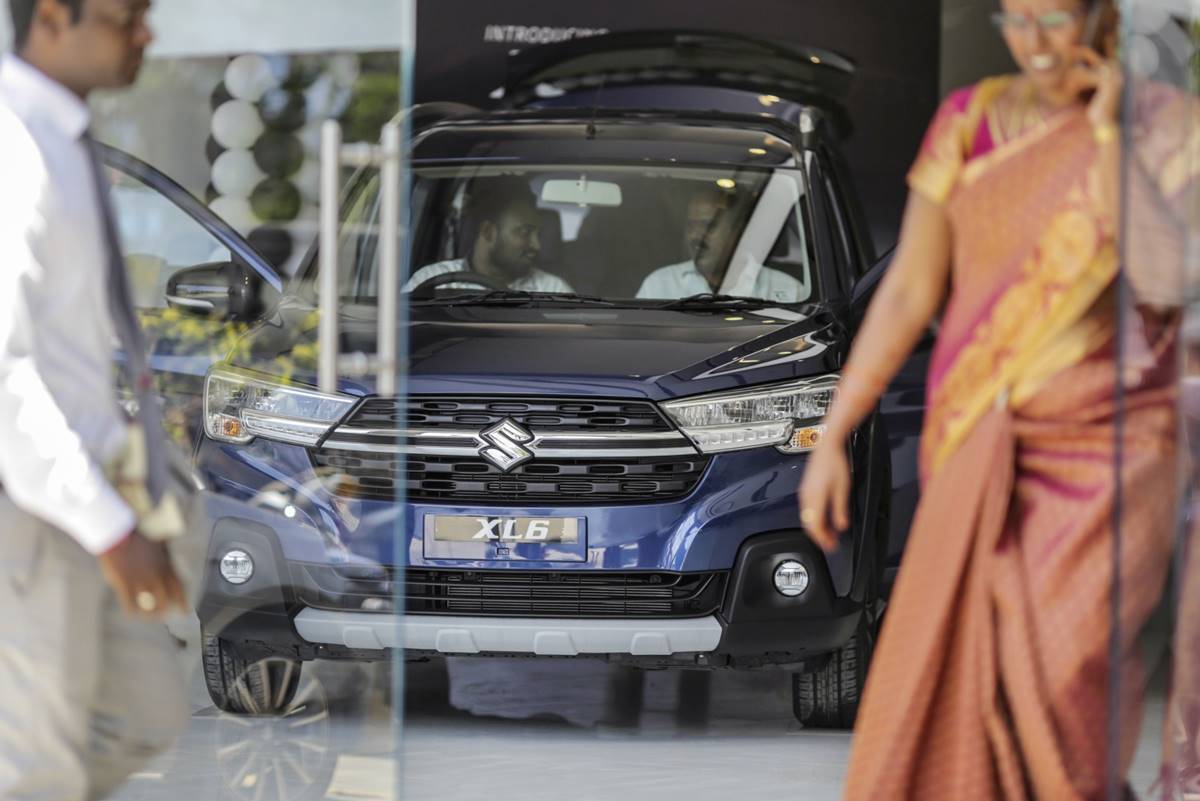
    Maruti Suzuki India has announced production figures for the month of February 2021. India’s leading carmaker said its total production increased by 19.3 percent to 1,68,180 units in February against 1,40,933 units produced in the same month last year. The numbers recorded last month are slightly better than what the automaker posted in February 2020. The total number of passenger vehicles manufactured last month were 1,65,783 units in comparison to 1,40,370 units in the corresponding month last year, witnessing a growth of 18 percent.

    The Indo-Japanese carmaker manufactured 1,60,975 units in January 2021 as against 1,68,180 units, witnessing a marginal month-on-month (MoM) growth of 4 percent. The production of mini hatchbacks – Alto and S-Presso in February 2021 decreased marginally by 4 percent to 28,213 units as compared to 29,676 units produced in the same month last year. However, compact vehicles such as WagonR, Celerio, Swift, Dzire, Ignis, Baleno, and the Glanza saw production growth of 21.22 percent with 91,091 units against 75,142 units manufactured a year ago. The Maruti Suzuki Ciaz compact sedan saw a decline in production by 34.13 percent to 1,943 units as compared to 2,950 units manufactured in February 2020.

  • Japan’s venture capitalist invests $700,000 in Vietnamese media start-up

    Japan’s venture capitalist invests $700,000 in Vietnamese media start-up

    Japan’s venture capital firm Genesia Ventures led the seed funding round of Vietnam based media startup Vietcetera with the investment of $700,000.

    The deal, finalized during the first quarter of 2020, is being made public after Vietcetera received its digital media license from the government, Bloomberg quoted its co-founder and CEO, Hao Tran, as saying.
    Silicon Valley-based Hustle Fund Management also took part in the seed funding.

    Vietcetera expects to complete its Series A funding of at least several million dollars in the first half of 2021, Tran said.

    Vietcetera is a digital media company targeting the nation’s growing middle class, based in HCMC. It provides Vietnamese and English content ranging from general business articles to lifestyle stories and podcasts.

    Tran said the funds will support expansion of its data science platform, accelerate product development and expand market share. Vietcetera’s website last year grew its readership by 700 percent, he added.

    Vietnam’s online media market is expected to reach $7 billion in 2025 from $3.3 billion in 2020, while its e-commerce market is projected to grow to $29 billion in 2025, according to a report by Google, Singaporean investment firm Temasek and American consulting company Bain & Company.

    Its e-economy is forecast to increase to $52 billion in value in 2025 from $14 billion last year, with e-commerce at $29 billion, according to the report.

    There were 72 million social media users in Vietnam in January 2021, according to the “Digital 2021: Vietnam” report compiled by strategic marketing consultancy Kepios Pte, social media management firm Hootsuite Media Inc. and social media marketing firm We Are Social Ltd.

    YouTube is the most popular social media platform with 92 percent of internet users aged 16-64, the report said. Facebook and local social network Zalo, owned by Vietnam’s VNG Corp., attracted 91.7 percent and 76.5 percent of users, respectively.

  • AirAsia making Plans for Flying Taxi business next year

    AirAsia making Plans for Flying Taxi business next year

    Malaysian budget airline AirAsia Group on Saturday stated that plans are in the works to launch a flying-taxi business next year.

    Air Asia CEO Tony Fernandes on Saturday said that the company is working on the project, and it would take about a year and a half to launch it. He made these statements at an online discussion as part of the Youth Economic Forum.

    Fernandes further said that the flying taxis will be powered by a quadcopter, and it will have as many as four seats.

    With the COVID-19 pandemic proving to be detrimental to the aviation business, Air Asia has now branched into the digital space, launching a “super app” that offers services from travel and shopping to logistics and financial services, thus diversifying its revenue stream.

    Meanwhile, Tata Sons will enhance its shareholding in a low-cost carrier — AirAsia India — by buying a 32.67 percent equity stake of its JV partner AirAsia Group Berhad.

    The budget airline is a JV in which Tata Sons owns 51 percent stake, while 49 percent is held with AAIL.

    After the transaction, Tata’s shareholding will go up to 83.67 percent, while that of AAIL will come down to 16.33 percent.

    In a regulatory filing made to Bursa Malaysia, AirAsia Group Berhad said the transaction via a share purchase agreement with Tata Sons was agreed by AAIL’s Board.

    Headquartered in Bengaluru, AAI flies to 19 domestic destinations across India with 33 Airbus A320 aircraft.

  • Singapore-Based Compliance Specialist Partners HPE

    Singapore-Based Compliance Specialist Partners HPE

    Tookitaki is partnering with Hewlett Packard Enterprise to provide the financial sector with enhanced anti-money laundering capabilities using artificial intelligence and machine learning.

    The offering, delivered via HPE GreenLake for Big Data, enables financial institutions to create a central big data platform capable of rolling out anti-money laundering solutions centered around data analytics, the Singapore-based regtech said in a statement.

    The announcement follows a pilot with UOB that covered transaction monitoring and name screening, in which the models achieved 96% prediction accuracy in the high priority category, the announcement said.

    Abhishek Chatterjee, Co-Founder and CEO, Tookitaki, said that banks need high module accuracy systems to ensure they are staying compliant at a time when organizational growth and business continuity are crucial to success and highlighted the benefits of an enhanced AML solution delivered with the flexibility of an as-a-service model.

    Founded in 2014, Tookitaki’s revenue growth has surpassed 300 percent over the last two years. It raised $19.2 million in Series A funding in 2019, which the startup said would be used to grow its presence across the U.S. and Asia-Pacific.

  • Volvo Cars Reports 29.1% Sales Growth In The First Two Months Of 2021

    Volvo Cars Reports 29.1% Sales Growth In The First Two Months Of 2021

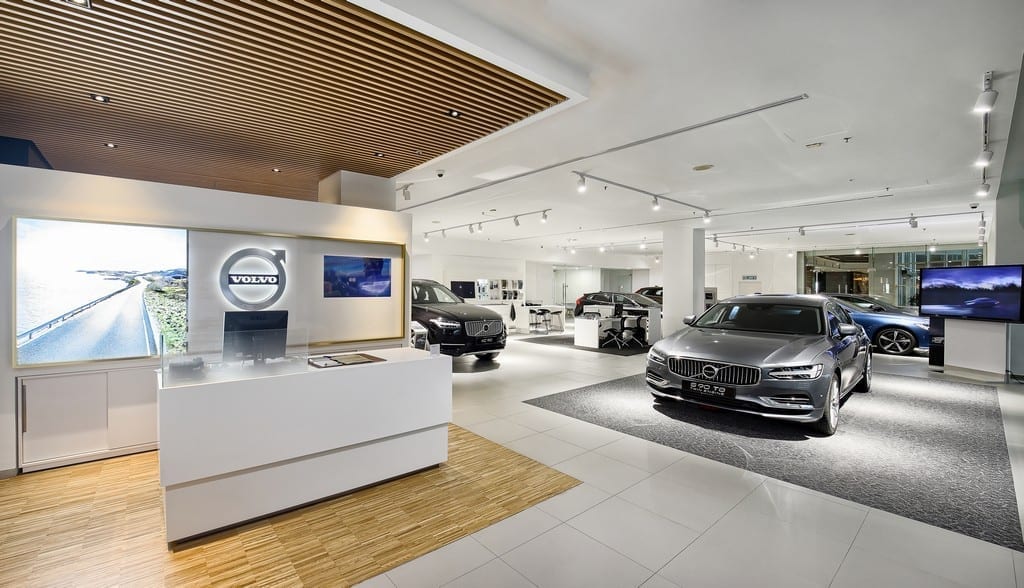
    Volvo Cars’ global sales performance remained strong in February after the company posted a 29.1 percent growth for the first two months of the year, compared with the same period last year. Total sales during the period amounted to 110,383 cars as US, Europe and China reported a growth in volumes. The sales increase was driven by an ongoing recovery from the Covid-19 pandemic in China compared to last year, a solid performance on the US market, and increased sales in Sweden.

    For the month of February, Volvo Cars sold a total of 50,795 cars, up 27.8 percent compared to the same month last year and the company’s best February sales performance ever.

    For the month of February, Volvo Cars sold a total of 50,795 cars, up 27.8 percent compared to the same month last year

    Its Recharge line-up of chargeable models, with a fully electric or plug-in hybrid powertrain, continued to grow in popularity among customers and accounted for 26.6 percent of all Volvo cars sold globally in February. In Europe, Recharge cars represented 44 percent of the overall sales volume.

    In China, Volvo Cars sold 29,243 cars in the first two months, up 160.6 percent year-on-year, as the company managed to more than recover lost sales due to Covid-19 shutdowns last year.

    US sales continued to grow year-on-year and reached 17,315 cars in January and February, up 23.7 percent compared with the same period last year. The strong increase was led by the brand’s premium SUVs which accounted for 80 percent of total sales. The company’s European sales grew 5.5 percent in the first two months of 2021 to 48,784 cars, compared to the same period last year, driven mainly by increased sales in Sweden.