Author: Mei Ling Tan

  • AirAsia’s Teleport to acquire delivery platform Delivereat

    AirAsia’s Teleport to acquire delivery platform Delivereat

    Airasia’s digital logistics venture Teleport has signed an agreement to acquire 100% equity interest in local online food delivery platform Delivereat for US$9.8mil (RM41.52mil) to strengthen its delivery service in the country.

    Teleport chief executive officer Pete Chareonwongsak (pic) said the acquisition would be satisfied via a combination of cash and the company’s shares.

    Teleport is AirAsia’s cargo and logistics platform. It is a wholly-owned subsidiary of RedBeat Ventures, AirAsia’s corporate venture arm.

    He said the exercise would provide an opportunity for Teleport to grow its unique logistics ecosystem alongside Delivereat, which has carefully developed an extensive and cost-competitive delivery network over the last nine years.

  • Honda Swings To Q1 Operating Profit

    Honda Swings To Q1 Operating Profit

    Honda Motor Co swung on Wednesday to a first-quarter operating profit of 243.21 billion yen ($2.23 billion) from a 113.7 billion loss a year ago as car sales recovered from the impact of the COVID-19 pandemic.

    Operating profit at Japan’s No.2 carmaker by sales for the three months ended June 30 was double the average profit estimate of 119.2 billion yen based on nine analysts surveyed by Refinitiv.

    Honda raised its full-year forecast by 18% and now expects an operating profit of 780 billion yen in the current financial year, having previously forecast in May a 660 billion yen operating profit.

    The new forecast is higher than an average forecast of a 764 billion yen operating profit from 19 analysts polled by Refinitiv.

  • Online Brokerage Launches B2B Platform

    Online Brokerage Launches B2B Platform

    Xiaomi-backed Tiger Brokers is expanding its reach into the institutional segment with the launch of a business-to-business (B2B) platform.

    Tiger Brokers is partnering Singapore-based financial advisory firm PFPFA as it launches a B2B platform for institutional partners, the company announced on Friday.

    Under the partnership, PFPFA clients will have direct access to Tiger’s online brokerage and platform, which will include technological solutions such as advanced portfolio and risk management tools.

    Tiger Brokers said it hopes to build on the success of Tiger Trade, its Singapore consumer platform that currently has close to 300,000 users since launching 1.5 years ago. It plans to rapidly grow its B2B segment in the coming months by offering its services to more financial institutions, including robo-advisors, banks, neo-banks and fund managers, the announcement said.

  • Deutsche Bank Hires Ex-Pictet Singapore Chief

    Deutsche Bank Hires Ex-Pictet Singapore Chief

    Deutsche Bank continues to expand in Asia with the latest addition of the former Singapore chief executive from Pictet.

    Deutsche Bank names Dominique Jooris as Asia Pacific head of wealth solutions, according to a statement,

    Jooris was most recently CEO of Bank Pictet in Singapore before he was succeeded in January this year by Sharon Chou. Previously, Jooris held various senior dept capital management roles including 11 years at Goldman Sachs.

    According to the statement, Jooris will be focused on driving coverage of the family office segment in the region.

    Asia Pacific continues to be the fastest-growing region in the world for wealth accumulation and has been for the last 20 years. Asia Pacific is already home to more billionaires than any other region, the bank added.

    Given this dramatic wealth accumulation, many Asian families are institutionalizing their wealth management through more efficient structures and vehicles, primarily via family offices.

  • UBS Loses Out to Goldman Sachs for NNIP

    UBS Loses Out to Goldman Sachs for NNIP

    Goldman Sachs has bought a Dutch asset manager for which UBS was one of the other bidders as the European sector looks to consolidate.

    U.S. investment bank Goldman Sachs is buying Dutch insurer NN’s asset management business, the companies announced Thursday. European bidders lost out to Goldman Sachs, including Switzerland’s largest bank, UBS.

    Goldman will pay around 1.6 billion euros ($1.9 billion) for NN Investment Partners. The around $355 billion in assets the unit manages will now be added to the $2.3 trillion already managed by the U.S. bank’s fund arm.

    UBS, whose own asset management unit still has not gained the critical mass necessary to be a forerunner in the industry is not only on the lookout for takeover targets but also might be interested in a possible bid for the business.

    Since both Deutsche Bank’s fund unit DWS and UBS both missed out on NN IP, this could fuel speculation about a rapprochement after preliminary talks between the two failed in 2019.

    Credit Suisse Asset Management, which was badly shaken by the closure of its supply chain funds after the collapse of Greensill Capital, is also considered a takeover candidate.

    There is widespread talk of a merger with UBS asset management or DWS joining the two of them. However, Credit Suisse’s chairman, António Horta Osório, intends to take his time mulling major strategic moves until at least the autumn.

    At the end of June, UBS Asset Management had invested assets of $1.2 trillion and CSAM had 471 billion Swiss francs ($519 billion) in client assets under management.

    Even after the Dutch acquisition, Goldman still has plenty of money and is interested in further acquisitions.

    Goldman Sachs CEO David Solomon said the bank would certainly take a serious look at further acquisitions in asset management, if they could accelerate its growth.

    The asset management industry continues to consolidate, he added. If you look at most of the leading players, the thing that most of them have is their businesses are global and at scale.

  • Why are Asians so Good at Maths and Science?

    Why are Asians so Good at Maths and Science?

    Basing this statement on an argument of genes is completely untrue. This stereotype is statistically valid as many but not all Asians fare better than other races and communities in mathematics and science. Universities and schools in Asia have proven their scientific prowess time and again by being amongst the top when it comes to mathematics and science. Here are 5 reasons that justify their scientific capabilities.

    Teaching techniques

    Teaching methods used in Asia are quite different from those used in the West. Schools follow a rigid, streamlined curriculum that gives more importance to sciences and quantitative mastery.

    Students are expected to do well in all subjects but if they were to score low in a subject, it must only be a non-science subject such as English or History. Punishments are a normal means of shaping students into excellent students.

    Math homework resource

    If you’re planning to study math in college or are have already begun your college education, PlainMath is a great resource to use. You can find your math homework answers on on their website. All you need to do is upload your question and you’ll get the complete solution in 2 minutes. You can even study tricky concepts by browsing through their topic list and going through all the questions people have uploaded previously.

    Cultural differences

    Asian communities are more collectivistic than those in the West. Children are brought up with a mentality of upholding the name of the family by excelling academically and career-wise. Asians are also brought up with a different mentality regarding hard work. If you aren’t good at science, whether you enjoy it or not, you must put in time and study until you top your class.

    Complete dedication to academics is taught to children till it becomes ingrained. In Western communities, parents are more concerned with hard work than hard work put in specifically to excel at math and science. These differences in culture have continued to fuel the excellence of most Asian kids in math and sciences.

    Competition 

    Competition plays a key element in the Asians’ prowess in math and science. With almost all children being pushed to do well academically and pursue careers in sciences, most children face tough competition in competitive exams and school exams alike. Being intellectually gifted is, for Asian communities, the only dependent on how much time and effort children give to their studies.

    Life apart from academics is overlooked and families continue to push their children to follow a school life dedicated to academics. These practices have continued for a time sufficient enough to make it a norm. Competition pushes children to do better and continue improving until they are part of the cream of the crop of their community.

    Family pressure

    The degree of family pressure also varies between Asian and Western communities. As mentioned before, children are brought up with a mentality to excel at their academics and study to be at the top of their class in maths and science.

    Families put a huge responsibility on their students by asking them to uphold their family’s reputation. If the child fails or scores lower than average in maths and science, parents tend to harder on them and push them to give more time to studies. Encouraging children to put in hard work is healthy and can lead to more successful futures. But an unhealthy version of such pressure includes a lack of empathy towards the child’s struggles.

    Creative restriction to sciences

    Creativity is an essential element of development for children. Asians, with their inclination to see their children prosper in the field of maths and science, encourage them to use their creativity in just those fields. Mathematics and Science require creativity and the curiosity to explore new subjects, experiment with new ideas and find different solutions to the same problem.

    This method of limiting creativity to these two fields is arguably one of the biggest reasons why Asians do well in math and science. Unlike Asian families, western families accept creativity beyond maths and science, allowing their children to explore new fields and subjects. This difference between the outlook of Asians and other races towards creativity is crucial in understanding why they are so good at maths and science.

    Conclusion

    The statement is certainly not applicable to all Asians and Asian communities as a whole but stands true to characterize a significant portion of Asians. The factors mentioned above have shown most reason to make Asians good at maths and science when compared to other students.

    Author’s Bio 

    Michael Turner does one thing better than anybody else, and that’s writing. He’s a professional writer who has written numerous college and school course books, academic papers to help students who struggle in academic work and contributes high-quality content to high-authority blogs and social media platforms.


  • Philippines AirAsia to resume international flights by 1Q22

    Philippines AirAsia to resume international flights by 1Q22

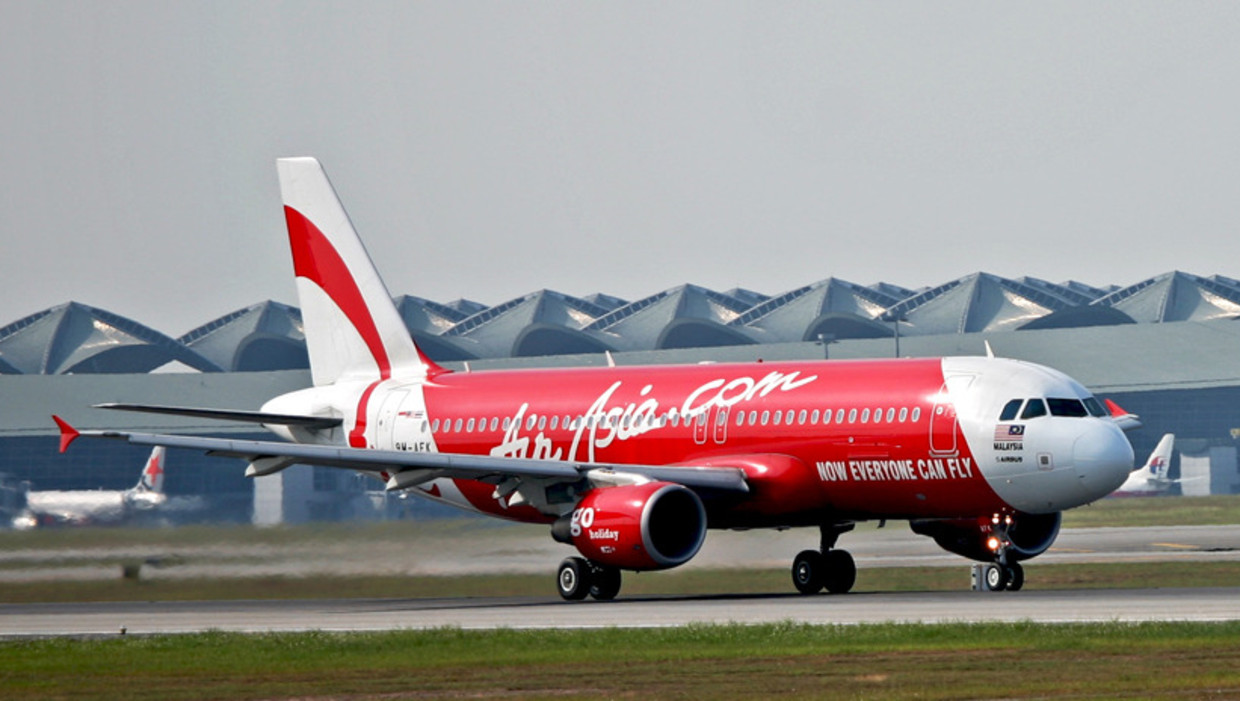
    Philippines AirAsia intends to restart international flights by the first quarter of 2022 after resuming domestic services in the fourth quarter of 2021, says chief executive officer Ricky Isla.

    He told The Philippine Star newspaper that the airline’s priority is to rebuild its domestic network from Manila Ninoy Aquino Int’l, manage capacity, and control costs. “What is important is (that) we have to maintain our cost of operations. That’s the reason why we’re concentrating right now mostly on our Metro Manila hub.”

    The airline will look to restart flights from its hub at Clark in mid-to late 4Q21. “We will most likely reopen with our Clark trips towards the peak season of November and December,” he told The Philippine Star. “The best time is when there is already what you call a good herd immunity in Manila and Central Luzon like Clark. Then we will be confident that we will be extending also our Clark hub as our point of destination,” he said.

    The AirAsia Group unit has been conducting only essential flights recently in light of the government’s directive to place the capital Manila, officially called the National Capital Region (NCR), under quarantine with heightened restrictions from July 30, 2021, to August 5, 2021, and enhanced quarantine from August 6 to 20, 2021. This has meant that only people authorized to be outside their residences were allowed to travel into and out of the NCR, including Cavite, Bulacan, Laguna, and Rizal. Inbound travel to Iloilo City, Iloilo Province, and Cagayan de Oro City was also suspended from August 1 to 7, 2021, to manage the spread of the Delta variant of COVID-19.

    From August 21, 2021, the airline is scheduled to resume domestic services from Manila to 12 domestic cities, namely Bacolod, Cagayan de Oro Laguindingan, Caticlan, Cebu, Davao, General Santos, Iloilo, Kalibo, Puerto Princesa, Panglao, Tacloban, and Zamboanga, the ch-aviation schedules module shows.

    From October 1, it is scheduled to resume services to seven domestic points from Clark, including Cagayan de Oro Laguindingan, Caticlan, Cebu, Davao, Iloilo, Puerto Princesa, and Tacloban, according to ch-aviation data.

    Isla said the company also sought to strengthen its cargo business. “Cargo also has to expand its customer experience. Before, it was just airport to airport, now you have airport to your point-of-destination, and airport up-to-the-household,” he said.

    Before the latest lockdown, AirAsia had carried 171,543 passengers between April and June 2021, an increase from 168,527 passengers carried in the first quarter of 2021. Year on year, this represented a 489% jump from the 29,111 passengers carried in the second quarter of 2020. The carrier has operated more than 600 chartered repatriation flights since last year.

    Philippines AirAsia reported that 92% of its flight operations team, including pilots and cabin crew, plus 86% of its ground staff, have been vaccinated against COVID-19.


  • Amazon to test department stores in offline expansion

    Amazon to test department stores in offline expansion

    Now that it’s officially swallowed the lion’s share of online retail sales, Amazon is reportedly eyeing ways to corner our offline shopping, too. The e-commerce giant is drumming up plans to open “several” department-style stores in a handful of cities across the U.S. People familiar with the matter told the paper that these stores would help Amazon “extend its reach in sales of clothing, household items, electronics, and other areas.” It’s a smart move from Amazon, but also one that would end up being a privacy nightmare for a company that’s seen its fair share of scandals in the space.

    Per the Journal, the first states where these department stores are expected to open include Ohio and California. They’re planned to be mid-size, at around 30,000 square feet—smaller than your average Costco or Walmart, but way larger than the Amazon 4-star stores that generally clock in at around 4,000 square feet. Like those 4-star locations, sources told the Journal that Amazon’s private-label products would be featured front and center in these bigger locations, alongside wares from other “top consumer brands.”

    The alleged department store spaces are just Amazon’s latest foray into the brick-and-mortar world. In 2015, the company began experimenting with small bookstores: first on its Seattle home turf, before trickling out to a few other cities across the U.S. But for all sorts of reasons, sales in these bookstores have pretty much flatlined in the years since their debut. By 2019, the company decided to fold together these stores and the company’s then-struggling “pop-up” shops—essentially mall bodegas that sell Amazon-branded tablets and e-readers. Eighty-seven of those pop-ups closed essentially overnight. Other real-world retail efforts like Amazon Go Grocery met similar ends, either collapsing into larger big-box projects from the company or indefinitely closing for unspecified “renovations.” Even then, Amazon’s retail efforts have translated into millions of dollars taken from countless competitors that were already struggling to pitch themselves against the e-commerce juggernaut.

    But if the multiple ongoing federal probes into Amazon’s antitrust-y behavior have shown us anything, it’s that the company won’t be satisfied until it dominates every sale, not just most of them. Right now, the bulk of Amazon’s real-world retail dollars are coming from its myriad grocery chains, including Whole Foods. But the company still lags behind its brick and mortar brethren when it comes to selling high-end fashion, or basic cosmetics and health goods—think toothpaste or bottles of shampoo. In June, reports emerged that the company was mulling plans to open its own Amazon-branded physical retail pharmacies, which would help the company crater competitors like Walmart or CVS that currently rule the world of retail-ized healthcare

    Amazon’s department store push would also help the company compete with two of its tech giant pals: Facebook and Google, which together dominate more than half of the multibillion-dollar digital ad ecosystem. Amazon ranks in a distant third place by earning 10% of that spend, but that number’s skyrocketing fast—and a lot of that boom boils down to data.

    Amazon’s always collected data on its shoppers and sellers, but the past few years have seen the company make a serious push to woo advertisers away from platforms like Instagram and YouTube. And that woo worked because Amazon could offer what those platforms couldn’t: data about every purchase, every search, and every wishlist from every Amazon customer.

    But that still left the company with a pretty large blind spot: data from real-world, in-store purchases. Meanwhile, those real-world retailers—including names like Target, Walmart, and CVS—have started launching ad networks of their own, offering data from the real-world purchases happening outside of Amazon’s sight.

    An Amazon-branded department store would potentially bring those dollars back into Amazon’s pockets, and then some. Amazon’s past brick-and-mortar efforts have shown that the company isn’t afraid to collect as much data as possible from people who walk through its doors—even if that person doesn’t end up buying anything at all. Amazon knows the aisles you’re browsing, the items you’re picking up from a shelf, and whether your buys were influenced by an ad you saw on Amazon’s site. It knows how often you shop for groceries, whether you’re a vegetarian, and if you might be running low on eggs this week—which is great for Amazon and its advertiser partners, but a privacy nightmare for consumers that already have ample reason to be weirded out over Amazon’s data collecting practices.

    Right now, Amazon’s future plans in the real-world retail space are mostly confined to rumor—but they still paint a damning picture. A world where Amazon department stores and Amazon pharmacies are the norm is one where Amazon knows every prescription you take, not to mention all the purchases we might want to keep quiet from everyone—our pregnancy tests, bottles of hair dye, trashy magazines. If Amazon really wants to know how often I’m buying a box of “feminine hygiene” products or something equally classy, they’re welcome to try finding out. But I’d really rather keep those details to myself.

    We’ve reached out to Amazon about the Journal’s report and will update this post when we hear back.

  • 7-Eleven, Simply Cups rescue 20 million cups from landfill

    7-Eleven, Simply Cups rescue 20 million cups from landfill

    “Australians love their coffee so it’s vital that they can easily and reliably recycle their disposable coffee cup and reduce the huge number of takeaway cups that currently end up in landfill each year,” Assistant Minister Evans said. “Rather than just being put into the rubbish bin and ending in landfill, Simply Cups collect and then reprocess the used coffee cups, transforming them into new items like outdoor furniture, coffee cup trays, and even traffic solutions like roadside kerbing.”

    “Simply Cups’ recycling scheme now collects almost 1 million cups every month Across Australia, with nearly 1000 collection points at 7-Eleven stores, cafes, hotels, hospitals and universities,” said Assistant Minister Evens. “Australians care deeply about recycling, and disposing of coffee cups at a designated Simply Cups collection point, they will be doing their part to increase recycling and reduce waste. This is a great practical example of Australia’s growing circular economy in action, and shows how we will all benefit from an invigorated waste and recycling industry.”

    Founded by circular economy specialist Closed Loop, Simply Cups has installed almost 1,000 cup collection points across Australia in less than three years, including 632 7-Eleven stores nationwide. Rob Pascoe, Closed Loop Managing Director, said Simply Cups aims to make cup recycling mainstream and to recycle 100 million cups every year.

    “Simply Cups is a perfect example of the circular economy in action,” said Pascoe. “It is a practical solution that increases recycling rates and reduces waste, while creating supply and demand for products made from recycled material. It is fantastic to see so many people embracing Simply Cups, because it really is a win-win for the environment and the economy.”

    “Our circular economy will grow quickly if people choose Australian-made and recycled over other alternatives. After all, recycling doesn’t actually happen when you put an item in a bin, it only happens when that item is given a second life,” Pascoe added.

    7-Eleven is the pioneering partner of Simply Cups and leads the way with the most collection points and most cups diverted from landfill (2.7 million cups since 2018).

    “Saving 10 million coffee cups from landfill is a fantastic achievement, but it’s just the tip of the iceberg,” said 7-Eleven Chief Executive Officer, Angus McKay. “We encourage customers to up the ante and deliver any brand of used coffee cup or straw to our cup collection points at store, and we’ll make sure they get recycled via Simply Cups.”

    “We agree that the best option is not to create waste in the first place. We encourage reusable coffee cups and have an rCUP available for purchase, which is a reusable coffee cup made from recycled coffee cups. We also regularly run promotions on Slurpee bottles to encourage the use of those instead of paper cups.”

    “In addition, we’re rolling out a Cup Rescue community program to fund the recycling of cups for small business, community groups and schools by providing them with their own cup collection units.  This is perfect for organisations that are either too small to set up their own recycling with Simply Cups or are community organisations like schools,” said McKay.

    As well as 7-Eleven stores, Simply Cups collection points can now be found in cafes, office buildings and shopping centres across Australia. Simply Cups has grown exponentially since starting in May 2017, collecting 1 million cups in the first 12 months and 10 million cups within 3 years.

  • Standard Chartered Adds ASEAN Private Banker

    Standard Chartered Adds ASEAN Private Banker

    Standard Chartered added a private banker focused on the south and southeast Asia market, joining most recently from Bank of Singapore.

    Standard Chartered Private Bank appoints Lawrence Goh as managing director and deputy market head for ASEAN and South Asia, according to a statement.

    Based in Singapore, Goh reports to Cedric Lizin, regional head, private banking ASEAN & South Asia and global head of global South Asian community.

    Goh has 20 years of experience in the financial sector including five in asset management and the last fifteen in private wealth management, specifically in the ASEAN region. He was most recently at Bank of Singapore where he spent 12 years covering various southeast Asia markets. Previously, he also worked for Citi Private Bank covering ultra-high net worth individuals and families in Singapore, Malaysia, Brunei and Australia.

  • Thai Central Bank to Trial Retail Digital Currency

    Thai Central Bank to Trial Retail Digital Currency

    The pilot will initially be conducted on a limited group under the BOT before it is expanded to the public, retail stores, banks and non-banking facilities.

    The Bank of Thailand is set to begin testing a retail central bank digital currency (CBDC) in the second quarter of 2022, the central bank said in a statement on Thursday.

    The BOT will assess all results and associated risks from the Pilot Test, to ensure that Retail CBDC is beneficial to the public, business sector, and country as a whole, and does not undermine economic and financial stability in the future, Vachira Arromdee, BOT assistant governor, said in the statement.

    BOT said public demand for retail CBDC will gradually rise over time and that CBDC could become an alternative payment option in the future.

    It cited a public survey and focus group discussions conducted in April 2021, in which most respondents agreed with the BOT’s approach to retail CBDC development and viewed the currency as a beneficial infrastructure open to access and competition, with the potential to foster greater development of a safe financial innovation in the future.

    Respondents also agreed that the CBDC design guidelines can help mitigate any negative impacts on the Thai financial sector.

  • Hong Kong Anti-Sanctions Law Details Begin Surfacing

    Hong Kong Anti-Sanctions Law Details Begin Surfacing

    China’s top parliament is in the last of its four-day meeting on draft bills with some broad indications unveiled about Hong Kong’s anti-sanctions law, including a rough timeline and government entities to be involved.

    China’s National People’s Congress (NPC) Standing Committee is expected to formally approve the anti-sanctions law today, marking an end to its four-day closed-door talks on various draft bills.

    Although approval of the law is a foregone conclusion – Hong Kong’s sole delegate to the NPC Standing Committee Tam Yiu-chung had already flagged Friday as the day the legislation will be officially introduced – the financial industry is still closely watching for signs on how and when implementation will occur.

    While the NPC Standing Committee is expected to approve the law’s insertion into the Basic Law – Hong Kong’s own constitution – the city will draft its own version locally, according to a report citing unnamed government insiders.

    The government had no choice but to address growing corporate concerns due to the critical importance of upholding’s Hong Kong’s status as a global financial hub, the source explained.

    The mainland’s version is a bit too broad, which has caused great fear among international businesses in the city, the source said. Some suggested the local version should be more specific so as to alleviate worries, while others also think a vague law could give the government flexibility. The government, therefore, has to get a green light from the central government on how much it can do.

    According to the report, entities to be involved with drafting the local legislation include chief executive Carrie Lam, Financial Secretary Paul Chan, the Hong Kong Monetary Authority as well as the bureaus for financial services, security and constitutional and mainland affairs.

    Separately, Chan was scheduled to meet lawmakers over the matter this week but the discussions were abruptly canceled.

    The government has not decided which bureau should take the lead, while the financial secretary has been listening to views in society, one of the sources said.

    And in order to obtain sufficient feedback from key stakeholders, Hong Kong lawmakers will be working on a local draft of the anti-sanctions at least until next year.

    Lam had previously said that she did not have an explicit deadline for implementation but added that completion within the current term, which ends in October before the next session opens in early 2022, would be an extremely tight timetable to rush a piece of legislation with the necessary consultation with stakeholders.

    In addition to the NPC Standing Committee meeting this week, the industry will also look for more clarity from a delegation led by Huang Liuquan, a deputy director of the State Council’s Hong Kong and Macau Affairs Office, when they visit the city next week to brief lawmakers on the nation’s 14th five-year plan.

  • Singapore Relaxes Border Restrictions for Travellers

    Singapore Relaxes Border Restrictions for Travellers

    The city-state will reopen its borders to fully vaccinated travelers from certain countries and is removing stay-home requirements for short-term visitors from several countries.

    Fully vaccinated travelers from Germany and Brunei will be able to come to Singapore without serving a stay-home notice, under a new Vaccinated Travel Lane arrangement announced on Thursday.

    At the same time, all travelers from Hong Kong and Macau, Mainland China, New Zealand and Taiwan, regardless of vaccination status, can enter without serving a stay-home notice, the Civil Aviation Authority of Singapore (CAAS) said.

    Vaccinated Travel Lane visitors will have to meet a set of criteria that includes taking designated flights that serve only vaccinated travelers, not transiting elsewhere, and undergoing PCR tests while in Singapore. Those who arrive on flights not under the Vaccinated Travel Lane will be subject to prevailing quarantine measures upon arrival, CAAS said.

    In response to the relaxed border measures, Singapore Airlines will operate five weekly Vaccinated Travel Lane flights from Frankfurt and Munich beginning September 7.

    Lufthansa, will also increase its flights to Singapore to three weekly, up from one currently – two of these will be for the designated Vaccinated Travel Lane.

    Separately, the Ministry of Transport announced that Singapore and Hong Kong have agreed not to pursue further discussions on the air travel bubble, owing to differences between the two cities in their strategy for managing the Covid-19 pandemic.

    «Both parties agreed that it would not be possible to launch or sustain the air travel bubble in its present form,» the announcement said.

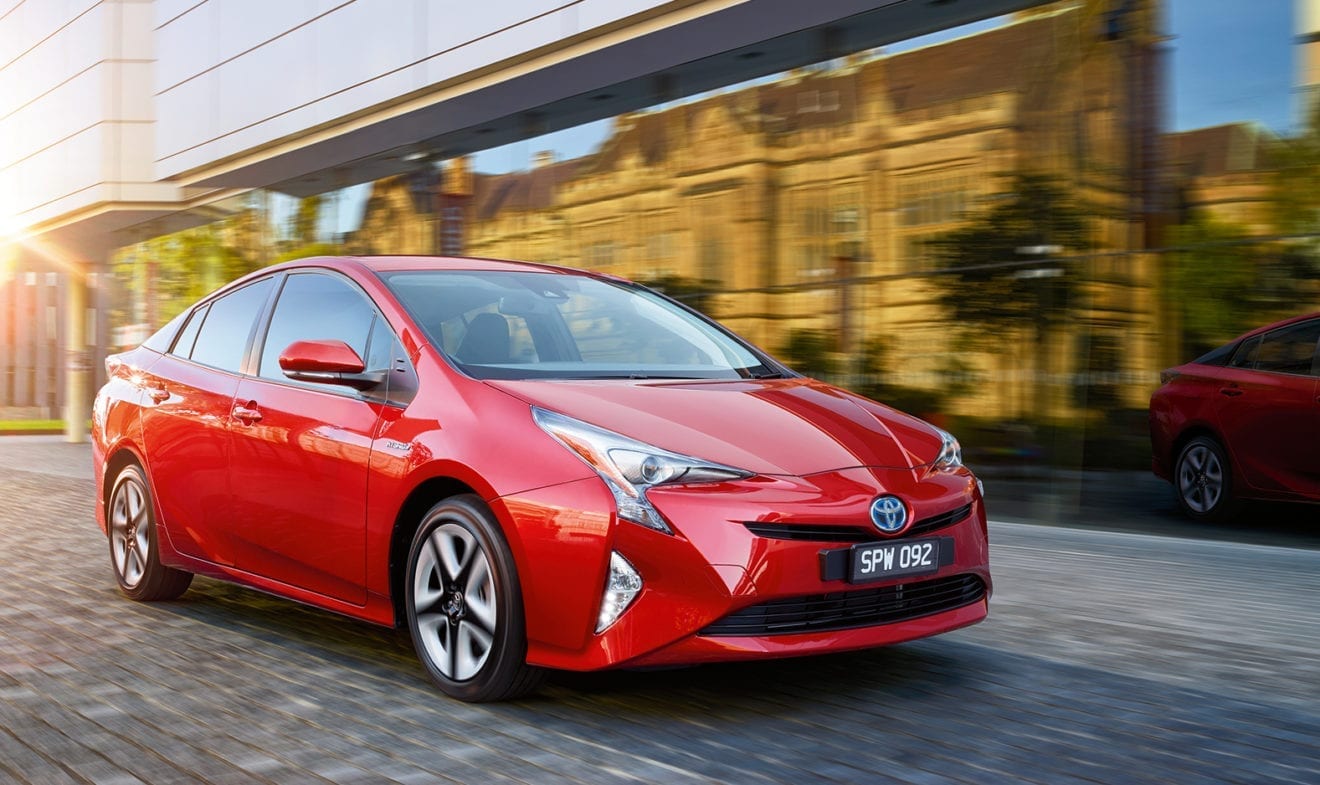
  • Toyota Slashes September Output Amid Chip Crunch, COVID Resurgence

    Toyota Slashes September Output Amid Chip Crunch, COVID Resurgence

    Toyota said it will slash global production for September by 40% from its previous plan, becoming the last major automaker to cut output due to a global chip crunch, but it maintained its annual sales and production targets. Toyota’s success in navigating the chip shortage better than rivals has come down to its larger stockpile of chips under a business continuity plan adopted after the 2011 earthquake and the Fukushima nuclear disaster. The world’s largest automaker by sales volumes reiterated on Thursday its global production target of 9.3 million vehicles for the year ending in March, as well as its plan to sell 8.7 million cars in the period.

    “The 9.3 million global production plan takes into account certain risks,” executive Kazunari Kumakura told reporters. “We want to achieve the numbers.”

    Toyota said the September cuts included 14 factories in Japan and overseas plants, and that the company would reduce its planned global production that month by around 360,000 vehicles.

    Of these, 140,000 will be at Japanese plants, with the rest in the United States, China, Europe and other Asian countries.

    Car makers worldwide have been cutting production due to the months-long chip shortage, but a resurgence in COVID-19 cases in Japan, Philippines, Thailand, Vietnam and Malaysia – home to auto factories and chip plants – have led to stricter curbs and compounded the crisis.

    Germany’s Volkswagen said on Thursday it may need to cut production further and that it expected the supply of chips in the third quarter to be “very volatile and tight.”

    Ford Motor Co said Wednesday it will temporarily shut its Kansas City assembly plant that builds its best-selling F-150 pickup truck due to a semiconductor-related part shortage as a result of rising cases in Malaysia.

    Earlier this month, Toyota had flagged an unpredictable business environment due to fresh COVID-19 cases in emerging economies, the semiconductor shortage and soaring material prices.

    The carmaker had already halted assembly lines at some Japanese factories between late July and early August, including its Tahara plant, due to a surge in infections in Vietnam which had constrained the supply of parts, the Nikkei reported earlier.

    A person familiar with the matter told Reuters this month that Toyota had also suspended production at one assembly line in Guangzhou, China, which it operates with its Chinese joint-venture partner Guangzhou Automobile Group Co Ltd.

    In Thailand too, Toyota suspended production last month at three factories due to a pandemic-related parts shortage.

  • Wind power developers in central province rush construction to get incentive tariff

    Wind power developers in central province rush construction to get incentive tariff

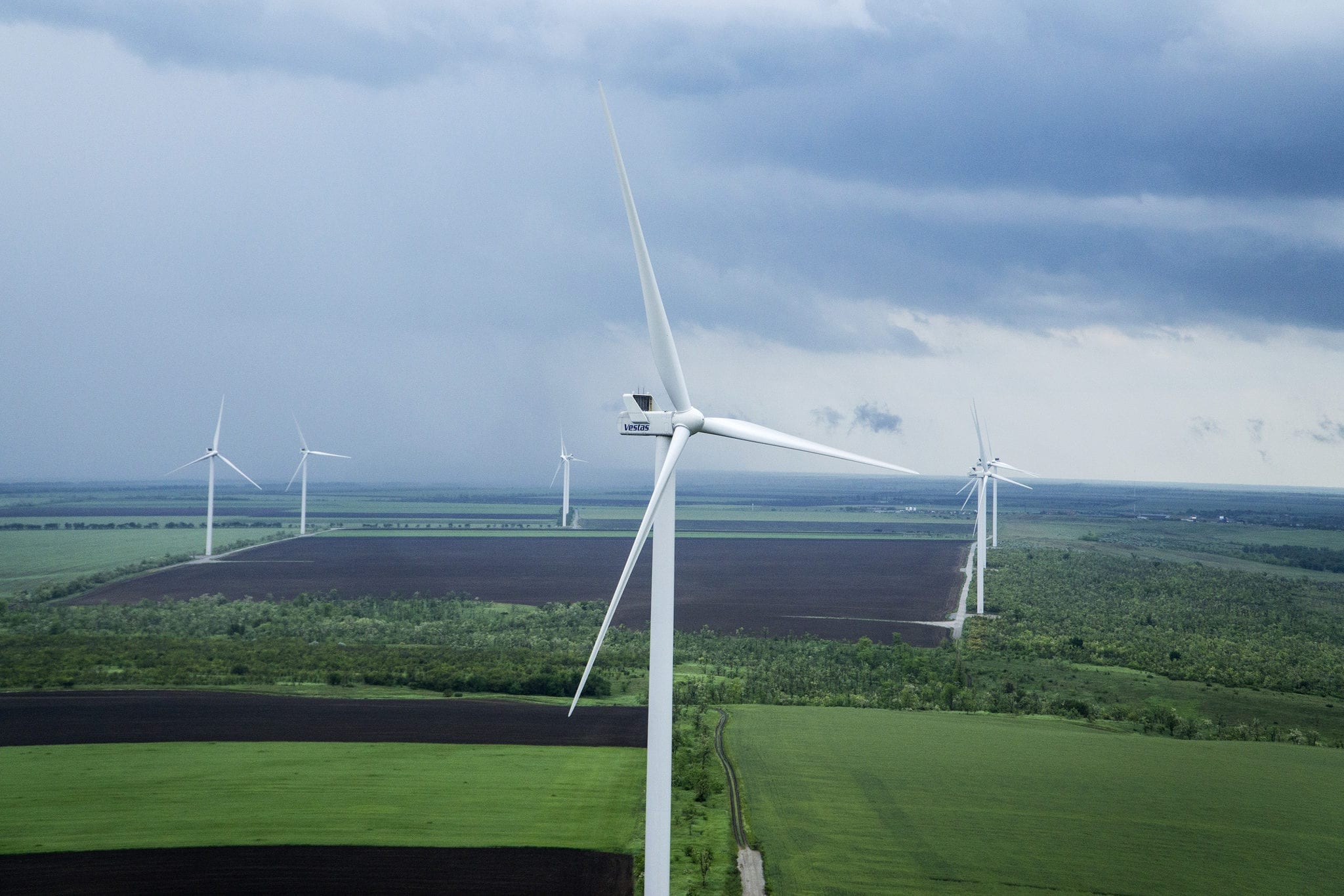
    Wind power farms in the central province of Quang Tri are scrambling to complete construction to benefit from the 20-year incentive feed-in tariff available until October 31.

    Under the scorching sun 800 workers are quickly building a solar plant in Huong Hoa District, hoping to finish the work before the rains begin next month.

    Tai Tam – Hoang Hai will have 31 turbines, and the foundations have been completed for more than 20 of them. Five turbines are being installed, and the investors hope the farm will become operational by the end of October.

    Then it will be eligible for the incentive feed-in tariff of 9.8 U.S. cents per kilowatt-hour for offshore projects and 8.5 cents for onshore.

    Nguyen Van Nghi, deputy director of the project, said some households have built tall structures nearby hoping to get compensation to make way for the giant turbines.

    “We need to speed up transportation to complete the project by the end of October, but if we do not pay high compensation local residents refuse to let us transport the equipment through their land.

    So far around VND200 billion has been paid as compensation. The company is seeking help from authorities to get locals to remove their structures.

    At two other wind power plants nearby, Phong Huy and Phong Nguyen, the foundations are complete but only four out of 24 towers have been built.

    Nguyen Ngoc Tien, CEO of the projects, said he has increased the number of workers and even transports materials at night to finish the projects before the deadline.

    It would take five to six weeks to finish, he added.

    After that foreign experts will make any adjustments necessary before the plants can begin operations.

    But with travel restrictions causing delays, wind power plant developers want Quang Tri authorities to allow experts to quarantine on-site upon arrival and start working immediately.

    Quang Tri has 29 wind farms under construction with a total capacity of 1,117 megawatts and costing over VND30 trillion.

    It is estimated that 16 of them will become operational before October 3.