Author: Mei Ling Tan

  • Central province seeks approval for 2nd casino

    Central province seeks approval for 2nd casino

    Khanh Hoa authorities have recommended the issue of a license for Vinpearl Company to build a $2.24-billion casino in the central province.

    The casino is proposed to be built on Hon Tre Island near famous beach town Nha Trang along with tourism and amusement components.

    It requires approval from the Politburo, which is at the apex of the Communist Party, and government. If approved it will be the second in the province after an earlier, $2.02-billion casino received the green light in 2019.

    The Ministry of Finance said an assessment needs to be done on the impacts of the proposed casino on local tourism and socio-economic growth.

    The government has for long treated gambling as a social evil and prohibited Vietnamese from entering casinos.

    But in January 2019 it opened certain casinos to Vietnamese as part of a three-year trial and will continue to do so on a case-by-case basis.

    Vietnamese who want to gamble in a casino must be over 21, earn a minimum of VND10 million ($430) a month and have no criminal record or objections from their family.

    A group of casino owners recently sought the government’s permission to let Vietnamese in to make up for foreigners’ absence due to the Covid-19 international travel restrictions.

    Vietnam has eight casinos which earned revenues of VND2.5 trillion in 2019, according to Ministry of Finance data.

  • Japan Billionaire Launches Recruitment for Moon Travel

    Japan Billionaire Launches Recruitment for Moon Travel

    Japnese billionaire entrepreneur Maezawa Yusaku is once again tapping into the public sphere to further his personal pursuits, this time for the recruitment of co-travelers in a trip around the moon.

    Eight crew members will be chosen for a private SpaceX flight around the moon in 2023, according to the founder of Japanese digital retail giant Zozo in a video posted on Twitter.

    Including Maezawa himself, the six-day trip will involve 10 to 12 people in total. Screening of applicants kicks off on March 21 with the final interviews and medical check targeted for May.

    According to Maezawa, the crew members will be selected based on how they use the trip to «push the envelope» in their respective fields and their willingness to support fellow crew members.

    Maezawa added that he was looking for people of all backgrounds and that that he hoped they would make the trip «fun» together.

    This is not the first time that the high-profiled Maezawa has attracted public interest.

    Last year, he randomly selected 1,000 of his Twitter followers to donate more than $9,000 each to test for actual boosts in happiness from monetary gains. In 2017, he paid $110.5 million for 1982 Jean-Michel Basquiat painting Untitled – an amount that broke his last record set in May 2016 for a mother untitled Basquiat valued at $57 million.

  • DBS Loan to Spur Green Solutions in Maritime Industry

    DBS Loan to Spur Green Solutions in Maritime Industry

    The bank has issued a sustainability-linked loan to Sembcorp Marine, which references the Singapore Overnight Rate Average.

    The $500 million sustainability-linked financing facility, believed to be the industry’s first, will help steep the maritime giant to cleaner, greener and renewable energy solutions, the two sides announced in a joint statement on Thursday.

    The loan’s interest rate comprises a compounded daily SORA rate calculated in arrears and an applicable margin. The loan features interest rate discounts linked to pre-determined Environmental, Social and Governance (ESG) targets, which are aligned with Sembcorp Marine’s performance targets set out in the group’s sustainability report.

    The inclusion of green financing dovetails with our strategic transformation and pivot since 2015 to provide innovative engineering solutions to the global offshore & marine and energy industries, William Goh, Sembcorp Marine’s group finance director, said.

    In 2019, some S$530 million of Sembcorp Marine’s projects were related to green solutions. The company has also introduced more green features in its operations, such as the use of solar energy to reduce emissions.

    As a purpose-driven bank, we believe financial institutions have a strategic and pivotal role to play in proactively supporting industries’ work towards a lower-carbon future, Dorian Delteil, DBS head of oil and gas, said.

    DBS recently raised its commitment to finance S$50 billion in renewable, clean energy and green projects by 2024, up from S$20 billion previously.

  • GIC Bets on Digital Assets

    GIC Bets on Digital Assets

    The blue chip-focused Singapore sovereign wealth fund has invested in a crypto bank, in a signal that digital assets are here to stay.

    In an announcement on its blog last week, U.S.-based digital asset bank Anchorage said it raised $80 million in a Series C funding round led by GIC.

    Joining the sovereign wealth fund were U.S. venture capital firms Andreessen Horowitz, Blockchain Capital, and Lux, as well as Portuguese fund Indico.

    Anchorage said the new capital will allow it to «rapidly scale to meet the rising demand for participation in the digital asset space, particularly among corporations and traditional financial institutions.»

    It also said that it wants to be a crypto partner to neo banks, challenger banks, and traditional banks, and make institutional decentralized finance (DeFi) participation accessible.

    In 2018, GIC was among investors who raised $300 million for Coinbase, a digital currency exchange headquartered in San Francisco, California.

    The news came as a surprise as CEO Lim Chow Kiat previously said that GIC would avoid crypto-related investments as it goes against GIC’s investment mandate, which is «to preserve and enhance the international purchasing power of Singapore’s financial reserves.»

  • Chinese Telecoms Firm ZTE Preparing Electric Vehicle Product Line

    Chinese Telecoms Firm ZTE Preparing Electric Vehicle Product Line

    Telecoms equipment maker ZTE Corp is joining a number of Chinese technology companies entering the electric vehicle market as it looks to build a team for a new product line, a company spokeswoman told Reuters.

    The Shenzhen-based company did not say whether the product line will supply parts for partner companies, or whether the company would be producing its own branded vehicles.

    Chinese technology firms have been stepping up their focus on electric vehicles (EVs) in the world’s biggest car market, as Beijing promotes greener vehicles as a means of reducing air pollution.

    Earlier this month Reuters reported that ZTE’s rival Huawei Technologies Co Ltd is planning to make EVs under its own brand and could launch some models this year.

    A Huawei spokesman denied it had EV ambitions of its own, beyond supplying technology to partners.

    Asian technology companies, including Baidu, have announced plans to make their own cars, while Shenzhen-based dronemaker DJI is building an engineering team to work on self-driving technologies.

    Sales of new energy vehicles (NEVs), including pure battery electric vehicles as well as plug-in hybrid and hydrogen fuel cell vehicles, are expected to make up 20% of China’s overall annual auto sales by 2025.

    Industry forecasts put China’s NEV sales at 1.8 million units this year, up from about 1.3 million in 2020.

  • Volkswagen’s Market Value Crosses 100 Billion Euro Mark For The First Time Since 2015

    Volkswagen’s Market Value Crosses 100 Billion Euro Mark For The First Time Since 2015

    When the market value of Germany’s Volkswagen briefly rose above the 100-billion-euro mark on Wednesday for the first time since 2015, the boss of the normally staid carmaker took to Twitter, Elon Musk-style, to crow about it.

    VW shares soared as much as 6% after investment bank UBS raised its price target on the stock by 50% and said the company’s new electric vehicle platform was set to challenge Tesla’s dominance in the battery electric vehicle (BEV) market.

    Herbert Diess, chief executive of VW Group, highlighted the UBS note on Twitter and shared the market capitalization milestone.

    “The market has been waiting for our #BEV-ramp-up and wanted to see some proof points,” Diess posted.

    Traders reacted with comparisons to Tesla chief Elon Musk who frequently uses Twitter to talk up products developed by his companies, cryptocurrencies or other buzzing technologies.

    The comparison, at least for now, must end there.

    Diess sent his first tweet using the “@Herbert_Diess” handle less than two months ago and has since tweeted 51 times. While he has managed to amass almost 25,000 followers in this time, Musk can boast of 48.3 million.

    “The sheer fact that he started his own account apart from the official VW account tells me, that between the lines he wants to express: We are here,” a Germany-based trader said.

    Though unrelated and more a market-moving tweet, another trader highlighted instances of a probe by the U.S. Securities and Exchange Commision on Musk’s tweet in 2018 that he was considering taking Tesla private at $420 a share.

    But despite recent share price gains — up 20% this year — VW’s market capitalization is just one-sixth that of Tesla. Shares trade 7.5 times 12-month forward earnings; possibly its role in the EV transition is not fully priced.

    Despite recent share price gains – up 20% this year – VW’s market capitalisation is just one-sixth that of Tesla

    Tesla meanwhile trades at 160 times 12-month forward earnings, levels many consider bubble-like.

    On the market capitalization gap, UBS said VW’s only takes into account its EV business out to 2025, and doesn’t price its cash flow-rich legacy business, indicating there is room for the share price to rise.

    It added that VW would likely “master” the transition to close the volume gap with Tesla in 2022.

    At 300 euros, UBS has the most bullish price target on VW. Analysts’ median price target on its shares was 191 euros, according to Refinitiv data.

    Preferred shares, which are listed in Germany’s benchmark DAX index, hit January 2018 highs on Wednesday, while ordinary shares rose as much as 5.6% to their highest since July 2015, two months before the diesel scandal broke.

    VW closed 4.7% higher at 185.18 euros per share on the day, taking its market value to 99 billion euros.

  • GM Extends Vehicle Production Cuts Due To Semiconductor Chip Shortage

    GM Extends Vehicle Production Cuts Due To Semiconductor Chip Shortage

    General Motors Co said on Wednesday it was further extending production cuts at three North American plants and adding a fourth to the list of factories hit by the global semiconductor chip shortage. The extended cuts do not change GM’s forecast last month that the shortage could shave up to $2 billion from this year’s earnings. GM Chief Financial Officer Paul Jacobson subsequently said chip supplies should return to normal rates by the second half of the year and he was confident the profit hit would not worsen.

    The U.S. automaker did not disclose the impact on volumes or say which supplier or parts were affected by the chip shortage, but said it intends to recover as much of the lost output as possible.

    “GM continues to leverage every available semiconductor to build and ship our most popular and in-demand products, including full-size trucks and SUVs,” GM spokesman David Barnas said. “We contemplated this downtime when we discussed our outlook for 2021.”

    The chip shortage, which has hit automakers globally, stems from a confluence of factors as carmakers, which shut plants for two months during the COVID-19 pandemic last year, compete against the sprawling consumer electronics industry for chip supplies.

    Consumers have stocked up on laptops, gaming consoles and other electronic products during the pandemic, leading to tight chip supplies. They also bought more cars than industry officials expected last spring, further straining supplies.

    GM said Wednesday it would extend downtime at plants in Fairfax, Kansas, and Ingersoll, Ontario, to at least mid-April, and in San Luis Potosi, Mexico, through the end of March. In addition, it will idle its Gravatai plant in Sao Paulo, Brazil, in April and May.

    The automaker did not disclose the impact on volumes or say which supplier or parts were affected by the chip shortage

    The Detroit automaker had previously extended production cuts at three North American plants into mid-March and said vehicles at two other plants would only be partially built. Following Wednesday’s cuts, forecasting firm AutoForecast Solutions estimated GM could lose more than 216,000 units globally due to the shortage.

    Ford Motor Co said last month the lack of chips could cut company production by up to 20% in the first quarter and hurt profits by as much as $2.5 billion. It had previously cut production of its top-selling F-150 pickup truck. Stellantis said Wednesday the chip shortage could weigh on 2021 results.

    Some automakers, including Toyota Motor Corp and Hyundai Motor Co, avoided deeper cuts by stockpiling chips ahead of the shortage.

    Industry officials and politicians have pushed U.S. President Joe Biden’s administration to take a more active role in dealing with the chip shortage.

    Last week, Biden said he would seek $37 billion in funding to supercharge chip manufacturing in the United States. An executive order also launched a review of supply chains for such critical products as semiconductor chips, electric vehicle batteries and rare earth minerals.

    Complicating matters was a severe winter storm in Texas last month that killed at least 21 people and led to the shutdown of several chip plants. Semiconductor industry officials said customers would face knock-on effects in several months.

  • Jack Ma no longer China’s richest man after coming under Beijing’s scrutiny

    Jack Ma no longer China’s richest man after coming under Beijing’s scrutiny

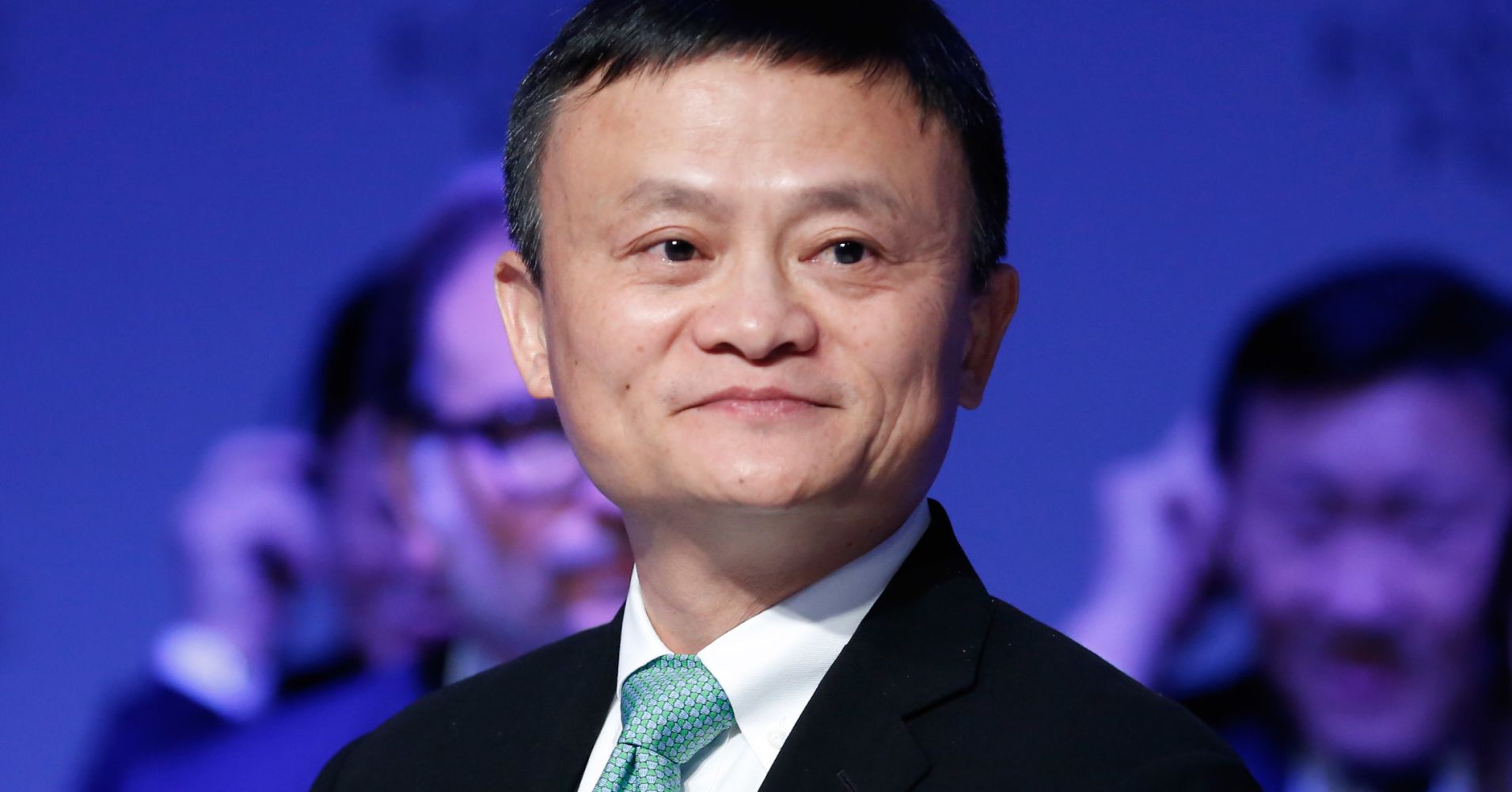
    Alibaba and Ant Group founder Jack Ma has lost the title of China’s richest man, a list published on Tuesday showed, as his peers prospered while his empire was put under heavy scrutiny by Chinese regulators.

    Ma and his family had held the top spot for China’s richest in the Hurun Global Rich List in 2020 and 2019 but now trail in fourth place behind bottled water maker Nongfu Spring’s Zhong Shanshan, Tencent Holding’s Pony Ma and e-commerce upstart Pinduoduo’s Collin Huang, the latest list showed.

    His fall out of the top three comes “after China’s regulators reined in Ant Group and Alibaba on anti-trust issues,” the Hurun report said.

    Ma’s recent woes were triggered by an October 24 speech in which he blasted China’s regulatory system, leading to the suspension of his Ant Group’s $37 billion IPO just days before the fintech giant’s public listing.

    Regulators have since tightened anti-trust scrutiny on the country’s tech sector, with Alibaba taking much of the heat; the market regulator launched an official anti-trust probe into Alibaba in December.

    Chinese regulators also began to tighten their grip on the fintech sector and have asked Ant to fold some of its businesses into a financial holding company to be regulated like traditional financial firms.

    Ma, who is not known for shying away from the limelight, then disappeared from the public eye for about three months, triggering frenzied speculation about his whereabouts. He re-emerged in January with a 50-second video appearance.

    China’s current richest man, Zhong, made his first appearance at the top spot with a fortune of 550 billion yuan (US$85 billion), largely thanks to the share price performances of Nongfu Spring and vaccine maker Beijing Wantai Biological Pharmacy Enterprise, which he also controls.

    Tencent’s Ma saw his wealth swell 70 percent over the year to 480 billion while Pinduoduo’s Huang’s fortune grew 283 percent to 450 billion yuan, the list said. In comparison, the wealth of Ma and his family grew 22 percent, to 360 billion yuan.

    Zhang Yiming, founder of TikTok owner ByteDance, broke into the top five rankings among Chinese billionaires in Hurun’s Global Rich List for the first time, with an estimated personal wealth of $54 billion.

  • Bulgari enters Vietnam with a comeback

    Bulgari enters Vietnam with a comeback

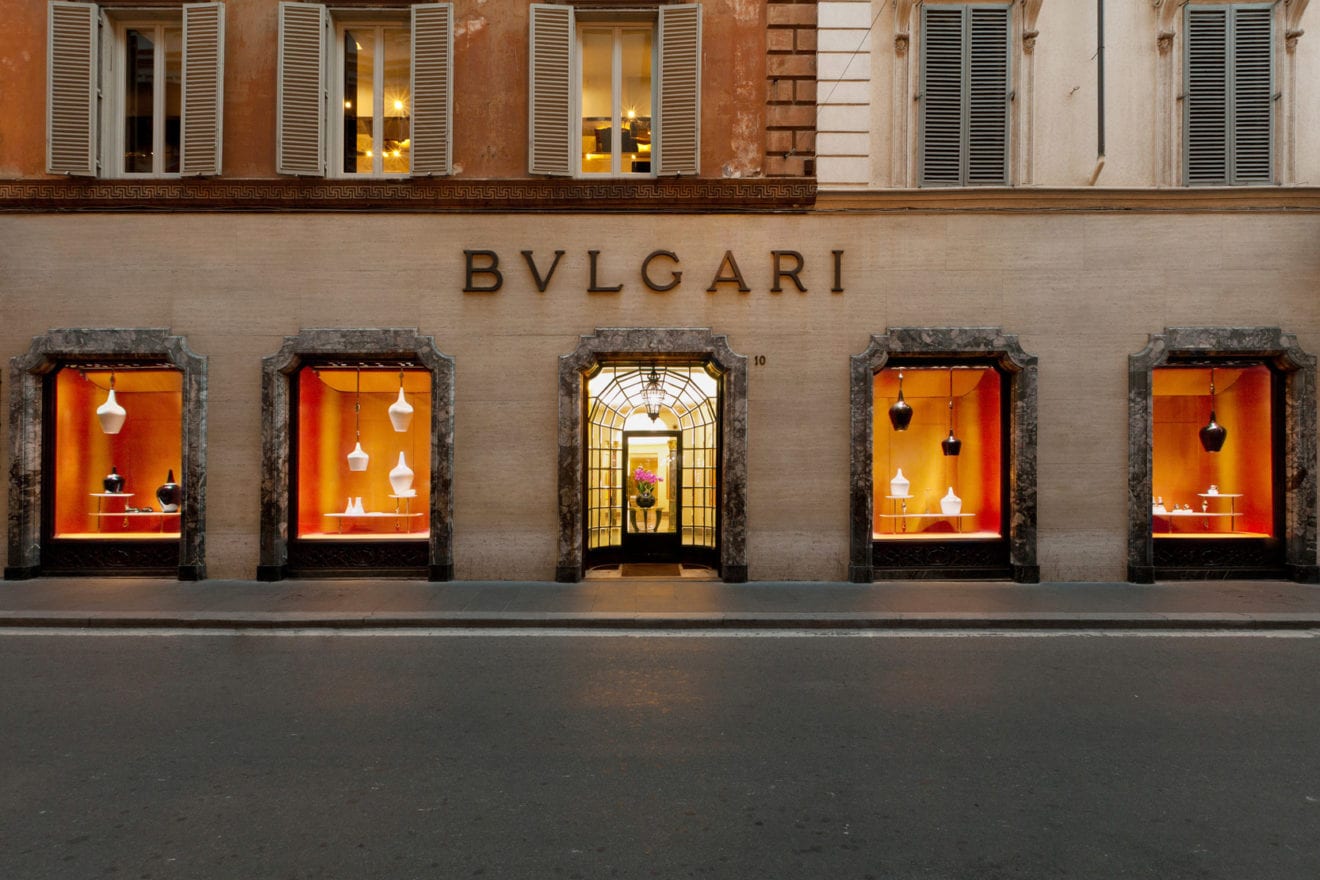
    Italian luxury house Bulgari has opened its first brick-and-mortar store in Ho Chi Minh City, marking its comeback in the country.

    Spanning 194sqm, the Bulgari Vietnam store is located at Union Square shopping centre, featuring the brand’s full range of jewelry, including its famous Serpenti rings, bracelets and necklaces.

    Bulgari first entered Vietnam in 2014 via local distributor Imex Pan Pacific Group and operated until March 2019. In this comeback, the brand set up a member company named Bulgari Vietnam in the country for direct import and distribution.

    According to the brand’s spokesperson, Vietnam is considered as a potential market for the luxury sector due to stable economy and rapid growth. According to data company Statista, Vietnam’s luxury goods market is estimated to reach US$1.14 billion this year and achieve 7.17 per cent growth annually until 2025.

    “We believe this is a good time to bring the brand back to Vietnam,” said the spokesperson. “Overcoming current obstacles will help us to reach a potential customer base that in normal circumstances, they would shop our products overseas.”

    Due to the on-going Covid-19 situation in the country, the brand operated without any launching event.

  • Volvo To Produce Only Electric Vehicles By 2030

    Volvo To Produce Only Electric Vehicles By 2030

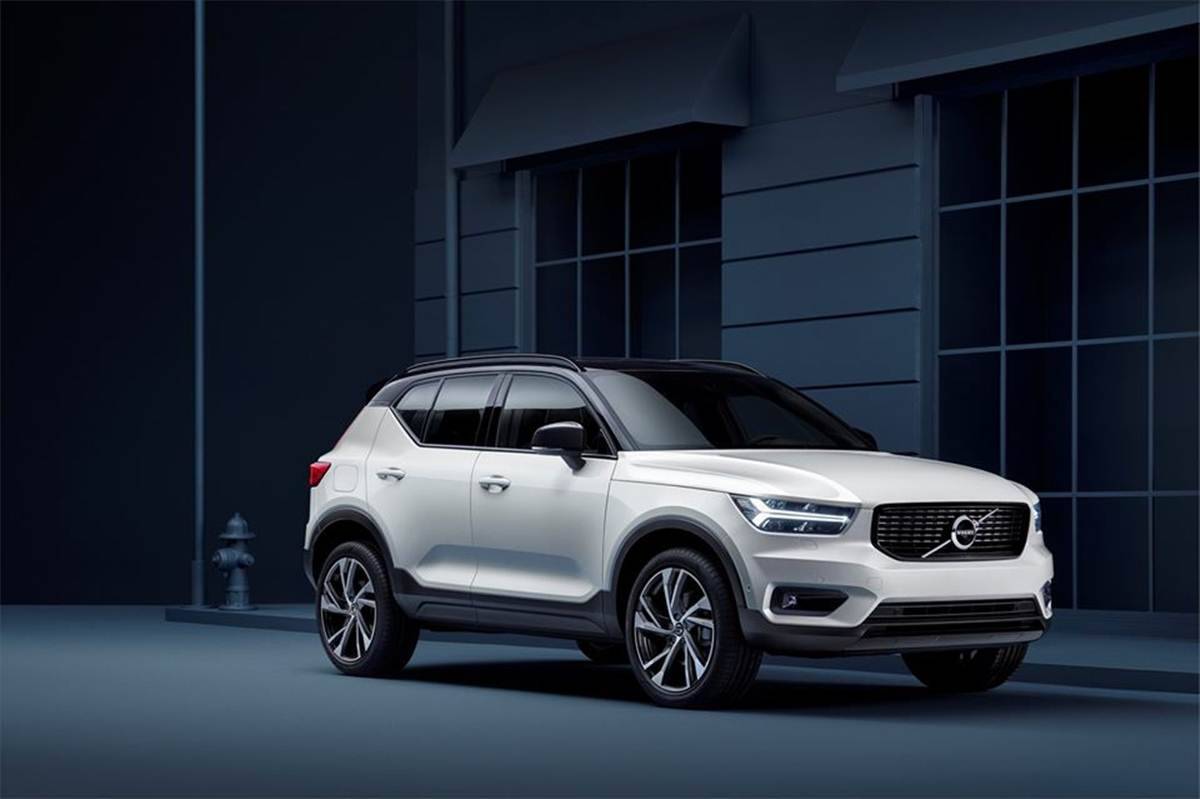
    Chinese-owned Swedish automaker Volvo said Tuesday it will produce only electric vehicles by 2030 and sell them all exclusively online. Volvo is among a growing crop of companies planning to ditch fossil fuel vehicles in the next few years, as demand for zero-emission cars rises and governments put pressure on firms to cut pollution. Indian-owned Jaguar said last month it would produce only electric vehicles from 2025, while US auto giant Ford said it would aim to have an all-electric fleet in Europe by 2030.

    “The company intends to only sell fully electric cars and phase out any car in its global portfolio with an internal combustion engine, including hybrids,” Volvo said in a statement. The company said half of its cars should be electric in 2025, with online sales accounting for half of its volume.

    China’s Geely Holding bought a struggling Volvo Cars in 2010 from Ford and has since helped it enjoy a renaissance as a maker of high-quality vehicles. However, last month Geely Auto said it would not go ahead with a planned merger with Volvo but the two companies would instead reinforce their collaboration on electric vehicles. Volvo is due later Tuesday to unveil its second all-electric vehicle, a C40 SUV, and is readying a smaller model especially suited for European road conditions.

    The company says its move to online sales will provide more transparency on pricing and options for its customers. “If you ask people it is quite a big irritation that you don’t have a clear picture of the price,” company boss Hakan Samuelsson said.

  • Walmart’s Flipkart expands grocery sales to more Indian cities

    Walmart’s Flipkart expands grocery sales to more Indian cities

    Walmart-owned Flipkart will sell groceries online in more Indian cities, as it seeks to compete better with Amazon and Reliance in an e-commerce market that has grown rapidly during the COVID-19 pandemic.

    Flipkart has already expanded online grocery sales to more than 50 Indian cities and intends to reach over 70 locations in the next six months, the company said in a statement on Tuesday.

    The Bengaluru-based firm said its grocery service had grown “exponentially” in the past year when many Indians began buying essential supplies online due to the health crisis.

    “Grocery continues to be one of the fastest-growing categories,” said Manish Kumar, senior vice president at Flipkart, adding that the company had seen increased demand for the service from smaller cities in 2020.

    Reliance Industries-owned JioMart last year became the latest big entrant to India’s e-grocery market, a sector that also includes Amazon.com Inc, BigBasket and several smaller players. Indian conglomerate Tata is reported to be buying a majority stake in Alibaba-backed BigBasket.

    Reliance, backed by India’s richest man, Mukesh Ambani, raised over $20 billion last year from global investors including Facebook and Alphabet’s Google for its digital arm, which is expected to support JioMart.

    India’s broader retail industry is also witnessing a high-stakes legal battle between Reliance and Jeff Bezos-led Amazon on the Future Group’s $3.4 billion sale of its retail assets to Reliance, which Future’s partner Amazon is contesting.

    Flipkart’s recent expansion has taken its grocery services to big cities including Kolkata, Pune and Ahmedabad, it said.

    “Grocery is the next big frontier for online shopping and is a key focus area for Flipkart to bring new customers online,” the company added.

  • Ex-Nokia and Apple camera expert joins Microsoft’s Surface Team

    Ex-Nokia and Apple camera expert joins Microsoft’s Surface Team

    Ex-Apple employee Ari Partinen announced on Twitter that he has joined the Microsoft Surface Imaging team. A well-known name in the mobile camera industry, he’s worked for Nokia from 2017 to 2014 as an Image Quality engineer and later as the Lumia Photography Lead. After that he was hired by Apple for their camera team as a Senior Imaging Engineer from 2014 to 2015 and a Senior Manager of camera validation and testing from 2015 to 2018.

    Ari Partinen has worked on some incredible camera performers in the past. His work on the Nokia 808 PureView and its Windows Phone successor, the Lumia 1020, is his most notable accomplishment. Both devices were innovators in the camera department with their 41MP cameras breaking the limits of how good a phone camera could be.

    Since leaving Apple, he has been working as a Senior Manager at AAC Technologies, an electrical and electronic manufacturing company, until now.

    The Surface lineup has not been the greatest in the camera department. The Surface Duo had a disappointing 11MP camera on the front and none on the back. The device also had some other major flaws in the software, performance and battery departments. The Surface Duo’s starting price of $1,199 and the lack of 5G support didn’t help the company’s new mobile endeavor either.

    With the dual-screen device’s successor already in development, Ari Partinen could bring big improvements in camera performance in the Surface Duo 2. It is not yet clear if he is going to work only on the Duo or also on other Surface devices, like the successors to the well-known Surface Pro 7, Surface Laptop 3 and Surface Book 3 devices.

    The Nokia devices that Ari Partinen has worked on had innovative cameras, more megapixels and greater zoom performance. These achievements meant a jump in picture quality, especially in pixel quality, zooming and low-light performance. Many of the concepts these cameras experimented with are commonplace in high-end phones today.

    The Surface Duo 2 is expected to improve on its predecessor’s shortcomings, like the poor camera, software and battery performance. The lack of 5G is also expected to be addressed in the next generation of the device. It is not yet known when the device is going to be announced.

  • WhatsApp now lets you import third-party sticker packs

    WhatsApp now lets you import third-party sticker packs

    For those of you who will agree with WhatsApp’s updated privacy policy so that you can still be able to use the app, here is one new feature that’s coming to you in the next few days. For a very long time, WhatsApp only allowed customers to use the sticker packs available through its app.

    However, that’s about to change very soon, as WhatsApp is now rolling out a new feature that will allow users of its app to import third-party sticker packs. WaBetaInfo discovered that WhatsApp is testing such a feature many months ago, and now they’re reporting that the company is finally rolling it out to users in select countries.

    For the time being, the option to import third-party sticker packs is only available in Brazil, India, and Indonesia, but you have to update WhatsApp to version 2.21.5.6 Android beta and 2.21.40 iOS. It’s probably going to be made available in other countries in the coming days, so be patient if you’re not living in one of these countries.

  • FJ Benjamin and Lazada Singapore Sign MOU for Strategic Partnership to Boost Online-Offline Sales

    FJ Benjamin and Lazada Singapore Sign MOU for Strategic Partnership to Boost Online-Offline Sales

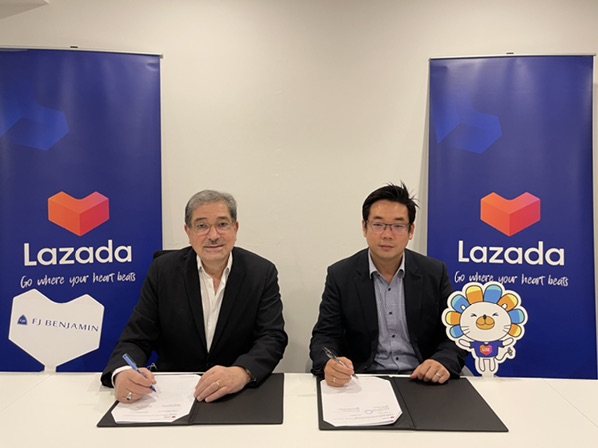
    FJ Benjamin Holdings (FJB) and leading eCommerce platform, Lazada Singapore, today signed a Memorandum of Understanding (MOU) to forge a strategic partnership that aims to deliver the ultimate retail experience to customers across all channels and devices.

    The proposed partnership will tap Lazada’s technical and online capabilities, and eCommerce platform management expertise, and leverage FJB’s experience in fashion brand management and physical store operation, to boost the eCommerce performance of FJB’s stable of brands in Singapore, Malaysia and Indonesia, as well as to expand and incubate new FJB brands to eventually integrate brick-and-mortar and virtual stores.

    FJB will also discuss with brand principals opportunities for eCommerce in markets Lazada has a presence but where FJB does not, such as Vietnam, Thailand and the Philippines. Powered by Alibaba’s advanced eCommerce tools and systems, Lazada will develop new tailor-made solutions to deliver a truly omnichannel customer experience in managing the full online ecosystem of FJB brands across the markets.

    Group CEO Nash Benjamin said: “FJ Benjamin has been strategising and planning our omnichannel business model for some time now and this partnership with Lazada is intended to get us to where we want to be much faster and in a more cost-efficient manner. This will combine our respective capabilities to strengthen customer experience across brick and mortar and virtual channels.”

    Besides operating principal branded sites, it is also intended to host certain brands on LazMall as well as other regional sites, subject to principal approvals.

    “We are thrilled to be part of this new chapter with FJ Benjamin and value their trust in us,” said James Chang, CEO of Lazada Singapore. “Lifestyle, fashion and beauty are important pillars in our eCommerce plans and shoppers can now look forward to seeing more well-known brands and labels on our platform, for an integrated shopping experience. In the last year, Lazada has supported many businesses that adopted a multichannel approach to set up stores online and we know that our expertise in the eCommerce space will benefit and contribute to the success of a renowned brand like FJ Benjamin, and look forward to seeing positive results with them.”

    While some of the brands managed by FJB, including La Senza, Pretty Ballerinas and Petunia Pickle Bottom, are currently available on Lazada’s premiere shopping platform, LazMall, this is the first time both parties –  one, a traditional brick-and-mortar operator, and the other, the region’s leading eCommerce player – have come together to envision and execute a truly omnichannel model under which customers can control the buying process and enjoy a seamless shopping experience across multiple channels – brick-and-mortar, desktop, and mobile.

    Since the pandemic lockdowns last year forced FJB stores in Southeast Asia to shutter, the Group had secured principals’ approvals to pivot to eCommerce. It has ramped up its online presence from one brand, the cult British fashion label Superdry, to almost all its brands including Guess, La Senza, Casio, Rebecca Minkoff, Pretty Ballerinas, Airfree and Dr Barbara Sturm.

    The MOU states that  “the parties agree both physical stores and online stores are part of the retail ecosystem. With Lazada’s technical and online abilities and FJB’s experience in fashion and lifestyle brand management and physical store operations, this brings together a strong strategic partnership which leverages each other’s expertise to deliver an ultimate consumer experience.”

    Under the terms of the MOU, both FJB and Lazada will, within 90 days, work on a detailed action plan and a definitive agreement to move the partnership forward.

    Mr Benjamin said FJB will continue to take charge of all aspects of product assortment, brand management, pricing, promotions as well as key parts of logistics such as inventory and supply chain. The parties will jointly undertake online marketing and campaign strategies while Lazada will operate the online stores.

  • Apple is discovered fighting Arizona antitrust bill

    Apple is discovered fighting Arizona antitrust bill

    Recently, Apple thanked its lucky stars when North Dakota voted down a proposed bill that would have forced the company to allow 3rd-party payment processes for apps in the App Store. The bill’s objective is to let companies bypass Apple’s 15%-30% commission fee (like Epic Games did back in August, unsanctioned) on all applications and transactions on the platform. Apple has always stringently filtered the apps allowed in its store, on top of the commission which developers are calling “highway robbery.” The approval of this bill would give small businesses a much greater chance of survival, especially during the pandemic. However, the victory in North Dakota was only one small battle, and Apple’s fight is far from over.

    Not long after that, Minnesota introduced a similar bill, which Apple is currently lobbying against as well. And now, Apple has extended its efforts to Arizona—which hadn’t even introduced the proposed legislation officially yet before Apple came at them, torches and pitchforks waving. Apple and Google know well that if these bills are passed, they will lose billions of dollars which their duopoly has guaranteed them up until this point. According to them, these bills are “unconstitutional,” and Regina Cobb (the Arizona State Representative who introduced the bill) claims she is facing a nonstop onslaught from Apple and Google’s plethora of hired lobbyists over the past two weeks, as well as free-market groups and the Arizona Chamber of Commerce.

    Apple might be putting everything into fighting these small battles now, bill by proposed bill, state by state, but the deciding battle comes in May when the case between Epic Games and Apple goes to trial. If Minnesota and Arizona end up passing the bill, there’s a chance this (and consequent reactions) may affect the court’s decision, but it is not certain for now. Although much of the world is rooting for a future with a freer market, the North Dakota Senate voted off their proposed bill at a one-sided 36-11 ratio—so nothing is certain, and Apple certainly won’t stop fighting tooth and nail to keep its multi-billion-dollar app revenue from declining.