Author: Mei Ling Tan

  • VinFast eyes global market, to open car plant in US

    VinFast eyes global market, to open car plant in US

    VinFast plans to set up an automobile plant in the U.S. as part of its strategy to start selling there in 2022, Bloomberg reported on Tuesday.

    The company, a subsidiary of conglomerate Vingroup, did not provide details about when it will be set up or where.

    Bloomberg quoted its CEO Thai Thanh Hai as saying: “VinFast’s vision is to become a global smart electric car company and the U.S. is one of the first international markets that we will focus on.

    “We will initially develop high-end models for the U.S.”

    The company also plans to open 35 showrooms and service centers this year in California state where it has received a license to test autonomous vehicles on public streets.

    Malaysian newspaper The Star quoted Hai as saying VinFast believes it can win over American and other overseas customers leery of buying an automobile from a Vietnamese company they know little or nothing about by offering top-quality vehicles with high safety standards and advanced technology.

    The company has R&D centers in Australia, Germany and the U.S.

    VinFast, founded by Vietnam’s first billionaire Pham Nhat Vuong, began selling cars with BMW-licensed engines in 2019.

    Last year it sold 31,500 units, all in Vietnam, where 296,634 cars were sold in all.

  • Samsung could release three Exynos chips this year

    Samsung could release three Exynos chips this year

    Samsung will unveil three Exynos chips this year, claims leaker Ice Universe. The 2021 lineup presumably includes a flagship SoC (Exynos 22xx), a mid-tier chip (Exynos 12xx), and an entry-level silicone (Exynos 8xx).

    The Exynos 22xx will likely succeed the Exynos 2100 that powers the European version of the Galaxy S21 series. It supposedly has the model number 9925 and it may feature an AMD GPU.

    The Exynos 12xx will apparently replace the Exynos 1080, and it will probably also swap out the Mali GPU for AMD’s graphics.

    The Exynos 8xx is new on the radar, and we wonder if it has anything to do with a chip recently spotted by Galaxy Club.

    The chip bears the model number S5E5515, which is not very telling, thanks to Samsung’s inconsistent naming convention.

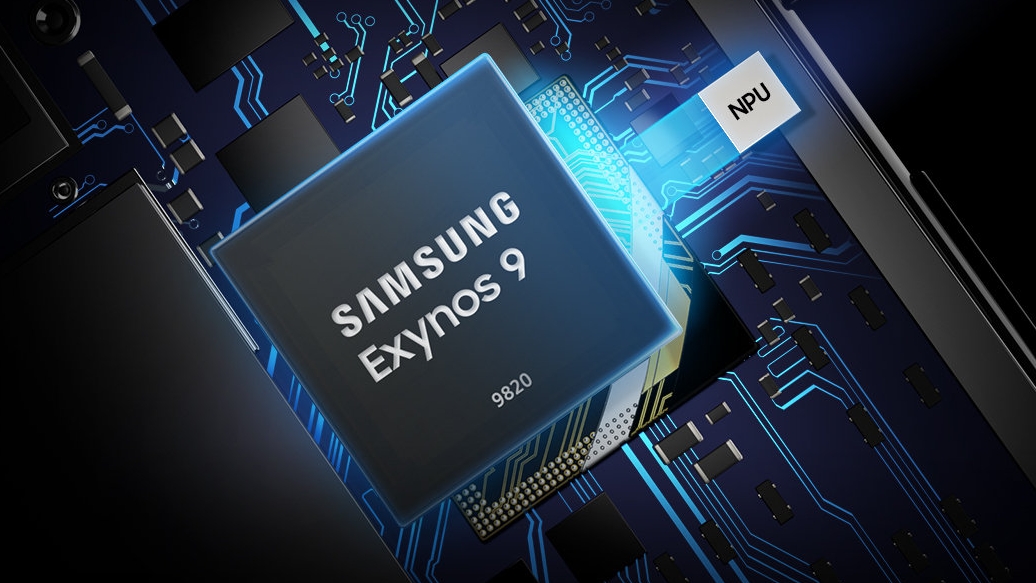
    It does not seem to be a high-end SoC as the model number is not in line with recent flagship chips: Galaxy 10’s Exynos 9820 had the number S5E9820, Galaxy S20’s Exynos 990 had S5E9830, and Galaxy S21’s Exynos 2100 has S5E9840.

    S5E5515 is not consistent with recent mid-tier Exynos chips either. The Exynos 1080 is S5E9815, the Exynos 980 is S5E9630, and Exynos 850 is S5E3830.

    The publication has made a wild guess and believes that the S5E5515 is a lower-mid-tier chip that will sit between the Exynos 850 and Exynos 1080. It is also expected to have an integrated 5G modem.

    The SoC could also turn out to be a non-smartphone chip. Samsung is already believed to be working on a new processor for wearables like AR glasses.

  • Google TV app will turn your phone into a remote control for Android TVs

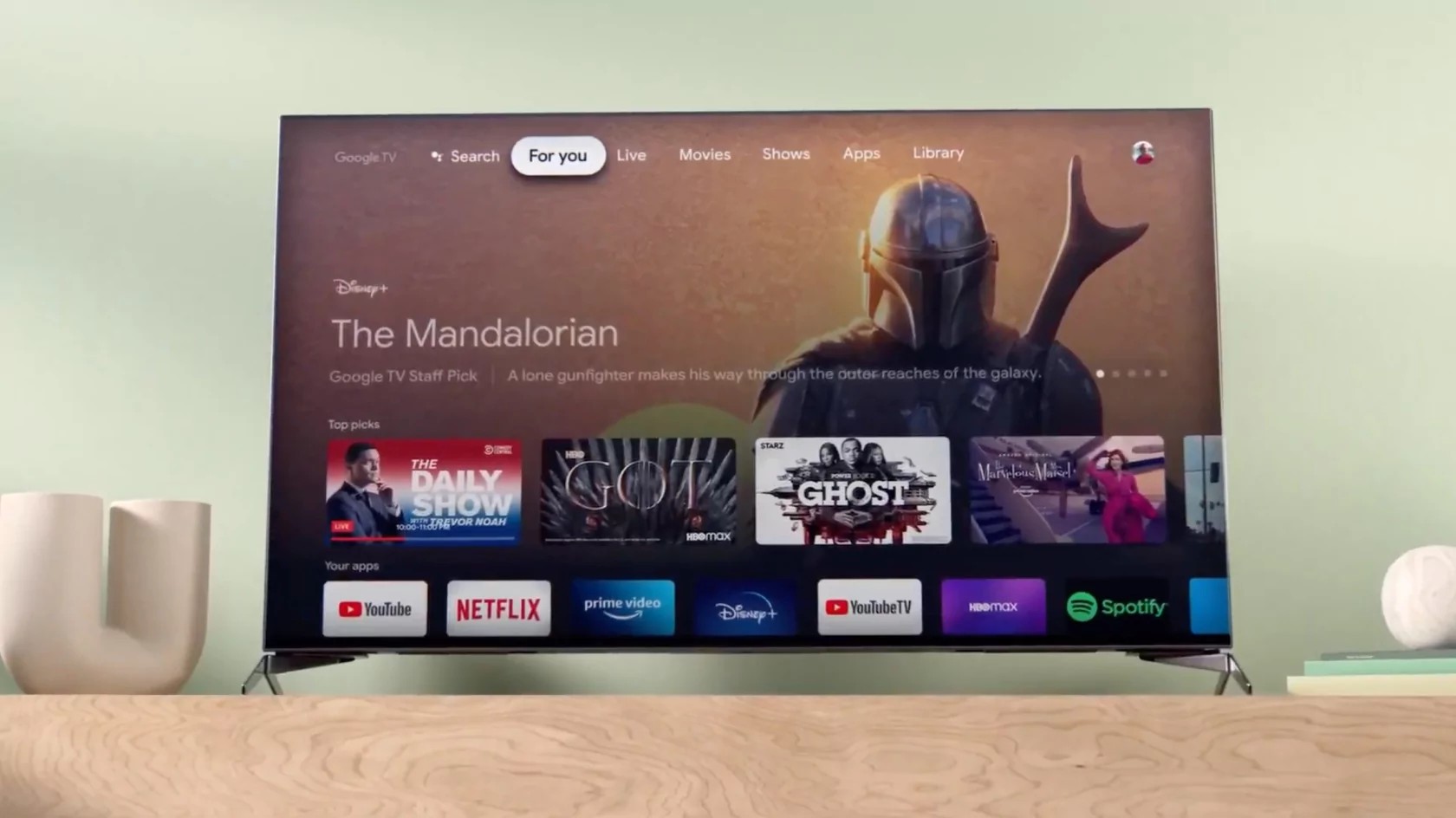
    Google TV app will turn your phone into a remote control for Android TVs

    Android TV owners can already use their phones a remote controls thanks to the Android TV Remote Control app. However, that app hasn’t been updated forever, a sign that Google has other plans for the app and the functionality it offers.

    Those plans have been revealed today when 9to5google discovered code strings in the Google TV app (previously known as Play Movies & TV) that suggest Google is about to add the same remote control capability available in the Android TV Remote Control app.

    The strings refer to a directional pad, enter and back buttons, and the ability to pair a phone to an Android TV, which is exactly what a remote control would do. Unfortunately, the option to turn your phone into a remote control with the Google TV app is not yet functional, but at least we know that you won’t have to use a standalone app to do that.

    Judging by how fast Google is bringing new features to its apps, it won’t be surprising to see the new functionality arriving in just a couple of weeks. We’ll keep our eye peeled for any developments, so stay tuned.

  • Huawei AppGallery is rising fast, attracting millions of developers

    Huawei AppGallery is rising fast, attracting millions of developers

    Huawei’s AppGallery seems to have done quite well for itself this past year despite everything, according to recently released numbers. In a press release this week, Huawei revealed that the platform boasts 2.3 million registered developers today—nearly 80% more than last year. Globally, 530 million users are using the platform on a monthly basis, spread over 42 countries compared to 25 in 2019.

    Huawei’s fast-growing mobile ecosystem has been particularly attractive to Chinese developers, who have released over 10,000 apps to the world, many of which are known titles such as Clash of Kings, Game of Thrones, and Asphalt 9.

    In fact, gaming has been at the forefront of Huawei’s expansion initiatives, with the AppGallery boasting five times more games than last year. App downloads in total reached 384.4 billion in 2020, nearly doubling the previous year’s numbers.

    “We continue to see strong growth across markets in Europe, Latin America, Asia Pacific, Middle East, and Africa.” -Mr. Zhang Zhe

    Having established itself solidly in the top three app marketplaces in the world, Huawei has developed its own HMS Core mobile service framework to provide basic infrastructure services such as HUAWEI ID and in-app purchases, allowing for smooth app integration across different devices. Now, Huawei has announced that it offers 120,000 apps integrated with HMS Core on the AppGallery: a 118% increase from last year. One of Huawei’s main objectives is to maximize the relevant apps it offers in every area of news, entertainment, social media, and productivity.

    They have also spoken out about their 1+8+N strategy—а vision for developing a full-fledged mobile ecosystem consisting of the smartphone (1), Huawei-developed peripherals (8) and third-party IoT devices that are connected using Huawei HiLink and Huawei Share technologies. Huawei is essentially striving to be able to offer an all-in-one package to equal what Samsung and Apple can provide, and its exponential growth this past year has at least proved it can stand on its own two feet.

  • Instagram introduces Live Rooms

    Instagram introduces Live Rooms

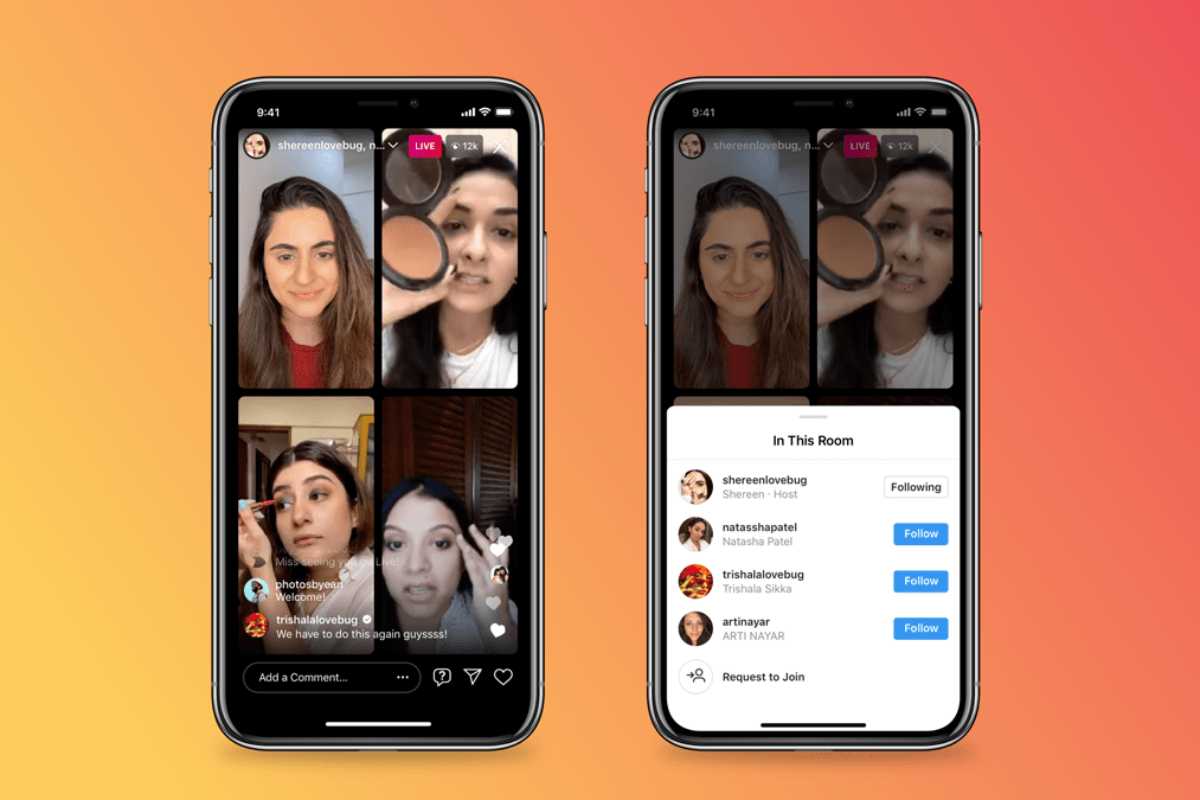
    Instagram is further improving the live features of its app with new functionalities that allow up to four people to go live at the same time. The new feature is called Live Rooms and bumps up the number of Instagram users that could go live at the same time from two to four.

    Furthermore, Instagram revealed that Live Rooms offers creators additional ways to earn money and built their businesses. For example, Live viewers will now be able to purchase badges for the hosts and use other interactive features like Shopping and Live Fundraisers.

    At the moment, Live Rooms lacks any moderation controls, but Instagram announced that it’s “exploring more interactive tools such as offering moderator controls and audio features.” However, these won’t be available until at least a few months from now.

    Instagram users who’d like to take advantage of the new Live Room feature can easily swipe left and pick the Live camera option. Next, simply add a title and click on the Rooms icon to add your friends who you wish to join the live chat. As mentioned earlier, you can add up to three other people when you start a Live Room, but you don’t have to add them all at once.

  • StanChart Hires Ex-Grab Wealth Head

    StanChart Hires Ex-Grab Wealth Head

    Standard Chartered will look to expand its funds and discretionary portfolio management business with the hire of an industry veteran in Singapore.

    Chandrima Das joins the bank as its global head of management investments, according to a statement, reporting to global head of wealth management Marc van de Walle.

    Das has over 20 years of banking and asset management experience across Asia and Europe. Previously, she held various senior roles with Bank of Singapore, ING, Prudential and, most recently, Grab where she was its head of wealth management. She is also the co-founder of the digital investment advisor platform Bento.

    Das brings a unique combination of experience in asset management and wealth tech which is especially pertinent today as we seek to meet increasingly sophisticated demand for wealth management advice at scale,» commented van de Walle on the hire which is subject to regulatory approval.

  • KPMG Names Head of Financial Services in Singapore

    KPMG Names Head of Financial Services in Singapore

    He brings deep domain expertise in emerging areas such as cryptocurrency and platform-based business models, and has been a driving force behind the firm’s global efforts to spur innovation, transformation and scale in financial services.

    KPMG in Singapore has named Anton Ruddenklau as head of financial services, with immediate effect, it announced in a statement on Wednesday.

    Ruddenklau joined KPMG in the U.K. as a partner in 2014 and helmed the firm’s digital and innovation for financial services division from 2017. In 2018, he was named the global co-leader of fintech for KPMG International.

    KPMG said financial services is one of the firm’s priority sectors in Singapore, citing the «new realities of the post-crisis world» that are bringing into focus digital and customer-centric solutions, as well as sustainability and cost reduction strategies.

    Given the rising demand for transformation projects in the Asian marketplace, his understanding of growth strategies and financial technology innovations will enable us to deliver more effective results for our clients,Ong Pang Thye, KPMG Singapore managing partner, said.

  • StanChart Revamps Hong Kong Branches

    StanChart Revamps Hong Kong Branches

    Standard Chartered continues making transformations to its physical presence in Hong Kong, including plans to revamp its branches in the city.

    Standard Chartered will revamp its Hong Kong branches with plans to create paperless services with more digitalization, according to its chief executive for the market Mary Huen during a post-results briefing. More private rooms will also be built for in-person meetings between clients and their wealth managers.

    Branch visits fell 25 percent during the pandemic, Huen said, with more demand for financial services through digital channels.

    The bank will look to add, relocate or close some branches with the aim of maintaining 70 in the city.

    Elsewhere in the city, where the bank employs around 6,000 workers, Standard Chartered is already making changes to its physical presence.

    It is shedding multiple floors from its Hong Kong main office and renting out space from another office located in an industrial district in the eastern part of the city.

    In November last year, the bank said it would roll out flexible working options for around half of its 85,000 staff worldwide by early 2021. Standard Chartered employees in Hong Kong reportedly started using co-working spaces last month operated by IWG as part of a 12-month trial for access to 3,500 offices globally.

  • Huawei launches 5GtoB solution to facilitate industry digitalisation

    Huawei launches 5GtoB solution to facilitate industry digitalisation

    The 5G industry has been developing faster than expected, with operators already seeing commercial returns from the first wave of 5G rollouts. The 5G user base and the number of 5G devices in commercial use have exploded since 2019. By the end of 2020, 380 5G devices had hit the market, 8 times more than there were the year before. The mobile 5G user base had also reached 220 million and wireless home broadband connections reached 1.05 million, a 17 and 21 times YoY increase, respectively. Ding claims these numbers will triple in 2021.

    The prices of 5G phones are also dropping rapidly. There are already multiple units on the market priced at under US$150 and about 30 mid-range and low-end phones priced below US$300. According to Ding, the 5G mobile phone ecosystem will become as mature as 4G over the next one to two years as network rollouts continue and the user base keeps growing.

    In the markets that deployed 5G first, operators have already begun reaping commercial returns. In China and South Korea, operator revenue continued to increase as their 5G user base grew faster than in other countries. Finnish operator DNA and Saudi operator Zain also achieved impressive financial results in the early phases of their commercial 5G deployment.

    At the event, Huawei also officially released its 5GtoB solution which is aimed at creating new value for every player across the industry value chain. Ding stated that building on its experience in connectivity, computing, and industry digitalization, Huawei has worked with operators and other industry partners to develop a one-stop solution that covers sales, operations, and services – the 5GtoB solution. This solution will simplify transactions for enterprise users, help operators monetize their network capabilities, and allow partners to innovate more efficiently, creating new value for every player involved.

    The Huawei 5GtoB Solution includes four parts: 5GtoB Network, 5GtoB NaaS, 5GtoB App Engine, and 5GtoB Marketplace. With 5GtoB Network serving as the infrastructure of the 5G solution, Huawei will continue building its capabilities in providing scenario-based 5GtoB services, including network planning, construction, maintenance, and optimization.

    With 5GtoB NaaS, network capabilities can be orchestrated into offerings before they are released, making it easier for enterprise users and application developers to use 5G networks and enabling enterprise users to manage 5G campus networks themselves.

    The 5GtoB App Engine is an application innovation center, where application developers and system integrators can access operators’ 5G network capabilities. It makes 5GtoB application development more efficient and application integration easier. It also serves as a bridge between 5G network capabilities and 5GtoB applications, enabling agile service development and launch.

    The 5GtoB Marketplace is an all-in-one digital supermarket on the cloud, where enterprise users can purchase the industrial 5G solutions they need.

    Ding said that Huawei has worked with operators, partners, and enterprise users to apply the 5GtoB solution first in the steel industry. With their capabilities and experience embedded into this platform, industrial 5G solutions like automated billet rotation, AR-assisted remote assembly, and steel surface quality inspection, can be standardized and rapidly replicated.

    At the end of his speech, Ding emphasized that industry digitalization will be a huge market, but that digital infrastructure developments vary greatly across industries and application scenarios also vary. In addition, related digital standards are not in place yet. As such, he called on all industry players to work together to establish comprehensive 5GtoB standards and ecosystem to drive further industry digitalization. He closed his speech by reiterating Huawei’s commitment to investing in the ecosystem and standards and supporting industry digitalization.

  • Indosat Ooredoo earns 11.6% cellular revenue growth in 2020

    Indosat Ooredoo earns 11.6% cellular revenue growth in 2020

    President Director and CEO Indosat Ooredoo, Ahmad Al-Neama said: “Despite the challenges created by the COVID-19 pandemic and pricing pressure, Indosat Ooredoo has continued to deliver on our three-year strategy and maintained growth momentum. We are grateful for the on-going support of our loyal subscribers that have encourage us to continue to invest in our 4G network and launch innovative new digital offerings to ensure that our customers have the best mobile experience possible.

    Our commitment to our customers and to provide simple and relevant products has contributed to an increase in our subscriber base and data traffic volume. This growth has translated into an above market increase in cellular revenue and a significant and accelerating gain in market share.”

    “Looking ahead, we anticipate that the shift to online lifestyles and remote working and learning, which have increased sharply by the pandemic, are here to stay. Indosat Ooredoo is fully committed to supporting our cellular and business customers adapt to the new normal by continuing to improve network performance to meet growing demand for data. We believe our new digital solutions will enrich and enable our customer’s digital lives. Through these initiatives we will support Indonesia’s digital transformation agenda and create value for all our stakeholders.”

    Indosat Ooredoo has recorded solid performance for the full year ended 31 December 2020, with total revenue increasing by 6.9% YoY to IDR 27.9 trillion, cellular revenue increasing by 11.6% YoY to IDR 23.1 trillion.

    EBITDA reaching IDR 11.4 trillion, an increase of 16% YoY due to resilient revenue growth and a focus on operational efficiencies. EBITDA margin increased by 3.2 ppt to 40.9%.

    Cellular subscriber numbers grew by 1.7% to 60.3 million by end of 2020, and Average Revenue per User (ARPU) increased to IDR 31.9 thousand from previously IDR 27.9 thousand, driven mainly by a substantial data traffic increase of 52.8% YoY.

    Indosat Ooredoo also delivered strong operational performance, including improving our video experienced by 55.8% YoY, doubling our 4G download speed, and significantly improving our upload speed by 88.4% YoY.

    During the year Indosat Ooredoo has successfully partnered with global digital players like Facebook, Google, Cisco and Ericsson to bring advanced technologies and capabilities to fast-track digitalization of the customer experience and deliver network improvements to Indonesia.

    We have continued to introduce new innovative products to help customers stay connected as well as business and education to continue to operate during the pandemic. Through IM3 Ooredoo we launched a new IMPreneur package, a business package specially designed for SMEs and through Indosat Ooredoo Business, we recently introduced the “iDo Voice” solution, which consists of 3 new voice services for corporate customers.

    Indosat Ooredoo’s investment in 4G network infrastructure and commitment to our customers continued to be recognized by prestigious international business awards. At the Opensignal Global Mobile Network Experience Awards 2020, we received the “Global Rising Star” award in Video Experience. We have also recently won the Corporate Excellence category in Telecommunications & ICT Industry at the Asia Pacific Enterprise Awards (APEA) 2020 Regional Edition.

    In 2021, Indosat Ooredoo will continue the upgrade and expansion of our network, focusing on 4G/LTE and the Video Grade Network capable of providing improved internet services to customers. Our networks enhancement is part of our effort to enable digital transformation of Indonesia, in-line with the digital economy plan of Indonesian government and to accelerate national economy recovery.

    “We are confident for our growth momentum to continue in 2021. However, due to uncertainties associated with the economic recovery from the pandemic, we are cautiously optimistic in guiding revenue growth to be in-line with the industry, EBITDA margin to be in the low 40s, and Capex at approximately IDR 8 trillion.”

  • Lamborghini Urus Sales Hit 100 Units Milestone In India

    Lamborghini Urus Sales Hit 100 Units Milestone In India

    Automobili Lamborghini has achieved a new sales milestone in India by selling 100 units of its super-luxury SUV – the Lamborghini Urus. Currently the most affordable Lamborghini model in India, the Urus was launched in January 2018, and the first car was delivered the same year in September. Within one year, the company managed to sell 50 units of the car in India, and despite the coronavirus pandemic the Italian marque has managed to sell the next 50 units in less than 18 months. In fact, before the pandemic, the company was delivering one Urus every week, which is huge for a car in this uber-luxury segment.

    Sharad Agarwal, Head of Lamborghini India, said, “When we launched Urus, we always knew that it’s going to be a gamechanger for us. Also, because it’s a car that comes with the dynamics of a sports car, but also has the versatility of an SUV. And limitations what we have in the Indian market with our congestions and roads we knew that it is a right answer or a right Lamborghini for an India user. When we launched the car, we delivered the first Urus in September 2018 and we were delivering one Urus every week, till we were hit by the pandemic. There were challenges in the market and also on the supply side, but the good thing is we are now back on track, we are now back on delivering almost one Urus every week, and now we could achieve the fastest hundred in the super-luxury segment, and this makes it really, really special.”

    The Lamborghini Urus has been a big contributor to the company’s sales in India. In 2019, the company sold a total of 65 units in the country and posted a growth of 30 percent compared to 2018, and this big boost to the sales was thanks to the Urus. With the pandemic hitting sales sharply in 2020, Lamborghini still managed to cross the 50 unit sales mark last year. The company sold 52 units in 2020 and is looking to grow on this momentum in 2021 spearheaded by the Urus.

    Talking about the expectations from 2021, Agarwal said, “The segment is slowly coming back. There are still challenges. Last year we saw that the segment was about -30 percent. This year, my anticipation is that the segment should come close to the 2019 level. As a brand, we are still going strong and we have set a target for us that we want to have another record year of performance in India despite what we face in terms of market conditions. So, we can say that 2021 will be another record year in terms of our volumes in the country. So, well definitely do much more than what we did in 2019.”

    The Lamborghini Urus has currently priced in India around ₹ 3.10 crore (ex-showroom, India) and it still commands a waiting period of about 10 months, and despite that, the company says, its order bank is growing healthier and healthier. Moreover, Lamborghini also says that the demand is not restricted to metros alone, but is growing in each part of the country, across the length and breadth. The Urus is powered by a 4.0-litre Twin Turbo V8 engine, which is tuned to produce 641 bhp and 850 Nm of peak torque. The SUV can go from 0-100 kmph in 3.6 seconds and reach 200 kmph in 12.8 seconds, before reaching the electronically limited top speed of 306 kmph.

  • AirAsia Group details $40m assistance to Philippines AirAsia

    AirAsia Group details $40m assistance to Philippines AirAsia

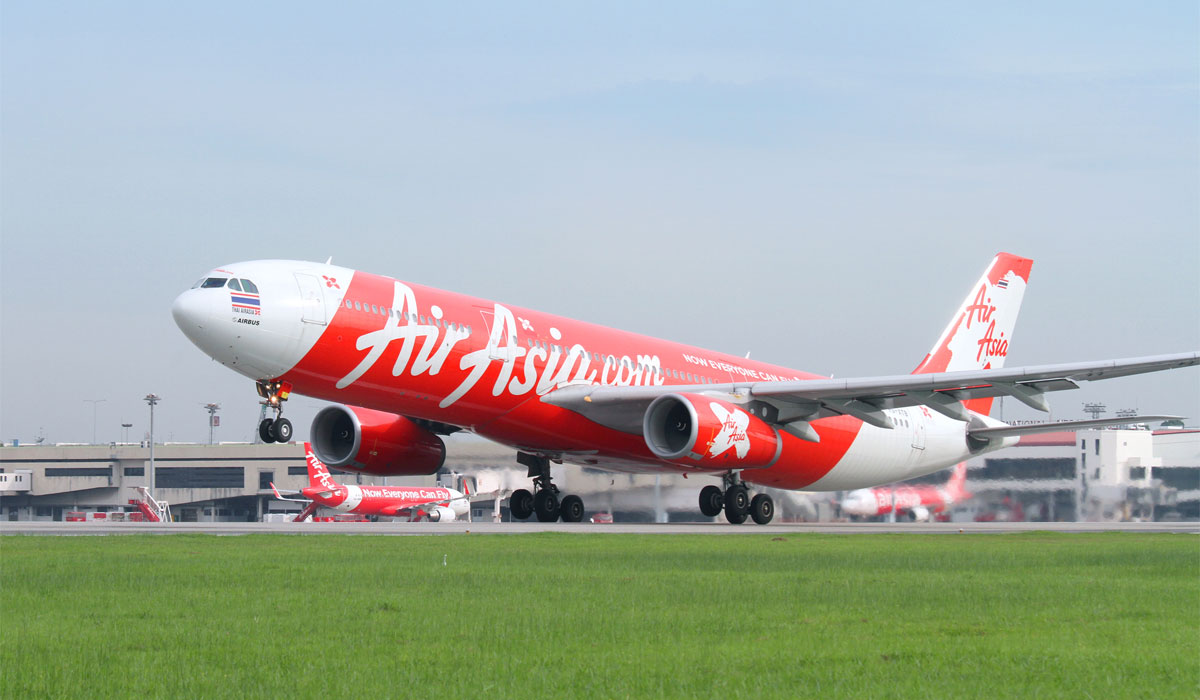
    AirAsia Group has disclosed that it extended approximately $40 million in advances and corporate guarantees to Philippines AirAsia in November-December.

    The low-cost airline group on 19 November provided a $19.1 million corporate guarantee to Filipino bank BDO Unibank. This was in relation to the restructuring of a three-year, $35 million loan to Philippines AirAsia, the group says in a 26 February disclosure to Bursa Malaysia.

    On 29 December, AirAsia Group through AirAsia Berhad provided AirAsia with a corporate guarantee and cash advances amounting to Ps991 million ($20.4 million), with Citibank Philippines as the beneficiary. In support of that move, AirAsia Group pledged one of AirAsia Berhad’s spare engines for an uncommitted short-term revolving credit facility applied for by Philippines AirAsia.

    AirAsia Group’s latest annual report for 2019 indicates that AirAsia Berhad is the legal name for the Malaysia-based LCC AirAsia, and AirAsia Inc refers to the AirAsia Philippines airline. The same report states that AirAsia Group’s effective equity interest in the Filipino carrier stood at 40%.

    The group says in its latest disclosure that the financial assistance was provided “in the ordinary course of business and to facilitate the running of the operations and financial affairs” of AirAsia Philippines.

    It adds that these do not have any material effect on its earnings per share, net assets per share and gearing of the company and its subsidiaries.

  • Retykle closes funding round to enable growth

    Retykle closes funding round to enable growth

    Hong Kong-based children’s clothing resale platform Retykle has closed a new round of seed funding to support its expansion plans.

    According to the company, funds raised will enable Retykle to invest within its home market of Hong Kong, as well as expanding its reach into Singapore and Australia. The investment will be used on technology development, including hiring engineers to build out personalization, a peer-to-peer marketplace and mechanisms.

    “We’ve focused on the customer experience to cultivate a love for and habit around using the platform to buy and sell which leads to a sticky customer with frequent purchases and sustained customer lifetime value,” said Sarah Garner, founder of Retykle.

    The high-profile angel investors include co-founder of Lazada Tim Rath and investor John Wood, who Room To Read and Powered By Purpose.

    “The businesses best set up for long-term success are those that pursue purpose in addition to profit,” said Wood. “Retykle’s model is great for the planet and for family finances.”

    The funding comes at a time when the Covid-19 pandemic has reportedly made it harder to source investment for startups, especially for women.

    “Recent news from TechCrunch shows that funding for women is reverting back to 2017-era levels,” said Nicole Denholder of Next Chapter Raise.

  • Arket opens doors in Korea

    Arket opens doors in Korea

    H&M’s ‘Nordic lifestyle brand’ Arket has opened its first brick-and-mortar store in Seoul, South Korea.

    Located at Yeouido’s department store The Hyundai Seoul, the Arket South Korea store spans 8000sqft and features the brand’s collections of New Nordic design for men, women and children. The flagship store also houses an Arket cafe, offering vegetarian dishes, drinks, pastries and snacks.

    “Opening the new store in Seoul is an incredibly exciting step for us, as it is our first physical location outside of Europe,” said Pernilla Wohlfahrt, MD at Arket.

    The launch in South Korea is part of its strategy to expand its presence in Asia. Last month, the retailer announced that it will open its first brick-and-mortar store in China, at Beijing.

    Launched in 2017, the brand now operates more than 20 stores across major European cities, including Copenhagen, Amsterdam, London and Berlin.

  • Japan’s J.Front starting with fashion subscription service

    Japan’s J.Front starting with fashion subscription service

    Japanese department-store operator J.Front is to introduce a fashion subscription rental service.

    According to Nikkei Asia, J.Font’s new service will offer a monthly rental option with fee starting from US$103, featuring high-end women’s apparel from local and international brands. The subscription service is expected to attract 30,000 customers and generate more than US$56 million within five years.

    Managed by Daimaru Matsuzakaya Department Stores, the service will initially feature about 50 labels, ranging from Japan’s Epoca, Adopre to Marni of Italy and France’s See By Chloe. The monthly subscription service will allow customers to rent up to three high-end fashion items and have them delivered to their doors.

    By launching the rental service, J.Front Retailing aims to recover its customer base since the Covid-19 pandemic has caused significant lost sales for the retailer.

    Subscription services have become a growing sector in Japan’s retail industry as customers are now more conscious about product waste. According to Yano Research Institute, the domestic market for subscription services is expected to exceed more than US$11 billion by the year ending March 2025.