Author: Mei Ling Tan

  • Li Ning ready to buy Clarks footwear

    Li Ning ready to buy Clarks footwear

    Li Ning, the gymnast-entrepreneur who lit the Olympic flame during China’s 2008 Games, has bought control of one of Britain’s oldest shoe producers, extending the global shopping spree by Chinese companies for famous international brands. Viva China Holdings, the sports talent agency founded by Li, has agreed to pay £51 million (US$69.7 million) for 51 percent of LionRock Capital Partners QiLe Limited, the private equity firm which will own the Clarks brand, according to a filing to the Hong Kong stock exchange. The investment would give Viva China control of Clarks when LionRock completes its £100 million investment to recapitalize Clarks. Li is the non-executive chairman of LionRock.

    Based in the same village in south-western England’s Somerset county for nearly two centuries since its establishment in 1825, Clarks’ business has struggled along with the global retailing industry, as the raging coronavirus pandemic kept staff from workshops and sapped the appetite for consumption. The retailer, operating 320 stores in the UK alone, had to cut 900 jobs last May out of a global workforce of 13,000, after reporting a 2019 loss of £83 million. The company warned of deteriorating performance in 2020.

    “The challenges to our business brought on by Covid-19 have meant that we need more resources and investment to fully deliver [Clarks’] strategy and safeguard the future of our business,” said the shoemaker’s chief executive Giorgio Presca in November. “The new partnership with LionRock will provide this as well as the expertise to grow the Clarks brand in China, which remains a primary opportunity.”

    Li’s purchase of Clarks follows the acquisitions of dozens of global sports brands by Anta Sports, Xtep, and 361 Degrees International, which make up China’s four largest sportswear producers along with Li’s eponymous brand.

    Anta’s brands cover Fila, and Japan’s Descente, as well as an investment in the Finnish company Amer, which owns multiple brands, from Atomic skis to Salomon snowboards, Arc’teryx outdoor gear to Mavic bicycle wheels and Suunto sports watches.

    Xtep’s stable of brands now includes the hiking brand Merrell, leisure brand Hush Puppies, and running specialist Saucony, as well as the leisure brands K-Swiss, Palladium, and Supra.

    “Clarks is one of the world‘s most recognized consumer names,” LionRock’s founder and managing director Daniel Tseung said in November. “Our investment will not only strengthen Clarks’ position as one of the world’s most recognized brands but also allow growth into key emerging markets.

    Li owns a 92.91 percent of Viva China, which was established in 2009, according to its interim report for 2020.

    The price tag for Clarks would be set off against an equivalent amount of £54 million that Viva China lent to LionRock Capital last September, according to the statement on Friday.

    Shares of Viva China fell by 1.5 percent to HK$0.65 in Hong Kong after the announcement.
  • Trump takes one last shot at maiming Huawei before he leaves the White House this week

    Trump takes one last shot at maiming Huawei before he leaves the White House this week

    Even though President Donald Trump will be leaving the White House this coming Wednesday, he took the time to spank the Chinese phone and networking equipment manufacturer Huawei one last time. In May 2019, Trump cited security issues for his decision to put Huawei on the Entity List. This move prevented the firm from accessing its U.S. suppliers without permission from the Commerce Department. Despite this move which resulted in the loss of Google as a supplier, Huawei persevered; for a brief period of time this year, it was the top phone manufacturer on the planet in terms of shipments.

    Exactly one year to the day that it was placed on the Entity List, Huawei received another big blow from the Trump administration. Starting last September, any foundry manufacturing chips using American-sourced technology needs a license from the U.S. to ship to Huawei. The latter was the second-largest customer of the world’s largest foundry, TSMC, and was blocked from receiving cutting-edge chips that it had designed itself. The U.S. also browbeat its allies over the last few years in an attempt to prevent them from using Huawei’s networking equipment on their 5G networks.

    American lawmakers were quick to call Huawei a national security risk because of the company’s alleged tie to the Communist Chinese government. Concerns that Huawei’s phones and base stations contain backdoors used to spy on U.S. consumers and corporations have never been proven. The U.S. also banned rural carriers from using the Universal Service Fund (managed by the FCC) to purchase networking gear from Huawei and is forcing these firms to remove any Huawei equipment used in their networks.

    In the final days of the Trump administration, licenses allowing U.S. firms to sell to the Chinese manufacturer are being revoked and applications from U.S. suppliers to obtain such licenses are being rejected. Reuters has seen an email sent from the Semiconductor Industry Association (SIA) that documents the Commerce Department’s recent actions. In the email, the SIA notes that the Commerce Department had released “intents to deny a significant number of license requests for exports to Huawei and a revocation of at least one previously issued license.” The SIA email stated that a broad range of products was included in the latest action and many U.S. companies have been waiting months to hear whether they would be allowed to sell to Huawei. More than 150 license requests were pending amounting to $120 billion worth of goods and technology.

    Just last week, the Trump administration blacklisted Chinese phone manufacturer Xiaomi by demanding that U.S. investors divest themselves from any investments made in the company by November 11th, 2021.

  • StanChart Nets Ex-Bank of Singapore Relationship Manager

    StanChart Nets Ex-Bank of Singapore Relationship Manager

    Standard Chartered hires a new private banker focused on the Singapore market, formerly from Bank of Singapore, according to a note.

    Suresh Nair joins Standard Chartered as a senior client partner for private banking, according to the note, effective as of today with a focus on the Singapore market. In his new role, Nair will report to Adeline Chow, private banking team lead for Singapore and Malaysia.

    A spokesperson for the bank confirmed the hire.

    Nair was most recently with Bank of Singapore where he was responsible for the Singapore, Malaysia and international teams. Previously, he had over 20 years of banking experience working for the likes of J.P. Morgan, HSBC Private Bank and American Express. In addition to Southeast Asia, Nair also has some experience covering the Dubai market.

  • Google Play Store now tells you which apps are trending higher or lower

    Google Play Store now tells you which apps are trending higher or lower

    It’s human nature to want to know which apps are trending up and which are trending down. And now this information is available on the Google Play Store via a new icon that shows whether an app is trending up or down. The icon shows an arrow moving up or moving down in the top app lists. An arrow pointing up tells you that a particular app is trending higher while an arrow pointing down tells you the opposite.

    Unfortunately, the icons don’t tell us how many slots an app has moved up or has moved down. Nor do we get to know how much time has elapsed while the app in question started trending in one direction or the other.

    To check out which apps are trending up or trending down, open the Google Play Store app. On the top row of tabs, tap on Top charts. From there you can navigate to different charts showing the top apps in certain categories. Looking at the Top free chart you can see that the top three apps are Signal Private Messenger, Telegram, and Zoom Cloud Meetings. MeWe is number four and underneath the number four on the chart, you can see an arrow pointing downward. That means that the app is trending lower.

    TikTok is number five and is trending higher. At number six is DuckDuck Go Privacy Browser with an arrow pointing down indicating that the app is trending lower. Trending higher is Disney+ (#7), Google Pay (#8), discovery+ (#9) and Cash App (#10). This list goes all the way to number 597.

    Most likely your decision whether or not to install an app is not going to come down to how it is trending. Still, those of you who are into such things can now easily get this information from the Google Play Store.

  • Leading jeweler invests in pawn shop chain

    Leading jeweler invests in pawn shop chain

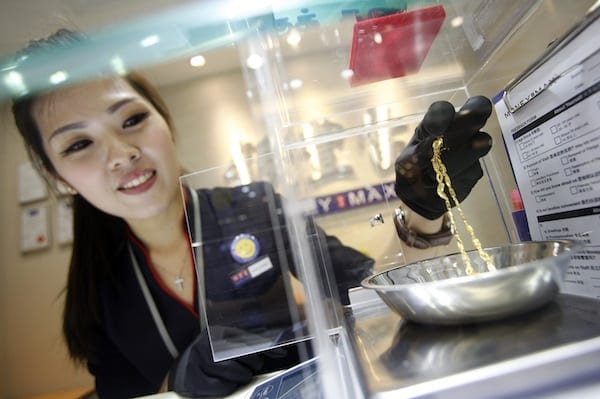
    PNJ has decided to invest in pawnshop chain Golden Friend, with the stipulation it cannot exceed 30 percent of the latter’s charter capital.

    The Board of Directors of the Phu Nhuan Jewelry Joint Stock Company (PNJ) has entrusted PNJ CEO Le Tri Thong with deciding the value and timing of the investment.

    The Golden Friend Joint Stock Company was founded in 2017 with a charter capital of VND1 billion, which was raised after six months to VND10 billion.

    The company introduced itself as a strategic partner of PNJ. Golden Friend has 21 pawnshops, all of which are located inside PJN stores. It accepts expensive accessories made of gold, silver and diamond, and also luxury watches like Rolex, Hublot and Patek Philippe.

  • Hanoi buses keep losing passengers

    Hanoi buses keep losing passengers

    Hanoi single-trip ticket passengers reached 63.6 percent of its annual goal, dropping 36 percent year-on-year, while monthly tickets decreased by 34.3 percent compared to 2019.

    Hanoi Transportation Corporation (Transerco) total revenue in 2020 was VND2.5 trillion ($108 million), fell 17.5 percent year-on-year, said Nguyen Thanh Nam, CEO of Transerco, at the Transerco 2020 Review Conference held recently.

    Nam said the company is struggling due to market slump. In 2020, Hanoi bus had to cut 80 percent of the trips from March 22 and stop operating from April 1 to April 22. It had no income during the said period yet still had to pay for the operating cost and other expenses.

    The reasons were social-distancing and passengers being reluctant to take the bus during the pandemic, resulting in a fall in the number of passengers and single-trip ticket sales.

    The free bus passes policy for the elders also contributed to the single-trip ticket sales drop. Airport bus and city-tour bus without price support also had to cut trips as the number of passengers, mostly especially foreign tourists, dropped in 2020.

    Transerco revenue in 2021 and the next few years will hardly revive due to the Covid-19 pandemic, free bus passes policy for the elders, and traffic congestion, Nam said.

    Hanoi has set the goal of 20 percent of commuters using public transport in 2021 and 30-35 percent in 2025.

  • Mastercard launches one-stop resource site to support digital transformation of SMEs in Asia Pacific

    Mastercard launches one-stop resource site to support digital transformation of SMEs in Asia Pacific

    To help small and medium enterprises (SMEs) recover from the pandemic and prepare for the future, Mastercard has launched the Digital Acceleration for Small Businesses microsite across most of its Asia Pacific websites with information and resources on how to digitalize and run businesses more efficiently.

    As COVID-19 drives a rapid and lasting shift to e-commerce and contactless payments, the one-stop center features guides on digital transformation, e-learning courses, information about Mastercard products and services for SMEs, cyber security insights and tools to reduce vulnerabilities and access to discounts on business software solutions, e-commerce platforms and digital marketing services.

    “SMEs have taken a particularly hard hit from the pandemic, so it’s vital for them to get the knowledge, skills and resources they need to offer an omnichannel shopping and payment experience that drives business and builds customer loyalty in the physical and digital worlds,” said Sandeep Malhotra, Executive Vice President, Products & Innovation, Asia Pacific, Mastercard.

    “With consumer buying habits and expectations evolving so quickly, this initiative is just one of the ways that Mastercard is fostering financial inclusion and helping small businesses to go digital across their operations to reduce costs, increase efficiency and improve cashflow management – all while staying safe and protected from cyber risks and fraud.”

    The Digital Acceleration for Small Businesses center is available across Mastercard’s English-language websites for Hong Kong, Singapore, Malaysia, the Philippines, Thailand, India and Southeast Asia. It will be rolled out selectively on non-English sites in the future.

    To enhance the resources for SMEs, Mastercard has joined forces with popular website builder Wix and with Zoho, a cloud solutions provider with more than 60 million users. These partners are sponsoring online guides and articles on various topics – from creating an online store and choosing the right domain name to migrating to an online expense management and accounting platform.

    “As the world shifts beyond short-term survival, SMEs need to plan for long-term success in a new world of online shopping. At Wix, we’ve seen first-hand how the past year challenged businesses in so many ways but also how it brought out their resilience, grit and adaptability,” said Liat Karpel Gurwicz, Head of eCommerce Marketing at Wix.com. “We will draw on the collective learning of the Wix team who built our eCommerce platform and the merchants who run their businesses on it to help SMEs plan and strategize for 2021.”

    “Even as organizations are trying to reimagine their business models, dwelling in rich content helps unlock ideas. We are excited to participate in this initiative by Mastercard, a company that is committed to empower businesses to innovate and implement superior solutions for business transformation,” said Gibu Mathew, Vice President and GM, Asia Pacific, Zoho Corp. “This initiative will further enhance and deepen digital awareness and know-how, allowing business owners and top management to make informed decisions when selecting solutions that best support evolving business needs.”

    The resources site in Asia Pacific is part of Mastercard’s global efforts to help SMEs “Get Paid, Get Capital and Get Digital” through new product development, partnerships and distribution channels. These include initiatives in North America, the Caribbean, Australia and New Zealand.

    After reaching its goal to bring 500 million people into the financial system, Mastercard strengthened its commitment to inclusion by pledging to help a total of 1 billion people get access to the digital economy by 2025, including 50 million small businesses and 25 million women entrepreneurs.

    Beyond supporting businesses, the benefits of going digital are far-reaching. Digitalization of SMEs could add US$2.6 trillion to US$3.1 trillion to Asia Pacific’s GDP by 2024, a recent study by International Data Corporation showed. Due to the impact of COVID-19, it said, nearly 70% of SMEs in Asia Pacific are accelerating digitization and 86% believe this will help build resilience against future events.

    Reflecting the huge shift to a “digital first” mindset, contactless payments via the Mastercard network were 41% of in-person transactions in the third quarter of 2020 – up from 37% in the second quarter and 30% a year earlier.

  • New CEO for DB Schenker in Asia Pacific

    New CEO for DB Schenker in Asia Pacific

    DB Schenker announces the appointment of Dr Niklas Wilmking as CEO for the Asia Pacific region, with effect from 1st January 2021.

    Following his successful tenure as Executive Vice President Global Airfreight at DB Schenker Head Office, responsible for the global airfreight network, flight operations, procurement, revenue management, operational excellence and digitalization, Dr Wilmking returns to the Asia Pacific region, based in the Regional Head Office in Singapore to lead its over 15,000 strong workforce across 20 countries.

    Since joining Schenker in 2002, Dr Wilmking has held various operational and corporate leadership positions in Europe, Asia as well as Global roles, including extensive stints in Asia Pacific leading corporate strategic transformation projects and managing comprehensive portfolios of P&L.  Notably, Dr Wilmking led the freight and logistics project for the Beijing Olympics, as well as the M&A integration for Bax Global and Schenker. He was also CEO of Schenker in Vietnam, as well as CEO of Star Global in Hong Kong which were subsidiaries of the Schenker Group.

    Prior to joining Schenker, Dr Wilmking spent seven years in operational positions at Lufthansa. He holds a Ph.D. in Logistics Engineering from Technical University in Berlin.

  • Kerry Logistics Network opens chemical logistics centre in Cangzhou, China

    Kerry Logistics Network opens chemical logistics centre in Cangzhou, China

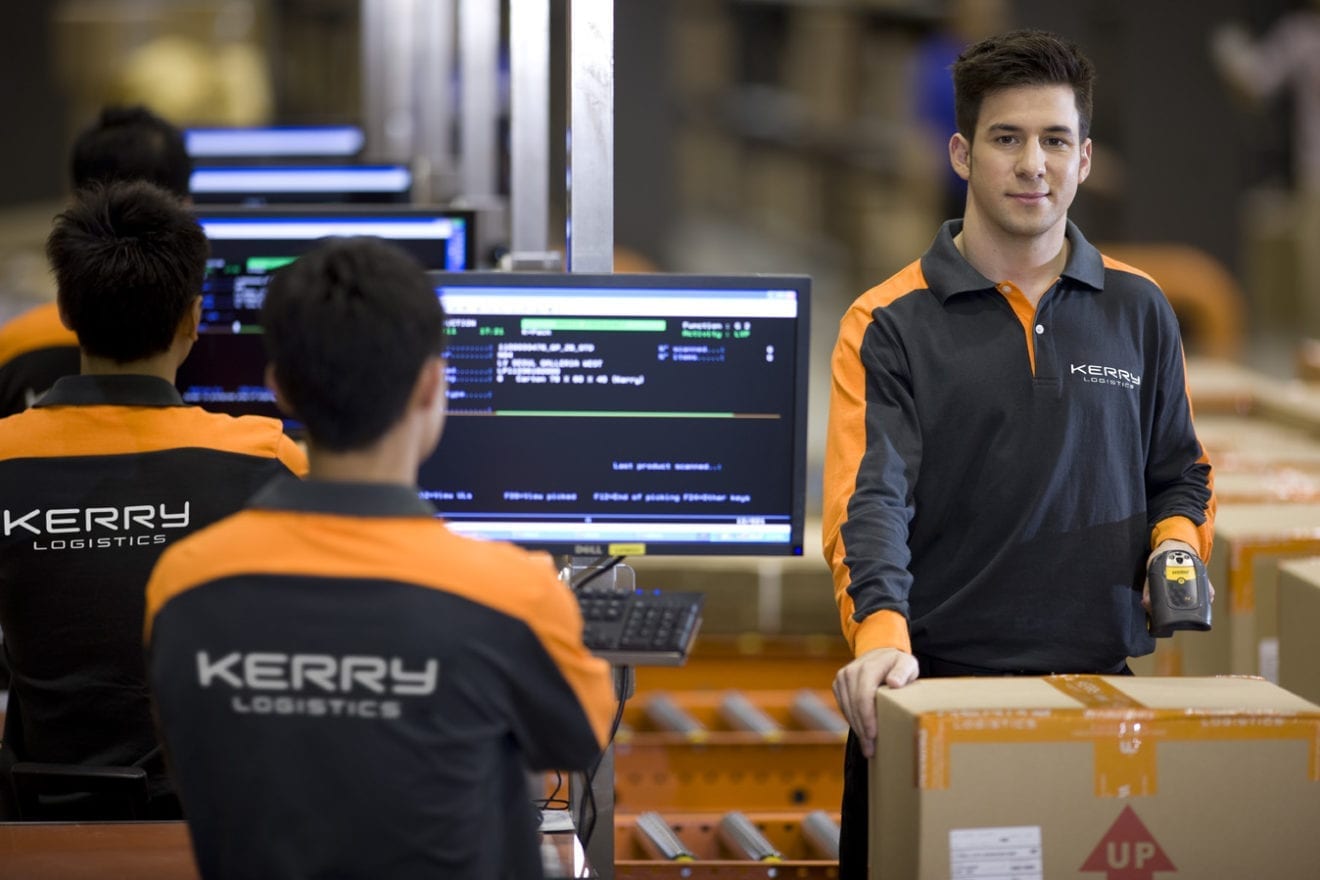
    Kerry Logistics Network Limited (‘Kerry Logistics Network’; Stock Code 0636.HK) has opened a logistics centre in the Cangzhou Lingang Economic and Technological Development Zone in Hebei province, China under Kerry IMS Chemical Logistics to capture the market potential in chemical logistics. The logistics centre was opened and commenced operation on 8 January.

    The Kerry IMS Chemical Cangzhou logistics centre was developed to strengthen Kerry Logistics Network’s service capability in the chemical sector and an important base in Northern China, consolidating the Company’s combined resources in logistics, export industries, an international-standard operating platform and transportation facilities. Located in the proximity of the Tianjin Nangang Industrial Zone, the logistics centre has a total area of 320,000 sq ft, comprising Class A warehouse, Class B warehouse, as well as office facilities, and has the capacity to handle 400,000 tonnes of Class A and Class B chemicals per year. The logistics centre was designed and built above Chinese national standards and is equipped with smart monitoring and management systems. At present, it is handling mainly industrial raw materials, mostly packaged in Intermediate Bulk Containers (IBC), drums and pails. The warehouse will store 38 types of dangerous goods, including flammable liquids and solids, oxidisers and corrosive substances.

    William Ma, Group Managing Director of Kerry Logistics Network, said, “The Kerry IMS Chemical Cangzhou logistics centre is the flagship development in Kerry Logistics Network’s expansion of its chemical logistics business, unleashing its strength as a 3PL in the chemical and dangerous goods market. With this logistics centre, Kerry Logistics Network is confident that it will greatly enhance its service capabilities in chemical and dangerous goods logistics, enriching user experience and service quality to offer growth initiatives to the industry.”

    Edwardo Erni, Managing Director – China and North Asia of Kerry Logistics Network, said, “There is enormous potential and development prospects in the chemical logistics market. The completion and opening of the Cangzhou logistics centre will allow us to provide professional chemical supply chain consolidation services to our customers in the Beijing-Tianjin-Hebei Region. It will give support to our customers’ national and regional framework and consistently optimise supply chain networks to raise the autonomy of the chemical industry supply chain.”

    Leveraging the geographical advantage of the Cangzhou Lingang Economic and Technological Development Zone, the Kerry IMS Chemical Cangzhou logistics centre is supported by Kerry IMS Chemical Logistics’ strong chemical warehousing, long-haul trucking and distribution services and network. Not only can it fulfil the warehousing and transit needs of local chemical companies, but can also provide services to the Hebei, Tianjin, Shanxi and Shandong regions, integrating regional resources and upstream and downstream industries to create a sustainable industry chain. The logistics centre is the implementation of Kerry Logistics Network’s operation strategy of synchronised distribution from the warehouses in Eastern, Southern, Northern and Southwest China, so that the logistics and distribution time nationwide is shortened, ensuring the timely delivery of goods to increase the competitiveness of its customers’ products.

  • Tesla Asks U.S. Safety Agency To Declare Speed Display Issue Inconsequential

    Tesla Asks U.S. Safety Agency To Declare Speed Display Issue Inconsequential

    Tesla Inc filed a petition with U.S. auto safety regulators saying that 612,000 vehicles produced since 2012 do not fully comply with federal safety standards because displays can be switched from miles per hour to only metric measurements, documents released on Friday show.

    The automaker asked the National Highway Traffic Safety Administration (NHTSA) to declare the noncompliance issue inconsequential to safety, according to the agency’s filing.

    Tesla said it corrected the issue in production in September and that more than 75% percent of the affected U.S. vehicles have accepted the firmware update released in September.

    Tesla said if vehicles are set to only display to kilometers, all functions tied to speed limits like Traffic-Aware Cruise Control and Speed Assist will “convert mapped data from mph to km/h, resulting in the vehicle speed automatically matching the appropriate speed limit.”

    Tesla added that vehicle operators can change the display back to miles per hour, saying the option is “easily located in the display menu and is not buried in sub-menus.”

    Tesla said it has not received any reports of crashes related to this issue and noted that NHTSA granted two petitions for inconsequential treatment involving speedometer unit display noncompliance to Volkswagen AG in July and BMW in 2015.

  • Apple is a “lifestyle company” says incoming Intel CEO in bid to motivate employees

    Apple is a “lifestyle company” says incoming Intel CEO in bid to motivate employees

    There was a time before the Apple iPhone and other smartphones roamed the earth when people relied on their PCs to access the internet. Back then, Intel was said to be the Gold Standard of chip makers. But that was then and these days Intel no longer has the same reputation. Intel also has had problems with its 10nm process node and delayed until 2022 the release of its 7nm manufacturing process.

    There has been talk about Intel turning to contract manufacturer TSMC or Samsung Foundry to produce some of Intel’s chip designs. In fact, recently Intel decided to outsource the production of its second-generation discrete graphics chip to TSMC. That is the company responsible for the manufacturing of Apple’s 5nm A14 Bionic chipset and the powerful 5nm M1 chip that is replacing Intel components on some Macs

    Last week, Intel CEO Bob Swan flew away from the company effective on February 15th. His replacement, Pat Gelsinger, is returning to the flock; an Intel veteran with over 30 years experience at Intel, Gelsinger recently spent his days as CEO of VMare. While Gelsinger doesn’t take over until the middle of next month, he apparently is feeling the heat from Apple’s M1 chip. The latter is equipped with 16 billion transistors. Compare that to the 11.8 billion transistors that are sardined into the A14 Bionic (which was a 38% hike from the 8.5 billion transistors found in the A13 Bionic).

    The incoming Intel CEO met with company employees during the week and dropped what some might consider an insult on Apple. While addressing the troops, Gelsinger reportedly said, “We have to deliver better products to the PC ecosystem than any possible thing that a lifestyle company in Cupertino” makes (italics added). Perhaps Mr. Gelsinger hasn’t checked out the performance of the chips designed by that “lifestyle company in Cupertino.” The M1 is delivering improved performance and battery life and the addition of the Apple-designed component put a jolt into the demand for Macs.

    Perhaps Intel’s next CEO was just trying to motivate the firm’s employees. The point of the comment is that Intel is a company that produces chips, chips, and chips. As a result, the chips it produces should be better than the ones designed by Apple which makes different products to improve consumers’ lives. In other words, Gelsinger is looking at the M1 and is saying that how could we let ourselves be outdone by a company that really doesn’t focus on chips and is into consumer electronics instead.

  • Canada Goose appoints an APAC president

    Canada Goose appoints an APAC president

    Canada Goose announced the appointment of Scott Cameron as president, Asia-Pacific (APAC), effective April 1 and the appointment of Michael D. Armstrong, executive vice president, ViacomCBS, to its Board of Directors as an independent director, effective immediately.

    Cameron joined Canada Goose in 2016 as chief strategy and business development officer and most recently served as president of the Greater China region. During his tenure, Cameron was responsible for the development and growth of the brand’s direct-to-consumer global channels, successfully established Canada Goose’s presence in Asia and assembled its team in the region. In this new role, he will oversee all marketing and commercial activity within the expanded APAC region, which includes Greater China, Japan, South Korea, Australia, and New Zealand.

    “Scott has been instrumental in ensuring the highest level of operational excellence throughout our stores globally, building our business in Greater China and providing an exceptional level of support to the executive team for the past five years,” said Dani Reiss, president and CEO of Canada Goose. “This appointment is a reflection of his relentless efforts and the success he has helped to drive in the region.”

    Armstrong, a 22-year veteran of ViacomCBS Global Distribution Group, manages relationships with third-party studios and oversees the international sales teams for formats and CBS Newspath service. Previously, he served as general manager of BET Networks, where he oversaw strategy and operations, content acquisitions, multi-platform scheduling, marketing, corporate communications, strategy, finance, research, and audience science. Armstrong is on the board of PRX and a member of the Board of Trustees at his alma mater Hampton University.

    “I look forward to Michael’s contributions as a Canada Goose board member, drawing on his extensive expertise in business development and operations throughout the entertainment industry and the world,” said Reiss. “I am confident that his vast entertainment experience will provide a valuable perspective as we continue to execute on our long-term growth strategy.”

    “I am honored to join the Board of Directors at Canada Goose, which has grown into one of the world’s most coveted lifestyle and performance luxury apparel brands. I look forward to working hand in hand with my fellow Board members and the management team to continue to propel the brand’s growth,” said Armstrong.

  • WhatsApp delays the implementation of its new terms and privacy policy

    WhatsApp delays the implementation of its new terms and privacy policy

    For the first time in many years, it looks like Facebook is taken into consideration users’ feedback. After informing its 2 billion users that WhatsApp is going to update its terms and privacy policy, forcing them to share data with Facebook and third-party associated companies, the social giant has taken a step back.

    Facebook is now giving WhatsApp users three extra months to decide whether or not they agree with the new terms and privacy policy, the company announced this week. Along with the new deadline, WhatsApp clarified some of the misinformation running around after its initial announcement.

    The update includes new options people will have to message a business on WhatsApp, and provides further transparency about how we collect and use data. While not everyone shops with a business on WhatsApp today, we think that more people will choose to do so in the future and it’s important people are aware of these services. This update does not expand our ability to share data with Facebook.

    Also, Facebook announced that it will do a lot more to clear up the misinformation around how privacy and security work on WhatsApp in the coming weeks. That being said, Facebook will no longer suspend or delete WhatsApp accounts that don’t agree with the new terms and privacy policy on February 8. Instead, Facebook will “go to people gradually to review the policy at their own pace before new business options are available on May 15.”

  • December auto sales hit monthly high

    December auto sales hit monthly high

    Auto sales climbed to 47,865 units in December, the highest monthly number last year, according to the latest data from Vietnam Automobile Manufacturers Association (VAMA).

    It represented a 32 percent rise from November and 45 percent increase from the same period in 2019.

    The data shows 36,856 units sold in December were passenger cars, up 28 percent over the previous month, 10,673 were commercial vehicles, up 50 percent and 331 units were special-purpose vehicles, down 30 percent.

    Despite the late surge, total auto sales in 2020 still fell 8 percent year-on-year to 296,634 units due to deep plunges recorded in April and August after two major Covid-19 outbreaks.

    Local brand Truong Hai Auto (Thaco) retained the top spot in 2020 with a 35.5 percent share of the market as sales rose 10 percent to 100,727 units.

    It was followed by Toyota with 70,692 units, down 11 percent and Mitsubishi with 28,954 units, down 6 percent.
    Ford and Honda rounded out the top five.

  • FCC sets record with auction of key spectrum for 5G use

    FCC sets record with auction of key spectrum for 5G use

    During 2021, U.S. carriers will take another huge step toward completing the build-out of their 5G networks. The FCC last week wrapped up an auction of mid-band spectrum in the C-band. These airwaves lie in the range of 3.7GHz-3.98GHz and heavy demand for the rare mid-band spectrum helped generate a record $80.9 billion in proceeds related to the auction. There were 57 bidders vying for a total of 5,684 licenses. Mid-band spectrum is very much in demand by U.S. carriers and T-Mobile has made these airwaves the key part of its layer-cake approach to 5G. The previous record for money generated by an FCC auction for spectrum was the $44.9 billion generated by the FCC’s 2014 AWS-3 auction.

    T-Mobile, the first U.S. carrier to launch nationwide 5G in the states, used its 600MHz low-band spectrum as the foundation for its nationwide 5G service. These signals travel great distances making them the perfect foundation for its network. But what they don’t do is deliver download data speeds much faster than 4G LTE. High-band spectrum can only travel short distances making them perfect for urban areas where the population is densely packed. While these signals do not easily penetrate buildings, they do deliver fast 5G download data speeds often hitting 1Gbps and faster.

    In between the two extremes is mid-band spectrum. Sprint’s mid-band holdings were exactly what T-Mobile was targeting when it offered $26.5 billion to buy its fellow wireless provider back in April 2018. The deal closed this past April giving T-Mobile control over Sprint’s 2.5GHz mid-band spectrum. These signals travel further than those of the high-band variety and are faster than low-band 5G. Many analysts expect T-Mobile to become the fastest 5G provider in the states thanks to its mid-band holdings once all the work is done.

    Other carriers wanted the opportunity to purchase mid-band spectrum for themselves. In November 2019, U.S. Cellular, Verizon, AT&T, Bluegrass Cellular, Pine Belt Wireless and the C-Band Alliance sent an electronic letter to the FCC requesting an auction of mid-band airwaves in the C-Band (3.7GHz-4.2GHz). At the time, U.S. Cellular President and CEO Ken Meyers says that it is “critical” for U.S. carriers to obtain as much mid-band spectrum as they can find. The executive made it clear that the FCC had to take action ASAP to make sure that there would be enough mid-band spectrum to go around.

    FCC Chairman Ajit Pai, who is leaving the regulatory agency this Wednesday afternoon when the transition to the Biden administration takes place, said, “These results represent a strong endorsement by the private sector of the service rules and transition plan put in place by the FCC to quickly make the C-band a critical part of 5G rollout in the United States. And they vindicate the hard choices the FCC made during the C-band proceeding—and that we made them. The FCC confronted a host of technical, legal, practical, and political challenges in structuring this auction. It would have been easy to delay. But we rightly pushed ahead and overcame every one of those obstacles. As a result, we significantly advanced United States leadership in 5G and have enabled America’s wireless consumers to more quickly benefit from 5G services.”

    Satellite owners who are giving up their spectrum in the auction are being transitioned to the upper 4.0-4.2 GHz range. To prevent interference from the satellite transmissions to impact the wireless providers, a 20MHz band will be used as a “guard band.”

    The next step in the process requires the auction winners to bid for licenses related to specific frequencies. The FCC will release a notice to the public containing the date and time when this assignment phase will take place.