Author: Mei Ling Tan

  • Tata Puts Post-Pandemic Bet On Digital

    Tata Puts Post-Pandemic Bet On Digital

    Tata Group plans to invest in digital, high-end electronics and healthcare in a post-pandemic world, the $100 billion conglomerate’s chairman said on Thursday. Tata, whose operations span hotels, steel, airlines, electronic goods and technology services, will also place big bets on electric vehicles, renewable energy and battery storage, N Chandrasekaran, who is also known as Chandra, added.

    “When you look at trends for the future, definitely there are clear signs you can pick up. Anything that is digital, we’re making a big bet on,” Chandra told the Reuters Next conference.

    The coronavirus pandemic has accelerated the adoption of technology, changing the way people live, work and consume as well as how companies operate, he added.

    Tata has already made public its intent to launch an umbrella app enabling access to all its consumer businesses, Chandra said, in a concept borrowed from China where apps such as Alipay allow everything from hotel bookings to e-commerce. Tata is also building an online business-to-business platform.

    The owner of British luxury brand Jaguar Land Rover (JLR) is placing big bets on electric vehicles as well as on battery storage and renewable energy for consumer and industrial use.

    “We are very serious about electric vehicles,” Chandra said, adding that Tata is investing in developing clean technology cars at home through Tata Motors and at JLR.

    Automakers are investing in EVs, largely driven by tighter government regulations on polluting vehicles, with Tesla, now the world’s most valuable car company, readying plans to launch in India this year.

    Chandra said the adoption of technology and shift in consumer and corporate behavior will lead to the creation of new and shared workplaces closer to where people live.

    Meanwhile, there will be a higher degree of automation in Indian factories driven by greater use of artificial intelligence, internet of things or connected devices and data.

    With some of these changes unlikely to reverse, Chandra is looking at new opportunities for Tata, particularly as India’s economy springs back from damage during the early stages of the pandemic last year.

    “I’ve been quite surprised with the speed with which the economy is recovering and bouncing back,” he said, adding that several Tata companies are already recovering losses as demand picks up except in areas like airlines.

    COVID-19 has also forced Tata to be more resilient to disruption in the global supply chains it depends on and for Chandra, one way to do this is to be a part of it.

    “There are couple of industries we have already identified. One is electronics, high-tech manufacturing, where we’ve already started the foray and we are developing plans for the future.”

    Tata also plans to cater to growing demand for medical devices in India and around the world, Chandra said.
  • Trump’s China Tech War Backfires On Automakers As Chips Run Short

    Trump’s China Tech War Backfires On Automakers As Chips Run Short

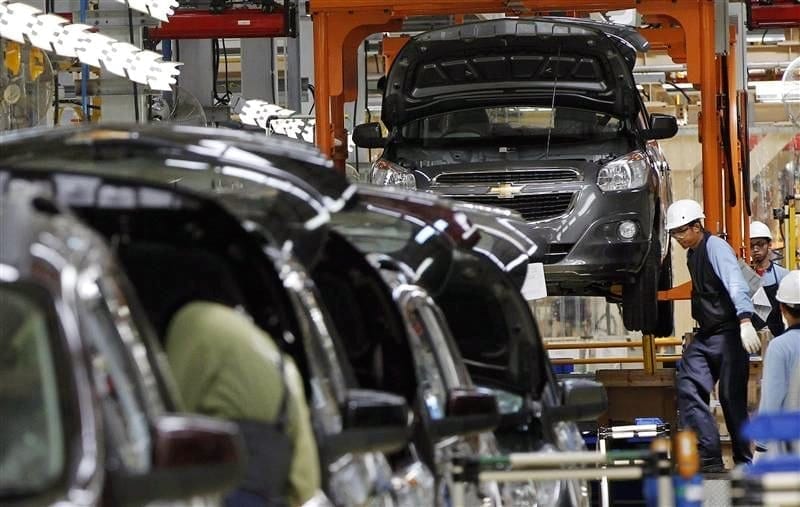
    Automakers around the world are shutting assembly lines because of a global shortage of semiconductors that in some cases has been exacerbated by the Trump administration’s actions against key Chinese chip factories, industry officials said.

    The shortage, which caught much of the industry off-guard and could continue for many months, is now causing Ford Motor Co, Subaru Corp and Toyota Motor Corp to curtail production in the United States.

    Automakers affected in other markets include Volkswagen, Nissan Motor Co Ltd and Fiat Chrysler Automobiles.

    The problems stem from a confluence of factors as auto manufacturers compete against the sprawling consumer electronics industry for chip supplies. Consumers have stocked up on laptops, gaming consoles and other electronic products during the pandemic, creating tight chip supplies throughout 2020.

    They have also bought more cars than industry officials expected last spring, further straining supplies.

    In at least one case, the shortage ties back to President Donald Trump’s policies aimed at curtailing technology transfers to China.

    One automaker moved chip production from China’s Semiconductor Manufacturing International, or SMIC, which was hit with U.S. government restrictions in December, to Taiwan Semiconductor Manufacturing Co in Taiwan, which in turn was overbooked, a person familiar with the matter said.

    Ford also will idle its Focus plant in Saarlouis, Germany, for a month starting next week because of chip shortages.

    An auto supplier confirmed TSMC has been unable to keep up with demand.

    “The systemic aspect of the crisis is giving us a headache,” said a supplier executive, who asked not to be identified. “In some cases, we find substitution parts that could make us independent from TSMC, only to discover that the alternative wafer manufacturer has no capacity available.”

    TSMC and SMIC did not immediately respond to requests for comment.

    On an earnings call with investors Thursday, TSMC Chief Executive C.C. Wei said there was a shortage of automotive chips made with “mature technology” and that it is working with customers “to mitigate the shortage impact.”

    It only takes the tiniest of chips to throw off production: a Ford plant in Kentucky that makes the Escape sport utility vehicle idled because of a shortage of a chip in the vehicle’s brake system, a union official in the plant said.

    Ford also will idle its Focus plant in Saarlouis, Germany, for a month starting next week because of chip shortages.

    The situation is unlikely to improve quickly, since all chips, whether bound for a laptop or a Lexus, start life as a silicon wafer that takes about 90 days to process into a chip.

    The chipmaking industry has always strained to keep up with sudden demand spikes. The factories that produce wafers cost tens of billions of dollars to build, and expanding their capacity can take up to a year for testing and qualifying complex tools.

    “The long and short of it is, demand is up about 50%. And there’s no asset-intensive industry like ours that has 50% capacity lying around,” said Mike Hogan, senior vice president at chip manufacturer GlobalFoundries and head of its automotive unit.

  • UBS Poised for Indian Fintech Deal

    UBS Poised for Indian Fintech Deal

    Swiss bank UBS is reportedly poised to pour several hundred million into a payments start-up in India. The investment is alongside some of the Swiss wealth manager’s ultra-rich clients.

    Zurich-based UBS is negotiating a $400 million investment in Paytm, an Indian e-commerce payment system Bloomberg reported on Thursday, citing people close to the talks. The bank’s asset management arm wants to co-invest with UBS’ wealthy clients, the outlet reported – which would mark one of the largest such deals.

    The ten-year-old fintech was valued at $16 billion in its last round of financing two years ago. It competes with services like Google Pay or WhatsApp’s payment service, as well as regional start-ups.

    UBS is attempting to buy shares from Paytm employees, the news service reported. It doesn’t appear to be a done deal yet: UBS aims to finalize an agreement as soon as this month, though talks could still be delayed or fall apart.

    Paytm counts Softbank, Ant Financial, Berkshire Hathaway, and asset manager T. Rowe Price, among its investors. Its CEO, Vijay Shekhar Sharma, said this week Paytm could turn a profit as soon as this year.

  • Vietjet eyes aircraft purchases as it relies on vaccine rollouts to revive air travel

    Vietjet eyes aircraft purchases as it relies on vaccine rollouts to revive air travel

    Budget carrier Vietjet Air plans to expand its investment in new aircraft and technical facilities this year after reporting a small profit in 2020 despite the Covid-19 pandemic.

    “In 2021, we expect to continue to receive new modern planes and will invest in maintenance and training facilities, and the investment will be higher than in 2020,” Vietjet CEO Nguyen Thi Phuong Thao said in an interview recorded on Jan. 9 and broadcast on Thursday at the Reuters Next conference.

    Vietjet said separately on Wednesday it raised $28 million via a bond issuance last month to fund its development plans in 2021. It did not provide further details about the bond sale.

    Vietnam has been successful in containing the coronavirus with a series of quarantine and tracking measures. With just over 1,500 infections and 35 deaths in total, it has resumed economic activities earlier than much of Asia.

    While all international commercial flights have been suspended since late March, domestic air travel has been subjected to few restrictions.

    Vietjet’s cargo transport in 2020 rose 75 percent from 2019, she said, adding that its overall domestic operations recorded positive growth in 2020, without giving comparative figures.

    With the early Covid-19 vaccine roll-out around the world, Thao expects the global aviation industry to recover rapidly.

    Vietjet’s Thai unit increased its aircraft fleet to 15 last year, while its market share there also increased, she added.

    “Air travel demand is extremely high for business, investment, education and healthcare purposes, and we have been actively conducting flights to repatriate Vietnamese people from overseas,” Thao said.

    She said the company is considering options to raise funds for its investment plans for this year, though she did not name an amount.

    “Our debt-to-equity ratio is 1.0, compared with over 3.0 for the aviation industry, so we have room to mobilize funds for our development,” Thao said.

    The airline continued to take delivery of Airbus SE narrow- body jets last year despite some supply chain interruptions at the manufacturer but Boeing Co did not meet its delivery schedule, she said.

    Vietjet has 200 737 MAX jets on order, according to Boeing, but the plane has not yet returned to service in Asia following a near two-year global grounding.

  • Couche-Tard drops $20bn Carrefour takeover plan

    Couche-Tard drops $20bn Carrefour takeover plan

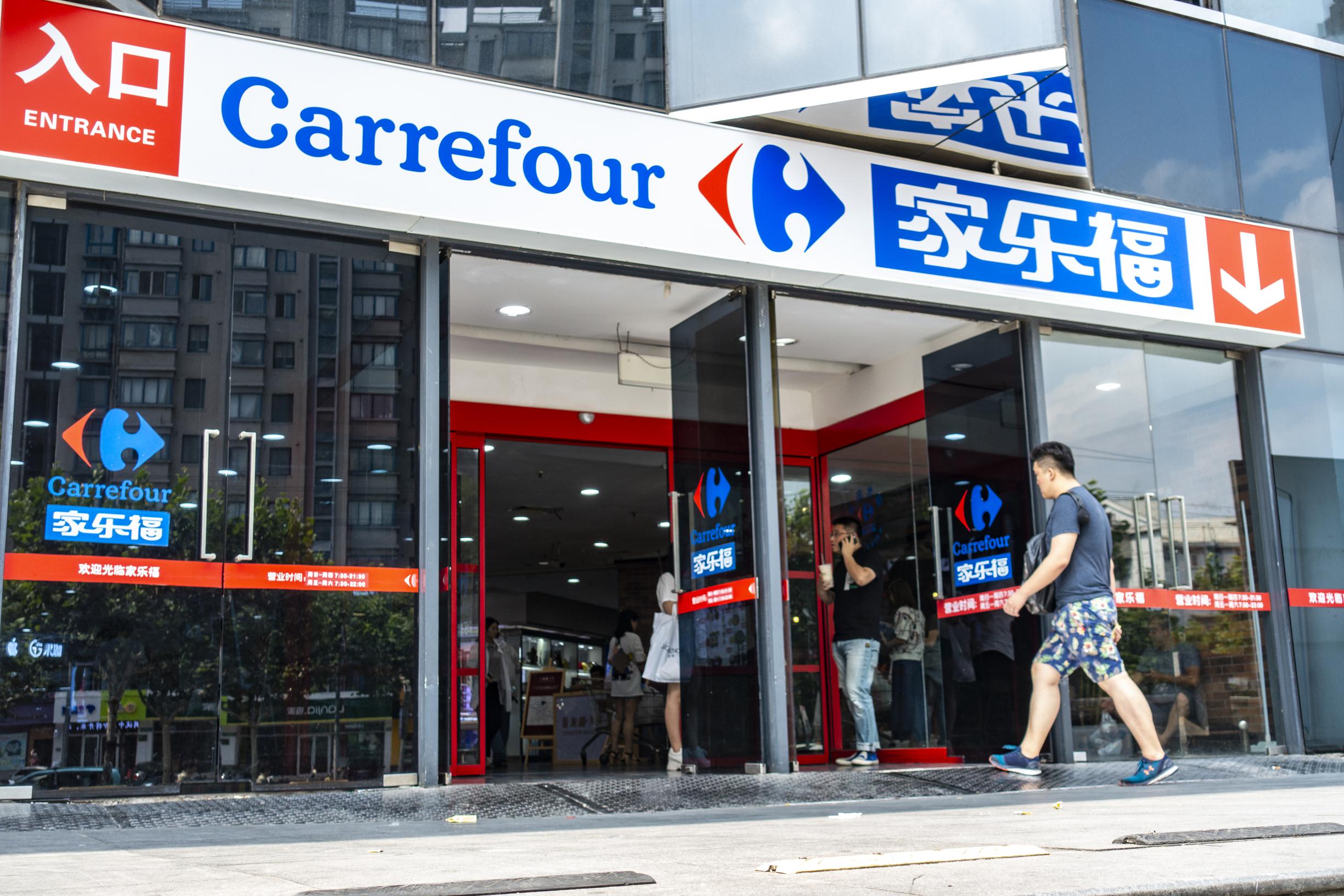
    Canada’s Alimentation Couche-Tard has dropped its €16.2bn ($19.6bn) bid to acquire European retailer Carrefour SA after the takeover plan ran into stiff opposition from the French government, two sources familiar with the matter told Reuters on Friday.

    The decision to end merger talks came after a meeting on Friday between French Finance Minister Bruno Le Maire and Couche-Tard’s founder and chairman, Alain Bouchard, the sources said, speaking on condition of anonymity as the matter is confidential.

    Couche-Tard and Carrefour declined to comment.

    Earlier on Friday, France ruled out any sale of grocer Carrefour on food security grounds, prompting the Canadian firm and its allies to mount a last-ditch attempt to salvage the deal.

    “Food security is strategic for our country so that’s why we don’t sell a big French retailer. My answer is extremely clear: We are not in favour of the deal. The no is polite but it’s a clear and final no,” Le Maire said.

    Couche-Tard was hoping to win the government’s blessing by offering commitments on both jobs and France’s food supply chain and by keeping the merged entity listed in both Paris and Toronto, with Carrefour boss Alexandre Bompard and his Couche-Tard counterpart Brian Hannasch leading it as co-CEOs, one of the sources said.

    The plan included a pledge to keep the new entity’s global strategic operations in France and having French nationals on its board, he said.

    Couche-Tard, advised by Rothschild, was also going to pump about €3bn of investments into the French retailer which was working on the deal with Lazard.

    The proposal was widely backed by Carrefour which employs 105,000 workers in France, its largest market, making it the country’s biggest private-sector employer.

    France’s rejection of the deal less than 24 hours after talks were confirmed sparked grumbling in some business circles over how French President Emmanuel Macron, a former investment banker, is turning away foreign investment. Some politicians and bankers said the pushback could tarnish Macron’s pro-business image, while others highlighted that the COVID-19 crisis had forced more than one country to redefine its strategic national interests.

  • UBS Boss Ralph Hamers in Tight Spot

    UBS Boss Ralph Hamers in Tight Spot

    The new UBS boss’ chances of escaping a criminal trial over money laundering at the last bank he ran appear to be slimming.

    Ralph Hamers is 99 percent certain to be formally criminally investigated in the Netherlands over money-laundering accusations, the Dutch activist who is seeking to reopen the probe told Swiss weekly NZZ am Sonntag.

    Pieter Lakeman, the 78-year-old who runs a foundation devoted to financial transparency and fair business, told the outlet that Dutch prosecutors informed him in a letter dated January 8 that they would seek charges against Hamers over his role in a money-laundering scandal at ING that culminated in a 2018 settlement.

    The matter has exploded less than three months into Hamers’ tenure running the world’s largest wealth manager, where he is widely expected to modernize, soften a hidebound, bulky hierarchy, and better equip the Swiss bank on technology, data, and digitization.

    The Dutch legacy means Hamers will instead have to devote considerable time and resources to answer to investigators. A feted European banking CEO who was also wooed by HSBC, Hamers may not be tenable if criminally charged in the Netherlands.

    UBS’ board has thus far backed him, and noted that it had ordered an outside review of the ING events while it was recruiting Hamers – which found no wrong-doing.

    Hamers also passed Swiss financial regulator Finma’s fitness and probity testing. UBS Chairman Axel Weber made clear this week that «we are monitoring the situation and will adjust to developments.»

  • Viettel profits grow despite pandemic

    Viettel profits grow despite pandemic

    Telecom giant Viettel managed to shrug off the effects of the Covid-19 pandemic and achieve its revenue and profit targets in 2020.

    The military-owned firm reported revenues of VND264 trillion ($11.47 billion), up 4.4 percent from 2019, and pre-tax profit of VND39.8 trillion, up 4.1 percent.

    Viettel attributed the results to its digital transformation and switch from being a telecom services provider to a digital services provider. In 2020, the platforms it developed included digital infrastructure, solutions, content, and finance, and cybersecurity.

    Its 10 overseas markets reported a 25 percent increase in profits to VND5.6 trillion in the first nine months of 2020, while at home it remained the leader in mobile services and fixed broadband with a 54.2 percent market share.

    By manufacturing 5G equipment and trialing 5G services, the company made Vietnam one of only six countries in the world to master the technology.

  • Think tank forecasts some growth for Vietnam

    Think tank forecasts some growth for Vietnam

    A government think tank has pegged economic growth at 6.46 percent this year thanks to the country’s success in containing the Covid-19 outbreak and maintaining stability.

    Vietnam is one of the fastest recovering economies in Asia, the Central Institute for Economic Management (CIEM) said in a report.

    In the best-case scenario, credit growth would be 13 percent against 10.1 percent last year, it said.

    But it also warned of risks that could hamper growth, like the unpredictable global economic situation as the pandemic situation remains severe in many countries and possible anti-dumping and countervailing investigations by the U.S. and other countries.

    Several international organizations have forecast a strong recovery for Vietnam this year, with lender HSBC forecasting growth of 7.6 percent. The International Monetary Fund and Asian Development Bank have forecast 6.5 percent and 6.1 percent growth.

    The government has set a target of 6.5 percent.

  • AirAsia Wants Half Of Its Revenue To Come From Outside Flights

    AirAsia Wants Half Of Its Revenue To Come From Outside Flights

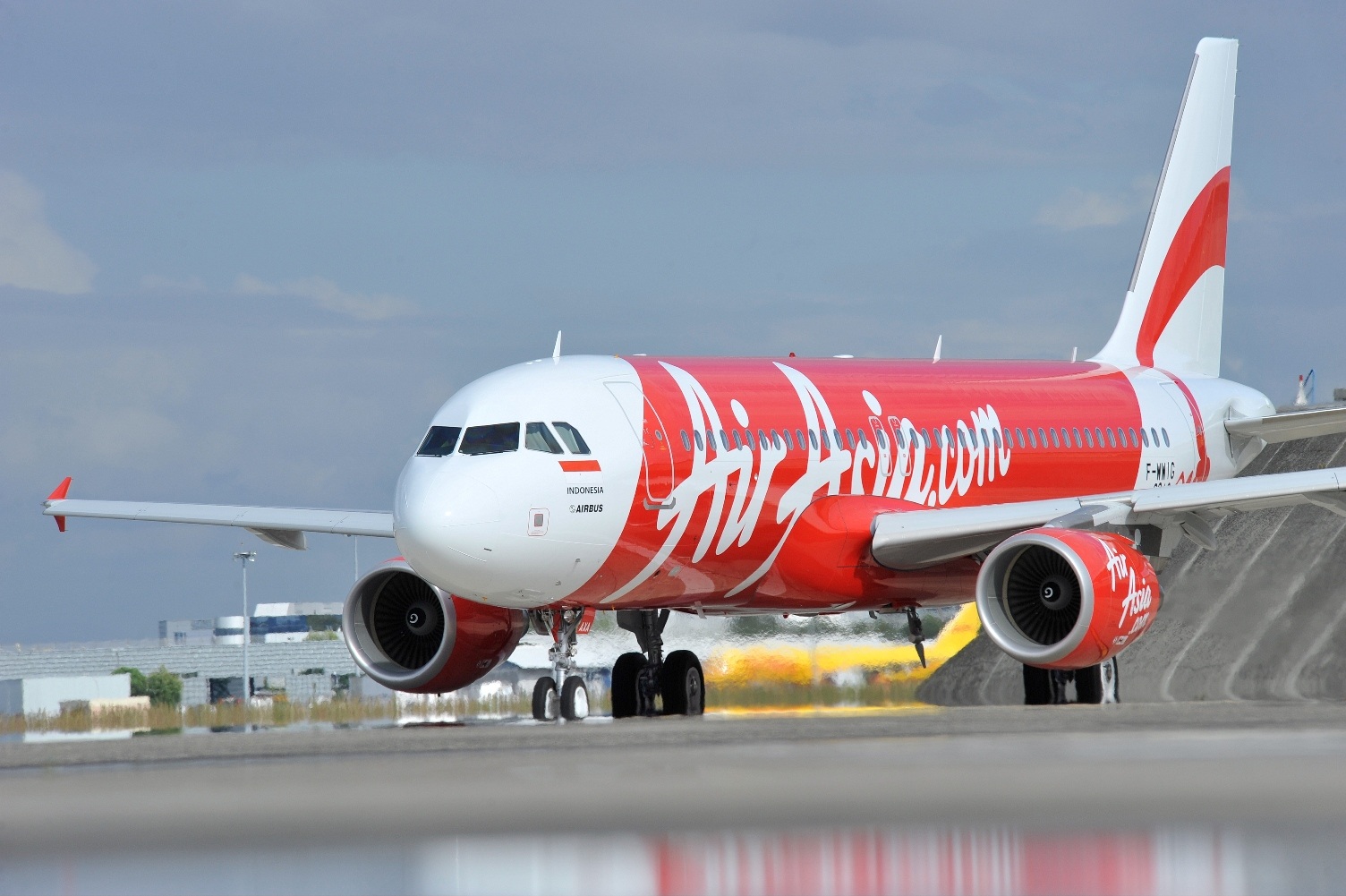
    Low-cost airline AirAsia had a tough 2020. But its CEO, Karen Chan, is taking a glass half full approach. She says the travel downturn and subsequent fallout for AirAsia was a blessing in disguise. It forced AirAsia to look outside its comfort zone and at a new way of doing business. Now, Ms Chan plans to transform AirAsia into a lifestyle brand. As a result, by the mid-2020s, she expects 50% of AirAsia’s revenue will come from non-aviation sources.

    Speaking at a CAPA Live event on Wednesday, Karen Chan spoke about her vision for AirAsia and what it would mean for the airline.

    “We anticipate in five years time, basically by the end of 2024, that 50% of (AirAsia’s) revenue would be coming from non-flight-related, non-aviation-related revenue.”

    As a low-cost carrier, AirAsia already has handy ancillary revenue streams. Their base fares are cheap, but checked-in luggage on short sectors starts from US$12, seat selection starts from just under $3, and a reheated container of AirAsia’s pretty good nasi lemak costs just over $4. In 2018, ancillary revenue made up 22% of AirAsia’s total revenue. Around half of that 22% came from baggage charges.

    Last year, AirAsia Group chief executive Tony Fernandes, said his airline group was diversifying.

    “AirAsia.com is more than just selling airline tickets,” he said. “We now have the same potential to sell hotel rooms. I can do some crazy things. I can say I can buy hotels, book a hotel room with us and I can give you a free flight. Hotels can be as large as AirAsia tickets.”

    Yesterday, Karen Chan spoke about AirAsia’s ambitions to become a fully-fledged online travel agency that offers not just hotels but also a range of travel and lifestyle products and experiences.

    “Not all the flights are always full, and the load factor will not be 100%,” said Ms Chan.

    “So the unsold infantry, and because they are so perishable, even as an 85% load factor for an Airbus A320, I still have about 20 to 25 seats unsold. I will now be able to bundle that unsold inventory for one ringgit or 25 cents with the hotel’s direct inventory. And I will be able to go into the market with a best buys guarantee.

    “We can go and expand into where other airlines are just not able to do so. We actually want to go and be seen as basically a lifestyle partner.”

    AirAsia’s ancillary revenue plans are not restricted to the travel basics of hotels, transfers, and side excursions. The airline wants to build its delivery and e-commerce business. AirAsia sees itself as a future Asian e-commerce giant. But it’s not just Amazon parcels AirAsia wants to ferry around. AirAsia has detailed data on 75 million former passengers in its database. They know you purchased a nasi lemak on your last three AirAsia flights. Ms Chan wants to get down to the nitty-gritty. She wants to be able to deliver that meal to your home.

    “Data is basically the new black gold for us,” Ms Chan said.

    With AirAsia’s fortunes taking a hammering in 2020, there’s a good reason why the airline wants to expand its ancillary revenue sources. Whether a cheap and cheerful low-cost carrier out of Southeast Asia can successfully transform into a lifestyle brand is another issue. Whatever the result, but it will be interesting to watch.

  • Mango waiting with store rollouts in China

    Mango waiting with store rollouts in China

    Never before has one seen bricks-and-mortar stores in such a bad shape as it has been this year – all thanks to the pandemic.

    Amidst all this, Spanish fashion retailer Mango is all set to enhance its bricks-and-mortar presence in the US.

    The clothing retail giant has expressed its plans to roll out 3 stores in the first quarter of next year.

    Notably, the new stores will be opened in 3 major US shopping centres that are run by the renowned Simon Property Group.

    The Spanish retailer strategically picked the 3 locations – Menlo Park Mall, Edison, New Jersey; Dadeland Mall, Kendall, Florida and Roosevelt Field, Garden City, New York – to jumpstart the expansion of its ‘Mediterranean’ label to US consumers.

    The retailer has been continuously putting efforts to improve its brand recognition in the US through digital and wholesale network and now the focus is on enhancing the presence of its physical stores.

    Excited over introducing Mango to American fashion consumers, Zachary Beloff, National Director of Business Development, Simon, said that Mango is a world famous brand and Simon believes the brand has a strong bricks-and-mortar future in the US.

  • Thai department stores must revise business models to stay relevant

    Thai department stores must revise business models to stay relevant

    While department stores have been a familiar destination for Thai people for many decades, CBRE, an international property consultant, is witnessing a decline in popularity and stunted growth, particularly in 2020 when Covid-19 adversely impacted the sector. CBRE believes that to adapt to e-commerce disruption and the changing consumer behaviour, department stores in 2021 (and beyond) will have to fine-tune their business model in terms of customer shopping experience, inventive activities and value-added programmes to continue their status as the second home for Thai shoppers.

    Jariya Thumtrongkitkul, Head of Advisory and Transaction Services – Retail, CBRE Thailand explained… “While department stores offer shoppers convenience, saving them time with many varieties of goods grouped in different departments and allowing the shoppers to find and compare products and choose what they want, the traditional department store model does not fit the needs, lifestyle and behaviour of its shoppers anymore, especially the new generations.”

    According to CBRE Research, the total retail supply in Bangkok as of Q4 2020 increased to 7.8 million square metres, a 1.16% increase year-on-year. Out of this, only approximately 3% was reported within the department store format. The department store market in Thailand is mainly dominated by two domestic retail giants, with Central Group and The Mall Group holding the largest market shares. They do not only concentrate in Bangkok, but have also opened department stores in many major cities throughout the country which allowed them to build bigger networks and grow their customer base.

    In the past few decades, Japanese investors had also shown interest in entering the Thai market and offered local features that are well-known in Japanese department stores: simplicity, premium quality and services. However, with strong competition many Japanese department store operators have ceased their expansion plans. Some have exited the country due to the fierce competition against the local players, their performance in Thailand and the shrinking Japanese department store business, especially in overseas countries.

    “The department store concept as a one stop shopping place is still in demand for certain groups of customers. However, with the e-commerce disruption and changing consumer behaviour, department store operators need to adapt their models, offerings and value-added services to their customers to cope with the challenging economic and market conditions.”

    Adaptability of department stores can be highlighted into 3 main parts: customer shopping experience, inventive sales and marketing activities, and value-added programmes. While more and more younger generations prefer to shop online to save time and money, the brick-and-mortar store is still believed to be the second home for Thai shoppers. Department stores should be more agile in the era of e-commerce and adopt some technological innovations such as in-store automation and mobile payment solutions to reach the younger crowds.

    Design is another aspect that plays an important part in customer shopping experience. Department stores can be more creative in remodelling traditional department store space into some ingenious and interactive space with a great design and right product portfolio mix for their customers.

    The Mall Group, for example, has launched its first “Lifestore” concept at The Mall Ngamwongwan at the end of 2020 by redesigning and renovating its traditional department store space to enhance customer shopping experience and enjoyment.

    The second part to be considered for the adaptability comprises inventive activities related to sales and marketing. The prices of products being sold in a department store are normally set high to cover the higher establishment and operating costs by operators, narrowing their target to only upper- to high-income customers.

    Brand offerings may also no longer meet fast-changing customer needs since today’s shoppers have more choices in buying products online, not to mention the declining footfall due to the growth of e-commerce. CBRE Research has seen domestic players pushing hard to drive sales growth via numerous promotions, marketing campaigns and activities and collaboration with credit card companies during seasonal sales.

    The third part consists of value-added programmes such as personal shopper, customer loyalty programme, on-demand solution and service personalisation, which have become a new trend as customers, including the aging population, are now more sophisticated and demanding.

    The retail landscape has changed drastically in the past few years from various factors like technological advancement, consumer behaviour and preference as well as Covid-19. Cookie-cutter strategy will be a thing of the past, especially for department stores where the format and offerings have remained the same for decades.

  • HSBC Hires Ex-SSGA ETF Capital Markets Head for Asia

    HSBC Hires Ex-SSGA ETF Capital Markets Head for Asia

    HSBC’s asset management arm the former Asia Pacific head of ETF capital markets from State Street Global Advisors.

    HSBC Global Asset Management hired Jacqueline Pang in the newly created Hong Kong-based role of APAC head of exchange-traded fund sales, according to a statement, reporting to global head of ETF sales Olga De Tapia. She will be tasked with expanding HSBC Global Asset Management’s ETF business, including sales and distribution.

    Pang is a 20-year investment management veteran and was previously with SSGA for eight years. Prior to that, she was with Amundi Asset Management for five years where she ran its capital markets business and overseeing ETFs covering brokers and market makers across Europe.

    «ETFs are one of the fastest-growing investment products in Asia and we’re expanding our sales team to continue to meet the investment needs of our Asian clients,» said de Tapia. «[Pang] extensive client-facing and ETF market experience will be invaluable to help grow our ETF platform in the region.»

  • Super Nintendo unveils Japanese theme park

    Super Nintendo unveils Japanese theme park

    Japan’s awaited super Nintendo world is opening to visitors next month but fans around the world can now have a sneak peek as universal studios just launched a virtual tour of its theme park in osaka. from bowser’s castle to mario kart: koopa’s challenge, to yoshi’s adventure, the virtual experience will give Nintendo aficionados a glimpse of what’s coming up in february. want to give it a try?

    Universal Studios has announced the grand opening on february 4, 2021, of the super Nintendo world theme park in osaka, japan. the park will bring to life a highly themed and immersive land hosting Nintendo’s legendary worlds, characters and adventures. guests will be able to experience their favorite video games, including mario kart and yoshi-themed rides and attractions, as well as restaurants, shops and other experiences found at universal studios japan.

    as seen on the images, the super nintendo world theme park at universal studios japan is a colorful and interactive zone offering visitors a power-up band which is an innovative wearable technology that helps bring gameplay to life while allowing guests to keep their score. people wearing the power-up band will be able to punch blocks, collect virtual coins and more, just like mario and luigi do it on the video games.

    bowser’s castle is another of the attractions present in the park. inside, the castle exudes a mysterious atmosphere with its stone walls, spiked fences and heavy iron doors along with a massive sone statue of bowser at the center of the grand staircase. its scale makes visitors feel as if bowser would suddenly start moving.

  • Courts Singapore to open giant flagship where Robinsons vacated The Heeren

    Courts Singapore to open giant flagship where Robinsons vacated The Heeren

    Home appliance megastore Courts will take over the prime retail space at The Heeren which was recently vacated by retail stalwart Robinsons and make the outlet its new flagship store.

    The flagship store will occupy all six storeys of The Heeren’s retail space, making it Courts’ largest outlet in Singapore when it opens in the first quarter of 2022.

    When completed, the Heeren store will span 189,000 sq ft and replace the Tampines megastore as the chain’s flagship outlet.

    Swee Cheng Holdings, which owns The Heeren, said Courts fitted into its long-term plans for the mall but added that it has also been approached by other parties.

    “In view of the uncertainties arising from a prolonged Covid situation, we are confident that Courts’ proposed retail plans will do well at The Heeren,” it said.

    Echoing similar sentiment, Ms Esther Ho, director of Nanyang Polytechnic’s School of Business Management, said: “With customers not traveling, many are likely to dress up their homes and invest in consumer electronics. It’s good that Courts is moving quickly to capture this segment of customers during this period.”

    Its opening will also mark Nojima Corporation’s first overseas venture into a large-format store concept in a central location of Singapore.

    The Japanese consumer electronics giant had acquired Courts in 2019.

    On Courts’ choice of The Heeren as its newest location, Courts Singapore chief executive Hoang Duc Thanh Matthew said: “The Heeren is still a symbolic landmark located right in the heart of Orchard Road and we believe it holds great potential as a central location within the shopping belt.”

    “Coupled with the Urban Redevelopment Authority (URA)’s long-term plans to rejuvenate Orchard Road as a lifestyle destination, we envision that the new flagship store will contribute to the vibrancy of the retail sector.”

    Currently, Courts has one outlet in Orchard, at 228 Orchard Road. A Courts spokesman told The Straits Times that the outlet has been performing well and will remain in operation for now.

    “We will review our plans again once the flagship store is up and running,” said Courts.

    The Orchard shopping belt was also home to its first store here, which opened in 1974.

    “We are looking forward to expanding our presence in Orchard Road to where it all began and raise the bar further in offering Singaporeans innovative and experiential retail experiences while shopping for electronics and home furnishings,” said Courts.

    In 2017, the URA said in a joint statement with Singapore Tourism Board that they are looking into implementing an “actionable Orchard Road Blueprint”.

    The authorities said the blueprint was to guide the precinct’s development over the next 15 to 20 years.

    Courts’ announcement comes after Robinsons closed its flagship store at The Heeren on Dec 16.

    This was followed shortly after by the closure of its last outlet at Raffles City last Saturday.

    The department store announced on Oct 30 the closure of its last two outlets here, saying the decision to liquidate was prompted by a range of factors, including changing consumer tastes and cost pressures such as rent.

  • Uniqlo owner Fast Retailing’s operating profit beats pre-pandemic level

    Uniqlo owner Fast Retailing’s operating profit beats pre-pandemic level

    The owner of Japanese clothing chain Uniqlo said on Thursday its quarterly operating profit beat pre-pandemic levels with the help of China’s resurgence and solid demand for comfortable roomwear such as stretchy jogging pants.

    Fast Retailing’s quarterly profit rose to 113.1 billion yen (S$1.44 billion), up 23 percent from a year earlier when the novel coronavirus outbreak had yet to emerge.

    The market’s consensus forecast was for 104.7 billion yen, although its quarterly sales of 619.8 billion yen missed the market’s view of 640 billion yen, according to the average of analysts’ forecasts from Refinitiv.