Author: Mei Ling Tan

  • Sa Sa International flags loss as store traffic drains

    Sa Sa International flags loss as store traffic drains

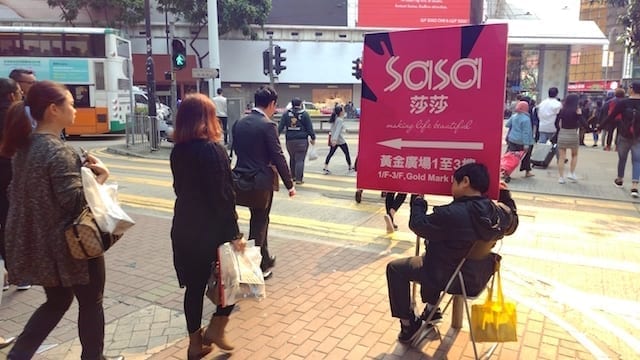
    Plummeting sales and write-downs have led Hong Kong-headquartered beauty-products retailer Sa Sa International to warn of a loss of up to US$38 million in the September half year.

    “The global Covid outbreak has affected the operation of all of the group’s physical stores including its businesses in Hong Kong, Macau, Mainland China and Malaysia,” chairman and CEO Simon Kwok said in a note to shareholders on Friday.

    While cross-border visitor numbers now almost nil in most markets, sales through Sasa stores to local customers were weak for most of the period due to social-distancing requirements.

    “As a result, both the footfall and retail sales at the group’s stores in those markets have fallen sharply. Retail consumption has been very weak,” he said.

    While final results will not be released until late this month, Sa Sa expects a trading loss of and impairments to range between HK$230 million and $300 million, compared to a profit in the same period a year earlier of $35.5 million (US$4.6 million).

    The impairment has arisen from the drastic decline in sales at the group’s retail stores, especially those in Hong Kong’s tourist districts, amid the Covid-19 pandemic.

    However, the group’s cash and bank balances of around HK$590 million as at September 30 are adequate to meet its current business needs.

    Sa Sa has reduced the number of stores in tourist areas, negotiated rent reductions and strengthened its category management to mitigate the decline in customers, along with reducing inventory and managing costs.

    “In addition, the group has accelerated its adaptation to the new retail era by actively developing its e-commerce and online-to-offline (O2O) businesses,” said Kwok.

  • Snapdragon 875 crushes Samsung’s first 5nm chip in benchmark leak

    Snapdragon 875 crushes Samsung’s first 5nm chip in benchmark leak

    Qualcomm’s next flagship chipset, the Snapdragon 875, will likely be unveiled on December 1. Leaker Abhishek Yadav has apparently managed to get hold of the chip’s AnTuTu scores and they are quite impressive.

    The chip is apparently codenamed Lahaina and per the leaker, it scored 847,868 on the benchmarking website. This makes it around 25 percent faster than the Vivo iQOO 5 Pro, which is powered by the Snapdragon 865 and is the current top scorer.

    The Snapdragon 875 will reportedly be made using the 5nm process, which will give it a huge performance and power efficiency advantage over the current premium chip which is based on the 7nm fabrication technology.

    The alleged scores also leave Samsung’s first 5nm chip, the Exynos 1080, in the dust, but doesn’t really come as a surprise, as it is a mid-range chip.

    The result also suggests that Snapdragon 875-powered phones will have a huge lead over Huawei phones fueled by the in-house Kirin 9000, such as the Mate 40 Pro. This again is hardly surprising as although the Kirin 9000 is also a 5nm SoC, it features older Arm cores.

    The Snapdragon 875, on the other hand, will likely have the new Cortex-X1 and Cortex-A78 CPUs. Samsung’s upcoming flagship silicon, the Exynos 2100, is also expected to employ Arm’s new design, and leaked benchmark results imply the two will be pretty similar in performance.

    Both chips are expected to have one Cortex-X1 core, three Cortex-A78 cores, and four Cortex-A55 cores.

    The Snapdragon 875 is also expected to have the X60 5G modem onboard.

  • Update rolling out now adds useful new feature to Google Messages app

    Update rolling out now adds useful new feature to Google Messages app

    Google has started rolling out an update for the Google Messages app that might make it faster to find certain messages. The update adds a new feature that places SMS messages into one of five different categories: personal, transactions, OTP (one-time passwords), offers, and more. The feature can be enabled or disabled through the use of a toggle switch found in the Google Messages app settings.

    If your Google Messages app has been updated, you will see the different categories just below the app’s search bar on the top part of the UI. If you’re not happy with the category that a certain message has been assigned to, you will have the opportunity to do so and even share the message with Google. This will help similar messages get categorized correctly in the future.

    Google has been beefing up the Messages app allowing it to work with many of the features available with Rich Communication Services (RCS). This means that messages are sent through data networks instead of a carrier’s cellular network allowing messages to be sent over Wi-Fi. At the same time, users can fill each message with as many as 8,000 characters instead of the previous limit of 160. And Android device owners will get a read receipt to confirm that their messages have indeed been read.

    Google starts to roll out a new feature that places SMS messages in different categories.

    Not all Android users have received the update. It appears to be disseminated to Android users via a server-side update so just keep your eyes peeled.

  • AirAsia X flying out of money

    AirAsia X flying out of money

    The long-haul budget carrier AirAsia X Bhd has run out of money and needs to raise up to 500 million ringgit (US$120 million) to restart the airline, according to deputy chairman Lim Kian Onn.

    The Malaysia-based affiliate of AirAsia Group said this month it wanted to restructure 63.5 billion ringgit ($15.3 billion) worth of debt and slash its share capital by 90% to continue as a going concern.

    “We have run out of money,” Lim said in an interview. “Obviously, banks will not finance the company without shareholders, both old and new, putting in fresh equity. So, a prerequisite is fresh equity.”

    He said the airline had actual liabilities of 2 billion ringgit, with the larger figure of 63.5 billion ringgit including all lease payments for the next eight to 10 years and its large order for Airbus planes and contracted engine maintenance with Rolls-Royce.

    “If we find 300 million ringgit in new equity, then the shareholder funds are 300 million at the restart of business and if we are able to borrow 200 million ringgit, we feel that we will have a good platform to start all over again,” Lim said.

    He said AirAsia X also needed to convince its lessors of its business plan, adding that an unnamed lessor recently took back one of the airline’s planes to convert it to a freighter.

    The airline plans to liquidate its small Indonesia-based carrier and has completely written down its stake in Thai AirAsia X, with the Thai carrier not part of the restructuring scheme, Lim told the newspaper.

    Rival Malaysia Airlines is also in financial trouble, but Lim said there would be “no good outcome” from seeking to merge two airlines in dire straits.

    AirAsia X declined to comment beyond the details published in the newspaper article.

    Initial negotiations with creditors have been tough as they are understandably upset, Lim said in the interview. They had asked for better terms, including free equity for the forgiven debt — something that would be impossible for the airline to fulfill, he added.

    Still, Lim said all of them genuinely wanted to find a common ground to take the airline forward. “No one has anything to gain from our demise,” he told the newspaper.

    The airline is planning to resume flights in the first quarter of 2021, though the process remains “dynamic”, said Lim. Should the rescue plan get approval, the company will have to renegotiate every single contract and will do its best to look after all stakeholders’ interests, he said.

  • Why Retail Businesses Needs Small Business Management Software

    Why Retail Businesses Needs Small Business Management Software

    Retail businesses’ owners and managers are always looking forward to finding approaches that can improve their businesses. There are several wise and effective ways to do it, and one of those is the implementation of project management software and online collaboration. These refer to the web-based applications that allow anyone involved in the company to work remotely and sign in anywhere. Nevertheless, this is just one of many reasons why startups and small businesses must have small retail business management software solutions. Here are further reasons to persuade you more. 

    • Business managers and owners can be helped by integrated calendars to view what tasks are done by the staff with ease. 
    • It can help you save, as well as your employees a great time every working day. When there is only one application being used within the entire work, additional or switching to other applications will not be needed just to complete the task. 
    • Invoicing and quoting is more straightforward through the creation of both in one application. This then leads to increased sales that are followed by easy and simple checking of quotes created, as well as those that aren’t followed up. Also, whenever a quote is accepted, there is a change into an invoice, which means more time is saved. 
    • With online project management software, there is even simple project management. This is possible through the creation of projects and then assigning each to the entire staff. Afterward, it can be tracked, especially the process through a simple click on the project. Hence, there will be no more chasing of employees just to view if they are already done with the assigned project. 
    • Small businesses with 50 employees can use the management software, which means that they aren’t small businesses anymore to benefit from it. 
    • The document storage often sparks problems within the whole business process. Good thing, it can now be streamlined with the small business management software. Here, as soon as the documents are created, it can be directly saved onto the application. Hence, there will be no more waiting for the documents to be done and emailed to anyone in the business. Also, once the documents are saved in one application, it can be retrieved easily when lost. In addition to that, the small business management software helps businesses to wave goodbye to any missing documents that everyone will welcome. 
    • Off Site employees in any business need to fill up the timesheets so that the management software can easily track the employees during working hours. They can log into the application that will be used by the owners and managers as information to work their wages. This is considered a very useful and important software since it is way easier and more effective compared to the manual filling up of timesheets. 

    Hence, there are lots of reasons why your business must consider having small business management software. This has a lot of uses, especially cutting down time spent on drastic tasks. It also has comprehensive business functionality, as well as it is easy to access. 

    Moving forward, let us proceed to the benefits that can be gained when you use small business management software. 

    10 Benefits of Using Small Business Management Software

    1. Small business management software is web-based, which means only the internet connection and PC are accessible by the employees. These then help the employees to work from home or in another country. 
    2. In a more streamlined way, the leads can become or turn into sales. This is possible through the small business management software, which stores the information in one safe place. So, every time there is a quote created, it makes the customer’s information able to be held in a lead file for later follow up calls.
    3. There is only one needed application to store and create documents, quotes, invoices, timesheets, projects, calendars, and a lot more. This means that loading several applications up every morning is no longer needed, as well as switching in between to accomplish tasks and projects.  
    4. Projects can be easily monitored or tracked by the owners and managers. This is done through a simple login into the application of online project management. There will be less due to missed deadlines as an outcome of inefficient practices. This is good news for the managers and owners. 
    5. The workers can still log in by giving their username and password to the small business management software application, despite being away. This applies to workers who are in other places yet still connected to their jobs. 
    6. A small business management software can accommodate and make sign-ups for up to 50 employees. This only means that it doesn’t require the business to be huge to make it benefit from its services. 
    7. The purchasing habits of customers can be tracked and monitored easily. This is a huge advantage for the business when anticipating the customer’s purchases, as well as to provide them with improved experiences in the business. 
    8. The license for applications can be stopped or ended. Besides, why will you spend a lot of money per month or year when there is a single application to help you run your business easily. Just take a look at other small business owners who already implemented their CRM software and look at how they saved a lot and made the business run towards success. 
    9. An internal email system is no longer needed to help the employees share a particular document. This may be a useful tool; it can still take a lot of time from writing to sending emails. But with small business CRM software, the files are stored in a single place, accessed, and sent at one time. 
    10. It is easy to use that the employees are no longer required to spend a lot of time to learn how to use it effectively. 

    After viewing and understanding these 10 reasons why small business management software is a must-have, you can now see how much you need it. This can help a lot to revolutionize your business and increase profits and customer satisfaction and decrease inefficiency.  

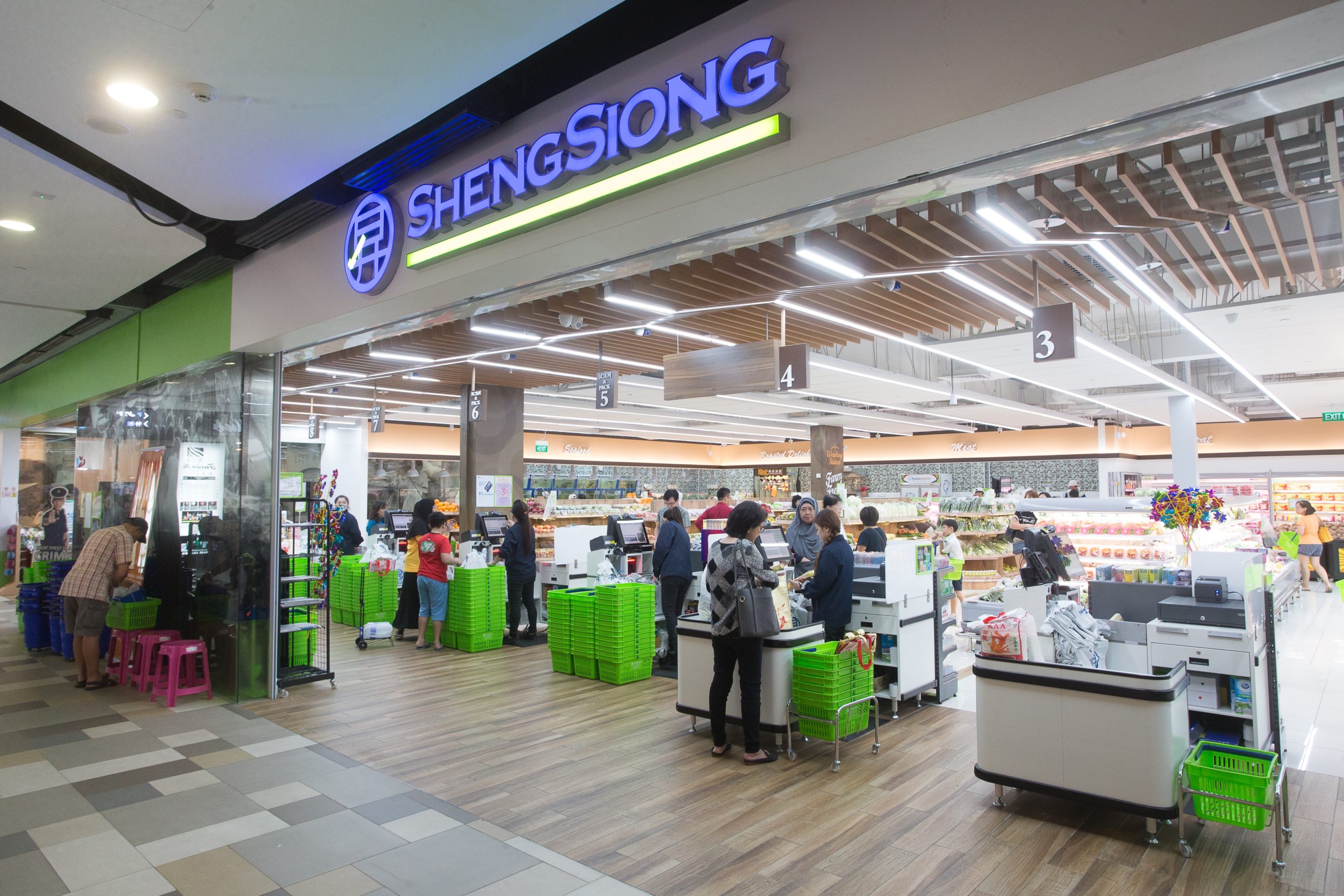
  • Sheng Siong profit climbs but management tempers expectations

    Sheng Siong profit climbs but management tempers expectations

    Listed Singaporean supermarket chain Sheng Siong’s profit soared 54.4 percent in the third quarter to US$23.27 million, riding a wave of increased sales in the grocery sector.

    Revenue jumped 28.9 percent to $239.5 million, while gross profit grew 28.7 percent to $64.68 million, largely off the back of increased home cooking and stocking of pantries throughout, and beyond, the country’s Circuit Breaker period.

    However, with stay-at-home orders easing across Sheng Siong’s markets, this elevated demand is likely to begin to stabilize in the following months, said CEO Lim Hock Chee.

    “Competition in the supermarket industry is expected to remain keen and challenging among the traditional brick and mortar operations and e-commerce platforms, which have gained a larger share since the onset of Covid-19,” Chee said.

    “The risks to supply chain disruption because of Covid-19 and other natural disasters are still there and may lead to higher input prices.”

  • CapitaLand Malaysia Mall Trust hurt by Covid-19

    CapitaLand Malaysia Mall Trust hurt by Covid-19

    Shopping center operator CapitaLand Malaysia Mall Trust suffered a 17.2 percent hit to quarterly income, which was knocked down to $6.08 million for the third quarter.

    The fall was largely attributed to higher levels of vacancies and the rental relief granted to tenants under Malaysia’s Recovery Movement Control Order – an order that has been extended until the end of the year to slow the resurging transmission rates of Covid-19.

    “In light of the prevailing cautious business and consumer sentiments exacerbated by Covid-19, the operating environment for Malaysia’s retail industry continues to be challenging in the near-term,” CapitaLand Malaysia Mall REIT Management chairman David Wong said.

    “We will continue to keep a pulse on the evolving situation and closely engage with our tenants. In addition, we will focus our efforts on stabilizing the portfolio through proactive asset and lease management to build greater resilience in CMMT’s retail ecosystem.”

    And, with foot traffic recovering to around 58 percent of normal levels and tenant sales to 82 percent, the firm is keeping a cautious eye on the near-term market conditions.

    CMRM’s CEO Low Peck Chen said the business focus in the short term is in strengthening its operational efficiency and supporting its tenants in adapting to the new normal brought on by the Covid-19 pandemic.

    “Notwithstanding near-term challenges, we remain positive on CMMT’s long term prospects on the strength of our income- and geographically-diversified assets.”

  • China sales rebounds for Ralph Lauren, after Covid-19

    China sales rebounds for Ralph Lauren, after Covid-19

    Luxury retailer Ralph Lauren says sales growth on the Chinese mainland returned to pre-Covid-19 rates in the second quarter, increasing by more than 30 percent year on year.

    However sales across greater Asia decreased 7 percent to US$237 million on a reported basis, with same-store sales down by 11 percent, and a 12-per-cent decline in brick-and-mortar store sales partly offset by a 32-per-cent increase in digital commerce.

    Globally, net revenue fell by 30 percent to $1.2 billion, with declines in all regions due to the impact of Covid-19 on consumer shopping behavior.

    But the company achieved a net income of $107 million, down from $182 million in the same period last year.

    Ralph Lauren, executive chairman, and chief creative officer said despite the tough time the world is experiencing he is optimistic the company can “take the great learnings and creativity that have emerged from this time to become even stronger”.

    He said the results reflected the strength of Ralph Lauren’s timeless brand “and the values that have always been our touchstone” are continuing to anchor the business through a time of change and uncertainty”.

    “Looking across the first half of the fiscal year, we continued our elevation journey while fast-tracking connected retail and our company-wide digital transformation,” said president and CEO Patrice Louvet. “We also began the hard but necessary work of simplifying our organizational and cost structures to position the company for future growth.

    “Looking ahead, we will continue to work proactively to deliver an elevated experience that inspires consumers around the world and creates value for all of our stakeholders,” concluded Louvet.

  • Best Black Friday TV deals available now and coming up

    Best Black Friday TV deals available now and coming up

    The best time to upgrade your TV is less than a month away, Black Friday. If you’re in the market for a brand-new TV, we already have loads of new deals, as US retailers are gearing up for one of the biggest sales One of the main highlights of a Black Friday sale is the As we’re getting closer to Black Friday, many US retailers offer amazing deals that will probably not return on November 27.

    We’ve piled up a list of pre-Black Friday deals on TVs, but we’ll update the article with fresh new deals as we’re getting them. More importantly, be sure to return on Black Friday to find the best TV deals that you’ll be able to get this year.

    We’ve compiled a list of some of the best and most expensive smart TVs that are on sale right now at Best Buy and Walmart. If you wish to watch 4K content or play games in super high-definition, these are the TVs that you’ll want to get. Although some of these TVs are getting a discount of more than $500, they remain quite expensive.

  • Most citizens cannot afford ‘affordable housing’

    Most citizens cannot afford ‘affordable housing’

    Affordable housing in Hanoi and HCMC is out of reach for most citizens, mainly because of dwindling supply and rising prices. When he moved to Hanoi 13 years ago, Tran Thanh Ha nursed a common enough dream that he would one day own an apartment in the capital city.

    Today, he realizes this is next to impossible. The 33-year old graphic designer with a monthly income of around VND25 million ($1,080) has been able to save about VND700 million since his early twenties but is still 50 percent away from the cheapest apartment in his favorite project, which is in the eastern district of Long Bien.

    “With one child and another on the way, it is unlikely that my wife and I will be able to acquire the apartment for at least another 10 years. By that time the price will have surged to another absurd level.”

    Ha is one of many people in Vietnam’s major cities who are seeing their dream of homeownership slip away as prices increase every year and the supply of affordable housing has almost disappeared from the market. Affordable apartments are those that are priced under VND20 million per square meter, according to the Ministry of Construction.

    A recent report of the ministry says the demand for houses and apartments in the mid and high range only accounts for 20-30 percent, while the remaining 70-80 percent is for affordable housing.

    The ministry report says residential property prices are “bloated, volatile and out of reach of most people” due to the lack of funding for social housing programs. It also says there is no channel for mobilizing long-term investment for these programs.

    Data from real estate consultancy Savills shows that Hanoi apartment prices rose 10 percent year-on-year to $1,500 per square meter in the third quarter as new apartment supply fell to a five-year low.

    Do Thu Hang, director of advisory services at real estate consultancy firm Savills Hanoi, said that the capital city is witnessing high residential pricing that far exceeds the income of most people, especially the young.

    Data from the Ho Chi Minh City Real Estate Association (HoREA) shows that with a mid-priced apartment in Ho Chi Minh City costing around VND2.5 billion, it would take a family that can save VND100 million a year over two decades to acquire the unit.

    Le Hoang Chau, chairman of the association, said that a sharp decline in supply in the 2018-2020 period has made it more challenging for low-income people to afford a house.

    Other industry insiders say that most small apartments of 45-50 square meters are being sold for VND1.5-1.7 billion, 50-70 percent higher than five years ago.

    This means that an apartment under VND1 billion has now become a thing of the past.

    Nguyen Van Dinh, deputy chairman of VNREA, said that in the last two years, very few new apartment projects have been approved in Ho Chi Minh City, this has meant that the affordable segment barely exists in the market despite large demand.

    Obstacles in acquiring permits have been the main roadblock for real estate developers. From 106 housing projects approved in 2016, the figure fell to 16 last year and 12 in the first six months of this year, according to HoREA.

    There is a lack of transparency in the approval of projects that has left hundreds of projects struggling to acquire permits, it added.
    It also said that only 21.81 percent of new supply between 2016 and H1 2020 was in the affordable segment.

    At an October 30 meeting, Deputy Construction Minister Le Quang Hung said his ministry was working on policies to ensure that the majority of the nation’s workforce, in the middle-income group, have the opportunity to buy an apartment.
    The ministry has already proposed several measures to boost the supply of affordable apartments in Hanoi and HCMC. These include a 50 percent discount on land fees and preferential interest rates of 7-8 percent per annum for social housing projects.

    While apartments are currently required to have a minimum area of 45 square meters, the ministry is considering scrapping this requirement so smaller, cheaper apartments can be built.

    The HoREA, meanwhile, has proposed that the government provides credit support to first-time homebuyers as well as incentive tax policies for the development of affordable housing.

    As authorities try to find solutions to the housing problem, Ha and his wife are looking for another rented apartment in Hanoi to welcome a new baby, the only residential option for them in the increasingly crowded city.

    “Without an inheritance from parents, homeownership in Vietnam is near impossible for people like me.”

  • UOB Tie-Up to Nurture ESG Mindset Among Employees

    UOB Tie-Up to Nurture ESG Mindset Among Employees

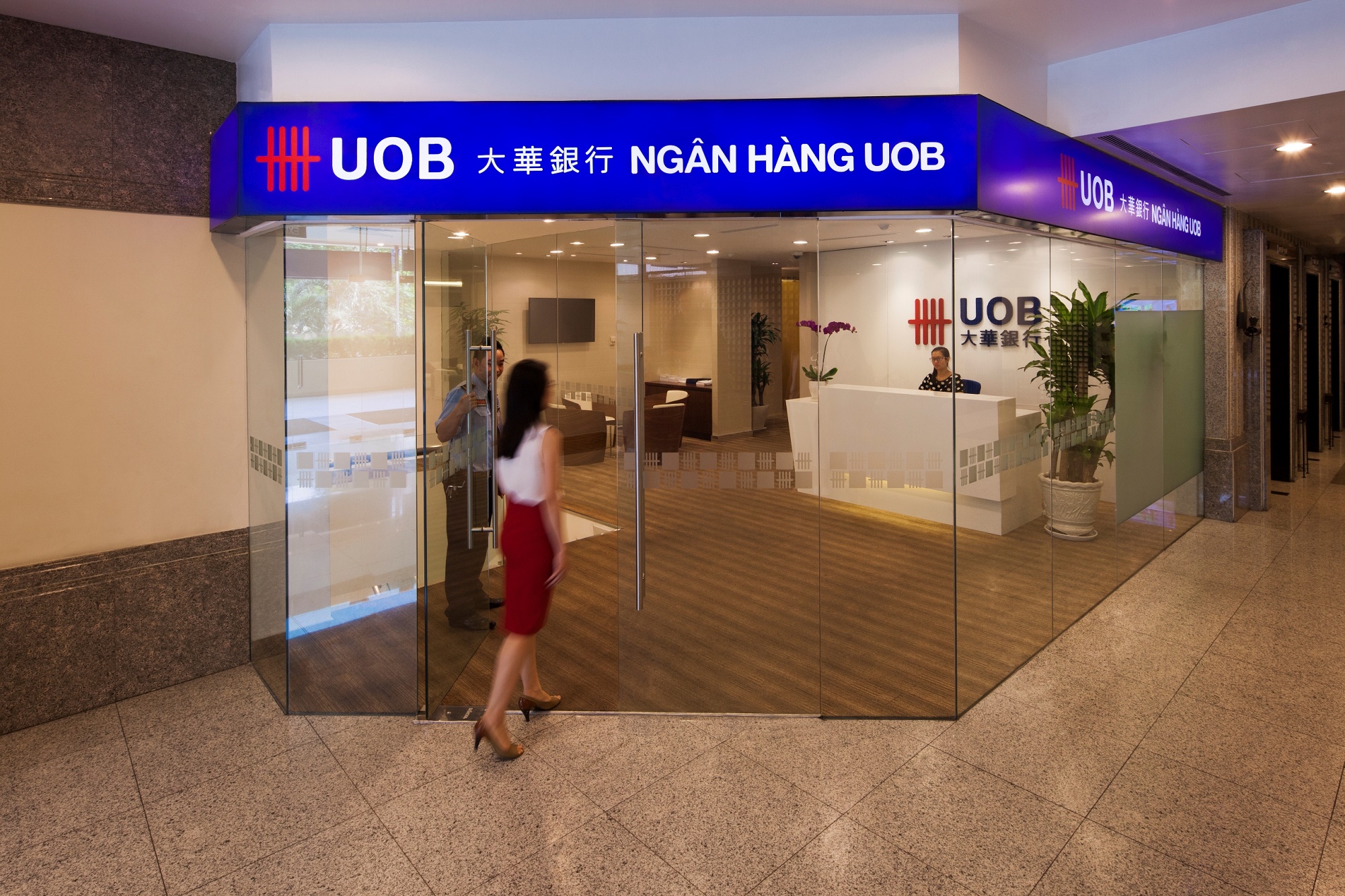
    UOB will work with Dutch investment company Robeco to tap its expertise in environmental, social, and governance (ESG) matters and integrate sustainable thinking across its business and investment processes.

    The bank’s asset management arm is launching its Sustainability Academy in the fourth quarter of 2020, which offers development programs to deepen its employees’ understanding of sustainability principles and nurture an ESG mindset, UOB announced on Friday.

    The Robeco program comprises two modules, namely Sustainable Investing and Sustainable Development Goals (SDGs) Investing, and will cover key topics such as ESG integration, active ownership, and measuring the contribution of companies to the UN SDGs. Over 400 staff in both investment and non-investment roles across the region are expected to benefit from the training.

    The academy will launch a second training program in November 2020, to be offered by KPMG and supported by the Institute of Banking and Finance Singapore, covering topics such as sustainability reporting and regulatory expectations on ESG matters.

    The global emphasis on sustainable investing has grown tremendously in recent years, with ESG considerations now core to the investment philosophy of major asset managers around the world, Thio Boon Kiat, CEO of UOB Asset Management, said in the announcement.

    Earlier this week, UOB announced that it would integrate ESG considerations into its full suite of retail investment solutions as part of the bank’s commitment to driving growth sustainably.

    UOBAM previously worked with Robeco to launch the first bond fund focused on the UN SDGs – the United Sustainable Credit Income Fund (USCIF) – for retail investors in Singapore in March 2020. The two sides also jointly launched a

  • Singapore’s Robinsons store closing after 162 years

    Singapore’s Robinsons store closing after 162 years

    Singapore’s department store Robinsons is closing its last two brick-and-mortar outlets, ending an era dating back 162 years. The business has been placed into liquidation effective today. Robinsons had already closed its Jem Mall store just a few months ago. Now the 186,000sqft, six-storey flagship at The Heeren which opened in 2013 and the other at Raffles City, opened in 2001, will follow.

    Robinsons is owned by UAE-based Al Futtaim Group which paid $600 million for the business back in 2008. Al Futtaim owns the rights to multiple fashion brands in Singapore, along with the Marks & Spencers business.

    In a statement released today, senior GM Danny Lim said the decision was made due to weak demand at department stores.

    “We regret this outcome today. Despite recent challenges in the industry, the Robinsons team continued to pursue the success of the brand. However, the changing consumer landscape makes it difficult for us to succeed over the long term and the Covid-19 pandemic has further exacerbated our challenges.

    “We have enjoyed success over the years, and it has been an honour for Robinsons to serve the Singapore market. I am grateful for the dedication of our team, and for the support shown by our customers over the years.”

    While Covid-19 has had an impact on footfall at every retailer in the city, it only exacerbated the trend towards consumers shopping online and at specialty stores, and shifting away from department stores.

    According to a report in the Business Times, Robinsons has been trading at a loss for the last six years as footfall and sales fell.

    In 2014, the business achieved sales of S$257.3 million, but by 2018, turnover had fallen to $153.8 million, resulting in a loss of $54.4 million.

    While the stores are being placed in liquidation, it is unclear if the company will continue to operate online, at least in the short term. The co-branded Robinsons OCBC credit card will be discontinued in April.

    Cameron Duncan and David Kim of corporate restructuring company KordaMentha have been appointed provisional liquidators. Their first task will be to assess the best course of action to maximise the return to creditors. It is not yet clear how long the stores will continue to trade, but the company said in its statement that it hopes they will remain open during the coming weeks to clear stock and “facilitate final sales for customers before they are shuttered”.

    Staff were told of the decision today and the company says it has confirmed with the liquidators that the next payment cycle will be honoured. Unions representing workers are in talks with the liquidators over settlements.

    Robinsons dates back to 1858 when Englishman Philip Robinson and business partner James Spicer, a former jailkeeper, opened Spicer & Robinson on a site which is now known as Raffles Place.

    The demise of Robinsons in Singapore comes in the sme week that Japanese department-store operator Tokyu announced it was exiting Bangkok, following on the heels of rival Isetan.

  • Viettel, MobiFone licensed to commercially test 5G

    Viettel, MobiFone licensed to commercially test 5G

    Telecom giants Viettel and Mobifone have received licenses to commercially test 5G broadcast in Vietnam’s two largest cities.

    Military-owned Viettel has been allowed to test in Hanoi with a maximum of 140 base transceiver stations while state company MobiFone can do so in Ho Chi Minh City with 50 stations.

    The tests will help the companies evaluate their technology and market size before beginning commercial operations.

    The companies need to follow cybersecurity safety and privacy regulations while running the tests, the ministry said.

    The first 5G phone call in the country was made on January 17 using equipment manufactured by Viettel, which has been conducting non-commercial tests and installing equipment since last year.

    The number of 5G subscriptions could hit 6.3 million by 2025 or 6 percent of total mobile subscriptions, technology conglomerate Cisco has forecast.

    5G is said to offer speeds 100 times faster than 4G and support new applications like remote medical procedures and autonomous driving.

  • Vietnam to close 2G services by 2022

    Vietnam to close 2G services by 2022

    Vietnam plans to bring the number of 2G subscribers to under 5 percent by 2022 so that it can stop this service and push the development of higher-technology cellular networks.

    There are 24 million 2G subscribers in the country or 18.5 percent of the total, and the Ministry of Information and Communications aims to bring the figure down to 5-7 million, or around 5 percent by early 2022 towards stopping the 2G service by then.

    Closing 2G will leave more bandwidth for 3G, 4G, and the upcoming 5G network and help accelerate the establishment of a digital economy, the ministry said.

    It is working to boost the sales of low-cost smartphones so more people will be familiar with 3G and higher networks, it added.

    Among 24 million 2G subscribers, 12.4 million are using feature phones. Hoang Minh Cuong, head of the telecommunications department under the ministry, said these are the users that telecom operators need to help transition to smartphones.

    The number of 2G subscribers has dropped by 6 million since last year, showing that the goal to bring the ratio to under 5 percent is possible, he added.

    The telecommunications department plans to lower the rates of regular phone calls, which will reduce their revenues to telecom operators and urge them to rely more on data calls.

    It also plans to require all smartphones produced or imported into Vietnam to support 3G network or higher.

    There are 630,000 2G subscribers age 70 or more, and some say this group of people lack the tech-savvy needed to use smartphones.

    However, Cuong said Vietnamese companies were capable of making 4G feature phones for around VND600,000, and these would serve this user group.

  • Vietjet posts $39.8 mln loss

    Vietjet posts $39.8 mln loss

    Budget airline Vietjet has recorded a loss of nearly VND925 billion ($39.83 million) in the first nine months due to pandemic-imposed flight restrictions. The second-largest airline in Vietnam in terms of market share saw Jan-Sept revenues fall 64 percent year-on-year to VND13.78 trillion, according to its Q3 financial statement.

    Vietjet served over three million passengers in the third quarter and opened eight new domestic routes, bringing the total number of routes to 52.

    However, the second Covid-19 outbreak in the last week of July and throughout August brought down travel demand again, resulted in Q3 revenues falling nearly 80 percent year-on-year to VND2.8 trillion. The total number of domestic flights plunged 35 percent to just over 15,000 in this period.

    The budget carrier has been increasing the number of cargo flights to make up for dwindling revenues from passenger flights and increase the application of the self-service system at the Noi Bai International Airport in Hanoi to lower costs.

    Last year Vietjet posted a pre-tax profit of VND5.01 trillion, down 14 percent from 2018.