Author: Mei Ling Tan

  • Seoul cafes face new trading restrictions as Covid-19 returns

    Seoul cafes face new trading restrictions as Covid-19 returns

    South Korea is restricting operations of restaurants, bakeries and franchised coffee chains in the greater Seoul area in an effort to contain a new outbreak of Covid-19. Under the plan that lasts until next Sunday, restaurants and bakeries can operate until 9pm, and only takeaway and delivery will be permitted from 9pm to 5am.

    For Seoul cafes, only takeout or delivery will be permitted regardless of operating hours, as cluster infections traced to coffee shops have been reported.

    Customers visiting coffee chains for takeaway must follow quarantine measures, such as making entry logs, wearing masks, and keeping a safe distance.

    The move is part of the government’s strengthened virus curbs in Seoul and the surrounding areas, home to half of the country’s 51 million population, as the country is struggling to curb spiking virus cases.

    On Sunday, the country reported 299 new Covid-19 cases – a drop below the 300 marks for the first time in five days – but health authorities remain on high alert as the triple-digit daily increase continued.

    Instead of raising the level of social distancing to the highest Level 3, the country unveiled stronger and “tailored” virus curbs last Friday for vulnerable groups and risk-prone facilities, a move widely viewed as ‘Level 2.5’.

    The government has been cautious about raising the social-distancing guidelines to Level 3 from the current Level 2 due to the far-reaching impact on the economy.

    In line with the stricter social distancing guidelines, cafe workers are putting store chairs upside down to indicate they operate only for takeaway or delivery.

    Some customers who frequent such coffee joints to study or read books have shifted to bakeries that operate normally until 9pm.

    Meanwhile, South Korea began to suspend the operation of indoor sports facilities, including fitness centers and billiard halls, in the wake of virus infections at indoor sports centers.

    The government also expanded no-assembly orders from large academies to almost all cram schools in the wider Seoul area. Only online lectures will be permitted.

    To protect the elderly from the risk of infection, visits to nursing homes, and facilities will be banned.

    Health authorities will also make one-third of all employees at government agencies and public institutions work from home. They also recommended private companies take similar steps.

    In mid-August, the government raised virus curbs to Level Two in the Seoul region for two weeks and expanded it across the nation starting last Sunday.

    Health authorities extended the current step for one more week in the wider Seoul region, as the number of new infections has not shown signs of easing.

  • KBank Completes First Transaction Reference to New Thai Overnight Repurchase Rate

    KBank Completes First Transaction Reference to New Thai Overnight Repurchase Rate

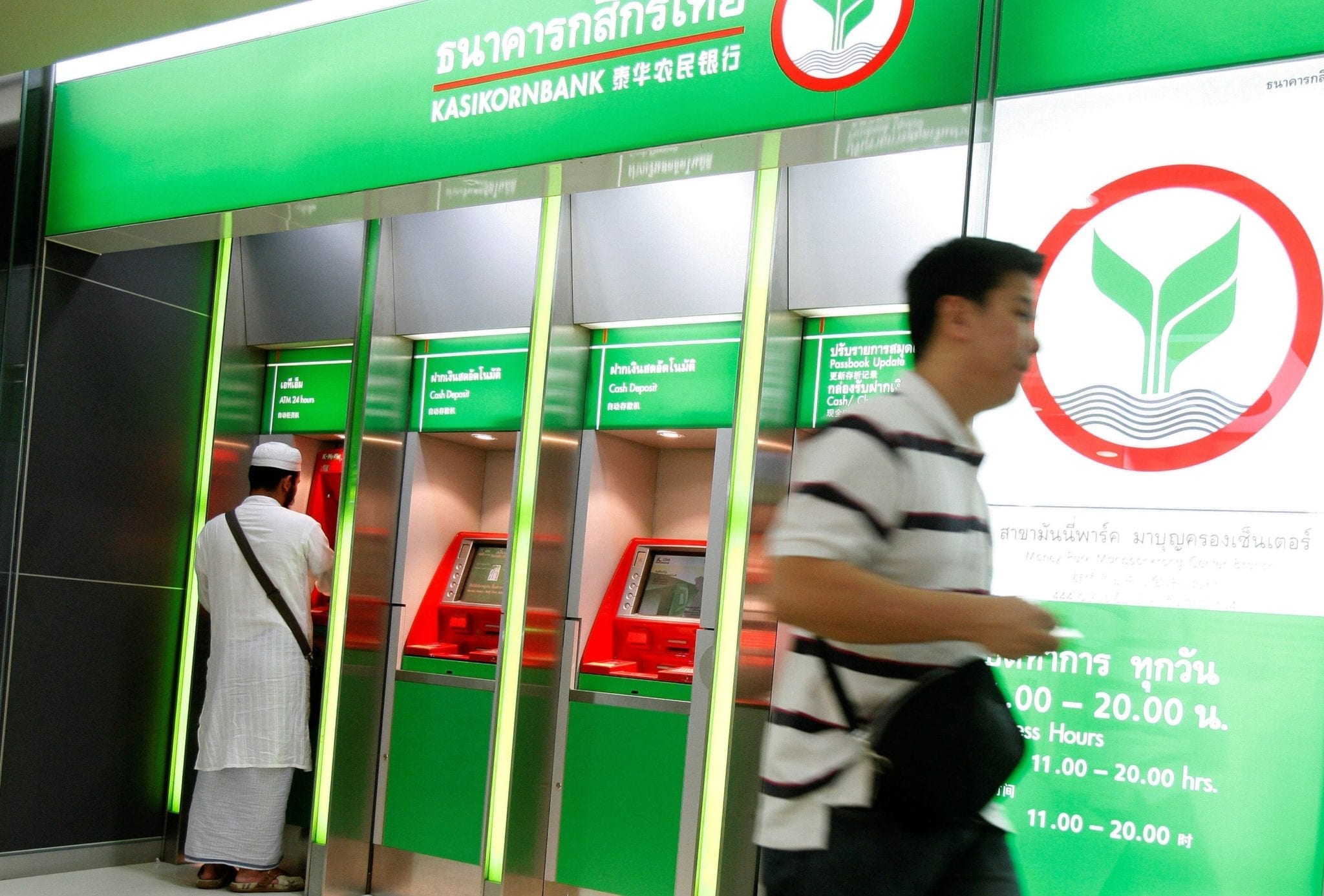
    Murex, the global leader in trading, risk and processing solutions for capital markets, powered an overnight indexed swap derivatives transaction for KBank based on THOR, the new Thai reference rate. KBank successfully completed the first such transaction referencing THOR on August 31

    The interest rate swap transaction based on THOR represents a critical inaugural step—it sets the stage for new markets for THOR-linked derivatives and cash products.  

    KBank, also known as KASIKORNBANK, executed the transaction after bespoke THOR mechanisms and configuration facilitated by Murex, a long-term technology partner to the Thai bank. KBank is Thailand’s largest lender by assets and has 70 years of experience in the country.  

    “This is a remarkable moment and an important milestone for KBank history and the local financial community to create a robust interest rate derivatives market based on THOR,” said KBank Capital Markets Business Division Head Thiti Tantikulanan. “The KBank team is excited to have been a part of this transaction. Our close collaboration with various stakeholders in Thailand, including the Bank of Thailand and the Murex teams, will contribute to the development of a liquid derivatives market based on the new benchmark rate after the LIBOR discontinuation at the end of 2021.” 

    In 2019, the Bank of Thailand, with inputs from the Thai Bankers’ Association and the Association of International Banks, established a Steering Committee on Commercial Banks’ Preparedness on LIBOR Discontinuation.  

    KBank was an active part of the committee, whose tasks included proposing the replacement rate for the Thai Baht Interest Rate Fixing contract (THBFIX), which LIBOR cessation puts at risk. That replacement rate is THOR, which was finalized in April. 

    “We’re very proud to have been an advising financial institution to the Thai central bank in this critical initiative,” said Thiti Tantikulanan. “To have completed the first transaction using this rate is a great feather in our cap. It is also an important milestone for THOR.” 

    Murex was thrilled to deliver the core technology to KBank, according to Guy Otayek, CEO of Murex APAC. 

    “Collaborating with KBank has always resulted in innovative solutions,” said Guy Otayek.  “Though we’ve been working with them for many years—KBank has more than 500 active users of MX.3—this transition project represents a longstanding commitment to bringing innovative solutions in Thailand and Southeast Asia. This first transaction powered by MX.3 is another great illustration of our unique expertise to help our client community transition away from LIBOR on data, analytics, operations and accounting, and provide them with the mechanisms to easily adopt new RFRs. This first transaction proves that Murex is the right partner to serve the capital markets here in Thailand.” 

  • Investors fail in plans to increase Vinamilk stake

    Investors fail in plans to increase Vinamilk stake

    Vietnam’s sovereign fund and two Singaporean investors failed to acquire stakes in dairy giant Vinamilk this month as they had planned. A subsidiary of the State Capital Investment Corporation (SCIC) was unable to buy 225,000 VNM shares, or a 0.01 percent stake, due to “market volatility”, according to a Vinamilk statement on Friday.

    SCIC is the largest shareholder in Vinamilk with a 36 percent stake. F&N Dairy Investments Pte Ltd failed to buy 17.41 million shares, or nearly 1 percent, between July 17 and August 14. It already owns 17.69 percent.

    Another company, Platinum Victory Pte Ltd, too failed to buy a nearly 1 percent stake and its ownership stays at 10.62 percent. Both Singaporean companies have registered again to buy in September. They have been seeking to increase their stakes in Vinamilk repeatedly since early 2018 but in vain.

    Vinamilk saw first-half pre-tax profit rise by 3 percent year-on-year to over VND7 trillion ($302 million). CEO Mai Kieu Lien said earlier the company had stocked ingredients so that it could have an advantage when the trade is disrupted by travel bans. The company, which holds half the Vietnamese dairy market, last year acquired a majority stake in a competitor, Moc Chau Milk, and has recently announced plans to set up a cafe chain in Vietnam and increase its investment in a Laotian subsidiary.

  • Japan Display to sell LCD factory to Sharp and use the cash to pay back Apple

    Japan Display to sell LCD factory to Sharp and use the cash to pay back Apple

    Back in 2014-2015, Japan Display (JDI) was considered to be Apple’s major smartphone display supplier. At that time, the iPhone 6 and the iPhone 6 Plus were bringing larger-sized LCD screens to iPhone users. The original 3.5-inch display found on the first iPhone models rose to 4-inches with the iPhone 5 and to 4.7-inches on the iPhone 6. The iPhone 6 Plus carries a screen size of 5.5-inches and those sizes remained the same until 2017’s iPhone X weighed in with a 5.8-inch OLED screen.

    The iPhone X was the beginning of the end of Japan Display’s importance to the iPhone since the supplier was late to embrace OLED. JDI borrowed $1.5 billion from Apple to build a new LCD plant. With smartphone manufacturers-including Apple-turning away from LCD, JDI’s new factory was running at only 50% of capacity. Friday Japan Display announced that it will sell a smartphone display factory and the land it sits on to Sharp for 41.2 billion yen (the equivalent of $386 million). The Hakusan LCD factory along with equipment that will be sold to a customer believed to be Apple, will bring Japan Display $668 million while at the same time cutting excess capacity that has negatively impacted its earnings. This specific factory has been idle since 2019.

    The facility was supposed to have been sold by the end of this past March but the global pandemic caused the plans to change. When the factory was built, Apple covered most of the 170 billion yen cost ($1.61 billion USD) of the facility. Production started in late 2016 with up to seven million smartphone panels manufactured each month. As time went on, the number of panels churned out by the factory declined on a monthly basis. Japan Display will use the funds it receives from the sale of the plant to pay back Apple for the prepayment it made toward the facility.

    Sharp, which is owned by iPhone assembler Foxconn, will rent the necessary equipment from Apple that will allow it to produce LCD displays for older iPhone models. Sharp also expects to use the facility for developing and producing the next generation of displays including microLED screens which use millions of tiny light-emitting-diodes to produce a sharp display (no pun intended). Sharp does plan to spin-off its LCD panel business in October.

    Japan Display has lost money in 11 consecutive quarters and the company does produce the AMOLED displays that grace the Apple Watch.

  • Japan’s Moon Exploration Vehicle To Be Called Lunar Cruiser

    Japan’s Moon Exploration Vehicle To Be Called Lunar Cruiser

    The Japan Aerospace Exploration Agency (JAXA) and Toyota announced the name of its manned pressurized rover which is currently under joint research. It will be nicknamed the Lunar Cruiser, which we think is a very ‘Toyota’ name. JAXA and Toyota previously announced and have been conducting joint research on a manned, pressurized lunar rover that uses fuel cell electric vehicle (FCEV) technologies.

    The nickname Lunar Cruiser was chosen because of the familiar feeling it offers the people involved in the development and manufacture of the vehicle prototype as part of the joint research project as well as the familiarity it will provide the general public. The name, which references the Toyota Land Cruiser SUV, was decided upon based on the quality, durability, and reliability expected of the pressurized lunar rover

    JAXA and Toyota signed a joint research agreement to work on a manned pressurized lunar rover last year, on June 13, 2019, with an expected launch date in the latter half of the 2020s. Together, they are working to manufacture test parts for each technological element, and the prototype rover itself, during this fiscal year (FY2020). The work involves the use of simulations to confirm power and heat dissipation performance while driving, the manufacture and assessment of prototype tires, and the use of virtual reality and full-scale models to consider the layout of equipment in the cabin of the Lunar Cruiser.

  • Aeon Malaysia reports second-quarter loss likely due to virus outbreak

    Aeon Malaysia reports second-quarter loss likely due to virus outbreak

    Japanese mall brand Aeon’s operations in Malaysia have reported a net loss of US$2.3 million for its second fiscal quarter this year.

    The losses, which followed a first-quarter net profit of $1.8 million, are being considered as an effect of the coronavirus outbreak and the movement control orders executed in the territory and subsequent closures of non-essential tenants, along with lower rental pricing. It is a drop of 19.9 percent from the same period last year.

    Aeon MD & CEO Shafie Shamsuddin said that recent months had been a tough journey while expressing gratitude to the group for managing to bounce back in May and June.

    Aeon Malaysia’s current priorities include enhancing its safe-shopping environment with its personal shopper and home delivery services, as well as the launch of its online virtual mall. The group’s malls expanded their drive-thru services to more locations following an introduction of the service using personal shoppers in March.

  • Massive China retail sales boost for Tiffany & Co

    Massive China retail sales boost for Tiffany & Co

    Aided by a massive sales boost in Mainland China, luxury jewelry retailer Tiffany & Co returned to profitability in the second quarter of this year.

    “Retail sales in Mainland China began to rebound in April and continued to accelerate in the month of May, during which retail sales increased approximately 90 percent as compared to the same period in the prior year,” said CEO Alessandro Bogliolo.

    “This robust recovery continued throughout the balance of the second quarter with retail sales up approximately 80 percent for the full quarter as compared to the same period in the prior year.”

    Tiffany’s second-quarter, worldwide net sales declined 29 percent from the prior year to $747 million and comparable sales declined 24 percent from the prior year. Net earnings of $32 million were down by 77 percent against the previous year’s $136 million. But that marked a welcome return to profit after a torrid, Covid-19 hit first quarter.

    For the half-year to July 31, worldwide net sales declined 37 percent year on year to $1.3 billion and comparable sales declined 34 percent. The company reported a net loss of $33 million compared with net earnings of $262 million the prior year.

    In the Asia-Pacific region, total net sales were flat in the second quarter and decreased 24 percent in the first half, to $299 million and $473 million, respectively, which included a comparable sales increase of 17 percent in the second quarter and a decrease of 16 percent in the first half.

    Besides the stellar China performance, Tiffany said its sales in South Korea rebounded strongly, however these increases were offset by softness across other markets and a decline in wholesale travel-retail sales, all related to the Covid-19 outbreak.

    In Japan, Tiffany’s net sales decreased by 28 percent in the second quarter and 34 percent in the first half to $111 million and $197 million, respectively.

    Bogliolo said the company’s global sales strengthened in August, with preliminary month-to-date worldwide sales through to August 25 “slightly positive” compared to the same month-to-date in the prior year.

    “Our focus on effective local market messaging continued with a marketing campaign, featuring the new Tiffany T ambassador Chinese singer Jackson Yee, which generated impressive levels of social media fan growth and consumer engagement that well exceeded our expectations.”

    Meanwhile, the company’s total e-commerce revenue was up 123 percent during the second quarter, accounting for 15 percent of overall sales – significantly higher than the 6-per-cent rate of the preceding three fiscal years.

    Bogliolo is bullish about the jeweler’s future prospects, despite the Covid-19 crisis. “I firmly believe that Tiffany’s best days remain in front of us because of the team’s demonstrated agility in response to unforeseen hurdles and our stated strategies, which continue to prove sound.

    “Our second-quarter results and August trends to date, in light of these challenging times, confirm the power and resilience of this venerable brand.”

  • Green light for carrier KiteAir likely delayed until 2022

    Green light for carrier KiteAir likely delayed until 2022

    The Planning and Investment Ministry has suggested that the PM delays his approval to new carrier KiteAir’s investment proposal over Covid-19 impacts. The establishment of the new airline would add to the business woes wreaked on the local aviation industry by the pandemic, the ministry said in a document recently sent to Prime Minister Nguyen Xuan Phuc. “A suitable time for a new carrier would be 2022 when the market has recovered.”

    The ministry added that the current priority and focus should be the restoration of domestic and international aviation markets and support for existing carriers.

    Earlier, in July, the Transport Ministry (MoT) had also proposed that the government not license any new carrier, including KiteAir, till 2022, when the local aviation market is expected to recover.

    Based on the MoT’s proposal, Deputy PM Trinh Dinh Dung in July “agreed in principle” with the temporary suspension as proposed by the MoT. Dung, however, assigned the MPI, as an investment proposal appraisal agency, to report to the PM about the KiteAir investment proposal which was already submitted by hospitality group Thien Minh.

    The MPI had said earlier that KiteAir has a sufficient legal basis to have its investment proposal appraised. The MoT, meanwhile, had said the establishment of the new carrier was in line with the orientation and development plans of the industry.

    But in April, amid the Covid-19 pandemic, the PM requested ministries to review and consider the establishment of any new carrier, including KiteAir, given the new context.

    KiteAir, which planned to take off in the second quarter of 2020, was to be headquartered in the central province of Quang Nam with a charter capital of VND1 trillion ($43 million), invested in by Thien Minh, a leading Vietnamese hospitality group.

    It planned to operate six short-haul ATR-72 aircraft with a capacity of 78 seats in the first year of operation and expand the fleet to 30 jets by the fifth year, including 15 narrow-body Airbus A320/321 aircraft.

  • KFC most favored fast food chain in Vietnam

    KFC most favored fast food chain in Vietnam

    American chain KFC is the most frequently visited fast food restaurant chain in Vietnam, with 45 percent of respondents visiting its stores often, a new survey found. It is followed by South Korea’s Lotteria with 17 percent of 600 respondents, and American restaurant chains Pizza Hut and McDonald’s both at 6 percent, according to the survey by Ho Chi Minh City-based market research firm Q&Me.

    Top reasons cited for favoring KFC were: delicious food (66 percent); convenient location (63 percent); suitable for family and the youth (60 percent); and variety on the menu (56 percent).

    The survey found 87 percent ordering food online from fast-food chains. Of these, KFC was the most ordered from at 52 percent, followed by Lotteria (30 percent) and Pizza Hut (21 percent).

    “Now” was the most popular delivery app for fast food online orders with 24 percent of the respondents opting for it, followed by GrabFood (20 percent). In Vietnam since 1997, KFC now has 135 outlets, mainly in HCMC and Hanoi, Vietnam’s two biggest metropolises, while Lotteria has around 200. Market research firm Euromonitor said in a recent report that international players dominate the limited-service restaurant market in Vietnam, since local independent chains are mostly small family-based businesses with insufficient resources to take on the big players.

    But, as a whole, fast food chains are experiencing slower growth. Market observers have said one of the reasons could be that the eating habits of Vietnamese are changing, with health being prioritized over convenience.In 2018, there were 7,000 fast food outlets in Vietnam, a relatively insignificant number considering there are around 540,000 food and beverage businesses comprised of 430,000 street vendors, 80,000 restaurants and 22,000 cafes and bars, according to Dcorp R- Keeper, a global company which provides technological solutions to food and beverage businesses.

  • Clarins opens first kiosk-style store in Singapore

    Clarins opens first kiosk-style store in Singapore

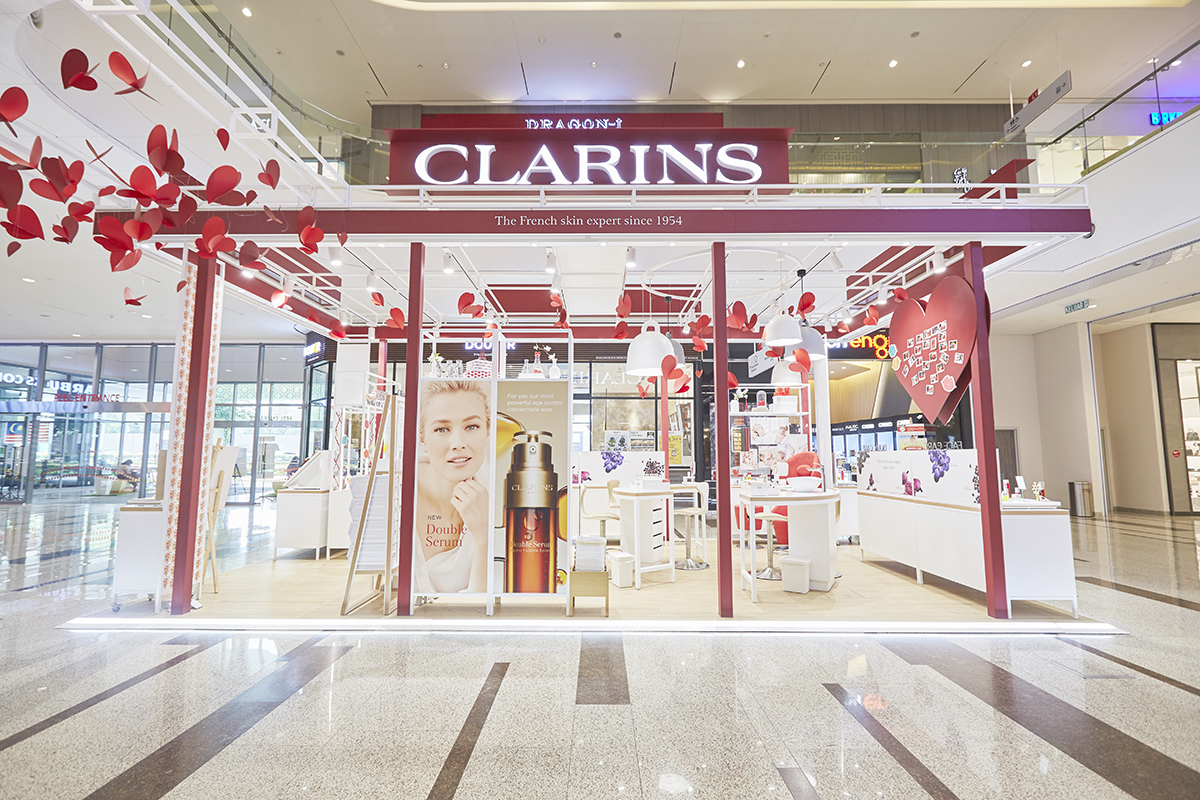
    French beauty brand Clarins has opened its first kiosk-style concept store in Singapore, its fourth boutique in the city.

    Located in the heart of the Nex shopping center, the store occupies just 20sqm, but offers a wide range of products, including the Clarins hero product Double Serum and the V Shaping Facial Liftline.

    To celebrate the opening, the store introduced the brand’s Clarins Scented Collection which is made from plant ingredients and available in a series of products, including foaming gel, body lotion, home fragrance, and scented candles.

    “The new Clarins kiosk at Nex is perfect for time-strapped shoppers who appreciate the convenience of grab-and-go,” the company said in a statement.

    Clarins operates stores in more than 140 countries including Mainland China, India, Japan, and South Korea.

  • Bonjour to embrace digital technologies, live streaming used to battle profits

    Bonjour to embrace digital technologies, live streaming used to battle profits

    Bonjour, the Hong Kong-headquartered beauty retailer, says it plans to reduce its reliance on brick-and-mortar stores and focus on developing e-commerce and in-store digitalization.

    It will modify some of its existing stores adding technology that it anticipates will attract and engage customers and create a better shopping experience while also improving operational efficiency.

    The plans were revealed by the chairman and executive director Chen Jianwen along with the company’s results for the half-year to June 30, which included a loss attributable to shareholders of US$17.93 million on sales down 59.7 percent to $42.93 million. The decline was due to the borders being all but closed to foreigners due to the Covid-19 pandemic, including the ranks of mainlanders who traditionally head to the territory for shopping.

    Chen said the company has responded to the absence of tourist spending by diversifying its product portfolio to appeal more to local consumers.

    But the main focus moving forward is on transforming from a traditional retail model to New Retail, he said.

    “Digitalisation of the operating system and business model will help the group to better understand customers’ needs and wants and build a long-term relationship with the customers. Starting with training our frontline staff to broadcast product information online, the group will grasp the market opportunity and further develop the e-commerce platforms.”

    Already, frontline Bonjour staff are being trained in live-streaming skills to become influencers and interact with customers online.

    “At the same time, the group has also established its foothold at major online platforms spanning across 16 countries, including ShopShops, Tmall Global, Kaola.com, JD, Facebook, Youtube, Instagram, and Haitao.com, as well as establishing a WeChat store to connect with VIP users,” said Chen.

    In stores, the company is embracing digital transformation, backed by a new retail innovation center with a broadcast studio and testing self-service equipment, planned for launch into physical stores soon.

    In the future, customers will be able to scan the QR code of a product to learn information before they make a purchase and self-service kiosks will be installed at physical stores so that customers can check out by themselves.

    “With the rise of augmented reality and virtual reality, the group will keep an open mind to embrace new technology that helps customers to virtually try the products on which to help them to explore the most suitable products,” said Chen.

    Meanwhile, Bonjour will continue to review its store network, closing underperforming outlets and negotiating rent discounts with landlords.

  • Gap closing over 225 stores globally as sales continue to drop

    Gap closing over 225 stores globally as sales continue to drop

    Struggling US apparel retailer Gap Inc has revealed plans to shutter more than 225 stores globally this year with another batch to follow next year.

    The company has reported a second-quarter net loss of $62 million on sales down 18 percent. Sales through physical stores were down by 48 percent, offset by a meteoric 95-per-cent rise on online sales. The company gained more than 3.5 million new customers during the period.

    The company did not give any indication of where in the world its stores would close, or which banners are most affected by the plan, although its namesake Gap network and Banana Republic stores seem to be performing the worst. As at August 1, Gap Inc had 1643 stores trading under those two brands.

    The decline in sales in physical stores during the quarter was caused by enforced temporary closures due to the Covid-19 pandemic, with shops beginning to reopen from May. As of August 1, about 90 percent of its stores globally were trading again.

    Worldwide sales by the Gap brand were down 28 percent and at Banana Republic by 52 percent. Old Navy performed better, down by 5 percent overall, and aided by a 136-per-cent increase online.

    Athleta was the standout, boosted by consumers purchasing more relaxing apparel as they moved to work from home. Sales were up 6 percent overall, and online by 74 percent.

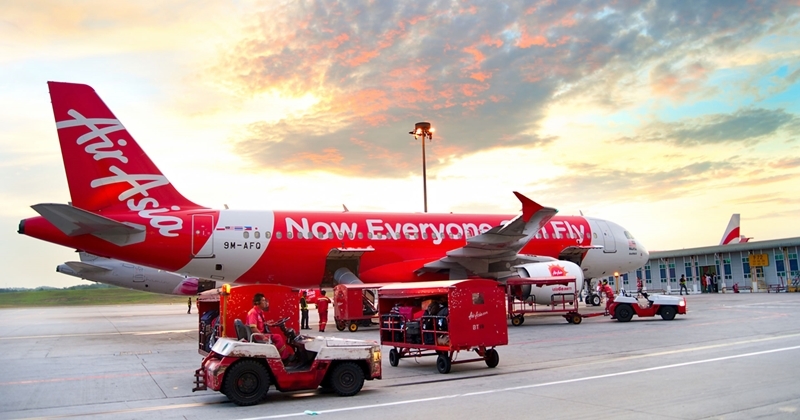
  • The airline founder building Asia’s next super app

    The airline founder building Asia’s next super app

    AirAsia’s founder Tony Fernandes is building what he hopes will be the region’s next “super app” as he deals with the coronavirus travel downturn. He wants to rival the likes of Grab, GoJek, and WeChat with an all-in-one app for food delivery, shopping, payments, entertainment, and travel. As the airline’s boss, he has been looking at new ways to generate income while his planes were grounded. AirAsia has struggled during the pandemic and cut 30% of its staff.

    Mr. Fernandes said he has spent his time during the travel slump improving the AirAsia app and the company’s payments platform BigPay.

    “The downturn was a blessing in disguise in some ways as it allowed us to focus more on it. Running an airline takes up a lot of our time but we have been given the opportunity and time to focus on our digital business.”

    AirAsia already has a “rich database” of over 60 million users as its starting point. The AirAsia app, which also offers users a messaging service, has set its sights on super apps like Singapore-based Grab, Indonesia’s GoJek, and China’s Meituan.

    “AirAsia has always been a digital company. We were one of the first airlines to sell online. It’s in our bloodstream,” added Mr. Fernandes, who is also a major shareholder of English football club Queen’s Park Rangers (QPR).

    “I know a super app sounds like a lofty target but Grab and GoJek also started out small as food or mobility apps. Plus people also questioned me the same way when I said I wanted to start AirAsia.”

    Mr. Fernandes’ airline has now grown to become Asia’s biggest budget carrier. Last year AirAsia launched its own record label called RedRecords in partnership with Universal Music. The aim is to discover stars from South East Asia who will appeal to a Western audience. The first major signing, Thai pop star Jannine Weigel, has already built up millions of followers across social media.

    “Boy have we got something special with the record label. The Koreans have shown how Asian music can appeal to a global audience with K-pop and there is huge potential for southeast Asia.”

    “This also helps us engage with a younger audience and gives lots of content for our app.”

  • Decathlon store replaces old Metro at Singapore’s Orchard Rd

    Decathlon store replaces old Metro at Singapore’s Orchard Rd

    Decathlon Singapore is opening a new experience store in Orchard Rd, the brand’s fifth experience store in the city.

    Located at the Centrepoint shopping mall, Decathlon Orchard spans two floors, occupying a 3200sqm area. The store will feature some 5000 products spanning more than 50 sports.

    In the new Decathlon Singapore experience store, customers will be able to test products before purchasing with in-store “innovative solutions”. According to the company, the store will feature several interactive concepts including virtual reality test zones and free sport events

    Based on the photos the brand has shared on their social media channels, the fit-out process is still underway, but the store is scheduled to open on September 12.

    The new Decathlon store location takes up space previously leased to the Metro department store.