Author: Mei Ling Tan

  • Mastercard Deepens Commitment to Myanmar; Announces Local Presence

    Mastercard Deepens Commitment to Myanmar; Announces Local Presence

    Mastercard today announced that it is deepening its commitment to Myanmar by taking steps to incorporate an entity in the country – thereby establishing a local office presence in Yangon – and to appoint a country business development manager.

    Mastercard aims to support the advancement of Myanmar’s digital payments ecosystem and its efforts to build a futuristic and inclusive cashless society. The establishment of the local office also underscores Mastercard’s long-term commitment to advancing Myanmar’s national digital agenda and reflects the company’s continued confidence in the market.

    Myanmar’s GDP growth is expected to rebound to six percent in 2021, making it one of the fastest-growing economies in the Southeast Asian region. The market has successfully leapfrogged several of the usual transition steps on its way to becoming a digital economy. For example, despite less than a quarter of the country having a bank account, 80 percent of its citizens own a mobile phone, with many using their devices to conduct transactions and remit funds digitally. The government of Myanmar has been actively leveraging these advances to lay the foundation for a modern payments’ infrastructure designed to allow entrepreneurs and businesses to capitalize on opportunities across consumer, commercial and government payment flows.

    “With its futuristic vision to enable sophisticated capabilities like real-time payments for its citizens and businesses, Myanmar is at a truly pivotal stage in its economic evolution.  Mastercard has a long and established history in partnering with hundreds of nations around the world on growing and scaling their payments ecosystems. Mastercard’s ambition for Myanmar is no different – the organization is focused on bringing its global best practices, coupled with a deeply rooted local presence and understanding of the domestic environment, to bear, to help the country secure a digital future defined by efficiency, agility, and security” said Safdar Khan, Division President, Southeast Asia Emerging Markets, Mastercard.

    “As Myanmar continues its digital transformation, it is also necessary to empower its people with the skill sets and knowledge they need to participate actively in the digital economy. Mastercard will bring to Myanmar decades of experience in technology skilling that will enable the country to accelerate human capital development. Furthermore, as part of the organization’s commitment to grow the local talent pool, Mastercard is well on its way to assembling a local team which will lead the local efforts and facilitates Mastercard’s objective for sustainable, domestically relevant, long-term success” he added.

    Mastercard has been working for nearly a decade, with government and key stakeholders in Myanmar, to digitalize its payments environment, achieving a number of critical firsts and milestones, including:

    • Being the first international payments network to issue a license to a local bank (Co-Operative Bank Limited), paving the way for Mastercard cards to be issued and accepted in the country
    • Reducing the month-long national SME registration process to just one day by launching the MSME Webportal, an e-government web portal, in partnership with CB Bank and the Myanmar government
    • Issuing Myanmar’s first credit card designed exclusively for women, MAB Lady’s, in partnership with Myanmar Apex Bank
    • Partnering with Yoma Bank to digitalize and tailor products and solutions for the bank’s customers, including SMEs
    • Curating exclusive offers for all Mastercard cardholders to enjoy until 2021 in celebration of Mastercard’s 8th year in Myanmar
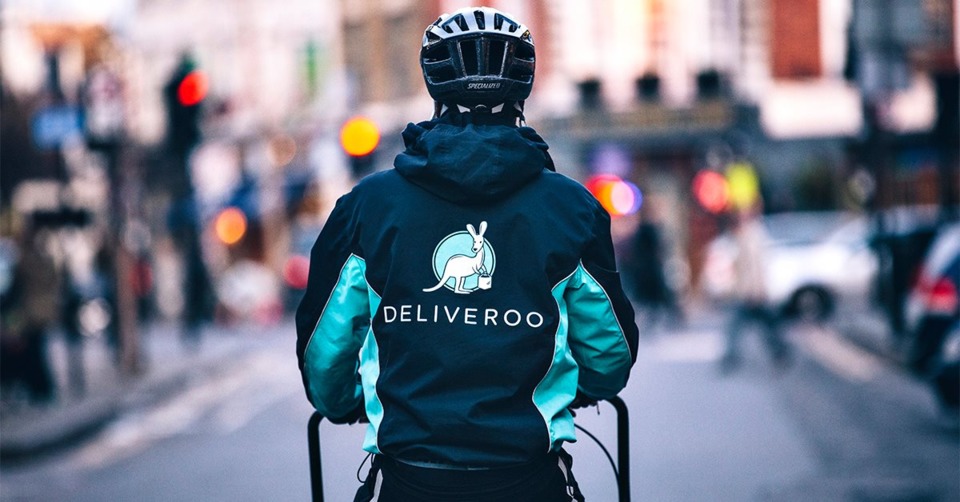
  • Deliveroo Forms a Dedicated SMB team to Support Local Small and Independent Restaurants in light of reduced but ongoing COVID-19 measures

    Deliveroo Forms a Dedicated SMB team to Support Local Small and Independent Restaurants in light of reduced but ongoing COVID-19 measures

    Deliveroo today announces the formation of its new SMB team which will provide long-term support to Hong Kong’s small and medium restaurants, as they confront the coronavirus’ effects on business. Additionally, Deliveroo will sponsor a bespoke three-week-long 15 episodes television series and a large scale social media campaign hosted by ERROR, a local popular boy band that will feature over 300 small and independent restaurant partners starting tomorrow, boosting their brand awareness and visibility. Also launching this month is a HK$5 million-worth ZA F&B Relief Fund co-set up by ZA International and Towngas, which will provide support to Deliveroo partnered restaurants and staff affected by Covid-19 diagnoses. These announcements build on other recent Deliveroo initiatives to support restaurants amidst ongoing challenges, including a 20-30% discount for all Pickup orders in selected restaurants between July and August, reducing restaurant Pickup commission rates to 3% until the end of September, extended delivery until 11:30pm, launching breakfast services and activation of the “HeretoDeliver” campaign.

    Deliveroo’s new relief measures will support restaurant partners, particularly small and medium local businesses, who are now facing numerous headwinds from the third wave of the pandemic. Deliveroo has created a new additional team to oversee and help with direct relief to local SMBs – The team is set to become a permanent fixture for Deliveroo Hong Kong and specializes in providing small and medium-sized restaurants with practical advice and providing support when needed, whether through promoting the restaurants through Deliveroo’s channels, sharing successful business references, or helping restaurants to develop virtual brands.

    To further support local and independent small operators, Deliveroo has collaborated with ZA International to provide emergency aid. With the HK$5 million-worth ZA F&B Relief Fund co-set up by ZA International and Towngas, if a Deliveroo partner restaurant is unfortunately suspended due to a COVID-19 case linked to the premises, the employer can go through a simple series of steps to apply for an one-off emergency aid of HK$50,000. In addition, eligible employees who are diagnosed with COVID-19 will be provided a financial support of HK$20,000 under the ZA Relief Fund, which offers coverage of HK$6 million to registered members of ZA Fam.

    Deliveroo has also activated its “HereToDeliver” campaign, investing in a multi-channel mass marketing plan to help restaurants reach their target customers by letting customers know they are still operating for delivery and Pickup. This is on top of the HK$30 million the food delivery company invested since COVID to support restaurants. Over the past few weeks, Deliveroo customers have been able to find over 2,000 discount offers on the platform at any given time for both Pickup and delivery, and the launch of Breakfast. The newest addition to the “HereToDeliver” campaign will see Deliveroo partnering with a local television station to broadcast a three week-long F&B TV show starting this week; investing in a large-scale social media campaign promoting by ERROR, a popular local boy band to feature over 300 local small and independent restaurant partners on the platform starting tomorrow. With Deliveroo’s help, restaurant partners can gain additional exposure amongst the general public and highlight their excellent plates and delicious deals.

    Earlier this month, Deliveroo lobbied the Hong Kong government to provide additional relief measures to the F&B sector, proposing a series of key policy suggestions to help the industry recover through this challenging period and thrive in the future. A recent survey of Deliveroo’s small and independent restaurant partners with over 2,000 respondents conducted between May to August revealed that more than 50% are facing the prospect of immediate business suspension. Many predict that if the current situation continues, within the next three months they will be forced to permanently close or even pushed to bankruptcy.

    Brian Lo, General Manager of Deliveroo Hong Kong, said, “As Hong Kong’s F&B sector continues to face unprecedented challenges, Deliveroo is committed to acting with urgency and building on our past actions to support restaurants, hungry patrons and riders. Local small restaurants provide Hong Kong with a food culture that is both unique and vital to the city. Many local restaurants  are fixtures in their specific neighbourhoods, with dishes that are cherished in the hearts and stomachs of many Hong Kongers. We know that it is our duty here at Deliveroo to protect these longstanding institutions and remain vigilant and provide our restaurant partners with thoughtful strategies that will help them weather the economic anxieties they have been faced with,  That is why we have called upon the government to offer further support to the F&B industry, while we are hard at work with our own SMB and marketing team, who have given their full support and are ready to do even more for small and independent operators.”

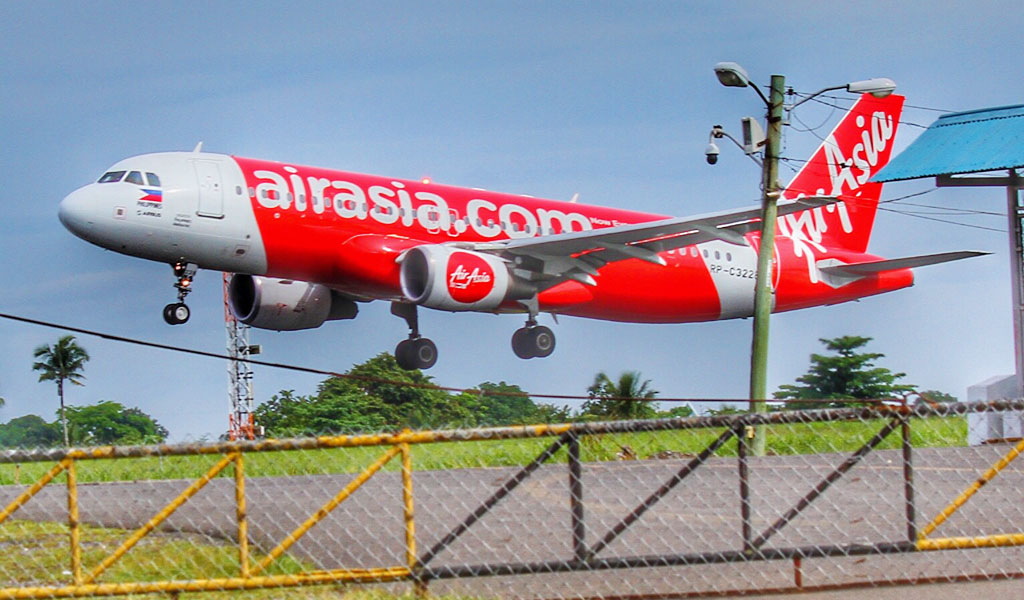
  • AirAsia’s 1Q e-commerce sales leap 118%

    AirAsia’s 1Q e-commerce sales leap 118%

    Budget airline AirAsia Group Bhd saw revenue from its e-commerce platform, AirAsia.com, rose 118% year-on-year in the first quarter of this year as it rolled out new offers, promotions, flights and hotel bundle packages.

    “As travel continues to gradually resume, more activities are authorized… which in turn will support the growth of our non-airline business divisions, particularly in the lifestyle, e-commerce and media verticals,” said AirAsia.com chief executive officer Karen Chan in a statement today.

    AirAsia anticipates that its airline and ancillary revenues will gradually stabilize as non-airline revenues become a key driver of growth and business priority.

    “In the future, we foresee our non-airline revenues will outperform our airline performance which is why our focus is on offering innovative products that encompass travel, lifestyle, e-commerce and media verticals, in both the B2B and B2C segments,” said Chan.

    “While Asean is our home and domestic travel is our short-term focus, we look forward to the reopening of international borders to realize the potential of AirAsia.com,” she added.

    In anticipation of international borders reopening soon, Chan said AirAsia is in final stages of discussions with key international airlines to connect their European and MEA networks directly with AirAsia’s vast Asean network.

    “These strategic partnerships will complement our existing partnership with Kiwi.com, which provides a virtual interlining and connectivity optimization engine to offer a one-stop-shop, best-price-guaranteed service for our customers.”

    The airline wants to position AirAsia.com as a leading one-stop travel and lifestyle e-commerce platform in Asean, offering products from flights, hotels, travel activities, shopping and more.

    Chan said AirAsia has always regarded Asean as its playground, connecting its 640 million people to 160 destinations across Asia and the Pacific. “But with the pandemic still at large and continued restrictions to cross-border travel, we are looking at creative ways to overcome these limitations.”

    For now, the focus for AirAsia.com is to promote domestic travel until international borders reopen and travel restrictions are relaxed.

    “Given AirAsia’s dominant market position (with over 73% market share in capacity in Malaysia), we are using our position of strength to stimulate domestic air travel where there is demand.

    “Going back to our DNA which is all about making travel affordable for everyone, we will continue to innovate with more exciting products, leveraging on our one-stop travel shop ecosystem and focusing on our business divisions which are most relevant given current market conditions,” said Chan.

    “Based on our recent market survey, close to 45% of travelers want to travel immediately post lockdown. Flight searches on our website have increased by more than 150% post-hibernation period and as of June 2020, AirAsia.com receives 1 million daily active users.

    “Our domestic travel promotions have been very well-received. We sold over a million seats group-wide in July and we continue to ramp up capacity. With restrictions on activities being lifted, we hope to achieve a load factor of 70%-80% by the third quarter of 2020,” she said.

    Chan noted that the aviation industry, being one of the heaviest impacted by the Covid-19 pandemic, is undergoing a period of consolidation — fare rationalization will be a natural outcome.

    “We continually review our products and innovate to best meet our customer’s needs, at unbeatable prices. We survived for 18 years in a hyper-competitive industry and became the leader of the low-cost carrier segment by providing the best prices, best Asean connectivity and best customer experience.”

    Under its recently-launched Unlimited Flight Pass in Malaysia and Thailand, AirAsia sold more than 200,000 passes and has received many requests for the product to be introduced in other markets.

    “We are closely monitoring the domestic travel situation in all of our markets (that AirAsia operates) and are looking forward to extending the Unlimited Flight Pass to other markets such as Indonesia and the Philippines when flight restrictions have eased,” said Chan.

    To date, AirAsia.com partners close to 400 hotel chain properties and over 100 independent hotels across Malaysia, Thailand and Indonesia.

    In Malaysia, AirAsia.com is working closely with the Malaysian Association of Hotels to collaborate with more hotels, and hopes to increase its partnerships with independent hotels in Kuala Lumpur, Langkawi, Penang, as well as Sabah and Sarawak.

    AirAsia shares closed up one sen or 1.52% at 67 sen today, bringing a market capitalization of RM2.24 billion. A total of 11.91 million shares were traded.

  • Mercedes-AMG Opens First Ever Experience Centre In China

    Mercedes-AMG Opens First Ever Experience Centre In China

    Mercedes-AMG is opening its first Experience Centre in the world in China. Customers and fans can experience the motorsport DNA of the brand from Affalterbach in close-up – on and alongside the immediately adjacent racing circuit. The new AMG Experience Centre lies about two hours’ drive from Shanghai, occupying an area of around 1305 square meters directly adjacent to the Zhejiang International Circuit. The exclusive AMG format offers twelve functional areas and four display areas over two floors, adding up to an extremely comprehensive brand and product experience and allowing visitors to discover for themselves the many facets of Driving Performance.

    The vehicles and technologies on display can be explored in analog form as well as digitally using VR technology. Specially trained AMG experts are on hand to provide detailed information and individual guidance. If a customer expresses an interest in buying, they will be put in touch with their nearest AMG retail partner. The facilities on offer are further enhanced by the “Café63”, a lounge and an exclusive selection of high-quality lifestyle accessories available from the AMG Shop. The whole area can furthermore be used as an event location, for which it can be flexibly configured. Stairs lead up to the interactive experience zone on the first floor. Motorsport enthusiasts can experience racing simulators and AR applications here, set among the successes of the AMG Customer Racing Teams. A slot car race track controlled via brainwaves is yet another technological highlight that serves to emphasize the experience-oriented nature of the format.

    The opportunity to experience the AMG vehicle range on the race track is of course on the table. An extensive pool of vehicles which includes the GT3 and GT4 racing vehicles in which visitors can experience the true fascination of motor racing. In addition to this exclusive use of the track, the Zhejiang International Circuit offers special monthly track days, in which interested customers and fans can take part either in their own vehicles or in AMG vehicles booked from the Centre.

  • Hong Kong To Issue First-Ever Crypto Exchange License

    Hong Kong To Issue First-Ever Crypto Exchange License

    Hong Kong’s Securities and Futures Commission is en route to issue the city’s first-ever license to a cryptocurrency firm.

    OSL Digital Securities – a unit within Fidelity-backed BC Group – said that Hong Kong’s securities regulator has agreed in principle to issue a license, according to exchange filings.

    According to BC Group chief executive Hugh Madden, the license will help increase ease of doing business by being able to engage other regulated entities. Final approval is subject to certain conditions, the filing added without providing details.

    In addition to the cryptocurrency business where it generates the majority of its revenue, BC Group also provides business park and advertising services. In the first half of 2020, it posted a net loss of 90.8 million yuan ($13.1 million).

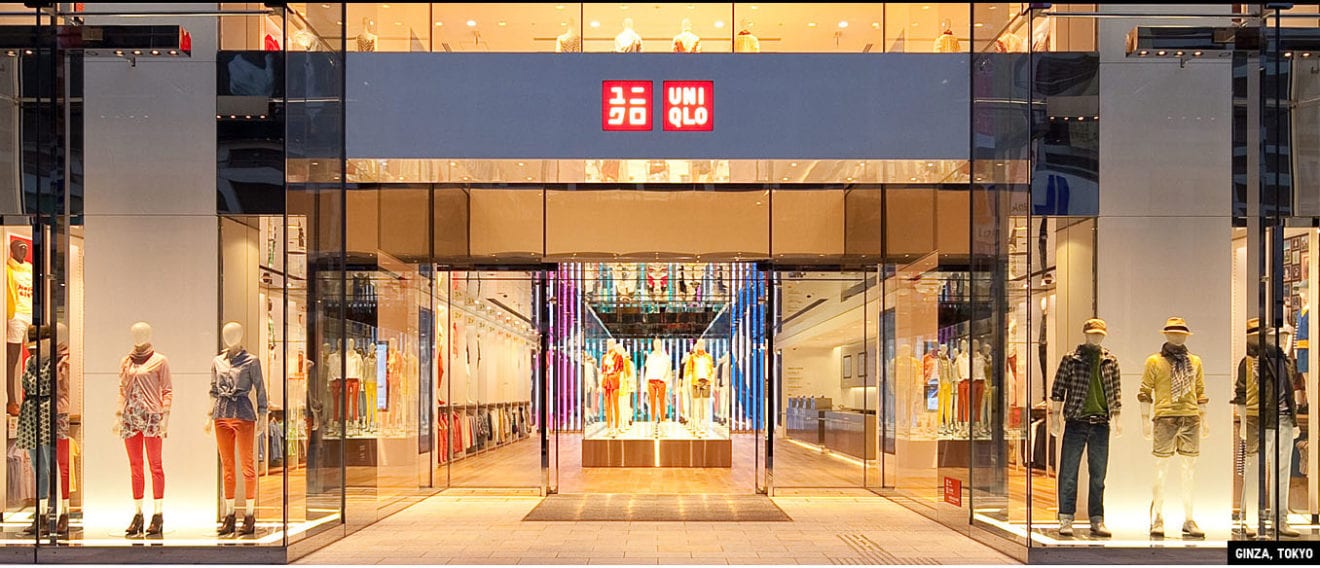
  • Uniqlo launches new range with French fashionista Ines de la Fressange

    Uniqlo launches new range with French fashionista Ines de la Fressange

    Uniqlo has teamed up with former French fashion model Ines de la Fressange to produce a range of clothing where comfort meets luxury style.

    Born and raised in France, de la Fressange became a top international model soon after starting her career at the age of 17. In 2013 she created her own brand Ines de la Fressange Paris and first collaborated with Uniqlo in 2014.

    The new range, which goes on sale this Friday (August 28), will feature three themes.

    Bohemian is inspired by the free-spirited culture of the 1970s, celebrated in a variety of flowy, twist pleated skirts and dresses with paisley and polka dot prints.

    Neobourgeois features 100-per-cent silk blouses and wrap dresses, while the third, Mannish, includes coats, classical tweed jackets, corduroy pants, and other essentials for “masculine coordination”.

    De la Fressange says the new lines are influenced by the styling of fashion adopted by women she admires from the 1970s. Among them: actress, songwriter, and model Jane Birkin and singer-songwriter Francoise Madeleine Hardy.

    “Back in the seventies, many women were determined to emancipate themselves from traditions,” de la Fressange explains. “These liberated individuals took fashion and their lives in exciting new directions.”

    The new collaboration will be sold through Singapore Uniqlo stores (excluding at Changi Airport) and online, as well as other selected Uniqlo stores throughout Asia.

  • Korean restaurant chains cry foul over Covid-19 rules

    Korean restaurant chains cry foul over Covid-19 rules

    South Korean restaurant chains are accusing the government of using “discriminatory countermeasures” in the fight against the coronavirus pandemic.

    Recent edicts to prevent the spread of the latest outbreak in the country have seen the closure of buffet and family-style restaurants, while still allowing cafes to operate. Prominent chains CJ Foodville, Shinsegae Food and Elandeats have expressed their dissatisfaction with the discrepancy, which has involved multiple outlet closures and necessitated the dumping of fresh food.

    “The largest number of coronavirus cases was confirmed at Starbucks coffee shop(s), but I don’t understand why restaurant chains are targeted,” a family restaurant worker told the Korea Times. “Starbucks closed its relevant branches for a few days and then they reopened them.”

    The restaurant chains had previously instituted anti-Covid-19 precautions, such as checking the temperatures of customers and enforcing social distancing.

    The Korea Times quoted one CJ Foodville official as saying: “It is our obligation to follow the government’s regulations, but we hope people don’t continue to think that our restaurants are high-risk after things get better.”

  • Microsoft says that Apple’s punishments against Epic will hurt game developers and players

    Microsoft says that Apple’s punishments against Epic will hurt game developers and players

    Microsoft is taking sides in the court battle between Epic Games and Apple. As you might recall, Epic added a screen to its hit game Fortnite that allows players, even those who installed the game from the App Store, to pay for in-app purchases from the developer’s own in-app payment system. Payments made through Epic’s own payment system bypass Apple’s system from which the tech giant takes a cut of 30%. The so-called 30% Apple Tax is being investigated by regulatory agencies in the U.S. and Europe who will determine whether it is anticompetitive.

    For now though, the battle between Apple and Epic is solely over whether Apple has the right to punish Epic by removing Fortnite from the App Store and closing Epic’s developer account. That will leave it unable to provide updates to iOS and Mac users although those who have already installed the game on their iPhone can continue to play. Apple says that it will allow the game to return and give the developer its account back, but only if Epic shuts its in-app payment portal. Epic has sued and seeks a temporary restraining order (TRO) that would block Apple from removing Fortnite and closing Epic’s developer accounts until the issue can be adjudicated.

    Microsoft filed a declaration with the court on Sunday in which a Microsoft senior engineer said that closing Epic’s developer account would prevent it from offering its Unreal Engine. The latter is a game engine for developers and is a framework for the creation of 3D graphics. It is licensed to game developers in return for 5% of sales although that fee is waived if a game is published in the Epic Game Store. Starting last May, Epic waived its portion of the fees for games developed in Unreal Engine until a developer earns his first million dollars. A declaration is a written statement sworn to be true under penalty of perjury by any person who has knowledge about the issues in a court case.

    Kevin Gammill, Microsoft’s general manager for Gaming Developer Experiences, said in the declaration that “If Unreal Engine cannot support games for iOS or macOS, Microsoft would be required to choose between abandoning its customers and potential customers on the iOS and macOS platforms or choosing a different game engine when preparing to develop new games. Gammill went on to say that, “Apple’s discontinuation of Epic’s ability to develop and support Unreal Engine for iOS or macOS will harm game creators and gamers.” And the Microsoft GM points out that there are very few alternative gaming engines with the same functionality and a large number of features.

    Epic says that the punishments imposed by Apple will produce an impact affecting more than the Unreal Engine. Epic’s vice president of engineering, Nicholas Penwarden, says that the developer has received “numerous inquiries and expressions of concern” from companies that have licensed the Unreal Engine.

    Besides filing the suit against Apple, Epic has filed a similar suit against Google. The latter’s Android app storefront, the Google Play Store, also takes a 30% cut of in-app payments for Google. The difference is that while iOS users are locked into using the App Store to find and install apps, Android users are allowed to sideload apps from third-party app stores.

    Apple’s strategy in court is to show that Epic has created this problem by itself and that it can be easily fixed by following the agreement that Apple has all developers sign. Apple has threatened to close Epic’s development account on August 28th. On the same date, the developer will lose access to iOS and Mac developer tools.

  • Top Chinese retailtech enterprises revealed

    Top Chinese retailtech enterprises revealed

    Notable Chinese retailtech firms are small in size, heavy on IT personnel, and largely located around the Beijing-Tianjin-Hebei and Yangtse Delta region, according to a new report.

    The study was released by international audit, tax, and advisory firm KPMG in partnership with the China Chain Store & Franchise Association to identify the top 50 high-growth retail tech enterprises in China. It recognizes firms that work to bring forward digitalization, intelligence and integration.

    The findings showed that consumer technology applications are more concentrated on front-end interaction with consumers, marketing and transactions, consumer operation, and smart technology companies.

    Most of the companies shortlisted for the report had no more than 300 employees.

    Technical personnel accounts for more than 60 percent of human resources in more than half of these firms, and about half of the companies have been operating for less than five years.

    “The association and KPMG have worked together to release the list of China’s leading 50 retailtech enterprises, after spending six months studying the founding team of candidate enterprises on a one-by-one basis over six criteria, namely: technology and business model innovation; empowering reform of the traditional retail sectors; financial health; valuation and capital market recognition; target market acceptance and potentials under market segmentation; team capabilities and corporate innovation mechanism; and business model innovation and sustainability,” said China Chain Store & Franchise Association secretary-general Kevin Peng.

    At the end, 64 representative Chinese retailtech firms were shortlisted, including 50 leading enterprises and 14 emerging enterprises.

    “We hope this list can offer some references to chain stores and retail brands so that their digital transformation journey can be smoother and more successful.”

    “The retailtech industry is treading the same path of evolution as China’s commerce, the two have formed a synergy for mutual growth,” said KPMG China partner and head of consumer retail Jessie Qian.

    “Enterprises in technological innovation and retail industries have worked hard to accumulate a wealth of technological applications and real-life cases, which can serve as a role model for enterprises building their own digital capabilities.”

    “The retail industry is innovating and reforming in the face of digitalization as consumers are changing their lifestyle,” said KPMG China partner and advisory head of consumer and retail sector, Michael Mao. “New retail technologies and the retail businesses are increasingly integrated, as new consumption needs are being explored and new operational models are emerging.

    “During the transformation, retailtech enterprises, especially start-ups, have played an indispensable role and they are upgrading themselves when engaging with their end-users. Many technological enterprises have evolved from software vendors of a single solution to business partners working with their end-users to develop solutions tailored for specific scenarios, others not only provide technical support for hardware and software but also assist retail enterprises in integrating technological transformation at the IT level with internal reform and optimization of organizational structure.”

  • AirAsia.com, Agoda announce strategic partnership

    AirAsia.com, Agoda announce strategic partnership

    AirAsia.com, Asean’s fastest-growing travel and lifestyle e-commerce platform, and Agoda, the world’s leading digital travel platform, have announced a strategic partnership to spur travel activity in Southeast Asia and strengthen AirAsia’s super app offering.

    The partnership between the two major online travel service providers in the region harnesses the synergistic strengths of both digital platforms, it said in a statement here, today.

    Through the sharing of flight and hotel inventories, travelers will gain access to a more extensive multi-product selection, enjoy greater convenience and benefit from superior value.

    Initiatives from the collaboration include travel bundles, membership privileges, as well as joint product marketing. Customers of AirAsia.com can now enjoy more variety with over 600,000 Agoda properties, combined with AirAsia’s great value fares by booking through SNAP — offering flight and hotel packages with the best price guaranteed.

    The partnership with Agoda is part of AirAsia group-wide strategy to revitalize travel in anticipation of the reopening of borders in Southeast Asia in the near future, AirAsia Group group chief executive officer (CEO) Tan Sri Tony Fernandes said today.

    “We are taking the opportunity during this downtime to work innovatively with strategic partners like Agoda, so that we can better serve our guests’ travel and lifestyle needs. There are more strategic ventures in development, which we look forward to announcing when the time is right.”

    Agoda CEO John Brown said: “The public’s appetite for travel is still strong, and we believe that our collaboration with AirAsia will help take the hassle out of travel by helping travelers easily find great value deals as they venture out again.”

  • Deutsche Bank Names Vietnam Country Chief

    Deutsche Bank Names Vietnam Country Chief

    He joins from Maritime Bank, a Vietnamese bank where he was CEO for four years before taking up its deputy chairman position earlier this year.

    Deutsche Bank has appointed seasoned banker Huynh Buu Quang to lead the bank’s expansion of its franchise in Vietnam, pending State Bank of Vietnam approval.

    As chief country officer Vietnam, Huang will be based in Ho Chi Minh City. He brings more than 25 years of experience in corporate banking, and has held local and regional leadership roles in Vietnam, Singapore, Hong Kong and Indonesia, across multiple banking functions spanning trade finance and credit risk management.

    Alexander von zur Muehlen, Deutsche Bank’s Asia Pacific CEO called Vietnam «a key growth market» for the bank in ASEAN, in a statement announcing the move.

    Deutsche Bank has operated in the country since 1992. Since 2017, the bank has raised more than $1 billion in debt, loan and equity capital annually for Vietnamese corporates.

    Earlier this year, Deutsche Bank announced that it would increase its investment in Vietnam, with the recently ratified EU-Vietnam Free Trade Agreement expected to boost trade flows.

  • Yum China opens first Taco Bell restaurant in  Beijing QSR

    Yum China opens first Taco Bell restaurant in Beijing QSR

    Yum China has launched Beijing’s first Taco Bell store, in the Liangmaqiao district.

    The Taco Bell Beijing store offers the brand’s nachos and tacos along with exclusive local selections for Chinese customers such as a rice bowl, seasoned bone chicken and taco pizza.

    “The Beijing store reflects Taco Bell’s reputation as a culture-centric, lifestyle brand that provides Mexican-inspired food with bold flavors,” the company said in a statement.

    Taco Bell Beijing features colorful art walls, illustrating local’s landmarks and culture. The restaurant also houses an open kitchen, allowing customers to see food cooking and preparing process. Mobile pre-orders and takeaway are available in this new store.

    “The new store integrates Taco Bell’s signature food and spirit into the local community,” said Joey Wat, CEO of Yum China. “We believe that there is a growing appetite for Taco Bell, and we will continue to review and refine Taco Bell’s service model and offerings for the Chinese market.”

    Since entering the country in 2016, Taco Bell has opened 11 stores across China, including those recently launched in Shenzhen and Ningbo.

  • Alibaba thrives after emerging from virus challenges

    Alibaba thrives after emerging from virus challenges

    Chinese e-commerce giant Alibaba Group’s revenue soared 34 percent to US$21.762 billion in the June quarter as the company emerged strongly from the impact of the Covid-19 pandemic in its home market.

    “Our domestic core commerce business has fully recovered to pre-Covid-19 levels across the board, while cloud computing revenue grew 59 percent year-on-year,” CFO Maggie Wu said in a statement.

    “We delivered a very strong start to our new fiscal year.”

    Net income attributable to ordinary shareholders was $6.736 billion, exceeding analysts’ estimates and justifying the 23-per-cent rise in the group’s stock value so far this year.

    Chairman and CEO Daniel Zhang said the company is well placed to take advantage of the ongoing digital transformation which has been sped up by the pandemic.

    “We mobilized our entire digital infrastructure to support the economic recovery of businesses across a wide range of sectors while broadening and diversifying our consumer base by addressing their changing preferences in a post-Covid-19 environment,” he said.

    The company reported 874 million mobile monthly active users on its Chinese digital marketplaces in June which represented an increase of 28 million, quarter on quarter.

    In Southeast Asia, Alibaba’s Lazada Group achieved more than 100-per-cent quarter on quarter growth in orders, with general merchandise, FMCG, and electronics the driving categories.

  • Blackberries May be Coming Back to Banking

    Blackberries May be Coming Back to Banking

    The banker’s best-loved gadget may be making a return from the dead – thanks in part to the pandemic sending millions of workers into work-from-home arrangements.

    Blackberry smartphones were phased out at banks years ago – Credit Suisse’s finance chief David Mathers was openly unhappy about his boss, Tidjane Thiam, taking his away in 2017. The brand has been left for dead several times after Blackberry left the phone business in 2016.

    Now, a Texan technology start-up plans to roll it out again, on an Android operating system with 5G connectivity, by next June, it said in a statement. The company, Onwardmobility, inked a pact with BlackBerry as well as a Foxconn subsidiary to offer the device in North America and Europe.

    The key draw of Blackberry – a physical keyboard – endeared it to bankers (as well as journalists) – so much so that it was colloquially known as a Crackberry. Blackberry, the company, licensed the brand out to TCL, but the Chinese provider abandoned it earlier this year.

    By that time, financial service firms had decommissioned the technology (after prying them from the reluctant hands of bankers like Mathers). First manufactured by Research in Motion (RIM), the Blackberry was gradually eclipsed by Apple’s iPhone, launched in 2007. Efforts to reinvent with Blackberry with features like a touchscreen, or without the physical keyboard, foundered.

    Blackberry gave up its own software in favor of Android, but ended up ditching phones altogether in favor of security software. The move relegated the Blackberry to zombie status, something Onwardmobility wants to change.

    Enterprise professionals are eager for secure 5G devices that enable productivity, without sacrificing the user experience, Onward CEO Peter Franklin said. The company hopes the increasing number of office staff working from home and cybersecurity needs will spur demand for the devices.

  • Fancl Asia sale could fetch US$1bn for Hong Kong owner

    Fancl Asia sale could fetch US$1bn for Hong Kong owner

    Fancl Asia distributor CMC Holdings is reportedly looking to sell the business in a deal that could be worth as much as US$1 billion.

    According to a Reuters report, Hong Kong-based CMC, owned by Chris Chan, has engaged Morgan Stanley to approach private-equity investors and other prospective buyers for the business, which operates more than 200 stores in Greater China and Southeast Asia. The company effectively accounts for the majority of the Japanese cosmetics company’s brick-and-mortar business outside its home market.

    Fancl Asia achieved pretax earnings of about US$65 million in 2018 and last year, on turnover of between $250 million and $300 million. Asia represents a significant growth opportunity for cosmetics companies, accounting for 53 percent of the world’s skincare market and is projected to achieve 5 percent annual growth in the coming years.

    According to a Reuters source, Fancl Asia will be sold via a two-part auction process, with initial bids scheduled to be received by the end of September.

    Morgan Stanley, CMC, Fancl and Chan all declined to comment to Reuters which did not identify its source due to confidentiality reasons.

    About 80 percent of the sales by Fancl Asia are in Greater China, where retailing has been seriously affected this year due to Covid-19-related lockdowns.

    Sources have confirmed any sale of the business would not affect the distributorship contract with the Japanese skincare specialist brand, which has six years to run in China and 10 in the rest of Asia.