Author: Mei Ling Tan

  • Despite strength from Huawei, smartphone shipments are expected to drop in China

    Despite strength from Huawei, smartphone shipments are expected to drop in China

    The world’s largest smartphone market is going to report a drop in shipments during the current quarter. The report states that the Q3 decline will show up both year-over-year and month-over-month (aka sequentially) and would appear following a huge sequential second-quarter surge of 104.6%. The strong smartphone market in China during the three months covering April through June was fueled by the lessening of negative impacts from the coronavirus, economic stimulus measures, and the launch of new handset models. While the growth in second-quarter smartphone shipments was in triple digits compared to Q1 deliveries, on a year-over-year basis the Q2 growth in smartphone shipments was a puny 1.4%.

    The top five smartphone manufacturers based on shipments in the country during Q2 were Huawei, Vivo, Oppo, Xiaomi, and Apple. The top five were responsible for 98.1% of smartphone deliveries in China from April through June, up 1.4 percentage points from the previous quarter. For the current quarter, Digitimes expects smartphone shipments in China to contract 7.9% as some of the effects of the stimulus measures imposed in the country have started to fade.

    Despite the expected decline in shipments, Huawei’s shipments are supposed to remain strong in the current quarter. During Q2, research firm Canalys said that Huawei overtook Samsung to become the largest smartphone manufacturer globally. In 2016, the head of Huawei’s consumer division, Richard Yu, predicted that Huawei would become the top smartphone manufacturer in the world by 2021. Despite losing access to its U.S. supply chain and the Google ecosystem, Huawei has become number one thanks to its own rapidly growing Huawei Mobile Services.

    700 million people are using Huawei’s ecosystem and with that number growing, Huawei is expected to own nearly half of the Chinese smartphone market during the third quarter.

  • Japan retail sales tumble during June

    Japan retail sales tumble during June

    Japanese retail sales have fallen by 1.2 percent during the month of June over the same month last year. It was the fourth consecutive month of a decline in retail trade, largely brought about by the impact of the coronavirus pandemic.

    The drop stands in contrast with earlier median market projections that forecasted a 6.5-per-cent decrease.

    The information was revealed yesterday in government data released by the Ministry of Economy, Trade, and Industry.

    Sales continued to plummet in categories such as general merchandise, fabrics apparel & accessories, motor vehicles, and fuel – although not as sharply as in the month previous. By contrast, sales rebounded for machinery & equipment

    A bright spot in the figures showed food & beverage sales continuing to increase by 3 percent following a 1.9-per-cent rise in May.

  • AS Watson opens MoneyBack online venture for all retailers and restaurants

    AS Watson opens MoneyBack online venture for all retailers and restaurants

    Health and beauty retailer AS Watson has opened up its Moneyback loyalty program to help retailers in Hong Kong promote their businesses for free in preparation for an easing in the coronavirus pandemic.

    “The pandemic has hit every community hard in many aspects, and it is extremely challenging for retailers,” said AS Watson (Asia & Europe) CEO Malina Ngai. “AS Watson is deeply rooted in Hong Kong for 180 years, we have been through many crises of different nature with the community. We know difficult days will pass, hence we should proactively plan ahead.”

    The group’s loyalty program, which partners with 130 offline and online retailers, has an active member base of 3.7 million people, roughly half of Hong Kong’s population.

    Small and large retailers are now being encouraged by the firm to register for the program free of charge. Participating merchants will receive free promotional opportunities, including the provision of free Watson face masks as shopping rewards.

  • StanChart First-Half Profits Plunge

    StanChart First-Half Profits Plunge

    Standard Chartered’s profits plunge 33 percent in the first half as the pandemic forces the British lender to significantly up credit impairments by six-fold.

    Pre-tax profits fell to $1.63 billion in the first half compared to $2.41 billion in the first half of last year, according to a statement, exceeding the $1.53 billion analyst estimates compiled by the bank.

    The bank will also scrap dividends for time being, as per the request from the U.K.’s Prudential Regulation Authority, adding that it hoped to resume payments «as soon as prudently possible».

    Although the bank said it was confident in April that its main markets – Asia, Africa and the Middle East – would lead the recovery as early as later this year, the latest result announcement was accompanied by a reversal with expectations for even lower income in the second half.

    Credit impairments also shot up six-fold to $1.58 billion in the first half from $254 million a year ago, the statement added.

    Just today, the bank was reportedly looking to shave costs by axing hundreds of jobs it described as redundant roles and not related to any coronavirus-linked impact.

  • Brewer Sabeco sees profits plummet

    Brewer Sabeco sees profits plummet

    Vietnam’s largest brewer Sabeco saw its H1 post-tax profit fall 31 percent year-on-year to VND1.93 trillion ($83 million) over Covid-19 pandemic impacts. Revenues fell 35 percent to VND12 trillion ($518 million), 89 percent of it from beer, and the rest from wine and other beverages.

    The company, owned by Thai beverage giant ThaiBev, said that the profit plunge came as Vietnam imposed social distancing measures and closed “non-essential” businesses to contain the novel coronavirus. Authorities ordered most businesses, including restaurants and bars, to close in March and April.

    Vietnam’s new regulations on drunk driving have also impacted on its business, Sabeco said. The country’s new regime of fines – up to VND8 million ($345) for DUI motorbike drivers and VND40 million ($1,730) for car drivers have kept drinkers away from restaurants and bars. Sabeco forecasts a post-tax profit fall of 37 percent this year to VND3.25 trillion.

  • Taobao looks to boost young entrepreneurs showing originality talent

    Taobao looks to boost young entrepreneurs showing originality talent

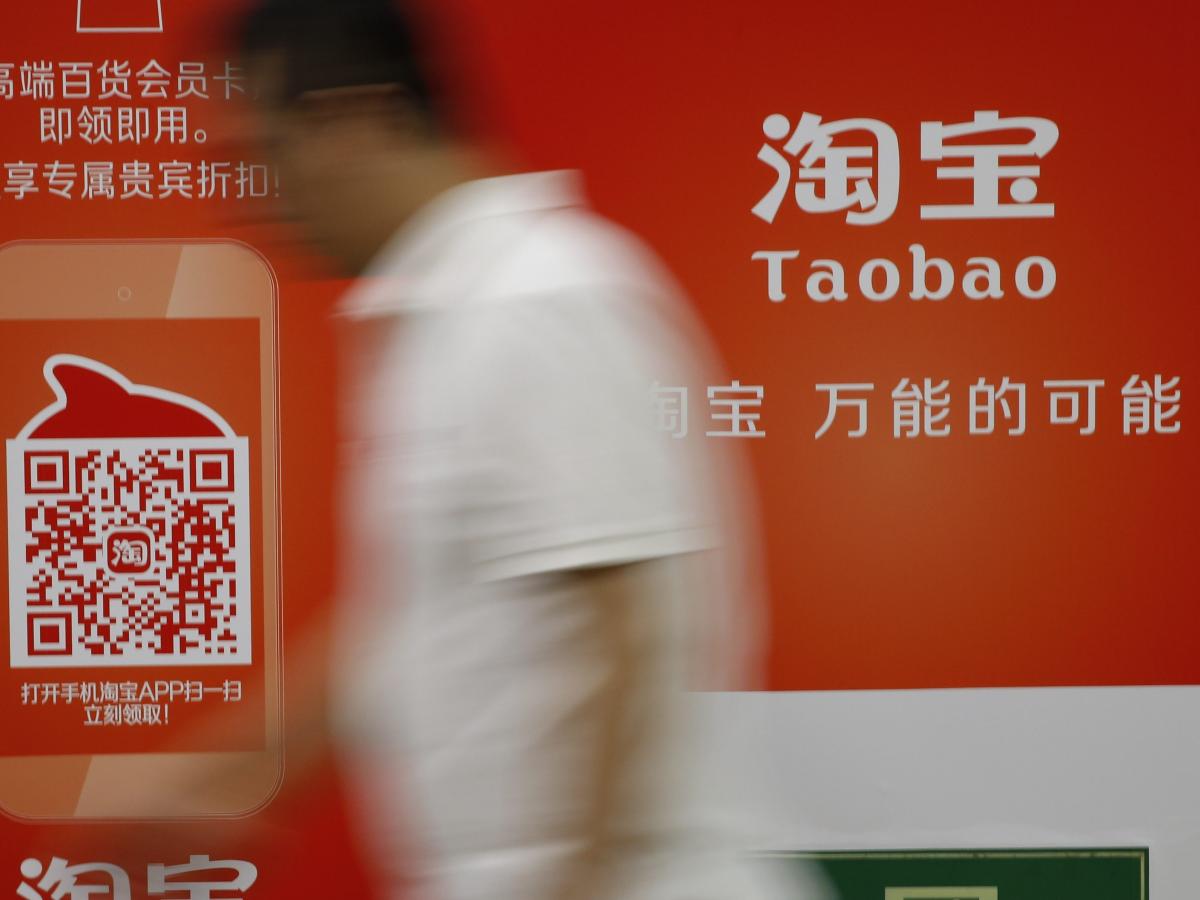
    Chinese social commerce platform Taobao has inaugurated a new rating system to reward deserving young creators and small enterprises with broader market exposure on the fifth anniversary of the firm’s Taobao Maker Festival.

    The exposure is designed to bring more attention to outstanding creativity and better promote products to the platform’s 840 million users.

    Taobao’s new system is the latest example of the firm’s content-driven commerce strategy that has been part of its promotional apparatus since 2016, transitioning the platform from being primarily transactionally driven to a broader social-commerce playbook.

    “The new rating system promotes and celebrates originality and creativity,” said Alibaba Group CMO Chris Tung. “It will enable merchants to leverage their participation in the Taobao Maker Festival into a source of year-round benefit for growing their business and customers.”

    “We continue to leverage our unique content-driven strength to help young entrepreneurs and small businesses win market traction and bringing a better experience to consumers,” said the head of Taobao operations Kaifu Zhang.

  • Nike opens House of Innovation in Paris, France

    Nike opens House of Innovation in Paris, France

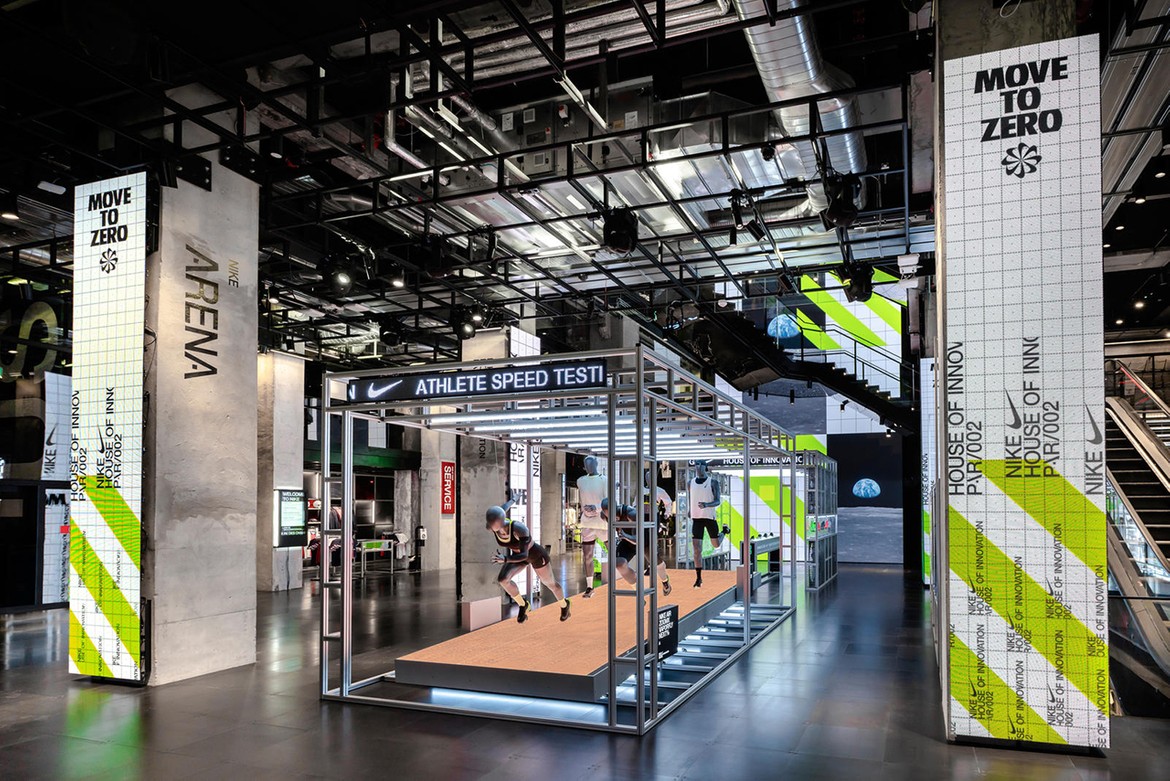
    Nike has opened the brand’s largest House of Innovation yet, in Paris, focusing on delivering a digital retail experience. Located at number 79 on the famous Avenue des Champs-Elysees, the House of Innovation 002 spans four floors and occupies a 2400sqm area.

    According to the company, Nike Paris will focus on four areas: uniting shoppers to a global sports community, innovative services and products for women, more kids’ experiences and seamless end-to-end consumer experience.

    “When consumers step into Nike Paris, they will experience our largest, most digitally connected and immersive retail concept in the world,” said Heidi O’Neill, president of consumer and marketplace.

    The House of Innovation in Paris features a wall-to-wall installation called Mission Control, connecting customers to the global sports community.

    Female shoppers can receive a fit recommendation using Nike Fit technology for any of its bras and information on their precise shape can be saved for future store visits.

    Nike Paris houses a destination for kids called Kids Pod, featuring interactive gaming and trial station such as a 360 virtual runners experience inspired by Parkour.

    “The strength of our digital portfolio combined with product innovation and amazing physical spaces will connect members to the community of sport and to one-of-a-kind experiences, serving them in an incredibly personal way,” O’Neill said.

    At the House of Innovation Paris, more than 85,000kg of sustainable material is woven into the fabric of the store design and display fixtures. The store is fuelled by a clean-energy wind farm in Spain.

  • Champion lifting off with sustainable streetwear collection

    Champion lifting off with sustainable streetwear collection

    Athletic apparel brand Champion is to launch a sustainable streetwear collection Re:Bound next month.

    Champion’s Re:Bound Collection will feature a streetwear line made from recycled Reverse Weave fabric, normally discarded during production. According to the company, 45 percent of pre-consumer recycled cotton has been turned into high-quality apparel products for the range.

    The manufacturing process involves three stages: Rescue Waste, Recycle and Rope Dye.

    As part of the launch, Champion invited two Australian influencers and up-cyclers, Philip O’Donahoo and Jaida The Creator, to star in a promotion campaign.

    “Pioneering products is our legacy. Protecting the planet is our long game,” the company said in a statement. “Re:Bound is our first step, and we’re just getting started.”

    The Re:Bound collection is scheduled to launch on August 4.

  • Hong Kong retail sales in June slip

    Hong Kong retail sales in June slip

    Hong Kong retail sales in June slumped by 24.8 percent to US$3.42 billion as the territory’s borders remained all but closed to tourists due to the Covid-19 pandemic.

    The decline was lower than in May when sales were down 32.9 percent year on year and the 33.3-per-cent rate for the six months to June.

    A Hong Kong government spokesman said the slowing rate of the decline reflected the pandemic’s abatement during the month, resulting in more locals returning to the shop.

    However, with inbound tourism remaining at a standstill in July and local consumption hit by the surge in local Covid-19 cases resulting in a tightening of social-distancing measures, the retail trading environment “has turned more austere again” since June, they said.

    June last year was when the social unrest began to impact Hong Kong retail, so the year-on-year declines each month for the rest of this year will likely be less dramatic than in recent months, due to the lower base.

    In order of the category’s impact on the overall figures, the biggest declines were in department-store sales down 7 percent; miscellaneous consumer goods by 10 percent, food, alcohol and tobacco down 13.2 percent; jewelry and watches by 56.5 percent; electrical goods by 8.8 percent; and apparel by 38.8 percent.

    The medicines and cosmetics category was down by 57.4 percent; motor vehicles and parts by 17.9 percent; footwear and accessories by 39.7 percent; Chinese drugs and herbs by 29 percent; books, newspapers, stationery, and gifts by 41.3 percent; and sales at optical shops fell by 32.5 percent.

    The only categories showing growth in Hong Kong retail sales in June were supermarkets up by 4.5 percent, fuels by 8.4 percent, and furniture and fixtures by 0.3 percent.

  • Man vs. Machine: The Next Generation of the Retail Supply Chain

    Man vs. Machine: The Next Generation of the Retail Supply Chain

    Demand for retail goods continues to grow exponentially in today’s omnichannel world. In addition to this, COVID-19, which has seen a huge increase in activity within the e-commerce space, has put retail businesses and supply chains under even more pressure to keep up with increasing demand and sharper consumer expectations.

    Alongside the current high pressure retail climate, demand for labour in warehouses has never been higher, and this is leading to many retail businesses adopting advanced warehouse and automation technologies to stay ahead of the game and maintain their strength within the market.

    Turning to automation

    The switch from man to machine has quickly become a critical factor for many retail distribution centres (DCs) to maximise throughput, particularly when demand is high. As more orders flow through more warehouses, operations become tighter – with smaller delivery windows and less employees than ever to complete the work.

    When faced with these challenges, many businesses have had no choice but to adopt automated technologies to become less dependent on human labour. In fact, 99% of supply chain companies globally say that they are already using automation in the warehouse to assist with retail fulfilment operations.

    Online orders, which are rolling in at soaring volumes, are expected to be packed and delivered quicker than ever before as consumer expectations rapidly grow. Without the integration of automation in DCs, retailers simply can’t keep up with demand, which is why many of them are looking to invest in automation, not only as a solution to the current problem, but as a way to prosper in the future.

    Gaining operational control 

    Advanced Warehouse Management Systems (WMSs), are the leading innovation for businesses looking to take full control of their operations. They allow businesses to gain visibility and real-time insights into things like productivity rates, inventory and fulfilment, and the coordination of their workforce, as well as complete control of all deployed automated technologies

    WMSs work to provide a centralised point of control for all operations within a retail warehouse, including tasks outside of fulfilment, such as receiving and inspecting products and other value-added services. The integration of a WMS within retail warehouses has become an increasingly business-critical method for capitalising on any innovations as they emerge, offering a close-up view of one or all aspects of operations and coordinating the workflows of humans’ to collectively work together with robotics.

    The right WMS also uses machine learning to improve processes. Using artificial intelligence, the system creates a baseline by predicting how long tasks should take. As work is executed, it analyses the results, then armed with real data, the WMS couples advanced orchestration logic with real-time awareness of capacity to optimise operations. The resulting improvements lead to reduced dwell time, shorter order cycle times and more accurate allocation of work. This means retail warehouse managers can act on more orders, increase service levels and maximise asset utilisation.

    Technology fit to unify operations

    The future of the retail supply chain will be an integration of people, robotics, and technology innovations, and while they all have a major role to play, the key to better productivity lies in helping them to work better together. An advanced WMS takes a holistic view of operations to bring both labour and automation together, and then incorporates machine learning to maximise efficiency.

    This technology, built for purpose now and into the future, allows retail businesses to utilise all of their assets, synthesising any type of new automation they wish to add, to continually optimise operations. The right WMS gives retail businesses the best of man and machines, so they can take on any challenges that arise, as well as continue to get the most out of their operations and meet rising consumer demnds. 

    About Manhattan Associates

    Manhattan Associates is a technology leader in supply chain and omnichannel commerce. We unite information across the enterprise, converging front-end sales with back-end supply chain execution. Our software, platform technology and unmatched experience help drive both top-line growth and bottom-line profitability for our customers. Manhattan Associates designs, builds and delivers leading edge cloud and on-premises solutions so that across the store, through your network or from your fulfillment center, you are ready to reap the rewards of the omnichannel marketplace. For more information, please visit www.manh.com.au. 

    Written by: Richard Wright, Managing Director Southeast Asia, Manhattan Associates



  • How To Improve Your Company’s Finances

    How To Improve Your Company’s Finances

    Every business is bound to face some rock bottom numbers at some point — sales are not always going to be well above average and there are indeed going to be certain dry spells at times. In times like these, it is important to step back and take up new strategies to help make your numbers go back up, and hard balling with the same tactics stubbornly is not going to help the situation better. As such, there are many ways to improve your company’s finances, and all it takes is to look at the bigger picture and re-evaluate the steps that you need to take to prevent your company from plummeting further. It might even be helpful to use tools to make managing your finances a quicker process; in fact, here is a paystub generator tool to get you started. So without further ado, here are some steps you can take to hopefully help your company take a turn for the better.

    Organize Regular Team Meetings

    When the going gets tough, it may be increasingly tempting to skip out on meetings especially when everyone is mindlessly scrambling about to keep the boat afloat. However, this will cause more instances of miscommunication to arise, leading to ineffective execution of tasks and misalignment of goals. As such, organizing regular team meetings help to ensure that the team is on the same page with the same end goal in mind. This aids everyone in staying focused and being sure of what they need to do and when to get them done. Regular meetings also give your team opportunities to pitch and brainstorm possible business strategies to adopt, as well as the chance to regularly update one another on the progress of the entire company as a whole.

    Moreover, frequent team meetings will help boost the morale of your employees, which may help your business spring back to normal faster than you know it.

    Reduce Tax Burden

    Especially during times when your business is going downhill, it is useful to find ways to legally reduce the tax burden for your company. Depending on the state you are living in, it is incredibly useful to talk with your local tax accountants to find out your options in your area to reduce taxes. For example, some companies may find it useful to open up a SEP IRA on top of their Roth IRA since contributions made to the SEP account can be used to deduct from their taxes. This gives you the option of having more cash to keep, which you can use to clear the mountain of debts and payments to be made.

    Track Your Finances

    Though this is not only essential when your company hits the rut, it is always good practice to regularly check on your company’s finances to discern whether your money is put into good use. Start evaluating the budgets set aside for the different departments and see if there are areas that you can cut some costs. For example, cutting costs in the innovation tech department and pumping in more money in aggressive advertising on the relevant social media platforms might help draw customers to your brand.

    Apart from that, it is also wise to start tracking your investment decisions. Is your wealth growing? Are these investment decisions wise? More often than not, deciding whether your investment choices are worth it or not will take several months, but you should still keep your eye on them. Also, if there are several investment areas that have been reaping rewards, maybe closing the account will help your company secure cash to tide over your financial instability.

    Furthermore, some companies may get lost in the endless list of stalled projects and missed invoices that they may also miss out on client payments. Getting your finances back on track would obviously help if you, well, make sure you get paid. Catching up on these missed payments may give you access to a huge sum more than you can imagine, which will greatly help you level the negative account balance.

    Tackle Problems When They Arise

    It may seem second-nature to push back financial problems as each one comes, especially when you are already drowning in a heap of those. However, delaying solving these problems will not make it go away, and instead may cause you to incur additional fees and payments when they are past the deadline. Hence, a rule of thumb is to face any financial issues as soon as they arise. Even if you do not have the financial capabilities to do so, you should try to eradicate these problems by switching around your finances, or seeking a professional for financial advice to tide you through. These also help to minimize the impact of these pressing debts first, helping you to simultaneously assess how you can improve your cash flow management.

    Re-evaluate Your Mindset

    In the midst of a negative account balance, it is important to set your mind to it and develop a healthy mindset to tackle your problems. Just like maintaining your physical fitness, it is important to keep your emotional wellness in check as it forms the foundation of whether you can succeed or not. Instead of coming to work every day feeling dejected and helpless, channel your energy into cultivating a positive mindset, and believing that your business will eventually improve if you have the correct mindset. Making sure your employees feel the same will help your team more effectively and exacerbate the process to recovery.

    Conclusion

    While these are some of the most common ways you can improve your company’s finances, this list is definitely not a set of hard and fast rules that guarantee success. It ultimately depends on the type of strategies you adopt, according to how well you understand your business and the market. It requires a lot of perseverance and a ton of effort to keep your business afloat, and possessing such qualities will make the process of coming out of a financial rut a whole lot easier. If things get too rough, it will be helpful to speak to a professional to give you appropriate financial advice tailored to your situation and company.


  • Thai super-star singer Ying Lee’s concert in the sky spices up Thai Vietjet’s  inaugural Bangkok – Khon Kaen flight

    Thai super-star singer Ying Lee’s concert in the sky spices up Thai Vietjet’s inaugural Bangkok – Khon Kaen flight

    Thai Vietjet today inaugurated its maiden flight VZ210 from Thailand’s capital airport of Suvarnabhumi to Khon Kaen, the country’s commercial and political centre in the Northeastern region. Celebrating the new service, Thai Vietjet gave passengers a memorable surprise with a ‘Ying Lee’ concert in the sky, complete with a full team of dancers and cabin crew, along with nice corporate souvenirs.

    In celebration of the new route, the airline also launched a mega promotion from just THB 5 for a one-way ticket (approx. US16 cents) (*) for booking throughout the five golden days of 1st – 5th August 2020 at their website or Vietjet Air mobile app. The special promotion tickets are applied for all Thailand domestic flights of Thai Vietjet traveling during 1st August – 30th September, 2020.

    Aiming to facilitate domestic travel in Thailand, Thai Vietjet has constantly increased its flight frequency and destinations from Bangkok Suvarnabhumi Airport. Currently, the carrier serves 8 flights/day to Phuket/Chiang Mai, 3 flights/day to Chiang Rai, 2 flights/day to Udon Thani/ Krabi/ Hat Yai/ Khon Kaen in which the flight frequency for Suvarnabhumi – Hat Yai service will be increased to 3 flights/day from 15th August 2020. The airline will also inaugurate the Suvarnabhumi-Nakhon Si Thammarat flight on 6th August 2020. It has also introduced on-line check-in service for domestic passengers traveling out of Suvarnabhumi airport for more convenience.

    The new route Bangkok- Khon Kaen marks the airline’s 7th route from its Suvarnabhumi hub and is operated 2 flights daily, with a flight duration of around 1 hour 5 minutes per leg as per the schedule below:

    Flight No. Departure from Suvarnabhumi Arrival at Khon Kaen Flight No. Departure from Khon Kaen Arrival at Suvarnabhumi
    (Local time) (Local time)
    VZ210 07.30 08.35 VZ211 09.05 10.15
    VZ212 15.45 16.50 VZ213 17.20 18.30
  • Li & Fung Partners with JD.com to Accelerate Development of Digital Supply Chain

    Li & Fung Partners with JD.com to Accelerate Development of Digital Supply Chain

    Li & Fung, today announced a strategic investment of US$100 million from JD.com , with newly issued capital to further develop its digital supply chain. The Fung Family will continue to retain control of the Company with 60% of the voting shares.

    Li & Fung has been on a journey to create the Supply Chain of the Future and the strategic cooperation with JD will accelerate this development with a proven digital partner. Li & Fung will also grow its business in China by partnering with JD on private label initiatives for the China domestic market by leveraging its global network and digital supply chain. With the strong partnership between the Fung Family and Singapore-headquartered GLP Pte Ltd., and now the addition of JD, Li & Fung will be able to leverage its scale and digital capabilities to continue its journey of creating the end-to-end digital supply chain.

    As China’s leading technology-driven e-commerce company, JD is transforming to become the leading supply chain-based technology and service provider, which fits well with Li & Fung’s goal of creating the Supply Chain of the Future. JD has been developing proprietary supply chain technologies for many years and has created digital retail and supply chain platforms that are fully integrated to support its omnichannel strategies.

    Amidst the continuing digital disruption to retail and the ongoing global trade tensions, compounded by the dramatic impact of Covid-19, the global retail supply chain has become more and more complex. With the breadth and depth of its global sourcing and production ecosystem, pan-Asia logistics network, and industry-leading digital product development capabilities, Li & Fung is helping global retailers and brands navigate a highly uncertain and ever-changing macro environment.

    Spencer Fung, CEO of Li & Fung, said: “Our goal to create the Supply Chain of the Future and to improve the lives of one billion people in our global supply chain remains more relevant than ever in this turbulent world. The partnership with GLP and the addition of JD will be instrumental in further strengthening Li & Fung.”

  • Cars made in Vietnam cost more than imports

    Cars made in Vietnam cost more than imports

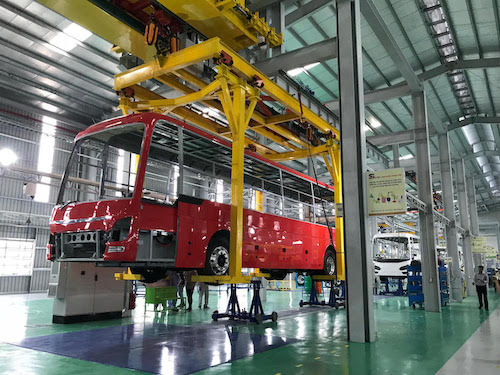
    Cars assembled in Vietnam cost more than imported ones, belying consumers’ expectations, and hampering the growth of the auto industry. Earlier this month, Honda unveiled its compact SUV CR-V assembled in the northern province of Vinh Phuc. The car costs VND1.2 billion ($51,700), VND25 million ($1,080) more than the imported version.

    The assembled-in-Vietnam Toyota Fortuner, another SUV, costs VND7 million ($302) higher than the imported version, while the locally-assembled Mitsubishi Xpander AT, an MPV, has the same price as its imported version from Indonesia.

    Many buyers expect locally assembled cars to cost lower than imported ones, but several factors don’t allow this to happen. This situation could blur the government’s vision for developing the domestic car industry.

    The costs of importing parts to assemble a car in Vietnam is higher than importing a completely-built unit, and this is the main reason why the former costs more, said a spokesperson for a Japanese auto brand who wished to remain anonymous.

    Car parts have an import tax of 7-9 percent, while completely-built units imported from Thailand and Indonesia are tax-free under the ASEAN Trade in Goods Agreement (ATIGA) that took effect in 2018.

    Auto brands have to import parts because local suppliers are not capable of making complicated parts. Vietnam had targeted to reach a 60 percent localization rate for passenger cars in 2010, but until now it remains at 7-10 percent, compared to the ASEAN average of 55-60 percent.

    The inability of suppliers in Vietnam to make parts more complicated than tires, seats, and wires require the domestic industry to import about $2 billion worth of car parts each year, mostly components like the breaking and steering system, from countries like Japan, China, and South Korea, according to a report by the Ministry of Industry and Trade.

    Importing in large numbers can lower the prices of these parts, but Vietnam’s market is too small for auto brands to expand their production scale, industry insiders have said.

    Car sales in Vietnam reached 385,600 units last year, but the size of the Indonesia and Thailand market was 2.6 times bigger and that of Malaysia, 1.6 times.

    “Producing a car in Vietnam costs 15-20 percent more than in other countries,” said the strategic and planning head of another Japanese auto brand who also wished not to be named. For example, the production scale of the same car model in Thailand could be two or three times bigger than in Vietnam, making prices lower, he said.

    For now, locally assembled luxury cars are the only ones that cost lower than their imported peers, because the import tax for this vehicle segment is around 70 percent as they are usually imported from Europe and Japan.

    However, this advantage will not last as the import tax on cars from the E.U. will gradually fall and be cut within the next 10 years under the EU-Vietnam Free Trade Agreement that takes effect next month.

  • Suning shutting half of its Laox store footprint in Japan

    Suning shutting half of its Laox store footprint in Japan

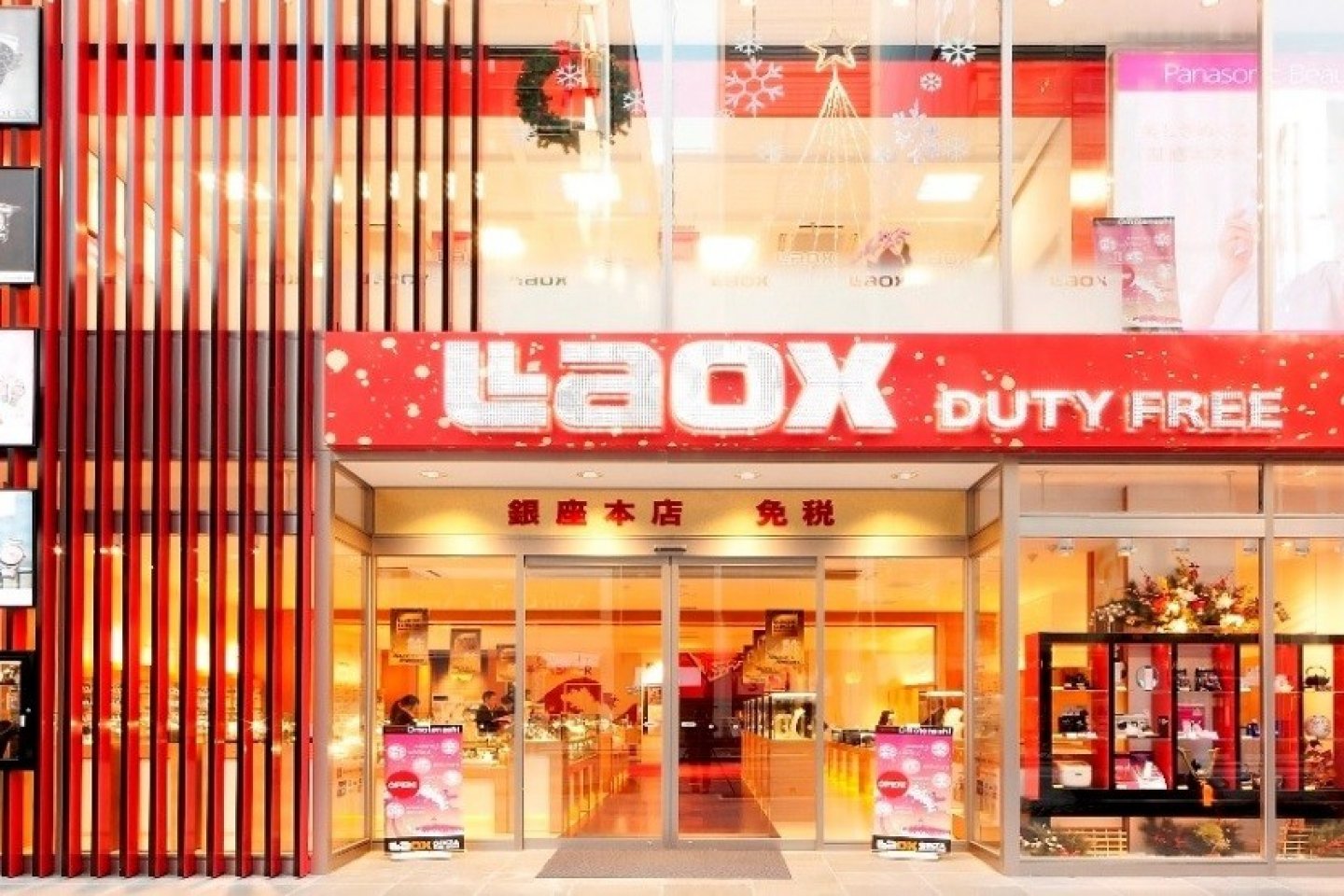
    Japanese electronics retailer Laox is to shut half of its stores in Japan as its customer base dried up due to Covid-19 social-distancing.

    Laox is managed by Chinese electronics giant Suning and the duty-free stores had been a popular location for Chinese tourists looking for Japanese appliances.

    The significant drop in the number of foreign tourists, especially those from China, has forced the company to close 12 outlets in the country to cut costs and improve cash flow.

    The 12 stores will include locations in Hokkaido, Kyushu, Tokyo and Okinawa.

    Since February, the company has twice called on staff to apply for voluntary retirement to restructure due to the financial impact of the pandemic. Laox recorded a net loss of US$18.1 billion for the March quarter.