Author: Mei Ling Tan

  • Topshop quits Hong Kong

    Topshop quits Hong Kong

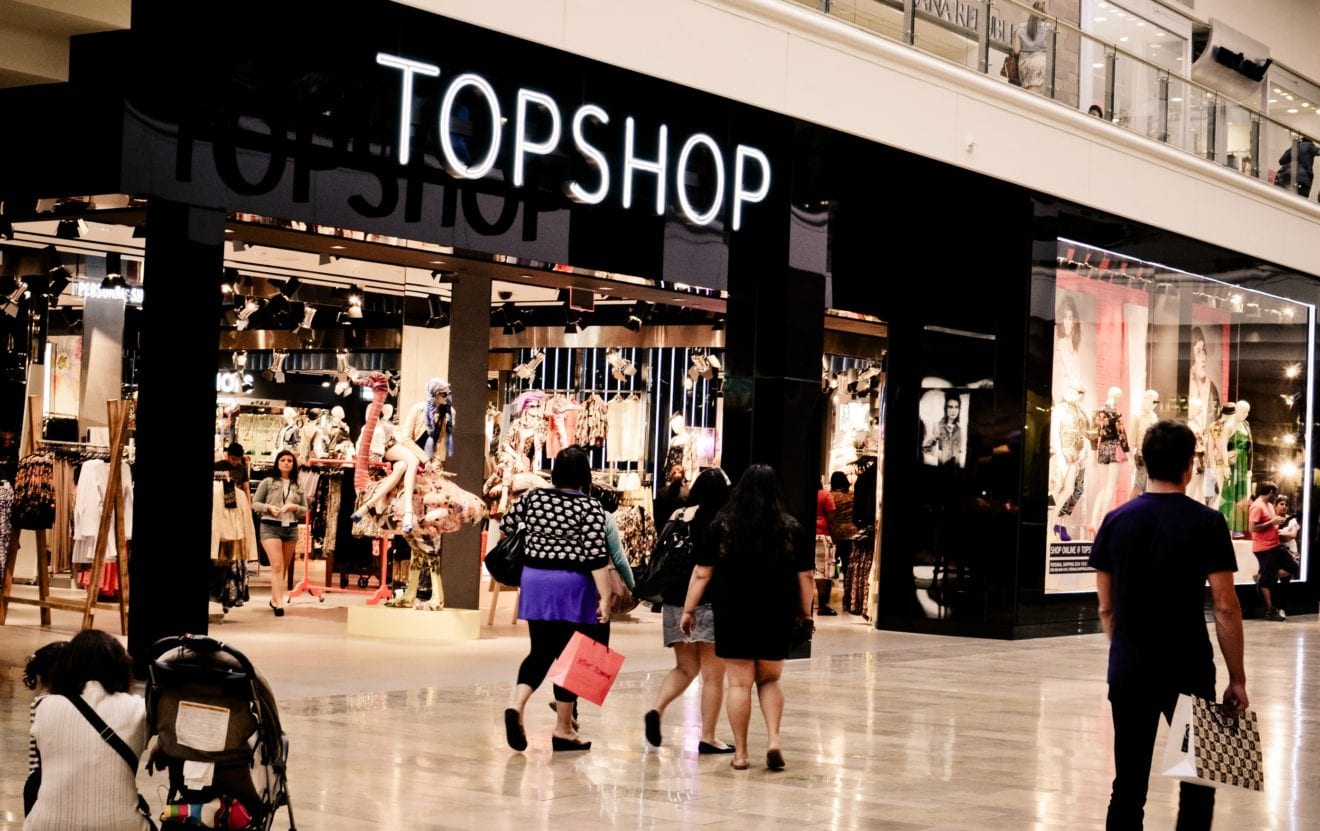
    British fashion label Topshop will close its 14,000sqft flagship in Hong Kong when the lease comes up for renewal in October, the latest in a string of mid-level international retailers to exit the territory.

    And watch brand Swatch has shuttered its prime Central store, which now has a writ apparently seeking unpaid rent taped to its doors.

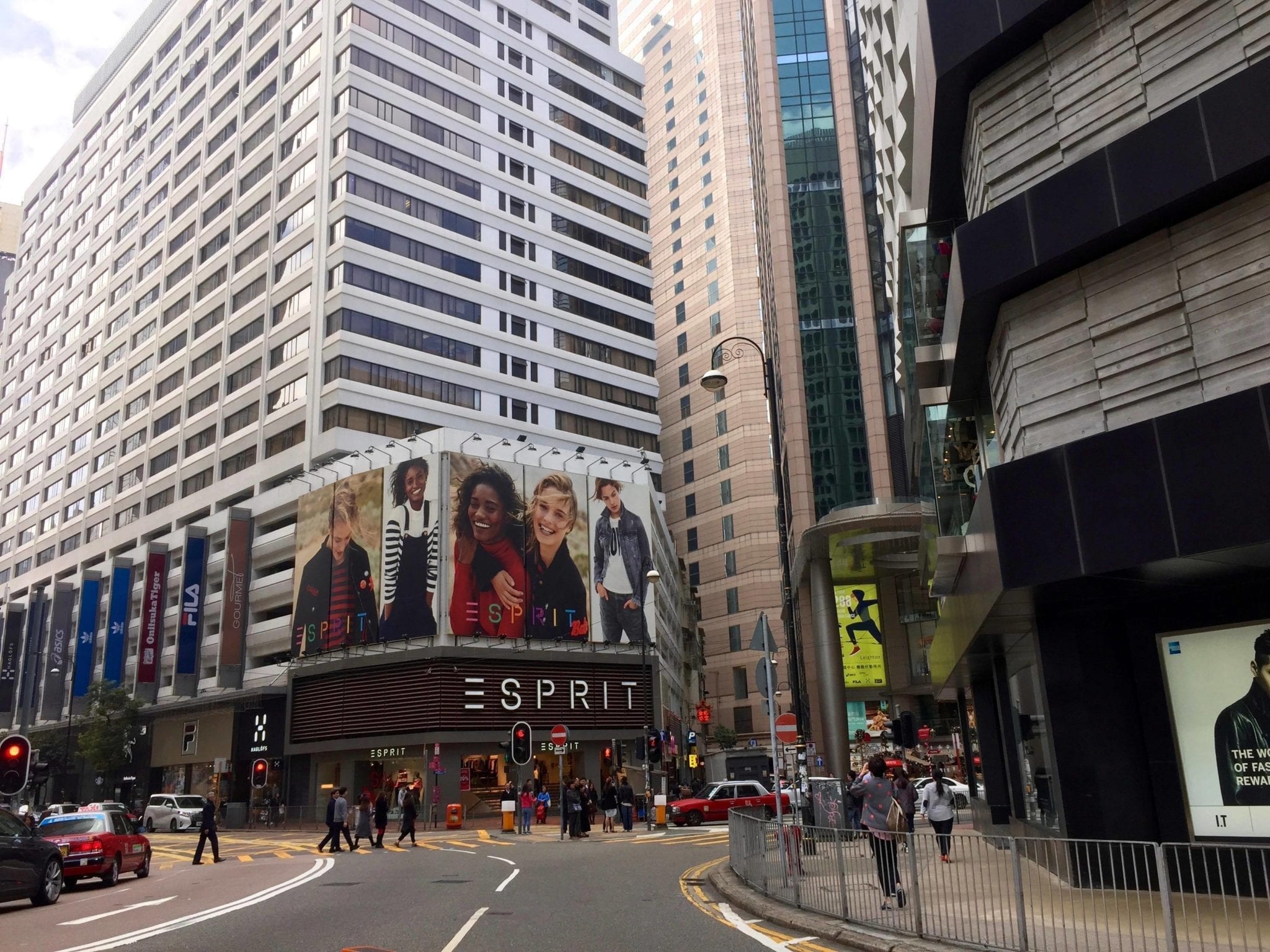
    In partnership with Lane Crawford, Topshop launched in Hong Kong in 2013, the opening of its Central flagship on the corner of Queens Rd and Pottinger St drawing huge queues. At the time, the company said it was the first step of an expansion program into Mainland China.

    The brand opened a further two stores – in Admiralty and Causeway Bay – but these were short-lived as, despite early excitement from consumers, the brand’s local popularity waned.

    When the flagship store was opened, Topshop reportedly paid about US$384,000 a month in rent, but when it renewed the lease in 2017, it negotiated a rate of half that.

    Topshop will continue to sell online in Hong Kong, despite not retaining a physical store presence.

    Meanwhile, Swatch Group has closed its high-profile store in the heart of Central, apparently owing to the landlord overdue rent.

    A writ has been posted to the front of the shuttered door filed by Vember Lord Ltd and served six days ago.

  • Ford’s Quarterly China Sales Rise For The First Time In Three Years

    Ford’s Quarterly China Sales Rise For The First Time In Three Years

    Ford Motor Co said its China vehicle sales increased 3 percent in April-June from a year earlier, its first quarterly sales rise in the world’s biggest auto market in almost three years.

    Ford has been seeking to recover from a slump in sales unprecedented for a major global automaker in China, with sales sinking 26 percent last year after a 37 percent drop in 2018.

    Company sources have previously said those sales were hurt by an aging model lineup, a breakdown in relationships with its joint venture partners and dealers, as well as missteps by past management teams.

    China sales for the second quarter climbed to 158,589 units, Ford said in a statement, attributing the rise to a stronger vehicle lineup including new sport-utility vehicles and locally-made luxury Lincoln cars and “strong demand following the lifting of COVID-19 pandemic restrictions”.

    By contrast, rival General Motors said its sales in China for the quarter declined 5.3 percent to 713,600 units.

    Industry-wide vehicle wholesale sales rose 4.4 percent in April and 14.5 percent in May and are expected to grow 11 percent in June, the China Association of Automobile Manufacturers has said.

    In China, Ford makes cars through its joint ventures with Chongqing Changan Automobile Co Ltd and Jiangling Motors Corp Ltd (JMC).

    In the United States, where sales have been hit by lockdowns and travel restrictions, Ford’s sales plunged 33 percent during the quarter.

  • Brooks Brothers enters Chapter 11, seeks buyer

    Brooks Brothers enters Chapter 11, seeks buyer

    Brooks Brothers have filed for bankruptcy in the US, the latest US retail victim of the Covid-19 pandemic. However, analysts are confident the struggling apparel retailer will find a buyer, and the brand will endure along with a scaled-down store network. Brooks Brothers have in recent years invested substantially in stores in Hong Kong. Inside Retail Asia has reached out to the company’s local executive team but had not received a response at the time of writing.

    Like many global retailers collapsing in the wake of the pandemic, 200-year-old Brooks Brothers was facing challenges before its stores were forced to close in core markets as part of government pandemic precautions.

    Neil Saunders, MD at GlobalData Retail, says that while the brand remains well regarded by consumers, Brooks Brothers has long suffered from a failure to decisively adapt to changing trends.

    He said current leadership deserves credit for rebuilding the attributes of quality and design which had waned under previous ownership, but when it comes to tastes and style, “Brooks Brothers has been swimming against the tide”.

    “Its formal, old-school approach found favor among mature and more traditional demographics, but it has become increasingly out of step with a new generation of consumers who are looking for a more edgy approach to smart casual. They increasingly found it in niche brands like Kiel James Patrick or more mainstream players such as Vineyard Vines and even J Crew. This dynamic, along with the increased casualization of workwear which has seen a shift away from suits and ties, has made it increasingly difficult for Brooks Brothers to drive growth.”

    Under Chapter 11 protection Brooks Brothers will continue to operate while it restructures. Bloomberg reports it has assets and liabilities listed of $500 million each and has arranged a $75 million bankruptcy loan to ensure ongoing trading.

    The brand which once dressed Abraham Lincoln has about 250 stores trading in the US, along with its overseas shops.

    Saunders says that although the pandemic has severely eroded the company’s outlook, a review of the business was already underway, which included options for repositioning the brand.

    “However, the pandemic has disrupted this process and sharpened many of the underlying trends Brooks Brothers was already struggling to adapt to. From our data, year-on-year [US] sales of men’s formal clothing fell by 74 percent during April, May and June, while men’s smart-casual apparel sales dipped by 62 percent over the same period. While this deterioration will ease over time, demand will remain suppressed for the rest of this year and well into next as office work, business meetings, and socializing are all reduced. This leaves Brooks Brothers very exposed to a depressed market.

    Saunders expects the company will have to exit expensive city-centre stores that due to the reducing numbers of office workers in downtown locations will no longer be economically viable to run. Some factory outlet stores will suffer due to reduced demand and lower footfalls in the wake of the pandemic.

    “These property problems can most efficiently be resolved through a bankruptcy process. If successful, this will streamline the business and get it into a state that is more attractive to a potential buyer.

    “There will be no shortage of interest in Brooks Brothers. The brand has a solid foundation on which a new owner can build, and it has a good digital business that has the potential for future growth. However, the process of reinvention will not be easy; it will take time, capital and effort to reconfigure Brooks Brothers into a retailer ready to serve the needs of modern consumers,” said Saunders.

  • Outdated last-mile delivery technology impacting on Transportation and Logistics operations finds new SOTI report

    Outdated last-mile delivery technology impacting on Transportation and Logistics operations finds new SOTI report

    Transportation and logistics (T&L) companies are losing customers and retailers may be missing opportunities to expand their business due to outdated last-mile delivery technology, according to a new global research report by mobile and IoT management solutions provider, SOTI.

    Despite online retail and T&L industry dealing with unparalleled demand and strict social distancing measures, the report discovered that almost half (49%) of all transportation and logistics companies globally, and 50% of those in Australia agree their organisation has outdated technology, rising to 56% of all large organisations (those with 5,000 to 10,000 employees worldwide).

    Outdated technology is losing customers

    Shash Anand, Vice President of Product Strategy, SOTI, said: “The COVID-19 pandemic has intensified the rapid shift we’re seeing from brick and mortar retail to e-commerce, and the stakes have never been higher. As consumers increasingly turn to online retailers to fulfil their purchasing needs, fast shipping is no longer a luxury – it’s an expectation. T&L companies are falling behind with outdated technology, especially around the last-mile delivery, and it is resulting in lost customers and missed opportunities.”

    Half (50%) of all T&L executives globally, and 36% of Australian T&L executives, whose organisations are using outdated technology, believe they will lose customers, or have already lost customers, because of it. While almost a third (30%) of all senior management directly attributed using legacy technology to falling behind their competitors.

    Opportunities are being lost

    This outdated technology is also affecting T&L companies’ ability to expand and/or respond to challenges in the current climate. More than a third (37%) of all companies globally, and 36% of those in Australian with outdated technology, said that legacy technology has prevented them from sufficiently upscaling during the COVID-19 crisis, while 36% of all companies globally, and 46% of those in Australia agreed their organisation would benefit from having improved real-time support for mobile devices during times of crisis.

    ‘Mobile-first’ strategy seen as the solution

    By adopting a mobile-first strategy, T&L companies can gain visibility into critical aspects of their supply chain and leverage real-time decision-making to improve workforce productivity and create better, more responsive experiences. Twenty-nine percent of all senior executives said that introducing or growing a mobile-first strategy is their current priority to drive their business forward.

    “In today’s fast-moving T&L sector, companies must adapt their supply chains with mobile technology to help simplify workflows and drive efficiency in their operations. Failing to do so could have a devastating effect on their business, especially now when speedy and trackable deliveries are no longer a ‘nice-to-have’, but a customer expectation,” says Todd Greenwald, General Manager, Heartland Computers, Inc.

    Meanwhile, two-thirds (65%) of all respondents, and 74% of those in Australia agreed their organisation would benefit or has already benefited from having an effective mobile-first strategy for the last-mile delivery. More than half (58%) of all, and 70% of those in Australia surveyed, who already have a mobile-first strategy for last-mile delivery, agree that it’s effective and has reduced their operational costs.

    “By implementing a robust mobile-first strategy, companies will not only be able to provide better customer experiences, but will increase speed, minimise costs, ensure transparency in the delivery channel for the customer and edge out the competition. Equipping T&L staff with the most up-to-date technology and having an integrated mobility and IoT management platform in place is not only a powerful customer retention strategy, but an effective operations strategy too.”

    About the report 

    The Last Mile Sprint: State of Mobility in Transportation and Logistics report, commissioned by SOTI, interviewed 450 IT decision-makers in the T&L industry across the U.S., Canada, UK, Germany, Sweden and Australia, to gauge their opinions and understand the trends and solutions that are driving them. To download The Last Mile Sprint: State of Mobility in Transportation and Logistics report, click here.

    About SOTI

    SOTI is the world’s most trusted provider of mobile and IoT management solutions, with more than 17,000 enterprise customers and millions of devices managed worldwide. SOTI’s innovative portfolio of solutions and services provide the tools organisations need to truly mobilise their operations and optimise their mobility investments. SOTI extends secure mobility management to provide an integrated solution to manage and secure all mobile devices and connected peripherals in an organisation.


  • Vietnam yet to optimize renewable energy utilization as shortages loom

    Vietnam yet to optimize renewable energy utilization as shortages loom

    Vietnam is struggling to fully utilize the potential of renewable energy because of policy roadblocks even though power shortages are expected in upcoming years.

    In the central province of Ninh Thuan, one of the solar power hotspots in the country, nine of 15 operating solar projects are running at just 30-60 percent of their maximum capacity, according to the province’s Department of Industry and Trade.

    The reason for this is that Vietnam’s transmission lines are not capable of loading a surge in output from renewable plants. As many as 91 solar farms began operating in the country last year after the government offered an attractive incentive tariff rate, causing some transmission lines to operate at up to 360 percent of their safe capacity limit.

    A transmission infrastructure upgrade is needed, but the government’s monopoly in power distribution has created challenges for private companies in installing transmission lines, Minister of Industry and Trade Tran Tuan Anh had conceded earlier.

    Experts have proposed changes in regulations to allow private investment in this area. Energy expert Nguyen Duy Khiem said that the administrative procedures involved in installing a new transmission line could take national utility Vietnam Electricity (EVN) five to six years to complete.

    The government should allow a build-operate-transfer (BOT) model in transmission lines so the national grid can load the surging output from renewable plants, he said.

    At the same time, national power security can be ensured because companies will hand over control of the line to the government upon completion, he added.

    Another roadblock for renewable energy is administrative hindrance to project implementation, some experts say.

    Currently, only 11 wind power projects are operating in Vietnam with a total capacity of 377 MW; while over 100 projects with a total capacity of over 6,500 MW have been approved, according to the industry ministry.

    Furthermore, 250 projects with a combined capacity of 45,000 MW are still pending approval. The country has a coastline 3,000 kilometers long with strong wind speeds.

    Prime Minister Nguyen Xuan Phuc last month asked the industry ministry to speed up the process of resolving ongoing issues with renewable projects. He also encouraged private investment, including from foreign companies, in this sector.

    The government targets to have an addition of 12,500 MW in solar power capacity and 7,200 MW of wind power by 2025.

    The industry ministry has warned of power shortages between 2021 and 2025, with the most severe shortage of 5 billion kWh in 2023, as construction of new thermal and gas-fired plants fall behind schedule.

    The country needs 21,650 MW of power capacity in the 2016-2020 period, but last year, the actual figure was just two-thirds of this target, the ministry said.

  • Burberry realigns business units, names new ready-to-wear head

    Burberry realigns business units, names new ready-to-wear head

    Burberry is reorganizing its creative team as the luxury label welcomes back Adrian Ward-Rees to lead its ready-to-wear business.

    The British-based luxury retailer will set up three new business units – ready-to-wear, accessories, and shoes and says it plans to “pool expertise within them” to improve its focus on products and improve quality.

    “The changes we intend to make will ensure we have the right structures in place as we enter the next phase of our strategy,” said CEO Marco Gobbetti.

    Ward-Rees held the role of senior VP and MD of Dior Homme with Christian Dior for the last four years and previously worked at Hong Kong-headquartered Lane Crawford, along with a merchandising role with Burberry.

    He takes up the new role as senior VP ready-to-wear on July 20, based in London and reporting to Gobbetti.

    “I am delighted to welcome back Adrian to Burberry to lead our newly created Ready-to-Wear business unit,” said Gobbetti.

    “Embedding product specialization will enable us to elevate quality and increase our agility, further supporting the momentum we have built across our brand and product and setting us up for future success as markets begin to recover.”

  • Staycation theme for luggage label Lojel’s new K11 Musea pop up

    Staycation theme for luggage label Lojel’s new K11 Musea pop up

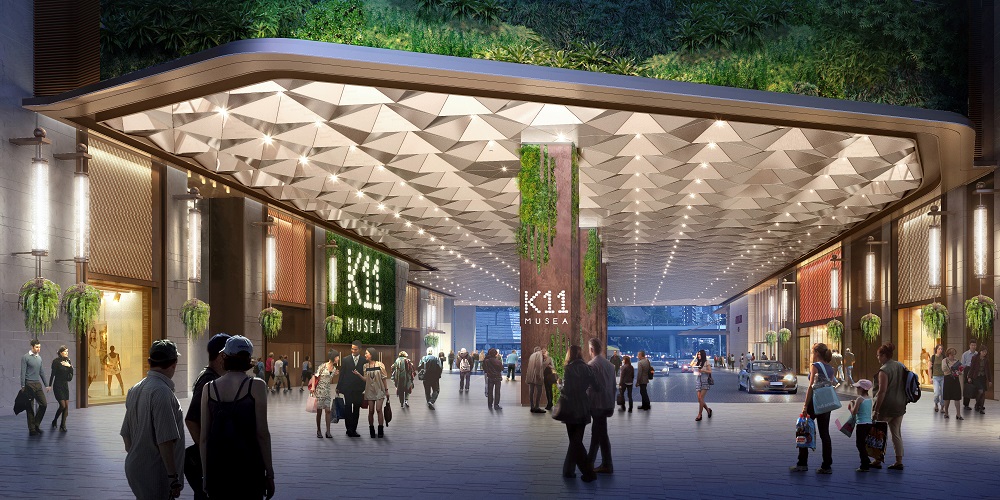
    Boutique luggage brand Lojel has launched an immersive pop-up store in Hong Kong’s K11 Musea, opening today, focusing on the concept of staycations.

    Dubbed “The Art of Staycation”, the event is a first for the brand, featuring the opportunity for visitors to customize a limited-edition Voja suitcase as well as an augmented reality experience exploring the future of how travel could evolve in the wake of the coronavirus pandemic.

    The pop up is intended to provide a travel solution for a staycation in Hong Kong, selling hand-carried luggage as well as backpacks and travel accessories.

    Visitors will be able to create their case from any pair of colors using the in-store tablet before seeing it assembled in person. A personalized tag will be laser-engraved for each customer and stored in a leather tag holder.

    Customers’ final purchases at the pop-up will be delivered to their doorsteps at no charge.

    The Art of the Staycation pop-up will be open through to December 31.

  • Little respite likely as Hong Kong retail rents slump to 2003 levels

    Little respite likely as Hong Kong retail rents slump to 2003 levels

    As Hong Kong retail rents slump to levels not seen since 2003, retailers who appeal to domestic shoppers are beginning to have a stronger presence in the market.

    According to retail real estate professionals with property company Savills, brands in categories such as lifestyle products, health-related goods, and affordable family-friendly chains are taking the opportunity to lease space in commercial districts across the city. They are taking over from retailers who appealed primarily to inbound tourists from Mainland China and elsewhere, before social unrest and the Covid-19 led to a record 11-month run of double-digit declines in retail sales in the city.

    Jewelry and watch sales plummeted by more than 69 percent during the first five months of this year.

    Savills senior director, research & consultancy, Simon Smith, says that while prime street-shop and shopping-mall rents seem to have found a floor since their 2013 peak, this may only be temporary.

    “Rising vacancy levels continue to plague the market with mid-range fashion retailers joining luxury retailers in rationalizing store numbers, but rents appear to have stabilized for now.”

    With many luxury and mid-range brands struggling to break even with the desertion of tourists, they are right-sizing their networks and closing underperforming stores.

    “The market has endured a prolonged correction since 2013 but with rents now close to 2003 levels, landlords and tenants are beginning to embrace the new reality and accept new business models and a more creative approach to trade and tenant mix,” adds Nick Bradstreet, MD, and head of retail leasing.

    According to Savills’ research, the quarter-on-quarter decline in Hong Kong retail rents in the three months to June was about 1.7 percent in prime street front sites and 0.8 percent in shopping centers.

    Retailers including Valentino, Tiffany & Co, Coach and Prada have already given up prime sites on Tsim Sha Tsui’s Canton Road and Causeway Bay’s Russell Street, two of the city’s most expensive commercial strips. Victoria’s Secret has closed its multi-story flagship nearby and MCM’s largest store, in Central, has also been shuttered.

    More mid-market retailers including Swatch, SaSa, Lush and Gap have also rationalized their store networks.

    But in their place, new brands are taking the opportunity to increase their street presence, typically brands targeting local consumers rather than mainland daytrippers and tourists.

    “Local consumers are more focused on their “whole of life” needs, prioritizing health and well-being, caring about their family and community, and valuing the local culture and sustainability,” says Savills in its quarterly review of Hong Kong retail rents.

    Examples include Muji and Lululemon, which have both opened their largest stores yet in the city, at Telford Plaza and Harbour City respectively, and UK women’s activewear label Sweaty Betty, is opening its second Hong Kong store, at Causeway Bay this month. Japanese grocer Don Don Donki is opening two more stores, at Causeway Bay and Central, later this year.

    Bradstreet and Smith say shopping-mall footfalls across Hong Kong showed signs of recovery during May and June as locals began venturing out again after Covid-19-related social-distancing measures were eased. A degree of pent-up demand may have helped the trend.

    But rebounding local spending won’t be enough to help brands reliant on tourists, with Savills predicting vacancies on prime streets in traditional tourist districts will soon rise. Topshop, Gap and Adidas are all tipped as unlikely to renew their leases on Central spaces.

    “The post-Covid outlook for Hong Kong’s retail industry remains very challenging,” concludes Savills. “Some structural changes in demand profile and market fundamentals are underway and both retailers and landlords need to adapt and constantly reinvent to stay relevant.

    “A slower-than-expected recovery in the tourism market means that a more balanced approach to local consumers and mainland tourists is warranted moving forwards but the shopping preferences of locals and tourists are of course quite different.”

  • New useful feature being tested for Android version of Google Maps

    New useful feature being tested for Android version of Google Maps

    Over the years we’ve watched as the Google Maps app has grown. Instead of just giving you turn-by-turn directions getting you from point “A” to point “B” safely and on-time, Google Maps now helps you decide what places you’ll visit and where you’ll dine when you arrive at “B.” And Google Maps has added several features related to driving. For example, the speed limit in the current area you are driving through now appears on the map, and accidents, speed traps, and other incidents can be reported so that other Google Maps users can benefit from your experience.

    Google is now testing the addition of traffic lights to the app. The icons for the traffic lights are small but appear larger while navigating. We should point out that Apple has added stop signs and traffic lights in Apple Maps. On iOS, Siri will point out both when you make a turn by one of them.

    The traffic lights were found by an Android user running Google Maps build 10.44.3. Frankly, we wouldn’t be surprised to see Apple and Google battle each other with their navigation apps. Apple has been working hard at removing the stench that spilled all over its Maps app when it was first launched in 2012. If you aren’t old enough to remember this fiasco, countries, and cities were mislabeled-when they were labeled at all. Police in Australia called Apple Maps “potentially life-threatening” when it navigated unsuspecting motorists to an area of the Outback with poisonous snakes, very little water, triple-digit temperatures, and spotty phone reception.

    Many iOS users still prefer to use Google Maps although we must let you know that the traffic lights are being tested on the Android version of the app only.

  • Takashimaya plunges into the red as Covid-19 eats into sales

    Takashimaya plunges into the red as Covid-19 eats into sales

    Takashimaya, the Japanese department store operator, has reported a loss of US$190 million in the May quarter as it faced extraordinary payments related to the Covid-19 pandemic and falling sales.

    The company was forced to effectively close 22 stores in Japan from April 8 after Prime Minister Shinzo Abe declared a state of emergency. Only the food departments were allowed to continue to trade as the government ensured social-distancing measures.

    Sales in May plunged by more than 60 percent as a result, but last month’s decline was a much less dramatic 16 percent as cities began to reopen and consumers ventured out shopping again. For the full quarter, sales were down by 48 percent to $1.08 billion.

    As well as reduced domestic spending, Takashimaya sales were impacted by the absence of tourists as borders were closed as a Covid-19 prevention strategy.

    For the May quarter, Takashimaya recorded a one-off loss of $79.8 million relating to pandemic costs, including paid leave for staff unable to work due to the shutdown.

    The company did not release any figures on the performance of its overseas stores in Vietnam, Singapore, Thailand and Mainland China and it declined to proffer earnings guidance for the full year.

  • 7-Eleven and Coca Cola launch Hong Kong concept store

    7-Eleven and Coca Cola launch Hong Kong concept store

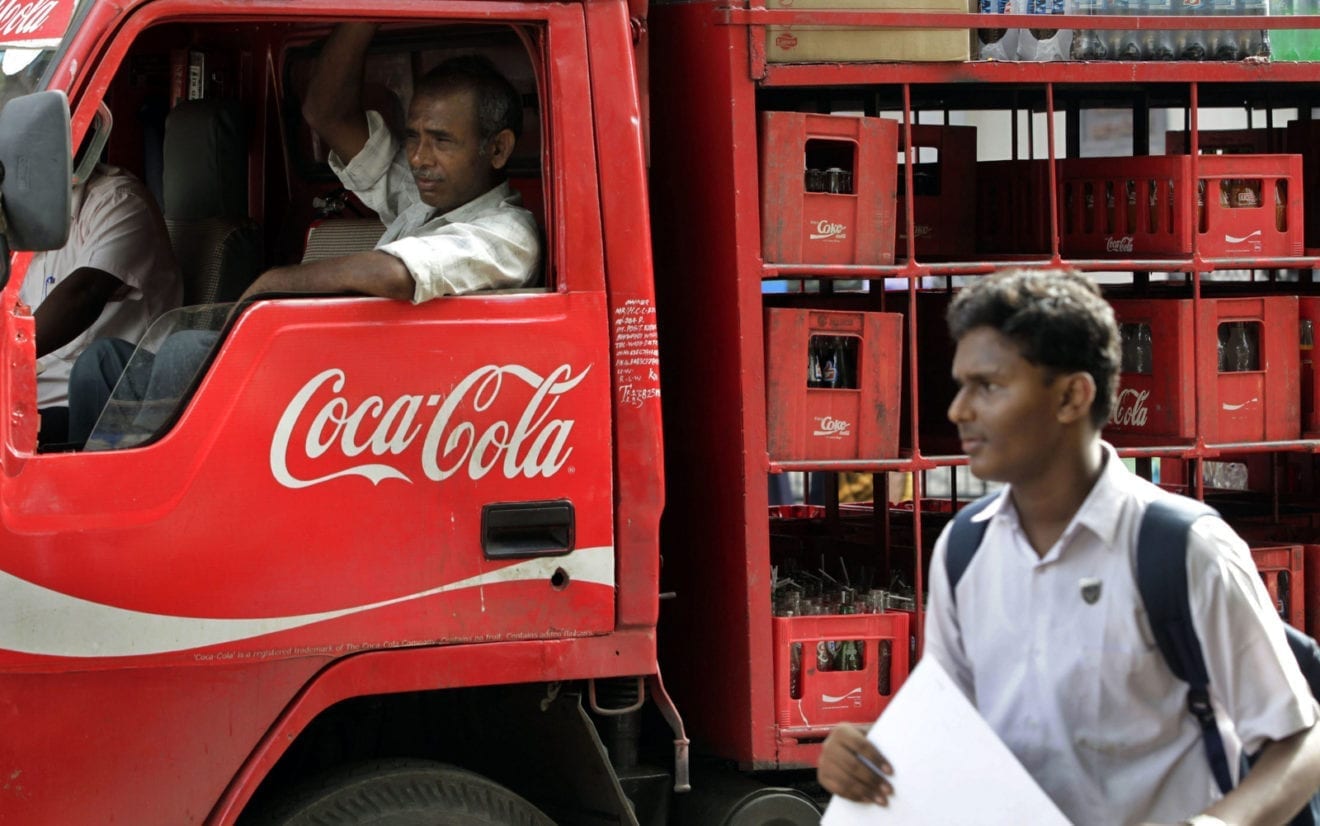
    7-Eleven has teamed with carbonated beverage brand Coca Cola to open a new themed store in Hong Kong. Located at in Tsim Sha Tsui, the 7-Eleven x Coca Cola concept store is dressed in the distinctive Coke red. As well as the modern Coke livery, the counter features a banner with nostalgic advertising.

    The store features two fridges with Coca Cola’s glass-bottle-shaped doors, displaying a selection of the brand’s items and collectibles.

    “7-Eleven x Coca Cola themed store is a close collaboration with our suppliers leveraging on the brand strength and features to create a themed convenience store with impactful in-store decoration, interesting display, exclusive products, innovative food idea, good value offer to bring customers fun and convenience,” a spokesperson for 7-Eleven Hong Kong’s parent company Dairy Farm Group said.

    The store also features a ‘Hot Shot counter’ where customers can pause and eat snacks (and a Coke).

  • U.S. is considering a ban on popular short-form video app TikTok

    U.S. is considering a ban on popular short-form video app TikTok

    Tick tock, tick-tock. That’s the sound of a clock ticking off the time that popular short-form video app TikTok might have left in the U.S. On Monday Secretary of State Mike Pompeo said that the U.S. government was looking at banning the Chinese-owned app along with Chinese-based tech firms. Rising tension between the United States and China is the reason why the current administration is looking to kick TikTok out of the U.S. as it did with Huawei. The latter is currently the largest smartphone manufacturer in the world and also is the global leader in supplying networking equipment to carriers.

    Speaking with Fox News, Secretary Pompeo said about the ban, “We are taking this very seriously. We are certainly looking at it. We have worked on this very issue for a long time.” He added, “Whether it was the problems of having Huawei technology in your infrastructure we’ve gone all over the world and we’re making real progress getting that out. We declared ZTE a danger to American national security. With respect to Chinese apps on peoples’ cellphones, the United States will get this one right too.”

    TikTok has been one of the most popular apps in the U.S. always among the most installed apps on iOS and Android every month. The app has more than 2 billion installations globally. The pandemic has caused it to become even more popular as kids stuck at home looking for things to do create short videos using the app. If TikTok does get banned from the U.S., Wall Street has already selected the domestic social-media app that it believes will replace TikTok in popularity.

    Shares of Snap, parent company of Snapchat, rose 8% on Tuesday after word spread about Pompeo’s comments. On Tuesday morning, the sales team belonging to securities house Morgan Stanley said that if TikTok is forced to shut down, both Snapchat and Facebook will benefit.

    TikTok has been trying to stay distant from its Chinese parent ByteDance. Like Huawei and ZTE before it, TikTok has caught the attention of U.S. agencies concerned that it is spying on Americans and sending personal data to Beijing. Earlier this year TikTok hired former Disney executive Kevin Mayer to be CEO in an attempt to cover itself with the American flag.

  • Lush Hong Kong flagship closes

    Lush Hong Kong flagship closes

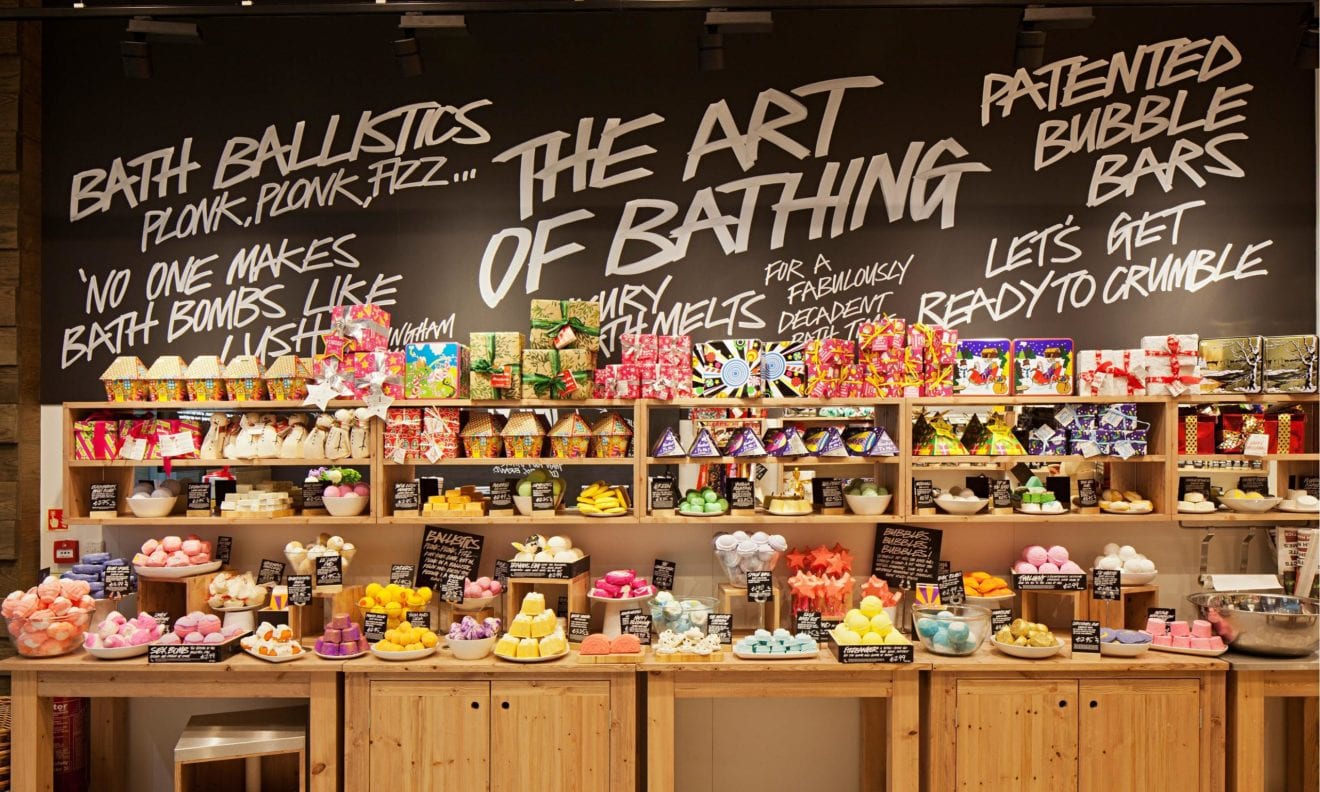
    Beauty products retailer Lush Hong Kong has closed its five-story flagship store several months before its lease was due for renewal.

    The high-profile store was opened in late 2015, at Soho Square in Central. At the time billed as the brand’s largest store in Asia, it featured the first Lush spa globally.

    Located adjacent to the Mid-levels escalator on Lyndhurst Tce, it featured 6909sqft (642 sqm) of trading space.

    The ground floor featured the brand’s signature range of handmade soaps, scrubs, shampoos, and cosmetics, while the floor above housed a cafe, with the spa located on upper floors, offering customers scrubs, baths, massages, and facials.

    According to Land Registry records, Lush paid US$196,000 in rent for the latest year.

    Inside Retail Asia reached out to Lush for comment on the closure, but the company did not respond.

    Lush’s closure extends the recent trend of mid-market brands closing stores across the territory in the wake of falling footfall due to borders being closed to tourists during the Covid-19 pandemic. Other retailers including Gap, SaSa, and Swatch have been reducing their store count in the city, along with luxury brands such as Tiffany, MCM, and Prada.

  • Bottega Veneta opens ‘invisible outlet’ in Shanghai

    Bottega Veneta opens ‘invisible outlet’ in Shanghai

    Kering label Bottega Veneta has just opened its first pop-up store post-Covid-19 at Shanghai’s Plaza 66 Mall, dubbed the ‘invisible store’.

    Running until July 19, the pop up is doubles as an art installation with a mirrored exterior camouflaging the space, which seems to melt into the luxury mall’s atrium.

    Standing three meters high and taking up 100sqm of floor space, the pop up forgoes branding, save for a subtle and almost indistinguishable logo raised on the surface. Instead, it reflects the logos and stores of its neighboring permanent store rivals, essentially providing them with free exposure.

    Inside the Bottega Veneta invisible store, a reflective interior highlights the pre-autumn 2020 collection, covering men and women’s ready-to-wear lines, along with leather goods and accessories. Bottega Veneta currently operates 44 stores in China.

  • Tesla Shares Surge 13% As Strong Deliveries Drive Profit Optimism

    Tesla Shares Surge 13% As Strong Deliveries Drive Profit Optimism

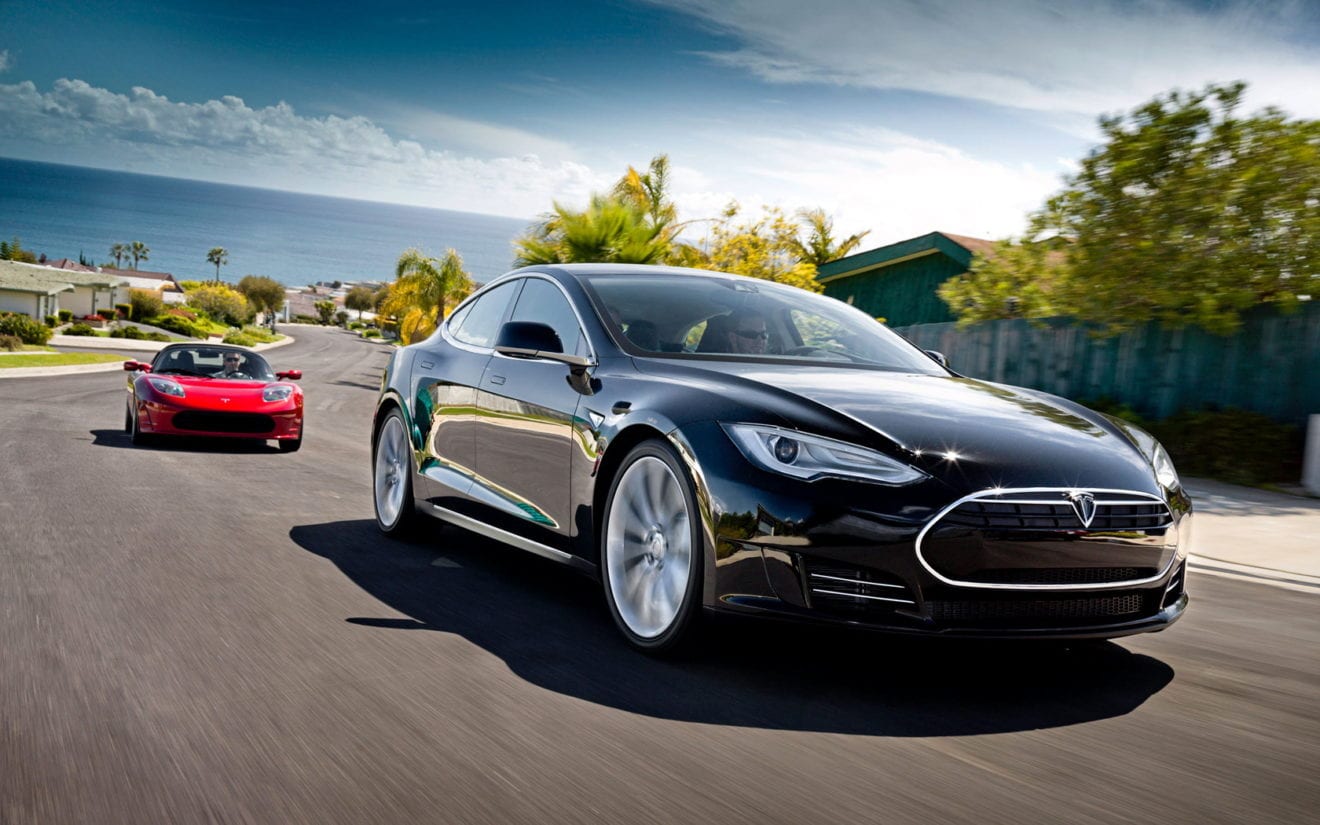
    Shares of Tesla Inc surged 13% to a record high on Monday, extending their rally to over 40% in five sessions after analysts raised their price targets on the electric car maker following its strong quarterly deliveries.

    The day’s jump increased Tesla’s stock market value by $30 billion (24 billion pounds), eclipsing the entire value of Ford Motor, currently at $25 billion.

    JMP Securities increased its price target to $1,500 from $1,050 after Tesla on Thursday reported higher-than-expected second-quarter vehicle deliveries, defying plummeting sales in the wider auto industry as the coronavirus pandemic slammed the global economy. With Tesla’s stock up nearly 500% over the past year, many investors believe the rally is unsustainable

    “We believe that the question to be considered is not whether the stock is expensive on current valuation measures, but what the company’s growth and competitive position signal about the stock’s potential for the next several years,” JMP Securities analyst Joseph Osha wrote in a client note. Tesla’s annual sales could hit $100 billion by 2025, he predicted.

    JPMorgan, which rates Tesla “underweight,” raised its price target to $295 from $275, while Deutsche Bank upped its target to $1,000 from $900. The median analyst price target for Tesla is $675, compared with its current price of $1,372, according to Refiniti. Alex Barrat from Stake takes us through the overnight moves – Tesla in focus, up over 40% in the last week.

    Tesla’s solid delivery numbers heightened expectations of a profitable second quarter, which would mark the first time in Tesla’s history that it would report four consecutive quarters of profit.

    However, with Tesla’s stock up nearly 500% over the past year, many investors believe the rally is unsustainable. The stock is trading at 158 times expected earnings, according to Refinitiv, an exceptionally high valuation.

    Following Monday’s surge, Tesla’s market capitalization stood at $245 billion, growing its lead as the world’s most valuable automaker.