Author: Mei Ling Tan

  • Singapore retail sales collapsed during May due to store closing

    Singapore retail sales collapsed during May due to store closing

    Singapore retail sales plummeted 52.1 percent in May as Covid-19 lockdowns shuttered malls and the majority of retail stores across the city-state.

    May’s year-on-year decline followed a 40.3 percent drop in April and represented the biggest drop since statistics were first collected in 1986.

    After removing motor vehicles from the data, the decline was only a slightly less dramatic 45.2 percent, compared with 32.5 percent in April.

    The closure of stores across the city caused a dramatic rise in online sales which accounted for 24.5 percent of the US$1.29 billion total turnovers.

    According to Statistics Singapore, 94.3 percent of sales of computer and telecommunications equipment in May were conducted online, 93.6 percent of furniture and household goods, and 9.6 percent supermarket sales.

    Every retail category recorded a sales decline except supermarkets, hypermarkets, and convenience stores. Supermarket and hypermarket turnover soared 56.1 percent and convenience stores by 9.1 percent.

    Sales of watches and jewelry, by department stores and apparel, fell by between 89.1 percent and 96.9 percent.

    As with traditional retail, the Circuit Breaker measures introduced to curb the spread of Covid-19 resulted in huge declines in the food & beverage sector as well. A 50.1-per-cent decline in May represented a tiny improvement from April’s 52.7 percent, with vendors able to supply only delivery or takeaway.

  • Waze has hidden a secret Mood emoticon

    Waze has hidden a secret Mood emoticon

    At the end of last month, we told you about a UI overhaul for mapping app Waze. 30 colorful and funny emoticons have been added to represent your current mood. The app was purchased by Google in June of 2013 for a price believed to be in the range of $1.1 billion to $1.3 billion and it uses crowd-sourced traffic information to get you from point “A” to point “B” safely and on time.

    Some of the possible Mood choices include Funny, Sunny, Zombified, Wild, Chill, Furious, Geeky, Happy, Loved-up, Sneaky, Eco-friendly, Proud, Sad, Skeptical, Shy, Carsick, Zen and Speedy. To change your Mood, open the app, and tap on the Search box at the lower left of the screen. Tap on your name at the top of the screen to be taken to the “My Waze” screen. Click on Mood and select your emoticon.

    That sounds easy enough, but there is a hidden “Monster Mood” emoticon that you can select by tapping in a code. To summon the monster, you need to first make sure that you have updated Waze to the latest version of the iOS or Android app. Open the app and tap on Search. Instead of typing in a destination under your name, type in ##@morph. You will find that a one-eyed purple monster is now your selected emoticon right above your name on the My Waze page. It couldn’t be easier.

    Waze says that it is continuing to work on adding more Mood emoticons. “There is such an expansive world there for us to dig into, with so many unique emotions and feelings that we can represent through the Moods (our first set of 30 is just the beginning). We want to represent all different types of people in all different moments on their journey, and make people smile…even when there might not be much to smile about.”

    Even if you already consider Google Maps or Apple Maps to be your default navigator, why not give Waze a shot. Sure, some of the app’s features have been added to Google Maps, but there are many community-related features that make using Waze a completely different experience. On iOS, install the app by visiting the App Store. If you’re using an Android device, install the app from the Google Play Store.

  • LinkedIn, Reddit, Google News and other apps caught spying on iPhone users’ clipboards

    LinkedIn, Reddit, Google News and other apps caught spying on iPhone users’ clipboards

    Last month, we told you that a new feature found in the iOS 14 beta detects when a third party app is spying on your iPhone’s clipboard. The latter is the place where data is temporarily stored while being copied from one app to another. Those running the iOS 14 beta preview noticed that they were receiving notifications that apps like TikTok and even AccuWeather were sniffing around an iPhone user’s clipboard and could copy things like PIN numbers, social security numbers and more. Some users received this notification every time they typed a punctuation mark or tapped the space bar on their iPhone’s QWERTY keyboard.

    Last week, Don Morton, a developer using the iOS 14 beta, was seeing a notification that Microsoft’s networking app LinkedIn was copying the content of his clipboard after every keystroke. When ZDNet got in touch with LinkedIn, a spokesperson said that this was all part of a bug. LinkedIn engineering VP Erran Berger said, “We don’t store or transmit the clipboard contents.” TikTok claimed that it appeared as though it was spying on iPhone clipboard data because of an anti-spam “fraud detection mechanism.” The popular short-form video app said that it never copied any content from anyone’s iPhone but it removed the mechanism anyway.

    Morton made a list of apps that iOS 14 is catching red-handed stealing clipboard data. The list includes apps that copied clipboard data after each keystroke and others that copied the data once the app was opened. The former list includes three names: TikTok, LinkedIn, and Reddit. We’ve already mentioned the responses from TikTok and LinkedIn. Reddit said that it is going to disseminate a software update to eliminate code that caused it to copy content from an iPhone user’s clipboard. The software update is expected to be pushed out on July 14th.

    Some password manager apps will automatically clear your clipboard after a certain period of time has passed. The 1Password app has a feature that when toggled on, will automatically clear any field copied from the app to the clipboard in 90 seconds. Some say that they will ask Apple to make access to the clipboard permission that users must agree to give to an app.

    In Morton’s blog post he wrote that this is a real problem. He said, “This is a problem. However, the real problem and thing that scares me is the fact that ANY app has the ability to access the clipboard without permission. I could easily see “phishing apps” starting to pop up (if they are not already) with the sole intention to scrape as much clipboard data as possible. To me, this is just as bad or even more worrying than the companies that have already been called out for it. For the most part, the companies that have been getting called out have a motive to be “good.” I’m just starting to think about companies or apps that have no intention of being good.”

    Once the notifications start appearing for everyone when the final version of iOS 14 drops, we will certainly have a better idea about how widespread this problem is.

  • France won’t ban Huawei gear from its 5G networks but will ask carriers not to install it

    France won’t ban Huawei gear from its 5G networks but will ask carriers not to install it

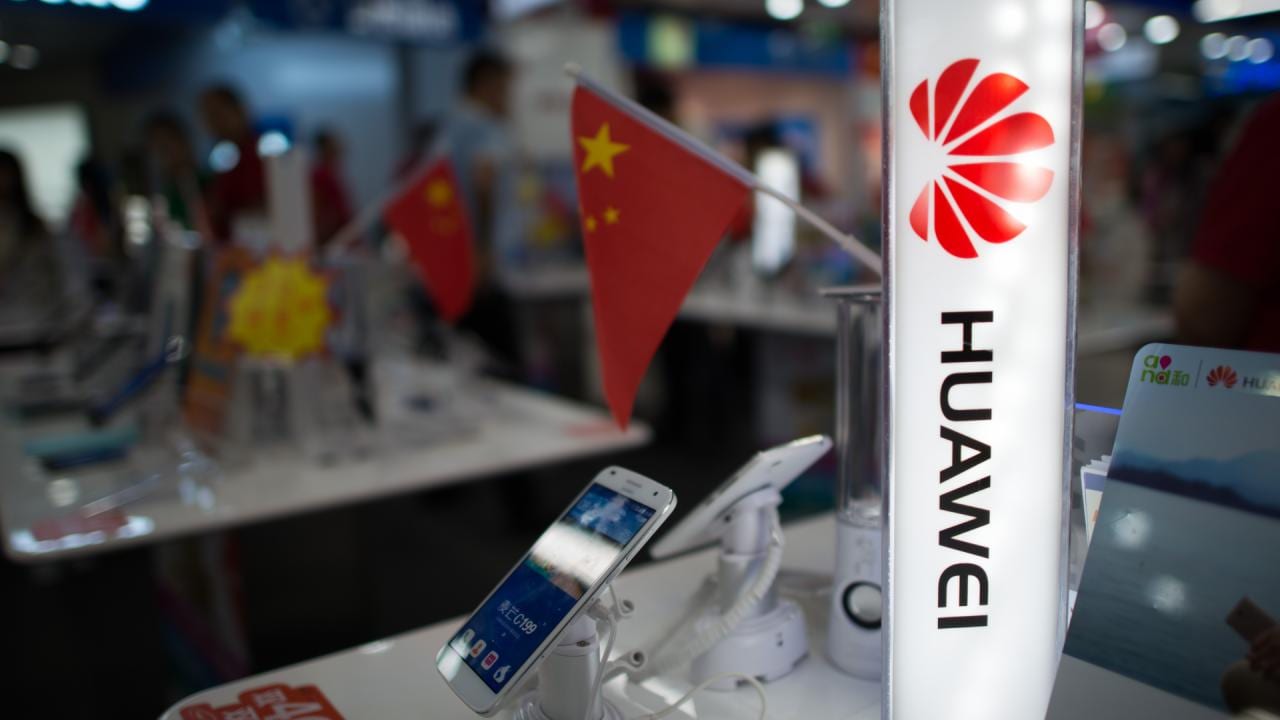
    Huawei is the world’s largest supplier of networking equipment although some countries like the U.S. are worried about how close the company is to the communist Chinese government. Just the other day we told you that England is now looking to stop the installation of Huawei gear in its 5G networks and also plans on pulling out the company’s equipment that has already been installed. The New York Post published a story about how France is going to handle the use of Huawei’s industry-leading technology in the country’s 5G pipelines.

    Guillaume Poupard, who runs French cybersecurity agency ANNSI, says that the country won’t “totally” ban Huawei from 5G networks in France although it will try to get French carriers not to use the Chinese manufacturer’s gear. Poupard said to a French newspaper, “What I can say is that there won’t be a total ban. (But) for operators that are not currently using Huawei, we are inciting them not to go for it.” He also said, “For those that are already using Huawei, we are delivering authorizations for durations that vary between three and eight years.”

    Earlier this year, sources told Reuters that while France wouldn’t ban Huawei, it would try to keep its gear out of the country’s core mobile networks. These networks carry the personal data belonging to customers of the country’s wireless companies which means that keeping Huawei equipment from these networks is of paramount importance. That’s because Huawei has been accused of using its networking gear to spy on consumers and corporations and send the data to Beijing. No evidence of this has ever been discovered and Huawei has repeatedly denied the allegations.

    What France decides to do will be critical to half of the country’s four major wireless providers; about 50% of the networks employed by carriers Bouygues Telecom and SFR use Huawei’s technology. Orange, which is controlled by the French government, has decided to use equipment supplied by Huawei rivals Nokia and Ericsson.

    The head of ANNSI said that starting next week, wireless operators who have yet to receive authorization to use Huawei equipment for their 5G networks should consider a non-response to be a rejection of their request. Poupard stated, “This is not Huawei bashing or anti-Chinese racism. All we’re saying is that the risk is not the same with European suppliers as with non-Europeans.”

  • Jakarta-based cafe chain Maxx Coffee launches in Singapore

    Jakarta-based cafe chain Maxx Coffee launches in Singapore

    Indonesian cafe chain Maxx Coffee has launched its first international outpost in Singapore as the first move towards expansion in Asia.

    Partnering with local operator Oue Restaurants, the new outlet opens today at Jem serving Indonesian single-origin coffee as well as a food selection and the brand’s signature beverages.

    “After 80 successful outlets in 23 cities across Indonesia, our goal remains consistent; to provide a social canvas fit for modern coffee lovers to create meaningful moments over great coffee,” said Oue Restaurant CEO Brian Riady.

    “With the burgeoning third-wave coffee culture in Indonesia and the rising global popularity of Indonesian coffee and coffee culture, Maxx Coffee is ripe for the picking.”

    “Maxx Coffee serves more than just a daily cuppa,” said PT Maxx Coffee Prima CEO Mehdi Zaidi. “Designed to cater to the modern coffee lover’s lifestyle, our outlets are a mix of co-working spaces that enable an exchange of ideas, booths to spark conversations and cosy corners for anyone who wants a quiet space to enjoy a book.”

    The new outlet’s interior features a light wood decor with an open espresso bar and food counter.

    The majority of Maxx Coffee’s specially sourced roasts are single-origin grade 1 Arabica coffee beans from Brazil Cerrado, Sumatera Lintong, Java Ciwidey, and Aceh Gayo.

  • Lamborghini Likely To Unveil A New Sports Car Next Week

    Lamborghini Likely To Unveil A New Sports Car Next Week

    Lamborghini, the Italian luxury sports car manufacturer is gearing up to unveil something exciting, which the company claims will be ahead of its time. The carmaker has officially released a teaser graphic image asking people to tune in for a digital event that is streamed online through Lamborghini’s official website. The event is scheduled for July 8, 2020.

    However, the company hasn’t revealed the exact vehicle that will be revealed next week. Currently, there are several wild guesses and speculations regarding the supercar that the Italian marque will be revealing in the next few days. Going by the teaser image, the Lamborghini has used phrases such as ‘ahead of its time’ and ‘newest creation’, hints that the upcoming car could be a new model or even a one-off concept.

    It is also believed that the Italian brand could unveil a new iteration or a derivative of the Lamborghini’s Sian FKP 37 which was officially introduced last year. Several rumour mills are claiming that the upcoming car could be a Sian FKP 37 roadster, however, several reports suggest that all units of the car have been sold out already. Notably, more details about the Sian roadster are rare at this moment

    Lamborghini is believed to be working on three new supercars which include SCV12 track car, which has already been teased. The company is also believed to be building a Sian Roadster. The third product is a track-focused Huracan STO. And, the spy pictures suggest that it could be a more hardcore version of the Huracan Performante. We request the readers to take this with a pinch of salt. The mystery car will be unveiled in the next few days.

  • JD Worldwide to introduce more Korean brands in China

    JD Worldwide to introduce more Korean brands in China

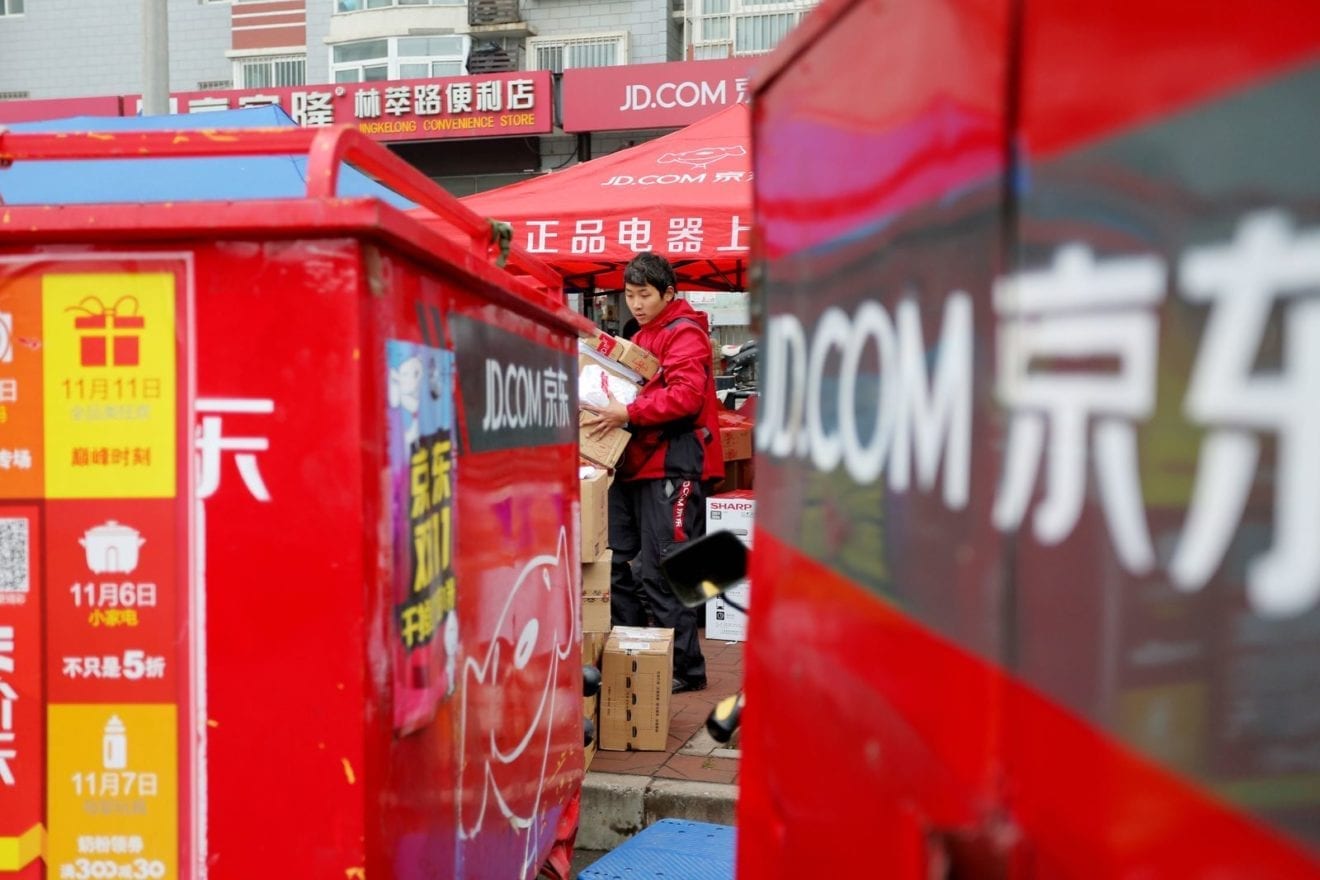
    JD Worldwide has teamed with LG and Korea International Trade Association (KITA) to introduce more Korean brands to Chinese customers.

    “The epidemic has encouraged more Chinese consumers to shop online. With this trend, we will put more effort into helping South Korean brands export to China through e-commerce platforms,” said Park Min Young, chief KITA Beijing representative.

    Under the partnership, LG will be responsible for supply-chain management to provide South Korean products to JD while KITA will support SMEs entering Chinese market.

    “Since the epidemic, we have been working closely with organizations and enterprises from all over the world to introduce more international brands on JD,” said Frank Yu, head of marketing and operations at JD Worldwide

    “We believe this partnership will not only help brands find a new sales channel during this challenging time, but also bring more high-quality, authentic Korean products to over 380 million JD customers.”

    In May, more than 250 Korean brands joined a recruitment conference for the launch on JD Worldwide.

  • Japanese entrepreneur revisits nation’s golden apparel era with Factelier

    Japanese entrepreneur revisits nation’s golden apparel era with Factelier

    Toshio Yamada, the founder of Factelier, is a young Japanese entrepreneur who wants to preserve the craftsmanship of his country’s apparel industry.

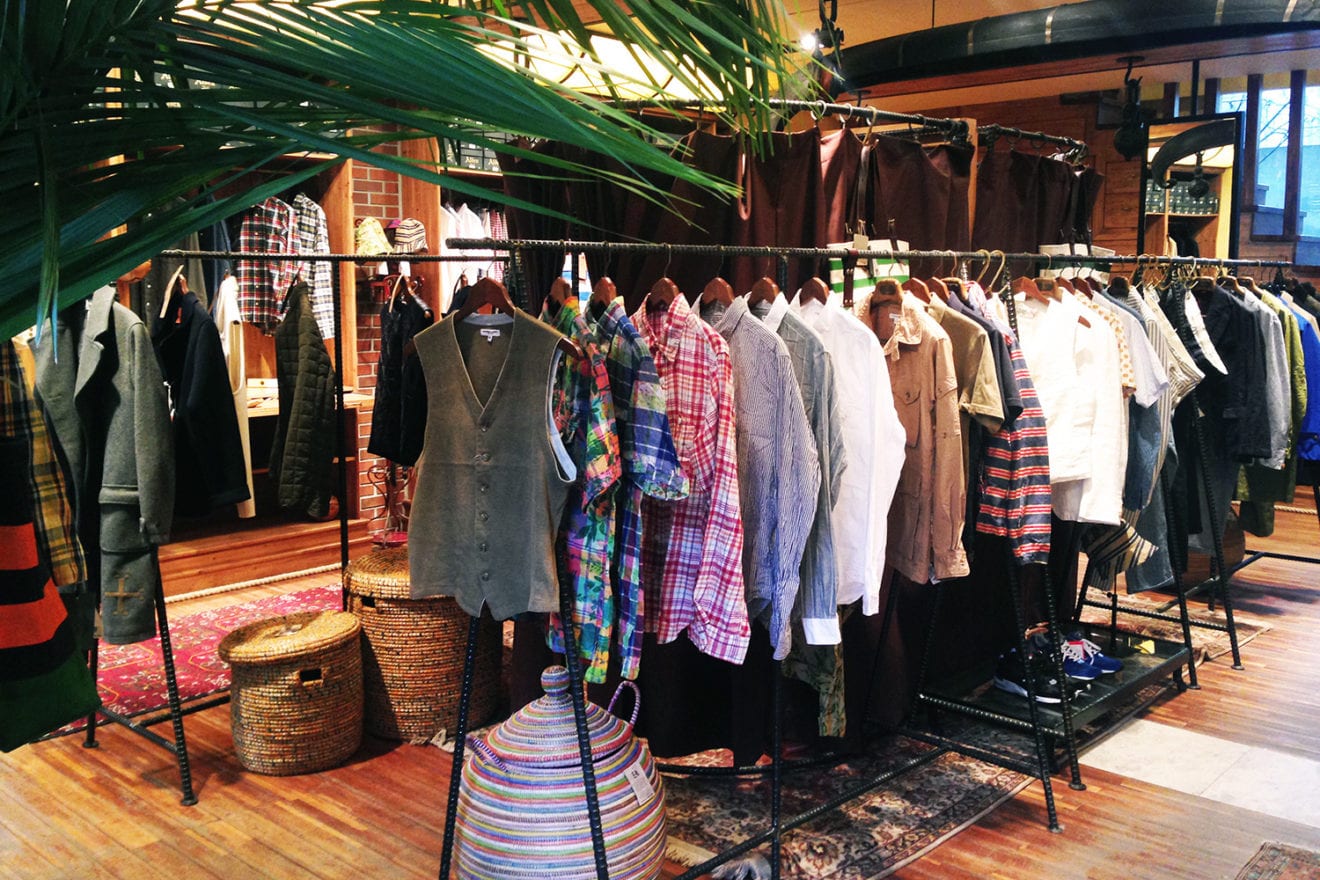
    Yamada has created his own uniquely Japanese brand Factelier which designs and sources clothing and accessories for men, women and babies from experienced, typically family-owned, clothing factories spread all over the nation. They are sold online and shipped to 100 countries, through a small network of boutiques in Japan and Taiwan, and in selected department stores.

    Yamada’s vision is to preserve the rich heritage of apparel manufacturing and let the suppliers he works with emerge from the unavoidable anonymity that comes with supplying global brands.

    Thirty years ago, Japan, one of the world’s largest apparel markets, used to produce 50.1 percent of its domestic sales. Today, thanks to the rise of fast fashion and the outsourcing of manufacturing to countries like China, Bangladesh and Vietnam, that share has slumped to just 3 percent. More than three-quarters of the companies manufacturing clothing in Japan in 1990 are no longer trading today.

    Yamada was born into a family that ran a women’s clothing store for 100 years in Kumamoto, on the island of Kyushu. Living upstairs, he helped out on the shop floor from early childhood, surrounded by quality locally made clothes in an era when ‘made in Japan’ was familiar.

    Later, as a student, Yamada interned with luxury label Gucci in Paris. There the realization dawned on him that labels like Gucci, Hermes, and Louis Vuitton were all born in factories. “So they respect craftsmanship. Now I’m hoping to revive the local craftsmanship in Japan.

    “Our dream is to create world-class brands made in Japan, and build a sustainable and profitable link between these local artisans and consumers around the world, by selling clothes from Japanese factories directly to consumers, cutting out the middleman,” he told Inside Retail Asia.

    Factelier was created via an astonishing commitment to researching the industry. Yamada personally visited some 600 factories the length and breadth of Japan before selecting 55 of them as suppliers, all of them with experience in supplying top international brands.

    “A lot of these companies did not have a homepage, right, and Google did not know about them. So I would take a train and get off at a station and go to a telephone box and use the telephone book to find them.” He would then phone the factories he found listed and ask if he could stop by.

    Somewhat surprised, they invariably welcomed him. “It was a very old style approach,” he recalls.

    Having built the network he not only maintains constant personal contact with his suppliers, but their company names appear beneath Factelier on the clothing labels. The connection between craftsmanship and consumer runs even deeper: Yamada’s company runs regular factory tours for customers so they can see the art and commitment that goes into the clothing they buy.

    “We know the stories behind the factories, how they make the products, and it’s very interesting – when our customers go to the factories and they see the craftwork behind the clothes they become loyal customers.”

    It took Yamada three years to build the base of the business, living off a part-time job as he traveled from factory to factory and developed designs and products. Eight years since his mission began, Factelier has grown to a 50-strong team with four stores and a warehouse in Japan, two stores in Taipei – and even a cafe. Sales are currently doubling twice a year with 80 percent of orders from Japan. The largest overseas markets are the US, Mainland China, Taiwan and Hong Kong.

    “Fashion manufacturing used to be a declining industry in Japan, but I think if we have the passion and the vision, I think we can revive it. And more importantly, [our customers] will spend more for better products.”

    Factelier’s garments are of similar quality (but not design) to those being supplied to the likes of Gucci or Hermes – but sell for about half the price. It helps, of course, that Factelier is not paying for massive international advertising budgets and other overheads associated with luxury brands. Typically the factory gets a higher price for the clothing it produces for Factelier because the two parties jointly decide on the retail price, rather than the label dictating pricing and how much the factory gets for making it.

    “It’s a very, very different business model from traditional brands,” says Yamada.

    That said, the factories could not survive on Factelier alone – the Japanese label typically only accounts for between 5 and 10 percent of a partner factory’s production. But they are getting a better deal and Yamada says many are finding themselves able to employ more graduates to expand their business.

    The closer relationship between brand, manufacturer, and the customer has produced an unexpected spinoff: consumers are starting to influence the range and style of clothing being produced, especially in the field of functional clothing.

    “One day a customer asked us to manufacture clothes that would repel mosquitos. That’s a very, very difficult request.” Diligently working with factories and textile suppliers Yamada’s team succeeded, by incorporating a herb in the fabric that sends the mozzies packing.

    During our conversation, Yamada wore a stylish blue wrinkle-free jacket. “If I pack it in a trunk, it does not crease.” Another product uses baseball-uniform techniques to create 3D pattern effects.

    And Factelier sells stain-proof white jeans. Spill soy sauce, wine, coffee or ketchup over the denim and it comes off immediately without leaving a stain. This was another product designed to fulfill a customer’s request.

    Besides his interest in functional clothing, Yamada is committed to sustainability. The company uses natural fibers and biodegradable fabrics and it recently planted an organic cotton farm near Mount Fuji. Japan imports 99 percent of its cotton and he wants to change that reliance on other countries.

    Yamada is optimistic there is a strong future for direct-to-consumer brands. “The size of the B2C market in Japan expanded to US$180 billion in 2018. It grew by $160 million, or 9 percent, in that year.

    “Yes, craftsmanship is very big. I want to spread the idea of craftsmanship all over the world.”
  • NASA-linked perfume recreates the ‘smell of space’

    NASA-linked perfume recreates the ‘smell of space’

    A new perfume backed by a kickstarter campaign is inspired by NASA astronauts’ descriptions of the smell of space.

    According to a Designboom feature, Eau de Space – developed by chemist and Omega Ingredients founder Steve Pearce – is a perfume based on the scent developed decades ago for astronauts in training to prepare them for extraterrestrial experiences beyond the atmosphere.

    The original formula is based on reports from returned astronauts, who described the smell of space as “seared steak, raspberries and rum” and “a bitter kind of smell in addition to being smokey and burned … like a smell from a gun, right after you fire the shot”.

    The formula for the scent has been a closely-guarded secret for years.

    The scent developers partnered with leading perfumers to create “a fragrance that sparks curiosity while leading to an increased interest in Stem (science, technology, engineer, mathematics) students grades K-12”, according to the feature.

    Pearce has hinted that the team’s next project will be to release a scent inspired by the smell of the moon…

    Here’s a cool video release to promote the new fragrance…

  • Hugo Boss expands online reach into Asia, Australia

    Hugo Boss expands online reach into Asia, Australia

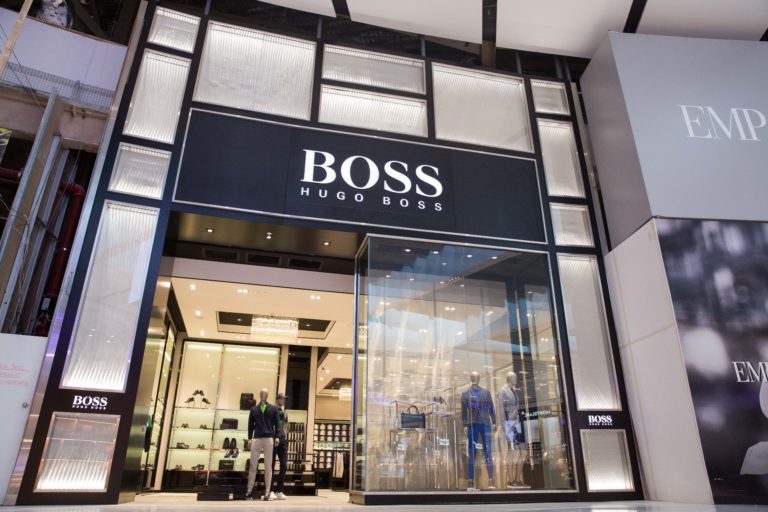
    Fashion label Hugo Boss is expanding its online reach to the Asia Pacific market.

    The German brand has added 22 more countries to its e-commerce portfolio, including Australia, New Zealand, Japan, and Singapore, along with markets in Europe. Customers from those countries can now access Hugo Boss’ latest collections from their home and have products shipped directly.

    “The importance of digital distribution channels for the global apparel industry is growing rapidly,” said Mark Langer, chairman of the company’s managing board.

    “The coronavirus crisis has further accelerated this trend. We are therefore rolling out our online store in additional countries as quickly as possible and … systematically pushing ahead with the digitization of our business model.

    The fashion label plans to add three more countries – India, Mexico, and Canada – later this year.

    Meanwhile, Hugo Boss says it plans to focus on the European and Asia-Pacific markets for growth, via concession stores, during the coming years.

  • AS Watson vows to reduce plastic waste, use only sustainable palm oil

    AS Watson vows to reduce plastic waste, use only sustainable palm oil

    AS Watson Group is the first signee to the New Plastics Economy global commitment to reduce plastics waste.

    The firm has also taken up group membership with the Roundtable on Sustainable Palm Oil to help address the environmental impact of the industry.

    Both moves are part of the company’s strategy to achieve its 2030 Group Sustainability Roadmap – better waste management and more responsible Own Brand products.

    “We know our customers are increasingly aware of sustainability issues and therefore expect their chosen brands to share the same values as they do,” said AS Watson COO Malina Ngai, who is also CEO of AS Watson (Asia & Europe). “As the world’s largest international health and beauty retailer, we feel it is our responsibility to do more, so we are making a commitment to create a more sustainable environment and offer more sustainable product choices to our customers.”

    By participating in the initiative to reduce plastics waste, AS Watson will join forces with its business units to eliminate unnecessary plastic and to help reduce plastic pollution at the source. The firm has banned the use of microplastics in its rinse-off Own Brand cosmetics/personal care scrub products since 2014, and has been using 100-per-cent recycled PET in its bottled water business since 2015. It launched Hong Kong’s first reverse vending machine to collect used plastic bottles.

    “AS Watson is proud to enhance public awareness on sustainability issues by supporting two new important environmental initiatives,” said Ngai. “We hope that more retail groups can also make these meaningful pledges so that together we can make our planet more sustainable.”

  • Capri prospects ‘ugly’ as Michael Kors, Jimmy Choo underperform

    Capri prospects ‘ugly’ as Michael Kors, Jimmy Choo underperform

    US luxury group Capri has ended its fiscal year on an unsurprisingly gloomy note, largely due to the negative impact of the coronavirus.

    While the slip of 11.3 percent in total revenue does not look too bad compared to some other retailers, this is mostly because Capri’s quarter ends on March 28 and, therefore, does not include the massive disruption of April and May when the US and many other countries went into lockdown.

    These numbers are something of a prelude to a significantly uglier set of first-quarter results – indeed, Capri expects revenue for that period to be down by around 70 percent.

    On a brand basis, Jimmy Choo posted the worst performance with revenue down by 23 percent. On the bottom line, the division made an operating loss of US$23 million. While performance has been improving over the past couple of quarters, mainly thanks to enhanced collections of active footwear and accessories, the disruption of the pandemic badly affected the sale of more formal and fashionable footwear styles as consumers started to work from home and restricted socializing.

    Unfortunately, this is a trend that will continue for at least the next two quarters and it is hard to see Jimmy Choo regaining much momentum. That said, the year-old decision to transform Jimmy Choo into a more balanced luxury brand that sells high-end footwear for leisure, some fashionable sneakers for active occasions, and a wider range of accessories, now seems extremely prescient.

    This will not completely offset the challenges in other parts of the market but does give Jimmy Choo a lifeline that will stop it from completely sinking.

    Versace bucked the general trend with a 55.5-per-cent increase in sales. Some of this is due to softer comparatives from the prior year, when Capri had only just taken control of the business.

    However, the company also deserves credit for the various improvements it has made to the brand, particularly in terms of collections. A renewed focus on accessories, driven by a new Virtus range supported by strong marketing, has helped to boost sales. As GlobalData noted prior to the acquisition, the Versace brand was, admittedly by design, rather gaudy and off-putting for many consumers. Working with Donatella, Capri has begun to change this by creating a more understated, but still flamboyant, selection which has successfully improved both customer engagement and brought new shoppers to the brand.

    While there is no doubt that Versace will be disrupted by the pandemic in the near term, the brand appears to have a renewed sense of purpose which will help it to deliver next year and beyond. While Versace thrived, the Michael Kors division remains in distress. Revenue was down by 18.4 percent off the back of a very modest decline in the prior year. This caps a year when sales have fallen in every single quarter.

    Although some parts of the assortment, such as sneakers and accessories, have performed well, the rest of the business is lackluster. Michael Kors still suffers from an identity crisis: the brand spans far too many different styles, products, and price tiers. As a result, it lacks integrity and is unable to build a business or aesthetic around a clear, core customer. In a highly competitive marketplace of luxury brands, this position simply isn’t good enough to drive sustainable growth.

    Unfortunately, these trends are not new and have been in play for at least two years. Now that Versace and Jimmy Choo appear to have more sound underlying strategies our hope is that management will turn its attention to untangling the Gordian knot of Michael Kors’ brand image.

    Overall, like other retailers, Capri is in for a rough ride over the next six months. It has the liquidity to survive the storm. But it must work on making its core brand seaworthy for the calmer waters ahead.

  • Amazon Prime Day delayed until October

    Amazon Prime Day delayed until October

    It was already understood that Amazon Prime Day will not take place in July as it usually does every year, with the most recent report hinting that it might get delayed until September. According to a new report, the annual sales event will be held in October.

    The company has supposedly given sellers a placeholder date of the week of October 5. A definitive date will likely be announced later.

    Those details were apparently shared by Amazon in an e-mail to third-party sellers. Officially, the e-tailer has not said anything about this year’s Prime Day. In recent weeks, the coronavirus has shown signs of resurgence, prompting many businesses that had reopened to close their doors again. Amazon is apparently postponing Prime Day again because it fears its supply chain could get negatively affected because of the spike.

    At the beginning of the pandemic, Amazon suspended shipments of nonessential items to its warehouses as it struggled to deal with increased demand following the outbreak. The e-commerce giant prioritized essentials such as medical supplies and household items during that time.

    Towards the end of April, the company said it would allow third-party sellers to resume shipments of nonessential products.

    Last month, the company organized a fashion-oriented sale to help sellers reeling from the effects of the pandemic and clear inventory in preparation for the Prime Day.

    Now as coronavirus cases are rising again, Amazon’s logistical challenges have resurfaced. Although the future is uncertain, a former Amazon executive does not think Prime Day will be delayed beyond October as the company wouldn’t want its biggest sale event to coincide with the holiday shopping season.

  • Struggling Esprit axes more stores, 1200 staff

    Struggling Esprit axes more stores, 1200 staff

    Apparel chain Esprit will axe 1200 employees globally, including 100 in its Hong Kong office and 800 store employees in Germany as part of its ongoing restructuring program.

    A permanent reduction in salaries and benefits will be imposed on all remaining staff, except for those working in stores.

    Esprit has received court approval to open insolvency proceedings for its German subsidiaries allowing it to continue with the self-administration process under which it will streamline its business in Europe.

    In a filing with the Hong Kong stock exchange, Esprit said Dusseldorf District Court-appointed custodian Dr Biner Baahr, who has worked with Esprit executives since March to complete a restructuring plan, will continue in his role overseeing the plan’s implementation in a process similar to the US’ Chapter 11 restructuring process, called Protective Shield Proceedings.

    A creditors’ meeting will be held on August 19 to assess claims made before and during the Protective Shield Proceedings before a vote is held on the percentage of the creditors’ claims which will be paid out.

    The job cuts announced this week following the closure of all 56 Esprit stores across Asia, outside Mainland China, this week. Another 50 will now be axed in Germany – stores which accounted for 17.2 percent of the group’s total revenue in the year to June 30.

    Another part of the restructuring plan will see contracts with service providers renegotiated to obtain more favorable terms.

    Esprit calculates the combined savings from these initiatives will amount to US$116 million, but one-off costs of the restructuring will add up to about $64.5 million in the June 2021 year.

    Meanwhile, Esprit says its management team is currently working to strengthen the brand’s purpose, create a “consistent customer experience across all touchpoints,” improving production quality and sustainability credentials and focusing on “full-price sales”.

    A further update will be released along with the company’s annual results by the end of September.

    Esprit shares are currently trading in Hong Kong at around US 11 cents each.

  • Vietnam’s rapid retail recovery melts Covid virus gloom

    Vietnam’s rapid retail recovery melts Covid virus gloom

    Vietnam retail and service revenues surged by 5.3 percent in June over the same month last year – and by 6.2 percent over May.

    The figures are extraordinary given the advent of the Covid-19 pandemic on retailers and services during the first half of this year, with the country’s stores effectively shut down from late March to late April, and tourists banned from mid-March.

    Year to date, Vietnam retail and service revenues have dropped by just 0.8 percent compared to last year, generating US$103 billion despite the month-long shutdown.

    The figures were released by the General Statistics Office, and show retail revenue reached $18.67 billion last month. Vietnam traditionally releases figures for retail and service revenue within a couple of days of the end of the month covered, faster than most other countries, which tend to take a month or more to calculate the data.

    Sales of consumer goods accounted for 79.6 percent of retail revenue, increasing 3.4 percent year on year. Growth sectors include fresh-food products and home appliances. Sales of apparel and educational products fell by 1.2 percent and 6 percent respectively.

    Vietnam’s retail industry has seen a significant recovery since Covid-19 restrictions were eased in May. Most businesses in the country, except tourism, have resumed and some of them even expanded. Since April’s reopening, Uniqlo has opened three new stores in the country, and fellow Japanese retailer Muji is set to open its first store within weeks.

    One source said that a factor in June’s growth in the absence of tourists is that unlike countries like Thailand, Malaysia and Singapore, tourists to Vietnam don’t purchase a lot of higher-end luxury goods.

    “So the hit to retail from the decline in tourism would be a lot softer.”