Author: Mei Ling Tan

  • Moc Chau Milk wants to allow 100 percent foreign ownership

    Moc Chau Milk wants to allow 100 percent foreign ownership

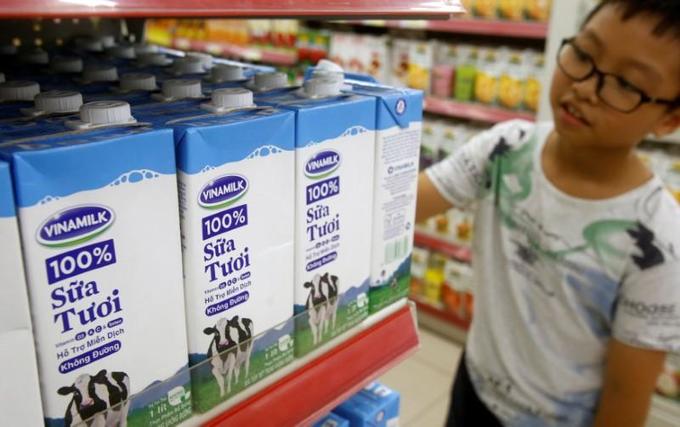
    Moc Chau Milk, a subsidiary of Vietnam’s biggest dairy company Vinamilk, wants to increase its foreign ownership cap to 100 percent in order to raise funds.

    It seeks to do this by removing some business registries in which the government restricts 100 percent foreign ownership, such as wholesale trade of fertilizer and pesticides.

    A company statement said it is seeking shareholders’ approval for plans to raise funds for expansion. It plans to issue more shares to existing shareholders this year to raise 1.2 trillion ($52 million), which will be used to invest in a farm with a capacity of 4,000 cows, upgrade the existing farm and build a new factory.

    It is also eying a listing on Vietnam’s main bourse, the Ho Chi Minh City Stock Exchange, within nine months after it receives shareholders’ approval.

    Moc Chau Milk became a subsidiary of dairy giant Vinamilk in December last year. At that time, Vinamilk had more than half the nation’s dairy market share, and Moc Chau Milk had 9 percent.

    Mai Kieu Lieu, CEO of Vinamilk and chairwoman of Moc Chau Milk, had said earlier that Vinamilk has a strong distribution network in the south that will help Moc Chau Milk, which is based in the northern province of Son La, to expand nationwide.

    Vietnam’s dairy market value rose 8.9 percent to VND121 trillion ($5.2 billion) last year, according to market research firm Euromonitor.

  • Havaianas invests $US50 million in Asian expansion plan

    Havaianas invests $US50 million in Asian expansion plan

    Undeterred by the advent of Covid-19, Brazilian flip-flop brand Havaianas is investing US$50 million into the expansion of its retail footprint across Asia-Pacific between now and 2024.

    Havaianas – which sells about 1 million pairs of footwear a day worldwide – was until 2017 represented by a small group of licensed distributors in Asia, overseen by an export manager in Brazil who also had responsibility for Africa, South America, and the Middle East. However, in 2018 the company opened a regional office in Hong Kong and appointed an Asia regional president, experienced retailer Robert Esser, to build a team managing expansion from Greater China down to Australia and New Zealand.

    Esser has since built a team of around 30 staff and opened a sub-office in Mainland China to accelerate the push there.

    New distributors have been appointed in multiple markets and the network has since grown from 35 to about 135 stores, augmented by another 25 or so short-term pop-up stores in regional areas where cold winter weather is not conducive to wearing flip flops all year round. Flagships have opened in Manila in the Philippines, and at Sydney’s iconic Bondi Beach in Australia, and the brand has established virtual stores on Chinese marketplaces including JD and Tmall.

    “In Asia Pacific today, our biggest potential markets are China, Indonesia, Thailand, and Malaysia,” explains Esser. “We now plan to reach more local consumers and deliver a change in the way they perceive and wear flip-flops. Havaianas wants to enchant Asian consumers and build a strong emotional connection and affective memory, occupying a unique space where attributes like functionality, style, and accessibility meet.”

    Esser believes the expansion reflects a great opportunity to introduce consumers to “a whole new concept in flip-flops”: not just functional footwear, but a combination of comfort and style and “a true fashion accessory”.

    “Apac is diverse but consumers are looking for authenticity, high quality, and fashionable products so Havaianas can be perfect for them,” said Esser.

    With Covid-19 leading to the closure of many of Havaianas and its partners’ stores across Asia for varying amounts of time, the company invested “disproportionately” into online channels, he says, setting out to achieve “find-ability and visibility”.

    “We set up stronger social-commerce platforms and built a relevant influencer strategy with local brand ambassadors, like Luna Maya in Indonesia and Nelydia Nik Sen in Malaysia. This has already delivered promising results with online business growing three-fold during the first quarter and six-fold during April.”

  • Vingroup produces first 5G smartphones

    Vingroup produces first 5G smartphones

    VinSmart, a subsidiary of Vietnam’s largest listed company Vingroup, has produced its first 5G smartphones in cooperation with the U.S.’s Qualcomm.

    The Vsmart Aris 5G model is equipped with a Snapdragon 765G 5G module platform and a quantum security chip, the company stated, adding it also features a Super Amoled 6.39″ display, 8GB RAM and a 4,000 mAh battery.

    Nguyen Phi Tuyen, director of the measurement center of the Department of Telecommunications under the Ministry of Information and Communications, said the unit has repeatedly tested Vsmart’s Aris 5G, showing the network speed was eight times higher than 4G.

    VinSmart has not yet announced the official price of the Aris 5G, nor when it would hit the market, or how many units it intended to produce.

    No 5G smartphone has been manufactured or officially distributed in Vietnam so far, instead, they are hand-carried on overseas flights.

    VinSmart’s move came as local telecom firms compete in the 5G race. Telecom giant Viettel for the first time broadcast from its network of 5G base transceiver stations in Ho Chi Minh City last September while competitor VNPT has announced similar plans.

    VinSmart, which launched its first products at the end of 2018, is currently focusing on the low-end segment of the market, with 12 Vsmart phones all priced at below VND5 million ($212).

  • Bamboo Airways banks on Con Dao Island flights

    Bamboo Airways banks on Con Dao Island flights

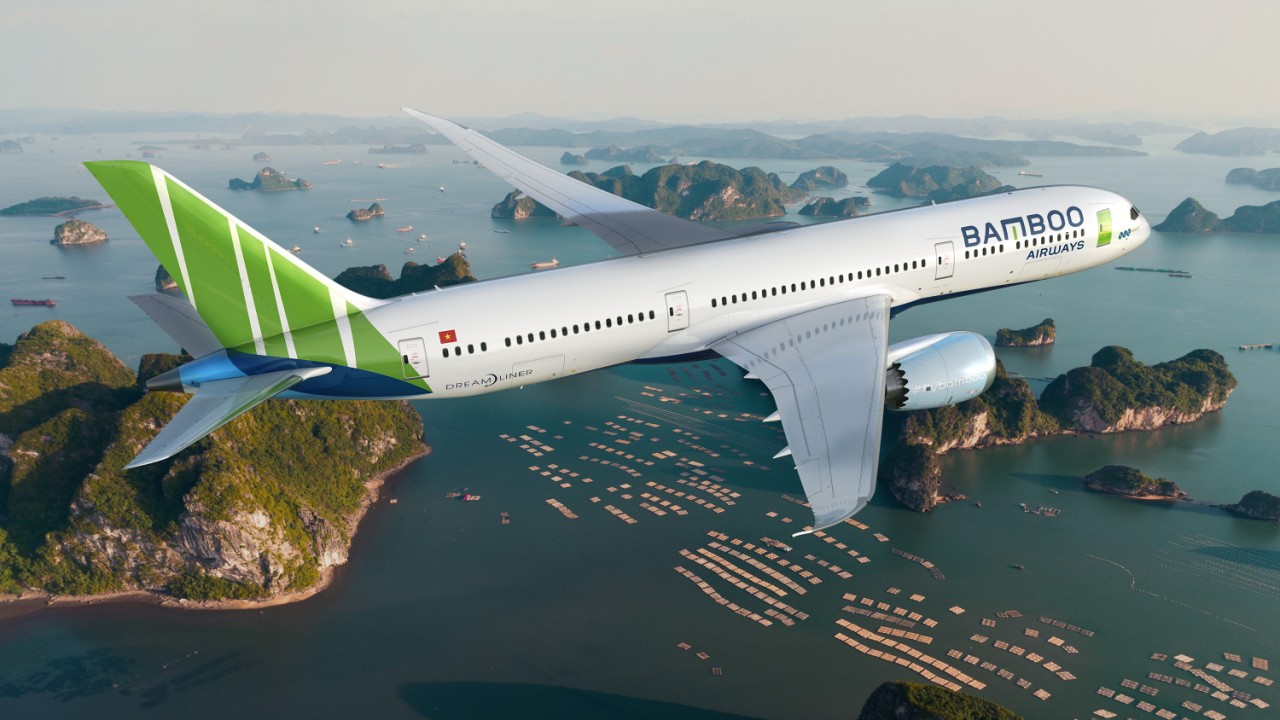
    Bamboo Airways plans to launch regular flights to Con Dao Island, a tourism hotspot in southern Ba Ria-Vung Tau Province, starting August 1.

    The airline is waiting for Civil Aviation Authority of Vietnam (CAAV) approval to fly to the 16-island archipelago, according to a company spokesperson.

    It plans to operate flights from the northern and central region using four twin-engine Embraer jets holding up to 120 seats.

    Currently, Vietnam Air Services Company (VASCO), a subsidiary of Vietnam Airlines, is the only airline operating regular flights to the islands from Ho Chi Minh City and the southern city of Can Tho using the ATR 72 short-haul aircraft that could carry up to 78 passengers.

    Con Dao Airport has a 3C classification, meaning it can only receive ATR 72 aircraft or equivalent. It functions for 12 hours a day and closes at night since it has no runway lighting system.

    Property developer FLC, the parent company of Bamboo Airways, earlier proposed to invest in a lighting system so the airport could operate at night.

    A 4C upgrade is planned for the airport by 2030 so that it could receive Airbus A319 jets carrying up to 156 passengers.

    Budget airline Vietjet had made a similar request in 2018 to operate flights to Con Dao with the same aircraft model but is still awaiting approval.

    Ba Ria-Vung Tau Province received 15.5 million tourists in 2019, up 15.2 percent year-on-year. A total of 500,000 were foreigners.

  • Google makes Gmail work with iPad multitasking

    Google makes Gmail work with iPad multitasking

    Gmail is working great on either iPhones or iPads, but there was just one useful feature that was missing from the iPad version of the app – the ability to multitask with Gmail and other iOS applications.

    You can indeed make use of Apple’s so-called Split View feature and switch between Gmail and other apps, but the functionality doesn’t work flawlessly all the time. Although it took Google several years to implement multitasking within Gmail, the option is finally here.

    Google announced today that all Gmail accounts – G Suite and personal, can now make use of the multitasking feature with Gmail and other iOS applications. It works the same way as Split View, but it’s better to implement and specifically designed for Gmail.

    You’ll have to turn on Multitasking on your iPad before you’ll be able to use the new feature by heading to Settings app / Home Screen & Dock / Multitasking. From there, make sure to enable the “Allow Multiple Apps” option to be able to switch between apps.

    After you’ve enabled Multitasking, you can enter split view when in Gmail by swiping up from the bottom of the screen to open the dock. Then, touch and hold the app you wish to open and drag it to the left of the right edge of the screen.

  • UBS Digital Chief Exits

    UBS Digital Chief Exits

    The bank is losing its chief digital officer after less than one year. She is leaving for a trading services provider to the financial industry.

    Elly Hardwick is leaving the Swiss-based bank and taking a board role at Itiviti, a finance-specialized technology and service provider. Hardwick was a linchpin in UBS’ $2 billion annual technology plan, led by chief information officer Mike Dargan.

    A spokeswoman for UBS said Dargan will take over Hardwick’s role.

    The move is a coup for Itiviti, a 33-year-old Stockholm backed company that helps banks digitize and automate their trading platforms. Hardwick is one of the few prominent women in financial technology and banking: she was Deutsche Bank’s head of innovation for two years before joining UBS.

    Her exit at UBS comes one year after Dargan divvied up a key tech role Hardwick and Rick Carey in what was viewed as shifting from a traditionally free-wheeling innovation and technology discovery towards projects with a tangible benefit for the bank.

    The financial services industry is seeing a significant increase both in opportunities for digitization and in demand for digitized services, Hardwick said in a statement by Itiviti, which is owned by private equity firm Nordic Capital.

    She is also a board member at Axis Capital and at Alpha Bank and previously worked for Booz Allen & Hamilton, Thomson Reuters (now Refinitiv), and was founding CEO of Credit Benchmark.

  • Changi Airport and Jewel retailers resume operations

    Changi Airport and Jewel retailers resume operations

    More than 80 percent of restaurants and retail outlets have resumed operations at Singapore’s Changi Airport and colocated Jewel Changi shopping center, as the city entered phase 2 of its reopening post-Covid-19.

    Retailers and restaurants have to follow strict social-distancing safety measures as well as stringent cleaning and disinfecting regimes and stores are also offering contactless payments, takeaway services, self pick-ups to minimize the risk of Covid-19 transmission.

    Jewel will roll out a GST-Absorbed Shopping Extravaganza promotion and offer an additional US$7 cashback on purchases above US$57 to boost shopping traffic. Changi Airport and Jewel also offer delivery and drive-thru services for those who prefer to stay in their homes.

    Meanwhile, attractions at Jewel have also reopened, including the Canopy Park and the Changi Experience Studio.

  • Vietnam gold prices climb to new peak

    Vietnam gold prices climb to new peak

    Gold prices have risen to new highs in Vietnam as they track recent rises in global prices triggered by the coronavirus pandemic. SJC gold on Tuesday rose to VND50.3 million ($2,170) per tael to surge past the previous record of VND49.5 million ($2,137) in 2011, when global prices soared to historic highs.

    Gold prices held steady near an eight-year high on Tuesday as investors weighed a spike in Covid-19 cases around the world against a survey showing a rebound in U.S. services industry activity and expectations of a revival in China’s economy.

    Spot gold was almost unchanged at $1,784.06 per ounce by 0453 GMT, just $4.90 shy of a near eight-year high hit last week.

    Phan Dung Khanh, head of the investment advisory at Maybank Kim Eng Vietnam, said falling deposit interest rates are increasing demand for gold.

    The four state-owned lenders, Vietcombank, BIDV, Vietinbank, and Agribank, recently lowered their rates on 12-month deposits from 6.5 to 6 percent. Private banks have cut them by 0.4-0.8 percentage points.

    Experts also pointed to the falling stock market, which has lost nearly 11 percent this year, for turning gold into a safe haven.

    Tran Thanh Hai, chairman of the Vietnam Gold Investment and Trading Corporation, forecast gold prices to remain volatile for the next three months and start falling at the end of October before the U.S. presidential elections.

    Other analysts expected prices to rise further due to the uncertainties caused by the pandemic and geopolitical tensions.

    Goldman Sachs last month forecast that gold price could reach $1,800 in three months and $2,000 in a year.

    “Gold investment demand tends to grow into the early stage of the economic recovery, driven by continued debasement concerns and lower real rates,” it said in a note.

    Vietnam’s gold bar and coin demand in the first quarter fell 8 percent year-on-year to 12.3 tonnes, according to the World Gold Council.

  • JW Anderson opens new outlet in Korea

    JW Anderson opens new outlet in Korea

    British fashion label JW Anderson has opened its second store in Seoul, South Korea. Located in Galleria Luxury Hall East, the store resembles the brand’s flagship in London’s Soho shopping district. Its facade features a floor-to-ceiling glass wall with the brand’s logo in neon.

    Customers can find a full selection of apparel for women, including the brand’s latest collection, at this store. The JW Anderson Korea store also offers handbags, footwear, and accessories

    The brand opened its first flagship store in Soho, London in March.

    Founded in 2008 by Northern Irish designer Janathan Anderson, JW Anderson’s design offers a “modern interpretation of masculinity and femininity by creating thought-provoking silhouettes through a conscious cross-pollination between menswear and womenswear elements”.

  • BMW’s ‘Art of Decoding’ experience in Hong Kong starts with a QR code

    BMW’s ‘Art of Decoding’ experience in Hong Kong starts with a QR code

    BMW is holding its first-ever art-driven motor show in its luxury class showroom in Wan Chai, Hong Kong this month.

    The brand’s “The Art of Decoding” event involves an interactive experiential concept featuring six key aesthetics encouraging visitors to learn more about the BMW DNA.

    Different zones at the exhibition showcase 19 BMW art pieces, in which participants can “decode” using smartphones to learn the stories behind each car model on show.

    Visitors are invited to register online to receive a personal QR code to be activated on-site, before taking photos of a “digit wall” using AR technology to decode the numerical visuals and integrate art aesthetics into the photo.

    Visitors can also present their QR codes on the interactive digital interface, select their favorite illustrations depicting the craft and design of BMW classic series designed by a local artist and create their own personalized branded postcards using their own names.

    Through “The Art of Decoding” journey, visitors will experience BMW contemporary aesthetics, craft, and design, decoding the stories behind every art piece and luxury model

    The event will showcase the latest X5M and X6N models alongside several classics through to July 26.

  • Senreve opens first Hong Kong pop-up store

    Senreve opens first Hong Kong pop-up store

    San Francisco-based online bag brand Senreve has opened a standalone pop-up store in Hong Kong, its first foray into a major city mall.

    Founded in 2016, the brand specializes in Italian-made luxury handbags. The new store has opened in the atrium of Pacific Place in admiralty.

    Designed by Hong Kong and London-based Editecture studio, the pop up features what the design team describes as an organic and open space to highlight Senreve’s core products and new lines.

    Operating until August 6, the pop-up will host workshops in collaboration with local female artists and entrepreneurs. Customers who make a purchase above a specific value will be invited to receive custom twilly scarf embroidery, tarot-card readings, and other benefits free of charge.

    Senreve previously opened a pop-up store-within-a-store last summer inside Khromis in Sheung Wan.

    The company also recently raised US$16.75 million in Series A funding for its upcoming Asian expansion.

  • QSR chain Pepper Lunch sold to J-Star

    QSR chain Pepper Lunch sold to J-Star

    Japanese restaurant operator Pepper Food Service is selling its profitable Pepper Lunch chain to J-Star investment fund for US$79 million.

    The sale is expected to provide a much-needed cash injection to the debt-ridden Pepper Food business in the hopes of restoring investor confidence in the firm, which also operates the struggling Ikinari Steak brand.

    Pepper Lunch, which serves sizzling platters of meat-based dishes with sauces, has expanded throughout Asia on a franchised basis, including in Vietnam, Singapore, and Thailand.

    The acquisition also includes the Pepper Lunch Diner, 92’s, Charcoal-Grilled Hamburger Steak Kuni, Tokyo 634 Berg, Musashi Hamburg, and CAB Steak restaurant brands. Collectively, the business operates 181 stores in Japan and 333 overseas.

    In a statement announcing the purchase, J-Star said the 26-year-old restaurant concept has a strong market position in food courts, where affordable prices and quick delivery are required, by combining customer satisfaction and high productivity, with a unique cooking system in which selected steak meat is cooked right in front of customers.

    “We will support the management team to establish a corporate foundation as an independent business, to accelerate domestic growth by leveraging its competitive advantage, as well as growth strategy through global expansion,” J-Star’s statement said.

    Meanwhile, Pepper Food is expected to use the funds to sustain the remaining business in the hope it can stabilize and return to profit. Ikinari Steak currently runs an operating margin of 3 percent, a fraction of the 14 percent of Pepper Lunch and the other businesses sold.

    Pepper Food is reportedly considering switching more of its owner-operated locations into franchises – although the appeal of the Inikari brand may be limited.

    J-Star is an independent and partner-owned Japanese alternative asset manager with $300 million of assets under management.

  • Mastercard and Mox Partner to Launch All-In-One Numberless Bank Card

    Mastercard and Mox Partner to Launch All-In-One Numberless Bank Card

    Mastercard today announced its partnership with Mox Bank Limited (“Mox”), a new virtual bank backed by Standard Chartered in partnership with PCCW, HKT and Trip.com, to introduce an all-in-one numberless bank card to Hong Kong. The innovative solution offers one card for all purchases and ATM withdrawals, creating a simple, smart, safe and secure payment experience for cardholders.

    Fostering smart city development, the new card adopts the “digital first” principle by featuring only the embedded chip, the cardholder’s name and the Mastercard and Mox logos. Other pieces of information visible on traditional bank cards – such as the card number, expiry date and card validation code (CVC2) – are saved in the chip and can only be accessed digitally, further enhancing privacy and security.

    With its fast, secure and reliable global network, Mastercard gives Mox cardholders robust, multi-layered protection. As important card details are digitally stored, cardholders benefit from greater security and convenience by simply logging in to Mox’s mobile app and verifying their identities to obtain the required information when making purchases.

    “Mastercard has been known for its technological innovation in the payments industry for years. We are excited to partner with Mastercard on our journey as we look to make banking simpler, smarter and safer through the launch of our virtual bank in Hong Kong this year, and through the introduction of the new numberless bank card,” saidDeniz Güven, Chief Executive Officer, Mox.

    “Through innovative payment technology such as the digital first, numberless bank card, Mastercard is proud to showcase its leadership in the payments industry. Mastercard’s partnership with virtual bank Mox to provide a fast, safe and convenient cashless payment experience also demonstrates its commitment to pushing forward the development of Hong Kong as a smart city,” said Helena Chen, Managing Director, Hong Kong and Macau, Mastercard.

    Getting the Mox card is fast, secure and free. When Mox launches, you can open a Mox account simply and start using the digital card within a few minutes from your mobile phone anytime, anywhere. A physical card, which features one-tap card activation via near-field communication (NFC) technology, is also available to cardholders. The Mox card carries the 3-D Secure software designed for safe online purchases, as well as a lock/unlock function that lets cardholders have full control over their card usage.

    Cardholders can also monitor their real-time account activity and balance with instant categorization. With Mox’s intelligent 24/7 monitoring system in effect, users are protected from fraudulent, unauthorized transactions. The card face designs come in a beautiful blue or in a limited-edition black stainless steel exclusively for Founding Members, adding style and creativity to the cashless experience.

    Go digital and experience a fast, hassle-free, safe and secure way to pay with the Mox card powered by Mastercard.

     

  • Global Brands Group posts massive US$598 million loss

    Global Brands Group posts massive US$598 million loss

    Global Brands Group has reported a net loss attributable to shareholders of US$598 million in the year to March.

    That followed a loss of $400 million the prior year, but the company claims its restructuring program involving axing brands and stores is paying off, citing a pre-tax profit of $151 million for the year.

    Group sales fell 28.5 percent to $US1.082 billion, but the company cut $209 million in operating costs

    Last year, Global Brands ditched a raft of brands in the US, including Copper Fit, Kenneth Cole, Juicy Couture, Jones New York, BCBG, Goats and Taryn Rose and also shuttered brick-and-mortar stores there.

    But it noted, “exciting progress” of new and emerging brands including B New York, Magna Ready, which produces clothes for people with disabilities, and sports & swimwear labels Saga (pictured above) and Dakine.

    “During the reporting period, we have experienced one of our most rewarding and yet, one of our most challenging years,” said CEO Rick Darling. “Throughout the fiscal year 2020, we have diligently focused on executing our restructuring program, and this dedication has resulted in strengthening our balance sheet and in improving our performance despite the unprecedented impact of Covid-19.”

    The brand shake-up, reduced low-margin sales, and negotiation of new supply agreements helped boost the company’s gross margin by more than 640 base points from 30.2 percent last year to 36.6 percent this year. Another factor in the improved margin was a focus on expanding its direct-to-consumer business model.

    Darling said the rapid spread of Covid-19 in February and March negatively impacted the group’s sales during the last quarter. But he believes the restructuring process the company has been through during the last two years has equipped the company to face the ongoing challenges of the pandemic, leaving it “well-positioned for growth going forward”.

  • AirAsia to lay off 30% of workforce

    AirAsia to lay off 30% of workforce

    AirAsia India is expected to let go of several of its employees as its part-owner, AirAsiaBerhad struggles to maintain its group operations across regions following the outbreak of coronavirus.

    AirAsia Berhad is set to reduce up to 30 percent of its workforce across regions including its Indian operations which it part-owns with Tata Sons as the group struggles to maintain its operations following the Covid-19 outbreak.

    Sources in the airline said that apart from salary reduction up to 75 percent, the group is seriously considering plans to let go between 25 percent and 30 percent of its entire workforce of about 20,000 across regions.

    An AirAsia India spokesperson, however, declined to comment on the possible measures being taken to retrench employees. As of December 2019, AirAsia India had a market share of 7 percent. It has a total fleet size of 30 aircraft and flies to 21 destinations across India.

    The airline sector is one of the most-affected industries since the outbreak of coronavirus across the countries. According to the airline consultancy firm CAPA, most airlines in the world could file for bankruptcy soon. “As the impact of the coronavirus and multiple government travel reactions sweep through our world, many airlines have probably already been driven into technical bankruptcy, or are at least substantially in breach of debt covenants.”

    As far as the airlines operating in India are concerned, CAPA said they are expected to incur a total loss of $3.6 billion during the first quarter of the current financial year. Cash reserves are running down quickly as fleets are grounded and what flights there are operate much less than half full, it said.

    Surprisingly, AirAsia India recently received its board’s clearance for increasing its borrowing limit by ₹1,000 crore to ensure it continues to pay leasing and parking charges for its grounded aircraft. AirAsia India is learned to be the first domestic airline to formally increase the borrowing limit. The decision to increase the limit from ₹500 crore to ₹1,500 crore was taken at a meeting of the shareholders in April.

    AirAsia India is a joint venture between Tata Sons, which owns 51 percent in the airline, and AirAsia Berhad. The special resolution was approved to carry out “existing and future financial requirements to support its business operations”

    AirAsia India, which has been struggling since it began its operations in June 2014, recorded a fourth-quarter net loss of ₹123.3 crore in FY19, which was 26 percent lesser than the same quarter in the previous year. It recorded revenues of ₹1,057.6 crore, a 65 percent increase from Q4 of FY18 on the back of a 38 percent increase in capacity, and a 19 percent increase in average fare.