Author: Mei Ling Tan

  • Taco Bell opens in Malaysia soon

    Taco Bell opens in Malaysia soon

    American food-food chain Taco Bell is set to launch in Malaysia at Tropicana Gardens Mall in Kota Damansara.

    The opening has yet to be officially announced, but hoardings have appeared on a retail space within the mall announcing its imminent opening.

    Taco Bell will be operated by QSR Brands, which holds the Malaysian license for KFC and Pizza Hut, which are both owned by Yum Brands.

    While Taco Bell had outlets in Singapore that were subsequently withdrawn just over a decade ago, the franchise has recently announced intentions to expand in the Asia-Pacific market, where it already has locations in Thailand and the Philippines.

    The brand has also revealed intentions to enter Indonesia, while Thai operator Siam Taco is said to be eyeing Cambodia, Laos, Myanmar and Vietnam.

  • UBS Closes London Harassment Case

    UBS Closes London Harassment Case

    UBS settled a discrimination and harassment lawsuit with a former graduate of the Swiss firm’s investment banking unit in London. A woman who accused the Zurich-based bank of fomenting a culture of harassment and intimidation has settled with UBS, her lawyer said Monday. We are able to confirm that a settlement was reachaed with UBS, Suzanne McKie of Farore Law said, adding that financial details are sealed.

    The settlement brings to a close a more than two-year saga involving a former graduate that roiled both UBS and the wider investment banking industry. The graduate alleged that she had been raped by her superior, and separately that she had been groped by a managing director at an event hosted by UBS. The Swiss bank’s handling via an outside probe by a major London law firm was slammed, and the case is being investigated by the U.K. regulator.

    The graduate alleged that she had been transferred repeatedly against her wish during the investigation by the bank. She also says to have been threatened with dismissal should she discuss her ordeal outside the bank.

    The settlement means the former graduate will withdraw her claim against UBS. The agreement with UBS includes a five-figure donation to British-based whistleblowing charity Protect, which first reported the settlement.

    The episode sparked several changes at UBS, including moving top investment banker Emma Molvidson into an investigative role and beefing up human resources with a J.P. Morgan top executive. Separately, Molvidson, part of an elite cadre of UBS managing directors, added the additional role of employee conduct risk to her remit in April.

  • Gap, Kanye West launch new label Yeezy Gap

    Gap, Kanye West launch new label Yeezy Gap

    US fashion apparel retailer Gap has teamed with rapper Kanye West’s brand Yeezy to launch a range bearing the Yeezy Gap label.

    The partnership marks the circular relationship between the entrepreneur and Gap as Kanye used to work in a Gap store when he was a teenager in Chicago, before his music career took off.

    “We are excited to welcome Kanye back to the Gap family as a creative visionary, building on the aesthetic and success of his Yeezy brand and together defining a next-level retail partnership,” said Mark Breitbard, global head of Gap.

    The company said the new range will offer modern basic designs for men, women and kids with accessible price points. To celebrate the partnership, the Chicago Gap store features a giant message from West together with a logo for Yeezy Gap line.

    The products are scheduled to launch at Gap stores in the first half of next year.

  • Asia-Pacific luxury-goods market tipped to shed 2.1 billion USD this year

    Asia-Pacific luxury-goods market tipped to shed 2.1 billion USD this year

    The Asia-Pacific luxury-goods market is projected to sink by US$2.1 billion this year as pessimistic consumers switch from big-ticket items to the affordable-luxury realm.

    Retail intelligence group GlobalData has forecast luxury sales in the region will decline by 3.4 percent to reach $60.3 billion this year, compared to $62.4 billion last year.

    The industry has been hard hit by the coronavirus pandemic, leading to the closure of numerous luxury stores across Apac. Sagging consumer confidence across the region means luxury retailers are not expected to regain their sales growth anytime soon, according to the GlobalData.

    In addition, the threat of an extended Covid-19 crisis and an impending global recession will force consumers in the region to cut back on big-ticket items, especially luxury products, impacting on the Asia-Pacific luxury-goods market.

    “Covid-19 has forced luxury brands to postpone their fashion shows, cancel promotions events, and disrupted supply chains,” said GlobalData Retail analyst Suresh Sunkara.

    “However, since the start of the second quarter of this year, several countries in the region including China, Japan and South Korea have lifted most of their lockdown measures to bring normalcy in their economies while countries such as India have begun phased relaxation of lockdown measures. This will bring some relief to luxury retailers as they can now open their stores and resume operations.

    “International travel restrictions are still in place, resulting in continued closure of duty-free stores in airports, a major contributing channel for luxury sales. As a result, store closures and sales declines are bound to force luxury retailers to re-evaluate their price positioning and launch affordable luxury product lines to revive volume sales in these testing times.”

  • Singtel Adds Insurance Savings to E-Wallet

    Singtel Adds Insurance Savings to E-Wallet

    Singtel is adding financial services to its mobile wallet Dash, in the form of offer an insurance savings solution underwritten by Etiqa.

    The Dash EasyEarn savings insurance is designed for investors who want to start saving regularly for their future but who may be concerned about cash flow, Singtel said in a statement on Monday announcing its launch.

    The insurance plan has a minimum initial premium of S$2,000, up to a maximum of S$20,000. Policyholders are automatically covered with a 105 percent death benefit of the account value.

    Other benefits include up to 2-percent per annum returns for the first policy year, no lock-in period and unlimited withdrawals with zero penalties. Customers can purchase, top-up and make withdrawals on their EasyEarn plan via the Singtel Dash app on their mobile phone.

    The offering represents the next steps for Dash as it grows to become a more inclusive everyday app that will play a bigger part in enabling our customers’ digital lifestyles, Gilbert Chuah, head of mobile financial services, International Group, Singtel, said.

    Dash is among the largest non-bank mobile wallets in Singapore. Since its launch in 2014, the app has expanded beyond payments and mobile remittance to include lifestyle services like restaurant bookings and travel insurance. The app now has over 1 million registered users.

  • Seafolly on the search for sales after entering administration

    Seafolly on the search for sales after entering administration

    The Covid-19 pandemic has claimed another regional fashion label, with Australian swimwear and beachwear brand Seafolly collapsing into administration yesterday.

    Scott Langdon and Rahul Goyal of KordaMetha Restructuring were named as administrators, citing the pandemic as a key reason for the collapse.

    Langdon confirmed KordaMentha will immediately begin a sale of the business process.

    Seafolly has 44 stores in Australia and 12 overseas including about four in Singapore. It recently launched on Tmall in Mainland China hoping to get traction in that market.

    “Given the quality of the brand and its reputation, there will inevitably be a high level of interest in purchasing the business,” Langdon said.

    Seafolly’s Australian stores will continue to trade, and all gift cards and reward points will continue to be redeemable.

    Seafolly joins Australian retailers including Tigerlily, G-Star Raw and Hong Kong-owned Jeanswest in collapsing under the pressure of the pandemic.

    Seafolly is owned by US private-equity investment company L Catterton, in turn controlled by the Arnault family which owns LVMH. The foreign ownership may have made it impossible for the business to receive the Australian government’s JobKeeper wage subsidy.

  • Microsoft reportedly not advertising on Facebook any longer but not for the reason you think

    Microsoft reportedly not advertising on Facebook any longer but not for the reason you think

    Microsoft has paused advertising on Facebook and Instagram, per a new Axios report. The outlet claims that US ad spending was suspended in May and Microsoft is now pulling out of marketing with Facebook on a global level. Axios is quick to note that the firm has not formally joined the #StopHateForProfit movement which is encouraging companies to halt spending on Facebook and Instagram to pressure CEO Mark Zuckerberg into taking a firmer stance to filter hate speech. Rather, Microsoft apparently has a problem with where its ads are displayed.

    According to an internal Yammer post, Microsoft CMO Chris Capossela said: Based on concerns we had back in May we suspended all media spending on Facebook/Instagram in the US and we’ve subsequently suspended all spending on Facebook/Instagram worldwide.

    While it’s hard to specifically point out what content the company found objectionable, the transcript refers to terrorist content, hate speech, and pornography.  Although the motive is somewhat similar to that of bigwigs like Coca-Cola, PepsiCo, Viber, and Starbucks, Microsoft has reportedly taken a much softer approach and is in talks with Facebook’s leadership to discuss its concerns and lay down the conditions that must be met in order for it to resume advertising.

    As things stand now, Microsoft expects the ad suspension to last through August.

    Facebook is surely feeling the heat. The company recently announced that it will start labeling posts that go against its rules, even if they are considered newsworthy. Previously, it did not touch posts that came from public figures like President Donald Trump.

    Facebook is financially too strong to be impacted by a boycott in the short term as much of its revenue is generated by small and medium-sized businesses, but its reputation can surely take a hit.

    In the long run, the financial situation could get messy too and the company’s shares have started tumbling already.

    Some brands had already stopped advertising on Facebook because of the pandemic and the new campaign will only make the matters worse. That said, some 8 million entities advertise on Facebook, and provided that ad pricing will likely reduce because of the current situation, other firms will likely step in to fill the gap and this will probably offset the financial loss.

    Some are also of the view that reduction in ad expenditure was already on the cards for many companies because of the pandemic and their support for the #StopHateForProfit campaign might very well be a PR stunt.

    Microsoft, on the other hand, supposedly likes to keep things private, something which Facebook will surely appreciate at a time when others are bailing on it publicly.

  • Dematic Awarded Automation Project for Two Americold Temperature-Controlled Warehouses

    Dematic Awarded Automation Project for Two Americold Temperature-Controlled Warehouses

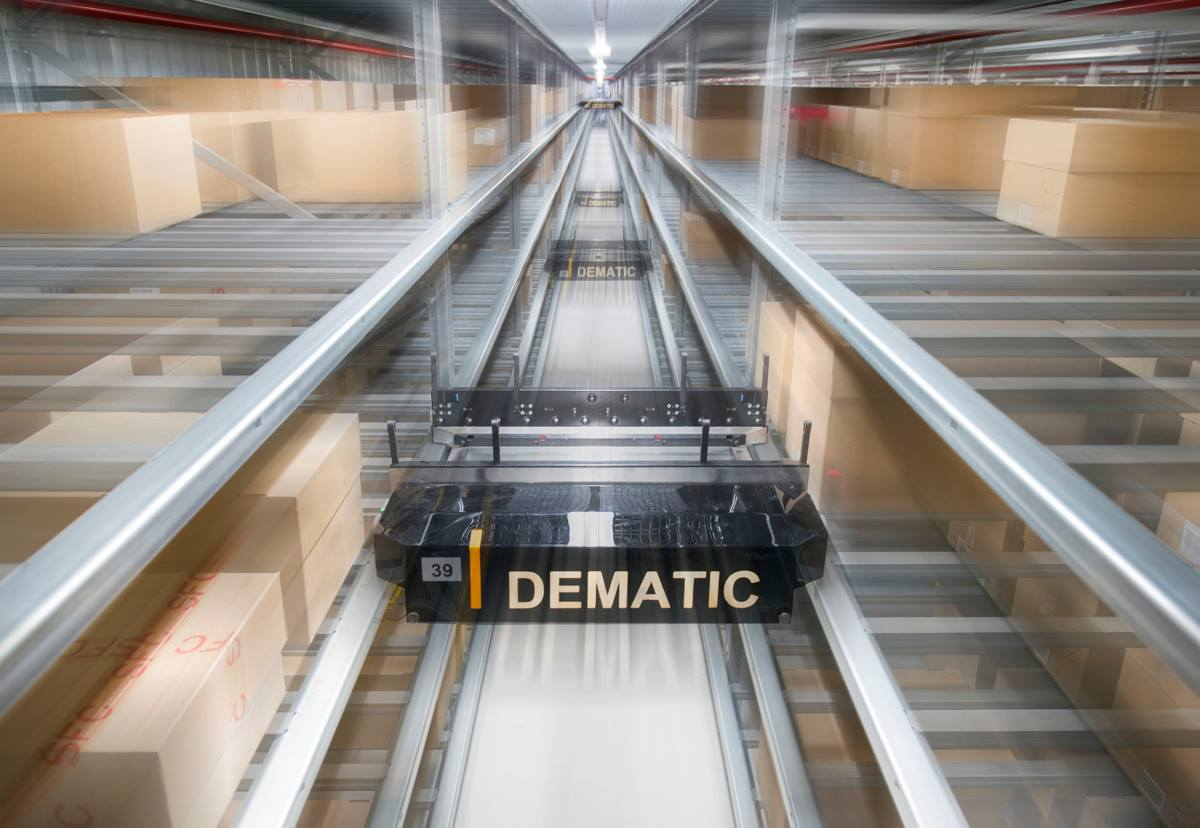
    Dematic announced today it has been awarded an automation project for two temperature-controlled warehouses with Americold, a leading temperature-controlled infrastructure and supply chain solutions and services company, to improve efficiency for a major grocery retailer in the U.S.

    The Dematic integrated solution includes goods-in receiving, automatic delayering, tray handling, sortation, automatic pallet building, dispatch trailer sequencing and ergonomic case picking. The solution will feature both a Dematic high-bay unit load AS/RS for pallets and the Dematic Multishuttle® for case buffering and sequencing. The combination of these technologies, managed and operated by Dematic software, creates the most effective compact mixed-case handling solution on the market.

    “At Americold we have a unique lens into the temperature-controlled supply chain. To help us offer world-class service to our customers, we were seeking an automation partner to facilitate the future hyper-connected, enabled supply chain in retail fulfillment,” stated David Stuver, Executive Vice President of Supply Chain Solutions at Americold. “With large-scale global capabilities and innovative automation solutions, Dematic is an ideal partner to help us create state-of-the-art facilities that will help Americold transform the supply chain.”

    The new facilities will be true four-wall automated solutions with automated mixed-case palletising systems to ensure cube optimisation improvements. Highly efficient packing will mean fewer trucks needed for delivery, and shelf-ready pallets will allow for the quickest possible stocking of store shelves.

    Bernard Biolchini, CEO, Dematic Americas stated, “The Dematic Center of Excellence for Grocery worked in true partnership with Americold to develop the right solution. These fully automated facilities, powered by Dematic iQ software, will provide immense operational flexibility, supporting an omnichannel experience and multi-channel growth.”

    About Dematic

    Dematic is an intralogistics innovator that designs, builds and supports intelligent, automated solutions for manufacturing, warehouse and distribution environments for customers that are powering the future of commerce. With engineering centres, manufacturing facilities and service centres located in more than 25 countries, Dematic’s global network of 8,000 employees have helped achieve more than 6,000 worldwide customer installations for some of the world’s leading brands. Headquartered in Atlanta, Dematic is a member of KION Group, a global leader in industrial trucks, supply chain solutions and related services, and a leading provider of warehouse automation. 

    About Americold Realty Trust

    Americold is the world’s largest publicly traded REIT focused on the ownership, operation, acquisition and development of temperature-controlled warehouses. Based in Atlanta, Ga., Americold owns and operates 183 temperature-controlled warehouses, with over 1 billion refrigerated cubic feet of storage, in the United States, Australia, New Zealand, Canada and Argentina as of March 31, 2020. Americold’s facilities are an integral component of the supply chain connecting food producers, processors, distributors and retailers to consumers.


  • Tune Protect launches enhanced AirAsia Travel Protection with Covid-19 coverage

    Tune Protect launches enhanced AirAsia Travel Protection with Covid-19 coverage

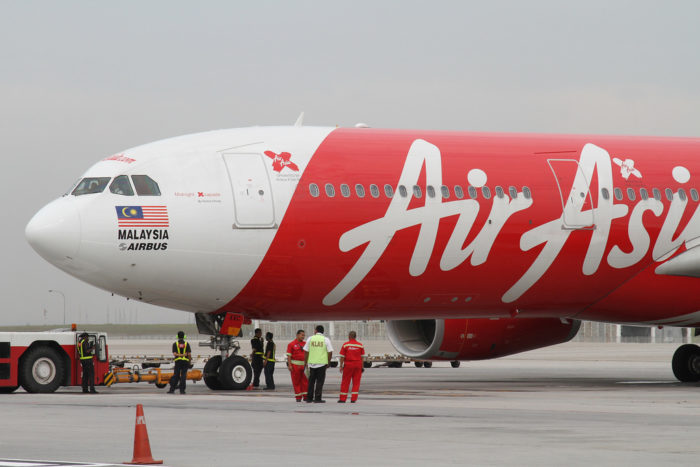
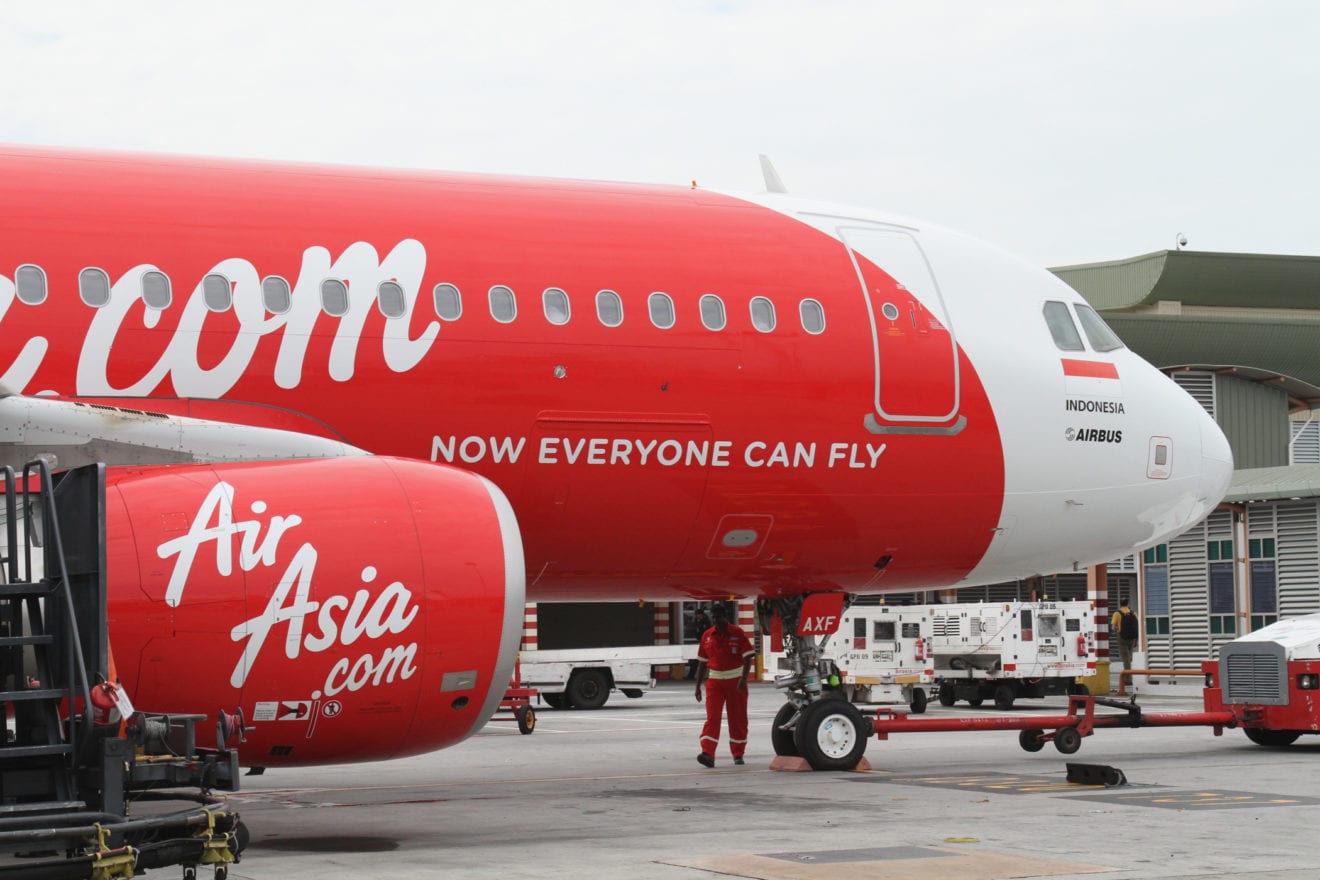
    Tune Protect Group Bhd has launched its enhanced AirAsia Travel Protection, which now comes with Covid-19 protection benefits and is available in both Single and Annual Plans for both domestic and international travel, for AirAsia guests.

    In a statement today, Tune Protect said the enhanced Travel Protection is timely with the reopening of domestic travel and the discussion that has been initiated to reopen Malaysia’s borders to “green zones” countries as Malaysia phases into the Recovery Movement Control Order.

    It said the resumption of the travel and tourism sector is in line with the efforts in accelerating the country’s economic recovery and reviving the Malaysian travel and tourism industry, which was at a standstill due to Covid-19.

    “As AirAsia initiates domestic flights with new safety and health procedures, we have also put in place new and enhanced benefits to our existing Travel Protection, which include Covid-19 coverage to ensure ease and peace of mind of our customers during traveling,” said Tune Protect group chief executive officer Khoo Ai Lin.

    The Annual Travel Protection Plan starts at RM56 covering customers for an entire year from the date of activation, regardless of the frequency of travel. Customers can also purchase the Single Plan coverage when they are purchasing AirAsia plane tickets or any time before they fly, it added.

    AirAsia Group Bhd executive chairman Datuk Kamarudin Meranun said that while air travel remains one of the safest modes of travel, there had been an increase in awareness of the importance of travel insurance products in the last few months from the group’s sales channel. This enhancement is a great complement to the various end-to-end safety measures that have been put in place by AirAsia for its passengers to fly again with a peace of mind, protecting them beyond flying.

    “As travel begins to regain traction, we look forward to welcoming our passengers to fly with us again,” he said.

    The enhanced Travel Protection plan includes the Covid-19 Bereavement Allowance, Trip Cancellation, Daily Hospital Allowance and Compassionate Visit.

    “Tune Protect understands the needs and worries of travelers since the fight against Covid-19 is still ongoing. With the enhanced coverage that comes with our Travel Protection, travelers can put their worries to rest when making their travel plans with us or through AirAsia,” Khoo concluded.

    At the midday break, Tune Protect shed 1 sen or 3.03% to 32 sen, for a market capitalization of RM240.56 million.

  • AirAsia Sold A Record-Breaking 41,000 Seats In One Day Last Week

    AirAsia Sold A Record-Breaking 41,000 Seats In One Day Last Week

    On Tuesday, low-cost carrier AirAsia sold a record-breaking 41,000 seats in just one day. This marks AirAsia’s highest post-hibernation sale day since it resumed domestic flight services in May.

    The official site hit an overall traffic growth of 170%. By the looks of it, the number will only increase going forward. Passengers are eager to fly again – whether to reunite with loved ones, for business purposes or just to travel.

    “We are encouraged by this positive trend, and we foresee this will continue in the coming weeks,” CEO Tan Sri Tony Fernandes said in a statement sent to Simple Flying.

    According to a statement sent to Simple Flying, the most popular destinations booked on June 23rd were for the following routes:

    • Malaysia: From Kota Kinabalu and Kuching to Kuala Lumpur
    • Thailand: From Bangkok to Chiang Mai and Hat Yai
    • Indonesia: From Jakarta to Denpasar and Medan
    • Philippines: From Manila to Puerto Princesa and Davao
    • India: From Delhi to Srinagar and from Bengaluru to Hyderabad

    In Malaysia, the Recovery Movement Control Order (RMCO) began on June 10th. The RMCO allows for the resumption of domestic travel. As such, all interstate travel has picked up since. AirAsia also introduced an ‘Unlimited Pass’ for those traveling within the state. Additionally, there is a 20% sale on all domestic flights in Malaysia, which undeniably led to the airline’s highest load factor post-hibernation.

    AirAsia’s flight ticket sales are picking up as more countries resume domestic travel. Photo: Getty Images

    AirAsia Group’s load factor hit 50%, with AirAsia Malaysia reaching a whopping 70%. Fernandes added,

    The airline has also focused on enhancing its safety and cleaning measures. On top of compulsory masks and social distancing measures, all cabin crew will don personal protective equipment (PPE) and wear masks and gloves. Cleaning measures are completed regularly for each aircraft.

    Specifically for AirAsia Philippines, cabin crew must wear a newly designed PPE in AirAsia colors – complete with a face shield, mask, and gloves.

    AirAsia introduced end-to-end contactless journeys for customers in May. With minimal contact needed, the airline hopes to keep its passengers’ minds at ease while going through the boarding and check-in process.

    These initiatives began on May 13th and included contactless payments at the airport, a Passenger Reconciliation System (PRS) for digitized boarding passes, and enhanced features to its mobile app.

    It seems that the Malaysian-based carrier handled the COVID-19 situation relatively well. Although it had to ground 96% of its fleet and halt Airbus deliveries, the airline has succeeded in enticing passengers with new promotions.

    Furthermore, the airline implemented initiatives targeted at helping vulnerable communities amid the virus outbreak. Earlier this month, the airline gave away 50,000 tickets to frontline workers and doctors.

    AirAsia’s uptick in sales shows that there is indeed a demand for domestic travel. Fernandes mentions the airline will increase its flight schedule to 50% of its pre-pandemic operations in the next few weeks.

    “Currently, we are operating 152 daily flights across the region. We look forward to the reopening of international borders in recognition of the fact that air transport provides the connectivity that is essential for the resumption of economic activities and the global recovery efforts”, he added.

    Once international borders reopen, there is no doubt the carrier will continue to have its sales numbers increase.

  • Jeweller Luk Fook sees early signs of recovery in Hong Kong retail

    Jeweller Luk Fook sees early signs of recovery in Hong Kong retail

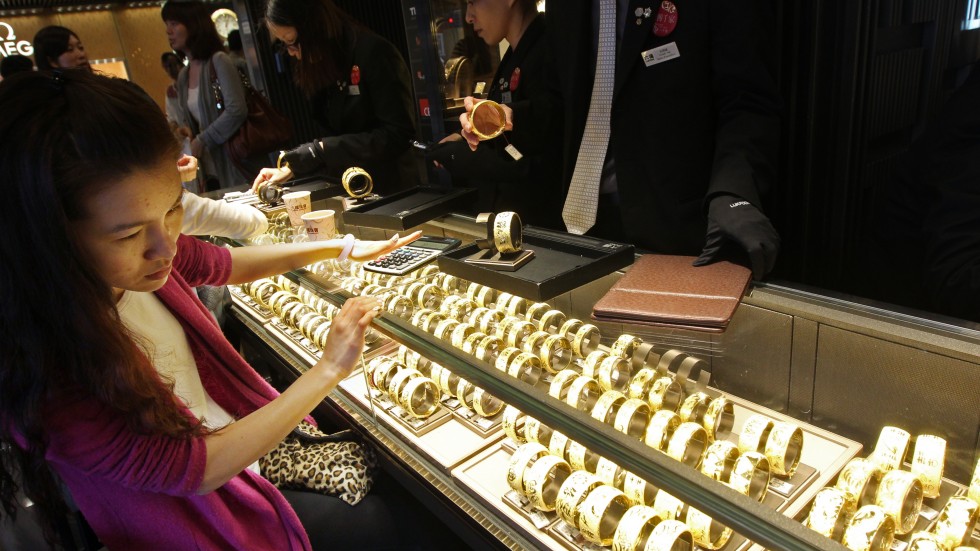
    Hong Kong-listed jeweler Luk Fook has reported early signs of a recovery in the Hong Kong market this month, despite the border with Mainland China effectively-remaining closed to visitors.

    In April and May, with tourist numbers to Hong Kong and Macau at a record low due to Covid-19 related travel restrictions, sales fell by about 80 percent, although same-store sales in mainland stores recorded “a much smaller decline” as retail stores resumed business and consumer sentiment began to recover.

    “Starting from June, the retail sentiment in the Hong Kong and Macau market gradually recovered,” said chairman and CEO Wai Sheung Wong in a commentary on the groups’ annual results filed Friday.

    “The decline of same-store sales in the first three weeks narrowed to around 60 percent, while overall shops in the mainland market showed progressive improvements with a less than 20-per-cent decline in June as compared to the 20-per-cent drop in April to May and 40-per-cent drop in March.”

    As a result of Hong Kong’s declining retail market, Luk Fook will close five stores in the city during the coming year and look for opportunities to open two in Macau.

    “In view of the anticipated considerable growth of the middle-class population in the mainland, the group remains optimistic about the mid- to long-term business prospects, and will focus its expansion in the mainland market,” said Wong.

    Due to the crippling impact of protests and Covid-19 on Hong Kong retail in the year to March and the pandemic along with the trade war impacting consumer sentiment among mainlanders, Luk Fook achieved a profit attributable to shareholders down 42 percent to US$111.7 million for the year.

    Sales declined by 29.2 percent to $1.445 billion, with Hong Kong and Macau same-store revenue down by 33.3 percent and on the mainland by 20.2 percent. However, a steady rise in the price of gold throughout the year saw the company’s gross margin increase by 4.2 percentage points to 29.6 percent.

    Network expansion

    During last year, Luk Fook added a net 234 Lukfook-branded shops – 233 on the mainland, and one licensed store in the Philippines – taking its global network to 2120. Outside Greater China, Luk Fook has stores in Singapore, Malaysia, Cambodia, the Philippines, the US, Canada and Australia.

    The company says it plans to open at least 150 new stores under the Lukfook brand on the mainland this year, primarily targeting licensed shops in tier-4 and tier-5 cities, and another 50 under other brands.

    Besides jewelry, the company is now an authorized dealer of 13 international mid- to high-end watch brands: Certina, Coinwatch, Doxa, Enicar, Hamilton, Longines, Mido, Omega, Rado, Romago Swiss, Tissot, Bijoumontre and Seiko.  Last year, the watch business accounted for $12.86 million in sales, down 39.8 percent on the prior year.
  • Nissan Denies Corporate Conspiracy To Oust Ex-chairman Ghosn

    Nissan Denies Corporate Conspiracy To Oust Ex-chairman Ghosn

    Nissan Motor on Monday blasted suggestions in media reports of a conspiracy within the company to oust former chairman Carlos Ghosn. Ghosn’s 2018 arrest in Japan on financial misconduct charges has led to much speculation that the move was orchestrated by Nissan executives who opposed closer ties with partner Renault SA. “I know that in books and the media there has been talk about a conspiracy but there are no facts whatsoever to support this,” Motoo Nagai, chairman of Nissan’s auditing committee, told shareholders at the company’s annual general meeting.

    Responding to demands from a shareholder to address the speculation, Nagai argued that the investigation into Ghosn was conducted both internally and by outside law firms.

    Nissan’s former chair Ghosn says he was victim of ‘backstabbing’ in video address

    Nissan’s former chair Carlos Ghosn says he was a victim of “backstabbing” and a “conspiracy” in a video address showed on Tuesday.

    Monday’s meeting lasted almost two hours – twice as long as planned, as shareholders grilled Chief Executive Makoto Uchida on how he planned to restore trust in the company following the Ghosn scandal, and revive sales in the United States and China.

    Uchida, who took the helm in December, told shareholders he would stick to his promise to step down as leader if he fails to deliver on a turnaround plan for the Japanese automaker, which last month reported its first annual loss in 11 years.

    Seeking to slash costs and downsize after years of excessive spending in the pursuit of market share, Nissan plans to cut its model range by about a fifth and reduce production capacity, shuttering plants in Spain and Indonesia and laying off workers in countries including Mexico.

    It now aims to sell 5 million vehicles a year, far fewer than past ambitions of 8 million.

  • Reduced rents, high-end products help Oriental Watch stay in profit

    Reduced rents, high-end products help Oriental Watch stay in profit

    Listed Hong Kong timepiece retailer Oriental Watch Holdings has weathered the multiple crises of the last financial year to record a decrease in turnover of just 3.5 percent and a profit of US$12.9 million.

    While turnover was down to $303.6 million, gross profit was up by 7 percent to $83.2 million, “mainly due to the group’s positioning at the high-end luxurious watch market where our long-term customers maintain strong purchasing power, as well as our vigorous efforts in the control of inventory,” the company said in its results announcement.

    The net profit attributable to shareholders of $12.9 million was down by 27.5 percent, the decline largely due to impairment losses, an increase in the allowance for slowing-moving stock and decreasing sales due to Covid-19 in the first quarter of this calendar year. But the company warned the full impact of Covid-19 had not been represented in the 2020 year results.

    Chairman Yeung Ming Biu said the company had introduced “stringent cost-control measures, especially in rent costs” which were down by 15.7 percent to $18.7 million.

    “We have successfully negotiated lower rental rates and more flexible leasing terms, and hence lowering the overall rental cost. In addition, we conduct a regular assessment on the performance of all retail stores and close down non-performing ones to improve resources allocation. The Group will continue to closely monitor our stores’ performance as well as rental contracts in order to improve our efficiency and cost structure,” said Yeung

    Oriental Watch has 62 luxury watch stores in Greater China, 47 on the mainland, 11 in Hong Kong, three in Taiwan and one in Macau.

    By market, Oriental Watch achieved a 17.5-per-cent increase in sales on the mainland to $129.1 million, despite the declining consumer sentiment and the advent of the pandemic. In Hong Kong, year-on-year sales were stable despite the social unrest from June last year until the arrival of Covid-19. As a result, sales fell by 17.3 percent to $154.6 million.

    Sales in Taiwan and Macau grew slightly, but recorded a loss largely due to increased allowance for slow-moving stock.

  • New Lazada CEO name surfaced

    New Lazada CEO name surfaced

    Southeast Asian e-commerce platform Lazada has appointed Chun Li as its new CEO.

    Li will succeed former CEO Pierre Poignant, who will head to Alibaba Group as a special assistant to its CEO Daniel Zhang.

    “Chun is an experienced business leader who can realize Lazada’s vision of unifying commerce with technology to advance Southeast Asia’s digital economy,” said Lucy Peng, chairwoman at Lazada Group.

    With technology-architecture and product-strategy backgrounds, Chun Li will ensure Lazada’s competitive advantage through data technology application and business localization across the region, according to the company.

    “Lazada’s priority is to create unique value for our consumers and merchants in Southeast Asia,” said Li. “There is incredible momentum for e-commerce across the region, and together with our strong local talents, we will step up Lazada’s digital innovation and commercial development to empower our customers to be successful and provide the best user experience for our consumers.”

    Li joined Alibaba Group as chief technology officer for the group’s B2B unit in 2014. He has served as both Lazada president and CEO of Lazada Indonesia since 2017.

  • Facebook testing Dark mode for iOS

    Facebook testing Dark mode for iOS

    What do you do when your social-media site is under attack because of your policies that allow offensive posts and posts filled with hatred to ferment until they blow up? Why you start pushing out Dark mode for the mobile version of your site. Of course, we are talking about Facebook. The social-media giant has lost a lot of high-rollers from its advertising roster over the last week including Verizon. The nation’s largest carrier spent nearly $1.9 million on Facebook and Instagram ads from May 22nd to June 20th. As more and more big-name advertisers pulled out, Facebook’s stock cratered leaving co-founder and CEO Mark Zuckerberg some $7 billion poorer on Friday alone.

    Facebook has started rolling out Dark mode for “a small percentage of users globally right now.” Dark Mode inverts the typical black text on a white background to black text on a white background. This prevents users from having the white-hot background irritate their eyes at night or in a dark room. On phones using an AMOLED display, it can save battery life since OLED panels create the color black by turning off pixels in the appropriate area. Pixels that are turned off do not draw on the phone’s battery.

    There have been rumors for years about a Dark mode for Facebook and occasionally Facebook has tested such a feature. The most recent story we wrote about it was posted three weeks ago. Meanwhile, Dark mode has surfaced on Facebook Messenger, Facebook Lite, WhatsApp, and Instagram. It is also offered to users of the desktop (web) version of the site.

    A Facebook user who shared an image of Facebook in Dark mode on Twitter was apparently using the first developer beta of iOS 14. To see if you have Dark mode on your Facebook app, go to settings and if a Dark mode button appears, congratulations. You have Dark mode for Facebook. Unfortunately, we did not get Dark mode yet on our iPhone 11 Pro Max running iOS 13.5.1 and our Pixel 2 XL running Android 11 beta 1. Unless Facebook really does broaden the distribution of this update, it will turn out to be another disappointment for those Dark mode fans who want the UI for their Facebook app.