Author: Mei Ling Tan

  • Yum China Lifts Off Beyond Burger in KFC, Pizza Hut, Taco Bell

    Yum China Lifts Off Beyond Burger in KFC, Pizza Hut, Taco Bell

    Yum China has entered into a partnership with plant-based meat manufacturer Beyond Meat to trial a burger at selected KFC, Pizza Hut, and Taco Bell locations within the country.

    The agreement marks the introduction of Beyond Meat’s Beyond Burger in Mainland China.

    “We see great potential for the plant-based meat market in China,” said Yum China CEO Joey Wat. “This latest introduction … is expected to capture valuable consumer feedback across different regions in China. It will enable us to optimize flavors and processes and help assess the potential for larger-scale rollouts in the future.”

    Beyond Meat founder and CEO Ethan Brown said Chinese consumers are seeking out the nutritional and environmental benefits of plant-based meats.

    The burger will be available at five KFC locations in Beijing, Chengdu, Hangzhou and Shanghai. The Pizza Hut offering will launch at six Shanghai locations and will constitute part of the brand’s first-ever burger offering. Taco Bell will offer a taco made with the plant-based Beyond Burger patty at three stores in Shanghai.

    All Beyond Burger promotions will be sold as a three-day limited offer.

    The move follows Starbucks China launching a range of foods using plant-based meat alternatives, including two pasta dishes and a wrap featuring Beyond Meat and another dish using OmniPork.

  • Liverpool FC opens E-commerce platform in Japan

    Liverpool FC opens E-commerce platform in Japan

    Liverpool FC has partnered with soccer shop Kamo to launch its first online store in Japan.

    The Liverpool FC online store offers a wide range of replica kits and the brand’s authentic merchandise, apparel and fashion accessories, including the exclusive Hello Kitty x LFC Collection.

    “As a key player in the football and sports-retail industry, we know this store has been a long time coming for Liverpool FC fans here,” said Ken Kamo, president of Kamo.

    “We’re looking forward to working together to bring supporters here closer to the club they love.”

    Launched in 1968 as a small football shop, Kamo operates 23 brick-and-mortar stores and an e-commerce site, offering a selection of sport brands including Puma, New Balance and Adidas.

    Senior VP at Liverpool Football Club Mike Cox, said: “I’ve been able to see first-hand how passionate our fanbase is here and as one of the world’s premier shopping destinations, it’s an exciting opportunity for the club to connect with supporters in the region.”

  • No surprise as retail sales in Hong Kong down again

    No surprise as retail sales in Hong Kong down again

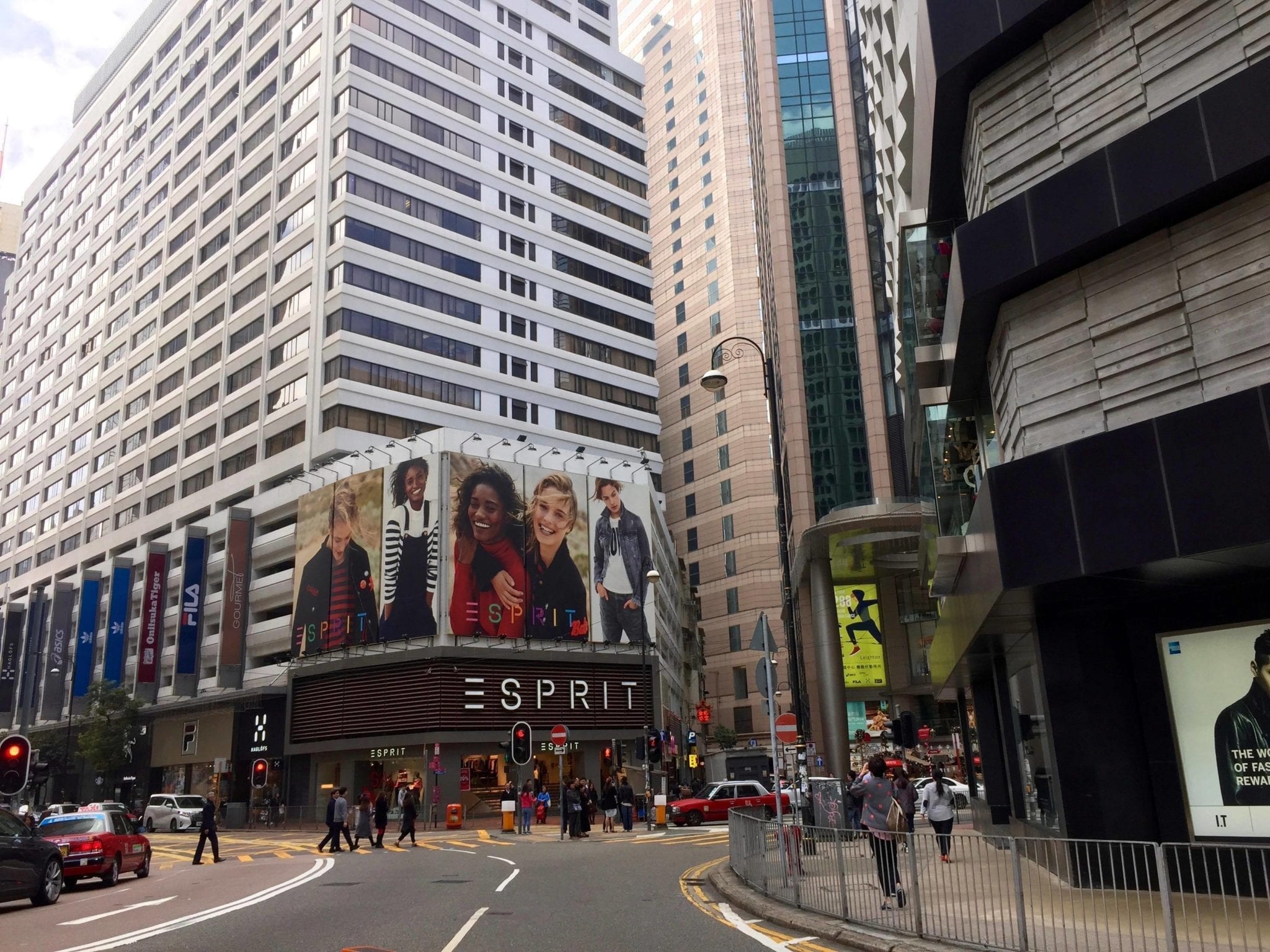
    Retail sales in Hong Kong have plunged by more than one-third over the first four months of this year.

    Census and Statistics Department figures show a 36.1-per-cent decline, which follows an adjusted 42.1-per-cent fall in March.

    Those two months represent the beginning of the real impact of the Covid-19 pandemic which has seen the border with Mainland China effectively closed down and starving the territory’s retailers of traditional sales to inbound tourists.

    A government spokesman said that April’s decline, while narrower than that of March, was still “huge”.

    “While the epidemic has abated in Hong Kong, the business environment for retail trade remains challenging, as Covid-19 has brought inbound tourism to a standstill, and as austere labor market conditions and various uncertainties continue to weigh on consumer sentiment.”

    Retailers received little relief in May as when local social-distancing measures were relaxed, social unrest recommenced, leading to stores being shut in the popular Causeway Bay district, with some, including I.T Group-owned premises, vandalized. Retail sales in Hong Kong are unlikely to show any lasting recovery until much later this year when the border reopens and international travel resumes.

    Broken down by category, the April data made for grim reading. Watches, clocks and jewelry sales were down a massive 76.6 percent on April last year. Apparel sales slumped 63.6 percent, cosmetics and medicines were down 62.9 percent and footwear and accessories fell by 55.6 percent.

    Optical shop sales fell by 43.2 percent, sales of books, stationery and newspapers fell by 39.9 percent, of Chinese drugs and herbs by 35.3 percent and of electrical goods and electronics by 21.7 percent.

    Department-store sales were down by 18 percent, and of food, liquor and tobacco by 14 percent.

    Just two categories posted growth: supermarket sales up by 14.4 percent and furniture and fittings by 1.6 percent.

  • Geely’s Polestar Plans China Showroom Expansion To Compete With Tesla

    Geely’s Polestar Plans China Showroom Expansion To Compete With Tesla

    Polestar, the premium electric vehicle maker owned by China’s Geely, plans a big expansion of its showroom network in the mainland, sources said, as it prepares for delivery of cars to compete with Tesla Inc’s locally made Model 3.

    Showroom strength is becoming an important differentiator for electric vehicle (EV) makers in the world’s biggest auto and EV market, as they line up new model launches.

    Polestar, which plans to deliver Polestar 2 electric sedans in China from July, currently has one showroom, in the capital of Beijing. It plans to have 20 showrooms, with most of the opening in the third quarter of this year.

    Polestar plans to deliver Polestar 2 electric sedans in China from July 2020

    Unlike sales of cars through dealers that most traditional automakers rely on, Polestar will sell directly to customers, a strategy also pursued by other EV makers including Tesla, Nio Inc, and Xpeng Motors, backed by Alibaba.

    Direct sales to customers can help automakers to better manage a car’s retail price and its production and inventory. However, it also adds to costs if automakers need to invest in self-owned showrooms like Tesla.

    Polestar, however, will partner with investors to build and operate the showrooms while still managing sales and delivery of cars, said the people, who spoke on condition of anonymity as the plan is not public.

    A rocket ship designed and built by Elon Musk’s SpaceX has lifted off with two Americans on a history-making flight to the International Space Station.

    A Polestar representative declined to comment.

    The automaker, based in Gothenburg, Sweden, started producing Polestar 2 sedans earlier this year in China and will also export them to Europe and the United States.

    It will open showrooms firstly in Shanghai and then expand to coastal Ningbo, northern Tianjin and southern Guangzhou. The showrooms will be mostly in shopping malls.

    In China, Tesla has over 50 showrooms. Nio currently operates around 110 showrooms, with some of the properties belonging to partners. Xpeng plans to have over 200 outlets by the end of the year from about 150 now, many of them belonging to partners.

  • UBS Looks to Soccer Banker for Wealth Goal

    UBS Looks to Soccer Banker for Wealth Goal

    With more than $1.2 trillion of UBS’ assets and nearly 6,500 private bankers, Jason Chandler is poised for his break-out moment. The former collegiate soccer player is the linchpin to the bank’s efforts to make a super-rich push truly global.

    The American-born banker has been head of UBS’ wealth management activities for 17 months – but he is central to the Swiss bank’s efforts to truly span the world for the ultra-rich. A soccer scholarship got him to college, but Jason Chandler switched to business when it became clear his coursework would interfere with practice.

    The U.S. unit is attempting to duplicate what UBS does in Asia, Latin America, or Switzerland: be and do everything to and for wealthy clans who command enough volume to merit the attention of investment bankers. Locking in this client segment globally, including the U.S., would lend credence to UBS’ sudden mega-merger in 2018.

    UBS’ plan is underpinned by sheer volume: the Americas are still home to the most billionaires. The U.S. has four times as many super-rich – those with more than $50 million – than China in second place, according to a recent Credit Suisse study. It falls to Chandler, the father of three teenage girls, to prove that it can adopt an advice-based, European-influenced model among its fee-driven brokers.

    The wealth management business is durable, I don’t think it can be Amazon-ed, Uber-ed, or AirBnB-ed, the 49-year-old said last year. It’s a relationship business where advice is specific to the family and to the client.» Personable and charismatic in the style of Americas Chairman Robert Bob McCann, Chandler faces major changes at the U.S. unit in the midst of a pandemic and as a severe recession looms.

    Like his boss, Tom Naratil, Chandler got his start as a trainee at Paine Webber. He never left, though Chandler leapfrogged the man who hired him, John Decker, more than ten years ago (Decker still works for UBS as New York market head).

    His most pressing challenge is profitability in a tough, expensive year: UBS, where productivity averages $1.3 million per adviser, wanted to move the goalposts for its advisers, making it tougher for them to reach payout targets. Chandler was forced to postpone the effort when the coronavirus hit the U.S., to autumn at the earliest.

    The U.S. unit’s profitability lags that of the wider unit, dramatically so (though it is improving): the Americas posted a cost-income ratio of 83.1 basis points in the first quarter, compared to 72.4 basis points in the wider unit (Switzerland, at 57.4 basis points, is a standout).

    Chandler, who still plays soccer and has coached his daughters’ teams, has spent the entirety of his career in the U.S. market but dipped into the wider world when he briefly co-ran an investment product and solutions group with Swiss banker Christian Wiesendanger. The now-disbanded unit was one of the first to pool efforts worldwide to source products for ultra-wealthy clients, long before the 2018 merger.

    A break in UBS’ gridlock has also helped him: the U.S. private bank won $9 billion in first-quarter inflows for separately-managed account strategies provided by its asset management unit, following price concessions, he told «Barron’s» last week.

    The specifics of UBS’ American push includes moving top investment banker Reinhardt Olsen to its private bank five months ago. More recently, the outline of a one-bank structure took shape recently under Paul Crisci, a veteran technology banker

    UBS’ closest competitor – unless Credit Suisse revisits its 2015 decision to leave the U.S. wealth market – is Morgan Stanley. It is far more efficient than UBS (a 73-basis-point cost-income ratio in the first three months) and, like UBS, is quietly trying to tap Asia’s ultra-wealthy through partnerships.

    UBS also started lending more aggressively in the U.S.: its loan book fattened by $5.5 billion in the last two years. At just north of five percent, its loan penetration with American clients is still relatively low. Chandler emphasized advice as much as lines of credits against luxury homes, planes, or pieces of fine art.

    Our wealthy clients are looking to be flexible: when they see something, to do something. When they want to buy something, to buy it,» he noted. «So having access to credit provides flexibility for our clients, he said.


  • Indian retailers in mall revolting

    Indian retailers in mall revolting

    Indian retailers with stores in shopping malls are threatening to close shop if landlords do not meet demands for waivers and new rental agreements.

    Retailers representing 350 brands are seeking relief from tough rental commitments in the likely face of 12 months of low business driven by the Covid-19 crisis, proposing new arrangements such as revenue-sharing models. The brands have sent an ultimatum to malls including DLF, Ambience, Nexus, Pacific, Phoenix Group, Oberoi, and Mantri following the failure of some retailers to revise rental agreements.

    “We cannot survive without collaboration,” said Future Retail MD Rakesh Biyani in a Times of India report. “If not, there will be further job losses in the sector.”

    Of all Indian retailers, those that could be hardest hit by continuing patterns of buying this year are likely to be apparel and fashion.

    “Retailers and brands have to additionally deal with massive accumulation of inventories, unprecedented disruption in manufacturing and supply chain, and the huge shift of customers to e-commerce, among other things,” read the retailers’ ultimatum.

    Indian mall footfall is expected by some industry observers to continue to be affected by the Covid-19 pandemic well after the outbreak resolves, with consumer behavior potentially permanently gravitating towards online shopping.

  • Vietnam retail sales bounce back after virus outbreak shutdown ends

    Vietnam retail sales bounce back after virus outbreak shutdown ends

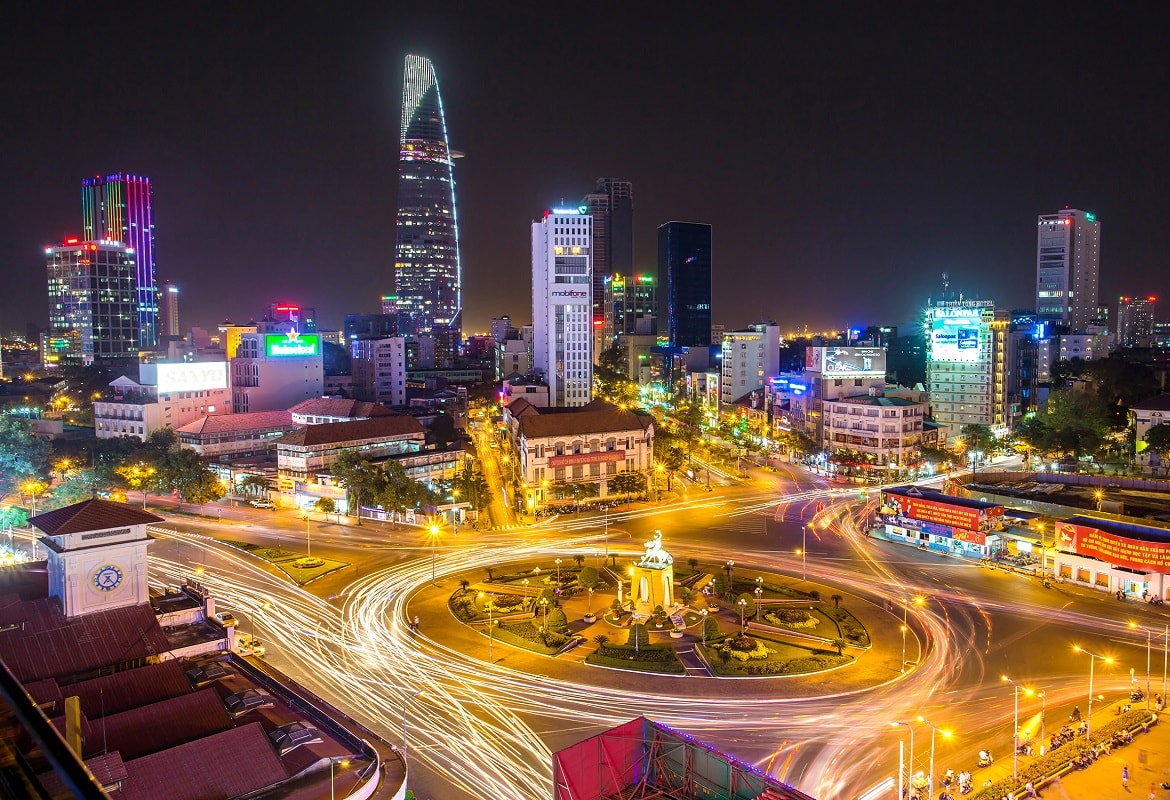
    Vietnam retail sales have dropped just 4 percent over the first five months of this year, despite a four-week shut down due to the Covid-19 crisis.

    According to the General Statistics Office (GSO), the retail revenue reached more than US$82.36 billion from January to May.

    ‘Non-essential’ stores across the country were closed from the end of March through most of April, with only supermarkets and pharmacies allowed to continue to trade. However, throughout the closure, all retailers were allowed to sell goods online.

    In May, after restrictions were lifted, Vietnam retail sales surged 27 percent from April’s figures.

    Sales of consumer goods accounted for 80.6 percent of retail revenue, increasing by 1.2 percent year on year.

    Growth sectors included fresh-food products and home appliances while educational products and apparel sales fell by 8.2 percent and 3 percent respectively

    Although restaurants and other catering businesses have resumed their operations, the F&B sales fell 26 percent year on year across the first five months of this year.

  • Japanese department-store sales continue to drop

    Japanese department-store sales continue to drop

    Japanese department store sales plunged 60 percent last month as the Covid-19 crisis saw retailers close or operate under reduced hours across the country.

    Sales in the Matsuzakaya and Daimaru department stores were down 73.2 percent year on year, although that was an improvement on the 79.1-per-cent decline a month earlier.

    Rival operator Takashimaya says its sales were down by 62.9 percent, while Seibu and Sogo reported a decline of 61.5 percent.

    As in neighboring South Korea, duty-free sales have been severely affected by the absence of inbound mainland Chinese tourists. In Takashimaya’s duty-free division, sales fell by 98.7 percent.

    As Inside Retail Asia reported yesterday, South Korean duty-free retailers temporarily shuttered metropolitan stores in response to a significant decline in tourist numbers caused by the coronavirus epidemic.

    However, department-store sales there have shown signs of recovery as social-distancing restrictions were eased by the country’s government.

  • 4 Reasons to Consider CFD Trading

    4 Reasons to Consider CFD Trading

    Are you sitting at home wondering if this pandemic is ever going to get end? You’re not alone. There are millions around the world wondering the same thing.

    While this may seem like a dark time, for investors, it’s a fertile playground. As stock and shares rise and fall by the day, predictions about good investments seem to be sketchy at best, but there is hope.

    A Light in the Storm

    Consider that, right now, the travel industry is at a standstill. We know this won’t be the case forever: if travel companies can weather this storm, we’re sure to see a resurgence in travel (and a rise in travel shares) in the next few months and years. This could be a fantastic way to enter trading; however, if traditional investing doesn’t seem like your thing, then there are alternatives out there.

    CFD trading could be a great avenue to venture down instead. CFD trading is a popular way of speculating on the global financial market, including things like treasuries, commodities, indices, and currencies. 

    One of the biggest bonuses of CFD trading is that you’re not buying any assets, so you won’t be responsible for commodities or physical shares in a business.

    Reasons to CFD Trade

    Due to the fact that CFD trading is done on leverage, it’s a compelling option for many traders, especially those looking to get into trading for the first time. 

    There can be larger gains for smaller investments when doing CFD trading, and these can happen over a shorter period of time when compared to traditional stock market investing, making them a very attractive and popular choice for many.

    Do you need some more convincing? Here are a few reasons why you should consider jumping in with CFD trading.

    Flexibility

    CFD trading is done on a contract to exchange the difference in price between your opening position and your closing position. This allows you to trade on both a rising and a falling market, meaning you can choose the best time to buy or sell. In other words, this is a much more flexible option than traditional trading. However, it’s always worth going with a professional trading investment provider on this one to ensure you’re getting the most out of your investment.

    Market Diversity

    Have you always dreamed of being part of a diverse market? With CFDs, this is a huge possibility; in fact, there are over 16,000 markets that you can trade in. All kinds of options can be found, including indices, cryptocurrencies, commodities, and more.

    As an added bonus, CFDs allow you to trade outside market hours. This means you could have your finger on the pulse and take full advantage of the natural fluctuations that happen out of hours.

    Hedging Your Bets

    The flexibility of CFDs means you can hedge your bets on how the market may change. If you would like to stay in a certain market, but you can foresee a dip, CFDs will allow you to offset the dip against the future profits you hope to make.

  • JPMorgan South & Southeast Asia CEO to retire

    JPMorgan South & Southeast Asia CEO to retire

    The Chairman and CEO of South & Southeast Asia for JPMorgan, Kalpana Morparia is reportedly planning on stepping down from her role in Q1 2021.

    Morparia first joined the firm in 2008, and in addition to her regional roles acts as the Senior Country Officer for JPMorgan in India, based in Mumbai. Speaking of the offer to join the firm, Morparia said: “Out of the blue, I received this offer from JPMorgan. This was again one of the great turns of fate that I joined a great organization like JPMorgan. Despite all the negative clouds you see today in the country, I believe in the great growth story of India. JPMorgan is extremely focused on serving its clients in India.

    Prior to joining the American firm, she was affiliated with ICICI Bank, an Indian multinational banking and financial services company, for over three decades.

    She first joined ICICI in 1975, beginning in the bank’s legal department, as she pursued a Law degree following her science-focused studies. In 1991, Morparia traveled to the USA to study capital markets at Davis Polk & Wardwell. Subsequently, she enacted the listing of ICICI Bank in 1999 on the New York Stock Exchange and is credited with the 2002 merger of ICICI Bank and ICICI.

    Morparia will be succeeded by Madhav Kalyan as Senior Country Officer for JPMorgan India, who currently serves as Managing Director and CEO for the India operation, entering the role in Q4 2009, according to his LinkedIn.

    Leo Puri is reportedly going to be appointed as Chairman of South & Southeast Asia, joining JPMorgan in Q1 2021, and Murli Maiya will take up the reins as CEO. Both will report to JPMorgan’s CEO for Asia Pacific, Filippo Gori.

    In a statement, JPMorgan said: “Kalpana Morparia, Chairman, South and Southeast Asia, informed the firm of her desire to retire. She has agreed to stay with the firm until Q1 2021, and help lead the firm’s efforts in South and Southeast Asia as we and our clients adapt to the new economic and work environment.”

    “Leo is a very senior and experienced finance professional who will bring a wealth of industry knowledge and depth of relationships. He will be dedicated to covering our critical external stakeholders, including key clients, regulators and industry bodies,” the company statement continued.

  • DHL Global Forwarding moves critical goods from China to Ghana

    DHL Global Forwarding moves critical goods from China to Ghana

    PPE shipment was transported as part of DHL’s dedicated weekly air freight solution from China to Africa; UbuntuConnect – the specific air freight solution for the China-Africa lane – will be extended due to high demand.

    DHL Global Forwarding, the leading international provider of air, sea and road freight services is leveraging its global network to facilitate the air transportation of critical personal protective equipment from China to Ghana, via Dubai. From the capital city, Accra, the shipment is distributed across the country to equip front-line healthcare workers in their fight against Covid-19.

    This was made possible as part of DHL’s dedicated 100-ton weekly air freight service from China into the Middle East and Africa launched last month. Aptly named after the Nguni Bantu word for “humanity”, UbuntuConnect sees cargo being consolidated across China into Guangzhou City and shipped via Dubai to several countries across Africa, within a span of two to three days. Leveraging Dubai’s strategic geographical locations as the gateway between the Orient and Africa, DHL has transported two shipments to Ghana thus far and expects more in the coming weeks.

    “The ongoing pandemic is causing a dearth in global air freight capacity making it ever critical that we continue to amass our resources globally to ensure a stable supply chain, especially for medical and critical supplies. With UbuntuConnect, we are carving out specific routes from the transit hub in Dubai to Africa, so life-saving essentials can continue to reach local communities in Ghana,” said Serigne Ndanck Mbaye, CEODHL Global Forwarding (West Africa) and Country Manager, Ghana.

    DHL Global Forwarding has been operating UbuntuConnect since April 21 to meet the ongoing demand for medical equipment and personal protective gear such as masks, gloves, hand sanitizers and goggles. From May 26, DHL Global Forwarding will begin to consolidate cargo across China, for an uplift in Shanghai – as part of ongoing efforts to adjust the network as needed to best meet customers’ needs.

  • Volkswagen Group Announces Personnel Changes In Technical Development and Product Line Organisation

    Volkswagen Group Announces Personnel Changes In Technical Development and Product Line Organisation

    The Volkswagen Group has announced personnel changes in technical development and product line organization. Dr. Matthias Rabe has been named Member of the Board for Engineering at Bentley effective August 1, 2020. He succeeds Werner Tietz, who moves to SEAT as Executive Vice-President for Research and Development as of July 1. Dr. Matthias Rabe joined the Volkswagen Group in 1988 after completing his studies in mechanical engineering at RWTH Aachen. Having held several senior management posts, he moved to Shanghai Volkswagen as Head of Chassis and Electrical Development in 1992. He took over as Head of Group Research at Volkswagen AG in 2003.

    He then assumed responsibility for Body Development at the Volkswagen Passenger Cars brand from 2007 to 2011. In January 2011, he moved to SEAT in Martorell as Executive Vice-President for Research and Development. Matthias Rabe is currently Chief Technology Officer of the Volkswagen Passenger Cars brand in Wolfsburg.

    Axel Andorff will take over from Tietz, who assumes responsibility for the midsize and MEB Product Line at Skoda. He takes over from Matthias Glodny, who becomes Head of the Modular Toolkits, Drivetrains and Modules Product Line at Volkswagen Passenger Cars brand.

    Axel Andorff holds a degree in industrial engineering and joined the Volkswagen Group a year ago. He began his professional career as a trainee at DaimlerChrysler in Stuttgart in 2000. In 2001, he became assistant to the Purchasing Director at Mercedes-Benz Cars and was placed in charge of the series purchasing interior at Mercedes-Benz in 2004. Three years later, Axel Andorff was given responsibility for setting up and heading purchasing at Daimler Greater China in Beijing. He moved to Stuttgart to head project management for Mercedes-Benz New Compact Cars in 2009. In 2013, he became Head of Product Concepts and Planning Mercedes-Benz Compact Cars and Electric Vehicle Architecture. He was appointed Executive Vice-President for Research and Development at SEAT in Martorell in 2019.

  • Thai AirAsia chief proposes longer weekends

    Thai AirAsia chief proposes longer weekends

    Thai AirAsia’s executive chairman is proposing to the government a policy allowing one day working from home per week to avoid public congestion and boost the domestic tourism market to reach its target of 100 million trips this year.

    As more people get used to working from home, the government should consider allowing civil servants and private companies to work remotely one day a week, said Tassapon Bijleveld, executive chairman of SET-listed Asia Aviation (AAV) and the largest shareholder of Thai AirAsia.

    He said that when people are not bound to an office routine for Fridays, there’s a chance they’ll consider taking more trips for three-day weekends.

    The Tourism Authority of Thailand and the Finance Ministry are working on a tourism stimulus plan to make activities more affordable in the second half of the year.

    Mr Tassapon said he discussed the idea with the state agency, arguing that it would help efforts to push domestic tourism once the coronavirus crisis ends.

    “The domestic market still has a chance to take the lead in restoring the national economy, but it will depend on the scale of efforts from the government and cooperation from the private sector,” he said.

    He also encouraged the Interior Ministry and governors of each province to scrap the 14-day quarantine for inter-provincial travelers, as well as make clear whether a health certificate is needed. Some provinces have not clarified the rules, and airlines cannot plan routes to those destinations.

    Mr Tassapon said that while the aviation industry in Thailand is at a critical stage, the government can help it by offering local travelers a tax deduction on expenses for domestic airfares, which the previous scheme didn’t cover.

    According to the Tourism and Sports Ministry, local travelers took 24.7 million trips during the first four months of this year, down 50.3% year-on-year, generating 190 billion baht for the economy, down 48.3%.

    Mr Tassapon said Thailand’s tourism landscape after the global health crisis will lean towards quality tourists because more requirements for each trip will make people want to stay longer and spend more in Thailand instead of coming 3-4 times a year as they did before the pandemic.

    Moreover, Thailand should preserve the natural resources that have been restored during the outbreak.

    To achieve those goals, attractions are necessary for certain areas such as the northeastern provinces of Thailand.

    In the past, most tourists went to southern Thailand, which boasts plenty of famous resort islands, resulting in exploitation of nature and unbalanced tourism revenue.

    The Board of Investment should invite a major theme park operator such as Disney or Universal Studios to open a full-scale park in destinations that lack natural attractions, Mr Tassapon said.

    He noted that almost every province in the Northeast has an airport already. New investment could create many jobs for local communities.

  • South Korean duty-free retailers closing downtown stores

    South Korean duty-free retailers closing downtown stores

    South Korean duty-free retailers are temporarily shuttering metropolitan stores in response to a significant decline in tourist numbers caused by the coronavirus epidemic.

    Numerous outlets at prime tourist destination Jeju Island will be closed this month. A Lotte Duty-Free store that has already been operating under reduced hours since February will close pending the resolution of the crisis. Hotel Shilla’s store, which has suspended trading on weekends and holidays throughout the outbreak, will cease trading for a fixed one-month period.

    Jeju Island tourism has faltered significantly in recent months under heavily-reduced international flights, with a 99.2 percent drop in foreign tourist numbers year-on-year during April.

    The South Korean duty-free retailers shuttering stores also include Shinsegae Duty-Free’s locations in Gangnam and Busan will close on Sundays and Mondays from this month on, while airport duty-free stores under all local operators are largely closed for business at this time.

  • Apple takes action to close most U.S. stores after looting occurs

    Apple takes action to close most U.S. stores after looting occurs

    Some Apple Stores were looted last night as the U.S. suffered through another night of violent protests related to the death of George Floyd. Floyd was killed when a Minneapolis police officer put his knee into the man’s neck for nine minutes even though he was handcuffed, compliant with all of the officers’ demands, and no longer a threat. All four officers were fired and one charged with third-degree murder.

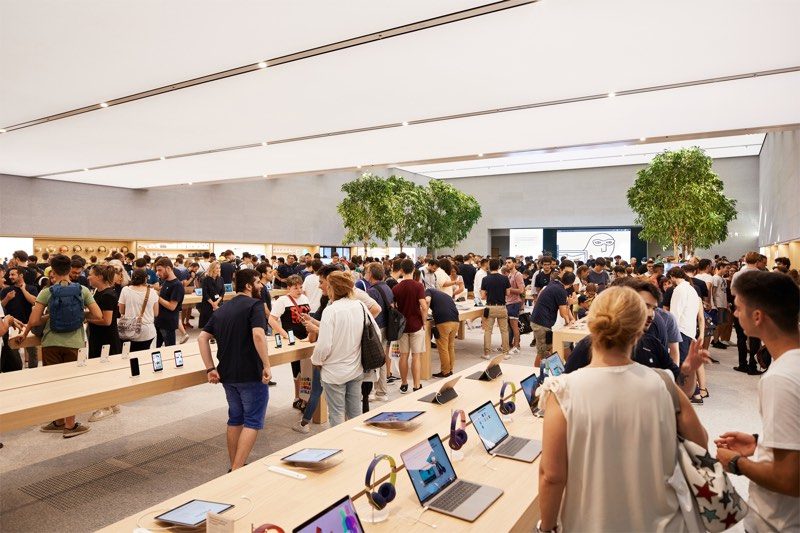
    To protect its employees from the violence, Apple has decided to temporarily close some of its brick and mortar locations. These stores had only recently reopened after being shut down because of the coronavirus pandemic. Apple Stores that were damaged or looted included locations in Portland, Philadelphia, Brooklyn, Salt Lake City, Los Angeles, Charleston, Washington, D.C., Scottsdale, and San Francisco. Some of the stores that were heavily damaged are closed indefinitely while others will reopen on Monday. Apple today said, “With the health and safety of our teams in mind, we’ve made the decision to keep a number of our stores in the US closed on Sunday.”

    One Twitter subscriber named Brian Mitchel tweeted about the Apple Store Uptown located in Minneapolis. The store was looted, boarded up, looted again, and boarded up again. In Portland, the Apple Store at Pioneer Place had tall windows smashed on all sides. This location had just reopened two days ago and it now will take some time to repair the store to make it safe for customers. Video from Portland’s KOIN 12 shows people running into the aforementioned Apple Store and running out with boxes of iPhones and iMacs in their hands.

    What the looters probably don’t know is that the iPhones that they steal from looted stores won’t work. Since 2016, demo iPhones in a particular Apple Store do not work if removed from that store. In the latter situation, these demo units will only respond to “Find My iPhone.”

    Out of the 271 U.S. Apple Stores, 140 stores had reopened over the last couple of weeks. It isn’t clear whether the violence will delay the reopening of the remaining 131 locations. Apple’s retail chief Deirdre O’Brien said earlier this month that “Our new social distance protocol allows for a limited number of visitors in the store at one time so there may be a delay for walk-in customers. We recommend, where possible, customers buy online for contactless delivery or in-store pickup.”

    If you decide to visit an open Apple Store, O’Brien says, “In every store, we’re focused on limiting occupancy and giving everybody lots of room, and renewing our focus on one‑on‑one, personalized service at the Genius Bar and throughout the store. We’re also taking some additional steps in most places. Face coverings will be required for all of our teams and customers, and we will provide them to customers who don’t bring their own. Temperature checks will be conducted at the door, and posted health questions will screen for those with symptoms — like cough or fever — or who have had recent exposure to someone infected with COVID‑19. Throughout the day, we’re conducting enhanced deep cleanings that place special emphasis on all surfaces, display products, and highly trafficked areas.”

    Because of the COVID-19 pandemic, the fiscal third quarter for Apple was looking glum even before the looting forced the company to close most U.S. Apple Stores today. And again, stores with extensive damage are going to be closed for some time.