Author: Mei Ling Tan

  • Zoom lied about using end-to-end encryption and is lightly spanked by the FTC

    Zoom lied about using end-to-end encryption and is lightly spanked by the FTC

    Announced on Monday, a settlement between video conferencing app Zoom and the FTC revealed that since 2016, Zoom had been lying about providing ‘end-to-end, 256-bit encryption’ to protect the security of users’ communication. The truth was that Zoom was actually giving users a lower level of security. As the FTC said on Monday, “Zoom maintained the cryptographic keys that could allow Zoom to access the content of its customers’ meetings, and secured its Zoom Meetings, in part, with a lower level of encryption than promised.”

    The FTC complaint chronicles the rapid growth of the company. In July 2019 it had 600,000 paid subscribers and 88% of its paid subscribers were small businesses with 10 or fewer employees. By December of 2019, 10 million people around the world were participating in a Zoom chat daily. And by the time COVID-19 hit the U.S. big time in April 2020, the number of people around the globe participating on a Zoom chat everyday had skyrocketed to a whopping 300 million.

    During this amazing period of growth, Zoom made various representations about the strength of its security measures. On its websites and in its security guides Zoom said that it takes “security seriously,” that it “places privacy and security as the highest priority.” Zoom also made it known that “it is committed to protecting your privacy.” Since 2016 Zoom has been making claims that its chats offer end-to-end encryption. One way that it did this was by placing an icon of a green padlock in the top left corner of a Zoom Meeting. When a user hovered near the icon, he or she would see a popup that read “Zoom is using an end-to-end encrypted connection.”

    But as the FTC notes, “Zoom did not provide end-to-end encryption for any Zoom Meeting that was conducted outside of Zoom’s Connector product. On a blog post written by Zoom’s Chief Product Officer, the company finally admitted that “while we never intended to deceive any of our customers, we recognize that there is a discrepancy between the commonly accepted definition of end-to-end encryption and how we were using it.” The FTC also noted that the claim made last year by Zoom that its recorded meetings were stored encrypted as soon as the Meeting was over simply was not true. As it turns out, recorded Meetings were kept in Zoom’s own server unencrypted for up to 60 days before they were transferred to Zoom’s secure cloud storage where they were stored encrypted.

    The Democrats on the FTC panel are not happy about the settlement since they feel that it does not punish Zoom enough for its lies. Democratic Commissioner Rebecca Kelly Slaughter said, “Zoom is not required to offer redress, refunds, or even notice to its customers that material claims regarding the security of its services were false. This failure of the proposed settlement does a disservice to Zoom’s customers, and substantially limits the deterrence value of the case.” However, Zoom does face lawsuits from customers and investors and these could result in the company being ordered to make financial restitution to those who were hurt by the firm’s dishonesty.

    The proposed settlement that Zoom has agreed to includes beefing up its security including the use of multi-factor authentication as a way to prevent unauthorized access to the Zoom network. The settlement is open for the public to comment on it for 30 days; once that time is up, the Commission gets to vote on making it final. The 30 days begins once the settlement is published in the Federal Register. Zoom will have to notify the FTC if there are any data breaches. All software updates will need to be examined by Zoom for any security flaws. And a third-party will need to sign-off on Zoom’s security program once the settlement is finalized and for every two years after that for a total of 20 years.
  • Hyundai Looks Ahead To New SUVs In 2021 And Urban Air Taxis By 2028

    Hyundai Looks Ahead To New SUVs In 2021 And Urban Air Taxis By 2028

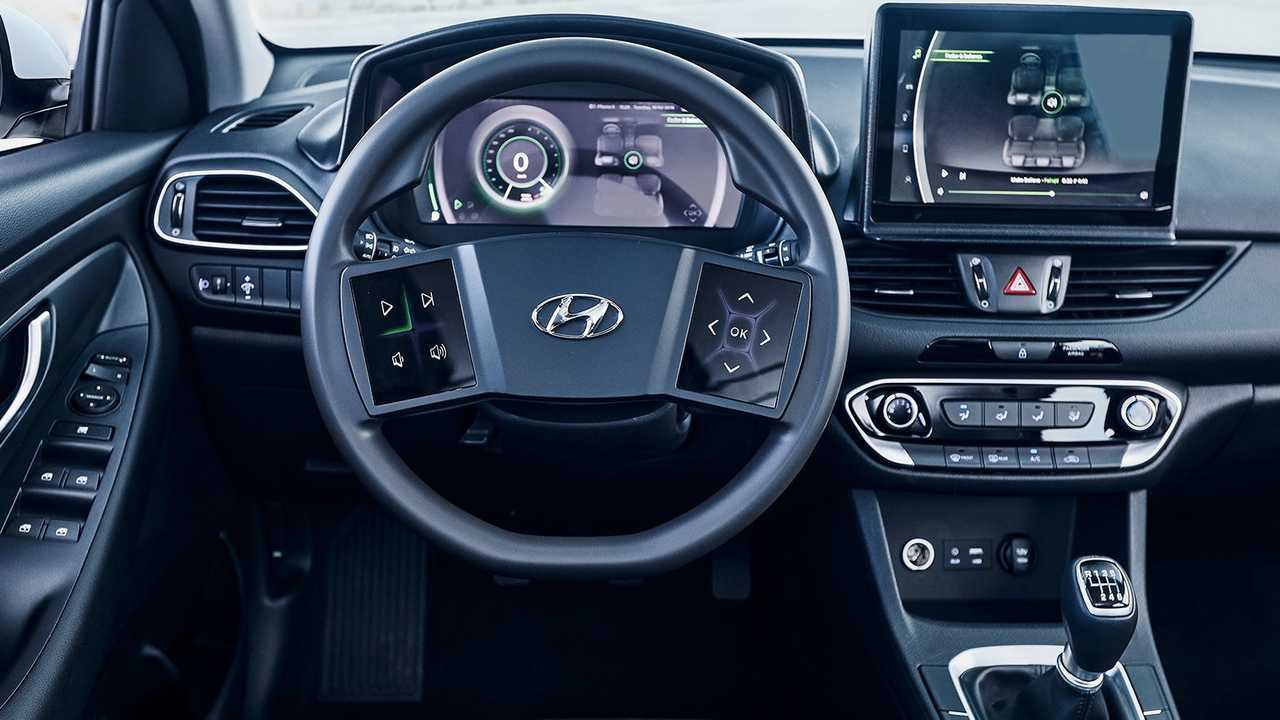
    South Korean automaker Hyundai Motor Co is supercharging its product portfolio next year with the introduction of several new SUVs, while looking even farther out to the launch of its first urban air taxis toward the end of the decade, the company’s top U.S. executive said on Monday.

    “We are all-in on autonomous vehicles,” as well as electric vehicles, said Jose Munoz, president and CEO and Hyundai Motor North America, at an Automotive Press Association teleconference.

    His remarks come at a time when investment in robo-taxis has slowed, even as the global pandemic has spurred interest in personally-owned vehicles, especially trucks and SUVs. Hyundai hopes to tap that interest next year with the all-new Santa Cruz, a compact utility vehicle with a pickup bed, and the Ioniq 5 crossover, the first in a series of new all-electric models.

    Early next year, the redesigned Tucson compact crossover goes into production at Hyundai’s Montgomery, Alabama plant, which also will begin building the Santa Cruz in late spring as part of a $410 million expansion. Munoz said Hyundai will work with the new Biden administration to develop infrastructure to support battery-electric and hydrogen-electric vehicles.

    He seemed most excited by Hyundai’s work with Motional – its $4 billion (£3 billion) self-driving technology joint venture with Aptiv PLC and its partnership with Uber Technologies on urban air taxis, which Munoz predicted would be in operation at such major U.S. airports as LAX in Los Angeles and JFK in New York “by 2028, maybe earlier.”

    Hyundai already is developing “flying devices” powered by electric motors and batteries that can transport five to six passengers from highly congested urban and suburban centers to those airports, Munoz said. “We see a lot of opportunities ahead of us in autonomous vehicles,” including air taxis, he said.

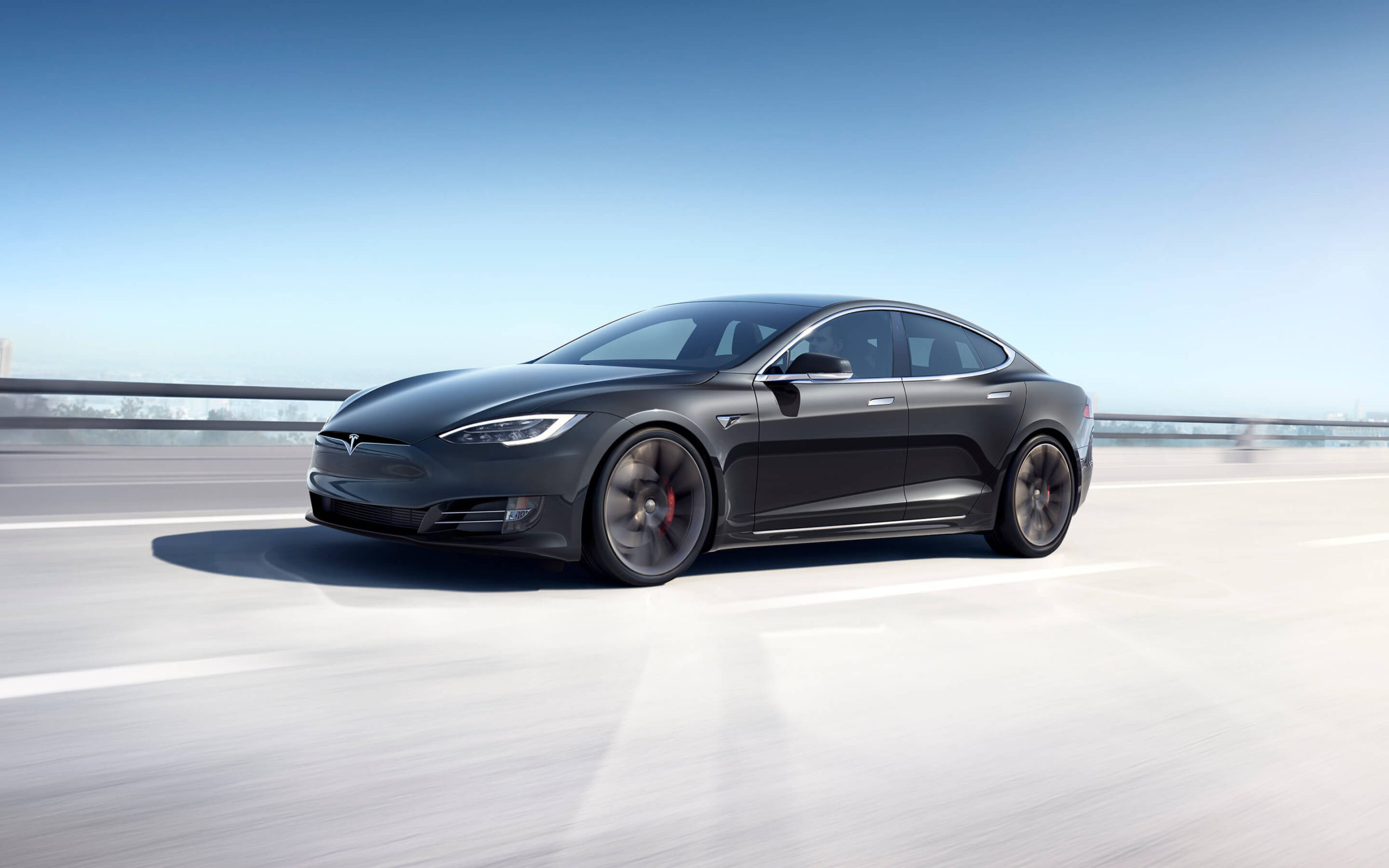
  • Tesla Is Looking To Move to AMD Navi Chips For The Media Control Units On Its Cars

    Tesla Is Looking To Move to AMD Navi Chips For The Media Control Units On Its Cars

    While Tesla has moved away from Nvidia’s silicon for its self-driving autonomous car capabilities, it still uses Nvidia’s Tegra mobile chips for the media control unit or MCU on its vehicles. It seems like Tesla wants to fully break up as it is considering AMD’s new Navi chips which form the basis for its new GPUs and the GPUs AMD has supplied both Microsoft and Sony for the Xbox Series X and PlayStation 5.

    Tesla has already switched to Intel-based x86 processors for its MCU on many vehicles and AMD’s Navi system on chips will have the same x86 architecture which will make the transition less painful. Patrick Schur has shared a document on Twitter which indicates that Tesla is particularly looking to move to AMD’s Navi 23 chip.

    Announced in October, AMD’s latest chips are said to match Nvidia’s GPUs in performance and outflank Intel’s CPUs in the same department while being significantly cheaper than products from the two companies.

    “Groundbreaking AMD RDNA 2 gaming architecture delivers up to 2X higher performance and up to 54 percent higher performance-per-watt compared to AMD RDNA-based graphics cards,” AMD says in a press statement describing its new Navi chips which are based on the RDNA 2 architecture.

    Tesla has also been hiring game developers which could mean that the world’s most valuable automaker could be very serious about gaming inside the vehicle. It is a strange choice but GPU compute these days is regardless more important than GPU compute for even AI tasks.

    This chip is said to be more powerful than Nvidia’s chips.

    Tesla has been at the forefront of this trend – it developed its own self-driving chip which it claims is better than Nvidia’s Xavier platform. For this, it even hired legendary chip designer Jim Keller, who has had stints at Intel, AMD and Apple. Jim Keller left Tesla in 2019 to join Intel but his stint at the iconic Santa Clara-based company also came to an end in June of this year.

  • Virgin Hyperloop Tests First Hyperloop With Humans Aboard

    Virgin Hyperloop Tests First Hyperloop With Humans Aboard

    Virgin Hyperloop has become the first company dabbling in Hyperloop which is an ultra-fast mode of grounded transportation, with humans aboard. This test took place this Sunday at the company’s DevLoop test track in the desert outside Las Vegas, Nevada. The Hyperloop featured two passengers.

    The first two passengers were Virgin Hyperloop’s chief technology officer and co-founder Josh Giegel, and its head of passenger experience Sara Luchian.

    The Hyperloop pods dubbed the Pegasus was transferred into an airlock as the air inside the enclosed vacuum tube was removed. The pod then accreted at 160 kmph down the length of the track.

    Virgin Hyperloop was founded in 2014 after the original concept for the Hyperloop was shared by Tesla and SpaceX founder and CEO Elon Musk. Musk’s original concept claimed that Hyperloop would be able to achieve a top speed of 1,223 kmph in nearly airless tubes.

    The DevLoop track is just 500 metres in length and 3.3 meters in diameter which is also one of the reasons why the top speed wasn’t as extreme. The company now claims that it has completed over 400 tests.

    “No one has done anything close to what we’re talking about right now,” said Jay Walder, CEO of Virgin Hyperloop, told The Verge. “This is a full scale, working hyperloop that is not just going to run in a vacuum environment but is going to have a person in it. No one has come close to doing it,” he added.

    Giegel has revealed the acceleration of the Hyperloop will be similar to a plane taking off. The pod is propelled by magnetic levitation, a type of technology already used in MagLev trains in China which can achieve speeds of up to 480 kmph.

    The pod which is called Pegasus was designed with the help of danish architect Bjake Ingels. This is actually a scaled-down version of the pod that Virgin Hyperloop plans on commercializing. It weighs 2.5 tons and measures 15-18 feet long.

  • L’Oreal turns to Google as coronavirus spurs virtual make-up shift

    L’Oreal turns to Google as coronavirus spurs virtual make-up shift

    Shoppers searching Google for cosmetics will be able to try them on virtually through a deal with L’Oreal, as the French group looks to make up for lost store sales caused by coronavirus lockdowns by expanding online.

    Maybelline maker L’Oreal, which returned to comparable sales growth in the third quarter when coronavirus restrictions eased, has sped up some of its web initiatives as a result of the pandemic, its digital chief Lubomira Rochet said.

    “There’s been an acceleration in all our partnerships due to COVID-19,” Rochet said in an online presentation on Thursday.

    The Google GOOGL.O partnership relies on technology designed by ModiFace, a Canadian augmented reality specialist acquired by L’Oreal in 2018, and will also extend to the U.S. group’s YouTube video sharing platform, Rochet said.

    People seeking lipsticks or eye shadows by L’Oreal brands, which include Lancome and Urban Decay, who come across their adverts on Google or YouTube can then try them online.

    YouTube is one of the go-to sites for cosmetics users who often seek out make-up tutorials online, or want to learn from others how to curl their hair.

    L’Oreal, which already had a ModiFace partnership with social media site Facebook FB.O, has seen the usage of virtual make-up tools rise fivefold during COVID-19 lockdowns this year, and the conversion rate from an advert to purchase was three times higher with the try-ons, Rochet said.

    Consumers used it to mimic hair dye colors in particular during coronavirus shutdowns, Rochet added.

    Many countries in Europe including France and Belgium have now re-entered lockdown, forcing beauty chains and hair salons to close, and hitting travel retail sales. Online sales of beauty products, especially in China, have made-up for part of the losses and Rochet expects half L’Oreal’s sales are likely to come from the web within the next three to seven years, up from around a quarter now.

  • Tesco Thailand takeover gets regulatory nod

    Tesco Thailand takeover gets regulatory nod

    Thailand’s competition regulator has given the nod for British retail giant Tesco to sell its supermarket businesses to the Charoen Pokphand Group, despite monopoly concerns.

    The $10.6 billion sale to Thailand’s biggest conglomerate was first flagged in March and also covers Tesco’s operations in Malaysia.
    “The majority of commissioners agreed that the merger of those businesses (could create) market dominance… but it’s not a monopoly,” Thailand’s Office of Trade Competition Commission said in a statement on Friday.

    The regulator said CP Group is not allowed to pursue other retail merger deals during the next three years.

    Thai Retailers and Wholesalers Association president Somchai Pornrattanacharoen, who was on the regulator’s vetting committee, last month publicly expressed concerns that the deal would grant CP Group a monopoly, according to local media.

    It is a boomerang sale of sorts — Tesco has nearly 2,000 grocery stores across Thailand which it bought from CP Group during the Asian financial crisis in 1997-1998.

  • Pagerie releases what it bills as world-first luxury accessories for dogs

    Pagerie releases what it bills as world-first luxury accessories for dogs

    The brand, which bills itself as the world’s first “luxury fashion house for pets”, makes each piece by hand using sandy-hued, full-grain French leather and marine-grade stainless steel normally reserved for making yachts.

    “I just always found it odd when I’d see people dressed immaculately but then their dog is sporting a bright red plastic leash from a chain pet store,” founder Mandy Madden Kelley told Dezeen.

    “Our pets are a reflection and extension of ourselves and I realized there was such a gap in the market for products that live up to that connection.”

    The Sahara collection shuns an overly cutesy or utilitarian look in favor of a minimalist design and form-fitting silhouette reminiscent of equestrian equipment.

    “Everything about Pagerie’s styles, shapes cuts, and patterns is meant to conform to the shapes and contours of our dogs,” said Kelley.

    “Other pet accessories tend to be too sporty, masculine or they tend to cover the pet’s entire body. What I was looking for was something more sensual. I wanted to create designs that highlight the gracefulness and elegance that pets have.”

    At $380, the Dórro collar is the cheapest item in the collection and comes with a buckle that can be adjusted to its wearer on first use.

    From then on, the collar can be fastened and unfastened in a process “as seamless as opening and closing your Birkin”, Kelley explained, simply by closing the steel turnlock and securing it by flipping down the hook at the center.

    The matching Tascher leash can be set to three different lengths and used for two dogs simultaneously. It also comes with a cylindrical pouch for doggie bags or treats, rendered in the same sand-colored leather as the other pieces.

    As the most expensive piece, the $720 Babbi harness is modeled after a horse’s saddle and even comes with a removable, quilted lining similar to the saddle pads worn by horses.

    Kelley, a former lawyer and current beauty influencer, argues the collection’s price tag is justified because it will encourage slower, more considered consumption.

    “I would be shocked walking into someone’s homes if they had several different leashes and collars simply because they weren’t able to come across something high quality that they love,” she said.

    “Quality costs more but it can last a lifetime. When my team and I developed the designs for Pagerie, we made them to be timeless, high-quality pieces that would never go out of style or need to be disposed of or replaced.”

    The Sahara collection is the first release by pet wear label Pagerie

    Choupette, the famed cat of late fashion designer Karl Lagerfeld, also made its first foray into pet accessories this year, releasing a woollen, hammock-style cat bed in collaboration with German brand LucyBalu.

    Elsewhere, Asif Khan’s contribution to the Architecture for Dogs exhibition at London’s Japan House saw the British architect add a circular crater to the top of a felt-covered table to allow dogs to snuggle up in it.

  • Non-performing loans surge due to pandemic

    Non-performing loans surge due to pandemic

    Most banks have seen non-performing loans rise by at least 30 percent in the first nine months as the Covid-19 pandemic hit businesses and individuals. Of 15 commercial banks that have published their third-quarter results, 14 reported a surge in non-performing loans by 30 percent or more.

    State-owned VietinBank posted the highest rise of 66 percent to VND17.95 trillion ($779.36 million), followed by TPBank at 60 percent and MB Bank, 39 percent.

    BIDV, the largest bank in Vietnam by an asset, saw non-performing loans rising 16 percent to VND22.5 trillion, the highest among all lenders.

    Bank leaders say that the rising number of low-quality debt is unavoidable amid the Covid-19 pandemic when many businesses went into financial difficulties due to social distancing measures and dwindling demand for goods and services.

    Nguyen Dinh Tung, CEO of Orient Commercial Bank (OCB), said although the value of non-performing loans has surged, the ratio of it over total debt is still under control.

    But economists say that these figures will continue to worsen next year.

    Economist Nguyen Tri Hieu said that a circular issued by the State Bank of Vietnam in March has allowed banks to lower or cut interest rates on loans to support borrowers amid the pandemic and allow them to delay their payback time.

    Although this circular has given businesses more time to recover from Covid-19 impacts, the loans they had acquired will eventually have to be paid and those unpayable will be turned into bad debts for banks, he said.

    “Banks cannot escape from losing some of their loans in the future.”

    As the global situation of Covid-19 is still intense globally, Vietnamese businesses will still have financial difficulties in this and next year, and therefore the central bank should prolong its low-interest credit program to support local companies, Hieu said.

    Banks, meanwhile, should increase their provisions for doubtful and bad debt to protect themselves from unavoidable risks in the future, he added.

  • Volvo Recalls 54,000 U.S. Vehicles For Airbag Defect After One Death

    Volvo Recalls 54,000 U.S. Vehicles For Airbag Defect After One Death

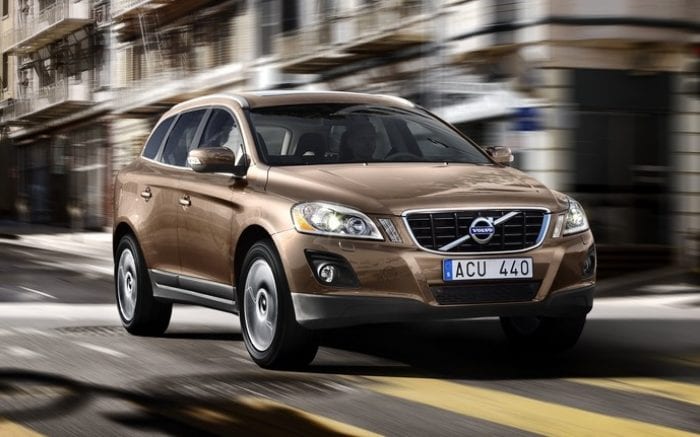
    Volvo Cars is recalling 54,000 U.S. vehicles for an airbag defect after one crash death tied to the issue, according to a filing with U.S. regulators. The unit of Geely Automotive is recalling 2001-2003 model S80 and S60 vehicles sold or registered in high humidity U.S. states because the driver side frontal air bag inflator may rupture, sending metal fragments flying, when the airbag is deployed.

    According to the Volvo filing with the government, Volvo will replace the inflators with a modern propellant and inflator. Parts are expected to be available by March.

    The National Highway Traffic Safety Administration (NHTSA) said Saturday it confirmed one person in the United States was killed when a ZF/TRW FG2 twin driver airbag inflator containing the propellant 5AT-148N exploded.

    The issue has been the subject of NHTSA and Volvo meetings since August 2019. The agency said the fatal incident was the only known rupture incident for this type of inflator around the world. NHTSA and Volvo are gathering and reviewing data about other vehicles with this inflator to determine if additional actions are needed, the U.S. agency said.

    Volvo did not immediately comment on Saturday. ZF Group said Saturday it was first notified by Volvo in August 2019 of the incident and it “promptly informed NHTSA and, together with Volvo, began investigating the incident.”

    ZF added it “will continue to work closely with NHTSA and Volvo on this issue.”

    NHTSA has investigated for years other airbag inflator ruptures. The largest automotive recall in history involves about 100 million inflators produced by another parts maker Takata that have been recalled by 19 major automakers worldwide and linked to 26 deaths.

  • Deloitte Ex-Partner Wants Appeal Heard

    Deloitte Ex-Partner Wants Appeal Heard

    A former star consultant of Deloitte in Switzerland is seeking to revive an appeal of his dismissal. He was let go last year amid accusations of bullying and expense irregularities.

    David Joseph, a Dutch-born forensics expert who was let go by Deloitte last year, wants a court to revive his challenge to his forced retirement, according to legal blog Law 360. A spokesman for Joseph couldn’t immediately be reached for comment.

    The case is noteworthy because it revealed the inner workings of a highly secretive, lucrative industry which has become indispensable to Swiss banks. Joseph reportedly earned Deloitte more than $200 million in fees as the point person for Credit Suisse’s efforts to cleanse itself of U.S. tax cheats from 2012 until relatively recently last year.

    Joseph was reportedly first cautioned back in 2015 for taking a belligerent attitude towards colleagues and acted entitled to expense reimbursements for top performers of his team. The consultant denied all of the accusations, arguing Deloitte had treated him unfairly and unjustly.

    He is now haggling in a British court over whether he asked Deloitte for a review of his dismissal too late. Joseph previously argued he couldn’t be physically present at the time due to illness, but had lodged a written memorandum listing his objections.

  • UnionPay Makes Waste Reduction Fashionable with Jay The Rabbit Collaboration

    UnionPay Makes Waste Reduction Fashionable with Jay The Rabbit Collaboration

    UnionPay, a global payment brand, collaborates with Jay The Rabbit, one of Thailand’s favorite cartoon characters with over 1 Million followers across social media platforms to produce re-usable bags aim at reducing one-time plastic bags usage.

    UnionPay Cardholders with a minimum spend of 1,500 Baht* can redeem a UnionPay x Jay The Rabbit canvas bag worth 899 Baht from now till 6 December 2020 at 10 participating department stores in Bangkok which include Central Chidlom, Central @ Central World, Central Ladprao, Central Bangna, Central Pinklao, Siam Paragon Department Store, The Emporium and EmQuartier, The Mall Bangkapi, and The Mall Bang Khae. There are over 4,000 bags to be redeemed. UnionPay X Jay The Rabbit on-ground activities will also take place at Central World on 14 & 15 November 2020.

    Huiming Cai, General Manager of UnionPay International Southeast Asia said, “We hope that these specially designed limited-edition re-usable bags enhance the shopping experience of consumers while raising awareness on reducing the usage of single-use plastic bags.”

    In Thailand, UnionPay partners Bangkok Bank, Bank of China, ICBC Bank, Kasikorn Bank, Kiatnakin Bank, Krungthai Bank, LH Bank and Krungthai Card Company to provide a wide array of payment products and services.


  • AEON Thailand Foundation supports the Cardiac Children Foundation of Thailand in Congenital Heart Disease project

    AEON Thailand Foundation supports the Cardiac Children Foundation of Thailand in Congenital Heart Disease project

    Ms. Suporn Wattanavekin (right), Chairman of AEON Thailand Foundation donated 500,000 Baht to the Cardiac Children Foundation of Thailand under the Royal Patronage of H.R.H. Princess Galyani Vadhana Krom Luang Naradhiwas Rajanagarindra in support of the “Children with Congenital Heart Disease Surgery Project”. The donation, received by Dr. Thanarat Layangool (left), President of The Cardiac Children Foundation of Thailand, will go towards surgeries and cardiac catheterizations outside office hours for up to 14 pediatric patients.


  • LINE Pay and LINE Financial Recognized at Good Design Award 2020

    LINE Pay and LINE Financial Recognized at Good Design Award 2020

    LINE Corporation announced today that it received two awards at the Good Design Award 2020. LINE Pay’s rebranding project was selected in the “Best 100” category while LINE Financial received a “Good Design Award” in the application category.

    Operated by Japan Institute of Design Promotion, the Good Design Award is considered a globally renowned design accolade, receiving more than 4,700 entries from around the world this year alone. Winners are allowed to use the “G Mark” logo on their products in recognition of their excellence.

    Both designs were produced by the BX Design Team at LINE Plus. The LINE Pay rebranding project was chosen for its sleek and scalable design, offering familiarity for users while increasing business potential. The LINE Financial services logos were recognized for their intuitive and easy-to-understand icons that are suitable for users of all ages. More information about both awards can be found on the Good Design Award website.

    LINE Pay Corporation, the operator of LINE’s digital wallet service, carried out a rebranding to refocus the company’s messaging, emphasizing how is evolving with society and becoming “The Next Payment Platform.” The rebrand also added visibility and simplicity to the LINE Pay logo, with the rebranded logos having a positive impact on both merchants and users, leading to an increase in the installation of the LINE Pay point of sales materials (POSM) in stores.

    LINE Financial has been introducing a range of financial services, including insurance, investment services, loans, and a credit scoring service, with the aim of bringing people and finance closer by creating new financial experiences. The brand design of these financial services captured a simpler user experience while also presenting a unified identity.

    With these awards, LINE Plus BX Design Team has been now recognized for its excellence in design by three of the most renowned international design awards: by the iF Design Award 2019, Red Dot Award 2020, and Good Design Award 2020.

  • Suzuki Expects Annual Profit To Shrink By A Quarter As India Sales Slump

    Suzuki Expects Annual Profit To Shrink By A Quarter As India Sales Slump

    Suzuki Motor Corp on Thursday forecast operating profit to fall by a quarter to 160 billion yen ($1.5 billion) in the year to March as sales, including in its key Indian market, shrink amid the coronavirus pandemic. That prediction was more than an average estimate for a 124.3 billion yen compiled from 14 analysts polled by Refinitiv.

    Suzuki’s Indian car sales in the first half of the year fell 36% to 432,000 vehicles, and dipped in other markets, including Japan, Indonesia and Europe as people stay away from dealerships.

    “We don’t know what will happen with the coronavirus in India or what measures the government will implement, so that makes the market difficult to predict,” Suzuki’s president, Toshihiro Suzuki said in a conference call.

    India accounts for just over half of Suzuki’s global car sales. Through its majority stake in Maruti Suzuki India Ltd, the company accounts for roughly one in every two cars sold in the country.

    Last business year, Maruti Suzuki paid Suzuki 38.2 billion rupees in royalties, or about 5% of its revenue, according to its annual report

    For the full business year, the Japanese automaker expects to sell 2.38 million cars worldwide, 16.6% fewer than the previous twelve months.

    The forecast came as Suzuki posted a 73.6 billion yen operating profit in the three months ended Sept. 30 compared with a profit of 55.9 billion yen a year earlier, according to Reuters’ calculations.

    Japan’s fourth-largest automaker had declined to give a full-year forecast when it reported it first-quarter results.

  • HKMA Lauds Ant’s Role Despite IPO Pullout

    HKMA Lauds Ant’s Role Despite IPO Pullout

    Despite a halted dual listing, Ant Group will continue to play an important financial role in Hong Kong, according to officials from the city’s central bank.

    The Hong Kong Monetary Authority (HKMA) expressed continued confidence in the city’s fintech industry and specifically named Ant as a firm that would remain important in the market.

    According to Nelson Chow, HKMA’s chief fintech officer, the was no reason to question Ant’s presence in Hong Kong despite the sudden pullout from an IPO.

    This is one player, but many players are in town as well, so they are competing against each other to offer better services, said Chow, according to a report.

    On the eight newly launched virtual banks which includes one operated by Ant, Chow described progress as «good», highlighting strong business models for funding small and medium-sized businesses through the use of alternative data.

    The HKMA will need some time to observe the existing players, Chow said when asked about the possibility of issuing more virtual bank licenses.

    On Hong Kong’s capital markets, Chow stressed that he believed that Ant’s IPO pullout would have no material effect on investor appetite.

    The tone is very upbeat, he said. Investors see Asia and particularly Hong Kong as one of the major places where we’ll see a lot of fintech development.

    And on mainland China’s digital yuan, Chow said that the HKMA would welcome any decision from Beijing, adding that it would «stand ready to cooperate.