Author: Mei Ling Tan

  • Tao Heung shuts 48 restaurants for a fortnight in coronavirus fight

    Tao Heung shuts 48 restaurants for a fortnight in coronavirus fight

    Chinese restaurant operator Tao Heung will shutter all 48 of its venues for more than a month following tightening restrictions on dining in Hong Kong.

    As the territory’s administration has now moved to limit the maximum number of diners per table to four – at tables spaced 1.5 meters apart – in an effort to curb the coronavirus outbreak, the group decided to close all of its restaurants through to April 10.

    “For everyone’s health and safety, from today, our restaurants will not serve anyone under mandatory quarantine,” read an announcement on the group’s Facebook page.

    Tao Heung’s venues mainly serve traditional Chinese delicacies. The business also operates venues in Mainland China.

    The group is one of several major F&B chains to respond to the official measures in the midst of the pandemic.

    Hong Kong’s total number of coronavirus cases has already passed the 500 mark, prompting more stringent social distancing measures on the part of the government, including a proposed ban on alcohol sales at Hong Kong’s licensed bars and clubs that has since been withdrawn after an outcry from the industry.

    Restaurants are now restricted to operating at half their capacities and must institute mandatory temperature checks and hand sanitization.

    Venues failing to comply with regulations will face maximum fines of HK$50,000 (US$6450) and six months in prison.

  • Esprit places its German subsidiaries into administration

    Esprit places its German subsidiaries into administration

    Hong Kong-listed apparel retailer Esprit has placed six German subsidiary companies in administration to give them protection during the coronavirus crisis, which has decimated sales.

    The move was finalized at the end of last week while the company’s shares were suspended from trading.

    The measure, called Protective Shield Proceedings under the German Insolvency Act, allows restructuring to take place in self-administration. Esprit stresses the process is only available to businesses that are still liquid – ie: they are able to continue to meet day-to-day expenses as opposed to long-term debt.

    In an explanatory statement filed with the Hong Kong stock exchange, Esprit said that with many countries implementing public health measures and taking drastic actions to slow the spread of the coronavirus pandemic, all of Esprit’s European stores have been temporarily shuttered, along with almost all those of the group’s franchise and wholesale partners.

    “Subsequent to the announcement, the position of the European companies in the group has further deteriorated significantly, as they currently generate only weak e-commerce turnover, while salaries, rents and operating costs continue to accrue.”

    Esprit describes the protective self-administration as a “proactive and forward-looking measure to protect the solvency and liquidity of the group”. It protects the company from claims from individual creditors while they work out a restructuring plan for the approval of creditors and the courts, which must be lodged by June 29.

    The German courts approved the process on Friday, appointing Dr Biner Bahr, a Dusseldorf-based partner of the international law firm White & Case, as the preliminary custodian to supervise the restructuring of the subject subsidiaries in self-administration. Esprit has appointed Detlev Specovius, a partner of the German restructuring law-firm Schultze & Braun, who has extensive experience in self-administration cases, to actively support the process.

    Esprit said in its filing that while under the protective shield process, it will continue to “pursue and accelerate” the group’s restructuring plan launched in 2018.

    “The restructuring plan will help to significantly reduce the liabilities of the [German subsidiaries] to a sustainable and manageable level and one that is in-line with the business needs of the group. By pursuing the Protective Shield Proceedings, the subsidiaries aim to effectively restructure all their liabilities and long-term lease contracts, obtain funding for salaries and social security payments of the German workforce from the German Federal Employment Agency and negotiate with works councils for more flexible solutions.”

    Esprit said the move was necessary because while the group is currently liquid, its future liquidity was threatened due to the pandemic and its consequences.

    “The company has been working relentlessly to secure the continued operation of all other European subsidiaries in order to allow each of them to return to its ordinary course of business when public life will start again and shops will be reopened with the lifting of the mandatory public lock-down measures as the pandemic subsides in the future,” Esprit said.

    “Facing the unprecedented challenge caused by the pandemic, management is focused on optimizing and streamlining the group’s business in order to be stronger, leaner and fitter so as to be better placed to pursue the market opportunities that may arise after the pandemic.”

    In Hong Kong, Esprit’s share price fell by more than 20 percent when trading resumed this morning. From a previous closing price of HKD 71 cents last week before trading was suspended, it fell below 55 cents in early trading, before recovering to about 60 cents (about USD0.077).
  • Singapore government urges citizens to avoid malls, observe safe distancing

    Singapore government urges citizens to avoid malls, observe safe distancing

    The Singapore government is instructing local consumers to defer non-essential visits to malls.

    The move is part of a strategy to encourage social distancing in the midst of the coronavirus outbreak and includes advice to all Singaporeans to consider shopping for household items online.

    Foreign nationals working as caregivers or maids, have been asked to stay in their homes on rest days.

    These directives follow the state’s introduction of social-distancing mandates last week, which forbid gatherings of more than 10 people and require individuals to stand at a distance of at least one meter apart in non-transient settings, such as in supermarkets.

    Venues with seating are instructed to ensure seats are kept at one-metre distances, with those at closer fixed points to be marked as not to be used.

    Business operators and individuals who fail to abide by the new regulations face fines of up to SGD10,000 (US$7000) and/or jail time up to six months.

  • Snapchat fights misinformation with interactive Snapchat COVID-19 myth-buster game

    Snapchat fights misinformation with interactive Snapchat COVID-19 myth-buster game

    As the current public health situation unfolds, tech companies continue to look into ways to bring accurate knowledge to their users. Snapchat, as a typically younger-generation-oriented app, is providing a slightly different approach to promote reliable facts about the coronavirus – in a Snapchat game format.

    Now there is a new Snapchat game, which is a COVID-19 myth buster. As other Snapchat filter games, you are able to access it from the snap games list. The information the myth-buster game provides is taken from the World Health Organization.

    When you start playing, you receive questions about the coronavirus that you can answer with “true” or “false” and then you can send a snap of whether you got the answer right or wrong. Although this may seem too lighthearted given the current situation, education program expert Kelly Mendoza stated that young people learn a lot from games, so this way to provide knowledge is a great opportunity to engage young people and attract their attention to the situation.

    Therefore, the game provides a way to share accurate information about the virus, which cannot be a bad thing given the countless rumors and anxiety-spreading misinformation that the tech giants are fighting against.

  • Uber is concentrating on food-delivery, nudges its drivers to do the same

    Uber is concentrating on food-delivery, nudges its drivers to do the same

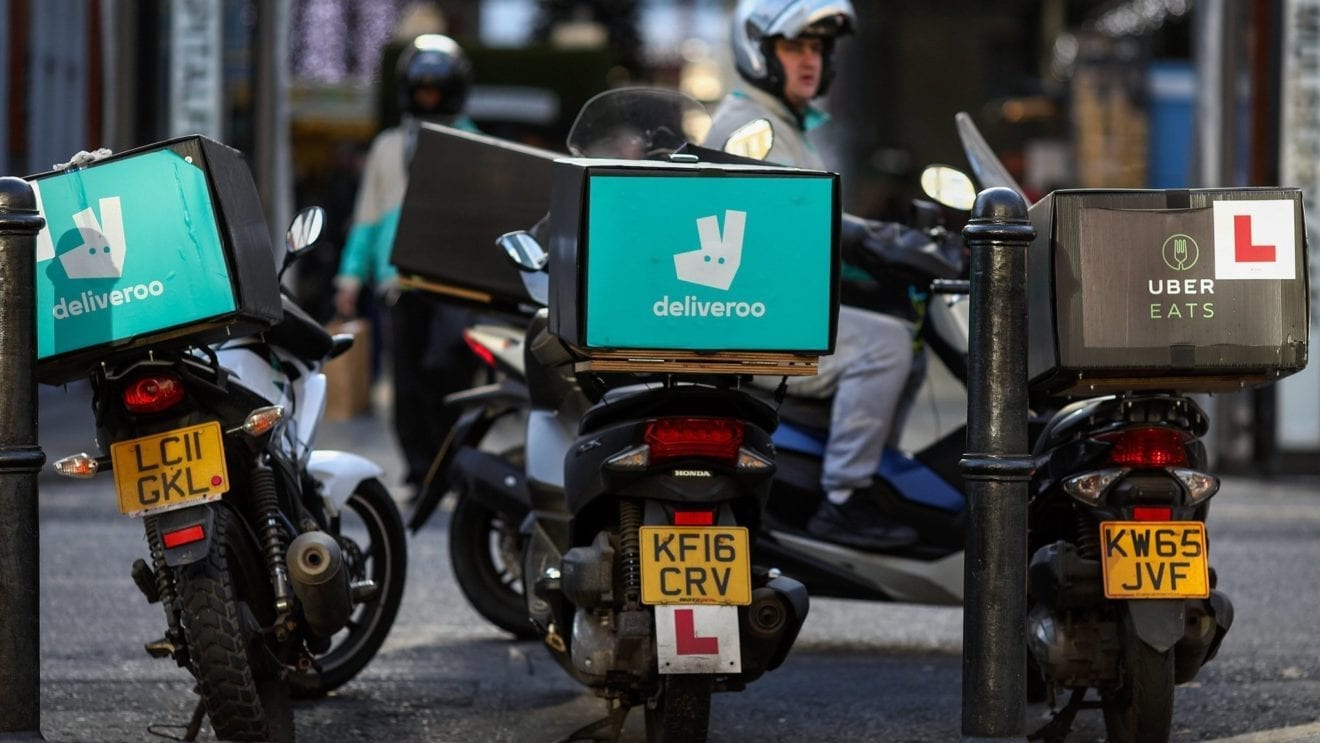
    Recently, ride-hailing drivers have been losing income as more people stay at home and less people travel due to the public health crisis. Uber has recently started concentrating more of its services on food delivery as demand for this is growing.

    Drivers in the US are encouraged to take on food delivery, even if they hadn’t participated in Uber Eats before. Last week, drivers were sent notifications with instructions on how to access the Delivery view on the app because of an increased demand for food-delivery services.

    In particular, Uber is witnessing a growing number of requests for food delivery in Seattle and San Francisco. According to Uber Eats’ vice president, Pierre-Dimitri, the coronavirus outbreak is starting to affect routines and the changes benefit the food delivery business, so drivers are encouraged to focus on it.

    In addition to that, Uber has been trying to mitigate the effect of the coronavirus on drivers and recently, Uber’s CEO, Dara Khosrowshahi, asked Uber’s drivers and delivery workers to be included in the coronavirus stimulus package, that would make people eligible to receive insurance and up to $1,200 direct deposit from the US government.

  • IDS opens giant Singapore flagship

    IDS opens giant Singapore flagship

    Aesthetic clinic IDS has launched a flagship on Singapore’s Orchard Road, its largest facility yet.

    At 4240sqft, the brand’s first flagship outlet separately houses IDS Aesthetics, an IDS Clinic and an IDS Skincare retail outlet on the second floor of International Building.

    The brand has been absent from Orchard Road, where it was originally set up at Novena Specialist Centre, for six years.

    The outlet is conceived as a first step towards creating a one-stop clinic, where doctors with various specialty areas of interest can offer treatments to clients and customers can purchase retail products.

    The facilities feature a 2840sqft medi-spa arm with 11 treatment rooms and a comprehensive retail display of IDS Skincare’s product range, as well as a powder room and a skincare dispensary.

    Upon arrival, customers are greeted in an expansive lounge where IDS therapists offer in-depth consultations on skin and lifestyle needs before they are shown to their private treatment rooms.

    Post-treatment, guests are invited to lounge on the sofas and snap some Polaroids with their friends for the IDS Wall of Fame. The entire IDS Skincare and its Prestige range stands on display in the lounge area.

  • Here’s how much of an impact 5G has on battery life

    Here’s how much of an impact 5G has on battery life

    Just how much of an impact does 5G have on a phone’s battery life over 4G? Lu Weibing, general manager of Xiaomi sub-brand Redmi, took to Chinese microblogging site Weibo to explain. In his post, he points out that the power consumption of Qualcomm’s 800 series of chips is about 20% greater than that of the 700 series, and a 5G phone consumes 20% more power than a 4G phone.

    Mr. Weibing’s statement comes only days after the 5G-capable Redmi K30 Pro was announced. The phone is powered by a Snapdragon 865 chip, and despite that huge 4700mAh battery inside it, Redmi’s estimates are rather modest, saying that the phone is designed to last one day.

    The Samsung Galaxy S20, Galaxy S20+, and Galaxy S20 Ultra are also among the newest Snapdragon 865 phones with 5G support. They have battery capacities of 4000, 4500, and 5000mAh respectively – a significant boost compared to last year’s S10 series, and surely one related to increased power demand by the 5G hardware inside them.

    As 5G is making great global progress compared to 4G LTE in its early days, phone manufacturers will need to start adapting to the overall increase of power consumption required for this new technology. And while 5G matures and Qualcomm strives to optimize the power consumption of their 5G chips, things are bound to get better with time.

  • Cebu Pacific extends free rebooking, travel fund option until June 30

    Cebu Pacific extends free rebooking, travel fund option until June 30

    Budget carrier Cebu Pacific is extending its free rebooking and travel option for passengers with booked flights until June 30.

    The airline decided to adjust its booking policies to provide its passengers with “flexibility and peace of mind,” in case they change their travel plans amid uncertainties surrounding the coronavirus disease 2019 (COVID-19) situation.

    Cebu Pacific said it still plans to operate flights by April 15 as scheduled.

    However, passengers with confirmed bookings on any Cebu Pacific domestic or international flight from April 15 to June 30, 2020 have the following options:

    • Free rebooking – rebook flights on any travel date with change fees waived. Fare difference may apply.

    To rebook the flight, use the “Manage Booking” portal in the Cebu Pacific website.

    • Travel Fund – place the full cost of the ticket in a Travel Fund which can then be used as payment for a future booking. The Travel Fund is valid for 180 days and can be used for bookings as far as 12 months out.

    To avail of the Travel Fund option, use the “Manage Booking” portal in the Cebu Pacific website to cancel their booking and store the value in the Travel Fund.

    “New flights booked from April 15 to June 30 (regardless of travel date and route), on the other hand, include CEB Flexi for FREE,” Cebu Pacific said.

    CEB Flexi enables travelers to rebook their flights up to two times, fare difference may apply.

    The airline also apologized for the delays in reverting to messages and long wait times for calls.

    “This is due to the high volume of passenger concerns being addressed by our team. Please bear with us,” it said.

    “We thank our passengers, partners and our stakeholders for their patience and trust,” it added.

  • Third Uniqlo x Marimekko collection launches

    Third Uniqlo x Marimekko collection launches

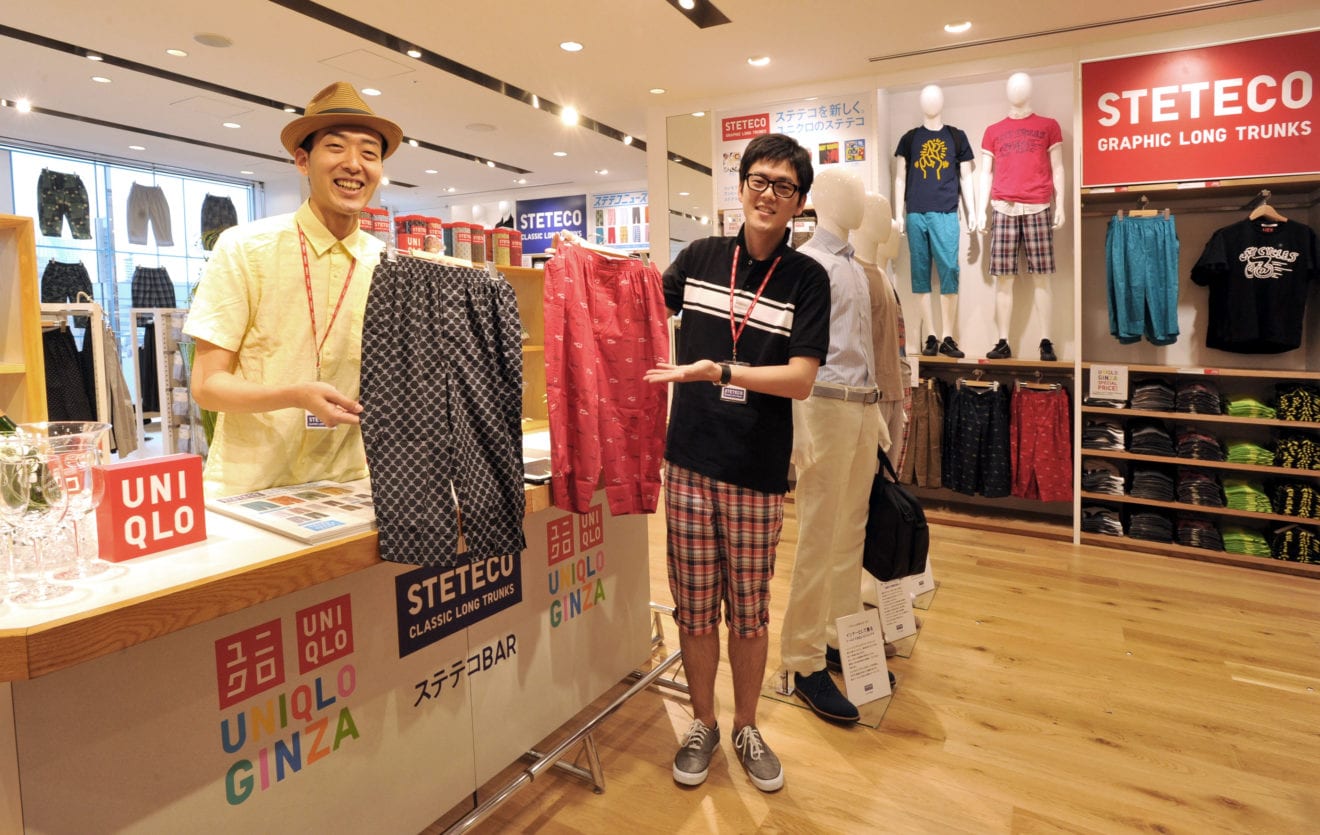
    Uniqlo has for a third time partnered with Finnish design company Marimekko to launch a new limited-edition collection.

    The new Uniqlo x Marimekko collection offers items for women and babies in six of Marimekko’s patterns, designed by Maija Isola and Annika Rimala. The patterns feature prints with different shapes and vibrant colours, “adding a splash of fun to LifeWear”.

    “Brand collaborations with partners with whom we share values and are able to create something special for customers represent unique opportunities for Marimekko to share our design philosophy with a wide global audience,” said Tiina Alahuhta-Kasko, president and CEO of Marimekko.

    Prior to the Uniqlo x Marimekko 2020 collection, the two companies collaborated twice during previous seasons.

    “Our three seasons of working closely with Marimekko have deepened our understanding and appreciation for the Finnish fashion and design house and its art of printmaking,” said Yuki Katsuta, head of research & development at Uniqlo.

    The Uniqlo x Marimekko limited edition will be on sale from April 10.

  • Google redesigns Podcasts app, brings it to iPhones and iPads

    Google redesigns Podcasts app, brings it to iPhones and iPads

    Google’s Podcasts app was released two years ago for Android devices, but the Mountain View company announced last year that it will expand the availability of the app to additional platforms, including iOS and Windows.

    A web version of Google Podcasts eventually made its debut last year, which allows users on other platforms to take advantage of its features. Today, Google announced a native Podcasts app is now available to all iPhone and iPad users.

    More importantly, Google Podcasts has been completely redesigned to offer a simpler experience to those looking for their favorite podcasts. The new Podcasts app focuses on just three tabs – Home, Explore, and Activity, from where users can access other features and information about the content they want to listen to.

    The Home tab will display a feed of new episodes and is meant to offer Podcasts users a way to access their subscribed shows faster than ever. On the other hand, the Explore tab, “For you” displays new show and episode recommendations that are strongly related to a user’s interests.

    Last but not least, the new Activity tab shows a user’s listening history, queued up episodes, and download. Also, it’s important to add that Google Podcasts users can now enable automatic download and push notifications for when new episodes are released.

    Google announced that along with the new redesign, it made it possible to sync listening progress across devices. If you’re using an iOS device, you can download the new Google Podcasts today from the App Store. Android users will get the new app this week.

  • Apple AR headset being tested with HTC Vive-like controller

    Apple AR headset being tested with HTC Vive-like controller

    Apple may be one of the most valuable companies in the world but it very rarely enters new product categories. Yet on the odd occasion that it chooses to do so, the company often shakes up the entire industry in the process. Examples of this include the iPhone, iPad, and Apple Watch which transformed the smartphone, tablet, and smartwatch segments respectively. Soon, the growing AR/VR industry could join the list.

    As reported several times in the past, Apple is developing a headset, possibly called Apple Glasses, that combines both AR and VR technologies for release in either 2021 or 2022. The controller in question, which is probably being used solely for internal testing purposes, resembles those shipped with HTC Vive Focus headsets. In fact, it seems to be a modified version of the HTC controller.

    This isn’t that surprising considering Bloomberg reported back in 2017 that Apple engineers were using HTC Vive headsets for internal testing, but the striking resemblance between the two controllers does suggest the two companies could be working closely together on AR & VR technology.

    Regardless of whether Apple and HTC are collaborating, though, it’s safe to say the final controller will probably boast a more polished design that is the better adapter to Apple’s headset software.

    In terms of functionality, the iOS 14 evidence uncovered by MacRumors strongly suggests Apple is using a dedicated augmented reality app codenamed “Gobi” and QR codes to test the extensive range of headset features.

    Apparently, each QR code triggers a different experience for the users. Some of these include experiences related to the Apple Watch, Mac Pro, Apple Store, Starbucks, and even a random movie poster.

    One of the more interesting experiences is QR code that triggers a “crosswalk bowling game.” This presumably allows Apple engineers to roll a virtual bowling ball across the crosswalk to knock down the virtual bowling pins on the other side.

    It likely acts as a pastime while waiting for the pedestrian light to change from stop to go. If ever released to public, users would probably be able to continue the game at different crosswalks and perhaps even play with friends.

    The version Apple is currently testing seems to be limited to one intersection near an Apple office known as “Mathilda 3” at 555 N Mathilda Ave in Sunnyvale, California. That could be where internal testing for the headset is taking place. As revealed in a patent application published today, everything mentioned above could be accompanied by virtual assistants that highlight useful information or offer tips to users during certain events or after a particular trigger.

    In the patent, which is titled “Contextual Computer-Generated Reality (CGR) Digital Assistants,” Apple gives a few examples based on what the user is seeing. One of these includes the possibility of a virtual dog being used to run over to a restaurant and fetch the relevant information for the user in question.

    Other ideas described include a pod of dolphins being used for AR navigation or a cat that guides users to an interesting place. A balloon could be used to show users where an AR-leveraging AirTag is too.

    The possibility of experiencing other virtual assistants through other senses, such as hearing, was also mentioned.

  • Cebu Pacific feels pinch from Philippines quarantine

    Cebu Pacific feels pinch from Philippines quarantine

    Cebu Pacific says the month-long “community quarantine” imposed on Metropolitan Manila and the main Luzon island group recently will free up 90% of its total seat capacity, even as it maintains services from its hubs outside of Manila and the region.

    The 90% capacity figure is based on the suspension of domestic flights departing Manila, and previously suspended services to China, Hong Kong, Macau and South Korea, says Cebu Pacific in a Philippines Stock Exchange disclosure.

    During this period, the airline continues to operate flights from its other hubs that have not been affected by the quarantine order such as Cebu, and is maintaining connectivity “where operationally feasible”.

    Cirium schedules data show that in February, domestic routes accounted for 83% of Cebu Pacific and subsidiary Cebgo’s seat capacity.

    Although it expects a “significant revenue impact” during the quarantine period, operating expenses will fall in tandem, while lower fuel prices provide an additional cost benefit to its reduced fuel consumption.

    Cebu Pacific was unable to provide any earnings guidance for 2020, due to uncertainties caused by the coronavirus pandemic. However, it stressed that it has a strong balance sheet with “over Ps18 billion ($353 million) in cash and cash equivalents” at the end of 2019, and that a net debt to equity level of around 1.25x with a long maturity profile gives the airline room to seek short-term or long-term funding.

    It is also conserving cash and reducing expenses by freezing recruitment and consultancy work, implementing pay cuts for its top management, and suspending salary increases.

    Earlier in February, the carrier estimated that the outbreak will see a “Ps3-4 billion swing on profit” should the outbreak remain unabated over the next six months. The estimate was based on 2003’s Severe Acute Respiratory Syndrome outbreak, which curtailed demand for air travel for six months.

    Cebu Pacific is expected to release its 2019 financial results in the coming weeks.

  • Huawei says China has recovered enough to buy new 5G flagship phones

    Huawei says China has recovered enough to buy new 5G flagship phones

    Huawei unveiled its new camera-based P40 series (P40, P40 Pro, and P40 Pro+) today and the phones will be available starting next month priced at the equivalent of $878 USD and up. Each of the three new models supports the next generation of wireless connectivity, 5G. Yu says that he thinks that this will be the first year that 5G will “take off” which is why all of the P40 handsets available have a 5G modem which is integrated into the Kirin 990 5G chipset that drives these phones.

    The new phones are still offered without Google Mobile Service (GMS) due to the manufacturers continued placement on the U.S. Commerce Department’s entity list. Due to the company’s perceived ties with the communist Chinese government, the U.S. considers Huawei to be a national security threat; last May the Trump administration placed the company on the list which bans it from accessing its U.S. supply chain. While Huawei has discovered some ways around the ban, it is not allowed to license the Google ecosystem including the latter’s version of Android and its core Android apps. That means that Huawei phones cannot run the Google Play Store, Google Search, Google Maps, Gmail, Drive, and others. Inside China, this means nothing since most Google apps are banned there anyway. But Huawei’s international sales have been hurt by the inability of Huawei’s phones to run these apps.

    With the P40 line, Huawei debuts its own ecosystem and Huawei Mobile Service. This includes the company’s AppGallery storefront and a brand new digital assistant called Celia. Google Assistant is not available on the open-source version of Android used by the manufacturer. Yu says that he hopes something can be worked out with the U.S. government that would allow his company to partner once again with Google. “We want to continue our partnership with Google,” he said, revealing that Huawei is in discussions with the company. “We hope this issue can be solved, but we’re not the government so we can’t make the decision. They’re a smart government, and I hope they can give a license.”

    The Huawei executive also commented about the second generation of the foldable Mate X that it released last month powered by a more powerful chipset with an integrated 5G modem. Yu said that the firm is not making any money on the device but demand is outstripping supply. Talking about the Mate Xs, Yu states that “With time and more production we can bring the cost down and make it more competitive.”

    Talking about today’s unveiling of the new P40 line, Ben Wood, chief of research at CCS Insight, said that although “arguably there could not be a worse time to launch a set of premium smartphones, Huawei may be in a better position than some rivals.” Wood notes that China appears to be on the mend and added that “given that Huawei has been shipping over 40 million units a quarter in China in recent times, this provides a strong foundation for the business.”

    Meanwhile, Huawei’s Yu wished the rest of the world a rapid recovery from the COVID-19 pandemic. He said, “I hope the U.K. and the world recovers soon from coronavirus. The experience from China was that the government very strictly limited the mobility of people, and quickly everything came under control. I think governments in the rest of the world are taking action like China and will quickly control it too.”

  • Citi’s South Asia Head of Private Banking Departs

    Citi’s South Asia Head of Private Banking Departs

    Citigroup’s South Asia head of private banking is leaving the firm at the end of March.

    Jyrki Rauhio, Citigroup’s South Asia head of private banking, is leaving the bank at the end of March «to pursue other opportunities», according to an internal memo.

    Citigroup confirmed the memo’s content and said the bank won’t replace Rauhio. Jyrki Rauhio performed the role of South Asia Head for two years and did a great job putting in place a platform for growth and wants a new challenge, a Citi spokesperson said.

    Steven Lo, Asia-Pacific head of Citi Private Bank initially put in the North and South Asia structure when he took on the role of Asia Pacific CEO to help scale the business.

    However, Jyrki’s role will not be replaced and all the South Asia Global Market Managers will now report to Steven. «As a result, this gives us the opportunity to relook the structure of the business and Steven Lo has decided to streamline it,» the bank spokesperson said.

    Rauhio, based in Singapore, has been with the bank for 25 years in locations including Helsinki, Warsaw, New York, and Hong
    Kong.

  • Standard Chartered Announces Co-Heads of New Unit

    Standard Chartered Announces Co-Heads of New Unit

    The new Financing and Securities Services unit brings together Securities Services (currently under Transaction Banking) and Portfolio Risk Management in the Financial Markets business.

    Standard Chartered Bank has appointed Margaret Harwood-Jones, currently global head of Securities Services, and Emmanuel Ramambason, now global head of Portfolio Risk Management, as co-heads of its new Financing and Securities Services unit.

    Harwood-Jones has been with the bank since 2013, and previously spent 10 years at BNP Paribas Securities Services. Hoornweg joined the firm in 2017, previously had stints at Brevan Howard, UBS, and Morgan Stanley, where he spent 17 years, according to their LinkedIn profiles.

    The pair, based in Singapore, report to Roberto Hoornweg, global head of Financial Markets.

    Financing and Securities Services will include all existing securities services activities including custody, clearing, fiduciary and fund services, and securities lending, as well as all portfolio risk management activities across prime services, money markets, central funding Ddsk, credit valuation adjustment and the modeling and analytics group, the statement said.

    This would bring greater alignment of its Prime business within Portfolio Risk Management, and further enhance the synergy between Financial Markets and Transaction Banking, said Hornweg.